Welcome to Episode #206 of The Swampflix Podcast. For this episode, Britnee, James, Brandon, and Hanna discuss four cult classics about monstrously mean but lovingly devoted moms, starting with the Zelda Rubinstein horror vehicle Anguish (1987).
00:00 Welcome
03:20 Cat Person (2023) 12:03 Après Vous (2003) 15:28 Breaking the Waves (1996) 20:07 Husbands (1970) 23:59 Soft & Quiet (2023) 29:48 Heavy Petting (1989)
The great benefit of genre filmmaking is the plug-and-play structure & context it provides artists, the same way poets find readymade structure & context in sonnets or haikus. The deliberately meandering, repetitive Iranian film Fish & Cat would never have found an audience outside its initial festival run without the tropes & traditions of horror cinema illuminating its path. In the abstract, it’s an easy sell as an all-in-one-shot campsite slasher, but in practice it constantly bends space & time to the point where it plays more like experimental theatre than SOV horror. It might have gotten by okay as a slow-cinema critical darling if it were a straight drama about college-age twentysomethings roughing it for the night & flying kites, but a lot of its dramatic tension and, frankly, its marketability would have been lost. Fish & Cat dodges all expectations set by its genre(s), but it also relies on those expectations to lead the audience along like a breadcrumb trail, so that we don’t lose our way in the woods.
The film opens with a Texas Chainsaw-style news item about a rural restaurant that was caught butchering & serving human meat instead of more traditional cattle, way back in the distant, grimy days of 1998. When we meet those cannibal restaurateurs, they’re sizing up a carful of lost, urban college kids who’ve driven down an unmarked dirt road to immediate peril, purposefully giving them confusing directions so they find their way onto the menu. After a tense exchange that notes the “rancid meat” stench wafting from the restaurant, we then follow the two terrifying men into the woods, carrying a mysterious bloody sack, possibly for burial. The horror tropes & tones shift from there when the camera pans over to reveal the cannibal butchers are not alone in the woods, just as they start debating the existence of ghosts. The other figures in the woods are not ghosts, though; they’re college students who’ve arrived to stage an annual kite flying festival (and to be periodically tormented by the elder creeps who occasionally drift into their camp).
Instead of showing off complex camera choreography like most gimmicky single-shotters, Fish & Cat instead uses the format to disorient, often through loopy repetition. Its events do not occur in real time, but instead weave themselves into the near future and near past in a slow, dreamlike rhythm. It’s an approach that allows writer-director Shahram Mokri & cinematographer Mahmoud Kalari to make great use of the woods as a liminal space where anything goes at any time, depending on the momentary, recursive whims of the story. There’s nothing explicitly supernatural about the environment or events surrounding the collegiate kite festival, just as there is no on-screen payoff to the violence teased by the Texas Chainsaw intro. The cosmic déjà vu, precognitive dreams, and impending Armageddon discussed by the characters in casual conversation while they’re waiting for nightfall provide all of the film’s pure-mood scares, backed up by the metal-scraping & inverted music soundtrack cues. Otherwise, all of the implied violence is described in deadpan narration, which switches perspectives as the camera decides to trail a new potential victim every few minutes.
I’d be lying if I said this wasn’t a real patience-tester, especially as home-viewing, but the struggle was very much worth it. There were obvious cultural & political themes that soared over my head in some of the lengthier conversations that break up the scares, but there was enough tension between hopeful youth innocently flying kites while menacing old men lurk around them to infer the sources of tension. I most appreciated the experimental form of its drama, which simulates the “Haven’t I passed this tree before?” feeling of getting lost in the woods, except in this instance the tree is an entire conversation between two strangers. The result is the exact kind of D.I.Y. production that inspires poor, naive teenagers to fall into lifelong debt by enrolling in film school. And maybe those teens would be better served by finding inspiration in its structural use of genre tropes than in the less attainable, communicable merits of the French New Wave, mumblecore, and Dogme 95 festival darlings of the past. If you’re going to impress an audience and pay your rent, you would do well emulating genre titles like Primer, Resolution, Willow Creek, Thou Wast Mild and Lovely, and Fish & Cat.
Usually, when I don’t fully know what to make of a movie, I turn to the Bonus Material footnotes of physical media to search for context. It turns out some movies cannot be helped. The regional horror oddity Sometimes Aunt Martha Does Dreadful Things sets itself up to be the Floridian take on Psycho, but instead delivers a domestic melodrama where everyone’s love language is belligerent screaming. It’s an obvious work of transgression, but also a mystery as to what, exactly, it aims to transgress – recalling other schlock bin headscratchers like Something Weird,The Astrologer, Bat Pussy, and Fleshpot on 42nd Street. Is it a seedy, Honeymoon Killers-style thriller about two sexual degenerates on the run, or a Sirkian melodrama about a gay couple who’ve been shamed by society into fugitive status, one hiding in drag for cover? Who’s to say? All I can report is that David DeCoteau’s commentary track on my outdated DVD copy from Vinegar Syndrome told me more about David DeCoteau than it told me about the movie he was contextualizing.
Sometimes Aunt Martha Does Dreadful Things is like a hagsploitation version of Psycho where Norman Bates never fully gets out of hag drag, stealing a good job away from aging stars like Crawford & Davis. Or maybe it’s more the hippiesploitation version of Psycho where Norman’s personae are split into two separate bodies: a drugged-out free lover who becomes murderously violent whenever he gets in bed with women, and his fellow fugitive sex partner who poses in drag as the hippie’s aunt to avoid neighborhood suspicion of their sordid romance. Aunt Martha claims to despise the Mrs. Doubtfire scenario he’s trapped himself in, but when in private never fully undresses into boymode – often taking obvious, lingering pleasure in the feeling of silk & stockings on his balding, hairy body. When he has to “clean up” the messes (i.e., kill the sexual partners) of his younger, sexually confused lover, the violence only flashes in quick jabs of psychedelic screen-prints & film-negatives. Mostly, we just spend time pondering what’s the deal shared between the two violent, oddly intimate men at the film’s center, a question one-time director Thomas Casey has never satisfyingly answered.
Despite being an expert in the field of low-budget queer transgression himself, David DeCoteau doesn’t have many answers either. He spends most of his commentary-track conversation with Mondo-Digital’s Nathaniel Thompson expressing the same exasperation with what Thomas Casey was going for with this confusing provocation, often sidetracking into rapid-fire lists of other low-budget, transgressive queer ephemera from the 1970s that might help make sense of it in context. It’s a great listen if you’d like to hear about David DeCoteau’s childhood memories about watching The Boys in the Band on TV, or if you’re looking to pad out your Letterboxd watchlist with genre obscurities Sins of Rachel,Widow Blue, and The Name of the Game is Kill. Unfortunately, it also features a lot of DeCoteau complaining that “It’s hard to be politically correct in genre filmmaking” (which is probably true) while casually indulging in some good, old-fashioned transphobic slurs and reminiscing over which trans characters in film have fooled him before their gender situation was revealed vs. which were immediately clockable. In short, it’s a mixed bag, but it says more about DeCoteau than it says about Aunt Martha.
To Vinegar Syndrome’s credit, they’ve since updated that 2015 release with a Blu-ray edition that replaces DeCoteau’s commentary with a new track by Ask Any Buddy‘s Elizabeth Purchell, a trans film historian with extensive knowledge about Floridasploitation schlock. If I get any more curious about how to fully make sense of Aunt Martha, I’ll have to upgrade my copy to hear that alternate perspective. I have no regrets getting to know David DeCoteau better in the version I already own, though, since it’s always been hard to tell exactly how passionate & knowledgeable he is about outsider-art filmmaking in his own work, which can be a little . . . pragmatic, depending on who’s signing the checks. Besides, it might be for the best that I can’t fully make sense of this one-off novelty from a mystery filmmaker. As much as I love the rituals & minor variations of genre filmmaking, it’s probably for the best that not every low-budget provocation can be neatly categorized, or even understood.
Ari Aster’s sprawling nightmare comedy Beau is Afraid earned a lot of automatic comparisons to the insular storytelling style of Charlie Kaufman last year, since Kaufman’s signature works like Being John Malkovich and Synecdoche, New York tend to follow a lonely man’s journey into his own mind similar to the one Joaquin Phoenix takes in Beau. Looking back, maybe the works of undersung auteur John Payson should’ve been cited in those discussions as well, since the grotesque caricature of New York City that Phoenix navigates in Beau is Afraid is much more similar to the crime-ridden, roach-infested NYC that Jerry O’Connell navigates in Payson’s sole directorial feature Joe’s Apartment. O’Connell begins his journey as a fresh bus station arrival who’s mugged by three separate, sequential assailants as soon as he steps off his Greyhound chariot. Outside the bus depot, he is horrified by the discovery of a bloodied corpse on the sidewalk that his fellow, jaded New Yorkers ignore as they scurry about from one hostile confrontation to another. His walk-and-talks down city streets are frequently interrupted by deadly shootouts between generic, nameless cops & robbers. Once he lands a place to live, he is tormented by two crooked, roided-out landlords who spend their entire day trying to lethally “evict” him so they can spike the rent. And, of course, his apartment is filled to the brim with billions upon billions of cockroaches, as every NYC apartment is. It’s the same paranoid, misanthropic view of Big City urban living that plagues the perpetually afraid Beau of Aster’s film, which equates picking up anxiety meds from the pharmacy across the street to walking through a warzone. I can’t recall ever seeing anything that explosively chaotic in a Charlie Kaufman picture, since those tend to be controlled & self-serious to the point of stuffiness.
There are a couple very good reasons you won’t often see John Payson’s magnum opus cited alongside the works of Charlie Kaufman, no matter how applicable. For one, not many people bothered to watch Joe’s Apartment upon its initial release in 1996, when it only earned $4 million box office off of a $13 million budget. Moreover, it’s also just a deeply silly film, and I’m mostly just goofing off by bringing it up. I have not yet mentioned that the cockroaches that flood the titular apartment are self-aware beings who sing & dance their way through this roach-themed comedy musical, chirping life advice at O’Connell’s Joe in sped-up Alvin & The Chipmunks speak. This is the kind of movie that earns a “Roach Songs By” credit in the opening scroll, effectively parodying the nice-guy-in-the-big-mean-city narrative tropes that link it to Beau. It’s less akin to the headier comedy of a Charlie Kaufman or an Ari Aster than it is a Minions prototypefor people who are intimately familiar with the taste of bongwater. And yet, by the time one of the roaches is introduced as a “cousin from Texas” who lassos and rides a housecat out of the apartment like a rodeo cowboy, I found myself having a great time with it. Despite all of the slime & grime that coats every surface of Joe’s Apartment, it’s a weirdly wholesome film. Forever in hiding because humans tend to “smush first and ask questions later”, the roaches decide to reveal their ability to converse with Joe because they love how naturally gross he is. They feel affinity with the slovenly behavior of the standard-issue Straight Boy slacker, who leaves half-emptied food containers out for the little pests as he sleeps away the daylight fully clothed – body unbathed, clothes unwashed. When he’s understandably freaked out by their decision to speak to him, they attempt to win him over with song & dance. It’s cute. Absolutely fucking disgusting, but cute.
For what Payson may lack in maturity of subject, he more than makes up for in attention to craft. At the time of release, the big deal about Joe’s Apartment was its innovative use of CGI, which allowed the cockroaches to sing & dance in surprisingly convincing close-ups (an effect created by the animation studio Blue Sky in their first feature film, pre-Ice Age). The computer-animated shots only account for a small portion of the film’s multi-media approach, though, and more traditional modes of cockroach animation are just as frequently deployed: stop-motion, collage, puppetry, time-elapse photography, etc. Joe’s Apartment started as a short-film visual experiment in MTV’s psychedelic Liquid Television program. When it was later developed into a feature film, it was released as the very first project under the MTV Films brand, predating even Beavis & Butthead Do America. As a result, the movie includes constant cultural markers to posit Joe as a hip, aspirational slacker for a young audience to look up to – having him read Love & Rockets comics when he should be job hunting, decorating his apartment with Sonic Youth posters, and overstuffing the soundtrack with wall-to-wall needle drops to sell tie-in CDs at the shopping mall outside your local multiplex. The thing is that Payson’s style is inherently cool, though, as long as you have the stomach for it. When Joe is mugged at the Greyhound station, the camera takes the first-person-POV of the criminals’ fists as they repeatedly pound into his face. Later, presumably to save money on costly CGI shots, the roaches puppeteer random objects in his apartment to give the production a grimy Pee-wee’s Playhouse effect. I begged my parents to take me to Joe’s Apartment when it first came out because it looked so cool, but they said I was too young to see it. In retrospect, I realize they just didn’t want to sit through the CGI cockroach musical, which is fair, but I feel like they (and most of America) really missed out on a Gen-X comedy gem.
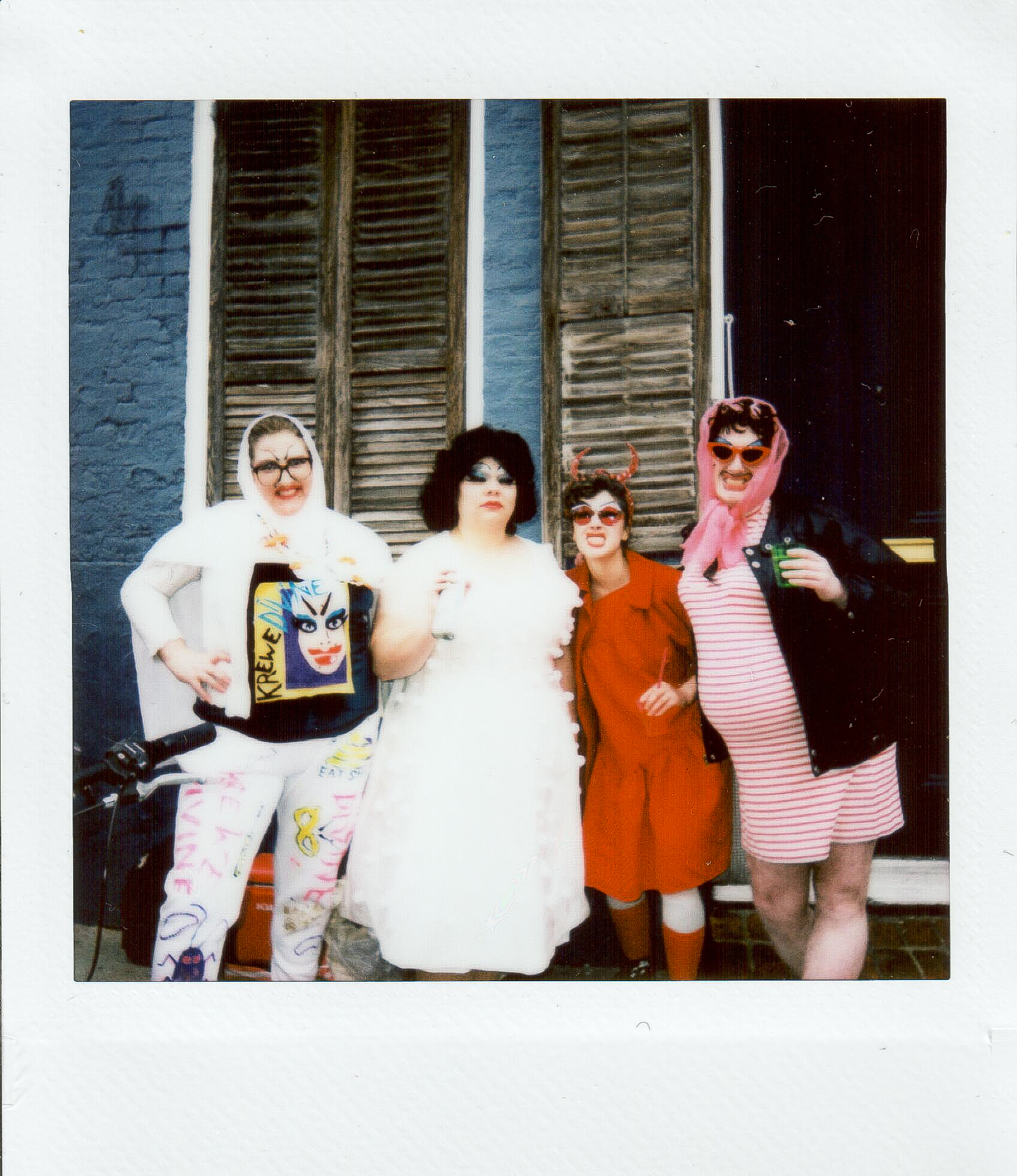
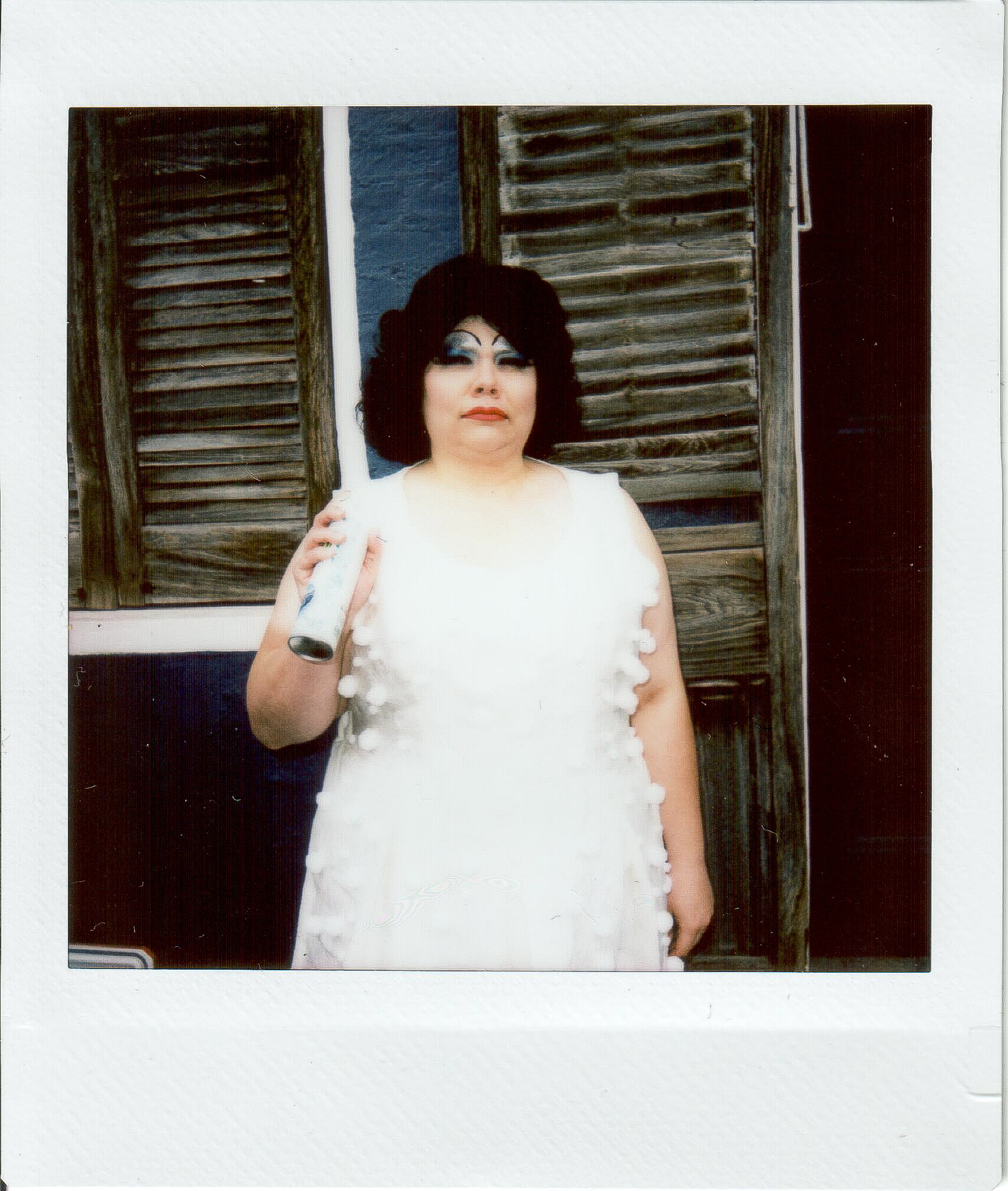
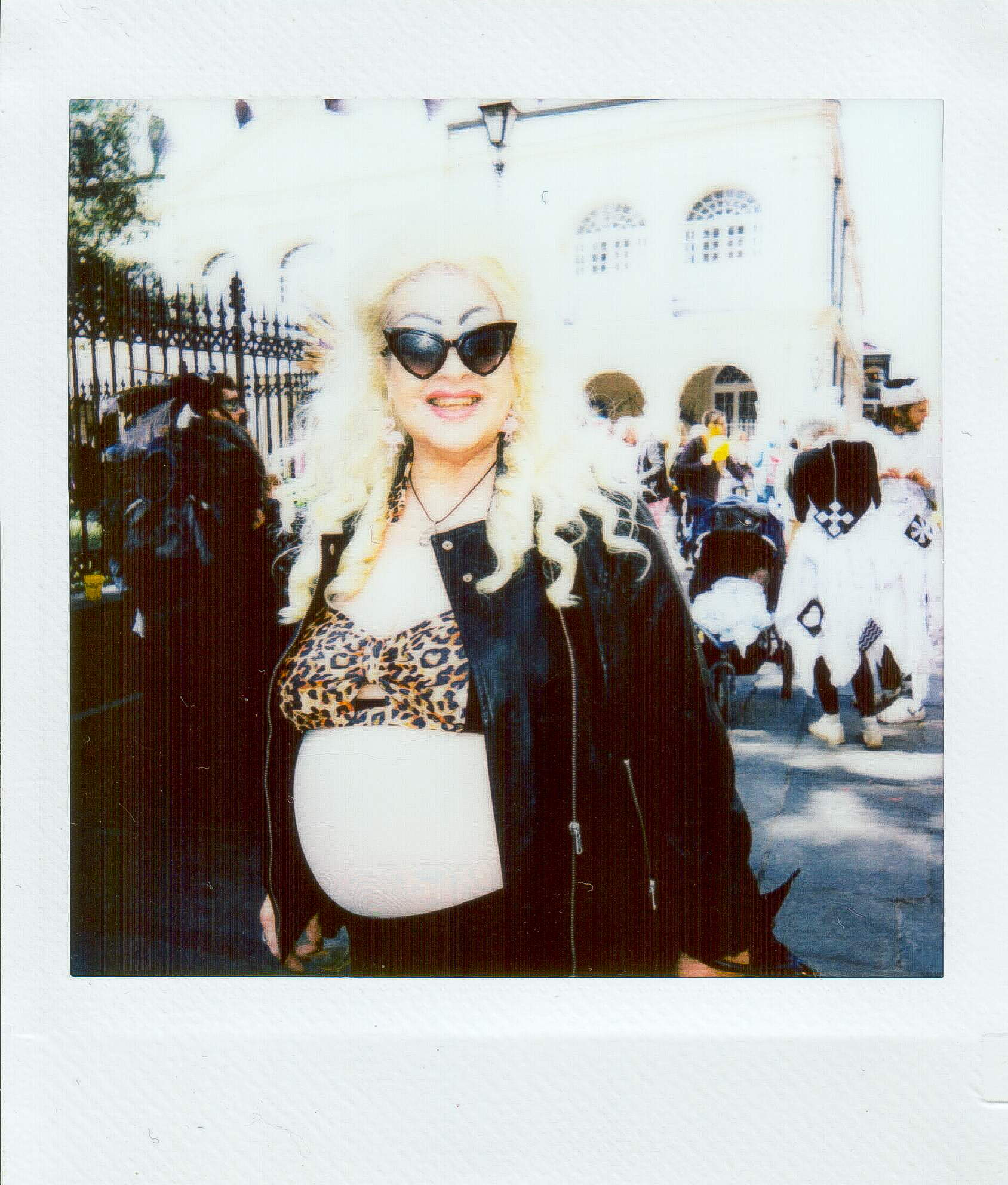
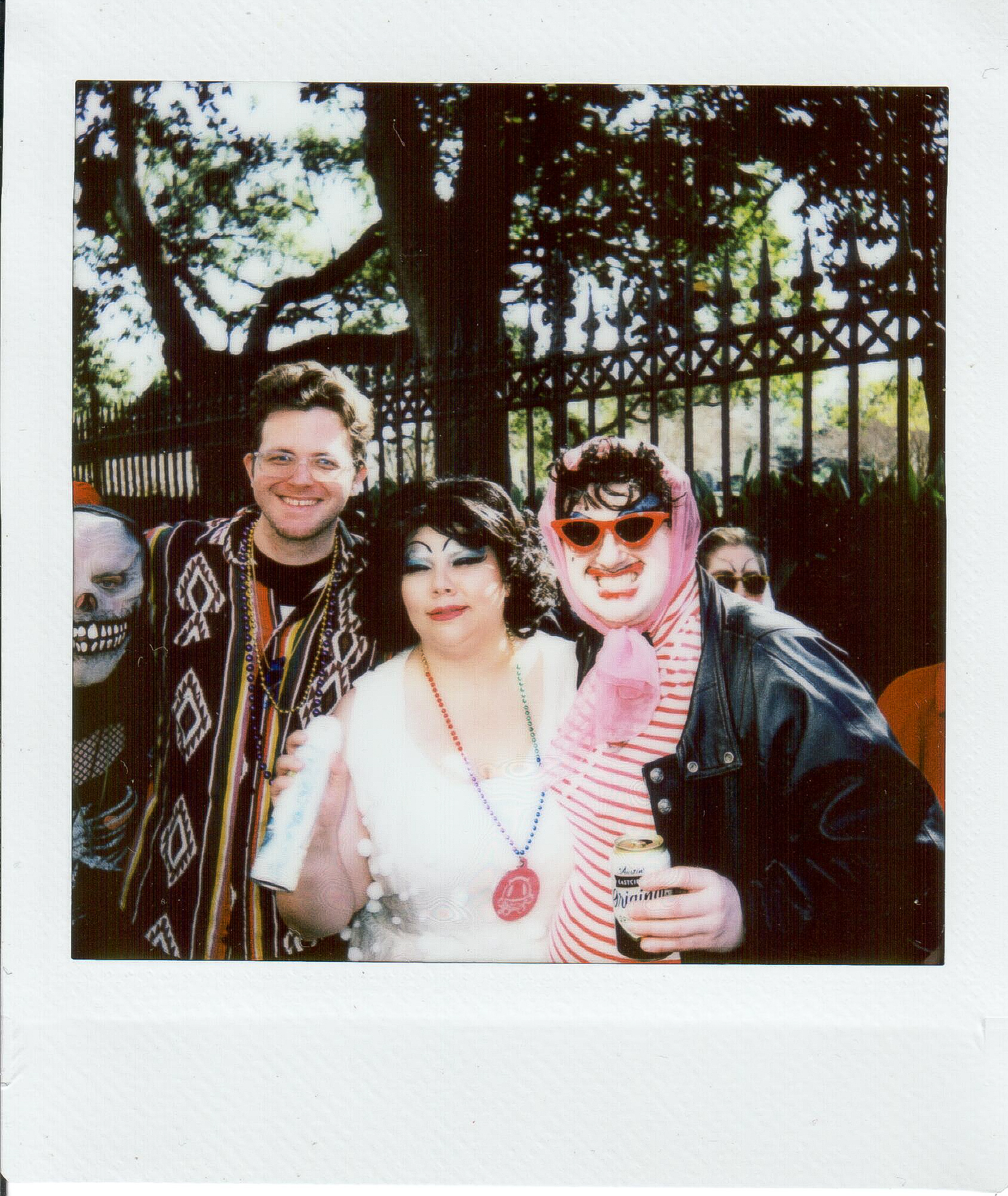
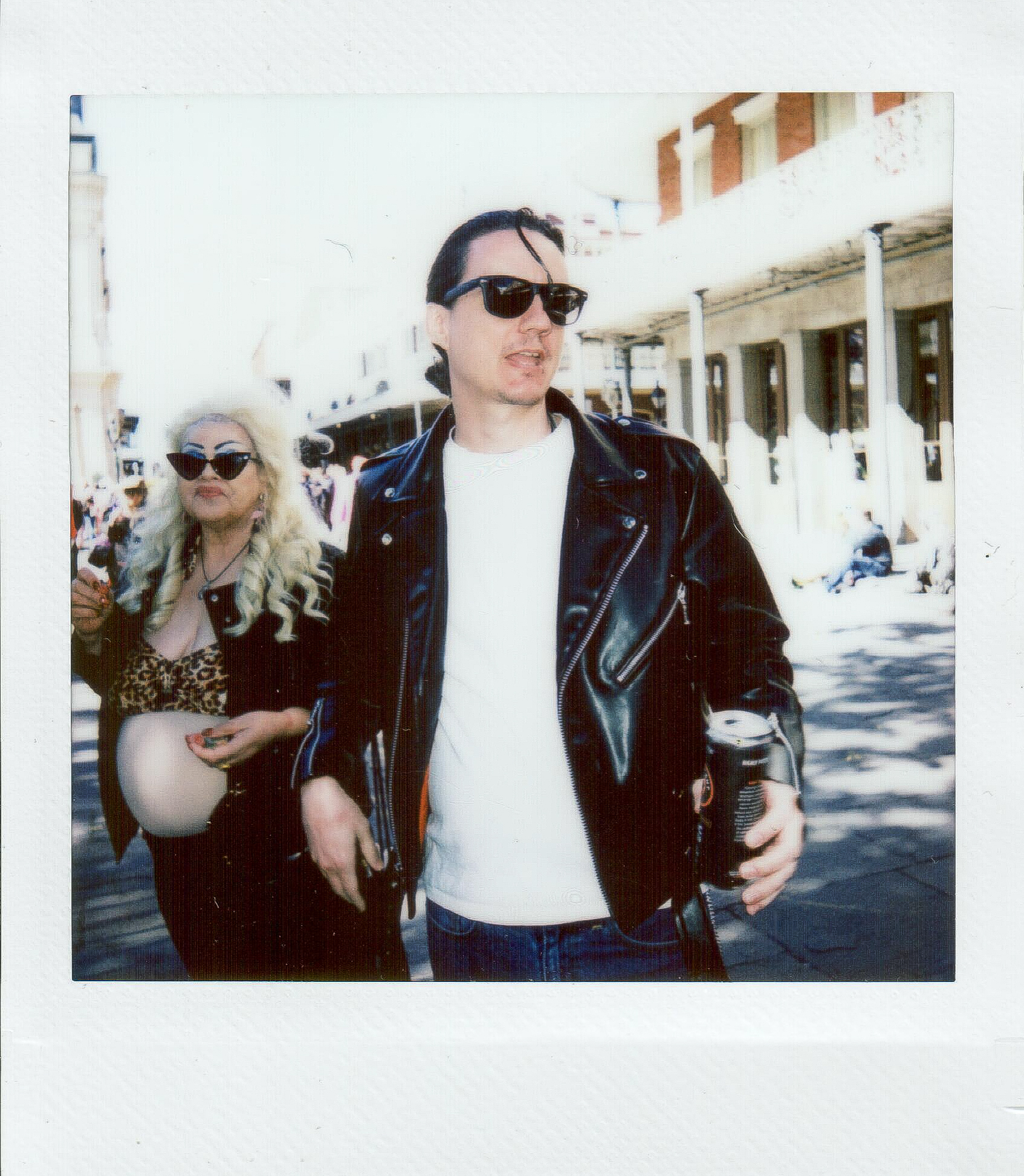
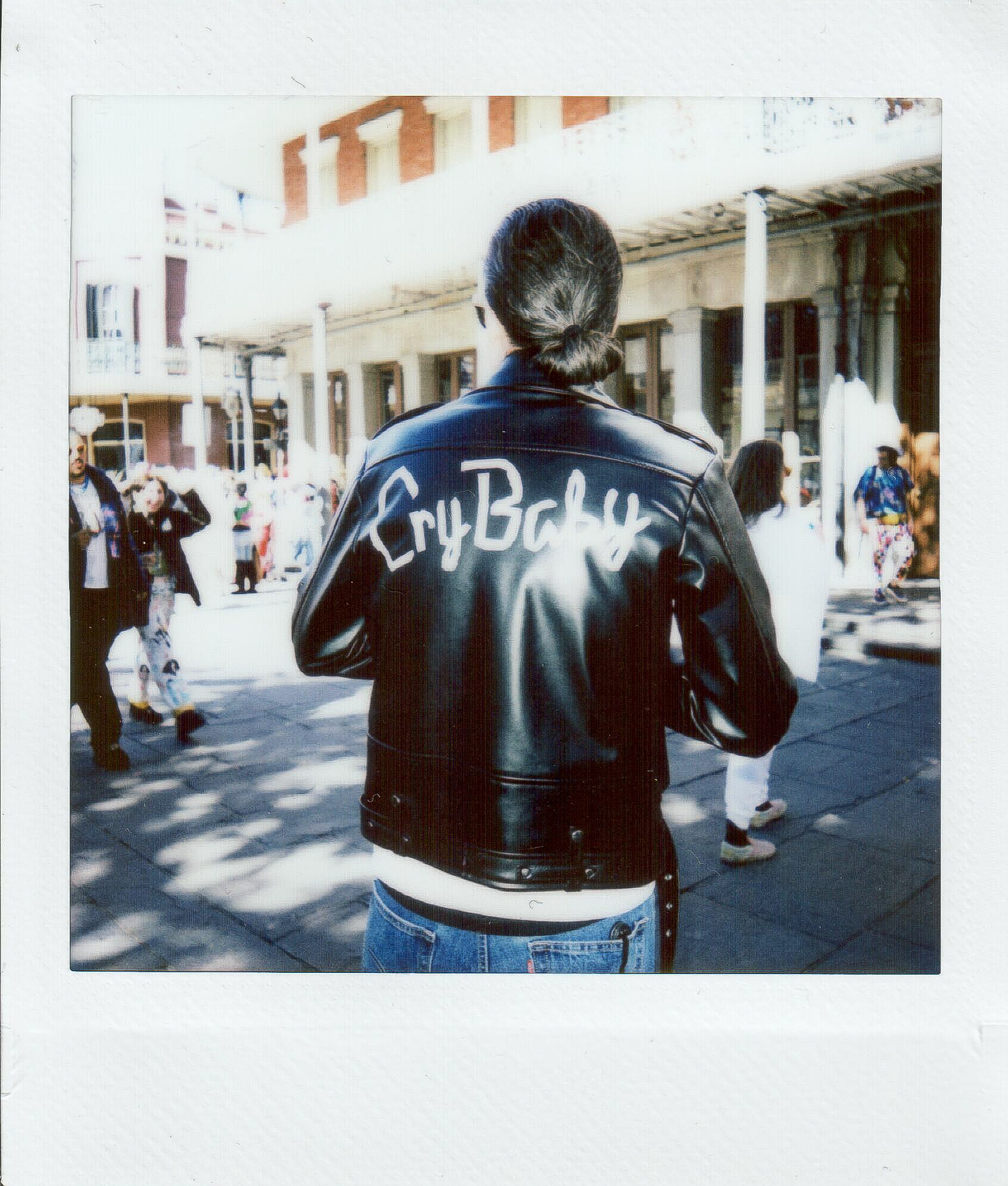
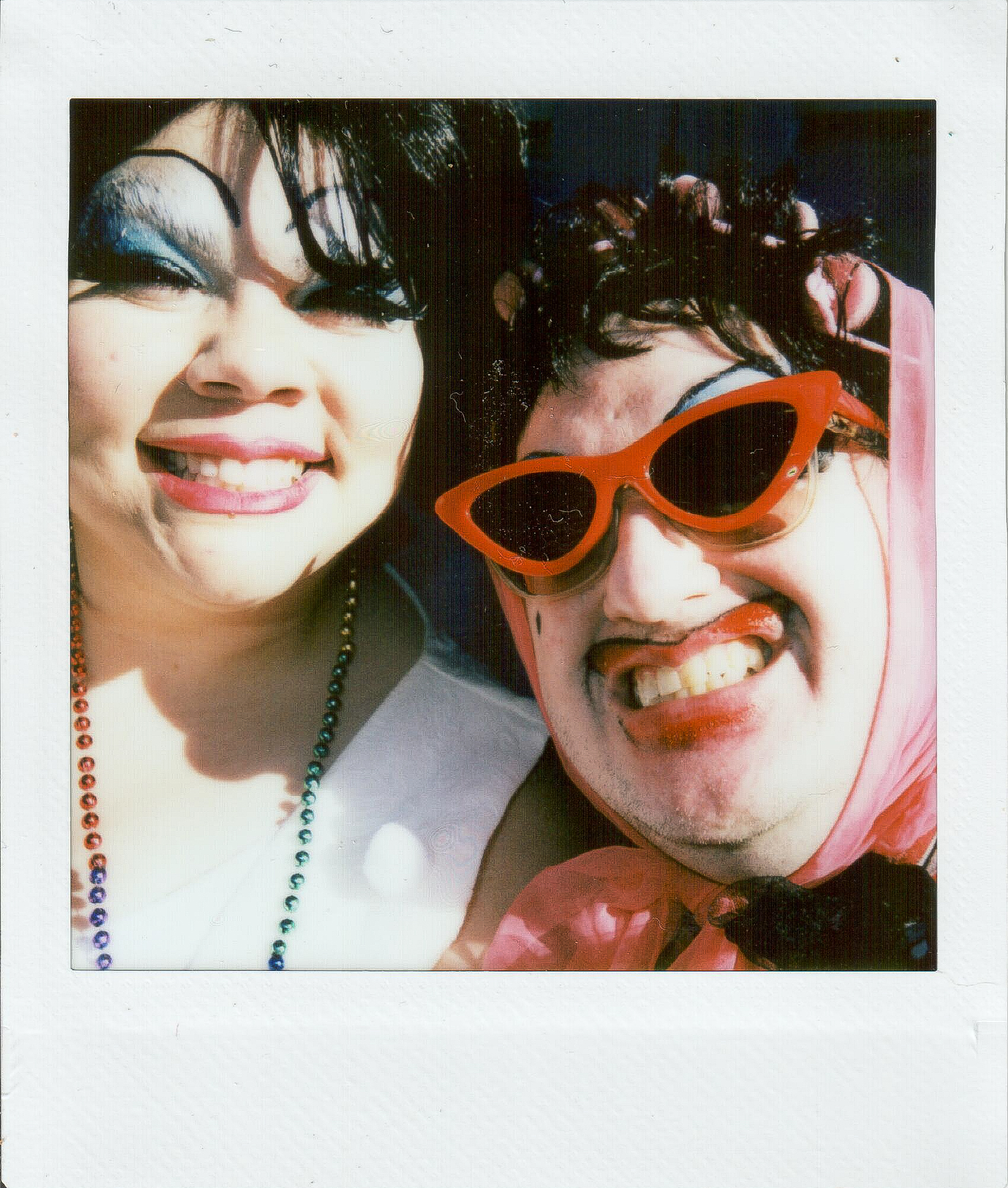
For Carnival 2017, a few members of the Swampflix crew joined forces to pray at the altar of the almighty Divine. The greatest drag queen of all time, Divine was the frequent collaborator & long-time muse of our favorite filmmaker, John Waters. Her influence on the pop culture landscape extends far beyond the Pope of Trash’s Dreamlanders era, however, emanating to as far-reaching places as the San Franciscan performers The Cockettes, the punkification of disco, and Disney’s The Little Mermaid. Our intent was to honor the Queen of Filth in all her fabulously fucked-up glory by maintaining a new Mardi Gras tradition in Krewe Divine, a costuming krewe meant to masquerade in the French Quarter on every Fat Tuesday into perpetuity.
There’s no telling how Krewe Divine will expand or evolve from here as we do our best to honor the Queen of Filth in the future, but for now, enjoy some pictures from our 2024 excursion, our sixth outing as Swampflix’s official Mardi Gras krewe:
There are plenty of legitimate things to complain about in the modern streaming era, from the exorbitant cost of subscribing to multiple services to the illusion of availability, which obscures the fact that most movies from before the 1990s are not currently available on any of those platforms. Those complaints do not apply to The People’s Streaming Service™, though. Tubi is the one beacon of hope in our streaming-era dystopia, offering a library of titles deep enough to rival cinema freaks’ fondly remembered video store days at the universally affordable price point of Free. All you have to put up with to access that library is frequent ad breaks, which can be jarring when watching high-brow classics like Un Chien Andalou but feels warmly familiar when watching the kind of schlock that pad out the late-night schedules of broadcast TV. For instance, I have a distinct memory of catching the final half-hour of the forgotten pro wrestling drama Below the Belt on a broadcast channel like MeTV after working a graveyard shift at a pub kitchen. I had no idea what I was watching or how I would ever get to see the rest of the picture, so I stayed awake through a few commercial breaks to soak up whatever scraps I could. About a decade later, Below the Belt is just sitting there on Tubi, out in the open, with fewer commercials and the same lack of fanfare. I can watch it start to end at any time. Our new streaming paradigm might be discouraging for people who grew up in households that could afford cable, but for those of us raised on service industry tips and antenna rods, there are some ways in which things have clearly gotten better.
It turns out watching Below the Belt in out-of-context scraps on broadcast TV was surprisingly true to how the movie plays in full. Filmed in 1974 but delayed for release until 1980, it has a similar troubled production history as the punk road trip drama Ladies and Gentlemen, The Fabulous Stains, which was also mostly remembered & rediscovered as a staple of late-night TV broadcasts. The same way The Fabulous Stains was shelved until it could be retooled for a post-MTV cash-in, Below the Belt was shelved until it could be marketed as a pro-wrestling knockoff of the massively popular Rocky series. It’s likely no coincidence that these two specific films were treated as low priorities for distributing & marketing, since they’re both women’s underdog stories set in creative industries run by men. The Fabulous Stains is about an all-girl punk band; Below the Belt is about women wrestlers working the regional circuit in the American South. The difference is that TheFabulous Stains‘ compromised form only becomes apparent in a last-second time jump that was clearly tacked on to cash-in on the rise of MTV. Below the Belt is an absolute mess throughout. This rise-to-regional-fame pro wrestling story has a convincing flair for low-budget melodrama, but it suffers from a crippling addiction to plot-summarizing montages that betrays its scrappy production history. There are tons of great raw footage & isolated scenes to work with (and many years of stagnation to work with them), but it still feels like the product of a panicked editing room. It’s as if they had a week to edit after five years of forgetting what they shot.
Actor-turned-psychologist Regina Baff stars as an unlikely recruit for the wrasslin’ business. She starts the film as a scrawny NYC diner waitress drowning under a mop of red curls, but she’s quickly scouted for her talent for brutality when she knees a coworker in the balls for sexually harassing her mid-shift. In the erotic thriller curio White Palace, that take-no-shit diner waitress scrappiness is rewarded with a months-long fuckfest with James Spader. In Below the Belt, it’s rewarded with a road trip to the American South, where she learns “the ropes” of the wrestling trade with a collection of jaded colleagues who’ve already seen it all. The story was “suggested by” the novel To Smithereens by Rosalyn Drexler who, appropriately enough, went on to write the novelization of Rocky under the pseudonym Julia Sorel. To Smithereens is a personal account of Drexler’s brief career as a wrestler in the 1950s, which helps explain the movie’s episodic, disconnected assemblage of wrasslin’ anecdotes. It’s not a story so much as it’s a collection of interesting characters, some of whom are played by real-life wrestlers, and the most memorable of whom is played by cult-cinema legend Shirley Stoler. Stoler only has a minor part as a road-weary wrassler with a handgun fetish, but she makes the most of it, screeching “Give me my gun back, you bitch!” in perfect camp pitch. The other MVP on the crew is R&B musician Billy Preston, whose increasingly loopy lyrics in his constant musical montage narration makes the whole movie feel maddeningly incomplete . . . in a mostly endearing way.
By the time the dozenth montage masks unintelligible wide-shot dialogue with song lyrics about “alligators in the chitlin trees,” “burly Birmingbama ham,” “taking baths in the sweet magnolia blossoms with the possums,” or whatever other Southern cliches Preston cooked up in a half-hour of studio time, it’s clear that Below the Belt was a compromised production. By the time the decreasingly credible, increasingly repetitive stock footage of the wrasslin’ crowds starts looking like it was shot on handheld super-8 cameras instead of professional equipment, the illusion of competence is fully broken. I was just as fascinated by the film in its full, fractured form as I was catching parts of it out of context on TV broadcast, though, simply because the retro fashions, characters, and mise-en-scène were so specific to a bygone era of regional professional wrestling. In that way, Below the Belt is more satisfying as a makeshift documentary than it is as a scene-to-scene drama, which means that I should make reading Drexler’s To Smithereens memoir a high priority this year. It’s perfect Tubi programming in either context, though, since the intrusion of commercial breaks can’t disrupt what’s already a chaotic narrative flow, and since the film is such an obscure curio that you’re grateful someone cared to host it in the first place (in HD, no less).
Welcome to Episode #205 of The Swampflix Podcast. For this episode, Britnee, James, Brandon, and Hanna discuss four cult classics directed by madman provocateur Ken Russell, starting with his Busby Berkeley-style backstage musical The Boy Friend (1971).
00:00 Welcome
01:16 Krewe Divine 03:13 Coonskin (1975) 11:48 Possum (2018) 14:35 The Parallax View (1974) 19:45 Schultze Gets the Blues (2003) 24:10 Queenpins (2011) 27:14 Lenny Cooke (2013) 33:20 The Butterfly Effect (2004) 40:03 Fish & Cat (2013) 43:40 Joe’s Apartment (1996)
47:07 The Boy Friend (1971) 1:05:13 Lisztomania (1975) 1:19:43 Altered States (1980) 1:36:00 Crimes of Passion (1984)
When Fred MacMurray’s horndog insurance salesman meets Barbara Stanwyck’s femme fatale at the start of Double Indemnity, she’s dressed only in a beach towel, fresh from sunbathing. After changing into a knee-length dress, she entertains him in the parlor, pretending to be interested in purchasing car insurance from his company but really feeling out his potential to help with the murder of her husband. He immediately catches onto her scheme (a hunch confirmed by her conversational shift away from automobile insurance to “accident” insurance), but he sticks around to flirt anyway, mostly for the vague promise of adultery. When Stanwyck uncrosses her bare legs during this uneasy negotiation to draw MacMurray’s attention to her girly ankle bracelet, it hit me; I had seen this exact dynamic play out before in Basic Instinct. I was watching a horned-up dope flirt with an obvious murderess in her cliffside California home, mesmerized by strategic flashes of her lower-body flesh. After I had already retitled the film Double Instinctity in my head, I later retitled it The Insurance Man Always Files Twice, following the clever “accidental death” of Stanwyck’s husband (only to later learn that the novel Double Indemnity was written by the author of the novel The Postman Always Rings Twice, James M. Cain). By the time the adulterous couple’s alibi for murder involving the anonymity of public train transportation had me retitling it Dangers on a Train, it became clear this was an immeasurably influential American crime picture that was directly imitated and alluded to throughout Hollywood long before Verhoeven arrived to sleaze up the scene.
Although it was released years before the term was coined by a French critic, Double Indemnity did not invent the film noir genre. Even if the genre hadn’t gotten its start in dime store paperback novels, Humphrey Bogart had already been led to his onscreen doom by Mary Astor’s femme fatale in Double Indemnity‘s suaver older cousin The Maltese Falcon a few years prior. Stanwyck’s own femme fatale archetype is also named Phyllis Dietrichson, a winking reference to earlier femmes fatale played by Marlene Dietrich in her pre-Code collaborations with Josef von Sternberg. Still, it’s early and iconic enough that modern audiences get to watch it establish the core tropes of film noir in real time, to the point where it plays like a pastiche of a genre that hadn’t even been named yet. Before MacMurray is hypnotized by Stanwyck’s anklet, he moseys around her dusty parlor and directly comments on the room’s shadowy lighting and Venetian blinds – two standard visual signifiers of classic noir. That narration track rattles on at bewildering speeds throughout the entire picture, referring to Stanwyck as “a dame” (when in 3rd person) and “Baby” (when in 2nd person) so many times that it verges on self-parody. That narration also frames the entire story as a flashback confession to the reasoning behind the central murder, a narrative structure echoed in classic noir melodramas like Mildred Pierce and director Billy Wilder’s own Sunset Boulevard. Double Indemnity is not the first of its kind, but it is the Platonic ideal of a major studio noir, the same way Detour exemplifies the ideal of the genre’s Poverty Row variety. And even Detour‘s femme fatale Ann Savage starred in her own shameless knockoff of the picture initially titled Single Indemnity, before it was sued by Paramount Pictures into changing its title to Apology for Murder.
Although Fred MacMurray easily racks up Double Indemnity‘s highest word count on the narration track, he’s not the cast’s MVP. If nothing else, veteran character actor Edward G. Robinson fast-talks circles around him as his nosy business partner who unravels the adulterous couple’s perfect insurance-scam murder simply by following the hunches in his stomach (which he refers to as his “little man”). The two insurance men have a great, intimate rapport that plays like genuine affection, whereas MacMurray’s carnal attraction to Barbara Stanwyck is purely violent hedonism. Stanwyck is the obvious choice for MVP, then, as being led around on an LA murder spree by the leash of her anklet is such an obviously bad idea, but she’s a convincing lure anyway. Like Michael Douglas’s dipshit cokehead detective in Basic Instinct, MacMurray knows this woman will lead to his doom, but he still gives into her schemes because the sex is that good – a business deal sealed when she appears at his apartment in a wet trench coat for their first act of consummation. She isn’t afforded nearly as much screentime as MacMurray, but her every appearance is a cinematic event, from her initial beach towel entrance to her unflinching witness of her husband’s murder, to her grocery store appearance in Leave Her to Heaven sunglasses and a Laura Palmer wig. Barbara Stanwyck’s Phyllis Dietrichson may owe thematic debt to the Marlene Dietrich femmes fatale before her—among other pre-Code influences—but she’s clearly striking and conniving enough to truly earn the term “iconic” that gets tossed around so liberally these days. MacMurray’s job is just to play the stooge who drools at her anklet-adorned feet, which he does with humorous naivete.
It’s difficult to imagine how shocking the seediness of Double Indemnity would have registered in the 1940s, when noir was still taking its first baby steps. It took Wilder years to get a version of the script approved for production, since unrepentant murder & adultery were still fictional taboos instead of standard soap opera fodder. Along with cowriter (and noir novelist in his own right) Raymond Chandler, Wilder drives the wickedness of his characters home in a climactic double-crossing argument where Stanwyck declares both she and her duped insurance man are “rotten,” and he coldly replies, “Only, you’re a little more rotten.” With barely suppressed pride, she spits back, “Rotten to the heart.” There is little in the way of whodunit mystery to the script; it’s working more in the howcatchem style of a Columbo or Poker Face. The real mystery is just how rotten these characters are at heart, a contest Phyllis Dietrichson wins in a walk. By the time major-studio noir had its revival in Hollywood’s erotic thriller era, Double Indemnity‘s shock value had to be ratcheted up by films like Basic Instinct and the Postman Always Rings Twice remake to catch up with a jaded, seen-it-all audience. The rotten-hearted cruelty of Stanwyck’s femme fatale remained deliciously evil as times changed, though, and even Sharon Stone’s bisexual murderess in Verhoeven’s version could only play as an homage rather than an escalation.