Boy (2012)

EPSON MFP image

fivestar

Taika Waititi very nearly made my favorite movie released in the US last year. The vampire mockumentary What We Do in the Shadows was just barely edged out of my Best of the Year spot by Peter Strickland’s immaculate art piece The Duke of Burgundy, but that might merely be due to a larger, cultural tendency to devalue comedies as high art. Waititi’s horror comedy is one of the more quotable,endlessly watchable films I’ve seen in a long while and suggests a glimpse of a comedic master at the top of his form. Imagine my surprise, then, when I discovered that What We Do in the Shadows wasn’t even the best title in the director’s catalog to date, not by a long shot.

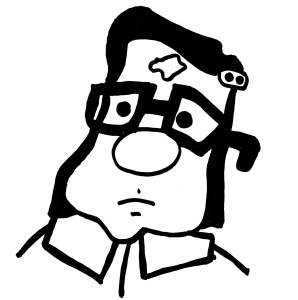
Before the release of Waititi’s cult hit television show Flight of the Conchords & his ultra-quirky romantic comedy Eagle vs Shark, he began working on his most personal work, his most obvious passion project: Boy. Boy wouldn’t reach theaters until Conchords & Eagle had already seen the light of day, however, as Waititi had the good sense to let the film fully incubate before hatching. A film centered on the Maori people (the indigenous Polynesian people of New Zealand & Waititi’s own heritage), Boy eventually stood as the highest-grossing film in New Zealand’s history, obviously striking a chord with a lot of the country’s citizenry. Still, it took two years for the film to earn US distribution despite this success and it barely made a splash once it crossed over. No matter. Waititi made a deeply personal, insular film that exquisitely captures the fantasy-prone imagination of young children’s minds in a way that feels wholly authentic and endearing. Boy is by every measurement a triumph. It’s at times hilarious, devastating, life-affirming, brutally cold, etc. Waititi risked taking his time to deliver a fully-realized, personal work on his own terms and the final product moves you in the way only the best cinema can.

Set in 1984 New Zealand, Boy follows an impoverished community of Maori people, particularly children, through a seasonal slice of life change/growth. The film’s protagonist, the titular Boy, dreams of escaping his community’s limited freedoms when his father returns home from prison/life on the road. Despite the divine reverence Boy holds his father in, the reality of the man is more akin to any petty thief/wannabe biker shithead who treats cheap thrills & even cheaper marijuana in higher regard than his own family. Boy thinks is father is so cool, but the truth is he’s a selfish man-baby just waiting for the next opportunity to break his son’s heart. Waititi himself does a great job performing as Boy’s deadbeat dad, mixing just enough Kenny Powers/Hope Anne Gregory selfishness into his personality to make it obvious why he’s an unfit parent, but leaving enough likeability floating to the surface so that it’s still believable that his son would want to follow in his buffoonish footsteps. The child actors in Boy are similarly phenomenal & nuanced, which is all the more impressive considering Waititi made some last minute casting changes before filming.

Boy pulls off the next trick of starting as a hilarious knee-slapper of a childhood-centered comedy, but then gradually laying on an emotional engine that could choke you up if you allow it to hit home by the third act. It’s difficult to tell exactly how much of the film is somewhat biographical to Waititi’s personal life, but the film does display an intimate, heartfelt familiarity with its plot & characters that wholly sells their potency & nuance. Temporal references like Michael Jackson & E.T. mix with crayon sketches & magazine collage fantasies that perfectly capture a very specific mind in a very specific space & time. With his last two films, Boy & Shadows, Waititi seems to be on a bonafide roll, firing on all cylinders & fully realizing the worlds he set to illustrate. I can’t even begin to describe how excited I am to see this streak continue in his upcoming Thor & Hunt for the Wilderpeople movies. He’s one of the few directors working right now whose mere name makes me giddy.

-Brandon Ledet

Roger Ebert Film School, Lesson 11: Shiloh (1997)

EPSON MFP image

Roger Ebert Film School is a recurring feature in which Brandon attempts to watch & review all 200+ movies referenced in the print & film versions of Roger Ebert’s (auto)biography Life Itself.

Where Shiloh (1997) is referenced in Life Itself: On page 64 of the first edition hardback, Ebert reminisces about his childhood dog Blackie & all of the cinematic dogs he’s fallen in love with over the years. He writes, “Every time I see a dog in a movie, I think the same thing: I want that dog. I see Skip or Lucy or Shiloh and for a moment I can’t even think about the movie’s plot. I can only think about the dog. I want to hold it, pet it, take it for walks, and tell it what a good dog it is. I want to love it, and I want it to love me. I have an empty space inside myself that can only be filled by a dog.”

What Ebert had to say in his review: “Adults may have the power to take away a kid’s dog and tell him a story about it, but they do not have the right. Some of those feelings came into play when I saw ‘Shiloh,’ which is a remarkably mature and complex story about a boy who loves a dog and cannot bear to see it mistreated. It isn’t some dumb kiddie picture. It’s about deep emotions, and represents the real world with all of its terrors and responsibilities.” -from his 1997 review for the Chicago Sun-Times

If My Dog Skip was proof that fluff films about dogs can easily escape criticism by relying on the cuteness of their puppy protagonists and Wendy & Lucy proved that the human-dog relationship could actually be put to a higher dramatic purpose, where does that leave Shiloh, the third film in the dog-centric trio Ebert narrowed in on as exemplifiers of canine cinema? The answer is somewhere in the middle of those two extremes. Much like My Dog Skip, Shiloh has a cheap, oddly nostalgic schmaltz to it that makes you wonder how it ever escaped straight-to-VHS purgatory in the first place. However, its central story carries a striking brutality that feels way out of place with its generic kids’ movie trappings, aligning it more with Wendy & Lucy‘s emotional harshness on a thematic level. Shiloh is a difficult film to pigeonhole due to the clash of its Hallmark Channel cheese with its the-hard-facts-of-life coldness and the resulting tone is deeply off-putting at times due to this internal struggle. It’s at times exactly what you’d expect from a film about a boy & his beagle and at times the darkest, furthest thing from it.

Shiloh opens with a heartless hunter beating a young beagle due to its stubborn inability to perform simple commands. He eventually kicks the poor pup so hard that it runs away & seeks a new owner in a young boy. In a simpler film the boy’s family would’ve helped him keep the dog away from the evil, abusive hunter. Shiloh surprises by instead raising moral crises about responsibility, honesty, and ownership. The boy’s father insists that he return the dog to the dark-souled hunter, as the dog is legally his property. The hunter treats the dog as a worker or an appliance, not even assigning it a name. The boy loves the animal as a pet, but that doesn’t necessarily give him the right to keep it. He spends his entire summer trying to earn the ownership, attempting to win the dog back both through above-the-board means like money earned from physical labor and through shady practices like theft & dishonesty. The drunken hunter’s villainy is just as much of a grey area as the means through which the boy tries to earn “his” dog back. His coldness is a result of a lifetime suffering through the cycles of abuse & the boy can’t quite fully bring himself to hating the brute, despite his constant threats to kill & maim the dog he loves.

I’m not entirely on board with Shiloh‘s central man-up message that values a very rigid, old-fashioned version of masculinity that honestly is losing its relevance in the modern world. There’s a small amount of criticism of this attitude in the film, like when the hunter explains “It’s just like the Bible says, animals are put here for us. They ain’t got no other purpose or feelings.” This is obviously untrue & is meant to play as a despicable attitude, but there’s still plenty of “A man is only as good as his word” & other toughen-up cliches that rub me the wrong way here. Still, I give the film a lot of credit for raising the stakes so high in its central conflict and making a very real, very terrifying threat of abuse the centerpiece of a children’s movie about a cute beagle. I can see why Ebert was so impressed with how willing the film was to grapple with hefty moral issues. It probably also struck a particular chord with the critic because his own childhood dog, Blackie, was part beagle, a bias he has no problem openly admitting at length in his review. Still, I can only see the film as a very minor work that’s a little overlong for its message & probably undeserving of its two (!!!!) sequels. Although it’s more serious-minded than the suffocating cheese of My Dog Skip I think they’re about on the same level in terms of overall quality. The only film in this makeshift doggy trilogy that deserves to be treated as a work of art is Wendy & Lucy, which is truly fantastic & touching in a way the other two films don’t even approach.

EPSON MFP image

Roger’s Rating: (3.5/4, 88%)

threehalfstar

Brandon’s Rating (3/5, 60%)

three star

Next Lesson: Mean Streets (1973)

-Brandon Ledet

Roger Ebert Film School, Lesson 10: Wendy and Lucy (2008)

EPSON MFP image

Roger Ebert Film School is a recurring feature in which Brandon attempts to watch & review all 200+ movies referenced in the print & film versions of Roger Ebert’s (auto)biography Life Itself.

Where Wendy and Lucy (2008) is referenced in Life Itself: On page 64 of the first edition hardback, Ebert reminisces about his childhood dog Blackie & all of the cinematic dogs he’s fallen in love with over the years. He writes, “Every time I see a dog in a movie, I think the same thing: I want that dog. I see Skip or Lucy or Shiloh and for a moment I can’t even think about the movie’s plot. I can only think about the dog. I want to hold it, pet it, take it for walks, and tell it what a good dog it is. I want to love it, and I want it to love me. I have an empty space inside myself that can only be filled by a dog.”

What Ebert had to say in his review: “The people in [Wendy and Lucy] haven’t dropped out of life; they’ve been dropped by life. It has no real use for them, and not much interest. They’re on hold. At least searching for your lost dog is a consuming passion; it gives Wendy a purpose and the hope of joy at the end. That’s what this movie has to observe, and it’s more than enough.” -from his 2008 review for the Chicago Sun-Times

“You can’t get an address without an address. You can’t get a job without a job. It’s all fixed.”

Ebert was onto something when he mentioned in his review of My Dog Skip that certain movies, particularly movies about dogs, exist outside of critical language. The pathos of a pet owner’s relationship with their dog is strong enough in its sentimentality that a movie doesn’t have to do much to get by on that emotion/nostalgia alone. My Dog Skip skated by in this way as a passably okay movie. It’s not particularly well made or interesting, but its sappy love for canines was sufficient enough on its own to escape any pointed criticism. Shooting the movie down would be like criticizing a birthday card from your grandmother for its lack of literary ambition.

Wend and Lucy has no such tendency to rely on that dog owner sentimentality for easy drama/emotional provocation. A dirt cheap drama starring Michelle Williams years before she was a recognizable name, Wendy and Lucy tells the story of a down-on-her-luck migrant worker traveling to Alaska in hopes of landing a seasonal gig at a cannery. While on her way the titular Wendy finds herself near broke, friendless, and without a vehicle in small town Oregon. Worst yet, her only companion, a dog named Lucy, goes missing. Instead of the broad, overly sentimental strokes My Dog Skip paints with, Wendy and Lucy finds tonal devastation in subtle details. The film’s tendency for narrative understatement threatens to alienate the audience from caring about or fully understanding Wendy’s plight, but the feeling of having lost your dog/your entire world is such a universally recognizable gut punch that her predicament is all too relatable from the outside looking in.

Besides employing the universality of human-dog companionship to clue the audience in on where Wendy is in life, the movie also relies on recognizable hallmarks of an economy in shambles to introduce us to her struggle. She’s plundering pocket change for dog food, sifting through highway litter for recyclable aluminum cans, shoplifting, and relying on word of mouth from train-hopping crusties (including Will Oldham among them of all people), who are dog magnets in case you were unaware, just to scrape by. Wendy is recognizable to the audience because she’s every poor soul who’s been left behind by a cutthroat economy that has no room for them. This is the kind of character for whom $50 could make or break their entire life. Wendy’s background & motivation don’t need to be any more specific for the film’s emotional stakes to land. We know who she is & we’re invested in her success.

A lesser film might’ve crafted some kind of explicit metaphor out of Wendy’s lost dog/lost place in the world, but, again, this is not the same kind of drama as the on-the-nose (er, snout?) emotional manipulation as that of My Dog Skip (or, more recently, White God). Wendy and Lucy’s overbearing sense of dread & imminent danger is more of a tone than a blatant provocation. The vulnerability of Wendy being alone in a strange place, not having a place to sleep, and resorting to the nerve-racking tactic of tying Lucy up when entering places of business (Lucy is a good girl, but that always makes me nervous) all combine to make for a terrifying atmosphere. The stakes are relatively small here compared to a summer blockbuster where a CGI threat from another dimension might crush an entire city, but that small scale specificity only helps the emotional weight feel significant. One of the saddest shots in this film is a dialogueless pan across all the jailed dogs’ cells at a local pound. One of the biggest offenses committed is a character coldly spitting, “If a person can’t afford a dog they shouldn’t have a dog.” I’ll admit that some of the drama here is dependent upon the audience’s sentimental affection for dogs in general (this particularly hit home for me when Wendy refers to Lucy as “Lou”, which was the name of my first pet, a cat), but that sentiment was a starting point, not an end goal. Wendy and Lucy moves in small, calculated stabs at heartbreaking drama that makes that jumping point necessary, but the tenderly sad payoff of the end more than justifies the means.

EPSON MFP image

Roger’s Ranking: (3.5/4, 88%)

threehalfstar

Brandon’s Ranking: (4/5, 80%)

fourstar

Next Lesson: Shiloh (1996)

-Brandon Ledet

The Skeleton Twins (2014)

EPSON MFP image

fourstar

In the WWE there’s a little used, very illegal tactic of winning matches known as “twin magic“. This particular form of cheating occurs when wrestlers Brie & Nikki Bella swap places mid-match beyond the ref’s comically limited vision and use their identical twin likeness to win in a dire situation. It’s typical heel behavior, but also very specific to their sisterly gimmick (and also amusing because they barely look similar to one another at this point in time). I mention all this because the idea of “twin magic” exists far beyond the wrestling ring & the concept of confusing twin identities. “Twin magic” can also refer to, in my mind at least, the inexplicable mental link twins seem to have on an almost telepathic level. Twins can sometimes relate to each other in a supernaturally close, metaphysical kind of way that strains our understanding of the basic ways two human minds can communicate with one another. Their connection is, in a word, “magic”.

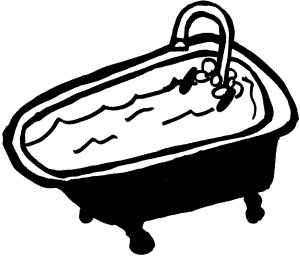
The recent indie drama The Skeleton Twins opens with an example of “twin magic”much more bleak than any you’re likely to see between pro wrestling’s The Bella Twins. The film opens with estranged twins (played by SNL vets Bill Hader &  Kristen Wiig) both preparing to commit suicide in bathtubs on opposite ends of the country. Spooky. Hader’s attempt is the more “successful” of the two & the shock of the news of her brother’s anguished state brings Wiig to stage a reconciliation after a decade apart. This is about as dark of a place as a movie can start off and, indeed, The Skeleton Twins is sadistically committed to piling on even more tragedy from there. A fuzzy childhood memory of a parent’s death, a past controversy involving a teacher’s sexual exploits with an underage student, and a current struggle with substance & sexual addiction all weigh heavily on the film’s grim proceedings. Another bit of “magic” at work here, however, is how the film’s talented cast & understated writing keep this tragedy from feeling soul-crushingly dour. It’s a sad film, for sure, but it also can be soulfully uplifting & deliriously funny in spurts.

Hader & Wiig have incredible chemistry from their SNL days that sells the The Skeleton Twins‘s central sibling bond much more comfortably & believably than would even be necessary for the movie to work. Wiig has delivered so many of these depressive, self-hating performances in past projects like Welcome to Me & The Diary of a Teenage Girl that at this point her dramatic chops are even more finely tuned than her comedic ones. Hader is more of the newcomer in the soul-crushing cinema game & it’s genuinely fascinating to watch him embody what his character calls “another tragic gay cliche” in a way that feels realistic enough to be genuine. Hader’s twin is more of a tightrope in terms of characterization, since his effete homosexual mannerisms could easily devolve into caricature, but the actor pulls it off in a wholly convincing, endearing way (despite his theater kid theatricality & gothy acerbic sarcasm). Oddly enough, it’s Luke Wilson who steals the show on the comedic front, playing a naive “Labrador retriever” of a dopey husband. Wilson is so on point in this role that he can make the simple act of eating a frozen waffle & talking about his shoes a total knee-slapper of a character beat. Hader & Wiig are more in charge of the film’s lowkey line of pitch black dramedy and it’s their intimate exchanges of sour worldviews & mental anguish that make the film sing in its own quiet, understated way.

I was just complaining that the recent indie drama Adult Beginners failed to coalesce its interesting ideas & talented cast into a cohesive product above anything beyond basic mediocrity. The Skeleton Twins is a perfect example of how the same approach of small stakes understatement & depressive humor can work when it’s handled a little more confidently. The film’s Halloween costume motif is a great example of how a metaphor can be developed with very simple gestures (in this case linking current familial tragedies to ones buried in the past) instead of the way Adult Beginners briefly addresses its central swimming lessons metaphor without any clear intent for its meaning. Both films are, perhaps, exercises in small ambition indie drama, but The Skeleton Twins makes the formula work in an engaging, even devastating way. I don’t know if it’s a case of better writing or the “twin magic” performances of Hader & Wiig that make the difference, but The Skeleton Twins is a shining (and depressing) example of the lowkey indie dramedy done exactly right.

-Brandon Ledet

Adult Beginners (2015)

EPSON MFP image

three star

Not every film is greater than the sum of its parts. Case in point: the cast for last year’s indie dramedy Adult Beginners is just oozing with talent, but the film itself if a little mushy & muddled in a way that can’t help but underwhelm. A Duplass Bros production starring Nick Kroll, Rose Byrne, Jane Krakowski, Jason Mantzoukas, and Bobby Cannavale sounds like a perfect formula for a lowkey drama with real emotional & comedic staying power, but Adult Beginners struggles to be much more than light entertainment with a promising premise & a failure to launch. The film is serviceably entertaining as decent Sunday afternoon romcom viewing fare, but I expected a little more out of it considering the level of talent involved. It’s an enjoyable film, but not a particularly efficient or memorable one.

Nick Kroll begins Adult Beginners as a cocaine-addicted sexual deviant with an endless appetite for greedy monetary gains, displays of power, and notoriety among his sycophant peers. In other words he’s a run of the mill NYC business man (in movie speak, at least). When his empire inevitably crumbles & he becomes a business world pariah, he has to move back home under the roof of his somewhat estranged sister (Byrne) & her increasingly emotionally distant husband (Cannavale). In order to pull his weight & learn humility, Kroll’s heartless business prick must care for the stressed couple’s hyperactive child Teddy,. He treats Teddy like a monstrous terror, but the truth is the kid is just a perfectly normal toddler. Not much changes once this comedic set up is established. The family learns to adjust & become comfortable with its unexpected shift in household dynamic & Kroll’s broken protagonist learns to become comfortable acting like a decent, empathetic human being. Throw in a third act crisis to shake things up a bit & a rapid resolution to that last minute monkey wrench and you have your basic outline of a typical romcom-style dramedy with an exceedingly charming cast.

Part of the reason why Adult Beginners is so frustrating is that it could’ve been so much more than that kind of charming, but ambitionless middle ground. I smelled trouble as soon as the opening scroll announced a “Story By” credit for three different writers (Kroll among them). At Adult Beginners‘s worst moments it feels like it was compiled from a Frankenscript of several half-cooked stories that didn’t quite come together as a cohesive whole. Byrne’s stressed out mother has troubling alcohol addiction & workplace politics issues that threaten to complicate her livelihood & her pregnancy, but never amount to any clear kind of narrative conflict. Kroll’s business douche protagonist never really shows any personal growth or epiphany within the film other than growing increasingly comfortably with his role as a “manny” (man nanny). Cannavale’s gloomy husband admits his mistake in growing distant, but the couple’s reconciliation is never on public display. Worse yet, the film’s central/titular metaphor about an “adult beginners” swimming class is lazily introduced & referenced only briefly, never materializing into anything too significant or incisive. It’s tempting to think of these half-cooked ideas as intentionally understated narrative & character beats, but the film never really earns enough confidence to warrant that kind of patience & understanding. It’s a messy movie that only remains endearing through the sheer will of its talented cast. It’s not something I’d recommend as a greatly orchestrated, highly impactful small scale drama, but it’ll do as light viewing when you’re in need of this kind of cinematic comfort food. The letdown is that there are germs of two or three much better movies lurking just right under the surface of that mediocrity.

-Brandon Ledet

Love (2015)

EPSON MFP image

three star

Browsing through John Waters’s Top Films of 2015 list (which included personal favorites Tangerine & The Diary of a Teenage Girl! whoo!), I was reminded of a film I was once mildly interested in, but had since completely forgotten: Gaspar Noé‘s Love. I’m not typically a fan of Noé‘s work. His provocateur tendency for shock value & Max Landis-levels of insufferable public persona usually keep me away from rushing to check out his work. Waters has a way of getting me to scope properties far outside my comfort zone, though (Alvin & The Chipmunks: Road Chip comes to mind). His blurb for Love made the film feel near impossible to resist: “The first Official Selection of the Cannes Film Festival to show hard-core heterosexual rimming—in 3-D, no less. Thank God for Gaspar Noé.” With a byline like that from The Pope of Trash himself, I figured Love was worth a gander no matter how little patience I have for Noé’s personality.

Love is an erotic drama featuring not one, but two overriding gimmicks: 3D & unsimulated sex. Whether the film is a heartfelt indie drama that approaches high art in its fearless depiction of human sexuality or a well-manicured HD porno with a nice soundtrack is mostly up to the audience. Director Gaspar Noé certainly didn’t distance himself from the porno accusation. He was quoted before the film’s release as saying, “With my next film I hope guys will have erections and girls will get wet.” Sounds like porn to me. In modern film naked breasts are plentiful, but erect penises are . . . hard to come by. Whether or not Noé is aiming for pure shock value, you have to admit that there’s something unique about an art house drama that not only starts with an unflinching depiction of mutual masturbation in its very first frame, but also features an erect penis twice ejaculating directly onto the camera lens (“in 3-D no less!”). However, it’s difficult to claim that the film purely exists for titillation. Only 15 or so minutes of the film’s 135 minute runtime are hardcore sex (though those 15 minutes obviously make a massive impact) and the drama that surrounds that pornographic material is far too sad to be sexually stimulating. The truth is, of course, that Love exists somewhere between those two extremes, high art & cheap porn, and that push & pull is partly what makes the film an interesting work.

The trouble with Love, unfortunately, is that its central drama isn’t nearly as engaging as its hardcore 3D sex gimmick. Noé positions himself as something of an indie circuit carnie huckster here: he promises the greatest show on Earth with a cavalcade of fleshy delights, but once you’re in the tent he has already separated you from your dollars & has very little pressure to deliver the goods. Our fearless protagonist in this particular 3D sex circus is a selfish asshole of a film student emotionally stuck between two women he doesn’t deserve: the mother of his child & an ex-girlfriend he cheated on to produce that child. When he discovers that his ex (who has a history of self harm & substance abuse) has been missing for months, he takes a drug-addled trip down memory lane, ignoring his current family unit so that he can mentally relive his glory days of vicious break-ups, drug-fueled arguments, and, of course, rampant forays into sexual bliss & discord that he experienced with the one who got away. He imagines that his life would’ve been better if he never split with his now-missing ex, but never takes personal responsibility for how shitty things turned out, when it was most certainly his fault. Worse, his disregard & negativity towards his current relationship shows the pattern repeating itself and when the mother of his child spits “Take care of your past while I take care of your future” it’s all too apparent where their own romantic bond is heading. The sad thing is that he’ll probably regret that break as well & find anyone but he person responsible, himself, to blame for it. His negativity & selfishness are purely toxic. God help anyone who loves him.

It’s just as difficult to pinpoint exactly how you’re supposed to feel about Love‘s protagonist as it is to decide where the film falls on the art/pornography divide. He’s a selfish ass, prone to sexist remarks like “Living with a woman’s like sharing bed with the CIA” or calling the supposed love of his life variations of “whore”, “cunt”, “bitch”, etc. He also uses transphobic language in a scene that felt like it would’ve been uncomfortable as far back as the 90s, but even Noé himself has referred to the actress in that scene as a “tranny” in his interviews. Gaspar Noé aligns himself so closely with the protagonist that it’s impossible to separate them. Murphy is an idealist film student who wants “to make movies out of blood, sperm, and tears” & “make a movie that depicts sentimental sensuality.” I’m not sure Love accomplishes either of those goals (except maybe the part about the semen), but those sentiments really do feel like a mission statement directly from the horse’s mouth. The question is if Noé is living out his own romantic bitterness on screen here or skewering himself for indulging in that bitterness & self-absorption in the first place. I don’t have an answer,but I will say that this aspect of the film isn’t nearly as interesting as its salacious carnie gimmickry. Its story is pitifully thin, drawn out, and overlong. No matter what Noé was trying to say with his romantic navel-gazing, what he ended up proving was that the least interesting thing about Gaspar Noé films is Gaspar Noé himself.

By all means, Love shouldn’t be a likeable film. Its director is something of a self-indulgent ass. Its acting isn’t anything special, which is a major problem for a romantic drama built on emotional performance. Its dialogue can be laughably awful, especially in Murphy’s internal monologues that include statements like “I’m a loser. Yeah, just a dick. A Dick only has one purpose: to fuck. And I fucked it all up.” Ugh. Its electric guitar solo soundtrack often spoils the mood of its erotic moments with unbearable cheese. Themes are drilled home in obvious, self-congratulatory ways, such as when a title card explains the definition of Murphy’s Law (because the protagonist’s name is Murphy! get it?!). Still, Noé sets this paper thin, self-indulgent narrative to an interesting enough visual language that it’s impossible to brush it off entirely as an empty exercise. Beds are colorful voids playfully shot form above as the hardcore sex sessions they host play out in a frank, striking manner. The film’s drug use isn’t particularly interesting by its mere existence, but they do lead to interesting psychedelic images made of flashing lights & 3D ejaculate that afford the film a unique look. The same dream logic of haunting memories that elevated the relatively week narrative of the VHS slasher Sorority House Massacre work their wonders here in an interesting way as well. A tour through a European swinger’s club is treated with the same sex  church reverence as the gorgeous Atlanta strip club sequence of Magic Mike XXL. The stark, alternating lights of dance clubs & bedrooms can be downright hypnotic. Love might be riding on the novelty of its hedonistic 3D sex gimmick, but it does it well enough not to lose your attention before the credits roll.

If Gaspar Noé was trying to break any special sort of ground here, I don’t believe he accomplished his goal. Much like history’s first 3D feature film, Bwana Devil, Love talks a big game about delivering a one of a kind spectacle, but ultimately ends up feeling like so, so many works that came before it . . . just in 3D. I’m not sure, for instance, that the world needed another indie drama about how monogamous jealousy & fear of polygamy can ruin long-term relationships. That story’s been told before with much more interesting nuance in its character & narrative beats. As far as the hardcore, unsimulated sex goes, 2014’s French sex thriller Stranger by the Lake indulged in the same pornographic impulses, but had a lot more to say about the push & pull between lust & companionship. I honestly believe that John Waters has made the best case for Love’s position as a groundbreaking work of cinema. It truly is “The first Official Selection of the Cannes Film Festival to show hard-core heterosexual rimming—in 3-D.” That much is true (although it’s possible Mr. Waters mistook some of the film’s cunnilingus for rimming). Even if that’s all the film accomplished I still enjoyed moments where it desperately reached for more, Gaspar Noé‘s obnoxious personality notwithstanding.

-Brandon Ledet

Roger Ebert Film School, Lesson 2: Persona (1966)

Roger Ebert Film School is a recurring feature in which Brandon attempts to watch & review all 200+ movies referenced in the print & film versions of Roger Ebert’s (auto)biography Life Itself.

Where Persona (1966) is referenced in Life Itself: In the first edition hardback, Persona is referenced on pages 1, 154, 267, and 270. It is the film most often referenced in Roger’s book. He first likens its opening credits & mid-film “break” to the way life & memory flicker into existence, initially without cohesion. He later describes how as a young critic he met an inability to discuss exactly what happens in the film, which prompted him to write about what happened to him as an audience instead (a technique of critical subjectivity he would return to often). He also describes Bergman’s casting of the film as being surprisingly impulsive in a brief anecdote.

What Ebert had to say in his reviews: “Most movies try to seduce us into forgetting we’re ‘only’ watching a movie. But Bergman keeps reminding us his story isn’t ‘real.’ At a crucial moment in his plot the film seemingly breaks, and after it rips for a dozen frames it seems to catch fire within the projector. We see it melting on the screen. Then blackness, then light and then the old silent comedies again, as Persona starts again at the beginning.” – From his 1967 review for the Chicago Sun Times

Persona is a film we return to over the years, for the beauty of its images and because we hope to understand its mysteries. It is apparently not a difficult film: Everything that happens is perfectly clear, and even the dream sequences are clear–as dreams. But it suggests buried truths, and we despair of finding them. Persona was one of the first movies I reviewed, in 1967. I did not think I understood it. A third of a century later I know most of what I am ever likely to know about films, and I think I understand that the best approach to Persona is a literal one.” – From his 2001 review in his “Great Movies” series

There are two massive, go for broke moments in Ingmar Bergman’s small cast drama Persona that tend to overwhelm discussion of the film. The first is the film’s opening six minutes. A chaotic montage of loose film strips, whirring projectors, impossibly bright light bulbs, grainy footage of what looks like a silent era horror, spiders, human hands, animal slaughter, exposed organs, an erect penis, and crucifixion imagery overwhelm the film’s first breaths. Even today these fist few minutes of visual chaos are disturbingly vivid, but difficult to pinpoint with any certainty as to what they could mean, exactly. Somewhere in the fog I see a progression of life art death, but that personal interpretation is far from concrete in any significant way. As difficult as it is to decipher Persona‘s opening minutes today, it’s even more of a mystery to me what the experience would’ve been like for someone watching the film fifty years ago. As if that opening barrage weren’t enough, Bergman then repeats the trick a second time in the film’s second Go For Broke moment. A little over halfway into the film’s runtime the movie essentially breaks down & returns to the visual chaos of its opening minutes, wiping the slate clean & completely changing the rules of its delicately laid-out narrative. It makes total sense that these two moments would dominate most discussion of Persona & the strange places its story goes in its haunting final minutes, but for the most part the film itself is a rather quiet, intimate drama.

A somewhat mousy nurse is assigned as a caretaker for an actress who has not spoken in three months’ time. After a dreary stay at a hospital, the two women attempt a therapeutic, seaside respite to help cure the actress of her anxieties. To fill the void left by her nonverbal companion, the nurse gabs incessantly, first about seemingly nothing at all and then about deep seated fears & regrets. Take away the two experimental jaunts of rapidfire montage & Persona is mostly a collection of monologues, sometimes delivered directly to the audience in a way of breaking the fourth wall that recalls the grave seriousness of a stage play instead of the winking Ferris Beullers of the world. The topics covered in these speeches are a wide range of concerns from the importance of art in people’s lives to a distant memory of casual sex & subsequent abortion. If it were anyone but Bergman at the helm, the film’s existential crises could possibly play as arthouse self-parody, especially once one character starts pondering about “the hopeless dream of being. Not seeing but being. In every waking moment aware, alert. The tug of war between what you are with others & who you truly are.” The navel-gazing & despair in Persona is so tragically sincere, however, that there’s no way to avoid being arrested by it. Bergman may work with a tone of cinematic obfuscation that’s been copied & parodied endlessly in the last few decades, but he does it with such sincerity & confidence that it still knocks you on your ass, despite familiarity with how his style has been assimilated into cinema at large. In a lot of ways the bare bones monologues of Persona can be just as unsettling as the film’s Big Risk montages of pure light & sound.

Of course, Persona‘s ambitious Big Risk montages & low-key, confessional monologues cannot be considered in total isolation. One plays directly into the other. Shortly before Persona‘s mid-film narrative “break”, the overly-talkative nurse confesses to her silent companion “Somehow I think I could change myself into you if I tried. I mean, inside. You could be me, just like that.” An act or two of betrayal sets in motion the pure light & sound montage “break” that allows that fantasy to become a tangible reality. The two women’s identities shift & meld. Ugly anxieties about fear of motherhood & questions of sexual desire bubble to the surface in such a horrific, unsettling way that you could consider the film a work of avant-garde horror if you view it in the right context. Persona was my first introduction to Bergman as a filmmaker and I’ve heard that entry point likened to jumping into the deep end. This is a messy, languid picture that somehow pulls together a pointed & purposeful tone from the wreckage without ever affording the audience a clear picture of what exactly is transpiring.

It’s no surprise, then, that reviewing Persona was such a daunting task for a young Ebert or that the film resonated with him in such a vivid way throughout his life & career. One thing I picked up while reading over his reviews of the film that I may have missed the first time I watched it was how artificial the whole thing felt. While watching Bergman’s so-called “Silence of God” trilogy during our Movie of the Month discussion of The Seventh Seal last year, I became intensely focused on the way the director called attention to the artificiality of his films by making them feel like staged plays. Returning to Persona (with Ebert’s take in mind) made me realize how much that film in particular pushes that idea to an extreme. In the film, Bergman not only calls into focus the artificial stage of his  narrative, but also the medium through which he delivers it. Literal film strips & projectors appear in the film’s two biggest moments (even breaking down the narrative in the second instance) and the film’s final scene cuts away to show camera crews filming the actors on set. As Ebert puts it, “Most movies try to seduce us into forgetting we’re ‘only’ watching a movie. But Bergman keeps reminding us his story isn’t ‘real.’ […] We have been brutally reminded that the story is being filtered through technical equipment.” Persona‘s ambiguity & existential distress is rewarding enough on its own to demand multiple viewings, but looking for that self-referential artificiality in the film was alone well worth a revisit.

EPSON MFP image

Roger’s Rating: (4/4, 100%)

fourstar

 Brandon’s Rating: (4.5/5, 90%)

fourhalfstar

Next Lesson: Apocalypse Now (1979)

-Brandon Ledet

The Boy (2015)

EPSON MFP image

fourstar

“We’re running a dead motel, son. These rooms just don’t know yet.”

I first heard of the 2015 horror The Boy when James included it in his top films of the year list on the first episode of our podcast. I, of course, had a hard time differentiating between the film & the recent evil doll horror flick The Boy. 2016’s The Boy & 2015’s The Boy couldn’t be more dissimilar in their approaches to horror cinema. Although I enjoyed them both both a great deal, it’s remarkable that they even share the same medium, let alone the same title & genre. As much as I was amused by the trashy goofiness of the more recent The Boy, it’s a shame that it ended up being a higher-profile release, since the confusion between the titles is sure to do the artsier film a great disservice.

An arthouse slowburner about a murderous child, The Boy sits firmly in a category of films I like to call Reasons Why You Shouldn’t Have Kids, which includes titles like The Bad Seed, The Babadook, and We Need to Talk About Kevin. More specifically, though, The Boy is a firm warning against raising a child in isolation & limited means . . . unless you’re looking to birth a serial killer. Living alone with an emotionally absent, spiritually broken father (played by character actor David Morse) in a remote, vacant motel in the desert, a young child (who could easily pass for a forgotten Culkin brother) is left to fend for himself in terms of entertainment & socialization. His best friend, sadly enough, seems to be a yellow bucket. His favorite activities include stealing “weird adult stuff” (tattered issues of Playboy, old Polariod cameras, etc.) from the motel’s infrequent guests & trapping small animals/vermin for pocket change that his father pays him from the motel’s desolate till. His playground is a nearby junkyard & drainage pipe. His days are mostly empty. It’s only natural, then, that his animal-trapping graduates to human prey, beginning with snaring a suspiciously guarded drifter (Rainn Wilson) so he’ll have someone, anyone to interact with. The pile of victims & monstrosity of his intent only escalates from there.

Much like the empty, existential trudge of life at its desolate motel setting, The Boy brings its pace down to a slow crawl for most of its runtime. Most of the film plays like a lowkey indie drama that turns the idea of morbid fascination into a mood-defining aesthetic. It isn’t until the last half hour so that the film becomes recognizable as an 80s slasher version of Norman Bates: The Early Years. It takes a significant effort to get to the film’s horror genre payoffs, but allowing the film to lull you into a creepily hypnotic state makes that last minute tonal shift all the more satisfying. If you’re looking for a generic, straightforward horror picture, you’re likely to get more out of the evil doll The Boy from 2016. Last year’s The Boy is a lot more akin to a gloomy mood piece, one that culls its terror from such unlikely sources as road kill, deer antlers, and a towheaded child with no friends & a yellow bucket. It’s a much more challenging film, for sure, but the payoff is all the more satisfying because of it.

-Brandon Ledet

Anomalisa (2015)

EPSON MFP image

fourhalfstar

As is the case with virtually every project that has Charlie Kaufman’s fingerprints on it, Anomalisa is an insight into the writer/director’s particularly idiosyncratic worldview and plethora of neuroses. The film tells the story of a lonely, mentally ill man (voiced by David Thewlis) who travels to Cincinatti to present a keystone speech at a customer service convention. Every person that he encounters along the way has the same face and speaks with the same voice (Tom Noonan), including cab drivers, his wife and son, and even the former lover with whom he attempts to reconnect on his single night in town. When she revels how emotionally and irrevocably devastated she was by his departure, he finds temporary succor in the arms of a shy woman named Lisa (Jennifer Jason Leigh), whose face is scarred and who is attending the conference with her more extroverted and attractive BFF Emily. Although he contemplates leaving his family for her, in the light of day, she moves from anomalous to anonymous as she takes on the face and voice of everyone else. His presentation goes awry when he has a mental breakdown on stage, and he returns home as empty and incomplete as he was at the film’s outset.

The film is a technical marvel, a stop-motion animated feature that utilized 3D printing to create the many stages of facial expression across a sea of duplicate people, and the design and detail work on display is simply stunning. Michael Stone’s gradually building psychotic episode is beautifully telegraphed in a mirror-contemplating scene that sees his face revolving through a series of different faces, and an operatically composed dream sequence includes a moment where his countenance falls apart and reveals the framework underneath. Technically, the film is virtually flawless once you become accustomed to the world’s aesthetic (the line that separates the tops and bottoms of faces is distracting at the outset), and the concept of a world of interchangeable people is realized elegantly.

The narrative, however, leaves a little to be desired. As a peak into Kaufman’s mind, this is yet another story about a reprehensibly self-oriented and self-interested man whose outbursts this time around are rationalized as the result of an undiagnosed mental illness. Once again, an unsympathetic man is brought so low that we the audience cannot help but feel some empathy for his plight; we spend so much time with Stone alone and in an “unobserved” state that he becomes familiar enough that we’re willing to go along on his journey. Of course, his journey exists only in the literal sense, as, ironically, there is no self-discovery for a man who spends so much of his mental energy reflecting upon himself.

Stone is a man who: passively suggests hooking up with his ex, moments after she reveals that she spent the first year after he left her unable to get out of bed; has raised an utterly spoiled and ungrateful child whose brattiness is communicated in a scant three minutes onscreen; and considers leaving his wife and family for what he presumes would be a life of less self-loathing with an uncomplicated Midwestern woman (who has much more going on under the surface than he is willing or able to see). Although we’re living in a post-Don Draper world and it feel’s like the west is drowning in stories of this ilk, Anomalisa feels fresh, if only because of its unusual visual rhetorical space. It’s utterly impossible to like Stone despite his fundamentally broken nature, but the nature of the presentation goes a long way towards making him stand out from the Tony Sopranos and Dr. Houses of the world. It’s a third-person depiction of a first-person point of view, and this immersiveness saves the film from feeling too stale.

This should in no way be read as an indictment of Thewlis’s performance, which is fantastic. He’s not alone: Leigh also does great work here, playing Lisa’s vulnerability and tenaciousness in equal parts, giving life to a character that is ultimately much more human and endearingly honest than Stone. There’s an edge to her line-readings that gives Lisa a physical presence that could be felt even if there were no plastic bodies awkwardly humping each other on screen. Noonan embues each of the diverse characters he plays with variations on a theme, and his irascible cab driver and burned lover are standouts. Still, Thewlis brings a great dimension to the role of Stone, which also contributes to the effectiveness of the story despite its static narrative.

The story is really only tired in broad strokes, however, as the particularities of details are generally novel. Lisa is essentially the opposite of a manic pixie dream girl, a customer service team leader from Akron who lives in Emily’s shadow and considers herself stupid; her favorite food is scrambled eggs and her musical interests skew heavily toward Cyndi Lauper, but she is genuinely interested in improving herself and the state of her life. Her encounter with Stone changes him not at all, but she grows as a result of it, which is a narrative anomaly (no pun intended). The film is also quite observational in the way that it captures true-to-life moments in awkward conversations with eager service industry personnel (including phone reps, cab drivers, bellboys, bar attendants, and cashiers) and being forced to witness interactions between unhappy couples.

This all illustrates the film’s interest in drama but fails in its recapitulation of the comic elements. Much like last year’s Queen of Earth, there is a conscious meditation upon the way that living with or adjacent to mental illness is not the perpetually joyless experience that forms the narrative basis of most literary interrogations of the subject. It’s a rarely discussed observation of the human condition, that while some people are comic or tragic figures, most of us have varying percentages of both throughout our lives, and it’s not always easy or indeed necessary to categorize existence in such binary terms. That’s not to mention the other subtle jokes throughout the film; for instance, Cincinatti chili sounds intriguing and horrifying, and I appreciate the pride that the fictional Ohioans take in their bizarre concoction and their zoo. There’s also a lot to unpack about the fact that Stone’s breakdown stream-of-consciousness is interpreted to be critical of soldiers, prompting an attendee to shout about “supporting the troops,” especially combined with the hotelier’s framed George W. Bush portrait in Stone’s dream sequence.

Speaking of which, as the film largely sticks to a realism even if the point of view is warped, the surreality of Stone’s nightmare sequence is worth the ticket price alone, and is what I expect most people will be talking about long after seeing the film. It’s also the most recognizably Kaufman-esque part of the movie; the sea-of-interchangable faces conceit is present throughout and is obviously evocative of the restaurant full of John Malkovitches seen in Being John Malkovitch (and revisited in Adaptation), but Stone’s story doesn’t otherwise lend itself to Kaufman’s more eccentric imagery. In the dream sequence, however, there’s an exploration of space that is reminiscent of the half-floor in the office building from Malkovitch, and Stone’s attempt to escape through a sea of improbably-close desks is pure Kaufman visual flourish. There’s less Synecdoche, New York in the film’s DNA, which may be for the best, as this film feels less like a masturbatory ode about being a misunderstood and self-destructive artist and isn’t also largely impenetrable (individual responses may vary). That having been said, in defense of Synecdoche, none of Anomalisa’s images are as haunting as that film’s perpetually burning house, curling tattooed leaves, or infinitely recursive series of miniaturized metropoli.

Overall, Anomalisa is a great film that draws you into its headspace with compelling imagery. While the plot may not be as much of a technical masterpiece as its cinematography, its potentially played-out story is sufficiently fleshed out (again, no pun intended) that it will likely remain culturally relevant long after the genre of paint-by-numbers privileged-white-guy-versus-ennui has receded back into the ether from which it came. If not a masterpiece, then the film is definitively a cinematic experience that demands to be seen.

-Mark “Boomer” Redmond

Mary and Max (2009)

EPSON MFP image

fivestar

The 2009 stop motion animation indie drama Mary and Max is somewhat of a strange case. It’s ranked among the highest-rated titles of all time on IMDb, but it’s not a particularly well-known film. That disparity is readily recognizable in the film’s box office numbers, which posits it as a financial flop that only managed to earn back $1.7 million of its $8.2 million budget, despite near-universal critical acclaim. Perhaps the divide between its critical & financial accomplishments is a question of tone. The sole feature film credit of stop motion animator Adam Elliot, Mary and Max adopts the visual format & storybook narration of a children’s film, but it’s, at heart, an emotionally merciless drama that touches upon, among other things: mental illness, alcoholism, unwanted pregnancy, atheism, war crimes, repressed homosexuality, obesity, and the endless cycle of poverty. It’s likely that the film didn’t do particularly well at the box office because it’s difficult to market an animated feature about heartbreaking loneliness, depression, despair, and the search for human connection among the disenfranchised. I’m getting choked up right now just mulling over the film’s themes, so easy to see why it might’ve been a difficult sell as a comedy (however black) & a fun night at the movies. All that being said, Mary and Max is a masterful work in the stop motion medium, easily one of the best examples of the format I’ve ever seen. It’s a shame it couldn’t have turned that achievement into financial success, though, or we might’ve had a few more Adam Elliot features in the six years since its release.

Detailing the strictly-epistolary friendship between two total strangers, a young Australian girl & a middle aged man in New York City, Mary and Max relies heavily on storybook-style narration to move its story along between its back & forth letter reading. This narrative structure doesn’t allow much room for complicated plot maneuvering or a fast-paced momentum. Mary and Max, as its title suggests, is more of a two-handed character study than a whirlwind of action & consequence. Mary is a young girl with an alcoholic mother & an emotionally reclusive father. Initially described as looking like mud & poo, Mary is somewhat of an outcast, self-conscious of her appearance, bored, and alone. Max is a lonely, atheist man of Jewish descent who has difficulty navigating the modern world due to his struggles with Asperger’s Syndrome. It seems at first like they might have very little in common besides the drab greys & browns that define their respective worlds & their shared love of a children’s show called The Noblets. As their friendship deepens & is challenged by decades of hard-fought battles with mental illness & life at large, though, a remarkably rewarding swell of emotion begins to elevate the film miles above the basic precociousness & impressive handmade craft stop motion automatically commands as a medium.

For a film loaded with fart jokes & gags involving bird anuses, Mary and Max is a remarkable achievement in emotional provocation. Toni Collette (who I’ve recently been binge-watching in United States of Tara) does an excellent job voicing the adult Mary & Phillip Seymour Hoffman (who, of course, everyone has been inadvertently binge-watching in quality work for the last two decades & mourning in more recent years) is even more of a treasure as the deeply-complicated Max, although neither personality is especially essential to the film’s charm. The real crux to Mary & Max‘s perfection as a small stakes drama/black comedy is in director Adam Elliot’s nuanced characterization of his titular leads & in the finely detailed visual world he made by hand (with help, I’m sure) in a painstakingly meticulous method/dying art. I like to imagine a world where Mary and Max was a wild financial success that allowed Elliot to immediately produce a long string of other feature films, the same way the success of Coraline, released the same year, launched Laika Studios. As is, I’m happy that this pitch black gem was ever produced in the first place. It’s not often that an animated feature about the importance of “real friendship” is this well constructed & this reluctant to play by the rules of its medium/genre. Just writing about the film’s emotional severity is making me tear up in the retrospection, which is a clear sign that Elliot got something significantly right here, even if that something was a difficult commodity to monetize.

Side Note: You can go ahead & include Mary and Max as yet another indication that no place in time has ever loved ABBA quite as much as 1970s Australia. The ABBA poster in Mary’s bedroom feels more significant than a mere callback to Toni Collette’s starring role in Muriel’s Wedding. It’s part of a larger Australia Loves ABBA narrative that I swear is A Thing. It makes more sense every day that ABBA: The Movie was set in Australia. It’s the band’s home away from Sweden.

-Brandon Ledet