The Chucky Movies, Rated and Ranked

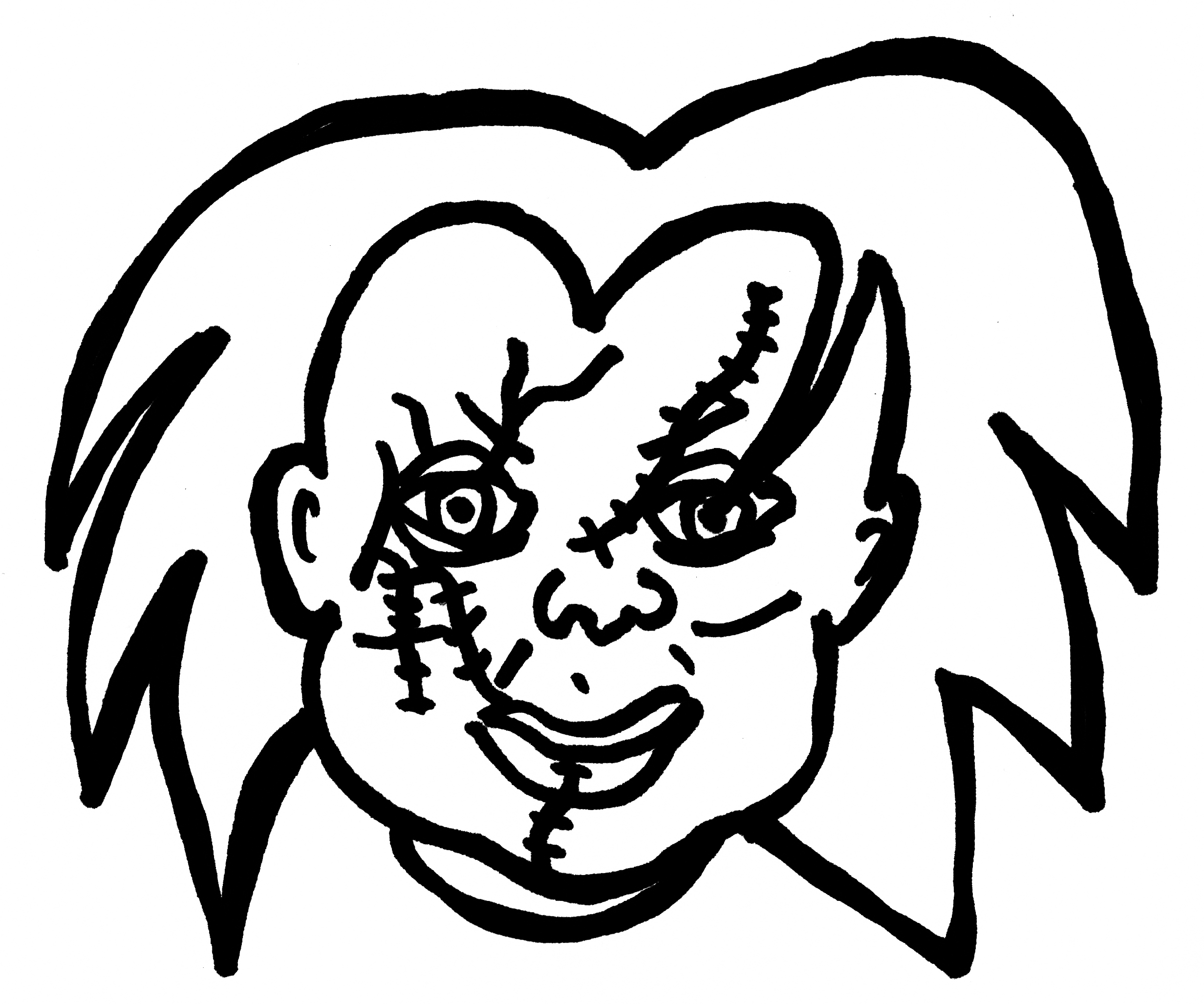
Child’s Play 2 (1990)

My favorite of the original Child’s Play trilogy, and thus my favorite Chucky movie overall. I love the way it trades in the grimy cruelty of the original for the visual sensibilities of a children’s film, from its exaggerated cartoon framing to its primary color palette to its bookend trips to the toy factory. Speaking of which, the climactic spectacle on the factory floor is some A+ mayhem, really leaning into the novelty of killer-doll gore at its purest. It’s one of those R-rated horrors that feels like it was specifically made for an audience of children sneaking the TV remote past their sleeping parents.

Child’s Play (1988)

The original Child’s Play hits all the exact story beats you’d expect from its Killer Doll: The Movie premise, but its in-the-moment execution is often exquisite.  The animatronic puppetry is mind-boggling, the patter of little doll feet in the Evil Dead POV shots is somehow genuinely chilling, and the gradual transformation of Chucky’s head from generic My Buddy Doll knockoff to Baby Brad Dourif really sells the dark Movie Magic of it all.  It’s also really funny to imagine the excruciating boredom a serial strangler would feel having to hang out with the world’s sweetest child until it’s time to smite his enemies; not to mention the frustration of having little plastic hands you can’t even properly wrap around a throat – horrifying.

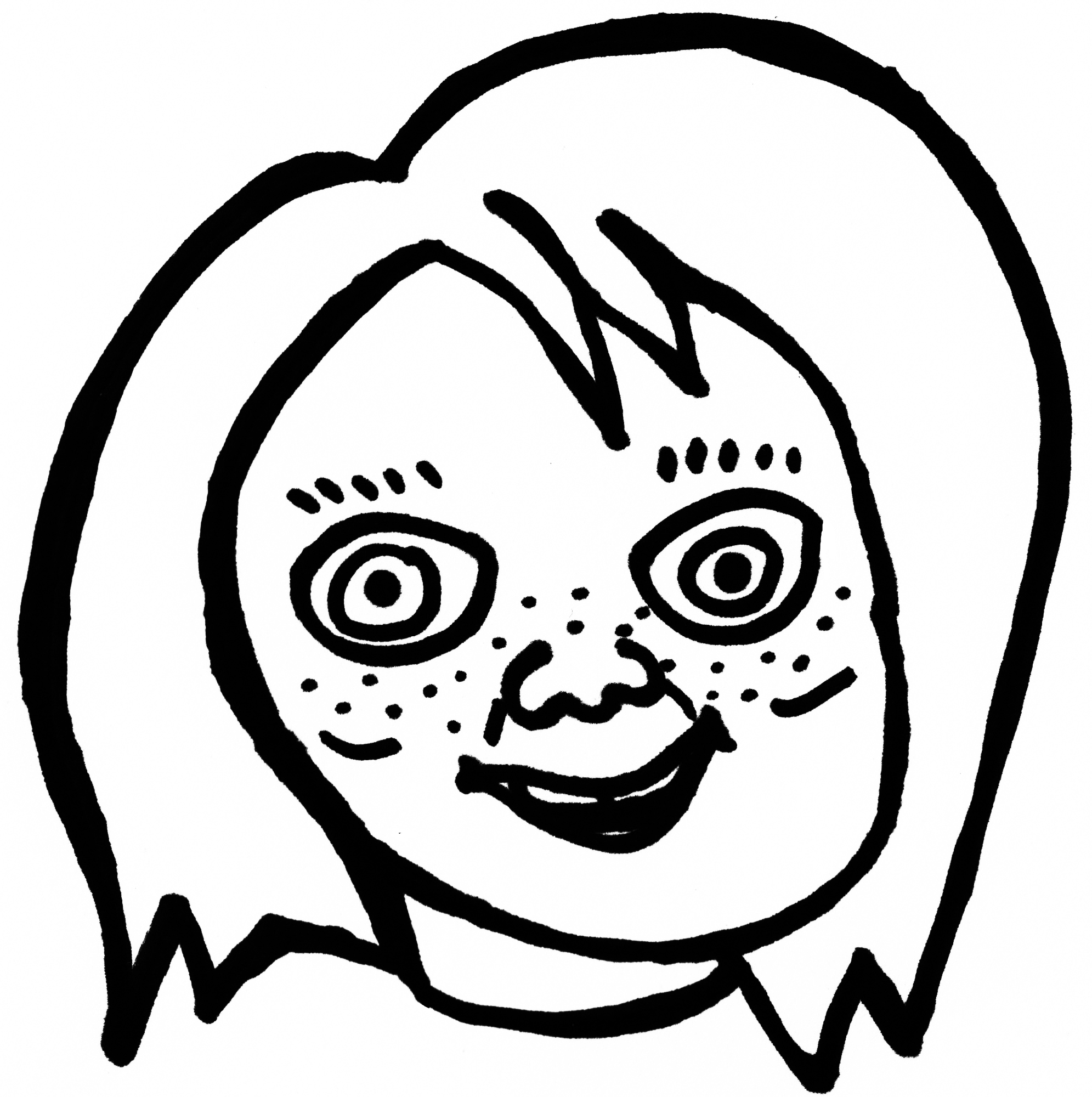
Child’s Play (2019)

An in-name-only “remake” that exploits the Chucky name to make its own evil-doll horror comedy for the A.I. era, functioning more as a prototype for M3GAN than a direct mutation of the 1988 original. While a drastic deviation from the Original Flavor™ Child’s Play in terms of plot & tone, though, it does ultimately amount to a similar effect. It plays like the exact kind of nasty, ludicrous horror flicks kids fall in love with when they happen to catch them at too young of an age on cable. It’s too violent for children but far too silly for adults, the exact formula that made early Child’s Play movies cult classics in the first place.

Bride of Chucky (1998)

Chucky is resurrected for the post-Scream era, complete with a nü-metal soundtrack, mall goth costuming, and postmodern references to competing horror villains like Freddy, Jason, Michael, and Pinhead. Thankfully, this comedic rebrand also pairs him with a totally committed Jennifer Tilly, who counterbalances the killer’s trademark misogyny as a bimbo-dominatrix-turned-fellow-doll who gleefully pushes all his psychosexual buttons just to watch him squirm. It’s not all that tense or upsetting as a horror film, but it’s highly amusing as a “The straights are not okay” anti-romcom, and it’s fun to finally see Chucky mastermind Don Mancini queer up the franchise that pays his bills.

Seed of Chucky (2004)

Don Mancini’s New Nightmare, riding the final ripples of the post-Scream meta horror trend as far as it had left to go (not very). It’s a mixed bag from start to end, but enough of the jokes land and the Glen-Or-Glenda doll is a novel enough intrusion for it to mostly make up for the eyerolls. Also very cute to see John Waters nerding out as an obvious fan as if he won a “Be in a Chucky movie!” contest, even if he just missed the series’ glory days

Child’s Play 3 (1991)

Things would get worse down the line, but this has always been my least favorite of the original Chucky trio. It’s fun to see Chucky fully come into his own as a mainstay slasher villain, since this is late enough in the series for him to start quipping his way through every kill with catchphrases & cheap one-liners. Having to spend even 90 breezy minutes in its drab military school setting is a chore, though, and I always feel like I’m being punished alongside Andy for crimes I didn’t commit. That boredom is rewarded with a last-minute trip to an amusement park, but the killer finale makes me slightly resentful that we don’t spend the whole movie there.

Curse of Chucky (2013)

Considering how much flak the 2019 Child’s Play remake got for straying from Mancini’s original vision, it’s incredible that Mancini had made his own in-house, in-name-only Chucky knockoff just a few years earlier. In this case, Chucky’s more of a haunted house catalyst than of an A.I. cautionary tale, so he’s more Annabelle than M3GAN. Unlike Annabelle, though, this evil doll actually moves; his kills are brutal enough to make up for a lot of the usual trappings of a purposeless, tropey reboot.

Cult of Chucky (2017)

With Curse of Chucky, it felt like Don Mancini wanted to make a generic haunted house movie and the only way to land funding was to put a Chucky in it.  Here, he does the same with the spooky mental asylum genre, except he puts many Chuckies in it.  It’s the cheapest and least substantial of the bunch, but the gore gags are gnarly enough to make it worthwhile, and it’s delightful to see how convoluted the series lore has gotten to keep the story going.  This has to be the all-time silliest ten hours of prerequisite homework to fully appreciate a TV show in the history of the medium, but if you’ve made it this far, you’re doomed to keep tuning in.

-Brandon Ledet

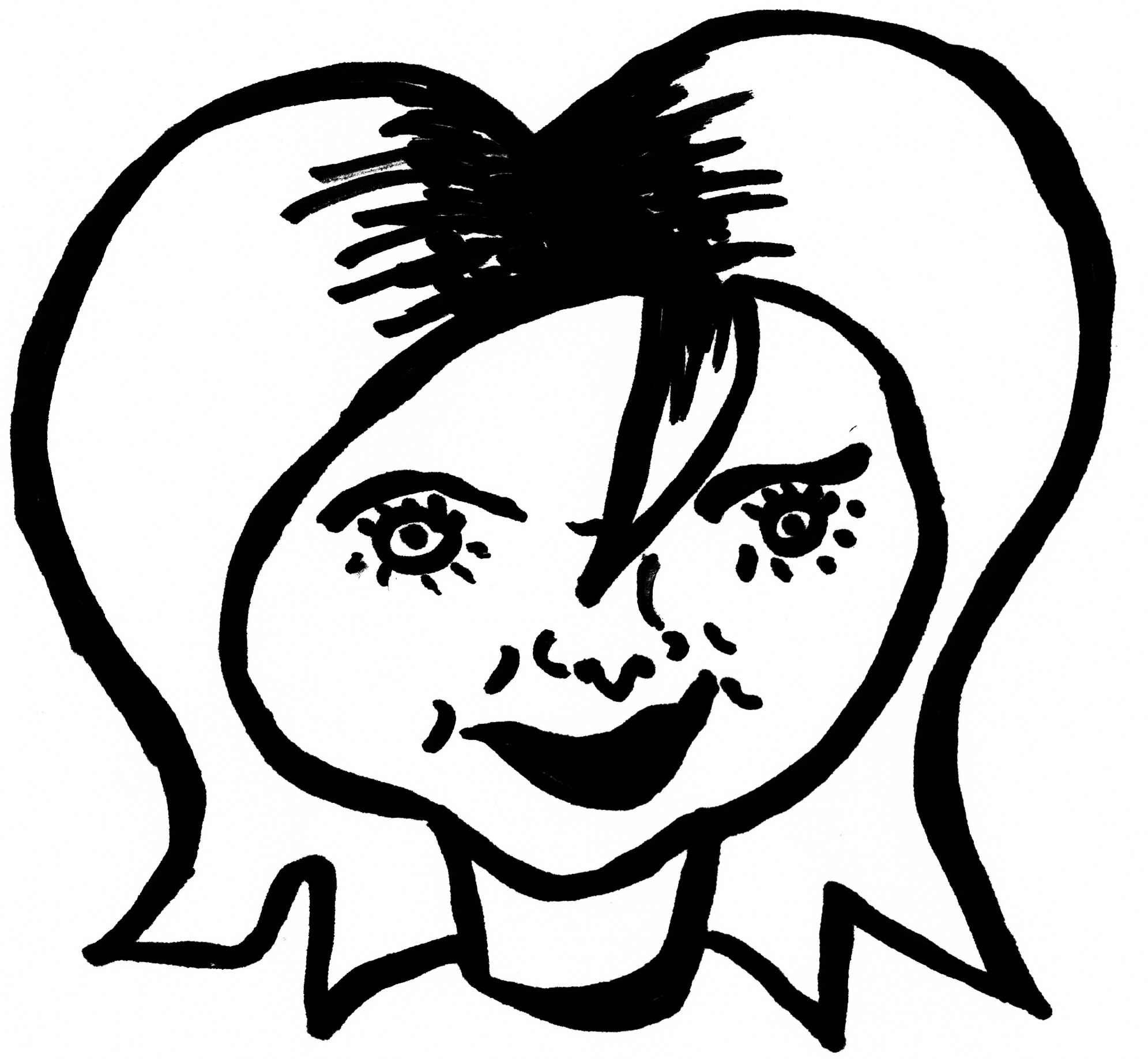
M3GAN (2023)

M3GAN is the best horror movie of the year! I know it’s only the eighth day of the year so far as of this writing (I hope you’re all enjoying your king cake and that you all waited until this weekend to do so, since not waiting until after Twelfth Night is the reason we’re all cursed), and I’m sure a hundred other hacks have already made the same joke, but who am I to mess with the formula? After all, if it isn’t broke, don’t fix it. Right?

Four years ago, Child’s Play creator Don Mancini was on the Post Mortem podcast and confirmed what many had assumed for years: that the film that introduced us to the pre-eminent killer doll, Chucky, was a critique of consumerism. “Because of my exposure to the world of advertising and marketing through my dad,” he said, referencing his father’s pharmaceutical work, “I was very aware from an early age of the cynicism inherent in that world, particularly selling products to children. Madison Avenue refers to children as ‘consumer trainees’ and I discovered that as a child. I thought, I wanted to write a dark satire about how advertising affects children.” Many of those anti-consumerism elements were excised from the final product following editing and collaboration with John Lafia, but they’re not removed completely: the original Good Guys doll that is inhabited by the dark soul of a serial killer is still very clearly inspired by both Cabbage Patch and My Buddy dolls of the 1980s, up to and including the insidious nature of advertising directly to children through animated programming as seen in the Good Guys cartoon that Andy watches in the first film. By Child’s Play 3, toy company exec Sullivan (previously introduced in the second film) is expressing, verbatim, the things that Mancini quotes real life movers and shakers at the cathedrals of capital, saying “And what are children after all, but consumer trainees?” 

Smartly, M3GAN initially seems to be coming at the “killer toy” plot from a similar angle, and although the corporate greed of toy companies remains relevant throughout (Ronny Chieng’s upper management character David Lin at one point expressed excitement at the prospect of the M3GAN toy finally letting their company, Funki, “kick Hasbro in the dick”), the story quickly becomes less about consumerism than it is about letting technology be your kids’ babysitter, or parent. The film opens with an advertisement for the “Purrpetual Petz,” in which a child mourns the loss of her dog but whose spirits lift immensely upon receipt of her new best friend, a giant fuzzy triangle that’s somewhere on the scale between a squishmallow and a Furby, with funny/scary human teeth for some reason, and which is capable of “defecating” little bits of scat if overfed (via the interactive app). We zoom out on said app to find Cady (Violet McGraw) feeding her Purrpetual Pet on a tablet in the backseat of her parents’ SUV, en route to a ski vacation that never comes, as the vehicle is violently smashed by a snow truck. Elsewhere, her Aunt Gemma (Allison Williams) is hard at work at Funki, the makers of Purrpetual Petz, along with her assistants Tess (Jen Van Epps) and Cole (Brian Jordan Alvarez). Her boss David (Chieng) is riding her hard to churn out a prototype for a less expensive version of the Petz line since their competitor has launched a knock-off version at $50, half the price of at Purr Pet; his sycophantic assistant Kurt (Stephane Garneau-Monten) constantly at his side. When David catches Gemma working on her pet (no pun intended) project, a Model 3 Generation Android nicknamed “M3GAN” instead of her assigned work, he puts her on notice, moments before she gets the call from the hospital where Cady is being treated, the lone survivor of the car crash. Gemma finds herself having trouble interacting with Cady, as her gorgeous mid-century modern house is a mixture of that era of furniture style with the sort of home personal assistant gadgetry that many people who are less paranoid than I am have in their houses. Gemma’s toy robot collection isn’t for playing, it’s for observing, and when Cady asks her to read her a bedtime story, Gemma has no books that might interest the nine-year-old and has to go searching for one on an app, which then has to update. 

This is the meat of the film’s larger techno-hesitant themes; it’s not anti-technology per se, but it is invested in highlighting the ways that we let software and the expectation of instant gratification take on a huge role in our lives, to the point of supplanting our actual relationships. We’ve all seen it. Less than 48 hours before my viewing of the film, I went out Friday evening to a restaurant happy hour with the same friend who went with me to see M3GAN, and there was a mother-and-son duo seated near us who caught my friend’s attention, as the woman first tried to engage her young son in conversation before finally giving up and letting him have his device, and she herself got involved with something on her phone. My dinner companion noted that the kid was playing some video on his small tablet but wasn’t even watching it, as it sat in his lap while he ate with his headphones in. So often, when we see this thing play out in movies, it’s often a condemnation of the young, how they don’t have any attention span because of TikTok or how Gen Z is doing blah blah blah now that enough of them have come of age to become the new political scapegoats after we Millennials destroyed the diamond industry and somehow caused the downfall of the West because of avocado toast. M3GAN is acutely aware that this is a problem across all generations, and that the young aren’t to blame for the fact that algorithms are created to entrap them before they’re old enough to have the understanding of how they’re being psychologically manipulated, whether it’s Cady here or Andy in Child’s Play. Before their deaths, Cady’s parents discuss screen time, and how many hours a day Cady is allowed to interact with her device; later, it’s Gemma who is so caught up in staring at her phone that she doesn’t notice that Cady is eating her breakfast in silence and waiting for her aunt to talk to her, and when she encourages Cady to play with her tablet while the older woman puts time in on her work project, Cady asks how long she is allowed to do so before she has to turn it off, and Gemma is caught off guard by the notion that limiting screen time is something that parents even have to do. 

For as long as I can remember, there’s been much ado about the effects of using TV as a babysitter. Won’t someone please think of the children? What long term psychological damage will little Johnny endure if he watches reruns of Growing Pains every day after school while one or more parents decompresses from the stresses of work? Is there maybe too much Tinkerbell content available on demand, and is it the worst thing in the world to let little Jenny absorb it for a few hours while dinner is prepared, now that she’s too squirmy to sit in the kitchen and watch how the sausage gets made? But none of us were really prepared for the way that video apps (especially ones with short-form content that consistently and continuously releases dopamine in the lizard parts of the brain) and constant connectivity were going to rock our world. I’m not just saying that because I’m Abe Simpson in that evergreen “Old Man Yells At Cloud” meme; I’m of the generation that were children when 9/11 happened and watched how every adult in the world lost their mind in a jingoistic fervor that, coupled with unfiltered access to constant one-sided news rhetoric, means we all have to monitor our parents’ social media as well just to make sure they don’t all start agreeing with Andrew Tate and Kanye West. Unfortunately, when this sort of presents itself in media, it’s often a very shallow, surface-level critique because, as Audre Lorde writes, “The master’s tools will never dismantle the master’s house,” and the same corporations that are causing and have caused reckless and irreparable damage to our society (and, if we’re being completely honest, to the fabric of democracy) are necessary tools of the same megacorporations that produce the content that we consume, so Disney can never really take the piss out of Twitter because that’s where all their megafans live and their engagement is driven. 

M3GAN sidesteps this by not being “about” social media, or even “about” the so-called evils of technology. It’s about what happens when the responsibility of guardianship is overlooked, and it does so without shifting blame to the people who are the victims: the kids. There’s a lovely little visual storytelling beat in the aforementioned scene in which Gemma asks Cady over breakfast to entertain herself for a while; she promises that she won’t be more than a few hours, but we cut immediately to an establishing shot of the house, where night has fallen, signalling that Gemma has been caught up in her work all day. It’s not Gemma who suddenly realizes that she never made lunch or dinner that initiates the next scene, it’s Cady peeking into Gemma’s office and the latter making the connection that she’s been in her workshop all day with no regard for Cady’s well-being or engagement. That Cady has taken the time that she was alone and used it not to sit around and waste the day watching videos or playing one of the millions of Candy Crush derivatives that are out there these days but instead to draw is telling: children need more than just to be set up with a device all day, and it’s foreshadowing that M3GAN, for as much as she seems to be the perfect toy and friend, is never going to be able to replace real social interaction for Cady, even if the algorithms that drive her machine learning (like the algorithms that drive the online content that all of us consume) are working hard to replace all other areas of her life. Late in the film, the psychologist assigned to ensure that Gemma is capable of taking care of Cady (Amy Usherwood) has a discussion with the former, warning her that the kinds of connections that, according to attachment theory, children need. She warns Gemma that allowing Cady to invest so much time in M3GAN could consequently lead Cady to develop emotional bonds that will end tragically, one way or another. 

All of this probably makes it seem like the film is super serious, but it’s not; it’s actually very funny. It wasn’t until after the viewing that I realized the director, Gerard Johnstone, was also the man behind Housebound, a film we loved so much that we made it into content for Swampflix twice: first with a very positive 2015 review and again five years later as the topic on one of our earliest episodes of the Lagniappe podcast. That actually explains the comedic sensibility; it’s not omnipresent, but it’s almost funnier that the jokes are paced with some distance between them, allowing them to break the tension when they reappear, and the emotional whiplash of it all is part of the fun. There are two perfectly attuned parodies of children’s commercials that appear in close proximity to each other, and although they’re probably more like the advertisements of the late-nineties to early-aughts than those of the present, that makes them familiar and charming to most of the intended audience. The first is the aforementioned Purrpetual Petz ad, and the second is an advertisement for the competing knock-off, which forsakes the pooping feature for a light-up butt that tells you the creature’s mood. Both have the energy of that Kooshlings commercial meets the one for Baby Uh-Oh with the one for Baby Rollerblade mixed in for good measure. Directly between them rests the scene depicting the harrowing death of Cady’s parents, which is fraught with tension throughout. They’re spread a bit further out than they were in Housebound, but they’re just as effective. 

If I have one complaint, it’s that M3GAN is a little restrained with its violence in certain places. The final confrontation is as good as it gets at this level, with some real peril for a child, which always ramps up the tension. The kills get gorier as the film goes on, but it feels like it could have cut loose sooner and with more oomph, but that’s not the end of the world. It’s a worthy entry in the killer doll canon even if it decides to be demure and understated in certain places. 

-Mark “Boomer” Redmond

Annabelle Comes Home (2019)

I hated the first Annabelle film. The second was passably okay. This movie eventually bests them both, but jeez is it ever an exhausting journey getting here. The problems that hinder this series from fully blossoming into the Evil Doll splatter fest it so easily could be are consistent throughout each entry. Firstly, despite her effectively spooky visual design, Annabelle herself is embarrassingly underutilized. She’s a cursed doll who does not move or stab or kill or speak on her own accord, robbing the series of the usual payoffs of the Evil Doll horror genre. Instead, Annabelle is a talisman used to extend the reach of The Conjuring franchise’s function as the Spooky MCU. Her titular homecoming here refers to her arrival in the basement of the paranormal-investigator couple The Warrens, who tie this loose extended universe of undead creepy-crawlies together with a bookended cameo in each picture. From there, Annabelle is sidelined in her own movie, as always, to make room for non-doll creatures to be brought in to individually audition for their own spin-off series, expanding the Conjurverse even further instead of paying off their full potential in the moment. Unless you’re crafting soap operas or wrestling angles, it’s an awful approach to storytelling, as it always promises satisfaction next time instead of emphasizing in-the-moment, self-contained stakes. Thanks to every single movie production company wanting what Marvel has, though, it’s now the norm in commercial filmmaking, which is getting increasingly frustrating.

All that said, Annabelle Comes Home at least openly accepts its role as a franchise brand extender whereas previous entries in its series have downplayed that function as much as they can – saving teasers for Conjuring spinoffs like The Nun for their post-credits stingers. Here, Annabelle operates as the Nick Fury of the Warrens’ basement, assembling undead ghoulies like The Ferryman, The Killer Wedding Dress, and The Werewolf Ghost to torture the teens she shares a house with, effectively auditioning each of them for their own Spooky MCU spinoffs. She’s contextualized as a “beacon for other sprits” within the movie to justify this indulgence, but that throwaway dialogue does little to reconcile with the fact that this is an Annabelle movie where Annabelle disappears for long stretches of time to make room for another Conjurverse monsters. Once again, this is an evil doll movie that has no interest at all in being an evil doll movie, which is maybe Annabelle’s true curse. The good news is that Annabelle Comes Home eventually does pack the screen with plenty of non-doll spookies off all shapes & sizes. Once all of Annabelle’s fellow spirits are set loose around the Warrens’ house to torture the Generic Teen Babysitters inside, the movie does reach a few blissful moments of midnight movie mayhem. It just takes a lot of franchise place-setting effort to make it to that point, when you could just watch a standalone free-for-all like Hausu or The Gate and get ten times the payoff for 1/10th the effort.

I don’t care about the Warrens. I rarely tune into dispatches from The Conjurverse unless the individual film in question happens to touch on a subgenre I generally have a weakness for – like the killer doll movie. All I wanted to see here was a creepy doll torture some teens, and I was made to settle for the swerve of a decent haunted house movie instead, just like how Annabelle: Creation was a ghost story and the original Annabelle was a Rosemary’s Baby bastardization – not one genuine killer doll movie among them. It’s disappointing, then, to see this potentially bonkers free-for-all dampened so extensively by its franchise-building requirements. We eventually make our way to a very simple, contained haunted house story but not until after a lengthy frame story wherein the Warrens take a joy ride through an Ed Woodian graveyard only to disappear until the film’s conclusion. Also, because each monster’s appearance here is just an appetizer for a possible future spin-off, we only get a small taste of creatures like Werewolf Ghost so that we’re hungry for more Werewolf Ghost Content the next time it’s offered to us; and the cycle continues. Annabelle Comes Home is an adequate enough mainstream horror flick. It may even be the best Annabelle film to date, once it fully warms up. It just also participates in the worst tendencies of franchise filmmaking of the 2010s, which is getting more exhausting the more ubiquitous it becomes.

-Brandon Ledet

Child’s Play (2019)

I honestly have no idea why Orion Pictures bothered slapping the Child’s Play brand name on this evil-doll horror comedy, beyond the easy box office returns of its name recognition and the fact that its parent company, MGM, owned the rights. With a quick redesign of the killer Chucky doll and a few nodding references to the original franchise removed, Child’s Play (2019) could easily transform from a deviant remake of a beloved genre relic into an entirely new evil-doll franchise of its own design. Protective, enthusiastic fans of the original Don Mancini series have been cautions to support this corporate retooling of the director’s work, since he’s built a long-running series of passionate, campy, queer horror novelties out of the bizarro slasher premise for decades (with Brad Dourif in tow as the voice of the killer doll for the entire run). I can see how outside voices dialing the Chucky brand back to its origins for a franchise-resetting remake could feel like a betrayal to longtime superfans (especially since series steward Mancini is still making films & television shows featuring Dourif’s version of Chucky to this day). For casual fans like me, however, this MGM-sponsored blasphemy is an exciting development in Chucky lore. This is the exact right way to pull off a worthwhile remake: return to the original germ of an idea, strip away everything else, and then build something so new around it that it’s hardly recognizable. The 2019 Child’s Play remake would have been much more upsetting to me if it were a mindless, risk-adverse retread of what Mancini had already accomplished. Thankfully, it’s instead entirely its own thing separate from Mancini’s work, the ideal template for a decades-later revision.

While the 2019 Child’s Play is a drastic deviation from the 1988 original in terms of plot & tone, it does ultimately amount to a similar effect. This feels like the exact kind of nasty, ludicrous horror flicks kids fall in love with when they happen to catch them at too young of an age on cable. In addition to borrowing the Child’s Play brand name, this film also makes direct references to other titles in that exact inappropriate-kids’-horror-canon: The Texas Chain Massacre II, Killer Klowns from Outer Space, RoboCop, etc. In that way, it reminds me more of what Charles Band accomplished with Full Moon Entertainment (which is overflowing with straight-to-VHS titles about killer dolls) than it does Mancini’s work under the Chucky brand. Like most of the Full Moon catalog, Child’s Play ’19 is a violent, R-Rated horror film that perversely feels like it was intended for an audience of children, which will have to sneak their way into a movie theater (or access to unsupervised late-night streaming) to enjoy it. That’s why I was bummed to see so few pro critics & Letterboxd mutuals have a good time with this over-the-top shlock. It’s so blatant about its efforts to tap back into the goofy, childlike imagination of the straight-to-VHS nasties of yesteryear that it even makes fun of the inane “That would never happen!” complaint that’s frequently lobbed at these things in the 2010s (during a slumber party screening of Texas Chainsaw Massacre II). I was saddened, then, to see real-life movie nerds critique the film for being silly & illogical as if those weren’t its selling points. As a collective audience, we could all benefit from lightening up & going with the flow instead of straining to “outsmart” the exact kind of genre candy we used to enjoy back when we had an imagination. It’s fucked up to say so, but I hope the right kids find this film at an inappropriate age, just like how I found titles like The Dentist & The Lady in White too young in my own day.

Mark Hamill takes over the vocal booth duties from Bard Dourif in this iteration, performing Chucky as a more of a Teddy Ruxpin cutie gone haywire than a misogynist murderer on bender. That’s because the remake drops the original film’s premise of a serial killer installing their own damned soul into a doll’s body via a mysterious Voodoo ritual in favor of something more “modern”: my beloved The Internet Is Trying To Kill Us horror subgenre. Newcomer director Lars Klevberg updates Chucky to the 2010s by giving him a Luddutian makeover as a malfunctioning piece of future-tech. The killer doll isn’t Evil, necessarily. Rather, he’s a symptom of what goes wrong when we automate too much of our daily lives, submitting our autonomy to computers in exchange for comfort. The Buddi doll is now a home appliance connected to every other automated tech in your house: lights, thermostats, self-driving cab services, home-use surveillance drones, The Cloud etc. When one of these dolls inevitably goes haywire through faulty programming, these conveniences now become an arsenal to dispose of humans who dare get in the way of his friendship with this “best buddy” (the child who owns him). Chucky himself has become a real-life horror of technology as well, as the animatronic puppet used in the film has been smoothed out into a distinct Uncanny Valley look that’s frequently bolstered with cheap CGI – meaning he’s often creepy though the limitations of his animation as much as anything else. It’s up to a ragtag group of neighborhood tykes to stop the doll before he causes too much havoc with all this future-tech, as the adults in their lives don’t believe something so innocent-looking & benign as a Buddi doll could possibly be responsible for the community’s murders. Similarly, it’s up to the kids in the audience (who really shouldn’t be there, the scamps) to preserve this deeply silly film’s legacy, since adults’ lack of imagination is failing them in real life too.

It would be easy to confuse the new Child’s Play for one of those standard modern-era remakes of 80s horror classics that mistake an origin story for the killer and a more generally self-serious, muted tone as an “improvement” in revision. This is a major studio production after all, one with recognizable faces like Aubrey Plaza & Brian Tyree Henry lurking in the cast. I was delighted to discover, then, that it’s something much stranger & more unapologetically goofy than that: a film that’s too violent for children but far too silly for adults, the exact formula that made early Child’s Play movies cult classics in the first place. There may be some 2010s-specific updates to the material in the technophobia of Chucky’s design and the Adult Swim-type glitch edits & meme humor that accompanies it, but otherwise this feels like a perfect 80s horror throwback. It recalls the over-the-top delirium of basic cable & VHS horror from the era, while also exceeding as an entirely new, silly thing of its own design. It’s damn fun, an it’s a damn shame how few people have remembered how to have fun with ludicrous genre films of its ilk.

-Brandon Ledet

Annabelle: Creation (2017)

Much like Ouija: Origin of Evil, the latest entry in The Conjuring universe, Annabelle: Creation, has quickly earned the reputation of being a huge improvement on the film that came before it, to the point where its predecessor is entirely skippable so that you can get to the good stuff. 2014’s Annabelle was indeed a huge letdown even for the most dedicated of evil doll horror films, essentially burying what’s an incredibly powerful villain design under a hopelessly generic Rosemary’s Baby riff nobody asked for. That setup made it near effortless for its prequel, Annabelle: Creation, to exceed expectations, something Lights Out director David F. Samberg does with ease. Samberg’s slick production design & impressive control over jump scares & haunted house atmosphere makes for a surprisingly decent Annabelle corrective, delivering an evil doll-themed major studio horror similar to the machine-like precision of last year’s financially beastly adaptation of IT. As someone who’s always a sucker for evil doll horror as a genre, however, I have to admit I still don’t believe the Annabelle franchise is living up to its full potential. Creation is a well-made major studio horror movie, but it’s one that largely ignores the brilliant design of the evil doll at its center; it’s hardly an evil doll movie at all.

A 1940s doll maker & his religiously faithful wife lose their young daughter (named Annabelle, duh) in a freak accident, sending their lives into a depressive tailspin. Over a decade later, they open their home as a makeshift orphanage out of religious duty, bringing a fresh crop of young girls & their corresponding caretaker nun into the now-haunted house. Enter the titular doll Annabelle, whom the dead daughter’s spirit has taken residence in and uses to scare & maim her soul-weary parents’ new boarders. Unfortunately, the doll itself is used more as set dressing and a talisman than a direct threat in the film’s various scares & kills. Samberg has a sharp mind for tapping into the nightmare logic of a scared child: lights go out without explanation, hallways stretch into infinity, traditional sources of terror like a ghost under a sheet or the crack between a bed & wall are reinforced with a genuine sense of dread. This collection of haunted house scares feels entirely separate from Annabelle herself, however. Instead of directly using her in the film’s kills, Creation brings in other threats in the form of creepy nuns & demons made of black smoke, unsure how to deliver on the basic pleasures of a creepy doll horror flick.

As with a lot of films in the post-MCU mode of franchise filmmaking, Annabelle: Creation feels like it’s torn in too many directions trying to satisfy its position in a larger, franchised story. The movie concludes with a lengthy, unnecessary epilogue connecting it to the opening minutes of the first Annabelle feature, establishing above-and-beyond continuity for a film practically no one remembers or values. It’s also tasked with teasing an upcoming horror film about demonic nuns to be set in The Conjureverse, plainlly titled The Nun. What really bothered me, though, is that Creation finds its scares in the dollmaker’s haunted home, not the evil doll he created, which connects the film to the haunted house themes of the original The Conjuring movie at the expense of a super creepy doll that’s used as a prop instead of an active player. I can totally back Annabelle: Creation as a well-made major studio horror film and an improvement on the previous Annabelle entry. Hell, I’d even cite it as an improvement on Samberg’s work in Lights Out, a film I found to be a thematically repugnant carbon copy of The Babadook. It’s still not as great as a proper Annabelle film could be, though, which won’t arrive until this franchise involves its killer-looking doll in its onscreen kills, something that should’ve been a given from the start.

-Brandon Ledet

Cathy’s Curse (1977)

EPSON MFP image

three star

After a few decades in which the film fell into the public domain as a recobbled, poorly transferred, discolored, nigh-unwatchable piece of garbage, a restoration and Blu-ray release from Severin Films means a whole new generation can see Cathy’s Curse (aka Cauchemars, literally “nightmares,” the film’s original/French title) in all of its… glory?

The 1970s were banner years for the burgeoning Canuxploitation film industry, as our neighbor to the north saw a boom in production due to an increase in the Capital Cost Allowance (CCA) due to new tax shelter laws instituted to encourage Canadian filmmakers. Theretofore, most of these funds had gone toward producing documentaries, an influence which is evident in the observational, cinéma vérité nature of many of the films that followed regardless of genre; beginning in 1971, the Canadian Film Development Corporation pushed filmmakers to focus on those films that were more commercially viable in an attempt to recoup some of this funding. From this push we got the early films of our dearly beloved David Cronenberg, as well as great work from Bob Clark, who was recruited from Florida to lend his experience to the Canadian industry.

Of course, the exploitation of tax shelters is nothing new, and the availability of public funding has doubtlessly led to the implementation of various Producers-style bombs quickly slap-dashed together to take advantage of available funding. Cathy’s Curse is notably a tax shelter baby, although it’s much better than many other films that were created for similarly inartistic reasons.

The film opens on Mr. Gimble in 1947, who returns to his home to learn that his elementary-aged daughter Laura has been left alone by her mother, who absconded with Laura’s younger brother George. Mr. Gimble tells the little girl that her mother is a bitch, and that she will pay for what she did to Laura; I’m noting this here because, even in the remastered director’s cut, we never learn exactly what Mrs. Gimble did or why Mr. Gimble is so bitter about it. The two race away, and when the car swerves to avoid a rabbit in the road, both Mr. Gimble and young Laura are burned alive in the resultant crash.

Some thirty years later, George (Alan Scarfe, who played not one but two Romulans in Star Trek: The Next Generation) returns to the still-pristine house with his wife Vivian (Beverly Murray) and daughter Cathy (Randi Allen). Vivian has recently lost the couple’s second child and suffered a nervous breakdown as a result, lending her character a kind of otherworldly removal from the events at hand and planting the seeds for George to shrug off her concerns as the result of an inscrutable mental illness later in the film. Upon arrival, the family is greeted by housekeeper Mary (Dorothy Davis) and repairman Paul (Roy Witham), and Cathy befriends some neighboring children.

On the day of a pre-arranged play date, Cathy goes upstairs to get some rest beforehand, but is drawn to the home’s spacious attic, where she discovers a portrait of her dead aunt as well as a rag doll with sewn-shut eyes. The portrait’s eyes glow an eerie green, and so begins Cathy’s possession. While playing with the other children, she uses them to re-enact the night of Laura’s death, including urging one of the boys to say “All women are bitches!” The mother of these children, meanwhile, has tea with Vivian and another friend (Mary Morter), who identifies herself as a medium and has a full on psychic freakout after holding a picture of Laura and George’s father, complete with deep-voiced recitations and lots of Garth Marenghi’s Dark Place-style rapid cuts. This is interrupted when one of the children cries out after Cathy cuts her.

The connection between Cathy and the doll deepens, as she sees Laura reflected in her mirror instead of herself, and poor Mary is killed, as is Paul’s dog. Vivian is sent to a sanitarium for a while and Paul is tasked with watching Cathy during the day while George attends to unspecified business at a construction site. Paul himself is subjected to hallucinations and suddenly-manifesting lesions, but Cathy keeps him around (and drunk) apparently for her own amusement and perhaps in recognition that she needs to keep at least one person alive to take care of her while George is away. The medium returns more than once to the house and is continuously rebuffed by Cathy and a drunken Paul when she asks for Vivian, before a nightmare hallucination sends her out of the house and out of the film for good (she’s set up as almost like a Father Merrin type, but her appearances end up contributing nothing to the film).

Vivian returns home, and her protestations that something is deeply wrong with Cathy are dismissed by George with increasing irritation and accusations that her mental illness is tearing the family apart. Not helping is the fact that Cathy is a perfect angel when in her father’s presence, and her truly innocent nature seems to be, at times, attempting to exert itself. After a final confrontation, George ultimately sees the truth and Vivian saves her daughter’s soul by removing the stitches from the doll’s eyes, forcing the evil presence out of the house and their daughter.

For a low-budget attempt to cash in on the success of The Exorcist with some overtones from The Omen (complete with a nanny dying from a fall from an upper floor, although even a woman Mary’s age would probably survive a fall from the second story), Cathy’s Curse is decent, but nothing exciting or terribly special. There are plenty of laughs to be had, but it’s unclear which, if any, are intentional; my favorite is in the scene where the newly-possessed Cathy throws her cereal bowl across the room and Mary, thinking this was an accident, picks up approximately four pieces of broken china from a pile of dozens of shards and cheerfully declares “There, all better!” There’s also some humor gleaned from the possessed Cathy’s dirty mouth, where attempts to mimic the truly revolting and soul-crushing diatribes voiced by Regan in The Exorcist come across as distinctly Canadian in the script’s unwillingness to go too far.

Still, the film isn’t lacking in mid-budget charm. The restoration of the film may not be worth spending time to track down and watch, but if it happens to fall into your lap, there’s a moderately good time to be had.

-Mark “Boomer” Redmond

Episode #2 of The Swampflix Podcast: Evil Doll Movies & Boxing Helena (1993)

inaworld

Welcome to Episode #2 of The Swampflix Podcast! For our much-delayed second episode, James & Brandon discuss movies about evil dolls with fellow contributor Britnee. Also, James makes Brandon watch Jennifer Lynch’s body horror melodrama Boxing Helena (1994) for the first time. Enjoy!

Production note: The guitar riff musical “bumps” between segments were also provided by James.

-James Cohn, Brandon Ledet, and Britnee Lombas

Dead Silence (2007)

EPSON MFP image

threehalfstar

campstamp

Dolls are creepy. The horror genre is opportunistic. The rest is history. Of course, individual moviegoers’ mileage may vary on that first point. Our particular fears & points of reference for creepiness can range as widely & specifically as our sexual fetishes & turn-ons, but I can at least speak for myself in saying that Dolls. Are. The. Worst. Especially the older porcelain ones, with their aged lace & cold, distant expressions. I hate ’em. I hate ’em even more than most people hate clowns (not that I have a lot of love for those fuckers either). Still, I love watching dolls act creepy in trashy horror movies, because they’re so effortlessly effective. Like a true evil doll fetishist, I dedicated my annual Halloween-inspired horror binge last October to watching every evil doll movie I could find. It was a quest that lead me to watching Dolls, Devil Doll, Dolly Dearest, Demonic Toys, Trilogy of Terror, Pin, Magic, Annabelle, Asylum, Puppet Master 4: The Demon, and possibly a couple titles I’ve forgotten all in the span of a month. As I crowdsourced my selections, both online & with “real life” friends, it’s a wonder that no one suggested that I watch James Wan’s Dead Silence during this devil doll binge. Dead Silence is a fun little horror flick & a worthy addition to the evil doll genre, easily better than half the titles I just listed.

In just a few pictures, James Wan has racked up a nice little collection of genre film oddities to his name (films like Saw, The Conjuring, the Insidious franchise, etc.), but with the exception of his most recent/expensive production (Furious 7) I don’t think I’ve ever enjoyed his work quite as much as I enjoyed Dead Silence. With the same love Furious 7 brought to the grotesquely excessive action film genre, Dead Silence displays a giddily thorough love for the world of trashy horror. It’s a pretty standard issue evil doll movie, for sure, one that narrows in only slightly on the insular world of evil ventriloquism. Still, within this frame Wan makes room for horror tropes of all kinds: foggy graveyards, evil toymakers, spooky mansions, flashing red & blue lights, oldtimey flashback footage, Argento’s slashing straight razor, Freddy Krueger’s from-beyond-the-grave-curse style of revenge, goofy/killer catchphrases (“Who’s the dummy?”), and the list goes on. This may be an evil doll movie, but really it’s all over the place. If there is any particular brand of horror that Wan zeroes in on here it’d be the work of shameless direct-to-video schlockmeister Charles Band, figurehead of Full Moon Features. I’m not just talking obvious points of reference like Band’s productions Puppet Master, Demonic Toys, and Dolls. The general vibe of Dead Silence is of a large budget version of Full Moon Entertainment’s entire aesthetic. I can tell you from experience that it takes a lot of love for trash cinema to find Full Moon’s overall vibe worthy of affection or even minimal effort, but after watching Dead Silence that’s something I assume James Wan has in spades.

The exact story Dead Silence tells doesn’t matter too, too much. There’s a local curse that haunts the residents of a small community thanks to the mysterious death of a wicked ventriloquist named Mary Shaw, who (true to the film’s vast collection of old hat horror tropes) has her own nursery rhyme that kids like to repeat ominously: “Beware the stare of Mary Shaw. She had no children, only dolls. And if you see her in your dreams, be sure you never, ever scream or she’ll rip your tongue out at the seam.” This ventriloquist ghost, of course, possesses the collection of dolls she left behind in her wake (wow, I kinda wish someone would reimagine this as a gory mockery of Jeff Dunham’s act), employing the not-so-inanimate bastards to avenge her death. Mary sometimes mimics/projects the voices of her would-be victims’ loved ones to lure them into vulnerable situation, which is a horror trope in its own way, but it’s at least one that fits in snuggly with the film’s ventriloquism theme. There’s exactly one invention (that at least I’ve never seen before) that Wan brings to the table here: in her quest to create “the perfect doll”, Mary Shaw turns her victims’ corpses into doll-like playthings, which leads to one hilariously over-the-top last minute reveal. Charles Band has tried to do a lot more with a lot less, I assure you, and the “perfect doll” angle & last second twist are plenty justification on their own for Dead Silence‘s place in the evil doll genre.

Otherwise, Dead Silence delivers exactly what you’d expect from a formulaic evil doll horror flick, but it at least does it from a place of love. That’s more than you can say for last year’s major studio return to the evil doll formula, the unbearably dull Rosemary’s Baby knockoff Anabelle (which, oddly enough, was a spin-off of Wan’s film The Conjuring). Dead Silence survives on its ambiance, cheap scares, and evil doll designs more than its barely competent acting & dialogue, but honestly that’s okay. Those kinds of shortcomings are just yet another old hat horror trope, fitting in perfectly with the movie’s trashy genre film charms. Besides, Dead Silence didn’t have to try too hard in the first place, since dolls are perfectly creepy enough on their own without help from basic things like a decent script or believable performances. Seriously, dolls are the worst. As long as a horror movie is willing to acknowledge that point, the rest is lagniappe.

SIDE NOTE: I appreciated Dead Silence‘s attention to sound, which is evident even in its title. There was plenty of ominous dead silence that allowed space for simple effects like the wooden creaking of the ventriloquist dolls’ eyes moving slightly to register as highly effective. Again, I feel like this is just more attention to detail from Wan, who’s obviously well aware that sound design is a large part of what makes horror tick.

-Brandon Ledet