Your Name. (2017)

The highest grossing anime film of all time is slowly trickling through American theaters in what’s been a fairly quiet release so far. Subtitled foreign films & traditional hand-drawn animation aren’t the usual hallmarks of a domestic box office smash hit in the 2010s, so it mostly makes sense that Your Name. isn’t lighting up megaplex cash registers here the way it did in Japan last year. What’s a little more difficult to speculate is why, exactly, Your Name. did run away with all of Japan’s box office dollars in 2016 (becoming the country’s highest-grossing film of all-time, animated or otherwise), outpacing even the Studio Ghibli films that obviously inspired it. My best guess is that Your Name. resonated with Japanese teenagers in particular. I can say with confidence that the most I ever indulged in repeat viewings of films in the theater was when I was a teen with summer job money to burn and nothing constructive to do with myself besides watching the latest Wes Anderson release three times in a week to escape the New Orleans heat. Your Name. seems perfectly calibrated for this kind of obsessive teen repeat-viewing. From its tale of star-crossed, long distance romantics to its mildly crude sexual humor, bottom of the heart earnestness, supernatural mindfuckery, and pop punk/post-rock soundtrack (provided by the appropriately named Radwimps), Your Name. is the distilled ideal of a teen fantasy film in the 2010s. It’s also the most beautifully animated and strikingly empathetic picture I can remember seeing on the big screen in a long while.

The first thing that struck me about Your Name. was the immensity of its scope. Cities and mountains are framed from above the cloudline as a passing comet is meticulously tracked through the star-filled sky from the upward gaze of teens on the ground. Those teens’ lives take on a similar kind of intricate majesty as the comet in the sky triggers a cosmic event that intimately & inextricably links two total strangers, a boy who enjoys a very modern existence in Tokyo and a girl who practices old world religion with her sister & grandmother in a rural mountainside village. Oddly enough, Your Name. begins its strange, unwieldy journey as a body swap comedy. The Tokyo boy and mountain village girl swap places at erratic intervals, initially mistaking their day-long vacations in each others’ skin as hyper-realistic dreams. As the body swap picture is traditionally a fixture of crude 80s comedies and these are horny teens, those alternating positions do involve a lot of “self”-exploration of each others’ bodies and same-sex attraction/flirtation, but never with a tinge of gay panic humor disrupting its intergender empathy. Gender and identity became decisively fluid the more this pair continue to swap places, as does the nature of time, tradition, and reality itself. Small town angst & romantic desperation, cornerstones of teenage inner life, dominate the early proceedings of Your Name., but several monumental narrative shifts completely disrupt those concerns as the co-protagonists’ stories strive to intertwine in a shared, physical space. Leaving notes on each other’s smart phones & foreheads is one thing, but as our distant teen “radwimps” attempt to share a single space in a more significant way, their story explodes in a much wider array of supernatural phenomena than a mere 80s body swap comedy ever could contain. The film’s scope is near-boundless in its thematic & visual explorations of an intangible cosmic event I’ve never seen depicted onscreen before.

Your Name. more than justifies its choice of medium, accomplishing large, supernatural feats that could only be pulled off in animated cinema. The film almost operates like Persona in reverse, where two jumbled identities slowly detangle and then have to desperately search for common ground. This philosophical crisis of identity, punctuated onscreen with blatant questions like “Who are you?,” are matched by an ambition in animation that reaches far beyond the linear & the literal. One sequence in particular makes use of color pencil sketches in a way that wholly distorts the border between reality & fantasy, surpassing even the heights of The Tale of Princess Kaguya in its adeptly loose grip on the certainty of basic human existence. The film’s visual palette obviously pulls heavily from the work of all-time-great Hayao Miyazaki, an influence that becomes very much apparent in its opening frames of gorgeous mountainside landscapes seen from a birds’ eye view. As much as it focuses on Nature, however, Miyazaki’s work isn’t typically as obsessed with the immensity of the cosmos as Your Name., so the film immediately has an in on finding new perspectives to apply that animation style to. It also seems intent on updating Miyazaki’s obsession with natural landscapes to accommodate a newfound wonder in modernity. Tokyo skyscrapers are flanked by birds & sunshine, reflecting the same simple majesty a Miyazaki picture would typically reserve for a forrest or the miracle of flight. This visual clash of tradition & modern innovation perfectly echoes the sentiment of Your Name.‘s narrative as well, where boomboxes & smartphones are incorporated into ancient religious ritual and time is just as fluid as identity & the state of the human body.

I don’t mean to be at all dismissive or reductive when I refer to Your Name. as a teen picture. The supernatural narrative & delicate thematic nuance of the film are handled in a much more richly complex, rewarding way than they’d be in most modern R-rated, live-action “adult” dramas. Still, I got a sense watching the film that it was specifically, expertly designed to resonate with the earnestness of teenage sentiment. The immensity of the story’s ambition and the intricacy of its visual craft leave me with no doubt, even as a thirty year old dinosaur, that the film will remain one of the best domestic releases we see all of 2017. I just also have to admit that I’m admiring it from the outside looking in. Your Name. wasn’t made for me; it was made for teens. And if I were still that age, running around with my heart on my sleeve & my identity still wildly fluctuating on an almost day to day basis, I’d certainly be one of those kids out there who have paid to see it repeatedly play out on the big screen while it’s still an option. It’s more than just a teen movie; it’s the perfect teen movie for this exact moment in time.

-Brandon Ledet

A Monster Calls (2016)

fourstar

It’s difficult to say objectively if A Monster Calls is likely to resonate with most audiences the way it did with me at the exact moment I happened to catch it in theaters. The very same week the fantasy-leaning cancer drama reached New Orleans I had lost my grandmother to an aggressive form of cancer and, at the time I’m writing this review, she still has not yet been memorialized with a funeral. The wounds are still fresh in a lot of ways, so I don’t have enough critical distance to say if this dark children’s fantasy about “a boy too old to be a kid and too young to be a man” struggling with the gradual loss of his young mother to failed chemotherapy treatments is truly the emotionally impactful, thematically complex filmgoing experience I found it to be. I can only say for sure that A Monster Calls is admirable in the brave ways it tackles issues of frustration, resentment, and self-conflict that wreak havoc on families who are hit with this kind of loss through prolonged illness. The film’s multi-faceted, sugarcoat-free discussion of how grief can be destructive long before it’s cathartic is not the thematic territory typically expected of a kids’ movie featuring a talking tree, but A Monster Calls fearlessly dives head first into those troubled waters and emerges as a hauntingly beautiful experience for taking that leap, one that arrived at the exact moment I needed it.

Liam Neeson voices the titular monster in this dark fantasy drama, a talking tree that visits a young boy each time he wakes from the recurring nightmare of physically letting his mother go while holding her hand at the edge of a cliff. The mother (Felicity Jones, who in all honesty gets just as little character development here as she does in Rogue One) is losing her battle with a rapidly progressing cancer; the boy is being physically bullied at school by the one kid who bothers to notice him; and the rest of the family struggles to figure out what to do with him now that his only attentive parent is at the verge of death. The tree monster solves none of these problems. He only awakes to tell the boy three seemingly unrelated stories (illustrated in beautiful watercolor-style animation) about dragons, kings, suicide, magic . . . pretty much nothing to do with his current predicament. Instead of smiting the boy’s enemies and bringing his mother back from the brink of death, the tree monster merely teaches him a few harsh life lessons: that sometimes life is a cheat, that sometimes good people do horrifically bad things, that sometimes “bad” people can do good, that terrible things often happen for no reason at all. The monster coaches the child through a tough moral gray area and, in the process, allows him to admit & accept some less-than-honorable feelings he’d been repressing about his mother’s impending death before it’s too late.

Besides the obvious reasons why I would connect with this kind of a cancer-themed familial drama at this time in my life, A Monster Calls also appeals to me directly by evoking the same brutal honesty & melancholy tone I found solace in with the similar dark children’s fantasies Paperhouse & MirrorMask. In all three films, young British children process real world emotional grief in a harsh dream space of their own artistic design. A Monster Calls joins this tradition, which unfortunately has a bad critical & financial track record, with a morally ambiguous tale of how there are no easy answers to the ways we process loss and how you’re not always going to be proud of the things you do, say, or feel in your worst moments of grief. It’s the exact kind of thoughtful, morally complex narratives I look for in my children’s media combined with a distinct visual palette (complete with a muscular tree butt for some reason) and impeccable timing, arriving just when I needed to wrestle with my own conflicted modes of grief. I may not be able to discuss A Monster Calls objectively due to my own recent familial loss, but I can say that it’s a deeply relevant & revelatory experience when you’re in that very particular, very fragile state of grief & mourning. There’s just some things about life that you need to hear from Liam Neeson dressed up like a talking tree to fully grasp, I suppose. It worked for me, anyway.

-Brandon Ledet

Paperhouse (1988)’s Thunderous Echo in MirrorMask (2005) and the Assorted Works of Neil Gaiman

One of the most easily accessible ways to explore the themes, nuances, and techniques of a work of art is finding a contrast & compare reference point in another work to bounce ideas off of. November’s Movie of the Month, the lucid dreaming fantasy drama Paperhouse, is an interesting case in this regard, as it hovers between so many different genres (horror, fairy tale, melodrama, children’s adventure), without ever firmly landing under any of those categories. After looking to director Bernard Rose’s subsequent horror masterpiece Candyman and the genre-defiant melodrama that spooked me most as a child, Lady in White, I still can’t shake the idea that Paperhouse only has one true 1:1 companion film. A 2005 feature film collaboration between visual artist Dave McKean & his frequent writing partner Neil Gaiman, MirrorMask is a clear contrast & compare reference point for Paperhouse in many surprising, improbable ways. If Rose’s film wasn’t a direct influence on its 2005 counterpart, it’s at least somewhat safe to assume that it had a subconscious, maybe even cultural influence. You can clearly hear Paperhouse‘s echo in MirrorMask‘s story & tone, as well as in the basic fabric of the fiction-writing career of its much beloved author, Gaiman.

In Paperhouse, a young girl who is frustrated with her mother’s parenting & her father’s chronic absence falls ill with an intense fever and enters her own crayon drawings of a sparsely decorated house every time she falls asleep. In MirrorMask, a girl has an argument with her mother the day the parent falls into a coma. Tormented with guilt for treating her mother cruelly the last time they spoke, she cries herself to sleep and awakes inside the expansive drawing she has posted on her bedroom wall. Both films follow their young protagonists as they work through their complicated feelings for their parents in a fantasy space of their own artistic design. In Paperhouse it means living through the fear of an absent father who has become abstracted & monstrous in his child’s mind (so much so that much of our conversation on the film was an attempt to rationalize whether or not he was a physically abusive drunk). In both works changes in the art-bound fantasy world & the lonely, declining health “real” world affect each other in massive, often catastrophic ways. This comes to a head in both instances when the world-containing artworks in question are partially destroyed, leaving vast rubble in their wake. I’m not sure how many children’s art therapy-themed lucid dreaming fantasy dramas about familial strife & crises of poor health are out there in the world, but these are two British productions that echo each other in undeniably significant ways.

When I mentioned these MirrorMask comparisons in our original conversation on Paperhouse, Alli seconded the connection, but added “I also thought of MirrorMask and its terrifying dreamworld, but another Neil Gaiman creation came to mind as well, Coraline, which is another story about a girl upset at her parents entering a dreamworld with duplicate parents.” She also wrote, “The terrifying Other Mother [of Coraline] is reminiscent of the faceless dad [of Paperhouse],” which is certainly true. Here’s where I make a full confession: I was never especially interested in reading Neil Gaiman’s fiction until after I fell in love with MirrorMask in the mid 00s, at which point I read several of his novels in a row. They were all well-written and interesting (and he seemed like an exceedingly charming guy when I briefly met him at a signing in 2006), but I couldn’t shake a certain sameness in the types of stories he tended to tell. Neverwhere, Coraline, MirrorMask, and so on all play like a “down the rabbit hole” story  where a character in the “real” world slips into a fantasy space to work out personal & emotional issues they struggled dealing with otherwise. Alli was right to point out the similarities in Coraline, which was written long before MirrorMask, despite its film adaptation arriving at theaters years after that forgotten Dave McKean gem. As Paperhouse was released just a couple years before Neil Gaiman transitioned into his since-steady career as a prolific (if slightly repetitive) novelist, I have to wonder if that film had any direct influence on the kinds of stories he likes to tell.

Are the thematic similarities in Coraline & MirrorMask in particular an echo of what Gaiman found fascinating in Paperhouse or is that connection entirely incidental, a result of two independent minds coming to a similar conclusion on their own? Gaiman once compared MirrorMask to “such films as Labyrinth, Spirited Away, and Paperhouse” in an interview promoting the film, describing them as “films of a certain kind of genre in which a girl gets to go somewhere and search something out.” I guess I should take that admission as a vindicating acknowledgement of the film’s influence on the writer’s work, but I’m not satisfied to leave it there. If I ever find myself in another Q&A-type scenario with Gaiman, I’d have to ask him about his relationship with Paperhouse & how it may have influenced not only MirrorMask, but the types of stories he likes to tell in general. Until that ever comes up in an interview, though, the best I can say is that Gaiman devotees & MirrorMask‘s small cult of lonely fans owe it to themselves to give Paperhouse a look. Its far-reaching influence might surprise them, as it did with me, considering how little recognition it gets as a significant work in its own right.

For more on November’s Movie of the Month, the lucid dreaming fantasy drama Paperhouse, check out our Swampchat discussion of the film, this look at director Bernard Rose’s best known work, Candyman, and last week’s comparison with its 1988 childhood horror contemporary Lady in White.

-Brandon Ledet

Tales from Earthsea (2010)

twohalfstar

Not every Studio Ghibli release is going to be an automatic home run & there’s no better reminder of the animation giant’s capability for mediocrity than its mid-00s adaptation of Ursula K. Le Guin’s Tales from Earthsea. Everything about this animated fantasy epic is competent, but difficult to rouse excitement over. Tales from Earthsea plays like a midway point between Miyazaki & Game of Thrones without ever reaching the heights of majesty or brutality from either end of that formula. Here you get the dragons & cursed swords of the best of the fantasy genre mixed with the magical bloodbaths of Princess Mononoke, but without the entertainment value powder keg that combination implies. Even the film’s director is not Hayao Miyazaki himself, but rather his son Gorō Miyazaki making his very unassuming debut. The result is pleasant, but ultimate forgettable & vaguely defined. You’d have to be really into dragons for this film to truly register.

The film opens with a noble king being murdered in his own castle by his own loving son. Confused & ashamed of his own actions, our reluctant assassin bolts into the wild, a desertscape with sprawling seaside villages that’s vaguely reminiscent of North Africa. There he befriends a cloaked wizard named Sparrowhawk and a mysterious abuse survivor around his own age, all while drawing the attentions of a second, much creepier wizard with an evil, soft-spoken voice & a wicked cruelty streak. Besides the heightened sense of violence & brutality promised early in an opening fight between dragons and carried throughout in details like forced slavery, threats of sexual violence, and a fantasy world stand-in for heroin addiction. Tales form Earthsea also recalls the adult parable leanings of Princess Mononoke in details like an organized wolf attack & the assassin child’s cursed sword, the source of his occasional urge to kill. Unlike with Mononoke, though, no themes are explored to any particularly enlightening end and the film’s big ideas about the balance between lightness & darkness, life & death mostly boil down to a battle between two rival wizards and their stuck-in-the-middle hostages.

From what I understand there were many changes made in adapting & condensing Le Guin’s work for the screen here that left many fans of the book frustrated, including Le Guin herself. Not familiar with this particular work from the author, though, I can only see that there were obvious elements at play that likely made the material look worthwhile for an adaptation (the eerie dream logic of tar-filled nightmares & the idea of a weapon possessing an otherwise kind soul were especially exciting), but they aren’t given a lot of room to develop or evolve here. Like with a lot of Le Guin’s work, which is typically expansive yet intricately detailed, this material likely would’ve been served better as a miniseries instead of a two hour film. Its problems extend beyond its supposed shortcomings as an adaptation, however. You can see it in the blades of grass. You can hear it in the emotionless songs. You can feel it in the CG aided camera movement. Tales from Earthsea is pleasant to look at, but thoroughly indistinct.

-Brandon Ledet

Fantastic Beasts and Where to Find Them (2016)

EPSON MFP image

fivestar

Ever since 2011’s Harry Potter and the Deathly Hallows: Part 2 left theaters and was release on DVD, Potter fans all over the world were overcome with a deep sadness as the film signified the end of one of the most successful movie franchises of all time. Potter mastermind J.K. Rowling created an entire wizarding world through her best selling novels, which would eventually become blockbuster hits, and as each film was released, the universe she created kept growing and growing.  When the news of Fantastic Beasts and Where to Find Them was released, all was good in the world. I wasn’t too surprised to find out that Rowling would choose to gift fans with more of the fantastic world she created by writing the Fantastic Beasts screenplay. I mean, how on earth could she just stop writing about the Potter universe and all of its glory?

Fantastic Beasts and Where to Find Them is one of the better-known books the students of Hogwarts School of Witchcraft and Wizardry use in their studies. The textbook was written by Newt Scamander, a famous Magizoologist (an individual who studies magical creatures). The textbook contains information that Scamander gathered from studying a vast amount of magical creatures from all over the world. The film follows Scamander on his journey to the United States in 1926, as he is performing research for what will soon become an invaluable vault of information for all witches and wizards. Scamander is perhaps the most compassionate individual in the wizarding world, as he has dedicated his life to trying to understand all magical creatures during a time when they were outlawed and unappreciated. Scamander arrives in the United States by way of New York City with a briefcase filled with magical creatures. His goal with visiting the US is to release a Thunderbird name Frank to his home in Arizona. Of course, a briefcase full of magical creatures would become quite difficult to maintain for Scamander and majority of them eventually escape and run the busy streets of NYC.

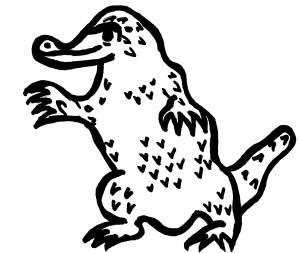
The first beast to slither its way out of the briefcase is a Niffler, a small platypus-like creature that is drawn to any and all things shiny. As Scamander is attempting to catch the escaped Niffler in a large city bank (full of shiny coins), he meets a “No-Maj” (non-magic folk, aka “Muggle”) named Jacob Kowalkski. Kowalski is at the bank attempting to get a loan to open up his dream bakery. It doesn’t take long for Kowalski to get mixed up in the wizarding world, which is pretty much unknown to all No-Majs. The two become a duo comparable to Batman and Robin, and it’s one of the best bromances in cinema history.

As Scamander attempts to locate all of his escaped beasts, he runs into trouble with The Magical Congress of the United States of America (MCUSA), and everything becomes a total shit show. The film’s female lead, Porpentina “Tina” Goldstein, works for the MCUSA. She comes off as a total pain in the ass at the film’s beginning because she rats out Scamander to the MCUSA, but she quickly becomes an extremely likeable character. Tina has achieved role model status with me. She’s a powerful, intelligent witch who is out to do the right thing. It just takes her a little bit to find out what the right thing really is. Tina’s sister, Queenie Goldstein, is quite the opposite of Tina. Queenie is full of giggles and smiles, has sunny blonde hair, and sports a bright pink coat for most of the movie, while Tina is more on the serious side. I remember cringing a little bit when Queenie first makes her appearance because I assumed she was going to be the ditzy-blonde-girl type of character, but that’s not the case at all. Queenie is simply sweet and optimistic, and she is responsible for saving the day just as much as the rest of the crew. All in all, the leading ladies in Fantastic Beasts are totally impressive, but of course, I would expect nothing less from the mind of Rowling.

There are a lot of things to pay attention to in Fantastic Beasts because everything is a piece of a giant puzzle that will reach completion once the 5th film in the series is released. That’s right, there will be five Fantastic Beast films! And I’m here for that. The cast of Fantastic Beasts reminds me a lot of the cast of the Harry Potter films. Their camaraderie really comes across in their acting, and there’s just good vibes all around. The film’s director, David Yates, also directed the last four Harry Potter films, and he’s known for being a pleasure to work with. This is cinema that’s made with so much passion and love, and I cannot wait to see the next four!

-Britnee Lombas

Cheerleader (2016)

fourstar

One of the more overlooked aspects of the 90s was just how strong its high school comedies were. Titles like Clueless, But I’m a Cheerleader, Bring It On, Election, Jawbreaker, and 10 Things I Hate About You don’t get nearly enough credit for being some of the most playfully subversive and visually meticulous comedies of the past few decades. Every now and then we’ll see an admirable throwback to that era that pretty well captures the vibe: Mean Girls, The To Do List, The DUFF, etc. However, with the new microbudget indie release (& debut feature for writer-director Irving Franco), Cheerleader, we see the 90s high school comedy contorted into an entirely different, newly exciting beast. Cheerleader is a surprisingly dark comedy that repurposes the subversive bubblegum pop of 90s teen movies for a quietly surreal fantasy piece. The film exists in a cartoon reality of its own outside time & logic and uses familiar teen comedy beats to establish a darkly surreal mood and a tender mode of complete emotional devastation. It’s subtly brilliant, quietly intricate, and deserves the mass attention of wide distribution, especially considering the way it evokes an era of currently bankable nostalgia by reimagining instead of merely mimicking.

Helping establish its function as a fantasy piece, Cheerleader deals strictly in archetypes: The Jock, The Burnout, The Gossip Queen, Her Cohorts, etc. Their high school hierarchy is disrupted when the Popular Girl cheerleader sets up a date with the Total Nerd loser in order to make her on again/off again boyfriend, The Jock, jealous. While on the date Mickey discovers that she actually has genuine feelings for the hopelessly awkward Buttons. It’s an unexpected turn that not only throws off her plans to rouse jealousy in both her captain of the basketball team beau & her too old to still be in high school scumbag of a secret lover side fling, but also reveals to her what true desire feels like. While trying to make a big deal out of silly high school mind games Mickey accidentally discovers something that is a Big Deal, but can’t wrap her mind around how to work it into her already set in stone public persona.

Told from Mickey’s perspective, Cheerleader starts with a gentle mocking tone that pokes fun at the way its protagonist gets lost in thoughts like, “It’s nice to look nice or feel good or whatever” and the way she constantly thinks aloud, qualifying each statement with a “I think,” “I feel,” “I guess,” . . . or whatever. As you get to know her, though, her anxiety about being eternally self-aware about her public image & her constant need to feel desired takes on a decidedly tragic air. That’s why it hurts so much that when she actually experiences that genuine attraction from the equally self-conscious & anxious Buttons, she’s not sure what to do and mostly just allows herself to mentally & emotionally detach. The film starts like a lightly satirical comedy, but it morphs into something much darker & more empathetic over time.

One of the more immediately striking aspects of Cheerleader is its intensely meticulous visual palette. This film is 100% Tumblr-ready. Although its temporal setting is never made explicit, its timeline seems to fall somewhere between 1988-1992. Pastel windbreakers, Max Headroom-style screensavers, notebook grid wallpaper, French fries, and scrunchies map out a familiar era of past fashion & graphic design, but serve more to exaggerate an artificial fantasy space than to generate nostalgia. In Cheerleader‘s more lyrical moments the nonsense computer graphics of Buttons’s garage full of bleep bloop machines eat up the entire screen & serve to amplify the ever-intensifying unraveling of Mickey’s internal psyche. For a film so wrapped up in the meaningless machinations of high school relationships between 2D archetypes, it’s incredible how much of Cheerleader‘s visual palette plays like a quietly psychedelic art piece.

It’s so easy to get wrapped up & lost in Cheerleader‘s visual detail: the pink & blue lights, the gold eyeliner, the light-up make-up mirrors. This is an intensely sensual film. The atmospheric loops of its dreamlike score sound like the opening sample to a hip-hop song where the beat never actually drops. There’s a purpose to that sensory disorientation that extends far beyond art for art’s sake surrealism, though. Cheerleader creates an artificial environment and populates it with cookie cutter archetypes, but uses those pieces like players in a stage play to dig into some upsetting revelations about internal & external pressures on the teen psyche.

I’ve seen that same artificiality put to similar use in the best teen comedies of the 90s (Clueless & But I’m a Cheerleader being personal favorites), but nothing about Cheerleader plays like a going through the motions retread. The film quietly & confidently carves out its own loopy, dreamlike space within that genre that plays much more like deliberate subversion than empty nostalgia. It’s a consistently surprising work that at once functions as a satirical comedy, a doomed romance, and a surreal mental health drama without any of those individual parts conflicting with each other, a difficult balance to strike considering its dedication to subtlety & tenderness. I hope it gains more traction as more people get to see it, because I could easily see a (much-deserved) cult following easily forming around it.

-Brandon Ledet

Movie of the Month: Paperhouse (1988)

EPSON MFP image

Every month one of us makes the rest of the crew watch a movie they’ve never seen before & we discuss it afterwards. This month Boomer made Brandon, Alli, and Britnee watch Paperhouse (1988).

Boomer: Paperhouse is an odd little film. Helmed by Brit director Bernard Rose, the film follows the frenzied dreams of an artistic young girl, Anna (Charlotte Burke), as she finds herself flipping back and forth between the real world (where she is suffering from a glandular fever) and the fantasy world that is home to the titular paper house of her design. The lines between reality and unreality start to blur as she strikes up a friendship with Marc (Elliott Spiers), a disabled boy living in the otherworldly house and with no memory of life outside of it; when she learns from her physician (Gemma Jones) that Marc is real, things start to get more surreal and bizarre.

This wasn’t Rose’s directorial debut; he had previously worked in various roles on the last season of The Muppet Show and on The Dark Crystal before a short stint making music videos, most notably for Frankie Goes to Hollywood’s “Relax.” After two smaller films that are largely forgotten, Rose directed Paperhouse, which was a perennial favorite on IFC in the early 2000s, before moving on to direct cult classic (and his only other truly great film) Candyman, released in 1992. Candyman is undeniably a horror film, and Paperhouse was largely lumped in with the horror genre upon home video release as well, despite not strictly deserving that distinction. It’s much more of a mood piece, with a relatively simple story elevated by striking visuals and a moodily beautiful score by Stanley Myers and Hans Zimmer (Rose certainly knows how to choose composers; Candyman’s Philip Glass soundtrack is so haunting that Glass apparently still makes royalties from it each year, no doubt helped by the fact that “Helen’s Theme” continues to appear in other genre works, most recently American Horror Story).

I love this film, and have seen it at least a half dozen times, but there is always enough time between each viewing that I forget that the film has a longer ending than I expect. For me, the film reaches its narrative conclusion when [spoiler alert] Anna learns that Marc has died. Although I’m not opposed to the resolution of Anna and her family (including her father, whose notable absence informs much of the psychological underpinnings of the film) returning to the seaside and revisiting a happier time, there is something about the ending that seems as little too pat, especially in light of the mildly silly scene in which Marc reappears to Anna. What do you think, Brandon? Did the ending seem out of place to you, or am I being too critical? Would you suggest a different conclusion?

Brandon: If I had to fault Paperhouse for anything it’d be the muddled nature of its central metaphor. The film operates in a spooky 80s kids’ movie headspace that I’m always a huge sucker for and the dream logic of both its set design & its eerie score is wonderfully chilling. There’s just something a little off in its dreamworld narrative that makes it difficult for me to track its overriding metaphor (not that I mind the ambiguity). Two sick children meet in the shared dreamworld set of a hand-drawn house and their recovery in the real world is dependent upon their progress in that fantasy space. Marc, who is unaware of this dichotomy despite Anna’s frequent explanations, suffers a fairly straightforward narrative where he slowly dies due to complications that arise through his muscular dystrophy. As Boomer points out, his death in the real world seems like a logical place for the story to end, but I do believe that the seaside resort epilogue was a necessary addition to the story, because Anna’s own struggle was at that point still largely unresolved.

Anna’s near-death experience with a glandular fever is what puts her in contact with the paperhouse fantasy where she meets Marc, but her true conflict is a mental health struggle related to her anxieties over an absent, alcoholic father. When Marc dies he rides a helicopter to heaven that relieves the real world pains of his body. In the seaside epilogue Anna tempted to leave behind her own pain by joining Marc in the helicopter, a moment that’s coded as a suicide attempt at the edge of a cliff. This last minute crisis might not make much sense in a typical three act story structure, but I do think Anna flirting with the relief of death is a powerful idea that Paperhouse would be lacking without, especially in its indication that her mental health struggle wasn’t instantly wiped away upon her father’s return.

Where I stumble a little in my reading of this conflict is in understanding the exact relationship between Anna & her father. Paperhouse explains the father figure to be a drunk & an abandoner in the real world, which is meant to explain Anna’s anxiety, lashing-out rebelliousness, and eventual disinterest in continuing to live. In the dreamworld, however, her father is far more abusive than that. Blinded by rage (both Anna’s & his own), Dream Dad strikes a terrifying nightmare of an image, destroying the physical objects Anna created & cherished with a hammer and physically beating her in the chest nearly to the point of death. No mention is ever made in the real world of Anna being physically abused by her father, but the brutality & specificity of the hammer & the chest-beating in the dreamworld at least makes it plausible that Anna was afraid that such abuse was a possibility. Coming back to Boomer’s original question, if there’s anything lacking in the ending for me it’s how easy Anna & her father’s seaside reconciliation feels after the brutality of their altercation in the dreamworld. Anna gets in the cathartic zinger, “You don’t have to be invisible to disappear, Dad,” but she does eventually forgive him after the helicopter/suicide crisis and the family is again made whole, which might be a little too neat & tidy of a conclusion given Anna’s near-fatal parental anxieties.

Britnee, how literal did you take the physical abuse in the dreamworld to be? Do you think it was intended as a reflection of something that happened in the real world or simply an amplification of Anna’s anxieties over her father’s alcoholism?

Britnee: One of the many mysteries in Paperhouse is the relationship between Anna and her father. Part of me feels as though the abuse in the dreamworld was more of a reflection of something Anna witnessed rather than something she experienced herself. If her father did indeed abuse her, I feel as though she would have been much more fearful of him in her dreams, but she wasn’t very scared of him considering how creepy the whole situation was. I really think she witnessed her father abusing her mother. Anna’s dreams allowed her to see the potential of her father’s alcoholism, and it really seemed like a big eye opener for her in the real world. There was something about the mannerisms of her mother that makes me believe she had a traumatizing experience with her husband. She seemed a bit shaky when she would light up her cigarettes, and she seemed to be in an entirely different world herself (perhaps Anna’s real world was her paperhouse?). I do agree with Brandon’s frustration with the very simple reunion at the end of the film. It actually made me a little nervous for Anna’s well-being; however, I’ve also been watching a lot of Dr. Phil lately, so that may have something to do with my uneasy thoughts about Anna and Drunk Dad.

What I found most interesting about Paperhouse was the confusing soundtrack. Brilliant, but so confusing. During the film’s opening credits, I was waiting for a dead body to fall out into the school hallway. I kept waiting for a gruesome, terrifying scene, but by the latter half of the film, I just gave up. There were a handful of scenes that were spooky, especially when Drunk Dad captures Anna in her dreamworld, but nothing was half as scary as the tunes in the background. Needless to say, I was surprised to find that the film fell way more on the drama side than on the horror.

Alli, did you feel as though the film’s score was out of place? Did the music add to the creepiness of Anna’s dreamworld? Did you get more horror vibes or fantasy vibes from that world?

Alli: Initially the score felt very spooky and out of place to me and definitely made me feel like more bad things were going to happen; but once in the dreamworld, it felt really appropriate. The low ominous synth sounds seem to enhance the vast emptiness you see around the house. What especially made the score work in the dreamworld was that at some points it became diegetic with the talking radio. While the idea of a talking mumbling radio seems reminiscent of Pee-wee’s Playhouse, here it was very creepy, as the nightmare dad seemed to be talking through it a little bit.

The dreamworld to me was very much a fantasy and an escape from the fact that she’s lonely at school and at home. While it starts off as something she can control very quickly it functions on it’s own bizarre logic, where some of the things she draws turn up very realistically and other things just are crooked and funny. It’s not until the faceless dad that it gets into nightmare zone, and even then he feels more like an intruder than an aspect of the dreamworld. In Anna’s life he is sort of an intruder, showing up whenever he feels like it both emotionally and physically.

But as much as the dad seems like a dark figure in Anna’s life, her mom is really not better at all. It’s no wonder she acts out with a mother who is as unsupportive as we see on screen. She criticizes Anna’s drawings very rudely and isn’t really nurturing at all until Anna is extremely ill, in a sort of trying to make it up to her way. Both parents seem to just make up for the lack of love with material things like riding lessons and manufactured happy trips to the seashore, which I think makes the ending more depressing and bitter.

Boomer, what did you think of the mom’s role? Is she just as bad as the dad or is she just a single mother at the end of her leash?

BoomerI feel like we’re being more critical of both parents here than is called for, at least based on my reading of the film. Multiple times, we see how the dreamworld of the paperhouse is influenced by things that Anna sees or vaguely recalls, or by her physical circumstances in the real world. The reason that Anna feels like she is being beaten in the dreamworld is because, in the waking world, the paramedics are giving her compressions to keep her alive. The reason that her father appears as a backlit creepy shadow is because she encouraged her mother to let the photo of him at the beach develop for too long, until he becomes a dark figure in the image, and thus in her mind. The father doesn’t seem abusive to me, either to his wife or to Anna, so much as he is an unknowable being, his absence making him a figure that is half-remembered and half-imagined, larger than life but imposing.

The mother, for her part, reads more as a woman who’s been run ragged by holding down a household with a misbehaving young girl, suddenly stricken with illness. She has artistic pursuits of her own, as evidenced by her home dark room, and likely has had to sublimate her interest into being both breadwinner and full time caretaker to Anna due to her husband’s chronic and prolonged absence.

One of the things I like most about the film is the fact that no character is a paragon. As a heroine, Anna is a surprisingly postmodern. She’s a girl, but not feminized. She’s not stereotyped as drawing a dream house that’s reminiscent of the kind of future home girls are encouraged to imagine, but a strikingly dull building instead. She tries on make-up, but not to impress a boy; she just wants to try it for herself. Usually, female protagonists can only avoid being sexualized if they are infantilized (and, unfortunately, not even then), and although Anna is young, she’s not treated as an idealized perfect child. She lies, she throws tantrums, she skips school, and, most importantly, she’s not demonized for this either. These are just aspects of her character, not flaws that need to be corrected with external discipline, but that make up the gestalt that is Anna. Her mother, though her screentime is shorter than Anna’s, makes her seem fully-fleshed in her own way as well. She even seems genuinely loving, going so far as to dig through the whole building’s trash to placate what she must assume is some feverish madness.

Am I giving the film too much credit, Brandon? Am I making excuses for the movie because I like it, or have I convinced you that there’s more going on at the character level than there first appears?

Brandon: Please forgive me for the banality of this answer, but I think a lot of that ambiguity falls under the umbrella of personal interpretation. Paperhouse is in the most basic sense a story about lucid dreaming. Dream logic always comes with a certain level of impenetrable surrealism to it and there’s been an entire industry full of psychologist “experts” built around the therapeutic benefits of dream interpretation. Then there’s the film’s art therapy element, in which Anna creates a personal space for herself where she can exude total control as an omnipotent (and highly fallible) god. Both the weird dream logic & the art therapy surrealism of the film’s basic plot leave Paperhouse with a lot of room for personal interpretation in its symbolism, especially once Anna’s drawings start affecting real world change in Marc’s medical condition. Personally, I see a drunk dad who scares Anna (who points out his alcoholism in the darkroom scene) and a mother who may be frazzled, but is not at all abusive (as evidenced in the manic trash-digging scene). I also read a third act suicide attempt at the edge of the cliff, but I’ll willingly admit that I’m reaching for a solid explanation for an intentionally lyrical moment there, which may be the wrong way to go about things in this movie.

So much of this movie is literally in Anna’s head that it’s near impossible to tell what’s “really” happening from minute to minute. How much of our darker interpretations of the parents’ behavior is being influenced by the horror film dread of Myers & Zimmer’s score? How much of the dreamworld content is merely, as Boomer suggests, reflections of images Anna encounters throughout the day, as many dreams tend to be? There’s no “true” answers to these questions, as the film intentionally deals in ambiguity. There’s evidence that Anna’s dreamworld surrogate was truly communicating with Marc’s, a boy she never met in a physical space, but everything else is left open-ended. The film kind of works like a coloring book: it provides a basic outline of how its world works and invites its audience to color in the details. Maybe we’ve been coloring a little outside the lines in our personal interpretations here, but I think the movie invites that kind misbehavior. I also don’t believe that misbehavior is a detriment to either of the central characters, though, as I never felt like I lost track of Marc or Anna as complex, multifaceted human beings. It’s their own personal interpretations of the adults in their lives that throw off our perception as an audience & complicate some of the film’s intent & metaphor.

Britnee, I’m getting some flashbacks to our Movie of the Month conversation about Black Moon here, particularly in our attempts to parse out what the film specifically “means.” Instead of picking apart an intentionally inscrutable art film, though, we’re discussing a movie that was ostensibly made with a very young audience in mind. Do you think the darkness & ambiguity helps the film in this case, considering the flexible imaginations of the children intended to see it? As adults, are we reading more solid, static interpretations of the film’s metaphor than we might have as kids, when Paperhouse could possibly have survived purely on mood instead of concrete symbolism?

Britnee:  While I was in college, I took a history class that focused on the 1960s, and most of that course involved watching films, such as Go Tell the Spartans and Easy Rider, and writing about them. Before viewing each film, my professor would say, “Remember, every detail, whether major or minor, in a film means something. There is symbolism everywhere.” That really stuck with me, and since then I always feel somewhat guilty if I don’t search for meaning behind every little detail in a movie. I’m glad that Brandon brought up the point that this is a film intended for a younger audience. I need to remind myself every now and then that sometimes (maybe even most of the time), films are created solely for the purpose of pleasure and entertainment.

Ignoring the interpretations we made of Anna’s dreamworld as well as her relationship with her parents (Drunk Dad in particular) and viewing the film through the eyes of a child, Paperhouse seems a bit more whimsical. A film about drawings that come to life in dreams and a magical friendship that only exists in the dreamworld seems a lot better than a film about a girl with neglectful and abusive parents. Paperhouse becomes another film entirely. Even the darker elements of the film take on a new meaning. Anna’s scary dream father becomes a product of a mistake in her magical drawing instead of an abusive parent turned villain. As for the darkness and ambiguity of the film, I think it actually contributes to the film’s fantasy elements and makes it much more exciting for the intended adolescent audience. If I was eight years old watching Paperhouse for the first time, my imagination would be running wild during those scenes in Anna’s dreamworld.

Alli, I was really irritated by the mystery between Anna and Marc’s friendship. If only we were able to know if Marc was having his own recurring dream with Anna. What if they were possibly sharing the same dream? The fact that we will never know just kills me. What are your thoughts on the telepathic connection between Anna and Marc? Would you have enjoyed seeing Marc’s side of things?

Alli: I think the interesting thing about Anna and Marc’s friendship is that he has no knowledge of the world outside the dream, which leads me to believe that he was kind of subconsciously called there. Not to try to make too much technical sense of dream logic, it seems like they are sharing a dream, but since he’s less in control of it he is much more wrapped up in the dream state. Like Brandon said Paperhouse seems to be about lucid dreaming. It would be a lot harder for Marc’s dream-self to be aware what’s going on. For him, this is probably just a really crappy dream where instead of being a fantastic escape he’s still sick and unable to walk and there’s this girl urging him to be happy. As we’ve already said, we’re very sympathetic with Anna though and it’s hard to fault a girl for accidentally summoning a sick boy into her dream. I think not knowing Marc’s side of things gives us an opportunity to watch Anna grow more from her perspective. Not seeing Marc’s side, we’re figuring him out as she is. By doing that this film really captures the vulnerability of making friends as kids with kid emotions. They’re so tumultuous and dramatic, because kids are still figuring out themselves and their own boundaries.

I’m going to dare to interpret the dream logic more and say that a lot of these volatile, underdeveloped emotions are mirrored in the dreams. Her dream house is bare. The dreams themselves go from just having a conversation to terrifying faceless dream dad pretty quickly.  As traumatic as they were, the dream conflicts help Anna find more of herself. These dreams are so hard and scary because figuring out yourself is hard and scary. She learns more how to honestly interact with people and to take responsibility for her actions. She learns empathy, which is really hard for kids to learn, by talking to Marc. As she learns more about herself and matures, the dreams become more fleshed out and less bleak. 

EPSON MFP image

Lagniappe

Brandon: Paperhouse reminds me of a very specific time in 80s children media where stories were allowed to be dark & ambiguous in a way that a lot of the more sanitized kids’ movies of late wouldn’t dare. Titles like The NeverEnding Story, Lady in White, and Return to Oz all specifically came to mind while watching the film, but I have to admit I think it’s closest comparison point was released in 2005. The Dave McKean & Neil Gaiman collaboration MirrorMask is a children’s fantasy film in which a young girl feels immense guilt over fighting with her mother before they’re separated by a sudden illness. She wrestles with this anxiety during an extended dream in which she enters & explores a world she drew by hand in her own bedroom. Sound familiar? MirrorMask is a little more obvious & blunt in its central metaphor & a lot more expansive in its dream space, but otherwise the pair make interesting companion pieces.I think if you really enjoyed one, it’d be more than worthwhile to seek out the other.

Alli: I also thought of MirrorMask, and its terrifying dreamworld, but another Neil Gaiman creation came to mind as well, Coraline, which is another story about a girl upset at her parents entering a dreamworld with duplicate parents. The terrifying Other Mother is reminiscent of faceless dad. But there’s another similarity for me. One disappointing thing the Coraline movie did that deviated from the book was to add in the male character, Wybie, that besides being a sidekick also seems to have an unnecessary crush on Coraline. And that kind of touches on my one gripe with Paperhouse. I kind of wished that Anna and Marc hadn’t become crushes and just remained friends. You so rarely see male-female friendships in movies.

Britnee: I feel really bad for being so rough on Anna’s father. He was probably just a really nice, hardworking man that has to sacrifice spending time with his family to make a decent living. Instead of seeing that initially, I jumped to conclusions and labeled him as an alcoholic and abusive father. Shame on me.

Boomer: I don’t think there’s anything wrong with reading the father as an alcoholic, as there is certainly reference to his drinking in the text. That having been said, the mind of our main character (and perhaps all children) has a tendency to exaggerate the real world, as evidenced in the way that things become larger than life in the dreaming, and that’s how I interpret that particular nuance. Still, although that’s my reading of the text, the other readings are certainly valid as well.

Upcoming Movies of the Month
December: Alli presents Last Night (1999)

January: The Top Films of 2016

-The Swampflix Crew
Watching The Dark Crystal (1982) with Toby Froud

EPSON MFP image

I’ve been a huge Jim Henson fan basically my entire life. I grew up with The Muppet Show, Sesame Street, Fraggle Rock, and all of the Muppet movies. Given all of that, The Dark Crystal was a movie I watched a lot as a kid, but at that time, I don’t think any of the important detail stuck. It wasn’t until watching it last year as an adult I finally really appreciated it. The Dark Crystal functions in such a dense, beautiful world. It’s got new cultures, strange creatures, and symbols on top of symbols. I recently got the chance to see it with a Q&A by Toby Froud that expanded upon the time and love it took to create this masterpiece.

The Dark Crystal is an epic. It was Jim Henson’s passion project. He wanted to be known as a filmmaker and not just The Muppet Guy. It took Henson five years to make along with a team of highly dedicated creatives with a wide range of talents (jewelry making, costume designers, puppeteers, writers). Among them were Brain Froud who was the designer for The Dark Crystal and Wendy Midener who sculpted and created the Gelflings. They met working on the film. Toby Froud is their son and, following in the footsteps of his parents, a puppet fabricator for Laika. (He also was the baby in  Labyrinth.) Although The Dark Crystal was before he was born, he grew up with goblins and Gelflings all around, and has a unique perspective. It obviously was extremely influential for him.

Toby showed a slideshow of original concept art, screen tests, behind the scenes messing around, and supplied anecdotes to go along with each one. The Dark Crystal is one of the only movies in the world that is all puppetry. So many of the pictures showed just how much work and ingenuity these creatures took: men being stuck into Garthim suits, faces being sculpted, strange contraptions to figure out exactly how things would realistically move. Everything was crafted from the ground up. There was no story even to begin with. Jim Henson just started with images of creatures and ideas about the world; everything else just came as they started making things. People dedicated their time. Some people even risked their lives walking on stilts in Landstrider costumes on top of raised sets.

Given the dense nature of the world a lot of material has been written to expand it. There are the Creation Myths graphic novels and an upcoming full length novelization of events that occur after the original story. There have been rumors of a sequel coming for years, some sounding more serious than others. Toby Froud even said not to count the possibility out. That got me wishful thinking. A Laika-made Dark Crystal sequel is something that I would line up to see.

-Alli Hobbs

The Huntsman: Winter’s War (2016)

hobbit

three star

campstamp

In the most basic sense The Huntsman: Winter’s War is a sequel that no one was clamoring for. Even the star of Snow White & The Huntsman, my beloved Kristen Stewart, declined to return for this second installment of a franchise practically no one loves. This film’s lack of critical hype or a vocal fandom was a little isolating for me, since I was actually a fairly solid fan of the much forgotten original film. As a low-key fantasy epic that called back to mid-80s productions like LegendLabyrinth, and Ladyhawke, I found Snow White & The Huntsman to be a mostly satisfying experience. What really stood out, though, was the film’s visual flourishes, which bathed a wicked queen played by Charlize Theron in a milky white porcelain & transformed the evil mirror of Snow White folklore into a menacing humanoid made of dripping gold. In this way The Huntsman: Winter’s War could be understood as being simply more of the same. Anyone who brushed off Snow White & The Huntsman as a dull trifle (most people, I’m assuming) isn’t going to be won over or blown away by what they find in Winter’s War. However, fans of the original’s familiar fantasy realm setting & surprising knack for striking visuals in its villainy are likely to be pleased by the franchise’s years-late return. I was, anyway.

A ludicrously belabored, heavy-handed prologue narrated by Liam Neeson asks the question “What does a mirror show you? What do you see?” The answer is clips from Snow White & The Huntsman, apparently. It’s probably not a good sign that this late in the game follow-up feels the need to remind its audience that it’s not an original property, but I found myself entertained by the film’s strained way of setting up its own Kristen Stewart-free narrative. The prologue is so long & unwieldy that it feels as if Neeson is reading a decades-spanning bedtime story, which is far from the worst effect for a fairy tale, all things considered. By the time the setup is over with, Winter’s War simultaneously functions as a prequel and a sequel, retroactively introducing new characters into its already-established mythology so that it has a place to go in Snow White’s absence. I’m not sure knowing the exact plot of this film’s silly middle ground between Lord of the Rings & Game of Thrones is all that necessary for you to understand what you’re getting into. Winter’s War more or less boils down to a CG action adventure about opposing kingdoms’ quest to obtain & command the evil mirror of the first film, which looks like some kind of all-powerful golden gong. It just so happens that the monarchs of those kingdoms are both badass women.

Besides its undeniable knack for visual effects, Winter’s War mostly finds entertainment value in the strength of its casting. Charlize Theron returns as the golden evil queen of the first film, but this time she’s joined by a (somehow previously unmentioned) sister, played by Emily Blunt (hot off the heels of her roles in Sicario & Edge of Tomorrow). Here, Blunt plays a CG-aided Ice Queen who staffs her tundra-set fortress of solitude with a ferocious army of children she raises to be loveless killers. She trains these tiny tyke murderers to believe that “Love is a lie. It is a trick,” establishing her sole governing rule to be “Do not love. It’s a sin. I will not forgive it.” And, wouldn’t you know it, two of her miniature killing machines grow up to fall in love. One of them is America’s hunky but dim foreigner boyfriend Chris Hemsworth, returning from the first film, and he’s romantically paired with Fellow Beautiful Person Jessica Chastain. The two leads essentially live out a feature-length version of the ridiculous fight-flirting scene from Daredevil, interspersed with their attempts to thwart two evil queens from gaining the ultimate power represented in the mirror by destroying a litany of faceless foot soldiers with their gorgeous weaponry of golden liquids & CG ice shards. Edgar Wright’s pet doofus Nick Frost returns as a CG dwarf to offer some comic relief, but the less I say about that the better.

The Huntsman: Winter’s War boasts three badass women as its leads along with stunningly gorgeous costumes & visual effects, but is hopelessly saddled with goofy everything else. For every brilliant idea in its visual play (like a white porcelain version of the mechanical owl from Clash of the Titans), there’s something equally silly waiting to drag down its artistic clout (like an early scene that depicts the most blatantly overwrought “You thought this was just a game?” chess match metaphor I’ve ever seen in my life). I might be the only person in the world who regrets not seeing this ridiculous display play out on the big screen, but I do believe with a little push in a more extreme direction, either towards more over-the-top camp in the performances or some R-rated gore in its fantasy violence, this film & its predecessor could have serious cult following potential. As is, you have to appreciate them for their low-key fantasy realm charm, the absurdity of their surprisingly game cast, and the perfume commercial menace of their imagery to buy what they’re selling. Personally, I’m a sucker for all three.

-Brandon Ledet

The Reverence & Irreverence for Unicorns in Black Moon (1975) & Legend (1985)

EPSON MFP image

When we were discussing August’s Movie of the Month, the surrealist fantasy art piece Black Moon, it was all too easy to pick on the film’s depiction of a plump & frumpy unicorn, since that’s not the image we typically associate the mythical beast with. The movie itself even picks on the unicorn, with its protagonist Lily (one of three Lilys) stating plainly to the poor beast, “You’re not very graceful. In my books unicorns are slim & white.” The Eeyore-esque unicorn then laughs in her face & brays “The most beautiful things in the world are the most useless.” Black Moon playfully subverts the iconic image of a unicorn with what is essentially a horned donkey with a smartass sense of humor. The most realistic depiction of what Lily & ourselves were picturing when we mentally conjured a basic unicorn wouldn’t gallop onto the screen until a decade later in Ridley Scott’s fantasy epic Legend.

As a European art film featuring cross-species breastfeeding & a literal battle of the sexes, Black Moon isn’t at all interested in basic cinematic concerns like clear narrative or commercial appeal. It wouldn’t be until the mid-1980s when American movie studios would start mining the same fantasy realm representation for wide commercial releases, but you can see echoes of the Natural World magic & down-the-rabbit-hole story structure of Black Moon in popular fantasy titles like The Neverending Story, The Labyrinth, and Ladyhawke. Although Legend was an outright commercial flop it was a big studio picture that firmly fit in that category. Legend is more of an adventure epic than Black Moon in a lot of ways, structuring its tale around dual journeys to restore order to a broken world instead staying put & feeling out the weirdo magic vibes of one particular location. Both films do pursue a dead still sense of pacing, though, concerning their narratives more with an overwhelming immersion in Nature than any kind of action-packed pursuit. Legend‘s scope & budget allows for the inclusion of goblins, demons, fairies, zombies, and swamp witches that you aren’t going to see anywhere near Black Moon‘s small scale domestic horrors, but both films do depict a mortal woman in over her head in a magic realm and they do share  a common talisman: the unicorn.

In Black Moon, the unicorn doesn’t do much but trot lazily & crack wise. It’s just one element among many that confounds our hero Lily in her quest for simple answers about where she is & why that world is so hostile. In Legend, on the other hand, unicorns are everything. They’re exactly what Lily was conjuring when she insulted their Black Moon equivalent: slim, white, majestic, and (just like everything else in Legend) slathered in glitter. Lily chases down the Black Moon unicorn out of sheer curiosity and the consequence of the transgression is a line of dismissive insults no worse than anything else she suffers in her newfound home. In Legend, princess & Ferris Bueller’s girlfriend Lili (Mia Sara), lures a unicorn in for an intimate moment, but her indulgence’s consequences are much more severe. When the princess calms the mythical beast into standing still a goblin severs its horn, instigating a fantasy genre version of the Ice Age. There are only two living unicorns in Legend‘s folklore and their existence & health affects the state of the world no less than almighty gods. According to Tom Cruise’s woodland nymph character (who’s a decent stand-in for Black Moon‘s mute Fabio houseboy Lily), the unicorns “speak the language of laughter” & “Dark thoughts are unknown to them.” Furthermore, the princess “risks [her] mortal soul” when she says that she doesn’t care that the creatures are sacred. Like in Black Moon, the unicorns can talk, but they communicate in beautiful whale songs. Everything about them boasts divinity. And when “a mortal laid hands on a Unicorn” the whole world goes to shit.

Recent try-hard films like Deadpool & Suicide Squad and their like-minded internet memes have made the image of the unicorn a sort of cheap visual gag supposedly humorous for its Lisa Frank brand of femininity, a likely result of its brony-based cultural resurgence. Black Moon, similarly (but more purposefully), pokes fun at the divinity & femininity of classic unicorn representations by subverting the mythical creature’s attributes in an image & demeanor that pokes fun at the importance of physical beauty. That subversion wouldn’t mean anything without a unicorn hegemony to buck against, though, and you’ll find its best contrast in the divinity of Legend‘s horned equestrians. Ridley Scott’s mid-80s fantasy epic is maybe a little lacking in pace & plotting, but it’s a jaw-dropping work of gorgeous production design if I’ve ever seen one (I could happily spend 1,000 mall goth lifetimes in Tim Curry’s demon lair if nothing else) and that attention to glitter-coated beauty is a perfect stage for a traditional white unicorn ideal, the exact antithesis of what’s presented for laughs in Black Moon.

For more on August’s Movie of the Month, Louis Malle’s surrealist fantasy art piece Black Moon, check out our Swampchat discussion of the film.

-Brandon Ledet