Knife+Heart (2019)

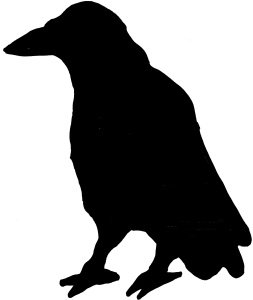
Never before have I ever seen a movie that was made for me the way that Un couteau dans le cœur (Knife+Heart) was. Seventies-set giallo featuring a masked killer in black leather gloves? Check. Queer story that focuses on a troubled woman who drinks herself into unconsciousness on a nightly basis and is unable to let go of a lost love? Check. Vertigo/Body Double-esque plot points about obsession with apparent doppelgangers? Check. M83-as-Goblin soundtrack? Check. A plethora of shots of old school film editing equipment being put to good use? Check. A peek behind the curtain of the seventies gay porn scene? Check! Women in white wandering around a forest as gales of wind blow all about them? You betcha. A strangely centric fable about grackles? Is it my birthday?

It’s 1979, Paris. Anne (Vanessa Paradis) makes “blue movies,” better known as gay pornography, along with her best friend Archie (Nicolas Maury), cameraman François (Bertrand Mandico) and her lover of ten years, Loïs (Kate Moran), although that relationship has recently come to an end. Tragedy strikes when one of her actors, the insatiable “Karl” (Bastien Waultier), is stabbed to death by a man in a terrifying full face mask after a night out cruising. As a result, Anne is interviewed by Inspector Morcini (Yann Collette); back in the studio, she retitles their current production to Homocidal and recreates this interaction with Archie in her place and heroin addict Thierry (Félix Maritaud, of BPM and Sauvage) and José (Noé Hernández) in the roles of the police. Anne recruits a new actor, Nans (Khaled Alouach), who is noted for his twin-like resemblance (not his twink-like resemblance, although that could also apply) to a former star of hers named Fouad, which is fortunate; after Thierry is also murdered, most of the actors fear returning to set. In her personal life, Anne spends her days drinking straight from the bottle of whisky that she keeps on herself at all times and stalking Loïs around nightclubs when she isn’t too drunk to move. After a third murder, Anne traces the clues to a forest that, according to folklore, is used for faith healing via grackle—as with most gialli, it only makes marginally more sense in context—where she finds a small cemetery and the grave of Guy (Jonathan Genet), and the answer to the identity and motivations of the killer.

The only negative thing that I can say about Knife+Heart is that the fact that it now exists means that I may now never finish my own giallo script (titled Profundo Giallo, naturally, because I am a NERD), which features many of the same narrative beats, although for the sake of future copyrights I should note that Gonzalez and I were both drawing from the same well of archetypical giallo ideas. Still, it may end up being difficult to prove that we independently came to the idea of having a queer character (Loïs here, Oliver in PG) whose relationship with a primary protagonist ended poorly discover a vital clue while reviewing grainy footage. Really, we’re just both putting the same twist on the standard giallo trope that I call “Obscured Clues,” which was the most frequently recurring narrative element in Argento’s Canon; that is, a character witnesses something that they do not initially realize is a clue and then struggle to recall its importance.

Knife+Heart is a neon saturated fever dream, and yet it holds together in a way that is truly astonishing and thoughtful, considering that multiple people get stabbed to death by a knife hidden inside of a makeshift phallus. It’s surely no coincidence that the film is set in 1979, on the eve of what we would come to know as the AIDS epidemic; the establishment of the era, represented by the police department and their dismissive treatment of the killings of Anne’s actors, is largely unconcerned with a series of tragedies that befall society’s “undesirables.” This is made more manifest by the way that the pretty young things are killed: in cruising bars and by-the-hour hotels, in alleys with needles in their arms, etc. I could honestly live the rest of my life in happiness without ever seeing another AIDS allegory film, but this one manages to weave subtlety into this tapestry, which makes for a better narrative overall. That this can happen in a movie that also features an actor campily full-on humping a typewriter in one of Homocidal’s scenes speaks to a strong directorial vision.

Anne is no doubt destined to be a divisive character; in his review for MovieJawn, Anthony Glassman writes that Paradis’s character “metamorphoses from a drunken psychopath into a driven and caring mother figure,” and although I was fully within Anne’s headspace, horrible person though she is at times, I can’t really disagree. Repeatedly, we see that she is incapable of accepting that her relationship with Loïs has come to an end, and we realize that this love is far from healthy, given both Anne’s obsession and Loïs’s inconsistency as she verbally spurns Anne over and over again while also leading her on and admitting that she still loves her. That this leads Anne to stalk Loïs around a nightclub saturated with over-the-top radiant lighting and finally confront (and assault) her makes Anne despicable but no less sympathetic. The film almost dares you to try and hate Anne, but if you’ve a queer person who has ever had your heart broken to the point that you drink yourself into a stupor on a nightly basis and wake up in strange places, then you understand every drive that Anne has, even if her actions are occasionally unforgivable.

This is best epitomized in one of the most underrated scenes in the film (I’ve seen no mention of it in any other reviews that I have read), in which Anne attends an art performance at a lesbian bar where the two participants are a woman in lingerie and another woman in a bear suit. The human character begs for the bear’s love, and the bear attempts to refuse, claiming that to love the woman is to destroy her, but the woman doesn’t care. To love is to be devoured; to love is to devour. As the bear demonstrates its love for the woman, its claws leaving theatrical trails of stage blood all over her body, the woman begs for this destruction, demands to be completely destroyed, and the bear can do nothing but oblige, its love is so all-consuming that neither of them can stop. It’s so fucking powerful and real. To love is to die; love is to kill. Love is to consume and be consumed until there is nothing left but char and ash and fragments that say to every passerby: “A fire was here, and it destroyed all that it touched, but in those moments of destruction, each thing touched was brighter than the sun.”

I could go on and on about this movie for about 10,000 more words, but not without spoiling anything (the Golden Mouth is a delight!). This is a delightfully and unabashedly queer movie, and the world has never seen anything like it. I can’t wait to see it again and again.

-Mark “Boomer” Redmond

Zombie (1979)

In what surely drives continuity & canon-obsessed nerds mad, Italian copyright laws allow any feature film to be marketed as a direct sequel to a previous work, regardless of intellectual property licensing. This is how Lucio Fulci’s Zombi 2 came to be marketed as a direct sequel to George Romero’s Dawn of the Dead (or, more accurately, the Italian edit of Dawn overseen by Dario Argento & scored by Goblin, retitled Zombi), despite having nothing to do with that cult classic outside their shared depiction of the undead. That positioning of Zombi 2 as a direct sequel to the Romero classic is notably more of a marketing decision than a creative one, as the shopping mall modernity of Dawn of the Dead is the exact opposite approach to zombie lore than the one Fulci takes in his own work. If anything, Zombie (as it was more accurately billed in the US.), is more of a return-to-basics, traditionalist throwback to the origins of zombie cinema – most notably the 1932 Bela Lugosi relic White Zombie. On the surface, the film appears to be Lucio Fulci’s transition into making colonialist, Cannibal Holocaust-type “video nasties” after his previous run of psychedelic gialli like The Psychic & A Woman in a Lizard’s Skin. In practice, it’s more of a return to early, Voodoo-themed zombie cinema updated with more state of the art, grotesque gore effects we’re not used to seeing in that context. If Zombie has any relationship with George Romero’s work, it’s in amplifying his fixation on practical effects gore, while rolling back his influence on the zombie genre to the era that came before. Zombie isn’t a sequel to Dawn of the Dead so much as a traditionalist renunciation of that text, coated in an excess of sleaze.

The brilliance of this return-to-basics zombie filmmaking is that its dialing-back from urban modernity to the old-ways’ culture gazing at Voodoo rituals is signified in its basic plot. A disheveled boat arrives in the NYC harbor with most of its crew missing – and the remaining members turned into flesh-eating zombies. The daughter of the boat’s owner and an investigative reporter track its course back to the (fictional) Caribbean Island of Matul, which superstitious natives believe to be cursed. There, they discover an age-old plot so cliché it belongs on the lower wrung of a 1950s double bill: a white-man researcher strives to scientifically rationalize the local phenomenon of a Voodoo curse that can bring the dead “back to life” (as mindless flesh-eating copses, at least). His research is going nowhere, of course, and only invites violence as the zombie hoards surround his lab and attempt to eradicate the intruders on their island by eating them alive. It’s in this last-act zombie invasion that Zombie most resembles a George Romero picture, with a small group of cornered city-folk firing guns at a mindless hoard that surrounds & eventually engulfs them. Most of that Romero aesthetic is left behind in NYC, however, where an off-screen modernist zombie crisis Fulci doesn’t have the budget to properly stage unfolds. On Matul, the movie mostly bridges the gap between the latent racism of the Civilized Man Vs. Savages narratives of zombie cinema past and the more active racism of then-current Italian cannibal nasties like Cannibal Holocaust and Slave of the Cannibal God. Outside some questionable vocal dubbing & characterization among the (infrequently shown) native locals, however, Zombie mostly avoids the worst trappings of the colonialist cannibal genre of its grindhouse heyday: sexual assault exploitation, cultural Othering, documentation of real-life animal abuse, etc. Its likeness to that despicable subgenre is mostly in its grimy visual aesthetic; it most often plays like pastiche nostalgia for the more quietly problematic Voodoo pictures of the White Zombie tradition.

The closest Zombie comes to indulging in the typical animal abuses of the Italo-cannibal pics it superficially resembles is in its breathtaking underwater stunt in which a zombie fights a real-life shark. It’s a scene so infamous the film might as well have included The One Where the Zombie Fights a Shark among its various “official” titles. Whether the local “shark trainer” who costumed as a zombie to stage that stunt is abusing the animal is a much murkier issue than the straight-up animal slaughter included in Cannibal Holocaust-type pictures, but what’s made clear in that sequence is that Zombie’s strengths lie entirely in the grotesque beauty & unflinching audacity of its individual gags, their importance to the plot be damned. As the characters are first making their way to Matul, the boat stops dead, along with the plot, so that a free-spirit passenger can strip nude to take underwater photographs of marine life, stumbling directly into a zombie-shark fight. It’s a sleazy stunt on so many levels it’s hard to keep count (the camera’s lingering on the photographer’s oxygen tank strap across her crotch is especially slimy) and it serves little-to-no thematic purpose for the task at hand. Still, it’s so elaborately staged that you can’t deny its appeal. While Zombie’s overall narrative is a barebones, back-to-basics zombie genre throwback, its individual stunts & images are complexly crafted, grotesque wonders: an eyeball impaled on a splintered door, tendrils ripped from a victim’s neck, a zombie’s POV approximated in first-person camera work as it rises from the grave, etc. The perfect symbiosis of this thoughtfully complex imagery & traditionalist genre throwback energy is best represented in a scene set in a Spanish Conquistadors’ graveyard; muddy hands reach from beneath the ground as the dead rise, hungry for flesh. The image of a lone hand reaching from beneath a gravesite is much more typical to the zombie genre than an underwater shark fight, but it’s rarely shot with as much giallo-level stylistic detail as what you’ll find here.

As questionable as I find the impulse of rolling back George Romero’s modernization of the zombie picture to its White Zombie roots and as much as I despise the Italo-cannibal pictures it occasionally resembles, I can’t help but appreciate Zombie for its grotesque visual majesty. Rewatching the film restored on its Blue Underground Blu-Ray release is especially illuminating, since I’m used to seeing it through the grainy haze of a VHS cassette. I don’t know that Fulci deserves the benefit of the doubt when it comes to the film’s racial politics or possible animal rights violations, but his imagery certainly deserves to be seen in crisp, Blu-ray quality detail. Most people aren’t going to seek out Zombie for its advancement of the genre or its thematic complexity (despite that being exactly what’s promised as a supposed follow-up to Dawn of the Dead). This is a film best enjoyed for its awesome brutality & the detailed beauty of its practical effects gore, two things Fulci is a master at delivering.

-Brandon Ledet

Further into the Inferno: The Follies of Deepening Suspiria’s Mythology

I love Dario Argento’s Suspira. It’s very high among my favorite titles from the Italian genre film legend, matched only by the likes of Opera & Tenebre. At the same time, I could not care less about the story Suspiria tells if I tried. Like the murder mystery gialli Argento cut his teeth directing, this is explicitly a style-over-substance endeavor, one that pays much more careful attention to the lighting of a kill & the menace of the soundtrack than the logic or structure of its mythology. Suspiria is a gorgeous, gore-coated object that overwhelms in its sensual pleasures, but does little to develop its central story beyond the elevator-pitch premise of “A ballet school run by witches.” Argento doesn’t even save the revelation of that premise for a mysterious reveal; one of the earliest scenes features a track from prog band Goblin where whispers of “Witch, witch-witch-witch” overwhelm the soundtrack. It’s such a weird impulse, then, for each of Suspiria’s later follow-ups to lean so heavily into the witchy dance school’s background mythology as if that was something the original film was missing. No Suspriria descendent follows this trivial pursuit as thoroughly as Luca Gaudagnino’s 2018 eponymous remake. Guadagningo’s Suspriria sprawls into almost a full extra hour of runtime to make room for exploring the political struggles of the coven who run the dammed dance academy, the childhood background of their latest victim Susie Banion, the cultural climate of the country outside the academy’s walls, and any number of other lore concerns that were not on Argento’s mind as much as staging witchy, ballet-themed kills. The truth is, though, that Argento himself was just as guilty of needlessly fleshing out Suspiria’s mythology; he just saved that indulgence for his own sequels to the original film. It’s also true that no mythology-minded Suspiria follow-up—whether from Guadagningo or Argento—has been especially bad, even though every single one is remarkably goofy.

Argento himself wasted zero time diving into Suspiria’s unexplored mythology in his own sequels to the film. The second title in what would eventually be know as The Three Mothers Trilogy, 1980’s Inferno, opens with characters reading large blocks of text out of a fictional book titled The Three Mothers that details lore only casually referenced in the previous film. While Suspiria briefly mentions that its German setting is just one of three connected, international covens – the others located in Rome & NYC – it doesn’t waste much time wondering what’s going on with the witches who run those other houses. Inferno, by contrast, explains in plain academic dialogue how the Mother of Sighs, the Mother of Tears, and the Mother of Darkness divvy up their geographically disparate power structure—connecting its tale of NYC witchcraft to the German events of the previous film. Still, the actual narrative of Inferno has little to do with this suddenly complex lore until the final showdown staged with the Mother of Darkness witch who resides in New York. Mostly, Argento slips back into the sensory indulgences of complexly constructed kills that guided the overall trajectory of the first film, even joking with the supposed seriousness of its mythology when a character mistakes “The Three Sisters” for an R&B vocal group. It wasn’t until the much-delayed conclusion to the trilogy, 2007’s Mother of Tears: The Third Mother, that he really committed to pretending Suspiria’s lore actually meant something, now having spent decades fleshing out its legacy. In the film, his real-life daughter Asia Argento reopens the same The Three Mothers book to kickstart her fated path to confront the titular third Mother in Rome; only this time the pursuit of that mystery & confrontation are made to be the main thrust of the text, so that the brutal gore (and shoddy CGI scares) that interrupt the mythology are more a distraction than they are the entire point. It’s no coincidence that the most mythology-obsessed entry in the Three Mothers Trilogy is also the weakest picture, artistically. Its Roman Catholic mysticism & ancient texts mysteries approximate a mid-00s horror version of The Da Vinci Code, except its guidance under the Dimension Extreme label makes it way cheaper & meaner than that may sound.

As Luca Guadagnino’s Suspiria remake is a shameless indulgence in pure excess, it can’t help but eat up all of the lore stretched out across the entire Three Mothers Trilogy in a single sitting. Gaudagnino goes beyond the establishment of there being a coven of witches in three major cities to ask who these witches are, what political climates they have to deal with, how they delegate power, and how they select their victims. He also picks up the idea of their being a book explaining the mechanics of these covens and their respective houses by filling entire notebooks with handwritten, geometrically diagrammed explanations of how witchcraft works in this universe on a practical, if not mathematical level. This elaboration of core mythology may seem philosophically opposed to the barebones, imagery-distracted lore of the original Suspiria, but it does touch on the most core aspect of Dario Argento’s work: excess. The giallo legend may have poured more of his excessive, obsessive detail into the lighting & staging of a kill than establishing a sense of logic in the witchcraft behind it, but Guadagnino’s overly-detailed attention to the lore is still in the same sprit of unbridled, maybe even ill-advised excess. Oddly, that over-commitment to mythology ultimately has the same effect on the audience that the disregard for it achieved in Argento’s original version. There’s so much going on in Luca Guadagnino’s Suspiria that it’s difficult to pay attention to or emotionally invest in any one narrative thread, so that what mostly remains is the film’s sense of style. Suspiria (’77) & Inferno recognize this effect outright and fully commit to Argento’s witchcraft giallo aesthetic once they establish the basic tenants of the lore that drives their conflict. Mother of Tears & Suspiria (’18) are much more frantic in their relationship with mythology, chasing a sense of meaning so desperately in their embellishment of witchcraft lore that an overindulgence in backstory & narrative itself becomes part of the filmmaking style.

Whether keeping the mythology as thinly sketched out as it was in the original film or over-explaining superfluous new wrinkles to the lore, the overall strength of a Suspiria follow-up still lies in the pleasures of its sense of style. Inferno may be the most underrated in this regard– mixing the neon witchcraft aesthetic from its predecessor with the gloved-hand giallo kills of other Argento works & Fulci-level shameless gags singular to its own vision (there are a couple cat & rat-themed eco-horror kills I find especially pleasurable) to achieve something truly special. Suspiria (2018) is similarly pleasurable in its stylistic deviations (ultimately landing somewhere between Possession & Society, but nowhere near Argento), even if its attention to lore often feels like wasted energy. Mother of Tears is the clear weak link in the chain, but even the cheap & cheesy violence of its large-scale horror mystery has a kind of charm to it, like an especially gory episode of Masters of Horror or an expired box of Easy Mac. There are no bad Suspiria movies, but there are certainly ones that try way too hard to pretend the series’ core mythology means something; it very much doesn’t.

-Brandon Ledet

Suspiria (2018)

On an aesthetic level, Luca Guadagnino’s Suspriria bears very little resemblance to Dario Argento’s Supsiria. If anything, this 40 years-later reimagining of that cult-favorite resembles an entirely different flavor of intensely stylized, European arthouse horror: Andrzej Żuławski’s Possession. Guadagnino’s picture may have maintained the witchy dance academy setting & central character names from the Argento original, but it ditches all of that film’s intense giallo cross-lighting & prog rock sensibilities for the cold, greyed-out concrete & infectious madness of Possession. Where Suspriria (2018) deviates in tone & imagery from its source material, however, it did zero in on the most vital aspect of Argento’s work: excess. Everything about Guadagnino’s Suspiria is indulgently excessive: at 142 minutes, it’s structured as six acts & an epilogue; Tilda Swinton appears in multiple roles among an already sprawling cast of witchy women (including actors from the original film); unsatisfied with merely being a stylish tale of witchcraft, it also attempts to engage with the politics of post-war Germany; it features an original soundtrack from Radiohead frontman Thom Yorke. The most Suspiria (1977) thing about Suspiria (2018) is that it’s wholly confident that every self-indulgent impulse it has is worth exploring; the only difference in that respect is that the Argento version was more frequently correct in that shared delusion.

One of my favorite tactics that carries over from Original Flavor Suspiria to Nu Suspiria is that neither waste any effort hiding that they are about dance schools “secretly” run by a coven of witches. In the original, this mystery is “spoiled” by an early sequence of a frightened dance academy student fleeing into the woods while the prog band Goblin whispers, “Witch, witch-witch-witch” over the soundtrack. In the new version, that same freaked-out runaway character (Chloë Grace Moretz) blurts, “They are witches” in blatant terms to her old-man psychiatrist (a gender-blind cast Tilda Swinton) before continuing, “They’ll hollow me out and eat my cunt on a plate.” The psychiatrist, of course, believes this paranoia to be delusional and a large part of the narrative likens his dismissal of her cries of witchcraft to the ways he failed his long-gone wife during The Holocaust. That post-war grief & guilt swirls outside the dance academy, while inside the flesh-eating witches in question are undergoing a more insular political crisis of their own. Unbeknownst to the young dancers in their care, the women who run the academy as an incognito coven are experiencing a kind of civil war on two key issues: choosing new leadership & selecting an unwitting student for a mysterious ritual that will secure the school’s future (at the student’s own peril, of course). That freshly-arrived American student’s name is Susie Banion (Dakota Johnson in a role originated by Jessica Harper), who is afforded her own lengthy backstory in a distant Mennonite community, just in case the narrative wasn’t already overstuffed without it.

It’s probably safe to say that no one loves the original Suspiria for the strengths of its story. Like most giallo-related media, it’s a film best appreciated for its overbearing sense of style more so than the cohesion of its narrative. This only became increasingly apparent as Argento attempted to retroactively make sense of his witchcraft lore in the Suspiria sequels Inferno & Mother of Tears, expanding the original film’s elevator pitch of “A ballet school run by witches” into an unwieldy (but still charming) mess now known as the Three Mothers Trilogy. Guadagnino greedily eats up this now-sprawling mythology and attempts to reinforce each element with even more over-explained backstory: how the dance school relates to its German setting; why Susie Banion is targeted and what her life was like before the ritual was initiated; how the coven negotiates & organizes its collective will across hundreds of women in three separate locales. Beyond skewing its overall aesthetic closer to Żuławski than any gialli, Guadagno’s Suspiria avoids becoming a pointless retread of its Argento source material by pulling its narrative to the opposite extreme – from vaguely stretched-out elevator pitch to overly complex, unnecessarily dense mythology. Paradoxically, the effect of that overcorrection is oddly similar to how plot & lore work in the original film; its narrative is such an overdose of information that very little of it sticks to the walls and what’s mostly left for the audience to digest is the overbearing sense of style it’s delivered through.

As much as I admire Guadagningo’s dedication to excess here, this is the exact kind of messy ambition that invites viewers to pick and choose individual elements at play to praise or critique—as opposed to the more unified vision of the Argento original, which is more of an all-or-nothing proposition. Personally, my favorite aspect of the new Suspiria is the purposeful ways that the act of dance (modern here instead of ballet) is linked to the practice of witchcraft, establishing a cause & effect relationship between dancers’ beautifully contorted bodies and their grotesquely contorted victims’, left to stew in their own piss & mucus. I was also in love with the complexly detailed imagery of Susie Banion’s nightmare montages, each individual flash of a tableau carefully staged like fine art photography. At the same time, there were two glaring stylistic choices that harshed my buzz throughout: a camcorder-level choppy frame rate effect worthy of a Milli Vanilli music video & the jarring inclusion of Thom Yorke’s crooning vocals in an otherwise phenomenal soundtrack. My aversion to those choices are likely personal biases, given that they’ve also bothered me in previous works (specifically, the choppy frame rate in Daughters of the Dust, and Sufjan Stevens’s voice in Guadagnino’s Call Me by Your Name), but I can’t help but find them cheapening & distracting all the same for crashing me down from the film’s otherworldly spell to a much more pedestrian tone.

There’s so much on the screen in Suspiria that most audiences will find something to nitpick in their personal experience with its relentless over-indulgences in gore-soaked, lore-obsessed witchcraft horror. I envy those who weren’t distracted by stray choices like Yorke’s mewing, appreciating this love letter to excess in its overwhelming entirety. I also pity those who can’t find anything to enjoy here; Guadagnino offers so much to choose from that if you can’t latch onto something the problem is you. I’m personally falling somewhere in the vast middle between those extremes—in impressed, but frustrated appreciation of the film’s dedication to the extremes.

-Brandon Ledet

They’re Coming to Get You! (1972)

As this October continues to materialize, it appears that this is going to be the Halloween of Bad Cuts for yours truly, following the recent screening of the Creepers cut of Phenomena that I recently attended, plus the badly mangled VHS release of Mario Bava’s A Hatchet for the Honeymoon that recently found its way into my possession. The most recently discovered victim is Sergio Martino’s Tutti i colori del buio (All the Colors of the Dark), which was released to the English-speaking world as both Day of the Maniac and They’re Coming to Get You!, the latter of which is the cut to which I was subjected.

Jane Harrison (Edwige Fenech) is a woman suffering from a series of intense visions, apparently as a result of the trauma of miscarrying her child when live-in boyfriend Richard (George Hilton), a pharmaceutical rep, was at the wheel during a car crash the previous year. He insists that she keep taking her mysterious vitamins and that these will help to allay her hallucinations. Jane’s sister Barbara (Susan Scott) feels that Jane would benefit from a visit with her employer, psychologist Dr. Burton (George Rigaud), but Richard doesn’t believe in therapy and forbids Jane from going. Meanwhile, Jane also meets her new neighbor Mary (Marina Malfatti), who convinces Jane to join her at a “Sabbat,” promising that participating in the ritual helped her when she had similar problems. Jane’s visions primarily revolve around a man with preternaturally blue eyes (Ivan Rassimov) stabbing a woman to death, until she starts to see him in the real world: following her onto the metro, sitting in Dr. Burton’s waiting room, and standing outside her apartment complex. Finally, she also agrees to participate in the Sabbat, which turns out to be a Black Mass in which she is given a goblet of dog’s blood to drink by the dark priest (J.P. McBrian).

This description makes the film seem much more linear and consistent than it is, and perhaps the original film makes sense. What follows is completely discombobulated. The apparent Satanists attempt to convince Jane that she must kill Mary, and then show her Mary’s body, claiming that Jane followed through. Dr. Burton convinces Jane to spend the evening at his country house, where she will be safe from the Satanists, but she arises the next morning to find the caretaker and his wife murdered, only for Dr. Burton to return and be murdered as well before Jane is saved by Richard. Richard and Barbara seem to have some kind of past relationship, and he also makes eye contact with Mary early in the film while being observed by Jane, implying that he is somehow involved in her machinations, but nothing comes of this in the cut that I viewed; in fact, the They’re Coming to Get You! version ends with Jane finding the dead body of Richard in their apartment’s stairwell and then being discovered by another neighbor, who assumes that Jane killed him. Did she? Even for a giallo, this is a notably incomprehensible film.

According to a comparison between different versions that I was able to find online, the complete film establishes more connections between characters, and has a narrative that extends for another six minutes beyond the sudden conclusion of the They’re Coming to Get You! cut. Notably, the Satanists are actually drug dealers, and Barbara may be involved with them. I can’t speak to that version’s competency, but I can say that this cut should be avoided, if possible. Track down a complete version; that’s what I intend to do.

-Mark “Boomer” Redmond

Hatchet for a Honeymoon (1970)

Hoo boy, is this cut a mess. Recently, the one true and original (read: “Austin”) Alamo Drafthouse weekly Terror Tuesday feature screened Creepers, aka the original botched American cut of Dario Argento’s Phenomena, which was trimmed from the full running time of 116 minutes to 86(!). Host Joe Ziemba defended this decision, made by a guest programmer, by noting that this was the cut that he had been raised on. This wasn’t really uncommon at the time, as films were cut both for content and length. I managed to come away with a few treasures from a recent VHS Swap Meet that was held in conjunction with Fantastic Fest, including Andrei Tarkovsky’s Nostalghia and what appears to be a Rapture preparedness video (I’m saving that one for last), but I also ended up with a heavily butchered (no pun intended) copy of a Mario Bava film that was originally titled Il rosso segno della follia (literally translated as The Red Sign of Madness), released by Charter Entertainment, a home video company that doesn’t even have a Wikipedia page (although there is an extensive library of their covers online). Their edition utilizes the title Hatchet for a Honeymoon, which isn’t consistent with the translated title, the film’s Wikipedia page (which calls it Hatchet for the Honeymoon), or the film’s listing on IMDb (which calls it A Hatchet for the Honeymoon). It’s also not consistent with the film itself, which features a cleaver and exactly zero hatchets.

John Harrington (Stephen Forsyth) is a dressmaker, specializing in wedding dresses and negligees: everything a woman might need for her wedding day—and night. He is also quite mad, as he explains in his opening voiceover; according to the film’s Wikipedia page, he also explains in this monologue that he has an Oedipus Complex and is impotent, but this isn’t in the Charter release outside of subtext throughout the film that would make much more sense with this inclusion. He is married to an “older” woman, Mildred (Laura Betti), with whom he has an openly antagonistic relationship despite the fact that she has funded his fashion house and also flatly refuses to give him the divorce he so desperately desires. Their morning breakfast is interrupted by Inspector Russell (Jesús Puente), who is still trying to learn the fate of three of Harrington’s models suddenly disappeared on their wedding nights; Harrington, of course, reveals in his continuing interior monologue that all three women are currently buried in his hothouse. New model Helen Wood (Dagmar Lassander) appears to take over as a model for the most recent victim, and Harrington is impressed by her moxie and intelligence, but he is distracted when model Alice (Femi Benussi) announces that she will have to leave the business, as she too is marrying. Harrington takes her to his creepy secret vault, in which dozens of mannequins wear various wedding dresses, and tells her to pick the one she wants to wear on her happy day. As soon as she tries one on, however, he hacks into her with his cleaver (again, not a hatchet) and cremates her body in his hothouse furnace and spreads her ashes about as mulch. We also learn that Harrington watched his own mother being murdered as a child, and that he thinks that by killing other women he will be able to acquire all the pieces of this puzzle in order to make sense of his past

Mildred announces that she will visit a sick relative, leaving Harrington alone for a week. He takes advantage of this opportunity to romance Helen, but when he returns home after a night out, Mildred is waiting for him, announcing that she has no intention of ever letting him out of her sight, and that he has failed her test. In a fit of rage, Harrington kills her moments before the inspector arrives with the late Alice’s fiance in tow, demanding to know Alice’s whereabouts and what all the screaming was about. Harrington convinces them that the noises were from the television and they depart, suspicious but empty-handed. Of course, this is when things get really strange: Harrington now finds himself followed by Mildred’s ghost everywhere he goes, but in a twist, it’s not Harrington who sees her specter, but everyone else, other than in the moment when she tells him the rules of this new un-living arrangement, in which he will never be free of her.

Here’s where things actually get interesting, as a heretofore fairly standard, if barely comprehensible, giallo proto-slasher takes on a bizarre supernatural element. Much like our most recent Movie of the Month The Pit mixes together conflicting horror: the psychological horror of having witnessed a murder as a child and not knowing who was responsible; the standard slasher horror of a murderer who fetishizes something and seeks particular victims because of it; and, finally, a strangely gothic ghost story straight out of the 1800s. It’s got everything! Even with all the cuts to the film, this twist happens too late, as it’s the most interesting thing to happen. Harrington even goes so far as to dig up Mildred to make sure she’s dead and then cremating her like his other victims, then trying to get rid of said ashes multiple times. The best scenes follow this, like Harrington tossing the ash-filled valise out, only to have it show back up in his house, or when he takes the bag of ashes with him to a bar and the waiter patiently waits for Mildred’s spirit, which Harrington and the audience cannot see, to place an order. Harrington also tries to throw the ashes out in the middle of a rainstorm, and it’s pure poetry.  The reversal of the normal “only you can see me” ghost story trope is surprisingly fresh, and it’s a shame that it’s stuck in this otherwise mediocre movie.

Of course, even a bad Bava is still Bava, so there are some visuals that are at turns intriguing and gorgeous, despite the lack of depth in character and storytelling. The vault in which Harrington keeps his mannequins, all adorned with wedding dresses, is a sight to behold both for its creepiness and ethereal beauty. When we see flashbacks to the young Harrington sneaking out of bed to figure out what’s wrong with his mother, he pulls his lacy white blanket over his head and it trails behind him like a bridal dress train, which makes for some lovely visual symmetry. There’s even a Psycho-esque scene in which Harrington tries to evict the inspector from his home before he notices the hand hanging over the upstairs banister, slowly dripping blood onto the carpet below. Strangely enough, I had just seen Phantom Thread in the morning before watching this film at night; not only are they thematically similar in that each film revolves around a European dressmaker whose bridal gowns are renowned and play a pivotal role in the story before his wife enforces behavioral changes through drastic means, but there’s even a scene in which the married couple eat breakfast passive aggressively, right down to the scraping of burnt toast.

The average movie viewer won’t find much to love here, but if you’re a Bava fan, there’s enough visual magic to offset the unimpressive screenplay and distracting histrionics of the lead. It’s not a Halloween classic, but for a completist, it’s worthwhile.

-Mark “Boomer” Redmond

Kill, Baby, Kill (1966)

I got a fair amount of enjoyment out of the recent Helen Mirren haunted house Gothic horror Winchester that most audiences did not seem to share. It’s a critical reaction that did not really surprise me, as the best example of the Gothic horror in recent memory, Guillermo del Toro’s Crimson Peak, was also met with an unenthused shrug. I suppose it’s a subgenre that’s grown long out of fashion in the decades since its heyday in the Hammer horror & the Corman-Poe Cycle era of the 1960s, but I’m glad there are at least a few minor modern attempts to keep its undead spirit ”alive.” It’s foolish to maintain a tradition without looking back to the heights that make its practice worthwhile, though, which is partly why I felt compelled to seek out Mario Bava’s Gothic horror classic Kill, Baby, Kill for the first time. Like Roger Corman’s intensely colorful nightmare The Masque of the Read Death, Kill, Baby, Kill is an over-the-top stylistic indulgence that plays beautifully into the heightened atmosphere of the Gothic horror template, making the genre appear as ripe for directorial experimentation as any slasher, space horror, or psychedelic subgenre you could name. Bava brings to the Gothic horror the same aesthetic obsessions that helped define the giallo as a medium in films like Blood & Black Lace and carved out the atmospheric space horror vibes later perfected in Alien with Planet of the Vampires. Kill, Baby, Kill is not his first or best-known experiment in the genre; Black Sunday might be the premiere example there. It is likely his most intensely colorful & idiosyncratically personal, though. It also stands as proof that the Gothic horror can be done exceptionally well on a miniscule budget, further encouragement for keeping the tradition alive.

Kill, Baby, Kill was afforded a much smaller production budget than Bava was used to working with by the mid-60s. A critically acclaimed director with most of his best works already behind him, Bava found himself in the unusual position of running short on funding & working with an incomplete script mid-shoot, making it a miracle that Kill, Baby, Kill was ever completed at all. Reportedly, the director’s crew completed the shoot partially unpaid for their efforts, out of respect for his art. You’d never be able to tell anything was out of the ordinary, though, as the Gothic horror template is very forgiving to low-budget enterprises. All you really need to pull one off convincingly is an old, spooky set and creative imagination for how to achieve a ghostly atmosphere. Bava worked around his limited resources through inventive, practical techniques: setting most of the story in an accessible European castle; creating distorted imagery in-camera via panes of glass; employing a seesaw where he couldn’t afford a camera crane, etc. A lesser director on the same time & budgetary constraints would’ve delivered an incomprehensible, glaringly incomplete mess (see: the infamous Roger Corman cheapie The Terror), but Bava pulls through by sheer will. Some of the most violent, jarring details of the film are his intense giallo lighting choices and the rapid zoom-ins & whip-pans to character’s stone-cold faces. He even fudged his ability to properly cast the ghost girl central to the movie’s plot on time & on budget by dressing the son of an employee in femme clothing. You’d never notice that production detail if you were never told—partly because young children are essentially genderless, but also because Bava finds a way to make it work. Kill, Baby, Kill is a kind of low-budget alchemy that turns shitty production conditions into horror classic gold.

Like most Gothic horror tales, Kill, Baby, Kill is a traditional ghost story about a haunted manor. In this case, the ghost of a little girl terrorizes an 18th century European village that’s deeply rooted in Old World superstitions. In a Dracula-style plot, an outsider doctor is called into town to perform an autopsy on the ghost’s latest victim, disregarding the locals’ warnings that the practice will only exacerbate the ghost’s curse. Of course, his rational view of the world is proven to be ineffective as the ghost’s attacks on the townspeople only get increasingly worse and he starts seeing her spooky visage himself. It’s not an especially novel plot and its mysterious twists aren’t nearly as compelling as its aesthetic interests—something the Gothic horror shares with the giallo genre that Bava helped pioneer. Kill, Baby, Kill is less interested in the ghost story’s potential metaphor as an expression of unresolved trauma or even its own premise of New World logic bucking against Old World wisdom than it is in crafting a beautiful image. Delicate child shoes & white lace dangle from a tree swing outside a graveyard to the sound of playful laughter. Creepy doll faces superimpose over twisting spiral staircases. The doctor erotically peers in on a witch’s homeopathic flogging ritual. A silver coin is pulled from a dead woman’s heart. (Is that last one already a giallo title?) Kill, Baby, Kill leaves an impression through intensely artificial lighting & imagery and then rapidly zooms in to single out an isolated detail as a kind of unconventional jump scare. I never fully bought the significance of the ghost girl’s vengeance on her townspeople victims. I did, however, get a huge kick out of watching her play with her creepy dolls and menacingly peer into the villagers’ windows, freaking everybody out. I imagine Bava’s own interests were on a similar wavelength.

The remarkable thing about Kill, Baby Kill’s scrappy resilience as a seemingly doomed project is that it isn’t even a cult classic that was reevaluated after the fact. Critics were willing to gush about Bava’s directorial touch in the film immediately upon its release. You can feel its influence trickling down through projects as varied as FearDotCom (which also features a white lace-dressed ghost girl playing with a white rubber ball) and The Love Witch (which boasts very similar witch costuming, just with better eye makeup). Kill, Baby, Kill is Mario Bava at his best, intensifying the effect of every creepy doll, ghost girl jump scare, and witchcraft ritual as best he can in any given frame. The only things holding the movie back from perfection are a slashed budget and a lackadaisical sense of pacing. It’s genre heights like these that make the efforts of a Winchester or a Marrowbone worthwhile in keeping the Gothic horror tradition alive, even if they aren’t as well appreciated in their time. Any director hoping to visually experiment within an extremely limited budget can look to this film as inspiration for how to establish a memorable atmosphere on the cheap. All you need is an interesting location, a vague story about a ghost, and strong personal aesthetic. Having a crew that’s willing to starve for you is likely also a plus.

-Brandon Ledet

The Psychic (1977) Goes Southern Gothic in Raimi’s The Gift (2000)

Boomer recently wrote about how August’s Movie of the Month, Lucio Fulci’s paranormal horror The Psychic, was initially confused by audiences to be a rip-off of its contemporary, Eyes of Laura Mars, despite being released in Europe before that American work. Constructing a paranormal murder mystery around a fashion photographer’s visions of crimes from the killer’s POV, Eyes of Laura Mars is widely cited as the only successful attempt to make an American giallo picture (although it’s arguable that the entire slasher genre is built on that same foundation). Eyes of Laura Mars held on tightly to European art horror aesthetics in its own version of a clairvoyance murder mystery, only serving as an American version of The Psychic in the means through which it was produced, not necessarily in its tone or aesthetic. The most fiercely American version of The Psychic wouldn’t come for another couple decades, when Sam Raimi would set a psychic visions murder mystery in the Georgian swamps of the American South. Raimi (working with a script penned by Billy Bob Thornton) would translate The Psychic‘s basic DNA from European art horror to Southern Gothic melodrama. The results aren’t necessarily a clear improvement, but they were undeniably more American.

The Gift (2000) features Cate Blanchett as a Georgian clairvoyant much more genteel in her demeanor than we’re used to from her steeled roles in works like Carol. Unlike in The Psychic (and most other media featuring a woman with psychic abilities), The Gift‘s clairvoyant protagonist is widely respected & believed within her local community, perhaps as a comment on the superstitions of American Southerners. Only a tough as nails sheriff (JK Simmons) & an incredulous lawyer (Michael Jeter) are skeptical of the psychic’s titular “gift” as she attempts to solve the mystery of a murdered local woman. Some even come to her for medical advice instead of consulting with a doctor. This psychic senses violence long before the central murder occurs, focusing on the intense energy of a pencil rolling off a table when she first meets the future-victim (Katie Holmes), much like how the protagonist of The Psychic has visions of the objects that populate a future murder scene: a lamp, an ashtray, a mirror, etc. Unlike with The Psychic, however, the visions frequently occur throughout the picture as she pieces together the image of Katie Holmes being choked to death in a nearby swamp with the other flashes of murder scene details that intrude her idle thoughts. The Gift doesn’t echo The Psychic‘s exact plot or tone, but the similarities are close enough to suggest what a Southern Gothic version of that giallo work might look like.

Something The Gift does share with The Psychic thematically, at least, is the tyranny of men. Like how the protagonist of The Psychic is isolated and made to feel insane by the skeptical men in her life, Cate Blanchett’s similar clairvoyant is surrounded by dangerous men who make her feel vulnerable for a “gift” she did not ask for. The Southern men who surround her are conspicuously abusive, threatening rape & other forms of violence in a way that extends far beyond the mystery of a single murder into a routinely monstrous way of life. This dynamic leaves plenty of suspects for the central murder: an abusive husband (Keanu Reeves) who regularly beats his mousy wife (Hillary Swank) for visiting the psychic, an on-edge mechanic (Giovanni Ribisi) with a deeply fucked up familial past, the victim’s straight-laced husband (Greg Kinnear), her wealthy father, and the various men who participated in her extramarital affairs. Much like with all giallo pictures (and, I suppose, murder mysteries at large), the answer to this question is hinged on a last minute twist (or two) that disrupts the accusation of the most obvious suspect the movie sets up early on. The way The Gift manages to make the images in its protagonist’s psychic visions actually mean something in the film’s final reveal is a narrative feat, however. That’s more than you can say for Eyes of Laura Mars or Fulci‘s other clairvoyance horror, A Lizard in a Woman’s Skin, which use psychic visions mostly for stylistic flourish and a device that obscures the give-away details of the murder.

The Gift is an excellent little thriller, worth seeing for Raimi’s unusual displays of restraint, (not unlike Fulci’s atypically mild-mannered The Psychic) and for novel performances from actors like the surprisingly genteel Cate Blanchett or Keanu Reeves’s Southern fried preview of the monster he would later play in The Neon Demon. Some of the Southern Gothic touches to its paranormal mystery can be A Bit Much (Reeves’s threats to retaliate with Voodoo & witness stand accusations that Blanchett is a witch both border on being outright silly), but the film gets by just fine as a deadly melodrama even with those impulses. I especially believe The Gift is worth viewing as a wholly American contrast to the similar plot filtered through giallo aesthetics in The Psychic. The Gift opens with slow pans of Georgian swamp waters and incorporates lightning storms & visits from the dead into its murder-solving psychic visions in a way that feels distinctly more Southern Gothic than its European counterpart. I’d contend that The Psychic is the better film of the pair, but The Gift is very much worthwhile viewing as as an American counterpoint, maybe even moreso than the directly-linked Eyes of Laura Mars.

For more on August’s Movie of the Month, the Lucio Fulci giallo picture The Psychic, check out our Swampchat discussion of the film, this look at its American counterpart, Eyes of Laura Mars (1978), and last week’s comparison with its hornier Fucli predecessor, A Lizard in a Woman’s Skin (1971).

-Brandon Ledet

Fulci’s Clairvoyant Visions: The Psychic (1977) & A Lizard in a Woman’s Skin (1971)

When we were first discussing August’s Movie of the Month, the 1977 paranormal horror The Psychic, we were all taken aback by the soft hand of restraint Lucio Fulci took with the film. Outside the opening clairvoyant vision in which a woman leaps to her death off a cliff & smashes her face on every rock on the way down, The Psychic felt remarkably restrained for a Fulci work, not to mention for giallo at large. This restraint extended beyond the film’s violence & sexuality to inform the way the protagonist’s visions were depicted onscreen. Unlike in most thrillers where a clairvoyant protagonist solves a murder based on their psychic visions, the clues in The Psychic are not pieced out throughout the runtime in a gradual reveal. Instead, all clues are dumped in the first act deluge of a single vision, then the individual objects of that one premonition (a lamp, a mirror, an ashtray, etc.) are examined in isolation as the mystery is solved. What I didn’t know while watching The Psychic is that Fulci had already made the movie we were expecting it to be based on its pedigree. He had already gotten the violent, erotic, psychedelic genre expectations of a clairvoyance giallo out of his system with a previous picture.

A Lizard in a Woman’s Skin is much more at home with the giallo genre’s more lurid tendencies than Fulci’s The Psychic. It’s the inferior film of the pair, but after wondering how Fulci exercised so much restraint in the sex & violence of his latter clairvoyance horror, there was something cathartic about watching him him go full sleaze in a nastier picture with the same solving-a-murder-through-psychic-visions premise. Switching those visions from a single psychic premonition intruding while driving to a series of intense, lingering sex dreams involving orgies & lesbianism should clue you in on just how much trashier A Lizard in a Woman’s Skin is than its much classier follow-up. The protagonist in A Lizard in a Woman’s Skin surfers a lot of the same anxieties as her The Psychic counterpart. Both women are left isolated by absent or unfaithful husbands and discuss the disturbing intensity of their visions with the other men in their lives whose skepticism is letting them down, their psychiatrists. Instead of receiving psychic flashes of past, present, and future murders, however, the protagonist of A Lizard in a Woman’s Skin receives her visions in the form of wet dreams. While trying to enjoy stuffy dinners with her family, she can hear the wild orgies thrown by her hippie neighbor on the other side of the wall. This fuels her nighttime fantasies, which typically depict her navigating a complex web of hippie flesh until she can be alone with her neighbor, a meeting that culminates in lesbian erotica staged on red satin sheets. This ritual is disrupted when one of these intense dreams ends with her stabbing the neighbor multiple times in the chest while they make love, an encounter she describes to her therapist & records in her dream journal before discovering it really happened, her neighbor was actually stabbed to death.

The fun of A Lizard in a Woman’s Skin is the prurient first act bursts of its wet dream premonitions. The measured way The Psychic handles picking apart the details of a single psychic vision suggests a maturity for Fulci as a filmmaker, but it’s undeniably fun to watch him let loose in a more sophomoric way in this earlier, hornier work. The psychic visions of A Lizard in a Woman’s Skin are prolonged, lingering indulgences that openly gawk at lesbianism & bloodshed. Their penchant for dream logic allows for non sequitur intrusions of strange images like crowded train car orgies, electric chair executions, and gigantic angry swan puppets to disrupt the hedonistic fantasies of the protagonist. You could do worse than watching a film solely to see that kind of visual excess paired with a classic score from Ennio Morricone. The problem is, like with a lot of giallo, after that lurid energy dissipates and the film shifts focus from stylized visuals to setting up the mechanics of a traditional murder mystery, it loses a lot of steam. The Psychic not only shows more restraint in its exploitation of sex & violence; it also does a much better job of constructing a mystery the audience actually needs an answer to in order to leave satisfied. A Lizard in a Woman’s Skin is only truly recommendable if you’ve already seen that superior work and are wondering what it would look like if it were driven by Fulci’s more salacious tendencies. It was the movie I was expecting to see when we first watched The Psychic, but it wasn’t necessarily made better for delivering on those directorial & genre-based expectations.

For more on August’s Movie of the Month, the Lucio Fulci giallo picture The Psychic, check out our Swampchat discussion of the film and this look at its American counterpart, Eyes of Laura Mars (1978).

-Brandon Ledet

The Eyes of Virginia Ducci: The Psychic (1977) and Laura Mars (1978)

When The Psychic was released in the U.S. in 1979, there were immediate accusations of plagiarism, citing elements that the film supposedly stole from 1978’s Eyes of Laura Mars, directed by Irvin Kershner and based on the first mainstream Hollywood screenplay by up-and-comer John Carpenter, whose Halloween debuted later that year. What most audiences didn’t realize was that The Psychic actually came first, having been released in Italy in 1977. One can hardly blame them for this mistake, however, given the notable plot points that both films share.

Faye Dunaway stars as the title character, a controversial fashion photographer whose violent, erotic, and violently eroticized work over the past two years has caught the attention of Lieutenant John Neville, a detective in pursuit of a serial killer; some of Laura’s tableaux are virtually identical to unpublished crime scene photos, which raises suspicions. Further heightening the issue at hand is that the night before the release of a book of her photos, Laura experiences a psychic vision of the murder of one of her friends from the point of view of the killer; at the launch, she learns from Neville that said friend has really been killed.

Laura, like Virginia in The Psychic, is aided in her endeavors by a chaste male companion, her friend and agent Donald Phelps (a pre-Deep Space Nine Rene Auberjonois); unlike Luca, however, Donald is explicitly coded gay both in his profession and his affinity for effeminate bathrobes. But who could be the killer? Is it Donald, or perhaps Tommy Ludlow (Brad Dourif), Laura’s driver with a criminal past? Could it be Laura’s ex-husband Michael (Raúl Juliá), an unrepentant drunk and serial abuser, who does nothing to hide his jealousy over Laura’s successful artistic career in comparison to his failures as a writer? Or someone else altogether?

Above and beyond the nominal connections that arise from having a woman experience psychic visions of death, Eyes of Laura Mars is also notable in that it is often considered to be the first (and perhaps only) successful attempt at making a giallo film in the U.S. All the trappings are there: the bleakness of the city, the untrustworthy associates of the lead, the brutality of the violence and the P.O.V. shots of the killer. Like many Dario Argento protagonists, Laura is an artist who happens to get caught up in a killing spree outside of her control, and like many of his antagonists, the killer (once unmasked) has a tragic and traumatic backstory that is used as self-justification for homicidal violence. There are even elements of Argento’s work that are pre-saged here; the sudden reappearance of Laura’s ex-husband as a mysterious figure and suspect is like the reappearance of the lead’s wife in Tenebrae, which came out four years later; Brad Dourif appears as a red herring, just as he did in 1993’s Trauma; even the overt campiness of Auberjonois’s character recalls the appearance of Carlo’s lover in Profondo rosso (although that film appeared a few years before Laura Mars or The Psychic).

All in all, however, The Psychic is by far the better film. Although Faye Dunaway’s magnetic performance outpaces Jennifer O’Neill’s, and there’s a vitality to other performances, like Dourif’s and Auberjonois’s, that Fulci’s film lacks, Eyes of Laura Mars simply fails to hold interest all the way to the end. On a sequence-by-sequence basis, Mars is simply too uneven, varying broadly from the impressive and delightful scene of Laura’s Times Square photo shoot to the banal, vaseline-lensed blossoming love story between Dunaway and Jones. It has a strong start, what with Laura attending her book party and being harassed by a reporter about whether she feels her work is exploitative and damaging to women, and there are more scenes that stand out for their cinematic eloquence than in The Psychic, but I rarely felt like Laura was in any real danger. Both she and Virginia are forced into an observational role relative to their psychic visions, but Virginia never stops seeking the truth, while Laura drags her feet. She’s simply not the psychic detective we deserve.

For more on August’s Movie of the Month, the Lucio Fulci giallo picture The Psychic, check out our Swampchat discussion of the film.

-Mark “Boomer” Redmond