


-Brandon Ledet
-Brandon Ledet


I have a bottomless affection for the kinds of vintage Z-grade horror pictures that were regionally marketed under different titles depending on what drive-in double bill they were plugged into, like how Shivers is also known as Blood Orgy of the Parasites or The Exotic Ones is also known as The Monster and the Stripper. Few—if any—of those regional re-brands can compete with the marketing strategy for Ray Dennis Steckler’s The Thrill Killers, though, which was re-released a couple years into its run under the title The Maniacs Are Loose!. I don’t know if the title change itself was much of an improvement on Steckler’s original vision, but the re-brand also included an incredible theatrical gimmick of William Castle proportions. The Maniacs Are Loose! opens with a “professional hypnotist” named The Amazing Ormond who puts the audience under a spell so we can hallucinate axe-wielding maniacs stalking our very theater while the movie plays. The Amazing Ormond’s hypnosis technique involves a red-spiral “hypnodisc” that re-appears throughout the new edit of the film, the only flashes of color in the otherwise cheap-o black & white print (and also a callback to the hypnotic spirals of Steckler’s calling-card film The Incredibly Strange Creatures Who Stopped Living and Became Mixed Up Zombies). Whenever that image flashed during screenings of The Maniacs are Loose!, Steckler himself would run around the theater with a prop axe to scare the freaked-out, teenage audience, reprising his onscreen maniac-killer role (under the All-American pseudonym “Cash Flagg”) in the flesh. Now that‘s entertainment!
Besides helping to pad out its meager 70min runtime, that Criswell Presents-style framing device makes a lot of sense as a cheap way to accentuate The Thrill Killers‘s best qualities. Steckler is absolutely horrifying as a cold-hearted skinhead killer, looking like a straight edge punk scene prototype for Michael Myers. As a director, Steckler tries to top the proto-slasher grime of Hitchcock’s Psycho by releasing three violent escapees from “The State Asylum for the Criminally Insane” to stab, shoot, and decapitate the citizens of Los Angeles at random, just for the thrill of it. All three of the main killers are intimidating brutes but are so generic in their menace that you remember them by their weapon of choice rather than their character names: Knife, Gun, and Axe. Steckler himself makes the biggest impression as Scissors, the gang’s rogue, wordless accomplice who mostly operates outside the main plot until its action-packed finale (which oddly shifts away from cutting-edge horror to Old Hollywood Western territory). As a whole, The Thrill Killers is sloppy & sluggish but impressively mean as a cheap echo of Psycho in an urban setting. It’s a decent genre picture but doesn’t offer much that you couldn’t find better executed in The Honeymoon Killers, Spider Baby, The Texas Chainsaw Massacre, or even smutty roughies like She Mob. The one major exception is Steckler’s deeply creepy performance as one of the on-the-loose maniacs, and I imagine seeing him emerge in the flesh during his kill scenes only heightened that terror (despite the goofy novelty of the hypnodisc gimmick).
The theatrical gimmickry of The Thrill Killers‘s maniacs-on-the-loose rebrand not only accentuated Ray Dennis Steckler’s terrifying performance, but it also accentuates his adorable enthusiasm for filmmaking as a profession. For all its decapitations & stabbings, the most shocking aspect of the film is how much of it is directly about the self-fulfilling joy of making bad movies. Its maniacs are specifically on the loose in Hollywood, California, allowing Steckler plenty of room for metatextual jokes & jabs at the expense of his own drive to make movies that no one else really cares about. The film’s square-jawed hero is a failed actor whose slow path to success is testing his wife’s patience & his own sanity, so that an omniscient, Ed Woodian narrator can explain how years of trying to “make it” in the film industry can destroy your relationships with family & reality. There’s some obvious frustration in Steckler’s dialogue about the unrelenting “hunger to be a movie star” and Hollywood’s function as “the world of non-reality”, but he stops short of suggesting that the killer maniacs on the loose are all failed actors who never quite made it in the industry. By the end of the film, it’s clear that he has way too much fun making his dime store genre pictures to disparage the industry that way. And if even if it weren’t clear then, it must’ve been clear when he traveled with a print of the film, dressed in-character, waving around a prop axe to scare local crowds in-person. The Thrill Killers itself is only a moderate delight as a sickly, sloppy proto-slasher, but Ray Dennis Steckler’s enthusiasm on both sides of the camera is so infectious that I can’t help but be charmed by it (especially in the loose-maniacs version).
-Brandon Ledet


Maybe the trick to becoming a genuine, enthusiastic fan of David “A Talking Cat!?!” DeCoteau is to watch as many of his low-budget, low-effort novelties as possible, even if you don’t especially enjoy them. Individually, each DeCoteau film I’ve watched to date has been a disappointment, failing to live up to the full camp potential of their absurd premises. And yet, I’ve become fonder of the horndog galoot with every subsequent letdown. If nothing else, I’m in awe that he’s managed to direct 174 features over the past four decades despite never showing any detectable passion for his craft. DeCoteau conveys none of the unflappable zeal for filmmaking that you’ll see from other underfunded but manically persistent auteurs like Matt Farley, Don Dohler, or Ed Wood. He’s become most infamous in genre schlock circles for his profound laziness, filming his modern straight-to-streaming novelties in his living room & backyard with no attention paid to changing up the décor to suit the setting of individual productions. It’s an incredibly frustrating dispassion to encounter in a relatively famous horror auteur at first, if not only because it’s the exact opposite quality I’ve been trained to expect and appreciate in my outsider-artist genre filmmakers. And yet, the more times DeCoteau disappoints me the more my affection & admiration grows. I’m starting to love that he gets to make his stupid little anti-effort genre comedies from the comfort of his luxuriant home, that he’s been lazing about on the payroll of notoriously hard-working schlockmeisters like Roger Corman & Charles Band. If nothing else, it’s just nice to see someone live the dream.
The best way I can track my reluctantly growing appreciation for DeCoteau is to compare my recent reaction to his topless novelty horror Nightmare Sisters to my reaction to his near-identical topless novelty horror Sorority Babes in the Slimeball Bowl-o-Rama just two years ago. Both films use an uncomfortably racist caricature (in this case, an Indian palm reader) as a launching pad for nudist shenanigans among a coterie of low-level 1980s scream queens in sorority drag. Whereas Slimeball Bowl-o-Rama torments its VHS-cover babes with a wisecracking puppet, Nightmare Sisters transforms its spooky pin-ups (Linnea Quigley, Brinke Stevens, and Michelle Bauer) into the monsters themselves. They start the film as nerdy sorority sisters who can’t land dates, but a run-in with a cursed crystal ball transforms them into topless bombshell succubi who bite off frat boys’ dicks. It toes the same thin line between horror comedy & softcore porno as Slime Ball Bowl-o-Rama, but it’s a lot more honest & upfront about what it’s doing – staging its most memorable scene in a clawfoot bathtub so the horned-up succubi have an excuse to monotonously scrub each other’s bodies while giggling at nothing in particular. The film is by no means great, but it is often adorably quaint as a VHS-era nudie cutie with a soft Halloween theme. It’s got all the exact highlights and lowlights of Slimeball Bowl-o-Rama, except this time around I found those details cute instead of annoying, something I can only attribute to my growing affection to the goofball behind the camera.
Besides his trademark laziness, DeCoteau’s calling card as a schlockteur is his cutesy, sexless brand of homoeroticism – which usually just amounts to casting twinks & chiseled-abs jocks in ostensibly straight roles, giving each film the feeling of a gay porno that just never fully came together. Because Nightmare Sisters is a Reagan Era comedy aimed specifically at teen boys’ libidos, it’s unsurprising that the frat boys villains’ go-to insults for the nerdy pledges under their thumbs are an unimaginative barrage of homophobic slurs. Those jocks are punished for their crimes by having their dicks bitten off by the anti-heroine succubi, whose sorority house is decorated with tighty-whitey beefcake postcards of celebrities like Tom Selleck flexing their hirsute muscles. More to the point, Linnea Quigley’s big song-and-dance number when she transforms into a punk-rocker succubus is a love tune in which a woman pines for a gay prostitute, directly contrasting the straight-boy sex appeal of the flesh on display with the much more substantial homoeroticism flowing just beneath the surface. The central conflict of Nightmare Sisters is that the frat boys & sorority girls can’t have sex without magical intervention, because they’re just too nerdy to admit what they want or to go for it. Considering the girls’ and boys’ mutual disinterest in each other and the much more pronounced tension of the frat house hazing rituals that get in their way, their problem might be that this tits-and-blood horror comedy is just too gay to allow them to hook up. It’s all so campy and insincere that it makes the heterosexual mating rituals of the American college student feel like retro kitsch.
Like with Sorority Babes in the Slimeball Bowl-o-Rama, my favorite parts of Nightmare Sisters were its opening credits (including a rockin’ song with the lyrics “Suck you, suck you, succubus” from a band called Haunted Garage) and its A+ poster. It shouldn’t be a surprise that the two films share so many merits and faults, since they were apparently filmed the very same week with most of the same cast & crew. What is surprising is how much more fun I had watching this lazily tossed off DeCoteau novelty when its better-funded, slightly more effortful predecessor left me so cold. Maybe if I watch a couple dozen more of his shameless, passionless frivolities I’ll even get around to calling one “good”.

-Brandon Ledet
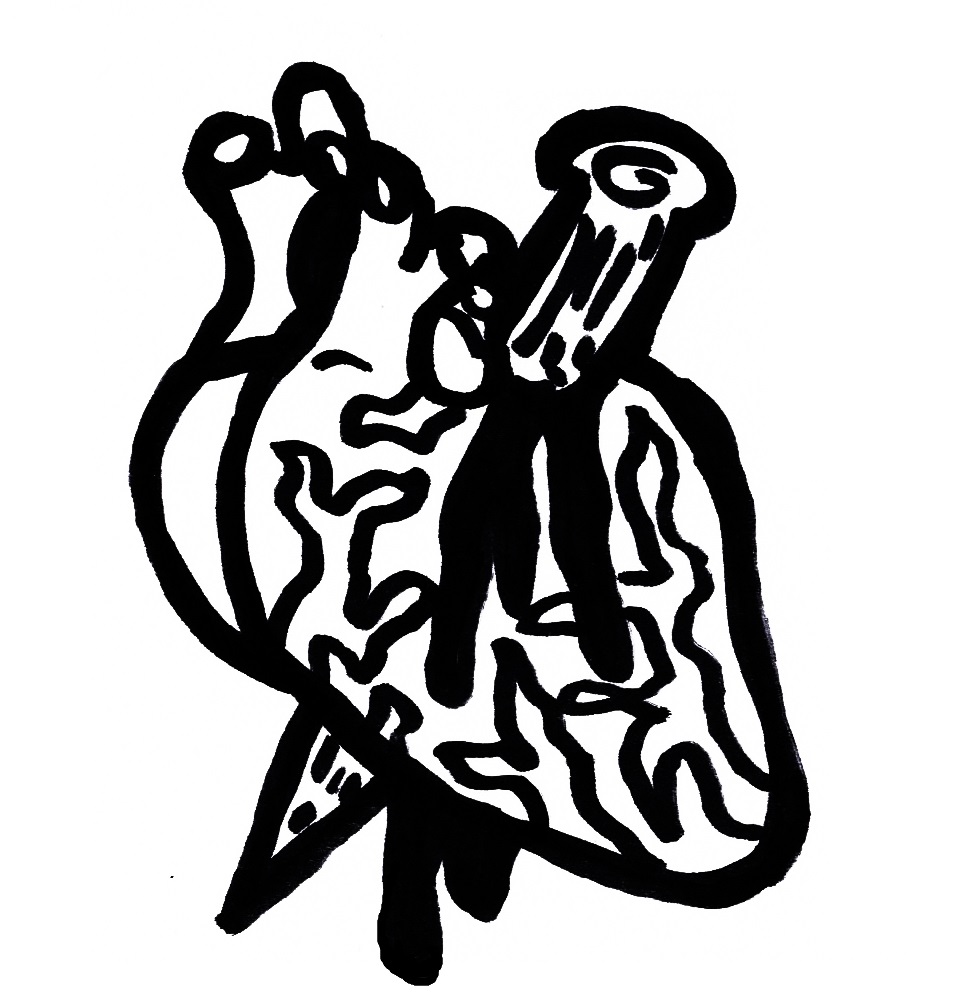
After watching the retro erotic thriller The Voyeurs and the teen vampire wish-fulfiller Bit in the same week, I’m starting to come to terms with the terrifying reality that the house style of The CW has become one of the major cinematic influences of our time. The channel’s decades of flat digi cinematography and robotic line deliveries from an endless parade of hard-bodied hotties has now seeped out into the wider cinematic bloodstream, so that all low-to-mid-budget #content aimed at youngsters looks like an unaired pilot for a CW series. Let’s call Bit the modern successor of shows like Buffy & Charmed, a gothy but harmless horror primer for teens turned off by the macho gatekeeper end of the genre (slightly retooled for a post-Riverdale world). It even opens with a affectionate potshot at the Twilight saga, which very well might be the birthplace of the CW’s unholy stylistic reign on the big screen. It’s all very cheap but cute, making up for what it lacks in momentum, tension, and scares with a gothy wish-fulfilment sense of cool.
A trans teen vacationing in Los Angeles is inducted into a hipster lesbian vampire coven who target male predators around the city. She occasionally feels remorse over abandoning her family & friends for this new social circle (self-described as “Bite Club”) and reluctance to drink blood to sustain herself, but for the most part everything’s safe & comfortable. At its core, this is a teenage fantasy about a small-town outsider who finds her all-accepting, empowering clique in the big city. Our bloodsucking heroine repeatedly muses that “This feels like a movie,” or “My life’s like a horror movie,” to point out the daydream happenstance of her stumbling into a feminist vampire collective her very first night in L.A. Her vampire elders offer her a tantalizing power fantasy in “a world where every woman is a vampire” and “men are the ones who are afraid to fucking jot at night.” There’s some infighting about how the coven’s No-Boys-Allowed policy applies to her brother, some changeups in local leadership, and a few run-ins with vampire-hunting MRAs, but that’s not really what excites Bite or its baby-goth target audience. The film is much more wrapped up in its venting-into-the-void misandry, chaste lesbian make-outs, and trips to see The Death Valley Girls live in concert. It’s a hangout film for the teenage horror nerd set who grew up watching a certain broadcast-television station and are now ready to see its programming aged up with some swearing & gore.
Despite its on-the-surface feminist politics, Bit is more adorable than it is searing or provocative. I would’ve enjoyed it best in high school, but I happened to grow up with The Craft instead. I can’t say with any authority that The Craft is necessarily any better than Bit in terms of its . . . craft, no more than the generations before me could say the same about The Lost Boys or, I dunno, I Was a Teenage Werewolf. Each generation deserves their own teen-goth induction ceremony movie, and this entry in that canon just happens to be aimed at kids young enough to appreciate an off-handed Cheetah Girls reference.
-Brandon Ledet
Now that the Delta Surge is receding and local vaccination numbers are looking robust, I’m personally getting comfortable with returning to movie theaters. Anecdotally, I’m also seeing larger crowds testing those same waters than I did this summer when I briefly showed up masked & vaccinated at the local multiplex just before Delta sent me right back into my turtle shell. Luckily for me (and unluckily for movie theaters), the film distribution pipeline hasn’t yet caught up with that return of consumer confidence, which means there hasn’t been a flood of major new releases to wash out the big-ticket movies I missed in the past few months of extended seclusion. So that’s how I got to see Nia DaCosta’s Candyman reboot on the big screen in the weeks leading up to Halloween, even though it was initially released in the summer. By now, professional critics and terminally online horror nerds have already talked the merits & faults of Candyman ’21 to death (and the bee-swarmed mirror realm beyond it), so I expected there was no room left for discovery or interpretation in my late-to-the-game viewing of the film. And yet, I was pleasantly surprised by the new Candyman despite my tardiness – both in how much I enjoyed it and in how well it works as a direct, meaningful sequel to the Bernard Rose original.
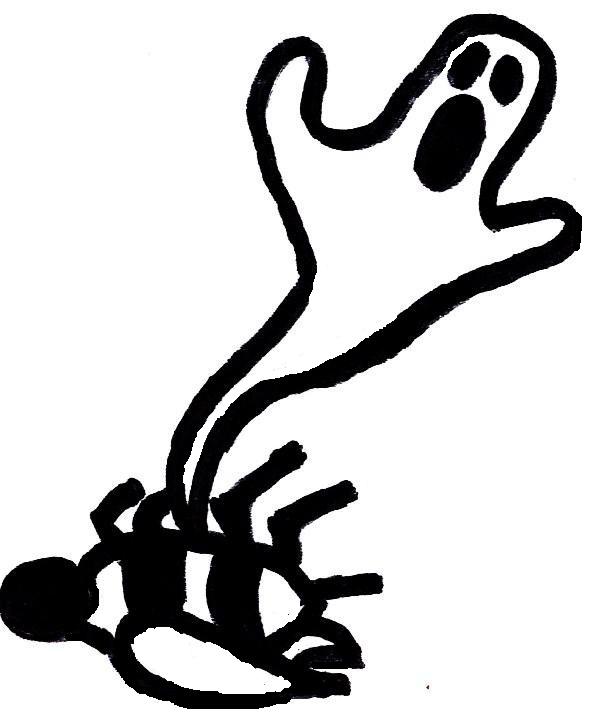
I remember hearing a lot of chatter about how the new Candyman is blatant in its political discussions of the continued gentrification of Chicago, but I somehow missed that those discussions are linked to an ongoing, generational trauma echoed from events of the original film. This latest update could have been justifiably titled Candyman 4: Candyman, since it directly recounts and expands the lore of the original film through audio recordings & shadow puppetry. By the end, we’ve seen & heard several characters from the original cast dredging up the most painful details of that shared past, landing DaCosta’s film more as a “reboot” than as a “remake” despite the expectations set by its title. However, rather than developing Candyman lore by transferring the Candyman character to exotic cultural locales (New Orleans’s Mardi Gras celebrations in Candyman 2 and Los Angeles’s Day of the Dead celebrations in Candyman 3), DaCosta instead expands the boundaries & definition of Candyman himself. Building off his body’s occasional form as a gestalt of bees, Candyman is explained to be a buzzing hive of various tormented Black men throughout American history instead of just a single murderous ghost with a hook for a hand. He’s a symbol for Black pain fighting its way from under the boot of this country’s long history of racist violence, and the terror in this particular chapter is in watching our troubled-artist protagonist get absorbed into that history despite his mostly charmed life.
Personally, I don’t mind that the new Candyman is transparent in its political messaging & metaphor. It’s at least conceptually sturdy in how it chooses to examine the generational & cultural echoes of trauma, which is a much more rewarding mode of “haunting” for this particular horror icon than it would’ve been if he latched onto another lone victim like Helen Lyle. Its art gallery setting is a brilliant choice in that paradigm, as it both functions as a physical symbol of gentrification and as an open forum where heady ideas about art & symbolism are totally justified. Candyman is first summoned by white art snobs in a gallery showing of political Black art that they do not take seriously (beyond its economic value), presenting him as a significant yet volatile form of Black representation in popular media. If there’s any lesson taught in his re-emergence and his eventual absorption of the painter who gives him new life on canvas, it’s that the pained, racist history that he represents should not be evoked lightly. DaCosta seems careful not to revive Candyman for a cheap-thrills supernatural slasher; she wants to genuinely, directly contend with what place he holds in the larger pop culture zeitgeist. I believe she finds plenty of worthwhile political substance to contend with there, so I don’t understand the supposed virtue of being subtle about it.
My only sticking point with the new Candyman, really, is how often it shies away from depicting onscreen violence. The greater cultural & political violence that Candyman represents is sharply felt when the film is viewed as a whole, but individual kills are often obscured through mirrors, wide-shots, and physical barriers in a way that often undercuts their in-the-moment effect. It plays like a PG-13 television broadcast of an R-rated film, except in this case the network forgot to bleep the cusses. DaCosta is way more concerned with the meaning behind Candyman than she is in the physical consequences of his presence, which makes the film feel like it was intended for an audience who appreciates the social commentary aspect of horror without all that icky horror getting in the way. She totally nails the eeriness & tension that a good horror scare can build, especially in her expansion of the buzzing bee & mirror realm imagery that made Candyman iconic to begin with. She just also seems disinterested in (or maybe even politically opposed to) the cathartic release of an onscreen kill shattering that tension to shards. At its most visually upsetting, Candyman makes room for the slowly-building body horror of a bee sting that festers beyond control. Mostly, it’s upsetting in its concepts & politics, which isn’t going to satisfy most audiences looking for the latest, most exciting big-screen scares. I’m honestly surprised I was satisfied with it myself, violent catharsis notwithstanding.
-Brandon Ledet


It’s difficult to define what qualifies something as Movie Magic, but the dark fantasy film Lamb is electric with it . . . for its opening half-hour. The first of the film’s three “chapters” builds all its magical-realist tension on our curiosity over what, exactly, is going on with its titular child-creature and the lonely farmer couple who raise it as their own. Isolated on an Icelandic farm with only sheep to break up the monotony of their quiet, daily chores, a married couple adopt a newborn lamb and swaddle it as if it were a human baby. We peer into the lamb’s crib wondering what’s going on under those tightly wrapped blankets, what makes it any different from the other lambs who’re routinely born in the barn. We’re invited to look into the eyes of the older sheep on the farm, anthropomorphizing their intellectual & emotional responses to the humans who feed & shepherd them. The longer we stare, the more they begin to look like expressive, reactive puppets instead of natural creatures, blurring the line between documentary footage and Movie Magic. The loss of that boundary sets up an endless realm of possibility in what’s going on with the one lamb the couple has decided to raise inside their home, the one that the camera obscures so that our own imagination can fill in the details. Then, when the baby lamb is shown in full, the magic vaporizes.
My heart sank in Lamb‘s second chapter when it had to stop obscuring its centerpiece creature. Conceptually, I am onboard with this low-key fairy tale about an isolated couple’s desperation to be parents despite the lingering pain of past attempts, but the practicality of visualizing the human-lamb hybrid they adopt onscreen is a mood-killer. Specifically, it’s the choice/necessity to supplement its practical effects with CGI that really zaps the Movie Magic out of the picture. This is the kind of film that really needs the tactility of the Babe animatronics or even the surreal stop-motion of Little Otik to work. Instead, we see a tactile human body toddle across the screen with a cheaply animated CG head superimposed on top of it, never convincingly integrating with the physical world it supposedly occupies. In close-up, when the lamb-child is napping or quietly observing her adoptive parents, she’s perfectly believable as a real, tangible creature that has magically appeared in the couple’s lives – which is why her more obscured presence in the first chapter works so well. It’s when the camera pulls back to show her hybrid body structure in full that the spell is instantly broken, leaving Lamb with all the Movie Magic of a Geico commercial. And since this film isn’t working with a Babe-level Hollywood budget, I’m convinced that the only way to fix it would have been to crudely superimpose her parents’ heads onto different actor’s bodies to level the uncanny playing field.
Unfortunately, there isn’t much to Lamb besides the magic of its titular creature-child. It’s a quiet, unrushed film with very little plot or dialogue. If you can’t gaze in wonder at the little lamb baby for all three chapters, there isn’t much else to do except wait for the credits (or hope for a scene where the lamb’s “mother” timidly asks her husband “Did . . . did you have sex with our sheep?”). For a more truly magical narrative about an isolated, troubled Icelandic couple in which human actors dance with unconvincingly animated CG animals, I’d recommend watching Björk’s music video for “Triumph of a Heart”. There’s way more heart, humor, chaos, and magic in those five minutes than there is in this entire two-hour snooze.
-Brandon Ledet

For this lagniappe episode of the podcast, Boomer, Brandon, and Alli discuss the menacingly ambiguous Korean horror epic The Wailing (2016).
00:00 Welcome
01:20 Frenzy (1972) on the Horror VS Reality podcast
06:06 Til Death (2021)
09:55 Scare Package (2020)
19:19 Rose Plays Julie (2021)
23:15 Zola (2021)
26:26 The Wailing (2016)
You can stay up to date with our podcast through SoundCloud, Spotify, iTunes, Stitcher, TuneIn, or by following the links on this page.
– The Lagniappe Podcast Crew


It’s impossible to distinguish which version of Ed Wood I think of as a personal hero: the alcoholic crossdresser who lived a tough life as an underappreciated outsider artist or the much sunnier, apocryphal version of him presented in Tim Burton’s 1994 biopic. Either way, Ed Wood is undeniably a great film (despite how some of its casting choices may have aged), second only to Pee-wee’s Big Adventure as Burton’s career best. It was surely my first exposure to Wood’s art & legacy, priming me for a genuine appreciation of the kind of enthusiastic D.I.Y. filmmaking most modern audiences mock as “so bad it’s good” schlock. Before Burton’s loving, reformative biopic polished up Ed Wood’s reputation, his biggest claim to fame was being posthumously burdened with a Golden Turkey “Award” for The Worst Director of All Time in the 1980s – mainly for his career-defining opus Plan 9 from Outer Space. Personally, I don’t believe Wood was capable of making The Worst Film of All Time. Wherever his work may have suffered from improper funding or technical ineptitude, Wood vastly overcompensated with a chaotic, personal passion for the artform. Despite being locked out of proper studio filmmaking channels, Wood’s stream-of-consciousness writing style and delirious sense of self-confidence led to some of the most spectacularly bizarre self-financed genre pictures of his era. The actual worst movies of all time are dispassionate, impersonal, unmemorable bores – movies Ed Wood was incapable of making. Whether I only believe that because of his myth-making biopic is something I’ll never be able to fully decipher; I happened to be born late enough in the game that Burton’s hagiographic version of Wood reached me before the dweebs at The Gold Turkey Awards could poison my brain.
Plan 9 from Outer Space was never my personal favorite Ed Wood flick (that meager honorific belongs to Glen or Glenda), but it’s easy enough to understand how it became his most widely known. If nothing else, its gleeful genre-nerd mashup of Atomic Age sci-fi tropes, celebrity vampires, graveyard-set zombie attacks, and pro wrestling monsters is enough of a pop media overload to distract from what it lacks in financing or technical skill (as if those weren’t also a highlight in their own way). Whereas Glen or Glenda was a self-portrait of his life as a closeted crossdresser, Plan 9 is a self-portrait of his life as a genre movie fanboy. Both films were written in a manic, straight-from-the-id haste due to their budget constrictions, exposing the bargain bin auteur’s naked psyche without petty concerns like narrative logic or good taste blocking the view. Originally titled Graverobbers from Outer Space, the film’s basic concept of space aliens commanding an army of Earth’s undead was always going to be a mash-up of Atomic Age sci-fi & zombie movie tropes. It’s the way Wood crammed his social circle of Hollywood “weirdies” into that basic genre mash-up that really explodes the film into post-modern delirium. Without explanation or internal justification, this aliens-and-zombies novelty picture suddenly involves celebrity vampires Bela Lugosi & Vampira, a guest segment of the locally televised astrology program Criswell Predicts, and the gargantuan pro wrestler Tor Johnson – all essentially playing themselves with no real relation to the alien graverobber plot. The film was pitched to independent investors as a way to cash-in on then-recent newspaper reports of UFO sightings in Hollywood. Instead, it mutated into a collection of all the assorted pop culture ephemera that made Ed Wood fall in love with Hollywood as an aspiring, underfunded filmmaker; all that was missing was a few cowboys airlifted from a serial Western.
Besides its genre-melding collection of aliens, zombies, vampires, and pro wrestlers on a single graveyard set, I think the main reason Plan 9 is more popular than Glen or Glenda is that it moves at a slower, quieter pace. It’s perfectly calibrated for MST3k-style live commentary in that way, making it a much likelier candidate for drunken Midnight Movie screenings and “so-bad-it’s-good” mockery. Glen or Glenda pummels the audience with a scatterbrained editing style & an overbearing narration track that leave little room for any individual image or idea to be scrutinized before it moves on to the next. By contrast, Plan 9 is in no rush to get anywhere, feeling more like a Halloween-themed hangout film than a proper creature feature. There’s plenty of time for audiences to point & laugh at the visible strings that hold up its model-kit UFOs, or the cardboard cut-out gravestones that tip over whenever bumped into, or the lighting’s alternation between night-day-night settings within a single scene. It’s the kind of “bad movie” that invites the audience to feel superior to the material at hand, which is especially attractive to teenage cynics who are first starting to get into low-budget schlock. I’m getting to the point in my life where that above-it-all MST3k mockery no longer appeals to me. These types of unskilled, underfunded novelty films read more to me as quirky Outsider Art than they do some kind of subprofessional embarrassment. By that standard, Ed Wood is truly one of the greats, having made several D.I.Y. messterpieces that were personal to his interests as an artist & as a Hollywood weirdo but still endure as crowd-pleasing party films a half-century later. The experience of watching Plan 9 from Outer Space is too fun for it to be “the worst” of anything, no matter how clumsy Wood was in his rush to get something on celluloid before his budget ran dry.
I’m grateful to the Tim Burton biopic for introducing me to Ed Wood as a filmmaker and a personality. I’m even more grateful to Rhino’s mid-90s Deluxe Ed Wood Boxset of the films covered in the Burton version of his story, collecting Glen or Glenda, Bride of the Monster, and Plan 9 from Outer Space on three VHS tapes bound in a fuzzy pink angora slip case. I lost track of my copy of that boxset years ago, as I let go of the tape-eating VCRs that were collecting dust on my TV stand. It’s been easy enough to buy those films individually on DVD in the decades since, but they’re long overdue for the cleaned-up HD restoration treatment that so many low-budget genre films are lavished with on the niche Blu Ray market these days. The pink angora slip case is optional, but it gets stranger every year that the unholy trinity of American schlockteurs—Wood, Wishman, and Meyer—are all missing from the vintage media restoration market. I wonder if my genuine appreciation of Ed Wood’s art is solely a result of growing up in the exact 1990s sweet spot: after Burton rehabilitated his earlier reputation as The Worst Director of All Time and Rhino had released his Greatest Hits as an easily accessible boxset presented in an up-to-date format. That was almost three decades ago; we’re long overdue for another Ed Wood career refresher, starting with a proper physical media release for the movie that made him infamous.
-Brandon Ledet

One of my most rewarding viewing projects for the website this year was a chronological rewatch of the Alien series. Not only did it help justify an ancient purchase of a Blu-Ray boxset I acquired years before I even owned a Blu-Ray player, but it also helped solidify the Alien saga as one of the very best horror franchises around. There is no such thing as a bad Alien movie. Their 40+ years of pop-media terror has spanned from philosophical reflections on the origins of humanity to dumb-as-rocks creature feature blockbusters – each worthwhile in their own special fucked up way, if not only for boasting one of the most continually upsetting monster designs in the Classic Horror canon. While my appreciation for the series as a whole grew tremendously during that binge, I can’t say many of the individual movies rose or fell in my personal rankings or esteem. There were only two exceptions: the dumb-fun teen horror AvP: Requiem and Jean-Pierre Jeunet’s live-action cartoon Alien: Resurrection, both of which are far more fun & imaginative than uptight horror nerds are willing to give them credit for. I’d even place Resurrection as the second-best film of the franchise (and I did!), bested only by the subliminal nightmare fuel of Ridley Scott’s original.
The truth is I’m always a sucker for Jeunet’s grimy aesthetics & cutesy twee bullshit. Even when he deviated into the tropes & trappings of a traditional war epic—a genre that usually bores me to sleep—with A Very Long Engagement, I still greedily ate it up with a spoon. Obviously, though, it’s when Jeunet mucks about with horror & sci-fi genre templates that I’m especially hopeless to his sepia tone charms. To that end, I had a lot of fun returning to his debut feature, Delicatessen, after falling back in love with Alien: Resurrection all over again. My tastes are basic enough that the chaotic twee romcom Amélie remains my favorite Jeunet film overall, but if he only made cannibal comedies (Delicatessen), big-budget creature features (Resurrection), and dystopian steampunk sci-fi (City of Lost Children), I’d be forever chuffed. With Delicatessen, Jeunet premiered as an already fully-formed auteur, indulging in the exact improbably whimsical romances, monochromatic fantasyscapes, and vaudevillian comedy traditions that would carry throughout his career. He just had to squeeze them all into a guaranteed-to-be-financed genre template, the same way he later had to adapt those same quirks to the American blockbuster template in Alien: Resurrection. It’s hilarious in both cases how little of his personality he’s willing to give up to satisfy the expectations of the genres he’s working within, making for the exact kind of high-style, self-indulgent filmmaking I always love to see in horror.
Delicatessen is a (non-musical) Sweeney Todd-style comedy about an apartment building full of starving weirdos who turn to cannibalism as a desperate response to Post-War rationing. Jeunet’s eternal muse Dominique Pinon arrives as the building’s new super, unaware that the butcher/landlord plans to kill him to replenish the residents’ meat supply as soon as he’s done fixing up the squeaks & leaks and repainting the ceilings. A heavy dust storm of war-ravaged buildings drapes the sky outside the apartments, so that everyone feels trapped inside, living in an exponentially quirky microcosm. That dusty coating antiques the film’s setting with the same Universal Horror & German Expressionist throwback aesthetics you’ll see in other traditionalist weirdos’ films like David Lynch’s The Elephant Man or Guy Maddin’s everything. For the most part, though, Jeunet is not especially interested in the terror or tension of old-school horror, just the surrealist headspace those traditions tap into. People may be chopped up & eaten by a small-minded, isolated community of weirdos, but this is hardly The Texas Chainsaw Massacre. Most of the runtime is eaten up by twee-as-fuck dalliances like Pinon’s ill-advised romance with the butcher’s daughter, or their depressed neighbor’s Rube Goldberg suicide contraptions, or the last minute heist plot meant to sneak Pinon out of the building unchewed. It looks grim & sinister at all times, but it’s all very silly & cute.
The one stroke of pure genius in Delicatessen is Jeunet’s casting of Dominique Pinon as a former circus clown, complete with black & white television broadcasts of his act with his former partner, a chimpanzee named Mr. Livingstone. The image of Pinon’s wonderfully bizarre face slathered in vintage clown makeup is initially terrifying, fitting firmly in the film’s old-school horror traditionalism. At the same time, Jeunet only uses that imagery as excuse to launch into the twee whimsy that interests him as a storyteller – including romantic sequences of Pinon wooing his neighborly crush with vaudevillian clown routines, sentimental heartbreak over the loss of Mr. Livingstone, and the eerie theremin-like sounds of Pinon playing a musical saw. I always appreciate when a horror film manages to be genuinely scary, but that’s not usually what I’m looking for in the genre. What I most love about horror is that it’s one of the only mainstream cinematic spaces left where creators are allowed to indulge in pure personal obsession & id with no regard for sensibility or logic. Judging by Delicatessen & Alien: Resurrection, Jeunet doesn’t seem especially interested in the psychological terror or cathartic violence of horror, but rather takes advantage of the freedom the genre’s commercial viability affords him as a total weirdo with his own pet obsessions & personal quirks audiences & financiers won’t put up with in other contexts. I applaud him for it.
-Brandon Ledet


In retrospect, I was being redundant when I described last year’s The Twentieth Century as feeling like “watching Guy Maddin direct an especially kinky Kids in the Hall sketch that stumbles out into feature length in a dreamlike stupor.” That assessment still rings true, but I could’ve lightened my wordcount by just saying it felt like “watching a Guy Maddin movie”. I’m used to seeing playful flashes of violence & vulgarity in Guy Maddin’s work, but something about Matthew Rankin’s kink-soaked debut doubled down on both in a way that really spoke to my juvenile sensibilities. It turns out my oversight was in comparing The Twentieth Century to the statelier, well-respected Maddin of recent years, the one who’ll interject a Sparks music video about a man’s addiction to “derrieres” in the middle of his narratives but will stop short of fixing his camera on an ejaculating cactus for a minutes-long visual gag. Guy Maddin was once a young button-pusher himself, though, something that should have been obvious to me even before I made the time to watch his own early-career kink comedy Cowards Bend the Knee. It turns out I was just a few years too late in my Guy Maddin appreciation to catch him in his prime as a juvenile provocateur.
In Cowards Bend the Knee (or The Blue Hands), Guy Maddin reimagines (and improves!) the silent horror classic The Hands of Orlac as a kinky sex comedy about hairdressers, prostitution, abortion, hockey, and revenge. Instead of a morally simplistic body horror about a concert pianist who becomes murderous when his hands are surgically replaced with a serial killer’s, Maddin abstracts his version in a Russian nesting doll story structure that’s long been familiar to his features. We start with scientists examining a sperm specimen under a microscope, revealing in close-up that the sperm cells are hockey players competing on ice. The star player is Guy Maddin as “Guy Maddin,” the team captain and son of the distinguished announcer who calls the games. He’s pulled aside from his championship victory celebrations by a distraught girlfriend who’s just discovered she’s pregnant, which leads the couple to a hair salon & brothel that triples as an illegal backroom abortion clinic. Maddin leaves his girlfriend mid-abortion for the madame’s beautiful daughter, who will not let him touch her body until her father’s death is avenged. Her plan for retribution, of course, involves her father’s severed hands being surgically attached to her new lover’s body to guide his way. Also, his old girlfriend is now a ghost who works at the salon.
Like all of Guy Maddin’s movies, Cowards Bend the Knee is deliberately aged & battered to look like an authentic curio from the earliest years of silent cinema. Images often stutter & repeat in harsh jags as if the projector is struggling to feed the deteriorating film from reel to reel. That antiqued image quality offers a great contrast to the shameless sexual fetishism of the film’s winding Greek tragedy plot. Despite its title’s mention of legs, this is a film that’s fixated on the perversity of hands in particular. From the more obvious kink acts like incest, fisting, and female-dominant wrestling to the unexpected eroticism of a haircut, the film presents the shape & use of hands as if they were the filthiest appendages on our bodies. And maybe they are. Maddin even accentuated the film’s sexual transgressions by premiering it as an art instillation where viewers watched each six-minute chapter as individual vignettes through key holes, as if peering into a bedroom (or a sex dungeon). It’s all very silly and tongue-in-cheek, but it’s also surprisingly thoughtful & genuine in its presentation of sexual fetishism and the way its magnetic pull can lead you to making desperate, self-destructive decisions.
The Saddest Music in the World taught me that Guy Maddin is a goofball prankster despite his work’s formalist exterior. Dracula: Pages from a Virgin’s Diary taught me that he’s a bit of a luddite with a loving eye for the tones & textures of German Expressionist horror. The Forbidden Room taught me that he works best in short-form vignettes that pulls the audience deeper into exponentially smaller worlds. All of those aspects of his work were already firmly set in stone as early as Cowards Bend the Knee, but that one still taught me something about him that made me fall even further in love with his art: he’s also a filthy pervert.
-Brandon Ledet
 Swampflix