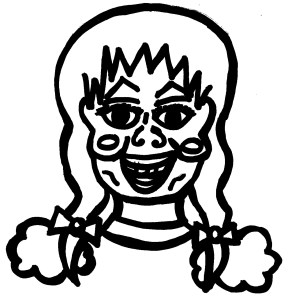

Episode #84 of The Swampflix Podcast: Ma (2019) & Classic Psychobiddies

Welcome to Episode #84 of The Swampflix Podcast! For our eighty-fourth episode, Brandon & Britnee compare the latest entry into the psychobiddy canon, Ma (2019), to a couple towering classics in the genre: Strait-Jacket (1964) & The Nanny (1965). Enjoy!

You can stay up to date with our podcast through SoundCloud, Spotify, iTunes, Stitcher, TuneIn, or by following the links on this page.

-Brandon Ledet & Britnee Lombas

One Cut of the Dead (2019)

It’s near impossible to recommend One Cut of the Dead without spoiling what makes it special, so I’m going to have to tread lightly here. This is maybe the most deceptively complex horror comedy I’ve ever seen. It’s certainly the most patient; the movie takes a huge gamble in saving all its major comedic payoff for its concluding half hour – an alchemist third-act twist that retroactively transforms the movie you think you’ve been watching for the previous hour into pure gold. Whether or not all its potential audience will stick around for the full benefit of that payoff is a major risk, especially since encouraging viewers who are going in blind to push through the limitations of its initial conceit might already be tipping the film’s hand. All I can really report without prematurely revealing too much is how the film toyed with my own expectations. I found it quietly charming, then disorienting & awkward and then, finally, one of the funniest movies I’ve seen in a theater in a long, long while – horror or otherwise.

As the title suggests (perhaps awkwardly, in Japanese-to-English translation), the initial conceit of One Cut of the Dead is that it is an experiment in staging a zombie-invasion horror film in a single take. A microbudget movie crew filming a zombie cheapie in an abandoned WWII lab (that once experimented with bringing the dead back to life) are attacked by real-life zombies between takes. The unflinching, handheld camera offers a meta POV of the crew’s shock & subsequent fight for survival as the zombie mayhem they’re struggling to authentically stage for an unseen audience becomes “real.” Deciphering exactly what’s meant to be “real” within this paradigm and what’s merely a limitation of staging a single-take zombie picture on an amateur budget is increasingly difficult. Stage blood & actors’ spit splash against the lens. Performers wait a beat or three too long for their proper cues to deliver their next line. The POV cameraman is directly acknowledged by the actors, despite there already being a meta remove of a movie-within-the-movie. So much of One Cut of the Dead is on shaky logical ground because of the limitation of its filmmaking resources, but horror fans who are inclined to watch low-budget, high-concept zombie movies in the first place should be used to making those allowances. What’s brilliant about the film is how it transforms those awkward low-budget details into something brilliantly executed & purposeful. Revealing how it performs that miracle in a review would be a crime that I’m not willing to commit. You just have to afford it your attention & trust long enough to see it for yourself.

The biggest hurdle in convincing people to watch One Cut of the Dead long enough to catch onto what it’s accomplishing is that it’s a little difficult to convince people to watch any zombie movie in 2019, especially the kind that was made for less than $30,000 and most plays at genre film festivals like The Overlook. That’s the ultimate trick to the picture, though. This isn’t about zombies at all. Rather, it’s a heartfelt love letter to low-budget filmmaking and all the frustrations, limitations, and unlikely scrappy successes therein. Even before you’re allowed to fully catch on to what you’re watching, the movie’s already pitting a microbudget film crew against the horrors of the world outside their orbit. Actors strain to convey believable emotion in a preposterous scenario; sound technicians fight off the undead with boom mics; directors & cameramen defy all survival odds to piece together whatever scraps they can salvage from a film shoot that immediately goes to hell. This is a movie about the improbable joys & common frustrations of making movies, a sentiment that only becomes more apparent the more time & attention you afford it.

-Brandon Ledet

Podcast Movie Report: The Overlook Film Festival 2019

For this week’s new-releases podcast report, Brandon and CC discuss all the films they caught at the 2019 Overlook Film Fest,  an international horror festival staged in downtown New Orleans, “The Most Haunted City in America.”

You can stay up to date with our podcast through SoundCloud, Spotify, iTunes, Stitcher, TuneIn, or by following the links on this page.

– CC Chapman & Brandon Ledet

Episode #83 of The Swampflix Podcast: Pledge (2019) & Good Torture Porn

Welcome to Episode #83 of The Swampflix Podcast. For our eighty-third episode, we ask the age-old question “Is there such a thing as good torture porn?” Brandon makes James watch the crowdfunded 2019 horror Pledge for the first time, then they discuss two artsy European films that offer an interesting take on the genre: Goodnight Mommy (2015) & Inside (2007). Enjoy!

You can stay up to date with our podcast through SoundCloudSpotifyiTunesStitcherTuneIn, or by following the links on this page.

-Brandon Ledet & James Cohn

Movies to See in New Orleans This Week: The Overlook Film Fest Edition

Last year’s sudden appearance of the Overlook Film Festival on the local calendar was an unholy, unexpected blessing. There are only a few substantial film fests that are staged in New Orleans every year, so for an international horror film festival with world premieres of Big Deal genre movies to land in our city was a major boon, almost too good to be true. I attended the festival as a volunteer, catching three artsy-fartsy creature features (all directed by women) and a couple live podcast recordings over the course of a few days, hungry (bloodthirsty?) for more. This year, Swampflix will be attending Overlook with legitimate press credentials, meaning we’ll be able to cover even more films playing at the fest – a prospect I’m incredibly excited about.

The trick is knowing what films to cover. There are 23 features and 18 shorts from 11 different countries screening at the festival over the course of a single weekend. It’s overwhelming. Self-described as “a summer camp for genre fans,” The Overlook is centrally located, corralling all of its movie screenings to just a few venues: Le Petit Theatre for its more prestigious premieres, the UNO Performing Arts Center for a repertory screening of The Faculty (with Robert Rodriguez in attendance), and what is now the ghost of the old Canal Place theater for the bulk of its heavy-lifting. That means you can pack in a lot of movies in a very short time. You just need to know how to narrow down your selections.

Personally, I like to use film fests as an opportunity to see smaller films that are unlikely to get wide theatrical distribution otherwise, as opposed to bigger movies I know I can see at a corporate multiplex just a few weeks later. It’s incredibly cool that The Overlook will be hosting early screenings of Jim Jarmusch’s The Dead Don’t Die, the follow-up to Goodnight Mommy (The Lodge), and the upcoming Octavia Spencer psychobiddy revival Ma, but I plan on catching those a little later down the line. Listed below are ten genre films I’m incredibly excited about that are screening at The Overlook Film Festival this weekend but most likely will not play in a proper New Orleans cinema otherwise. Take advantage of this super cool genre film extravaganza before they leave us for another city (which is entirely possible, given the recent death of the Canal Place theater) by catching something offbeat & adventurous that you wouldn’t be able to see projected large & loud in any other context.

In Fabric : “At the height of winter sales in a modern UK department stores, a cursed dress passes from owner to owner, leaving a path of destruction in its wake in this wry, visionary comedy from the director of Berberian Sound Studio and The Duke of Burgundy.Friday, May 31st – 4:30 PM – Le Petit Theatre & Saturday, June 1st – 7:15 PM – Canal Place

Greener Grass : “Writers, directors and stars Jocelyn DeBooer and Dawn Luebbe create a hilariously deadpan hellscape of competitive suburbia with a boldly stylized absurdist chain of events that unfurls with increasing fervor after one soccer mom asks her best friend for her baby.” Friday, May 31st – 8:00 PM – Canal Place & Saturday, June 1st – 9:45 PM – Canal Place

One Cut of the Dead : “In one of the year’s most crowd-pleasing surprises, this twisty horror comedy sees chaos ensue when a low-budget film crew, hard at work on a zombie flick in a WWII bunker, comes face to face with real terror lurking outside.” Friday, May 31st – 3:30 PM – Canal Place & Sunday, June 2nd – 7:45 PM – Le Petit Theatre

Paradise Hills : “With razor-sharp artistic direction and searing wit, Alice Waddington’s directorial debut tells the story in which a young girl is sent to a mysterious reform school specializing in crafting ladies to be more ‘proper.'” Friday, May 31st – 12:30 PM – Canal Place & Sunday, June 2nd – 7:15 PM – Canal Place

Horror Noire : “A free community screening and panel discussion of this refreshing and incisive documentary tracing the history of Black Americans in Hollywood within the horror genre. Hear from Jordan Peele (Get Out), Tony Todd (Candyman), Rachel True (The Craft), Keith David (The Thing) and many more about representation in our favorite genre from the beginning of cinema to today.” Sunday, June 2nd – 2:45 PM – Le Petit Theatre

Come to Daddy : “Norval, a troubled young man travels to a small seaside town to answer a letter from his long-lost father. When he gets there, the two begin to reconnect, but Norval can’t shake the feeling that something is drastically off. Elijah Wood stars in this hilarious and terrifying twisty thrill ride, the directorial debut of lauded horror producer Ant Timpson.” Friday, May 31st – 7:00 PM – Le Petit Theatre

Knives and Skin : “Calling upon echoes of Twin Peaks, artist and filmmaker Jennifer Reeder serves up an eerie teen noir punctuated with haunting 80s covers and unforgettable imagery centering around the effects of one girls’ disappearance on a small town.” Saturday, June 1st – 2:45 PM – Canal Place & Sunday, June 2nd – 12:15 PM – Canal Place

Satanic Panic : “When a pizza delivery girls’ final order of the night turns out to be for a blood-hungry group of Satanists thirsting for a sacrifice, all hell breaks loose…literally. From the Overlook alum writers of We Are Still Here and Paperbacks from Hell, and director Chelsea Stardust comes the goriest of comedies.” Friday, May 31st – 9:30 PM – Le Petit Theatre & Sunday, June 2nd – 7:00 PM – Canal Place

Vast of Night : “First-time filmmaker Andrew Patterson smashes onto the scene with the elegant telling of a 1950s radio DJ and his switchboard operator companion, who stumble upon a strange frequency that may be carrying evidence of other-worldly life.” Saturday, June 1st – 12:00 PM – Canal Place & Sunday, June 2nd – 12:30 PM – Le Petit Theatre

Porno : “Equal parts hilarious and grotesque, this take-no-prisoners horror sex comedy sees a group of ultra-Christian movie theater employees face their worst fears when a mysterious set of pornographic reels releases a little more than their repressed desires.” Thursday, May 30th – 9:30 PM – Canal Place & Saturday, June 1st – 4:30 PM – Canal Place

-Brandon Ledet

Teddy Bomb (2014)

Earlier this year, I purchased two Blu-rays of backyard film productions from Toronto as a means of sending financial support to a podcaster I admire. Of Justin Decloux’s two directorial credits, I was much more enthusiastic about the more recent feature, Impossible Horror – an uncanny slapstick splatter comedy about loneliness & outsider art. It’s an incredibly dense, ambitious picture for a no-budget horror on its scale, one that adapts Sam Raimi-style exaggerated camerawork to tones & themes that aren’t typically tackled in its Regional Horror genre. Decloux’s earlier film, Teddy Bomb, is something much more typical to the backyard horror aesthetic: a practical gore splatter comedy that aims more for over-the-top camp & gross-out hyperviolence than anything nearly as sincere or ambitious as what the director would later accomplish in Impossible Horror. However, even as a relatively average backyard horror comedy (with a few moments of genre film splendor in isolated gags), I do think there is a very specific circumstance in which catching up with Teddy Bomb is practically mandatory: if you’re at all a fan of last year’s sci-fi body horror Upgrade.

I was a huge fan of Upgrade myself; it made my Top 10 films of the year list last year and became a favorite of mine to rewatch with friends who hadn’t yet seen it as the year went on. A major part of the film’s appeal was the way it reimagined the basic outline of RoboCop (possibly my favorite sci-fi film of all time) as a satire on modern fears of self-automated technology instead of a satire on the privatization of law enforcement that was already on the horizon in the 1980s. I was a little surprised, then, to see a microbudget filmmaker from Toronto claim that their own work was direct, unacknowledged inspiration for Upgrade, a film already so undeniably indebted to RoboCop. Having now seen Teddy Bomb for myself, I totally get it. In the film, a bumbling beer delivery boy is in over his head when he steals what appears to be a cute teddy bear but is actually a high-tech weapon of mass destruction. Like with the STEM tech in Upgrade, the teddy bear telepathically communicates with his unprepared user, instructing him on how to kill the terrorists who wish to repossess the cuddly weapon. He often closes his eyes while the “teddy bear” does the nasty work of disposing of baddies, which is the most consistently rewarding gag in Upgrade as well. It’s all uncannily familiar.

Since I’m talking about two films that follow well-worn genre templates, it’s difficult to parse out exactly what’s parallel thinking vs. what’s unacknowledged “inspiration.” Besides Upgrade’s obvious debt to RoboCop, it’s a film that also saw its own uncanny parallels in a bigger-budget descendent with last year’s Venom, just months after its own release. Teddy Bomb itself feels like it borrows elements from other horror properties wholesale: Sam Raimi’s live-action-cartoon camerawork, George Romero’s signiature zombie disembowelings, the 8-bit romance of Scott Pilgrim, etc. The difference is that Teddy Bomb is very upfront about where it pulls its ideas from, even setting several scenes in a video rental store where Decloux himself appears as a side-character store clerk who practically points to the titles that most influenced his work. If Upgrade pulled direct influence from Teddy Bomb (and there is some convincing evidence it did, despite this being a microbudget splatter cheapie), it’s a shame that it didn’t do the same in turn. The titular weapon is Teddy Bomb’s most distinctive, exciting invention – one that adds to the genre film conversation instead of merely echoing it – so it’s frustrating to see it “borrowed” for a better-funded work without proper credit. I still believe Upgrade’s satirical vision of a self-automated future is distinct & funny enough on its own terms to justify its praise among similarly-styled works like RoboCop, Venom and, apparently, Teddy Bomb; that’s what telling stories within a genre template is all about. Still, it’s only right to acknowledge your direct influences, especially if you’re appropriating inspiration from self-funded artists far below your weight class who could use the boost.

If you want a concise comparison of the two films side-by-side, this tweet from Decloux lays out a fairly convincing case in two minutes’ time. Fans of Upgrade should really check out Teddy Bomb in its entirety to make up their own minds on the parallels, though. If nothing else, the back-to-back viewing experience makes for an interesting look at what two genre films following the same story template look like on drastically different budgetary levels.

-Brandon Ledet

Brandon’s Top Ten Film Podcasts (Especially for Genre Nerds)

I’ve been putting together a regular film podcast with fellow Swampflix contributors Britnee, James, and CC for nearly four years now, and it still feels like something I’m only getting halfway decent at as time goes on. Our number of regular, subscribed listers is still microscopic and it’s been almost two years since someone reviewed us on Apple Podcasts to boost us in the algorithm, but it’s still a project I try my best to continually improve despite the lack of feedback. The Swampflix Podcast has evolved through practice & increased equipment quality over the years, but it’s also something I’ve worked to improve by borrowing ideas & influences from other shows.

I listen to movie podcasts for an embarrassing number of hours a day, a routine that’s practically replaced listing to music for me as I’ve fully immersed myself in film criticism as a personal interest. I love the self-publishing D.I.Y. format of the medium, as well as the immediacy of its usefulness as a criticism delivery system. A great movie podcast is hard to find, though, especially if you enjoy low-budget, trashy genre films as much as I do. The best podcasts on any subject are the ones that are most consistent in their structure & schedule – reining in the chaos of this conversational medium with a little rigid rigor. Even the genre film podcasts that meet that criteria are often insufferable to me, though, as they too often slip into above-it-all, so-bad-it’s-good mockery of low-budget outsider art instead of a genuine appreciation for the movies they discuss. My favorite movie podcasts are the ones that are rigidly structured, jovially conversational, and willing to discuss trashy genre films with the same appreciative reverence they afford high-brow artsy-fartsy fare. It’s a surprisingly tough combination to come by, but I have found more than a few.

As we are again shifting around the structure of our own show to accommodate making The Swampflix Podcast a weekly occurrence instead of a bimonthly one, I’ve been thinking a lot about which shows I’d most like to emulate. The following list is an alphabetical collection of the movie podcasts I most enjoy as a listener and most admire as an amateur podcaster myself. They’re especially recommended for movie nerds who appreciate a little low-brow genre fare mixed in with their art-snob prestige pictures. Among them are the shows I’ve most often borrowed ideas from for The Swampflix Podcast’s formula and the ones I’ve most often heard my own sensibilities echoed in.

The Faculty of Horror: Two academic women discuss horror films old & new in well-detailed research, often through a feminist lens.

The Important Cinema Club: Critics from the Toronto blog Film Trap discuss classic movies & total trash with the same appreciative tone, making no judgmental distinction between them.

The Next Picture Show: Ex-writers from The Dissolve, the site that turned me onto the art of film criticism in the first place, compare new theatrical releases with a classic movie they share something in common with – covering everything from Orson Welles to the latest superhero blow-em-up.

No Such Thing as a Bad Movie: An Important Cinema Club Podcast spin-off show that specifically discusses “bad movies” only, but in an appreciative tone. Instead of tearing the movies down, the hosts take turns asking each other “What was your favorite part?”

The Rialto Report: In-depth anthropological interviews with players from the classic 1970s-80s New York City porno scene. It has way more insight into cheap indie filmmaking than you might expect, and it’s the only porno podcast that regularly makes me cry.

Shock Waves: A weekly roundtable of Blumhouse employees discussing what’s new in horror. The quality of the featured interviews varies wildly depending on the guest, but each episode opens with a lengthy discussion of what the hosts been watching lately that I never miss.

Switchblade Sisters: Professional genre enthusiast April Wolfe interviews women filmmakers about how their own work compares to their favorite genre films. The conversations are incredibly well researched and are doing great work to restore the reputations of casually dismissed films that deserve more respect.

Trash, Art, and the Movies: Canadian critics compare a trashy genre film to a high-brow art pic on a similar topic, then somewhat jokingly declare a victor in which film did it better.

We Love to Watch: My like-minded internet buddies record this movie-of-the-week show about a wide range of films that are often eerily in-sync with the things Swampflix happens to cover around the same time. I’ve personally been a guest a couple times to discuss The Fly & Xanadu, and I never miss an episode.

Who Shot Ya?: Mostly covers film industry news & new releases, but specifically through a non-Straight White Male perspective, which is a frustratingly rare thing to come by in podcasting. Only two of the shows listed above are entirely hosted by straight men, but the pointed political corrective of this show still feels like an essential part of my weekly feed.

-Brandon Ledet

Impossible Horror (2017)

I purchased a Blu-ray copy of Impossible Horror mostly as a means of contributing financial support to a podcaster I admire. The film’s director, Justin Decloux, cohosts The Important Cinema Club out of Toronto, where he also programs repertory genre screenings under the Laser Blast Film Society brand. The film arrived with an endearing thank-you note from Decloux’s creative partner Emily Milling, who scored, co-produced, and contributed sound editing on the film (likely among other duties). I’m mentioning all of this to note that Impossible Horror is very much a microbudget backyard production, a modern entry in the Regional Horror canon with all the charms & limitations that descriptor implies. Decloux & Milling briefly appear in the film themselves as side characters among a local community of friends & collaborators (including Important Cinema Club’s other cohost, Will Sloan) as their film’s “backyard” setting expands into the late-night urban streets of Toronto. Taking a gamble on these kinds of no-budget horror cheapies is always a tough sell for anyone outside the local social circles who appear on the screen in that way, but Impossible Horror is overflowing with enough creative ideas & genuine genre fandom that it’s well worth the effort. A 76min, dialogue-light sampler of a wide range of well-staged scares (ghost possessions, cursed VHS tapes, evil dolls, suicide cults, etc.), the film is very careful to not test its audience’s patience. Decloux & Milling are clearly fans of this D.I.Y. end of genre filmmaking themselves. Along with co-writer Nate Wilson, they energetically flood the screen with the ideas & imagery they love to see in these kinds of movies, conscious of just how easily the exercise could slip into tedium if they eased off the gas pedal. The result is surprisingly effective considering the limitations of their means, even if there are instances where they have to prompt the audience to [imagine a bigger budget here].

All this talk of backyard D.I.Y. art productions would normally be extratextual, but Impossible Horror is largely a film about outsider art & for-its-own-sake creativity. Sinking into the emotional slump that follows a devastating romantic breakup, our protagonist finds herself unsure what to do with her sudden influx of alone time beside throwing herself back into long-abandoned creative projects – drawing comics & making films. She first picks up her old video camera out of spite for The Asshole who left it behind in the breakup, but soon finds herself supernaturally compelled to see her new filmmaking project through. Unable to sleep through her heartache & her resentment of The Asshole, she finds herself going on late-night walks in those eerie post-midnight hours when, as Whodini would say, The Freaks come out. Suddenly, the absence of dialogue that comes with living alone is supplanted by a torrent of mysterious, paranoid ramblings from a newfound friend discovered on those late-night walks. From there, our once-lonely protagonist spends the rest of the film sinking further into her new friend’s own creative project: investigating a phenomenon of ghostly screams that routinely echo in the night and are always accompanied by mysteriously materialized objects – typewriters, VHS cassettes, dildos, hammers, etc. Solving the origin, meaning, and answer to this paranormal puzzle can often feel like trying to work your way through the storyline of a video game after skipping all of the dialogue screens that explain everything. What’s more important is that our protagonist reacts to this confounding experience by obsessively documenting it for an amateur film at the risk of her own safety & sanity. It can be difficult to track what the story is logically doing from minute to minute, but it all ultimately adds up to a Lovecraftian splatter comedy about amateur artists being driven mad by their own creativity. That’s a fitting theme for a no-budget movie made among friends that’s so ambitious in how it doles out its synths, gore, and ghosts that even this long-winded paragraph is only scratching the surface of its full narrative.

It does feel like a little bit of a betrayal to reduce Impossible Horror to its value as a backyard horror production & a nightmare-logic splatter comedy. Usually, horror films on this scale apologize for their limited means by leaning into their camp value, intentionally playing up their “so-bad-it’s good” humor. The earnestness of Impossible Horror is something much braver; its scares, jokes, and practical effects are all genuine attempts to make the best movie possible under the circumstances, all with a surprising success rate. The most poignant scene in the film is a voiceover performance from the protagonist as she shows her new ghost-hunter friend an old short film she made, continually apologizing for its quality in cruel self-deprecation. Every theme explored in the film is on display in full potency in that moment: how we’re haunted by our own past, the never-ending ways we self-harm, the insuppressible urge to keep making outsider amateur art even though putting your own work out in the world is fucking embarrassing. As fans of the microbudget horror genre on its own terms, Decloux & Milling instinctively understand the need to deliver the goods elsewhere, filling the screen with plenty gross-out gore & slapstick gags to entertain fellow fans of the Regional Horror tradition. What sets Impossible Horror apart from most of those self-published films, however, is its earnest, ambitious reach for something greater than a winking-at-the-camera joke. It’s wiling to comment at length about its own limited means, but only in a genuine exploration of how making art on this scale walks a fine line between partying with friends & overworking yourself into a lethal mania. Not everything it hurls at the screen to entertain the audience (and the creators) works, especially not all in tandem, but it does all amount to a genuinely satisfying reflection on the nature of loneliness & self-published art in the 2010s. It’s the kind of D.I.Y. art project that’ll make you want to seek out & support more outsider films on its scale & budget, if not make some of your own – perhaps to your own peril.

-Brandon Ledet

Knife+Heart (2019)

Never before have I ever seen a movie that was made for me the way that Un couteau dans le cœur (Knife+Heart) was. Seventies-set giallo featuring a masked killer in black leather gloves? Check. Queer story that focuses on a troubled woman who drinks herself into unconsciousness on a nightly basis and is unable to let go of a lost love? Check. Vertigo/Body Double-esque plot points about obsession with apparent doppelgangers? Check. M83-as-Goblin soundtrack? Check. A plethora of shots of old school film editing equipment being put to good use? Check. A peek behind the curtain of the seventies gay porn scene? Check! Women in white wandering around a forest as gales of wind blow all about them? You betcha. A strangely centric fable about grackles? Is it my birthday?

It’s 1979, Paris. Anne (Vanessa Paradis) makes “blue movies,” better known as gay pornography, along with her best friend Archie (Nicolas Maury), cameraman François (Bertrand Mandico) and her lover of ten years, Loïs (Kate Moran), although that relationship has recently come to an end. Tragedy strikes when one of her actors, the insatiable “Karl” (Bastien Waultier), is stabbed to death by a man in a terrifying full face mask after a night out cruising. As a result, Anne is interviewed by Inspector Morcini (Yann Collette); back in the studio, she retitles their current production to Homocidal and recreates this interaction with Archie in her place and heroin addict Thierry (Félix Maritaud, of BPM and Sauvage) and José (Noé Hernández) in the roles of the police. Anne recruits a new actor, Nans (Khaled Alouach), who is noted for his twin-like resemblance (not his twink-like resemblance, although that could also apply) to a former star of hers named Fouad, which is fortunate; after Thierry is also murdered, most of the actors fear returning to set. In her personal life, Anne spends her days drinking straight from the bottle of whisky that she keeps on herself at all times and stalking Loïs around nightclubs when she isn’t too drunk to move. After a third murder, Anne traces the clues to a forest that, according to folklore, is used for faith healing via grackle—as with most gialli, it only makes marginally more sense in context—where she finds a small cemetery and the grave of Guy (Jonathan Genet), and the answer to the identity and motivations of the killer.

The only negative thing that I can say about Knife+Heart is that the fact that it now exists means that I may now never finish my own giallo script (titled Profundo Giallo, naturally, because I am a NERD), which features many of the same narrative beats, although for the sake of future copyrights I should note that Gonzalez and I were both drawing from the same well of archetypical giallo ideas. Still, it may end up being difficult to prove that we independently came to the idea of having a queer character (Loïs here, Oliver in PG) whose relationship with a primary protagonist ended poorly discover a vital clue while reviewing grainy footage. Really, we’re just both putting the same twist on the standard giallo trope that I call “Obscured Clues,” which was the most frequently recurring narrative element in Argento’s Canon; that is, a character witnesses something that they do not initially realize is a clue and then struggle to recall its importance.

Knife+Heart is a neon saturated fever dream, and yet it holds together in a way that is truly astonishing and thoughtful, considering that multiple people get stabbed to death by a knife hidden inside of a makeshift phallus. It’s surely no coincidence that the film is set in 1979, on the eve of what we would come to know as the AIDS epidemic; the establishment of the era, represented by the police department and their dismissive treatment of the killings of Anne’s actors, is largely unconcerned with a series of tragedies that befall society’s “undesirables.” This is made more manifest by the way that the pretty young things are killed: in cruising bars and by-the-hour hotels, in alleys with needles in their arms, etc. I could honestly live the rest of my life in happiness without ever seeing another AIDS allegory film, but this one manages to weave subtlety into this tapestry, which makes for a better narrative overall. That this can happen in a movie that also features an actor campily full-on humping a typewriter in one of Homocidal’s scenes speaks to a strong directorial vision.

Anne is no doubt destined to be a divisive character; in his review for MovieJawn, Anthony Glassman writes that Paradis’s character “metamorphoses from a drunken psychopath into a driven and caring mother figure,” and although I was fully within Anne’s headspace, horrible person though she is at times, I can’t really disagree. Repeatedly, we see that she is incapable of accepting that her relationship with Loïs has come to an end, and we realize that this love is far from healthy, given both Anne’s obsession and Loïs’s inconsistency as she verbally spurns Anne over and over again while also leading her on and admitting that she still loves her. That this leads Anne to stalk Loïs around a nightclub saturated with over-the-top radiant lighting and finally confront (and assault) her makes Anne despicable but no less sympathetic. The film almost dares you to try and hate Anne, but if you’ve a queer person who has ever had your heart broken to the point that you drink yourself into a stupor on a nightly basis and wake up in strange places, then you understand every drive that Anne has, even if her actions are occasionally unforgivable.

This is best epitomized in one of the most underrated scenes in the film (I’ve seen no mention of it in any other reviews that I have read), in which Anne attends an art performance at a lesbian bar where the two participants are a woman in lingerie and another woman in a bear suit. The human character begs for the bear’s love, and the bear attempts to refuse, claiming that to love the woman is to destroy her, but the woman doesn’t care. To love is to be devoured; to love is to devour. As the bear demonstrates its love for the woman, its claws leaving theatrical trails of stage blood all over her body, the woman begs for this destruction, demands to be completely destroyed, and the bear can do nothing but oblige, its love is so all-consuming that neither of them can stop. It’s so fucking powerful and real. To love is to die; love is to kill. Love is to consume and be consumed until there is nothing left but char and ash and fragments that say to every passerby: “A fire was here, and it destroyed all that it touched, but in those moments of destruction, each thing touched was brighter than the sun.”

I could go on and on about this movie for about 10,000 more words, but not without spoiling anything (the Golden Mouth is a delight!). This is a delightfully and unabashedly queer movie, and the world has never seen anything like it. I can’t wait to see it again and again.

-Mark “Boomer” Redmond

Stripped to Kill 2: Live Girls (1989)

Stripped to Kill 2: Live Girls is my favorite kind of unnecessary horror sequel. Since the first film in Katt Shea’s unashamed sleaze franchise is a self-contained murder mystery mostly comprised of 15(!!!) strip routines and a few gruesome murders, no one was exactly salivating for a follow-up – at least not for narrative reasons. The only reason the sequel was made in the first place (besides the surprise financial success of its predecessor) is that Roger Corman had a strip club set leftover from an unrelated production for a few days before it was going to be dismantled. Having wrapped filming her previous picture Dance of the Damned on a Saturday and rushed unprepared into filming this movie on the leftover set with no script the following Monday, Shea found herself working in the Corman machine at its most budget-efficient but most creatively restrained. She used the few days of strip club access to film as many dance routines as she could, then retroactively churned out a screenplay to tie them together in the following weeks. The result is total madness, a disjointed sense of reality that transforms the original serial-killer-of-strippers formula of Stripped to Kill into something much more surreal & directly from the id. It’s the same madhouse horror sequel approach as films like Slumber Party Massacre 2, Rob Zombie’s Halloween 2, and Poltergeist III: avoiding rote repetition of its predecessor by completely letting go of reality and indulging in an over-the-top free-for-all of nightmare logic. The fact that it was written in a rush after it already started filming only adds to its surrealist pleasures, like how the best SNL skits are the nonsensical ones written in a 3 a.m. state of delirium.

Live Girls opens with its best scene. A frightened stripper in 80s hairspray & lingerie dances in frightened flight as a room full of mysterious nightmare figures reach out to handle & harm her. Ominous winds roar on the soundtrack as if we had accidentally stumbled into David Lynch’s wet dreams. The dance routine itself is less akin to the straightforward LA strip club acts of the previous film than it is to the interpretive dance madness of The Red Shoes or any Kate Bush music video you can conjure (especially the one where Bush pays homage to The Red Shoes). As early as that opening, it’s clear that Live Girls has abandoned the gritty real-world crime drama of Stripped to Kill for a logically looser MTV aesthetic, caring little for how plausible its strip routines & murder spree play onscreen as long as they’re “cool.” The dance numbers are less frequent here (they were rushed to accommodate a soon-to-disappear set, after all), but they’re also more memorably bizarre. A tag-team lion tamer act, a fire-breathing routine with a flaming stripper pole, and an oddly juvenile ballerina number feel just as detached from reality as the frequent dream-sequence murders that are expressed in full-on interpretive dance. Although the MTV nightmare logic of the opening sequence does persist throughout, though, the film never quite matches the Kate Bush striptease madness of its opening, which concludes with a masked killer taking out their first stripper victim with a razor blade kiss. The howling winds of this opening nightmare do return in subsequent stripper-killing dreams, but none are quite as delirious or deranged as the first. Still, I was too immediately enamored for my mood to drop too significantly as the movie calmed down to stage a proper murder mystery.

Besides adding some heightened surrealism to its never-ending parade of strip routines, the dream logic conceit of Live Girls also improves on the Stripped to Kill formula by obscuring the misogyny of its stripper-killing violence. In this sequel, the kills are staged in the context of a stripper’s half-remembered dreams as she mentally unravels. Amidst the dream sequences of interpretive dance, a masked killer with a razor blade secured in their mouth slices stripper victims on the face & neck with a deadly kiss and our frazzled protagonist wakes with a mouth full of blood & no recollection of the hours since she blacked out. The ultimate reveal of the killer’s identity is unfortunately just as politically #problematic here as it was at the conclusion of the previous film. The difference is that the kills leading up to it aren’t nearly as brutally misogynistic. I respect the unembarrassed sleaze of Stripped to Kill in concept, but the way that film alternates between gawking at women’s bodies as sexual objects and then gawking at those same bodies being mangled and torn apart left me a little queasy at times. Here, both the sex and the violence are less reminiscent of real-world misogyny and play more like a horny teenager’s nightmare than a proper thriller. Disembodied hands reach through a series of glory holes on a shiny zebra-striped wall to grab a stripper as she’s tormented by the howling wind. Occultist strippers with face-obscuring masks & robes dance erratic circles around a victim before they’re kissed to death at the business end of a fog machine. Both Stripped to Kill films end on a morally offensive queerphobic twist, but only the first is truly morally grotesque long before it gets there. This follow up is loopy & goofy in all the places where its predecessor is grimy & gruesome, endearingly so. The neon lights & hairspray-fried mops of curls didn’t change between the two films, but the worlds they decorate feel like they belong to entirely separate realms – the real & the unreal, the grotesque & the delirious.

In its most surreal moments, Stripped to Kill 2: Live Girls is like a psychedelic, Kate Bush-inspired porno where the performers took too many hallucinogens and accidentally slipped into interpretative dance when the script said they should bone. At its worst it’s low-energy Skinemax sleaze, which can be charming in its own way. In either instance, it’s way more entertaining & bizarre than the first Stripped to Kill film, despite their shared penchant for poorly aged, queerphobic conclusions. Even if the final twist spoils the fun, you do have to admire the distinct delirium of the picture, which it shares with other rushed-through-production Corman classics like Blood Bath, Bucket of Blood, and Little Shop of Horrors. This addition to that haphazard canon of barely coherent projects that somehow lucked into cult status is a little more adherent to the bare flesh & neon lighting of MTV-era sleaze than its cohorts, but it fits right in among the best of ‘em all the same.

-Brandon Ledet