Gwen (2019)

Remember when wide audiences openly jeered The Witch for its supposed letdown of an ending that payed off the Satanic dread of its atmospheric tension with a moment of ethereal, haunting beauty? Remember when even that film’s defenders rejected the late-night-stress-dream horrors of It Comes at Night because there was no literal “It” to provide physical form to its themes of grief & hopelessness? I can’t imagine what either crowd would make of the spooky period drama Gwen, which boasts all the atmospheric dread & oil panting patina of an A24 horror film but refuses to deliver the genre goods it teases in any satisfying or recognizable way. If anything, when it’s time for the film to veer into a horror genre metaphor to amplify the themes & tensions of its premise, it instead pulls back to reveal that the real world is grim, joyless, and devoid of fantastic escape. It leaves you to stew in the misery of reality, despite being framed as a horror film (to the point of appearing on the docket of this year’s Overlook Film Festival) and it’s a tough, dry pill to swallow as a result.

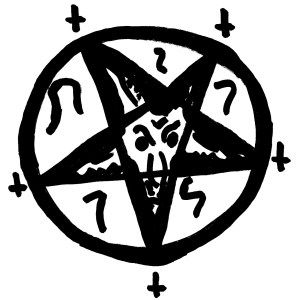
A Welsh family struggles to maintain ownership of their farm during wartime at the dawn of the Industrial Revolution. The exact nature of the threat against them is clear. An aristocratic industrialist in a top hat wishes to seize their land to add to his factory & quarry space, but they won’t sell. As their house is cursed with animal deaths, parental seizures, and occultist symbols (all meant to be taken as direct threats), the film continually hints that a larger, supernatural force is creeping in from the edges of the frame, but it never actually arrives. It’s clear from the beginning that Capitalism in The Monster in this grim historical drama, but in a true horror film that threat would assume a physical form as well, terrorizing the family with tangible violence. Instead, we watch a mother & her two daughters cling to their dwindling few possessions & health as the evils of a modern economy bully them into submission (or death). It’s a miserable experience, even if purposefully so. It also never gets around to justifying its occasional dalliances in horror tones & tropes – whether by fully utilizing its spooky atmosphere or by releasing a physical demon to represent its economic one.

Gwen looks, sounds, and feels like Elevated Horror™. Its monochrome portrait of a family in crisis is illustrated mostly by the grey hues of soot & snow. There’s very little dialogue & no musical score to speak of, somewhat mistaking total quiet for atmospheric dread. Those drab, miserable textures lull the audience into a foggy calm, only to be shocked out of our seats by loud, violet stabs of lightning, medical fits, and nightmares of self-mutilation. This movie has genuine jump scares! But it’s not horror. Gwen takes the same cautious, teasing approach to genre as last year’s The Little Stranger, ultimately avoiding traditional payoffs entirely in favor of the real-world misery of economic exploitation. I don’t personally see the same dynamic at play in The Witch or It Comes at Night, but these muted British chillers at least give me a taste of how other people feel watching them. They’re handsomely crafted, well performed (especially The Bisexual’s Maxine Peake in the mother role in this case), and impressively disturbing in their own right. Yet, I can’t help but wish there was a supernatural monster onscreen to back up its disingenuous genre teasing.

-Brandon Ledet

Paradise Hills (2019)

Like all genre films, Paradise Hills feels like a loose collection of themes & imagery we’ve all seen before. Is it exactly fair or accurate to describe it as Guillermo del Toro’s Stepford Wives set in the Queen of Hearts’s rose garden from Alice in Wonderland, featuring extras from The Hunger Games & Bram Stoker’s Dracula? Probably not, but that rambling assemblage of references at least hints to how familiar individual elements of its fantasy world feels, even if you’ve never seen them arranged in this exact configuration before. What makes Paradise Hills a great genre film is that it still feels entirely unique & spellbinding despite those pangs of familiarity. This is a dark, femme fairy tale I presume was conceived by first-time director Alice Waddinton after a poisonous tea service left her hallucinating & scared for her life. She may be painting with a familiar palette, but the resulting picture is wonderfully warped in new & exciting ways, especially considering how she conveys dread & menace through an overdose of the feminine.

An impressive coterie of young actors (Emma Roberts, Awkwafina, Danielle McDnonald, Eiza Gonzalez) square off against veteran badass Milla Jovovich in a near-future Patriarchal hell. Spurned by their parents for being too queer, too fat, too rebellious, and too difficult to control, the young women are imprisoned in a high-femme reform school that feels as if it were borrowed from a lingerie fetishist’s erotic fiction. Jovovich keeps her prisoners in line as a green-thumb dominatrix who plans to excise their offending idiosyncrasies in the same way she snips the thorns from her endless supply of roses. On the surface this femme obedience school that transforms young rebels into proper mademoiselles feels almost paradisiac. The young women’s torture is mostly a PG-rated barrage of ballet, yoga, and garden tea service. There’s a sinister sexuality & dystopic undertone of Patriarchy to their entire ordeal, though, something that bubbles up to the surface with increasing violence as the unruly students bring their rejection of traditional gender roles to a boil.

The most immediately satisfying aspect of Paradise Hills is the visual splendor of its costume & production design. Although the titular obedience school is obviously an evil force that must be destroyed, there’s an intoxicating allure to its high-femme paradise. The lacy house robes & white leather bondage harnesses that serve as the school’s uniform are their own kind of gendered prison that erase the individual women’s distinguishing features, yet are also undeniably gorgeous & covetable on their own merit. Similarly, the school itself appears to be a romantic spa getaway for the ultra-rich, not the brainwashing torture chamber that it truly is. This is far from the first fairy tale to allure characters in with a bounty of sensual pleasures only for the fruits therein to be revealed as rotten, cursed, or poisonous. In that tradition, Paradise Hills presents a fairytale Eden that’s deadly dangerous precisely because the pleasures it offers on the surface are so tempting. It would be far too easy to lose yourself in this pleasure palace – both literally and figuratively.

Many people are going to roll their eyes at how earnestly this film commits to its over-the-top, Literotica-ready premise, but I found that sincerity to be refreshing. Undercutting the absurdity of its fantasy scenario with snarky one-liners or tongue-in-cheek camp would have broken its dark magic spell. Waddington (boosted by a cowriting credit from the increasingly fascinating Nacho Vigalondo) carves out a very peculiar, particular mood & aesthetic here, even if she uses familiar genre tools to get there. Welcoming in audiences who aren’t already on the hook for the film’s high-femme fairytale mystique with ingratiating humor would only deflate what makes it special. Paradise Hills’s uncanny sense of femme menace works best if the sensual surface pleasures of its fantasy realm instantly appeal to you as a world where you could lose your sense of time and self. It’s a film you sink into, like a warm familiar blanket, until you suffocate.

-Brandon Ledet

When Faye Dunaway Fought Couture

If there’s anything in particular that the 1970 mental breakdown drama Puzzle of a Downfall Child excels at, it’s in offering Oscar Winner & all-around Hollywood legged Faye Dunaway a free-range actor’s showcase. Resembling neither the restrained thrill-seeking-beauty of Bonnie & Clyde nor the detached-from-good-taste camp of Mommie Dearest, Dunaway’s lead role in Puzzle of a Downfall Child reaches for a more disorienting, heart-breaking knockout of performance. Much like Gena Rowland’s similar onscreen breakdown in A Woman Under the Influence, Dunaway’s mental unraveling in our Movie of the Month is purely a one-woman-show, fully immersing the audience in the heightened emotions & distorted perceptions of her character’s troubled psyche. One of the major factors in her mental decline are the Patriarchal pressures & abuses that arise naturally in the industry of high fashion, where she works as a model. Inspired by recorded oral history interviews with the mentally unwell fashion model Anne St. Marie (after she was used up & discarded by the fashion industry in real life), Puzzle of a Downfall Child is a scathing view of couture’s effect on the women who model its wares – especially once they need personal help or simply age out of their perceived usefulness. Dunaway’s heartbreaking performance at the center of the film would be a damning portrait of what the Patriarchy does to women’s psyches in any context, but the fashion industry setting in particular has a way of amplifying that effect to thunderous proportions.

When Dunaway returned to portraying a fashion industry artist later in the decade, her role was seemingly poised to exude more professional power & control over their own well-being. That sense of agency & solid mental health does not last long. In 1978’s The Eyes of Laura Mars, Faye Dunaway jumps the chain of command in the world of haute couture from fashion model to fashion photographer. There’s much more creative control & professional clout to be enjoyed on that side of the camera, especially in the fictional Laura Mars’s case, since she happens to be a very famous celebrity photographer at the start of promoting her first book of collected stills. In that position of power, it’s arguable that Dunaway’s protagonist even perpetuates some of the social ills that torment her character in Puzzle of a Downfall Child. Laura Mars is famous in her fictional art world for portraying misogynistic violence & extreme sexual kink in her photographs. Worse yet, a deranged serial killer has started to recreate the sordid displays in her work when killing her own fashion models, putting people like Dunaway’s Puzzle of a Downfall Child character in direct physical danger. Whereas the abuse & mania at the center of that earlier work was anchored to the recollections of a real-life artist & public figure, however, the crisis in The Eyes of Laura Mars is more of a supernatural fantasy. Dunaway’s tormented fashion photographer sees through the eyes of the killer during their slayings in uncontrollable psychic visions, directly linking the eyes of her camera to visions of real-life violence. This unreal occurrence shakes her belief that her photographs are enacting the social good of showing the world as it truly is for women by having her work directly inspire violence against women while she helplessly observes from the killer’s POV.

When initially discussing Puzzle of a Downfall Child, I mentioned that ”Between its thematic discomforts, its deliberately disorienting relationship with logic, and its gorgeous visual palette, it’s practically a couple brutal stabbings short of being a giallo film.” The Eyes of Laura Mars follows through on that train of thought, almost explicitly functioning as an American studio attempt at producing a Hollywood giallo picture. Boomer has even written about the film for this site before in reference to former Movie of the Month The Psychic, a Fulci-directed giallo thriller it shares so much DNA with they’re often accused of ripping each other off (depending on which one the audience happens to catch first). Director Irvin Kershner (of The Empire Strikes Back & RoboCop 2 notoriety) bolsters this supernatural murder mystery (originally penned by a young John Carpenter in its earliest drafts) with plenty familiar giallo touches – complete with a gloved hand protruding from offscreen to dispose of victims in Mars’s psychic visions. The fashion industry setting is a major factor in that aesthetic, as it was a world familiar to gialli at least as far back as Mario Bava’s Blood & Black Lace. What’s interesting here is the way these stylistic & hyperviolent giallo indulgences even the playing field between Dunaway’s two fashion-world archetypes. In The Eyes of Laura Mars she starts from a position of creative power far above her less protected status in Puzzle of a Downfall Child, but the violent & carelessly sexualized way women are framed (if not outright abused) in the industry eventually makes her just as vulnerable. Her own mental breakdown is more of the calm-surface panic of Kathleen Turner in Serial Mom than it is akin to Dunaway’s genuine soul-crushing illness in Puzzle of a Downfall Child (or her screeching madness in Mommie Dearest), but the misogynist ills of the couture industry had a way of breaking her protagonist down into a powerless distress in either case.

Almost inconceivably, The Eyes of Laura Mars was originally pitched as a starring vehicle for Barbara Streisand, who reportedly turned it down for the concept being “too kinky.” Having seen Babs pose in leather fetish gear for a Euro biker mag in her younger days, I’m a little baffled by that claim, but it’s probably for the best that she turned it down all the same. We still have evidence of Streisand’s involvement through the torch ballad “Prisoner” on the Laura Mars soundtrack, while also enjoying the fascinating double bill of these two Faye-Dunaway-loses-her-mind-in-giallo-adjacent-fashion-industry-narratives. Of the two pictures that cast her as a victim of fashion-industry misogyny’s strain on women’s mental health, Puzzle of a Downfall Child is both the better film and the better performance. Both titles are worthy of Dunaway’s time and energy, though, and together they conjure an imaginary crossover sequel where she plays both mad model & unhinged photographer – taking pictures of herself in an eternal loop of giallo-flavored mania.

For more on June’s Movie of the Month, the 1970 mental breakdown drama Puzzle of a Downfall Child, check out our Swampchat discussion of the film, our exploration of The Neon Demon‘s subversion of its traditional power dynamics, and last week’s look at director Jerry Schatzberg’s relationship with reality in his early work.

-Brandon Ledet

In Fabric (2019)

There’s no better way to convey how divisive of a film In Fabric is than to recount an utterly mortifying social confrontation I had while watching it. Sometime during the first act of our Overlook Film Fest screening of the picture, a woman leaned over to scold me for laughing at its absurdity. She explained that what we were watching was “not a comedy” and that my amusement was ruining her own experience of the film. The general subjectivity of humor aside, I was a little shocked that someone could be taking this giallo pastiche about a killer dress 100% seriously. Even with time, as the humor of the picture became more blatant & undeniable, my finger-wagging nemesis ended up laughing through much of the absurdity on display. I do somewhat understand where she was coming from in her initial annoyance with my laughter, though. In Fabric is a gorgeous, pristinely crafted object on a pure sensory level. Set in a high-end department store (of the damned) in 1980s London, the film’s prêt-à-porter fashion and sexually arranged mannequins cheekily poke fun at the pretentions of European arthouse horrors of yesteryear, while also genuinely indulging in the sensory pleasures therein. It may be a high-fashion variation on killer-object horrors like Velvet Buzzsaw, Maximum Overdrive, and Death Bed: The Bed that Eats, but it presents its murderous dress and the department store weirdos who worship it in a genuinely chilling arthouse horror context. A lot of my personal amusement with In Fabric derived from that tension between form and content; it’s a beautiful arthouse horror film about a demonically possessed dress that flies through the air to kill its cursed victims. I do contend that the film is openly joking throughout in its absurdism, though; it just apparently takes a particular comedic temperament to immediately lock into its humor.

On a practical level, In Fabric essentially functions as a horror anthology. We watch in abject terror (or delirious amusement) as a cursed red cocktail dress drifts through the lives of several unwitting, unlucky victims. Like the magical Traveling Pants of the early aughts, this dress mysteriously conforms to the size & body type of each poor soul who dares wear it. It also marks each victim with an identical rash on their chests, then systematically ruins their work & homelives until the dress is all they have left. The dress doesn’t only cause damage through curses & misfortunes. It mangles washing machines, causes car accidents, and flies through the night like a vampiric ghoul – all with sentient intent. The only constant in these crimes of fashion is a network of Nosferatu-type department store employees who seemingly worship the murderous dress as their Dark Lord. These saleswomen and their ghoulish manager also worship the smooth plastic crotches of their store mannequins, which they pay tribute to in appreciative cunnilingual rituals. Customers are lured to the store with Tim & Eric-style television ads for a seemingly never-ending sale. Once inside, they are seduced in absurdly purple dialogue from the demonic saleswomen, who coax them into purchasing their doom. Everything in In Fabric is deliriously overwritten. Saleswomen pontificate on the philosophy of dress sizes as if they were discussing Sartre. The department store doesn’t have a dressing room; it has a Transformation Sphere (which looks & functions exactly like a dressing room). The soundtrack is provided by a maybe-fictional band called Cavern of Anti-Matter. The film is wholly committed to over-the-top excess in every frame & decision, whether it’s indulging in an artsy collage of vintage fashion catalog advertisements or deploying a killer dress to dispose of a goofball victim entirely unaware of the occultist backstory of their sartorial selections. It’s both funny and chilling, beautiful and ludicrous. It’s perfect, as long as you can tune into its left-of-the-dial demonic frequency.

Director Peter Strickland has pulled off this same balancing act between sensual art & sly humor before in Berberian Sound Studio & The Duke of Burgundy, but I personally believe In Fabric to be his most outright silly film to date. If you want to take the film 100% seriously, it leaves you a lot of room to do so, especially in the way it peeks in on fetishistic sex through bedroom keyholes and the way it uses its genre film premise to extensively discuss the politics of labor & corporate management. I don’t believe you’re fully appreciating what the film has to offer, though, if you don’t allow to yourself to be chilled by its arthouse scares and tickled by its over-the-top camp. I wonder if the woman who sternly shushed me for laughing in the first act enjoyed the picture as much as I did, or if its ultimate veer into full-blown silliness was a disappointment for her. Personally, I don’t think its giallo-flavored sexuality or labor-relations philosophy would’ve shined quite as vividly if the camp & excess weren’t there to provide contrast. I loved In Fabric for all its lush sensory pleasures, old-school horror creep-outs, and delirious indulgences in campy absurdism – while I can also see any one of those elements detracting from someone else’s enjoyment, depending on their own expectations & default sensibilities.

-Brandon Ledet

Come to Daddy (2019)

Fresh out of a delightful mid-day screening of One Cut of the Dead at this year’s Overlook Film Festival, I took a leisurely stroll down a hellishly hot Decatur Street to catch the next film on the docket, only to find myself unintentionally trailing that film’s star. Looking positively adorable in some crisp denim overalls and a patterned button-up, Elijah Wood was playing tourist along the riverside tchotchke shops on his way to the Come to Daddy Q&A. He was travelling in my exact path to Sidney’s Liquor Store, where I was headed to pick up some cold beverages to enjoy in Jackson Square before the screening. I felt like a total creep on that walk, entirely too aware of this oblivious stranger strolling just a block ahead of me, someone who probably spends way too much of their life wondering who’s looking at them and why. Luckily, the tables were eventually turned on me, as the film Elijah Wood was in town to promote was far creepier & more disturbing than any awkward eye contact I might have conveyed on that walk down Decatur. Despite his adorable exterior & chipper demeanor, Wood has a deeply fucked-up sense of humor and appreciation of the macabre – which is a major factor in why he’s so lovable.

Elijah Wood stars in Come to Daddy as a cowardly hipster & a shameless liar who responds to a reconciliation letter from a deadbeat dad who abandoned his family decades ago. The horrifically mismatched pair, drunken brute father & effetely timid son, enjoy an intimate family reunion in an isolated home on the California coast. It does not go well. The decrepit bully of a father mocks every physical & verbal communication his big-city hipster offspring dares to offer, bringing their tension to a point where its only possible outcome is physical violence. Then, just as the tragically mismatched men are about to come to blows, the film shifts the intimate dynamic of what we’re watching into a much more sprawling, chaotic kind of mayhem. It would be criminal to spoil exactly how the film unfolds after that first act, but I can at least say that its twisted humor & unrelenting brutality only become more severe as it veers into flashes of torture porn, slapstick gore, deep sexual discomfort, and all other kinds of fucked up Freudian delights. As Elijah Wood’s cowardly protagonist sinks further in over his head in sinewy ultraviolence, the picture begins to play like a farcical mutation of a Jeremy Saulnier picture – not unlike Wood’s recent turn in I Don’t Feel at Home in this World Anymore, just creepier.

As amusingly weaselly as Elijah Wood is in the central role, the real star of the picture might be screenwriter Toby Harvard, who also penned The Greasy Strangler. Harvard brings the same aggressive, repetitive anti-humor and nightmarishly greasy Daddy Issues that fueled The Greasy Strangler to this more reality-bound picture. It’s not enough that the hipster’s drunkard father calls his son a “rat fucker.” He has to elaborate that his son “stuffs rats up his cunt” and that when he dies they’ll find “rat skeletons in his pelvic area, where his cunt used to be.” After the director of The Greasy Strangler floundered without Harvard in his own follow-up, An Evening with Beverly Luff Linn, I’m starting to think Harvard is the name Greaseheads should be keeping their eye on. Elijah Wood has been making a career out of funding & promoting grotesque art projects from folks like Harvard in recent years – producing titles like The Greasy Strangler, Mandy, The Boy, and A Girl Walks Home Alone at Night. As playfully disturbing as his tastes continually prove themselves to be, he mostly just seems like a wholesome horror nerd who loves to make fucked-up moves with his friends. His presence in horror nerd spaces like Overlook Film Fest are entirely appropriate & expected; we just have to make sure to not ruin his good time by awkwardly trailing him down the street. We need him out there to raise funding for fucked-up, greasy oddities like Come to Daddy, so we better not scare him off.

-Brandon Ledet

Satanic Panic (2019)

I closed out my experience at the Overlook Film Festival this year the exact way I started it: with a comedy that wasn’t at all funny. Just like with my opening night selection, Porno, I sat through much of Satanic Panic in the festival’s closing hours not laughing at any of the film’s proper Jokes but being amused by the absurdist excess of the sex & violence onscreen anyway. Humor is entirely subjective, as I learned a day prior when a total stranger scolded me for laughing during Peter Strickland’s killer-dress giallo pastiche In Fabric because it is “not a comedy” (hard disagree), so I’m sure this splatter comedy has a core demographic of genre nerds out there who are going to slurp up its cutesy occultist humor like so much blood & viscera. For the rest of us, the film is at least committed to exploiting the full absurdist potential of its sex & violence, perhaps the two most reliable sources of entertainment in the history of commercial art.

This film picks up where Rosemary’s Baby leaves off. Upwardly mobile suburbanite aristocrats gather in a beige McMansion to worship Satan as their Dark Lord. Their ritual du jour involves summoning the demon Baphomet to impregnate a sacrificial virgin, providing a physical form for an Evil deity. Our POV character is the virgin sacrifice in peril – a pizza delivery driver who dares speak up when the cult stiffs her on her tip, only for them to single her out for their depraved ceremony of untold horrors. Most of the film details her fight for survival over the course of a single night as she must first accept that witchcraft is real, then adapt to overthrow the black magic Satanists who want to destroy her with it. Luckily, her blue-collar pedigree has better prepared for the fight than the pampered suburbanites that surround her, whether or not they have all the forces of Hell to summon for backup.

In its least convincing moments Satanic Panic attempts a weirdly earnest emotional throughline about personal courage & survivor’s guilt. Its Society-esque thematic territory in which the Rich are an evil force that are actively trying to kill us is much more successful, but still a little hollow. Mostly, the plot is a thin excuse to juxtapose a wholesome cutie who loves fuzzy bunnies with the blood-soaked horrors of Satanic worship. It’s a relatively harmless source of humor (excusing a rape joke or two, re: preemptively losing her virginity), but also not a particularly novel or clever one. For me, the film worked best when the humanity of its characters was forgotten entirely in pursuit of sexual, gory mayhem: strap-on “killdo” drills, poisoned children, fisted neck wounds, Cronenberigan anus monsters, blood-soaked occultist orgies, etc. It may not be the pinnacle of joke writing or emotional drama, but Satanic Panic at least knows how to deliver the goods when it comes to over-the-top ultraviolence & softcore sexual mania.

From a production level standpoint, this should’ve been able to accomplish much more than what Porno pulled off. While that film was a more amateur affair populated by unfamiliar faces and limited to just a few locations, this is a Fangoria-supported debut feature for Horror Industry notable Chelsea Stardust and features supporting performances from Rebecca Romjin, Jerry O’Connell, and Arden Myrin among its suburbanite Satanists. It’s far from a major studio production, but the fact that it amounts to the same general effect of something as cheap as Porno can’t be a good sign. Because both of those titles were able to earn their place on the schedule for the same generally well-curated horror festival, and both screenings were met with uproarious laughter from plenty of genre nerds besides me, I assume there are many people out there who will find Satanic Panic hi-larious, whether or not they would enjoy it more than Porno. Admittedly, I did eventually have fun with its commitment to bloodlust & excess myself, but I also walked away a lot more cautious about making time for these unvetted splatter comedies the next time I’m prioritizing what to see at a genre film festival. I now know that they’re a type, and not necessarily my type.

-Brandon Ledet

Ma (2019)

One of the more unexpected pop culture joys of 2019 has been the mainstream revival of the psychobiddy genre. What started as a dual career rejuvenator for Old Hollywood legends Bette Davis & Joan Crawford in the camp classic What Ever Happened to Baby Jane? stuck around for much of the 60s & 70s for other aged-out-of-leading-roles actresses like Shelly Winters, Debbie Reynolds, Tallulah Bankhead, and Olivia de Havilland in lesser drive-in marquee filler. Coined as the “psychobiddy” thriller or the “Grand Damme” horror or, most crudely, “hagsploitation,” the post-Baby Jane tradition of actresses Hollywood deemed too old to be fuckable reviving their careers in dirt-cheap genre work far below their skill level has given us some of the greatest slices of over-the-top schlock ever seen on the big screen. If nothing else, I’d easily rank the William Castle picture Strait-Jacket, which cast Joan Crawford as an axe-wielding maniac, among the greatest films ever made – full stop. I welcome any signs of a new psycobiddy wave with open arms, then, even if the genre label could be construed as a cruel insult to the actors cast as leads under that umbrella. 2019 hagsplotation has given us Isabelle Huppert dancing her way through over-the-top cartoon villainy in Greta, Robin Riker tormenting her pregnant granddaughter in the Lifetime movie Psycho Granny, and now Octavia Spencer partying with (and cruelly torturing) teens in the Blumhouse horror Ma. I sincerely hope there’s more to come.

The only thing preventing Ma from fully participating in psychobiddy tradition is the age & status of its star. At less than 50 years old and appearing in Oscar-worthy features as recently as the 2017 Best Picture-winner The Shape of Water, Octavia Spencer should likely be disqualified from being considered in a hagsploitation context. Every other aspect of Ma qualifies her performance and her character arc for the label, though. Like all psychobiddy villains, Ma is a sympathetic sadist who was only driven into violence & madness by a world that was cruel to her in the past. That sympathy does little to soften the severity of her crimes, though, as she veers from menacing threats & light stalking into full-on slasher villain & torture porn tropes as her psychoses worsen. Most importantly, the character is an excellent acting showcase for Octavia Spencer’s full range as a talent who’s too often relegated to one-note supporting roles. She’s given room to run wild here as a full-blown one-woman spectacle, often tearing through every emotion & tone imaginable with a machine gun efficiency: the deep hurt of a wounded animal, the slack-jawed thousand-yard stare of a Norman Bates descendent, the jubilant dancing of an invincible party girl, and the disarming sweetness of a family friend you’ve know your entire life. It’s at first baffling to learn that Tate Taylor, the doofus responsible for The Help, also directed this deliciously over the-top schlock, but it gradually becomes obvious that the goon simply loves to watch Octavia Spencer devour the scenery and it just took him a while to find the proper context for that indulgence – the psychobiddy.

A group of fatally bored teens waste away their youth in a small industrial town by drinking & vaping at the old rock quarry – the exact drab spot where their parents guzzled liquor decades in the past. After allowing the teens to talk her into purchasing their alcohol for them, an unassuming vet tech (Spencer) feigns concern that the kids might be drinking & driving and offers them an enticing alternative to their usual weekend spot: her basement. Gradually, all the teens in the area start partying in Ma’s basement as if it were a hot new nightclub, but Ma herself remains fixated on the few teens from the initial group, inserting herself into their lives outside the bounds of the party. Caught between enjoying the teenage popularity she was never afforded as a bullied outsider in her youth and avenging a mysterious trauma that’s haunted her since high school, Ma fluctuates between a fun party girl and a murderous biddy psychopath with the flip of a switch. She dances The Robot and karate-chops pyramids of beer cans like the party mom these kids ever had. She also stalks the teens she obsesses over the most on social media, eventually attempting to permanently collect them in her basement as tortured captives. The best moments of the film are when these two modes clash, as when she mutters the lyrics to Debbie Deb’s club jam “Look Out Weekend” to herself while maniacally scrapbooking. Spencer is mostly a wonder for being able to alternate between these tones with rapid-fire efficiency, often playing sane & friendly in one beat then zoning out in a lapse moment of murderous meditation the next.

The filmmaking craft in Ma is similarly all over the place, but to more of a frustrating effect. The film opens with the cheap inspo-pop & teen melodrama of a CW series, but also conjures occasional surprises like the drastic split-diopter shots of a classic De Palma thriller. In either instance, neither the visual stylings of Tate Taylor nor the inner lives of Ma’s teenage victims are the draw in this picture. This is purely Octavia Spencer’s show, and she adeptly delivers all the tragedy, fun, and cruelty you could possibly want from this kind of genre trash. She may be a little too young and a little too prestigious to be indulging in a psychobiddy thriller at this point in her career, but the result is so deliciously campy & genuinely upsetting that it would be foolish to complain about the method. Ma is an A+ actor’s showcase in a psychobiddy context, a clear standout in the genre’s (albeit minor) 2019 revival.

-Brandon Ledet

Porno (2019)

I often talk about how the worst kind of movie is a comedy where the jokes don’t land. It’s an experience that can feel alienating (and, frankly, boring), especially when every other person in the theater is slapping their knees and doubling over with laughter. Watching Porno on opening night of this year’s Overlook Film Festival was the most alienated I’ve felt by a comedy since the opening weekend of Deadpool 2. In both instances, I was surrounded by the boisterous laughter of audiences who were tickled silly by every joke delivered onscreen, despite not a single one of them being in any way subversive or clever. I somehow still managed to have a good time with Porno, though, even while feeling like the odd man out in that crowd. That’s because it’s a horror film on top of being a comedy, and its horror beats deliver where its humor fails. When most comedies fail to make you laugh, they leave you very few opportunities to be entertained otherwise. To its credit, Porno entertains throughout by relying on the most tried & true attractions in the entertainment business: sex & violence. Even if you’re impervious to its proper Jokes, there’s still plenty of blood-soaked juvenilia to keep you occupied.

While closing shop on a busy weekend in 1990s suburbia, the Christian employees of a vintage movie theater discover a demonically possessed porno reel in a storage closet. When they watch the cursed reel out of lustful curiosity, the transgression releases an evil succubus that seduces & disassembles them one by one. The small staff of repressed twenty-somethings spend the night fighting off the succubus in a fool-hearted attempt to save the world outside the cinema, but in a larger sense they’re really fighting off the lustful temptations that conflict with their Evangelical values: sexual voyeurism, substance abuse, homosexual desire, etc. While the jokes could’ve used a punch-up from someone with sharper comedic chops, the sex & violence of the premise are fully committed to delivering the goods. I may not have laughed at any of the spoken dialogue, but as genitals were ripped to shreds in unflinching gore, grown men were pegged over a toilet by a femme sex demon, and occultist nudists bathed in blood & strobelit giallo hues, I occasionally found myself having a blast. I don’t know that I could enthusiastically recommend the picture as a non-stop laugh riot, but once its sex gradually becomes less vanilla and the number of onscreen dicks (mutilated or otherwise) piles up in practical gore mayhem, it kinda gets charmingly juvenile.

There’s a particular kind of Horror Nerd out there for whom this movie will work entirely, comedic warts & all. I know this for a fact because each bon mot landed to thunderous guffaws at our Overlook screening. I’ll even admit that some of my own enjoyment of the picture was in hearing those very same Horror Bros squirm with disgust when a scrotum was ripped open by a sex demon or a prostate was worked for all the un-Christian pleasure it was worth, since those moments were when I laughed the most. Given that the film shares thematic overlap with B-pictures I’ve enjoyed before like Demons, All About Evil, and Cecil B Demented (and it even features posters for personal favorites like Ed Wood’s Orgy of the Dead & Doris Wishman’s Deadly Weapons), there’s definitely a shared appreciation for camp & excess where my own sensibilities overlap with its intended crowd. I just more often found myself amused when they were sexually antagonized than when they were comedically pandered to. Porno may not succeed by most horror comedy metrics, but it’s willing to engage with the sexual taboos that would most upset its straight-guy-horror-nerd target audience and I greatly respect that chutzpah, even if I was in no danger of busting a gut.

-Brandon Ledet

Episode #84 of The Swampflix Podcast: Ma (2019) & Classic Psychobiddies

Welcome to Episode #84 of The Swampflix Podcast! For our eighty-fourth episode, Brandon & Britnee compare the latest entry into the psychobiddy canon, Ma (2019), to a couple towering classics in the genre: Strait-Jacket (1964) & The Nanny (1965). Enjoy!

You can stay up to date with our podcast through SoundCloud, Spotify, iTunes, Stitcher, TuneIn, or by following the links on this page.

-Brandon Ledet & Britnee Lombas

One Cut of the Dead (2019)

It’s near impossible to recommend One Cut of the Dead without spoiling what makes it special, so I’m going to have to tread lightly here. This is maybe the most deceptively complex horror comedy I’ve ever seen. It’s certainly the most patient; the movie takes a huge gamble in saving all its major comedic payoff for its concluding half hour – an alchemist third-act twist that retroactively transforms the movie you think you’ve been watching for the previous hour into pure gold. Whether or not all its potential audience will stick around for the full benefit of that payoff is a major risk, especially since encouraging viewers who are going in blind to push through the limitations of its initial conceit might already be tipping the film’s hand. All I can really report without prematurely revealing too much is how the film toyed with my own expectations. I found it quietly charming, then disorienting & awkward and then, finally, one of the funniest movies I’ve seen in a theater in a long, long while – horror or otherwise.

As the title suggests (perhaps awkwardly, in Japanese-to-English translation), the initial conceit of One Cut of the Dead is that it is an experiment in staging a zombie-invasion horror film in a single take. A microbudget movie crew filming a zombie cheapie in an abandoned WWII lab (that once experimented with bringing the dead back to life) are attacked by real-life zombies between takes. The unflinching, handheld camera offers a meta POV of the crew’s shock & subsequent fight for survival as the zombie mayhem they’re struggling to authentically stage for an unseen audience becomes “real.” Deciphering exactly what’s meant to be “real” within this paradigm and what’s merely a limitation of staging a single-take zombie picture on an amateur budget is increasingly difficult. Stage blood & actors’ spit splash against the lens. Performers wait a beat or three too long for their proper cues to deliver their next line. The POV cameraman is directly acknowledged by the actors, despite there already being a meta remove of a movie-within-the-movie. So much of One Cut of the Dead is on shaky logical ground because of the limitation of its filmmaking resources, but horror fans who are inclined to watch low-budget, high-concept zombie movies in the first place should be used to making those allowances. What’s brilliant about the film is how it transforms those awkward low-budget details into something brilliantly executed & purposeful. Revealing how it performs that miracle in a review would be a crime that I’m not willing to commit. You just have to afford it your attention & trust long enough to see it for yourself.

The biggest hurdle in convincing people to watch One Cut of the Dead long enough to catch onto what it’s accomplishing is that it’s a little difficult to convince people to watch any zombie movie in 2019, especially the kind that was made for less than $30,000 and most plays at genre film festivals like The Overlook. That’s the ultimate trick to the picture, though. This isn’t about zombies at all. Rather, it’s a heartfelt love letter to low-budget filmmaking and all the frustrations, limitations, and unlikely scrappy successes therein. Even before you’re allowed to fully catch on to what you’re watching, the movie’s already pitting a microbudget film crew against the horrors of the world outside their orbit. Actors strain to convey believable emotion in a preposterous scenario; sound technicians fight off the undead with boom mics; directors & cameramen defy all survival odds to piece together whatever scraps they can salvage from a film shoot that immediately goes to hell. This is a movie about the improbable joys & common frustrations of making movies, a sentiment that only becomes more apparent the more time & attention you afford it.

-Brandon Ledet