If there’s any doubt of my contention that the 50s drive-in creature feature I Was a Teenage Werewolf was a zeitgeist shift in its first-ever depiction of a teenager-turned-monster as its central threat, just look to the fact that the film’s wild cultural success lead to an immediate onslaught of imitators. There are countless movies that have followed in the cult classic’s wake that all turned the horrors of puberty into literal monstrous transformations, far too many to list here. There are even enough teen werewolf movies that followed that the plot device can be considered its own genre: Teen Wolf, Ginger Snaps, Cursed, Twilight, and, from the very same year as the original, Teenage Monster all fit snugly under its umbrella.
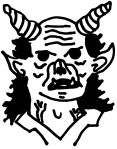
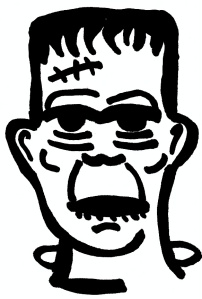
More often than not, though, Hollywood producers will learn the exact wrong lessons from a film’s success. So, when Sam Arkoff & AIP decided to strike while the iron was hot with a follow-up to their surprise hit I Was a Teenage Werewolf, they ended making a film that was nothing like the wild idiosyncrasy of the original. I Was a Teenage Frankenstein completely missed the point of why I Was a Teenage Werewolf struck it big with drive-in audiences. In the werewolf picture teens watched their peers talk hip slang (or at least what adult screenwriters assumed was hip slang), rough house, make-out, and transform into hideous beasts at the cruel hands of puberty. I Was a Teenage Frankenstein, by contrast, shows almost no teens at all during its entire runtime. Even the titular teenage Frankenstein monster appears to be a man well into his 20s (not that you ever get a good enough look at the actor to really make a judgement call on that).
The one thing I Was a Teenage Frankenstein did keep from I Was a Teenage Werewolf‘s formula was the idea of a mad scientist experimenting on teen subjects. In the original a rogue scientist plots to “save” the world by bringing man back to a primitive state through hypnosis-aided de-evolution. In the Frankenstein version of this story, an equally ambitious man of science (and direct descendant of the more infamous Dr. Frankenstein, of course) wants to save the world by creating some kind of superbeing out of disposed body parts. His exact goals are a lot fuzzier than his werewolf-creating predecessor’s, but they have something to do with experimental eugenics & bodily reconstruction due to a belief that the world is in danger because morons keep breeding morons. He believes he can do a better job of constructing the human body than God & Nature. Gathering the pieces-parts of his teenage specimens from a head-on car crash, the doctor creates a modern Frankenstein monster in total secrecy, even keeping his lab assistant & nosy fiancee in the dark. Inevitably the experiment gets out of his control & the monster ends up killing a few unsuspecting victims, both by accident & through coercion, despite having a genuinely kind teenage heart resting in his undead body.
You pretty much can guess how this film winds up, which is largely what holds I Was a Teenage Frankenstein back from achieving the glorious heights of its predecessor. Rushed to theaters less than five months after the release of I Was a Teenage Werewolf, the film feels like it was made without any real knowledge of what even happened in its source material, let alone what made it popular. The only teens I can recall seeing in the picture arrive in the final third during a brief trip to a Lovers’ Lane parking lot in the monster’s search for a new face, which separates the film so far from its lycanthrope counterpart that it’s a wonder they even share a title the way they do. Still, as a standard drive-in era monster movie the film is a surprisingly decent watch. The teen Frankenstein’s monster make-up is downright grotesque in its hamburger meat visage, the doctor’s fiancee has a sincerely great gravitas to her performance, and the doctor’s disposal method for unused body parts is to feed them to a stock footage alligator, which is something of my schlock-loving dreams. I also really appreciated the doctor’s relentless cruelty, which was surprising in its viciousness even for a villain in a monster movie. For instance, when he first brings his creation to life, the teen freak immediately weeps at the crushing weight of its own existence & the doctor exclaims, “It appears even its tear ducts function!” That’s pretty cold. I Was a Teenage Frankenstein may have missed the point of its more teen-oriented predecessor’s success, but it stands well enough on its own as a straight-forward genre exercise with a heartless villain & a truly horrific monster design.
Every month one of us makes the rest of the crew watch a movie they’ve never seen before & we discuss it afterwards. This month Boomer made Erin, Brandon, and Britnee watch My Demon Lover (1987).
Boomer: I think that this was bound to happen sometime, and I’m pretty sorry that it happened with regards to a Movie of the Month that was my suggestion: My Demon Lover is not as much fun as a rewatch as it was in my memory. The male love interest comes across much more low-key predatory than I remembered, and the love story overall suffers as a result. Still, the two lady leads are just as likable as I remembered, which helped make this a more tolerable experience than it otherwise could have been.
My Demon Lover tells the story of Denny (Michele Little), a perpetual loser who falls for crappy guys like her latest man, who leaves her on her birthday for having the audacity to want to throw a party for herself. How dare she?! Her best friend Sonia (Gina Gallego) is a modern woman with lots of lovers and no boyfriends, an occasional psychic who runs a new age store. After an encounter with lovelorn loser Charles (Xena alum Robert Trebor, virtually unrecognizable without his trademark beard), Denny is ready to give up on men, until she has a charisma-free meet cute with horndog Kaz (Scott Valentine), a homeless man that she immediately takes into her home. Although there are a lot of problems with this scenario, the narrative focuses on one in particular: Kaz was cursed by the mother of a girl with whom he was sexually experimenting in middle school. As a result, when he becomes aroused, he turns into a monster called a pazatzki, complete with scaly prosthetics and monstrous claws. As a series of murders of young women rack up and are attributed to a serial killer dubbed “The Mangler,” Kaz starts to wonder if he is the one at fault. Sonia has a vision that implies he is, and everything comes to a head in a random castle that appears to be smack in the middle of Central Park.
Debuting at number ten on the week of its release and then quickly falling off of the box office charts, My Demon Lover netted nearly two million dollars in its first week despite not being a particularly good movie. Part of the reason for this was that Valentine was a bit of a hot item at the time, having garnered attention for his portrayal of Nick Moore, the boyfriend of Justine Bateman’s character on eighties sitcom standard Family Ties, appearing in 44 episodes. The character was so well-received, in fact, that there were three separate attempts to spin him off into his own show, titled The Art of Being Nick. One script idea made it all the way to the pilot stage, where Nick’s new love interest was played by Seinfeld star Julia Louis-Dreyfuss and his sister was played by future Buffy mom Kristine Sutherland. Nick’s grandfather in the pilot was portrayed by Herschel Bernardi; Bernardi’s sudden death, combined with NBC’s hesitation to let Valentine leave Family Ties, led to the series not being picked up.
Despite the fact that his character in the film commits lots of micro-and macro-aggressions (including grabbing women on the street like an eighties YouTube pickup artist), Valentine himself has a lot of charm. Little is also very likable as the put-upon Denny, even if the character reads as a parody of unlucky eighties leading ladies. Gallego’s Sonia stands out in her role as the unapologetically sexually liberated modern woman, bringing warmth and sincerity to a role that one would expect to see treated more critically in a film of this era. These are all characters that would have been more successful in a movie wherein the leading man didn’t start out as such an unrepentant creep, and it’s a testament to Valentine’s likability as an actor that Kaz seems at all redeemable, given the aggressions cited above. It’s too bad that what could have been his breakout performance ended up burying him and relegating him to guest appearances in things like Lois & Clark, JAG, and Walker, Texas Ranger.
What do you think, Brandon? Are the likable characters who populate this film charismatic enough to partially cover the more unlikable elements here, or are the performances just adhesive bandages on a fatal wound?
Brandon: I do think you’re being a little harsh on My Demon Lover as a whole, but I can also see how a rewatch could make you cringe pretty hard. The opening stretch of the film constantly, confrontationally raises the essential question “Aren’t you supposed to like the male lead in a romcom? Or at least be able to tolerate him?” The demon lover hobo at the film’s center is a walking, breathing personification of street harassment, the kind of scummy cretin who must’ve scattered & disappeared when Giuliani cleaned up Times Square in the 1990s. My Demon Lover presents the most salacious version of NYC we’ve covered since former Movie of the Month Crimes of Passion & its male romantic lead thrives in its grimy, sex-soaked environment, often as a deadly threat for women navigating the city alone at night. You’d think that a romcom that begins with a man who turns into literal demon when he gets aroused & puts the women around him at risk would have virtually no chance of bouncing back, but My Demon Lover somehow pulls it off. A lot of this has to do with, as Boomer points out, the lady schlub charms of Denny as the demon lover’s love interest, but I somehow was also won over by the demon lover himself before the end credits rolled, a completely unexpected turnaround.
I think I can pinpoint the exact moment my opinion changed on the demon lover Kaz. There’s a really sweet, impossibly vapid falling-in-love montage where the devilish sex fiend learns the meaning of intimacy over a series of Big City dates with Denny that include props like hotdogs, park benches, and balloons. At this point it becomes kind of tenderly sad that Kaz can never become aroused by a woman without becoming a physical threat. It’s an affliction that keeps him from knowing the simple pleasures of romance and helps to explain how his sexuality remains predatory & juvenile without any chance for positive growth. The movie later does a lot of damage control to further repair the demon lover’s character by making his demonic form sort of cartoonishly pathetic & also making it explicitly clear that (huge spoiler) the serial Mangler murders were not his doing. However, it’s silly moments in his getting-know-Denny stretches that first began to redeem the poor little devil in my eyes. In those moments Kaz’s behavior seemed less monstrously brutal & more in line with obnoxious, emotionally stunted, magical characters like Drop Dead Fred.
Erin, you & Britnee both called the narrative twist of the real Mangler’s identity long before the movie revealed the true killer. Do you think that the murder mystery aspect of this film was a mistake, delaying how long it would take to learn to love the demon beau as a cursed goofball? Or was the act of gradually changing your mind on Kaz’s merits as a love interest more entertaining than the film would’ve been as a straight romcom fantasy? What does the Mangler murder mystery add or take away from My Demon Lover’s campy charms?
Erin: You know, I think that the kitchen sink nature of My Demon Lover is part of its appeal. The movie would function without the mystery of The Mangler, and it would be a perfectly sweet monster-flavored romcom. I do think that including The Mangler allows for an edge – it gives Kaz’s initial characterization a tinge of danger. Though he is completely disgusting in his own right, the implication that he is murdering women in the streets makes his meet-cute (meet-gross?) with Denny so much more troubling. We as an audience already know that she has terrible luck with relationships, and even without being led to believe that he is a blood crazed slasher it seems like a terrible idea for her to keep speaking with him and letting him sleep on her sofa. Adding The Mangler’s subplot gives the redemption story a stronger and sharper flavor, as we end up having to cover so much more ground to see Kaz as a protagonist. Instead of zero to hero, it’s like he’s starting at -50.
On the other hand, starting the movie with the implication that Kaz is The Mangler makes the second act of My Demon Lover really jarring and awkward at times. It’s hard to enjoy sappy love montages and gratuitous makeouts when you have the unsettling feeling that an ingenue is going to be slaughtered in her sleep. The nightly murders and rising hysteria about The Mangler are also at odds with the main plot of two goofy kids falling in love. I’m not sure if the incongruity is intentional, or if watching My Demon Lover in 2016 increases the gap in mood. I think that audiences today might be more sensitive to the portrayal of violence towards women in cinema.
It’s hard to choose the strangest element of My Demon Lover, though. The magical rules seem inconsistent, with Kaz’s pazzazion manifesting in a thousand different ways. Denny’s friend Sonia is inexplicably the best character in the movie, and for some reason sleeping with the DA. The NYPD are following a procedure unknown to any police force in the world. The balloon budget is strangely high.
Britnee, what do you make of My Demon Lover? What aspect of the movie caught your attention, the romcom elements or the monster movie side? Do the production values of the movie detract from its charm or add to it?
Britnee: I honestly didn’t expect My Demon Lover to be much different than the other hundreds of campy 80s comedies out there, but it actually does a great job standing out on its own. At first, the film didn’t seem like it was going to be anything but a cheeseball comedy about a fruit burger-eating airhead that falls for a perverted homeless guy who may or may not be a killer demon. Thankfully, things become much more interesting as the film goes on.
The monster movie and romcom elements of My Demon Lover come together to create a rare combination that makes for one hell of a memorable flick. I think that the romcom features of the film stood out more for me than the monster movie elements. If all of that demon jazz was taken out of the film, I think it would still be just as wacky and entertaining. It seems as though we all agree that Kaz is not your average romcom heartthrob, and I think that’s what made this such an amusing experience. I actually found Kaz and Denny to be very annoying lead characters, but that’s not necessarily a bad thing. Their ridiculously irritating traits make them a hilarious, dynamic duo. Denny’s lack of self-respect and poor life choices mixed with Kaz’s disturbing mannerisms and erratic personality work very well together. I remember thinking, “God, these people suck, but is that why I’m laughing so hard right now?” while watching the film. This is the stuff that romcoms are made of.
As for the film’s production values, I would have to say that the film benefits from its cheap qualities. The poorly made demon costumes, Kaz’s limited wardrobe, and, as Erin previously mentioned, the large amount of balloons adds to the movie’s comical value. My Demon Lover wouldn’t have been half as much fun if it was some fancy schmancy high-quality production.
Boomer, of all the strange happenings that occur in My Demon Lover, the portion of the film that takes place in the Belvedere Castle in Central Park caught me off guard more than anything else. It seemed very displaced. Did you feel as though this part of the film seemed like a completely different movie? Also, if you had to choose a different location for The Mangler’s lair, where would it be?
Boomer: I have to admit that, up to this very moment when I looked up “Belvedere Castle,” I had no idea that there really was a castle in Central Park. I thought that the Central Park castle was a total fabrication! With that knowledge, I’m a little more forgiving of the film’s climax (sorry) for taking place there. It still doesn’t quite work for me, but I can see what the intent was. Just as the vaguely racist “Romanian curse” enacted on a modern man draws a line of connection between the sexpolitik of the Old World and the contemporary one of the film, so too does a climactic castle rooftop showdown with modern weapons (and a little shaggin’ to make the magic happen). Still, you’re absolutely correct, Britnee, in that it doesn’t feel quite right.
I think a more industrial or warehouse location showdown would have been better suited to the film’s aesthetic and its placement in then-modern New York. At the time of the film’s production, it would have been impossible to predict the rise of Giulianni and the Disneyfication of New York that would follow in his wake (Times Square Red, Times Square Blue by Samuel Delany is essential reading to understanding this dichotomy). My Demon Lover is like a time capsule from the real New York, and diverting the narrative to such an Old World location when the story could have had a meatpacking district fight sequence or a battle of wills at a dead subway stop (just think of the passing trains and the potential for interesting lighting schemes!) would have been more in line with the presentation of the city up to that point. There are arguments to be made for shooting in either atmosphere, but I really would have loved to see more of 1980s NYC and its eccentricities (Fruit burgers! Occult shops with weapons that can actually kill a demon!) rather than a locale that seems almost formulaic, even for such an oddball flick.
Brandon, raunchy comedies seem to be popular in brief cycles, with watershed sex flicks like Porky’s, American Pie, and Forty Year Old Virgin inspiring imitators and followers for a few years before the madness dies down and the fields of film are left fallow to allow the next hit to germinate. Do you think that, in the wake of the bro-aggrandizing movies of the past few years (like Neighbors), a modernized remake of My Demon Lover would have the chance to reach a wide audience in the way that the original did not? And, if you were drafting a script for it, would you keep Kaz’s street harassing ways intact (all the better to discuss the issue and create a stronger arc) or forego that character trait altogether (making him a more sympathetic lead from the outset)?
Brandon: It’d be interesting to see a script take a thoughtful, pointed jab at hyper-masculine sexuality through this film’s formula. It could maybe even update Kaz’s toxic sexual persona with recent targets of online feminist social commentary: “manspreading”, “negging”, commands like “You should smile more!”, etc. The truth is, though, that a satirical comedy with ambitions that high would have to toe a thin line to succeed.
A much easier way to update My Demon’s Lover‘s formula would be to swap the genders of its protagonists. My favorite raunchy sex comedies of the past few years have been the ones lead by women. Films like Appropriate Behavior, Wetlands, The Bronze, The To Do List, Bachelorette, and (to a lesser extent) Trainwreckhave breathed fresh air into a stale format by making its overgrown, oversexed adult children women for a change, which has been an exciting development when it’s done right. I know it’s not a sex comedy, but consider, for instance, Paul Feig’s upcoming Ghostbusters reboot. In almost every scenario a new Ghostbusters film sounds entirely unnecessary & gratuitous, but with that cast of talented women on board, it actually sounds like it might be kind of worthwhile?
Erin, picture for a moment My Demon Lover with Denny & Kaz’s roles reversed. Kaz is a bumbling nerd who always seems to attract emotionally abusive women & Denny is an oddball love interest who turns into a literal monster every time she gets horny. Would this gender reversal change the film’s fabric in an essential way or would their dynamic remain just as off-putting?
Erin: Oh man. A gender flipped My Demon Lover might be a lot to process even for modern audiences. I have two thoughts on switching the genders of Kaz and Denny (could we keep the names? probably?). I’m also going to assume that you mean a full gender-flip, and that The Mangler is also going to be a female character.
First, I think that a gender flipped My Demon Lover would be a hard sell for the same reasons that other raunchy, female-led comedies seem to struggle. American audiences are still coming to terms with actresses having full comedy range – comediennes are criticized for being pretty, and therefore unable to be funny, or being funny because they are unattractive and have nothing else going for them, and who wants to watch or listen to an unattractive woman, or trying too hard to be “one of the boys” with gross-out humor, or being unrelatable because their humor is about female experiences, or just being unfunny because women obviously have no sense of humor. As difficult as it is for an audience to get behind Kaz as a protagonist (and he starts pretty freakin’ low), I think that it would even more difficult to make the turn around for a female character who’s meet cute involves digging through trash and spewing half-chewed food at their romantic lead. There’s also a lot more judgment leveled at women who are unabashed horn dogs.
Secondly, I think that it might be more difficult to hold the tension that My Demon Lover has with its Mangler plotline. We still have a hard time convincing the general public that men can be the victims of sexual or violent assault by women. I’m not sure that audiences will see a female Kaz’s butt-grabbing crawl through Manhattan as the same kind of inappropriate as the male Kaz’s. The only edge that My Demon Lover has is with the early implication that Kaz is The Mangler, and it could be very difficult to convince audiences that The Mangler’s brand of slash-and-dash is being performed on male victims by a woman, pazzazed or not.
That being said, I think that if the right director came along with the right vision, a gender flipped My Demon Lover would be interesting. I can’t imagine that it would be worse than the original. I’m actually pretty curious to see the redemption plot line work out with a gross-out, uber-horny lady lead and a thoughtful, cutie pie dude. I think that the only way to fix some of the issues that I list above is to push them in public arenas, to familiarize audiences with new concepts and characterizations. So throw in a few lessons with everything else in My Demon Lover, I’m not sure that you could possibly hurt it any more than it hurts itself.
I think my final assessment of My Demon Lover is that its goofiness makes it fun, but that some of the sexual politics are dated enough to make it uncomfortable to watch. What do you think, Britnee? Am I over analyzing a movie that’s intended to be funny and gross and inappropriate, or is there anything to be gained from talking about the parts that came across strangely when we watched the movie?
Britnee: I don’t think that you’re over analyzing this film at all. Yes, My Demon Lover is a total cheeseball of a movie, but the parts of the film that involve Kaz being a total perv are really obnoxious. Kaz’s inappropriate behavior towards women doesn’t add to the film’s comic value like I’m sure it was intended to, but being that this film was released in 1987, this wasn’t too much out of the norm. It’s interesting to think of what the response to the film would be like if it was a current release. I doubt that many viewers would walk out of theaters or pop the DVD out of their players, but I’m sure it would piss off a hell of a lot more people now that it did in ’87. It’s refreshing to know that we all felt discomfort in Kaz’s behavior in the film’s beginning. It’s a sign that the times are changing (though not quickly enough).
All that aside, My Demon Lover was a blast. Any time a film can make you laugh out loud as much as this flick made me, it must mean that something was done right.
Lagniappe
Britnee: When I first heard the film’s title, I couldn’t help but think of how amazing Judas Priest’s “Turbo Lover” would be if “Turbo” was replaced with “Demon.” It would be a great song for the film’s credits.
Boomer: I’d like to voice my support for a gender flipped MDL, and nominate the following: Grant Gustin as Denny and Kat Dennings as Kaz. I’d like to vary up the whiteness of the original film, but putting a POC in either of these roles seems inappropriate (given the real historical and racist oversexualization of WOC in the West). I’ve voiced my general distaste for Emma Roberts in many of my writing projects, but I feel that she could pull off the role of The Mangler with more subtlety than Robert Trebor does here. I’d cast Michael B. Jordan as Sonia (Sonny?) and replace the irascible police chief with Michelle Rodriguez. Plus, because I seriously wish she was in everything I watched, Angela Bassett as Fixer.
Erin: It must have been a lot of fun to do the monster effects in My Demon Lover. It looks like the effects team had a pretty long leash and enjoyed every gross minute of it.
Brandon: I’m just going to piggyback on what Erin’s saying here. The visual effects in those demonic transformations are of the highest, almost Rick Baker-level quality. I was surprised to see Britnee call the demon designs “poorly made” since that’s just about the only thing on display not shoddily slapped together. I particularly like the detail of Kaz’s ears being sucked inside his skull in that first transformation. I might forget large chunks of My Demon Lover in the coming years, but those ears receding into his head will likely haunt me forever & they were the first thing that stuck out to us as a crew when we watched the film’s trailer (which is a work of art unto itself).
Upcoming Movies of the Month: May: Brandon presents Girl Walk // All Day (2011) June: Britnee presents Alligator (1980) July: Erin presents [TBD]
When I recently reviewed the sci-fi horror comedy Invasion of the Saucer Men, I was quick to praise the picture for escaping criticism by mocking itself so openly that any sarcastic derision aimed at it would feel redundant. The film was in danger of becoming an empty exercise in teen-marketed drive-in horror genre tropes, but turned itself around & ending up functioning almost like a full-blown genre spoof. Although I enjoyed its detached, laissez-faire approach to 50s monster movie mayhem, the film it was attached to on a double bill, I Was a Teenage Werewolf, stands as a testament to the idea that big risk earnestness often pays off more than sarcastic self-parody every could. I Was a Teenage Werewolf is the exact kind of teenage-marketed monster movie that Invasion of the Saucer Men openly mocked, but it’s one that took such big risks in its basic formula that it ended up standing the test of time as the much more significant work. You could even claim that it forever changed the motion picture landscape at large, which is quite a bold claim for a schlocky monster movie cheaply slapped together for the drive-in crowd.
The main innovation I Was a Teenage Werewolf brings to the table is the very basic idea of a teenage monster. It’s difficult to imagine modern horror cinema without teenage monsters. Transforming into a heinous, bloodthirsty monstrosity is a perfect metaphor for the hormonal powder keg of puberty and has been put to effective use in countless horror pictures. Even the werewolf teenager picture has evolved into its own genre, including titles like Ginger Snaps, Cursed, and, duh, Teen Wolf among its ranks. In 1957, however, this idea was entirely foreign & even somewhat controversial. Keep in mind that the very idea of a teenager was a relatively new concept at the time, with almost no thought given to the awkward bridge between childhood & adulthood previously. More to the point, though, horror villains were almost unanimously either murderous adults or supernatural creatures so I Was a Teenage Werewolf was something of a game changer. Teens had gotten used to watching their peers terrorized by monsters onscreen, but this was the first instance where they saw themselves becoming a monster, which surely struck home in some way, considering the way puberty had already transformed their minds & bodies.
The titular teenage werewolf of I Was a Teenage Werewolf is a hothead with anger management issues named Tony (played by a pre-fame Michael Landon). The film starts with Tony engaging in a fistfight over most innocuous of offenses. A friend playfully tapped Tony’s shoulder, an act that threw him into a rage, exclaiming “I don’t like that kind of friendship!” His teen angst extends far beyond schoolyard fights, too, and Tony spends most of his day bucking the influence of parents, teachers, and police officers with an “I don’t like to be pushed around!” attitude. His quest not to be “hassled” by the adults in his life & a quick-to-anger personality is given an official diagnosis. Tony is told that there isn’t anything wrong with him, necessarily; he’s just having a difficult time “adjusting”. Sent to the mysterious Dr. Brandon, known for curing patients through hypnosis, Tony is told that he should be able to “adjust” after psychological treatment. “Adjusting” is far from Dr. Brandon’s mind, however. The maniacal scientist is hellbent on using Tony as a guinea pig in experiments to save the world by bringing Man back to a primitive state. Using the same meditative, de-evolution technique as Ken Russell’s masterful Altered States. Dr. Brandon’s mission to unlock “the primitive past that lurks within” & conviction that “the only road to progress is to hurl the human race back to its savage beginnings”, of course, only leads to monster movie mayhem as he turns the poorly adjusted Tony into a murderous lycanthrope.
I should be clear that I Was a Teenage Werewolf is finely-crafted in a campy kind of way. If you couldn’t tell by its title alone, this is cerainly an exploitation picture & a genre flick so the outdated hokeyness of its dialogue & monster make-up is certain to illicit a giggle or two. I was personally amused by the way the film panders to teens by attempting to co-opt their hip youngster slang. Phrases like “yakety yak”, “How square can you get?”, and “This party’s really percolating!” all play like the way parents think teens speak instead of how they would actually talk. Much like Roger Corman’s beatnik horror classic Bucket of Blood, I Was a Teenage Werewolf is certainly made by outsiders looking in & there’s a good bit of humor in that false authenticity. Campy or not, though, this movie is one of those unique genre pictures that achieves far more than its limited means would indicate. There are some truly beautiful shots/scenes to the picture that surprise in their craft.A fist punching the camera lens, a pan shot of Tony’s shocked friends, a masterful scene featuring a beautiful gymnast/Playboy bunny, and the then-idiosyncratic imagery of a werewolf wearing a varsity jacket on a high school campus are all far more striking than they have any right to be. I Was a Teenage Werewolf not only forever changed the course of horror cinema by turning its teenage target audience into monsters themselves; it also looked fantastic while doing it. It’s the kind of old school monster movie that burrows into your subconscious the way a less earnest picture like Invasion of the Saucer Men never could. It’s a genuinely fantastic slice of camp horror history that deserves to be remembered fondly & with great, schlocky reverence.
Many black & white alien invasion movies from the 1950s have found a second life in the last few decades as targets for sarcastic derision at the hands of MST3k & similarly-minded snark peddlers. I think the reason Invasion of the Saucer Men largely escaped this treatment was that it was more than willing to make fun of itself in a way that sucked the joy out of any potential bullying. An irreverent horror comedy of sorts, Invasion of the Saucer Men treats its teenage-marketed 50s sci-fi horror genre tropes with such a continuous wink & shrug attitude that making fun of the film in any way feels redundant at best. Filmed almost entirely on a sound studio lot with no budget to speak of, the movie originally was pitched as a drama & developed into a comedy sometime during production. In that decision the film avoided slipping into a mockably goofy triviality & instead became an intentionally goofy triviality. It’s a minor distinction, but an important one.
A “true story of a flying saucer” told over the course of a single night, Invasion of the Saucer Men is just one gentle push away from becoming a full-blown genre spoof. Its small town setting of Hicksville & population of drunk drifters, dimwitted farmers, and eternally horny teens all feel like a direct mockery of the many by-the-numbers sci-fi horror flicks that proceeded it. And that’s not even to mention the film’s standard issue alien invaders, which look like prototypes for Tim Burton’s Mars Attacks. The plot doesn’t truly kick off until a hot & heavy teen couple accidentally strike & kill one of said evil invaders with their car on the way home from canoodling. Because of the “little green men’s” stature they at first assume that they killed a small child, but when that “child’s” hand detaches from its lifeless body, grows an eyeball, and crawls away, they quickly realize what they’re dealing with is not of this planet. The question is if they can convince their fellow citizens of Earth they’re under attack from extraterrestrial forces before it’s too late.
It’s funny to think that Invasion of the Saucer Men was released on a double bill with I Was a Teenage Werewolf under the tagline “We DARE you to see the most amazing pictures of our time!”, since that’s the exact kind of old school, teen-oriented sci-fi horror the film mildly lampoons. Invasion of the Saucer Men is far from a full-blown spoof, but it does directly reference the violence & fantasy in other teen films, so its tongue-in-cheek genre mockery plays as entirely intentional. My very favorite moment in the film is when our eternally horny teen heroes trek out to Make Out Point to recruit their fellow oversexed peers to help save the day because the adults of Hicksville won’t believe them. It’s a gag I’ve seen repeated with the moviegoers of America in Night of the Lepus & the Greatest Generation of navy men in Battleship and it’s one that never fails to amuse me. Invasion of the Saucer Men could’ve been (a goofy) one for the ages with a few more gags that inspired, but as is it’s an enjoyable, self-deprecating genre spoof that proves remarkably difficult to mock.
It’s sometimes difficult to distinguish old school giant monster/kaiju movies from one another through any means besides the individual visual designs of their respective monsters. The original King Kong & Godzilla films have a distinct look & history to them, but a lot of the giant monster films that followed in their wake are a little more run of the mill. The 1962 picture Reptilicus, on the other hand, is significant as the first & only giant monster movie native to Denmark. Filmed in & around Copenhagen, Reptilicus has effortlessly earned a cult reputation among Danish-speaking audiences because of the novelty of its setting, which gives Tokyo a much-needed break from kaiju-driven destruction.
A crew of Danish miners are shocked to strike blood & functioning organs beneath the frozen tundra of their job site. Once in possession of the anomalous specimen, a group of scientists identify the mysterious genetic material as belonging to a prehistoric reptile they christen “Reptilicus”. They soon discover that as the organic material thaws it begins to regenerate, heal, and grow, eventually returning Reptilicus to its massive prehistoric form so it can terrorize downtown Copenhagen. The mayhem that ensues may not seem all that special in light of the 10,001 Godzilla movies & Power Rangers episodes flouting around out there, but it does have a really cool monster puppet at its center and the film is allowed to repeatedly destroy it with flamethrowers, tanks, and missiles thanks to its reptilian “regeneration” powers. Reptilicus was one fire-breathing, airborne attack away from being a great old school movie about a dragon, but as is it’s a pretty decent kaiju picture with a really cool context in its setting.
There aren’t too many other distinguishing characteristics to Reptilicus besides its Danish setting. Its love story is flat & uninteresting, as is its bumbling doofus comic relief. There’s exactly one sequence where the film is campy in a way that has nothing to do with its “prehistoric reptile” menace. While out on the town on a date, two sightseeing lovers intone inane chatter over Ed Wood/Europe in the Raw-style stock footage of Copenhagen. This sequence is gloriously capped off by a dinner-and-a-show rendition of the swanky tune “Tivoli Nights” in a Danish nightclub. As highly amusing as this moment is, it points to the very simple formula that makes Reptilicus special: giant monster + Denmark. The film’s gigantic reptile terror is great fun to look at, from its dragon-like head to its dumb little T-Rex arms hanging out comically low on its elongated body, but it’s doubtful that would be memorable enough to carry the movie on its own without Denmark as a backdrop.
Reptilicus is a moderately fun novelty solely due to its monster & its setting. Years ago, it would’ve been the exact kind of B-picture I’d rather watch through the snarky lens of MST3k, but I’m starting to prefer this kind of dinky, antiquated entertainment without the emotionally-distancing sarcasm. It’s the perfect daytime, background noise monster flick, especially if you have any particular fondness for or personal connection to Copenhagen or Denmark at large.
Roger Ebert Film School is a recurring feature in which Brandon attempts to watch & review all 200+ movies referenced in the print & film versions of Roger Ebert’s (auto)biography Life Itself.
Where Abbot and Costello Meet Frankenstein (1948) is referenced in Life Itself: On page 51 of the first edition hardback, Ebert reminisces about a theater called The Princess where he used to watch movies as a child. He describes tickets as costing 9¢, popcorn 5¢. Shows started at noon & lasted hours as newsreels, serials, and double features (often a pairing of a Western and a comedy) lit up the screen. One of the comedies mentioned in this anecdote is Abbot and Costello Meet Frankenstein.
What Ebert had to say in his review: Ebert never reviewed the film, but he did expand on his memories of The Princess, including the memory of watching this feature, in his essay “Hooray! Hooray! The First of May!“. Roger writes, “When Bud & Lou met Frankenstein, it scared the shit out of us.”
By the time Abbott and Costello Meet Frankenstein reached cinemas, Universal Studios had more or less discontinued their “Famous Monsters” brand & decided to retire the loose franchise on a remarkably silly note. Bela Lugosi returned to his role as Dracula for the second & final time in the film (though he would continuously play various other vampires throughout his career). Lon Chaney Jr. returned as the Wolf Man (despite being cured of his lycanthropy in The House of Dracula three years earlier). Sadly, Boris Karloff didn’t return as the Frankenstein monster (possibly due to his longtime rivalry with Lugosi), but Glenn Strange serves as a suitable replacement. All three actors had been sufficiently terrifying before in previous horror pictures, but that’s not their exact purpose here. Instead of scaring the audience, they’re meant to scare skittish funnyman Lou Costello, who delivers the film’s true bread & butter: broad, child-friendly yuck-em-ups. The film’s horror context is merely a backdrop, a stage for Costello to play on. Horror comedy is one of my all-time favorite movie genres, but I don’t think it’s a format that really came into its own until the 1980s. Old Hollywood horror comedies struggled to homogenize both of their respective formulas & the results often feel like a standard vaudeville routine that happens to feature scary monsters. Abbot and Costello Meet Frankenstein offers no exception.
In light of recently watching the Marx Brothers’ comedy A Day at the Races for this project, it’s difficult not to compare Abbott & Costello’s vaudevillian humor to that of the Marxs’. The comparison is not flattering. Bud Abbott is an uninteresting straight man archetype, which leaves Lou Costello to carry all of the film’s humor on his own two shoulders. His banter is never quite as impressively complex as Groucho’s. His physical humor never even approaches the high standard of Harpo’s. Lou Costello is, in essence, adequate as a comedic force in this picture. I can pick out a couple moments here or there when he got a really good laugh out of me: I particularly enjoyed the gag where he attempts to match the Wolf Man’s beastly howling over the telephone & the self-deprecating humor of him answering the suggestion “Go look at yourself in the mirror sometime” with the response “Why should I hurt my own feelings?”. For the most part, though, he’s entertaining, but far from the height of hilarity. It might be an issue of Costello himself not being especially into the production. Before filming, he was quoted as saying “No way I’ll do that crap. My little girl could write something better than this.” He eventually warmed up to the film & had fun during filming, but it’s not too much of a stretch to assume that his heart wasn’t fully into it.
The plot of Abbott and Costello Meet Frankenstein is fairly bare bones. The titular comedic duo are a pair of dock workers charged with delivering crates that contain the corpses of none other than Dracula & the Frankenstein monster (despite what the title implies, Dr. Frankenstein is not involved) to a sort of House of Horrors wax museum/cabinet of curiosities. The monsters come to life & scare Costello stupid. Laughs ensue. You get the picture. What really surprised me about this story line, though, was how familiar it felt. About halfway into Abbott and Costello Meet Frankenstein I had to ask myself whether or not my childhood favorites, The Monster Squad, was in fact a remake of the comedy classic, at least in terms of their shared central conflict. In both films Dracula serves as a criminal mastermind hell-bent on taking over the world by controlling the Frankenstein monster through a magical talisman. The only real difference is that in the Abbott & Costello version the Wolf Man is determined to stop the dastardly Dracula instead of blindly joining his ranks (and getting punched in “the nards” by young children). If you have any personal affection for The Monster Squad, I think Abbott and Costello Meet Frankenstein is worth a look as a possible starting point for its source material.
I’m slightly diminishing the significance of Abbott and Costello Meet Frankenstein here. The film is effortlessly charming as an old school horror comedy & has been deemed “culturally, historically, or aesthetically significant” enough to be selected for preservation by the US Library of Congress’s National Film Registry. I think the picture had a lot of significance among younger viewers who grew up to hold it in high regard. Just like my generation latched onto the similarly-minded The Monster Squad, Ebert’s generation connected with Abbott and Costello Meet Frankenstein on a personal level. Not only was the humor of both films skewered towards younger crowds, both Ebert & I most remember being scared by the relatively tame horror end of our respective childhood favorites. If nothing else, Abbott and Costello Meet Frankenstein captured the terrified imaginations of its pint-sized audiences during its theatrical release & also served as the final major studio production for future legend Bela Lugosi, who desperately needed the money. That’s all the significance a broad comedy really needs to justify its place in the world.
Welcome to Episode #3 of The Swampflix Podcast! For our third episode, James & Brandon discuss ten sci-fi films from the 2010s that explore the concept of artificial intelligence with author/blogger/friend Bryan Perkins. Also, Brandon makes James watch the anti-social media bullying slasher flick #horror (2015) for the first time. Enjoy!
Production note: The musical bumps on this episode were provided by the long-defunct band Polterchrist.
“This is the first time in my life I’ve identified with a tire.”
In the late 90s & early 00s Quentin Dupieux was making electronica records & puppet-starring music videos under the moniker Mr. Oizo. He’s since developed the visual end (the much more interesting dynamic to me) of that project into a career as a full-blown filmmaker. I’ve yet to see any of Dupieux’s other works, but it’s very easy to see Mr Oizo’s (and his puppet surrogate Flat Eric’s felt-covered) fingerprints all over his most widely known film to date, Rubber. Rubber is, in essence, a work of puppetry. A horror comedy about a sentient, killer car tire with psychokinetic abilities, Rubber is puppetry in its most basic sense: it brings an inanimate object to life & supplies it with a personality. Rubber‘s car tire protagonist/antagonist might not be easily recognizable as a traditional puppet, but it’s easy to see an A-B connection between the irreverent puppetry of the film & Dupieux’s past work as Mr. Oizo/Flat Eric. Local mainstay Miss Pussycat might be a more logical path of lineage for Mr. Oizo, but Dupieux has certainly not left those puppet-centric music video roots in his past.
A full-length feature film about a killer car tire might sound a little narratively thin to wholly succeed, but Rubber sidesteps that concern by adding a second plot line concerning meta audience participation to its formula. Rubber is not only an unnecessarily gritty/gory version of the classic short film The Red Balloon; its also a tongue-in-cheek indictment of the audience who would want to see such a gratuitous triviality in the first place. A car tire comes to life & immediately learns to kill after it figures out how to roll on its own treads. After crushing bugs & trash under its light weight, the tire moves onto telekinetically exploding human heads like that one .gif from Cronenberg’s Scanners continuously playing on loop. The only thing that could stop this depraved nonsense is if the meta audience surrogate, a mysterious group of binoculars-equipped onlookers, would just simply stop paying attention. Rubber’s central message seems to be very much in line with that of the Treehouse of Horror segment “Attack of the Fifty Foot Eyesores“. If we don’t want to see any more films this inane, cruel, and unnecessary, we need to stop paying them attention.
Of course, I do enjoy watching things this inane & gratuitous, which is largely what Dupieux is depending on. My favorite parts of the film are the moments when the tire is doing things even more unnecessary than rolling on its own volition or exploding heads with its “mind”: it sleeps, it drinks, it watches television, it peeps in on girls in the shower, it stares in abject horror at a mass grave/tire fire, etc. It takes a certain appreciation of for-its-own-sake-absurdity and/or impossibly dumb horror schlock to enjoy the film for what it is, but Rubber does come off as eager to amuse once you get on its wavelength. The smartest thing Dupieux does with Rubber is to open the film with a fourth wall-breaking mission statement that ponders “In Steven Spielberg’s E.T. why is the alien brown? No reason […] In Oliver Stone’s JFK, why is the president suddenly assassinated by some stranger? No reason,” and goes on to declare “All great films, without exception, contain an important element of ‘no reason’. And you know what? It’s because life is filled with ‘no reason’. The film you are about to see today is an homage to ‘no reason’, the most powerful element of style.” If you’re amused & not violently rolling your eyes at the sentiment of that quote, chances are you’ll have a similar to reaction to Rubber as a whole. All else abandon ship.
Even with all of Rubber‘s stray meta-philosophical tendencies (which are never taken too seriously), Dupieux sticks to a strict doctrine of ‘no reason’. There’s no entertainment value or general purpose to this film about a killer car tire other than the perverse pleasure of watching a film about a killer car tire. It’s the kind of the same joy you could pull from watching a yellow felt puppet file paper work, drive a car, or shill for Levi’s jeans to a groovy beat. It doesn’t need a reason beyond its own very existence.
One thing that’s always disturbed me about “doomsday preppers” & “survival” enthusiasts is that they always seem to be perversely looking forward to the post-apocalyptic scenarios they’re supposedly preparing against. When preppers warn of possible end-of-the-world scenarios that will tear society to shreds, the first thing that always comes to mind is the question “Who would want to survive that?” Whether the world as I know it ends by zombie outbreak, alien attack, or (most likely) nuclear fallout, I’d honestly rather die that pick through the wreckage with the paranoid, power-hungry bullies who had been anticipating that downfall. Apparently I’m not alone in that opinion.
10 Cloverfield Lane is less of a “sister film” sequel to the (shrill, annoying, insufferable) 2008 found-footage sci-fi horror Cloverfield & more of a tense, horror-minded thriller about the monstrous spirit lurking within doomsday prepper culture. I’m not sure that it’s the first film to depict the selfish nastiness & misanthropy at the heart of “survival” types in the context of the horror genre, but it’s the first I’ve seen and it’s damn effective. After a brutal car accident, a young New Orleans woman (played by Faults‘s un-deprogrammable cult fanatic & Scott Pilgrim’s mall punk girlfriend Mary Elizabeth Winstead) finds herself chained to the wall of a mysterious basement wearing only her underwear. Her captor (played by a beyond terrifying John Goodman in what might be a career-high performance) attempts to convince her that she’s “lucky” to be contained in his bunker because “there’s been an attack” & “everyone outside [the shelter] is dead.” Skeptical of her captor’s “generosity” & the idea that “getting out of [there] is the last thing [they] want to do”, our hero carefully attempts to piece together exactly what the strange man wants her for, what’s waiting for her in the outside world, and what’s her safest, most expedient form of escape. 10 Cloverfield Lane keeps the answers to these questions shrouded for as long as possible, but one thing is certain throughout: whatever monstrous threat is waiting outside the shelter could not be has as awful as the one running the show within.
Part of the reason 10 Cloverfield Lane is such a great film is that it’s the exact opposite of its predecessor. Ditching the shaky cam blur that made Cloverfield such a nauseous mess, the film adopts a very grounded, straight-forward visual style that recalls William Friedkin’s masterful stage play adaptations Bug, The Birthday Party, and The Boys in the Band. More importantly, the first Cloverfield film never developed its characters beyond shrill archetypes fleeing danger. When someone’s endlessly shrieking “Rob’s got Beth on the phone! Rob’s got Beth on the phone!” and you don’t know or care who Rob & Beth are, it’s difficult to be anything but annoyed. 10 Cloverfield Lane, by contrast, locks its audience in a basement with a small cast of fearful doomsday survivors suffering under the power dynamics of the cycles of abuse. It’s much easier to be engaged by a film on an emotional level in that kind of scenario.
There is something very essential that both Cloverfield films share, however: the overwhelming power of their central mysteries. If these two films are to be understood as a loose anthology, it’s the basic trick of keeping the audience in the dark that binds them. 10 Cloverfield Lane ups the ante by not only clouding the truth about what exact outside force is looming as a threat over its proceedings (zombies, Russians, Martians, nuclear war, and mutant space worms are all suggested at some point), but also introducing a complexly monstrous threat from within the characters’ ranks that is simultaneously abusive, protective, and difficult to understand. The film’s woman-in-captivity terror is far from unique (actually, it seems to be somewhatof afull-blowntrend recently) but the way its Stockholm syndrome familial bonds & doomsday prepper cultural context complicates that narrative allows the film to crawl under your skin in a way that its predecessor never even approached, whether or not its threat was just as mysterious. All of this, a go-for-broke third act that throws all caution to the wind, an expert use of the Shondells classic “I Think We’re Alone Now” to boot. 10 Cloverfield Lane shook me, surprised me, and confirmed my deepest fears about “survival” nuts’ ugly thirst for post-apocalyptic power grabs. That’s far more than I could’ve expected from a “spiritual sequel” to a found footage horror I failed to enjoy all three times I gave it a shot.
Welcome to Episode #2 of The Swampflix Podcast! For our much-delayed second episode, James & Brandon discuss movies about evil dolls with fellow contributor Britnee. Also, James makes Brandon watch Jennifer Lynch’s body horror melodrama Boxing Helena (1994) for the first time. Enjoy!
Production note: The guitar riff musical “bumps” between segments were also provided by James.









 Swampflix