
Ballerina (2025)

While viewing the recent political satire Mountainhead, I kept thinking about that frequent online refrain that people use as a response whenever someone posts something conspiracy-addled or which otherwise blows the mind of the poster: “This must hit so hard if you’re stupid.” Mountainhead itself is not one of those movies, as for whatever issues one may have with it, it’s certainly not meant to appeal to the kind of people whose ignorance gives them delusions of intelligence; it’s a mockery of those people. Many lines that came out of the mouths of those characters felt like exactly the kind of thing that probably sounds very smart to very stupid people. I was also reminded of the phrase while watching the new action flick Ballerina, advertised as being “from the world of John Wick.” I’m fairly partial to the John Wick series, lumping the first three films together in the #40 slot on a list of my 100 favorite films of the 2010s (and later giving John Wick 4 a 4.5 star rating when it came out a couple of years ago). Even with that being said, that series and this spin-off are exactly the kind of films in which the plot exists solely to put the protagonist through the ringer and have them face off against hordes of killers, setting them up and mowing them down. The narrative choice of introducing a whole underworld society of assassins with their own rules, regulations, and responsibilities in the first film allowed for the franchise to let that choice of mythos grow (and perhaps even balloon and bloat). By the fourth film, we were introduced to the concept of “The Table” that oversees the whole masquerade, “Harbingers” who enforce their rules and customs, “Adjudicators” who investigate potential violations of the house rules of the Continental hotels, a vast network of intelligence operatives posing as panhandlers and led by “The Bowery King,” and the Ruska Roma, the organization that trained John Wick in his youth and which presents itself to the world as a premier dance theater and academy while disguising its role as a school for assassins. All of which probably hits so hard . . . if, well, you know the rest. But sometimes, it’s okay to dare to be stupid. 

The last of these was introduced in John Wick 3, when Wick (Keanu Reeves) meets with The Director (Anjelica Huston) to call in a favor. Ballerina has been in the works since before that time, when Lionsgate purchased the first script from screenwriter Shay Hatten with the intent to adapt it as part of the John Wick series. Hatten was then brought on to write both JW3 and JW4, which allowed him to plant the seeds for Ballerina, with the film eventually being produced nearly ten years after initial conception, with Len Wiseman, director of the first two Underworld films and former husband of their star Kate Beckinsale. Wiseman also directed that Total Recall remake that everyone hated, which, when placed alongside the duds in Hatten’s writing resume (which includes three Zack Snyder partnerships, for Army of the Dead and parts one and two of Rebel Moon), does not give one the impression that Ballerina was destined for greatness. It more than succeeds, however, at carrying the torch of this series, and is the first big dumb blockbuster of the summer, which I mean with all due respect. 

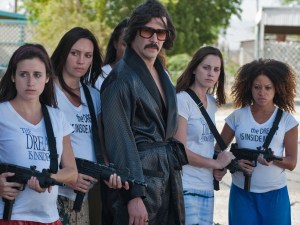
Javier Macarro (David Castañeda) is raising his daughter, Eve, in a large waterfront mansion home, where he dotes on and adores her. One night, their home is invaded by a man (Gabriel Byrne) who intends to kill Javier and return Eve to her mother’s family, citing that Javier had no right to steal her away. Javier manages to kill all of the man’s henchmen but their leader escapes, and Javier succumbs to his wounds. This prompts the arrival of Winston (Ian McShane), the manager of the New York Continental, who delivers Eve to the Tartakovsky Theatre and its Director, in the hopes that she might find her place in the world of assassins in which her father was raised. Twelve years later, Eve (Ana de Armas) has spent all of this time learning both ballet and the art of delivering death, although she’s struggling with the latter more than the former. After a pep talk from mentor Nogi (Sharon Duncan-Brewster) in which she is encouraged to “fight like a girl” (i.e., dirty), and when she eavesdrops on the conversation between John Wick and The Director in JW3 and then asks the man himself for advice, Eve starts to gain the upper hand over her opponents. After passing her final test, gets her first field deployment as an escort for the daughter of a rich man whose enemies may attempt to abduct and ransom her. After an impressive action sequence in an icy nightclub called -11, her getaway is foiled by the sudden appearance of an assassin whom she manages to subdue, discovering that he has the same scarification that her father’s would-be killers had. The Director refuses to reveal any information, which leads Eve to cash in on her connection to Winston, who points her in the direction of a mysterious man hiding out at the Continental in Prague (Norman Reedus) who might be able to tell her more. 

Strangely enough for these movies, the mythbuilding that has occasionally been a stumbling block for the series as it grew is hamstrung here. We eventually learn that Byrne’s character is the “Chancellor” of a cult that makes its home in the seemingly quaint European mountain town of Hallstedt, but while we hear about this cult over and over again, we never get any real idea about what their beliefs or goals are. There’s an electrifying scene early on in which Eve is put to her final graduation test at the dance academy, which sees her put in a room at a table with two disassembled guns, and another woman (played by Rila Fukushima, who is always welcome on my screen) enters, clearly furious and distraught that she’s been reduced to “a test.” When Eve asks her who she is, she tells her that she’s Eve, “in ten years.” Then a timer starts and she starts assembling the gun and … all we know is that Eve passed. When arriving at Hallstedt, all we learn about the people living there is that (a) no one is allowed to leave, and (b) it appears to serve the purpose of some kind of retirement home for past killers, where they can settle down and raise children. Other than the fact that you can check out any time you like but can never leave, there’s no indication that the so-called “cult” has any foundational beliefs or ideologies, and there’s a real missed opportunity there. Also, since most of us have seen John Wick 4, we know that John is destined to die, and sooner than later. Here, the film gives us two potential endpoints for Eve’s journey that show she doesn’t have to follow the same path that he does—retirement or “retirement”—but the film doesn’t seem all that interested in developing either of these ideas. They might be saving it for the sequel, but as a man who always loves fiction with cults in it, I was a mite disappointed that we never learned that the cult worships a personification of Death or is preparing for some kind of evil version of the Rapture, or anything else that would make them a “cult” and not a convenience for the narrative. Even the familial connections that we learn Eve has in Hallstadt are pretty obvious and end up being pretty irrelevant within minutes of learning them, and it wouldn’t be a Hollywood script if Eve wasn’t offered something tempting to her followed by someone making the obvious joke (which probably hits so hard if you’re stupid). 

The action here is stellar, as always. I was hoping that we would get to spend a little more time with Eve’s learning curve, and that is an element. The thing about John Wick is that he’s an unstoppable force. You might be able to slow him down a little but, but you can never stop him, and the franchise is built entirely around watching him utterly destroy everything that gets placed in front of him. It’s like the Mission: Impossible or Final Destination films in that way; you’re here to watch the same movie as last time and the time before that, and you’re going to like it. When I mentioned to a friend of mine that I was going to see this one, he said that he had tried to get into the first one and couldn’t, complaining “It’s just Keanu Reeves killing people,” and I replied that these are movies that are more concerned with the ballet of violence. Ballerina, naturally, is no different from the other John Wicks in that way, as we get to see Eve use a pair of ice skates in a way that Hans Brinker could never have imagined, tear through cultists with a flamethrower (ho ho ho), and utterly destroy a kill team that was foolish enough to bring guns to a grenade fight. While we do get to see her improve, it’s done in a fairly trite way, as Eve initially struggles to gain the upper hand in matches against her larger, male sparring partners, until Nogi tells her to “fight like a girl,” at which point she starts kicking dudes in the nuts and becomes the class’s top dog. It feels like a very 90s line and a very 90s cliché, but at least it gets a fun callback later when Eve, armed only with rubber bullets, shoots one of her attackers in the groin. Her evolution to killer happens fairly quickly over the course of a montage and by the time we see her in the field after a two-month jump, she’s almost unstoppable.

I suppose that this is better than watching her struggle a lot more than John does in his films, because the audience for these movies can trend a little toxic. I’m sure that the people who are already calling her a Mary Sue in some dark, roach-infested corner of the internet would have been complaining about her being a weak and ineffective hero in comparison to the unflappable Chad John Wick if we had gotten to see her spend a little more time on the road to becoming a finely tuned killing machine. Instead, the film plays it smart by showing us that Eve is fully dedicated and will push herself past her limits even when she falls short in her academic environment, such as it is, and then cuts to her displaying an almost John Wick-level of hypercompetence in the field of dealing death. Later, when her quest to avenge her father (and rescue a young girl whose father was willing to die to get her away from Hallstedt but who wasn’t as successful as Eve’s father) triggers a sharp exchange between the cult and the Roma Ruska with the promise of a war between them if Eve isn’t stopped, the Director calls in the favor John Wick owes her and sends him to Hallstedt. For her part, Eve is brave enough to try and fight him when he shows up on the scene, and although she’s giving it her all, it’s immediately clear that she’s completely outclassed by him. She’d be dead within moments if John wasn’t willing to hear her out and, sympathetic to her story, he gives her until midnight before he hunts her down. It’s a good balance that Eve seems just as implacable as John until she’s actually face-to-face with him in a combat situation and he’s completely unfazed, dodging her attacks without breaking a sweat. 

Beyond the aforementioned lack of depth given to the cult, my other big complaint about this film is that there’s just not enough ballet for a movie called Ballerina. We see Eve dance as a child and her tragic memento of her dead father is a wind-up ballerina, but after the opening credits, the ballet doesn’t come up again until the end, when Eve wistfully watches a performance by a former classmate who washed out (and fell back on her dream career of being a ballerina). I was really hoping that there would be a lot more dance-inspired action happening here, as would befit the title and concept. The film does seem more hesitant to show de Armas shooting people while Reeves was doing lots of gun-fu in his outings, which stood out to me a lot when her kit for her first mission is a non-lethal gun. We get to see her shoot a few people in Hallstedt, but until that point, we’re mostly limited to hand-to-hand combat, improvised weapons, and a whole lot of grenadery. I initially thought that this might be some old-fashioned Hollywood sexism happening in that they presume we won’t tolerate women being as violent as we allow men to be, but later in the film she burns dozens of men and women to death without flinching, which is even more horrific, so I’m not really sure. But given how much combat happened in the first half of the movie, would it have hurt to have Eve doing some pirouettes or en pointes somewhere to make her fighting style more distinct from John’s? In the moment in which she finds herself with a pair of skates in a boathouse and standing on the ice below the dock, I got terribly excited that we were about to see some ice dancing/fighting, but instead she just slices and dices. That’s all well and good (and hits hard if stupid), but it felt like a missed opportunity. This film could have been called Equestrian: From the World of John Wick and been about a girl’s riding academy that was secretly a cover for murder training and the effect on both the plot and the action would be negligible. If we go back to this well again, maybe we’ll get to see it next time. 

-Mark “Boomer” Redmond

The Prince of Pennsylvania (1988)

We’ve said it before around these parts, but it bears repeating: Tubi really is the people’s streaming service. While recently browsing through the “leaving soon” section of the app after rewatching the underrated Earth Girls Are Easy, some friends and I stumbled across a movie none of us had ever heard of entitled Prince of Pennsylvania. As the service auto-played a scene from the movie, we did a quick review of its credentials: a staggeringly low 14% approval rating on Rotten Tomatoes, and a caustic Roger Ebert review of not just the movie but the trend in which the movie is a participant and society as a whole (he’s just like me!). We gave it a shot, partially because my best friend loves to needle her boyfriend about the acting talents of one Keanu Reeves (a trend that started after we all watched Francis Ford Coppola’s Bram Stoker’s Dracula a little while back) and partially because, well, it’s been an arctic vortex, and what else can you do? 

The film follows Rupert Marshetta (Reeves), a recent high school dropout in the coal town of Mars, PA. His mother Pam (Bonnie Bedelia) has had only one wish for him and his brother their entire lives, which is that neither of them would end up working the mines like their father, Gary (Fred Ward). For the time being, Rupert is living in his parents’ garage, which is filled with various gizmos that the boy has built, and working at the local ice cream shoppe owned and operated by disillusioned hippie Carla (Amy Madigan), on whom he has a crush despite her on-again, off-again relationship with “Trooper” Joe (Jay O. Sanders). As the film opens, the philosophy-quoting Rupert goes to a junkyard and happens upon some bikers, and a biker girl close to his own age gives him a (very stupid looking) punk haircut, just before he is supposed to attend the christening of the most recent addition to the neighboring Sike family, which enrages his father. Things in Rupert’s life get turned even more upside down when several major life events happen in succession: he follows his mother to a run-down trailer that belonged to Gary’s father and discovers her in a secret tryst with new father Jack Sike; he and Carla sleep together after her most recent split from Trooper Joe; his father reveals that he has gotten an offer for his father’s old land that will change the life of the family immeasurably; and, finally, a fire in the mine traps Gary and Jack below ground where the latter, believing that they are about to die, confesses his affair with the former’s wife. 

In his review, that lovable curmudgeon Ebert laments that this movie represents a then-contemporary movie trend that “forces realistic characters into an absurd plot, and expects us to accept the plot because we believe in the characters.” And he’s not wrong about that; the film does have a bit of a tone problem. You see, the complicating action is that Rupert hatches a plan to get himself and his mother out from under their father’s thumb by kidnapping his father, under the assumption that this would somehow allow his mother to convince the courts to let her sell Gary’s valuable land in order to pay the ransom, which Rupert would collect and then split with her. He doesn’t loop her into this plan until after he and Carla have already gone through with the kidnapping; once Pam is informed, she attempts to go along with it, only to learn that Gary already sold the land and took payment in cash, which complicates the plan. 

It’s an utterly absurd premise that is completely at odds with the extremely grounded nature of the relationships at play and the characterizations of the people we’ve met. We learn a lot about each of them, and what motivates them. All Gary wanted was to give his own children a better opportunity than he had growing up in his father’s little trailer, and although they are better off, his inability to connect with (or even understand) his eldest son pushes him to a breaking point, and the revelation that his wife has been infidelious enrages him further, as if the two of them are in some kind of conspiracy together to make him angry when it’s his inability to let go of his fantasy of how things “ought” to be that has driven both of them away. (It’s worth noting here that his speech about this is where he mentions that he thought of himself and Pam as the “king and queen of Pennsylvania” with Rupert as their prince who would inherit everything one day, and it’s one of the worst, most belabored title justifications that I have ever encountered, made only worse when it is called back to in the film’s final moments.) Carla’s life is no picnic either; she and Trooper Joe used to live in another state where they had an affair that resulted in the birth of a little girl, whom Carla turned over to Joe and his wife to raise. The couple moved out of state and by the time that Carla was able to save enough to move closer to them to be nearer to her daughter, they had already divorced and Joe didn’t fight his ex-wife for custody of his and Carla’s child. 

The film is excellent at creating rich, full backstories for its characters, and I’m not surprised that Ebert found the tonal dissonance between this and the goofy kidnapping plot to be an insurmountable problem when trying to enjoy the story. “Give me a great big break,” he wrote. “A movie about any of these people might have had a chance, if the filmmakers had retained a shred of sanity.” I don’t have that same problem, however, because (whenever we aren’t getting backstory about Carla’s baby and Gary isn’t smacking his wife around after finding out about her adulter) this movie is one of the most genuinely funny comedies that I have ever seen. Reeves is adorable in his role as a hapless, gifted-but-aimless layabout teenager whose lack of ambition is only matched by his lack of opportunities. From the moment that he shows up with his (very, very stupid) punk haircut, it’s impossible not to enjoy his antics, whether he’s futzing about with the light-up ice cream cone on top of Carla’s shoppe, running from a burly man in a towel after knocking the guy’s coffee out of his hand as a distraction while Carla impersonates Gary for the sake of the kidnapping plan, or playing at espionage, he’s utterly magnetic and a total joy to watch. 

There are two scenes here that will stick with me forever. The first is an amazing setpiece; following his interruption of the altercation between his parents that results in a physical fight with his father, Rupert goes to the ice cream parlor and sees Trooper Joe’s car, enraging him, and then he is baited by some kids on the way to their homecoming dance. Angered, Rupert goes to the bikers from the opening scene and invites them to come raise hell at the dance, which is themed “Nights of Dallas” (“You can’t come in here unless you’re dressed from Dallas or Dynasty,” says the ticket-taking girl who wonders where he’s been all year). It’s all very hilarious and tacky and Texan, with the band performing in front of a giant Texas state flag while wearing cowboy hats, a punch bowl shaped like an oil derrick, a papier-mâché armadillo the size of a VW bug, and a model drilling platform that’s got to be over two stories tall. The whole scene is a delight even before Rupert is chased offscreen while trying to make a quick getaway. But what really made me fall out of my seat laughing was a scene in which Carla, wearing a trench coat and a Freddy Krueger mask to disguise herself while taking care of the kidnapped Gary, attempts to keep the man calm with written messages that have a very distinct and recognizable style from her restaurant. It’s comic gold, and I’m still laughing about it days later. 

By the time that you read this, The Prince of Pennsylvania will likely be long gone from Tubi, but it seems like exactly the kind of cheap, easily licensed movie that will end up on another streaming service sooner than later. Adjust your expectations before going into it, and you’ll have a good time. Or just fast forward to the homecoming and kidnapping scenes; I’m not your dad.

-Mark “Boomer” Redmond

John Wick: Chapter 4 (2023)

John Wick is back, folks. If you remember (and why would you, it’s been 4 years since the last one of these), at the end of John Wick 3, our antihero took a bullet and a tumble off of the New York Continental Hotel so that his friend Winston (Ian McShane) could maintain his management of the aforementioned locale. The Continental is part of the underground masquerade of the world of high class assassins, and Wick is being targeted for failing to uphold one of their many intricate rituals and rites, with Winston having sacrificed his position within that hierarchy to help his friend, a favor that Wick repaid by letting Winston shoot him in front of an Adjudicator so that Winston appears to maintain his allegiance to the so-called “Table,” which oversees this underworld. This appears to have been for naught, unfortunately; now, some half a year or so after being taken into the care of the Bowery King (Lawrence Fishburne), Wick has recovered and, before the ten minute mark, finds and kills the Elder, the only person who “sits above The Table,” resulting in Winston being confronted by a Harbinger (Clancy Brown) who tells him that the NY Continental has been deconsecrated and will be demolished, which is done within the hour. Our protagonists now have a new adversary, the Marquis Vincent de Gramont (Bill Skarsgård), a French aristocrat with a house-sized closet full of nice suits who has been empowered by the other members of The Table to bring John Wick down, based on his vow to do so by any means necessary. Wick, now (once again? still?) on the run from The Table and their machinations, must slay his way through armies, mercenaries, and mooks in pursuit of freedom from his debts to leaders of this underworld. This time, his flight is complicated by two players who are new to us: an upstart known only as The Tracker (Shamier Anderson) whose calculated pursuit of Wick is based on trailing him without apprehending him while waiting for the bounty on Wick’s head to get bigger and bigger; and Caine (martial arts legend Donnie Yen), a sightless assassin who is also John’s old friend. 

The third installment in this franchise was a little … muddled. I lumped John Wicks 1-3 all together into the #40 slot on my list of the best 100 films of the 2010s. I stand by that ranking, although after a few years, they have started to blend together a little. On the way to the theater to see 4, I mentioned to my companion that I was disappointed that Adrianne Palicki had been killed off and would not be reappearing, and was fairly insistent that this happened in the second film, when it actually happened at the end of the first. I also noted that there was a lot of time in Italy in the third film, but that was also a mistake; the Rome stuff is all in John Wick 2. I was still riding high on my experience of watching the third one when I wrote the blurb in the above-linked piece, because looking back now, the third one is difficult to recall, with its rapidly shifting locales and less cohesive storytelling that seemed intent on forcing as many celebrity cameos as possible, with the two things I remembered most being Anjelica Huston as the leader of an academy of ballerina-assassins and Halle Berry’s training of attack dogs that liked to go for the groin . Fortunately, although this film introduces more elements of the secret underworld that exists below and throughout the world that we civilians inhabit (Harbingers, one-on-one duels that are part of “the old ways” unto which even The Table are beholden, and even a Paris-based radio station that keeps listeners updated on bounties in between covers of apropos music), they’re much easier to follow than they were in the last installment. Wick can clear his debts with The Table if he kills the Marquis in a duel, the duelists are allowed to choose champions, etc. 

Of course, that’s not what most of this film’s audience is here for. I saw this on a Tuesday night, which isn’t exactly a prime movie night for most people, and there were perhaps twenty people in the screening other than my party, mostly college-aged men who came with their buds and several couples (although I guess I’m playing into heteronormative biases by assuming that none of the pairs of men who came to see the movie together weren’t couples, but I digress). My companion and I laughed much more than the others, and I firmly believe that the laughs we experienced were intentional jokes that simply flew over the heads of the others who were present; they did laugh, but only at some of the more crass jokes, with the most notable being that Tracker’s dog lifts his leg and pees on the corpse of a dog-hating assassin who recurred throughout the film, while many of Wick’s dry subtle jabs elicited not a peep. They’re here for the killing! And boy howdy, was there a lot of it. While I find the criminal underworld in these movies fascinating, there’s no denying that they exist primarily as a vehicle for extended (very, very cool) sequences of hyperviolence and novel martial artistry. 

John Wick 4 delivers on this, with various set pieces that thrill for minutes at a time (ages when it comes to screen time) without ever becoming boring or tiresome. After a great sequence in the Osaka branch of the Continental, we also experience a breathtaking fight that takes place in a Berlin nightclub that features multi-story waterfalls; at one point, there’s a shot of Wick being held by the lapels while his assailant punches him in the rain, and all I could think about was how much more satisfying this Matrix-esque image was than the actual Matrix sequel we got a couple of years ago was. The last hour of the film is one long fight as Wick tries to make his way to the Sacré-Cœur through a succession of Paris landmarks (the cowardly Marquis having hedged his bets by putting out a bounty that encourages all of Paris’s assassins to try and get to Wick, which the Marquis hopes will prevent Wick from making it to the duel in time and thus forfeiting). Each has its own distinctive flair: a battle that rages between Wick and his attackers, some in cars, some not, amidst the traffic flowing around the Arc de Triomphe; an impressively choreographed fight involving fiery shotgun blasts that is photographed entirely from above; and, finally, a grueling fight to climb the 222 stairs to the entrance of the Sacré-Cœur, which plays out like a brutally violent game of chutes and ladders. 

If I had one disappointment, it was in the lack of the late Lance Reddick in the film. There was a projectionist error at my local theater, resulting in the film already being played when I entered the theater several minutes before showtime, and I saw a pivotal early scene that, once the film was rolled back and played at the correct start time as planned, turned out to fall about 15 minutes into it. From that point on in the film, Reddick does not appear, and this was a shame. I was a huge fan of Fringe during its initial run (and I still am, in case that wording is confusing) and my erstwhile roommate and I watched The Wire in 2018 and it was every bit the masterpiece I had always been told. I was deeply saddened to learn of Reddick’s untimely death just a week or so ago, and I was looking forward to getting to see more of him in this, one of his last roles. I’m always hesitant to fall into even the slightest of parasocial relationships with media figures, but I can say without equivocation that he was a damn fine actor; in fact, many years ago, when I was fancasting a Star Trek: The Next Generation reboot in the vein of JJ Abrams’s films (before Paramount opted to go back to the franchise’s roots), I thought he would have made a perfect Picard. Although we will never get to see that now, I will miss seeing him. May he rest in peace. 

Perhaps our real world is violent enough without these fantasies, but maybe there is a place for this, too, in our cultural landscape. But if John Wick movies are something that you love, this one is another jewel in the crown. 

-Mark “Boomer” Redmond

The Matrix Resurrections (2021)

There’s a brilliant sequence in RoboCop 2 where a boardroom full of market testers discuss what a new & improved RobCop should look & act like. Their conflicting input confuses his already perfected programming & design, rendering the rebooted RoboCop 2.0 entirely useless.  It’s a hilarious example of a movie sequel arguing against its own existence, mocking the concept of diluting a pure, original concept with a profit-obsessed aim for mass appeal.  Given RoboCop 2‘s general reputation as an empty-headed misfire, I’m not surprised that The Matrix Resurrections is proving to be a divisive work among general audiences, since it expands that exact brand of self-loathing meta-humor into a feature-length screed against corporate franchise filmmaking at large.  The Wachowskis reportedly did not want another Matrix film to happen, but Warner Brothers was going to reboot their iconic cyberpunk series with or without their input.  Lana stepped in on her own to save their work from falling into the wrong creative hands, then used the opportunity to condemn the very idea of making a nostalgia-bait Matrix sequel in the first place.  Using Neo as an avatar, she practically stares directly into the camera to declare, “This movie should not exist,” in open defiance of the IP-addicted movie industry that forced her hand.  It’s as hilarious now as it was in RoboCop 2, and in this case the critique is drawn out to feature length.

The opening fifteen minutes of Resurrections plays like a worst-nightmare scenario of what a 2020s Matrix sequel could be.  New, hip, young characters revisit and replay exact scenes from the original 1999 movie, trading quips about how totally awesome Neo & Trinity were in their time.  It’s an escalation of the callbacks & Easter eggs that superhero nerds crave in each new big-budget fan-pleaser, turning those cheap nostalgia pops into full-on cosplay & highlight reels.  Not only is that obsession with past triumphs a disappointing turn for a series that felt genuinely revolutionary when it premiered, but it’s also self-defeating in the way it draws comparisons between the original film’s exquisite fight choreography & cinematography and the blurry, incoherent mess of Resurrections’s own action sequences.  Then, that disastrous opening sequence is revealed to be a video game simulation designed by a still-alive Neo himself (rotting at another miserable desk job in-Matrix under his deadname, Thomas Anderson), and Resurrections starts editorializing about those modern industry-standard shortcomings in soulless, movie-by-committee sequels.  It turns out the film is not the worst-nightmare version of The Matrix 4; it’s Lana Wachowski’s New Nightmare: a platform for her to reflect on the core philosophy of her most iconic work while lashing out at a movie industry that seeks to dilute & pervert it for an easy cash-in.  It’s an A+ prank, both on the audience and on the higher-ups at Warner Brothers.

It may be a stretch to assume that Resurrections‘ unwieldy 148min runtime was also a metatextual joke about the cumbersome length of modern Hollywood action franchises (or maybe not, considering that it taunts the audience with an ironic post-credits punchline after a 15-minute scroll).  Either way, I appreciate that Wachowski never drops her searing industry commentary once she gets into the thick of the film’s actual plot.  She approaches the ongoing philosophic & romantic conflicts of The Matrix‘s core players—Neo & Trinity—with full, open-hearted sincerity.  She just frames the doomed revolutionary couple’s strive for a happy ending as a heist plot, where she (again, through Neo) has to infiltrate her movie studio’s evil lair to rescue their fairy-tale romance before it’s killed forever.  Along the way, she continually cracks meme-culture jokes about bots, MILFs, Handsome Chads, “binary” code, and Arthur Read’s clenched fist – never letting up on her meta-commentary on the way movies and the Internet have changed in the two decades since Neo chose the red pill.  Wachowski may open Resurrections arguing “This movie should not exist,” but she follows it up with a “But while we’re here . . .” addendum that allows her to sincerely grapple with the lives & loves of characters she’s obviously still emotionally & creatively invested in.  It’s a volatile mix of sincere sentimentality and ironic shitposting, one that’s sure to alienate plenty of uptight nerds in one or both directions.

I was not this enthusiastic about The Matrix Reloaded or The Matrix Revolutions when James & I revisited them for the podcast last year.  I really wanted to join the freaks on Film Twitter in reclaiming those back-to-back sequels as something that was wrongly dismissed in their time, but they really are exhaustingly dull – especially considering how vibrant the original film still feels.  Some of the action in the earlier sequels is delightfully over-the-top, but for the most part they turn what started as a very simple, tactile sci-fi allegory into trivial superhero fluff.  The Matrix Resurrections is their functional opposite.  This time around, the action is underwhelming, but the ideas are explosively combative in a way that totally makes up for it.  Fans who’ve swooned for every entry in this series are going to be over-the-moon for its epic Neo-Trinity romance plot no matter how they feel about the film’s self-critical meta-commentary.  I’m here to report as a Matrix-sequel heretic that the film is a triumph no matter how invested you are in that emotional core; it’s the most I’ve appreciated a Wachowski movie since The Matrix ’99, entirely because of its cynicism over how the world (and the movie industry in particular) has gotten worse since 1999.

-Brandon Ledet

Bill and Ted Face the Music (2020)

Bill & Ted Face the Music finds our lovable slacker buds, William S. Preston Esq. (Alex Winter) and Theodore Logan (Keanu Reeves), still at the great work that Rufus (the late George Carlin) foretold for them: the song that would unite the world. They’re also middle aged, with daughters of their own, named for the other: Wilhelmina “Billie” Logan (Brigette Lundy-Paine) is dark-haired, shy, and androgynous like Ted, while Theadora Preston (Samara Weaving) is blonde, confident, and hyperactive like Bill. The film opens on the wedding of Missy (Amy Stoch), who was once our hapless duo’s babysitter, then was Ted’s step-mother, then Bill’s step-mother, and is now marrying Ted’s younger brother Deacon (Beck Bennett, taking over for Frazier Bain). At the reception, Bill and Ted plan to perform the first three movements of their latest composition, entitled “That Which Binds Us Through Time: The Chemical, Physical, and Biological Nature of Love and the Exploration of the Meaning of Meaning — Part 1,” and it starts with throat-singing and theremin, so I’m on board, but it’s not a crowd pleaser. At the suggestion of their wives, the princesses (Erinn Hayes and Jayma Mays), Bill and Ted attend couple’s therapy with their respective spouse, as a quartet. 

Meanwhile in the future, time and space are falling apart. Rufus’s daughter Kelly (Kristen Schaal) and widow The Great Leader (Holland Taylor) have different interpretations of the prophesied Wyld Stallyns song, with the latter believing in her father’s vision of universal unity through the power of music, and her mother hoping to put things back on track by reluctantly killing the Stallyns. To that end, she sends a time-traveling murderbot (Anthony Carrigan) to hunt them down across space and time. Learning about the dire situation, Bill and Ted steal their old phone booth time machine and move progressively forward in time along their own lifelines in an attempt to acquire the song from their future selves. Meanwhile, Billie and Thea travel through time to acquire various historical musicians (and Kid Cudi) in preparation for the performance. 

The sad thing about Face the Music is that, all too often, Bill and Ted are the least interesting things in it. This movie made me feel young, and then it made me feel old, and then it made me feel young again, but not in a way I was happy about. There’s just a little too much happening here, in a sequel to a movie that knew just how many juggling pins it could keep in the air at one time, and there are too many narrative threads. Offscreen, the princesses have been invited by future versions of themselves to see all of space and time and see if there’s any way they can actually be happy in their marriages to the men of the title (not to sound too much like the boys, but, like, that plot is majorly a downer). Meanwhile, the daughters are having their adventure, which is a mixed bag; Weaving and Lundy-Paine are both great here but are sometimes forced into delivering dialogue that hits the ear with neither subtlety or comedy. They have a kind of abridged version of Excellent Adventure as they collect Mozart, Hendrix, and Louis Armstrong (Daniel Dorr, DazMann Still, and Jeremiah Craft) and others, to form a supergroup rather than for a history project, but each encounter feels more expository than fun. They encounter one instance of resistance in their plot and overcome it almost immediately, then have nothing but easy success from there on out, which doesn’t make for a compelling watch. Conversely, each future version of the adult Bill and Ted is drunker and less helpful than the last, and these encounters go on for too long (especially in 2025), making the whole thing feel more like a labor than a good time. Then, as if that weren’t enough, we get a slight rehash of Bogus Journey with a trip to Hell, where the guys, their daughters, several time-displaced musicians, and Ted’s dad once again meet up with Death (William Sadler) to get back to the world of the living in time to perform the song and prevent the end of existence as we know it–because, if there’s one thing you have to remember, it’s this: the clock in San Dimas is always running. 

I didn’t even get into the plot that’s running concurrently in the future in which The Great Leader keeps getting summoned into the same amphitheater to look at the hologram of space and time (represented as the earth as a turntable, with a record deck at the equator like Saturn’s rings) to fret, which seems to happen nearly half a dozen times. In an overstuffed movie, it’s crammed in there too for some reason but there seems to be a disconcerting lack of a narrative purpose for us to keep going back there. Obviously one would want to get their money’s worth when hiring Holland Taylor, but from a story standpoint, there’s just no reason to keep doing this; a ninety-three minute movie shouldn’t have 125 minutes of plot crowding it up like the suitcase of a Looney Tunes character, as it leaves no breathing room and creates the situation mentioned earlier, in which character dialogue is rushed and overly expositional.  

I loved Bill & Ted in my youth, and no one wanted this movie to be better than I did. There are a few solid jokes here, but even some of the best are in service of generating a nostalgic feeling, which isn’t the wrong way to go with this particular franchise, but could have been scaled back by about 35% and had both more room to breathe and been just as effective. Lundy-Paine and Weaving are doing a lot of heavy lifting, and they’re up to most of it, but there are lines that they’re asked to sell that are simply impossible to pull off, and while Reeves has continued to carve out a niche for himself with John Wick and one-off minor roles in things like Neon Demon, Alex Winter has remained largely out of the public eye, mostly making documentaries. It’s great to see him here; he seems to be having the most fun of anyone, and it’s infectious, even when the film drags. It’s a less than delightful end(?) to a franchise that had a better ending in Bogus Journey.

-Mark “Boomer” Redmond

Keanu Reeves is a Most Excellent Asshole

Keanu Reeves is having a most excellent summer. Shortly after the pulpy sci-fi dud Replicas drifted through American theaters barely noticed, like a silent fart, Reeves has bounced back into audiences’ good graces with a triple onslaught of well-loved features. Between his starring roles in the increasingly popular action series John Wick 3 and his bit-part stunt-casting in Toy Story 4 & the straight-to-Netflix romcom Always Be My Maybe, it’s been a veritable Summer of Keanu. An actor that was one widely derided as being a one-note, rangeless goofball (especially in his earliest castings in period dramas) is finally getting his due as a loveable, enigmatic screen presence that’s been putting in great work in risky projects for three decades now – an action star of the people.

All of this Keanu love has spilled over from adoration of his work into a rhapsodic appreciation of his real-life persona. This is the year Keanu was officially declared to be The Internet’s Boyfriend, with unusually positive online warmth expressed for how often he works with female directors, how respectful he is of women’s personal space during photo ops, and his loyalty to his martial arts collaborators from his earliest days as an action star. Whatever affection we felt for the endlessly watchable goofball in the relatively ancient days of the Sad Keanu meme has now built to a raging forest fire of online lust & obsession, to the point where we’re even intently listening to his personal philosophy on Death & The Afterlife. You can feel it here locally too, where set photos of a (newly beardless) Keanu during local shoots for Bill & Ted Face the Music has people vibrating with pure love for him (when not concerned about his safety running around in the New Orleans summer heat).

The only downside to all this pure, gushing Keanu love is that it emphasizes how valuable he is as an aloof West Coast heartthrob with an adorable stoner demeanor. Part of the reason we think of Keanu Reeves as a one-note actor is because his early success as Ted Theodore Logan forever typecast him as an adorable bimbo. He’s gradually been able to divert that loveably aloof screen presence into an unlikely career as an action star, but it’s not the only mode Keanu Reeves can play. In fact, some of his most effective, memorable turns onscreen have been against type as monstrous, unrepentant assholes. By all accounts, Keanu Reeves is a wonderful, kind, thoughtful person in real life. He can be a world-class villain when we set him loose onscreen, though, and it’s a shame he doesn’t have the opportunity more often.

Listed below are five stand-out roles where Keanu Reeves excelled at playing a garbage human being, despite his loveable real-life persona. There weren’t many options to choose from (especially if you don’t include grey area selections like his unscrupulous lawyer in The Devil’s Advocate or his adulterous DJ dad in Knock Knock). I’m also ashamed to admit that I didn’t seek out personal blindspots like Much Ado About Nothing (in which he plays a dastardly rogue) and The Watcher (in which he plays a serial killer) before writing this. Still, I believe this quick list of villains Keanu Reeves characters can alone serve as proof that The Internet’s Boyfriend can be an effective, chilling creep when given the chance. He’s more than just a pretty face and a kind stoner-philosopher soul. The man has range. He can be a total asshole.

1. The Neon Demon (2016) – Keanu’s vilest scumbag might be his bit role and Nicolas Winding Refn’s fashion-world art-horror satire. In the film he plays an unforgivable sleazy motel manager in the dingiest corner of LA, preying on the underage runaways who hide away from their parents & obligations while chasing dreams of being a star. There aren’t many things in this world that can make Keanu Reeves grotesque in our adoring eyes, but hearing him advertise access to a young girl’s body as “Real Lolita Shit” will just about do it.

2. The Gift (2000) – The only title I can conjure where Keanu’s anywhere near as despicable as he is in The Neon Demon is his turn as an abusive husband in Sam Raimi’s psychic-visions murder mystery The Gift. He’s powerfully despicable as an alcoholic wife-beater in this sweaty, supernatural thriller. Plus, you get the added bonus of seeing him play a caricature of poor Southerners so broad it would feel at home in an (uncharacteristically dark) SNL sketch.

3. Bill & Ted’s Bogus Journey (1991) – One of the most conveniently concise visualizations you’re likely to see of Keanu acting against type in these villain roles is the one where he gets to villainize himself. In the unhinged, absurdist sequel to the popular 80s time-travel comedy, Keanu plays both Ted Logan and his evil robot doppelganger, who kills the “real” Ted early in the first act. It’s remarkable to watch how easily Keanu curdles Ted’s mannerisms into something so, so very punchable in the dual role (but not too remarkable if you keep in mind the real Bill & Ted’s alarming comfort with homophobic slurs).

4. The Bad Batch (2016) – I wasn’t especially in love with Anna Lili Amapour’s daylight cannibal horror when I reviewed it, but Keanu’s role as the film’s big-bad does stand out as one of its highlights. In the film, he plays a Jim Jones-style cult leader who exploits the devotion of his followers for sexual satisfaction & greedy financial gain. It’s terrifying to think about, since the real-life Keanu could easily rope us all into a desert-dwelling drug cult if he really wanted to. Easy.

5. Always Be My Maybe (2019) – Like with The Bad Batch, I had major problems with the tone & structure of this straight-to-Netflix romcom – which was shot & edited with all the auteurist passion of an overlit Burger King commercial. Still, it’s worth watching for Keanu Reeves’s stuntcasting as “Keanu Reeves,” an extensive cameo where he mercilessly makes fun of his own public persona by making himself out to be an out-of-touch, ultra-wealthy douchebag. Yes, Keanu is The Internet’s Boyfriend, but like most boyfriends he has the capacity to be a total tool.

-Brandon Ledet

Puzzle of a Downfall Demon

In terms of its structure, tone, and imagery, the 1970 mental breakdown drama Puzzle of a Downfall Child is a daring, singular creation. Inspired by real-life interviews with a mentally fraught fashion model and filtered through her distorted recollection of real-life events, the film conjures a dissociative space between reality & fiction. Faye Dunaway is, on a practical level, the most unreliable narrator imaginable as a fashion model who can’t even trust her own recollection of past events, since her mind often defensively softens or alters the truth to protect itself. Her narration doesn’t sync up with the logic of the imagery it accompanies, and the exact nature of the Patriarchal trauma that snapped her mind is only vaguely hinted at as the film expresses her mental anguish through giallo-flavored sensory experimentations. For all that dissociative play in form & tone, however, the basic premise of the story it tells is an echo of a fairly ubiquitous trope in Hollywood narratives. This story of a beautiful, naïve young woman being chewed up & spit out by the entertainment industry is a classic template in mainstream filmmaking. From the sappy melodrama of The Valley of the Dolls to the twisted, excessive camp of Beyond the Valley of the Dolls, the story of Fame destroying a young starlet’s mind & body has seen an expansive range of cinematic interpretations. As formally daring as Puzzle of a Downfall Child can be, the macro view of its basic plot is yet another entry in that expansive canon.

Curiously, the best example I can think of where a film actively subverted the power dynamics of this trope is also specifically set in the fashion industry. My favorite film of 2016, The Neon Demon, was yet another entry into the woman-destroyed-by-fame canon, but it actively disrupts the usual power imbalances of the “genre.” Much like Faye Dunaway’s troubled protagonist in Puzzle of a Downfall Child (and hundreds of other fictional starlets besides), Elle Fanning stars in The Neon Demon as a young fashion model with big dreams and empty pockets. The wolves of the fashion industry – photographers, designers, agents, makeup artists, other models, etc. – surround her with ravenous intent in all the traditional ways, but what The Neon Demon engages with that most other adoptions of this genre template don’t is that there is a power inherent to that attraction. Elle Fanning plays the typical corrupted fashion model archetype in the film, right down to a violently tragic end, except that she acknowledges and shamelessly revels in the power her youth & beauty afford her in the industry. She warns, “I’m not as helpless as I look,” and often gains confidence & power in her lengthy stares into the mirror. When a fellow model asks, “What does it feel like to walk into the room and it’s the middle of winter and you’re the Sun,” she responds, “It’s everything.” Other characters around her pontificate “True beauty is the highest commodity we have,” and “Beauty isn’t everything; it’s the only thing,” even going as far as to single her out among other models as “a diamond in a sea of glass.” While most destroyed-by-fame narratives portray their gorgeous damsel protagonists as naïve & innocent, The Neon Demon mischievously plays around with the idea that there’s a power inherent to their alluring beauty, even if the result is ultimately the same.

As perversely fascinating as it is to see the young-starlet-in-peril enjoy the power her own beauty affords her in one of these pictures, it’s important to keep in mind that The Neon Demon is still honest about how outweighed & outnumbered its protagonist is in her industry. Just like in Puzzle of a Downfall Child, she’s immediately negged for her body (this time for a lack of plastic surgery) and her perceived naïvete. Her agent says, “I think you’re perfect. I would never say you’re fat,” in their very first meeting. She’s alone with no money and no social safety net in a motel run by a pedophilic rapist (Keanu Reeves playing drastically against type). There’s no explanation of her backstory and how she arrived in Hollywood with no family to speak of, but it’s not too difficult to her imagine her homelife was just as abusive as the one hinted at in Puzzle of a Downfall Child. As it also plays out in that film, the one acquaintance she considers to be a friend (a lesbian make-up artist played by Jena Malone) pressures her for selfish sexual gratification instead of getting her the help she needs. She’s hounded from all directions, to the point where a literal, honest-to-God mountain lion appears in her bed, read to devour her. The difference between that hounded-from-all-sides pressure in this fashion model tragedy vs. how it’s handled in Puzzle of a Downfall Child is that Elle Fanning’s character isn’t afforded enough time to have a psychological break. Instead, she’s devoured alive by a supernatural world of vampires, cannibals, witchcraft, and necrophilia. That sounds like a pretty major difference on paper, but the overall effect of her arc is largely the same: a young, damaged woman tries to make a life for herself as an artist in the fashion industry and is unfairly destroyed for that ambition. Her resulting destruction just fluctuates between the mental and the physical, depending on the example.

In our original conversation about Puzzle of a Downfall Child, I mentioned that “Between its thematic discomforts, its deliberately disorienting relationship with logic, and its gorgeous visual palette, it’s practically a couple brutal stabbings short of being a giallo film.” Perhaps Blood and Black Lace would be the best place to look for a pure-giallo take on the fashion industry, but The Neon Demon follows Puzzle of a Downfall Child’s exact narrative template while fully indulging in the excesses of horror cinema: supernatural occultist threats, intense neon crosslighting, bathtubs brimming with blood & gore, etc. While pushing the narrative of Puzzle of a Downfall Child into a full-blown horror aesthetic, it also plays around with the traditional power dynamics of that story template in perversely exciting ways. They make for deeply fucked up, disturbing sister films in that way – high fashion descents into madness & bloodshed.

For more on June’s Movie of the Month, the 1970 mental breakdown drama Puzzle of a Downfall Child, check out our Swampchat discussion of the film.

-Brandon Ledet

Cruel Intentions (1999) Celebrates its 20th Anniversary. And its 31st. And its 237th.

The mildly kinky teen sex melodrama Cruel Intentions was a major cultural event for audiences in my exact age range. I doubt I’m alone in my personal experience with the film in saying that running my VHS copy into dust in the early 2000s actively transformed me into a burgeoning pervert (and passionate Placebo fan); it was a kind of Millennial sexual awakening in that way. Still, I was shocked & amused to see Cruel Intentions return to theaters for its 20th anniversary last month as if it were a legitimate cultural touchstone instead of a deeply silly, trashy frivolity that just happened to make the right teen audience horny at the exact right time. The commemorative theatrical experience was perfect, with fresh teens in the audience who had obviously never seen the film before gasping and heckling their way through the preposterous, horned-up picture in amused awe. I even somehow found new appreciation of & observations in the film seeing it projected on the big screen for the first time, instead of shamefully watching it alone in my high school bedroom. Some discoveries were positive: newfound admiration for Selma Blair’s MVP comedic performance; awe for how much groundwork is laid by the costume & production design; the divine presence of Christine Baranski; etc. Others haven’t aged so well: its flippant attitude about sexual consent; the teen age range of its central players; its casual use of homophobic slurs; and so on. The most significant effect this 20-years-later return to Cruel Intentions has had on me, though, was in convincing me to finally seek out the work that most directly inspired it – not the 18th Century novel Les Liaisons Dangereuses that “suggested” its writing, but rather that book’s 1988 film adaptation, which Cruel Intentions closely mimics to the point of functioning as a feature-length homage.

Winning three Academy Awards and overflowing with stellar performers at the top of their game (Glenn Close, John Malkovich, Michelle Pfeiffer, Keanu Reeves, Peter Capaldi and Uma Thurman), 1988’s Dangerous Liaisons is far more prestigious than Cruel Intentions, yet its own recent 30th Anniversary went by largely unnoticed. It’s just as overtly horny & sadistic as Cruel Intentions but combines those impulses with the meticulously staged pomp of lush costume dramas – recalling the peculiar tone of genre outliers like Barry Lyndon & The Favourite. Since they both draw from the same novel for their source material, it’s no surprise that this film telegraphs Cruel Intentions’s exact plot: Glenn Close exacts revenge on a romantic rival by dispatching John Malkovich to relieve her of her virginity before marriage (to ruin her with scandal), while Malkovich has his own virginal target in mind that presents more of a challenge (only to inconveniently fall in love with his chosen victim). What shocked me, though, is how much of Dangerous Liaisons’s exact dialogue was borrowed wholesale for the latter film, especially in early parlor room discussions of Close & Malkovich’s respective schemes. Furthermore, Ryan Phillipe’s performance in Cruel Intentions is apparently a dead-on impersonation of Malkovich’s exact line-deliveries & mannerisms, and his opening scene therapist (Swoozie Kurtz) also appears in Dangerous Liaisons as the guardian of one of his sexual targets (later played by Baranski). Cruel Intentions’s title card announcing that it was “suggested by” the 18th Century novel Les Liaisons Dangereuses plays almost a flippant joke in retrospect. The film is clearly a direct remake of its 1988 predecessor, just with some updated clothes & de-aged players to make it more commercially palatable to a late 90s audience. It’s no surprise that I was an instantaneous fan of Dangerous Liaisons on this first watch; I’ve already been a fan of it for two decades solid, just distorted through a late-90s lens.

Cruel Intentions arrived at the tail end of many classic literary works being reinterpreted as 90s teen romances: Emma in Clueless, The Taming of the Shrew in 10 Things I Hate about You, Othello in O, etc. The erotic nature of the source material makes Dangerous Liaisons an awkward candidate for that adaptation template, especially if you pause long enough to consider Selma Blair’s character’s age range as a high school freshman entering the scene . . . Many of its choices in how to update the material for a 90s audience makes total sense: gay sex, racial politics, drug use, etc. I was shocked to discover, however, that the incest element of Cruel Intentions (in which two siblings-by-marriage tease each other throughout) was a complete fabrication. Close & Malkovich are ex-lovers in Dangerous Liaisons, not sister & brother. It’s difficult to parse out exactly who Cruel Intentions was appealing to in that added layer of incest kink, then, since that’s not the first impulse that comes to mind in catering to modern audience sensibilities. Weirdly, that’s one of the film’s more invigorating additions to the Dangerous Liaisons lineage. Overall, there is a noticeable potency lost in the modernization. Characters peeping through keyholes, foppishly being dressed & perfumed by their servants, and firing off barbed phrases like “I’ve always known that I was born to dominate your sex and to avenge my own” feel like they’re getting away with something you can only do in period films, and Dangerous Liaisons benefits greatly from that setting. Still, the way Cruel Intentions translates that dated eccentricity to mocking the perversions of the young & wealthy with too much power & idle time is a rewarding conceit. They look & sound utterly ridiculous in their modernization of the exact horned-up affectations of Dangerous Liaisons’s central players, which is just as uncomfortable considering their age as it is appropriate for their level of privilege: the rich are ridiculous perverts, always have been.

Cruel Intentions is too trashy & commercially cynical to match the soaring heights of Dangerous Liaisons creatively, but I do contend that it admirably holds up on its own. No one in the latter film delivers anything half as compelling as Close’s Oscar-nominated performance of cunning sexual confidence, but Phillipe’s impersonation of Malkovich’s’ villainy is highly amusing in a modern setting. Similarly, Selma Blair’s campy performance as his youngest victim shares a direct lineage with Keanu Reeves’s wide-eyed naivete in Dangerous Liaisons; they both had me howling in equal measure and there wasn’t nearly enough screentime for either. I can’t objectively say that revisiting Cruel Intentions is worth your time if you didn’t grow up with it as a sexual awakening touchstone the same way so many kids of my generation did, but I can say that if you are one of those Millennial perverts, Dangerous Liaisons is required viewing. You already love it whether or not you’ve already seen it.

-Brandon Ledet

Replicas (2019)

Often, when we have fun watching “bad movies” for sport, we’re indulging in the over-the-top camp & below-par craft of outsider art: finding amusement in the handmade, weirdly delivered oddities that could never make it to the screen in more professional, homogenized studio pictures. The latest Keanu Reeves sci-fi cheapie (in a tradition that includes such esteemed titles as Chain Reaction & Johnny Mnemonic) is an entirely different, more rarified kind of “bad movie” pleasure. Replicas is less of an over-the-top, straight-from-the-id slice of schlocky outsider art than it is a confounding puzzle, the kind of “bad movie” that inspired the idiom “How did this get made?” There are a few laughs to be had at Replicas’s expense, but not as many as you may hope for from a dirt-cheap sci-fi picture dumped into an early-January theatrical release (when it obviously deserved the direct-to-VOD treatment). Chuckling at its robotic line-deliveries & Lawnmower Man-level CGI can only carry you so far in a movie that’s too somberly paced to fully support the MST3k-riffing treatment. Replicas does not amount to much as a laugh-a-minute camp fest, but it does excel as a puzzling piece of screenwriting, a bizarre act of storytelling so emotionless & illogical that there’s no recognizable humanity to it at all, as if its conception itself was a work of science fiction.

Keanu Reeves stars as a scientist & a family man, toiling away in a Puerto Rican lab on a research project meant to transfer human consciousness to A.I. machines. His closest collaborator, a perpetually nervous Thomas Middleditch, is simultaneously working on a seemingly unrelated project involving human cloning. When a freak car accident kills his wife & children, Reeves makes a panicked decision to combine the two projects, creating clones of his deceased family and importing the “neurological data” from their former selves, so it’s as if they never died. To its credit, Replicas almost establishes a genuinely unnerving source of tension there – finding chilling moments of unease as the dead family’s “living” replicas occasionally half-remember the crash that killed them as if it were a dream they once had. The movie isn’t especially interested in building on that theme, however, as it instead chases a go-nowhere conspiracy thriller storyline involving the company that paid for the cloning & A.I. research. Even that narrative thread is illogically patterned, however, delivering none of the usual payoffs you’d expect from its genre. Replicas ultimately feels as if it were written by a malfunctioning algorithm that became self-aware midway into the process and decided to self-destruct rather than construct a third act. Its various narrative threads & motions towards thematic reasoning are ultimately an act of total chaos, a meaningless collection of 1’s & 0’s. It’s oddly fascinating to behold as it devolves into formless nonsense, like listening to an A.I. machine babble as it loses power & effectively dies.

Keanu Reeves does deliver some traditionally funny “bad movie” line-readings throughout, recalling his befuddled family-man schtick in Knock Knock. His attempts to imbue pathos into lines like “I didn’t defy every natural law there is just to lose you again,” & “Boot the mapping sequence, Ed!” hit the perfect note of failed sincerity & meaningless one-liner script punch-ups. His wife (Alice Eve) sinks even further into inhuman “bad movie” performance than he does – speaking in a dazed, dubbed, robotic cadence about the difference between “neuro chemistry” vs. the human soul as if she were calling in a lunch order. Still, these moments of absurdly mishandled drama are too far spaced-out to recommend Replicas as a laugh-a-minute camp fest. The movie is much more enjoyable for the value of its bizarre construction as a piece of writing. Its mystery thriller tangents, loose Frankenstein-style themes of playing god, and desperate scramble to reach a coherent conclusion all clash spectacularly as its hopes for a clear, linear storyline fall to pieces before our eyes. Most so-bad-it’s-good cinematic pleasures are enjoyable because they offer a glimpse of humanity that shines through the usual machinery of professional filmmaking – whether in a poorly made costume, a wildly miscalculated performance, an unintentional expression of a creator’s id, or what have you. Replicas is a different kind of “bad movie” delight; it’s fascinating because it seems to display no discernible humanity at all, as if it were written by a machine on the fritz. Its only value is that it can be taught as an example of what not to do in a screenwriting class, or enjoyed for its puzzling questions of how & why it was made in the first place by the lucky few who mistakenly find themselves gazing at its confounding, cheap CG splendor.

-Brandon Ledet

Episode #68 of The Swampflix Podcast: The Devil vs. Keanu & The Witches of Eastwick (1987)

Welcome to Episode #68 of The Swampflix Podcast. For our sixty-eighth episode, we wrap up the Halloween season with The Devil himselves. James & Brandon are joined by Krewe Divine co-founder Virginia Ruth to discuss three movies in which Keanu Reeves goes head to head with Satan. Also, Brandon makes James watch The Witches of Eastwick (1987) for the first time. Enjoy!

-Brandon Ledet & James Cohn