The Funhouse (1981) as an Ideal, Forgotten Midpoint Between Tobe Hooper’s Texas Chainsaw Massacres (1974, 1986)

EPSON MFP image

We’ve been scratching our heads all month trying to figure out why Tobe Hooper’s grimy carnival slasher The Funhouse isn’t more of a household name. One of my theories was that Hooper had already changed the game years earlier with his weirdo slasher opus The Texas Chainsaw Massacre, inspiring so many similar oddball horror entries in its wake (Tourist Trap, for instance) that The Funhouse had a little too much company to stand out on its own as anything radical or idiosyncratic. By the time of its release the Tobe Hooper grime of The Funhouse was just a drop in really strange, hideously dirty bucket. Maybe that’s why Hooper’s next return to the slasher genre in The Texas Chainsaw Massacre 2 strived for a much campier, more colorful aesthetic than the original. It was a decision that (intentionally) pissed off a lot of fans at the time of its release, but led to a much more infamous work that’s still regularly discussed today, despite The Funhouse being the better movie overall.

The Funhouse was released more or less at the temporal midpoint between Tobe Hooper’s Texas Chainsaw Massacre films, which were separated by twelve years and a few wildly varied experiments from the director. 1974’s The Texas Chainsaw Massacre details a backwoods Texas family of chainsaw-wielding cannibals with a weird collection of skeleton art & Ed Gein-inspired modes of improving their self image. 1986’s The Texas Chainsaw Massacre 2 follows a very similar narrative structure, sometimes recreating exact scenes from the original, but punches them up with hideously shrill humor, jaw-dropping gore effects, and color-soaked camp spectacle. The Funhouse splits the difference, offering a more colorfully surreal setting for its cold-blooded violence than The Texas Chainsaw Massacre without aiming for the full-goof absurdism of The Texas Chainsaw Massacre 2.

Hooper’s career is wildly chaotic, haunted by ghosts, Martian invaders, sexy space vampires, and all kinds of other horror genre eccentricities that are worlds away from standard slasher fare. The Funhouse serves as a great, typifying middle ground for his difficult to pinpoint work that somehow captured the spirit of both of his violently disparate Texas Chainsaw Massacre films, while still pointing to the otherworldly quality of his non-slasher work. It doesn’t ever bring in the supernatural funhouse goofery of Ghoulies II, but The Texas Chainsaw Massacre 2 also remains grounded in the real world and that film stands as a strange slasher genre outlier in its own right.

It makes total sense that the original Texas Chainsaw Massacre film would have the biggest cultural impact in this trio. Not only was it the earliest & most financially successful title of the bunch, its humans-as-meat slaughterhouse horror is also more darkly humorous than it’s often given credit for. I do believe The Funhouse deserves a closer look than that film’s sequel, though. The gory kills and the cartoon energy of The Texas Chainsaw Massacre 2 have earned it an easy cult following in recent years (not to mention that it seemingly laid out the blueprint for Rob Zombie’s entire directorial career), but I think The Funhouse is more deserving of the attention. Instead of punching up and altering his original outlier slasher like in the sequel, Hooper found new, colorfully surreal ways to repurpose The Texas Chainsaw Massacre‘s energy in The Funhouse that should be regularly celebrated, but is instead largely forgotten. A month after watching it for the first time, I still can’t pinpoint exactly why.

For more on October’s Movie of the Month, Tobe Hooper’s grimy carnival slasher The Funhouse, check out our Swampchat discussion of the film, this comparison of its carnival-setting horrors with those of Ghoulies II (1988), and last week’s look at its unexpected companion in Tourist Trap (1978).

-Brandon Ledet

The Funhouse (1981), Tourist Trap (1979), and Tobe Hooper’s Influence on the Unconventional Slasher

EPSON MFP image

The DNA of the slasher can mostly be traced back to the giallo murder mysteries of the 1960s & 70s where the gloved, off-screen killers of titles like Deep Red and Blood & Black Lace ran through disturbingly high body counts (of mostly young, beautiful women) in a distinct style-over-substance fashion. Filter the giallo genre through non-Italian titles like Psycho & Peeping Tom and direct its mayhem at the rebellious spirit of the American teenager and that’s more or less how you wind up with a Jason Voorhees or a Michael Myers or what have you. Not all slashers fit that mold, however, and a lot of the genre’s stranger outliers seem to point back to an entirely different source of inspiration: Tobe Hooper. Hooper’s The Texas Chainsaw Massacre introduced a level of grime & idiosyncrasy to the early stirrings of slasher horrors that was almost unimaginable in 1974. Cautious not to repeat himself, he entirely shifted focus for his 1986 sequel to that iconic work, turning it into an absurd horror comedy (not unlike the curious shift in the MTV-themed cartoon Slumber Party Massacre 2). When Hooper first returned to the straightforward slasher in 1981’s The Funhouse, however, he brought back the same isolated weirdos vs. disrespectful teen brats dynamic of the first Chainsaw along with that film’s unmistakable grime, but shifted the details drastically with the specificity of a travelling carnival setting. By then, Hooper’s work had already influenced an entire crop of weirdo slasher outliers, though, and The Funhouse had a little too much company to stand out as a radical work the same way 1974’s Chainsaw did.

The best example I can think of that adapts Hooper’s slasher deviations into a weird genre outlier is a film Britnee recommended during our evil doll movies conversation on the podcast. Her description of the 1979 horror oddity Tourist Trap sounded eerily similar to The Texas Chainsaw Massacre, but with just enough quirk to distinguish itself from being a mere knockoff. In both films a group of suburban teens are slaughtered by an isolated family of outsider weirdos in the no-man’s-land of rural America. The major deviation in Tourist Trap is that the main killer’s backwoods family is made entirely of mannequins. Our terrifying hick killer commands telepathic abilities that allows him to animate his mannequin family so that they can physically attack his victims while singing in angelic voices or laughing maniacally. The supernatural element of these kills is largely different from Hooper’s style in his own slasher films (although not at all out of line with his titles like Poltergeist, Lifeforce, and Invaders from Mars). There’s an unmistakable, disturbing quality to the tone in Tourist Trap that points directly to the blueprint of a Hooper slasher, however. By the time the killer is wearing a doll mask & trying to make mannequins out of his teen victims Dead Silence-style, it’s all too easy to trace his origins back to Leatherface, who liked to uphold curious familial bonds of his own. Tourist Trap also has a weird crossdressing element that recalls the common slasher point of reference Norman Bates and as a whole is certainly unique enough to stand out on its own as an original work, but it owes a lot of its outlier status in the slasher genre to the strange space Hooper carved out with The Texas Chainsaw Massacre.

Released just two years after Tourist Trap, Hooper’s The Funhouse is in good company with the strange little supernatural horror. The Funhouse keeps its terror anchored in the real world in a way Tourist Trap’s telepathy doesn’t, but the grime & specificity of its carnival setting matches the eeriness of that film’s disturbing mannequin-covered roadside attraction. Also, although the dolls of The Funhouse don’t move on their own via magic, there are animatronic dolls in the film that add to a menacing atmosphere shared by Tourist Trap as soon as the opening credits. Adding a supernatural element to The Funhouse’s carnival-set genre thrills made for a laughably goofy experience in Ghoulies II, but Tourist Trap is too much of a nightmare to laugh off in that way. The way its killer (much like Gunther in The Funhouse) continually searches for love & validation despite his own brutality makes for too disturbing of a watch for the film to be brushed off as mere camp. Its laughing, singing, murdering mannequins have a sort of humor to them, but only in a cruel, twisted way that’s far more reminiscent of Hooper’s work than it is of Charles Band’s, despite that schlockmeister’s career-long obsession with killer dolls (and Tourist Trap director David Schmoeller later working on the Band-produced series The Puppet Master).

When we first discussed The Funhouse in our Movie of the Month round table we asked why it didn’t quite have the cultural staying power it deserved. The answer might be that because Hooper already opened the door for weirdo slashers like Tourist Trap years earlier, The Funhouse had too much company to stand out as its own strange work of nasty mayhem. Hooper had already changed the game in an earlier work & The Funhouse was mostly just a nightmarish continuation of that initial deviation. It found some really strange company in similar continuations, though, not least of all in this strange killer mannequins slasher.

For more on October’s Movie of the Month, Tobe Hooper’s grimy carnival slasher The Funhouse, check out our Swampchat discussion of the film and last week’s comparison of its carnival-setting horrors with those of Ghoulies II (1988).

-Brandon Ledet

The Nightmare Carnival of The Funhouse (1981) Vs. the Goofy Cartoon Carnival of Ghoulies II (1988)

EPSON MFP image

When we were discussing our current Movie of the Month, Tobe Hooper’s grimy slasher The Funhouse, I asked Alli if she thought the film’s carnival funhouse setting could’ve maybe opened it up to some supernatural play with the laws of reality. In my mind, I guess I was conjuring the climax of the Adam Wingard film The Guest, where the titular killer seemingly becomes a supernatural force in the smoke & mirrors setting of a hand built funhouse in a high school gym. Alli bucked against the virtue of that idea, positing that The Funhouse was more terrifying as is, because “The real world grounds the movie in a way that makes it believable.” She explained, “I’m not trying to rule out the idea of demon-possessed funhouse completely, but anytime the supernatural is involved a movie really starts pushing it towards cheesy.” I can’t disagree. Even part of what makes the conclusion of The Guest so memorably enjoyable is its somewhat cheesy nod to the film’s sly, genre-based sense of humor. Tobe Hooper’s film is much more fully committed to its straightforward slasher grittiness, one that likely needs to stick to its real world limitations to remain convincing. What I couldn’t shake from my mind when Alli mentioned the potential cheese factor there, however, was that I had already seen a demon-possessed funhouse horror film and it indeed was a thoroughly cheesy affair.

Charles Band’s production company Full Moon Features isn’t exactly known for a high mark in quality. Full Moon is at best a well-oiled schlock machine, one that churns out such distinguished titles as Dollman Vs. Demonic Toys & Puppet Master 12: The Littlest Reich at a blinding rate of release. The Ghoulies franchise, in particular, is a shameless Gremlins knockoff best known for featuring a tiny evil demon (a “ghoulie,” if you will) lurking  in a toilet, waiting to strike. If you’re an adult, that image isn’t likely to affect you much outside maybe a chuckle, but I’m told experiencing it as a child will inspire bathroom anxieties for at least a week. Ghoulies expanded from its Gremlins-riffing origins only slightly, mixing it up by shipping its cute little devils to exotic locations. The series might have reached peak ridiculousness with its third installment, Ghoulies Go to College, but for my money the most enjoyable film in the franchise is the carnival-set second entry. Directed by Charles Band’s father Albert Band, Ghoulies II is in many ways the exact film Alli was describing in her response to my question. Cheesy to the point of ostensibly being a gory children’s film, Ghoulies II trades in the seedy real world horrors of The Funhouse for cheap supernatural genre thrills in which rambunctious, doll-size demons overrun a carnival’s funhouse attraction and dispense with dumb teens in increasingly goofy ways. They’re both slasher films set in carnival funhouses, but the supernatural element of Ghoulies II significantly cheapens & trivializes its setting (to the point of cartoonish hilarity) while the real life grime of The Funhouse affords it a genuine, near-believable terror.

Ghoulies II actually follows a fairly similar narrative approach to the concept of a carnival funhouse horror, except with a shifted perspective. While The Funhouse follows a group of unsuspecting teens as they discover the nastily violent personalities of the travelling carnies, Ghoulies II makes the carnies the sympathetic viewpoint as they struggle to put on a show for today’s jaded, uncaring youth and avoid getting shutdown by the greedy Reagan-era businessmen who haunt nearly every late-80s picture. In this way, the titular ghoulies who invade the film’s funhouse, quaintly titled Satan’s Den, to murder snot nosed teens & terrorize evil accountants are at once hero & villain. Sure, they get out of hand & threaten the lives of the innocent, but because they’re mistaken for animatronic funhouse attractions they also save the day by driving Satan’s Den ticket sales through the roof. When a ghoulie pukes hideous green goo onto two disrespectful teens making out in the funhouse, you’re supposed to cheer for their victory over the punk brats. Even the alcoholism of The Funhouse is softened in this film. Instead of making the carnies mean & scary, liquor makes the owner of Satan’s Den pathetically vulnerable. He & his nephew are far from the barker & the monstrous Gunther from The Funhouse. They’re kinder, more relatable, and a hell of a lot less real.

It’s fair to say applying a little supernatural Ghoulies cheese to the grimy slasher vibe of The Funhouse might’ve been a tonal disaster. I do believe Ghoulies II is an interesting counterpoint to Hooper’s film, however, especially in the way it plays a lot of the same carnival-specific horror elements for cheap humor instead of nightmarish dread. It’s a film I’ve watched way more times than I probably should have, one that’s remarkably accomplished for what it sets out to do. Like with most Full Moon features, Ghoulies II occupies a strange space between kids’ comedy & gory creature feature, but it stands above a lot of other films in the production company’s staggeringly extensive catalog. The stop motion effects, dumb teens bemoaning the loss of their “tunes” (boombox), little person character actor Phil Fondacaro doing his best Vincent Price, and carnival specific kills, including a nasty round of bumper cars, all combine to make for a memorably silly B-Picture. There’s even a go-for-broke kaiju finish & a loving homage to the The Pit & The Pendulum murders of the Corman-Poe Cycle. In the end, Alli is probably right that The Funhouse benefited from sticking to a real world scenario with no supernatural trickery in the details of its funhouse setting, but I’m glad Ghoulies II exists to explore the exact opposite extreme of the same teens-slain-at-a-carnival scenario. They’re two sides of a highly specific, easily cherished coin.

For more on October’s Movie of the Month, Tobe Hooper’s grimy carnival slasher The Funhouse, check out our Swampchat discussion of the film.

-Brandon Ledet

Movie of the Month: The Funhouse (1981)

EPSON MFP image

Every month one of us makes the rest of the crew watch a movie they’ve never seen before & we discuss it afterwards. This month Britnee made Brandon, Alli, and Boomer  watch The Funhouse (1981).

Britnee: Carnivals are hell on earth. The image of crusty old rides, greasy funnel cakes, animal droppings, and dirt mixed together to create a nasty sludge is enough to send shivers down my spine, but the most terrifying part of carnivals is the crew. Unfortunately, carnival folk don’t have the most welcoming image in popular culture (killer clowns, evil magicians, etc.), and this is definitely apparent in horror films. Of all the carnival-themed horror film’s I’ve seen, Tobe Hooper’s extremely underrated horror flick, The Funhouse, is by far the scariest.

The Funhouse comes across as a run-of-the-mill B-movie because it follows the generic B-horror movie storyline; a group of teens get high and decide to get crazy & spend the night in their local carnival’s funhouse. It really doesn’t get cheesier than that, but somehow The Funhouse manages to be seriously scary. Of course, it has a handful of humorous moments, like when the carnival’s fortune teller, Madame Zena, gives a quick handjob to a deformed human-like monster in a Frankenstein costume or when the funhouse barker says in an absolutely ridiculous tone, “You will scream with terror, you will beg for release, but there will be no escaping, for there is no release, from the funhouse.” But honestly, the majority of the film is straight up disturbing. The gruesome murders that take place in the funhouse filled with horrifying animatronic clowns and evil dolls will haunt your dreams forever, or at least for a day or two.

Boomer, did you find The Funhouse to be a legitimately scary movie? Or do you think it falls more into the B-movie category?

Boomer: That’s an interesting thing to ask, because it begs the question of what exactly a B-Movie is, especially with regards to the Tobe Hooper oeuvre. Is Texas Chainsaw Massacre a B-Movie? Is Poltergeist? What’s the real difference between Funhouse and those two films that makes film scholarship so dismissive of it? Chainsaw is definitely a B-Movie by every objective measure: budget (a mere $300K), cast (all virtual unknowns, with the Edwin Neal having the largest pre-Chainsaw filmography, consisting entirely of dubbing voices for the American import of Gatchaman), and overall feeling of cheapness. Instead of B-Movie fodder that is remembered for its campiness, however, Chainsaw is generally regarded as a landmark horror movie for bringing terror out of the night and into the light of day, and its legacy holds up despite seven follow up films of various quality and dubious chronology (there are three sequels, then a reboot, a prequel to the reboot, then a sequel just to the original skipping all others, and an upcoming film about Leatherface’s teenage years). It’s easier to single out Poltergeist as a more traditional “prestige” horror film; having Steven Spielberg as producer lent the movie an air of credibility that neither Chainsaw nor Funhouse before it had had (and that Lifeforce,which followed in 1985, was certainly missing; even a script by Dan “I wrote Alien” O’Bannon wasn’t enough to cover the Cannon Films stench on that one, but I digress). I think the reason that Chainsaw is so widely praised is simply that it transcended the barriers of the conventional B-horror fillm to become something more fascinating and terrifying altogether. Chainsaw and Poltergeist are very Gothic at their core, with the latter heavily focusing on the brutishness of the wilderness outside of society and the uber-Gothic imagery of decaying homesteads with trapdoors and hidden rooms, and the latter focusing on pairing the very old-school Gothic concepts of hauntings and beings beyond human comprehension and pairing those ideas with the aesthetic of contemporary suburbanism.

Although I think that Funhouse is a B-Movie overall, just like the Hooper films that it is sandwiched between (minus the not-very-good Eaten Alive and the telefilm adaptation of Salem’s Lot), it certainly transcends the mold of similarly budgeted and marketed contemporaries. Often, the hallmarks of these films are that they were obviously churned out by a pulp writer with an idea that had not quite had time to mature, full of barely-realized characters and driven more by the need to reach certain scenes than weaving an organic story to get the viewer there. Funhouse can’t be described this way (in fact, if the Wikipedia page for the Dean Koontz [!] novelization based on Larry Block’s original screenplay is anything to go by, the original story idea may have verged on being overproduced); the progression of events is logical and cohesive, and although not every character could be considered three dimensional, they do all have different voices and motivations. More than that, Funhouse is also legitimately freaky at various points, and there’s an artfulness to the direction that elevates the film over other films of the same type and of the same era. Specific scenes that come to mind include the playfulness of the light coming through the fan vent in the scene where Liz meets her end at the hands of the monster, the recurring image of the Hammer Frankenstein monster that is first seen on a poster in Joey’s room before reappearing on the television downstairs and as the monster’s disguise, and the blowing wind that billows Amy’s hair in the final scenes, lending a surrealist element to the proceedings. It’s not Hooper’s finest or most memorable work, but it does show how Hooper’s eye can find something novel in even the most tired mises en scène. 

So why is the visually intriguing and memorable Funhouse, which was a moderately well-received success at the time of its release, so largely forgotten? What do you think, Brandon?

Brandon: I think that’s a fair question to ask of Hooper’s career at large, honestly. Before catching glimpses of Lifeforce & the completely insane-looking horror comedy sequel Texas Chainsaw Massacre II in the recent Golan-Globus doc Electric Boogaloo, I personally had no idea who Hooper even was. I’ve seen & enjoyed his original Chainsaw movie & the loving 50s sci-fi homage Invaders from Mars by happenstance, but he was never familiar to me as a household name, despite the fact I that I’m an obvious sucker for the genre film territory he usually treads in. The Funhouse‘s forgotten place in the cult movie canon seems to be indicative of Hooper’s often overlooked career at large. I don’t know if it was the Canon Films documentary’s doing or just slowly spreading reports of how batshit Lifeforce (a movie I’ve been dying to catch up with myself) appears to be, but his name recognition seems to be growing in certain film geek circles over the past year. I was stoked when Hooper’s name appeared in the opening credits of The Funhouse (along with special effects master Rick Baker, who absolutely kills on the creature design here) so I’d have an excuse to dive further into his work. Six months ago I would have had no idea who he was or that Texas Chainsaw Massacre & Poltergeist were even directed by the same person.

Hooper’s general lack of recognition as a household name aside, The Funhouse‘s particular forgotten state might be somewhat attributable to its mode of instant familiarity. Like Britnee & Boomer both said, the film has a visually striking, memorably discomforting way of terrorizing its audience with its creepy dolls & its murderous carnie psychopaths, but there’s something oddly warm & nostalgic at its center that cuts through its overriding nastiness. The homages to old line monster movies (in the form of the aforementioned posters, television broadcasts, and Halloween masks as well as an early-in-the-runtime spoof of the shower scene from Psycho) nest the film in a long history of horror cinema tradition that somewhat eases the shock of its early 80s nastiness (the likes of which we recently saw in former MotM Alligator). You easily can see this adherence to horror tradition in the film’s basic plot. The idea of teens sleeping in a carnival funhouse overnight and being confronted by real-life monsters within feels as old as time to me. It might be that I’ve grown up in a post-The Funhouse era where that basic plot seeps into familiar-to-me properties like Goosebumps novels & Ghoulies II, but I suspect that its fundamental narrative scenario goes back even further than those titles. The traveling carnival setting of The Funhouse feels anachronistic for even the early 1980s. This movie feels like a live-action adaptation of an urban legend dating back to a time when the arrival of traveling carnivals & funhouses were the highlight of the year for little kids, especially in small towns, even those understandably freaked out by the carnies who ran them. I could see how drive-in era horror audiences would initially take delight in watching that urban legend play out onscreen, but then gradually forget that the movie ever existed because its basic premise had already been a familiar part of the greater cultural landscape for so long.

Where do you think The Funhouse fits into the arena of urban legends & oldschool horror titles, Alli? Is it more at home with its slasher genre contemporaries, seeing how our teens in peril are hunted down by real life human creeps after indulging in *gasp* marijuana & premarital sex, or does it call back to an older, more nostalgic tone overall?

Alli: Let me start this off by saying that I feel a little unqualified to talk about the slasher genre, since I haven’t seen that many. When the term “slasher genre” comes to mind, I think about earlier ones, Psycho and Peeping Tomand also I guess some giallo fits in there somehow. But I don’t think of them in the “true slasher” sense, somehow.

So now that I’ve gotten that disclaimer out of the way, The Funhouse seems to fit pretty well in the slasher genre right down to the idea of the final girl, though it subverts it a little. Of course, all slashers share influences which definitely creates a sense of nostalgia. Very early on, there’s a play on the Psycho shower scene and as you guys all mentioned there’s Frankenstein references throughout. Also, I think the idea of a carnival based horror goes way, way back to The Cabinet of Dr. Caligari (which I think there are strong arguments to be made for it being a very early example of the genre). So what I’m trying to say is that I think since the slasher genre itself is pretty timeless, nostalgia is inevitable. Then The Funhouse has the added whammy of a carnival background since as long as there have been carnivals and freak shows there have been urban legends about the horrors therein.

I mentioned about the idea of the final girl above and I want to expand that a bit more. Slasher movies traditionally have a girl as the survivor. She is usually the chaste one, who avoids drugs and alcohol. Amy at the beginning is the good girl. She is a virgin. She’s against going to the carnival and breaking the rules. But somewhere along the line, I feel like she drops the good girl act. In the bathroom during a conversation with Liz, she mentions that maybe she’s not saving her virginity. A little later on, she’s smoking marijuana. I guess I just feel like maybe she’s not quite pure, virginal, final girl material, unless it’s being comparatively chaste and drug free that gets you out of horror movies alive.

Britnee, what do you think of Amy as our protagonist? Do you think she meets the criteria for the Final Girl? Are there any other interesting plays on traditional horror tropes you noticed?

Britnee: When comparing Amy to the others in the group, I think that she’s an angel. She does give in to the ganja and isn’t the poster girl for virginity, but she’s still the most level-headed of the bunch. Buzz, Liz, and Richie (especially Richie) were all horrible people. Buzz is this ignorant macho-man that comes off as a total creep when he’s alone with Amy, Liz is a straight up bad friend, and Richie is an obnoxious, greedy little bastard. Needless to say, I wasn’t surprised to see them each meet their gruesome deaths in the funhouse. Now that I’m thinking of it, the dumb teenager that gets violently killed is definitely a horror trope that is present in The Funhouse. Buzz, Liz, and Richie each meet have their one-on-one time with the killer, which is the most popular way for a bad teenager to die in slasher flicks.

Now as for Amy being the final girl, I do think that she meets the criteria. She’s got a good head on her shoulders (at least when compared to her friends), and when she comes face to face with the funhouse monster at the end of the film, she does everything in her power to defeat him. Amy is far from being a damsel in distress and she defeats the film’s male antagonist, so I would consider her to be final girl material. She really does have one of the most interesting final girl exits that I’ve ever seen. After she survives the hell of the funhouse, she walks silently into the carnival grounds and doesn’t utter a peep to the few people hanging around. Something about her exit from the funhouse just makes me think of her as badass heroine. It’s probably because she doesn’t crawl out of the building crying and screaming for help, as one would expect anyone to do when under those circumstances.

Boomer, I can’t figure out the importance of the creepy witchy woman that lingers in the background of the film. Her most notable scene was when she was in the bathroom with Liz and Amy, and she approaches them with her famous words, “God is watching you!” Do you think that the Bathroom Witch (Brandon gave her this name during the viewing) was underused in this film? Or do you think her presence was completely unnecessary?

Boomer: In my previous section, I mentioned the novel adaptation the film written by Dean Koontz; that book has its own separate Wikipedia page that outlines a more in-depth (and, honestly, needlessly complicated) plot that features a back story that involves a previous relationship between the carnival barker and Ellen, the religious alcoholic mother of Amy and Joey. I guess I spoiled myself on this question, because the issues of faith and evil seem to be more present in the book (and thus the original screenplay): Ellen and the barker were married and had an evil son, whom Ellen killed; she then had Amy and Joey, whom she religiously oppresses. The barker had Gunther with Madame Zena (yeah, think about that for a second), and believes that Gunther’s evil nature is Satan giving him an assist to exact vengeance on Ellen.

The religious overtones of the original story lead me to infer that this woman played a more significant role in the first draft and was largely cut. Part of Amy’s internal struggle in the novel is that her mother accuses of her of being evil, like a Margaret White who never really commits to a full-on closet-locking; being confronted by a Bathroom Witch who reminds Amy of her repressed doubt would have probably been a single moment in a larger appearance, although having all of that back story omitted from the final screen product does make this scene seem a bit inexplicable. Still, if this had been a story that was more grandiose in its treatment of generational evil, I think it would have traded the sleazy charm that it does possess for a bathetic melodrama; it’s better this way.

Brandon, if you could add a different back story for the film or otherwise weave in additional plot elements, what would you add to make the film better?

Brandon: If there’s anything missing or underutilized in the film I think it’s somewhere in the titular funhouse setting itself. The Funhouse does well enough in establishing a surreal, nightmarish tone without relying on any explicitly supernatural element. Even Gunther’s monstrous, Rick Baker-created appearance is explained to be a natural occurrence, one mirrored by the real life two-headed cows & mutated specimens in the carnival’s freak show. The audience sees the carnival from Final Girl Amy’s perspective, which establishes the otherworldly nightmare tone as she seems to be the only one among her gang of idiot teens who seems to notice how grotesque & off everything feels before the shit inevitably hits the fan in the funhouse. I appreciate that the movie keeps its terrors anchored in the real world. It’s a choice that helps maintain the film’s tangible danger & menace. However, I think a little more play with the laws of nature inside the funhouse might’ve benefited the film’s longterm legacy.

Horror films & funhouses were made for each other for obvious reasons: spooky atmosphere, ambiguity for “real” scary monsters to hide among the fake ones, ample opportunity for jump scares, etc. The Funhouse makes the most out of these obvious set-specific opportunities that it can, but I think it might’ve missed out on bending the rules of reality a bit within its funhouse setting. The bright colors, spooky lighting, and playful ambience of a funhouse already aims for a supernatural subversion of reality, one that could have justified some reality-bending trickery on-camera once the teens are being hunted down. I think The Funhouse works perfectly well as a straightforward slasher at a specific, bizarre setting and it does make good use of set-specific props in its final act, but I wouldn’t have minded a little supernatural surreality mixed in with its real world horrors.

Alli, do you think The Funhouse could have benefited from some supernatural horror once it reaches its titular setting, or did it benefit by keeping its horror explicitly “real”?

Alli: I was kind of relieved that it took it in a more real direction. It was really interesting to me that a lot of the scariest parts were the behind-the-scenes inner-workings of the carnival. Funhouses are generally not as exciting or as fun as the name implies. They’re generally cheap smoke and mirrors, but it’s that cut-throat cheapness that makes them actually terrifying. (Or maybe I spend too much time looking at rideaccidents.com) The inside is creepy for sure, but the final scene takes place underneath it all. The clanking of chains and whirling of fans are disorienting and disconcerting. The ghouls and ghosts that jump out while the thing is running are not as deadly or threatening as an angry fortune teller or carnival lackey. Even the monster wears a mask of another monster because the reality is more hideous.  I think the real world horror grounds this in a way that makes it fairly believable. Weirdos are scary: bathroom preachers, sideshow barkers, fetuses in jars. The Funhouse does a good job at preying on that.

I’m not trying to rule out the idea of a demon-possessed funhouse completely, but any time the supernatural is involved a movie really starts pushing it towards cheesy. What could have worked in the supernatural direction is more rumors in the set-up, like kids talking about real skeletons of past victims being used or ghosts of dead carnies cursed to wander forever from town to town waiting to spook unsuspecting teens. That sort of ambiguity added to the real life fright could have upped the ambience.

EPSON MFP image

Lagniappe

Boomer: I’d love to go back to Alli’s question about whether Amy is the Final Girl or just a final girl. Amy is an interesting candidate for this title, given that she’s very unlike the women who served to canonize this archetype. She’s neither chaste nor sober, and, minus the early draft inclusion of Ellen’s relationship with the barker, she has no connection to the killer. Still, there does seem to be an ineffable Final Girlness to her that belies her nonstandard status.

Britnee: Joey is the absolute worst. He is one of the most disturbingly creepy little brothers in the history of film. There’s a mysterious scene where Joey almost gets killed by a truck driver with a shotgun, and it’s the only time I slightly felt worried for his well-being. Well, that and the fact that he lives with an alcoholic mother.

Brandon:  Like Britnee, I mostly found Joey to be an insufferable little shit. After he scares his sister in the shower with the opening scene’s giallo/Psycho homage it’s difficult to feel any empathy for the detestable little scamp. However, I will admit that my Joey-hatred did fade a little once I realized how much worse the adults of his world are. Before we even meet the Bathroom Witch or see the worst of the barker & Gunther, we get Madame Zena yelling at (admittedly disrespectful) stoner teens, “Don’t come back or I’ll break every bone in your fucking bodies!” Every on-screen adult pounds back hard liquor. A tent full of working class men make a grotesque display out of ogling strippers that’s somehow just as much of a nightmare as the last-act teen hunt. A random trucker pulls over on the highway to point a gun at Joey, a small child, just so he can laugh in his face. Joey never earns likeability, exactly, but it’s at least a lot easier to understand why he’s such a shit once you get the full picture of the hate-filled early 80s hellscape he was raised in.

Alli: To go back to Joey: at the end we never really know too much of what happened to him, just that he was in some carnie’s trailer knocked out with a fever. They chase him down, catch him and drag him off. What exactly did they do to him off-screen? He may have been the definition of obnoxious little brother, but whatever happened in the meantime to him he probably didn’t deserve. 

Upcoming Movies of the Month:
November: Boomer presents Paperhouse (1988)
December: Alli presents Last Night (1999)
January: The Top Films of 2016

-The Swampflix Crew

Episode #14 of The Swampflix Podcast: Trash Humpers (2010) & The Films of Richard Kelly

inaworld

Welcome to Episode #14 of The Swampflix Podcast! For our fourteenth episode (our second in Skype exile), Brandon discusses all four feature films by Richard Kelly, director of September’s Movie of the Month The Box, with returning co-host Bill Arceneaux and Caliornia-based film critic Rick Kelley. Also, Bill makes Brandon watch Harmony Korine’s found footage oddity Trash Humpers (2010) for the first time. Enjoy!

Production note: The musical “bumps” between segments were provided by the long-defunct band Your Cat is Dead.

-Bill Arceneaux & Brandon Ledet

An Evening with Richard Kelly: A Southland Tales (2007) Q&A

EPSON MFP image

“No film is every really finished, just abandoned by the filmmaker.”

This is the philosophy, or rather one of the facets of the real-life and filmmaking philosophies, of Richard Kelly. In something of a MotM miracle, I received an email last week advising that Austin’s Alamo Drafthouse would be hosting a screening of Kelly’s 2007 opus Southland Tales, with an introduction by the director and a Q&A following the film. As discussed in our email roundtable, I was a fan of Donnie Darko when it was first brought to my attention in 2003, when a DVD of the film was passed around like wildfire at the Louisiana School for Math, Science, and the Arts. Although time and distance (and a strong wave of hype backlash as the film caught on outside of the cult scene) have dulled my teenage enthusiasm for the film, my interest in Kelly’s work was piqued again by our viewing of The Box, a film I didn’t love but haven’t been able to stop thinking about. I never got the chance to see Southland Tales before this past Sunday, but I’m glad that my first viewing experience was on the big screen and not limited to the comparatively tiny television in my living room.

What’s the film about? I’ll try to be as succinct as I can: Southland Tales takes place in an alternate 2008, where post-9/11 paranoia and the overreach of infringement upon civil liberties that followed that incident has been further exacerbated by a nuclear attack on American soil (Texas, to be precise). The draft has been reinstated, interstate travel is extremely restricted, and citizens are heavily monitored via the use of information network USIdent and the deployment of heavily militarized Urban Pacification Units, which seem to have taken the place of standard police forces. The Republican Party, most notably represented by Texas Senator and potential VP Bobby Frost (Holmes Osborne) and his wife, NSA Deputy Director cum USIdent overlord Nana Mae (Miranda Richardson), is seeking to swing California to the red in order to ensure the continued power of USIdent and the party. Popular action star Boxer Santaros (Dwayne Johnson), the husband of the Frosts’ daughter Madeleine (Mandy Moore), has recently awoken in the desert with amnesia; he makes his way into the arms of Krysta Now (Sarah Michelle Gellar), a psychic porn star seeking to expand her media and merchandise empires through diversification. Krysta has recently completed a screenplay entitled The Power, which foretells the end of the world.

Elsewhere, the underground liberal forces of the Neo-Marxists oppose the Republican Party (this entire group is composed almost entirely of former SNL cast members, including but not limited to Nora Dunn, Amy Poehler, and Cheri Oteri). Their current plan involves staging a racially-motivated police shooting committed by haunted veteran Roland Taverner posing as his twin brother Ronald (Seann William Scott), an UPU officer; the intention is to have this captured on film by Boxer during a ride-along for research purposes, then use the footage to discredit Bush’s apparent successors. Their machinations are held in check by a series of double-crosses that undermine their ability to take any real political action. Elsewhere elsewhere, the wizard Baron von Westphalen (Wallace Shawn) has invented both a device that uses the power of the ocean to generate wireless electricity as well as several injectable liquids of various colors that are used as drugs for both recreational and psychic purposes. He and his band of assorted cronies (Bai Ling, Curtis Armstrong, Zelda Rubinsten, and Beth Grant) move throughout the various factions at play, gaining political power and prestige while well aware that the alternative energy source that they have created could bring about the end of humanity. And all of this is narrated by Pilot Abilene (Justin Timberlake), a former movie star whose face was disfigured by friendly fire in Iraq after he was drafted. And, hey, if you were starting to think any of this was too straightforward, don’t worry; there are also stable time loops, predestination paradoxes, mistaken identities, and all the other Kelly elements you’ve come to know and, perhaps, love. Plus a lip-synch music video.

Part multimedia experiment, part time travel film, part jeremiad prophecy of the dangers of unchecked rightwing expansion into surveillance and homeland policing, part philosophy lecture, but mostly a political satire, Southland Tales has been called many things: unwatchable, convoluted, pretentious, and incomprehensible. For my money, however, the film (and its expanded materials, which I hesitate to call “supplementary” given that they were always intended to be part of the experience) is simply too ambitious to ever have any kind of mainstream penetration, even on the level that Darko did. There’s also been a lot of name-calling and assumptions with regards to Kelly’s ego and affectations of intellectualism, even from those of us here at Swampflix; in person, however, Kelly comes across as approachable, well-spoken, thoughtful, and shy (and he’s a total babe as well– look up a picture or two if you haven’t already done yourself this great service; those triceps are poppin’). Kelly directed this film when he was twenty-nine; that’s my age, and all I have to show for a life is a stack of unopened mail and a heap of student loan debt that I’ll finish paying off seven years after I’m dead– if I’m lucky.

In case you weren’t aware, Southland was originally envisioned as the final three chapters in a six-chapter arc, with the first three components released as graphic novels (Kelly said that when these materials, which were not quite complete at the time of the Cannes premiere, were given to the press, they sneered). There is a certain feeling of incompleteness that can be felt in the film as a result, but this is not the same thing as saying that the film is, as Kelly said in his introduction, “unfinished.” There’s certainly an element of that in play in the theatrical version that was screened, but I didn’t find it as distracting as others have. He discussed the nature of the release of the film, the way that certain visual effects were never quite completed due to the fact that the money for said polishing was to have come from one studio that held the international distribution rights, but there were issues with the domestic distributor. It’s all information that you can find elsewhere, I’m sure, so I won’t get into it here. There were some new tidbits that were shared in the Q&A that I’ll share here, though.

Why is Janeane Garofalo in the final scene? In the earlier, longer version of the film that was screened at Cannes, there is an additional subplot in which Garofalo plays a general who is engaged in a Dungeons & Dragons game with veteran Simon Theory (Kevin Smith) and a couple of other characters, with that game serving as an additional metaphorical layer to the events of the film, just line the screenplay for The Power. (I did see a credit for a D&D consultant in the final credits, which confused me until this was explained.)

Was this movie inspired by Brazil? Yes, Kelly loves Brazil.

Where did the character names come from? Kelly discussed that there’s a music to character names, and described how some come from more obvious sources (like the Robert Frost-quoting Senator Bobby Frost), and some a bit more obscure from sources both historical (like the von Westphalen family, whose true allegiances are obvious from the outset for those who know Jenny von Westphalen was the wife of Karl Marx), and literary (the Taverners share their surname with Jason Taverner, protagonist of Philip K. Dick’s Flow My Tears, the Policeman Said, which shares a rightwing autocratic dictatorship with Southland). So, like many of the references to extratextual real-world works that we mentioned in The Box discussion, they’re present less because Kelly wants to prove how smart he is and more because he thinks we’re all on his level, which is a compliment more than anything else.

Why so many Saturday Night Live actors? Besides the aforementioned Poehler, Oteri, Dunn, and Garofalo, other SNL alums include Jon Lovitz and John Larroquette. I really liked Kelly’s answer to this question; when we talk about political satire, at least in America, SNL is the troupe that is on the cutting edge of that discussion.

Is the recurring theme of free will versus predestination representative of a personal philosophy or just something that Kelly finds intriguing to play with on film? This was my question, and was admittedly a little longer in the actual asking (which involved referencing the Job-like structure of The Box and eschatological nature of Southland, leading Richard Kelly to compliment me personally, so take that, world!), but Kelly stated that this was something that he thinks about a lot, that humans beings are often bandied about by forces outside of their control, and how much agency any of us have at all (one audience member asked about Krysta Now’s agency in regards to the film, but I missed the answer to that one trying to calm myself enough to ask my question). Kelly had previously mentioned that Southland was intended to be a cathartic film experience; given that the themes of the film boil down to the idea that salvation comes from forgiving the self, which is an entirely internal emotional journey, I think that this could be reflective of that idea. Forgiving one’s self, like Taverner does in the film’s final moments, removes the external elements of predestination and is purely an act of personal decision, and through that comes real existential relief.

Whatever happened to the Norma Lewis prosthetic foot prop? This one I had to ask for Britnee, per her final thoughts on The Box. As it turns out, Kelly’s father, who really did work on the Mars Viking Lander project, did something similar for Kelly’s mother, whose own foot was disfigured, not unlike Norma’s. As for the prop, Kelly said he would have to make some calls to be absolutely certain, but he’s pretty sure it’s in a props warehouse in Boston.

For more on September’s Movie of the Month, Richard Kelly’s sci-fi mystery thriller The Box, check out our Swampchat discussion of the film and last week’s look at how the film works as a literary adaptation.

-Mark “Boomer” Redmond

From Playboy Magazine to Cult Classic Contender: The Box (2009) as a Literary Adaptation

EPSON MFP image

Richard Kelly’s sci-fi mystery thriller The Box might not ever earn the legitimate cult classic status it most certainly deserves. Kelly’s other two features, Donnie Darko & Southland Tales, have already found their own dedicated of cult followings out there in the wilderness of cinematic nerdom, but The Box remains largely unchampioned. There are many, varied complaints detailing exactly why The Box “doesn’t work,” but one of the most common is that it expanded upon a basic premise that needed no depth of context or detail. Before The Box was a sprawling, two hour critical & financial misstep it was a nine page story in Playboy Magazine & a 20 minute episode of the Twilight Zone. When it comes to adapting literary text for the big screen, the critical impulse generally tends to favor the source material in terms of legitimacy, especially in the case of something like The Box, which shows very little, if any regard for solely sticking to the script of its short story origins. By exploding the central mystery of its source material into a galaxy of other unanswered questions, however, The Box far exceeds its origins’ ambitions & successes in my mind. Its DNA in Playboy Magazine & The Twilight Zone is interesting for sure, but nowhere near as fascinating as the places Kelly took the story in his go-for-broke adaptation/bastardization.

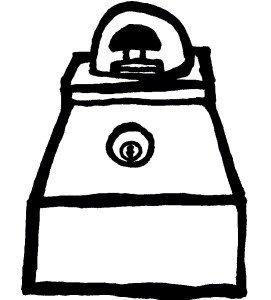
Consider the shifted stakes & the heavy-handed morality lesson of The Box’s very first incarnation, a very brief short story published by Playboy Magazine in 1970. The Richard Matheson-penned story “Button, Button” is for the most party reminiscent of what Kelly later brought to the screen. Even its central character names remained largely unchanged: Arthur, Norma, Arlington. However, the story’s scope is ludicrously miniscule as a comparison point, with these three characters more or less representing the totality of relevant players. In “Button, Button” the mysterious agent Arlington Steward drops off a box featuring a button under the cover of a glass dome. He informs the married couple of Norma & Arthur Lewis that if they press this button someone they do not know will die & they will receive $50,000 cash. The husband urges the wife not to push the button out of basic human decency, but she does so anyway, as she does in all three versions of the story (it’d be a pretty go-nowhere plot if she didn’t). What differs in the original text is its last minute twist in which Arthur is the one who is killed the promised $50,000 is collected from his life insurance policy. Incensed, Norma calls out Arlington for claiming that the person who would die would be someone she did not know. Steward retorts by questioning if Norma ever truly knew her husband. As far as morality tales go “Button, Button” is a little slight, but very efficient. However, it raises a lot of interesting, open-ended questions about the origins of its mysterious box & the menacing organization who carry out its machinations, an ambiguity its down-the-road adaptations would greedily revel in.

“Button, Button” was published too late in the game to be included in the classic black & white, Roger Sterling era of The Twilight Zone. Instead it appeared in the much cheaper, much less charming 1980s run of the show. Its basic premise remains faithful to its Playboy Magazine roots, but it does make some significant changes to the details. In the Twilight Zone version the prize for pushing the murder button skyrockets to $20,000, along with an escalation in the economic state of the couple in question. The televised Norma & Arthur live unhappily in abject poverty, with Norma playing the thankless role of a nagging shrew wife & Arthur struggling to provide for the household in a less than glamorous economy. Their philosophical conversations around whether or not to push the button are largely the same as they are in the original story, but they’re nastily heated here in a way that low income couples arguing about money often tend to be. Unfortunately, because the production value of the episode is so ungodly cheap, their tension is conveyed mostly through shouty braying, two performances that might even stand out as over-the-top in an early John Waters provocation.

Besides altering the economic tension of the central philosophical crisis, the televised version of “Button, Button” also crucially changes the detail of its gotcha ending. Instead of killing Arthur, the box only instigates Arlington Steward paying the couple their previously discussed amount, then informing them that it will be “reprogrammed” & passed along to a new household, someone they do not know. Just like the original story, it’s a tidily little morality play, although in this case the lesson is shifted from what it means to truly know someone to the value of the Golden Rule, which was the lesson of most Twilight Zone episodes anyway.

Part of the sprawling brilliance of Richard Kelly’s The Box is how it’s a pretty faithful adaptation of both of these works, yet still drowns out their central life lessons with a deafening sea of existential concerns and batshit crazy plot twists. So much of Richard Kelly’s film adaptation is eerily faithful to its source material, from the exactly look & name of “the button unit” (mostly lifted form the Twilight Zone verson of the story) to the intense focus on domesticity & the home (very strongly emphasized in the Playboy version, if you can believe it). It’s all represented in the first 20 minutes or so of The Box before Kelly blows the whole tightly controlled story apart into something infinitely more expansive & strange. You can tell Kelly was a huge, adoring fan of his source material. It’s just that he gets hopelessly lost in his fascination with its minor details. In the Twlight Zone version, Norma asks “What is this, some kind of survey or something to see who will and won’t push it?” Kelly wants to know what that survey would look like, what it would mean, and what other similar surveys it would constitute. In the Playboy version, Steward admits that he “represents and organization of international scope,” but keeps the details vague & menacing. Kelly wants to know exactly how large & powerful such an organization would have to be to function. You can even see Kelly’s admiration for his movie’s “Button, Button” roots in the details he does decide to change. For instance, when he gives Norma & Arthur a child, he can’t figure out exactly what the child is good for in the story, except as a plot device that allows for more button unit-type moral/existential dilemmas once the plot becomes truly unwieldy.

The Box has a tendency to over-explain or provide too much context for what’s basically a very simple story, but Kelly leaves the overall ambiguity of his source material’s scenario exactly how he found it. He pokes & questions initial vague details presented in the early versions of “Button, Button,” but only so that they give way to even more immense & vague details once they’re prodded. The mistake a lot of reboots, prequels, and reimaginings make is in providing too much context & background info so that all mystery is sucked out of the room in favor of mediocrity. No one liked Death Vader better after knowing he was a little blonde boy who built C-3PO & held his beloved at the lakes of Naboo. However, the kind of context Kelly piles on how somehow makes the story feel more contextless. A lesser, more disciplined mind might’ve stuck to the basic outline of “Button, Button”, but stretched it out to a feature length slog of a moral dilemma. Kelly instead gives it the exact length of time it needed to work itself out on an episode of television, then expands his scope from there, chasing his fascination with the story’s vague, menacing details once the business of a faithful adaptation was out of the way. I don’t think I’ve ever seen a literary adaptation quite like it, even from other films that started as Phillip K. Dick short stories or slight Roald Dahl novellas for children.  Kelly’s film is at once a faithful adaptation and a brazen, no-cares bastardization. Its gaze into the infinity can be at once both cripplingly silly & devastatingly impressive, but looking back to its roots as a miniscule 9 pages in Playboy Magazine only makes Kelly’s fascinating sprawl all the more puzzling. The question, then, is whether or not you find that puzzle entertaining.

For more on September’s Movie of the Month, Richard Kelly’s sci-fi mystery thriller The Box, check out our Swampchat discussion of the film.

-Brandon Ledet

Movie of the Month: The Box (2009)

EPSON MFP image

Every month one of us makes the rest of the crew watch a movie they’ve never seen before & we discuss it afterwards. This month Brandon made Britnee, Alli, and Boomer  watch The Box (2009).

Brandon: “Your home is a box. Your car is a box on wheels. You drive to work in it. You sit in your home staring at a box. It erodes your soul while the box that is your body inevitably withers, then dies, whereupon it is placed in the ultimate box to slowly decompose.”

No, that’s not lyrics to a Bright Eyes song or a page ripped from your 15 old self’s poetry-filled diary (or both if you’re Conor Oberst). It’s an explanation from The Box’s mysterious villain Arlington Sterward when he’s asked the simple question, “Why a box?” Steward’s rambly, heavy-handed response (delivered expertly by character actor Frank Langella) is a typifying example of writer-director Richard Kelly’s filmmaking style in that it’s both far outside any semblance of normal human communication and it represents a nonstop torrent of ideas that Kelly can’t help but spill onto the page all at once. His debut film, Donnie Darko, was a weird 80s throwback sci-fi horror that’s just bonkers enough to serve as art film training wheels for disgruntled teens (it worked for me, anyway), but also stylistically restrained in a way Kelly hasn’t been since. His follow-up, the sprawling & delightfully incomprehensible Southland Tales, is a punishing assault of strange ideas that plays like a big budget adaptation of a crackpot conspiracy theorist’s 4,000 page manifesto on the state of the modern & supernatural world. The Box, Kelly’s most recent film to date, splits the difference.

As Kelly put it himself, The Box was an attempt “to make a film that’s incredibly suspenseful and broadly commercial, while still retaining [his] artistic sensibility.” I’d say it’s almost successful in that way, tempering Kelly’s bottomless wealth of bizarre ideas with a familiar realm of cinematic tones that lands somewhere between Hitchcock suspense and the Spielbergian throwback horror of titles like Super 8 & Stranger Things. I honestly believe The Box is his best work to date. However, if Kelly thinks that this overwhelming tale of deadly ultimatums, alien invasions, mind control, interdimensional gateways, and spiritual ascension has “broad commercial appeal” he’s gotta be out of his fucking mind (and I’m sure there’s more than a little truth to that). Audiences hated The Box. It’s one of the few films to ever receive an “F” Cinemascore, which is typically a very forgiving grading system. It flopped financially in 2009 & has since been largely forgotten by time. General audiences have been known to hate a lot of great art, though, and I think that there’s an argument to be made that this film deserves to be recognized as such.

The first half hour or so of The Box might actually be the work of “broad commercial appeal” Kelly believed he was delivering. The film opens as a retelling of the classic Twilight Zone episode “Button Button” in which a young couple receives a mysterious box that prominently displays a giant button and comes with an even more mysterious offer: if the couple pushes the button someone they do not know, somewhere in the world, will die & they will receive $1million cash. Long story short, the couple pushes the button, receives the cash, and are informed that the box will now be passed onto a new couple, someone they do not know. Like the best of The Twilight Zone, “Button Button” is a tight, efficient story of supernatural dread that reinforces the value of The Golden Rule: treat others as you would wish to be treated. Kelly faithfully delivers that tight, controlled life lesson and then, leaving broad commercial appeal behind, explodes it into a galaxy of strange ideas that explore the identity of the man who delivers the box (or “the button unit” as Steward puts it”), the question of whether or not humanity is an enterprise worth preserving, and theories on what could possibly exist beyond our basic understandings of reality & mortality. All of these heady topics are interjected with whatever weird ideas pop into Richard Kelly’s head from moment to moment – say, lightning as a means of alien-to-human communication, motel pools as gateways to other worlds, entire armies of It Follows-style demons (“employees” of Steward), etc. etc. etc. It’s all perfectly overwhelming and I enjoy every frame of it, but I can’t fathom a world where it could’ve been a runaway commercial success.

Richard Kelly seems very much interested in trying to convey the vague menace of the unknown here, an overreaching ambition that leaves a lot of character development by the wayside in favor of otherworldly ideas & never-ending suspense. As a result, a lot of the film’s dialogue & character motivations can fall just on the campy side of eerie. It can also be a little difficult to care about any particular character’s fate, including the film’s central family, since they remain near-strangers for the entire runtime as they try to piece together exactly what’s happening to them. As unnerving as The Box can be, its lack of compassion for its characters & its subversively campy humor can play just as thick as Cameron Diaz’s godawful Virginian accent (she really is laughably bad in her lead role as the matriarch).

Britnee, how do the corny acting & unclear character motivations play into the film’s nonstop assault of spooky ideas for you? Are they a distraction or do they add to the film’s strange, off-putting appeal?

Britnee: First of all, when I found out that The Box was going to be the September Movie of the Month selection, I got it confused with the 2015 film The Gift. Jason Bateman graced the cover of The Gift, so I kept waiting for him to make an appearance in The Box, which, of course, he never did. It turns out that movies about mysterious boxes are more popular than I thought.

The insanity that is The Box should come with a warning label. Those with severely high blood pressure or epilepsy should never watch this movie because they will end up in the emergency room before the film is over. The constant twists and turns are just too much to handle, but I loved them all. The acting of just about every character, especially Cameron Diaz and James Marsden, really contributes to the movie’s wacky charm. Diaz’s performance as one of the film’s main characters, Norma Lewis, really sticks out for me. It’s really as bad as it gets, but her horrible accent, unconvincing attitude, and missing toes all come together to make The Box a hell of a good time. As Brandon mentioned previously, it’s difficult to give a damn about the fate of any of the film’s characters because viewers aren’t given the opportunity to really connect with them, and that’s not necessarily a bad thing. I enjoyed not worrying about whether or not Norma and Arthur would survive the terrors brought on by the box because I was able to focus my attention on the all the confusing supernatural happenings.

There were many times in the film where I thought the movie was concluding, such as when Arthur goes through his chosen portal in the library and ends up in his bedroom with Norma, but then the film continues and the story develops even more. Alli, did you find the constant twists in the film to be irritating or did you enjoy them? Was there any point in the film where you thought it should’ve ended?

Alli: It’s hard to say when a movie this in-over-its-head in a bizarre concept should have ended. I think maybe somewhere on the writer’s desk someone should have come in and asked about some plot holes and maybe talked Kelly out of some of them. But as you guys are saying, they’re all a part of this movie’s goofy charm. After a certain point of being jerked around I kind of gave up and just let it take me along for this strange little ride and part of me even felt like it could have kept going, honestly. There were so many more questions than answers. Not that I think I could have stood Diaz’s accent for another hour, but I really wanted to know more about these employers of Mr. Steward. I want to know more about this film’s philosophy as well.

A thing this movie brushed over and possibly unintentionally made a argument about was free will. In the end, did the new family being offered the box have a choice at all? He clearly knew that everyone he offered these options to were going to choose the easy way out, if you can call it that, otherwise some sort of transmitter would actually have to be in the box for him to know. I know there’s an argument to be made for supernatural surveillance, but it seems like he and his employers knew all along what human nature would lead these people to do. I was a little disappointed that there wasn’t a heavy-handed monologue about that.

But then again, this is a movie that only left me half satisfied. We’re vaguely introduced to aliens but we don’t learn much more about them other than they want to prove humans are unworthy. We’re given some suspense but nothing too bad, except for like Brandon said the occasional It Follows moment of a stranger being outside the window. We’re given an ideal suburban family in an ideal suburban town that’s slightly claustrophobic but not quite. Everything seems to fall just barely short of hitting whatever target he was aiming for. Boomer, is there anything you really wish had been expanded or clarified that wasn’t?

Boomer: Honestly, I had the opposite feeling. Although I definitely like the spookiness of the Steward hive mind followers and the general impenetrability of concept that is a hallmark of Richard Kelly’s work (like Brandon, Donnie Darko served as a kind of Baby’s First Jacob’s Ladder for me as well), there’s a certain simplicity to the existential dread of the original Richard Matheson short story that is absent here. In the short “Button, Button,” the story ends with the enigmatic Steward retrieving the button in a box from the protagonists, departing as he “reassures” the couple that they should not worry, as the next recipients of the box won’t be anyone that they know, with all the implications thereof. Does that mean that there is a direct link between the immediate recipients of the button and the previous button-pushers, or just a chilling reminder that their karmic comeuppance will come someday, without warning? It’s classic Matheson that way, and I adore the story (it’s adaptation in the eighties Twilight Zone revival has a different, more obvious ending, and I, like Matheson, don’t care for it; he went so far as to have the story idea credited to a pseudonym). There’s a quietness and intrigue to the original story that this film, which uses the original story less as a template and more of a jumping-off point for spiraling but utterly watchable madness, doesn’t possess.

That having been said, there were some things that I would have been interested to see more of. I was particularly intrigued by the use of realistic grounding in the life of the family before the box arrives, like the discussion of Norma’s foot injury and Arthur’s spacey aspirations. While it’s true that much of what makes the film captivating is the unexpected paths that it takes, I would have preferred to see the story retain that level of grounding throughout rather than grow exponentially more wild. It’s as if there are two films here, and I would have liked to see a Kelly flick that had the alien test plot and a second, different film that followed the mundane lives of the Lewises after the button is pushed, as they navigate the quandary of the immoral actions taken as a result of Steward’s visit. As it is within the film, everything that follows Norma’s impulsive push that affects them is an external force, not an exploration of the fallout of committing such an act, which would have been a more interesting film to me.

As far as other elements that I would have liked to see more of, Deborah Rush is criminally underutilized here as she was in her previous MotM appearance in Big Business, and every time I see her in any role I wish she had more to do. I also would have liked to know more about what Steward was like before he became the host for the alien entity that is sitting in judgment of humanity; was he chosen because of a similarity between his pre-possession personality and the ideas of the Hive? Was he the opposite? It could have been interesting to see the dichotomy between his former self and his new one, especially as a mirror of the change in personality between some of the button-pushers we saw pre- and post-button mashing; an objective correlative metaphor is never a bad idea, and could have illustrated the difference in the self that occur as a result of chance (Steward) versus those that follow deliberate action (the Lewises). What do you think, Brandon? You mentioned that the campiness and spectacle of the movie are its big draws for you; would you feel that you would enjoy it more, or at least as much, if it had been more of a character piece than a moderately coherent, not-quite-on-target, effects-heavy scifi fable?

Brandon: I’m a little amused by that question because I assume Kelly believes he was delivering a character piece, or at least his version of it. I don’t think stripping the film of its excess of The Day the Earth Stood Still-modeled sci-fi ideas on testing humanity’s worthiness through complex alien puzzles would necessarily improve its narrative in terms of entertainment value, but I do agree that the film starts weaving some interesting threads about the Lewises that might’ve lead to some truly powerful character-based moments had they been given enough room to breathe & develop. For instance, the family’s early financial troubles, born solely of their apparent disinterest in living within their means, is played merely as motivation for their activation of the button unit, but could’ve instead lead to genuine dramatic tension were Kelly interested in building it. He also suggests an interesting spousal dynamic when the couple negotiates the button unit’s terms & conditions and Marsden’s scientist-dolt husband asks, “What is it to really know someone? Do you know me?” I wouldn’t trade those lines of inquiry for the ludicrous sci-fi spectacle we’re gifted with instead, but I do think they would’ve been better received if they had been more fully developed, ideally without sacrificing the sci-fi backdrop that contrasts them.

The problem with fitting the character study elements and Kelly’s immense idea flood into a single vehicle might be a question of form. In some ways a two hour feature film isn’t nearly expansive enough to encompass everything The Box wants to contain. The film takes the idiom “biting off more than you can chew” as a direct challenge & a mission statement, an approach that doesn’t always sit well with a movie-going audience. I feel like the property’s ideal self would be as a prestige television series on AMC or HBO, a medium that would fix several immediate problems like allowing more room for grounded character study, giving each out-there sci-fi idea time to breathe instead of running through them all at once, forgiving a little bit of the television-grade acting choices made by Diaz & Marsden, etc. I’m imagining it like a Twin Peaks or a Welcome to Nightvale, where monster-of-the-week alien threats (or in this case, alien puzzles) would all inexplicably occur in a single town & follow a small family unit as they struggle to make sense of the phenomenon. The first episode of The Box: The Television Series would be the same “Button, Button” remake the movie uses for a launching point, except that it would end with the couple pushing the button in a cliffhanger, waiting for the story to be picked up at the beginning of episode 2. As I’ve said, though, a large part of the fun of The Box for me is in being overwhelmed by its wealth of ideas in such a short amount of time & I think there’s a value to experiencing all of that otherworldly absurdity in a tightly paced, cinematic punch that is somewhat lost when you’re, to risk referencing something so of-the-moment twice in one conversation, binge-watching all 8 hours of Stranger Things over the course of a week.

Speaking of the sprawl of sci-fi ideas included here, one of my favorite concepts in The Box didn’t come from Richard Kelly himself, but is instead a quote from sci-fi writer Arthur C. Clarke, conveniently read aloud for the viewers following along at home: “Any sufficiently advanced technology is indistinguishable from magic.” Unable to resist piling even more literary quotes onto the film’s DNA, Kelly also makes several allusions to Jean-Paul Satre’s play “No Exit,” both mining its title for easy existential dread & expanding its infamous line, “Hell is other people” to “Hell is other people seeing you for who you truly are,” in an offhand stab at literary analysis. Kelly’s pulled off this trick before in Donnie Darko as well, which includes an extensive classroom analysis of the Graham Greene short story “The Destructors.” Britnee, do you think these two literary references, Clarke & Satre, as cool as they are, provide any legitimate sort of insight into what kind of story Kelly was trying to tell in The Box or were they just easy modes of injecting profundity into what’s at heart a very pulpy sci-fi premise? Was their inclusion earned in the film’s content or did it come across as a little try-hard?

Britnee: Kelly’s use of the Clarke and Satre references you mentioned, Brandon, caused me to give a big eye-roll as I was thinking back to when they occurred in the movie. It’s difficult for me to take anything in this film seriously, so I would definitely have to say that the presence of these literary references is a little ridiculous. Obviously, Kelly didn’t throw them into the film to add to the campiness, but ultimately, that’s exactly what happened. I get what he was attempting to accomplish, but this movie was just too silly for anything profound to exist within it. Then again, my knowledge of anything by Clarke and Satre doesn’t go beyond Brandon’s previous statement, so maybe I’m the crazy one and Kelly’s got the right idea.

I feel like I’m being a little harsh on The Box. There were a few moments where I caught myself thinking about monumental life choices I’ve made and what motivated me in my decisions. The Lewis family painted a picture of how ugly being selfish and greedy really is, which is why I didn’t have much sympathy for them. The fact that they decided to take the life away from another human being so they could keep up with their suburban lifestyle made me sick to my stomach. Alli, do you think the film’s “protagonists” would have been more likeable if they were worse off (e.g. Their kid was dying, and they needed money for a lifesaving transplant)?

Alli: You know, I actually do think they would be more likeable if they were in more dire circumstances, but I think making them shallow suburbanites is either some sort of misguided attempt in a post-2008 financial crisis world to say, “This is you!” to the audience or to do the high and mighty, “Yes, you as the audience gets it. Look at the normies struggling with their mixed up priorities.” And if it was the second I’m not sure if they were ever supposed to be likeable at all and it’s just about the schadenfreude. Given the smug literary references and all of Donnie Darko, pretty much I’m leaning towards that interpretation, but it seems like there’s a lot of ways to read this movie.

Even though I never liked them and never sympathized as the movie progressed, I managed to like them even less as it went on, until finally it reached a point where I actually despised them. That point was at the end when they have to choose between having a deaf and blind son or Arthur shooting Norma. I hope I’m not spoiling too much by saying this, but what the hell? The idea of a disabled son being worse than a dead wife is really upsetting to me, especially when you have a million dollars and can afford to find ways to make your life more accessible. Not only is it a cheapness of life thing but just some casual ableism thrown in. And I just shudder to think that someone watching this somewhere probably thought that that was a reasonable choice to make.

Boomer, was there any point more “upsetting” (I’m not quite sure that’s the word I’m looking for) than others to you or did nothing really stand out to all?

Boomer: The most upsetting thing to me was seeing poor little Britta passing through the long hotel hallway while being met with the stares of various Steward acolytes. I know that a lot of people find hotels to be inherently creepy automatically (I’m not one of them) and so they probably found this even more unsettling than I did, but there was something about her apparent innocence and the way that she was bandied about by forces outside of her control. I don’t recall that we ever really get much of an explanation as to who she is or what she was doing; was she, like the man from the previous box cycle from whom Arthur learns about the nature of Steward, an escapee from the “plan” who was trying to make sense of her upturned world? Was she merely an unwilling accomplice in the larger goals of the mysterious entities? It is perhaps my fondness for Gillian Jacobs alone that led me to be so thrown off by this sequence, but it was generally disturbing.

I disagree with your reading of the final scene, however. Not that there are no ableist connotations in the scene (that interpretation is certainly valid), but I don’t feel that Kelly’s intent was to make it seem that having a blind/deaf child was worse than a dead wife/mother, but was more of a demonstration of Steward’s willingness to give Norma a second chance to prove that she could make the “right” decision, since it was her impulsive pushing of the button (despite Arthur’s hesitation and apparent ultimate refusal) that doomed the family in the first place. In response to your question, what was perhaps most disturbing was the fact that Steward and his overseers were testing “free will” in a way that influenced the participants; in fact, given that none of us can come to an agreement as to whether there is free will in this situation (given the way that deaths of previous users of the box rely upon the next user making the wrong decision), it’s unclear what, if anything, could be gleaned from these experiments.

Although I hesitate to sympathize with the Lewises because of their vapid engagement in consumerism (it’s important to note that the original story did, in fact, feature a family in a much worse economic situation than the Lewises), they were living within their means until Steward manipulated events in their life, like causing Arthur to lose his candidacy for promotion and taking away the tuition reduction plan that the family relied upon in order to send their son to the best possible school In a way, the film could be seen as a modern(ish) retelling of the story of Job, substituting mild setbacks for utter familial destruction and replacing faith in God with the willingness to perform acts which enact the greatest good for the largest number of people. Viewed through this lens, Norma and Arthur have their faith tested and Norma fails, but is given the opportunity to correct this wrong through self-sacrifice. I don’t necessarily think that this is the reasonable choice, but I feel like this was more likely to be Kelly’s intent. Regardless, just as with Job, none of the characters that we see would be in the situations in which they find themselves without divine (or unholy) intervention. Maybe this means that The Box is really an exploration of the philosophical conceit that if (a) the divine is all knowing and pre-ordains all actions and (b) humans are thus unable to exercise free will despite the appearance that they can, then (c) punishing mankind for acting in accordance with preordination is unreasonable and perhaps evil. Probably not, though.
EPSON MFP image

Lagniappe

Britnee: While The Box left me with loads of unanswered questions, what I want to know more than anything else is the current whereabouts of the prosthetic silicon foot that Arthur made for Norma (using materials from his workplace!). Did Diaz take it home as a souvenir from one of her most desperate roles? Does Kelly keep it in a curio cabinet in his family room?

Alli: Coming back to the disabilities/deformities thing. I just really think it’s super messed up that someone like Norma, who lives with a limp has some sort of hierarchy of disabilities. Like, Mr. Sterling’s face makes her feel better about herself instead of her being able to identify with him. I know she’s worried about the teasing and ridicule when it comes to her son, but it’s still terrible.

Brandon: There’s so much to cover in The Box that I feel like I could never touch on all of it even if this conversation went on for two more rounds. There’s the curious case of its Arcade Fire-provided score that never reached physical media release, the weirdly wonderful feeling of seeing a babyfaced Gillian Jacobs in an early dramatic role, the peculiarly detailed prop of that Human Resource Exploitation Manual Arlington Steward supplies to his employees, and a whole lot more I could never get to with all the time in the world. Instead of trying to gather all these details like so many Pokémon, I’d just like to follow up on a couple things Alli & Boomer mentioned that interested me.

I totally agree with their assessment that the film’s musings on free will are muddled at best. This is never more apparent to me than at the film’s climax when two couples are given an ultimatum by Steward and they make their decisions simultaneously, one directly affecting the other. Whose free will is being exercised there? It’s a question (among many) that the movie is far from interested in answering. A heavy handed Steward monologue on the subject would’ve been nice. However, I do want to buck Alli’s assertion that not enough suspense is earned through interactions with the It Follows “employees”. They’re creepy as all hell and, unlike most of the film, tastefully employed in small doses. The three big moments I’m thinking of are the aforementioned zombified man in the kitchen window; the babysitter’s long, troubling walk down a motel hallway; and that incredible sequence in the library where the employees threaten to form into an angry mob. I know I’ve poked fun at how ludicrous The Box can be from minute to minute, but I do believe the suspense it generates is genuine and a lot of it comes from those creepy, dead-eyed employees of Steward’s.

Boomer: When I was working at the Urban Outfitters in the French Quarter in grad school, James Marsden came in to shop (I think he was working on the remake of Straw Dogs at the time). I rang him up and I cannot tell a lie: he really is that pretty in real life. I’m not going to say that I got lost in his eyes or anything, but I’m also not going to pretend that I didn’t. The most beautiful thing I’ve ever seen in my life was the gradation of colors in the rings of Saturn through a refraction telescope at the top of the observatory in college; the viewer was the size of a dinner plate, and from ringtip to ringtip, the rings were six inches across, with nothing between me and this distant planet but glass and space. It was humbling, awe-inspiring, and absolutely stunning. The second most beautiful thing I’ve ever seen was James Marsden buying tank tops. Take from that what you will.

Upcoming Movies of the Month:
October: Britnee presents Funhouse (1981)
November: Boomer presents  The Paperhouse (1988)
December: Alli presents Last Night (1999)
January: The Top Films of 2016

-The Swampflix Crew

Louis Malle’s Unsettling Takes on Pubescent Femininity in Black Moon (1975) & Pretty Baby (1978)

EPSON MFP image

One of the most discomforting aspects of August’s Movie of the Month, Louis Malle’s art house fantasy piece Black Moon, is its depiction of a young woman on the verge of adulthood. The film has a way of patronizing & infantilizing its seemingly teenage protagonist, a dynamic Malle likely picked up from Lewis Carroll’s Alice in Wonderland along with that source material’s down-the-rabbit-hole story structure. It’s not uncommon for Malle to face controversy for the sex politics of his films, something that even cropped up here when Alli questioned the intent behind Black Moon’s literal war of the sexes and Boomer expressed discomfort with the film’s panty-dropping gag in our original Swampchat discussion. Though, if Black Moon‘s depiction of a young girl’s journey into womanhood is uncomfortable, then Malle’s follow-up film Pretty Baby was an unapologetic act of aggression. If the director’s coldly detached, yet oddly lighthearted depiction of a young woman being indoctrinated into fantasy realm domesticity & interspecies breastfeeding is discomforting, then his application of that exact same tone to a preteen girl’s life as a sex worker in a turn of the century New Orleans brothel is an outright horror show. At the very least it was a bold choice for the French filmmaker’s American debut. At its worse it was a deliberate, pedal to the floor provocation.

That’s not to say that Pretty Baby is empty or spiritually corrupt filmmaking. If you remove the underage aspect from its protagonist sex worker’s character traits, what you’d get really wouldn’t be that far off from the film’s cutesy Oscar bait equivalent Rambling Rose. Pretty Baby faced accusations of being child pornography and was banned in a couple regions of North America, mostly for its nude depictions of a far too young Brooke Shields, but it’s a much tamer work than what those accusations suggest. Set during the final days of New Orleans’s storied Storyville district, where prostitution was once legal, Pretty Baby is for the most part a tame costume drama staged at a very specific time in this city’s history. Although its more sensationalist content is what immediately comes to mind when the film is mentioned, it’s for the most part a laidback, melancholy hangout in the heat & humidity of New Orleans courtyards. Just like how Black Moon is more interested in carving out a very particular fantasy realm to dwell in than following the more action-packed aspects of its wartime plot, Pretty Baby is a quiet, languid, depressive work with an oddly detached, carefree worldview despite the stakes of its central conflict. You could argue that it’s that exact judgement-free take on the material that makes the film so uncomfortable in the first place, but it’s still difficult to claim that its main goal was to shock & disgust. It more obviously just wants to hang around in its own earth tone drunkenness & historical accuracy.

Not yet a teenager, Brooke Shields stars as young sex worker in a very busy brothel. Her mother, played by (the always beautiful & forever talented) Susan Sarandon, is a cruelly dismissive employee of the same madame and pushes to have her daughter’s virginity auctioned off as quickly as possible, so that the young girl can become self-sufficient. After a particularly painful experience with a john and her mother taking off with a new husband/former client, the child runs away from “home” and into the arms of a fine art photographer named Bellocq. Apparently modeled after a real-life photographer who documented Storyville sex workers, Bellocq forms a strange domesticity with his new, unexpected ward and marries her, despite her horrifically young age. Although they’re husband & wife, Bellocq & his child bride have a clear father-daughter dynamic that would be oddly sweet if it weren’t for all the icky lovemaking (something that would easily be defined as rape by today’s standards). Malle maintains an emotional distance in the way he covers the material here, the same detached vibe he brought to Black Moon’s fantasy dreamscape. It can be more than a little alarming considering the inflammatory nature of the material he’s working with, (unlike Black Moon, Pretty Baby could in no way be mistaken for a fairy tale), but it also feels true to the long dead era he’s trying to evoke, unlike the softened melodrama of works like Rambling Rose.

Even beyond their judgement-free, yet male gaze tinted takes on pubescent femininity and their shared, dreamlike sense of languid pacing, Black Moon & Pretty Baby occupy a surprising amount of common thematic territory. They’re both stories about young women (one very young) trying to navigate worlds where they don’t belong. They both feature naked children running wild & free (although in a far less sexualized context in one case) and a strange fascination with breastfeeding (sometimes with a human baby, sometimes with a talking unicorn). Pretty Baby’s voodoo priestess recalls Black Moon’s mode of immersion in Natural Magic.  Black Moon’s varying examples of what the womanhood its protagonist is entering looks like are echoed in Pretty Baby’s performances from the always-welcome B-movie goddess Barbara Steele & and an elderly madame with a braying, John Waters cadence to her line delivery. Although the settings of these films are wildly different, it’s easy to see the specific touch Louis Malle brings to both pictures and how they work as a thematic pairing. The question of how that thematic throughline handles the hefty topic of pubescent femininity in either work is up for debate, however. And since Malle stubbornly remains detached in both pictures, that debate largely falls on the shoulders of his audience.

For more on August’s Movie of the Month, Louis Malle’s surrealist fantasy art piece Black Moon, check out our Swampchat discussion of the film, this comparison of its lame duck unicorn with the divine unicorns of Legend (1985), and last week’s look at how its surrealist take on Lewis Carroll’s Alice in Wonderland compares to the 1988 stop-motion animation classic Alice.

-Brandon Ledet

Black Moon (1975) was the Most Honest Surrealist Take on Lewis Carroll’s Alice . . . Until Alice (1988)

EPSON MFP image

We were having a hard time in our initial conversation about August’s Movie of the Month, the fantasy realm art piece Black Moon, in pinpointing an exact interpretation of the film’s basic plot or intent. It’s highly likely, of course, that director Louis Malle didn’t want his exact intent or a definitive plot to be discernible at all in the film. Black Moon feels very much committed to a certain mode of surrealism that points to the coldness & seemingly random cruelty of existence by being, you guessed it, cold & randomly cruel. The interpretation we more or less settled on as a crew was that Black Moon was best understood as a down-the-rabbit-hole story that aped the structure of Lewis Carroll’s Alice in Wonderland series as a means of capturing his young protagonist’s unsettling journey into womanhood. Whatever that journey means or what it even is largely falls under the umbrella of personal interpretation but the Wonderland influence was undeniable as an overarching aesthetic in its basic structure. Black Moon is by no means a strict adaptation of that source material, but it does wear the influence on it sleeve, as openly admitted by Malle himself in interviews. I’d also argue that the film was the best surrealist take on Wonderland’s cold, random cruelty depicted on film for well over a decade, capturing that aspect of Carroll’s work better than any of its many peers that were straightforward adaptations of the novel. That is, until it was upstaged by 1988’s stop-motion animation classic Alice.

Czech director Jan Švankmajer had been producing short films all the way back to the same art scene in his home country that produced 1967’s Daisies before making his feature film debut in Alice. To be honest, Alice’s structure & pacing reflect his short film past in a lot of ways, recalling modern filmmakers like Guy Maddin & Roy Andersson who are remarkably adept at constructing individual images & vignettes, but struggle a little when it comes to piecing those moments together to achieve a digestible feature length work. Alice is a stunning visual achievement, a tactile work of stop-motion animation that values the specificity of curio cabinet oddities, Joseph Cornell shadowboxes, and taxidermy animals over the clay figurines we’re used to seeing in titles like Coraline & Kubo. What makes Alice interesting as an adaptation of Lewis Carroll’s source material, however, is not in the visual achievement, but in a tone that matches the cold surrealism of Louis Malle’s Black Moon. As Švankmajer put it himself, he wanted to reinvent the interpretation of Alice in Wonderland in other adaptations that posed it as a fairy tale with a moral center and instead present it as a cold, amoral dream with no point to be made outside its own absurdism, a reading that captures the essence of Black Moon just as much as it hints at the power & intent of Carroll’s source material. Švankmajer explained, “While a fairy tale has got an educational aspect – it works with the moral of the lifted finger (good overcomes evil), dream, as an expression of our unconscious, uncompromisingly pursues the realization of our most secret wishes without considering rational and moral inhibitions, because it is driven by the principle of pleasure. My Alice is a realized dream.” Considered in that context, Black Moon also functions best as a dream & not as a fairy tale, despite what you’d expect based on its talking unicorn.

The difference between the dream structures of Alice & Black Moon, however, is that the latter often functions as a nightmare. Both films’ plots survive on the surreality of minute to minute obstinate confusion, but there’s a lighter tone to Alice that isn’t quite matched in Black Moon. Black Moon can be funny at times, but it often veers into uncomfortable imagery like hawk murder & interspecies breastfeeding, while Alice finds its individual vignettes in moments like a cute rat cooking a can of beans on its young protagonist’s head. Most of the film’s creepiness lies in its old world imagery, a curio cabinet specificity that recalls a similar immersion in Nature, strange animals, and odd domesticity to what we see in Black Moon’s languid sleepwalk through an earth tone dreamscape, but with noticeably less malice. Black Moon pulled a lot of its surrealist influence from Carroll’s creation in Alice in Wonderland, an uncaring, dreamlike tone that recalls the structure of a fairy tale, but without the lesson to be learned. 1988’s Alice picks up that torch & runs with it, applying that same amoral interpretation of Carroll’s intent to a straightforward adaptation of his novel. Together they have a lot to say about the potency of dream logic, the philosophical implications of surrealism, and the meaninglessness of meaning. I highly recommend them as a double feature next time you’re feeling particularly existential & loopy.

For more on August’s Movie of the Month, Louis Malle’s surrealist fantasy art piece Black Moon, check out our Swampchat discussion of the film & last week’s comparison of its lame duck unicorn with the divine unicorns of Legend (1985).

-Brandon Ledet