Sky Captain and the World of Tomorrow (2004)

EPSON MFP image

fourhalfstar

There’s a certain retro-futuristic aesthetic that sets neo-noir visuals to a sci-fi context that I definitely have a soft spot for, but I don’t know exactly what to call by name. Captain America: The First Avenger & Batman: The Animated Series are the only titles that fit in this particular genre that were especially successful financially, as most examples I’d group in with them were notoriously disastrous flops: The Rocketeer, Tomorrowland, Predestination, The Phantom, etc. Although I don’t know exactly what to call this subgrene (future noir? fart deco?), its tropes are as clear as day to me. It’s a pure style over substance formula that intentionally matches the exquisite art deco architecture & fashion of the 1930s with the hammy swashbuckling of old comic strips & radio serials; extra points are awarded if the plot involves robots, aliens, or time travel. Imagine the pulpy dime store version of Metropolis and you have a decent idea of what I’m getting at.

True to form, the 2004 visual feast Sky Captain and the World of Tomorrow flopped hard at the box office, but stands as an immaculate example of the future noir/fart deco aesthetic I’m vaguely describing here. One of the first Hollywood productions filmed almost entirely against a CGI backdrop (which is more or less the current industry standard for summertime blockbusters), the film masks its almost instantly-dated visuals with the soft focus haze of the era it intentionally evokes. The film has a falseness to it that it emphatically embraces instead of shying away from. Its absurd use of lighting & extreme Dutch angles gives the film the same surreal comic book context that recently wowed me when I first watched Sam Raimi’s goofily masterful Darkman. This “live action” cartoon landscape is thoroughly impressive, from its gorgeous/impossible architecture to its chintzy, child’s toy ray guns. It feels simultaneously old fashioned and newfangled and that exact air of self-contradiction is specifically what wins me over in this subgenre every damn time.

The film’s plot is set in an alternate universe version of the late 1930’s where an invading Nazi-esque threat invades US soil with gigantic laser-shooting robots & mechanical warbirds. Bold dame news reporter Polly Perkins (Gwenyth Paltrow, who has recently been growing on me thanks to her turn as the similarly-named Pepper Potts) follows this story down the proverbial rabbit hole, where she discovers a vast, world-threatening conspiracy that involves, among other things, dinosaurs, miniature elephants, and a gigantic Noah’s arc-type rocket ship. Her partner in this journey is a maverick airplane pilot (played by Jude Law in a goofy version of his Gattaca mode) hell bent on taking out our foreign invaders single-handedly like a true American. Will our two leads find love despite their stubborn, self-serving quests for independence? Does their potential romantic connection matter any more or less than saving the world? Do these questions matter at all in the face of the film’s towering attention paid to over-the-top visuals? Even if you haven’t seen the film I’m confident you can answer those questions yourself. The two leads are remarkably charming here, with a chemistry that only gets more potent as the plot rolls along, but they’re not at all what makes the movie a unique treat.

Critics were mostly kind to Sky Captain and the World of Tomorrow upon initial release, but audiences’ wallets were not. Even so, it seems almost criminal that the film stands as the only feature credit of director Kerry Conran. Kerry Conran is a fully functional auteur here, building a gorgeous, amusing world from scratch and it’s a shame to think we didn’t get to see how his work would’ve evolved along with CGI technology were it given the chance. I’ve tried to pigeonhole his sole film here into a hyper-specific subgenre, but that’s honestly selling the film’s idiosyncrasy a little short. Sky Captain and the World of Tomorrow might pull its visual references from long-gone eras of cinematic sci-fi, but I think its goals and accomplishments are much loftier than pure pastiche. At one point the film intentionally evokes comparison to the innovation of The Wizard of Oz, but that connection essentially stops at the novelty of its CGI backdrop. I actually think a better comparison point would be a more fartsy, less artsy version of what Guy Madden does. Just like with Madden, Conran’s visuals & ideas can be a little overwhelming to endure at feature length, but in isolation they each land with surprising success. I just wish there were more Conran-helmed visual feasts to go around, whether or not he continued to work in the fart deco subgenre I grew to love so much. Even those who don’t fall in love with Sky Captain and the World of Tomorrow as a finished product are bound to recognize potential in its individual moving parts. Sadly, that particular world of tomorrow hasn’t yet arrived.

-Brandon Ledet

The Flesh Eaters (1964)

jack reacher

fourhalfstar

campstamp

“There’s something in the water that eats flesh! I said ‘eats flesh’! People!”

The 1980s were undeniably the glory days of gore in horror cinema, but they weren’t necessarily the root of extreme on-camera violence. George Romero is often credited as being the godfather of gore, ushering in the era of special effects that paid great detail to exposing the insides of horror’s actors/victims. Romero’s seminal work, The Night of The Living Dead, was released as early as 1968, well before onscreen gore reached its Reagan-era fever pitch. Before The Night of the Living Dead hit the theaters, however, it was originally titled The Night of the Flesh Eaters and subsequently changed its moniker to avoid confusion with a film simply titled The Flesh Eaters released just four years prior. The Flesh Eaters shares no resemblance with the zombie-centric plots of Romero’s Living Dead series in even the vaguest sense, but it does beat the director to the punch somewhat in terms of onscreen gore, so it’s somewhat appropriate that they almost shared a name.

The Flesh Eaters is horrifically violent for a mid-60s creature feature, paying great attention to the special effects of its blood & guts make-up. Many credit the film as being the very first example of gore horror & it’s difficult to argue otherwise. The anachronistic-feeling intrusion of extreme violence in what otherwise feels like a standard Corman-esque B-picture is beyond striking. Although I’ve seen far worse gore in films that followed in its wake, the out-of-place quality the violence has in The Flesh Eaters makes the film feel shocking & upsetting in a transgressive way. I don’t know for sure if Romero was at all inspired by The Flesh Eaters or if he even had seen it before making The Night of the Living Dead, but his work certainly wasn’t the first gore-soaked spectacle in town, not by a long shot.

A drunk movie starlet, her overworked assistant, and a cocky airplane pilot are temporarily marooned on a small, mysterious island. It’s there that they encounter a creepy scientist fella experimenting with a microscopic, weaponized life form that greedily eats human flesh clean off the bone. At first the only evidence of these tiny mutant bastards is the washed-up skeletons that arrive picked-clean on the shore. Soon they reveal themselves as tiny spots of nuclear glow that can only be described by their potential victims in the vaguest of terms: “that shiny stuff”, “that little silver stuff”, etc. Without revealing too much, I can promise that these tiny, evil, glimmering somethings eventually snowball into a much bigger, stranger problem that a small crew of shipwrecked amateurs stand very little chance of surviving.

Directed by the guy who voiced Papa Racer on the 60s Speed Racer cartoon (Jack Curtis) & partially funded by his winnings on a long-forgotten television game show, The Flesh Eaters is largely a labor of love. There are some details to what it delivers that relegates it to a camp cinema context: some nonsensical asides about Nazis, a beatnik caricature that would’ve made even the extras in Corman’s Bucket of Blood blush, some bathing suit oggling, a William Castle-style distribution gimmick in which audiences were armed with “instant blood” to feed the flesh eaters in case of attack, etc. As goofy as The Flesh Eaters can be in moments, however, what truly makes it unique is the ahead-of-its-time attention paid to its special effects. Holes are poked into film strips themselves to indicate the flesh eaters at work. Blood & gore ooze out of victims in a horrifically stark black & white. The scale of the third act mayhem far exceeds what you’d reasonably expect based on the budget. The Flesh Eaters suffered many setbacks, including years-delayed distribution & a hurricane disrupting production, but it was well worth the effort. It eventually stood as a must-see landmark of horror cinema that would in its own way predict where the genre was headed in the decades to come and it still plays remarkably fresh today because of that grotesque innovation.

-Brandon Ledet

Star Trek Beyond, and Beyond

EPSON MFP image

Okay, folks, let’s talk about Star Trek.

When I was a kid, I was really into fantasy books. I loved The Chronicles of Narnia, The NeverEnding Story, and the Oz books (Tik Tok of Oz was my favorite) and I read them over  and over again. Then, the summer after I turned nine (1996, if you care), I spent the days with a trio of home schooled boys and their mother, who ran a de facto home daycare out of her home. Our days were pretty structured, with outdoor time and reading time, and we would watch a movie every day after lunch; frequently, this consisted of watching various Star Trek films, usually Wrath of Khan, The Search for Spock, or The Undiscovered Country (I had actually seen The Voyage Home many times before, as it was one of the few VHS tapes we owned, but had never connected it to a larger franchise, thinking of it only as “the whale movie”).

An obsession took root and hollowed me out. When the local NBC affiliate started syndicating reruns of The Next Generation in the afternoons, I suddenly had direct access to the franchise every day. My family didn’t have a lot of money, but they did their best to help buy action figures of the characters; the ones I didn’t have I made out of Happy Meal toys by painting Starfleet uniforms on them. I built a custom bridge playset out of  discarded scraps from my father’s woodworking and created new worlds for my favorite characters to explore. We didn’t have UPN, so my aunt who lived in Raleigh would record episodes of Voyager on tapes and mail them to me, and I watched those same twelve episodes until I could recite them by heart. I lived, ate, and breathed Star Trek for the better part of a decade, much to my father’s chagrin, with only occasional bouts of superhero interest. Later that year, I was taken to my first convention (with guest George Takei!) at the now-defunct Baton Rouge Hall Convention Center, where I was one trivia question away from winning an original script from the filming of classic Star Trek episode “Mirror, Mirror.” Knowing that the captain of the Reliant was Captain Terrell was not enough; knowing that McCoy’s daughter was named Joanna was not enough. Can you imagine how much smaller my student debt would be now if I had a Takei-signed copy of a “Mirror, Mirror” script? My developing brain learned a new lesson that day: every bit of information about Star Trek must be absorbed and stored, for the rest of forever, in case it came in handy again.

After the premiere of Battlestar Galactica, I had to take some time away from Star Trek. BSG was just so unlike it (or anything else) and so steeped in the contemporary political landscape that, to my cynical teenage self, Star Trek seemed immature in comparison. It didn’t help that the last TV series, the prequel Enterprise, had been reprehensibly awful for nearly all of its run; Star Trek was a dead franchise. There’s a reason that I wrote my master’s thesis on Battlestar and not Voyager. And so, with the last two feature films with the cast of NextGen being colossal failures (Insurrection received mixed reviews initially, but 2002’s Nemesis was the lowest grossing ST feature of all time), the well was capped in 2005, with the airing of the series finale of Enterprise. For the first time since 1987, there was no new Star Trek.

I’ve touched on this briefly in a few other things I’ve written here (and on my personal blog, and on bathroom walls, and interjected verbally into conversation without invitation), but Star Trek is an optimistic, progressive vision of humanity at its very core. From 1966, when the original pilot for the classic series saw a woman as second-in-command of the ship (an idea that NBC executives immediately rejected) and the series proper showed POC and women in positions of authority and respect, the show has tested the boundaries of social stigmas by pushing against them. The original series saw the first scripted interracial kiss on television in the episode “Plato’s Stepchildren,” and, despite being a Cold War product, saw a passionately patriotic Russian crewman take his place on the bridge alongside characters representing various ethnicities and backgrounds. The show was not without flaw in this arena; on the one hand, instead of casting a real Indian woman as Lieutenant Rhada in “That Which Survives” and “Requiem for Methuselah,” it appears that they cast a white actress and put her in brownface and a bindi. On the other hand, given the era in which the series was being broadcast, it’s commendable that some effort was made at all. Another example is Mexican actor Ricardo Montalban, who was cast as Indian Khan Noonien Singh; although this is problematic in that it it endorses the idea that POC of different ethnic backgrounds are interchangeable, it was groundbreaking and progressive for its day, and that humanism and progressivism is Star Trek’s best quality. No other media franchise has done so much for the cause of representation. In her autobiography Beyond Uhura, Nichelle Nichols called the series “a vehicle for [progressive] ideals about equality, freedom, and personal accountability,” for “audiences to enjoy, cherish, and incorporate into their own hopes fot the future and humanity.”

What I’m getting at here is that I’ve spent large portions of my life thinking about the world of this franchise, its implications, its role in society, it’s fictional society’s role in the text, etc., for better or worse. I’m not a Star Trek fan, I’m a Star Trek academic, with all the intense scholarship and rigorous thought that such a term implies. I’ve spent time pondering the role of the capitalism-free Federation in the larger galactic economy, what it’s like to serve aboard a starship as a civilian scientist, and whether or not it makes any sense that Sisko’s father could really run a Creole restaurant in the French Quarter (represent!) given that no one uses money. I’m a proponent of considering Galaxy Quest the tenth Star Trek film in order to maintain the integrity of the odd/even law of quality. If you want my quick rundown: the original series is Star Trek at its purest, NextGen is Star Trek at its best, DS9 is Star Trek at its smartest, Voyager is the Star Trek with the most squandered potential, and Enterprise is Star Trek at its most tired. Wrath of Khan is undoubtedly one of the most literary science fiction films ever made and is a personal favorite. My favorite author in the extended universe is Peter David, and his New Frontier series is a delight for a long term fan; I also highly recommend Greg Cox’s Rise and Fall of Khan books and anything by Diane Duane. The best fanseries is Star Trek Continues, although Renegades is laudable for its concept even if its goals are a little lofty, and Of Gods and Men gives me the warm and fuzzies. Are we all on board now? Are my credentials well established? Ok.

I considered watching and reviewing all of the Star Trek films that came before in the leadup to Star Trek Beyond, which will premier this summer. I ultimately decided not to do so, not simply because there are so many and the time between now and then is so short, but because the last thing(s) the internet needs are more reviews of the Star Trek movies. If you took all of the reviews of the films that that have ever been written, then printed them out at size ten font on a strip of ticker tape paper, the text would go all the way to Romulus and back (don’t question my math or astronomy). That’s a fact.* I do think it’s a good time to talk about the reboot in general, however, with the sequel looming on the horizon and a Bryan Fuller-produced TV series set to begin airing next year. So, let’s talk about JJ Abrams.

Abrams is a real, Spielbergian film-maker. I know that there are some who consider this heretical, and I understand their objections on the grounds that their output is of significantly different qualities. Cloverfield may have had equivalent cultural impact to Jaws, one could argue (in that both hit theatres and changed the landscape for years afterward with regards to style and tone), but it couldn’t come close to having the same kind of longevity and quality. As much as Super 8 (a movie that is 95% perfection) apes E.T., it had no hope of ever being as well-beloved. Until The Force Awakens, nothing Abrams made had the kind of staying power that Spielberg did; this is despite the similarities between the two men. I touched briefly (in my Blood Massacre review) on the fact that Abrams wrote to Don Dohler and composed the music for his Galaxy Invader, but that’s really only the tip of the iceberg when it comes to his interest in getting into film from an early age. Abrams is undoubtedly passionate about his work and his features are generally enjoyable if fleeting in their relevance.

Was he the right man to reintroduce Star Trek to the masses? Even in hindsight, it’s not really clear. The last time the franchise had any real mainstream penetration was with Deep Space Nine, as both Voyager and Enterprise were considered niche television in comparison to the relatively well-known shows that had preceded them. As a result, it had been nearly ten years since anyone outside of insiders had thought about Star Trek in any real way, and Abrams was riding high on the surprise success of Cloverfield when his name was bandied about to direct the reboot. To look back at the franchise’s history for a comparison, consider what happened British novelist Nicholas Meyers was hired to take over the film series and direct the first sequel, Star Trek II: The Wrath of Khan. The first film, Robert Weiss’s Star Trek: The Motion Picture, wasn’t well-received critically but generated sufficient revenue to warrant a second picture; Meyers had a reputation as a man who could bring a film in on time and under budget, so Paramount tapped him to bring the entire Star Trek franchise to its conclusion. The young director had never seen a single episode before, so he watched the entire series from start to finish to get a clearer idea of how to pay homage to the show and create something that would appeal to the masses and long term fans.

To do so, he chose to bring back longtime favorite villain Khan and make the film a direct sequel to the 1967 episode “Space Seed.” In it, Kirk and company find Khan and his acolytes in suspended animation in space, genetically engineered supersoldiers left over from a catastrophic war on Earth in the dark days of the 1990s (time marches on). Khan and his coterie attempt to hijack the Enterprise; when Kirk eventually defeats him, he mercifully maroons Khan and the others on an idyllic world where they can live out their lives in relative freedom rather than in a prison cell. Meyers took this idea and turned it into Paradise Lost writ large across the Star Trek universe, interpreting this as Kirk literally casting Khan down from the heavens and crafting his film around the return of Khan as a somewhat sympathetic figure of evil who seeks Ahab-like revenge against Kirk. The truly genius thing about the narrative is that the knowledge of what happened in the series adds to the intrigue but is not required for the enjoyment of the film overall; as a result, the film was such a critical and financial success that Paramount decided to make more sequels, extending the franchise and leading to its further growth.

In comparison, JJ Abrams’s Star Trek is not as successful. Abrams freely admitted that he didn’t spend much time revisiting the Star Trek of yesteryear for thematic or narrative inspiration. Instead, his first film focused more on echoing the cinematic aesthetics of the original 1977 Star Wars film, including the destruction of planets, frenetically energetic action scenes, cantinas with strange aliens, and other ideas that, arguably, don’t belong in Star Trek. There was a distinct lack of the philosophical humanism and social commentary that characterized what this franchise is supposed to represent. So did I hate it?

No, actually. The 2009 Star Trek film is delightful, in my opinion. Yes, it’s different from the canon. Yes, it’s not “my” Star Trek. Yes, it makes a lot of mistakes. Yes, its reboot/requel nature means that the only element of the franchise that remains in canon is the regrettable prequel series Enterprise. Yes, a lot of the elements make no real sense (why the hell would you build a starship of that size in a quarry in Iowa instead of in orbit?). Yes, it’s loud and kind of dumb. Yes, it was sexist in ways both obvious (nuKirk isn’t just a horndog, he’s a straight up creep) and small (Starfleet crewmembers’ rank is shown by the pleating on the wrist; by making women’s uniforms sleeveless, the film literally strips them of their rank). I’m not ignorant of or necessarily “okay” with all of that.

But for me personally, the first film in this new series did not have to be philosophical in the way that the original series and its descendants usually were (First Contact is a straight up zombie body horror movie set in the Star Trek universe, and I love it despite its tonal inconsistency with the rest of the films). Abrams’s Star Trek had one job: to get people interested in Star Trek again, to bring to the masses a sense of excitement and majesty and wonder about this world and its characters. And, hey, mission accomplished. The movie didn’t have to address human nature or racism or the inherent evils of totalitarianism or the rights of sentient technological intelligence or the importance of tolerance. The film needed to grab attention, so that Abrams could address all of those things in the next film, returning Star Trek to its humanistic and optimistic roots.

But Star Trek Into Darkness didn’t do that. Instead, it doubled down on the blockbuster elements of the first film, with more fights and more out of character moments. Having Spock fly into a rage in the first film, in defiance of what that character should do, was an interesting moment, but having him do the exact same thing in Into Darkness was a huge mistake; how is the audience supposed to set a baseline expectation of who the notably stoic and logical Spock is supposed to be when he flies off the handle in every appearance? Having Uhura pester Spock about their relationship in the middle of a mission damages all of the positive work that was done expanding her character in the first film. And, worst of all, they made Khan a white guy. And not just any white guy; the most British, whitest, most casually ableist, classist actor out there: Benedict Cumberbatch (I’ll be writing more about this soon, when I finish a write-up about why we won’t be performing an Agents of S.W.A.M.P.F.L.I.X. review of Doctor Strange until after the film is out of theatres). Yes, as discussed above, Khan was originally played by a Mexican actor and not a Hindu one, but that was progressive for its time, and casting a white actor in a Hindu role, the way that Into Darkness does, would have been regressive two decades ago. There are a lot of fun moments in Into Darkness (and if you don’t have a fetish for Chris Pine in a wetsuit, get ready to develop one), but it failed utterly on the whole to be Star Trek, instead just being a forgettable sci-fi action adventure wearing its clothes. As The Mary Sue recently asked, where are the radical politics of modern Star Trek?

In recent months, we’ve heard very little about the upcoming third film in the reimagined franchise. Concerns that were raised early in the production, like those that arose from Abrams handing the reins over to Fast/Furious franchise director Justin Lin, were largely put to bed when it was revealed that cast member (and notable “one of us” nerd Simon Pegg) would be working on the screenplay. Since then, there’s largely been a dearth of information about the film. That’s not a good sign. This year is the franchise’s 50th Anniversary (and the 20th Anniversary of my induction into the fandom), but where is the hype? Compare this to the lead up to the 50th Anniversary Special of Doctor Who from a couple years back, which featured retrospective specials, an anniversary team-up, a new line of merchandise, and the introduction of a new direction for the franchise. We’ve got a new film coming out in less than three months, and so far we’ve had one trailer, which was met with a collective “meh.”** As Gizmodo recently asked, why aren’t we hearing more about this movie?

Overall, as a Star Trek fan, I’m cautiously optimistic. Beyond could be the return to form that we’ve been waiting for all this time. But to be honest, I’m more excited about the upcoming television series, for a lot of reasons. For one thing, the film franchise will continue to be beholden to the skeleton of the original series, which means sticking to the characters from that show and not being able to expand as much as a new series would. For another, a new series means more material, with new Star Trek to watch every week rather than every few years. Further, Bryan Fuller has previously said that, given the opportunity to helm a Star Trek TV series, he would love to cast Angela Bassett as the captain, which is an idea that I am so on board for. More recent news has led to speculation that the new series will not be a continuation of the NextGen chronology but take a step back to cover the adventures of the Enterprise-B under the command of Sulu’s daughter Demora; this would be set during the middle of the century jump from Kirk to  Picard, and would also be the first time that we had an Asian (specifically Japanese) captain. (News that Demora will be mentioned, and perhaps even seen, in Star Trek Beyond has further fueled this belief.) In even more recent news, Nicholas Meyers, who brought Star Trek back from the edge of death before, has been announced as a consultant on the new series; frankly, there’s no reason to suspect that the new series will be anything other than perfection, and I’m really looking forward to it.

What are your thoughts on Abrams’s Star Trek, and the Star Trek that is to come? Are you excited about Beyond?

*No, it isn’t.

**It’s time for everyone to accept that there will never be a sci-fi/Beastie Boys mashup better than the BSG music video treatment of “Sabotage”. Here’s the side-by-side comparison, just for your edification.

-Mark  “Boomer” Redmond

Thoughts on The Congress (2014) and the Question of What, Exactly Modern Celebrities are Selling

EPSON MFP image

One of the most wildly imaginative sci-fi films in recent memory, for my money, was the often-overlooked, “technophobic” film industry satire The Congress. In the film, Princess Bride actress Robin Wright plays a fictionalized version of herself facing an exponentially shrinking list of potential career options thanks to an industry that has a long history of underserving women as they age past their 20s & 30s. Wright’s agent uses this professional crisis to pressure her into allowing a major movie studio to digitally capture (or, in the movie’s lingo, “hermetically scan”) her very essence, essentially selling her tangible soul to a media conglomerate. This leads to a psychedelic existential crisis involving an animated wonderland of dystopian terror that makes The Congress one of the most visually bizarre films I can remember from the last couple of years.

As eccentric as The Congress‘s visual pallet can be, it isn’t exactly what’s been keeping the film fresh in my mind since I first reviewed it last year. There’s been a recent string of news stories reminiscent of the ways The Congress depicts movie studios owning actors’ likeness that feel oddly off-putting in a way the film seemed to forewarn, keeping it fresh in my mind. For example, during the press tour for the recent Zack Snyder debacle Batman v Superman: Dawn of Justice, eccentric Lex Luthor actor Jesse Eisenberg went into great detail about the fake Michael Shannon body double used in the film. Shannon, who played the villainous Emperor Zod in Snyder’s Man of Steel, didn’t fully reprise his role in the sequel as Zod’s corpse (who could blame him?), but instead allowed the studio to include him via lifeless dummy created based off his headcast. Where it gets really creepy is in Eisenberg’s description of the fake Michael Shannon, which appears in the film completely nude. According to Eisenberg, the Shannon doll was entirely, unnecessarily anatomically correct to the point where the detail was a little disturbing (long story short, he had a penis).

There are, of course, even more direct comparison points to Robin Wright’s fictional plight in the way celebrity actors are being represented & altered digitally. Actors appearing posthumously in commercials for beer, junk food, vacuum cleaners, etc. is crass enough of a concept in itself and has been around long enough to likely have influenced some of The Congress‘s digitizing paranoia. Things have snowballed even since the film’s production, however, including two high profile instances of actors being digitally inserted into feature-length works they didn’t live to see completed (Paul Walker in Furious 7 & Phillip Seymour Hoffman in Mockingjay Pt II). Even actors who did film their role to completion are being subjected to digital alterations in post-production. Sometimes this can be as simple as removing a pimple or a blemish or the effects of aging with computer magic (Paul Rubens in Pee-wee’s Big Holiday is a recent example) or as horrifying as the very recent reports of Paramount & DreamWorks allegedly testing a digital technique to make white actors appear “more Asian” in post-production for the already-controversial live action Ghost in the Shell adaptation starring Scarlett Johansson. Whether or not you agree with the actors’ decision to accept those roles/paychecks in the first place, you have to admit it’s super shady that the studio attempted to dress them in digital yellowface after the fact (presumably without their knowledge or consent).

The question at large here is what, exactly are celebrities selling to movie studios when they sign a contract for a big budget role? In the past (and, indeed, in smaller current productions) actors were strictly selling a performance, a record of work delivered. Modern celebrities, however, seem to be selling much more than that. They’re not selling a record of their work so much as the rights to their personalities & essence. This current era of digital recreation & the ownership of celebrity likeness is on much shakier, creepier ground and it’s difficult not to think of The Congress‘s sci-fi celebrity culture dystopia as each of these news stories crop up. The film didn’t do so well critically or financially upon initial release, but I find that its pointed satire about Hollywood’s future gets more eerily relevant on almost a daily basis. It’s difficult to say for certain exactly why The Congress failed to strike a chord with a larger audience. I’ll admit that it plays a little off-balance & unsure in moments, but if nothing else I greatly respect the film’s tendency to swing for the fences even when what it delivers lands way off target. I also am continuously taken aback by just how much the film has to say about modern celebrity culture, especially when I see modern celebrity culture talking back.

-Brandon Ledet

Hardcore Henry (2016)

EPSON MFP image

fourstar

campstamp

Hardcore Henry is, in essence, a video game come to life. This is either a compliment or a complaint depending on the perspective of the individual members of the audience. Roger Ebert, who had a thing or two to say about video games as a lower tier art form, would likely balk (or perhaps even puke) at this premise. As someone who hasn’t owned a video game console since the Nintendo 64, I’m almost equally an outsider to the medium, but I still found the film to be a blast. Hardcore Henry‘s central gimmick of mirroring the look of 1st person shooters by mounting GoPros to its camera/stuntmen is a lot to handle for 90 minutes of action cinema & the video game-thin plot & villains that accompany it don’t help much either. Audiences have largely rejected the Russian-American co-production outright based on its marketing & the movie has made back only less than half of its budget on its opening weekend. Still, there’s certainly an audience for this pure-adrenaline macho-hedonism out there and I have no doubt Hardcore Henry will endure as something of a cult classic in the long run whether or not the immediate returns are looking optimistic (they’re not).

Besides being a live action, narrative video game of a movie, Hardcore Henry could also be understood as a sci-fi action thriller, even if it’s as a stubbornly vacuous one. Brought to life as a Robocop-esque “cybersoldier”, the titular hero/audience surrogate Henry is half man/half machine (or “half machine/half pussy” as one of his combatants puts it) who must save his scientist wife & the world at large from an evil sorcerer who looks like a bitter cocktail of Kurt Cobain, Andy Warhol, and Viserys Targaryen. Obviously, the sci-fi plot is mostly present as a delivery system for the film’s true bread & butter of action & gore. Much like in video games, Henry is mostly provided short-term goals & destinations by an in-the-know guide (Sharlto Copley of District 9) that he must achieve by obliterating all human (and inhuman) obstacles in the way with guns, grenades, wine bottles, screwdrivers, windshield wipers, etc. Every now & then the sci-fi element will lead to a hilarious line like “Put down the proto-baby!”, but for the most part this genre marker is pure background filler. Even my favorite aspect of the film, the telekinetic sorcerer video game villain with the terrible hair, is more fantasy than he is sci-fi, so it’s probably best not to think too extensively on why the plot unfolds the way it does. Just try to enjoy it for its own tasteless, disgustingly violent self.

I guess I should be clear about this: there’s far more to hate about Hardcore Henry than just its video game gimmick. Its rampant misogyny, gay panic humor, and constant, gleeful violence & gore are sure to turn off a lot of folks & rightfully so. However, I don’t personally see much of a difference between the misanthropy on display here and the macho-hedonism of any other generic shoot-em-up. Hardcore Henry is loud, obnoxious, one-note, nearly plotless, and entirely over the top in its meat-headed self-indulgence, but so are a lot of my favorite hallmarks of action cinema: Commando, Rambo IV, Invasion U.S.A., etc. I’ll contend that the film’s glaring, perhaps even deplorable faults are all outweighed by its consistently goofy tone (particularly in the scenery-chewing sorcerer villain) & 1st person POV visual experimentation). There are hordes of 13 year olds who’ll latch onto Hardcore Henry‘s naked girls, guns, and cocaine version of masculinity in an unsavory way, I’m sure, but I never really look to my dumb action movies for moral high ground and, truth be told, those kids will grow out of it eventually. Hopefully.

As much as I enjoyed Hardcore Henry as a violently campy good time, a large part of me is somewhat relieved that it’s floundering financially. If the film were a runaway success we might’ve been flooded with an untold number of 1st person shoot-em-up knockoffs for decades, just as The Blair Witch Project spawned a legion of subpar found footage horrors in its wake. Truthfully, I like Hardcore Henry‘s reputation positioned exactly where it is. It’ll be heralded by select fans as an overlooked classic, but never imitated to an extent where the gimmick becomes overbearingly redundant (I hope). I personally enjoyed the film with the same sick fascination a lot of folks have with GoPro videos of Russian teens hanging off of skyscrapers with just one hand & no safety gear (if you haven’t seen it, don’t Google it). I was appalled & more than a little concerned,but also undeniably made giddy by the sheer novelty & audacity on display.

-Brandon Ledet

Midnight Special (2016)

EPSON MFP image

fourhalfstar

“Y’all have no idea what you’re dealing with, do ya?”

Michael Shannon is, without a doubt, my favorite actor working today. There’s an unmatched level of intensity in his screen presence that ranges from hilarious to alarming to terrifying depending on how he wants you to react, but he always gets a reaction. Some directors aren’t entirely sure how to harness this intensity & Shannon is often asked to dial it to eleven in every scene. This is fun to watch, but not necessarily the full extent of what his unique talent can bring to the screen. The madman actor does, however, have one long term collaborator in Jeff Nichols who knows exactly how to put his talent to full use. Jeff Nichols often allows Michael Shannon to play his intensity quietly, providing the actor more room to fully do his thing than any other director I can think of (outside maybe Herzog in My Son, My Son, What Have Ye Done? or the show runners on Boardwalk Empire).

With Midnight Special, Jeff Nichols continues his career pattern of alternating between intimate thrillers & ambitious sci-fi. As far as ambition goes, this marks his riskiest, most far-reaching work to date, drowning out even the widespread mania of his sophomore work (and last sci-fi outing) Take Shelter. Mirroring the best eras of sci-fi cinema giants Steven Spieldberg & John Carpenter, comparison points you wouldn’t want to evoke lightly, Midnight Special is massive enough in its imagination & awe-inspiring mystery to establish Nichols as one of the best young talents in the industry today. Much like folks like Jonathan Glazer & Miranda July, his catalog is modestly small, but each film is a preciously crafted gift well worth waiting for. Nichols & Shannon have been close collaborators on four films in the last decade and Midnight Special easily stands as their most rounded & complete work since their first outing in 2007’s near-perfect Shotgun Stories. It’s also the best example of sci-fi action & supernatural mystery by any filmmaker in recent memory, perhaps going back for years, which is impressive given its pedigree as a mid-budget work from a director who’s still working just outside the Hollywood system.

It’s difficult to speak too extensively on Midnight Special‘s plot without ruining what makes the movie, well, special. For so much of the film’s runtime the audience is left in the dark with only brief flashes of game-changing revelations (literally) illuminating exactly what is going on. Just getting an exact handle on who’s involved in the film’s sci-fi chase plot (kidnappers, parents, cultists, federal agents, etc.) and whether their intent is good or malicious can be a lot to process. One thing in the film is clear: there is an 8 year old boy at the center of the chaos who has a mysterious, perhaps supernatural connection to a world beyond ours. The boy, Alton Meyer, is destined to travel to a specific location for  a specific date, but the purpose of that mission & the source of that intel is largely unclear. As one character puts it, “That’s all we have. This date & place is everything.” As an audience member, you’re better off not knowing any more than that yourself. Like the characters surrounding the young, enigmatic Alton Meyer have faith that the child’s very existence serves some higher purpose, you just have to have faith as an audience that Midnight Special will culminate all of these obfuscated, grandiose elements into a worthwhile whole. I am here to witness to the fact that there is indeed a payoff. I’ve seen the light. I am a true believer.

Midnight Special is like a perfectly calibrated feature-length episode of The X-Files, but without the sex appeal. The only thing I can really fault the movie for is not taking the time to develop the emotional impact of its central relationships the way past Jeff Nichols films have. The air of mystery is so oppressively heavy here that I was far more concerned about what would happen next & what small clues might be lurking in the details than I was with the film’s emotional core. This is kind of surprising for a plot centered around a vulnerable child in worlds of trouble and it may very well be the case that its emotional impact will hit me harder in future viewings now that I know where the plot is going. Honestly, though, these concerns feel downright minuscule in light of what the film accomplishes as a mid-budget sci-fi. Jeff Nichols creates an intimidatingly massive world here with the most basic of tools. Slight visual references to comic book staples like X-Men & Superman and real-life doomsday cults like Heaven’s Gate & Jonestown carry so much significance in terms of storytelling economy that the world’s most expensive CGI team couldn’t muster with a limitless budget & absence of a deadline. Just look to Alton Meyer’s headgear (plastic ear muffs & swimming goggles) to see how otherworldly the film can make even the most basic elements feel.

Nichols & Shannon have quietly built a concise little catalog of small, intimate stories with massive emotional impact in their collaborations. Midnight Special may be the director’s most ambitious work to date in terms of scale, but he’s smart to keep the individual parts that carry the hefty, supernatural mystery of the narrative just as small & intimate as he has in past familial dramas like Mud & Shotgun Stories. Shannon is similarly subdued & bare bones in his performance, which is a nice change from the long line of explosive roles that ask him to go larger than life with every breath. Together, they’ve delivered an incredible work with a near-limitless scope, but it’s one built an intricately detailed foundation of grounded, believable worldbuilding & old fashioned character work. Midnight Special may allow its ideas to outweigh its emotion in a general sense, but you never lose sight that these are real people struggling with an unreal situation. Honestly, the most difficult thing to believe in this wildly imaginative film is that there are working payphones in rural Texas in 2016. It might not be my favorite collaboration of theirs to date (that’s a bit of a close call), but it’s easily recognizable as their most ambitious & it really ups the ante for where their work is headed & what they could achieve with the right resources.

-Brandon Ledet

Invasion of the Saucer Men (1957)

EPSON MFP image

three star

campstamp

Many black & white alien invasion movies from the 1950s have found a second life in the last few decades as targets for sarcastic derision at the hands of MST3k & similarly-minded snark peddlers. I think the reason Invasion of the Saucer Men largely escaped this treatment was that it was more than willing to make fun of itself in a way that sucked the joy out of any potential bullying. An irreverent horror comedy of sorts, Invasion of the Saucer Men treats its teenage-marketed 50s sci-fi horror genre tropes with such a continuous wink & shrug attitude that making fun of the film in any way feels redundant at best. Filmed almost entirely on a sound studio lot with no budget to speak of, the movie originally was pitched as a drama & developed into a comedy sometime during production. In that decision the film avoided slipping into a mockably goofy triviality & instead became an intentionally goofy triviality. It’s a minor distinction, but an important one.

A “true story of a flying saucer” told over the course of a single night, Invasion of the Saucer Men is just one gentle push away from becoming a full-blown genre spoof. Its small town setting of Hicksville & population of drunk drifters, dimwitted farmers, and eternally horny teens all feel like a direct mockery of the many by-the-numbers sci-fi horror flicks that proceeded it. And that’s not even to mention the film’s standard issue alien invaders, which look like prototypes for Tim Burton’s Mars Attacks. The plot doesn’t truly kick off until a hot & heavy teen couple accidentally strike & kill one of said evil invaders with their car on the way home from canoodling. Because of the “little green men’s” stature they at first assume that they killed a small child, but when that “child’s” hand detaches from its lifeless body, grows an eyeball, and crawls away, they quickly realize what they’re dealing with is not of this planet. The question is if they can convince their fellow citizens of Earth they’re under attack from extraterrestrial forces before it’s too late.

It’s funny to think that Invasion of the Saucer Men was released on a double bill with I Was a Teenage Werewolf under the tagline “We DARE you to see the most amazing pictures of our time!”, since that’s the exact kind of old school, teen-oriented sci-fi horror the film mildly lampoons. Invasion of the Saucer Men is far from a full-blown spoof, but it does directly reference the violence & fantasy in other teen films, so its tongue-in-cheek genre mockery plays as entirely intentional. My very favorite moment in the film is when our eternally horny teen heroes trek out to Make Out Point to recruit their fellow oversexed peers to help save the day because the adults of Hicksville won’t believe them. It’s a gag I’ve seen repeated with the moviegoers of America in Night of the Lepus & the Greatest Generation of navy men in Battleship and it’s one that never fails to amuse me.  Invasion of the Saucer Men could’ve been (a goofy) one for the ages with a few more gags that inspired, but as is it’s an enjoyable, self-deprecating genre spoof that proves remarkably difficult to mock.

-Brandon Ledet

Episode #3 of The Swampflix Podcast: A.I. Sci-Fi of the 2010s & #horror (2015)

inaworld

Welcome to Episode #3 of The Swampflix Podcast! For our third episode, James & Brandon discuss ten sci-fi films from the 2010s that explore the concept of artificial intelligence with author/blogger/friend Bryan Perkins. Also, Brandon makes James watch the anti-social media bullying slasher flick #horror (2015) for the first time. Enjoy!

Production note: The musical bumps on this episode were provided by the long-defunct band Polterchrist.


-Brandon Ledet & James Cohn

Agents of S.W.A.M.P.F.L.I.X.: Guardians of the Galaxy (2014)

EPSON MFP image

Superhero Watching: Alternating Marvel Perspectives, Fresh and Longterm, Ignoring X-Men, or S.W.A.M.P.F.L.I.X., is a feature in which Boomer (who reads superhero comics & is well versed in the MCU) & Brandon (who reads alternative comics & had, at the start of this project, seen less than 25% of the MCU’s output) revisit the films that make up the Marvel Cinematic Universe from the perspective of someone who knows what they’re talking about & someone who doesn’t have the slightest clue.

Boomer: There was a great deal of consternation in the nerd and mainstream communities when Guardians of the Galaxy was first announced. Eagle-eyed viewers (and readers of Wizard) had already spotted an appearance by the Infinity Gauntlet in Odin’s weapons locker in Thor, and many had correctly guessed that the Tesseract that appeared in Captain America was one of the Infinity Gems, meaning that an adaptation or re-imagining of Marvel’s Infinity War storyline would eventually be on its way. With that in mind, there had to be a way to incorporate more of Marvel’s cosmic mythology into the MCU, but no one was certain which form this would take. Within the comics, space-based plotlines generally revolved around either the Shi’ar Empire or the Kree-Skrull War; neither of these two elements lent themselves to the MCU, however, because of the rights issues surrounding each. The Shi’ar are mostly linked to the mythology of the Phoenix Force (and thus the X-Men) and the Skrulls were a longtime recurring enemy of the Fantastic Four; with the film rights for both of those teams tied up at Twentieth Century Fox, there was much debate as to how the MCU would be able to address interstellar plots. Notably, Avengers had taken the Skrull stand-ins from the Ultimate books, the Chitauri, and made them the alien invaders in that film. Ultimately (no pun intended), the Kree play a role in this film, although the Skrulls go unmentioned.

Kevin Feige hinted in 2010 that a film bearing this title could be on its way, and confirmed in 2012 that the film was in production. Initial announcements named Peyton Reed as the director, although at that point his biggest successes were over ten years behind him, having helmed a few episodes of the last season of HBO’s terrific Mr. Show with Bob and David and 2000’s underrated Bring It On. Writing/Directing duo Ryan Fleck and Anna Boden (the team behind Ryan Gosling vehicle Half Nelson) were also in talks to create the film and its world, but the project eventually found its way into the capable hands of James Gunn. Gunn only had two features under his belt as director, horror satire Slither and Rainn Wilson’s superhero pastiche dramedy Super, but the majority of his work was in writing, including the 2004 Dawn of the Dead remake. Joss Whedon, director of The Avengers, was kept on by Marvel as a consultant for the films leading up to the (then untitled) sequel to the team-up film, and he was vocal in his excitement about Gunn’s hiring, citing the director’s enthusiasm and cinematic eye.

A virtual unknown, Nicole Perlman, was later announced as the film’s screenwriter. She had previously acted as an uncredited script doctor on a draft of Thor, and she was given free reign to choose which Marvel property she wanted to draft a script for, choosing Guardians because of her fondness for space opera. Although Disney’s screenwriting program no longer exists, Perlman was one of the last to graduate from it, and her script for Guardians was the only reason the film ended up being made, according to Variety in 2012; Senior Editor Marc Graser wrote at the time that Marvel “was high on” her initial script treatment. Since then, Perlman has admitted that she’s also written a draft of a potential Black Widow script that has yet to see the light of day, and she has also been announced as the screenwriter for the upcoming Captain Marvel film due out in 2019. Perlman’s name is also frequently banded about as the potential writer of a rumored reboot of Jim Henson cult classic Labyrinth (although talk of a reboot has largely died down in the wake of David Bowie’s recent passing). In the meantime, however, she has not one single IMDb entry that does not relate to the MCU, which is heartening considering what a boys club the franchise can seem to be at times.

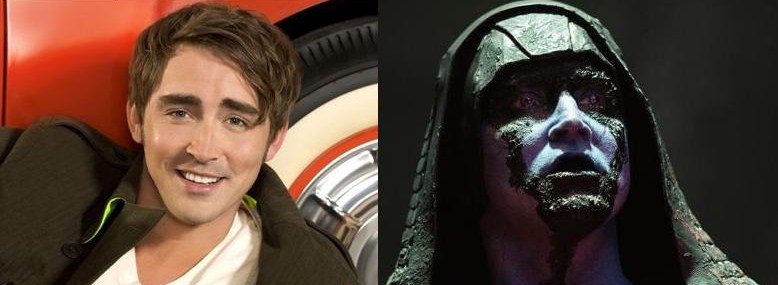
Casting for the film’s default lead, Star Lord, began in September 2012, with a laundry list of people who tested or read for the role: Eddie Redmayne, Joseph Gordon-Levitt, Joel Edgerton, Jack Huston, Michael Rosenbaum, and many, many others. Lee Pace also auditioned for the role, ending up instead slotted into the role of Ronan, the film’s main antagonist. Five months later, Marvel finally announced that they had found their man in Chris Pratt. Jason Momoa auditioned for the role of Drax, but he was passed over in favor of Dave Bautista (Momoa, of course, is slated to appear as Aquaman in DC’s upcoming attempted franchise). The nature of this new film meant that none of the MCU’s previously appearing characters could not reasonably make cameos in this film, although Buffyverse alum Alexis Denisof reprised his role as The Other, Thanos’s emissary who gave Loki his marching orders in Avengers. There was little publication surrounding other roles and testing for them, but the film’s cast was finalized by mid-2013 (minus Vin Diesel, whose vocal acting for Groot was only confirmed after the end of principal photography), and filming began in July of that year.

For those of you who have forgotten everything about the film except for a wisecracking raccoon and freshly-buff Chris Pratt being hosed down while flouncing about in underwear, a quick refresher: Young Peter Quill fled the hospital where his mother was dying in 1988 and was picked up by an alien ship. Years later, Quill (Pratt) acts as a scavenger in a fleet led by Yondu (Michael Rooker), a blue alien with an inexplicable Southern accent; he finds and takes a valuable item from a space tomb and ends up on the run from Kree radical Ronan (Pace). Multiple bounty hunters are sent to apprehend Quill, including Rocket Raccoon (voiced by Bradley Cooper) and his partner Groot (Diesel) and assassin Gamora (Zoe Saldana), who was kidnapped from her home by intergalactic warlord Thanos (Josh Brolin) and trained as a killer. These four untethered people are eventually captured and detained in a space prison; when they escape, they are joined by fellow inmate Drax (Bautista), who has his own axe to grind with Ronan and Thanos. They are opposed by Ronan and Gamora’s warrior “sister” Nebula (Karen Gillan) and the police-like Nova Corps, led by Nova Prime (Glenn Close). These decidedly-not-team-players reluctantly accept that no one else is in a position to save the galaxy from total annihilation and rise to the challenge.

Brandon, what did you think about Guardians of the Galaxy? If I remember correctly, this was one of the MCU flicks that you had seen before starting this project; does it fare better or worse now with more of a background in this world? Or, given that this film that lies outside of the MCU’s reach for the most part, does that context change your opinion at all?

EPSON MFP image

fourhalfstar

Brandon: I’m starting to feel extremely foolish about how I received Guardians of the Galaxy at the time of its release a couple years ago. I liked the film well enough as a loud, vibrant action comedy that provided a much-deserved starring role for America’s affable older brother (or boy toy sex symbol, depending who you are) Chris Pratt. However, I remember buying into the idea that the Marvel “house style” had significantly put a damper on the over-the-top exuberance of madman schlock director James Gunn. Gunn was familiar to me as the dark soul behind depraved camp titles like Slither and Tromeo & Juliet, so it was weird to see his style somewhat homogenized into a Luc Besson-style space epic. The truth is, though, that Gunn’s version of an uninhibited MCU entry probably would’ve turned out more like the grotesquely asinine Deadpool film I’ve spent the last month brooding over. In fact, Gunn already directed a nastily misanthropic superhero film, simply titled Super, that I generally enjoyed, but also found difficult to stomach at times due to the lighthearted way it depicts sexual assault. I don’t know if this is me getting increasingly sensitive with age, but another The Fifth Element, Star Wars-style space epic with Kevin Feige & company keeping Gunn’s sadistic id in check actually sounds preferable now to what might’ve been delivered otherwise. It might also be the case that the act of catching up with the rest of the MCU’s output in recent months has helped me realize just how unique Guardians is as a modern superhero popcorn flick & just how much of Gunn’s personality is noticeably present on the screen.

In any case, returning to Guardians of the Galaxy with fresh eyes was a revelation. This is a fantastic work of crowd-pleasing action cinema, the exact kind of delirious spectacle I look for in blockbusters. In that respect, the only film that might‘ve topped it in the year or so since its release is Mad Max: Fury Road & I mean that with full sincerity. The film’s detailed, lived-in version of space opera is literally worlds away from the rest of the MCU. Its superheroes aren’t truly heroic or even all that super. They’re mostly thieves, murderers, aliens, and the bi-products of cruel science experiments. Something that largely got by me the first time I watched Guardians of the Galaxy was just how emotionally damaged its central crew of space pirates are. Their families are dead. They’ve never known true friendship. They’re sometimes prone to drunkenly curse their own very existence. The film’s tendency for 80s nostalgia & crowd-pleasing action set pieces are really fun in an overwhelming way that I think often distract from just how devastatingly sad its emotional core can be. I never knew an anthropomorphic raccoon grimly complaining, “I didn’t ask to get made!” could make me so teary-eyed, but Guardians has a way of making the emotional pain of its damaged, nonhuman non-heroes feel just as real as the physical space they populate looks. That’s no small feat.

That’s obviously not to say that all of Guardians is deep-seated emotional pain. The film is mostly a riotously fun action comedy with broken hearts & bruised egos only peppering its blockbuster thrills. I love how inane its outer space worldbuilding is. Blue people, green people, purple people, and purple people eaters all roam about as if they are on a silly 60s sci-fi television show. Villains are known to say absurd things like “Nebula, go to Xandar and get me the Orb.” The MCU’s ultimate MacGuffin, the Infinity Stones, actually feel at home in this kind of space age gobbledy gook. It’s also fun to watch this atmosphere clash with Pratt’s womanizing bro humor as Star Lord, as I feel like I’ve lived in this kind of space adventure before, but I’ve never met anyone I could describe as a “space bro” as comfortably as Star Lord. I particularly enjoyed the line when describing the filth of his space ship/bachelor pad he confesses, “If I had a black light these walls would look like a Jackson Pollock painting.” The kicker is that Guardians not only has the most successful humor of the MCU’s output so far; it also has some of the most exhilarating action sequences in the franchise. The Kyln prison break in particular is a beaut & watching Rocket Raccoon operate his homemade weaponry gives me the same thrill I caught watching primates operate automatic machine guns in 2014’s Dawn of the Planet of the Apes.

4120537-7008853704-kclkd

the-brew-buzz-19

I could probably prattle on about how my favorite two MCU entries so far, Guardians of the Galaxy & Captain America: The First Avenger, thrive on their own strengths by distancing themselves from the rest of the franchise, but I don’t believe that best captures what makes Guardians so special. Honestly, the film’s own mixtape gimmick is a better access point to understanding its wide appeal. A mix of crowd-pleasing songs like “I Want You Back” & Escape (The Piña Colada Song)” and offbeat essentials like “Cherry Bomb” & “Moonage Daydream“, the film’s mixtape soundtrack mirrors its larger mashup of action comedy marketability & cult film tendencies. In retrospect the marriage of James Gunn’s mean nerd exuberance & the MCU’s action comedy accessibility is a match made in blockbuster heaven. It delights me to no end that you can actually purchase a copy of Star Lord’s beloved mixtape cassette. That piece of comic book movie ephemera actually seems more to the heart of the film’s appeal than a Rocket Raccoon figurine or even a Blu-ray copy of the film could ever be.

EPSON MFP image

fourstar

Boomer: Last time we were here, I mentioned how much Captain America: Winter Soldier reminded me of Star Trek VI and how that only made me love the former all the more. I have to admit that I was one of the naysayers with little hope for Guardians. By the time it came out, I was sick to death of the endless stream of advertisements for the movie; in every commercial break and before every YouTube there was a clip of Chris Pratt slowly flipping off John C. Reilly. But what I found when I saw the film was that I actually loved it, but mostly because it was the closest I felt we would ever come to having a Farscape feature.

The parallels don’t track perfectly, but they are obvious. We have the wise-cracking American thrust into an interstellar society made up of various societies and factions (Peter Quill/John Crichton), who has a relationship with a woman who was taken at birth and trained to be a deadly soldier and assassin (Gamora/Aeryn Sun). They’re joined by a large warrior with ritual scarrification and tattoos (Drax/D’Argo), a pint-sized wiseass (Rocket Racoon/Rygel), and a living plant (Groot/Zhaan). Farscape’s premiere episode even involves a prison break in which many of the main characters escape captivity, and both ragtag crews eventually find themselves drawn into the greater war going on around them in spite of their individual desires to simply overcome the traumas of their past. Both Drax and D’Argo have lost their wife and child (although D’Argo’s son is still alive, albeit enslaved), and both Gamora and Aeryn slowly warm to the human crewmate that helps them feel closer to their (in)humanity. The sequence in which the titular Guardians visit a mining colony inside of a once-living giant is even reminiscent of the episode in which the crew of Moya find a mining colony inside of the budong, an ancient spacefaring being of humongous proportions.

For the most part, the similarities end there, however. Although Groot and Zhaan are both plant people, the former lacks the metaphysical wisdom and spirituality of the latter. Although Rocket is full of himself, he lacks the imperial pomposity of the dethroned Rygel. Still, once can’t help but feel that Guardians is a spiritual sequel to Farscape, and that greatly contributes to my enjoyment of the film. I have to admit, however, that this rewatch wasn’t the thrill ride that I remembered fro my first few viewings. Guardians is undoubtedly the coolest of the MCU flicks so far, but the repetition of the jokes from the film in the real world has stolen some of the luster from their enjoyment. There’s still a lot to enjoy here, but Guardians doesn’t hold the endless rewatchability for me that Winter Soldier does, despite being much more fun than the comparably dour Captain America sequel. It was a smart move on Marvel’s part to follow up a somber MCU installment with a film that was exhilarating in a different way and for different reasons, but Guardians has a problem that the other films don’t have.Whereas the previous ensemble in The Avengers had the luxury of multiple individual films to flesh out the members of the team (minus the characters who were supporting players in previous installments, with Hawkeye never being fully realized as a character until Age of Ultron), Guardians has the unenviable task of introducing all five of its mains as well as their world and the ramifications thereof in a very short amount of time. The script is excellent in that the film doesn’t feel overloaded, but reflection upon the movie does lead to some questions that feel unanswered. We know that the Kree and the Xandarians have recently reached a peace accord, but what was their relationship beforehand? Are many of the Kree fanatics like Ronan, or is he an outlier, and, if so, why does Nova Prime have such difficulty getting the Kree ambassador(?) that she contacts late in the film to make a political statement decrying Ronan? And why wouldn’t the Kree condemn a terrorist anyway? This scene and others blow past so quickly that viewers may not realize just how much information is needed, but scenes like this have a way of niggling the subconscious.

Still, Guardians is a lot of fun. When I first saw it in theatres, I would have given it five stars, but time and distance have made me a bit more critical of it. Maybe I just wasn’t in the right frame of mind this time around, but the film just doesn’t have the magic for me that it did in 2014.

EPSON MFP image

Lagniappe

Brandon: It’s impossible to talk about Guardians‘ likability without addressing the absurd strength of its cast. Besides the appeal of Chris Pratt’s affable bro humor & “pelvic sorcery”, watching James Gunn regulars like Michael Rooker & Lloyd Kaufman appear among Hollywood heavyweights like Benicio Del Toro & Josh Brolin is a strange delight. Goofball comedic actor John C. Reilly interacting with Glenn Close is equally enjoyable as novelty. Bradley Cooper appears as a CG raccoon wearing people clothes. Vin Diesel outs himself as a huge D&D-oriented nerd as a talking tree. Bautista & the much-hated (among cinephiles, anyway) comic book prankster Howard the Duck both make a massive impact, which combine to make it feel as if this film were aimed to please my own particular nerdy obsessions: bad movies & pro wrestling.

The only complaint I might have about Guardians‘ insanely stacked cast of always welcome faces is the way it largely wastes the eternally-underutilized Lee Pace. I enjoyed Pace’s turn as impossibly cruel Ronan the Accuser more than I did the first time around but I do still think it was a huge mistake to cover up his luscious eyebrows with the alien makeup. Those might be the most handsome eyebrows in Hollywood. They deserve to run free.

tumblr_na2ozpjnfv1rfbi2jo1_1280

Boomer: For anyone reading this who is still mourning the loss of Farscape, I recommend current sci-fi series Dark Matter. It has fewer obvious commonalities with Farscape than Guardians, but its tone is the closest thing to Farscape’s that I’ve been able to find in a long time, even if it lacks the older series’s humor.

When joking in our earlier review about the fact that the Ninth Doctor appeared in Thor 2 and that the Tenth Doctor had played the villain of Jessica Jones, I had completely forgotten about the fact that Karen Gillam, who played the Eleventh Doctor’s companion Amy Pond, played Nebula in this film. There’s also the fact that Tobey Jones, who portrayed a nightmare version of the Doctor a few years back in “Amy’s Choice,” portrayed the evil Doctor Zola in both Cap flicks. Were it not that Jenna Coleman (who portrayed Clara Oswald, companion to the Eleventh and Twelfth Doctors) played a minor role in Captain America, all the Doctor Who alums who have thus far appeared in the MCU would have portrayed villains.

Regarding how the film plays into the larger mythos of the franchise, the plot elements from Guardians have largely only been important in how they affect Agents of S.H.I.E.L.D. Just as one of the main characters on the program was revealed to be a Hydra mole near the end of the first season, the second season featured major developments in the form of the revelation of the existence of the Inhumans and that another member of the squad was one such being. The Inhumans, for those who understandably gave up on Agents early on, are a subspecies of humanity who possess abnormal physiological traits as the result of a Kree genetic engineering campaign in Earth’s distant past. It’s also an easy way for the MCU to introduce large numbers of super-powered individuals despite not having the right to use the term “mutant,” what with the rights to the X-Men franchise still tied up at Fox. For those of you playing along at home, there is also a planned Inhumans film slated for release in 2019.

EPSON MFP image

Combined S.W.A.M.P.F.L.I.X. Rating for Guardians of the Galaxy (2014)

fourhalfstar

-Agents of S.W.A.M.P.F.L.I.X.

10 Cloverfield Lane (2016)

disaster

fourstar

One thing that’s always disturbed me about “doomsday preppers” & “survival” enthusiasts is that they always seem to be perversely looking forward to the post-apocalyptic scenarios they’re supposedly preparing against. When preppers warn of possible end-of-the-world scenarios that will tear society to shreds, the first thing that always comes to mind is the question “Who would want to survive that?” Whether the world as I know it ends by zombie outbreak, alien attack, or (most likely) nuclear fallout, I’d honestly rather die that pick through the wreckage with the paranoid, power-hungry bullies who had been anticipating that downfall. Apparently I’m not alone in that opinion.

10 Cloverfield Lane is less of a “sister film” sequel to the (shrill, annoying, insufferable) 2008 found-footage sci-fi horror Cloverfield & more of a tense, horror-minded thriller about the monstrous spirit lurking within doomsday prepper culture. I’m not sure that it’s the first film to depict the selfish nastiness & misanthropy at the heart of “survival” types in the context of the horror genre, but it’s the first I’ve seen and it’s damn effective. After a brutal car accident, a young New Orleans woman (played by Faults‘s un-deprogrammable cult fanatic & Scott Pilgrim’s mall punk girlfriend Mary Elizabeth Winstead) finds herself chained to the wall of a mysterious basement wearing only her underwear. Her captor (played by a beyond terrifying John Goodman in what might be a career-high performance) attempts to convince her that she’s “lucky” to be contained in his bunker because “there’s been an attack” & “everyone outside [the shelter] is dead.” Skeptical of her captor’s “generosity” & the idea that “getting out of [there] is the last thing [they] want to do”, our hero carefully attempts to piece together exactly what the strange man wants her for, what’s waiting for her in the outside world, and what’s her safest, most expedient form of escape. 10 Cloverfield Lane keeps the answers to these questions shrouded for as long as possible, but one thing is certain throughout: whatever monstrous threat is waiting outside the shelter could not be has as awful as the one running the show within.

Part of the reason 10 Cloverfield Lane is such a great film is that it’s the exact opposite of its predecessor. Ditching the shaky cam blur that made Cloverfield such a nauseous mess, the film adopts a very grounded, straight-forward visual style that recalls William Friedkin’s masterful stage play adaptations Bug, The Birthday Party, and The Boys in the Band. More importantly, the first Cloverfield film never developed its characters beyond shrill archetypes fleeing danger. When someone’s endlessly shrieking “Rob’s got Beth on the phone! Rob’s got Beth on the phone!” and you don’t know or care who Rob & Beth are, it’s difficult to be anything but annoyed. 10 Cloverfield Lane, by contrast, locks its audience in a basement with a small cast of fearful doomsday survivors suffering under the power dynamics of the cycles of abuse. It’s much easier to be engaged by a film on an emotional level in that kind of scenario.

There is something very essential that both Cloverfield films share, however: the overwhelming power of their central mysteries. If these two films are to be understood as a loose anthology, it’s the basic trick of keeping the audience in the dark that binds them. 10 Cloverfield Lane ups the ante by not only clouding the truth about what exact outside force is looming as a threat over its proceedings (zombies, Russians, Martians, nuclear war, and mutant space worms are all suggested at some point), but also introducing a complexly monstrous threat from within the characters’ ranks that is simultaneously abusive, protective, and difficult to understand. The film’s woman-in-captivity terror is far from unique (actually, it seems to be somewhat of a full-blown trend recently) but the way its Stockholm syndrome familial bonds & doomsday prepper cultural context complicates that narrative allows the film to crawl under your skin in a way that its predecessor never even approached, whether or not its threat was just as mysterious. All of this, a go-for-broke third act that throws all caution to the wind, an expert use of the Shondells classic “I Think We’re Alone Now” to boot. 10 Cloverfield Lane shook me, surprised me, and confirmed my deepest fears about “survival” nuts’ ugly thirst for post-apocalyptic power grabs. That’s far more than I could’ve expected from a “spiritual sequel” to a found footage horror I failed to enjoy all three times I gave it a shot.

-Brandon Ledet