The Overlook Film Festival 2025, Ranked & Reviewed

Self-described as “a summer camp for genre fans,” The Overlook Film Festival has quickly become the best of New Orleans’s local film fests . . . as long as you’re a total sicko. I consistently catch a wide selection of the year’s most stylish, violent, and memorable horror films & thrillers in the festival’s lineup, many of which don’t otherwise reach local big screens before they get siphoned off to the cultural void of streaming platforms. In recent years, all films programmed have been corralled to the two locations of The Prytania Theatres, which allows you to form a weekend-long bond with fellow movie nerds you continually run into while lining up for the next fucked-up delight. Everyone’s watching too much, sleeping too little, and loving every horrific minute. It really does capture the summer camp or sleepover feeling of staying up all night watching scary movies with your friends after the adults fell asleep and can no longer police what’s playing on the living room TV.

This was the first year of the festival where I made some time in my schedule for a couple repertory screenings: the Corman-Poe classic The Fall of the House of Usher (1960) and a block of David Lynch’s early short films (namely “Sick Men Getting Sick,” “The Grandmother, “The Amputee,” and “Premonitions Following an Evil Deed”). The Vincent Price campiness and costume drama fussiness of House of Usher made for a classically wonderful trip to the Prytania’s original location uptown, but the Lynch shorts made a much more significant impression on me. As a collective, they offered a glimpse into an alternate dimension where Lynch might have stuck to a full career as a Don Hertzfeldt-style outsider animator. More importantly, they also projected most of the scariest images I saw at this year’s festival, especially in the domestic blackbox-theatre artificiality of “The Grandmother.” There’s always something novel about watching challenging art films in a downtown shopping mall like Canal Place, and that Lynch block may have been the most abstract & challenging films ever screened there. It says a lot about Overlook’s sharp, thoughtful curation that they made room for films that academically rigorous alongside feature-length sex-and-fart-joke comedies like Grace Glowicki’s Dead Lover (which, I might as well admit, was my favorite of the fest).

I see no point in rating or raking the works of recently fallen legends like Corman & Lynch here, since their contributions to the festival are so deeply engrained in genre cinema history, they’re beyond critique. Instead, I’m listing below the ten new-release feature films I caught at this year’s Overlook Film Festival, ranked in the order that I appreciated them, each with a blurb and a link to a corresponding review. For a more detailed recap of the Swampflix Crew’s festival experience beyond these reviews, check out the most recent episode of The Swampflix Podcast.

Dead Lover

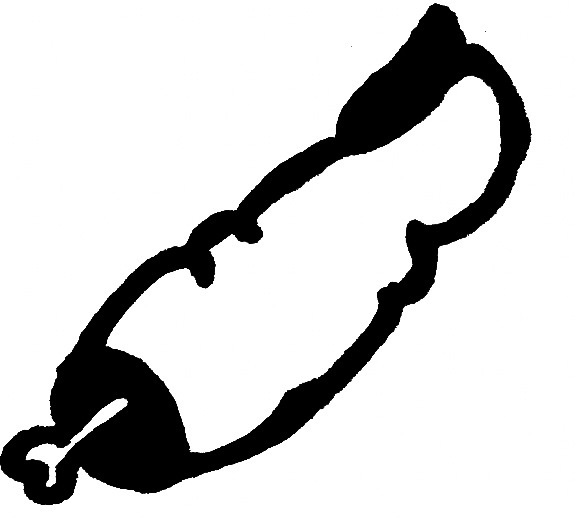
Grace Glowicki follows up her freak-show stoner comedy Tito with a flippantly surreal Hammer Horror throwback, filtering the Frankenstein myth through the Tim & Eric meme machine. Some of the most gorgeous, perverted images you’ll see all year paired with the kind of juvenile prankster humor that punctuates its punchlines with ADR’d fart noises.  If Glowicki’s filmmaking career doesn’t work out, she can always pivot to becoming the world’s first drag king Crispin Glover impersonator, bless her putrid heart.
The Shrouds

Grief has been the major theme in horror for the past decade, while Conspiracy has been the major theme of mainstream political thought.  Only Cronenberg could find a way to eroticize both in a single picture. The king of the perverts continues his reign, despite his reluctance to wear the crown.

Hallow Road

An all-in-a-car, real-time thriller that reimagines 2013’s Locke as a dark fairy tale about irresponsible parenting. Extremely satisfying for anyone who loves to watch Rosamund Pike act her way through a crisis.
Zodiac Killer Project

A self-deprecating meta doc about a true crime dramatization that fell apart in pre-production.  Reminded me of a couple postmodern television series of my youth: Breaking the Magician’s Code – Magic’s Biggest Secrets Finally Revealed (for spoiling the magic of how the true-crime genre works) and The Soup (for giving a broad enough overview of the genre that I don’t feel like I have to watch any genuine examples of it to Get It).

Cloud

The new Kiyoshi Kurosawa (no not that one, the other one) asks a really scary question: What if online flamewars became physical, literal, and consequential? Turns out they’d still be at least a little bit silly and a lotta bit pathetic.

LifeHack

Screenlife cinema that abandons horror in favor of the heist thriller, following the small-scale, laptop-bound schemes of four teens who steal a Bitcoin fortune from an Elon Musk-type dipshit.  I personally preferred when this still-burgeoning subgenre was fully supernatural, but it’s nice to see a version of it where teens are actually having fun being online (even when in peril).

Predators

A documentary about To Catch a Predator as an aughts-era reality TV phenomenon. Felt like I was going to throw up for the first 40 minutes or so, because I had never seen the show before and wasn’t fully prepared for how deeply evil it is.

Good Boy

You’ve seen a haunted house movie from the POV of a ghost. Now, line up for a haunted house movie kinda-sorta from the POV of a dog! What a time to be alive.
Orang Ikan (Monster Island)

A WWII-set creature feature stranded somewhere in the Pacific Ocean. Continues a long tradition of unspoken homoeroticism in wartime dramas, now with a Roger Corman rubber-suited monster as lagniappe.

Redux Redux

A sci-fi revenge thriller about a grieving mother who gets addicted to killing her child’s murderer in multiple alternate dimensions. It brings me no pleasure to act as the logic police, but the temporal shenanigans of this one make no sense. It’s like they wrote it as a time-loop movie and subbed in the word “multi-verse” instead at the last minute without cleaning up the implications of how time passes differently in that genre. The violence is effectively nasty, though, and there are a few tense set-pieces that almost distract from the quibbles.

-Brandon Ledet

The True-Crime Horrors of The Overlook Film Festival

The scariest films I saw at this year’s Overlook Film Festival featured none of the ghouls, ghosts, goblins, demons, and vampires that typically populate the screen at the horror-leaning genre fest. I was mostly scared by the dark-sided media consumption habits of my fellow human beings, some of whom were in the audience of the very same theater as me. Personally, I can watch supernatural evil illustrated on the screen all day without being emotionally affected by the darkness & cruelty depicted, but when it comes to turning true-crime documentation of real-world evil into passive, consumptive entertainment, my heart sinks in my chest. True crime documentaries have recently become a hugely popular micro-industry, with a huge audience second-screening 10-hour miniseries about heinous murder sprees while eating dinner & folding laundry, as if they were half-listening to episodes of The Office or Friends. Something about that passive, disaffected viewing habit is even more disturbing than the crimes being dramatized for mass entertainment (and for easy, routine streaming-service profit). So, it’s appropriate that two of the documentary selections at this year’s Overlook focused on general audiences’ insatiable true-crime appetite from a critical distance, asking how, exactly, did we allow our formulaic background entertainment to get this fucked up?

Sometimes, you need a little distance to recognize just how rotted things have gotten. David Osit’s documentary Predators profiles the aughts-era true crime series To Catch a Predator as a reality-TV phenomenon in which Dateline NBC anchor Chris Hansen baited online child-molesters from behind their keyboards to stage sensational on-camera confrontations in the meat space, to great financial success. Deploying “decoy” actors who pretended to be underage, the show would then interview the titular predators in the lowest moment of their lives, watching them to beg for mercy & therapy before promptly being arrested by local cops. I remember finding this premise and the show’s success too grotesque to stomach as a teenager when it first aired, so I spent the first 40 minutes or so of Predators fighting back the urge to vomit, confronted with how deeply evil it was in practice after only being aware of it in the abstract. No one in the To Catch a Predator production—Chris Hansen included—cared about the children they were supposedly protecting by luring these men to a bait house. The show is a seasons-long ratings stunt meant to hook & shock an audience by tapping into our animalistic impulses for violent vengeance. Its legacy is not in making the streets safer; it’s in prompting one of its targets to commit suicide during a taping and in inspiring dipshit influencers to stage their own D.I.Y. versions of the show on YouTube & TikTok, each with their own brand-conscious catchphrases & subscription models. Osit eventually wrestles with his personal connection to the show and how his young mind was shaped by it while it initially aired, but I mostly walked away disgusted with the broader, mainstream audience that made it a hit in the first place.

Charlie Shackleton’s self-deprecating meta documentary Zodiac Killer Project is much more current and much more conceptual in its own examination of true-crime cinema’s popularity. Shackleton’s original pitch was to adapt a book about an unprovable theory on the identity of the titular serial killer into a generic true-crime miniseries, but the rights for the adaptation were pulled at the last minute before production, so he couldn’t legally complete it. Instead, he’s made a movie about what he would have done if he had maintained those rights, breaking down the tropes, rhythms, and attention-grabbing tactics of a formulaic true-crime documentary as he outlines the incomplete project. He illustrates this game plan through four rigidly segmented visual approaches that afford the film a kind of academic distance from the typical straight-to-streaming docs it satirizes. In one approach, he narrates the scenes he cannot legally film over celluloid images of empty Californian landscapes, slowly zooming in on minor background details whenever he gets wrapped up in the heat of the story. In another, he illustrates individual images from that story with “evocative B-roll” in a purposefully artificial sound stage environment, mimicking Errol Morris’s pioneering true-crime doc The Thin Blue Line as it’s been diluted through countless reiterations. He’s also often shown in the recording booth as he’s being interviewed by an off-screen collaborator, making all of this observation & deconstruction of the true crime genre sound casually improvised, as if it’s occurring to him in real time. In the most important approach, he proves his point by inserting scenes from the made-for-Netflix true crime docs he’s describing in a YouTube video essay presentation, demonstrating that he clearly knows what he’s talking about as a self-critical fan of the genre.

Zodiac Killer Project reminded me of a couple post-modern television series I did watch in the early 2000s, while avoiding the amoral cultural rot of shows like To Catch a Predator. I’m thinking of Breaking the Magician’s Code: Magic’s Biggest Secrets Finally Revealed—for how it spoils the magic of how the true crime genre works its audience—and The Soup, for giving a broad enough overview of the genre that I don’t feel like I have to watch any genuine examples of it to get it. Even when breaking down the laziest & evilest aspects of the genre in real time, however, you get the sense that Charlie Shackleton is still a little bummed that he didn’t get to complete his formulaic streaming-service doc as originally conceived. His mourning the loss of that work is even tied to his realization that so many fewer people are going to watch this artful, academic documentary than the audience that would have auto-played his formulaic Netflix slop, if completed. Indeed, only a miniscule fraction of the audience who watched To Catch a Predator as it originally aired are going to reckon with the moral implications of that mass-entertainment character blemish as examined in its post-mortem doc Predators. Hell, I’m sure David Osit would even settle for a fraction of the still-watching audience commanded by micro YouTube celebrity Skeet Hansen, who lamely punctuates his Chris Hansen-impersonating predator exposures with the catchphrase “You’ve just been Skeeted.” The scariest aspect of all of this is how little anyone gives a shit about the exploitation of real-life violence, suffering, and abuse that provides the background noise to our absent-minded chores & scrolling; it’s all comfort watching. The monsters are the audience.

-Brandon Ledet

Parental Hell at The Overlook Film Festival

When I think of how the horrors of parenting are usually represented in genre cinema, I picture cruel, demonic children. In most horrors & thrillers that prompt you to think twice about having kids, the prompt is a warning that the kids themselves can be absolute nightmares, typified by titles like The Bad Seed, The Omen, Orphan, and We Need to Talk About Kevin. I was treated to an entirely different flavor of parental Hell at this year’s Overlook Film Festival, however, one that torments parents even when their kids are total angels. Both of the high-concept thrillers Redux Redux & Hallow Road ask what if the true horror of parenting is your own potential for failure? What if you fail to keep your children alive or, worse yet, fail to prepare them to keep themselves alive once your part of the job is done? The lifelong responsibility to raise, protect, and prepare another human being for the Hell of everyday living leaves parents incredibly vulnerable to the heightened pain of genre storytelling. It’s just unusual for the source of that pain to be a long, hard look in the mirror.

In Redux Redux, the major failure of the mother figure played by Michaela McManus (sister of co-directors Kevin & Matthew McManus) has already happened before the story begins. We meet her nursing her grief over the loss of her daughter with a weak cup of coffee in a roadside diner. She wordlessly trails the diner’s short-order cook back to his shitty apartment, then stabs him to death in his bedroom. Then, the scenario repeats: the same diner, the same doomed cook, the same violent end. The only thing that changes is the color of the coffee mug. Redux Redux is a revenge-thriller version of the television program Sliders, wherein our grieving-mother antihero jumps from alternate universe to alternate universe to murder her daughter’s killer in thousands of temporarily satisfying ways. Of course, these empty acts of revenge do nothing to bring her daughter back to life; it’s more of a multiversal addiction story than anything, where she hides from her pain by violently acting out against a convenient effigy of the man who ruined everything. The main tension of the movie is whether she can break this violent pattern of addiction to do better by her new, reluctantly adopted daughter figure: a street-smart wiseass teen (Stella Marcus) who’s in danger of becoming the spitting image of her worst self. The horrors of parenting are apparently inescapable, even when you have a magic microwave coffin that allows you to slide into an alternate dimension at a moment’s notice.

In Hallow Road, there’s still plenty of time to do the right thing, but the parents fail anyway. Rosamund Pike & Matthew Rhys star as a middle-aged yuppie couple who are woken in the middle of the night by a panicked phone-call from their college-age daughter. It seems that after a passionate fight with her parents, she decided to go do some drugs in the woods about it, and accidentally struck a stranger with her car on the drive back home. Panicked, the couple start racing to their daughter in their own vehicle, where most of the film is confined for the remainder of the runtime. With only their voices & wisdom to guide their child through this life-changing (and life-ending crisis), they find themselves at a moral crossroads. Do they instruct her to alert the authorities of the accident and face jailtime, potentially saving her stoned-driving victim’s life, or do they help her escape responsibility for her actions, taking a blame for the hit & run themselves to preserve her post-collegiate future? The resulting story is an all-in-a-car, real-time thriller that reimagines 2013’s Locke as a dark fairy tale about irresponsible parenting. The further the couple drive into the woods to “rescue” (i.e., corrupt) their child, the more illogical and darkly magical the rules of their world become, and the the entire film functions as a kind of artificial stage-play examination of parents’ most harmful, regrettable impulses.

Personally, I was much more pleased with the genre payoffs of Hallow Road than I was with Redux Redux, mostly because its internal logic felt more purposeful & thoroughly considered. Because Hallow Road opens itself up to Old World supernatural magic, it’s a lot easier to accept its high-concept premise than the more grounded, sci-fi theorizing of Redux Redux. It brings me no pleasure to act as the screenwriting logic police, but the temporal shenanigans of Redux Redux made no sense to me, especially once I started counting up the untold thousands of weeks the mother figure claims to have been murdering her daughter’s killer for and noticed that she is not, in fact, 100 years old. It’s like the McManus family started writing it as a time-loop movie and subbed in the word “multi-verse” instead at the last minute without cleaning up the implications of how time passes differently in that genre. Meanwhile, director Babak Anvari is in total control of just how much information to reveal to the audience about the logic of his hermetic, supernatural world to keep us on the hook — very little. While Redux Redux plays like an audition for a bigger-budget Hollywood actioner for the McManus clan (if you squint hard enough, you can see Betty Gilpin & Jenny Ortega headlining this one as the makeshift mother-daughter avenger duo), Hallow Road is more realistic about what it can achieve on its car-bound scale, using its confinement & limited resources to increase the attention, rather than distracting from them. Its local premiere at this year’s Overlook was also a nice kind of homecoming for Anvari, whose previous picture Wounds is one of the best New Orleans-set horror movies in recent memory (despite what its general critical response will tell you).

Speaking even more personally, I will never know the full horrors of parental failure illustrated here, because I will never be a parent myself. Maybe the unthinkable nightmare of having lost a child and the resulting addictive, self-destructive coping mechanisms that inevitably follow that kind of tragedy stir up powerful enough emotions in a parental audience that the basic temporal logic of its conceit doesn’t matter much. The violence is effectively nasty at least, and there are a few tense set-pieces that almost distract from the conceptual quibbles (and from the nagging feeling that you’re watching the DTV version of Midnight Special). Meanwhile, the violence of Hallow Road is more verbal & conceptual, as the entire narrative is teased out over the course of a feature-length phone call. I still found it to be the more rattling picture of the two, thanks to the aural jump scares of the sound design and the bigger, crueler questions it asks about what it means to truly be a Good Parent. In either case, I’m happy to have my suspicions that being a parent is a nonstop nightmare confirmed, even if it’s not the kids themselves who are the terror. Apparently, it’s the personal responsibilities & shortcomings that really haunt you.

-Brandon Ledet

Dead Lover (2025)

Grace Glowicki’s directorial career debuted in the genderfucked stoner-comedy freak show Tito, which might very well have been the world’s first Crispin Glover drag king act. The fuckery continues in her sophomore film Dead Lover, which locally premiered at this year’s Overlook Film Festival (and, to my eye, was the best of the fest). Dead Lover perfectly exemplifies the Overlook brand of horror-themed genre films that skew more artsy than scary, delivering a flippantly surreal Hammer Horror throwback that filters the Frankenstein myth through the Tim & Eric meme machine. Glowicki has focused her eye in the years since Tito, crafting some of cinema’s most gorgeous, perverted images in recent memory. Her sense of humor has remained decidedly prankish & juvenile, though, punctuating punchlines with ADR’d fart noises and ejaculations of vomit. It’s a masterclass lesson in the refinement of bad taste.

Glowicki stars as a 19th Century gravedigger who has become lonely in her continuation of the family business, as she stinks too badly of rotting corpses for any other locals to socialize with her. Her pursuit of sexual partners despite that putrid stench does eventually prove fruitful, drawing the eye (and nose) of a nearby wealthy pervert who’s grieving the loss of his sister but still makes time to fetishize the gravedigger’s offense to the senses. They fall in love and bone like mad, but tragedy soon strikes when, as the title promises, her long-awaited lover dies by sea. She refuses to give up on her one shot at genuine romance, though, so she attempts to reconstitute her dead lover using the one remaining body part that was recovered from the shipwreck (his severed finger) . . . with a little help from the stockpile of corpses that happen to be buried around the cemetery where she works & lives.

The tension between Dead Lover‘s high-art visual style and low-trash sense of humor is also echoed in its bifurcated tone, which alternates between the extremities of camp & sincerity in erratic mood swings. Much of the gravedigger’s dialogue is addressed to a gigantic arts-and-crafts rendering of the moon, recalling the operatic poetry of Kenneth Anger’s experimental short “Rabbit’s Moon.” She confesses all of her most vulnerable yearnings to Mr. Moon, but those thoughts are frequently interrupted by hissing, selfish jags of animalistic horniness & greed. Combined with her insultingly inaccurate Cockney accent, this internal romantic/vicious struggle estimates what it might be like if Lily Sullivan’s unhinged impersonation of Bridgette Jones on Comedy Bang Bang suffered the same fate as Gollum from Lord of the Rings. My apologies if that CBB reference means nothing to you, but it really is the only accurate point of comparison.

There’s a sound-stage artificiality to Dead Lover that recalls both the perverted visual poetry of Stephen Sayadian’s Dr. Caligari and the low-budget carelessness of the graveyard set in Ed Wood’s Plan 9 from Outer Space. It’s a picture overflowing with bad wigs and even worse accents, as its four main players alternate through multiple sets of characters with the ramshackle energy of a sketch comedy revue. Still, there’s a lot of heart to its romantic yearning in which characters love one another for their quirks & stench rather than in spite of it. It also has surprisingly provocative ideas about the physical embodiment of gender, as the gravedigger rebuilds her male lover with indiscriminate concern for whether the corpses she sources spare parts from are male or female (or, even more strangely, whether they are related to her lover by blood). All she cares about is still being able to orgasm by the thrust of his finger; how romantic.

I was greatly amused by the strangeness of Glowicki’s debut, but this follow-up exceeded my expectations even so. In my mind, she’s now joined an elite class of high-style, low-budget filmmakers who are pushing the outer limits of how sex, gender, and desire can be represented on screen while also just goofing off with their friends: namely Cole Escola, Amanda Kramer, and Betrand Mandico. At times, it really does feel like some of the most exciting, immediate art being made right now, even though it’s an outdated genre throwback featuring a severed finger that stretches to the length of a broomstick and a potential suitor professing his love by declaring he wants to eat one of the gravedigger’s turds longways, “like a banana.”

-Brandon Ledet

Podcast #236: Good Boy (2025) & The Overlook Film Festival

Welcome to Episode #236 of The Swampflix Podcast. For this episode, Brandon, James, and Hanna discuss a selection of genre films that screened at this year’s Overlook Film Festival, starting with Good Boy (2025), a haunted house story as seen from a dog’s POV.

00:00 Welcome

04:36 Good Boy
17:00 The Ugly Stepsister
30:00 It Ends
36:26 Predators
49:43 Zodiac Killer Project
1:00:53 Dead Lover
1:05:00 The Shrouds
1:16:05 LifeHack
1:20:20 Cloud
1:38:17 Hallow Road

You can stay up to date with our podcast through SoundCloudSpotifyiTunesTuneIn, or by following the links on this page.

– The Podcast Crew

LifeHack (2025)

There was a moment during the local premiere of the cyber-heist thriller LifeHack at this year’s Overlook Film Festival when the Canal Place shopping mall’s fire alarm was pulled, disrupting the movie with flashing lights & wailing warnings of a non-existent emergency. In a touch of serendipity, this occurred just when the film’s teenage-gamers-turned-hardened-criminals have invaded the corporate offices of their target, seconds before triggering their own in-film fire alarm to avoid arrest. It wasn’t until that real-life intrusion on the preposterous third-act heist that I realized just how much tension I was feeling as the fictional heat closed in. So much of the movie is guided by teens goofing off online via innocent memes, insults, and flirtations that the audience hardly notices just how high the stakes have become until their crime scheme spectacularly falls apart — despite the story opening with their ringleader being interviewed from prison post-heist.

That carefree flippancy is exactly LifeHack‘s greatest strength as the latest addition to the “screenlife” subgenre (a term coined by its own producer, Timur Bekmambetov). It follows in the footsteps of larger scale screen-capture thrillers like the Unfriended & Missing series (both also produced by Bekmambetov), simulating the user interface of a laptop as its drama unfolds in the free-floating windows of various computer programs, and introducing the audience to a small friend group of video-chatting teens before putting them in peril. Only, most entries in the genre have been, understandably, miserable in tone. The teens in most screenlife thrillers have a nightmare of a time online, hounded by hackers, kidnappers, and ghosts through the screen’s glowing window into their bedrooms. In contrast, the teens of LifeHack are having a grand old time online, constantly joking & pranking their way through what turns out to be a fairly severe, high-profile crime. Even when reacting to the immense danger they find themselves in, their descriptors never escalate beyond inane phrases like “cringe” and “not chill.” It’s just not that serious to them, which in its own way is a unique source of tension for the genre.

It’s difficult to nail down exactly why LifeHack is set in 2018. The references to pop culture iconography like Salad Fingers and the OMC hit “How Bizarre” suggest that director Ronan Corrigan is a little too old to be nostalgic for the late 2010s as his teen years, so it’s possible that the hyperkinetic editing of the film’s dozens of whiz-bang computer programs just took that long to assemble into narrative coherence. The only reason its setting matters, really, is that the four amateur-hacker teens’ cyber-heist is committed against the personal Bitcoin fortune of a right-wing tech bro dipshit who starts to eerily resemble Elon Musk’s public persona the longer the movie dwells on his fake-press details. There are enough Andrew Tates, Peter Thiels, and Jordan Petersons out there that the resemblance to Musk’s real-life persona as the king of the dipshits doesn’t matter much, but the happenstance of the resemblance becomes unignorable by the time the movie’s villain is wielding a flamethrower in press photos with the exact juvenile carelessness that Musk recently wielded a chainsaw. It’s easy to root for the kids to rob him blind.

The mechanics of how they steal his blockchain money, how they get caught, and how they negotiate their way out of the direst consequences of the haywire heist are worth discovering in the film itself rather than in a review. It is a thriller, after all. The only thing you really need to know is that the kids are a delight and their online target is an Alpha Grifter avatar for all modern youth-culture evils, so we’re always rooting for them to wriggle their way out of handcuffs. Personally, I do miss when early screenlife thrillers leaned into the digital, intangible ambiguity of human existence online, so that full-on horror movies like Host & Unfriended could unashamedly deal in the supernatural without limiting themselves to real-world computer logic. However, it is refreshing to see a version of this genre that acknowledges that kids still have fun online, gaming & goofing off with friends they don’t always have the chance to share physical space with. LifeHack is the breeziest, least grim screenlife thriller I can name, and it still manages to spike your heartrate when it needs to.

-Brandon Ledet

Podcast #210: In a Violent Nature & Overlook Film Fest 2024

Welcome to Episode #210 of The Swampflix Podcast. For this episode, Brandon, James, Britnee, Hanna, and guest Bill Arceneaux discuss a selection of horror films that screened at this year’s Overlook Film Festival, starting with the gory slow-cinema slasher In a Violent Nature.

00:00 Welcome

04:47 In a Violent Nature

23:43 Moviegoing with Bill
32:16 ME
46:12 Dream Factory
53:47 Hypoxia
56:54 The Influencer
1:04:03 Red Rooms
1:24:58 Humanist Vampire Seeking Consenting Suicidal Person
1:35:46 Infested
1:41:07 Oddity
1:44:54 Cuckoo
1:48:46 I Saw the TV Glow
1:55:20 Abigail

Overlook 2024, Ranked and Reviewed

  1. ME
  2. I Saw the TV Glow 
  3. Cuckoo
  4. In a Violent Nature 
  5. Infested 
  6. Oddity
  7. Red Rooms 
  8. Sleep
  9. Look Into My Eyes
  10. Hood Witch
  11. Azrael
  12. Arcadian
  13. Abigail 

You can stay up to date with our podcast through SoundCloudSpotifyiTunesTuneIn, or by following the links on this page.

– The Podcast Crew

Psychic Damage at The Overlook Film Festival

The term “horror” can apply to such a wide range of narrative, thematic, and aesthetic traditions that it’s almost too wide of an umbrella to be considered a single genre.  I’m always especially impressed with The Overlook Film Festival’s interpretation of what qualifies as horror in its programming, which makes room for films as disparate in tone & intent as a when-spiders-attack creature feature set in a French housing block and an internal identity crisis triggered by obsessive television watching in the American suburbs.  This breadth of curation was especially on my mind while attending a trio of films about psychic mediums at this year’s Overlook – three films that had little, if anything, in common beyond the shared subject of their premises.  Not all horror films are interested in scaring their audience; some are interested in making us laugh, some in making us ponder the incompressible phenomena of daily life.  It’s incredible that I saw all of that territory covered in three Overlook selections that all happened to feature spiritual mediums’ attempts to communicate with the spirits of the dead.  Horror is everything; everything is horror.

Look into My Eyes

Documentarian Lana Wilson sounded surprised by Overlook’s flexible definition of horror as well, introducing her film Look into My Eyes by saying she was “tickled” by its selection for this year’s festival.  It totally makes sense in the context of the overall program, though, given its open-minded curiosity about spiritual mediums who claim to communicate with the dead.  Look into My Eyes is an intimate documentary about the therapeutic powers and performative artistry of New York City psychics & mediums.  It would be easy for a doc with that subject to find ironic amusement in the eccentric characters interviewed, but Wilson cares way more about the interpersonal communication & emotional healing of spiritual sessions than the legitimacy of the supposedly supernatural practice.  Neither skeptical nor defensive, she focuses on what the psychics themselves get out of the sessions (beyond the obvious monetary compensation) instead of what they do for their clients.  They’re real people seeking connection to realms of the unreal, which makes for a fascinating dissonance if you care to listen long enough to get to know them.

Within the context of a horror movie festival, it’s impossible not to notice the genre movie cinephilia of the psychics profiled here, something Wilson acknowledged in the post-screening Q&A.  One interviewee hangs a poster of Jack Torrance on their bathroom wall, as if he were about to break into the room with an axe; another is a John Waters obsessive who’s transformed her apartment into a shrine honoring Divine (a woman after my own filthy heart).  All seven of the psychics profiled are artistically creative, most of them having started as actors in the performing arts before settling into parapsychology as a side hustle.  Wilson does not use this revelation as a gotcha to expose them as frauds, because it’s not something that her subjects see as shameful or disqualifying.  They’re channeling the spirits of the dead the same way they’d channel a fictional character, and (most of the time) it feels real to them.  They’re often just as haunted by grief & loss as their clients and both sides of the transactional divide find the practice therapeutic (an intimacy that’s heightened by the movie being filmed at the height of the COVID-19 pandemic).  It’s possible that out of the 150 or so NYC psychics Wilson contacted as potential subjects for this project, she subconsciously chose these particular 7 because they share her own interests in the creative act of filmmaking, so that it says less about the practice at large than it says about the director’s bias.  Even if so, the reason the movie works is because she is genuinely curious about their professional & private lives; any curiosity about the spiritual world beyond our own is secondary.

Sleep

Like with Look into My Eyes, it’s also ambiguous as to whether the Korean horror Sleep is actually a ghost story, or just a story about people who believe in ghosts.  Curiously, the answer to that open-ended question also hinges on whether a struggling actor is telling the truth when they appear to be communicating with the dead, or whether they’re performing for personal survival.  The actor in question is played by Lee Sun-kyun, the Parasite performer who unexpectedly died shortly after this film’s international premiere last year.  Lee’s real-life death is made even more acutely painful by how lovably charming he is in Sleep as a doting husband who feels immense guilt about his nightly sleepwalking episodes that torment his equally adorable but increasingly frazzled wife (Train to Busan’s Jung Yu-mi).  Scared that the out-of-character violence of her husband’s sleepwalking episodes will threaten the health of their newborn baby, the normally skeptical wife allows her mother to bring a psychic medium into the house to help exorcise the evil spirit that’s supposedly taken root in his body.  Whether the husband believes in the ghost himself is ultimately up for debate, since he may very well be play-acting with the superstition just long enough to be cured by modern medical science, hoping his wife doesn’t attempt to violently extract the “ghost” from inside him in the meantime.

Speaking of Parasite, Sleep is the debut feature of director Jason Yu, a young protegee of Bong Joon-ho (who recommended Lee take the lead role as the possibly-possessed husband).   That professional connection is worth noting because it informs Sleep’s oddly prankish tone.  Whether or not this is a legitimate ghost story, it certainly is an adorable romcom.  Lee & Jung are super cute together, which makes it all the more tragic when the sleepwalking-ghost turns them against each other.  It’s a romcom, sure, but it’s a romcom about how psychotically violent you can become if your partner disrupts your sleep for long enough, with the wife taking over most of the horror duties in the back half once she fully commits to believing in the presence of a ghost.  Thinking back to the ice-cold humor of Bong’s own debut Barking Dogs Never Bite, Sleep is also notable for its willingness to go there in its onscreen violence against innocents.  No one is safe here; pregnant women, newborn babies, and Pomeranians are all in genuine mortal danger.  Whether they will be saved by prescribed medication or old-world prayer relics is a fight between husband & wife – a fight with surprisingly, viciously funny results.

Oddity

Of course, not everybody goes into horror movies looking to have a laugh or to feel empathy.  Sometimes, audiences actually want to be scared.  The scariest movie about a spiritual medium I saw at this year’s Overlook was the Irish ghost story Oddity, in which violent spirits are weaponized for revenge amongst the living. The only movie I saw on the program that had me more on edge was the one that featured spiders crawling all over people’s faces & bodies, which by comparison feels like cheating.  Oddity has to take its time to build the reasoning & mythology behind its supernatural scares, which start when a blind psychic arrives uninvited to the home where her twin sister was allegedly murdered by an escaped mental patient.  Armed with a psychic ability to read hidden personal truths in physical possessions, she seeks answers about her sister’s death in the widower’s home, then sets about righting past wrongs with the help of present ghosts.  She also weaponizes the physical body of a gnarled wooden puppet she drags into that home, a consistently creepy prop that recalls the puppet reaction cutaways from the 80s horror oddity Pin.

Oddity is a consistent series of routine fright gags that follow a rigid pattern of getting super quiet right before cutting to a ghost with a loud soundtrack stinger, and yet it made me jump every single time.  After the credits rolled, I was startled again by the physical presence of the wooden puppet, which the festival programmers had quietly propped up at the exit door mid-screening.  Personally, I don’t always need horror films to be scary to be worthwhile.  I mostly cherish the genre for the freedom it gives filmmakers to ignore the limitations of real-world logic, and I’m usually onboard for whatever they choose to do with that permission to imagine.  I couldn’t have asked for a better ending to this year’s festival than Oddity, though, since it reminded me that the primary value most audiences seek in horror is its ability to scare, which is just as valid & rewarding as anything else the genre can achieve.  After seeing a documentary about real-world psychics’ emotional lives and a domestic comedy about psychics’ superstitious opposition to modern science, being genuinely scared by a movie on the same subject was a necessary, grounding experience.  That unlimited range in tone & purpose is exactly what makes the horror genre so rewarding, and it’s what makes Overlook Film Festival an unmissable yearly ritual on the New Orleans culture calendar.

-Brandon Ledet

Les horreurs d’Overlook

One thing I’m always searching for at New Orleans French Film Fest every year is French-language horror films: the kinds of artsy genre titles that premiere in the Midnight or Un Certain Regard programs at Cannes and then quietly seep onto streaming platforms like Mubi & Kanopy years later with no wide theatrical distro.  This year’s French Film Fest lineup delivered the familial sorcery drama Omen and the bestial body horror The Animal Kingdom, which where both solid but left me wanting more.  Thankfully, Overlook Film Fest came through town just a few weeks later, screening a surprising number of French-language titles that would have been just as worthy of New Orleans French Film Fest proper.  Partially sponsored by Mubi, the international programming at this year’s Overlook was impressively robust, and I made the most of what French-language horrors I could cram into my schedule . . .

Hood Witch

Like the aforementioned Animal Kingdom, Hood Witch is more of a fugitive-on-the-run thriller than a proper horror film.  Like Omen, it’s also an attempt to reconcile old-world witchcraft practices with modern cultural sensibilities.  Golshifteh Farahani stars as Nour, a single mother who exploits her Parisian neighborhood’s religious superstitions so she can financially  support her young son.  This mostly manifests in a smuggling operation that sneaks dangerous, exotic animals into the country for elaborate healing rituals and in developing an app that connects users to the faith healers who practice them – like Uber for exorcists.  Her schemes blow up in her face when one of her customers suddenly dies, having relied on old-world sorcery where modern medicine should have intervened.  She’s blamed for the tragedy by the most conservative zealots of her community, which leads to a literal witch hunt through city streets.  It’s an exciting clash of modernized, urban witchcraft and old-fashioned, tried and true cultural misogyny – a clash that’s telegraphed by an opening montage of witchcraft documentation through the ages, from Häxan to TikTok.

Hood Witch is most inventive in its weaponization of smartphones on both sides of the witches vs mob justice divide.  The mob uses their phones to broadcast the fugitive witch’s live location to fellow vigilantes, stirring up paranoia in the ability to turn anyone with an internet connection into a Matrix-style sleeper agent; they also use their phones’ flashlights as makeshift torches.  The so-called witch uses her social media feed to antagonize her legion of anonymous enemies with broadcasts of spells & curses they don’t need to be physically present for to suffer.  In some ways the movie pulls its punches in constantly teasing the audience about whether Nour is an atheist or a believer (and in occasionally shying away from onscreen gore), but Nour herself relies on that ambiguity to survive.  It also wouldn’t be a modernization of old-world witch hunts if she wasn’t wrongly accused of practicing sorcery, so it can’t fully commit to the supernatural implications of its premise without completely undermining its thesis.  Omen does a much better job of fully satisfying both sides of that believer-skeptic divide, but that’s about the only way the two films can be compared.

Red Rooms

The reason I’m specifying “French-language” so much here is that there are always a few French-Canadian titles that sneak onto the French Film Fest lineup, which means I’m also going to sneak one onto this list. Like Hood Witch, Red Rooms is more of a thriller than an outright horror film, and it’s also one of that generates a lot of its tension through online misbehavior.  Set in Quebec, it’s a Fincherian cyberthriller about an edgy fashion model who’s romantically obsessed with a tabloid-famous serial killer.

The film opens in the sterilized white void of a Quebecois courtroom, where one long shot follows the opening arguments of the obviously guilty killer’s crimes, floating between the horror on the faces of his teen victims’ parents and the perverse attraction on the faces of his doting fan club.  Later, the screen glows red as our fashion model anti-heroine watches direct evidence of the gruesome crimes in question: dark web snuff videos purchased with Bitcoin currency she earns through shady video poker transactions & Neon Demon-style photo shoots.  This bizarre, improbable collection of character details never gets any easier to understand or to stomach.  Red Rooms is mostly just a chilling character study of an absolute weirdo, one who’s only one or two dark web searches beyond the average true crime junkie.  Nothing especially shocking happens in the movie, but every new detail about our POV fashionista is revealed as a twisty Event, while the world around her breaks down into pixelated digital waste.

Infested

In a way, the when-spiders-attack horror Infested is the perfect crossroads between typical French Film Fest & Overlook programming, where Shudder meets Mubi.  Since the sensation of venomous spiders crawling all over your body and hatching eggs inside it is so automatically, reflexively freaky, the movie has a lot of free time for bonus details like character development & emotional stakes.  Another Parisian horror in which a well-meaning exotic animal smuggler whose personal-survival hustles result in a body count, it’s a story about the breakdown of community in a time of supernatural crisis.  Our boneheaded sweetheart protagonist is introduced specifically in the context of his relationships with his housing block community, so that later there’s genuine emotional heft to his friendships & family bonds being tested by selfish survival instincts once his escaped specimens mutate into supernatural arachnid monsters.  It’s like one of those semi-documentary film festival dramas about life on the poverty line in French housing projects (Girlhood, Gagarine, Cuties, etc.), except with way more gigantic, pissed off spiders than usual.

If there’s anything especially nuanced about Infested‘s scares, it’s in the way the cops outside the housing block are just as dangerous as the killer spiders inside.  There’s a deep, valid mistrust of the armed brutes who are supposedly quarantining residents for their own safety that not only informs characters’ desperate decision making here, but also illuminates some of the mob justice mentality of Hood Witch in retrospect.  That’s not what makes the movie scary, though.  It’s the constant flood of CGI spiders that invade the homes & bodies of that community that makes the movie so effectively upsetting.  All told, I attended thirteen screenings at this year’s Overlook Film Festival, and without question Infested was the scariest theatrical experience of the weekend.  It didn’t have to try all that hard to earn that accolade (at least not when compared to more inventive, cerebral horrors like I Saw the TV Glow or Cuckoo) but it more than made up for that easy layup by investing in its characters, taking care to make sure each of their deaths matter to the audience.

-Brandon Ledet

Azrael (2024)

Do you think becoming known as a scream queen is a blessing or a curse?  Both?  Australian actress Samara Weaving is only a household name among horror nerds, but she’s been a must-see performer for that tattoos-and-black-t-shirts contingent since she starred in Ready or Not & The Babysitter a half-decade ago.  Watching her latest star vehicle Azrael at Overlook Film Festival this weekend, I wondered whether her career was stalling there rather than starting.  Watching Weaving go on another one-woman revenge mission that soaks her gorgeous face & blonde hair in buckets of her enemies’ blood & viscera made me question how satisfying it is for her as an actor to return to the exact same beats that have already made her horror-convention-famous.  It’s likely comforting to know she can always fall back on consistent paychecks by starring gimmicky, gory horror flicks, but she shows just enough talent in them that you have to wonder why no one is sending her scripts for anything else (give or take a metatextual gag in Babylon that jokes about her striking resemblance to Margot Robbie).

At least Azrael offers Weaving an acting challenge to maintain her scream queen status in a role where she’s technically not allowed to scream at all.  Set in an apocalyptic future where Rapture cults have renounced the sin of Speech (whatever that means), Weaving’s mute protagonist attempts to live a quiet, domestic life in the woods outside society with her doting romantic partner.  The nearby cult has other ideas, kidnapping those lovers with plans to feed them to the charred-flesh Rapture zombies who hunt left-behind humans whenever the wind blows the wrong way.  There are vague gestures towards explaining the mythology behind this convoluted set up, mostly spelled out in the cult’s crude finger paintings and in the rhythmic breathing rituals that summon the woodland demons.  However, writer Simon Barrett (You’re Next, The Guest, Blair Witch) has said in interviews that the idea for the film came to him in a recurring dream, so let’s just assume you’re supposed to feel it more than understand it.  It’s all just background dressing for an adorable Samara Weaving to descend into hideous, cathartic violence, something she’s now proven she can do credibly while not uttering a sound. Next time, she’ll do it with her eyes closed, and then backwards in heels.

Between this film, last year’s No One Will Save You, and the ongoing Quiet Place series, it appears horror filmmakers are now actively combating the second-screen viewing habits of the streaming era, stubbornly making sure the audience watching along at home has to put down their phones to fully follow the plot.  Azrael director E.L. Katz doesn’t bring much new to the table within that burgeoning Hey Pay Attention horror subgenre, except maybe in the extremity of the scene-to-scene violence (something he already proved cruel enough to deliver in the pitch-black comedy Cheap Thrills).  Elderly and pregnant women are vulnerable targets; Weaving’s final showdown with the evil cult leader is a machete vs. meat cleaver fight; and the camera is always willing to linger on the painful aftermath of a fresh wound.  Still, there’s nothing especially novel about the doomsday-survival cult setting or the burn-victim zombies who lurk at its edges.  The movie’s main hook is for horror nerds who want to watch Weaving go through it one more time in their own perverse cult ritual.  Admittedly, I am one of those nerds, but I’m still hopeful that she’ll soon break free from our captivity.

-Brandon Ledet