Movie of the Month: Passion Fish (1992)

Every month one of us makes the rest of the crew watch a movie they’ve never seen before and we discuss it afterwards. This month Boomer made BrandonBritnee, and Hanna watch Passion Fish (1992).

Boomer: I was born in Louisiana and didn’t reside elsewhere for longer than a month or two for the first 28 years of my life.  It’s been over a year since I was last home. With the pandemic continuing to rage because some people are just too selfish and obsessed with the abstract concept of personal liberty to just stay home, what could have been a few fortnights of quarantine, isolation, social distancing, and loneliness have stretched into over half a year with no real end in sight, so it’s not clear when it will be safe to travel again.  Where I am now is a place of natural beauty, varied cultural interest, and urban elegance, but I’d be lying if I said it didn’t lack a certain verdancy that I sometimes feel a longing for.  Few things of late have made me more homesick than the movie Passion Fish.

NYC-based soap opera actress May-Alice Culhane (Mary McDonnell) is left paraplegic following a mundane but nonetheless tragic vehicle collision, and returns to her long-abandoned parents’ lakefront home on Lake Arthur.  Unable to fully care for herself in a home that wasn’t built with the wheelchair-bound in mind, May-Alice’s resentment of her newfound immobility, loss of employment, and isolation lead her to lash out angrily at a series of home nurses who range from grossly incapable to overly familiar to simply not being a good fit.  The last of these is Chantelle (Alfre Woodard), who has her own problems.  Although the two women are initially mistrustful and intermittently antagonistic, Chantelle’s unwillingness to coddle May-Alice or to allow herself to become another in a long line of nurses driven off by her employer’s hostility forges a bond between the two women that eventually exceeds what either of them could have expected.

I was given this movie a few years ago as a birthday gift by a couple who were my first friends here in Austin, and with whom I played weekly trivia—religiously—for a few years. As we have similar interests, one of the games that we used to play (poolside, in the car, wherever) was the one where you connect two actors using a series of “acted alongside” connections.  For example, if one person suggests Pam Grier and the other suggests Audrey Hepburn, one might connect Hepburn to Veronica Cartwright through The Children’s Hour, then Cartwright to Yaphet Kotto through Alien, then Kotto to Pam Grier through Friday Foster.  I have a profound love for both McDonnell and Woodard, and bring them up frequently as a connector when playing this game, which led to the recommendation (and ultimate gift) of Passion Fish.  It has been one of the best recommendations ever, as it transported me fully not only back home to Louisiana but also to my childhood in the nineties.

Passion Fish also falls under one of my favorite genres/topics: the story of women on the verge.  May-Alice’s frustration, feelings of impotence, and what she perceives as the loss of her identity as a woman of moderate celebrity, are clear and powerful without falling into the trap of ableism, which it easily could have.  Her career is over, her place in society is gone, and she finds herself back in a home she never wanted to revisit and has spent her entire adult life running from.  As we learn in one of a series of vignettes in which she reunites with various people from her past, May-Alice was always an outsider in her community, the “weird girl” who stood out and was socially punished for it; it’s no wonder that she sees the loss of the lifeline that she used to flee this place as the end of her journey, while also dealing with the associated traumas of losing the functionality of the lower half of her body.  It’s not an abstract issue: she falls off of the toilet and is alone in her house for hours without assistance, and the lack of accessibility features (like ramps) in her home minimizes her world.

May-Alice isn’t alone on this precipice either, as it turns out that Chantelle has lied her way into her current position, having lost her nursing credentials (and custody of her daughter) after falling in with a man who gave her access to crack cocaine.  It would be easy to dismiss this as another lightweight “inspirational” movie (complete with a problematic trope or two) were it merely about May-Alice overcoming obstacles through the help of a sassy stereotype, and to some I’m sure it comes across as one, but Chantelle is no mere prop for May-Alice’s recovery.  She has her own problems, issues, fears, and even romance — all of which are separate from her relationship with May-Alice as both caregiver and friend, even if those disparate threads sometimes intertwine.  Powerhouse performances from both lead actresses are what push this beyond being some lighthearted pablum for the masses into something truly beautiful, while weaving in various coastal/bayou cultural touchstones like ghost mythology, local folks who are recognizable as people instead of archetypes, and lots (and lots) of zydeco music.

One of the other ways that Passion Fish rises above the rest of the crop is through its narrative throughline.  We start in a New York hospital in which May-Alice awakens to learn that her life has changed from a faceless, impersonal member of the medical staff.  From there, as she falters at adapting to her new circumstances and decides to go home to Louisiana—even as she encounters fans of her work—all of them remain faceless and unseen to us, like specters. Only once she’s back home do those around her begin to exist again, and so does she.  In one of our long-ago MotM reviews of Big Business, I was openly opposed to the trope of “Rural living is simply better to urban life,” and while there’s some of that at play here, I also think that it exposes the facile nature of that assumption as we meet people both shallow and deep from each of May-Alice’s worlds.

I really enjoyed this vignette-style set-up of characters, although I was a little disappointed that some of them never reappeared.  First we meet May-Alice’s closeted(ish) Uncle Max, who at first reads as a parody of a Tennessee Williams character before revealing a depth of character beneath his genteel Southern nature.  From there we are introduced to two of May-Alice’s childhood tormentors who recall their “friendship” with their now-famous(ish) victim very differently, going so far as to attempt to bond with her over the girl they used to bully, not realizing that they are one and the same.  We also meet a trio of women from May-Alice’s soap opera world, including the actress who now plays her role on The Young and the Stupid and her closest friend (Angela Bassett!).  Each of these encounters seems to set up a future interaction or confrontation, but reveal that both worlds have people who have a depth of personality (Uncle Max), those who have a lack of it (her childhood bullies), and those who portray vapidity but actually have a rich internal life (the actresses).

Of these and the other vignettes, there are some that feel like a potential that is unfulfilled, and some that feel perfect in their concision.  Brandon, which was your favorite interaction? Is there a character you wish we saw more of?  Are there any characters who reappear that you feel were too large a part of the narrative?

Brandon:  I can’t say that I was especially invested in the either of the male love interests that drift in & out of these women’s lives, and by the end I don’t think the movie was either.  The story doesn’t conclude with the two leads settling down for a humble Southern-fried life on the bayou with new respective husbands in tow, so the men’s presence mostly felt like a means to draw the women out of their shells.  I wouldn’t have minded if the men’s screentime had been cut a little short to reflect that eventual unromantic conclusion, either to allow more breathing room for the more engaging relationship dynamics or just to shave the runtime down to under two hours (this is one of those languorous Entire Afternoon movies that’s in no rush to get anywhere in particular).  Whereas the potential bayou beaus mostly feel disconnected from the women’s lives outside this brief retreat from “the real world”, the other side characters that pop in for a single visit do a lot to illustrate what their lives were like before their recent traumas transformed them.  You just have to consider them in contrast with each other rather than in isolation.

I most appreciated the contrast between the visits from the two groups of women from May-Alice’s past.  While her stay at her family’s Lake Arthur home has been restorative (largely due to Chantelle), the film is not at all shy about interrogating why it would be worthwhile to leave that “simple” life behind.  Her smiling, suburban childhood bullies that drop in to snoop & gossip are torturous demons in Good Christians’ clothing.  Consider that unannounced lunch-date in contrast with her chosen family of Big City artists who visit between filming episodes of The Young and the Stupid.  They might be just as flawed as human beings, but they’re genuine & kind in a way that transcends the small-minded, small-town misery the snooping locals represent.  If the two love interest characters add anything to this story, it’s in softening that Small Town vs. Big City divide by demonstrating that there can be genuine, kind-hearted people in even the most toxic of closed-off communities.  Still, the two visits from those distinctly opposed groups of women still say a lot about the urban-rural divide when considered on their own.  It’s a very real, very distinct contrast  that I’ve felt even just moving the short distance from “down-the-road” in St. Bernard Parish to New Orleans proper, a trajectory I never intend to reverse.

On a shallower note, I also most enjoyed the visit from the Big City women because it featured the film’s true centerpiece: the “anal probe” monologue.  It’s an excellent actor’s showcase for one of the visiting soap stars, who explains the never-ending embarrassments of trying to make it in a viciously sexist entertainment industry that would rather her appear nude or ruminate on extraterrestrial anal probes in trashy sci-fi dreck than genuinely pursue her craft.  That monologue is a showstopper on its own, but it also points to what I found to be one of the film’s more rewarding choices: its R-rating.  Passion Fish looks & acts like a Normie heartwarmer about proud women overcoming sudden adversity, but it pulls that off with an impressively direct, vulgar bitterness that cuts through the usual bullshit — the same way that the cannibalism & lesbian romance cut through the bullshit in Fried Green Tomatoes.  You can especially feel the effect of that vulgarity in the early scenes where May-Alice is still in her full Rude Soap Star mode, cursing her nurses & her own failing body in a long string of f-bombs — making her simultaneously more Difficult and more Relatable.

Britnee, how different do you think this movie would be if it had toned down that vulgarity for an easy PG-13 rating?  Do you think you would have appreciated Passion Fish any more or less if you caught an edited-for-TV version where they replaced the word “fuck” with “frak” in those early scenes (Battlestar Galactica style, in honor of Mary MacDonnell)?

Britnee: How did I go all this time without knowing about Passion Fish?  Late 80s and early 90s dramas revolving around Southern women are always a treat, and Passion Fish did not disappoint.  And to top it off, Alfre Woodard is one of my favorite actresses.  She was, of course, amazing as Chantelle.  I’d say this was one of her top performances, putting it up there even with her role as Betty Applewhite in Desperate Housewives.  Passion Fish is a film about one of the most important things that a woman can have: female friendships.  The connection built between Chantelle and May-Alice came off so strong without feeling over-acted, making me shed a tear or two at the end of the film.

May-Alice’s potty mouth made me connect with her character right off the bat.  Her frustration with her being a paraplegic and having her world upended would not have come across the same way if her language was toned down.  I think the film would still be enjoyable without all the more R-rated parts, but it just wouldn’t be the same.  And I also shared the same enthusiasm for the “anal probe” monologue, which television (at least at the time the film was released) would have most definitely cut out.  Passion Fish without the anal probe bit would be like Christmas without a Christmas tree.  It’s just plain wrong.

What Passion Fish did so well was balance the two stories of Chantelle and May-Alice without allowing one to overpower the other.  There was something so heartwarming watching both women who’ve hit rock bottom find their way back up while stuck with each other on Lake Arthur.  Hanna, did you also think that Chantelle and May-Alice’s stories were balanced?  Or was focus placed more on one character than the other?

Hanna: I thought that May-Alice and Chantelle’s stories were pretty well balanced, especially for a plot that could have veered into Driving Miss Daisy territory.  Movies about Black people rehabilitating white people can come off a little gross, especially when their identity is defined by their role as a caretaker for the white character in need of some personal growth.  I do think there was a touch of that in Passion Fish.  I learned a lot about May-Alice throughout the film; she was an outspoken Joan Baez fan in rural Louisiana, she’s a gifted photographer, and she’s an excellent cook.  Other than Chantelle’s history with drug addiction and estrangement from her father and daughter, I only know that she can’t cook and she doesn’t like the swamp, which are both negations of May-Alice’s characteristics.  I enjoyed the interruptions May-Alice’s visitors (her gay uncle, southern Louisiana frenemies, and New York art friends), who all help to paint a richer picture of her character and life up until this moment.  Meanwhile, Chantelle’s visitors are strict reinforcements of her history with drugs: the boyfriend who got her addicted, and the father and daughter she lost in the process.  Both May-Alice and Chantelle were given equal weight and both are portrayed as strong women with complex inner lives, but May-Alices’s story felt a little more expansive than Chantelle’s.

I think the difference can be mostly explained by the nature of the two women’s recoveries rather than a narrative disinterest in Chantelle’s story.  May-Alice learns that she can create a rich and valuable world for herself being paraplegic in southeastern Louisiana.  Meanwhile Chantelle is rediscovering her personhood in the wake of an addiction that stole her life, and has just reached the point where she can trust herself enough to nurture her life and relationships in the last stages of recovery.  We get to see Chantelle relax into herself a little with her love interest, but I wish we had the chance to see that happen more fully, and I wish her world could have expanded in a direction that didn’t involve May-Alice or another man.  In the end, I think Alfre Woodard’s performance was a godsend for this role; she brought incredible depth to a Chantelle’s character, which could have easily tipped into flat stereotype in an otherwise powerhouse drama driven by two utterly compelling women.

Lagniappe

Brandon: I’m tickled by how this film’s behind-the-scenes pedigree contrasts its seemingly ordinary surface details.  This not only includes an early cinematography credit for industry legend Roger Deakins, but also the fact that it was written, directed, and edited by John Sayles – a respected novelist & returning Movie of the Month champ who also penned our beloved urban creature feature Alligator (1980).

Boomer: I love Brandon’s identification of this as an “Entire Afternoon” movie (trademark that).  That’s precisely what it is, although I would also say it falls into that genre of “Your Mom Rented This in the Nineties.”  For your enjoyment, here’s some local coverage of the 20th anniversary of the film in Jennings, where it was largely filmed.

Britnee: I normally get annoyed when actors have horrible Cajun accents in movies, which Passion Fish did have in abundance, but the plot was so wonderful that the slow Southern drawl that Cajuns do not have didn’t bother me one bit.  I actually found it to be super funny when Rennie would slip in and out of his accent and would sometimes sound like a suburban dad from Connecticut.

Hanna: The Anal Probe scene was also a favorite of mine; it was desperately professional, heartbreaking, and funny.  It reminded me of “The Actress”, an SNL skit where Emma Stone plumbs the dramatic depths of “mom that finds her husband cheating on her with her godson” in a gay porno.  I’ve filed both of these bits under my file of female actors authentically dedicating themselves to the tiny scrap of material they’ve been afforded.

Upcoming Movies of the Month
December: Britnee presents Salome’s Last Dance (1988)
January: The Top Films of 2020

-The Swampflix Crew

Lagniappe Podcast: All the Colors of the Dark (1972)

For this lagniappe episode of the podcast, Boomer and Brandon discuss the psychedelic giallo classic All the Colors of the Dark (1972) and the unforgiveable ways it was butchered in its alternate-title edit They’re Coming to Get You! (1972).

You can stay up to date with our podcast through SoundCloudSpotifyiTunesStitcherYouTubeTuneIn, or by following the links below.

– Brandon Ledet & Mark “Boomer” Redmond

Movie of the Month: Women on the Verge of a Nervous Breakdown (1988)

Every month one of us makes the rest of the crew watch a movie they’ve never seen before and we discuss it afterwards. This month Hanna made Boomer,  Britnee, and Brandon watch Women on the Verge of a Nervous Breakdown (1988).

Hanna: Sometimes the universe has to shove you into art before you’ll pay any attention to it; this was the case with me and Pedro Almodóvar. I vaguely remember my mother talking about Broken Embraces and admiring Penélope Cruz on the poppy-covered poster for Volver when I was a teenager, and The Skin I Live In floated across my radar when I was in the habit of seeking out macabre media as a protest against the Midwestern values of Minnesota, but for some reason I wasn’t compelled to watch any of those movies. I didn’t see an Almodóvar film until my first year of college, by force, in my Spanish Media class; that film was Women on the Verge of a Nervous Breakdown (1988), and it shoved me (very happily) into the Almodóvar canon.

The primary Woman on the verge of a nervous breakdown is Pepa Marcos (Carmen Maura), a TV actress and film dubber. Her ex-lover and co-dubber, Ivan—an older, spineless lech with a mahogany voice—left her a week ago; he is going on a trip (with another woman), and is asking her to pack him a suitcase. Pepa is inconsolable. She wolfs down sleeping pills, spiking her gazpacho with barbiturates. She sleeps through the alarms of the 30-odd clocks littered around her apartment. She accidentally lights her bed on fire. She leaves Ivan desperate voicemails, insisting that she has something important that they need to discuss and becoming increasingly irate. No matter what Pepa does, she is always just catching up to Ivan’s ghost: finding that he left the studio a minute before she arrives, or that he called her apartment just before she walked in the door. When the phone does ring for Pepa, Ivan is never on the other line. Eventually, through a series of fraught coincidences, chaos seeps into Pepa’s apartment through her friend Candela, Ivan’s ex-wife Lucía, Ivan’s son Carlos, and Carlos’s fiancée Marisa, shattering the spell of her obsessive despair over Ivan.

Of the Almodóvar films I’ve seen, Women on the Verge is probably the lightest fare – the least political, the least subversive, and the least confessional. It never seems to bubble over in the way that madcap comedies usually do, even in its final stretch (which is still, in my opinion, a jaunty little thrill ride). Regardless, there is something about this film that totally entrances me. First of all, for being a breezy, highly stylized black-comedy melodrama, Women On the Verge of a Nervous Breakdown was confoundingly successful; it was the highest-grossing Spanish film of all time when it was released and is still Almodóvar’s 4th highest grossing film (not adjusting for inflation, which would boost it up even higher). The cinematography is characteristically gorgeous, tactile and vibrant, and some of the images are still splintered into my brain from the first watch (specifically, the scenes of Pepa and Ivan dubbing Johnny Guitar and Pepa looking out of her apartment through that huge slatted peephole). I’m consistently delighted by the film’s comic serendipity: the near-misses, close calls, and coincidental injuries (shoes and records are the universe’s guided missiles, launched unintentionally by people in fits of rage or despair). If nothing else, this movie has given me the Mambo Taxi driver, one of the purest and most absurd characters in cinema; his attention to the provisions of amenities in his taxi was genuinely touching.

One of my favorite things about Almodóvar is his embrace of multiple genres; he has touched comedy, drama, autobiography, and horror, and his films are usually a chaotic blend of two or three. In the case of Women on the Verge, I do think the comic elements could have been pushed even further. Britnee, what did you think about the balance of comedy and drama in Women on the Verge? Did the tone work for you, or do you wish the film had pushed more in one direction or the other?

Britnee: Right now, we are all living in a pretty dark world, and my primary escape from all the insanity has been reality TV and, of course, movies. For some reason, I’ve been finding myself binging old made-for-TV Lifetime films with pretty intense plots. While I thought these films were helping me unwind and relax, I was actually subconsciously adding to my already high stress levels. Women on the Verge basically got me out of this horrible funk because of it’s wonderful blend of the drama that I crave while giving me the light comedy that I so desperately needed. From the Mambo Taxi driver (“Thank You For Smoking”) to Candela’s moka pot earrings, there are many eccentricities sprinkled throughout the film that brought me so much joy and laughter. And don’t even get my started on how much I loved that kitschy apartment setup! I definitely think Women on the Verge leans more towards being a comedy than a drama, but I actually admire how it holds back from going too far in a comic direction. It somehow makes all the funny moments more special and memorable.

Pepa is constantly surrounded by the mysterious Ivan, be it through the many characters who pop up in her life who have various connections to him or through her own obsession with finding him to tell him “something.” The drama that Ivan brings into her life without him actually physically being a part of her life is the kind of drama that I find fascinating. Boomer, do you think the film would have benefited from having Ivan physically appear in more scenes? Like, if there were even more scenes that focused on what Ivan was up to while Pepa was going through all of her apartment-contained insanity?

Boomer: I prefer Ivan as—as Hanna puts it—a ghost in the film. There’s something so smarmy and gross about him, from the way he distances himself emotionally from his son and his lover by giving them autographed photos as if they were fans, to his callous movement from one lover to the next with careless disregard for the damage he leaves in his wake, to his uneven application of secrecy (Pepa clearly never knew about Lucía or Carlos, indicating that Ivan intentionally hid the fact that he was a divorced father, while Paulina Morales clearly knows who Pepa is from the moment the latter walks into the former’s office, treating her with open hostility). He’s such a cad that he has no shame about asking his former lover to pack a suitcase for him but can’t face her in order to collect it. The fact that, as you mentioned, he brings so much drama into the piece without being present for much of it is part of the fun for me. He’s mysterious: a clear heel in every way, and yet able to be such a focal point of the attention of women are all too good for him, but who find themselves caught in his wake against their better judgment. If there was one thing that I wanted more of, however, it was Pepa’s role as the mother of the Crossroads Killer in her TV show. What is that program even about?

Brandon, you and I have spoken in the past about the relationship between comedy and mystery and how they both occupy the same kind of space in the mind: the set-up of joke and punchline is not entirely dissimilar from mystery and revelation, and there’s actually a fair amount of that at play here. Although this is first and foremost a comedy, the mystery element (who is Ivan going away with?) is still omnipresent. The relationship between planting and payoff may have its most triumphant example on film here, as we first see Ivan dubbing over Sterling Hayden’s voice in Johnny Guitar while we can’t hear Joan Crawford’s dialogue at all, only to later see Pepa in the studio performing her half of the scene, not against silence as Ivan had, but against his voice. Even in this, he is a ghost. What were your two favorite planting-and-payoff revelations here, comedic and mysterious?

Brandon: I love the idea of breaking this film down into individual moments & punchlines, because it’s practically a feature-length pilot for a sitcom.  I could happily watch these characters burst into & out of Pepa’s candy-coated apartment forever, even if they were dealing with more mundane day-to-day conflicts than the high-stakes farce staged here.  It’s comforting to know that Almodóvar heavily reuses the same actors & crew for most of his pictures, because it was heartbreaking to leave these outrageous women behind just because the credits rolled.  Ivan, I could live without.  If he were made to be even more of a ghost and was only talked about but never shown, the movie would have worked just was well.

My favorite payoffs—both comedic and mysterious—resulted from the Hitchcockian tension of the poisoned gazpacho.  When Pepa first loads Chekhov’s Blender with gazpacho & sleeping pills, her intentions are opaque.  She’s distraught enough over Ivan’s infidelity that it appears she’s planning to kill herself in a deliciously complex manner, but it’s later revealed to be a long-game murder attempt (Ivan loves gazpacho).  Instead of either tragedy unfolding as planned, the gazpacho litters Pepa’s apartment with the unconscious bodies of an exponential number of hungry fools who sneak a taste: first Carlos’s bratty girlfriend (the fascinating-looking Rossy de Palma), then the meathead cops who seek to bust Pepa’s naïve bestie, then practically every other character on the cast list in a giant impromptu slumber party.  It’s a hilariously wholesome escalation of a plot point that first promised to be nastily lethal (although delicious).

My other favorite payoff is more aesthetic & superficial: the matter-of-fact presentation of this world’s surreal artificiality.  The exterior shots of Pepa’s apartment building are represented in fake, plastic miniatures, and the skyline outside her apartment is an old-school painted backdrop.  Given her work at a movie studio, you’d expect those images to be a winking joke that the movie pulls away from to reveal the “real” world behind that artifice.  Instead, they’re just allowed to exist on screen as-is, entirely matter-of-fact.  I found that choice just as rewardingly delightful as any of the madcap complexities of the plot.  There are many comedies that are just as funny as Women on the Verge, but there are very few, if any, that look this fabulous.

Lagniappe

Britnee: I had no idea who Rossy de Palma was until I watched this movie, and I am totally obsessed with her now. She is mesmerizing!  I am especially loving the photos from her modeling career. The looks she served when wearing Thierry Mugler are absolutely stunning. Also, she apparently makes an appearance in Robert Altman’s Prêt-à-Porter, which I’m pretty excited to watch now.

Boomer: My absolute favorite bit was Pepa’s laundry commercial. It’s just so perfect: the self-identification as the Crossroads Killer’s mother, her presentation of the detergent, the reaction of the cops to the lack of viscera on her son’s freshly washed clothing. Just ::chef’s kiss::.

Brandon: This might be my favorite Almodóvar movie I’ve seen to date, mostly because it’s fully immersed in the things he excels at best (Gorgeous Artifice & Complex Women) while also sidestepping a lot of the darker, more violent tones of his work (which is an odd thing to say about a movie that occasionally dabbles in murder & suicide).  It’s a perfectly constructed little screwball comedy throwback populated by wonderfully over-the-top women and set in a world so beautifully artificial it’s practically Pee-wee’s Playhouse. It’s perfect.

Hanna: Almodóvar has said that women make the best characters, and he absolutely delivers that here. We have deranged women, compassionate women, cruel women, calculating women, funny women, tired women, angry women, all revolving around one barely-present man who doesn’t deserve their attention. If this movie were made in the US, I think Pepa would have ended up with some doting hunk in the end; instead she burns her bed, reclaims her beautiful loft apartment, and moves on with her life. Glorious.

Upcoming Movies of the Month
October: Brandon presents Monster Brawl (2011)
November: Boomer presents Passion Fish (1992)
December: Britnee presents Salome’s Last Dance (1988)

-The Swampflix Crew

Lagniappe Podcast: Shirley (2020)

For this lagniappe episode of the podcast, Boomer and Brandon discuss the revisionist-history biopic Shirley (2020) and the three powerful women at its core: director Josephine Decker, actor Elizabeth Moss and, of course, author Shirley Jackson.

You can stay up to date with our podcast through SoundCloudSpotifyiTunesStitcherYouTubeTuneIn, or by following the links below.

– Brandon Ledet & Mark “Boomer” Redmond

Movie of the Month: 3 Women (1977)

Every month one of us makes the rest of the crew watch a movie they’ve never seen before and we discuss it afterwards. This month Britnee made Boomer, Hanna, and Brandon watch 3 Women (1977).

Britnee: “I’m trying to reach toward a picture that’s totally emotional, not narrative or intellectual, where an audience walks out and they can’t say anything about it except what they feel.” Robert Altman’s words about his 1977 masterpiece 3 Women accurately describes the experience I had when watching it for the first time about a year ago. When I first saw the film I didn’t really understand what I had watched, but I knew that I loved it. Over time, it’s become one of my all-time favorite movies. The idea for 3 Women came to Altman in a dream, and the movie really does feel like a dream, where nothing really makes sense yet everything feels perfectly normal. Typically, when you wake up from a dream it’s difficult to explain it to others, and 3 Women is equally difficult to explain to someone who hasn’t seen it.

As the title suggests, 3 Women is about three women: Pinky (Sissy Spacek), Millie (Shelley Duvall), and Willie (Janice Rule). Pinky is a carefree young girl and possibly a teenage runaway. She finds a job working at a geriatric health spa, which is where she meets her new coworker and her new obsession, Millie. Millie is a bit older than Pinkie. When she’s not working at the spa, she’s talking about all sorts of unappetizing recipes and how much she loves Scrabble. She actually never stops talking, but the problem is that no one listens to her. Everyone around her acts as if she doesn’t exist. Everyone except for Pinky, who is infatuated with Millie in a very Single White Female sort of way. Pinky eventually becomes Millie’s roommate in an apartment complex for singles. On their way to the apartment, Millie brings Pinky to her favorite bar, Dodge City, a dive attached to an abandoned Old West theme park in the middle of the desert. Both the bar and the apartment complex are owned by Edgar and his pregnant wife, Willie. Willie is older than Millie and Pinky, and she spends her time painting bizarre murals in silence.

Of the three women, my favorite is Millie. My God, Shelley Duvall is utter perfection in that role. She’s one of the most tragic characters in all of cinema, wasting most her time talking to people who don’t bother making eye contact with her or even acknowledge her existence. Whether it’s the group of male physicians she awkwardly lunches with, her coworkers, or the tenants in her apartment complex (especially bachelor Tom, with his never-ending “cough”), everyone treats Millie like a ghost. She really embodies that feeling of when you are trying to talk to someone in a dream, but they won’t respond or pay any attention to you.

Brandon, what did you think about Millie? Did her character’s journey throughout the film stick out to you more than Pinky and Willie?

Brandon: The main reason that Millie is such a standout in that central trio is that Shelley Duvall is such a heartbreaker of a performer. She is too fragile for this callous world, and watching people crush her spirit is always absolutely devastating. Whether in canonized classics like The Shining or in disposable novelties like Altman’s own Popeye adaptation, she is perfectly suited for the damsel in distress archetype. Unfortunately, this extends beyond her fictional performances and bleeds over into her real-life persona, something that’s haunted me ever since her offscreen struggles with mental illness were crassly exploited for ratings on a very special episode of Dr. Phil in 2016. Watching Millie endlessly chat at no one in particular, reaching out for human connection to a disinterested world only to be rejected, ignored, or taken advantage of over and over again easily made for the most compelling performance of the three women for me. By which I mean I spent most of the movie wanting to reach through the screen to whisk her away to a community that actually gives a shit about her. Even seeing her skirt get caught in the car door every time she went for a drive was just as heartbreaking as it was adorable.

The tragedy, of course, is that she does not acknowledge the one person who’s actively listening to her babble about boardgames and casserole recipes. Pinky’s childlike crush on Millie is just as delicately menacing as Spacek’s telekinetic fury was in her performance as Carrie White, but there is a kind of sweetness to her obsession as well. Pinky goes way overboard in her fixation on Millie, extending beyond a “I want to be your best friend” sentiment to more of a “I want to wear your skin like a housecoat” vibe. Still, Pinky’s loving attention towards her new roommate & unwilling mentor is essentially just an intense overdose of the kindness & interconnectedness that Millie longs for. It’s heartbreaking that they can’t get past their awkward social barriers to truly connect with one another on a meaningful level (ditto in their relationship with the reclusive artist Willie, who’s just as closed off to the world as Millie is openly vulnerable to it), so it’s effectively a relief when real-world logic breaks down to allow them to form a truly cohesive unit. The film strikes a nightmarish tone as it shifts their world around to allow these connections to happen, but the end result is outright sublime, serene: they become a family.

I don’t know why there are so many psychological thrillers where women who are fixated on each other start to meld & swap personalities over time, but I do know that I’m always a sucker for it (with recent examples including titles like Queen of Earth, Sibyl, Always Shine, and Butter on the Latch). Even so, 3 Women registers as one of the greats, maybe bested only by the queen of the genre: Persona. Boomer, do you have any thoughts on this genre in general or how 3 Women functions within it? What differentiates its tone & purpose from a more typical woman-on-the-verge-of-a-breakdown story?

Boomer: When the Swampflix Canon was updated a few months ago, I took a look at my contributions to that list and had one of those “You really don’t see your patterns until they’re laid out in front of you” moments and realized that there are apparently only three things that I like: (in Brandon’s words) “populist superhero spectacles, obscure Euro horrors,” and women-on-the-verge films. My love for the aforementioned Queen of Earth is well documented, but the film that I thought of most frequently throughout 3 Women (after my initial thoughts of “Oh, this is Single White Female” followed by “Oh this is actually Mulholland Drive“) was Puzzle of a Downfall Child, which similarly features dreamlike narrative and “gauzy” filmmaking juxtaposed against harsh realities of disaffection and occasional violence.

There’s a definite undercurrent of that quality that fascinates me in that genre present in 3 Women, but one major difference that I see is that 3 Women has (arguably more than) one woman who’s already on the other side of the verge: Willie. She’s clearly past the point where she cares about “society” in any meaningful way, living in a derelict mini golf park/shithole bar and spending her waking moments making angry and occasionally violent (literally, with bullet holes on the canvas) art on every available surface. Millie isn’t really flirting with the edge, yet, but you can tell that she knows it’s not too far away, as her constant attempts to garner not just the friendship but the mere attention of her peers and other members of the community is her defining character trait; at first, Pinky isn’t even aware that there’s a cliff that she could possibly go flying over, until her disappointment in and (tacit and explicit) rejection by Millie causes her to leapfrog straight over her crush/roommate into complete loss of identity.

What really differentiates 3 Women from others in this genre, however, is the way that it treats the characters’ pasts. Queen of Earth has flashbacks to the year prior and features much discussion of the past and the characters’ relationships that delineate their current conflict; Puzzle of a Downfall Child likewise has flashbacks to Lou’s childhood that ultimately explain why she is the way she is, albeit not without some contradiction; 2011’s The Roommate (which I’m citing because I saw it more recently than Single White Female, despite it being a worse movie in every way) has a backstory and a diagnosis for our identity-coveting villain. Like the desert itself, the “now” of the film seems ageless in an anxious, foreboding, and eternal way. We learn relatively nothing about Willie, even in comparison to her husband, whom we at least know is a prankster and a former stunt double from the outset. We know a little bit more about Pinky, but her backstory is still mysterious and possibly false, as we never really confirm if she’s even from Texas. In comparison, we know lots more about Millie because she’s always talking about herself, but the things we learn about her are pretty shallow (that irises are her favorite flower, that she had to sleep in the rollaway bed in the living room a lot when her previous roommate had “company,” and that she keeps a daily journal that’s factual and perfunctory rather than insightful or meditative) and don’t really inform an understanding of her long term psychology, other than the fact that she’s doing her level best to be “normal” without much success. There’s a strength of character and identity that’s conveyed solely through performance here without the standard packaging of “Character X does Y because of childhood event Z” that we normally see, and I like that a lot.

Hanna, what do you think of Pinky’s story, in or out of the context of the epilogue? I’m thinking in particular of her pre-hospitalization stories (such as they are) about herself, and the scene where Millie drives her home to the apartment for the first time, wherein Pinky compares their surroundings to Texas; later, when Pinky’s parents (maybe) visit to see her, her mother (maybe) says “It sure doesn’t look like Texas.” Does she really not recognize her parents only due to amnesia and taking on an amalgamation of Millie’s real and imagined identities, or is it because they’re not her parents, as is potentially indicated by Mrs. Rose’s claim that Mr. Rose came up with the name “Pinky,” although we know her real name is Mildred (or is it)? Is Pinky merely an honest girl who experienced severe brain damage or does she simply lie about her past like a lot of teenagers do and lose track of her deceptions?

Hanna: To be honest, I had a very hard time interpreting the journeys of these characters, or at least articulating any kind of interpretation. Just like in a dream, the relationships are foggy, disjointed, and archetypal; it seems like you can’t make sense of them unless you close your eyes. So, when I close my eyes, I feel like Mr. and Mrs. Rose are the parents of pre-coma Pinky, who dies in the pool; when Pinky is “reborn” as Mildred, her parents aren’t her parents anymore. I don’t think Pinky is lying about her past, and I don’t even really think that “Mildred” Pinky is brain damaged; I see “Pinky” Pinky and “Mildred” Pinky as two connected but distinct people, one of whom has started to absorb Millie’s identity. Pinky’s dive felt sacrificial, and the first step towards fulfilling the prophecy of enmeshed identity that Willie’s paintings seem to predict; through the sacrifice, she destroys any part of her that has history outside of the other two women. I also think it’s telling that, in the very end, Pinky identifies Millie as her mother, and that all three women have established relationships that preclude individual lives. This is a totally strange line of logic in real life, but if it was happening in a dream I don’t think I would question it.

I think one of the most compelling aspects of this film was each woman’s sublimation of self into a single folkloric identity. Boomer’s pointed out that nagging “eternal” feeling of the desert, and that perfectly describes my feelings about the three women. The film starts off with Pinky and Millie working in the rehabilitation center for the elderly, but slowly the two women are drawn out of Californian society and into this dreamworld saloon by the magnetism of Willie, the pregnant Wild Woman. In the end, we find all three of the women abandoning the identities that no longer serve them, creating a dreadful symbiotic family comprised of a Child, a Mother, and an Elder out on the ranch that’s incapable of fostering growth outside of itself. I imagine that they’ll be living out there until the end of time, certainly never in need of a spa for the old.

Lagniappe

Brandon: This feels like a huge departure from what I’ve come to expect from a Robert Alman picture. I’m much more used to seeing him in his big cast/overlapping dialogue mode (Short Cuts, Nashville, Pret-a-Porter, Gosford Park, etc), and 3 Women feels like a much more insular, cerebral experience than that. I wish he had tackled this kind of eerie, dreamlike, horror-adjacent material more often; he’s damn good at it. Looking through his filmography, the hallucinatory psych-horror Images is really the only title that seems close to this territory, and I’m excited to check it out.

Hanna: I definitely agree that Shelley Duvall was the standout (I cringed very deeply and personally during the lunchroom scenes), but I really wish this movie had more Willie. Her energy elevated 3 Women from a dreamy psycho-drama into the realm of the mystical. On the other hand, I think that mysticism was accentuated by the fact that she spent 90% of her scenes skulking around the edges of the frame painting beautiful, tortured fish-people.

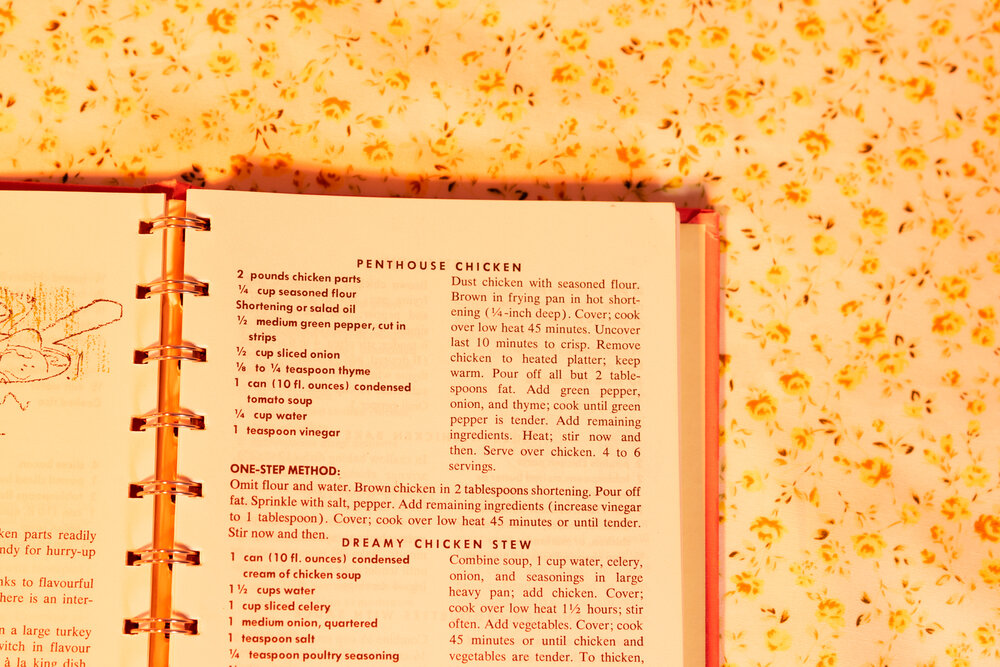
Britnee: Listening to Millie talk about now vintage recipes made with nothing but processed ingredients brought me so much joy. The one that stuck out to me the most was Penthouse Chicken. When she was trying to impress the table of silent doctors with the recipe that can be “made with a can of tomato soup,” I was sold. It turns out I’m not the only one who wanted to make Penthouse Chicken after watching 3 Women. The Famous for My Dinner Parties blog (titled after a direct quote from Millie) posted a picture of the recipe from the 1963 cookbook Cooking with Soup. What a great dinner and movie combination!

Boomer: Shelley Duvall’s overall career is referenced above, and I think it’s worth mentioning that when I think of her name, the first thing that comes to mind isn’t The Shining or Popeye, it’s Faerie Tale Theatre. Enjoy.

And also this, which is one of my earliest memories of watching a movie and fully warped my brain.

Upcoming Movies of the Month
September: Hanna presents Women on the Verge of a Nervous Breakdown (1988)
October: Brandon presents Monster Brawl (2011)
November: Boomer presents Searching for the Wrong-Eyed Jesus (2003)

-The Swampflix Crew

The Lodge (2020)

A few years ago, I did a write up on Goodnight Mommy, the debut fictional film of directors Veronika Franz and Severin Fiala, which the duo have followed up on with The Lodge; there’s a really great fake title that I would love to give to The Lodge that fits perfectly but spoils the ending. I would love to give it away here, but I’ll refrain (but look for it in the tags of this post). Originally slated for release at the end of last year, I assume it was moved to an early 2020 release date to avoid competing with Doctor Sleep for the contender of heir apparent to the legacy of The Shining (they needn’t have bothered, given that nobody bothered to see Doctor Sleep despite it being great). Like The Shining before it, The Lodge delves deep into manifesting loneliness and isolation, and the maddening affects thereof, as a vast wintry landscape with no apparent end in sight.

Teenage Aidan (IT and Knives Out‘s Jaeden Martell) and younger sister Mia (Lia McHugh) Hall are displeased at their father Richard (Richard Armitage)’s plan to marry Grace (Riley Keough). Their mother Laura (Alicia Silverstone) took the news that Richard planned to finalize their divorce and remarry more poorly, killing herself and leaving young Mia inconsolably and existentially terrified about the fate of her mother’s soul, which Richard is ill-equipped to handle. He plans to move forward with his relationship with Grace regardless, and, intent on getting the kids to bond with her, takes the whole family to their remote Massachusetts lodge for Christmas. The Hall children are understandably (if unkindly) suspicious of Grace because of her past: at age 12, she was the lone survivor of a mass cult suicide that was orchestrated by the cult’s fundamentalist leader, her father; she and Richard met because she was the subject of one of his books*. Richard leaves the three alone in the titular lodge while he attends to a work obligation and plans to return before the holiday.

It’s not a pleasant time for Grace. She decorates the lodge for Christmas as the kids sullenly choose not to help her. The abundance of Christian iconography on the walls (a portrait of Mary that hangs over the dining table, crucifixes all over the place) also triggers her PTSD, and even her medication doesn’t prevent her from having recurring nightmares featuring images from her childhood. As she dreams, she relives the experience of finding the dead bodies of her father’s followers, mouths duct-taped and adorned with the word “sin” and covered with purple cloths, and she is haunted by the image of her father’s maniacal face and firebrand evangelism. Aidan is the most hostile, but Mia starts to warm to Grace and befriends Grace’s dog Grady (also the name of the previous caretaker of the Overlook in The Shining) and after Grace falls through ice and nearly drowns while retrieving Mia’s doll, a replica of the girl’s dead mother. Keough delivers a nicely understated performance in a scene in which she tells Mia about wanting a dog when she was young and how her father forbid her from having anything of her own, and that Grady represents her independence and self-reliance.

Snowed in on the night of the 22nd, the trio falls asleep around a gas heater during a double feature of The Thing and Jack Frost. When they awake the next morning, the Christmas decorations have disappeared, as has all of the perishable food, as well as everything of Grace’s. Aidan tells Grace that he dreamt that the family suffocated. Grady has disappeared, the power is out, clocks seem to have jumped ahead to January 9, and all of the phones in the house are dead. Without her medication, Grace’s mental state deteriorates rapidly, and she eventually attempts to walk to the next town for help despite the children warning her that she’ll never make it. After encountering a seemingly abandoned cross-shaped building in the endless snowscape and imagining that her father is inside, Grace is heartbroken to find that she has walked in a great circle and found herself back at the lodge with the kids. Aidan tells Grace that they are dead and in purgatory, and evidence begins to mount that this might be the case.

The Lodge is a pretty decent horror film. I’m a philistine who still hasn’t managed to see Fury Road, so my only exposure to Keough’s previous acting is that episode of Riverdale where Archie and Jughead are riding the rails to escape Hiram Lodge’s wrath (DO @ me if you want to talk Riverdale, dear readers). She carries this film, and young actress McHugh also delivers a surprisingly nuanced performance. Martell is well cast even if the role isn’t terribly demanding on a performative level; there’s not much to Aidan other than “teenager who hates his incumbent stepmother.” Martell’s boyishness lends Aidan an air of innocence; the audience isn’t sure if his actions are merely born out of teenage frustration and grief or some greater malice. Armitage is serviceable in his role as Richard, which is fine. You don’t have much sympathy for a guy who is an incredibly poor father and selectively observant as a partner. He doesn’t seem to be aware that Grace is on extremely vital medication for her issues, is incapable of consoling (or even comprehending) his daughter’s concerns about her mother’s seeming damnation, and sees no issue with leaving her alone with his children (who hate her) for a prolonged period of time. Instead of easing them into the concept of accepting Grace as his new life partner, he pulls emotionally manipulative stunts on them like inviting her to holiday dinners without giving the kids time to prepare themselves for this upset. Since he knows full well that he will likely have to work during the holidays, he essentially sets up a situation in which his children will be left alone with his fiance, like an experiment to see if he can be as far removed from the situation as possible while all of the unpleasant parts that make up the beginning of acceptance take place and he can swoop in and be around for the good stuff. He’s a truly despicable character, and I appreciate both that the film doesn’t shy away from that and that Armitage plays him as a person who really and truly does not realize that he’s a garbage human being.

The weakness of the film is largely in its unevenness. Grace is largely unseen for the film’s first act; when Laura arrives to drop off the kids at Richard’s house for his custody time, she sees Grace’s silhouette through a window and the back of her head as she leaves through a back gate (this is after Richard promised her that Grace would not be present when she arrived, and even lies about whether Grace had been there recently at all). When the kids dig through their father’s research for more information about Grace, we only see her as a child. When Richard attempts to “spring” Grace on the kids at Thanksgiving, we only see her through frosted glass as Richard apologizes and sends her away. All of this is counterposed against Mia’s story. Mia loves and loved her mother, even going so far as to create doll versions of the whole family, which she moves about in an ornate dollhouse that replicates the title location. At her mother’s funeral, when the grieving release balloons in memory of the deceased, Mia frantically tries to tie the ribbon on her balloon to the doll’s hand so that it can get to heaven, metaphorically, and when her balloon drops while the others float away, it devastates her. After all, is that not the metaphorical image of her mother failing to get to heaven, just as Mia fears is already the case, given how Catholicism defines suicide?

When we finally meet Grace in the flesh, it’s as if the narrative wants to say, “Hey, look, she’s not so scary after all. She’s just a person.” I wish that this worked, that we had been dwelling in the perceptions (and preconceptions) of the Hall children up to this point and that the reveal that Grace is a perfectly nice person was a shock. One could argue that this is the point, but the children never seem to fear Grace. They hate her, they blame her for their mother’s death, but they never seem to be afraid of her (until it’s too late). That end of Act I/beginning of Act II switch then makes Grace the main character, and Mia moves mostly into the background as the film becomes more about the conflict between Grace and Aidan, with his sullenness and inappropriate behavior (like watching Grace shower) making it more difficult to sympathize with him, while Grace makes an admirable attempt to maintain her composure and sanity as she withdraws from her medication and starts sleepwalking and hearing her father’s voice. Is it just her PTSD? Or is it something more?

You get the answer to that question, but I had the same problem with this one that I had with Goodnight Mommy; in that review, I mentioned a commenter on another site’s review of the film who advised that “If you haven’t guessed [the plot twist] by ten minutes in, you haven’t seen a movie before.” Luckily, you get a fair bit further into The Lodge before the “twist” becomes obvious; I was along for the ride until the clues started to pile up in one direction. There’s also more to the falling action here than there was in the duo’s previous film: by the time you learn “the truth” in Goodnight Mommy, there’s barely ten minutes left to explore the ramifications of that, but The Lodge lets the cat out of the bag at the beginning of Act III and spends more time on consequences. It’s unfortunately predictable, but it wears its horror influence on its sleeve, and there are no bad performances, with McHugh and Keough providing a strong backbone when the strength of the narrative atrophies a little. There’s no rush to see it on the big screen, but it’s worth a watch.

* According to the Wikipedia plot synopsis, Richard is an investigative journalist. The film does not make this completely clear; both I and my companion thought he was a psychiatrist or psychologist, and had specifically treated Grace (the only line of dialogue that we really get which clarifies their relationship is an offhand reference one of the kids makes to Grace being in one of their father’s books). Richard is a terrible father, and we didn’t put it past him that he would have a relationship with a patient. Him being a journalist makes slightly more sense and is less ethically questionable, but he would have to be making medical professional money to afford both a lodge and such a fancy modern house.

-Mark “Boomer” Redmond

Midsommar (2019)

“For Dani, it is a wish fulfillment fantasy. A fairy tale.”

About a week after seeing Midsommar, the friend with whom I attended a screening featuring a post-film Q&A with director Ari Aster turned to me as we were hanging out and asked, “Boomer, did you actually like Midsommar?” And I replied, “Yeah, of course I did. Didn’t you?” To which he responded, “I’m not sure. I think that Q&A kinda ruined it for me.” And I have to admit, as soon as the film ended, I was fully ready to do my write-up, only for my excitement to dwindle as Aster and Alamo Drafthouse founder Tim League swirled mostly-empty rocks glasses and chuckled. At first, I was mostly concerned for Aster’s feelings (I’m a softie like that); when I saw Hereditary, there wasn’t a single guffaw or chuckle from the audience with whom I sat in the dark and partook in a somber meditation on grief (at least until the very end, but I’ll circle back around to that), but in the sold-out audience for Midsommar, there were laughs within the first 5 minutes, leading to out-and-out peals of laughter until the film’s closing moments. I worried that Aster would hear this reaction and determine that we were a theater filled with bumpkins and deviants–and not the fun kind–who didn’t appreciate his work.

This was not the case, or if it was, Aster did a good job covering his disappointment, engaging in the good natured ribbing of the characters’ foibles, noting that if a viewer didn’t think the film was intentionally comedic by the time an older woman was manhandling the male lead’s buttocks and helping him thrust, then he must not have done his job. Comedy was his real interest, he stated, and he had gotten sidelined into doing horror because that seemed to be of greater public interest. And that is one of the beautiful draws of Midsommar: it is hilarious. I needn’t have worried at all it seems; I wrote in my Hereditary review about “a moment close to the end of the film that sent much of the auditorium agiggle, despite being one of the creepiest sequences,” but Aster stated that he himself found that scene hilarious, and it was intentionally comedic.

It’s been long enough since Midsommar came out that an extended director’s cut rerelease has already happened, but in case you’ve had the misfortune of missing the film, a brief synopsis: Dani (Florence Pugh), recently having experienced a horrific family tragedy, accompanies her douchebag boyfriend Chad Christian (Jack Reynor) on a trip to Sweden. Ostensibly, this is not a holiday but a research expedition as part of Josh (William Jackson Harper)’s thesis research about Hårga, the commune from which the group’s exchange student friend Pelle (Vilhelm Blomgren) hails. However, the inclusion of Mark (Will Poulter), a doofus completely lacking in even the least bit of self-awareness, cements that the Swedish foray exists solely for the purpose of eating a bunch of mushrooms and trying to bed as many commune girls as possible during the Hårga’s titular Midsommar festival, with this year’s being a special kind that only comes every ninety years. And then, as is the genre’s wont, bad things happen. And good things, too. After all, that quote about Dani above? That’s from Aster.

From Texas Chainsaw Massacre to Dead Calm to upcoming Movie of the Month Who Can Kill a Child?, I’m pretty much always on board with a daytime horror movie. Midsommar pushes past the boundary of the “day won’t save you” concept into a completely disorienting perpetual daylight. This starts even before the audience has the opportunity to ask themselves if something’s rotten in the village, when Mark expresses unease upon learning that it is after 8 PM, despite the sun still appearing high in the sky; the film takes advantage of the northern latitudes’ geographically anomalous prolonged days and plays on the effects that could arise from being unaccustomed to such an unusual night/day rhythm. Characters attempt to circumvent community rules under the cover of “darkness” with about the success that you would expect. People lose track of time and then possibly lose track of the concept of time, all under the watchful and unfaltering gaze of the sun. That alone isn’t enough to make the film worthwhile, of course; the 2006 remake of The Wicker Man kept the seminal original’s daytime frights, but lost the core of what made Robin Hardy’s version a classic (although what it lost in the fire it gained in the flood; it’s a romp).

What makes Midsommar work isn’t just the unease that comes from the finding of no safe haven from horror in the light, it’s also the discomfiting nature of lingering on what Aster called “static image[s] of relatively little interest.” It’s been three years since the YouTube channel “Every Frame a Painting” stopped updating, but I have no doubt that they would have a lot to say about the growing Aster oeuvre. His two big features so far have depended heavily on lingering shots of mostly-static settings to convey a sense of displacement and balance. The mainstream horror-going audience has spent over a decade now subsisting on films that depend heavily on unearned jump scares to produce a reaction, but Midsommar and its predecessor instead use the quietness of their presentation to inspire a disquiet of the soul. We’ve been forcefed Baghouls hiding behind open medicine cabinet doors for so long that when lingering shots of pastoral peace are succeeded by calm pans across striking farmhouses or documentarian framing of a Swedish banquet, there’s nowhere for that energy to go; so it just builds and builds until whoops, now you’re wearing a bear suit and boy are you not going to like it.

A friend who is known for his tirades recently produced a new rant about the performative sententiousness of horror fans, noting that many he has met seem to think that horror fans have a kind of ownership of subtextual analysis. And hey, I know I’ve been guilty of that. (Said friend also hated Hereditary, unsurprisingly.) In a way, Aster reminds me of Panos Cosmatos, in that his films act as originals in spite of being pastiches of older genre films; I’ve said before that my favorite thing about Hereditary is how it starts out as an apparent homage to The Bad Seed, before turning into Ordinary People for so long that you gaslight yourself into thinking all that seemingly extraordinary stuff from Act 1 was just in your head, before bam: Rosemary’s Baby all along. In Midsommar we find a movie that, frankly, owes its existence to the aforementioned The Wicker Man (1973, just to be clear), but has a lot more going on than at first meets the eye. You don’t need another thinkpiece on this movie; various outlets have already dove into the apparent pro-eugenics nature of the narrative, an argument that I’ve read four times now and still have difficulty following, and have read the film as a trans narrative and a new camp classic. And if a slightly sloppy Q&A (someone actually gave Aster their contact info on a Drafthouse order card and asked to work on his next project, so the audience was matching the level of “shoot your shot” that the director was putting out, at least) in which Aster admitted under questioning that the 72-year life cycle didn’t actually jibe with the 90-year festival cycle didn’t ruin it altogether, I don’t think anything can.

P.S.: I didn’t even get to touch on my three favorite moments, but here they are:

  1. The paneled cloth depicting a particular Hårga fertility ritual, and each time that something popped up on screen that had appeared in it previously (how Christian didn’t notice that his lemonade was distinctly pinker than anyone else’s is a mystery).
  2. The foreshadowing in Pelle’s scene with Dani, where he tells her that his parents died too. In a fire.
  3. “What game are those kids playing?”
    “Skin the fool.”

-Mark “Boomer” Redmond

Movie of the Month: Puzzle of a Downfall Child (1970)

Every month one of us makes the rest of the crew watch a movie they’ve never seen before and we discuss it afterwards. This month Boomer made Britnee, Brandon, and CC watch Puzzle of a Downfall Child (1970).

Boomer: Puzzle of a Downfall Child is a complex movie. I saw it as part of the same “Women on the Verge” film programming block at the Alamo Drafthouse last summer that also showcased An Unmarried Woman, on back to back weekends, no less. The film is largely based on the real recollections of notable 1950s model Anne St. Marie from recordings made by director Jerry Schatzberg; this was his film directing debut after having largely worked as a fashion photographer, and he made tape recordings of his conversations with St. Marie in her declining years. These tapes form the backbone of the narrative of Lou Andreas Sand (Faye Dunaway, in what I think is the finest performance of her career), with Aaron Reinhardt (Barry Primus) standing in as a fictional version of Schatzberg himself. This structure, even if unknown to the audience, lends the film a sense of verisimilitude, even in the moments in which Lou’s recollections are self-contradictory or self-aggrandizing and lacking in any kind of internal inspection.

In additional to great performances from Primus and Dunaway, Roy Scheider also gives a stunningly brutal edge to Mark, playing against type (like me, you probably grew up with Scheider as tough-but-fair Chief Brody in Jaws or as the paternal lead Captain Bridger on seaQuest DSV) as an abusive, hypocritical asshole. Or is he? Lou’s memories are so riddled with inconsistencies that it’s impossible to know for sure what he really did or didn’t do (although, yeah, he probably was a jerk, because everyone is in this movie, to some extent).

Britnee, what did you think of this approach to storytelling? It’s not exactly Rashomon, since we’re not seeing the same events from multiple characters’ points of view; it’s one truly unwell woman’s conflicting recollections about her life as she tries to make sense out of all the misfortunes that have befallen her, both her fault and her own, and her conscious and unconscious attempts to make her own mistakes fit a framework of existence in which everything bad happened to her and outside of her power, and all the good things in her life were the result of her actions. To me, it’s mesmerizing in its lack of self awareness while still making me very sympathetic toward Lou. How do you feel?

Britnee: At first, I was really confused as to what the film was trying to do. Was Lou lying purposefully? Were any of her recollections real? It wasn’t until I was a good half hour or so into the film that I realized the confusion I was feeling was exactly what Lou was feeling. Dunaway does such a wonderful job of making Lou’s character likable, so that her potentially false memories come off as being innocent rather than malicious. The back and forth between Lou’s flashbacks and reality made me feel like I was a peeping tom in the window of her mind. Often, spending time in Lou’s mind became super uncomfortable (especially in her memories of abuse), but those moments really helped me understand her character and sympathize with her. Her not knowing the difference between fantasy and reality is truly terrifying, and I couldn’t help but feel for her.

Films about the fashion industry always tear at my heart. Watching women being objectified and tossed out like trash once they’re of a certain age (usually 30 years old) is difficult. On a lighter note, watching films like Puzzle and comparing it to today shows how much the world of fashion and modeling has progressed. Models of all ages and sizes are gracing the covers of major fashion magazines and runway shows now. The industry still promotes some ridiculous standards for women to live up to, but it does seem to be getting better. One of the saddest scenes in Puzzle was when Lou’s was hired for a shoot as her modeling career was coming to a close. She puts on a red Lucille Ball wig and is glowing with excitement to show off her new look when a younger model arrives, completely ignoring her. To make things worse, one of the women working on the shoot makes a rather patronizing statement about her new look at the same time. She was getting kicked while she was down, and you could see it all over her face.

The fashion world was so cruel to Lou, and the saddest part is that she had no true friends or family to fall back on for support. At first, it seems like Aaron is the only one in the world that is concerned about Lou, but in the end, he uses her just like everyone else. She has so much faith and admiration for him, so watching him exploit her mental illness during the interview made me so angry. Brandon, did you feel the same way about Aaron?

Brandon: It’s important to note that Lou interacts with two entirely different versions of Aaron, reflected in two entirely different timelines. I do believe that Aaron exploited Lou and worsened her mental condition through his own greedy actions, but I’m not so sure that his taped interviews with her were the worst of that exploitation. Furthermore, I’m not entirely convinced that any interview was recorded in the first place. Boomer mentioned that the film was based off a real-life set of interviews the director recorded with a fashion model he once collaborated with, but that information is extratextual. Within the reality of the film, confidently saying that anything that materializes onscreen actually “happened” is a bold claim. Lou might be, through no fault of her own, the least reliable narrator I’ve ever encountered. It’s not that she’s actively lying to make herself appear more important or morally superior through historical revision, either; it’s that she’s so mentally fraught that her memories and real-time perception cannot be trusted – least of all by herself. It’s difficult to say whether the older, contemporary Aaron is actually visiting her in the recorded interviews framing device. Not only is Aaron much gentler & kinder in those exchanges than he is in earlier memories, but Lou also interrupts one of her exchanges with him to mentally project herself on the beach outside the window, interacting with an entirely different character in lipsync. We see the world through her shattered-glass eyes, so I don’t know that we can even trust that she’s talking to Aaron in those exchanges at all. She could as easily be just talking to a wall and playing her arrhythmic castanets to no one.

If he does exist as represented onscreen, I suppose Aaron exploiting his former crush and collaborator’s mental breakdown for filmmaking fodder is a little cruel, but his intentions mostly appear to be noble. He’s at least recording her story in her words, offering a creative platform for an artist whose industry has abandoned her as she’s gotten too old and too “difficult” to turn them a profit. It’s the younger Aaron, the one who more likely exists, who really came across as a villain to me. I think of Puzzle of a Downfall Child as one of the Driven Mad By The Patriarchy mental-breakdown dramas (which are generally excellent as one-woman acting showcases, proven true by Dunaway here). As with the protagonists of films like A Woman Under the Influence, Persona, safe., The Nun, The Love Witch, and countless others, Lou is a broken person who’s lost her sense of reality and sense of self trying to live up to patriarchal standards by becoming The Ideal Woman. Whether or not she was biologically predisposed to having dysfunctional mental health, the cruelty & exploitation that defines her life as a woman in the modern world is what sends her over the edge. Even when she’s still a young schoolgirl, all anyone wants from her is sex & profit, a systemic objectification that continues throughout her adult life. As her only close friend, Aaron was in a unique position to be the one person in her life who could help her, to be the one person concerned for her well-being instead of pushing her to satisfy his own desires. Instead, he pressures her into (ultimately nonconsensual) sex through the guise of artistically collaborating as photographer & model. It’s the most devastating betrayal of a film that’s overflowing with selfish cruelty in nearly every scene.

What I’m having a difficult time reconciling here is how those two versions of Aaron (the framing-device interviewer & the in-memories photographer) overlap, and what Schatzberg is saying about himself in the process. CC, do you read a lot of guilt & remorse in the director’s depictions of his own real-life relationship with Anne St. Marie here or do you think the project was more driven by his pity for her, blind to how he came across onscreen through the avatar of Aaron?

CC: I honestly feel uncomfortable trying to parse out the director’s intent here. This is a film that directly grapples with how people present their own image, clearly establishing that we cannot be trusted to present ourselves truthfully. If nothing else, that alone makes any attempt to guess Schaztberg’s intent a maddening puzzle with no possible satisfying answer. We can all at least agree that Aaron does bad things and it’s not flattering; supposing anything more than that would be pure speculation.

No matter what he intended with his minor self-portrait or his more elaborate depiction of a woman in crisis, Schatzberg is at least in good company. I find it fascinating that so many male directors of the 1970s were fixated on this topic. Much like Cassavetes in A Woman Under the Influence, Altman in 3 Women, Scorsese in Alice Doesn’t Live Here Anymore, and Polansky in Repulsion, Schatzberg toes a thin line between empathy and exploitation in Puzzle of a Downfall Child. These are all sympathetic portraits with a shared critical eye for how women are ritually broken down by their place in society. As Ebert described when he called movies “a machine that generates empathy,” they put you in the mind of a type of woman who rarely gets to center her own story. They’re also excellent actors’ showcases for women who are unlikely to find such substantial roles elsewhere, most significantly Gena Rowlands in A Woman Under the Influence. That’s why it’s disappointing that they’re so often filtered through the directorial male ego. It also may be part of the reason I consistently find this genre deeply upsetting and unenjoyable, even if the films are well made.

To his credit, Schatzberg did collaborate with a female writing partner, Carol Eastman, who earned sole credit for the movie’s completed screenplay. It was Eastman who chose to base the final product off interviews Schatzberg conducted with friend & model Anne St. Marie, who he claims he never had a sexual affair with in real life. As such, the depictions of Lou, Aaron, and every other character onscreen is just as much a creation of her voice as anyone else’s. Boomer, how do you think this collaboration with Eastman distinguishes Puzzle of a Downfall Child from other examples of its genre where the male director wrote the screenplay on their own? Is it important at all that a woman co-write this film? What might have been lost if it were written entirely by a man?

Boomer: That’s a great question. I mentioned before that this film and An Unmarried Woman were part of the same Alamo Drafthouse specialty series, which took its name, “Women Under the Influence: Life, Love, and Madness in the ’70s,” from the aforementioned A Woman Under the Influence, the first film in the showcase. The fourth and final film was the seldom-seen Play it as it Lays, based on Joan Didion’s novel and directed by her husband; they, too, shared writing credit. Jazmyne Moreno, whom I mentioned before as the host of Austin Film Society Cinema’s screening of On the Silver Globe and who is the current host and programmer of AFS’s Lates Series, was the (co-)programmer for these, and I respect her judgment a lot; she’s an amazing person and I’ve never been let down by any of her programs (her introduction for Sun-Ra’s Space is the Place and a screening of Friday Foster way back in March 2017 are particular highlights of my Austin filmgoing experiences). We’re coming to these films with nearly 50 years of cultural criticism in the interim, and all of the touchstones of women-driven empathy machines of the era that you noted are well chosen, because you’re right: there is an issue of cultural distance via time that separates us from what were groundbreaking films at the time but which are not entirely without an element of exploitation with regards to the women at the core of the film. But just because Hans Robert Jauss is dead doesn’t mean he was wrong: every text has a different face for each reader, and can be interpreted in myriad ways.

I share your discomfort with trying to parse Schatzberg’s authorial intent, but I have to admit that I’m equally vexed by trying to suss out what Eastman’s intention was, not least of all because I would be projecting my male reading onto her female authorship, which this discussion has made me acutely aware of. I can’t make claims about her intentions with any authority, so I hope it will suffice it to say that my personal head canon is that she either (a) liked Schatzberg and wanted to lovingly take the piss a little by making his author avatar a bit of a dirtbag, or (b) she was subversively using the medium of the screenplay to take potshots at him behind his back. I hope it’s the former, but the latter is also of interest. Either way, even though Schatzberg was close to the film’s original inspirational personality, I still find it doubtful that the film would have been as sensitive to Lou had Eastman and her pen not been there to ensure that there was a woman’s voice in the creative room. Brandon mentioned the way that Lou was the victim of systemic objectification from a young age; it’s easy to imagine a film without Eastman’s influence playing Lou’s pubescent “seduction” only as it was first shown, a kind of mutual attraction, affection, and teasing, and not as it really was upon later revisitation, a clear-cut case of a man taking advantage of a much younger woman. We can never be sure, but I’m glad we don’t have to know.

We’ve talked a lot about issues related to the fashion industry and systemic sexism and all of its accompanying moral evils. What I remembered most about this movie after spending a year apart from it before this rewatch was Dunaway’s performance, which may be the highlight of her career. Contemporary reviews were mixed; the New York Times cited ” a character of such lovely, tentative lucidity that to be with her is, as it should be, worth a whole movie,” while Variety stated she “first garners wholesome pity, but the plot development soon banishes her to bathos and finally boredom.” Britnee, what did you think? Were there any other performances in the film that stood out to you?

Britnee: Dunaway’s performance in Puzzle was definitely one of her best. Her best performance to me will always be her portrayal of Joan Crawford in Mommie Dearest, which is a film I quote at least once a week. Puzzle is a close second though. Dunaway really has a way of having characters take over her completely, just like when a ghost uses a human body as a vessel. Interestingly enough, her role in both films is based on an actual person, as is her star-making role in Bonnie & Clyde. Maybe biopics are her jam?

I really enjoyed the scenes of the film that were set at Lou’s beach cottage. I would have loved to hangout with her there, sipping coffee or tea while listening to her stories that intertwine fantasy and reality. Her character reminds me of some of my favorite family members and friends whom I visit to get a good story, be it a delusion of grandeur or a memory from many years ago. I just love to listen, and perhaps that’s why I enjoyed Lou’s character so much.

The only other performance that stood out to me (other than Aaron, which I mentioned earlier) is Mark. As Boomer mentioned, his character in Puzzle is so different from Jaws’s Chief Brody. Years ago, I watched All That Jazz, where Schneider portrays a character loosely based on Bob Fosse, who is a womanizing douchebag. I remember being slightly heartbroken seeing Chief Brody play a “bad” guy, and that feeling resurfaced while watching Mark in Puzzle. If I had not been so familiar with his Jaws character, I don’t think his performance would have been as stand out as it was. Either way, he still wasn’t nearly as interesting as Lou.

I had no idea who Anne St. Marie was prior to watching Puzzle, but I have found myself searching for her modeling photographs and articles about her career since watching the film. Brandon, did Puzzle spark an interest in Anne St. Marie’s career for you?

Brandon: Not really. I don’t mean to sound too dismissive of Anne St. Marie as a historical figure & an artist, but there’s nothing especially unique to her story (as presented in the film) that doesn’t apply to all fashion models everywhere. A straight-forward birth-to-death biopic or even a feature length documentary on her life would most likely struggle to fill the time with something to say, besides just packing the screen with her more notable photographs. Puzzle of a Downfall Child doesn’t have many major events in Anne St. Marie’s life to build a traditional narrative around, which is partly what affords it so much room to explore the more intangible aspects of her life’s story: the ways her mental illness distort her understanding of the world and the ways the fashion industry compounds the mental & emotional toll of The Patriarchy. How much of those themes & tones are specifically true to Anne St. Marie and how much was an artistic fabrication of Schatzberg & Eastman’s is up for debate, but I feel like I’ve already learned more about the type of person Anne St. Marie was through this movie than I could ever gather by reading a factual biography on her life & career.

If I were going to investigate Anne St. Marie’s career any further, I’d most want to see a slideshow or a lookbook of her best outfits & photographs. Fashion is an artform I know embarrassingly little about, but I do find its visual pleasures to be magnificent. Like the opera or the ballet, it’s an artform that I always love to see interpreted through cinema for the inherent visual splendor of its setting, especially when paired with a genre conceit or avant-garde filmmaking techniques: Blood and Black Lace, Phantom Thread, The Neon Demon, etc. Puzzle of a Downfall Child does a great job of utilizing a fashion industry aesthetic for cinematic visual indulgences and thematic explorations of systemic misogyny & mental health crises. Between its thematic discomforts, its deliberately disorienting relationship with logic, and its gorgeous visual palette, it’s practically a couple brutal stabbings short of being a giallo film. I’d love to see some of Anne St. Marie’s work just to appreciate the visual pleasures of her artform, but I feel like abandoning the birth-to-death biopic template that sticks to factual bullet points about the subject made for a better story & a better film.

CC, can you think of any notable fashion industry artists—whether model, designer, or photographer—where that would not be true? Is there anyone who has worked in fashion who you’d rather see a factual biopic about their life than a poetic cinematic interpretation like Puzzle of a Downfall Child, or would that loose interpretation always be the preferable approach?

CC: I also tend to prefer this interpretive, expressive style of filmmaking over the traditional biopic. If I wanted to dig into a straightforward biography on a historical figure’s life, I’d just read their Wikipedia page. Even the most factually accurate biopics never really get to the core essence of their subjects the way these more artistic interpretations do. You can never truly capture a person’s inner life on film, but movies like Puzzle of a Downfall Child at least edgecloser to that ideal than a straightforward biopic ever could. Besides, just providing the facts of their life isn’t really all that interesting, so this way is much more entertaining.

There are a few fashion figures I’d like to see receive this treatment. The first that comes to mind is the fashion designer Elsa Schiaparelli. Not only does Schiaparelli have an interesting biographical background as someone who fled her childhood as the daughter of nobility and academics (and the tedious suitors therein) to marry a fortune teller in London and start her own career as an designer (and eventually a single mother); she also just had an approach to fashion that might make for a great movie artistically. Interpreting fashion as a graphic artform and not just a utilitarian necessity of life, Schiaparelli worked closely with Surrealists like Salvador Dali & Man Ray. I’m no filmmaker so I can’t speculate exactly how one would interpret her life & work for the screen, but I imagine the clash of couture fashion & Surrealism alone would give you a lot to work with.

I could also imagine an interesting movie based on Schiaparelli’s mentor Paul Poiret. In fact, most of the names that immediately come to mind for movie treatments are designers, not models. That’s likely because designers are already afforded their own voice creatively in a way models aren’t, so I already somewhat know what they have to offer. One of Puzzle of a Downfall Child’s more striking choices is in offering a voice to a type of fashion industry figure who’s usually denied that outlet, apparently repressing it to the point of inflicting insanity.

Lagniappe

CC: For a film about fashion I found most of the clothing to be pretty lackluster in this. The make-up was on-point, though.

Britnee: One very minor scene in Puzzle that stuck with me was when Lou and Aaron were eating hot dogs in Central Park. Watching Faye Dunaway eating sloppy street hot dog made me laugh for a good bit.

Boomer: It wasn’t until Brandon pointed it out that I realized that yes, this is very much like a giallo film. No wonder I loved it so much.

Brandon: It’s appalling how little effort has gone into properly distributing this film on physical media. You can catch restored 35mm screenings at film festivals or scattered repertory venues, but it’s never seen official VHS or DVD distribution in the US (oddly, it has been afforded that respect in France). Luckily, that lack of proper stewardship does leave the movie open to more . . . questionable modes of distribution, which is why you can watch Puzzle of a Downfall Child in shockingly high quality on YouTube right now. A proper Criterion Blu-ray release for the film feels both necessary and inevitable, but for now take what you can get:

Upcoming Movies of the Month
July: CC presents Ginger and Cinnamon (2003)
August: Brandon presents Smithereens (1982)
September: Britnee presents Blood & Donuts (1995)

-The Swampflix Crew

Knife+Heart (2019)

Never before have I ever seen a movie that was made for me the way that Un couteau dans le cœur (Knife+Heart) was. Seventies-set giallo featuring a masked killer in black leather gloves? Check. Queer story that focuses on a troubled woman who drinks herself into unconsciousness on a nightly basis and is unable to let go of a lost love? Check. Vertigo/Body Double-esque plot points about obsession with apparent doppelgangers? Check. M83-as-Goblin soundtrack? Check. A plethora of shots of old school film editing equipment being put to good use? Check. A peek behind the curtain of the seventies gay porn scene? Check! Women in white wandering around a forest as gales of wind blow all about them? You betcha. A strangely centric fable about grackles? Is it my birthday?

It’s 1979, Paris. Anne (Vanessa Paradis) makes “blue movies,” better known as gay pornography, along with her best friend Archie (Nicolas Maury), cameraman François (Bertrand Mandico) and her lover of ten years, Loïs (Kate Moran), although that relationship has recently come to an end. Tragedy strikes when one of her actors, the insatiable “Karl” (Bastien Waultier), is stabbed to death by a man in a terrifying full face mask after a night out cruising. As a result, Anne is interviewed by Inspector Morcini (Yann Collette); back in the studio, she retitles their current production to Homocidal and recreates this interaction with Archie in her place and heroin addict Thierry (Félix Maritaud, of BPM and Sauvage) and José (Noé Hernández) in the roles of the police. Anne recruits a new actor, Nans (Khaled Alouach), who is noted for his twin-like resemblance (not his twink-like resemblance, although that could also apply) to a former star of hers named Fouad, which is fortunate; after Thierry is also murdered, most of the actors fear returning to set. In her personal life, Anne spends her days drinking straight from the bottle of whisky that she keeps on herself at all times and stalking Loïs around nightclubs when she isn’t too drunk to move. After a third murder, Anne traces the clues to a forest that, according to folklore, is used for faith healing via grackle—as with most gialli, it only makes marginally more sense in context—where she finds a small cemetery and the grave of Guy (Jonathan Genet), and the answer to the identity and motivations of the killer.

The only negative thing that I can say about Knife+Heart is that the fact that it now exists means that I may now never finish my own giallo script (titled Profundo Giallo, naturally, because I am a NERD), which features many of the same narrative beats, although for the sake of future copyrights I should note that Gonzalez and I were both drawing from the same well of archetypical giallo ideas. Still, it may end up being difficult to prove that we independently came to the idea of having a queer character (Loïs here, Oliver in PG) whose relationship with a primary protagonist ended poorly discover a vital clue while reviewing grainy footage. Really, we’re just both putting the same twist on the standard giallo trope that I call “Obscured Clues,” which was the most frequently recurring narrative element in Argento’s Canon; that is, a character witnesses something that they do not initially realize is a clue and then struggle to recall its importance.

Knife+Heart is a neon saturated fever dream, and yet it holds together in a way that is truly astonishing and thoughtful, considering that multiple people get stabbed to death by a knife hidden inside of a makeshift phallus. It’s surely no coincidence that the film is set in 1979, on the eve of what we would come to know as the AIDS epidemic; the establishment of the era, represented by the police department and their dismissive treatment of the killings of Anne’s actors, is largely unconcerned with a series of tragedies that befall society’s “undesirables.” This is made more manifest by the way that the pretty young things are killed: in cruising bars and by-the-hour hotels, in alleys with needles in their arms, etc. I could honestly live the rest of my life in happiness without ever seeing another AIDS allegory film, but this one manages to weave subtlety into this tapestry, which makes for a better narrative overall. That this can happen in a movie that also features an actor campily full-on humping a typewriter in one of Homocidal’s scenes speaks to a strong directorial vision.

Anne is no doubt destined to be a divisive character; in his review for MovieJawn, Anthony Glassman writes that Paradis’s character “metamorphoses from a drunken psychopath into a driven and caring mother figure,” and although I was fully within Anne’s headspace, horrible person though she is at times, I can’t really disagree. Repeatedly, we see that she is incapable of accepting that her relationship with Loïs has come to an end, and we realize that this love is far from healthy, given both Anne’s obsession and Loïs’s inconsistency as she verbally spurns Anne over and over again while also leading her on and admitting that she still loves her. That this leads Anne to stalk Loïs around a nightclub saturated with over-the-top radiant lighting and finally confront (and assault) her makes Anne despicable but no less sympathetic. The film almost dares you to try and hate Anne, but if you’ve a queer person who has ever had your heart broken to the point that you drink yourself into a stupor on a nightly basis and wake up in strange places, then you understand every drive that Anne has, even if her actions are occasionally unforgivable.

This is best epitomized in one of the most underrated scenes in the film (I’ve seen no mention of it in any other reviews that I have read), in which Anne attends an art performance at a lesbian bar where the two participants are a woman in lingerie and another woman in a bear suit. The human character begs for the bear’s love, and the bear attempts to refuse, claiming that to love the woman is to destroy her, but the woman doesn’t care. To love is to be devoured; to love is to devour. As the bear demonstrates its love for the woman, its claws leaving theatrical trails of stage blood all over her body, the woman begs for this destruction, demands to be completely destroyed, and the bear can do nothing but oblige, its love is so all-consuming that neither of them can stop. It’s so fucking powerful and real. To love is to die; love is to kill. Love is to consume and be consumed until there is nothing left but char and ash and fragments that say to every passerby: “A fire was here, and it destroyed all that it touched, but in those moments of destruction, each thing touched was brighter than the sun.”

I could go on and on about this movie for about 10,000 more words, but not without spoiling anything (the Golden Mouth is a delight!). This is a delightfully and unabashedly queer movie, and the world has never seen anything like it. I can’t wait to see it again and again.

-Mark “Boomer” Redmond

Movie of the Month: An Unmarried Woman (1978)

Every month one of us makes the rest of the crew watch a movie they’ve never seen before and we discuss it afterwards. This month Boomer made Britnee, Brandon, and CC watch An Unmarried Woman (1978).

Boomer: Back in August I surrendered to the heat and, instead of walking down to Guadalupe Street to catch the Number 3 Cap Metro bus to the South Lamar Alamo Drafthouse, I took an Uber. My driver was an older man named Buzz, who asked what I was going to see, and I told him that they were doing a special showcase called “Women Under the Influence,” and that I was going to see An Unmarried Woman. “AH!” he said. “Jill Clayburgh. I remember going to see that one back in ’78 or ’79. What a performance.”

Buzz had a bunch of other stories, too, which he shared while we took a circuitous route to the theatre (he overshot by a mile or so and we had to turn back around): he had spent lots of time growing up in New Orleans and known the family that oversaw Galatoires; he had served overseas and seen a lot of native tattoo art, and regaled me with the way that American cultural attitudes about tattoos had grown and changed; when he lived in Hawaii, he used to play tennis Lolo Soetoro (aka former President Obama’s stepfather). With a life so full, one wouldn’t think that he would have space to remember going to see a movie forty years ago, but not only did he remember the movie, he remembered Clayburgh’s performance, which was my first clue that I was in for something really special.

Inspired by one of his wife’s recently divorced friends’ identification on a mortgage application as “an unmarried woman,” Paul Mazursky penned and directed a film with that appellation as the title. Erica Benton (Clayburgh) is a modern woman who seems to have it all: a loving husband with whom she’s casual but not caustic, intimate but independent; a smart, capable, socially aware teenage daughter; a great group of friends; a huge apartment with a lovely view of New York. This all comes crashing down around her when her husband admits that he’s fallen for a younger woman that he met while running a routine errand, and he intends to leave Erica for her. Suddenly single after seventeen years, Erica emerges into the newly sexually free world of the late seventies, only to find it as confusing as it is liberating, populated by gatekeepers and horndogs, friends and lovers, creeps and honest men alike, and none of them any less complex than she is.

This is a beautiful movie, from the sweeping shots of Erica dancing around her apartment, to her poignantly singing “Baby I’m Amazed” at the piano with her daughter, to the understated elegance of a dialogue-free skate around the ice rink at Rockefeller Center. I would almost call it a perfect movie, save for one thing: I’m still a little disappointed that the film ends with Erica deciding to pursue a relationship with a man, albeit a decent and mostly likable one. In my vision of this as a perfect movie, the ending is more ambiguous about whether or not Erica will commit to a new partnership or continue to live as a single, not just unmarried, woman for a time before giving it another go, long term. Brandon, what do you think? Was this ending satisfactory for you, or would you have preferred a slightly tweaked one? How much, if any, do you think the era of this film’s production affected that ending?

Brandon: I would be in total agreement if the film ended with Erica following her new painter boyfriend to his yearly retreat into Nature with his family. She’s tempted by his offer to spend her days lounging around reading books, watching him paint, and forming a new idyllic family in the woods, but she ultimately rejects it in favor of staying behind in New York City to continue her personal work at the art gallery. That decision is a major personal crossroads for Erica, because the painter is essentially asking her to become a married woman again, to define her life by the needs & accomplishments of a husband, and she refuses. Even if she does remain romantically attached to the painter for the rest of their lives, she appears to be much more independently minded than she was when we first meet her as the dutiful wife of a business prick.

Instead of Erica caving to the painter’s relentless, childish insistence that she tag along, the ending we do get is something a little more lyrical. The boyfriend unloads a massive painting of his onto her as “a gift” and leaves her to carry it across the city to her new apartment all by herself. It starts out as a childish prank on the painter’s part, as he’s frustrated that he can’t control Erica’s behavior and finds a cheeky way to punish her for it. As the image of Erica dragging the painting through crowds & against gusts of winds develops, though, it stops being about the painter at all and starts reflecting more on Erica’s determination & resilience. Life is just as absurd & unmanageable of an obstacle as that painting, yet she carries on anyway.

That ending plays ambiguously enough for me as is. I’m not sure whether Erica’s new relationship with the painter will work out long-term, but I also don’t think it matters. Although the men in her life are certainly significant as a source of conflict, this is ostensibly a film about women. My frustration with watching Erica’s romance develop with the artist wasn’t in where they settle by the end credits, but rather in how much screen time the new boyfriend was siphoning away from the women in Erica’s life. I was fascinated by Erica’s headstrong daughter, her proto-Sex and the City gal pals, and her spellbinding therapist (played by Dr. Penelope Russianoff, a real-life NYC psychotherapist who specialized in helping women feel independent & self-sufficient outside male companionship). Any minute spent away from them in favor of profiling Erica’s relationship with a man felt a little like time wasted.

Paul Mazursky’s signature film Bob & Carol & Ted & Alice was iconic for capturing the American sexual zeitgeist at the height of Free Love politics in the late 1960s. Nearly a decade later, An Unmarried Woman finds him attempting to do the same for the psychology of women’s liberation and its social fallout as traditional marital norms faded away. A major difference in his approaches to these works seems to be a choice of POV. While Bob & Carol & Ted & Alice spreads its POV across two couples, An Unmarried Woman is largely about Erica’s inner psyche, to the point where we’re invited to sit in on her most intimate therapy sessions & look in on her dancing alone in her underwear to Swan Lake as if no one is watching.

Britnee, do you think An Unmarried Woman benefited from focusing on Erica as our centering protagonist? Do you think Mazurksy could have said more about the state of The Woman in the late 1970s by spreading its POV around to include her daughter, her therapist, and her proto-Sex and the City crew, or were we better off anchored to a fixed, deeply personal portrait of one woman in crisis?

Britnee: Erica is such a likeable character, so I think the heavy focus on her experience as a single woman was what made this film so wonderful. However, my favorite parts of the film involved Erica’s interactions with her amazing group of friends and her fabulous therapist, Tanya. Experiencing the POV of all the wonderful women in this film sounds great, but there’s no way it would’ve turned out as cohesive as it did if the screen time was shared. I would have loved to see more focus on Erica’s relationships with the women in her life from her own POV. There was a little too much time spent focusing on her budding relationship with her boring artist lover. I wanted more fun nights out on the town with the girls and more sessions with Tanya. Having an such a prominent real-life therapist playing the role of Tanya is such a treat, and it’s a shame that we only got a few minutes worth of her advice and guidance.

I truly loved how An Unmarried Woman didn’t follow the same route as most other films that focus on women dealing with a cheating husband and failed marriage. Erica didn’t give her husband a pass on his mid-life crisis and fall into his arms when he came crawling back to her, and she didn’t seek revenge on her husband or his mistress. Erica had such an admirable attitude through it all. She invested her time and energy in herself and created a new chapter in her life.

As much as I like Erica’s character, she is a privileged white woman living in a high-end apartment in New York City, which means she has access to more resources to help her through her divorce (therapy, income, housing, etc.). In reality, most women going through a divorce don’t have it so easy, and this is especially true for the time period of this film. I think An Unmarried Woman could have benefited from incorporating some real-life struggles that newly divorced single mothers had to deal with in the late 1970s.

CC, do you think Erica’s character could have been more relatable?

CC: I thought this film was . . . fine. I loved the scene where Erica & her daughter belted “Baby I’m Amazed” together at their piano and I thought the scenes with her girlfriends and therapist were generally amusing, but overall I was just kinda . . . eh on the film as a whole. I do think that’s largely because I don’t relate to Erica or her struggles. The idea that she could go to a therapist and fully expect her ex-husband to fund her appointments is mind boggling. I’m sure we could all take the time to become happier, more independent people if we had the means, but many of us are too dependent on constant, never ceasing employment to ever take a moment just to figure out who we are and who we’d like to become.

As unrealistic as her financial situation may be, there were still several naturalistic scenes that resonated with me. The reason I loved the “Baby, I’m Amazed” scene in particular is because it felt like a genuine moment shared between real people. I found it both comical and fascinating that the two actors can’t sing especially well, but belt the entire song out with all their heart anyway. This sweet, joyous scene is as understandable as Erica’s wealth and privilege are incomprehensible.

Boomer, you also pointed out the “Baby I’m Amazed” scene as a highlight. Were there any other moments that stuck out to you as humorously or peculiarly naturalistic in the same way? Also, I assume Erica’s wealthy New Yorker life is no more relatable to yours than it is to mine, yet you seem to appreciate the film way more than I do. Was it the naturalism that stuck out to you as well or something else entirely?

Boomer: While I certainly find that Erica lived a more privilege life than most (I already mentioned the spectacular cityscape that can be seen from her apartment), I suppose that I was also primed to accept that Erica’s husband was indebted to her via their matrimonial arrangements even after their split by several seasons of Mad Men which showed Don Draper’s ex-wives receiving pretty hefty alimony payments while not working: Betty got to keep their house following their divorce and received consistent money from Don, and Megan got enough money to buy her own place in the LA hills despite not being able to make it financially as an actress. Those divorces (and the resultant alimony settlements) came in the sixties, but the seventies setting of An Unmarried Woman is closer in time to that period, when divorced women largely found themselves without any means of support post-separation due to the way society frowned on women having occupations outside of the home, and thus having huge gaps in their resumes if they were suddenly in need of employment. It’s a reflection on a particular time in American society from which we are removed by forty years of social and economic change, various movements for (and unfortunately against) wider roles for women in the workplace and in the upper echelons of management, and wider employment for women, despite continued income inequality for women and other sex- and gender-based biases that create unjust stratification in the workplace.

This was something that I found annoying when watching Mad Men as well–that Don, as much as I detested him, was so financially responsible for his former spouses despite no longer being legally joined to them–but like many things in that program, it exists as a reminder of that show’s thesis, that no matter how much we may feel the need to romanticize the past, the rampant injustices and social evils of that era (homophobia, sexism, systemic and individual racism, sexual abuse of spousal privilege, disrespect for natural resources, child abuse) must always be remembered and used to temper any nostalgic reminisces as a reminder of how far we’ve come and how far we have left to go. That we are so far removed from the expectation that ex-husbands should prop up their ex-wives’ finances can lend itself to us being more unkind to women like Erica (and Betty, although not really Megan) than is strictly fair. The difference is that Mad Men was an intentional demonstration of this, while An Unmarried Woman is more of an unintentional period piece in this way, capturing a snapshot of American society at the time and the expectations that would have been normal when looking at Erica’s role (or lack thereof) in society, the economy, and her own family.

That’s not to say that Erica’s privilege isn’t something that can make the audience feel removed from (and thus somewhat unsympathetic toward) her trials and tribulations, but it was nonetheless groundbreaking that this New Hollywood/New Wave film chose to put the focus of this narrative solely on Erica and her friends. Compared to other female-led films that came out that same year, it’s not surprising that the film was so different from the status quo that it stood out enough to garner nominations for Best Picture, Best Original Screenplay, and Best Actress: we have two “women in peril” horror/thriller films in the form of the original Halloween and The Eyes of Laura Mars; the abysmal sports/romance flick Ice Castles; the extremely controversial Louis Malle film Pretty Baby; and two disco queen vehicles, Diana Ross’s The Wiz and Donna Summer’s Thank God It’s Friday. An Unmarried Woman was genuinely something unseen before as it focused so completely on Erica’s journey, even if the changes in her life are made more manageable and navigable by her relative financial freedom, opening doors for other films to explore more down-to-earth scenarios about women who are not positioned as well as Erica was to explore her post-marriage life and psyche. That having been said, you’re not alone in your dismissal of the film’s messages on the basis of Erica’s privilege: Todd Gitlin and Carol S. Wolman wrote in the Autumn 1978 publication of Film Quarterly (unfortunately, only the first few paragraphs can be read without going over to JSTOR, which I can no longer access) that An Unmarried Woman “wants to capitalize on feminism” but “is more a cartoon about the condition of life among the Manhattan chic,” and that Mazursky’s films are “something of a melange of New Yorker stories and New Yorker ads” with this one in particular having “the familiarity of a string of cliches” (ouch). And this is coming from a contemporary criticism, not one that looks back at the film after decades. I certainly can’t dismiss your criticism (and I agree with you about much of it), but that didn’t stymie my appreciation.

As far as the scenes that struck me as particularly naturalistic, we’ve already noted the “Baby I’m Amazed” scene and the final scene in which Erica is forced to carry the large painting across New York, but the one that was most noted by the friend who saw the film with me last summer was the skating scene at Rockefeller center, a lovely bit of dialogue-free exploration of Erica’s newfound freedom. On a darker note, the scene in which Erica’s (much older) physician immediately attempts to flirt with her so soon after her divorce reflects an ugly truth about men in general and especially about men in a position of authority and who approach women at their most vulnerable (in this case, as both a recent divorcee and as his patient), and the scene in which Erica fends off the advances of one of her first dates in the back of a cab. There’s a naturalness to both these scenes that reveal something ugly about human nature, in contrast to the veritable incandescence of Erica in the scenes in which she is flying free, as when she dances or skates. The best, however, is in the moment she gathers up the reminders of her ex-husband and piles it all in one place, seeing for the first time how little he has truly left behind while also observing how dense his presence is: there’s not much there, but it weighs a lot.

Brandon, even in a film with such an intense focus on a singular character, it’s unusual for a movie to have its protagonist present in every single scene, as is the case here with Clayburgh. Can you think of any other films that are so tightly focused on a single character? Do they work as well as this one does, or not? Would this film have been any stronger if, for instance, there were scenes in which she was absent, or would that have weakened the overall movie?

Brandon: Because I very recently watched all of her feature films, Josephine Decker’s work is what most immediately comes to mind. In Madeline’s Madeline, Thou Wast Mild and Lovely, and Butter on the Latch, Decker also sinks her audience into the life & psyche of a single protagonist (typically a young woman on the verge of mental collapse), and wastes very little energy on the concerns of the world at large. The difference there is that Decker’s aggressively immersive filmmaking style is an overwhelming sensory experience where we filter the world outside the protagonist’s head through their own warped, disjointed interpretation of reality. Mazurksy’s approach here is more detached & academic. We exclusively follow Erica around New York City as she navigates her new post-divorce reality, but when her own inner thoughts & emotions are reluctantly dragged out of her by her therapist they’re less distinctively warped or personal. They’re more indicative of societal pressures on women in general than they are specific to one woman’s mind. I don’t think that difference in approaches indicates that either Decker or Mazursky are superior or inferior to each other as filmmakers. I think they’re just working at different goals (and in different eras). Decker’s arthouse sensory immersion style allows the audience to peer in on the very peculiar, singular POV of a character on the fringe, while Mazursky uses Erica as an indicative archetype of where The Modern Woman at large was in the late 1970s.

To that end, if Mazursky were to open this movie up to include other characters’ inner lives, the choice of where to expand is obvious. The other women in Erica’s life are all rich, nuanced characters despite their presence depending on her own narrative. Her daughter’s declaration that she will never marry because it’s a bum deal; her therapist’s quietly perceptive challenges to her self-policed desires; her friends’ own struggles with mental health, alcoholism, and casual sex (especially in the arc involving Gilmore Girls‘s Kelly Bishop): all the women in Erica’s life have scene-stealing moments that suggest the film could’ve been more of an ensemble-cast narrative while having just as much to say about the state of The Woman in late-70s NYC. That’s a massive topic to cover in under two hours, though, so the film was probably better off as a concise, cohesive product by sticking to just one character’s POV and allowing the other women to develop sharply in the periphery. Expanding on their personae without losing sight of Erica’s journey would require seasons-long efforts of TV-style writing, as in the aforementioned Manhattanite programs Mad Men & Sex in the City that this movie occasionally recalls.

Part of the reason it’s so frustrating that An Unmarried Woman wastes time detailing Erica’s relationships with the men in her life is because they aren’t nearly as richly fleshed out as the women around her, who all could have used more screentime. From her skirt-chasing husband to the taxi cab groper to the numskull artists who hit on her at the gallery, the men in Erica’s life are cartoonishly simple buffoons. The most buffoonish of them all, a knuckle-dragging sculptor named Charlie, even boils down his life philosophy to the simple explanation, “There’s work, there’s food, and there’s sex. Nothing more.” Britnee, do you think An Unmarried Woman was purposefully trying to say something about the animalistic simplicity of men versus the emotional nuance of women in these characterizations or was that an accidental result of this being a film primarily about women? Were the men in Erica’s life ever as interesting to you as the women or were they just wasting valuable space?

Britnee: The women in Erica’s life were much more interesting than the men, but I think the men in the film were purposefully meant to be terrible. Mazursky was trying to show that it’s not so easy for newly single, straight women to jump into a new relationship with a decent man. Even in this day and age, I all too often hear people give the same advice to female divorcees: “You’ll find someone before you know it!” The truth is that not every man is a gem, and women have to deal with sleazy douchebags far too often. I can’t help but think of Charlie when I say “sleazy douchebag.” At the beginning, he seems to be a harmless pain in the ass that likes to eat sandwiches in art galleries. After Erica has a one night stand with him, he insults her in front of a huge group of people at a party because he’s jealous of her more serious relationship with Saul. Charlie obviously sucked, but his character was necessary to show the ugly side of being “single and ready to mingle.”

Speaking of men in Erica’s life, I didn’t really like Saul. He wasn’t a monster or anything like that, but he was so dull (and his paintings were terrible). I wish Erica’s first boyfriend post-divorce would have had more personality. CC, how did you feel about Saul? Would this movie have been better if his character was a little more interesting?

CC: Ugh, better not call Saul, am I right? But no, seriously, Saul was terrible. The bar of human decently was set so low for the men of this film and he barely squeaked by. All he had to do was not dump her for a younger woman & immediately crawl back (check), not call her a whore in a room full of people including her new boyfriend (check), and not attempt to assault her in a cab (check). He still manages to throw a temper tantrum, smashes a mug on purpose, and passive aggressively gifts Erica an unwieldy painting he assumes she will not be able to transport on her own as punishment. His art was as mediocre as his personality. I hope Erica dumps him the following winter, outside in front of her brownstone, and after she’s left to go back into the cozy refuge she’s created for herself a cab drives by and splashes frigid, NY garbage water on Saul.

Do I want Saul to be better? Do I wish Erica had met someone else that was more charming, kind, interesting, and talented? Honestly, not really. This film is about Erica’s transformation into an independent being and putting her back into a “perfect” relationship at the end would have shifted the message of the film: from, “Women should be happy, self-sufficient people who don’t need another person to give them meaning” to “If you work hard and become a better version of yourself, you’ll find your Mr. Right in no time.” A film that’s attempting to portray the realities faced by divorcees of a specific demographic in a specific time period should not try to shift style and end as a romantic comedy. Romantic comedies aren’t realistic, and by the end of this film Erica no longer needed that type of happy ending.

Lagniappe

Boomer: I’ll also chime in here to note that my dissatisfaction with Erica ending up in a relationship may have more to do with my dislike for Saul than my disinterest in her having a relationship at all.

Brandon: I absolutely love the opening scene to this movie. We enter Manhattan through a sweeping, saxophone-heavy 70s schmaltz style that promises a very calm, adult picture about serious, mature topics. Then, on a couple’s morning jog, Erica’s husband steps in a pile of dogshit and starts raving like a lunatic, recalling Mink Stole’s hateful rants at the top of Desperate Living. He exclaims, “This city’s turning into one big pile of dogshit!,” a hilarious opening note of seething anger that completely (and intentionally) undercuts the measured, mature credits sequence that precedes it. It’s a choice that smartly assures the audience the following film will not be humorless, despite the seriousness of its subject.

Britnee: I cannot shake the scene of Erica throwing up after finding out her husband is having an affair. I didn’t expect her to spew out vomit on screen. It was just so brutal.

CC: I really liked the metallic silver wallpaper in the bathroom of Erica’s home with her husband and I accidentally stumbled across a really similar print the other day:

Upcoming Movies of the Month
March: CC presents Love Me If You Dare (2003)
April: Brandon presents Local Legends (2012)
May: Britnee presents Belizaire the Cajun (1986)

-The Swampflix Crew