Electric Boogaloo: The Wild, Untold Story of Cannon Films (2015)

fourstar

“I do believe motion pictures are the significant art form of our time. And I think the main reason is, they’re an art form of movement, as opposed to static art forms of previous times. But another reason that they’re the preeminent art form is they’re part art and part business. They are a compromised art form, and we live in a somewhat compromised time. And I believe to be successful over the long run, unless you’re a Federico Fellini or an Ingmar Bergman or a true genius in filmmaking, you have to understand that you’re working in both an art and a business.” – Roger Corman

There are a few documentaries that might get me as excited about movies as an artform as Electric Boogaloo: The Wild, Untold Story of Cannon Films does (Life Itself & Corman’s World both immediately come to mind), but few elevate the finance side of the business as an artform in itself in the same way. The Israeli-born cousins/filmmakers Menahem Golan & Yoram Globus, who rose to prominence as a pair of real-life Morty Finemans in the 70s & 80s as the heads of the schlock giant Cannon Films, understood the art of finance on an intrinsic level. On the surface Electric Boogaloo is a celebration of the batshit insane catalog the team of Golan-Globus managed to build in their Cannon Films heyday, but the movie also stands as a priceless testament to the importance of turning a profit vs. the secondary concern of making fine art in the film industry. It’s impressive how many of their productions tapped into a surreal, over-the-top headspace far above the “tits & explosions” formula they aimed for, but what’s even more impressive is how these Hollywood outsiders managed to make hundreds of films for American markets in the first place. For a strange, difficult to understand time in cinema’s past, Golan-Globus & Canon films were on top of the schlock world and that success had a lot more to do with their artistry with the dollar than the artistry of what they were doing behind the camera.

The trajectory of Golan-Globus’s success in the film industry is far outside of the norm. After growing up watching American movies in Tel Aviv they started filming cheapies for the Israeli market, lucking out with a huge hit in a picture titled Lemonade Popsicle, a sort of wild teen sex romp, a precursor to Porky’s. With Golan operating the artistic end of their partnership & Globus handling the all-important finance, they decided to chase their dream of making Amercian films with this newfound success. Their first major act was to purchase the production company Cannon Films so that they’d have a sizeable back catalog of works they could sell to independent movie circuits & use the profit to produce their own work. Since their work began in the historically nastiest time for schlock, the 1970s, early Golan-Globus films are heavy on the sex & violence formula for commercial success. Even by the time they were able to produce their first Hollywood film, a sequel to the highly paranoid Charles Bronson shoot-em-up Death Wish, their films gleefully participated in the salacious depictions of sexual assault that make so many B-pictures form that era difficult to stomach. Things got better (or at least more fun) from there once Golan-Globus (foolishly) attempted to outshine major studios, striking a distribution deal with major player MGM & reaching the American movie-going public at large instead of the . . . more grizzled grindhouse crowd.

Their success obviously didn’t last forever, but it’s incredible how they found ways to survive financially in an industry that wanted nothing to do with them. In the early days they would sell a picture to distributors based on the poster & title alone and then turn around to use that profit as funding for getting the picture made at breakneck speed. They’d crank out so many movies in such a short amount of time that there was never any real pressure for a single title to be a success. Often, their plan was to sell a surefire hit as “the engine that would pull the train”, making enough money that they could finance pictures they were more excited about. This rapid production rate would ultimately be their demise as Canon Films expanded too big too fast & eventually collapsed. Golan produced too many films. Globus tied up too much money in purchasing theater chains wholesale. They collectively got too big for their britches when they tried competing with major Hollywood studios in increasingly expensive (and increasingly bizarre) film productions instead of continuing their model of making a torrent of small budget films & hoping one strikes gold. However, what’s most remarkable about Golan-Globus is that they were able to survive in their hostile industry as long as they did, not that they weren’t able to survive forever.

Of course, I can prattle all day about how fascinating the financial end of Golan-Globus’s business partnership was, but the truth is that it’s the films themselves that are the main draw for Electric Boogaloo in terms of entertainment value. The documentary gives off the distinct vibe of drunkenly searching YouTube for bizarre movie trailers after a long night of crazed barhopping. Each film feels more improbable than the last. A Blue Lagoon meets Lawrence of Arabia mashup? Sure. A melting pot Frankenstein monster of equal parts The Exorcist, Flashdance, and ninja-themed martial arts cinema? Why not. Of the few Golan-Globus titles I’ve seen I can confirm that the films are as deliciously inane as they seem from the outside looking in. Masters of the Universe, Over the Top, Invasion USA, Breakin’, Invaders from Mars . . . these are the kind of (to borrow a phrase) over-the-top messes schlock junkies hope for when their combing through B-pictures for the so-bad-it’s good variety. And for every title I’ve already seen & fallen in love with, Electric Boogaloo includes a dozen more than I’m excited to watch ASAP. Of course I want to see Hercules hurl a bear into outer space or some topless sword fighting or the wall-to-wall inanity of big budget epics like The Apple or Lifeforce. As one interviewee puts it, “What [Golan-Globus] didn’t have in taste, they made up for in enthusiasm.” Electric Boogaloo does a great job of representing this enthusiasm at every turn, making Cannon Films look like the greatest show on Earth, a runaway circus of schlock.

If there’s one moment in Electric Boogaloo that captures Golan-Globus in a nutshell, it’s the last minute revelations that the famed producers refused to be interviewed for the film & rushed to complete their own documentary on Canon Films three months prior to this one’s release. Their refusal to work within the system (or to be shut out by it), their enthusiasm for producing relative work in a short amount of time, and their shrewd business sense are all captured perfectly in that factoid. It’s a piece of trivia that’s oddly endearing & more than a little insane, the exact qualities one looks for in a Cannon classic.

-Brandon Ledet

Zootopia (2016)

EPSON MFP image

fourhalfstar

As I explained when reviewing the much-loved Inside Out last summer, I have a complicated relationship with CG animation. I typically find the medium’s general look to be uninteresting & its tendency for easy pun humor to be a relatively lazy waste of ensemble voice talent. It’s often difficult for me to differentiate between absolutely dire properties like Norm of the North & The Angry Birds Movie and more prestigious pictures like all of Pixar’s non-Cars output. Still, every now & then a film will sneak past my defenses. Despite the film’s flat, Puzzle Bobble-esque visual palette & simplistic modes of characterization, I found Inside Out to be an impressive feat in worldbuilding, a remarkably well mapped-out personification of how the inner mind acts & develops. The buzz for Inside Out was fairly massive, though (mostly due to its reputation as a Pixar release), so liking that movie wasn’t really much of a surprise. What really caught me off-guard was how much I enjoyed the latest Disney-produced CG animation Zootopia. After a horrendous ad campaign that has driven me to near-unbearable frustration with merciless repetition of its sloths-at-the-DMV gag (Get it? Because the DMV is slow! Like sloths! Haha. Ha.) & Disney directly reaching out to furries (seriously), I was prepared to hate Zootopia, or at least to brush it off as a trifle. Instead, it won me over wholesale. This is a really great, truly enjoyable film, one that even manages to feel Important without ever feeling overly didactic. Honestly, despite myself, I enjoyed it far more than I did Inside Out, which is supposedly the “smarter” picture.

The reason I enjoyed Zootopia so much is that it takes Inside Out’s meticulous attention to worldbuilding & applies it to a complicated narrative with themes that extend far beyond its own setting’s structure. Inside Out gets sort of lost in its own headspace. Zootopia maps out a metropolis-sized amusement park of interwoven, animal-themed neighborhoods (Tundra Town, The Rainforest District, etc.), but uses that intricate sense of setting as a launching pad instead of an end goal. Much like with George Miller’s surrealist classic Babe 2: Pig in the City, Zootopia follows a small animal taking on a giant metropolis far beyond her limited resources. As the film’s bunny cop protagonist navigates neighborhoods designed for animals that range in size from elephants to mice, it’s near impossible not to sit in awe of the thought & care that went into the film’s setting (or to get lost in how cute the mouse-sized miniatures can be). However, that setting isn’t the film’s main focus, but merely a platform meant to host an exploration of the film’s true focus: institutionalized racism & other forms of prejudice. Our fearless bunny cop protagonist, Officer Judy Hopps (voiced by Once Upon a Time’s Ginnifer Goodwin), attempts to earn respect in a system that doesn’t want her, repeatedly kicking in shut doors with the boundless enthusiasm of a Leslie Knope. Because of her size & heritage, her dream of being a Brannigan-esque supercop is often shot down just because she’s the wrong species. Even her parents advise her to abandon her goals, trying to sell her “the beauty of complacency” & the idea that “It’s great to have dreams just as long as you don’t believe in them.” Hopps refuses to stay in her predetermined place as a milquetoast carrot farmer, though, and pursues earning respect as an exceptional officer of the law. Her journey takes the shape of a missing person case that recalls noir-style mysteries of yesteryear & eventually dismantles (or at the very least disrupts) the very system mean to break her spirit. Officer Hopps might weave through various animal-themed neighborhoods with impressive attention to detail & constantly-shifting perspectives, but the intricate worldbuilding is meant to serve the purpose of her story, not the other way around.

As for the anti-prejudice allegory at the heart of Zootopia, it’s a metaphor that probably works best without being examined too closely. There are plenty of direct references in the film to recognizable, real-world issues (such as racial-profiling in the modern day police state & workplace politics that devalue contributions from women), but no one systemic underdog group works as a direct correlation to the film’s interspecies politics. This isn’t a film solely about racism or sexism or any other specific kind of institutionalized prejudice. It’s a film that addresses all of these issues in a more vaguely-defined dichotomy (kind of the way The X-Men have been metaphorically worked into all kinds of social issue metaphors over the decades). Zootopia structures its anti-prejudice moralizing around the way various species of “vicious” predators & “meek” prey have been conditioned to stereotype & alienate one another. Small animals can’t get giant cops to care about their misfortunes. Coded language (such as calling an animal of a more disadvantaged species “articulate” as a compliment) raise tensions between disparate groups. Well-meaning victims of prejudice are revealed to be just as guilty of wrongly (and constantly) judging a book by its cover. Zootopia is at its smartest when it vilifies a broken institution that has pitted the animals that populate its concrete jungle against one another instead of blaming the individuals influenced by that system for their problematic behavior. A lesser, more simplistic film would’ve introduced an intolerant, speciesist villain for the narrative to shame & punish. Zootopia instead points to various ways prejudice can take form even at the hands of the well-intentioned. It prompts the audience to examine their own thoughts & actions for ways they can uknowingly hurt the feelings or limit the opportunities of their fellow citizens by losing sight of the ideal that “Anyone can be anything.” It’s there that the film finds a beauty in endless diversity & a destructive force in institutionalized prejudice that both extend far beyond a cartoonishly simplified message like “racism = bad, so you shouldn’t be racist”.

It’s hard for me to say for sure if audiences, particularly children, are likely to find Zootopia funny. The gags that worked best for me were stray references to ancient media like The Godfather & REM. I was also amused to hear the always-welcome voices of Jenny Slate, Idris Elba, and Jason Bateman included in the cast (if nothing else, so that people I find entertaining could cash in on some of some of those sweet, sweet Disney dollars). For the most part, though, the film is more poignant than it is humorous. Despite what the film’s never-ending sloth DMV advertising campaign might’ve been trying to sell you, this is not a film that lives or dies by an onslaught of animal puns & exaggerated, species-based attributes. It’s much closer to the heartfelt, earnest end of the Disney spectrum. The production company/financial titan has become so adept at emotional shorthand that Zootopia had me constantly crying throughout its runtime, tearing up at the most saccharine of character beats (such as, say, a hopeful bunny rabbit defiantly ignoring her naysayers because “Anyone can be anything”) as soon as five or ten minutes in. The impressive thing is that Disney is able to wield this tonal power while both undermining the racial & gendered stereotypes of its own past and bitterly teaching the lesson that “Life isn’t a cartoon musical where you sing a song & all of your insipid dreams come true.” There were a few aspects of Zootopia that didn’t land for me: an insufferably shitty pop song performed (twice) by Shakira, a stray foxes-are-like-this-bunnies-are-like-that gag or three, some uncomfortable aspects of the anti-prejudice metaphor played for cutesy humor, etc. For the most part, though, the film is massively impressive (for a CG animation starring cute, talking animals). The attention-to-detail in its setting, the narrative stakes of its central mystery, and the overall theme of the ways institutionalized prejudice can corrupt & destroy our personal relationships all amount to a truly special, seemingly Important film. Pint-sized audiences might not squeal with laughter, but they might actually learn something a little more complex & nuanced than Inside Out’s assertion that “It’s okay to be sad sometimes” (which is a valid lesson for kids to learn, just one with a much easier path to success).

-Brandon Ledet

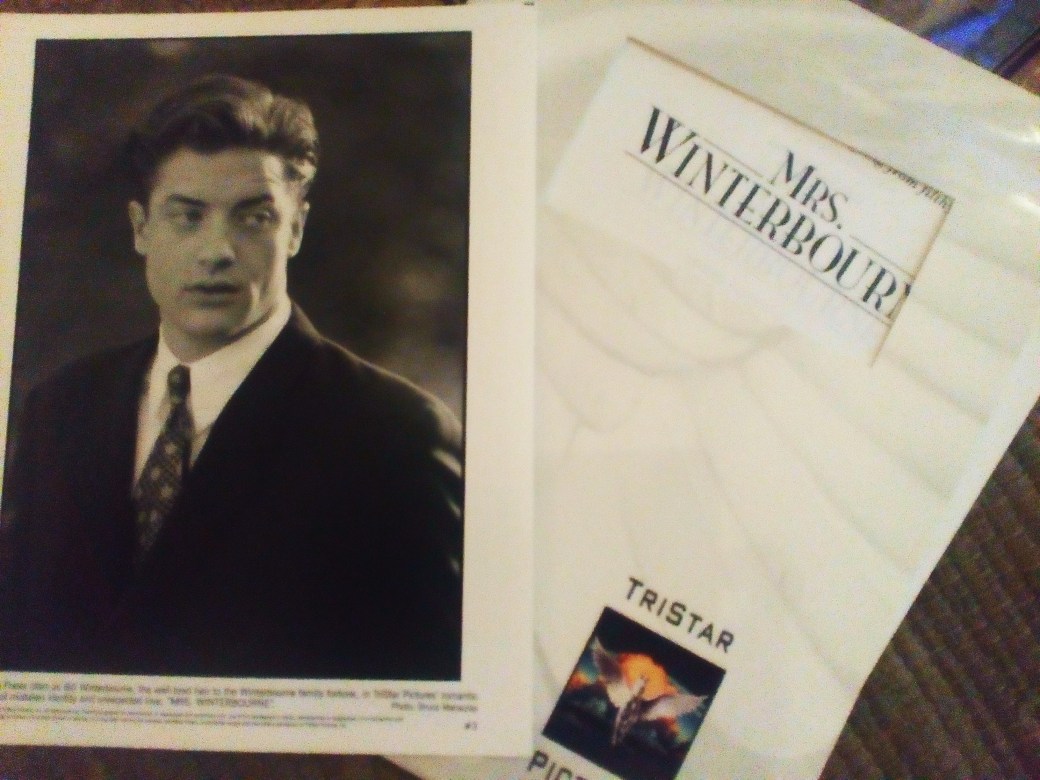
9 Mildly Interesting Things I Learned from the Mrs. Winterbourne (1996) Press Kit

The I Luv Video outlet near me on Austin’s Guadalupe Street is closing down and consolidating with their other location. There’s been a sign out front for weeks now advertising that a lot of their old fare is for sale. I went hoping to find some Dario Argento DVDs like Phenomena or Tenebrae, and although the good stuff was all gone (there are two copies of Eldritch abomination Phantom of the Opera and one of Jenifer, for those of you who hate yourselves and have a few dollars rattling around that you would prefer not to have), I did stumble across a small trove of press kits for nineties flicks. And what should I find among them but a folder labeled Mrs. Winterbourne?

IMG_20160305_180240

What’s a press kit? Well, whippersnappers, back in the day before the internet made the acquisition and dissemination of information easy and manageable, production companies would distribute press kits to media outlets. These packets contained information about the production, statements from cast and crew, and glossy photos from the film itself, all ready for inclusion and quotation in previews and reviews. There’s little information in them that can’t be found online these days, but there were a few things in the press kit for Winterbourne that were interesting and that we didn’t know before watching the movie. Look, this isn’t Buzzfeed, I’m not going to tell you that any of these facts with “change the way you look at [x] forever,” or pretend that any of them are “mind blowing.” But they are neat, so without further ado, here are 9 Mildly Interesting Facts I Learned from the Mrs. Winterbourne Press Kit:

1. Brendan Fraser was the last person to join the cast. Ricki Lake was actually first cast, with Shirley MacLaine cast shortly after. According to page 7, Fraser “came into the cast […] only days before rehearsals were scheduled to begin.”

2. Fraser’s casting was at the behest of Lake. From page 8: “Fraser is a friend of Lake’s and was suggested by her.”

3. Fraser was also making a name for himself on stage in the nineties. Fraser’s bio on page 11 delineates a theatre career that includes a B.F.A. in acting from the Actor’s Conservatory as well as performances at Seattle’s Intiman Theater, The Laughing Horse Summer Theater, and “rave reviews for his work as a tortured writer in John Patrick Shanley’s play Four Dogs and a Bone.”

4. Loren Dean (Steve DeCunzo) also worked with Shanley. In addition to winning a Theatre World Award in 1989 (for something called Amulets Against the Dragon Forces, which isn’t underlined or italicized, so it’s unclear what kind of work that is), he also originated roles in the aforementioned Four Dogs and a Bone and Shanley’s other play Beggars in the House of Plenty.

5. Susan Haskell (the real Patricia Winterbourne) is a scientist. From page 13: “A native of Toronto, Canada, Haskell graduated cum laude from Tufts University with a Bachelor of Science degree in Bio-Psychology.”

6. Director Richard Benjamin won the 1975 Golden Globe Award for Best Supporting Actor for his role in The Sunshine Boys.

7. Producer Dale Pollock began his career as a journalist. This phase of his career lasted 12 years, during which he was a film critic and box office analyst for Daily Variety and a writer for the LA Times. He also wrote George Lucas’s biography, Skywalking, which had the good fortune to be released before the Star Wars prequels.

8. Writer Phoef Sutton won a comedy award. Although his main claim to fame was as a writer/producer for Cheers (which earned him a Golden Globe, a Writer’s Guild Award, and two Emmy Awards), he won the Norman Lear Award for Comedy in 1980, and he received a National Endowment for the Arts Playwright’s Fellowship in 1983.

9. Writer Lisa-Maria Radano worked on The Tracey Ullman Show. Radano also founded a small Manhattan theater company called Shadowfax and received a New York Council for the Arts grant for her play The Secret Sits in the Middle in 1988.

IMG_20160305_180202.jpg

For more on March’s Movie of the Month, 1996’s Mrs. Winterbourne, check out our Swampchat discussion of the film.

-Mark “Boomer” Redmond

Agents of S.W.A.M.P.F.L.I.X.: Captain America 2 – The Winter Soldier (2014)

EPSON MFP image

Superhero Watching: Alternating Marvel Perspectives, Fresh and Longterm, Ignoring X-Men, or S.W.A.M.P.F.L.I.X., is a feature in which Boomer (who reads superhero comics & is well versed in the MCU) & Brandon (who reads alternative comics & had, at the start of this project, seen less than 25% of the MCU’s output) revisit the films that make up the Marvel Cinematic Universe from the perspective of someone who knows what they’re talking about & someone who doesn’t have the slightest clue.

Boomer: Captain America: The Winter Soldier was very nearly a different kind of movie. Christopher Markus & Stephen McFeely announced before the premier of the first Cap that they had already been hired to draft the sequel’s script, and there were three choices for direction: George Nolfi, F. Gary Gray, and sibling directorial team Anthony and Joseph Russo. Gray would certainly have been the most interesting choice, as he would have been the first person of color to helm an MCU film and have helped with Marvel’s ongoing diversity problem (as demonstrated just in the past week by the announcement that Danny Rand would be portrayed in the upcoming Netflix Iron Fist series by white Game of Thrones alum Finn Jones). To date, only two films based on Marvel properties have been directed by non-white directors, Hulk (Ang Lee) and Blade II (Guillermo del Toro), and only one has been directed by a woman, Lexi Alexander’s Punisher: War Zone. At present, Black Panther is set to break this white streak with director Ryan Coogler (Fruitvale Station, Creed), although the revolving door of directors (with Selma’s Ava Duvernay and Gray himself having been attached to production at different points) makes one wonder if there will be any more upsets between now and when production actually begins. Ultimately, Gray passed on the project in order to direct last year’s Straight Outta Compton, and the reins to the film were handed over to the Russo brothers, best known for their work on the early (good) years of NBC’s Community.

Those who are only familiar with the movies may be unaware, but S.H.I.E.L.D.’s contribution to the primary Marvel Comic universe took place largely outside of the context of superheroics. In fact, one could read comic books for several years without ever finding out that such an organization exists within that world; I certainly did. When interest in strong men and Amazons waned in the mid-Twentieth Century while the popularity of western, detective, and horror comics grew, S.H.I.E.L.D. took on prominence as a vehicle for telling stories about war and espionage, with books like Sgt. Fury and His Howling Commandos. The idea that S.H.I.E.L.D. should play a role in the founding of a superhero team is taken wholly from the Ultimate Marvel comics, a sub-imprint launched in the early 2000s to provide an entry into the comics world for new readers whose interest in the medium came as the result of the success of the Spider-Man and X-Men films. Forsaking the moniker “Avengers,” the equivalent team in the Ultimate books was known as “The Ultimates,” featuring a line-up of heroes that were brought together by Ultimate Nick Fury, who was consciously drawn to resemble Samuel L. Jackson in the hopes that he would be interested in the role should a film adaptation ever come to fruition. Many of the ideas that made their way into the MCU found their origins in the Ultimate imprint, with some scenes in the films even shot to be evocative of similar scenes in the comics (Thor’s visit from Loki, who lies that Odin has died in the first Thor film, is probably the most direct lift). The MCU has so far managed to mix stories from both the main books and the Ultimate line with new ideas to make sure that even comic book readers can never quite predict what twists the narrative will take. For instance, in the Ultimate Universe, Black Widow is revealed to be a double agent who turns on the rest of the team; non-readers who see Winter Soldier won’t have this knowledge and thus don’t know whether Natasha can be trusted, while readers who love the MCU Romanoff will constantly be anxious, wondering if she’ll follow in her ink counterpart’s footsteps, adding an edge to the movie.

Writing duo Markus & McFeely initially wanted to do an adaptation of Ed Brubaker’s Winter Soldier storyline (from the mainstream Marvel books) but were hesitant to commit to that idea, unsure if they would be able to make the story fit into the MCU while also doing it justice. Ultimately, with encouragement from MCU coordinator Kevin Feige, the two drafted the script as a political conspiracy thriller that incorporated elements of that plot but that also included S.H.I.E.L.D. in a larger role than in Brubaker’s story, given the greater prominence of the agency in the film franchise. Feige was quoted as saying that stories about Cap dealing with the fearmongering and political unrest of the seventies and eighties was “a hell of a journey” for the character. Although they couldn’t do stories set in that time period due to the fact that this version of Cap was frozen during that era, they “wanted to force him to confront that kind of moral conundrum, something with that ’70s flavor.” As such, the script was written with the intention of incorporating elements from political conspiracy thrillers of that era, like Three Days of the Condor and All the President’s Men.

To cement that connection, Robert Redford, who had appeared in both of those films, was cast to portray Alexander Pierce, the man to whom Nick Fury reports. Another new face in the cast was Anthony Mackie, who plays Sam Wilson, a character from the comics codenamed the Falcon. Cap and Falcon have had a long working relationship in the comics, with the Captain America comic even being retitled Captain America and the Falcon for 88 issues from 1971 to 1978, as the two duplicated the two-buddies-travel-the-world-and-have-different-social-perspectives narrative of the groundbreaking 1970-1972 Green Lantern/Green Arrow books. Emily van Camp was eventually cast as Agent 13, a longtime Cap love interest from the comics (originally introduced as Peggy Carter’s younger sister then later retconned as her niece given the nature of comic books’ static timelines) after beating out Alison Brie, Emilia Clarke, and Imogen Poots (among others) for the role. The film also introduced Crossbones in his civilian identity as a S.H.I.E.L.D. footsoldier revealed as a Hydra interloper; in the film, he is portrayed by Frank Grillo.

The nature of the time jump at the end of Captain America meant that most of Cap’s supporting cast would not be able to reappear in this film, although there is a heartbreaking cameo by Hayley Atwell as a very old Peggy Carter, and Sebastian Stan’s Bucky Barnes plays a prominent role. Scarlett Johansson, Samuel L. Jackson, and Cobie Smulders reprise their roles from other MCU features as Black Widow, Nick Fury, and Maria Hill respectively. Maximiliano Hernández, who had previously appeared as S.H.I.E.L.D. agent Jasper Sitwell in Thor, The Avengers, and ABC’s Agents of S.H.I.E.L.D., also appears in the film as a turncoat, as does Garry Shandling’s senator character from Iron Man 2 (it’s a good thing that Stark managed to keep the senator’s hands off the Iron Man suit, then). Toby Jones also reprised his role as Hydra scientist Arnim Zola, both in flashback and as an electronic ghost.

So, what did you think, Brandon? Captain America got high praise from you; how does this one fare?

EPSON MFP image

threehalfstar

Brandon: I was head over heels for the first Captain America film, which played like a retroactively-perfected version of The Rocketeer. Captain Steve Rogers’ bully-hating, Nazi-punching earnestness was a much welcome antidote to the sarcastic, megalomaniacs like Deadpool & Iron Man who often test my completist patience. I was, of course, stoked to catch up with the second installment in the Captain America series not only because I found the found The First Avenger so perfectly sincere, but also because ever since this project began The Winter Soldier has been sold to me as the height of what the MCU has to offer. I don’t want to say that I was exactly disappointed by the film that was delivered after all that hype, but I will say that the burden of expectation definitely colored my experience in a negative way. From the outside looking in, Captain America: The Winter Soldier is a fine action film, a perfectly entertaining superhero movie that does a great job of tying the Marvel mythology in with real-life political intrigue. However, I think the film stands as a dividing line between the franchise’s die hard fans who greedily eat up the ins & outs of the Marvel lore (particularly the narrative arc of S.H.I.E.L.D.) and the more casual observers such as myself who are mostly looking for an escapist spectacle with a cool hero in a kooky costume (which is more in line with what The First Avenger delivered). Fans who love the MCU enough to devotedly follow all of its short film bonus material & televised spin-offs are likely to love The WInter Soldier. The more detached devotees will enjoy the film’s action sequences & cool cat protagonists, but perhaps with less hyperbolic rapture.

Freshly unfrozen in the modern world, Captain Steve Rogers is simultaneously dealing with the post-Battle of NYC PTSD issues that Tony Stark wrestled with in Iron Man 3 & the same kind of fish out of water awkwardness as his Norse god buddy/fellow beefcake model Thor eternally suffers. Besides having to catch up with cultural markers like Marvin Gaye & Star Wars that he missed while taking an extensive nap on ice, Rogers also has to deal with the fact that his one true love (and ABC star) Peggy Carter lived a full life without him & is now spending her last days alone in a hospital bed. Friends & colleagues pressure Rogers to ask someone less geriatric for a date, but he refuses to move on. Of course, these small personal concerns are dwarfed by an evil world domination scheme Rogers has to put to a swift end. The Nazi offshoot Hydra from the first Captain America film is apparently alive & thriving, having successfully infiltrated S.H.I.E.L.D. & subtly influenced all of the world’s war & unrest from behind the scenes in the decades since the second World War. Can Rogers stop the Hydra from hijacking an advanced weapons system & using a sinister algorithm to destroy every one of its potential enemies in one fell swoop before it’s too late? Of course he can. He is The Greatest Soldier in History, after all (having now graduated from comic book hero status to living museum exhibit in his own lifetime).

What’s most interesting about The Winter Soldier is the way it complicates who & what is Captain America’s enemy. Rogers joined S.H.I.E.L.D. because it was partly founded by his one true love & he finds great value in reliving his wartime specialty: rescue missions. S.H.I.E.L.D. is too powerful to trust, however, especially since its participation in a worldwide (& maybe even intergalactic) arms race is what provides the weapon that Hydra intends to use the wipe out its enemies wholesale. By showing the faults of our modern day surveillance state by attaching a gun to each camera, The Winter Soldier approaches the most biting political commentary the MCU has offered yet, especially when Rogers criticizes his S.H.I.E.L.D. overlords for “holding a gun to everyone in the world & calling it protection” (a theme that will later be repeated in Age of Ultron). I don’t think the film’s political themes are ever explored any deeper or more thoroughly than they’d be in any other high budget, explosion-heavy action film, though. For MCU die hards who’ve been following every Agents of S.H.I.E.L.D. episode & tangentially-related S.H.I.E.L.D. mythology-related media, the film’s big reveal that the organization has been hijacked by Hydra might’ve landed with massive impact, but the betrayal never feels too significant from an outsider perspective. It’s mostly a political thriller springboard for a cool action movie with a lovable hero & some of the best fight choreography in the MCU outside the Avengers films (including increasingly inventive uses of Captain’s shield in its hand-to0-hand brutality).

It feels almost like a betrayal to nerdom at large to say I really liked this movie but didn’t love it, but that kinda points to the way Marvel Studios have spread their properties so, so very thin. In the greater, 10,000+ hour span of MCU content, The Winter Soldier is a major turning point & a fulfilling payoff for irons that have been in the fire for years. As a standalone property surviving on its on isolated merits, its a very solid picture, but far from the pinnacle of any of its various genres: political thrillers, action flicks, superhero media, etc.

EPSON MFP image

fivestar

Boomer: I love this movie. It’s the MCU picture that I’ve watched and rewatched the most and the one that I find the most enduring, thoughtful, and well-paced; for my money, it’s the best of them all. It’s a testament to Winter Soldier’s excellence that, despite the fact that I got dumped two hours after I walked out the theatre on that 2014 afternoon, it wasn’t ruined for me (like so, so many things were in the wake of that breakup). I can look back on that day and say, “Hey, that was one of the worst days of my life, but I also saw Winter Soldier.”

I’m not ever sure where to start with all the things that make this film work for me. I’m a sucker for a good conspiracy flick (and even some bad ones), and the tonal similarities between Winter Soldier and things like Enemy of the State, The Manchurian Candidate, and most obviously (and explicitly) Three Days of the Condor hit all the right buttons for me. It brings Black Widow into the foreground in a way that the previous films attempted with mixed success and introduces a great new hero character to the mythos in Falcon, and both Johannson and Mackie bring a lot of energy into the mix that harmonizes well with Evans’s leading man charisma. Redford is perfect in his role as the turncoat leader of the World Security Council, and the film puts a lot of work into including and subtly commenting on contemporary issues of security, privacy, and systemic violence. Evans was serviceable in his previous appearances as Cap, but he clearly understands the role better here than in the earlier outings: Cap is a man who fought a brutal war that history has painted as a righteous one, and as such is best suited to remind those around him when they are repeating the mistakes of the past.

The film draws a clear line between itself and other films of the same genre that came before, both within the text (most notably with Natasha quoting War Games) and metatextually, especially with the casting of Redford. Although his most notable contributions to political thrillers were his roles in All the President’s Men and Three Days of the Condor, I also have a fondness for Sneakers, which shares plot elements like computer algorithms and heisty shenanigans with Winter Soldier. Of course, the movie to which I feel this film is most tonally similar isn’t your standard contemporary political thriller like your Sneakers or even your classics like The Parallax View: it’s Star Trek VI: The Undiscovered Country.

I’ll keep this as brief as I possibly can, given that I have a (deserved) reputation of making everything about Star Trek, despite any obstacles. The Star Trek franchise was always about creating the rhetorical space that science fiction inhabits when it’s at its best: commenting upon contemporary social mores through a lens that provides the viewer or reader with enough metaphorical distance that he or she can see the absurdity and beauty of the human experience. (Last year’s Hugo Awards were undermined by a small group of rabid people who fail to realize that this is and always has been the purpose of the genre.) As such, the classic 1960s series created by Gene Roddenberry featured groundbreaking elements like people of color and women being treated as colleagues and equals by their white and male crewmen while also exploring the relationship between different earth cultures by projecting them onto extraterrestrial confederations.

Most notably, this was demonstrated by the way in which the Klingon Empire was a clear stand-in for the Soviet Union, and this was made all the more textual in The Undiscovered Country, which opened with a Chernobyl-esque disaster that places the Federation (the society in which Kirk and Spock abide) in a position to finally hammer their swords into plowshares… or bring their enemies to their knees. In the midst of all this is Kirk, who has fought the Klingons all his life and even lost his son to them; still, the Federation believes that, just as only Nixon could go to China, only Kirk can present the Klingons with a metaphorical olive branch. Unfortunately, Kirk ends up being framed for the assassination of the Klingon Chancellor and is assigned to a Siberia-esque gulag, while Spock works out the mystery. Working from opposite ends toward the middle, the two find a peace-endangering conspiracy that has wound its way around the heart of the seemingly-utopian Federation, fueled by long-stewing grudges, cultural fascism, and speciesist (read: racist) attitudes.

The Undiscovered Country is a fantastic movie, and although it’s not the best entry in the film franchise (Wrath of Khan is the undisputed champion), it’s a viable contender for runner-up. The Winter Soldier plays out similarly with its revelation that Hydra was never destroyed, but that it was instead reborn by planting its monstrous seeds within S.H.I.E.L.D. from its conception. Like ST6, this film also features the great and historical hero who finds himself framed and caught up in political machinations, dealing with strategic espionage maneuvering which is far outside of his control but in which he has a vested personal stake. Both films take the tropes and traits of the conspiracy narrative and add them to their respective genres, elevating both films to increased notability outside of their franchises.

And Natasha! Romanoff is back, baby, taking on heavier narrative lifting here than ever before and not only rising to the challenge, but killing it. Natasha never comes off as a sidekick here, instead acting as the perfect foil to Rogers. He’s the perfect soldier, and she’s the perfect spy: the focus on the ways that their respective skills and worldviews inscribe, complement, and conflict contributes to the film’s constant momentum. Johannson nails the small moments of vulnerability and the fact that Widow is always a few steps ahead of everyone else, like she’s accustomed to always being the smartest person in the room. This is just as much a story about her as it is about Cap, despite how much of the plot is devoted to his feelings of having failed Bucky. The film also does a better job of displaying professional respect and friendship between the two than most films are able to with a male-female friendship, and their emotional arc is perfect, forsaking the easy road of creating a romantic relationship between the two.

If anything, the titular Winter Soldier is the weakest link for me here. Part of that may be that his true identity as a brainwashed Bucky is no secret to comic fans (and it kind of surprises me that it was a shock to film-goers, given how recognizable Stan’s face is even with a mask on). It provides a counterpart to Cap’s friendship with Natasha, but it’s not as emotionally satisfying to me. Cap and Bucky’s friendship was built up in the first film, but it never quite clicked for me; I’m not as invested in the two of them as the franchise wants me to be, mostly because we actually see the two of them interact with each other much less than we see Cap interact with Natasha or even Tommy Lee Jones’s General in the first film. His involvement raises the stakes for Cap personally, but not for me.

That doesn’t make me any less invested in loving this movie, however. It hits the sweet spot for many in virtually every way, and I can hardly thing of a disparaging thing to say about it. Every few months, we see a new thinkpiece being published that asks if this genre is on its way out. Although I haven’t really seen any signs of slowing or stopping at this point, I’d wager that Winter Soldier will long outlive its peers in the public consciousness even if the MCU draws to a close.

EPSON MFP image

Lagniappe

Brandon: One thing that has been super impressive over the last few MCU features is how they’ve turned around my frustration with one-line cameos & half-assed tie-ins. I think that The Avengers, while not the height of the franchise, was an entirely necessary step in bringing this whole mess of a universe into an increasingly sharp focus & The Winter Soldier in particular is a great collaborative effort that directly reflects that shift. It’s doubtful that Nick Fury or Black Widow will ever star in their own standalone vehicles, but they’re both given way more to do in The Winter Soldier than ever before. Black Widow has already had ample time to show off her badassery in previous pictures, but her extended presence is always a welcome asset. This is really Nick Fury’s big break as a major player, though, and it’s fantastic to see him elevated form a walk-through cameo in a stinger to a fully-realized character. It’s also incredible how characters like Falcon & Bucky are shoehorned in there (even if I spoiled their individual reveals for myself by watching MCU content out of order) without ever cluttering up the film’s proceedings. Again, The Winter Soldier is a well made political thriller-leaning action flick that covers a lot of ground in its massive 2 1/2 hour runtime. I’m not sure that each of its characters & themes are given enough room to properly breathe & resonate, but there’s an impressive juggling act in how many personalities & plotlines get involved in the first place and the film delivers a wealth of entertainment in its genre-based treats alone.

Boomer: The furthest-reaching repercussions of this film on the franchise is the revelation that S.H.I.E.L.D. has been infected by Hydra from its very inception. For me personally, S.H.I.E.L.D. has always been a non-essential element of the MCU; sure, most of the stories would be different without their involvement, but not by much and not necessarily detrimentally. This reveal did end up creating more plotlines for Agents of S.H.I.E.L.D., with that series finally developing into something worth following in the wake of Winter Soldier, but it also annoys me. The rest of the MCU must now pay lip service to this development constantly, with references to Hydra showing up in shows and films that don’t really relate to S.H.I.E.L.D., if as nothing more than a bogeyman. Other than films where it wouldn’t make sense (such as Guardians of the Galaxy), all the villains relate back to Hydra now, if only tangentially. It makes me like past, unrelated villains like Jeff Bridges’s Obadiah Stane more in retrospect, since they weren’t required to tie in as heavily. It’s not that I feel the franchise is hamstrung by this revelation, but I find it weakens a plot when everything has to tie back into one evil mastermind or organization, limiting storytelling possibilities.

EPSON MFP image

Combined S.W.A.M.P.F.L.I.X. Rating for Captain America 2 – The Winter Soldier (2013)

fourhalfstar

-Agents of S.W.A.M.P.F.L.I.X.

New City (2015)

EPSON MFP image

three star

2015 saw the ten year anniversary of the broken levees that flooded New Orleans during Hurricane Katrina. The decade that’s followed this man-made disaster has brought various anxieties & concerns to the city, not least of all about the flood of transplants that have moved here during our long road to recovery. It’s easy to get bitter about the speed in which the city is changing. People move to New Orleans because they love its culture, but often try to change the city from within once they arrive. The fear is that along with positive changes like economic growth & much needed educational reform the city might be trading in its more unique cultural traditions, transforming into a modern, homogenized city no different than Anywhere Else, America.

The documentary New City bucks local negativity about the rapid changes we’ve seen post-Katrina, positing the last decade as “a renaissance” for New Orleans, playing almost like an advertisement for the direction the city is heading in. The film is relentlessly positive, countering the exhaustion & PTSD New Orleans has been struggling with in the years since the levee breach with unbridled enthusiasm about the hope that young  transplants bring to our economic landscape. There are a few voices of dissent among the film’s interviewees, but they mostly belong to barflies trapping themselves in negative thought loops. Local business owners, Mayor Mitch Landrieu, and other sober voices are selling a purely positive spin, declaring that the city is (in Landrieu’s words) “stronger & better than before”. No one is claiming that the storm’s death, destruction, and diaspora were a good thing for the city (at least I hope not), but when the loudest negative voices about post-Katrina transplants are coming from drunken rants that cover distaste for everything from President Obama to “job stealing” Hondurans, Landrieu & company’s optimism plays like a much more attractive way of thinking.

Form-wise, New City is about what you’d expect from a talking heads documentary about the current state of the city. It feels ready-made to be put in rotation on WYES (which is not at all a bad thing). The film does some interesting things with the format, though. Its aerial shots, most likely drone-operated, are very striking, inviting the audience to pull back & look at the city from a detached, distant angle. I also appreciated the way local cuisine is woven into its narrative. Narrator (and first time documentarian) Max Cusimano often exclaims things like “Let’s take a food break!” or “And now for some food porn” & values interviews from local chefs & food critics like Tom Fitzmorris & Out to Lunch‘s Peter Ricchiuti just as much as he values input from folks like the mayor. In a lot of ways, New City‘s bartstool interviews, drooling food photography, and stray footage of live music & Mardi Gras parades often work like a wordless reassurance that the city’s culture is here to stay indefinitely no matter how much or how quickly the population changes.

I’ll admit that I found certain aspects of New City‘s relentless optimism frustrating. There are entire lines of thought that the film avoids as long as possible in order to keep things posi. It takes almost 40 minutes for the doc to address people being priced out of their neighborhoods in this so-called “renaissance”. Words like “gentrification”, “Airbnb”, and “hipsters” are held off for even longer despite the severe weight they hold for locals. I also bristled at the way some interviewees valued “new, educated, business-oriented people” over undermined & underserved local talent. Even more uncomfortable was watching a Los Angeles couple gush over mix drinks with names like “levee breach” & “flood water” at a restaurant in the 9th Ward. Still, I found the film’s overall positivity to be downright infectious. My own tendencies to get defensive about who’s moving here & how they should behave once they arrive is unproductively negative & ultimately futile. New Orleans is a port city. As protective as we can be about maintaining local traditions, it’s good to keep in mind that our entire history, our very fabric is dependent upon constant influx of new faces & new ideas. This is far from our first “renaissance”.

I found myself agreeing with New City‘s the-future’s-looking-bright attitude most when it was tempered with a little caution for balance. As much as Landrieu lauds all of the new money & young talent coming through town, even he punctuates that opinion with the old adage that once you move to this city you don’t change it; it changes you. I also found myself encouraged by a bar owner’s levelheaded reminder that it’s great to have money flowing through the city that wasn’t here before the storm, but that “Money isn’t everything.” Even though I wish more of New City‘s sentiment was thoughtfully balanced in that way, it was still pleasant to see the city through the film’s hopeful eyes. At the very least, it put a lot of my own personal negativity about where the city might be headed & who’s moving here in check. I genuinely appreciated that. And when it wasn’t working for me, there was always food porn waiting to put my mind at ease.

Side note: When I watched this film on Amazon Prime there were a few sound quality issues in some of the interview footage that occasionally obscured what was being said. So, you know, that might not be the best platform to watch the film on even if it is currently the most convenient.

-Brandon Ledet

The Tale of Princess Kaguya (2014)

EPSON MFP image

fourstar

I’ve been on a bit of a Studio Ghibli kick lately, which lead me to watching a couple animation classics I should’ve watched a long time ago: Howl’s Moving Castle & Pom Poko. A much more recent blindspot/missed opportunity entertainment from Studio Ghibli was 2014’s The Tale of Princess Kaguya, the only Ghibli film I can think of where I planned to catch it in the theater, but missed out due to poor scheduling. It’s probably for the best that I didn’t watch The Tale of Princess Kaguya in public, though. I spent much of the film’s second hour spontaneously bursting into big, ugly tears. I’m not saying that I’m embarrassed to cry in public; it’s just that my couch is a really comfortable place to weep.

Retelling the Japanese folktale “The Tale of the Bamboo Cutter”, The Tale of Princess Kaguya immediately has a different look to it than I’m used to from Studio Ghibli’s more typical, polished style. The film has a storybook illustration look to it, recalling the visual work of the recent Irish animation feature The Secret of Kells. It’s a visual language that never allows you to lose sight of its hand-drawn origins. Its brush strokes & pencil marks always on open display. At first the effect of this choice is more cute than breathtaking, but as the story’s reverence for the beauty of Nature starts to takes shape, the visual choices start too make all too much sense. The pencil & watercolor visual palette works like intensely pretty & delicate nature studies that you’d fine in the sketchbook or a botanist or some other kind of observer of Nature’s beauty.

“The Tale of the Bamboo Cutter” begins with said bamboo cutter discovering a Thumbelina-sized princess sprouting from a magical bamboo stalk in the mountainside wilderness where he lives & works. The miniature princess then transforms into a human-sized infant who seemingly grows as quickly as the bamboo. The bamboo cutter & his wife raise this “beautiful little princess” as if she were their own natural child, a “blessing from Heaven.” Nature opens up & beautifies at the princess’s presence and she similarly brightens up when immersed in the natural world. Her adoptive father, however, encouraged by other gifts found in the bamboo like gold & fine silks, believes that she is destined to become a “real”princess & transports her to the capitol for training in royal etiquette. As she struggles against the social constraints that try to transform her from an active force of Nature to a passive object to be possessed & adored, the princess is haunted by a dark cloud of yearning and the mystery & purpose of who/what she is, exactly, comes to a magical, dramatic climax.

There is some really touching character work in The Tale of Princess Kaguya, particularly between the princess & her “mother”, but that’s not what made me cry. The film’s music, especially the repeated motif of a song titled “Distant Time” just destroyed me. It was almost a purely physical reaction. The song’s minor chords were just pulling tears out of me effortlessly like a magnet collecting metal shavings. This tenderly emotional soundtrack combines with the film’s teenage-yearning, reverence for Nature, and excessive style of hand-drawn animation to amount to a singularly beautiful & delicately sad viewing experience. The Tale of Princess Kaguya is not as immersive of a film as I’m used to from Studio Ghibli titles, but it still lands with full emotional impact, especially when its soundtrack takes center stage.

-Brandon Ledet

Roger Ebert Film School, Lesson 4: A Day at the Races (1937)

EPSON MFP image

Roger Ebert Film School is a recurring feature in which Brandon attempts to watch & review all 200+ movies referenced in the print & film versions of Roger Ebert’s (auto)biography Life Itself.

Where A Day at the Races (1937) is referenced in Life Itself: In the first edition hardback, A Day at the Races is referenced on page 28. Roger remembers the film as his first trip to the cinema. He says he was so young at the time that he had to stand on his seat to see the screen. He also remembers this occasion as the hardest he’s ever heard his father laugh & mentions that his father was a huge Marx Brothers fan, having seen them on the vaudeville stage before they were in motion pictures.

What Ebert had to say in his review: Roger never had the chance to review the film proper, but he does recount the very same anecdote about watching A Day at the Races as a child in his “Great Movies” review of Duck Soup.

The seventh Marx Brothers feature film, A Day at the Races is par for the course in terms of the impossibly talented comedy crew/family’s brand of sublime silliness & rapidfire insanity. I’ve only ever seen a few Marx Brothers titles, leaning towards indisputable classics like A Night at the Opera & (my personal favorite) Duck Soup, but their comedic style is so instantly comfortable & genuinely funny that familiarity with their work is not necessary for enjoying their material. I have no qualms admitting that of all the comedic acts that spilled over from vaudeville to motion pictures, the Marx Brothers are an easy favorite for me, outshining even names like Charlie Chaplin and Abbott & Costello. I’d like to say that this is due to the quick, oddly sophisticated wit of Marx Brothers poster boy Groucho, but the truth is that it’s Harpo who steals my heart in every picture. Taking physical, slapstick comedy to deeply deranged, yet subtly masterful territory, Harpo is a one of a kind talent. Part of the reason I ended up liking the somewhat minor Marx title A Day at the Races so much is that Harpo is so damn funny in it. I was laughing at his madman antics as the criminal horse jockey Stuffy so hard that almost all of the film’s third act problems (of which there are many) ultimately felt meaningless.

The plot of A Day at the Races concerns a young couple in financial crisis. An entrepreneur owner of a sanitarium (a type of health resort) is struggling to keep her business alive & out of the hands of overeager financial vultures. Her bonehead beau is a musician who foolishly decides to get into the horseracing business without knowing thing one about what he’s doing. Groucho, Harpo, and Chico Marx get caught up in both ends of this struggle. Chico & Harpo help the musician doofus evade the law & prepare his horse to race in competition. Chico & Groucho conspire to keep a wealthy hypochondriac, Mrs. Upjohn, enrolled in the sanitarium’s care, luring her into complacency through seduction & encouragement of her groundless worrying. Long story short, they all fail miserably. Groucho is ludicrously incompetent as Dr. Hackenbush (originally named Dr. Quackenbush, but subsequently changed due to fear that the dozen or so real Dr. Quackenbushes in the country might potentially sue), a veterinarian posing as a medical doctor, an easily recognizable hack/quack (it’s right there in the name, after all). When described as “a doctor with peculiar talents”, he retorts that he has “the most peculiar talents of any doctor around.” Harpo is a silent, deranged jockey who sends far more time running from the sheriff that he does wining races. Chico plays both sides of the coin as an eternal huckster who’s always able to scrape by on a quick buck, but rarely able to pull off any large scale schemes. Their collective incompetence brings the whole story down to the fate of both the sanitarium & the potential marriage of the central couple depending on the outcome of a single horse race. Its a tidy conclusion to a very messy farce that largely exists to support the Marx Brothers’ zany comedy antics, which are all top notch even when the film isn’t trying too hard on a formal level.

As I said, there are some major third act problems with A Day at the Races that keep it from being an entirely perfect product. The fact that it boasts the all-time longest Marx Brothers runtime weighs heavily on the proceedings. There’s a definite point towards the end where the laughter starts to die down & it transitions into time-to-constantly-check-your-watch territory. At first it’s endearing that A Day at the Races fits firmly in the kind of Old Hollywood variety show spectacle that tries to have it all: romance, suspense, comedy, musical numbers, etc. It’s the exact kind of expensive mixed bag that Josh Brolin’s overworked producer struggles to hold together in Hail, Caesar!. By the time it reaches its second song & dance number this variety is a little more trying. It’s time for the movie to wrap up its plot, so a sequence where Harpo plays a demonic pied piper to a poor black community who burst into a rendition of “All God’s Chillun’ Got Rhythm”that might normally be a welcome diversion in another context starts to  feel like wasted time. It also doesn’t help that this sequence is played like a long setup for an unfortunate punchline involving the Marx Brothers evading the law by donning blackface to “blend in”. All of this and a singularly terrible performance by an overacting oaf playing an indignant Dr. Steinberg that goes way too broad to remain endearing, perhaps even watchable, which is saying a lot for a comedy this zany.

With or without that mess of a concluding half hour, though, A Day the the Races is a finely tuned comedic act, one that values spotlighting the talents of its three sibling stars over telling a concise, well-rounded story. It’s no wonder that Ebert remembers his first trip to the cinema so vividly as the hardest he’s ever seen his father laugh. The film really is a laugh riot, especially in its early proceedings. Watching Harpo chew & swallow a thermometer (with a chaser clearly marked “POISON”) when Dr. Hackenbush takes his temperature in one scene & turn around to beautifully pluck the strings of a harp in  another is a treat I’ll never forget. Groucho’s proto-Bugs Bunny one-liners & Chico’s slick, smooth-talking scams are also pricelessly amusing, even if I’m heavily biased toward Harpo’s particular brand of comedic madness. A Day at the Races is widely considered the beginning of the end for the Marx Brothers’ cinematic winning streak, but for me the joke never felt stale in this film, just a little overlong & unfocused in the back end.

EPSON MFP image

Roger’s Rating: N/A

Brandon’s Rating: (4/5, 80%)

fourstar

Next Lesson: Gentlemen Prefer Blondes (1953)

-Brandon Ledet


Gods of Egypt (2016)

EPSON MFP image

onehalfstar

campstamp

Director Alex Proyas has been going on some epic Facebook rants lately, decrying the violently dire critical & commercial response his latest film, Gods of Egypt, is being met with at the box office. He’s particularly frustrated that what he describes as “hate bloggers” have organized a boycott of the film due to its predominately whitewashed casting of its Egyptian characters. Much like the recent Ridley Scott epic Exodus: Gods and Kings, Gods of Egypt represents for a lot of people yet another example of a long line of Hollywood pictures in which POC actors have been locked out of the lead roles that, at the very least for historical accuracy, should not have been granted to white actors. Proyas claims that the reason critics have been harping on his film’s problematic casting is that they’re too overworked to form opinions on their own & instead parrot the shrill voices of “hate blogging” (whatever that is) out of convenience or laziness. Proyas genuinely believes that if his film were able to stand on its own merits outside of its political controversy, it’d be doing much better at the box office. He’s taken to the soapbox he claims to hate the most (online criticism) to cry foul, to complain that he hasn’t been given a fair shake as a filmmaker.

Now, I’m not sure if this makes me a lazy critic or a “hate blogger” (maybe both?), but I also hated Gods of Egypt. However, despite what Proyas might believe, I didn’t enter the film wanting to hate it. In fact, I set the bar for my enjoyment so pathetically low that it’s incredible that the film failed to clear it (despite its excess of golden wings). Equipped ahead of time with foreknowledge of the film’s controversial casting, dire reviews, and crackpot director (whose work ranges from total shit like The Crow to actually-enjoyable nonsense like Knowing), I felt like I was steeled to what the film had going against it. Still, there was a visual element in the trailer that made me hopeful that it might be mildly enjoyable as a campy trifle. What I was expecting was the visually striking, narratively undercooked mess of Snow White & The Huntsmen, which I enjoyed despite its negative critical consensus. What the film delivered instead was the bland CGI worldscape that put me to sleep (literally) both times I tried to watch 300 in the theater (and, curiously enough, both films star Gerard Butler). Gods of Egypt has problems that extend far beyond its racially tone deaf casting & temper tantrum-prone director. The film is also a hopeless bore, which might be the most damning fault of them all.

Similar to the way The Witch attempts to breathe life into the religious paranoia of Puritan beliefs, Gods of Egypt aims to illustrate the myths of gods living among men that once populated ancient, polytheistic Egyptian philosophy. The difference is that The Witch dealt in sincere historical recreation while Gods of Egypt attempted to mold its subject’s mythology into a goofy action epic framework & the most despicable genre of them all: the shameless franchise-starter. Through overbearing storybook narration, Indiana Jones-style action adventure, and flat-on-their-face quips, Gods of Egypt tells the story of a half-blind god & a mortal thief who team up to stop a deranged relative who plans on merging life & the afterlife in a quest to claim absolute power. I won’t bother you with many plot details, since very few are of interest & can be boiled down to dual damsel in distress rescues. True love prevails over death & destruction, the men save their ladyfriends, the universe maintains its balance, etc. The stakes rarely feel high in Gods of Egypt, because each challenge is conquered with ease by a pair of protagonists who have no option but to succeed. The Egyptian mythology setting mostly serves as a backdrop for a white knight story we’ve all seen play out countless times before.

The best chance you have of enjoying Gods of Egypt is either as mindless eye candy or as a so-bad-it’s-good camp fest. May the gods pity you in either case. The film’s costume & set design are bathed in sweet, delicious gold, but the effect was tiring after its initial introduction. The brevity of the film’s trailers did its visual style a huge favor, distracting the eye from its bland CGI mediocrity by making it seem downright lush through rapid editing. There’s a few interesting details here or there: a masked army in blood-red robes, a flying chariot pulled by scarabs, gods bleeding gold when wounded in battle, etc. For the most part, though, the film is about as visually interesting as a video game cutscene (something else I find unbearably boring). The creatures were particularly disappointing on that front. I kept waiting for them to prompt me to press “X”. As far as goofy camp goes, there isn’t much of interest to chew on there either. There’s exactly one line that made me laugh. When asked where his buddy is hiding, the mortal half of our heroic tag team responds “Up your butt,” which, you know, isn’t the height of wit or anything like that, but I’m honestly an easy audience. I also found a lot of humor in the way that they visually conveyed the gods’ imposing stature by making giant-sized versions of their props to dwarf their human counterparts. That’s the kind of tactic you’d expect in an old midnight movie like Attack of the Puppet People, not a modern $140 million action epic.

Acting wise, most of Gods of Egypt‘s (again, controversial) cast is on autopilot. Gerard Butler performs as if he’s in 300 Part Deux. Nikolaj Coster-Waldau phones it in as a barely-engaged Jamie Lannister, trading in his missing hand for a missing eye & swapping the moniker “King Slayer” for “Lion Slayer”. Brenton Thwaites & Chadwick Boseman (a legit POC actor! and he’s not even an extra!) overact in a way that’s far more annoying than it is entertaining. The female leads are given little more to do than to dress provocatively & await rescue. Only Geoffrey Rush’s out of nowhere turn as the sun god Ra stands out as wildly-entertaining scenery chewing. One gets the distinct feeling that the renowned actor is slumming it in this feature-length high resolution screensaver, but his delightfully bitchy take on the all-powerful Ra was one of the sole bright spots in a film that could’ve used a lot more of them. At least half a star in this review’s rating is due to his performance alone, which, as you can probably tell, was a much-needed boost.

Part of me kinda feels bad for Proyas. He’s such a typical 90s Guy that he probably had no idea that such a cultural backlash was going to plague Gods of Egypt from its initial announcement to its dismal box office opening. In his mind, he made a grand scale Hollywood epic with a handsome cast & a lot of browbeating about how “In this world you’re either rich or you’re nothing” & the radical idea that slavery is cruel. He expected to get by on good intentions, particularly perplexed that his own Egyptian heritage didn’t allow him to sidestep criticism for whitewashed casting in yet another mishandled Hollywood take on the region’s past. The truth is that just as many people would’ve been annoyed with Gods of Egypt’s casting pre-Internet, but would’ve had a much more difficult time publishing/publicizing their complaints. Casting isn’t the only way the film feels politically stale, though. Take, for instance, the protagonist god’s jealousy that his lover had sex with her wicked, power-hungry enslaver. It’s the romantic jealousy that’s played as a character fault, not the fact that he’s slutshaming his lover for being serially raped. That’s the exact kind of outdated sentiment that seems to be going over Proyas’s head, making him subject to intense scrutiny from “hate bloggers” & “lazy critics”. If released sometime in the 90s, Gods of Egypt might’ve been able to skate by as a mediocre prequel to a forgettable blockbuster like The Mummy. In 2016 its moral ickinees is too much of a sore thumb to overlook, especially for something that aims to be a franchise starter. You get the distinct feeling throughout the film that Proyas & company should’ve known better (or at least tried harder). After reading Proyas’s rants it’s all the more confusing that Gods of Egypt is such a dull slog. This is the film he’s going to bat for? This is what he’s confused about no one liking?

There’s a single scene in Gods of Egypt that perfectly sums up my whole experience watching the film. During a heavily green-screened chariot chase an arrow strikes & kills the mortal doofus hero’s beloved & she dies while he blankly looks on & continues to steer their escape. This scene is everything Gods of Egypt is in a nutshell: visually uninteresting, passionless, seemingly plucked from a time long gone (and I don’t mean ancient Egypt). Again, Proyas should’ve known better. Or he at least should’ve known to concede defeat when it failed to connect with audiences & critics, who, despite what the director seems to believe, are the very same people.

-Brandon Ledet

Episode #2 of The Swampflix Podcast: Evil Doll Movies & Boxing Helena (1993)

inaworld

Welcome to Episode #2 of The Swampflix Podcast! For our much-delayed second episode, James & Brandon discuss movies about evil dolls with fellow contributor Britnee. Also, James makes Brandon watch Jennifer Lynch’s body horror melodrama Boxing Helena (1994) for the first time. Enjoy!

Production note: The guitar riff musical “bumps” between segments were also provided by James.

-James Cohn, Brandon Ledet, and Britnee Lombas

Movie of the Month: Mrs. Winterbourne (1996)

Every month one of us makes the rest of the crew watch a movie they’ve never seen before & we discuss it afterwards. This month Erin made BoomerBrandon, and Britnee watch Mrs. Winterbourne (1996).

Erin:  Picture it:  1996.  Clothes are big, scrunchies are bigger, and a Hollywood team looked at the script for Mrs. Winterbourne and decided that this was the perfect vehicle to launch Ricki Lake into Leading Lady-hood.

The same Hollywood team also thought that the best way to adapt a gritty noir novel about a pregnant woman escaping domestic abuse in the midst of a deadly train wreck and a grieving family was as a lighthearted romcom.

That’s right.  Mrs. Winterbourne is a romantic comedy about a pregnant teenager (Connie, played by Ricki Lake) escaping her scummy, abusive boyfriend, surviving a train wreck that kills another pregnant woman and her kind husband, and being mistakenly taken in by the in-laws (Shirley MacLaine and Bredan Fraser as mother- and brother-in-law) of the dead woman as they attempt to put their hearts back together.  That’s only the first act.  In the second act, just as Connie is starting to connect to the Winterbournes and is struggling with the decision of either revealing her true identity or keeping up the charade indefinitely, her slimy ex-boyfriend comes back to blackmail her. There’s singing! Dancing!  A makeover montage! Murder!

Although I really enjoy Mrs. Winterbourne, the incongruity between the gritty (and bizarre) premise and the lighthearted style in which it is presented makes for a weird movie-watching experience.  There’s a lot of whiplash as the film attempts tell a gritty noir story through the lens of a quirky romcom.

The supporting cast does several things rather well – Shirley MacLaine as the elder Mrs. Winterbourne might be the true heart of the film, and there is real chemistry between her and Lake’s Connie and Fraser’s Bill.  Miguel Sandoval, as the Cuban ex-pat chauffeur, is truly charming as he slings knowing glances and come-to-Jesus talks left and right.  Loren Dean brings a completely awful character to life in Steve DeCunzo, throwing change at a pregnant Connie through his window as she begs for help in pouring rain and stomping around in the baby’s playpen as he threatens blackmail.

Honestly, the least believable thing for me in this movie is the lack of chemistry between Lake and Fraser.  Brendan Fraser had hit his stride in the mid ‘90s, playing hot and goofy leading men after a few years of playing stoner and college roles.  He still had George of the Jungle (1997), Gods and Monsters (1998), and The Mummy (1999) to come.  Ricki Lake, while she never really hit leading lady status outside of Mrs. Winterbourne, was a ‘90s fixture, and would start her talk show in 1998. Despite being in their respective zones in 1996, they just don’t really connect, which is a shame.

Over all, I think that Mrs. Winterbourne is a fun watch.  It’s good natured about its downer plot line, and has a few really funny and touching moments.  I like strange movies, and this one is definitely strange enough to keep my attention.

Brandon, Mrs. Winterbourne is pretty wacky.  What are your first impressions of it? How does well does the romcom genre flesh out the noir bones? What caught your attention about Mrs. Winterbourne?

Brandon: Yeah it’s difficult to write my first impressions on this film without zeroing in on the fact that it’s a fish-out-of-water romcom with a “hilarious” comedic set-up that’s put into motion by a pregnant woman dying in a train wreck. The film’s moody vibe as a neo-noir is in direct conflict with its more lighthearted comedy stylings: a pregnant & homeless Ricki Lake wandering aimlessly in the rain, a butler who escaped homophobic persecution in Cuba through prostitution, a third act murder mystery, the fact that Brendan Fraser’s cad finds himself falling in love with a woman who might be his dead twin’s widow. So much of Mrs. Winterbourne is so darkly fucked up that it’s jarring to watch the film wrap itself in the soft-edge confines of the romcom genre. My favorite moment where these two tones clash is when Ricki Lake’s pregnant/homeless Jersey Girl shouts to her deadbeat baby daddy “I’m about to have your baby out on the street! Wanna come watch?” Uncaring, he tosses a quarter at her feet & shuts his window. Later the baby daddy’s new baby mama recognizes Lake’s protagonist only as “The Bitch Out in the Rain With the Quarter.” I shouldn’t have gotten such a hearty laugh out of that but I shrieked with delight. What a messed up “gag”.

The weirdest part about the film’s compromised tone is how much weight it puts on Ricki Lake’s shoulders. She’s asked to deliver most of the film’s yuck-it-up comedy, which I’d say she accomplishes with just as much bright eyed enthusiasm she brings to John Waters’ (utterly flawless) Serial Mom. At the same time, I’d say that the sole reason the film’s central romance plays like a joke is the very same Ricki Lake performance. Brendan Fraser is entirely believable as the romcom heartthrob, but Lake is too much of a bumbling fool for me to genuinely commit to her end of the romance angle. Maybe it’s all those years of watching her host a Jerry Springer-style talk show that keep me from forgetting the clownish aspects of her screen presence, but I think her making homelessness amusing was an asset, but her making romance funny might’ve been somewhat of a detriment.

Where do you fall on Lake’s performance, Boomer? Is she a sold lead in this role or did the film ask too much of her in too many directions for the performance to be taken seriously?

Boomer: I have a confession to make; I used to hate Ricki Lake. This was through no fault of her own and was based entirely on Baton Rouge NBC affiliate WVLA’s decision in 1997 to replace their daily 4 PM rerun of Star Trek: The Next Generation with her syndicated talk show. In the many years since this great sin was committed, I’ve actually come to like Lake quite a bit, especially as I came to be aware of her partnerships with John Waters in my teenage years. She’s a perfectly serviceable actress, and she’s genuinely likable in this role, which could so easily have not been the case with a plot like this that revolves around deception (although Connie does admirably make every effort to correct misconceptions up to the point where revealing the truth could potentially literally kill a woman). Her weakest acting moments come in the scenes in which she is called upon to be histrionic and melodramatic that she comes across more like one of the sideshow people who populated her television stage. Lake can act; she just can’t overact, and she works best when she’s playing off of MacLaine, who brings a warmth to her performance that Lake can’t help but reflect back at her.

The weakest acting link, frankly, is Fraser, who comes across as a bit of a hack here. He seems to think that “playing rich” requires foppishness that borders on recreating stereotypical portrayals of gay men, up to and including the fey and effete way that he drops his napkin in his lap in affected shock at Connie’s initial appearance at the dinner table. There are many other ways to play a man of privilege who assumes that the new family member in his midst is an interloper, but Fraser read his part and went straight to “dandiest dandy that ever dandied,” and the later scenes that show him as a man with the potential to be more open doesn’t erase his performance in his introduction. In fact, when he first started falling for Connie, my assumption was that the film was leading into his public confession that he had latched onto her in an attempt to disprove his homosexual leanings. But no, it was just that Fraser made poor character choices when filming the earlier sequences in the film, and, admittedly, I came around on his character by the end, even if he is stiff and wooden when confronting Connie about having (he assumes) killed Steve.

The standout performance was MacLaine’s, and I especially liked how I expected the plot to unfold in the opposite direction that it does (i.e., that the rich patrician mother would be slow to warm to the new bride her son took an instant liking to, rather than the other way around). This twist helps the film feel less stale than it otherwise could. What do you think, Britnee? Did MacLaine help make this movie “work” for you, or no?

Britnee: MacLaine’s performance was nothing short of perfection. Every line she spoke and move she made was so effortless. I just couldn’t take my eyes off her! However, she officially stole my heart when she hid a lit cigarette in her mouth. It’s definitely not the kind of behavior one would expect from an elderly socialite, and that’s the kind of shock value that I live for.

When I think of how the film would be if there was no MacLaine, I have to say that I still would have enjoyed it. Of course, it wouldn’t be as pleasurable without her, but it would still be a great film. As a fan of Ricki Lake, I can’t help but feel as though she was the one who stole the show. She brings this sort of ridiculous yet unique style of humor to every film I’ve ever seen her in, and this is especially true with Mrs. Winterbourne. Lake as Connie Doyle was beyond entertaining. She does a good bit of overacting throughout the film, especially when she bring her Jersey Girl sass to the upper-class society of Boston. While overacting is usually viewed as a acting flaw, it’s a huge part of Lake’s comedic style, and it always brings out tons of laughs from me.

It’s interesting how this film and our previous movie of the month, Big Business, share the “poor girl in a rich world” theme. Erin, what are your thoughts on this similarity? Does this theme work better with Mrs. Winterbourne’s style of comedy as opposed to Big Business?

Erin: You know, Britnee, it didn’t occur to me that Mrs. Winterbourne and Big Business are similar in their fish-out-water, mistaken identity plots.  Now that we’re looking at similarities, I think the over all feel of these movies has something else in common – while Big Business feels like an Old Hollywood screwball comedy, Mrs. Winterbourne is based on a 1948 noir novel.  I think that the old camp melodrama present in both movies gives them a feeling of a previous era in which audiences might have had more forgiveness for such silly premises.

I’m not sure if either movie works “better” with the “poor girl in a rich world” theme.  Big Business is a madcap comedy, and hardly touches the ground at all.  It’s a hysterical rush through a farcical plot.  Mrs. Winterbourne attempts to have some soul or grounding in drama, but all in all seems to have trouble straddling the line.  Both movies take that particular plot point, as well as the mistaken identities and old school feel, to push different stories along.

I think that one of the biggest differences between Mrs. Winterbourne and Big Business is something that I only noticed in this viewing.  Big Business holds its main characters as intrinsically subjective within the world of the movies.  The movie starts with something beyond their control, the baby swap, but then only advances with actions of the characters.  The Sadies and the Roses are shown, despite their immersion in a comically out of hand situation, to make the world of their movie theirs.  Connie, despite being the main character of Mrs. Winterbourne, is almost completely an object in her own world. She decides to leave her father’s house in the first minutes of the movie, and then everything else happens to her.  Her attempts to take actions are either preempted by other characters or she is talked or coerced out of decisions.

I’m not sure how to understand or interpret this lack of subjectivity in the main character.  Brandon, what do you think?  Any thoughts on why Connie is so objective in her own story, and what that means for Mrs. Winterbourne?

Brandon: If you’re looking to further solidify Mrs. Winterbourne‘s connection with Big Business, consider that they not only both deal in mistaken identities & fish out of water humor. Their plots also revolve around sets of estranged twins, which is kind of an obscure angle for a comedy. Ricki Lake’s protagonist has no twin in this film, though, which is unfortunate, as it would’ve been fun to see her match the eccentricity of the rest of the cast. She also doesn’t, as Erin points out, ever really enact the changes in her life that transform her from homeless Jersey Girl to wealthy heiress. The film’s events just sort of swirl around her as if her rightful place among the affluent was simply a matter of fate.

I think the passive aspects of Connie’s personality transforms parts of Mrs Winterbourne from a silly romantic comedy to a kind of a fairy tale. And I mean fairy tale in the sense of fantasy wish fulfillment more so than Brothers Grimm. Connie never really learns any lessons or grows as a person throughout the film. She mostly just allows the world to pave the way for her road to happiness in which Brendan Fraser is the closest thing to a prince a modern girl could wish for & a milquetoast life surrounded by immense wealth is the height of happily ever after. Keeping Connie passive & grounded leaves open a hopeful It Could Happen to You interpretation for the audience at home, which is not far from the kind of escapism romcoms aim to sell in general. The details that make this fairy tale angle in Mrs Winterbourne feel tonally bizarre, though, are the film’s darker plot points: a miscarriage, a train wreck, a murder. It seems that, according to the film, happily ever after often comes with a body count on its price tag.

What do you think, Boomer? Is Connnie’s passiveness an intentional choice that allows the viewer to step into her shoes & live out her (somewhat deadly) fairy tale or did the writers merely fail to consider giving their protagonist a sense of agency?

Boomer: I’m glad that Erin brought up the original novel above, because I was shocked to learn when viewing Winterbourne‘s Wikipedia page that it was adapted from a Cornell Woolrich novel. I went through a noir phase in my teens and although I never read the novel from which this film drew inspiration, I did read some of his other works, and this movie is quite dissonant tonally. I recently reviewed the Francois Truffaut film The Bride Wore Black, which was also adapted from a Woolrich novel of the same name, and that film is much more in line with the Woolrich vision. As counterparts to each other, Bride and Winterbourne couldn’t be more dissimilar, because Brandon is right; this flick is essentially a fairy tale of wish fulfillment.

Connie doesn’t exhibit much in the way of agency in any of the directions that her life takes. This makes sense if you think of her as a rags-to-riches fairy tale girl. Cinderella doesn’t do much but have decisions made for her and be lucky enough to have a magical godmother; Rapunzel is stuck away in a tower until the plot finds her; Talia is comatose in a castle until her “hero” comes along. Connie is much the same; she gets conned, kicked out into the street, pushed onto a train that she doesn’t intend to board, and wakes up after it crashes wearing a dead woman’s nightgown and life. The film is smart to counterpose the agency-free Connie with Grace (and even give them both names that are virtues, as we learn “Connie” is short for “Constance” in the final scene). Although Paco and Bill pester her about taking her medication and not drinking or smoking, it’s evident that Grace runs the Winterbourne household. We would normally see a woman like Connie, who is moved about like a chess piece by other people, used to prop up the story of her love interest. Instead, her more static narrative is used to expand Grace’s dynamic story. In a lot of ways, the film ends up being more of a love story between Grace and Connie than Connie and Bill.

The film is also smart to allow Connie time to make multiple attempts to tell others that they have mistaken her for somebody else only to be ignored, and she still considers it up to the point where she realizes that the truth could literally kill the elder Mrs. Winterbourne. It helps keep the audience’s sympathy with Connie instead of against her. I know you said above that you feel Lake’s broader approach to the material helps it play as funnier than it would otherwise. Imagine that Lake was not available; who would you cast in her part, and why? If you could recast one other person, who and why?

Britnee: Ideally, I would love to see a young Barbra Streisand play the role of Connie. Not only is she my favorite “funny lady,” but she knows how to pull off a romcom, which, as much as I adore her, Lake just can’t seem to accomplish. Unfortunately, Streisand would be more suited for the role of Ms. Winterbourne during the time of the film’s release, so this an impractical choice. Being a little more realistic, I would without a doubt cast Natasha Lyonne for the role of Connie. I can’t help but think of how perfect she was as Vivian in Slums of Beverly Hills, and I see a lot of Vivian in Connie. Two sassy, street smart ladies trying to make their way in this big, cruel world.

If I was given the choice to recast another person, it would definitely be Brendan Fraser. He was just so bland and almost robotic. I understand that his character (Bill) is supposed to come off that way for the most part, but when Connie becomes his love interest and he goes through his little personality change, it just doesn’t feel natural. However, I do have to say that he was excellent in George of the Jungle and Airheads, but I’m not sure if that’s necessarily a good thing. When it comes to recasting Bill, I would chose  James Spader because he is perfect for that type of role. He’s great at being a total snob (Pretty in Pink), but he’s even better at being a romantic snob (White Castle). Spader and Lyonne would have been such an iconic romcom couple.

Lagniappe

Erin: It’s a shame that Brendan Fraser and Ricki Lake have such little genuine chemistry.  The plot is already pretty forced, and some real passion between Fraser’s Bill and Lake’s Connie would have given an ounce or two of believability to a storyline that requires a man to fall in love with his twin brother’s widow.

Britnee: Connie’s little “makeover” was so unnecessary. I could understand the need for a makeover scene if she had ratty hair and holes in her clothes, but her hair was gorgeous and her outfits were so on point. All they did was give her shorter hair and a couple of new tops. Lame!

Brandon: One of the more absurdly funny aspects of Mrs. Winterbourne was how undercooked Connie’s baby looked in the film. I’m not sure if they cast an infant that was too young for that kind of physical labor or what, but the way Connie’s child was always helplessly thrusting its little arms in the air as a wide range of actors jostled & played with it was so dangerous looking in a way that made me laugh fairly consistently (through my heartfelt concern, of course) whenever it was being passed around. I’d like to check back in with the now-20 year old Mrs. Winterbourne Baby in 2016 to see how their neck & limbs are doing, because I could swear the camera caught some permanent damage somewhere in there.

Boomer: I didn’t expect that the truth would be revealed by the appearance of Connie’s ex; I was looking for the late Mrs. Hugh Winterbourne’s family to look up their daughter and discover Connie living her life. Given that this never happens, I can’t help but wonder what will occur when they come to visit their grandchild. Further, considering that all their problems were resolved by a stranger murdering the loose ends, I hope they just send letters. It’s bad luck to interfere with the Winterbourne family destiny, apparently.

Upcoming Movies of the Month
March:
Boomer presents My Demon Lover (1987)
April:
Brandon presents Girl Walk//All Day (2011)
May:
Britnee presents Alligator (1980)

-The Swampflix Crew