Into the Inferno (2016)

EPSON MFP image

fourhalfstar

When I heard that there were going to be two Herzog documentaries released this year, I was pumped. I knew one was going to be about the internet. You may remember my review about that and enthusiasm. Then I found out that the second one was about volcanoes, which, if you can think of the internet as very in our control and of our creation, volcanoes are a destructive force of nature, out of our hands, and very capable of shutting down mankind’s creations.

Lo and Behold was very theoretical, nebulous, and introspective for a movie about how the internet has connected us all and will continue to do so for the foreseeable future. Volcanoes, while not 100% predictable or understood, are still well studied and more predictable than the future of technology (look at any science fiction novel that tried to predict what the year 2000 was going to be like). The great irony is that Lo and Behold had an actual theatrical release, whereas Into the Inferno was distributed by Netflix, a service that is almost entirely streaming over the internet at this point.

For Into the Inferno, Herzog teamed up with vulcanologist Clive Oppenheimer, whom had he met on the set of Encounters at the End of the World. They made a good team. Oppenheimer is a lovable volcano nerd whose exuberance and enthusiasm make the technical descriptions engaging. Herzog is himself, which is to say that he’s very interested in the small, very human details. Every documentary he helms ends up being just as much an anthropological work as it is art. Together they vowed to explore aspects of how volcanoes effected human culture, no matter how weird it gets. The result is a portrait of how nature has helped build and destroy humanity from the very beginning. And it also gets very weird, as they explore volcano based cults, North Korean mythology, and sift for early hominid bones with paleo-anthropologists in the Awash Valley, Ethiopia.

This is also one of the most beautiful movies of this year. It is just full of astonishing shots of rolling mountains. There are amazing scenes of visible magma inside calderas, just popping and bubbling up. The only sounds are the dangerous grumbles and the splatters. It’s as inside the inferno as many of us will ever get, which is really, truly amazing. When the camera isn’t on the volcanoes, there’s incredible footage of unique cultural practices, dances, and villages.

Into the Inferno is vast and beautiful. We are blessed to live a year with two feature length Herzog documentaries. This is a nature documentary but more so a cultural one. It covers so many parts of the world in a way that many of us will never get to experience and we shouldn’t, lest we destroy them.

-Alli Hobbs

Fantastic Beasts and Where to Find Them (2016)

EPSON MFP image

fivestar

Ever since 2011’s Harry Potter and the Deathly Hallows: Part 2 left theaters and was release on DVD, Potter fans all over the world were overcome with a deep sadness as the film signified the end of one of the most successful movie franchises of all time. Potter mastermind J.K. Rowling created an entire wizarding world through her best selling novels, which would eventually become blockbuster hits, and as each film was released, the universe she created kept growing and growing.  When the news of Fantastic Beasts and Where to Find Them was released, all was good in the world. I wasn’t too surprised to find out that Rowling would choose to gift fans with more of the fantastic world she created by writing the Fantastic Beasts screenplay. I mean, how on earth could she just stop writing about the Potter universe and all of its glory?

Fantastic Beasts and Where to Find Them is one of the better-known books the students of Hogwarts School of Witchcraft and Wizardry use in their studies. The textbook was written by Newt Scamander, a famous Magizoologist (an individual who studies magical creatures). The textbook contains information that Scamander gathered from studying a vast amount of magical creatures from all over the world. The film follows Scamander on his journey to the United States in 1926, as he is performing research for what will soon become an invaluable vault of information for all witches and wizards. Scamander is perhaps the most compassionate individual in the wizarding world, as he has dedicated his life to trying to understand all magical creatures during a time when they were outlawed and unappreciated. Scamander arrives in the United States by way of New York City with a briefcase filled with magical creatures. His goal with visiting the US is to release a Thunderbird name Frank to his home in Arizona. Of course, a briefcase full of magical creatures would become quite difficult to maintain for Scamander and majority of them eventually escape and run the busy streets of NYC.

The first beast to slither its way out of the briefcase is a Niffler, a small platypus-like creature that is drawn to any and all things shiny. As Scamander is attempting to catch the escaped Niffler in a large city bank (full of shiny coins), he meets a “No-Maj” (non-magic folk, aka “Muggle”) named Jacob Kowalkski. Kowalski is at the bank attempting to get a loan to open up his dream bakery. It doesn’t take long for Kowalski to get mixed up in the wizarding world, which is pretty much unknown to all No-Majs. The two become a duo comparable to Batman and Robin, and it’s one of the best bromances in cinema history.

As Scamander attempts to locate all of his escaped beasts, he runs into trouble with The Magical Congress of the United States of America (MCUSA), and everything becomes a total shit show. The film’s female lead, Porpentina “Tina” Goldstein, works for the MCUSA. She comes off as a total pain in the ass at the film’s beginning because she rats out Scamander to the MCUSA, but she quickly becomes an extremely likeable character. Tina has achieved role model status with me. She’s a powerful, intelligent witch who is out to do the right thing. It just takes her a little bit to find out what the right thing really is. Tina’s sister, Queenie Goldstein, is quite the opposite of Tina. Queenie is full of giggles and smiles, has sunny blonde hair, and sports a bright pink coat for most of the movie, while Tina is more on the serious side. I remember cringing a little bit when Queenie first makes her appearance because I assumed she was going to be the ditzy-blonde-girl type of character, but that’s not the case at all. Queenie is simply sweet and optimistic, and she is responsible for saving the day just as much as the rest of the crew. All in all, the leading ladies in Fantastic Beasts are totally impressive, but of course, I would expect nothing less from the mind of Rowling.

There are a lot of things to pay attention to in Fantastic Beasts because everything is a piece of a giant puzzle that will reach completion once the 5th film in the series is released. That’s right, there will be five Fantastic Beast films! And I’m here for that. The cast of Fantastic Beasts reminds me a lot of the cast of the Harry Potter films. Their camaraderie really comes across in their acting, and there’s just good vibes all around. The film’s director, David Yates, also directed the last four Harry Potter films, and he’s known for being a pleasure to work with. This is cinema that’s made with so much passion and love, and I cannot wait to see the next four!

-Britnee Lombas

1988 Was a Scary Time to Be a Child with a VCR: Paperhouse & Lady in White

In our initial conversation about November’s Movie of the Month, the lucid dreaming fantasy drama Paperhouse, Boomer mentioned discovering the film when it used to play regularly on IFC in the early 2000s. This surprised me, because it felt exactly like the kind of thing that kids would’ve grown up remembering (in horror) through countless late night viewings on a home-taped VHS. Specifically, Paperhouse reminded me of a film I watched repeatedly on VHS as a child, Lady in White. Both works are from 1988 and occupy a strange space where they feel like they’re made for young children, but are much more traumatizing than traditional kids’ media tends to be (with Paperhouse earning a PG-13 rating and Lady in White landing a solid R). Despite both films scoring high with populist critics like Roger Ebert, they didn’t make much of a splash financially (in fact, Lady in White only made 1/3rd of its modest budget back at the box office), so their cult status notoriety had to be maintained by the children who happened to catch them at the right age, growing up with anxieties inspired by their nightmarish details. Speaking personally, I can say that I think about and reference Lady in White constantly as an adult even though I hadn’t watched it since the early 90s until this week (and despite the fact that, unlike Paperhouse, it’s actually not very good).

Set during Halloween in a 1962 suburbia, Lady in White is narrated by a Steven King-esque writerly archetype reminiscing about a childhood trauma, a time when his entire East Coast town was wrapped up in a serial child killer murder mystery and he found himself at the center of it. I remembered the beginning of this film vividly. As a young boy the protagonist (played by late 80s mainstay Lukas Haas) is locked in his school’s coatroom by racist bullies after hours, where he encounters two terrifying figures: the ghost of a young girl and the real life presence of a menacing man (later revealed to be the serial child murderer) who nearly chokes him to death. In my scared child’s mind most of the film was confined to that coatroom and that’s what reminded me of its contemporary, the kids’ horror Paperhouse. A young child makes friends with a not-quite-real member of the opposite gender in an attic-sparse space, coldly lit, haunted by a menacing adult figure with an obscured face who threatens their lives: this plot could potentially describe either Lady in White or Paperhouse. The problem is that my childhood memories distorted the details of the former and I had forgotten the murder mystery melodrama about the dangers of racism & mov mentality that eats up most of Lady in White’s runtime in favor of the Paperhouse-like moments of horror the film was able to construct only in fleeting moments & specific scenes. The truth is that although Lady in White manages to evoke Paperhouse’s effective late 80s horror tone in brief stretches, it can’t in any way compare to its full artistic effectiveness & magnitude.

I think a lot of the divide in terms of artistic success in both works derives from the strong guiding hand of director Bernard Rose. With Candyman, Rose proved that the menacing tone evoked in Paperhouse was no fluke and could be used for an even more distinct, horrifying effect at will. Lady in White has great moments & specific images that nearly match Rose’s eerie tone, but the film falls short when considered as a whole. When locked in the school coatroom, the film’s protagonist rocks a distinct, doll-like look in his plastic Dracula mask, suffers a psychedelic vision of his own death as his astral projection barrels towards the sun, and revisits the resonating horror of attending his mother’s funeral at an even younger age. He’s also, of course, visited by a ghost (one of two in the film) and nearly dies several times in a misty wooded area that recalls the strangely artificial set of the TV show Dinosaurs. Lady in White has a lot of the same spooky material to work with as Paperhouse, including both a near-death crisis at the edge of a cliff & a child suffering crippling anxieties over a parental absence, but it fails to sustain that film’s effectiveness for any significant stretch of time.

There are so many ways that Paperhouse trounces Lady in White in terms of quality, especially when you consider the way the latter film spreads itself so thin over so many narratives & the way it continuously plays Italian caricatures that would make Mario blush for comedic relief to undercut its own spooky mood. One of the most glaring ways Lady in White shoots itself in the foot is in the carefree, child-friendly tone of its score, which directly contrasts with the horrifying atmosphere Hans Zimmer sets in Paperhouse (a trick Bernard Rose would later repeat by hiring Phillip Glass to soundtrack Candyman). For all of these two film’s resounding differences, though, they represent to me a very specific time in VHS media where it was okay, if not openly encouraged, to scare the living shit out of children. 1988 was a scary year to be a child with a VCR. In films like Paperhouse & Lady in White, bone-chilling supernatural horror had a way of seeping into film genres where you wouldn’t expect them: familial drama, fantasy epics, crime story melodrama, tone-confused comedy about Italian stereotypes, etc. Paperhouse managed to turn that bleed-over into a wonderfully balanced work of deeply effective art. Lady in White could only hold onto that effectiveness in fleeting moments & isolated images, but together the two films paint a strange, horrifying picture, one that could haunt your imagination forever if you caught them at the right age & the right year with the right home entertainment gear. 

For more on November’s Movie of the Month, the lucid dreaming fantasy drama Paperhouse, check out our Swampchat discussion of the film and last week’s look at director Bernard Rose’s best known work, Candyman.

-Brandon Ledet

The Nightlife that Was (2004)

EPSON MFP image

threehalfstar

Like many kids who grew up without cable, PBS was my major television window into the weirdness abyss a milquetoast suburban life in St. Bernard sheltered me from. A lot of what I learned about the various subcultures of punks, painters, and poets as a kid started with hour-long documentaries on New Orleans’s local PBS affiliate WYES (in between daytime offerings of Old Hollywood standards), initial introductions I would later flesh out by hunting down something people used to call “books.” I have a lot less time for “books” now that I’m watching/reviewing so many goddamn movies every week (Seriously. I’ve been reading the same biography of pro wrestler Gorgeous George & the same Howard the Duck comics collection since early summer when I usually would have knocked them both out in a week), but I did recently bring home one of WYES’s made-for-TV documentaries about local New Orleans culture from a university library that brought me back to that Chalmette bedroom where I was forever rapt & eager to learn more. Maybe I’ll even pick up a “book” on the subject (though, more likely, I’ll click around on Wikipedia between theater showtimes like the increasingly uncultured heathen I’ve become).

The Nightlife that Was first aired on WYES in 2004, but it might as well have been 1994 given the fashions & sensibilities that drives its awe-struck history of local nightlife. The hour-long documentary is not only a glimpse into the legendary bars & clubs that made New Orleans one of the coolest cities on the planet in the 1950s & 60s; it’s also a glimpse at a much more recent time where pre-Katrina New Orleans was relaxed & content with falling behind on every current trend other major cities were chasing. It’s very difficult to believe this documentary was made as recently as the aughts, not because it’s corny or old fashioned, but because it reflects a very specific kind of untouched-by-time aspect the city’s lost in its modernization over the last decade. The Nightlife that Was is a really fun, informative look back at half a century old pop culture history in my favorite city, but it also made me miss The New Orleans that Was in much more recent memory in its own charming way.

As a history lesson, The Nightlife that Was plays like a slowed-down, actually-informative version of Mondo Topless set in New Orleans instead of San Francisco. In a wild, hedonistic time, before-they-were-famous musicians like Dr John & Clarence “Frogman” Henry played background tunes for barroom strippers & cops were very relaxed on enforcing age restrictions for patrons; New Orleans was the wildest party on the planet. As one interviewee puts it, “If you couldn’t find something to do, you were a hermit.” Names like Tennessee Williams, Truman Capote, and a babyfaced Bill Clinton traveled to the city in the search of “the naughty & the gawdy,” finding an endless wealth of jazz musicians, killer soul singers, drag queens, comedians, and larger than life personalities for their troubles. Local standards like “Bill Baley” & “Stacker Lee” blare through a barrage of rapidfire anecdotes about the city’s rich history of “colorful squalor”, eventually giving way to hippie dippy bullshit like The Grateful Dead & the more recent Fat City disco scene as the years roll on before your eyes. The film makes a couple larger statements about the importance of nightlife to the city’s culture like its (very much true) assertion that “The gay political scene came out of bars, much like how the black political movement came out of churches,” but mostly The Nightlife that Was plays like a best-of highlight reel of priceless vintage nightlife footage. It’s mostly a reminder that the music may have gotten shittier on Bourbon Street & the people may not dress up to go there like they used to, but the debauchery has remained largely unchanged.

As far as the objective quality & importance of The Nightlife that Was goes, it’s probably much more in line with the post-Katrina check-in of Max Cusimano’s recent New City doc than with the priceless documentation of works like Always for Pleasure or The Sons of Tennessee Williams. That is to say that it’s interesting & worthy of discussion, but maybe not a home run in terms of thoroughly covering every topic it unearths. For instance, I found myself wanting to know more, much more about the history of the infamous black nightlclub The Dew Drop Inn than what the film had time for, to the point where I’d sacrifice the rest of its runtime to just focus on that one club. Nostalgia-wise, though, there was something special about this WYES production that struck a very particular chord in my heart. Everything from host/narrator Peggy Scott Laborde’s shoulder padded blazer to local legend Irma Thomas’s mid-00s visage to the fact that the film’s official for-purchase print appears to be a DVD-R brought me back to a childhood place of warmth & fascinated curiosity. Even the fact that I wanted to learn more than what little the film provided on many of its subjects reminded me of the role WYES has filled for a long time in my life. It made me want to read “books.”

-Brandon Ledet

Bring It On (2000)

EPSON MFP image

fourhalfstar

campstamp

The cartoonish cheerleader comedy Bring It On is one of those films I watched way too many times as young lad merely because it was one of the few movies my sister & I could agree on (other titles on that short list included Clueless & My Cousin Vinny). Nostalgia can be a blinding force when it comes to judging art on its own merits, though, so I was pleased to discover on a recent drunken night after a friend’s wedding that Bring It On still holds up as a high-functioning farce. This cinematic time capsule fits in with its eras finest high school comedies: movies like Clueless, Drop Dead Gorgeous, 10 Things I Hate About You, and But, I’m a Cheerleader!. Although there’s an imperfect choice of POV that somewhat weakens its central message (more on that in a minute), Bring It On is wholly committed to its camp value in an endearing way, moves at a breeze of a swift/efficient pace, and has its heart in the right place even if it missed out on making a solid socio-political statement. It also opens with one of the greatest musical numbers ever put to film, a two minute-long performance I could gladly watch into infinity.

Instead of adopting the typical ugly duckling/beautiful swan makeover story structure that dominated much of the 90s high school movie landscape (spoofed recently in the underappreciated Mae Whitman comedy The DUFF), Bring It On follows a traditional sports movie formula and tracks the progress of a Californian cheer squad as they work their way up to the all-important, ESPN-televised “Nationals.” Although the film does include a superfluous will-they-won’t-they love triangle, it’s at heart about ethics in cheer choreography. Bring It On‘s head cheerleader, cinema’s most prominent Torrance (brought to bubbly life by my lifelong celebrity crush Kirsten Dunst), deals with the fallout of the discovery that her former captain had been stealing routines from an predominantly black school in East Compton. Crushed by the betrayal, Torrance has to reconcile with the fact that her “entire cheerleading career is a lie.” When reminded that it’s only cheerleading, Torrence retorts, “I am only cheerleading.” It’s true, too. Her squad had become her sole identity, a concern that overrides any anxieties about her education or the boys chasing after her. (I particularly enjoyed the way that latter conflict was deflated with the line, “Do us all a favor and get over yourself and tell her how you really feel.”)

I’ll give kudos to Bring It On for making its romance plot a backseat concern in relation to a sports movie conflict involving white teens ripping off black artists without recognition. It’s kind of a gutsy choice for an innocuous teen comedy from nearly two decades ago. Where the film falters is in failing to give said black cheerleading squad much to do in a story about their own artistic exploitation. A Bring It On told from the POV of the East Compton Clovers would most likely serve this story of artistic integrity & cheerleading ethics much better. From the mostly white, well-to-do Toros’ perspective, it instead become a story about white guilt & “trying to make it right.” As much as the film could’ve handled its socio-political inquiries better, though, it does find a way to completely sidestep any shameless white knighting and its Big Competition conclusion is a satisfying end for both the Toros & the Clovers in a genuinely earned moment of feel-good movie magic.

Although I’m focusing on the implications of Bring It On‘s narrative here, what makes the film such a winning success is not its sense of storytelling, but its deliriously saccharine sense of humor. I get a dreamlike sense of an overwhelming sugar rush in this film, one matched only by titles like Josie & The Pussycats and Cool as Ice. Ant-Man director Peyton Reed establishes a punishing sense of rhythm in the film’s pacing, delivering campy humor in a nonstop barrage of rapidfire dialogue set to a “You Wouldn’t Steal a DVD”/Run Lola Run style of pop music production. UCB co-founder Ian Roberts drops by as a painfully corny/horny hired gun choreographer who derails the Toros with a Fosse-obsessed “spirit fingers” routine. There’s also plenty of delightfully inane cheerleading humor like in the line, “This is not a democracy; it’s a cheerocracy,” and and in the concept of “cheer sex” (eyefucking a member of the audience during a routine). Despite a stray joke or three threatening to indulge in body shaming or sexual assault and a pair of wallet chain-sporting nu metal bozos, Bring It On never fully sours on its cheery worldview. It manages to feel like a live action cartoon in details like rigorous.toothbrushing, religious reverence for something called a “cheer stick”, and a disgusting younger brother character straight out of Teen Witch. It’s thoroughly endearing & more than a little overwhelming in is high fructose energy, a tone that fits its subject nicely.

It’s a little shallow to say so, but I really do believe Bring It On‘s entire argument for cult following legitimacy as a campy delight hinges on its opening dream sequence cheer routine. It’s a beautiful, aggressive, surreal splash of cold water that happily indulges in its own inanity, as typified in the line, “Hate us because we’re beautiful, but we’ don’t like you either. We are cheerleaders.” It’s as iconic of an opening as film could ever ask for even before it reaches its Golden Age of Hollywood musical number conclusion. Bring It On might’ve stumbled in how it handled some of the political implications of its narrative (mostly in the diminished role of the Clovers), but it’s a wildly confident camp comedy that finds its own surreal voice in its manic cheerleading humor. If you need any proof that the film is worth a look, I urge you to watch the opening number in the clip below. It’s the same kind of cinematic perfection that won me over with “Floop’s Floogies” in Spy Kids, a perfect encapsulation of what makes the film such a rare, bizarre treat.

Side Note: How weird is it that the film’s titular line is actually “Bring It.” and not “Bring it on.”? It’s a very minor distinction, but it’s one I find fascinating, not only because the studio likely found that the one word difference tested better for some strange reason, but also because the line has been culturally altered by various & plentiful spoofs that read it as “Bring it on.” Really makes you think.

-Brandon Ledet

Get Excited! Swampflix is Returning to NOCAZ Fest This Weekend

EPSON MFP image

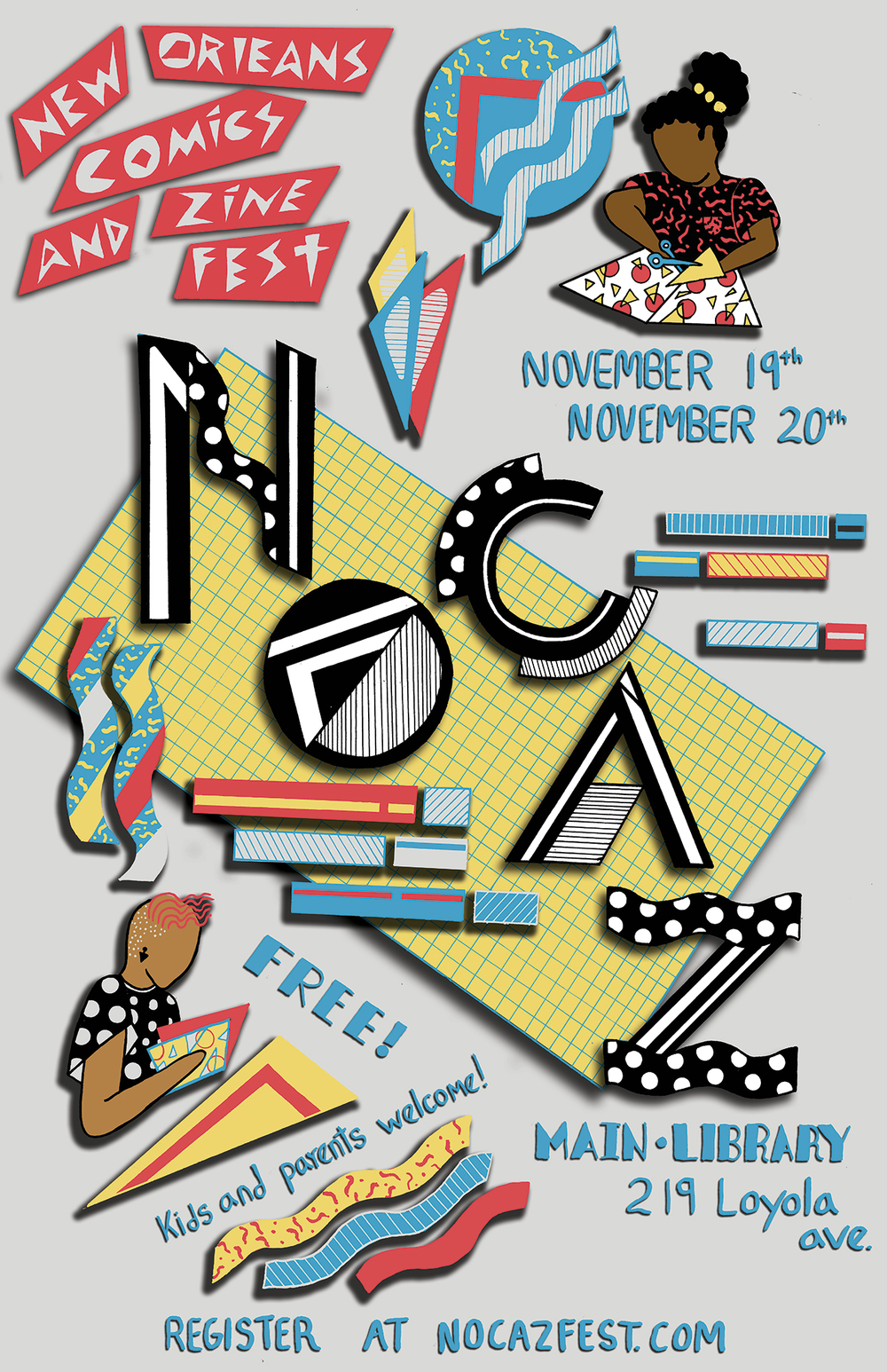
Attention, Swampflix readers in the New Orleans area! We will be exhibiting this Saturday (November 19th) & Sunday (November 20th) at the third annual New Orleans Comics & Zines Festival along with a bunch of other super cool comics & zines exhibitors. For this year’s festival we made print versions of Boomer & Brandon’s Agents of S.W.A.M.P.F.L.I.X. conversations, spanning the first two “phases” of the MCU in just two zines.

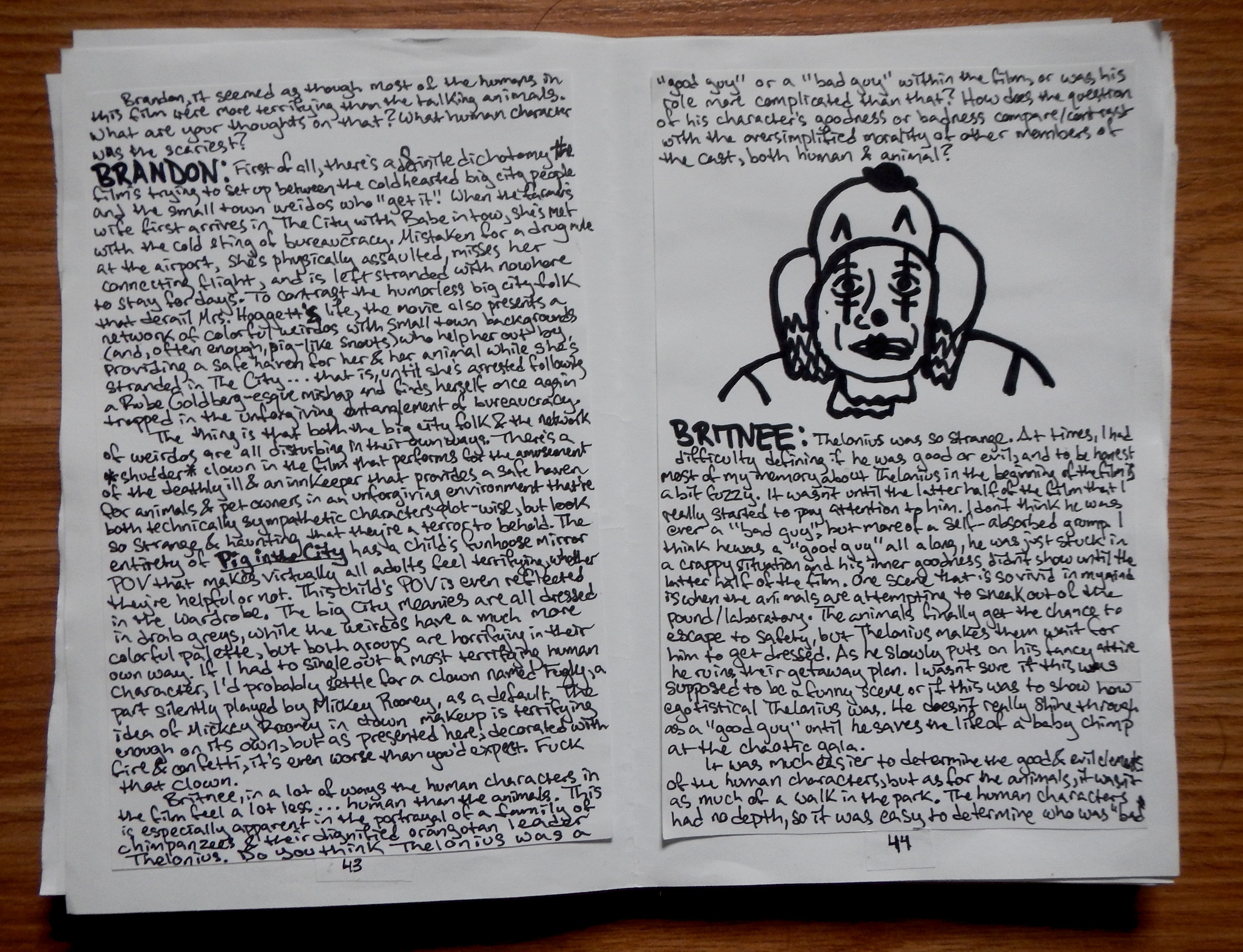
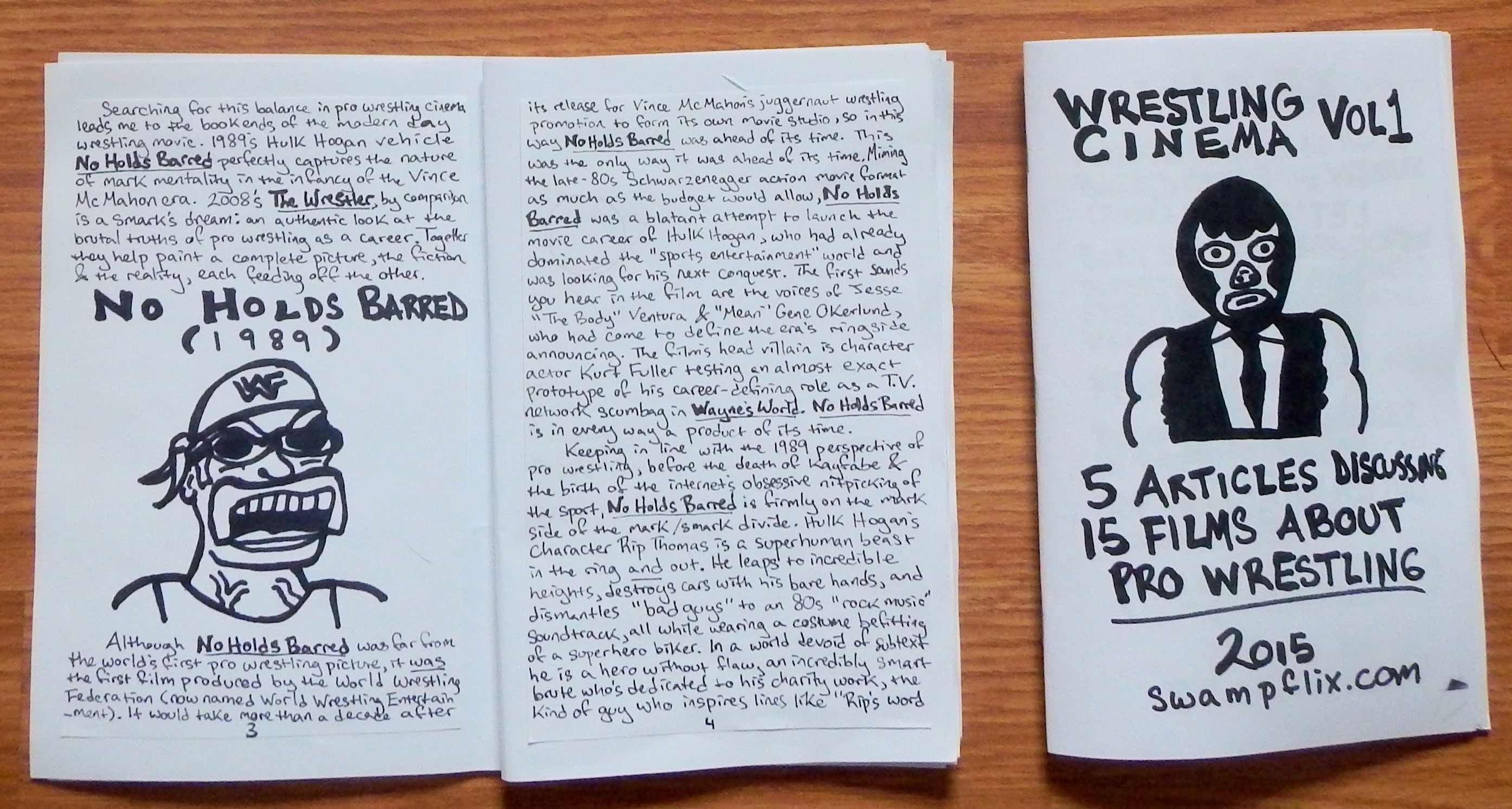
We will be also selling print versions of our “Marabunta Cinema“, “Lugosi Vs. Karloff“, and “Wrestling Cinema” pieces, as well as 2015’s Movie of the Month conversations in their entirety. They all feature dozens of new illustrations & hand-transcribed text from the site and the Movies of the Month zine is a ~90 page whopper featuring work from everyone who contributed to the site last year.

DSCN1455 (Modified (2))DSCN1456 (Modified (2))dscn1460-modified-2

We will be tabling from 11am-4pm on Saturday & 1pm-4pm Sunday at the Main Branch of the Orleans Public Library on Loyola Ave. For more info on the festival, check out their website at Nocazfest.com & refer to the poster below.

1469476243835

We hope to see y’all there!

-The Swampflix Crew


Mad Max: Fury Road (2015)’s Black & Chrome Makeover

When I first reviewed George Miller’s high octane action spectacle Mad Max: Fury Road last summer, I was a little late to the table and the film had already been relegated to cult classic status, earning high marks from fans & critics, but failing to beat out less memorable films like Tomorrowland & San Andreas at the box office. Before reviewing the film I watched it twice in the theater in two different formats, 2D & 3D, and contextualized it by plowing through Miller’s entire catalog for perspective (for the record, it was just slightly bested by Babe 2: Pig in the City & The Witches of Eastwick as a career high for me). Despite all of that effort I floundered to find anything new or interesting to say about the film that wasn’t a mere echo of the praise it was already lauded with. Over a year later, I’ve now seen Fury Road reach its third theatrical format, the colorless Black & Chrome edition, and I still have nothing significant to add outside an echo of how wonderfully bizarre & overwhelmingly kinetic this film is. It’s still one of the best action films in recent memory. Immorten Joe is still a total fucking nightmare. Not much has changed in this most recent theatrical release but the color, so don’t beat yourself up if you couldn’t catch it in theaters (especially since there’s a Black & Chrome release on BluRay & VOD currently available for the still curious).

All that being said, I absolutely loved returning to the theater to witness this bizarre work unfold for a third time. Catching Fury Road in three distinct formats has been illuminating in that it allowed me to appreciate different aspects of the film in each run, while I still don’t believe I’ve seen it enough times to fully take it all in. While the campy, drive-in spectacle of watching it in 3D was my personal favorite way of experiencing the film, there was a definite novelty to the Black & Chrome version that highlighted aspects of what Miller accomplished I don’t remember noticing before. The story goes that while screening a work print of Fury Road without a score & without color, Miller found his preferred version of the film. The studio obviously rejected the idea of releasing the film in that state for fear of scaring off general audiences, but a year later a home video & brief theatrical release has made its way into the world after this production anecdote piqued fans’ interest (although with the score intact). As the title suggests, the black & chrome Fury Road is a little shinier and higher contrast than a traditional colorless film is presented, particularly in details like when Immorten Joe’s “war boys” spray that mysterious chrome substance across their teeth as a pick-me-up. This aspect of the print is emphasized in-film by lines like “Look at that! So shiny! So chrome!” and “You will ride eternal, shiny & chrome.” Although the color change doesn’t entirely alter the film’s DNA (how could it?), it is a shift that’s often justified & accentuated by the script.

I caught the black & chrome Fury Road at the only theater in Louisiana (and one of only a few dozen in the nation) that was screening a print. A little dazed by catching Moonlight earlier that afternoon & enjoying a few cocktails downtown in the meantime, I was confronted with two major annoyances at the cinema: a very talkative older couple who were brazen in their interruptions since there were only three of us “witnessing” Miller’s glory & a loud, hideous whine emanating from the projector. In an attempt to escape both distractions, I moved to the very front row of the tiny theater, completely immersed in the black & chrome madness blasting before me. Although I was mostly annoyed by the talking, I was a little amused when, after the glorious dust storm finish to the first chase scene, a man exclaimed, “Son of a bitch. I’m worn out! That was fucking genius.” As long as I’m echoing already-expressed sentiments here, I guess I have to whole-heartedly agree with that drunk man-child. Fury Road wore me out every single time I’ve seen it long before the end credits rolled. And, despite my exhaustion, it was indeed “fucking genius”. There’s an undeniable, infectious “how did this get made?” quality to Fury Road (as if it’s something Miller got away with, not just something he filmed), that strikes me every time no matter what row I’m sitting in, how disruptive the audience is, or in what state it’s being projected. There was something especially cool about watching it a few feet away from the screen, though. I’ll readily admit that, even if it wasn’t my first choice.

Overall, I am saying that the Black & Chrome edition of Fury Road isn’t an entirely unique experience, but that doesn’t mean nothing changed for me in that format. In a lot of ways, the black & white digital grain makes the film feel more 90s, recalling Aronofsky’s π or, once the supermodels appear, the world’s craziest perfume ad. A lack of color also called attention to the film’s dust & grit, as if it were a feature length adaptation of a White Zombie music video (the Russ Meyer-inspired “Thunderkiss ’65,” specifically). The horror of the zombie-like war boys popped off the screen more in the opening capture & detainment sequence. A little of the CGI is clouded without the color, making it play like a forgotten relic, maybe along the lines of Hardware or, hell, even Metropolis. All of these elements were already lurking in Fury Road to begin with, though. All switching formats does is make them more obvious. Some would even argue that the original version of the movie is near-monochromatic to begin with, so the difference is negligible at best. Personally, I would miss the bright reds & purples of details like the dust storm or the guitar goblin if this were the only version of the movie available, but thankfully it’s not. There’s now three versions of Fury Road out there waiting to impress & confound you as to how something so goddamn insane was ever made in the first place. I’m lucky to have seen it even once, let alone from so many angles & shifted perspectives. If nothing else, the black & chrome flavored Fury Road is at least worth seeking out to add that extra layer of appreciation to something we all already knew was wonderful. When you seek it out, though, just try to avoid the whining projectors & talkative drunks out there aiming to distract from it. There are many roadblocks to avoid on the path to Valhalla.

-Brandon Ledet

Doctor Strange (2016)

EPSON MFP image

twohalfstar

Earlier this year Boomer wrote a wonderfully incisive piece on the political reasons he’d be abstaining from watching Doctor Strange until he could conveniently view it for free, thus decidedly not contributing to its already massive profits. So much ink has already been spilled here & elsewhere on the myriad of ways the film fumbled the issue of racial representation in its casting, particularly in the controversy of awarding Tilda Swinton the role The Ancient One, a character that traditionally would be played by an Asian man. Director Scott Derrickson has since admitted in interviews that in trying to avoid the “Fu Manchu” stereotype pitfalls of that character’s source material he had made an even bigger mistake in whitewashing the role, a transgression that many Hollywood productions have been indulging in lately. As Boomer & many others have already covered in their thoughts on Doctor Strange‘s insensitivity to whitewashing & cultural appropriation (not to mention its intenional omission of references to Tibet), including Derrickson himself, it’s no surprise that the film had several glaring problems in the cultural mindfulness department. What has been surprising, though, is that Doctor Strange has been earning very high critical marks outside of that controversy context. Some have even called it one of the best films of the MCU, comparing its wide appeal to the first Avengers film & Guardians of the Galaxy. I personally don’t understand the praise, as its storytelling structure dialed the franchise all the way back to the first Iron Man, with almost a decade of MCU creativity & innovation lost in the process.

The one thing that really worked for me in Doctor Strange was the exact selling point that put my butt in the seat in the first place: the visuals. The film has a kaleidoscopic, Inception-inspired way of folding space & time in on itself to create a psychedelic viewing experience unrivaled in most straightforward action adventures of its ilk. Even within Marvel’s own ranks only the microscopic & subatomic shenanigans of Ant-Man come close. Entire cities geometrically fold over like complicated origami. Galaxies expand, contract, and implode as characters’ astral projections tunnel through them. Time inverts, changes direction, and ties itself in knots as both complications and solutions to the Good vs Evil plot. And yet, for all of Doctor Strange‘s mind-bending, gorgeous, playfully surreal visual treats, the story they support is one of the laziest, most simplistic stabs at hacky comedy & unearned redemption narratives since the lifestyle porn beginnings of this franchise in Jon Favreau’s original Iron Man feature. It’s a dispiriting backslide into the worst corner of the MCU, where an egomaniacal monster is celebrated for his immense skill & wit instead of being shamed as the villainous shit that he so obviously is. I don’t regret catching this film in its IMAX 3D format while it’s still screening at every conceivable cineplex, as it gave me the best possible shot at enjoying what was truly a beautiful application of CG psychedelia. I just left the theater feeling more than a little let down by the story that technology was wasted on.

Heartless ass Stephen Strange is the Western world’s foremost neurosurgeon, a fame-obsessed brute who plays pop music trivia during intense surgical procedures, lives in a fabulously expensive apartment the audience is meant to envy, and scoffs at any philosophical ideas that cannot be explained through logic & modern science. His hubris is temporarily put in check after a violent car wreck destroys his most precious assets: his hands. It’s a classic tale of ironic tragedy that dates back to horror cinema as old as The Monster Maker & The Hands of Orlac, if not further, and Strange intends to right this universal wrong by traveling to Nepal and getting himself some of that good old-fashioned Far East mysticism. He’s shamed & trained into momentary submission by the aforementioned Ancient One, who, while dressed in the garb of a Tibetan monk, is actually a centuries-old Celtic woman, for what little it’s worth. We’re then bombarded with a whole lotta Marvel bloat: two(!) new-to-the-franchise villains, a loyal crew of underserved sidekicks, astral projections, alternate dimensions, space-time continuums, all kinds of nonsense. Before you know it, two post-credits stingers later, the whole thing has blown over without leaving much of anything in its wake.

At the center of all this and, apparently, all things in the Universe is the film’s main problem, Stephen Strange himself. The movie asks, “Who are you in this vast multiverse, Mr. Strange?” with the intent to humble him, but the answer the story gives is that he is Everything. No other character is afforded a second of importance that isn’t in some way tied to Strange’s magnificence. His unconvincing turnaround from badboy heel to crowd favorite babyface is made more important than the potential collapse of the Universe. He immediately masters an ancient art others have been steadily studying for decades, yet his rich white man in the East vacation is supposed to be a humbling spiritual journey. Much like with the irredeemable blowhard cad Tony Stark, the audience is asked to sympathize & laugh along with a jokester bully here, buying into a reformed badboy storyline at a moment’s notice, with no significant behavioral or personality change and a very brief loss of wealth & social status. In my recent dive into the entirety of the MCU, I’ve found that I connect with truly good, sincere superhero archetypes like Captain America much more easily than I do with sarcastic anti-hero villains in superheroes’ clothing like Stark, so my distaste for Dr. Strange as a character is certainly the result of a personal bias. I enjoyed this film well enough on a purely sensory level, but was overall soured by its narrative return to an Iron Man aesthetic. Given the immense popularity of the Iron Man franchise & this film’s early critical praise, I expect to be in the minority on that point, but I’m okay with that.

It’s easy to see on a strategic, Kevin Feige level why Marvel felt the need to bring in Dr. Strange as connective tissue in its ever-expanding universe (well, “multiverse” now, I guess). The psychedelia, witchcraft, and real world magic Strange brings to the table easily makes room for Feige & company to tie in the outer space reaches of Thor, Thanos, and the Guardians with the Earthbound characters of the Avengers and the inner space microverse Ant-Man antics. Why tie all of that narrative glue to a character who both closely resembles a protagonist you’ve already built your franchise around and whose origins are so hopelessly backwards in their racist depictions of Eastern stereotypes that you have to rewrite & whitewash them into a barely more acceptable compromise? There are more Marvel characters than I could ever care to count and surely somewhere in there one of them could’ve been a less problematic and more narratively distinct franchise-unifier. Off the top of my head, my two favorite characters in the Marvel pantheon could’ve easily done the job: Howard the Duck & The Son of Satan. I’d understand how past financial performance would set a bad precedent for Howard’s inclusion (despite his outer space origins & the casual disruption of the rules of reality in his often magical villains), but The Son of Satan could surely carry all of Strange’s multiverse-spanning psychedelia without any of the cultural baggage inherent to his origin story. And these are just two characters I know about, not being at all well-read in the vastness of Marvel folklore.

The point is that if Doctor Strange was such a difficult work to adapt with a culturally sensitive eye, there’s really no reason that it should‘ve been adapted at all. There must have been other, better options. This feels especially true once the cookie cutter mediocrity of the story sinks in. For all of the film’s reality-shifting visual creativity, it winds up feeling like so many Marvel origin stories we’ve already seen in the past, never justifying a necessity for its existence as an isolated property instead of as a connective piece for a franchise, which is a total shame & one of Marvel’s most frequent blunders. Maybe if I had any particular affinity for (the eternally forgettable charisma void) Benedict Cumberbatch as an actor I might be singing a different tune, but even my beloved Tilda Swinton couldn’t save this film from banality and she was backed by some of the most beautifully disorienting imagery I’ve ever seen put to use in action cinema. Doctor Strange is a feast for the eyes, but fails to nourish on any comedic, narrative, spiritual, philosophical, or emotional level. For a work that’s inspired over a year of think piece controversy and a few weeks of hyperbolic Best of the MCU praise, it mostly exists as a flashy, but disappointing hunk of Nothing Special.

-Brandon Ledet

Paperhouse (1988) as a Warning Shot for the Atmospheric Horror of Candyman (1992)

When we were first discussing November’s Movie of the Month, the lucid dreaming fantasy drama Paperhouse, we were very adamant that the film didn’t entirely fall under the horror genre, despite the way it carried itself with a horror atmosphere. The film’s alternating dream world vs reality dichotomy lent itself to some horror genre hallmarks: an eerie score, a mutilated villain, an overwhelming sense of dread. Yet, the story was about a young girl exuding godlike control in a self-created dream space as a means of bucking against the health & home life helplessness she suffered in the “real world,” sometimes with the two realms meeting in unexpected ways. That’s not exactly the blueprint for the ghost stories, slashers, and monster movies we usually pin under the horror umbrella. Four years after Paperhouse, however, director Bernard Rose repurposed a lot of the dread-stirring techniques of the children’s film for something entirely different: Candyman. The supernatural slasher Candyman is certainly Rose’s most infamous film to date, but a lot of what makes it work as a bone-chilling, reality-disrupting horror can easily be traced back to the familial drama nightmare of Paperhouse.

Just like how Paperhouse distinguises between the natural world and the dream world of its protagonist’s crayon drawing, Candyman exists in two distinct spaces: in front of & behind the mirror. The killer from this Clive Barker-penned story is summoned in a mix of Beetlejuice lore & “Bloody Mary” urban legend shenanigans. After someone/anyone says “Candyman” five times in the mirror, the spirit of a brutally murdered slave with a hook for a hand and a body full of bees materializes to murder them. What’s brilliant about the way Candyman’s mirror realm is presented onscreen is that it partly exists as a physical space characters/victims can climb into through the back of medicine cabinets. This space exists both as a physical part of the building and as a dream world where the Candyman can hold hostages, sometimes infants, as bait to lure his more prized victims into full cooperation with his evil plans. The fantasy realm in Paperhouse works likewise. It’s physically represented in a crayon drawing the protagonist can manipulate while awake and as a dream realm she can only enter while asleep. The way one realm can affect the other in Paperhouse is also reflected in the way the Candyman frames his victims for murder while they’re under his spell, enacting a physical change in the “real” world while the protagonist is helplessly trapped in a supernatural one.

Besides their established dichotomies between “real” and fantasy spaces & the occasional crossovers that disrupt them, Paperhouse and Candyman also share a general sense of fairy tale storytelling. Paperhouse most notably feels like a classic fairy tale, following a young girl who can enter & change the world through her own drawings. Candyman, however, is specifically about the power of urban legends & myth making. It’s not too difficult to draw a line between traditional fairy tale folklore and the modern urban legend, particularly in the case of the Candyman’s legend, which includes supernatural detail in its mirror realms & its Biblically massive swarms of bees. The Candyman himself is desperately concerned with the strength and prominence of his own legend, focusing as much effort as possible on making sure people still believe in his fairy tale folklore as if his (after)life depends on it. As the series continues in its campier, less effective sequels, the Candyman even begins to somewhat reflect the intention of the eyes-scratched-out dream Dad of Paperhouse, specifically tormenting the living members of his family as part of his revenge strategy. By the third film in the series, his supernatural power is also revealed to be tied to a work of art, a self-portrait, which is even more of an encroachment on Paperhouse territory. Bernard Rose had no discernible influence on those diminishing returns ventures, but the fairy tale aesthetic & power he established in both Paperhouse & Candyman mirror each other close enough even without that connection.

There’s a lot to dissect in Paperhouse & Candyman‘s shared fairy tale narratives about dueling reality & fantasy realms, but it’s the way director Bernard Rose establishes a distressing mood in both films that truly ties them together. The menacing score from Hans Zimmer that makes so much of Paperhouse feel like a nightmare is recognizably echoed in Phillip Glass’s masterfully eerie work in Candyman. Both films turn cheap, cold sets into assets, distorting reality by making everything feel tactile, but off. The disorientation in how the two works distinguish between fantasy & reality similarly put the audience on edge. Paperhouse sets the table for a lot of the horror genre thrills Rose later pulled off in Candyman. Even though that latter work’s sequels pushed it into more traditional slasher territory, the film itself doesn’t ever feel like a strict horror narrative. Clive Barker’s writing style surely had an influence there, as his works like Hellraiser & Nightbreed never exactly fit into the traditional Jason Voorhees-type slasher box (despite Pinhead often being referenced in that context). Anyone who’s looking for standardized Candyman thrills where atmosphere is made secondary to violence & gore would likely find the most solace in that film’s less-than-stellar sequels. On the other hand, if the atmosphere & surrealism is what made Candyman feel special to you in the first place, Paperhouse demonstrates just how effective Rose can make that tone feel even with most of the horror removed. Paperhouse is remarkable in many ways that has nothing to do with Rose’s latter work in Candyman, but the film is still noteworthy as proof that his best known effort would still be horrifying even if it were completely removed from the horror genre.

For more on November’s Movie of the Month, the lucid dreaming fantasy drama Paperhouse, check out our Swampchat discussion of the film.

-Brandon Ledet