Berberian Sound Studio’s (2013) Sound-Obsessed Roots in Blow Out (1981)

EPSON MFP image

During our Swampchat discussion of June’s Movie of the Month, the Brian De Palma political thriller Blow Out, I pointed out that “Blow Out is in some ways a movie about making movies, but more specifically it’s a movie about how essential sound is to film. It boils the medium down to one of its more intangible elements. In that way it’s much more unique than a lot of other movies about movies, arriving more than three decades before the film it most closely resembles in this approach (that I can recall, anyway), Peter Strickland’s Berberian Sound Studio.” The entire time I was watching Blow Out I was aching to revisit Peter Strickland’s oddly engaging Berberian Sound Studio to see how the two films compare. It turns out that while Blow Out distills the process of making movies into a single element, recording sound, Berberian Sound Studio breaks it down even further until there is nothing left. De Palma used sound recording as an anchoring element for a story that had great impact outside the world of film-making, a world tainted by serial murders & political intrigue. Strickland’s film, on the other hand, rarely allowed the audience to leave the recording booth & gets lost in its own sound-obsession.

Although they are working within separate genres with their own respective aims & are separated by three decades of film-making, it’s not at all difficult to draw a connection between the two works. First of all, they’re connected by their basic movie-within-a-movie structure. In Blow Out, Travolta’s sound technician protagonist is working on a cheap slasher film for which he cannot find an actress with the perfect scream to match a brutal shower stabbing. When asked if he ever works on good films, Travolta responds “No, just bad ones.” The befuddled sound technician in Berberian (expertly played by character actor Tobey Jones), on the other hand, is hired for an Itallian giallo film called The Equestrian Vortex that also gradually proves itself to be a tawdry, violent horror film (although the director insists they’re making art). We’ve explored the giallo lineage of slasher films before in our discussions of former Movie of the Month Blood & Black Lace, but the connection is rarely as clear as it is in the comparison here. While Travolta is looking for a single scream to accompany his cheap slasher movie (when he’s not investigating assassinations in his free time), Berberian Sound Studio depicts countless micro-searches for the exact same thing. The exact sound of a neck being sliced or a witch’s hair being yanked from the scalp or even the standard damsel’s death rattle are all meticulously sought after here. Berberian depicts a wizardly crew of demented Gallaghers smashing melons, pulling turnip roots, and tormenting actresses to capture the perfect sounds for what amounts to a slightly artier version of the trash that Travolta’s is mindlessly cranking out in Blow Out.

However, as stated, the films do have disparate aims for their respective sound obsessions. Blow Out uses sound as a doorway to a world outside the recording booth. It’s a dangerous world, but it’s an exterior one where big, important things are happening. Berberian Sound Studio, in contrast, becomes psychedelically insular. It not only gets lost in the recording booth, but also in the idea of sound itself. There’s so much horror & dissociation in the sound techniques employed in the film that it reaches an otherworldly state of mind that mimics the broken psyche of Bergman’s Persona just as much as anything it echoes from De Palma’s film. When you watch Berberian on Netflix with the closed captions enabled, the screen is filled with ludicrously long lists of sound descriptions desperately trying to keep up with every aural element in play. Early in the film a character ominously warns/promises, “A new world of sound awaits you. A world that requires all your magic powers.” It’s doubtful that the protagonist or most of the audience took him as literally as he meant it, but Berberian really is a lot more interested in the magic of sound than the more technically-minded Blow Out.

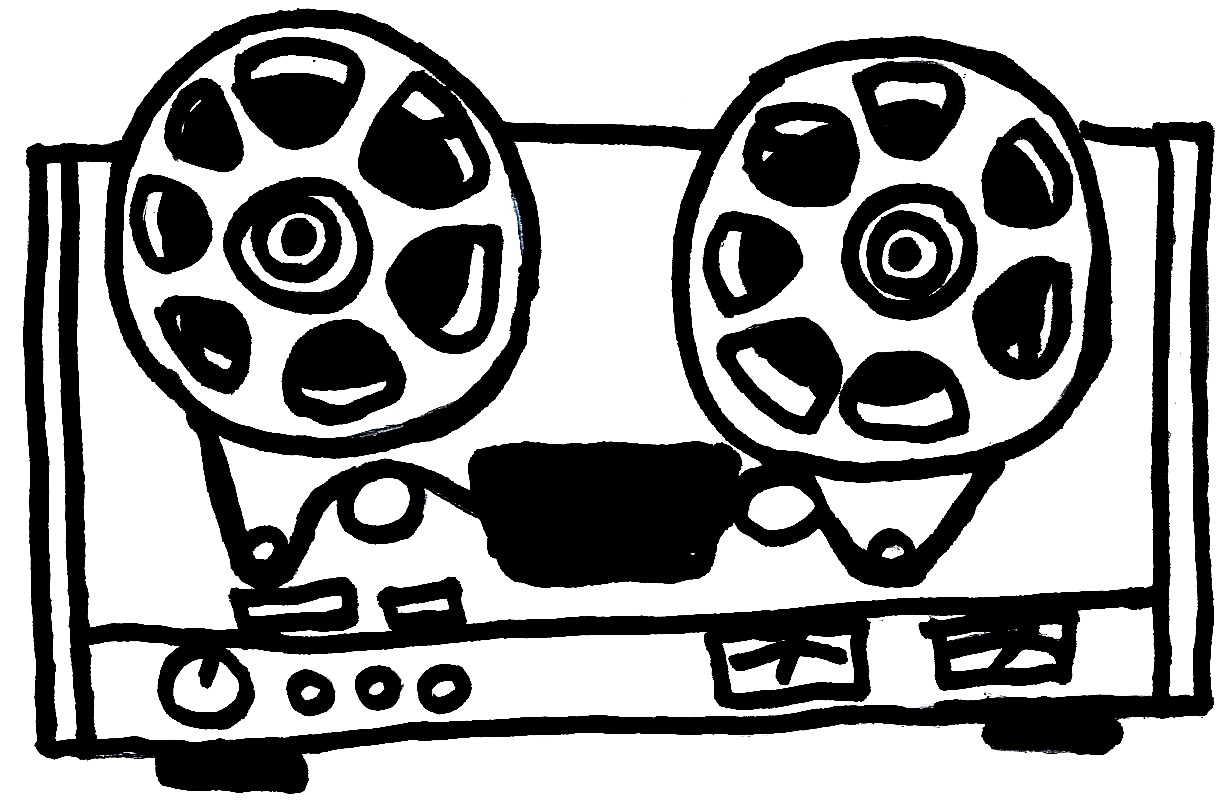
If I had to boil down the difference between the two films, I’d simply point out that Travolta’s protagonist spends most of his run time trying to piece together a crime scene & to capture a maniac killer, while Jones’ character is trying to get reimbursed for an airline ticket & to hold onto his basic sanity. De Palma’s approach weaponized sound to strengthen his political thriller’s arsenal. For Strickland, sound wasn’t a powerful tool; it was the entire point. The movies do share an impressive amount  of overlap, though, especially in Blow Out’s early, growling winds & in both film’s audiophile obsession with analog equipment. It’s difficult to imagine either film could be set in 2015 without being changed drastically. It’s doubtful that either film would mean much of anything once digital equipment removed a lot of the incidental sound from recording booths. The clacking & whirring of film projectors and tape recorders are essentially the two films’ lifeblood. Even the sound of the instruments that capture & display images are essential to cinema in these two films’ worldview. That’s the kind of synesthesia we’re working with here: there’s a sound even to the imagery. Blow Out just happens to use this attention to sound to open a door, while Berberian chooses to lock itself in the dark & swallow the key. They’re both overwhelmingly successful in their respective endeavors.

For more on June’s Movie of the Month, 1981’s Blow Out, visit last week’s Swampchat on the film.

-Brandon Ledet

Hits (2015)

twostar

Earlier this year, when I was complaining about the Academy Awards’ most recent Best Picture winner (Birdman), as people often do, I said “Pitch black misanthropy has worked for comedies like Happiness & Who’s Afraid of Virginia Woolf? in the past, but those movies are also, you know, funny. When a film hates all of humanity and only roughly 20% of its jokes land, it’s a remarkably dire experience. Just ask That’s My Boy or Nothing but Trouble. […] If you’re going to believe yourself to be above everyone & everything, you probably should at least succeed in the most basic requirements of your genre.” I still believe that to be true, but my resolve on the subject was somewhat tested by cult comedian David Cross’ directorial debut Hits. Hits was just as misanthropic as Birdman, lashing out at so many different kinds of people that there was seemingly no one left that it didn’t hate, but it was at least occasionally funny, something I didn’t find while watching Birdman. I’m not sure how to consolidate those two reactions & the resulting experience was more discomfort than anything.

“Based on a true story that hasn’t happened yet,” Hits employs a hugely talented cast (including Matt Walsh, David Koechner, Amy Sedaris, and Michael Cera) to attack basically everyone living in America. From right wing, small town yokels who drive big trucks & dream of being interviewed by Ellen Degeneris to mushy, liberal big city “citiots” who sell “feminist theory onesies” & artisanal cardboard, Hits hates everyone. It’s a scathing view of modern American culture where small town men are macho Tea Party dolts, big city liberals are effeminate hipsters, and women are obsessed with conceiving children or selling a sex tape as a means to become famous. Everything is scathing in Hits, but the film can be occasionally funny in its way. How can it not be? There’s too much comedic talent involved for all of the jokes to fall flat. It’s just hard to shake the feeling that the whole thing is hopelessly mean. For example, when a talentless white rapper is embarrassed by his peers (and then the world at large) on YouTube, the movie asks you to laugh. Instead, I felt bad for a teenager being bullied online. Maybe I’ve taken the anti-online bullying sentiment of The DUFF & Unfriended a little too close to heart. Or maybe I’m just not the bitter, hateful person Hits wants me to be.

I think the main problem with Hits’ hateful humor is that no one in the film ever seems even remotely like a real person. The idea of parodying modern Americans’ thirst for Internet fame could play well for black comedy, but when everything feels as fake and two dimensional as it does here, the idea just comes off as cheaply mean. What David Cross loses sight of in Hits is that every personality type depicted in the film, from bleeding heart liberals to secretly racist small town yokels, are actually real people. There’s no humanity in this hateful worldview . . . just hate. Sometimes its hate can be amusing, but without any sign that there’s anything worth being positive about in the world, and with the idea that everything is hopeless & cheap, Hits fails to mean much of anything. Instead, “like a wounded animal, it lashes out at every target within reach.” Even though it’s a lot less expensive & visually ambitious, Hits has what I’ll probably refer to as Birdman Syndrome from now on. The two films have very little in common structurally, but it’s easy to imagine them bitterly complaining to one another in a late night barroom about how the world has gone to shit. Hits just has the slight advantage of being the funnier of the vitriolic pair.

-Brandon Ledet

Rewind Moment: Humanoids from the Deep (1980)

EPSON MFP image

Rewind Moments are those special scenes in films that deserve to revisited over & over again due to their overwhelming impact.

Mutated humanoid fish people terrorize a small harbor town by killing and raping its inhabitants. Only Roger Corman could make an excellent film with such an absurd plot. Humanoids from the Deep is the definition of a B-movie. It’s a ridiculous gore fest filled with nudity and all the other wonderful garbage terrible movies are made of.

My “rewind moment” from Humanoids is the final scene of the film. One of humanoid’s rape victims gives birth to a mutated fish baby, and it is guaranteed to scar you for life.

-Britnee Lombas

Apartment Troubles (2015)

EPSON MFP image

three star

Apartment Troubles is billed as a comedy, which makes sense in some ways. It certainly has a few cameos from comedians of note in it (specifically Jeffrey Tambor, Will Forte, and Megan Mullally). It’s got some typical indie comedy quirks, right down to the struggling artist profession of the protagonists & the CoCoRosie song on the soundtrack. It’s even got some great jokes from time to time, especially from Mullally, who is a hoot as a wealthy drunk who is really into gigantic wine glasses. On the other hand, it’s not an overwhelmingly funny movie, but more of a low-stakes drama that aims more for humorous melancholy than knee-slapping quips & gags. Apartment Troubles might be dressed up like a comedy, but it’s more quietly sad than anything.

The story begins with two NYC roommates confronted with eviction & the sudden death of a pet. As an aspiring actress & a visual artist with wealthy parents, the pair occupies a strange space between well-to-do & dead broke. These are people who can take a private jet to vacation in Los Angeles on a whim, but have to claim that they’re not eating because they’re “cleansing”, when the truth is they can’t afford food. While in LA, the two best friends start to bicker & rub each other the wrong way like an old married couple. At the beginning of the film they’re comfortable enough to ask for the shirt literally off each other’s backs (“Can I wear the shirt that you’re wearing?”), but by the end they’re sickened by each other’s mere presence (“If I feel your breath on my skin for one more minute, I’m going to vomit.”). It’s definitely easier to read this progression as a somber break-up story (between friends) than a riotous indie comedy.

In a void, Apartment Troubles is a pretty okay, low-key movie with some memorable performances in its fleeting Jeffrey Tambor, Will Forte, and Megan Mullally cameos. However it’s difficult not to draw comparisons to other emotionally-stunted NYC twentysomethings media that have been produced lately. If nothing else, I found myself wishing that I was watching Appropriate Behavior a second time instead. I realize this kind of direct comparison is completely unfair & it’s something I already said while reviewing the recent break-up drama X/Y, but that doesn’t make it any less true. Appropriate Behavior was something really special. Apartment Troubles is from the same funny-melancholy NYC break-up wheelhouse, but feels just okay at best. It’s the kind of film that’s pleasant, but destined for lazy afternoon Netflix viewing rather than the big accolades I’m hoping Appropriate Behavior garners.

-Brandon Ledet

The Lazarus Effect (2015)

EPSON MFP image

twostar

Sometime in late 2012 I had the unique opportunity to catch the beautifully-filmed fine cuisine documentary Jiro Dreams of Sushi, (a movie most people have experienced through the power of Netflix) on the big screen. Running late from grabbing a sushi dinner myself, I had to sit in the front row, craning my head to take in the majestic sushi specimens that towered over me. It was an overwhelming experience, one I’m unlikely to ever forget. Never in my wildest imagination would I have assumed that the director, who was present at that screening for a Q&A, would follow up that beautiful film with a drearily cheap sci-fi horror that feels more like a particularly eccentric episode of a CSI type show or a SyFy Original Movie than anything that belongs in a proper theater, but that’s exactly what happened.

The Lazarus Effect is cheap. And ugly. And hopelessly shallow. Its worst quality of all, though, is the level of talent it roped into its murky depths. Not only is Jiro Dreams of Sushi director David Gelb suffering a sophomore slump here, respectable actors Mark Duplass, Donald Glover, Olivia Wilde, and Evan Peters (who had a great turn as Quicksilver last year in X-Men: Days of Future Past) are all dragged down by his misstep. The movie’s dire quality is apparent as early as the opening credits, which play over grotesque medical footage and a staged lab experiment in which a dead dog is revived. It’s a cheap way to fish for a reaction from the audience, flatly showing something horrific & ugly instead of building suspense to it the way a decent horror movie typically would. That approach is a major indication of what’s to come.

Since the movie’s atmosphere never allows tension to build properly, the best chance you have of enjoying The Lazarus Effect is as a camp fest. The basic premise is that a doctor named Frank (-enstein! Get it? Get it?) is experimenting on bringing deceased canines back to life in hopes his techniques will give surgeons more time to operate in life & death medical emergencies. But what if he’s bringing his subjects back from Doggie Hell instead of Doggie Heaven? Indeed, the first revived dog starts to act a little freaky, but that doesn’t stop Dr. Frank from going off the rails & reviving a love one who passes away unexpectedly. When his first human subject rises from the dead, she’s literally a ghost under a sheet, which is a sort of goofy moment. By the time she’s reading minds, abusing her telekinesis, and (the most evil thing of all!) levitating, she’s gone full goof.

The problem with reading the film this way is that it’s rarely silly enough to be laughable. There’s some amusing moments involving the evil dog (who never gets to levitate or read minds himself, unfortunately) & I’m fairly certain this is the only film I’ve ever seen where a vape pen is used as a murder weapon, but for the most part it’s just hopelessly bland. The Lazarus Effect is much more concerned with exploring kiddy pool depth ideas about a scientific mind confronted with spiritual questions he can’t explain logically than it is with entertaining its audience or not looking like a pile of wet garbage. Whether you take the film seriously or try to enjoy it as a goof, there’s just not much there. I keep asking myself how this was made by the same guy who brought the world Jiro Dreams of Sushi and I just can’t come up with anything but the question itself. How? Just how? That’s about the only haunting or even vaguely interesting element at play here.

-Brandon Ledet

The Sisterhood of Night (2015)

witch twohalfstar The ads for The Sisterhood of Night got me all riled up for nothing. The movie’s trailer promised that there would be some in-the-woods witchcraft silliness (that would be somewhat buried under some over the top courtroom drama, but still) mostly like a millennial The Craft in nature. Or at least that’s what I hoped for when I saw the trailer. My persistent thirst for witchy media may have blinded me from seeing what was truly being advertised: an afterschool special/Lifetime Original Movie type tyrade against the dangers of online bullying. The Sisterhood of Night did feature brief flashes of witchy vibes & media frenzy nonsense, but it was mostly a simple tale about how teen girls should be nicer to each other online. It’s a nice sentiment, but not exactly a profound or captivating one.

Self-described as having “an atmosphere of furious accusation and hysterical rumor”, The Sisterhood of Night warns of the dangers of telling a lie to gain more attention online, especially when it’s at the expense of your peers’ reputations. When a few teenage girls decide to go offline (delete their blogs & Facebook accounts, basically) and start forming a more personal, intimate community in the woods, their return to nature is approached by outsiders with rampant suspicion. A jealous girl who was not invited throws some wild accusations at their secret goings on in order to get some sweet blog clicks and the whole thing spirals out of control in a way that teaches everyone involved lessons about empathy, trust, privacy, and how absolutely fucking tough it is to be a teenage girl. Again, the intent of the movie is admirable, but there just isn’t a whole lot going on that will leave any impression at all, positive or negative, on most viewers.

I was wrong to assume so much about The Sisterhood of Night’s plot before I had seen the actual film. The one time someone actually delivers what I wanted and shouts, “I’m a witch & The Sisterhood is a cult!” it was a sarcastic exchange. I’m not sure how much this false assumption colored my response to the film, but I doubt I would have watched it at all otherwise. There’s some interesting ideas at play here about why a modern teen would decide to “go offline” and the ways both adults & kids alike can be really shitty to teens for no reason other than they want a private space to be themselves. The execution never felt that more adept than a decent made-for-TV movie, though, so the message feels a little flat, no matter how admirable. After finding an unexpected wealth of enjoyment in both Unfriended & The DUFF, The Sisterhood of Night is the third anti-online bullying film I’ve seen released in 2015 and the least memorable of its kind. If only they had worked those ideas into a story about actual witches, I might have changed my tune.

-Brandon Ledet

The DUFF (2015)

fourstar

Every time a teen clique comedy is released it suffers by comparison to the towering examples that came before it. By now it’s pretty much been accepted that Heathers was the genre’s prime example of the 1980s, Clueless ruled the 90s, and Mean Girls stole the heart of the 2000s. But what of the current decade? What’s the 2010’s link in that evolutionary chain? Who will step up & take the teen clique torch? Although it’s received little love since its release I was pretty enamored with the 2013 sex comedy The To Do List. It was smart, crass, and above all hilarious, but that doesn’t seem like the exact logical choice. Set in the summer after high school (in the 90s), The To Do List was more concerned with the sexual self-discovery of one character instead of the hierarchal structure of an entire student body. If anything The To Do List was a descendent of the raunchy teen sex comedy, following films like Porky’s & American Pie, and probably the best example of that genre yet. So what of the teen clique flick?

Enter The DUFF. Much like with Heathers, Clueless, and Mean Girls, The DUFF’s main concern is how petty & mean-spirited high school hierarchies can be and just how easily they can be broken down. The only problem with its secession in that chain of teen clique media is that it is very conscious of updating the genre for the 2010s, instead of letting the connection happen naturally. Using cultural markers like YouTube, Instagram, and Tumblr, The DUFF is seemingly dating itself in its own time period on purpose. It also intentionally looks back & borrows so many tropes from high school teen comedies of the past that I’m tempted to say it’s doing it for a laugh. Not only is the protagonist tutoring The Hot Guy in exchange for a makeover that will reveal that their really is a beautiful girl under all the geekery, but there’s also a Big Dance at the end, the Hot Guy totally falls for her, AND she’s writing a big expose about the entire experience for the school paper. Instead of aping just one teen comedy trope, The DUFF goes all in and tries to capture every single one it can.

That’s not to say that the film isn’t funny or original in its own right. With a little help from the always-dependable Allison Janney & the frequently funny Ken Jeong, The DUFF star Mae Whitman has found herself a breakout role here. She is just so damn funny in this movie. After years of watching Whitman kill it in small background roles, (literally fading into the background in the case of Arrested Development), it’s refreshing to see her get so much screen time here. And she owns it. Even with all of the high school movie clichés determining a rigid structure for the film, Whitman finds a way to make it work. A lot of people will be understandably turned off by the idea of the wonderfully talented Whitman starring in a film with a title that translates to “The Designated Ugly Fat Friend”, but the term is treated as an ugly thing within the film and Whitman does not take that shit lying down. When it’s revealed that she is the DUFF of her social circle, less because she is “fat” or “ugly” (she’s not and the movie doesn’t try to make her out to be) and more because she’s a B-Movie dork who’s obsessed with folks like Vincent Price & Bela Lugosi, she strikes back. She breaks off from her group & attempts to find herself with the help of her dumb, hot jock neighbor & eventual love interest.

The meanness of the film’s title matches the meanness of high school in a lot of ways & the script has a smart way of making light of it. Whitman isn’t the only DUFF in the film. There are also goth DUFFs, car DUFFs, and all kinds of DUFFs really. Once the protagonist discovers what she’s believes herself to be seen as, she starts to see other DUFFs everywhere. Her path to self-discovery may be a mere collection of throwback genre clichés, but it’s a tried & true formula that mostly serves as a platform for an onslaught of hilarious jokes. Sure, Whitman gets a makeover she didn’t need (including a straight-faced trying-on-clothes-at-the-mall montage), but she also threatens to murder & castrate anyone who tries to block her path to getting the life & the boy she wants. She’s bullied online, threatened by peers, and told to accept her place, but none of it kills her spirit. In the long run it’s hard to tell if The DUFF will be remembered as a decedent of the Heathers & Mean Girls pedigree (it certainly didn’t make a huge splash at the box office) or of admirable, but lesser teen clique fare like She’s All That & Ten Things I Hate About You, but it’s an easy pick for the best candidate at least since 2010’s Easy A.

-Brandon Ledet

Small Sacrifices (1989)

EPSON MFP image

three star

In 80s cinema, Farrah Fawcett was best known for her performances as revenge-hungry victims in films such as The Burning Bed and Extremities. However, in the made-for-TV biopic, Small Sacrifices, Fawcett transforms from a victim to a straight-up killer by taking on the role of the infamous Diane Downs. In the early 80s, Downs made headlines after being accused of shooting her 3 children in the backseat of her car. A few years after the incident in 1988, true crime writer Anne Rule published Small Sacrifices, which (obviously) the movie was heavily based on. The film has definitely made its share of appearances on the Lifetime channel throughout the years, so it’s easy for it to blend in with all the other made-for-TV dramas. The only thing that really sets it apart from the rest is Fawcett’s phenomenal performance. She’s really good a playing a bad mom. As horrible as that may sound, I mean it in the best way possible.

With her fluffy blonde hair, cute Southern accent, and all-American smile, Fawcett perfected the innocent image of Downs. How could this sweet single mother of 3 kill her children? Well, she was disturbingly obsessed with a married man (and fellow postal worker) Lew Lewiston, and during one of their rendezvous, he mentioned to her that he was not interested in having children. Interestingly, Ryan O’Neal played the role of Lew, and at the time, he and Fawcett were in an iconic relationship. Lew ended his relationship with Downs to go back to his wife, but Downs wasn’t having it. She completely lost her mind and took her children on a late night car ride, and while Duran Duran’s “Hungry Like the Wolf” was blaring in the background, she shot them all. Of course, she created an elaborate story about being attacked by a stranger that was hanging out on the deserted road, but she really sucked at keeping her story straight. Little by little, she transformed from being a grieving mother to a terrifying psychopath. I can’t even imagine how difficult it was to portray someone so mentally unstable, but Fawcett nailed it. She was so good that I had a difficult time separating her from her character, and that’s not something I come across very often.

Lifetime junkies, true crime lovers, and everyone in between, Small Sacrifices is an absolute must-see. The movie is about 3 hours long, so be prepared to spend a good bit of time with this one.

-Britnee Lombas

Love & Mercy (2015)

EPSON MFP image

fourstar

Biopics are difficult to make interesting. That may even be especially true about biopics that detail the lives of high profile musicians. It’s a genre so engrained in its own rote tropes that, no matter the level of talent involved, it’s always probable that the final product will feel more like a made-for-TV movie than an artistic endeavor. There are obviously a few exceptions to this conundrum, but the genre’s tropes are so well-defined that they’ve earned their very own (brilliantly funny) ZAZ-style spoof in Walk Hard. Walk Hard even took the time to spoof the subject of this review, Beach Boys’ mad genius Brian Wilson. When Love & Mercy shows Wilson struggling to wrangle French horns, dogs, and bobby pins in the studio, it’s near impossible to not think of Dewey Cox demanding lamas & fifty thousand didgeridoos. Luckily, Love & Mercy also chooses to play this moment for a laugh. If it had a straight face it would’ve been a painful cliché, something the film sidesteps entirely. That’s far from the only pitfall it sidesteps.

A large part of what makes Love & Mercy special in the context of the biopic genre is its intimate, bifurcated structure. Instead of telling the entire story of Brian Wilson’s life, the film focuses on two of his most significant moments. Both Paul Dano & John Cusack play Brian Wilson in Love & Mercy and the film is smart to not apply any pressure for them to tie their roles together, but instead allows them a lot of room to breathe & make it their own. It’s okay that that both Dano & Cusack feel like they’re playing different people because at the two points detailed here, Wilson was a different person.

Paul Dano, trying his damnedest to look slightly pudgy here, has to hold down the more cliché biopic moments of the film. Portraying Wilson while he was recording his masterpiece Pet Sounds & essentially losing his mind, Dano has to both go big & literally bark like a mad dog as well as understatedly smile like a pleased turtle because he knows he’s onto something special. Trying to move away from the group’s faux surfer past while simultaneously competing with both The Beatles and his own controlling father, Wilson was under an unfathomable amount of pressure at this point of his career. As he learns how to “play the studio” as an instrument and create an entirely new kind of pop music experience with Pet Sounds, he also loses a grip on himself, cracking under the pressure. Dano does a great job of balancing humor with poignancy in these scenes, but it’s a tough balance to maintain.

John Cusack’s scenes save the film from being too predictable. If it were just Dano’s scenes the This Is Really Important vibe would be overwhelming. Cusack picks up the story after years of depression & bed rest, showing Wilson squirming under the control of a controlling quack played by a sublimely menacing, clean-shaven Paul Giamatti. Helpless, Wilson falls for an in-over-her-head Chrystler salesman, played by Elizabeth Banks, who struggles with Giamatti’s Evil Doctor for control of Wilson’s autonomy. In several key scenes, Cusack isn’t even present for this half of the story, but whenever he is it’s a great reminder of just how wonderfully talented the actor can be when he sets his mind to it.

These two halves of the movies are woven together, told simultaneously. Although Love & Mercy cannot avoid every biopic trope out there, it does itself a huge favor by aiming for a feeling instead of a complete story. With phrases like “lonely, frightened, scared” and “Even the happy songs are sad,” the movie achieves a more accurate depiction of Brian Wilson than a straightforward telling of his entire life story, (Charles Manson, “Surfin USA”, and all) could possibly have accomplished. There’s a sadness to Wilson’s life’s work that is often overlooked, but expertly captured here. In an exchange with his abusive father, Wilson pleads that “God Only Knows” is “a love story.” His dad counters, “It’s a suicide note.” Love & Mercy does little more to tie its two disparate parts together than achieving this whimsical melancholy throughout and drawing comparisons between Dano’s Wilson’s controlling father and Cusack’s Wilson’s controlling doctor. The approach is impressive in both its audacity and its results.

Tomorrowland (2015)

EPSON MFP image

threehalfstar

Don’t believe the (negative) hype. Brad Birds’ live action Disney epic Tomorrowland is a great kids’ movie. Three weeks into the movie’s theatrical release, it’s still $20 million dollars short of recouping its budget and most of that money came from outside of the United States. Tomorrowland might eventually break even, but considering those numbers & its middling critical response it’s still hard not to see it as an all-around flop. That fact has little to say about the movie’s quality, though. Just as with Disney’s other most infamous live action flops, The Rocketeer & John Carter, Tomorrowland is a little hokey & old-fashioned, but also way better than its reputation indicates. Actually, I’d even go far enoguh to say it’s an easy best out of the three.

Although it’s admittedly a ham-handed parable about the power of positive thinking, Tomorrowland also manages to be the exact kind of smart-scary-dark-ambitious kids’ media that people are supposedly hungry to make a comeback, the kind that doesn’t treat its pintsized audience like dolts. It’s not afraid to confront children with big sci-fi ideas like parallel universes & the ways utopias can devolve into dystopias. It’s also not afraid to feel dangerous. People get scuffed up, occasionally die even, in a way that suggests that actions have consequences. Characters zip around in jetpacks & rocket ships, but never in a way that feels completely safe from bodily harm. After suffering through the horrendous ad for the Minions sequel that preceded the film, it was refreshing to see Disney take a chance on something that challenges their younger audience’s imagination, intellect, and desire to be scared. It was also a bummer that it was a gamble that didn’t work out for them financially.

In an alternate reality, a George Clooney-starring sci-fi fantasy epic about saving the world from its inevitable demise through sheer optimism might have been a hit. In this world, it’s failed to make much of a splash at all. In a lot of unexpected ways, Tomorrowland reminds me of another live action children’s media flop from the past decade, 2008’s City of Ember. Although City of Ember didn’t do well at the box office, it’s a smart & scary parable that covers a lot of the same ground as Tomorrowland: climate change, the dangers of stagnant thinking & an over-controlling governing body that thinks it knows best, and the idea that optimism and self-actualization can change the course of world’s seemingly hopeless path to self-destruction.

I honestly believe that both Tomorrowland & City of Ember will connect with enough young minds to have a cultural staying power that will only grow as the years go on. In the meantime that kind of gradual cult following is going to do little to encourage studios to take risks on ambitious children’s media like Tomorrowland instead of churning out more Minions sequels or whatever, which is sad considering the vast difference in quality (something I’m guessing about, based solely on an ad). But maybe I should think more positively and hope for the best. The future might be better for it.

-Brandon Ledet