Roger Ebert Film School, Lesson 2: Persona (1966)

Roger Ebert Film School is a recurring feature in which Brandon attempts to watch & review all 200+ movies referenced in the print & film versions of Roger Ebert’s (auto)biography Life Itself.

Where Persona (1966) is referenced in Life Itself: In the first edition hardback, Persona is referenced on pages 1, 154, 267, and 270. It is the film most often referenced in Roger’s book. He first likens its opening credits & mid-film “break” to the way life & memory flicker into existence, initially without cohesion. He later describes how as a young critic he met an inability to discuss exactly what happens in the film, which prompted him to write about what happened to him as an audience instead (a technique of critical subjectivity he would return to often). He also describes Bergman’s casting of the film as being surprisingly impulsive in a brief anecdote.

What Ebert had to say in his reviews: “Most movies try to seduce us into forgetting we’re ‘only’ watching a movie. But Bergman keeps reminding us his story isn’t ‘real.’ At a crucial moment in his plot the film seemingly breaks, and after it rips for a dozen frames it seems to catch fire within the projector. We see it melting on the screen. Then blackness, then light and then the old silent comedies again, as Persona starts again at the beginning.” – From his 1967 review for the Chicago Sun Times

Persona is a film we return to over the years, for the beauty of its images and because we hope to understand its mysteries. It is apparently not a difficult film: Everything that happens is perfectly clear, and even the dream sequences are clear–as dreams. But it suggests buried truths, and we despair of finding them. Persona was one of the first movies I reviewed, in 1967. I did not think I understood it. A third of a century later I know most of what I am ever likely to know about films, and I think I understand that the best approach to Persona is a literal one.” – From his 2001 review in his “Great Movies” series

There are two massive, go for broke moments in Ingmar Bergman’s small cast drama Persona that tend to overwhelm discussion of the film. The first is the film’s opening six minutes. A chaotic montage of loose film strips, whirring projectors, impossibly bright light bulbs, grainy footage of what looks like a silent era horror, spiders, human hands, animal slaughter, exposed organs, an erect penis, and crucifixion imagery overwhelm the film’s first breaths. Even today these fist few minutes of visual chaos are disturbingly vivid, but difficult to pinpoint with any certainty as to what they could mean, exactly. Somewhere in the fog I see a progression of life art death, but that personal interpretation is far from concrete in any significant way. As difficult as it is to decipher Persona‘s opening minutes today, it’s even more of a mystery to me what the experience would’ve been like for someone watching the film fifty years ago. As if that opening barrage weren’t enough, Bergman then repeats the trick a second time in the film’s second Go For Broke moment. A little over halfway into the film’s runtime the movie essentially breaks down & returns to the visual chaos of its opening minutes, wiping the slate clean & completely changing the rules of its delicately laid-out narrative. It makes total sense that these two moments would dominate most discussion of Persona & the strange places its story goes in its haunting final minutes, but for the most part the film itself is a rather quiet, intimate drama.

A somewhat mousy nurse is assigned as a caretaker for an actress who has not spoken in three months’ time. After a dreary stay at a hospital, the two women attempt a therapeutic, seaside respite to help cure the actress of her anxieties. To fill the void left by her nonverbal companion, the nurse gabs incessantly, first about seemingly nothing at all and then about deep seated fears & regrets. Take away the two experimental jaunts of rapidfire montage & Persona is mostly a collection of monologues, sometimes delivered directly to the audience in a way of breaking the fourth wall that recalls the grave seriousness of a stage play instead of the winking Ferris Beullers of the world. The topics covered in these speeches are a wide range of concerns from the importance of art in people’s lives to a distant memory of casual sex & subsequent abortion. If it were anyone but Bergman at the helm, the film’s existential crises could possibly play as arthouse self-parody, especially once one character starts pondering about “the hopeless dream of being. Not seeing but being. In every waking moment aware, alert. The tug of war between what you are with others & who you truly are.” The navel-gazing & despair in Persona is so tragically sincere, however, that there’s no way to avoid being arrested by it. Bergman may work with a tone of cinematic obfuscation that’s been copied & parodied endlessly in the last few decades, but he does it with such sincerity & confidence that it still knocks you on your ass, despite familiarity with how his style has been assimilated into cinema at large. In a lot of ways the bare bones monologues of Persona can be just as unsettling as the film’s Big Risk montages of pure light & sound.

Of course, Persona‘s ambitious Big Risk montages & low-key, confessional monologues cannot be considered in total isolation. One plays directly into the other. Shortly before Persona‘s mid-film narrative “break”, the overly-talkative nurse confesses to her silent companion “Somehow I think I could change myself into you if I tried. I mean, inside. You could be me, just like that.” An act or two of betrayal sets in motion the pure light & sound montage “break” that allows that fantasy to become a tangible reality. The two women’s identities shift & meld. Ugly anxieties about fear of motherhood & questions of sexual desire bubble to the surface in such a horrific, unsettling way that you could consider the film a work of avant-garde horror if you view it in the right context. Persona was my first introduction to Bergman as a filmmaker and I’ve heard that entry point likened to jumping into the deep end. This is a messy, languid picture that somehow pulls together a pointed & purposeful tone from the wreckage without ever affording the audience a clear picture of what exactly is transpiring.

It’s no surprise, then, that reviewing Persona was such a daunting task for a young Ebert or that the film resonated with him in such a vivid way throughout his life & career. One thing I picked up while reading over his reviews of the film that I may have missed the first time I watched it was how artificial the whole thing felt. While watching Bergman’s so-called “Silence of God” trilogy during our Movie of the Month discussion of The Seventh Seal last year, I became intensely focused on the way the director called attention to the artificiality of his films by making them feel like staged plays. Returning to Persona (with Ebert’s take in mind) made me realize how much that film in particular pushes that idea to an extreme. In the film, Bergman not only calls into focus the artificial stage of his  narrative, but also the medium through which he delivers it. Literal film strips & projectors appear in the film’s two biggest moments (even breaking down the narrative in the second instance) and the film’s final scene cuts away to show camera crews filming the actors on set. As Ebert puts it, “Most movies try to seduce us into forgetting we’re ‘only’ watching a movie. But Bergman keeps reminding us his story isn’t ‘real.’ […] We have been brutally reminded that the story is being filtered through technical equipment.” Persona‘s ambiguity & existential distress is rewarding enough on its own to demand multiple viewings, but looking for that self-referential artificiality in the film was alone well worth a revisit.

EPSON MFP image

Roger’s Rating: (4/4, 100%)

fourstar

 Brandon’s Rating: (4.5/5, 90%)

fourhalfstar

Next Lesson: Apocalypse Now (1979)

-Brandon Ledet

Big Business (1988)’s Old Hollywood Roots in Duck Soup (1933)

EPSON MFP image

During our Swampchat discussion of February’s Movie of the Month, the Bette Midler/Lily Tomlin swapped-twins comedy Big Business, we paid a lot of attention to the film’s roots in Old Hollywood farces. Although Big Business originates as an adaptation of Shakespeare’s The Comedy of Errors, its tone & setting are much more in line with a very specific era of 30s & 40s Hollywood comedy pictures. This makes total sense, since it’s the exact kind of stuff Tomlin & Midler would’ve grown up loving.

It’s easy to see the Old Hollywood love all throughout Big Business, but I think the most recognizable, highly specific moment where its homage to the era bleeds through is in the scene where Midler meets her estranged twin in a bathroom “mirror”. Besides being an exquisite display of physical comedy that recalls leftover tricks of the trade from the silent era & vaudevillian performance, it’s also a near-exact replica of a scene from my favorite Marx Brothers’ film, Duck Soup. Midler’s scene requires her to carry a full load of work that was shared between Harpo & Groucho Marx in its Duck Soup origins, so the dynamics of the gag are a little different, but I believe the sentiment shared between the two scenes is nearly identical.

See for yourself! If you haven’t had the pleasure of watching Big Business or Duck Soup (and you really should), at least check out the extended “mirror” gag shared between the two films. They’re sublimely choreographed examples of physical comedy at its best.

For more on February’s Movie of the Month, 1988’s Big Business, check out our Swampchat discussion of the film.

-Brandon Ledet

Agents of S.W.A.M.P.F.L.I.X.: Iron Man 3 (2013)

EPSON MFP image

Superhero Watching: Alternating Marvel Perspectives, Fresh and Longterm, Ignoring X-Men, or S.W.A.M.P.F.L.I.X., is a feature in which Boomer (who reads superhero comics & is well versed in the MCU) & Brandon (who reads alternative comics & had, at the start of this project, seen less than 25% of the MCU’s output) revisit the films that make up the Marvel Cinematic Universe from the perspective of someone who knows what they’re talking about & someone who doesn’t have the slightest clue.

Boomer: In 2014, director Jon Favreau released the indie critical darling Chef, in which he appeared as a man who tired of the world of elite haute cuisine that values style over substance, a man who forsakes that world to fix up an old food truck and take a more “back to basics” approach to food. As has been pointed out by other critics, this can be seen as a metaphor for Favreau’s fatigue with the Iron Man franchise, as he bowed out of directing the third film, although he reprised his role as Hogan (if spending 80% of the film comatose can be considered a reprisal). Instead, the reins were handed over to Shane Black, whose resume as a writer includes Lethal Weapon, Monster Squad, and The Long Kiss Goodnight, and as such was already well-regarded before he began directing with 2005’s Kiss Kiss Bang Bang.

In 2007, British TV producer Drew Pearce created the cult hit No Heroics, a sitcom focusing on the downtime of troubled British superheroes, and the series aired in late 2008. The surprise cult following of the show led to some interest in an American adaptation during the shaky post-Heroes years in which many stations were looking to ride the superhero wave to the top. An American No Heroics pilot was shot, but ABC ultimately passed on the project (although they greenlit No Ordinary Family, a show that should have gotten a hard pass, just a few years later). Still, this had been enough to bring him to the attention of stateside production companies, and Pearce was initially hired to write the film adaptation of Marvel series Runaways. Although that film’s production stalled out, he was invited to co-write IM3 with Black. The resulting story took large chunks from Warren Ellis’s work on the popular “Extremis” arc from the Iron Man comics (homage is paid in the film by naming the president, played by William Sadler, after Ellis).

Robert Downey, Jr., Gwyneth Paltrow, Don Cheadle, and Paul Bettany(‘s voice) reprise their roles from previous films, and the post-credits gag features a cameo from Mark Ruffalo as Dr. Bruce Banner. New faces include Ben Kingsley as Mandarin, Guy Pearce as Aldrich Killian, and Rebecca Hall as Maya Hansen. As the lead-in to what Marvel Studios called “Phase Two,” IM3 follows up on the events of The Avengers, showing a Tony Stark who is traumatized and living with the aftereffects of the Battle of New York. And, since Shane Black is involved, the film is set at Christmastime for no real reason.

Brandon, what did you think?

EPSON MFP image

twohalfstar

Brandon: Because I had heard that director Shane Black had taken over Jon Favreau’s directoral duties for the third Iron Man installment, I had gotten my hopes up that it might be the turning point where I started liking the Iron Man franchise at large. Black’s darkly comic work on properties like Lethal Weapon, The Last Action Hero, and The Monster Squad seemed to position him as a perfect fit for taking the Iron Man films into a new, more purposeful direction. I can recognize flashes of that newfound sense of purpose straining to break through this feature’s bogged down mess of a narrative, but ultimately Iron Man 3 felt like just as much of a mixed bag as Iron Man 2.

The film opens with America’s Favorite D-Bag Tony Stark tooting his own horn to Eiffel 65’s “I’m Blue” & referring to the absolute worst era in popular culture (the late 90s, *shudder*) as “the [good] old days” (which, appropriately enough, is when his bad boy schtick & awful facial hair might’ve actually felt fresh). Things get worse from there. The film’s completely-besides-the-point Christmastime setting allows Stark to move on from his previous soundtrack of AC/DC dad jams to dance club remixes of Yuletide carols, which is, musically speaking, my worst nightmare. Tony’s snarkiness has also gotten worse, since the success of the character had apparently lead Feige & company to believe that what the world wanted more of was exchanges like [from a pretty lady] “Where are we going?” “To town on each other,” [to a lady on fire] “I’ve dated hotter chicks than you,” and [to a boy who’s been abandoned by his father] “Guys leave. No need to be a pussy about it.” There are other ways in which the Iron Man franchise has improved in a general sense, but its billionaire playboy protagonist might be a bigger piece of shit than ever here and the worst part is it still feels like the movies are asking its audience to celebrate him for it.

The frustrating thing is that there’s so much of Iron Man 3 that does work, especially elsewhere in the cast. I was a little dubious at first about the series’s return to its War on Terror roots, but Don Cheadle’s transition from toeing the water as The War Machine to full-blown superhero status as The Iron Patriot was encouraging to see. Ben Kingsely’s villain, who I’m pretty sure he was told was supposed to be named Osama Bin Nixon instead of The Mandarin, also has some entertaining moments in the film. I particularly enjoyed the following monologue that accompanied one of his terrorist-funded propaganda films: “True story about fortune cookies – They look Chinese. They sound Chinese. But they’re actually an American invention, which is why they’re hollow, full of lies, and leave a bad taste in the mouth.” The MVP for me, though, believe it or not, was Gwyneth Paltrow as the surprisingly endearing Pepper Potts. I don’t have any particularly strong opinions about Paltrow as an actress, but get the sense that her performances in these films aren’t especially popular among diehard MCU fans, which is a shame. Iron Man 3 allows Potts the opportunity to try on one of Stark’s mech suits, which made for a kinda awesome (and on a personal note, oddly sexy) moment when she gets to save the day for a change. Better yet is her climactic freakout moment, which releases a feral side to Paltrow’s screen presence I didn’t know she had in her (although it was teased in her line-reading of “Are you out of your mind?!” in Iron Man 2).

Speaking of the suit-sharing, Iron Man 3 features more Iron Man suits than ever, which, when combined with remote-controlled automation, makes for some absolutely killer action sequences involving an Iron Man army, some ludicrously complicated suit-hopping/exploding choreography, and a sublimely corny, parachuteless freefall rescue that played nicely into the film’s comic book origins. It’s a shame that none of these charming moments or character beats ever amount to a satisfying whole, though. Repeating the exact same mistakes of Iron Man 2, the film splits its time between two villains, a formula that bogs down its plot, only to make a third act decision to follow the least interesting of the pair to the conclusion. Iron Man 3 even takes this mistake a step further and retroactively ruins its most interesting threat, reducing Kingley’s monstrous terrorist from an Osama bin Nixon to a buffoonish Russell Brand archetype. What a waste. And to think, they casually kick him aside in favor of a fire-breathing version of Val Kilmer’s generic Dieter Von Cunth villain from MacGruber. It’s not a good sign when your film’s lead antagonist most closely resembles a character meant to spoof the genre you’re working in.

Once that shift occurs, Iron Man 3 devolves into generic superhero action cinema. The last 40 minutes of the film feel like a total waste, despite the suit-hopping heroics & Pepper Potts silliness mentioned above. Every now & then Iron Man 3 would throw out a fistpump-worthy moment or two (Stark taking out a helicopter by hurling a grand piano comes to mind), but for the most part the film felt like a mess of compromises & disappointments with half-cooked references to A Christmas Carol that went more or less nowhere & an entirely unnecessary performance by series-vet Jon Favreau as The World’s Shittiest Comic Relief. At best, it’s a generic mixed bag of an action film that almost gets its shit together before completely losing track of what makes it special. At worst, it’s a disappointingly low entry to Shane Black’s catalog, whether or not it helped him gain some notoriety for the strange body of work he had quietly put together prior.

EPSON MFP image

fourstar

Boomer: A lot of people really disliked this movie when it came out, citing the appearance of a kid sidekick character and the purported ruination of The Mandarin. Personally, however, I have to say that this is probably my favorite of the Iron Man flicks. I’ll admit that the kid sidekick character doesn’t really bother me in the slightest (and he appears onscreen for such a short period of time that his presence is virtually negligible). As for the way that the film used The Mandarin… I actually think that it was a bit of an ingenious move. I understand that this is a character into whom a lot of people have invested time and emotional energy, and I can understand the outrage because I felt much the same way when Star Trek Into Darkness sprang a whitewashed terrible Khan on the audience. The difference, however, is that the fact that Benedict Cumberbatch’s character is Khan contributes nothing to the film other than a familiar name, whereas the Mandarin reveal in Iron Man 3 actually serves to further the plot in an interesting way, and the film does well to play that reveal close to the chest up to the point where we finally meet Trevor Slattery. This was a neat twist that played on expectations of comic book fans and mainstream filmgoers alike, and I think a lot of people were simply caught off guard by the revelation and overreacted to it.

As for other issues viewers took with the film, I don’t really lend a lot of credence to what could be called the Avengers Problem, or, more loosely, the Shared Universe Problem. For some, once a shared universe is established or canonized, there is a need to ask why such-and-such character doesn’t appear in so-and-so’s film. I don’t really understand this impulse on the part of the audience to criticize this element of a work; it’s not as if every character spends all of their downtime together, nor is it a far-fetched idea that a person like Tony Stark who is accustomed to self-reliance would, in a period of self-doubt, try to fix all of his problems without calling on his superfriends. It’s not a problem for me that Banner shows up after the fact and only for a chat, and I feel that a lot of people were looking for elements of the film to complain about, as the honeymoon patina of the MCU was starting to wear thin. All of this is to say: this is a movie about a man who is pried loose from his moorings and forced to confront both his mortality and his potential for failure, and ends up being the least cliche of the Iron Man movies as a result.

There are problems, of course. The film is smart to focus on Tony and his one-man journey, but Paltrow and Cheadle end up underutilized this time around as a matter of consequence. Although Kingsley’s performance as both Slattery and The Mandarin is fantastic, Hall’s botanist character ends up feeling underdeveloped, and we never get a real feeling for her motivations. Pearce’s motivations are also less than perfectly defined, but he stands out as still being a better villain than either Hammer or Whiplash from Tony’s last solo outing. The deus ex machina elements of Pepper’s superheroics at the end of the film are a little on-the-nose, but it was nice to see her get to have more agency this time around, especially since her appearance early in the film painted her in a less than stellar light.

Still, I liked this one. The film largely restrains its elaborate set-pieces to the film’s back half, instead focusing the first half on character building and establishing the new relationships between all the characters, new and old, and the film benefits greatly from this structure. The humor here isn’t derived solely from trying to elicit envy of the Tony Stark way of life, which is a refreshing change of pace. Furthermore, making Stark more vulnerable provides Downey with additional ways to approach the character, which makes both actor and character come off as more likable than in previous installments. It’s a different approach, and the non-standard format of the film’s narrative sets a good example for the way that this film and the five that followed it would change the tone of the MCU at large.

Lagniappe

Boomer: It’s super weird to me that the MCU has a white president. It’s something that felt strange the first time I saw it; normally, I wouldn’t bring it up, but with recent news that Marvel bigwig Ike Perlmutter donated a hefty chunk of money to the Trump campaign, it does raise some questions. Also, it’s a bummer that we don’t hear about Extremis or see any of the fallout in the films that follow. Pepper’s newfound superherodom doesn’t even get a line of dialogue in Age of Ultron, even though she is mentioned. It’s strange, given the fact that the movie seems to set her up as a new power player–not that we needed another character in Ultron gumming up the works.

Brandon: Here’s where I praise Iron Man 3 for what it gets exactly right. Part of what’s been bugging me about the MCU as a cohesive unit of films is that outside of the Avengers crossovers the individual properties haven’t interacted with each other in any significant way. Iron Man 2 was better than most MCU properties on that front, mostly in the way that it gave outside characters Black Widow & Nick Fury something more significant to do besides popping up for a post-credits cameo. Iron Man 3 finally works the Marvel Universe at large into its core narrative, though, which posits it as the most well-integrated MCU property yet (well, outside The Avengers, which is integration by nature).

In the film, Tony Stark is suffering from PTSD after the “gods, aliens, other dimensions,” and robots caused so much mayhem at the climax of The Avengers. He confesses to Potts, “Nothing’s been the same since New York” and in a nice change of pace his ego is put into check by nightmares & panic attacks that can occasionally become life-threatening, especially once he begins operating mech suits in his sleep. I love this sense of progression. It finally feels like a standalone MCU property is actually, significantly affected by the preceding films outside its realm. I look forward to seeing more of the franchise function this way.

Curiously, although Iron Man 3 is the most well-integrated, non-Avengers MCU film so far, it feels like it brings its narrative to a close by the end credits. Everything feels thoroughly wrapped up, finite, as if Tony STark’s time with the franchise were over. If I didn’t know any better, I’d believe that “I am Iron Man” would be Starks’s final word to tie a neat little ribbon on his entire d-bag story arc. What’s even weirder is that after all this finality & integration, the film reverts back to a meaningless post-credits cameo for Mark Ruffalo’s Bruce Banner. Again, the film is the definition of a mixed bag.

Side note: Did anybody else find it strange that this film found time for references to Joan Rivers, Downton Abbey, and the Home Shopping Network? I don’t know what to make of those nods other than to say they felt bizarre in this context.

Combined S.W.A.M.P.F.L.I.X. Rating for Iron Man 3 (2013)

EPSON MFP image

three star

-Agents of S.W.A.M.P.F.L.I.X.

Movie of the Month: Big Business (1988)

EPSON MFP image

Every month one of us makes the rest of the crew watch a movie they’ve never seen before & we discuss it afterwards. This month Britnee made BoomerBrandon, and Erin watch Big Business (1988).

Britnee: Many years ago, there was a local video rental shop in my hometown called Slick Sam’s (sounds more like a dirty sex shop), and that’s where I first came across one of my all-time favorite movies, Jim Abrahams’ 1988 comedy, Big Business. I can still see that sun-damaged, styrofoam-stuffed VHS cover sitting on the shelf just waiting for me to grab it. Needless to say, I was thrilled to find out that no one in the Swampflix crew had seen Big Business before, so I was able to make it my Movie of the Month selection for February. There’s not much love out there for this comic masterpiece, and it really does deserve some recognition.

In a small town called Jupiter Hollow, two women give birth to two sets of identical twin girls at the same time at a local hospital. One woman, Binky Shelton (Deborah Rush), is a big city snob that just so happened to go into labor while passing through Jupiter Hollow with her husband, but the other woman, Iona Ratliff (Patricia Gaul), is a local. The Sheltons and the Ratliffs coincidentally both name their twin daughters Rose and Sadie, and a kooky old nurse mixes up the sets of identical twins. About 40 years later, Sadie and Rose Shelton (Bette Midler and Lily Tomlin) are rich business women living in NYC while Sadie and Rose Ratliff (Bette Midler and Lily Tomlin) are country bumpkins living in Jupiter Hollow. Eventually, the two sets of twins end up in NYC at the same time, and all sorts of wacky things happen.

The performances by Midler and Tomlin are insanely impressive in this film. Midler plays a bitchy NYC snob (Sadie Shelton) and a kind small-town girl looking for adventure (Sadie Ratliff), and Tomlin plays a sweet, softspoken city girl (Rose Shelton) and a rough n’ tough country gal (Rose Ratliff). Portraying such different characters must’ve been such a difficult task for these comedy queens, but they both deliver.

Brandon, were you impressed by the versatile performances from Midler and Tomlin? Or were they just mediocre?

Brandon: I mean, Midler & Tomlin are both phenomenal personalities in general, so it’d be a total lie to say that anything they do or say is mediocre. However, it’s pretty clear that they both had a part they had more fun playing. It’s difficult to say which performance stands out most here between the two actresses, not because there isn’t a clear winner, but because the movie splits their performances into four quadrants: Rich Sadie & Poor Sadie (Midler) and Rich Rose & Poor Rose (Tomlin). There’s a definite, old fashioned nature>nurture mentality at work in Big Business, though, so the individual sisters who lucked into being raised in their “rightful” class environments are the more fun characters to watch, because their confidence is infectious. Poor Rose is certainly amusing in her bossy-but-small-minded local yokel skepticism. It’s Rich Sadie, however, who steals the show for me. As the Reaganomics-personified antagonist of the film, she’s allowed to be the most devious and, because Bette Midler is such a fabulous comedic performer, she strikes just the right tone of evil bitch that this film needed. Midler’s performance as Rich Sadie is just short of being a world-class drag routine. The way she saunters & pouts, insulting people’s outfits by saying “You look like a blood clot” while rocking the world’s largest shoulder pads is just begging for a drag-themed floor show revival. Poor Sadie has a couple of funny moments, mostly in a scene where she milks a cow to the beat of a country song & in her unholy fusion of Carribean-themed yodeling, but it feels like not nearly as much effort went into her character as the over-the-top vamping of her wealthy counterpart. The same could be said of Rich Rose. Tomlin & Midler are both fantastic in this film, but as far as versatility goes, it’s easy to see which characters got more attention.

Besides the easy likability of Midler & Tomlin in this film, something that really stood out to me is how old-fashioned everything feels. The swapped-twins plot of Big Business feels like it’s straight out of an Old Hollywood comedy, the kind that Fred & Ginger might’ve starred in if it had been released 50 years earlier. The nature-over-nurture value system of the movie is very much an antiquated line of thinking and (although there’s some confusion about who winds up with whom at the end) the film’s intense concern with finding each sister a potential mate is very much in line with the structure of a traditional comedy. Instead of Seven Brides for Seven Brothers, Big Business is more like A Million Beaus for Four Sisters. As the two sets of mismatched twins find themselves nearly-but-never-quite bumping into each other while all staying at the same hotel, I felt like I was watching a Marx Brothers movie. Hammering the point home, Midler even recreates the infamous Marx Brothers mirror gag from Duck Soup in the scene where her two characters finally meet for the first time. Fred Ward’s oblivious-to-homosexuality line reading of “You guys are alright” reads a lot like the classic “Nobody’s perfect!” zinger in Some Like It Hot. There’s even a gag where a homeless drunk rubs his eyes in disbelief when he sees both sets of twins walk by, immediately tossing away the bottle he’s clutching. I’m not sure that cinematic gags get much older than that.

What do you think of this film’s classic Hollywood callbacks, Boomer? Were they an intentional homage to the Old Hollywood era or just a strange coincidence for a comedy that happened to be old-fashioned by nature?

Boomer: I’m not much of a fan of comedies of error in which the humor relies too heavily on farcical near-misses, and there was a point in this movie where I lost heart as I realized that the film was saving the inevitable serendipitous union of the City and Country Mice for the end of the film. Once I had this epiphany and stopped waiting for the film to get to that point, I found myself enjoying the movie more straightforwardly, and was pleased that the mistaken-identity elements weren’t played for cringe-comedy as much as I had expected. As has been noted, this is a classic Hollywood farce, which really serves to demonstrate to what extent Old Hollywood was still working from a centuries-old storytelling paradigm; this isn’t really an Old Hollywood Farce so much as it is a Old Globe Farce, based on William Shakespeare’s genre-defining Comedy of Errors. In essence, Big Business is a throwback to a time when films were based almost entirely on dramas that were ancient even then, making the film old-fashioned by default, not that this is necessarily a bad thing. My major problem with the film comes from the way that its antiquated nature shows through in the film’s moral.

When viewing the four main characters, only Poor Rose and Rich Sadie seem truly suited for their positions in life, with Rich Rose and Poor Sadie being reasonably well-adjusted but largely unfulfilled. Ignoring the two women who are in their “rightful” lives, Poor Sadie’s desire for a more exciting life than pig wrasslin’ and yodeling can provide evokes more empathy for her than the audience can really muster for Rich Rose, who certainly has the financial means to forsake her supposedly incomplete life for the purported pleasures of rural domesticity. As such, Rich Rose is the character who gets the least characterization, really only developing once Roone shows up in the third act. This would be a fine exploration of the nature/nurture dichotomy, were it not for the fact that, ultimately, Poor Sadie comes to the decision that not only is the way of life in Jupiter Hollow worth preserving, it’s worth praising as well; she forsakes her biological sister’s urban and urbane world to return to performing percussive cow milking alongside toothless men whose musical expertise is limited to playing moonshine jugs, and we, as an audience, are supposed to feel gratified by this conclusion. Rural living is the right fit for everyone, except the shrewish antagonist.

Now, don’t get me wrong: I got plenty of laughs out of Tomlin and Midler’s performances here, and even the potentially painful farce worked for me. I was just hoping for one more twist (for instance, that the Sadies were actually the children of the Ratliffs and that the Roses were the Sheltons’ daughters) that would make the film less overt in its praise for downhome simplicity over metropolitan cynicism. To a man, all of the New York-based characters that are not Rich Rose are foppish, conceited, untrustworthy, manipulative, and greedy, with the implication being that Rose feels unfulfilled because she is genetically predisposed toward “goodness,” being the child of salt-of-the-earth outlanders. But the “goodness” of rural living is enough to almost completely deprogram Poor Sadie, who is tempted by the carnal delights that ensnare and comprise Rich Sadie’s identity and existence but is able to reject them. It just doesn’t sit well with me.

Erin, am I reading too much into this, or allowing my perception of the film to color my enjoyment of it too much? Is there something that mitigates this seeming moral that I may have overlooked? And what do you think about the Old Hollywood elements–do they work?

Erin: Boomer, I feel a little differently about the portrayal of country vs. city life, and I think that I came to slightly different conclusions about Big Business‘s moral assessment of both. I’d have to say that in true farcical fashion, both city life and country life are portrayed with an eye to their preposterous sides – yodeling and “making love in the back of a recreational vehicle” versus designer women in designer sneakers and the pompousness of grapefruits under silver lids.

Where I feel differently is that the on-screen portrayal of urban life seems to be much more positive than the portrayal of rural life. The Welcome to New York Montage, while funny, adheres pretty closely to the cinematic trope of New York as a vibrant, wonderful city (thought this might be more related to the visual presentation of Poor Sadie’s desires). Big Business‘s New York seems to be entirely made of the Plaza hotel and satin, even if its denizens are amoral and greedy. Rural life has gingham, and large, poor families.

If the moral of the story really is that rural life is better, I think it balances strangely against the onscreen portrayals of the rural and urban worlds. In a way, I think that starts to answer the second part of your question about the Old Hollywood elements (or the Old Globe elements, Big Business is truly a Shakespearean farce). I agree that that the movie reads as an old-fashioned screwball comedy and is pretty simple in terms of plot. On the other hand, I think that Big Business reads extremely well as an 80s movie. It’s got Bette Midler as a Power Lead (in TWO roles!), Big Business as the Big Bad, and steel drums lining the streets of New York.

What do you think, Britnee? To continue Boomer’s line of question, does Big Business manage to read well as an 80s movie? Does the old fashioned plot work well amongst the shoulder pads and polka dots of the 1980s?

Britnee: I’ve always viewed Big Business as a prime example of an 80s comedy. It’s packed with cheesy humor, wacky facial expressions, pumps and power suits, and of course, Bette Midler in her prime. It’s an 80s explosion! It wasn’t until this discussion that I realized that there are quite a few Old Hollywood elements present in this film. Now that I’m looking at the film through a much different lens, the movie is more interesting and much smarter than I initially thought. Creating a film that contains classical comic film features for an 80s audience mustn’t have been an easy task, but it’s a match made in heaven.

I know that this is completely off track, but I think that the film’s music deserves a bit of discussion. There are only two major lyrical songs in the film: Steve Winwood’s “Higher Love” and George Benson’s “On Broadway.” Both songs work well in the film (they’re so New York!), but as for the film’s instrumental tracks, they’re all kinds of ridiculous. It’s the type of music that belongs in a department store’s training video. Part of me feels as though the music was a bit too much, but another part of me thinks that the obnoxious tunes contributed to the film’s campiness.

Brandon, did you find the instrumental music in the film to be annoying or am I overthinking this?

Brandon: I don’t know if “annoying” is the word I would use. Maybe “cheesy”? Maybe “eccentric”? It’s undeniable that the background music of Big Business is always present, always noticeable, and perhaps even always awful, but I found it somehow added to the film’s charm. The soundtrack is another one of the areas where the film feels trapped between two times. Its big band music (which is mostly contained in the 1940s prologue) & countryside yodeling are decidedly old-fashioned, but the department store pop songs Britnee mentioned & the endless droning sax are so 80s it ain’t even funny (well, it’s a little funny). I don’t know if it was the exact DVD copy Britnee & I were watching or if the film was intentionally mixed this way, but the soft sax rock aspects were particularly noticeable (in that they were deafening) & particularly amusing. What really got me laughing, though, was the obnoxiously dramatic drum fills that crash the scene at the film’s climax. It’s as if Neil Peart had dropped in at the sound booth to add some last minute touches for the soundtrack.

Going back to that 1940s prologue for a second, the film starts in the old-timey countryside town of Jupiter Hollow, which prompted me to write “Stars Hollow” (the fictional town from Gilmore Girls, of course) in my notes. It was a surprise, then, that Gilmore Girls vet Edward Hermann (who, sadly, passed away a little over a year ago) appears in this film, delivering one of many great performances. It was also cool to see Seth Green run around as a raucous baby (almost literally) as well as the weird coincidence that both of the Roses’ beaus are future Tremors compatriots (Michael Gross & Fred Ward). All of this and Deborah Rush, aka Jerri Blank’s mom. The cast of supporting characters is surprisingly stacked, as long as you care about the niche pop culture properties they’re best known for.

Boomer, were there any supporting roles in particular that stood out to you as a favorite? Midler & Tomlin easily get the most to do, but I feel there was plenty enough opportunities for the other actors to shine.

Boomer: It’s funny, I was delighted to see Deborah Rush in this film, as she’s always an absolute delight, especially when she’s playing a terrible mother figure (Jerri Blank was a hot mess before she ever showed up, but Piper Chapman’s insufferable insulated white privilege nonsense is all on Rush’s padded shoulders). I was pretty disappointed that she disappears after her part in initiating the plot, but she does make the best of her limited screen time. I also really enjoyed watching tiny Seth Green run around as a screaming terror, and got a kick out of seeing Michael Gross, who will always be doomsday prepper Burt Gummer of the Tremors franchise to me (although I didn’t make the Fred Ward connection that Brandon did). My favorite minor role came from Mary Gross, Michael’s sister, who played the soft-voiced secretary working for the Sheltons; as an actress, she’ll always have a place in my heart because of her involvement in Troop Beverly Hills. On the opposite end of the spectrum, I looked up the name of the actor who played the put-upon desk clerk, Joe Grifasi, but I couldn’t place him in any memorable roles based on a quick scan of his IMDb page; he must simply be one of those classic “that guy” actors.

It was a very minor role that has really stuck with me since watching the film. The narrative saw fit to include a vagrant character who oversees the comings and goings of the Plaza. This is a well-worn comedy cliche: a drunken vagrant sees some unbelievable sight, looks at the bottle in his hand, back at the unbelievable sight, and then tosses the bottle behind him. Normally, this character is never seen again, but this film brings back our friend a few times; we watch him catch sight of the Roses and Sadies coming and going multiple times. All in all, it seems like he gets more screen time than some of the lesser love interests. From the outside, this mostly low-stakes (give or take the fate of Jupiter Hollow, which is easy to forget in all the identity confusion shenanigans) rom com farce occurs entirely outside of the context of this character; as a result, his story plays out as a window into an existential horror that he can only passively observe. The Plaza: if you stand outside long enough, you’ll see yourself come out of there. And then he does! That’s some In The Mouth of Madness… um, madness.

While prowling through the sparse information that the internet has to offer about this film and its development, I read that the sets for the film were so expensive that ABC created an entire television series to use the sets in an attempt to recoup their losses. The series flopped and never made it out of its first season. It does make one wonder, though; would Big Business have worked as an ongoing series? It seems like it would, what with the potential to have stock twin hijinx intersect with stock cultural differences plots.

What do you think, Erin? Would this idea have legs? And in what stock sitcom situations would you most like to see the Shelton-Ratliff sisters (recast for a TV budget, of course)?

Erin: Boomer, I can definitely see at least a two-season Big Business show combining stock twin hijinks and stock cultural differences.  It would take a deft hand to extend the premise outside of the obvious shenanigans.  I’m envisioning a Green Acres meets Beverly Hillbillies situation.  Shoulder pads on the farm!  Country Rose get mixed up with big city Mafia!  Mistaken identities galore!  Pie and jam competitions at the fair!  Rich Sadie turns out to be a heck of a pig-caller!  Moonshine!  Country twins accidentally attend the Met Ball!

There’s at least half a season right there.  The challenge would be extending the premise into something stable and complex enough to keep a show on the air, but the promise of the ensemble cast might make it work.  I wonder if it’s cheaper to find multiple sets of twins or to constantly produce a double effect through camera and editing tricks.

I think that that my best description of Big Business would include words like madcap and zany.  It was definitely a lot of fun to watch, and it looked like the cast was also having a great time during filming.  That always makes a movie better for me.  All in all, I think that it was a solid entry in the filmography of the 1980s.  It’s charming and fluffy, with few dull moments and lots of shoulder pads.

Lagniappe

Erin: The fashions worn by the two sets of sisters are almost characters in themselves.  Big Business is almost worth watching just for the clothes!

Britnee: I really like Poor Sadie’s initial yodeling number that she performed at the Jupiter Hallow fair. “Well, hello, Jupiter Hallow. I know you’re doing fine. Every day you work the factory, every night a jug of wine,” is what immediately enters my head when I think about Big Business. I’m not a big fan of yodeling, but Midler has one of those voices that can make anything catchy and enjoyable.

Boomer: I was a bit disappointed that Sadie Ratliff ended up with (as I interpreted it) Sadie Shelton’s ex husband. They barely shared a scene or two, and she had much more chemistry with the desk clerk.

Brandon: Going back to what Boomer was saying about the vilification of city life vs the deification of the countryside, that push & pull didn’t bother me too, too much, but I will say that the evil “big business” end of the equation felt a lot more convincing & well-developed. I especially appreciated the Reaganomics-speak of the NYC twins’ inherited company, Moramax: “More for America”. As far as satire goes, that specific phrase easily ranks up there with Robocop & Gremlins II: The New Batch in poking fun at the state of class structure in the 1980s, even if most of the film’s message boils down to a simple rich = stressed out & snooty, poor = sweet & serene.

Upcoming Movies of the Month
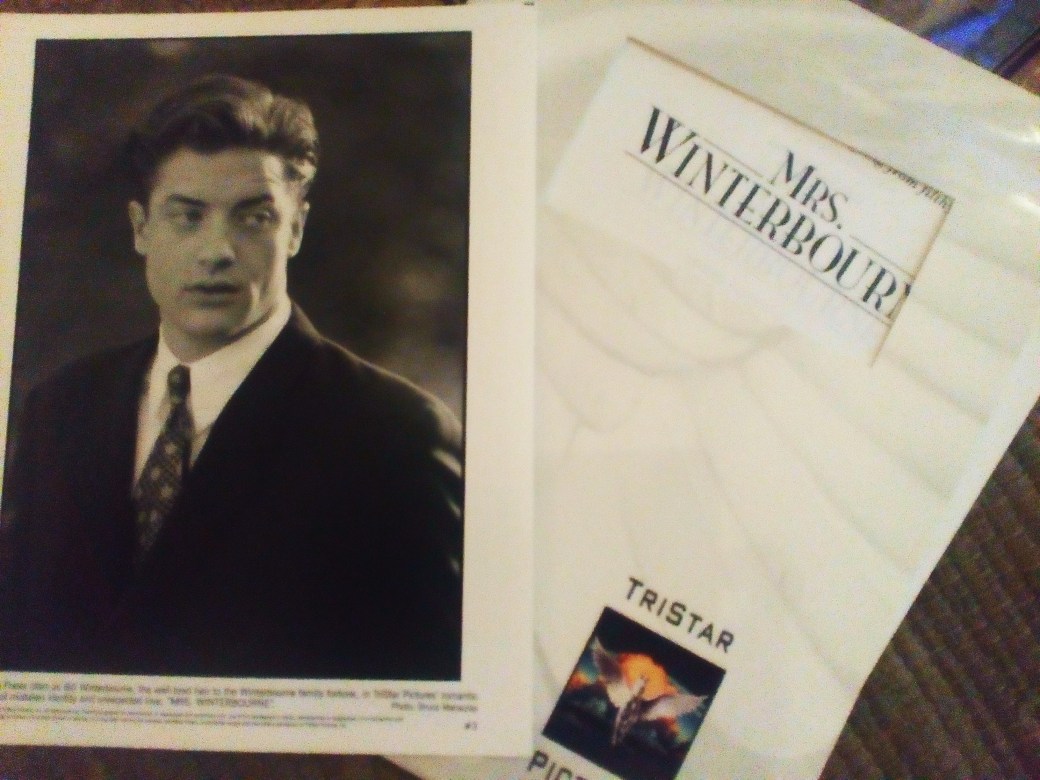
March: Erin presents Mrs. Winterbourne (1996)
April: Boomer presents My Demon Lover (1987)
May: Brandon presents Girl Walk // All Day (2011)

-The Swampflix Crew

All Two Dozen of Russ Meyer’s Feature Films Ranked & Reviewed

For the last third of 2015 I put a lot of my movie-watching efforts into making a journey through the rather buxom catalog of pervert auteur Russ Meyer. Meyer had an undeniably fascinating career as a boundary-pusher in schlock cinema. From inadvertently inventing the “nudie cutie” to creating some of the most brilliant rapid-fire montages ever assembled in his editing room mastery to working with Roger Ebert on a hit X-Rated comedy for a major Hollywood studio, Meyer was a mischievous pioneer, a true industry outsider. As such, his work is very difficult to pigeonhole, despite its consistent lean towards salaciousness & titlation (a huge emphasis on “tit” i that second descriptor). Some Meyer films are delightfully silly. Some are morally reprehensible. Some manage to be both simultaneously. A complicated brute of a man, Meyer defies you to defend everything he’s said & done in its entirety. And yet he’s made some of the most vibrant, idiosyncratic films the world has ever seen.

The question is what are we to do with the mess that Meyer’s left behind? It’s been fun picking through the pieces of the wreckage, but I doubt I have any significant answer to that conundrum now that I’ve made it through to the other side of his catalog. Honestly, I doubt I ever will. His work is wildly varied in terms of quality & impact. It’s much easier to discuss his oeuvre one film at a time than it is to discuss his accomplishments as a single unit.

So, if you’re interested in an entry point for checking out Russ Meyer’s filmography, the best I can do is list his films chronologically with links to their respective reviews & star ratings. Just in case a sold two dozen features sounds like too much effort for a newcomer (not to mention the home video distribution of his work being disastrously mishandled), I’ve also made a top five shortlist for the films I’d recommend as his best works, the ones most worth seeking out. If you’re looking for a career-spanning piece on the cultural impact Russ Meyer’s catalog has had in cinema, I highly recommend the book Big Bosoms & Square Jaws: The Biography of Russ Meyer, King of the Sex Film by Jim Ryan. It’s a very fun & well-researched read, one that contextualizes Russ Meyer’s contribution to cinema better than I ever could myself.

The Breast of Russ Meyer
1. Beyond the Valley of the Dolls (1970)

2. Faster, Pussycat! Kill! Kill! (1965)
3. Good Morning . . . and Goodbye! (1967)
4. Mondo Topless (1966)
5. Supervixens (1975)
H.M. The Seven Minutes (1971)

RM’s Filmography, Ranked & Reviewed
1959: The Immoral Mr. Teas – 3.5 stars
1961: Eve and the Handyman – 1 star
1961: Erotica – 2.5 stars
1962: Wild Gals of the Naked West – 2 stars
1963: Europe in the Raw – 3.5 stars
1963: Heavenly Bodies! – 3 stars
1964: Lorna – 2.5 stars
1964: Fanny Hill – Memoirs of a Woman of Pleasure – 3 stars
1965: Mudhoney – 2.5 stars
1965: Motorpsycho! 0.5 stars
1965: Faster, Pussycat! Kill! Kill!5 stars
1966: Mondo Topless – 4 stars
1967: Common Law Cabin – 3 stars
1967: Good Morning . . . and Goodbye! – 4 stars
1968: Finders Keepers, Lovers Weepers! – 3 stars
1968: Vixen! – 2.5 stars
1970: Cherry, Harry & Raquel! – 3.5 stars
1970: Beyond the Valley of the Dolls – 5 stars
1971: The Seven Minutes – 4 stars
1973: Blacksnake – 0.5 stars
1975: Supervixens – 4 stars
1976: Up! – 3 stars
1979: Beneath the Valley of the Ultra-Vixens – 3 stars
2001: Pandora Peaks – 2 stars

-Brandon Ledet

Three Hidden Gems in Jim Henson’s Labyrinth (1986)

EPSON MFP image

Recently, the Prytania Theatre (Louisiana’s oldest operating single-screen movie theater) had several special screenings of Labyrinth as a tribute to the late and great David Bowie. Bowie has had a pretty interesting acting career, starring in films such as The Hunger and Absolute Beginners, but Labyrinth is without a doubt the film he is best known for. His character, Jareth (the Goblin King), has been the source of so many sexual awakenings due to his mysterious aura and dashing appearance (not to mention that giant codpiece), but more importantly, the music that he created for the film is extraordinary. The soundtrack to Labyrinth is definitely my favorite film soundtrack of all-time. Each song has a lot of heart, a lot of fun, and a whole lot of Bowie.

Needless to say, watching this film on the big screen for the very first time was an unforgettable, life-altering experience, and viewing such a familiar film in a different setting caused me to notice a few things I never caught before:

1. The image of Jareth’s face appears in different areas in the labyrinth during several scenes, but it’s very well hidden (for the most part). His face can been seen a few times in the following places: the walls and floor of the labyrinth, the rocks in the tunnel, and the trees in the Bog of Eternal Stench. After doing some quick research, I found out that the hidden faces were put in the film for the DVD release. Whoever decided to place these hidden “Easter eggs” throughout the film is a genius.

2. Within the first few minutes of the film, you get a quick tour of Sarah’s bedroom. There are quite a few items throughout her room that become part of her labyrinth experience (stuffed animals that resemble Sir Dydimus and the Fireys, bookends that resemble Hoggle, etc.), but I never noticed the newspaper clippings of David Bowie attached to her vanity’s mirror. Also, directly on the side of the clippings is a doll that looks very similar to the Goblin King. How did I miss this all these years?

3. There is a fountain in the Goblin City that is basically a circle of  Hoggle-like goblins urinating. When Sarah first encounters Hoggle, he’s peeing in a fountain. I’m not quite sure what this connection means or if it means anything at all. My guess is that it is a sign that her journey is ending. Once Sarah enters the Goblin City, she’s coming close to finishing her quest. The Hoggles in the fountain look similar to her Hoggle-like bookends back in the “real world,” so this could be a sign that change is coming. Or this could simply be a goof. The world may never know.

-Britnee Lombas

Point Break (2015) Wasn’t All That Bad . . . As Long As You’ve Never Seen Point Break (1991)

EPSON MFP image

Okay, it’s shameful confession time. I saw the Point Break remake, released just a few weeks before this past Christmas, before I saw Kathryn Bigelow’s 1991 original. It was always a given that I’d see the original Point Break eventually, but twas a task I had been putting off despite the enthusiastic recommendations of friends (& Nick Frost’s bumbling cop in Hot Fuzz) who rank it among their favorite films of all time. A free movie ticket & a convenient showtime, then, lead me to the curious position of having seen the little-loved remake of Point Break weeks before I saw the original (also on the big screen, thanks to Indywood). The shameful part is that I actually enjoyed the remake. As a dumb action movie packed with bad writing, overwrought performances, and over-the-top stunts, it’s  nothing particularly special, but it’s also nothing especially awful either. It’s pretty okay & might’ve even flown under the radar as a half decent genre pic . . . if it hadn’t purported itself to be a remake of Point Break (1991) in the first place. Point Break (1991) & Point Break (2015) are so far apart in terms of style, intent, content, plot, and central philosophy that there’s no reason the 2015 version should’ve bothered calling itself Point Break in the first place. With a couple minor tweaks & a title change it might’ve even been able to sidestep accusations of being a ripoff. The two films are worlds away from one another.

Kathryn Bigelow’s Point Break is a laugh-a-minute action vehicle for Keanu Reeves & Patrick Swayze (not to mention wildcard Gary Busey in unhinged Under Siege mode). The script is overloaded with jokes & the mood is surprisingly light considering that its two most tense action set pieces – a police raid & a bank robbery – are some of the most brutally severe I’ve ever seen. The Point Break remake, on the other hand, is easily recognizable as the post-Dark Knight kind of re-imagining that believes a grim, self-serious mood is what the people want in their over-the-top action cinema. It’s a thoroughly dour affair, especially for a film about bank robbing surfers. Just about the only thing that transferred from the original to the remake were the surfing & the homoeroticism (between an undercover FBI agent & the lead criminal).

What the remake does instead of retracing Bigelow’s steps is focusing on & amplifying particular details of the original & turning those isolated aspects into a feature film. The criminals in the original Point Break are really into surfing, but occasionally dabble in a parachute jump or some beachside football. That’s not X-treme enough for the remake, which makes a point to include every Red Bull-fueled sport you can think of: snowboarding, base jumping, kayaking, whatever. The bigger difference is in the two film’s philosophy, however. The surfer bros in the original may occasionally muse about “the spiritual side of the sea” or how surfing is “a state of mind”, but at heart they’re just thrill seekers & thieves for whom bank robbing is both an adrenaline spike and a source of income. The remake, on the other hand, posits its “extreme poly-athletes” (ugh) as “eco warriors” (double ugh) who steal from “the system” in order to “give back” to a “dying” planet in some 21st Century version of Robin Hood justice. Their thrill seekers as well, but their main concern is achieving nirvana through cutthroat vigilantism . . . and X-treme sports.

Both Point Break films are, admittedly, quite silly. The difference is that you laugh with the original & laugh at the remake. Kathryn Bigelow’s film is loaded with enough snarky one-liners to give any Joss Whedon script a run for its money and, surprisingly enough, they all land. The 2015 version is funny in a different way. Lines like “A tree falls in the forest & no one puts it on YouTube. Did it ever really happen?” & “So, you live off the grid?” “No, we live on it. Just on our own terms,” are downright hilarious, just perhaps not intentionally so. The action sequences in the 1991 Point Break achieve a kind of shocking gravity bucks the film’s humor in an interesting way. The 2015 Point Break‘s action sequences often play directly into the film’s (unintentional) humor. For instance, my first laugh was when a dude bro fell of a cliff while dirt-biking in a bid to earn sponsorships & YouTube hits. I know that’s pretty harsh of me, bro, but the film never truly earns the right to be taken seriously, so I don’t feel too bad about it.

All things told, the 2015 Point Break is a lot more akin to an X-treme sports version of The Edukators than it is to Kathryn Bigelow’s film. If it hadn’t been pitched as a remake it might have never been greenlit or it might’ve been underfunded, but it also would’ve stood a better chance as a critical success. Watching a bunch of bank-robbing anarchists try to achieve nirvana by skateboarding off a yacht to shitty EDM is pretty damn amusing, but it’s nothing in comparison to what any ten minute stretch of the original achieves. If you have any chance of enjoying Point Break (2015) as is, it’d be in seeing it before you check out its far superior source material. Either that, or pretending it has a different title & functioned as a blatant ripoff. As a standalone product, it’s an occasionally fun trifle of mindless action cinema. As a point of comparison, the outlook is much less flattering.

-Brandon Ledet


Agents of S.W.A.M.P.F.L.I.X.: Captain America – The First Avenger (2011)

EPSON MFP image

Superhero Watching: Alternating Marvel Perspectives, Fresh and Longterm, Ignoring X-Men, or S.W.A.M.P.F.L.I.X., is a feature in which Boomer (who reads superhero comics & is well versed in the MCU) & Brandon (who reads alternative comics & has thus far seen less than 25% of the MCU’s output) revisit the films that make up the Marvel Cinematic Universe from the perspective of someone who knows what they’re talking about & someone who doesn’t have the slightest clue.

Boomer: For me, the key difference between DC and Marvel as companies is that Marvel has always been better at creating characters that are down-­to-­earth and grounded, while DC’s characters are traditionally larger than life and iconic in their titanic stature. Spider-­Man and the X­-Men are relatable characters; Superman and Wonder Woman are inspirational ones. This isn’t absolutely true across the board, and when discussing characters that have existed for nearly a century under the pen of dozens (if not hundreds) of different writers over the decades, there are bound to be many counter-arguments to this admittedly reductive distinction. However, dissecting the different companies’ primary characteristics and output, that difference is the major division between the two. In this sense, Captain America, with his concrete­-if­-antiquated moral code, larger-­than­-life prestige, and well defined ethical concepts, is the Marvel character most like a DC hero, and this, combined with the built-­in fandom that comes from such an outspokenly and inherently patriotic character, has made Cap an enduringly captivating dramatis persona. Despite being only one of many, many jingoistic characters introduced in the build up to (and following) WWII, Captain America continues to be a fan favorite, and it’s no surprise that Marvel has gone to his well many times in their creation of non­-graphic media.

Following his introduction in March 1941 (nine months before the US officially became involved in the war), Cap made his way to the silver screen in under three years, with a film serial being filmed in six weeks in October and November 1943 that started screening in February of the following year. This serial bore little resemblance to the comics character, which film historians attribute to the likelihood that the original script was written to feature Fawcett Comics character Mr. Scarlet; as a result, there is no super soldier serum, no shield, and no mention of Nazis, and Cap’s secret identity is not Steve Rogers but civilian District Attorney Grant Gardner. This would be Marvel’s only theatrical release until 1986’s Howard the Duck. Two made-­for­-TV films, Captain America and Captain America II: Death Too Soon, were released in 1979 and starred Reb Brown; these featured a contemporary former­-marine­-turned­-artist who acquiesces to undergo testing of a “super-­steroid” following an accident and then fighting crime using the costume that he envisioned for the character he created as a visual artist. A Captain America feature, inspired by the financial success of Tim Burton’s Batman in 1989, was filmed and intended for theatrical release in 1990, but the completed film was such a disaster that it was quietly dumped into the VHS market with little fanfare.

After three attempts at a film adaptation, mostly unsuccessful, a new vehicle for Captain America was envisioned. Screenwriters Leslie Bohem (Daylight, Dante’s Peak) and Larry Wilson (The Addams Family) were initially approached in 1997, but the project was put on hold due to a legal dispute between Joe Simon (co-­creator of Captain America alongside Jack Kirby) and Marvel regarding rights and royalties. This suit was settled in 2003, and the film was batted around for a couple of years, with Avi Arad optimistically announcing in 2006 that he hoped to see the film released in 2008. These plans were again put on hold due to the 2007-­2008 WGA Strike, and plans were finalized in late 2008 following the release of Iron Man, with a planned release date in May 2011 (eventually pushed back to July) under the working title The First Avenger: Captain America (with the two parts of the title being swapped later in production). Joe Johnston, well known for his effects work on Raiders of the Lost Ark and his direction of Honey, I Shrunk the Kids and The Rocketeer, was tapped to helm the picture, and Christopher Markus and Stephen McFeely, the screenwriting duo behind the Chronicles of Narnia films, wrote the script.

The film follows scrawny Brooklyn artist Steve Rogers (Chris Evans) who, desperate to participate in the fight against the Axis, becomes a test subject in an experiment to create super soldiers, an experiment based on the studies of German expatriate Dr. Abraham Erskine (Stanley Tucci). Howard Stark (Dominic Cooper) also participates in the experiment under the supervision of Colonel Phillips (Tommy Lee Jones) and British liaison Agent Peggy Carter (Hayley Atwell). The experiment is a success, but an on­site attack means that the project cannot be recreated. Meanwhile in Europe, the Red Skull (Hugo Weaving) and his super-science organization, Hydra, have broken away from Nazi oversight in order to pursue his own interests, assisted by Dr. Arnim Zola (Toby Jones). Rogers is immediately enlisted as a figurehead for the war effort, but when he goes behind enemy lines to rescue his childhood friend Bucky (Sebastian Stan), he becomes a real hero. I already have an idea as to how Brandon feels about this film, but, without further ado, here’s his opinion:

EPSON MFP image

fivestar

­­­­­­­­­­­­­­­­­­­­Brandon: I’m in that weird little pocket of movie nerds who hold Disney’s cheesier live-action flops like Tomorrowland & John Carter of Mars in much higher regard than they probably deserve. That’s probably a large part of why I got such a huge kick out of 2011’s Captain America: The First Avenger. At heart, this is director Joe Johnston remaking his commercial flop for Disney, The Rocketeer, into a much more successful film. I know Marvel Studios gets a lot of flack for valuing a “house style” over individual director’s visions, but I think they got the formula right here.They seemingly matched an already-appropriate director to the style they wanted, something mildly attempted by bringing in Shakespearean vet Kenneth Branagh for Thor, but brought to its full collaborative potential with Johnston’s Captain America. I really like The Rocketeer, but it’s a deeply flawed movie. Captain America recreates The Rocketeer‘s Nazi-punching retro-future with no discernible flaws or blemishes. It achieves the exact aesthetic it aims for with few to no missteps. It’s essentially a perfect superhero movie, easily ranking up there with Batman Returns & The Dark Knight as the best I’ve ever seen. And although it’s more closely associated with being a Marvel property than existing under the larger Disney umbrella, I do believe it snugly fits with the old-fashioned earnestness of the flops mentioned above.

From the outside looking in, I wasn’t exactly sure why I had been seeing so much Captain America merch around lately. Captain America t-shirts & jackets are seemingly becoming just as ubiquitous as Hulk Hands were in the early 2000s, except without the iconic quirkiness of the product design to explain the merch sales. I totally get the appeal now. Chris Evans’ Cap is perfectly charming in his 1940s “just a kid from Brooklyn” moxie, especially once he explains that he’s desparate to enlist as a soldier in World War II not to kill Nazis, exactly, but because he can’t stand bullies. So far in the MCU, our heroes have been an ivy league academic of a scientist, a billionaire playboy arms dealer, and a Norse god. Against these titans, Captain America/Steve Rogers stands as the little guy . . . literally. Through a surprisingly smooth bit of CGI magic Chris Evans is shrunken down into a scrawny little baby of a protagonist with a long list of health problems that prevents him from enlisting in the Army. As opposed to the Hulk’s experiment-gone-wrong origins, Captain stands as an experiment-gone-right. A kindly scientist (Stanley Tucci) sees as much potential in Steve Rogers’ moxie as the audience does, and with a little help from Tony Stark’s eccentric bajillionaire daddy (who looks nothing at all like a young John Slattery, by the way) transforms the Captain into the muscled-up beefcake superhero Evans embodies so well. Captain America is a 100% earnest, sarcasmless virgin who physically cannot get drunk. He’s essentially the antithesis of Tony Stark & it’s a welcome change of pace for the franchise at large.

Captain America is a too-good-to-be-true ideal of an American super-soldier, something straight out of a propaganda reel. My favorite part of this film is the way it accentuates that idea instead of downplaying it. Both sides of the war are greatly exaggerated as a Defender of the Free World, Captain’s weapon is a shield made of unobtanium, uh, vibranium & instead of fighting run-of-the-mill Nazis, he faces a futuristic force of futuristic super-Nazis equipped with laser cannons & lead by the even-worse-than-Hitler monster villain Red Skull (whose CGI design is even more impressive than scrawny Rogers’). More importantly, before Captain finds a particular use for himself in the Army, he’s employed as a public face for the war’s propaganda machine, marking the first time I can recall where a Marvel character (if not any superhero at large) exists in a world where he stars in comic books & movies. That’s such a cool idea. An even cooler idea is what happens when he actually starts fighting in the war & the movie devolves into an actual winning-the-war-effort montage instead of faking one. It’s one hell of a callback to the earlier propaganda montage, not to mention a fascinating bit of meta narrative play, and it works like gangbusters.

A lesser film would’ve tried to turn Captain America’s inherent cheese into something darker, grittier, but Joe Johnston’s The First Avenger embraces the cheese wholesale. Far removed from the post-Dark Knight doom & gloom casting its shadow over most blockbusters in recent years, Captain America first introduces its hero in costume selling war bonds at a USO show & first using a shield by wielding a trash can lid in a back alley brawl. This line of irreverent, but wholesome humor is balanced expertly with some surprisingly severe touches, especially in the introduction of Hydra as a worse-than-Nazis force to be reckoned with & in its higher-than-usual wartime bodycount (which includes a kill that might stand as the best propeller death since The Titanic). I said in our Thor review that I wasn’t sure exactly when the MCU became the cutting edge of superhero cinema, since the first few films felt oddly old-fashioned. It’s curious that a film set in the 1940s stands as the first glimpse of the franchise’s transition into becoming the modern standard. It’s a thoroughly fun watch, but stands as the MCU’s most brutally violent film at the time of its release, striking a more or less perfect balance. I’ve heard that 2014’s Captain America: Winter Soldier is an even better example of the superhero film as a genre, but it’s difficult for me to imagine it getting much better than what’s accomplished here.

EPSON MFP image

fourhalfstar

­­­­­­­­­­­­­­­­­­­­Boomer: I wasn’t terribly impressed with Captain America (I hate the subtitle) the first time I saw it. I remember that the frail bodied Steve Rogers looked really silly on the big screen, which put me in the wrong frame of mind from the outset. This wasn’t my only complaint either; I didn’t care for the way that the film seemed to go out of its way, from very early in the runtime, to focus its attention on Hydra as a proxy for the Nazi forces rather than on Hitler’s forces proper. I also hated the way that Cap’s war experiences were condensed into a single montage, which I felt undermined the character’s relevance as a long­-term soldier. Looking back, though, I can’t believe I was such a stick in the mud about it.

This is a delightful movie and represents a continued positive change in the MCU’s direction with regards to protagonist characterization. Steve Rogers is the polar opposite of Tony Stark from the ground up and represents the better angels of our nature. He’s the kind of self-sacrificing role model you or I hope we would have the temerity to be should we be given great power (while Tony is a genius bro who uses his great intellect to build toys for himself and cover his sex and substance abuse issues while only working toward the greater good when he has no real choice). Evans is also the perfect choice to play Cap. There are plenty of men wandering around Hollywood with the physical presence needed to fill out the Cap suit, but Evans brings a humility and humanity to the role that could easily have been lost if casting was only looking for the perfect human specimen (which isn’t to say Evans isn’t, because damn). This could be difficult to pull off, as there really isn’t that much of a character arc for Cap this go­-round; he experiences a lot of changes that don’t affect his characterization up to the loss of Bucky, which is a flaw in the film’s design but also allows room for the character to grow over the course of the films to come.

Sebastian Stan doesn’t seem to be given a lot to work with here, but as obsessive Stan fans on Tumblr who have vivisected all of his scenes with long essays in effort to delineate character moments have shown us, he does some great work with his background role. The casting of Tommy Lee Jones as yet another irascible veteran badass is a little on-­the-­nose, but he’s a lot of fun to watch in his gruffness and begrudging respect, even if it is all a little rote. Dominic Cooper in particular deserves praise for differentiating the elder Stark from his son, embodying many of the same qualities while also demonstrating grief and self-­doubt, effectively portraying a greater depth of character in Howard’s supporting role than we’ve seen in two featured appearances from Tony. On the other hand, Hugo Weaving’s Red Skull was far too over­-the­-top, calling to mind Raul Julia’s portrayal of M. Bison in the terrible Street Fighter adaptation. Toby Jones’s Zola was likewise poorly executed, as his simpering and faux­-sycophancy was obnoxious; every time the villainous duo was onscreen, the film devolved into a bit of a cartoon. Of course, all of this pales in comparison to the introduction of Hayley Atwell’s Peggy Carter, a.k.a. the Best! MCU! Character!, even if there are moments in this introductory chapter that undermine her badassery (i.e., her apparent jealousy).

Johnston’s experience with period drama and action do the film a great service. Markus and McFeely wouldn’t have been the first team I would have thought of to pen a Captain America flick, but their work on the Narnia adaptations means they, like Johnston with The Rocketeer, have also plied their trade at WWII­-era escapist fantasy period work as well. The pacing is a little strange, as the film invests a great deal of the first act in establishing Steve’s motivations and ideals, compresses all of Cap’s great and valorous wartime battles into three set pieces and one brief montage, and has an epilogue longer than one would expect in a standard action movie. The unusual plot structure helps the audience feel somewhat time-­lost, however, which adds to the film in equal measure to the extent that it detracts from it. The film also manages to set up future installments without that distracting from the cohesiveness of this film as well. Overall, this is the first truly great film of the MCU, and cemented, at least for me, the long term viability of this franchise.

­­­­­­­­­­­­­­­­­­­­Lagniappe

Boomer: Continuity-­wise, Cap will, of course, go on to participate in the Avengers films, the first sequel The Winter Soldier, and the upcoming Phase Three flagship feature Civil War. Best MCU Character Peggy Carter has now appeared in more individual Marvel productions than any other character, with her appearance here and cameos in Agents of S.H.I.E.L.D., Winter Soldier, Avengers: Age of Ultron, and Ant-­Man, and, of course, her leading role in Agent Carter (catch the premiere of Season 2 on January 19!). Dominic Cooper’s Howard Stark reappears on that series in a supporting role as well, but the film’s most far-­reaching addition to the MCU canon (other than Cap himself) is the first appearance of Hydra, which will have implications that reverberate way down the line. In non­-continuity news, I always forget that future Doctor Who companion Jenna Coleman and future Game of Thrones competitor Natalie Dormer are both in this film in small, inconsequential roles, so it’s a nice re-­surprise to see them here.

Brandon: My biggest gripe about the MCU as a whole has been its individual films’ shoutouts to outside properties often having no immediate consequence. There’s a little bit of that wankery going around here, mostly in a last minute Nick Fury cameo (as always) & in a post-credits stinger that promotes the then-upcoming Avengers crossover movie in a hilariously awful “You Wouldn’t Steal a DVD” editing style. For the most part, though, other Marvel properties are incorporated into the fold for more purposeful effect here. Daddy Stark is given an integral role in the creation of Captain America instead of merely making an appearance. Even more importantly, the MCU’s MacGuffin-at-large, the Infinity Stones, aren’t especially interesting in the abstract, but I don find it highly amusing that Hitler would be desperately seeking an Infinity Stone in this version of history. They even create a little bit of retroactive connective tissue here by making it perfectly logical that Tony Stark would be in possession of Cap’s shield in a throwaway gag in the previously-released Iron Man 2. Even if Nick Fury’s presence is again mostly inconsequential (as has been in the case in every MCU film besides Iron Man 2), they’re still working in the right direction here.

Combined S.W.A.M.P.F.L.I.X. Rating for Captain America: The First Avenger (2011)

EPSON MFP image

fourhalfstar

-Agents of S.W.A.M.P.F.L.I.X.

Instinct Vs. Ability in Rey’s Use of the Force in Star Wars: The Force Awakens (2015)

EPSON MFP image

When I first reviewed Star Wars Episode VII: The Force Awakens, it had just opened for wide release. This was a magical time, just less than a month ago, when I couldn’t imagine what anyone could possibly have to complain about in J.J. Abrams’ fan-pleasing entry to one of pop culture’s most beloved franchises. After viewing the film three times in the theater (possibly the first time I’ve done that for a movie since 2004’s The Life Aquatic with Steve Zissou), my enthusiasm hasn’t wavered a bit. I’m proud that it ended up ranking on our Top Films of 2015 list & personally would place it behind only Empire Strikes Back as one of the best in the franchise. Boy, was I wrong about the complaints, though. From what I can tell, the world (or at least the world online) has forgotten how to have fun at the movies & has devolved mostly into whiny nitpicking & self-assigned superiority. Despite the critical response to The Force Awakens remaining largely positive, the volume & variety of complaints surrounding the film have become absolutely overwhelming. There are many common quibbles I disagree with (it too closely resembles A New Hope, its central villain is too “emo” to be threatening, etc.), but for the sake of brevity I’d like to address just one complaint against the film that I find dubious: the idea that its protagonist, Rey, gets “too good, too fast” in her use of the Force.

The last thing the world needs right now is another lengthy think piece about The Force Awakens so I’ll try to keep it brief here. It’d be possible to address the complaints against Rey’s Force abilities from the POV that a slowburner about a young space wizard spending hours of screen time learning to play laser swords might not be the most exciting plot for an action-packed space opera. It’s also possible that there’s a hint of sexism afoot in these complaints about Rey, since no one seemed super-miffed about how quickly Luke could block laser blasts blindfolded in A New Hope. I’d like to offer a much simpler explanation for Rey’s sudden talent with the ancient art of the Force besides streamlining the plot, however: her talent was a lot more gradual than most people realize. The scene most people seem to gripe with concerning Rey’s abilities is an interrogation room battle with Kylo Ren when she seemingly discovers her Force abilities, then immediately dominates her professionally-trained opponent in a mental tug of war. It’s my contention that Rey had already been “using the Force” long before she entered that interrogation room; she just didn’t have a name for something she had been doing by instinct.

For concrete evidence for Rey using the Force before the interrogation scene, just look to all of her instances of “luck” & “coincidence”. Rey is introduced as having a unique talent for scavenging for minuscule parts in gigantic ships, but is it a purely human talent that drives these needle-in-the-haystack searches? Perhaps not. Even more convincing is the scene where Rey first flies the Millennium Falcon. She is familiar with the individual parts of ships from her daily scavenging & can talk shop with the best of  them (most notably Han Solo), but knowing & doing are two separate endeavors. When Rey takes the controls of the Millennium Falcon (a ship she derides as some nameless junker) she flies it recklessly in a panic, repeating “I can do this, I can do this” to herself & barely getting by on rudimentary skills & “luck”. When she devises a plan on how to utilize Finn’s gun (which is locked in a downward position) by executing a flawless maneuver that positions the ship upside down, a switch seemingly flips in her head. She looks confident, determined, and the wild nature of piloting smooths out. Finn asks her, “How did you do that?” and she responds, “I don’t know. I’ve flown before, but . . .” in an exasperated tone. This is a line of questioning is repeated later in the film when she escapes Kylo Ren’s interrogation by using the Force (supposedly for the first time) and when asked to explain how, she responds, “I can’t explain it & you wouldn’t believe me.”

I believe there is a pattern there. Rey is instinctually using the Force in the Millennium Falcon scene without knowing what she’s doing exactly. It’s a pattern repeated when she first uses a laser blaster. She misses her first shot, looking frazzled, then throws on her determined Force Face (a great body language detail from actor Daisy Ridley) & never misses again, offing a storm trooper every time she pulls the trigger. It’s also echoed in the scene where she accidentally releases the alien beasts Han Solo is smuggling. She mistakenly opens the wrong blast doors on her first try, but when she has to save Finn from the wicked things’ tentacles she calmly executes the correct blast door at the exact correct time, joking “That was lucky.” I disagree with Rey (even though she was speaking in jest). It wasn’t lucky; it was the Force. I could kind of pinpoint a few more of Rey’s instant “talents” & lucky “coincidences” that could possibly be attributed to the Force (happening to run into Finn in the first place, innate understanding of obscure languages, the ability to fight off multiple men at once, moving a gigantic metal grate with her bare hands, etc.), but you’d have to squint at those examples the right way to make them work. I’m at the very least confident that the Falcon flight, the laser blaster, and the blast doors are concrete examples of Rey using the Force by instinct.

I don’t think that Rey’s Force abilities being introduced gradually instead of suddenly makes or breaks The Force Awakens as a good or a bad movie. There’s so much going on in the film that makes it a worthwhile slice of sci-fi fantasy entertainment otherwise. If nothing else, watching animatronic cutie patootie BB-8 roll & bleep its way through danger is alone worth the price of admission. I do, however, firmly believe that Rey’s gradual use of the Force through instinct was an intentional choice made by director J.J. Abrams & screenwriter Lawrence Kasdan. Long before Rey Jedi mind tricks her way out of the interrogation room & even before she receives visions by touching the Skywalker family lightsaber, her unknowing use of the Force is referenced by none other than Supreme Leader Snoke himself. Snoke asks Kylo Ren, “There has been an Awakening. Can you feel it?” (For the record, Ren can.) If a fictional, spooky projection of an evil wizard can sense that Rey is using the Force sight unseen, why can’t the film’s detractors, who have the benefit of watching her every step? Sometimes it’s fun to complain, I guess, whether or not the film or the character deserves the scrutiny.

-Brandon Ledet

Swampflix’s Top Films of 2015

EPSON MFP image

1. It Follows – The only movie to make three of our lists is a throwback to 80s horror classics from past greats like John Carpenter. Featuring a killer soundtrack, the highest of high-concept premises, and a fascinating visual aesthetic, It Follows is more creepy than it is frightening, but easily stands as the best horror film of the year, if not the best film overall.

2. Crimson Peak – A love letter to the Gothic Horror genre, Guillermo del Toro’s latest is a traditional ghost story loaded with the genre’s classic tropes of isolation, bloody histories, unnatural relationships, menacing architecture, Victorians, obvious symbolism, endangered virgins, and things that gibber and chitter in the night. Crimson Peak is ripe with heavy-handed visual metaphor and beautiful overwrought acting to match.

3. Magic Mike XXL – An over-the-top road trip comedy where a gaggle of male strippers act like an over-aged boy band: horny, sassy, too-old-for-this-shit, and high on drugs. One of the most unashamedly fun movie-going experiences of the year, not to mention the lagniappe of its intense cinematography. There aren’t many situations in which the sequel is better than the original, but we’re confident this one surpasses its deeply-somber predecessor. It’s pure genius!

4. Tangerine – This flick, which was filmed with an iPhone 5S, has been the talk of the town for months, and for a very good reason. Tangerine is a raucously fun, poorly behaved whirlwind of an adventure through Los Angeles’ cab rides & sex trade. It’s got a surprisingly intense cinematic eye & despite leaning hard towards over-the-top excess there’s a very touching story at its heart about the value of friendship & makeshift family.

5. Queen of Earth –  Two lifelong friends inflict terrible manipulation and emotional violence upon each other in a tense story that spans two separate summer getaways, where past secrets, petty jealousies, and personal vendettas come to light while one of the women slowly  becomes more deranged. It’s difficult to pin down exactly what does & doesn’t transpire in Queen of Earth, but the seething hatred mounting between its two leads is bound to bore a hole into your memory no matter where you land on its plot.

6. Star Wars: The Force Awakens – Easily the most over-complained about movie in 2015. The Force Awakens a genuinely fun, intricately detailed return to form for a franchise that hasn’t been nearly this satisfying since 1980’s The Empire Strikes Back. If you need insight into just how much the movie bends over backwards to please its audience, just take a look at the beyond-adorable BB-8. What a little cutie.

7. Goodnight Mommy – There’s a major twist at the core of Goodnight Mommy that most discerning folks will be able to catch onto within minutes of the film beginning, but that withheld reveal in no way cheapens the ugly brutality of its horror imagery or the delicate beauty of its art film surreality. Goodnight Mommy has been derided by its detractors as “torture porn”, but its intense moments of horror are actually quite well shot and understated in their simplicity. Don’t be fooled by reviews that refer to this as a terrible movie, or an exploitative one; it’s a gorgeous film with style to spare.

8. Turbo Kid  – A cartoonish throwback to an ultraviolent kind of 1980s futurism that probably never even existed. Turbo Kid is a smorgasbord of eccentric ideas smashed together into one glorious and beautiful assault on the senses. Moreover, each of those ideas is realized in bloody practical effects magic. It’s difficult to believe that Turbo Kid didn’t previously exist as a video game or a comic book, given the weird specificity of its world & characters. It’s a deliriously fun, surprisingly violent practical effects showcase probably best described as the cinematic equivalent of eating an entire bag of Pop Rocks at once.

9. Krampus – Director Michel Dougherty’s first film, Trick ‘r Treat, was a comedic horror anthology devoutly faithful to the traditions of Halloween. His follow-up, Krampus,  thankfully kept the October vibes rolling into December traditions in a time where so many people do it the other way around, celebrating Christmas before Halloween even gets rolling, the heathens. All hail Krampus, a soul-stealing demon who acts as “St. Nicholas’ shadow”,  for bucking the trend. A new cult classic has been born!

10. The Final Girls – Although its main goal is undoubtedly a goofy, highly-stylized comedy, this film also reaches for eerie, otherworldly horror in its central conceit, an unlikely of mix ideas from Scream & The Last Action Hero. As a send­up of campsite slashers like Friday the 13th & Sleepaway Camp that focuses almost entirely on the relationships between female friends as well as a young woman & the woman who is not quite her mother, The Final Girls is a meta horror comedy well-deserving of your attention.

Read Boomer’s picks here.
Read Britnee’s picks here.
Read Brandon’s picks here & here.
Read Erin’s picks here.

-The Swampflix Crew