Teenage Mutant Ninja Turtles: Out of the Shadows (2016)

EPSON MFP image

fourstar

campstamp

I’ve been a loud defender of the Michael Bay production of Teenage Mutant Ninja Turtles since it first oozed into theaters two years ago. I went as far as to call the film “The Best Bad Movie of 2014” & “the last five years of bad taste in a nutshell”. High praise, I know. My point was that it’s the exact kind of campy cheese that in its own trashy way reveals & documents more about the blockbuster filmmaking landscape than a more prestigious property possibly could. It’s most useful in this world was as a perfect encapsulation of our worst cinematic tendencies, a cultural relic for future generations of schlock-hungry fools.

That trashy time capsule’s follow-up, a sequel titled Out of the Shadows, is just as enjoyable as the first Ninja Turtles film, but for an entirely different reason. Instead of pushing the brooding grit of the post-Dark Knight era of needless reboots to its most ludicrous extreme like its hilariously hideous predecessor, Out of the Shadows calls back to the light, fun, cartoonish energy that made the original Ninja Turtles trilogy such a nostalgia-inducing pleasure in the 1990s. I guess you could argue that banking on 90s nostalgia is a snapshot on where blockbusters are seated in 2016, but that’s not what makes Out of the Shadows special. Here’s what does make it special: a manhole-shooting garbage truck modeled after the franchise’s infamous pizza van toy; a pro wrestler that plays a tank-operating rhinoceros; a perfectly hideous realization of the villainous mech suit-operating brain Krang; etc. Given enough time, this is a film both silly & visually memorable (read: deeply ugly) enough to generate its own future nostalgia entirely separate from that of a previous generation’s (not that it was above playing the 90s cartoon’s theme song over the end credits). Kids are going to grow up loving this movie and its reputation will outlast the short-term concerns of however well it does or doesn’t do at the box office this summer. In that way, it’s a successful work of art.

I wasn’t quite so sure about Out of the Shadows during its early plot machinations. Early scenes of Megan Fox’s April O’Neil working “undercover” as a nerd (a hot nerd, as the leering camera insistently reminds you) and the titular turtles airlessly navigating a CGI cityscape are a cruel, dull bore. My enthusiasm picked up fairly quickly, however, thanks to the aforementioned pizza van/garbage truck. You see, this isn’t just a recreation pizza-shooting toy from my own youth; it’s one that adds the ludicrous appendages of mechanical arms that operate cartoonishly oversized nunchucks. Why? Why not. The film’s plot gets kicked into action by a highspeed prison break (complete with producer Michael Bay’s calling card excess of explosions) that frees the wicked Shredder from the temporary shackles he’s locked in at the end of the last film. A teleportation device places Shredder in the mechanical hands of the evil alien brain Krang, who opens up a world of purple ooze (you can’t get much more 90s than ooze, right?), interdimensional portals, alien warships, and all kinds of other high-concept wankery. The goal of these conflicts is, of course, to provide simple obstacles for the turtles to overcome, but I have great respect for the over-the-top, Saturday morning cartoon choices the film makes to set those targets up. It’s certainly a refreshing change from the too-dark-for-its-own-good villainy brought to the screen by William Fichtner in the first film, as amusing as that was to watch.

While we’re talking Krang, I’ll just go ahead & say he’s very close to being the greatest villain I’ve seen onscreen all year (the slight advantage goes to the much more naturalistic presence of Black Phillip there). An unholy combination of Yoda, Audrey II, and the oversexed gator from All Dogs Go to Heaven, Krang’s vocal performance is perfectly pitched in its over-the-top scenery chewing. He’s not alone. Tyler Perry’s signature yuck-em-up hokeyness is put to brilliant use as a low level villain mad scientist that’s less Dr. Frankenstein & more Neil deGrasse Tyson meets The Nutty Professor. Will Arnett returns to his role as the scaredy cat cad of the previous film, but is allowed far more breathing room to ramp up the pomposity. One of my favorite gags in Out of the Shadows is a scene where Arnett’s bagging his own breath in ziplocks to sell to schmucks impressed by his newfound celebrity as the turtles’ wing man. Pro wrestler Sheamus is perfectly cast here in his own corny way & probably could live out the rest of his life playing bit parts in kids’ movies without breaking a sweat. Tony Schaloub is still a hideous CGI sewer rat father figure. Megan Fox is still a hopelessly bland non-presence, but I began to find amusement in the way she constantly posed & mugged for the camera for absolutely no reason at all. Oh yeah, and Dennis “The Dummy” Duffy from 30 Rock drops by just because. These aren’t performances that are going to win any awards, but they are perfectly suited for kids’ media goofery. Actually, Laura Linney’s performance as a besides-herself police chief might be worthy of an award in a more serious film, but she’s always perfect so there’s no real surprise there.

I don’t want to oversell the shift in tones here. This is still the bloated, grotesque CGI spectacle people understandably pinched their noses at two years ago. As much as I enjoyed every bizarrely lovable second of Krang content in Out of the Shadows, he’s still a disgusting, digital depiction of a sentient brain literally mashed inside a giant, clunky robot. It’s gross. But, hey, kids love gross shit. The film makes a conscious effort to move away from the Dark Knight grit of its predecessor to take delight in such cheap, silly pleasures as watching a two ton warthog eat a trash barrel’s worth of spaghetti while his hairy CGI nipples jiggle. I got the same feeling watching Out of the Shadows as I did with last year’s excellent Goosebumps adaptation: kids are going to grow up loving it & that’s all that really matters. I’ll even go as far as to say that the film finds genuine pathos in unexpected places, namely the teen turtles’ anxiety over the way society treats them not as the good guys, but as hideous, mutant monsters (a feeling all teens share at some point, right?). I especially like the way the turtles describe themselves as “four brothers from New York who hate bullies & love this city.” It gives them a real Steve Rogers or Judy Hopps vibe I can genuinely get behind. That’s not what makes this film such a deliciously fun exercise in trash cinema delirium (that’d be Krang), but it was yet another admirable aspect of a remarkably silly, deeply ugly children’s film I had no business enjoying nearly as much as I did.

-Brandon Ledet

Agents of S.W.A.M.P.F.L.I.X.: Captain America 3 – Civil War (2016)

EPSON MFP image

Superhero Watching: Alternating Marvel Perspectives, Fresh and Longterm, Ignoring X-Men, or S.W.A.M.P.F.L.I.X., is a feature in which Boomer (who reads superhero comics & is well versed in the MCU) & Brandon (who reads alternative comics & had, at the start of this project, seen less than 25% of the MCU’s output) revisit the films that make up the Marvel Cinematic Universe from the perspective of someone who knows what they’re talking about & someone who doesn’t have the slightest clue.

Boomer: After the success of Winter Soldier, the Russo brothers were invited back to direct the next Captain America sequel, confirming their involvement in March of 2014. Christopher Markus and Stephen McFeely, who had previously drafted the scripts for both First Avenger and Thor 2 in addition to Winter Soldier, presented the Russos with the script for Civil War around the same time. Early reports featured the production team stating that they saw the film as more of a direct follow up to Winter Soldier, and that the intent was to further pursue the Bucky/Steve relationship in this flick.

There were mixed reactions to the announcement that the film would adapt (however loosely) the basic plotline of the Marvel Civil War plot from the comics. I’ve mentioned how I feel about this particular storyline in a few of our earlier reviews, but it’s worth outlining here and seeing how it stacks up against the plot of the film. One thing to bear in mind is that the Marvel comics universe is full to the gills with super-powered people. Mutants, Inhumans, actual alien refugees and expatriates, mystics and magicians, survivors of experimentation, people who were involved in chemical/radiation accidents: there are a lot of them. A decade or so back, the company tried to cull its ranks by reducing the number of mutants– just mutants– to less than 200, and there were still too many to allow time for each to be sufficiently developed. It’s also important to bear in mind that the books had spent the past few decades showing bigoted human legislators attempting to pass a Congressional Act that would require all mutants to register with the government. Marvel took the correct stance on this issue, demonstrating that (a) such a thing would be utterly unconstitutional and (b) that the advocates of this act were unequivocally in the wrong from a moral and ethical standpoint.

The plot of the comic Civil War opens with a team of third-tier superheroes, called the New Warriors, filming an episode of the reality show in which they were participating in exchange for funding of their operations. The group finds themselves involved in an altercation with a few villains; though they realize that they are out of their depth they press on, and their interaction with the villain Nitro results in an explosion that incinerates 612 people, including 60 schoolchildren. In the film, the circumstances are different: it’s the new Avengers team (minus War Machine and Vision) taking on a mission in Lagos that is successful but not without collateral damage, mitigated by but blamed upon the heroes. In the comics, Tony Stark is confronted by the mother of one of the children who died in the “Stamford Incident” (here he is confronted by a woman whose adult son died in Sokovia, which was a separate incident from the Lagos mission that opened the film). As a result of this shaming, Comics!Tony works with the U.S. Government to draft the Superhuman Registration Act, which would require all Americans with enhanced abilities to report their nature to the government without complaint.

It’s immediately obvious how questionable this is, especially when readers had been taught to expect (and, it bears mentioning again, rightfully so) that proponents of these types of laws—laws that require vulnerable minorities to essentially surrender not only their right to privacy but also the expectation of protection from hate violence—are villains. Comics!Tony may have had a point in that there should be a system of accountability in place for superpowered people, but the methods by which this was introduced resulted in a fandom backlash that Marvel should really have expected but seemed to be utterly surprised by. The miniseries later further added that not only did the SRA require powered people to register, but it also made them part of a de facto superhuman draft; people who registered (and remember: not registering is not a choice) could be called upon to act as agents of the government at any time, even in conflict with their own political and moral ideals. For a miniseries that was very much born of the paranoia of the War on Terror and the global politick of the Bush Administration, Marvel seemed shockingly out of touch with how its readership felt about that administration and its policies.

Worse, Marvel doubled down on the idea that they wanted readers to be on Team Iron Man instead of Team Cap, who was the much more reasonable figure, voicing the logical issues that come from drafting unwilling innocents to participate in missions that could be in violation of their beliefs in the name of political agendas.

Film!Tony’s proposition, that the Avengers act only when called upon to do so by a U.N. Accord, is much more sensible as an act that isn’t in violation of anyone’s civil rights or political autonomy. It has its own problems, some of which Cap points out (like the potential for the Avengers to be called upon to act against the greater good or their own consciences in the name of someone’s agenda) and some of which he doesn’t (there’s no way that an emergency session of the U.N. could be called together quickly enough to confer and vote upon deploying the Avengers in time to save anyone if, for instance, Thanos’s fleet appears in the skies above earth with the intent of burning all living things to ash). Overall, however, it strikes enough of a compromise between freelance vigilantism and wholesale surrendering of one’s right to forced government employment that one can feel conflicted about which side to choose, instead of everyone being Team Cap by default.

Back on the production side of things, the Russos acknowledged the difficulty of referencing this much-contested miniseries in their films, but stated that they were confident that they had found the right balance. It was announced early in production that Chadwick Boseman had joined the cast of the film as Black Panther and that Daniel Brühl of Goodbye, Lenin and The Edukators had been cast in an undisclosed role, although early internet speculation that he would be playing a version of Baron Zemo turned out to be correct. Other speculations, such as the much-touted fan belief that Mark Ruffalo’s Hulk would appear in the film, turned out to be unfounded, although virtually every other superpowered person who had previously appeared in the MCU films was back (so no Thor and no TV-only characters like Jessica Jones or Quake). Other returning characters included Emily VanCamp’s Sharon “Agent 13” Carter, who ends up reciting a remixed version of one of Comics!Cap’s speeches in her eulogy for her Aunt Peggy, and William Hurt’s General-cum-SecDef “Thunderbolt” Ross, who was last scene in the Norton Incredible Hulk film.

Other new characters announced included Martin Freeman’s forgettable Everett Ross (no relation) and, the big news, Brit newcomer Tom Holland as Peter Parker. In a recent interview with ScreenJunkies, the Russos admitted that they always intended for Spider-Man to inhabit the role that he plays in the final film; it was their insistence that this story would not work without the character that eventually led to the Sony-Disney deal that allows for crossovers. The two never considered for a moment presenting Marvel with a script that included a different character in that role. As a result, we also get our youngest Aunt May to date, played by Marisa Tomei.

Brandon, what did you think of Civil War?

EPSON MFP image

fourstar

Brandon: In the current media landscape where the borders between cinema & television have become increasingly blurred, I’ve found myself becoming most attracted to films that buck the trend. Formally bizarre titles like Under the Skin, The Duke of Burgundy, Upstream Color, and Beyond the Black Rainbow are so magnetic to me because they remind audiences that there are still things film can achieve that television can’t. As a franchise, the MCU has gone in the exact opposite direction. After a dozen films’ (and a difficult to calculate amount of supplementary televised content’s) worth of worldbuilding, the MCU can’t help but function as the cinematic equivalent of televised fiction. Each individual movie in the series, sans maybe the origin stories, is starting to feel like a compact season of absurdly well-funded television. With Civil War, the MCU seems to be hitting its stride the same way the Fast & Furious franchise did around its fifth installment. I enjoyed the film thoroughly, but felt as if I were enjoying it more as one small piece to a much larger whole than as a standalone property. I can’t even say for sure if Captain America was the star of his own movie here, despite his name being slapped on the title, since the series has adapted the sprawling cast format of a long-running television show. As much as this film seems willing to break nearly every rule of avoiding superhero conventionality, however, I couldn’t help but to enjoy every loud, bloated minute of it.

My most hopeful expectation about Civil War going in was that Tony Stark would essentially do what pro wrestlers call a “heel turn” and finally reveal himself to be the villainous prick I’ve taken him for since movie one. I would still love to see that dynamic play out (and I vaguely understand that it works that way in the comics), but Civil War goes a whole other route that may be an even better take on what superhero movies can be. A dull take on this story would be to have Cap & Tony fight for a minute, realize they have a bigger enemy at hand, and eventually team up to fight the film’s true baddy. If this sounds especially familiar at this moment it might be that it sounds awfully parallel to the way Batman v Superman: Dawn of Justice structured its d.o.a. conflict. Despite the two movies’ striking thematic similarities, however, Civil War makes a much bolder, stranger turn. The film threatens to back out of its central hook of having its franchise’s two most popular heroes feud, but instead doubles down & gets murderously vicious in its brutal, climactic battle. Sticking to its guns in this way is a brilliant move, as was keeping the film’s true villain, (expertly portrayed by the always-welcome Daniel Brühl) a small pawn in the larger chess game who can stealthily cause a lot of damage. This is a superhero movie where the bad guy wins, which is not something I can’t remember on this large of a scale since, what, The Dark Knight? Because Civil War is just one puzzle piece/stepping stone/drop in the bucket in regards to its massive franchise, that aspect can feel a little drowned out. You know for a fact that the discord will eventually be undone, but for now it feels refreshingly pessimistic considering the supposed sameness of the superhero movie as a medium.

The most impressive thing Civil War did for me was revive my giddiness in the novelty of seeing all of its various “superpeople” sharing the screen in its titular centerpiece action sequence. It’s been at least since the first Avengers film hitting the theaters that I got this excited watching superheroes battle each other. Ant-Man going kaiju, Falcon toying with drones, Spidey geeking out, and Black Widow kicking close range ass (Remind me again why she doesn’t have her own movie yet?) were all touches of pure joy for me, as was the premiere of the fierce feline Kitty Cat Man, er, Black Panther. You could point to so many similarities Civil War shares with Dawn of Justice, not least of all its fretting over superheroes’ dead mommies & the collateral damage incurred while saving the world from an Apocalyptic threat, but the DC films so far seem to entirely miss the point of what makes the MCU so enjoyable. Civil War may wring its hands over concepts like “Victory at the expense of the innocent is no victory at all” & the necessity of “doing what has to be done to stave off something worse”, but it’s nowhere near the dour mess delivered by Batman v Superman just a couple months ago. Even early glimpses of the as-yet-unreleased Suicide Squad movie look like the cinematic equivalent of a sad sack’s depressive trip through a Hot Topic lingerie section and that film’s actively trying to ape some of the MCU’s Joss Whedon jokeyness in a conscious effort to lighten the fuck up. It took a lot of work to get there, but the MCU can now have its heroes beat each other into near-death, paralytic submission and somehow have the audience walk away thinking, “That was fun.”

I don’t know exactly how to rank this movie. Did I enjoy it on its own merits or as yet another chapter in a much larger story? These divisions are getting much more difficult to define as I become something closer to an in-the-know fan with these characters’ particular trajectories. Realistically, Civil War is probably just as good as The Winter Soldier or the first Avengers film, both of which I ranked slightly lower, but my enthusiasm has been raised merely through longterm familiarity. I’ve become too entrenched in the Marvel mindset to really look at these films with that outsider perspective anymore. If I end up reading the comic book source material as the next step (and I’ve already broken the seal with the first run of Howard the Duck), I’m in danger of losing total perspective of where I fit in here, except maybe as a Johnny Come Lately. Either that or Civil War did a fantastic job of encapsulating the totality of what makes the MCU a continuously entertaining product, even if its structure is more television-adjacent than it is cinematic. All I know for sure is that I’m enjoying what I’m seeing.

EPSON MFP image

fourhalfstar

Boomer: I put my non-spoilery notes in the individual review of this film, so please note that here there be spoilers.

I’ll be honest right out of the gate and admit that I never really fully bought into the relationship between Bucky and Steve as something that would be so all-consuming for Cap. I know it’s a popular pairing in the fandom and that the film franchise spends a lot of time telling us about how important they are to each other, but it’s hampered by the fact that Chris Evans and Sebastian Stan share fairly limited screen time in The First Avenger. After Bucky goes off to war, he disappears from the narrative for the entirety of Steve’s training and transformation, only reappearing when Steve, now Captain America, shows up to rescue him from Hydra captivity.

Then they have a montage about all their victories against the Axis, and go on a mission where Bucky “dies.” Everything that happens after that is about the two trying to reunite, and the framing of this relationship as the most important in Steve’s life never really “read” for me in the way that his relationships with Peggy, Natasha, and even Howard Stark did. Winter Soldier is the best movie that this franchise has churned out to date as far as I am concerned, but my affection for it is completely independent of any particular affection for the Steve/Bucky bromance.

Of course, Howard Stark is dead, and we even get to see how in this film (confirming a long-held film-specific fan theory that’s been circulating for a while). Also dead is Tommy Lee Jones’s character from First Avenger, and everyone else that was a part of Steve’s life before he went into the ice, except for Peggy… until the end of Act I. Peggy Carter, the best character in the MCU, dies offscreen in Civil War, passing painlessly in her sleep. And, yeah, I cried. It was an ugly cry. Rest in peace, Agent Carter. May your televised adventures carry you on forever in our hearts (oh no). Regardless, the fact that Bucky is now the last anchor to the life that Steve had before the 21st century, and in fact the only connection that he has to a time before his life was a never-ending war, strengthens the connection between the two. For the first time, I buy the relationship and its importance as much as Marvel wants me to.

The movie does fail to wring sufficient pathos out of the relationship between Cap and Black Widow this time around. I’m much more invested in their friendship, which we got to see grow and change over the course of Winter Soldier, than the relationship between Steve and Tony, who are barely friends and really only tolerate each other because of Howard’s hero-worship of the former, which was a source of contention for the latter. That tension isn’t fully explored here, especially in comparison to how well Winter Soldier addressed the points of contention between Natasha’s espionage-oriented worldview and Steve’s point of view as a lifelong soldier. As Age of Ultron showed us, Cap fears the end of war (probably because he can’t imagine having a place in a world of peace), which would have been an interesting point to explore here but is ultimately left out.

I’ve been a big fan of Brühl’s work since I was in high school (where the German club hosted a screening of Goodbye, Lenin), and I’m glad that his appearance as a hero of the Nazi army in Tarantino’s Inglorious Basterds has brought him more exposure in the U.S., but his presence on screen here doesn’t quite measure up. To be fair, a lot of that may have to do with the fact that Civil War has two major plotlines that aren’t happening concurrently so much as intermittently. The framing of Bucky for the bombing of the Sikovia Accord ratification conference sets the stage for conflict between Iron Man and Cap that then takes over the narrative, in a plot that is somehow more light-hearted than the more Winter Soldier-esque plotline involving Zemo and the Winter Soldier Squad. It’s tonally inconsistent, but this is one of those productions that shows having tonal changes in a film doesn’t necessarily mean failure, as the brightly-colored, quippy airport battle brings some much-needed levity to the film before we go back to Siberia (and a quick side trip to an undersea Guantanamo) for the finale. It doesn’t break the seriousness, it just keeps the film from being too dark. Winter Soldier excels because of the consistent grittiness that characterized that picture, but Civil War benefits from mixing it up a bit. Overall, however, any complaints that I have pale in comparison to how much I enjoyed the film.

EPSON MFP image

Lagniappe

Brandon: Something that’s difficult to pin down here is the film’s sense of humor This was one of the quieter trips to the theater I’ve had with an MCU picture in terms of audience laughter. A one-liner or two landed here or there, but for the most part that typical Joss Whedon-type yuck-em-up humor was more than a little muted. Ant-Man & Spidey felt like necessary injections of silliness into the two sides of level-headed pondering on the balance between ignoring terrorism & combating it with outsized, unchecked aggression. I had a ton of fun watching this film, but my giddiness was less “That’s hilarious!” and more “That’s so cool!” In the absence of the Whedon-esque humor I found myself reaching for jokes that might not have actually been there. Was the line “Help me, Wanda” a subtle Traci Rearden reference? Did I actually see the Bluth family stair car hiding in the background of that epic airport battle? Was Spidey shooting little web wads in his teen boy bedroom subversively spermy for anyone but me? I can’t tell how far I’m reaching for these.

It seems like Captain America as its own isolated series (as much as it’s allowed to be one) has become more of a political thriller than a joke-a-minute action comedy, despite the lighter tone that made The First Avenger a franchise favorite for me. The next Thor movie is being billed as a road trip buddy comedy helmed by the almighty Taika Waititi, so the MCU is obviously not done with humor altogether. It’s just becoming increasingly unlikely that we’ll ever get my dream title of Captain America: The 100 Year Old Virgin off the ground (especially if Cap’s uncomfortable relationship with the unceremoniously dispensed-with Peggy Carter’s niece continues on its current, inevitably, oddly slimy path; Yikes!).

Boomer: If you’re looking for a basic introduction to the Black Panther mythos, I found the Black Panther animated series created by BET a few years back to be pretty good. It features Djimon Honsou (who appeared in the MCU proper as one of the Kree in Guardians) as the voice of T-Chaka, and features cameos from Captain America, Nightcrawler, and the Juggernaut as well as a recurring role for Storm, as voiced by R&B artist Jill Scott. I never loved the Storm/Black Panther pairing in the comics (it always came off as Marvel curtailing their individual, separate story arcs in order to create a “tokenistic” pairing; admittedly, I might be a bit biased since I always preferred Ororo’s relationship with Forge and hated how their breakup was handled), but it works in that series.

As for how this film relates to the MCU at large, the impact of this film on Agents of S.H.I.E.L.D. was not as immediate as the fall of S.H.I.E.L.D. in Winter Soldier. Agents has been focusing on more Inhuman-related plotlines in the past season and a half, and there was much speculation that the MCU would be using the Inhumans in place of mutants in the franchise, featuring a mass-empowering that would require more government oversight and lead into Civil War. Although that ended up not being the case, the events of Civil War did lead up to an argument between Director Coulson and General Glenn Talbott over the merits of the Sokovia Accords vis-à- vis Inhumans, with Coulson obviously being Team Cap (surprisingly, Agent May was as well, perhaps because the showrunners already used up their May vs. Coulson chip last season with the “Real S.H.I.E.L.D.” arc and felt it would be too early to go back to that well). Talbott is eventually brought around to Team Cap, too, but it remains to be seen whether or not the show can recreate the strong endings that characterized the respective finales of Seasons 1 and 2.

And what of the man who can do whatever a spider can? The new Sony-produced flick starring Tom Holland will be titled Homecoming, which was one of the words that was used to activate the Winter Soldier’s sleeper programs. There’s also been news that the new film will include Tony Stark in a key role, possible revisiting the Iron Spider arc from the comics (which led up to Civil War on the page). It remains to be seen how these will become further connected. There are still many other connections that have yet to be followed up on even now (like the fact that the first season of Daredevil revealed that Matt Murdock grew up in the same orphanage as Skye/Daisy, which hasn’t been mentioned since), so it’s unclear what the future holds for the MCU.

In conclusion, this will be the last Agents review for a while. I’ve already written up a piece detailing why we won’t be performing a review of Doctor Strange while it is in theaters, so you can expect to see that review only once it becomes possible for me to watch the movie without contributing to it financially, maybe in early 2017. The next MCU flick that I’m excited for is the sequel to Guardians, which is set to premiere in about a year, so be on the lookout for us then!

EPSON MFP image

Combined S.W.A.M.P.F.L.I.X. Rating for Captain America 3 – Civil War (2016)

fourhalfstar

-Agents of S.W.A.M.P.F.L.I.X.

 

Movie of the Month: Alligator (1980)

EPSON MFP image

Every month one of us makes the rest of the crew watch a movie they’ve never seen before & we discuss it afterwards. This month Britnee made Boomer & Brandon watch Alligator (1980).

Britnee: There’s a popular urban legend about alligator sightings in the streets of major U.S. cities.  It’s said that city dwellers would bring back baby alligators as souvenirs from trips to Louisiana and Florida, and once they grew tired of the baby gators, they would flush them down the toilet. The baby alligators would then grow up in city sewers and become giant mutant gators. Lewis Teague brings this myth to life in his 1980 sci-fi horror flick Alligator.

Campy creature features were a hot commodity around the time Alligator was released (Piranha, Humanoids from the Deep, C.H.U.D., etc.), and usually the film gets thrown into that group. Yes, there are many campy moments in Alligator, but it’s actually an excellent, well-rounded film. I would go as far as to say it’s close to being on the same level as Jaws.

Upon recently re-watching the film, I found myself to be really let down by the fact that our leading lady, Marisa (Robin Ryker), didn’t have even the smallest emotional connection with the star of the film, an alligator named Ramón. In the beginning of the film, a young Marisa has baby Ramón as a pet in a pretty lame reptile tank setup (crappy neon pebbles included). Her douchebag of a father flushes Ramón down the toilet, sending him to live a horrible life in the disgusting garbage-filled sewers of Chicago. The film then flashes forward to 20 years later, and Marisa is a reptile expert that assists a police officer, David (Robert Forester), in hunting down Ramón, who has become a giant, mutated alligator that is terrorizing the city. Marisa never realizes that the mutant gator is in fact her childhood pet Ramón, and that just didn’t sit well with me. I’m all about a good human-animal connection in film, and I think just a small moment where Marisa sees a spark in Ramón’s eye and realizes who he is would make this film so much better.

Brandon, were you also a little let down by the lack of a connection between Marisa and Ramón? What did you ultimately think of Ramón? Was he really the film’s villain?

Brandon: Okay, I am stoked that we’re getting into this question of Ramón‘s morality this early, because there’s a lot more to unpack there than you might expect. As a mythically gigantic, bloodthirsty reptile you might expect that Ramón was pure evil (or at the very least a chaotic neutral force of Nature). However, there’s a spirit of moralistic vigilantism to some of his kills that makes him more akin to the nuanced antiheroism of folks like your Bruce Waynes or your Don Drapers or your Walter Whites. We are unclear as to who Ramón‘s first victim is, as all the police discover is a severed limb in a Chicago sewer. His second victim is a wicked pet store owner who kidnaps neighborhood dogs, sells them to a crooked science lab, and disposes of their bodies in Ramón‘s underground home. Later, in one of the film’s most spectacular scenes of alligator mayhem, Ramón also hunts down & dismantles the science lab employees that cruelly abused these discarded animals in the first place at a stuffy wedding party. There’s also a tangent where Ramón gets payback on a sleazeball big game hunter meant to take him out.

If Ramón is the hero of Alligator the proof is in these moments, which position him as some sort of sewer-dwelling vigilante who punishes evil Chicagoans who flush their pets down the toilet. It’s only when police & news reporter investigations drive Ramón out of the sewers & disrupt his shit-stained habitat that he resorts to killing innocents, including cops & children. As these are the exact kinds of victims people tend not to forgive, this greatly complicates the question of Ramón‘s moral compass.

Another thing that complicates how we see Ramón as a misunderstood friend or a murderous foe is in the surprising high quality of Alligator‘s special effects. He’s just too spectacularly terrifying to take lightly. I think the effects also cloud the issue of whether or not Alligator qualifies as camp cinema, as Britnee was concerned with above. There are some larger-than-life caricatures in this film, not least of all the sentient sausage/cigar hybrid police chief & the nastily creepy pet store owner that make Alligator feel far short of Jaws (a movie it openly riffs on) in terms of quality, no doubt. However, on a technical note, the combination of real-life gators & gigantic gator puppets are near seamless. As many times as I was tempted to scoff at certain moments (the spinning toilet cam when baby Ramón is first flushed comes to mind), I was also just as impressed with some technical achievements in Ramón‘s gator attacks, especially once he emerges above ground. Watching the mutant gator smash through city streets, destroy cars with its massive tail, swallow victims whole, and completely raise hell at the aforementioned wedding party were all more visually impressive moments than I what I expected from this film, given its sillier flourishes. The movie wastes no time opening with a gator attack, so I expected it to be violent, but I didn’t expect the violence to be so well crafted on a technical (or budgetary) level.

There were also ways Alligator could’ve gone even further in a campier direction, such as a more formal, on-the-nose reunion with Ramón & the adult Marissa or more attention paid to the evil science lab that made Ramón so large in the first place. I would’ve loved to see Ramón & Marissa have their moment of recognition or the results some of the experiment’s other failed test subjects, but either detail would’ve undoubtedly played as a silly indulgence. The resulting tone, then, is somewhere in the middle. Alligator is at times very silly, and at times well-crafted & darkly grotesque.

I have a hard time imagining one of us reviewing this film & not slapping a “Camp Stamp” on it, but I’m also the mostly likely contributor around here to apply that label to any movie. What do you think, Boomer? Where does Alligator fall in or outside the spectrum of camp cinema?

Boomer: I don’t know that I would call this a camp film, actually. It has its fair share of campy ideas, but the general seriousness of the situation and the brutality of the onscreen deaths (particularly that of the child who is killed at some kind of costume party) make up for the sillier elements. There are certainly some deranged elements that threaten to push the film over the edge into full on camp, like Marisa’s excitable and possibly crazy mother and the archetypal irascible police chief’s Mentat-style eyebrows, but Alligator has something that a lot of genre satires don’t: respect for the source material that is being referenced. The Jaws parallels mentioned above are the most obvious, as the film is unabashedly aping that film’s style and plotline right down to mayoral corruption, here the result of the unnamed mayor’s relationship with the pharmaceutical chief whose company’s experiments indirectly led to the alligator’s mutation rather than an attempt to preserve the summer tourism economy boom. There’s a lot here that’s played for laughs, but the film manages to do so without irrevocably breaking the tension, which is a refreshing change of pace from other pastiche parodies. Even if we disregard contemporary rubbish parodies like Date Movie or Meet the Spartans and only consider genre classics, great movies like Airplane! and The Naked Gun don’t really work as legitimate examples of disaster film or cop drama when divested of their parodic elements; in contrast, even if you were to somehow never seen or heard of Jaws, Alligator would still hold up as a surprisingly decent example of the “giant animal” horror subgenre.

I also particularly liked that there was a reason given for why Ramón was so large, and that this reason tied this mutation back to human involvement. There’s nothing about Jaws that makes him a victim at all, but Ramón is surprisingly sympathetic for a swamp monster that’s literally a dinosaur. We see that the environment he was born into would have eventually led to him being wrestled by humans regardless of whether or not your Marisa had taken him as a pet; he was displaced from his natural habitat and transplanted to a city sewer, where the only food he was able to find consisted of castoff, hormone-injected puppy corpses. Everything that mankind reaps in this movie is, as Brandon points out, sown by them, even though a few innocent people get caught up in the midst of his vengeful rampage. Jaws, on the other hand, never explains how the titular shark managed to grow to such an absurd size (ten feet longer than the average male Great White) or why he has such an insatiable hunger for human flesh; this doesn’t make this a better film than Jaws at all, as that movie is at least partially about the terror of the unknown, but it does add a different element to Alligator that differentiates it from being a straightforward rip-off. It’s not clear how or why Ramón knows to go to the Slade mansion and devour guests (or why he knows to specifically target the lead scientist and Slade), but that doesn’t matter. At least the film didn’t take the same approach as the novelization of Jaws: The Revenge, which indirectly gave us the term “Voodoo Shark.”

One of the things that amused me most about this movie was the way that everyone, hero and villain alike, had nothing but disdain for the journalistic community, and the primary antagonistic reporter, Kemp, obliged them by being as weaselly as possible. What did you make of this element, Britnee? And, further, were you creeped out by the relationship between Robert Forster and Robin Riker, given that he is supposed to be roughly 40 and her character is at most 26?

Britnee: Before getting into the ridiculousness that is Kemp’s character, I just want to point out how insane his eyebrows are. Of course, Kemp wasn’t the only person in this movie with giant caterpillar eyebrows. As Boomer pointed out, Chief Clark had crazy eyebrows too! Maybe I’m overthinking this similarity, but there could be a possible good versus evil eyebrow battle occurring deep within the film. If so, it’s obvious that Chief Clark takes the cake.

Kemp’s character serves as the stereotypical reporter that would do anything to get a good story, even if it means exploiting someone’s personal tragedy. Of course, we know that not every journalist is as savage as Kemp, but I feel as though the film was attempting to convey some sort of message to the audience in regards to the authenticity of mass media. I can’t help but think of the title of one of my favorite Barbra Streisand songs, “Don’t Believe What You Read.” Not all media outlets are necessarily reliable, and Kemp is a representation of the deceitful side of the world of journalism.

As for the intimate relationship between Robert Forester and Robin Ryker’s characters, it did throw me a little off-guard at first. Mainly because Robert Forester gives off some really intense dad vibes. Marisa’s dad was a total jerk that flushed Ramón down the toilet, so she obviously had some underlying daddy issues. If David’s character was played by another actor, such as Harrison Ford, I think their love affair would have sat better with me. Honestly, I love a good age-gap relationship in movies. Harold and Maude and White Palace are two fantastic, unconventional romantic films that come to mind, and Alligator could’ve been on their level if Robert Forester wasn’t so dad-like.

Brandon, watching the film again recently got me to focus a little more on the terror that is Colonel Brock (Henry Silva). While he is definitely one of the film’s villains, he is probably one of the funniest characters in the movie. The scene in which he is awkwardly flirting with the television reporter was by far one of the funniest scenes in Alligator. Did you find Colonel Brock to be as comedic as I did? If so, did his unique brand of humor add value to the film? Would a more serious character have been a better choice?

Brandon: I love the cartoonish cad energy the dastardly hunter Colonel Brock brings to the film. He struck me as an odd combination of Jumanji‘s safari hunter Van Pelt & Empire Records‘s Neil Diamond surrogate Rex Manning, a sleazeball dandy plucked directly from either a children’s film or a 50s big studio epic. I also love the transparency of his presence within the film. Once Ramón dispenses with the crooked pet store owner & the evil science lab technicians, there aren’t many potential victims for his vengeful reptilian chomping. Colonel Brock is a perfectly calibrated last minute injection for the film because he gives the audience one more sleazebag to want to see dead. Ramón, of course, wastes no time obliging that bloodthirst and swallows the self-important goon whole in spectacular fashion. I could see how someone treating the film with a more serious tone could want more significant villainy that what Brock delivers, but I’m perfectly happy with his whole silly ass deal.

As much as I’m willing to view this movie through the trashy goofery of a camp cinema lens, there’s no denying that it’s a largely grotesque, hateful work. The alligator attacks start immediately from the outset & upon watching a man’s limbs ripped to shreds in the opening seconds a little girl wants to take one of the little beasts home. Once flushed down the toilet, Ramón‘s newfound home is a disgusting lair of trash & human filth somehow made worse by a greedy scientist lab willing to abuse & discard puppies in the most heartless way imaginable. At one point a mentally unstable suicide bomber is ridiculed & turned into a police station punchline. At some points it’s even difficult to rejoice in Ramón‘s revenge on the wicked because his means are so brutal (see: him devouring a child). I love the film’s more cartoonish, sillier moments (there’s a genuine star wipe transition between shots at one point, for God’s sake), but there’s so much ugliness mixed in that the clashing tones are downright jarring.

Boomer, is there an particular moment of shocking alligator mayhem or cruel human folly that sticks out to you as especially ugly that we haven’t covered here yet? There was so much nastiness going around that we surely haven’t touched on it all.

Boomer: We’ve already talked about the devoured child, which was the big violent moment that I didn’t expect. For the most part, Ramón was sticking to either enacting vengeance on his oppressors in a way that was, conceptually, more human than animal, or against people foolish enough to wander into his lair, which is a very animalistic and understandable reaction (RIP Officer Rookie, we hardly knew ye). And Brandon really has a point with his notation that the people in the film are cruel and hateful, like the police officers who mock the erstwhile suicide bomber; in fact, the general lack of empathy among the human characters in this film is what stood out to me more than Ramón‘s appetite and the things he did to sate it.

What stood out to me were the vendors who appear at the site of a mangling where police officers are tossing depth charges into a small body of water while trying to get the gator’s attention. It seems that, in universe, the peddlers of cheap wares have named Ramón “Alexander the Alligator” and arrive at the scene of a horrible tragedy in an attempt to capitalize on it with foam hats and plastic gator trinkets. It’s been a long time since I rewatched Jaws, so I’m not sure whether or not this particular element was included there or not, but this capitalistic opportunism in the face of human misery shocked me much more than the casual violence of Ramón, whose swathe of killings are motivated more or less by base instinct. It’s merely one more layer on this film, reminding us that people are the real monsters.

Lagniappe

EPSON MFP image

Boomer: I notice that we mentioned that this film takes place in Chicago, and the Wikipedia page for the film also states that this is the case. This is never mentioned in the film, however; I kept trying to figure out where the film was set, and even googled “Marquette Place” when a sign with that name showed up on screen. Apparently, we only know this because it is mentioned in the director’s commentary. Before seeing the movie, I always assumed it was set in New York, which is probably the result of having long ago seen the Growing Pains episode in which Ben makes a movie that is, essentially, Alligator.

Britnee: During the scenes in David’s apartment, there are prints on the wall by Ramón Santiago (obvious inspiration for the alligator’s name). I was unaware of Santiago’s work prior to noticing the prints in the film, and I have to say that this guy has some phenomenal art. Not only is his art featured in the background of Alligator, but his art can also be found in the insanity that is the 1981 film Tattoo. According to Santiago’s website, he stated, “my paintings are what dreams are made of.” I would say that’s a pretty accurate description of his work. Unfortunately, I haven’t stumbled across an Santiago gator paintings yet.

Brandon: Alligator is a near-perfect slice of nasty 70s schlock (despite its early 80s release date) that begs to be loved for its faults instead of in spite of them. However, I do think that Britnee was onto something when she was wishing for a rewrite where a more solid connection between the now-monstrously large Ramón & the adult Marissa was established. However, instead of them sharing a moment of recognition at the film’s climax, I would’ve somehow implied that the body parts first discovered in the sewer belonged to Marissa’s father. Instead of an unidentified victim kicking off the police investigation that drives Ramón out of the sewers, Ramón killing Marissa’s father would both help explain her mother’s deranged state & add another name to Ramón‘s revenge list. One of the most fascinating concepts at work in Alligator is the idea of its titular monster intentionally seeking revenge on those who’ve wronged him, so it would’ve been incredible to see him devour the wicked brute that flushed him down the toilet as a baby. I enjoy the movie’s misshapen, incomplete feeling in general, but I do think that detail alteration would’ve improved the significance of Ramón‘s first recorded kill, however on-the-nose it would’ve been.

Upcoming Movies of the Month:
July: Boomer
presents Citizen Ruth (1996)
August:
Alli presents Black Moon (1975)
September: Brandon presents The Box (2009)

-The Swampflix Crew

The Bat (1926)

EPSON MFP image

fourhalfstar

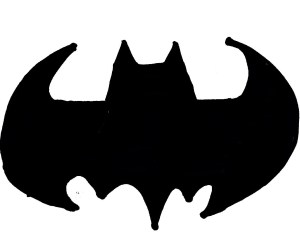
One scene into The Bat I felt an intense swell of confusion & disbelief as if I had just won the movie lottery. The film’s titular antagonist appeared in the black & white haze of degraded celluloid with the general look of the familiar, but in a completely foreign shape. It was like running into a dear friend’s close relative & mistaking them for your pal. Batman as we know him may not have made it to the cinema until his incarnation in 1940s serial shorts, but his misshapen ancestor The Bat appeared onscreen two decades earlier, predating even the first Batman comic. I’m not sure what I was expecting when I sat down to watch this silent era crime mystery, but it surely wasn’t the prototype of a movie franchise hero I grew up loving dearly.

There are some major differences between The Bat & The Batman that I should probably get out of the way early. The Batman flirts with criminality in his vigilantism, but The Bat is an outright criminal. In fact, his background as a jewel thief & a bank robber makes him much more akin to a masculine version of Catwoman in Batman’s clothing. Speaking of the clothing, the two characters’ costumes also deffer in a few significant ways. While The Batman is a smoothed out, leather-clad ideal of what a humanoid bat might look like, The Bat is much more realistic to his animal kingdom inspiration. He has goofy, gigantic ears like a horror show version of Mickey Mouse. He’s also much furrier, with a terrifyingly accurate mask the film smartly waits to reveal until the third act. He also carries around his weapons/tools in an old doctor’s bag instead of the utility belt rocked by the Caped Crusader.

Whatever. This is still a masked man in bat costume, complete with black cape & gloves, who runs around the rooftops of an Art Deco metropolis. He climbs the sides of buildings by rope like a far less campy Adam West. He casts a goddamn bat signal across an interior wall using a car’s headlamp. He spends mot of his runtime skulking around an old, city-side mansion that looks like gothic castle & contains secret rooms that house illegal acts. Why take my word for it, though? Comic book artist Bob Kane cites the film’s 1930s talkie remake The Bat Whispers (which shares a director with this version’s Roland West) as  a direct inspiration for the creation & design of Batman as a character. So, there you go. The Bat is in itself an adaptation of a Broadway stage play, so maybe Batman’s roots go back just a little further, but his existence in cinema undeniably starts here, an impressive forever ago.

As for The Bat‘s achievements outside its eventual massive influence on modern pop culture, the film works just fine as a tiny murder mystery & heist thriller. For the stretches where The Bat doesn’t appear onscreen, the film’s plot isn’t particularly flashy or experimental in any recognizable way. The only thing that stands out as a sore spot is the comic relief of a ditzy maid who continuously misguesses the identity of The Bat. “Maybe he’s The Bat!” “Maybe he’s The Bat!” “That Jap butler gives me the willies […] Maybe he’s The Bat!” I’m not sure I’m allowed to go any further into the details here, since ht film opens with the stern talking-to, “Can you keep a secret? Don’t reveal the identity of ‘The Bat’. Future audiences will fully enjoy this mystery play if left to find out for themselves.” Yes, I can keep a secret, especially since the film’s stage play mystery structure isn’t the most significant thing at work anyway.

The Bat is a must-see work of seminal art. It’s not some antiquated bore with an antagonist that was plucked from lowly ranks for a higher purpose. The film directly influenced the creation of Batman, but it also achieves its own, exquisite Art Deco horror aesthetic that recalls the immense wonders of the Hollywood classic The Black Cat, except with more of a creature feature lean. Its stunts are impressively dangerous-looking. Its actors are dwarfed by its beautifully immense sets. Shadows creeping up city walls & perfectly lit gunsmoke shooting down a stairwell make for some unforgettable imagery/cinematic history. It’s no wonder, really, that the film has been remade twice (the second was in 1959 with horror legend Vincent Price) or that its influence reached into comic books & beyond. It’s a gorgeous & violent work of early horror/crime cinema that caught me off-guard with its power & improtance as soon as the first scene.

-Brandon Ledet

Episode #7 of The Swampflix Podcast: Daredevil Cinema & Possession (1981)

inaworld

Welcome to Episode #7 of The Swampflix Podcast! For our seventh episode, James & Brandon discuss the Marvel character Daredevil’s humble beginnings on the silver screen in the early 2000s with illustrator Jon Marquez. Also, Brandon & James discuss the art house romance horror masterpiece Possession. Enjoy!

Production note: The musical “bumps” between segments were provided by the long-defunct band Trash Trash Trash.

-Brandon Ledet & James Cohn

Chuck Norris vs. Communism (2015)

EPSON MFP image

fourstar

Don’t be fooled by its meme-minded title. Chuck Norris vs. Communism is a powerful documentary that offers a fascinating history lesson of Romanian oppression in the mid 1980s. I’d place it up there with Corman’s World & the Golan-Globus doc as a means to get excited about the potency & cultural significance of trashy 70s & 80s action cinema as a form of high art. Hell, it might be one of the best documentaries about cinema as a powerful form of storytelling & a source of comradery in an even more general sense. The film’s title recalls the proto-meme of Chuck Norris jokes that flooded the internet in the early 2000s, but it actually has very little to do with the content of this work as a whole. There’s a great deal more going on here.

Under the totalitarian rule of Nicolae Ceaușescu in the 1980s, Romanian citizens lived a very hushed, secluded life. Foreign media was severely censored & everyone under Ceaușescu’s rule feared surveillance from the government’s secret police force. Almost all entertainment available to the Romanian consumer was some form of government-sanctioned propaganda. VHS cassettes changed all that. Almost overnight a black market for foreign (mostly Hollywood) films began smuggling VHS contraband into Romanian living rooms like hard drugs or military-grade weaponry. This influx of forbidden art not only gave Romanian citizens access to free speech & expression in a way they hadn’t before experienced under Ceaușescu’s ever-tightening grip; it also opened up a world of travel, wealth, and excess they had been shut off from their country’s restrictive borders (even if it was through passive consumerism). Imagine a county-wide version of The Wolfpack & you’ll have  pretty good idea of what’s being documented here, except there’s a much less participatory/celebratory spirit at its center.

Part of the reason I’m not in love with Chuck Norris vs. Communism‘s title is that it drastically downplays the film’s true hero: Irina Nistor. Nistor risked imprisonment (or worse) by translating American films into Romanian dubs at a bewildering six to ten films a day at her peak. Nistor became the voice of American cinema for Romanian audiences. She voiced every single character in nearly every film illegally distributed. Chuck Norris and similar action stars like Van Damme, Schwarzeneger, and Stallone may have captured the imaginations of Romanian people. Norris’s Golan-Globus production Missing in Action might’ve even been a particular nexus for their dreams of escape & retribution. However, this film is really Irina Nistor’s story. She’s not a name that would do the film any commercial favors, but she is undeniably its most important facet.

As a documentary, Chuck Norris vs. Communism has an interesting way of experimenting with form. It works mostly as an oral history of the underground VHS market as told by the Romanian people who lived it, backed up by a dramatic re-enactment of Irina Nistor’s personal story. This combo recalls the high production values & word-of-mouth narrative of works like The Nightmare & Thin Blue Line, but by far the most interesting aspect of this film is its content, not its form. There’s an inspiring story at work here about the growing political unrest fueled by illegal Movie Night screenings secretly held in Romanian living rooms. The movie works best when it lets this renegade secrecy grow on its own & may over-extend a little in the back end when it claims that smuggled VHS tapes were the spark that eventually flamed into an overthrow of Nicolae Ceaușescu’s regime. It’s in the smaller, more intimate moments when Chuck Norris vs. Communism excels, especially when it lets Irina Nistor’s fascinating story & the nostalgic potency of the VHS-grade cinema she translated speak or themselves.

-Brandon Ledet

This Must Be the Place (2012)

EPSON MFP image

twostar

Like a lot of thrifty New Orleans music nerds, I recently stumbled across an opportunity to see goth legends The Cure perform for cheap at my alma mater’s lake shore campus. It was a wonderful experience that unfortunately inspired me to embark on a disappointing one immediately after. I’ve been curious about the Sean Penn indie dramedy This Must Be the Place since it was first released four years ago and the option of it conveniently streaming on Netflix combined with my post-bargain bin Cure show glow to finally push me into pulling the trigger. The gun backfired. On paper, a movie starring an aging Sean Penn as a Robert Smith stand-in on a quest to murder his father’s concentration camp Nazi tormentor sounds fascinating, if not mind-blowingly incredible. Throw in some cameos from the always-welcome David Byrne & Harry Dean Stanton (with only the former portraying himself, unfortunately) and you have a must-see proposition. Like a lot of The Cure lyrics will explain to you, though, the reality is a much gloomier, more depressing experience than that romantic ideal. This Must Be the Place is one of those thorough letdowns that teases you with all the puzzle pieces required to make a great film, but leaves them messily scattered across the kitchen table, never bothering to carefully slap them together.

It’s possible the most important missing or ill-fitting piece in this particular production is Sean Penn’s lead performance. Although Penn is dressed in Robert Smith’s hairspray, make-up, and legacy, he plays the part with the quietly obnoxious energy he brought to the ill-advised mental handicap melodrama I am Sam. Every weird, lispy, half deaf sound Penn makes in this film is a singularly bizarre choice that just doesn’t pay off. The most enjoyable moment in his performance is the opening credits sequence of him wordlessly applying make-up in a mirror. It’s all downhill from there. The performance is even more baffling if you’re familiar with the real Robert Smith’s speaking voice. In interviews the aging goth rocker sounds like a perfectly normal British man, just as he always has. Penn instead sounds like David Sedaris made faint by a bout with pneumonia. He gives a delicately odd, grandmotherly performance that’s arrestingly bizarre, but never recommendable the same way, say a Nic Cage train wreck might’ve been. There’s no pleasure to be had in it, only confusion.

The real shame is that Penn’s distinct awfulness feels completely out of sync with what everyone else is doing on camera. As mentioned, Harry Dean Stanton & David Byrne are their usual wonderful selves in trumped up cameo roles that serve as desperately needed breaths of fresh air in a film that could use a little more charisma along the same lines. Byrne is especially welcome here, bringing some much-appreciated Lynchian energy into a scene where plays a bizarre musical instrument of his own invention an an entirely unearned, but pleasant moment when he sings the Talking Heads song the film borrows its title from. Frances McDormand is also wonderful as always, playing an entirely thankless role as Not Robert Smith’s divinely patient wife whom he doesn’t deserve. Only Penn stands out as a sore thumb annoyance here and a lot of the film’s faults lie squarely on his apparently incapable shoulders.

It’s really no wonder this film bombed so miserably at the box office, but I guess it’s not entirely Penn’s fault that it failed to find an audience. Much like its soft-spoken weirdo protagonist, This Must Be the Place is entirely unsure of itself. It floats between so many tones & genres that it’s difficult to pin down exactly why it feels so off other than it has no idea what it’s doing or what it wants to be from minute to minute. This is a first draft work in need of a severe revision, either swinging hard to the character-based indie dramedy or the Nazi-hunter revenge thriller directions it flirts with or, hell, swinging to both. It instead hovers like a Ouija board reader hesitating to decide on a path. There’s some really interesting imagery on display, finding surreal details in unlikely sources like an above ground swimming pool, a buffalo, and a naked old man roaming the desert. There’s also some interesting sources of internal conflict, like Penn’s retired musician’s guilty over two dedicated fans’ suicides or his quest to avenge the tormentor of a father who disowned him due to his gender androgyny.

These individual pieces, again, never amount to a cohesive whole. Even if they did, though, Penn’s choices in his lead performance might’ve been enough to sink the ship on their own. Everything feels half-cooked & out of place here, just as self-opposed as Penn’s Robert Smith image vs. his non-Robert Smith demeanor. I’d even argue that the parenthetical half of the title of its Talking Heads source material, “Naive Melody”, would’ve made for a better choice in moniker. Everything at play is just exactly off & ill-advised in that way, except maybe David Byrne. He can do no wrong.

-Brandon Ledet

The Darkness (2016)

EPSON MFP image

three star

campstamp

Early summer’s kind of a weird time of the year to release a goofy, low-rent horror. The Darkness might’ve been more at home among the year’s earlier horror cheapies like The Boy or The Forest or maybe held off until  whatever lackluster PG-13 terrors await us this Halloween season. Instead, it arrived now, begging to be drowned among blockbuster releases like Captain America: Civil War & X-Men: Apocalypse. Even I, connoisseur of bland horror cheapness, almost passed over the film based on its not so memorable ad campaign. It was the IMDb plot synopsis that drew me back in: “A family returns from a Grand Canyon vacation, haunted by an ancient supernatural entity they unknowingly awakened and engages them in a fight for their survival.” Now that sounds silly enough to work. Obviously, I would rather would rather see a Mt. Rushmore ghost story, but a Grand Canyon one is enough to raise my eyebrow & get my ass to a theater.

Kevin Baton is the paterfamilias of a dysfunctional family vacationing at The Grand Canyon. His autistic son angers ancient spirits by stealing mystic pebbles from a forbidden cave. Some dumb teen we thankfully never see helpfully explains, “There’s all kinds of creepy old shit in this place.” He’s not wrong. The caves & curves of The Grand Canyon have an ancient, old world magnetism to them that can really chill you in their enormity. That’s why, I’m assuming, The Darkness spends as little time there as possible & scuttles the family back to their standard issue suburban home as soon as it gets the chance. You wouldn’t want the majestic beauty & ancient spookiness of a natural phenomenon getting in the way of a familial melodrama after all, especially not in a cheap horror flick. No way. The Darkness is mostly of a portrait of a family unraveling where each member is dutifully assigned a personal struggle to overcome (adultery, alcoholism, autism, an eating disorder) and evil pebbles that open dimensional gateways to the Native American version of the Apocalypse are reduced to manifestations of bad karma due to a business dad’s selfishness in choosing work over family. Oh yeah, and Paul Reiser stops by, which I guess is scary in its own way too.

The Darkness is never truly scary, but it can occasionally be amusing in its ineptitude. I especially found it humorous when the film claims that autism puts children in a more spiritually receptive state, which is why its spooky-autistic tyke who steals the Apocalypse stones befriends a ghost he names Jenny & opens a portal to a ghost dimension on his bedroom wall (a plot detail that’s very reminiscent of last year’s Paranormal Activity: The Ghost Dimension). If turning a mental disorder into a source of cheap horror isn’t goofily offensive/insensitive enough for you, the film is just as willing as any 80s misfire you can think of to other Native American societies as some kind of spooky mystics and only portray them performing spooky-mystic rituals involving chants & feathers. There’s also more standard-issue cliches the film tosses out (I assume) for a laugh: crows as foreshadowing, husbands ignoring their wives’ claims of hauntings, spooky Google (em, “E-web”) search results, etc.

Had The Darkness stayed in the desert it might’ve borrowed some of the same location-specific horror that colored properties like Pitch Black, The Descent, and 127 Hours in a memorable way. Had it portrayed evil spirits a little more menacing than a dude wearing fake wolf hide to Burning Man it might’ve convincingly threatened an imminent Apocalypse. Had it not reduced autism or Native American rituals into cheap gimmicks & novelties I might not have laughed in its face. As is, it’s a fairly run-of-the-mill PG-13 horror with just enough goofy misfires to make the experience enjoyably corny & mildly offensive, as if the Lifetime Channel had started producing late night creature features (which is a racket Lifetime totally should break into).

-Brandon Ledet

Five Albums I Would Love to See in the Style of Girl Walk // All Day (2011)

EPSON MFP image

May’s Movie of the Month selection, Girl Walk // All Day, was such a unique experience. After initially viewing the film, I couldn’t help but think of albums that I would love to see done in the style of Girl Walk // All Day. These, of course, would need to be dance albums because anything else just wouldn’t be as energetic and fun.

Here’s a list of five albums that I would love to see come to life on the big screen:


1. Scissor Sisters – Scissor Sisters

How can you not “feel like dancing” when listening to this incredible debut album by the Scissor Sisters? The music is just as unique as their bizarre music videos, so a visual album would turn the world upside down. I’m picturing a few body painted dancers portraying a coming-of-age tale in a mystical forest.


2. The Chemical Brothers – Push the Button

As the iconic beginning to “Galvanize,” the first track on the duo’s fifth studio album, plays, the audience is introduced to post-apocalyptic New York City. Dancers would be decked out in shredded pants and leather studded jackets, you know, the regular post-apocalyptic couture. Oh, and dirty faces for everyone!


3. Fatboy Slim – You’ve Come A Long Way, Baby

Every song on this album would be perfect for interpretive dance, and I think that a short musical film for You’ve Come A Long Way, Baby would be much like Girl Walk // All Day. Energetic tunes in the background with a leading lady breaking all the rules is the image I get for this one.


4. Beastie Boys – Licensed to Ill

This album is just 100% fun, like just about all of the music from the Beastie Boys. The songs on this album are so humorous, and they definitely make for some great old-school hip-hop dancing.


5. LCD Soundsystem – Sound of Silver

Aliens dancing up a storm in outer space is the first thing that comes to mind when I think of Sound of Silver. This is one of those albums that you just can’t help but smile while listening to. The futuristic beats are perfect for dancing in the goofiest way possible, and I think it would be a lot of fun to see this album as a film.

For more on May’s Movie of the Month, the 2001 narrative dance video Girl Walk // All Day, check out our Swampchat discussion of the film, our look at five other classic visual albums, and this comparison of the movie with Miyazaki’s “lost” short On Your Mark.

-Britnee Lombas

Bloodsport (1988)

 EPSON MFP image

twostar

campstamp

Jean-Claude Van Damme stars in his breakout role as Frank Dux (pronounced “Dukes”). Dux is an army captain who was trained in martial arts by a childhood friend’s father. In order to bring honor to his teacher after his son dies, he travels to Hong Kong to fight in an illegal martial arts tournament called the “Kumite.” There are fighters from all over the world, and the tournament itself has a notorious reputation for being brutal and deadly.

Bloodsport is a movie dripping with borderline racism (sometimes extremely blatant) and toxic masculinity. The characters are not much more than stereotypes and poorly written caricatures. And there are numerous plot holes and things left totally unanswered. (How does his childhood friend die? What exactly is it that he does in the army?) But I think the biggest weakness this movie has is it’s totally nonsensical timeline. Event after event after event happens and then Dux says,”I’ll meet you for dinner tonight.”  When does he get trained for this tournament? In the two days before he leaves or sometime while he’s in the army? There’s no clear markers as to when anything happens.

Not to say there isn’t some genuine fun in this movie, such as the fight scenes. Considering that Bloodsport is a movie based around an illegal full contact martial arts tournament, it’s a really good thing that these scenes are entertaining. They’re full of unrealistic blood, definitely physically impossible fighting movies, and gratuitous slow motion, all set to an 80’s-tastic soundtrack.  It’s fighting movie cheese at its peak.

But as the two dimensional love interest Janice asks,”What is there to understand about a bunch of guys who have to prove themselves by beating each other’s brains out?” I don’t really think the movie ever truly answers this question, try as it might. The goals of honor and revenge aren’t fleshed out enough to mean anything, and you’re just left with bloody violence. Bloody violence that’s overblown and entertaining in it’s absolute ridiculousness, but still just pointless violence. And “That’s why they call this thing bloodsport, kid!”

-Alli Hobbs