FYC 2025: The Slow Death of Cinema

Is cinema dying? I don’t think so. Between local festivals, streaming premieres, awards screeners, and routine trips to my neighborhood theater, I watch about a hundred or so new releases every year, and there’s always plenty of daring, imaginative art out there worthy of being championed. Of course, there’s far more disposable garbage than there is buried treasure, but that doesn’t mean it’s not worth digging. The allure of watching nothing but already-canonized classics from decades in the past and dismissing the cinema of the moment is that the digging has already been done for you. It’s easy to flippantly say that cinema is dead or complain that they don’t make ’em like they used to while sticking to long-beloved titles from the past, ignoring the blander, shittier movies from earlier eras that have been forgotten to time. The ratio of good-to-bad art has remained fairly consistent. Sure, comparing the dishwater-dull screengrabs from Wicked: For Good against the Technicolor fantasia of the classic MGM Wizard of Oz is dispiriting, but there are hundreds of forgotten Westerns, melodramas, and gorilla-suited monster movies from 1930s Hollywood that are just as artistically bankrupt as Jon Chu’s recent CG babysitters. Meanwhile, there’s ecstatically great work being made & distributed right now, seen only by those curious enough to go looking for it outside the Wicked-overrun multiplexes. So, I found myself feeling a little conflicted while watching a recent double feature of art films about the slow, ongoing death of art films. Both Bi Gan’s Resurrection and Radu Jude’s Dracula grimly declare cinema to be dead, looking in the temporal rearview for signs of life & art in a supposedly decaying medium (starting with parodies of F.W. Murnau’s Nosferatu in both cases, weirdly enough). The argument is somewhat self-defeating, though, since both films present newly mutated cinematic forms & iterations by poking at the century-old artform’s still-bleeding corpse. They offer an arthouse equivalent of the rapidly alternating “It’s so over”/”We’re so back” cycles of social media commentary on cinema’s constant death & rebirth in a single self-conflicting message, prompting me to switch between nodding along and shaking my head until I felt dizzy.

If either of these sprawling cinematic eulogies express any hope for the future of the artform, it’s Bi Gan’s film. An abstract sci-fi fantasy parable, Resurrection personifies dream-logic Cinema so it can watch it evolve over a century of increasingly narrowed formal refinements & constraints. It’s set in a loosely defined future where humanity has discovered that the key to avoiding death is to stop dreaming, creating an underground class of dissidents called Deliriants who continue to dream despite the new norm. The Deliriant of this particular story is the shared, personified dream of Cinema: a Nosferatu-styled monster whose beating heart is a film projector. He starts his journey in a German Expressionist dollhouse, peering out of warped Dr. Caligari windows in an early-20th Century opium den before his corporeal form expires in the vibrant poppy fields outside of Oz. His spirit lives on in other Deliriant forms throughout the decades, though, re-emerging in an amnesiac noir realm, a Buddhist temple ghost story, a card-trick conman hustling saga, and a vampiric Y2K gangster picture (each life representing one of the five senses, for reasons I cannot confidently explain). Unfortunately, charting the gradual mutations of the artform in this way means what starts as total lucid-dreaming freedom in the Silent Cinema era gradually becomes grounded & rigid in its thinking, with Bi Gan’s declared aesthetic influences abruptly stopping in the late 1990s; even the noir segment feels closer to Alex Proyas’s Dark City than anything recognizable from the 1940s (give or take an homage to the hall-of-mirrors shootout in The Lady from Shanghai). The most overt acknowledgement Bi Gan makes to the cinema of the now is in the gangster-vampire segment’s extensive long-take “oner,” a digital-era stylistic flex he became synonymous with in his 2018 breakout A Long Day’s Journey into Night. According to Resurrection, cinema started as freeform poetry that was slowly pinned down and strangled to death by the restrictions of real-world logic. By the end, Bi Gan is begging the world to start dreaming in the old ways again, so the medium can find new life in a better future. That might be a little dismissive to the cinema of the now, but it’s at least willing to believe the corpse can be revived.

Radu Jude is not so hopeful. The Romanian prankster’s death-of-cinema comedy Dracula only arrives at the scene of cinema’s death to playfully piss on the corpse, like a Calvin & Hobbs bumper sticker. Jude reportedly pitched his take on Dracula as an off-hand joke while struggling to secure funding for projects he actually cared about, and the resulting 3-hour sketch comedy revue largely plays as a punishment for everyone who encouraged him to paint himself into that corner. His onscreen avatar is a huckster with tireless Roberto Benigni energy (Adonis Tanta) who has been hired to direct a modern interpretation of Dracula but has no ideas on what to shoot. Having just barely put in an effort to change out of his pajamas, he fires off several prompts to a generative A.I. program that helpfully “writes” different Dracula scenarios for him, which are individually acted out in commercial grade digi-cam vignettes. The actual scripts for those varying skits were obviously written by Jude, not A.I., as he takes wild potshots at previous Dracula adaptations from the likes of F.W. Murnau, Francis Ford Coppola and, most recently, Robert Eggers. The vignettes are frequently interrupted and derailed by generative A.I. animation in order to supplement their budget, however, assaulting the audience with digital slop we usually only see by accident when clicking down the wrong Facebook rabbit hole. Jude conveys some muted respect for Dracula cinema of the past here, but he mostly demonstrates a combative relationship with the subject. The film opens with repeated A.I. line readings of the phrase, “I am Vlad the Impaler Dracula, and you can all suck my cock,” which are later rebutted by modern-day Romanians shouting their own expletives in return, like “Lick my pussy, Dracula!” and “Suck Popeye the Sailor’s dick.” Beneath all of the crass humor, there’s some genuine political anger at the heart of the project, just as there was in the Andrew Tate-spoofing segments of Jude’s Do Not Expect Too Much from the End of the World. He takes the time to illustrate how Vlad the Impaler, Dracula exploited & terrorized the Romanian people, how Romanian people are still being exploited & terrorized by the political powers of today, and how their exploitation & terror has now been commodified by an entire century’s worth of post-Nosferatu Dracula cinema. He’s not only declaring cinema dead, stomped into the dirt by generative A.I.; he’s also saying good riddance to bad rubbish.

If either of these films are actively aware of & engaged with current cinema, it’s Dracula. Radu Jude’s hijacking of Bram Stoker’s cinematic legacy is not so much the movie of the year as it is the movie of the moment: an AI-generated shitpost dispatched from the still-settling rubble of pop culture proper. It just sees nothing inventive or exciting about the modern art of the moving image except maybe in the exterior shots of Roku City or in pop up ads for boner pills. In contrast, Resurrection‘s reverence for the cinema of the distant past is less dismissive of the current moment as hopelessly dead than it is instructive on how it can be rejuvenated. I was in total awe for the first couple segments of the interlocking anthology film as it integrated the visual trickery of cinema’s early days among the likes of Murnau, Méliès, and Lang with a more modern approach to the craft. That spell was broken as its stylistic markers drifted closer to the current moment, though, especially by the time I realized it was going to declare cinema’s time of death as occurring just before the 21st Century began. Again, I feel compelled to contend that there are still daring, worthwhile works being made to this day, and that the artform is still very much alive. Cases in point: Bi Gan’s Resurrection & Radu Jude’s Dracula, no matter what they’d tell you themselves.

-Brandon Ledet

Nosferatu (2024)

Wouldst thou like to live maliciously?

I attended my first live ballet performance this October, when the New Orleans Ballet Company staged its modern-dance interpretation of Dracula.  It was an easy entry point into the medium, not only because it fit in so well with all of the horror movies I was binge-watching at the time anyway, but also because the Dracula story in particular is something I’ve seen repeated onscreen dozens of times before.  From the more faithful early adaptations of Bram Stoker’s novel by Browning & Murnau to its weirdo outlier mutations in titles like Shadow of the Vampire & Dracula 3D, the Dracula story is well familiar to anyone who’s seen a horror movie or two.  It’s even been staged onscreen as a ballet before in Guy Madden’s Dracula: Pages from a Virgin’s Diary.  So, when the New Orleans Ballet Company had to cut some narrative & financial corners in depicting Jonathan Harker’s cross-sea travels to score a real estate deal with Count Dracula in Transylvania or in depicting the infamous vampire’s subsequent travels back to Harker’s home turf to seduce & destroy everything he holds dear, I never felt lost in the progression of the story – no matter how abstractly represented.  That trust in the audience’s familiarity with the source material plays no part in Dracula‘s most recent big-screen adaptation, since director Robert Eggers is more of a history-obsessed purist than a Guy Madden-style prankster of poetic license.  Eggers is as faithful to the original story structure of Stoker’s novel as the F.W. Murnau film from which he borrows his title, which itself was faithful enough to nearly get sued out of existence for copyright infringement by the Stoker estate.  Audiences can expect to see every progressive step of the Dracula story dramatized onscreen—including the all-important legal signing of real estate documents—with full reverence for the Murnau classic as a foundational cinematic text.  What they might not have seen before, however, is the intensity of the violence & beauty in the Dracula story cranked up to their furthest extremes, which accounts for Eggers’s other directorial specialty besides his kink for historical research.

Ever since he jumped ship from A24 to the major studios, Eggers has softened the more alienating, unconventional touches of his first couple films so that he can stage his exquisite, traditionalist images on a larger studio-budget scale.  As a result, his version of Nosferatu does not add much to the ongoing ritual of reinterpreting Dracula, except in its attention to the period details of its 19th Century Germany setting (and in accidentally making a contrast-and-compare argument that Coppola’s version is the best adaptation to date).  He dutifully, earnestly goes through the motions of a traditional Dracula movie plot with what his Van Helsing stand-in (Willem Dafoe) would describe as a sense of “grotesque tediousness.”  The film makes for a great Yuletide ghost-story moodsetter, offering a Christmas Carol alternative for bloodthirsty freaks, but you can clearly hear some thematic preoccupations with the source text screaming for him to break from that literary tradition to deliver something new.  If there’s any new angle in Eggers’s version of this familiar story, it’s his interest in the internal struggles of his Mina figure (Lily-Rose Depp) as she finds herself undeniably drawn to the mysterious Count Orlok (Bill Skarsgård, the copyright-infringing Dracula) despite her recent marriage to a doomed dupe of a real estate agent (Nicolas Hoult).  There’s a dark, soul-deep lust in her attraction to Orlok that affords the film a genuine sense of Evil at its core, with Depp pleading to anyone who’ll listen to answer the one question that haunts her, “Does evil come from within us or from beyond?”  Since she starts the film as a young girl possessed, years before she meets Orlok or his dopey real estate agent in the flesh, the answer is clear from the outset, but her personal journey to accepting that answer gives the movie a fresh, personalized take on the material.  So, it’s a little disappointing to spend so much time retracing the standard Dracula movie plot beats outside that central struggle.  Following Hoult on his journey to sign the legal documents that seal his life-ruining real estate deal is a little like watching Bruce Wayne’s mother’s pearls hit the pavement in yet another Batman origin story.  We’ve seen it before; you can stray your focus elsewhere without losing us.

No matter where Eggers’s Nosferatu may be a little straightlaced as a literary adaptation, it’s still a gorgeous, heinous nightmare in pure visual terms, which obviously goes a long way.  Anyone who was frustrated with the director’s looser, atmospheric approach to horror in The Lighthouse & The Witch will find much more traditional genre pleasures here, delivered through a series of jump scares and horny gasps.  If Eggers had fully drilled down into Depp’s acceptance of the darkness within herself and never left her sweaty bedside, the movie would lose Orlok’s absurd introduction of his What We Do in the Shadows voice & domesticity and Dafoe’s maniacal prancing among the vampire’s army of plague-carrying rats, which together account for most of its deviant levity.  When Eggers fully settles into the supernatural cuckoldry of the central trio in the third act, things get thematically exciting in a way that makes you wonder why he bothered depicting anything else, but Skarsgård’s Orlok is a spooky enough image in itself to keep the tension up until that payoff arrives.  Eggers’s longtime cinematographer Jarin Blashke puts in typically astounding work as a visual stylist, finding a terrible beauty in natural on-set lighting and the immense darkness it barely keeps at bay.  It’s a ghoulish ghost story told over candlelight on a blistering winter night, which keeps it from feeling like the most daring onscreen interpretation of Dracula to date but still manages to scare & chill despite its narrative familiarity.  I would’ve loved to have seen what the gonzo Robert Eggers who made The Lighthouse would’ve done with the erotic Mina-Dracula tensions of this film at feature length, but the more restrained, traditionalist Robert Eggers who made The Northman is almost just as good.  If it sounds like I’m complaining more than praising here, it’s only because I’m holding the director to the impossibly high standard that he set for himself early on.  It’s a very good, traditionally satisfying horror picture by any other metric.

-Brandon Ledet

Lagniappe Podcast: Bram Stoker’s Dracula (1992) vs. Mary Shelley’s Frankenstein (1994)

For this lagniappe episode of The Swampflix Podcast, Boomer, Brandon, and Alli discuss two literary horror adaptations produced by American Zoetrope in the 1990s: Francis Ford Coppola’s Bram Stoker’s Dracula (1992) and Kenneth Branagh’s Mary Shelley’s Frankenstein (1994).

00:00 Welcome

01:35 Eyes Without a Face (1960)
04:30 Prom Night (1980)
07:45 Multiple Maniacs (1970)
09:55 Exorcist III (1990)
11:55 The Infernal Cauldron (1903)
13:53 Sorry, Charlie (2023)
15:40 Mission: Impossible, Dead Reckoning Part 1 (2023)
25:40 Lake Mungo (2008)
28:00 Life After Beth (2014)
33:20 The Brood (1979)
40:40 Dracula’s Daughter (1936)
45:22 Opera (1987)
50:11 The Creeping Flesh (1973)
55:02 Friday the 13th Part VIII: Jason Takes Manhattan (1989)
59:48 A Nightmare on Elm Street 3: Dream Warriors (1987)
1:04:28 Dicks: The Musical (2023)
1:07:48 The Cassandra Cat (1963)

1:13:00 Bram Stoker’s Dracula (1992) vs. Mary Shelley’s Frankenstein (1994)

You can stay up to date with our podcast through SoundCloudSpotifyiTunesTuneIn, or by following the links on this page.

-The Lagniappe Podcast Crew

Dracula’s Children

Like all corners of the creative arts, Universal Picture’s classic horror period was overrun with nepo babies.  Carl Laemmle, Jr. kicked off the studio’s Famous Monsters brand by producing 1931’s Dracula after Carl Laemmle, Sr. passed down his studio-head executive position to his son instead of a more qualified protégée.  Lon Chaney, Jr. changed his name from Creighton Chaney to cash in on the name recognition of his early-horror legend father, making him a more credible, marketable Wolf Man.  Then, of course, there’s the case of Dracula’s children, who waltzed into power in Universal’s most prestigious sequels after their father’s untimely second death at the end of the first film in their franchise.  While The Wolf Man fathered no cubs to take over his sequels, and Frankenstein’s Monster only made it thirty seconds into his own marriage before burning down the lab, Dracula’s progeny did a good job making the most of their family name.  The Dracula kids don’t appear to have met or crossed paths, but their polygamous father did have multiple wives in the first film, so I suppose that doesn’t undermine the series’ narrative continuity.

Much like the goofier Frankenstein sequels from this early Universal period, 1936’s Dracula’s Daughter is an absurdly direct follow-up to the Tod Browning original.  The film opens with Van Helsing being arrested for Dracula’s murder at the scene of the crime, and then spending the rest of the film convincing his jailers that actual, real-life vampires are afoot.  Dracula’s immediate replacement is his angsty goth-girl daughter, who is reluctant to continue the family business of draining innocent civilians of their blood despite it being the only thing she’s trained to do.  She’s rebelled by moving to the big city, where she stalks the streets as a bisexual vamp, picking up hungry artists’ models and lustful playboys to drain back at her spacious parlor.  Foretelling a lot of the later Famous Monster sequels, she feels incredibly guilty about this blood-addiction vice and spends most of the film seeking a medical cure for the family legacy that has shunned her from polite society & daylight – ultimately to no avail.  Inevitably, like all nepo babies, she ends up not being able to strike it out on her own after all and moves back to the family castle in Transylvania for some super traditional Dracula kills, meeting the same tragic end as her father.

Like the direct sequel to James Whale’s original Frankenstein movie, Dracula’s Daughter has earned more critical respect in recent decades than the film that precedes it.  Its reputation has largely risen due to the sexual transgressions of its lesbian seduction scene, in which the titular vampire convinces a young woman to expose her bare neck for the sucking by telling her she’s going to pose for a nude portrait.  Likewise, Bride of Frankenstein‘s gender politics have drawn a lot of attention with modern viewers for the concluding scene in which the titular monster takes one look at her assigned undead groom and decides she’d rather be dead (again) than mate with her “man.”  Of the two films, Bride of Frankenstein is the better direct sequel overall, since Whale was given unprecedented creative freedom to play up the stranger, campier elements of his original text in an anything-goes horror comedy free-for-all that doesn’t even bother to deliver on its central premise until the final three minutes of runtime.  By contrast, Dracula’s Daughter has the generosity of affording its titular villain plenty screentime & pathos, which is invaluable in the Boys Club of Universal’s Famous Monsters.  Like the Monster’s bride, she effortlessly, tragically cool, so it’s nice that we actually get to spend time with her beyond a few quick frames of celluloid.

While Dracula’s Daughter exemplifies the Famous Monsters sequels’ penchant for direct, narrative continuations set seconds after their preceding films’ endings, 1943’s Son of Dracula exemplifies their penchant for wildly recasting the central villains from film to film.  The most hilarious example I’ve seen is Bela Lugosi’s miscasting as the Monster in Frankenstein Meets The Wolf Man, a performance so laughably unconvincing that studio executives decided to remove his heavily accented dialogue from the final cut, fearing audience mockery.  Lon “Wolf Man” Chaney, Jr. made more visual sense as the Monster in the previous picture, Son of Frankenstein, but could not be tasked with sitting in the makeup chair for two separate monster performances in the same picture (not to mention the narrative contrivance of Lugosi/Igor’s brain being transplanted to the Monster’s body at the end of Son of Frankenstein).  Appropriately enough, that film was made the same year Chaney got his own laughably bad Famous Monster miscasting as the mysterious “Count Aculard” in 1943’s Son of Dracula.  The reason Chaney works so well in his tyepcast roles as The Wolf Man, Frankenstein’s Monster, and Lennie from Of Mice and Men is that he looks like a sweet, lumbering oaf who doesn’t know his own strength.  That image doesn’t translate especially well to playing a debonaire European vampire who seduces women to their doom.

Despite Count Aculard’s ridiculous appearance and name (which registers among the all-time goofiest horror pseudonyms, like Dr. Acula in Night of the Ghouls, Jack Rippner in Red Eye, and Louis Cyphre in Angel Heart), Son of Dracula is a surprisingly solid supernatural melodrama.  Unlike his rebellious daughter, Dracula’s son has enthusiastically taken to the family business of seducing young women to death, moving to a Southern plantation to hypnotize & marry its recent heiress.  Dracula’s daughter-in-law is a bit of a gloomy goth herself, and she attempts to manipulate the power of the Dracula dynasty for her own wicked profits, but the inevitable tragedy of the undead couple’s Southern Gothic surroundings makes a happy ending impossible.  For his part, Count Aculard adjusts to the Southern atmosphere incredibly well, literally becoming a part of it by materializing as swamp gas in his nightly rises from the coffin.  The movie carries over a lot of classic spooky set dressing of the original Dracula film despite this new locale, including a return to the flapping rubber bats that were missing from Dracula’s Daughter.  Still, it’s visually accomplished in continually surprising ways, including an early version of the double-dolly shots from Spike Lee’s playbook as Count Aculard glides over the marshes to drain his victims.

Pumping out cheap-o sequels to Universal’s most successful horror films was obviously more about doing great business than it was about making great art.  Through the tougher stretches of The Great Depression & WWII, the Famous Monsters that made Universal a major player in the first place were a near bottomless well for immediate cashflow.  Frankenstein & The Wolf Man got stuck with the goofiest, trashiest end of that rushed-to-market schlock production, and by the time their many crossover sequels brought an off-brand version of Dracula into the fold (in John Carradine), the character was so far removed from Bela Lugosi’s performance in the original that it could do no real damage to the Dracula brand.  Meanwhile, Dracula’s more direct sequels about his undead children are both very stately, handsome productions that hold up on their own among the best of Universal’s early horror run.  Dracula’s Daughter is certainly the cooler of the pair and has rightfully been reappraised as a great work by modern critics.  Son of Dracula would likely earn its own reappraisal too, if it weren’t for the goofy miscasting of Lon Chaney, Jr. as the titular vampire.  Unsurprisingly, nepotism is a double-edged sword, one that can open opportunities you’re not always the best fit for.

-Brandon Ledet

The Death Kiss (1932)

Like many horror nerds out there, I’m a huge fan of Bela Lugosi. That’s an exhausting thing to be sometimes, as so much of Lugosi’s career was relegated to hitting the same notes over & over again. Whether working for a major studio or slumming it on poverty row, Lugosi’s icon status as the definitive Dracula typecast him only as villainous monsters for the majority of his career. No matter how much you love his screen presence, it can be tiring to see Lugosi appear over & over again as vampires, mad scientists, and mad-scientist vampires in the only roles he could land post-Dracula. The problem only got worse as time went on and traditional Famous Monsters work dried up like a temporary fad. Lugosi suffered long periods of working only in dirt-cheap indie productions far below his punching weight and, worse yet, periods of not working at all. That’s what makes 1933’s The Death Kiss such a welcome deviation from the usual public-domain Lugosi cheapies I’ll pick up on a whim whenever I run across them. Reuniting the three main leads of Universal’s Dracula a year after that film’s massive success, The Death Kiss invites the expectation of being yet another Lugosi vampire pic (which can be fun for its own sake), but instead delivers something entirely different. Lugosi somehow doesn’t play a vampire or a mad scientist or a mutant ape man or an eccentric millionaire sadist or anything. No, he plays something much scarier: a movie studio executive.

Instead of relying on Lugosi’s notoriously ghoulish presence for its thrills, The Death Kiss instead reaches for a more novel conceit. Set during the production of a fictional film also titled The Death Kiss, it’s a playfully meta murder mystery that veers away from Lugosi’s usual realm of horror to pursue something resembling a police procedural. As a result, Lugosi himself isn’t often onscreen, as he’s cast as a potential suspect in the case – a studio executive – instead of one of the investigators. The murder in question takes place during a film shoot where an actor is struck down by a gun that was supposed to fire blanks for effect but fired a real bullet instead. The actor died seemingly well-beloved, but homicide detectives soon find plenty of costars & studio employees who quietly hated his guts behind the scenes (including saboteurs who continually undermine & muddle their evidence as they investigate). From there, The Death Kiss delivers exactly what you’d expect from a murder mystery thriller of its era: stark noir lighting, superfluous romance, wisecracking one-liners delivered at a machine gun pace, etc. The novelty of the studio lot setting is its most exciting attribute, especially in scenes where clues are derived from stage makeup or police gather in a screening room to look for evidence in the dailies or the killer is framed in the reflective surface of a stage light. There’s also novelty to seeing Lugosi fade into the background a little bit as just another human subject, as opposed to a bloodthirsty ghoul who’s obviously guilty of murder from frame one.

Despite the overlaps in casting, I’m not sure that superfans of Lugosi or Dracula would be the immediate audience I would think to recommend The Death Kiss to. The film is much more satisfying as a meta movie-industry murder mystery than a rearrangement of that horror classic’s essential pieces. There’s lot of the care & craft that went into its staging that you don’t always get with these early minor-studio Lugosi thrillers, as evidenced by the cleverness of its premise and the few major scenes of action featuring hand-tinted film cells from master colorist Gustav Brock. Seeing Lugosi act out of archetype in a well-crafted non-horror is only lagniappe to the film’s other accomplishments, and something you can only truly appreciate if you’ve already suffered through titles like The Ape Man, Zombies on Broadway, and Bela Lugosi Meets a Brooklyn Gorilla.

-Brandon Ledet

Episode #41 of The Swampflix Podcast: NosferaToo & A Dark Song (2017)

Welcome to Episode #41 of The Swampflix Podcast. For our forty-first episode, we explore the enduring impact of the silent horror vampire classic Nosferatu (1922). James & Brandon discuss the original Nosferatu, its Herzog-directed remake, and two Hollywood productions that directly pull influence from its legacy.  Also, James makes Brandon watch the occultist indie horror A Darky Song (2017) for the first time. Enjoy!

-James Cohn & Brandon Ledet

Billy the Kid Versus Dracula (1966)

I don’t know why I’m suddenly fascinated by the schlocky career of William Beaudine. The only two films I’ve previously seen from the professionaly subpar director, The Ape Man & Bela Lugosi Meets a Brooklyn Gorilla, both tested my usual unending patience for poverty row garbage starring Bela Lugosi, who I love dearly. Yet, there’s an undeniable draw to Beaudine’s schlocky frivolity, no matter how often the promise of his films’ premises fail to pay off. Take, for instance, his final two productions before retirement/death. Filming both titles in just eight days on the same Californian ranch, Beaudine capped off his career with the “Weird West” double bill of Billy the Kid Versus Dracula and Jesse James Meets Frankenstein’s Daughter. There’s no way either film could live up to the full schlock potential of their titles, thanks to Beaudine’s passionless workman sense of craft. Just the mere fact that films exist on the market with such preposterous titles is enough to draw me in as an audience, though, no matter how many times I’ve been burned before. In that way William Beaudine may just have been a movie/money-making genius.

Perhaps the most surprising thing about Billy the Kid Versus Dracula is that it was filmed in 1960s color instead of 1950s black & white. Otherwise, it’s the exact unimpressive mashup of supernatural action & lackluster romance you might expect from the title. Billy the Kid is a real life historical figure, placing the prestige & plausibility of this work somewhere around the heights of Abraham Lincoln: Vampire Hunter. In the film, he’s posited as a retired gunfighter, an outlaw made good. His determination to live a quiet life is jeapordized when his young fiancee is hypnotized and quarantined by a vampire (never once referred to as Dracula in the script) who arrives in their small Old West town posing as her uncle. Everyone else seems to ignore the improbability that this oddly incestuous European man would be this teenage woman’s uncle and accepts him as her new guardian after he drains her parents of their blood. Only Billy the Kid senses that something is afoul and must murder the vampire invader in a way that both doesn’t arouse suspicion from the law and trades in his pistol-shooting tactics for a traditional heart-staking. It’s all very silly.

Unfortunately, the silliness at the core of Billy the Kid Versus Dracula has all the urgency of a Halloween-themed episode of Bonanza or Gunsmoke. When the vampire hypnotizes women he glows red and closely resembles an illustration of Satan. His bat form is also adorably shoddy, like a Party City decoration, and is used as silhouetted screen wipes during the opening credits. The rest of the movie is on the most boring end of cheap Western media, however, and it’s not at all surprising that this “Weird West” double bill was financed by television producers. I’m much more in tune with the campy pleasures of cheap horror than whatever people see in cheap Westerns, so maybe the Cowboys & Indians gunplay of Billy the Kid Versus Dracula would play better for audiences who never tire of grizzled men with six shooters who uniformly refer to Native Americans as “savages.” I guess since my interest in watching the film was only piqued during its few stray vampire attacks, I might have been better off watching a different Dracula film altogether, but I will admit the absurdity of the setting has an endearing novelty to it that a 70min feature can easily sustain while remaining moderately charming.

As tickled as I am by the Billy the Kid Versus Dracula‘s titular premise, the movie has no excuse to be as dull or as uninventive as it is, especially considering its mid-60s release date. I like to imagine an alternate universe where William Beaudine were more passionate about his absurdist schlock. A version of this film made in the 1950s by a fired up Ed Wood could easily have been an all-time​ cult classic, maybe even with Bela Lugosi in the villainous lead. Beaudine manages to reduce something so wonderfully outlandish to a by the numbers, television-esque work of supernatural tedium. I was only moderately entertained by it for a few isolated stretches, but I still can’t resist the urge to watch its sister film, Jesse James Meets Frankenstein‘s Daughter anyway. Who could pass up a title like that, no matter who’s behind the camera? I am my own worst enemy.

-Brandon Ledet

Dracula: Pages from a Virgin’s Diary (2003)

EPSON MFP image

fourstar

Director Guy Maddin is a weird little cookie. Admittedly I’ve only seen a small sampling of his work, but I’ve yet to fall in love with another one of his features quite as hard as I did with his beer-themed black comedy The Saddest Music in the World. His films are always interesting, though, if a little exhausting. Last year’s The Forbidden Room was a beautiful set of interconnected, humorous vignettes that worked really well for me as isolated short films, kind of like high art sketch comedy, but were especially tiring as a full-length collection. Looking a little further into Maddin’s catalog, though, the director has plenty of full-length experiments dedicated to a single idea; his ballet horror Dracula: Pages from a Virgin’s Diary, for instance, is a much more focused & disciplined effort that matches his trademark visual aesthetic to its most logical genre structure. By fully committing to a single narrative & matching Maddin’s deliberately aged visuals to a silent horror era aesthetic, Dracula: Pages from a Virgin’s Diary proves to be a much more digestible exhibition of the director’s peculiar talents than any of his vignette-structured works. This is a film with extremely limited commercial appeal and it’s one that might take the full context of his career to fully appreciate what he’s doing with the material, but it’s just as beautiful and amusing and flippantly high brow as anything he’s ever accomplished. I love seeing him indulge a single idea at a feature’s length and Pages from a Virgin’s Diary exemplifies exactly why that kind of extended focus is ideal for his directorial style, even when the main conceit is so narrowly minded.

Pages from a Virgin’s Diary is not a ballet-themed horror so much as a horror-themed ballet. The film finds Maddin shooting a straightforward ballet production of the Dracula story in a cinematic context. Instead of hanging back to display the dancers’ full bodies & artistry, he cuts the frame in very tightly and adds silent film era intertitles to advance the plot instead of conveying story entirely through dance. The playing-to-the-back-row stage play expressiveness of the ballet works really well in tandem with Maddin’s style, though, which requires a broad physical performance to recall the vaudevillian days of early cinema. Often, Pages from a Virgin’s Diary plays like a high art horror comedy. It makes a weird joke out of the details of Dracula lore: drowning the frame in cartoonishly large piles of garlic, mirroring Love & Friendship‘s character introduction gags with details like “Eater of Bugs,” playing the bumbling hubris of men for humor (like when Van Helsing performs the most inefficient & smugly disgusted gynecological exam of all time on Dracula’s prime victim). Maddin’s sly humor is contrasted with the dead babies, decapitations, and sexual violence of the source material to make for a truly horrifying, but strikingly flippant viewing experience, one that’s sex jokes & vampire kills are made oddly delicate by its very nature as a ballet. Dracula: Pages from a Virgin’s Diary might be the kind of high faulting art film pretension that rolls eyes & changes channels at first glance, but it’s also playfully subversive in its prankster humor & genuine horror thrills, making for a very worthy entry in the director’s catalog, despite its deceptively slight premise.

Of course, as with all Guy Maddin projects, the flashiest aspect of Pages from a Virgin’s Diary is the director’s dedication to visual craft. Deliberately degraded film, tinted color changes, a screen segmented into tight parallel lines: Maddin seems to be working in a digital medium here, but his trademark throwback to ancient cinema past matches the material exceedingly well, making me desperately curious about what a high budget version of this movie would look like. The ballet aspect of the film is the only dynamic that distinguishes it from a genuine silent horror, but that aspect does feed into Maddin’s aesthetic as a traditionalist. I also had great appreciation for the way he played with the film’s pacing, speeding up comedic bits to a movie trailer tempo for greater humorous effect and slowing down certain ballet flourishes for moments of lyrical contrast. You won’t find many horror comedies this visually interesting or poetically minded, with giant pipe organs spewing green gas & perverted sex demons filling the frame between subtle gags about modesty & desire. Even if it isn’t his best film, you also won’t find a much more concise argument for Maddin’s distinct talents as a director, as he transforms traditional mediums like ballet, silent film, and Bram Stoker’s Dracula into something entirely new & oddly fresh. I’d love to dig up more of his features that are dedicated to exploring a single concept for the entirety of their runtimes. He seems like a director who has too many ideas at once and too little time or funding to follow them all at length, so I should probably be exceedingly grateful for the times such as this, when he finds inspiration to break out of his usual short film format and follow one spectacularly weird idea (say, a traditional ballet shot as a high art horror comedy) to a feature length. It’s his best self.

-Brandon Ledet

Dracula 3D (2012)

EPSON MFP image

twostar

campstamp

I have to admit, I was a little worried that by the time I finished watching and writing about all of Dario Argento’s movies, I would cause his death through some terrible accidental sympathetic magic problem. Luckily it looks like that is not going to be the case. Or, maybe fate’s planning to keep him going until I’ve finished my determination of which Argento is the most Argento is the most Argento. We’ll see.

Dario Argento’s Dracula 3D is not the director’s worst film. It isn’t his worst adaptation, or his worst period piece (Phantom of the Opera holds the record in all three of those categories). It’s no surprise that people dislike this movie; what is a surprise is that, while Opera holds an abysmal 13% on Rotten Tomatoes, Dracula holds a barely­-better 14% approval rating, which is strange considering that it is merely a bad movie, not one that is an affront to good taste and the basic tenets of human decency. There are even some fresh and original ideas here that work in the film’s favor, unlike Phantom, where the new ideas were detrimental to the overall film in virtually every instance (steampunk rat killing cart, anyone?). I’m not arguing that this is enough to save the movie—it definitely isn’t—but it does make the viewing a much less painful experience. There were times when I found myself enjoying the film and its eccentricities in spite of its multitude of flaws.

You know this story, for the most part. The film opens to find a young woman named Tanja (Miriam Giovanelli) sneaking out on Walpurgis Night to tryst in some hay. After she and her lover part ways, she is pursued by a dark force and flees through the woods, coming upon the home of Zoran (Giuseppe Lo Console, who portrayed the nameless butcher in Giallo and Federica’s nameless boss in Do You Like Hitchcock?, so good for him getting a name this time around). For a moment, it seems Zoran will help her, but he instead just watches when she is attacked by Dracula (Thomas Kretschmann, who previously appeared in La sindrome de Stendhal as rapist/killer Alfredo Grossi). Later, Tanja rises from the dead as a new vampire so that she can fill the role of “vampire bride” in this narrative. The story proper gets going when Jonathan Harker (Unax Ugalde, which I’m pretty sure is the also the name of an artifact that Captain Picard is set to unearth on his next furlough) arrives in Transylvania aboard a CGI train and makes his way into the town. He spends the night at a local inn so that he can head to the count’s castle the next morning, but he spends enough time there to take note of all the garlic heaped around and be accosted by an imprisoned Renfield (Giovanni Franzoni). He also visits Lucy (Asia Argento), who is a dear friend of his wife, Mina. She warns him about the count in a very vague way, and she and her father fear for his safety when he finally departs. At the count’s home, he witnesses some strangeness and Tanja attempts to seduce him, but Dracula screams that Harker is his; he feasts on the younger man, who also becomes a vampire and then is dispatched in short order. Mina (Marta Gastini) arrives and begins to investigate, and she is aided by the sudden appearance of famed vampire hunter Abraham van Helsing (Rutger Hauer). Dracula recognizes Mina as the rebirth of his long dead love and tries to put her under his thrall. Can she resist his charms long enough for van Helsing to end Dracula’s reign of terror? (Yes.)

I love Rutger Hauer. His face alone is iconic; his line readings are the stuff of legend. He’s one of my favorite actors of all time, and even though I don’t understand his interest in appearing in mixed-­quality vampire media, I will never turn down the opportunity to watch; they’re two great tastes that taste great together! Whether he’s camping it up as Lothos in the 1992 film version of Buffy the Vampire Slayer, portraying Dracula himself in Dracula III: The Legacy, bringing un-life to Kurt Barlow in the remade Salem’s Lot, or slumming it as Sookie’s fairy godfather on True Blood, I am there. I’m tempted to give this film an extra star just because he’s in it, but I’ll refrain, if only because I’m saving all my stars for Ladyhawke (come at me talking shit about Ladyhawke, and we will throw down). Unfortunately, even Hauer can’t make this film work, although his presence lends the film more credibility than it really deserves, but all his gravitas can’t make large swathes of his dialogue sound like something a real person would say.

As for the new and interesting things that Argento brings to the table, there are a few. In this retelling, the villagers are all complicit in Dracula’s killings, having made a pact with him in exchange for various favors (this Dracula paid for several townspeople to go to college, which is both awesome and ridiculous). The scene in which the Count repays their attempt to back out of the deal by slaughtering all of them is probably the best in the film: first, Phenomena­-esque swarms of flies appear in the inn dining hall as different people voice their objections; the swarm then coalesces into Dracula as the last few flies are absorbed into his person. It’s a really cool effect in a sea of bad CGI and incomprehensible lighting choices that lend the film an overall Asylum Studios feeling (the composited train is the most offensive; could Argento really not get a real train car?). I also enjoy the character of Zoran, whose blind devotion to Dracula in the face of his fellows’ wishy-washiness makes him a strangely compelling figure, whether he’s doing something as small as not giving Jonathan a letter that Mina has sent or something as eventful as taking it upon himself to murder Tanja’s mother to prevent her from reporting the appearance of Dracula to the authorities in the city. There’s also some nice use of legacy dialogue from previous Dracula adaptations, most notably the “children of the night/what music they make” line.

But, as I said before, this is not a good movie. The subplot involving Tanja is completely pointless and serves only as an excuse to bare some breasts (Asia also has yet another scene in this film in which she showers/bathes, which only gets more weird and uncomfortable every time). Renfield is likewise wasted, as he is devoted to Tanja, not the Count himself, in this retelling. The dubbing is some of the worst I’ve ever seen and heard; inexplicably, Lucy’s surname in the film is changed from Westenra to Kisslinger, and the dubbing wreaks havoc here as some pronounce her name as Kissinger (no “l”) a la Henry, while other characters enunciate the name as kiss-­linger. Aside from the swarm of flies, all of Dracula’s alternate forms are rendered very poorly; history will never forget the scene in which he transforms into a giant praying mantis in order to kill Lucy’s father, but the Drac-­wolf that tears out Jonathan Harker’s throat is actually much, much worse. Perhaps the worst thing of all, however, is that this is the only film from the entire Argento canon that is available on Netflix. I had to actually leave my apartment to track down every other film in this retrospective, but Dracula 3D came to me. It’s a shame that this weak entry in the director’s oeuvre is the one that is most accessible. This is a movie that, frankly, doesn’t really need to exist, but it does, and we all have to live with it. I recommend the film for Argento fans and hardcore Hauer devotees; the rest of you should just skip it.

-Mark “Boomer” Redmond

Lugosi Vs. Karloff: A Critical Guide to Old Hollywood’s Spookiest Rivalry

EPSON MFP image

Bela Lugosi & Boris Karloff were incredibly gifted actors from the Old Hollywood studio system era. They possessed a natural, unteachable screen presence that would literally haunt audiences well after they left the cinema, inspiring many a nightmare over the past century through mere body language & subtle vocal manipulation. Unfortunately, the pair’s natural knack for horror did them wonders in the Universal Pictures “famous monsters” series, but in the longterm left them pigeonholed in a genre that relies mostly on fads. It’s rare that an actor gets the opportunity to embody a role as iconic as Lugosi’s Count Dracula or Karloff’s turn as the Frankenstein monster, but perfectly nailing that type of character can unfortunately lead to decades of typecasting if you don’t play your cards right (or if you are contractually obligated to play whatever role your studio hands you). Lugosi & Karloff’s time as famous monsters left a huge mark on cinema & the public consciousness echoed years down the line in films as disparate as Tim Burton’s arguably perfect Ed Wood & weirdo, abstract art films like The Spirit of the Beehive. They also left the actors very little to stand on in terms of career growth.

Cursed to toil away in horror pictures of varying quality for the remainder of their careers after the decline of the famous monsters series, Lugosi & Karloff’s success & choice of projects largely depended on the ebb & flow of the horror genre’s profitability. When times were dire, the two often would have to fight over the scraps tossed their way, which lead to a not-so-secret professional rivalry between the actors. It surprised me, then, to recently discover that Lugosi & Karloff were frequently paired in unlikely collaborations, sharing screentime in no less than eight feature films. This rivalrous union lasted for a little over a decade, on & off again, as their personal tension grew increasingly malignant. The best thing about the Lugosi-Karloff collaborations is how the pair’s offscreen rivalry was echoed in the majority of their characters’ onscreen clashes in personality, adding a meta level of fascination to a handful of (sometimes impressive, mostly minor) horror pictures.

Here’s a complete list of the eight Lugosi-Karloff collaborations, each ranked & reviewed and arranged in chronological order. For a more complete/academic history of the spooky duo’s onscreen collaborations & offscreen clashes, you might want to track down the massive book Bela Lugosi & Boris Karloff: The Expanded History of a Haunting Collaboration by Gregory William Mank, which details the overlap in their careers in an extensive 700 page study. The piece you’re reading now is instead intended more as a quick & dirty critical guide to what Old Hollyood’s most haunting rivalry & most unlikely collaboration has to offer to audiences (both modern & otherwise) in terms of entertainment.

The Black Cat (1934)

fourhalfstar

“Suggested by the immortal Edgar Allan Poe classic” (to borrow the title card’s language) that inspired later adaptations by none other than Roger Corman in the Tales of Terror anthology film & Dario Argento in his segment of Two Evil Eyes, 1934’s The Black Cat is about as loose as a literary adaptation can get. The only element the film shares in common with Poe’s short story is the appearance of a black cat that is murdered in a fearful rage, then reappears unharmed. If you’re looking for a (slightly) more faithful cinematic adaptation of the story, I’d suggest looking to Corman’s Tales of Terror (which also features versions of Poe’s “Morella” & “The Facts in the Case of M. Valdemar”). 1934’s Unversial Pictures production of The Black Cat is fascinating not because it’s a loose, full-length adaptation of a Poe short story, but because it features the first collaboration between Lugosi & Karloff. It’s an alarmingly violent film that allows the two actors to stray from their usual typecast roles as Count Dracula & the Frankenstein monster, playing more recognizably human characters, however just as horrific.. Even though The Black Cat stands as the first collaboration of eight, it would eventually prove itself superior to all of the films to follow. No other Lugosi-Karloff collaboration could possibly match the delicious old school horror aesthetic achieved in The Black Cat. It’s an incredible work.

The Black Cat begins with a young couple meeting a recently imprisoned psychiatrist, Dr. Vitus Verdegast (Lugosi), while honeymooning in Hungary, In a scene typical to the film’s unnerving violence, the trio suddenly find their plans derailed in a gruesome bus crash. Lugosi’s Verdergast lays on the creep factor early, gently stroking the hair of the sleeping female passenger because she reminds him of his deceased wife. After the bus crash, he leads the unsuspecting couple to recover at the spooky mansion of his bitter rival, the mentally unhinged architect Hjalmar Poelzig (Karloff). As the situation gradually sours, it becomes apparent that Poelzig is, in fact, the true villain of the story. He traps Vendergast & the newlyweds in his (gorgeous Art Deco) home, planning to include them in an elaborate Satanic ceremony at an celestial event dubbed “The Dark of the Moon”. Karloff’s Poelzig is an intense dude. Among other strange traits, he’s known to brood in a darkened dungeon stocked with the bodies of deceased women he keeps pristinely preserved in glass cases, all the while stroking his titular black cat (who curiously appears alive in the film even after Lugosi’s Verdergast kills it in a frightened rage). When Poelzig’s plans of a Satanic ritual finally come to fruition (after being thoroughly researched in a book helpfully titled The Rites of Lucifer), he brings to a head a decades old rivalry he’s enjoyed with Verdergast, ending it once & for all in an alarmingly dark, violent display that threatens the lives of all four parties involved.

Although, as I said, Lugosi & Karloff are allowed to stray from their infamous roles as Dracula & the Frankenstein monster here, there are of course slight nods to those hallmarks of their careers in the film. Lugosi’s psychiatrist is for the most part a sympathetic, broken man, but before this gentleness is revealed his early actions towards his wife’s young dead ringer recall Dracula’s modes of hypnosis & seduction. Karloff’s architect also shows shades of the Frankenstein monster in his earliest scenes, especially when he’s introduced as a gigantic, lumbering silhouette. Otherwise, they’re spooky in a way that’s divorced almost entirely from the “famous monsters” they were asked to play time & time again. One of the best aspects of the film is watching Karloff & Lugosi trade ominous spooky phrasings back & forth, like “Death is in the air,” “We shall play a little game, a little game of death,” and – in response to the accusation “Sounds like a lot of supernatural baloney to me” – “Supernatural, perhaps. Baloney, perhaps not.” Both their onscreen & offscreen rivalries are intensely palpable throughout the film, even represented in the heavily-acknowledged metaphor of a longterm game of chess, delicious meta treat for fans.

Perhaps what’s so surprisingly enjoyable about The Black Cat is that it has a lot more to offer beyond the obvious pleasures of Lugosi & Karloff spookiness & rivalry. The Art Deco set design is not quite Metropolis-sized in its opulence, but it is still a sight to behold. The way the camera glides throughout its crisp, cramped corridors reminded me of the simple visual effectiveness of this year’s Ex Machina. This is not a half-assed horror film Universal Pictures slapped together on a quick shooting schedule. It’s an elaborate production that proved to be the studio’s biggest box office hit of 1934, one that was boldly violent & sacrilegious for its time. The Black Cat is a short, simple film with only a few moving parts to work with, but it still makes room for stabbings, car crashes, torture, shootings, a murdered pet, a robed Satanic ceremony, a gigantic special effects explosion, and one of the two main players being skinned alive (!!!!!). All of this mayhem is set to a constant old school horror soundtrack that gets deeply satisfying once it devolves into relentless onslaught of heavy organs. To wrap it up at The Black Cat‘s conclusion, a character reads a movie review in the newspaper about how a (fictional) director should stay away from horror as a genre & stick to things that could actually happen, perhaps allowing the film to preemptively scoff at potential critics. It’s hard to imagine critics either now or 80 years ago brushing The Black Cat off so easily, anyway. Considering the time of its release as well as the strength & rarity of its Lugosi & Karloff performances, the film is near perfect,. faithfulness to Poe be damned.

Gift of Gab (1934)

inaworld

twostar

Although it was pretty apparent from the get-go that The Black Cat would be the Lugosi & Karloff’s best & most significant work together, it was not so apparent that their very next picture would be of no significance at all. A vague comedy about a slick-talking radio announcer, Gift of Gab has the everything but the kitchen sink, vaudeville style of yuck-it-up humor of the Old Hollywood studio system on comedic autopilot. True to oldschool major studio comedy form, the film is more like a variety show than a work with any consistent tone or purpose. At various times it aims for romance, humor, death-defying action, intrigue, musical performances, and (the reason why I tuned in) a little bit of spookiness to boot, all with no attempts to connect with one another. In trying to be everything to everyone, Gift of Gab ended up being nothing to anyone at all, a trifle of no consequence.

Should I even bother you with the plot to this movie? I’ll at least try to keep it quick. A fast-talking snake oil salesman named Phillip “Gift of Gab” Gabney cons his way off the streets & into “the radio racket” as the successful host of a kind of variety show meant to promote a rich drunk’s failing brand of chicken livers. Gabney also cons his way into the heart of the radio station’s “working girl” program director. And somewhere in there we’re treated to an obnoxiously long sequence about sneaking radio equipment into a football game for a pirate broadcast. There’s also some antics involving someone parachuting out of an airplane. None of it matters. The film’s plot is mostly a vague pretense meant to provide a structure for the film’s musical performances & painfully stale vaudeville routines. My favorite synopsis of Gift of Gab is this concise, one-sentence take on IMDb: “Conceited radio announcer irritates everyone else at the station.” That about sums it up.

As for Bela Lugosi’s & Boris Karloff’s contribution to this forgotten “treasure”, the two horror giants are relegated to the roles of bit players in the film’s long list of on-air radio performers. In a four minute radio sketch (which is for some reason staged like a play), Lugosi & Karloff appear as threatening, ghoulish rogues in a goofy short-form murder mystery. Lugosi’s entire contribution in this scene is to appear from behind a closet door, hold a gun, and ask “What time is it?” (which I’m sure played great on the radio) and Karloff tops him merely by having two lines, taking time to light a cigarette, and laughing maniacally upon his exit. There are some cute touches to the sketch, especially in the way that murderous, knife-wielding arms appear from offscreen (again, on the radio) to threaten the goofball detectives who can’t quite solve the murder, despite Karloff announcing himself as The Phantom & donning a Jack the Ripper-like costume of a cape & a top hat. The whole thing more or less amounts to one of those Saturday Night Live sketches where a politician pops in for a quick cameo as themselves to get a cheap pop from the audience.

The story goes that The Three Stooges were originally scheduled to appear in Gift of Gab & I assume that they were going to play the bonehead detectives in this scene, a sort of a short-form precursor to Abbott & Costello Meet Frankenstein.  Alas, that didn’t happen and what’s left isn’t much to speak of. If you’re morbidly curious about watching Karloff & Lugosi appear in a brief bout of broad comedy, do yourself a favor & skip the other 66 minutes of Gift of Gab. Instead, just watch the most easily accessible, low-quality YouTube clip of their contribution to the shoddy variety show comedy. It’s for time savers like these that YouTube was launched in the first place.

The Raven (1935)

EPSON MFP image

fourstar

Although it’s difficult to imagine a more perfect collaboration between between spooky superstars Bela Lugosi & Boris Karloff than their first film together, The Black Cat, their next tribute to the work of Edgar Allan Poe at least comes close to matching it. After making a brief appearance in the vaudevillian trifle of a romantic comedy Gift of Gab, Lugosi & Karloff returned to what they do best: being generally creepy & making meta references to their offscreen professional rivalry. The Raven doesn’t alter much of the pair’s The Black Cat dynamic. They merely switch roles as victim & villain, this time with Lugosi taking the reins as the film’s murderous creep with a spooky mansion & Karloff talking a backseat as the bitter, broken prey. Otherwise, it’s essentially just more of the same. When then “the same” is as great of a benchmark as The Black Cat, though, that’s not exactly a problem.

Much like with The Black Cat, The Raven starts with a car crash that leaves a young woman in Lugosi’s medical care. This time Lugosi plays a surgeon, Dr. Richard Vollin, instead of a psychiatrist, but the dynamic is still remarkably similar. In The Black Cat, Lugosi’s doctor falls for his patient because of her resemblance to his deceased wife. In The Raven, he falls for his patient because she portrays the (deceased wife) character Lenore in a staged performance of Poe’s “The Raven” (an especially beautiful one that looks like a sequined masquerade). Vollin is a Poe collector & enthusiast to an obsessive degree, something he calls “more than a hobby”, so the possibility of seducing a real life Lenore is too tempting to pass up. He lures his faux Lenore, along with her father & her beau, to his spooky mansion as part of a plan to not only live out the tragic love story of Poe’s “The Raven”, but also the torture chamber antics of the Poe story “The Pit & The Pendulum.” To help him with this dastardly plan, Vollin volunteers to perform plastic surgery on an escaped convict (played by Boris Karloff, of course) only to physically maim the poor lout & turn him into a monster. Lugosi intones to Karloff, “Monstrous ugliness brings monstrous hate. Good! I could use your hate,” and essentially turns the mangled convict into his own personal Igor (perhaps as a nod to Karloff’s long history of playing Frankenstein’s monster).

Although Karloff receives top billing for The Raven, something he was also awarded in The Black Cat, this is unmistakably Bela Lugosi’s show. Watching the horror legend recite Poe’s “The Raven” in front of an exaggerated raven’s shadow, don surgical gear to apply a knockout gas to the camera lens, gleefully give tours of his torture chamber, and recite lines like “Death is my talisman, Mr Chapman. The one indestructible force, the one certain thing in an uncertain universe. Death!” are all priceless moments for oldschool horror fans. I like to think that Vincent Price was a fan of this specific Lugosi performance & modeled his own effete murderers in Roger Corman’s Poe productions, particularly in The Pit & The Pendulum and The Masque of the Red Death, after the horror icon.

As for the film itself, it didn’t do so well financially & seemed to ruffle a few feathers with its playfully morbid atmosphere, despite it being very much toned down from what was delivered in The Black Cat. This reception reportedly lead to a temporary ban on the horror genre in England & just a general slump in production of major studio horror films for a long time to come, much to the detriment of Lugosi’s & Karloff’s careers. This shift in attitude is even detectable in the film’s press kit which asks, “Was Edgar Allan Poe a mental derelict?” and goes on to suggest that Poe’s characters were “but a reflection of himself.” It’s a shame that the film mostly fell flat with audiences, since another success like The Black Cat could’ve lead to more work for Lugosi & Karloff where they didn’t have to play Count Dracula & the Frankenstein monster every damn film. The Raven is a pretty great alternative to that overwhelming portion of their work, one that continues the meta-rivalry of the chess game in The Black Cat in yet another great, loose tribute to Poe. I’d say that even though Karloff had the upper hand this round in receiving top billing, it was Lugosi who scored the victory. He’s just so much fun to watch here & all of the movie’s best moments are dependent upon his performance.

The Invisible Ray (1936)
EPSON MFP image

three star

One great thing about these Lugos-Karloff collaborations was, of course, that they allowed two actors to stray from their legendary roles as the Frankenstein monster & Count Dracula. Unfortunately for Lugosi, the 1936 picture The Invisible Ray only allowed him to stray as far as the role of a mad scientist, something he had played almost as often as he portrayed the world’s most famous vampire. Fortunately for the audience, the film made enough room for two mad scientists, so Karloff & Lugosi could continue living their offscreen professional rivalry in meta, fictional contests. Karloff always gets top billing in these pictures, which I’m sure drove Lugosi mad, but in their first few movies together they typically traded the narrative spotlight back & forth. In The Black Cat they shared it. In The Raven Lugosi stole the show. In The Invisible Ray Karloff actually earns his top billing, playing the more interesting, omnipresent mad scientist of the pair.

The best The Invisible Ray has to offer is in the spooky mad scientist sci-fi horror in the the two segments that bookend the duller half of the film. The promise of this antiquated sci-fi horror glory is apparent as soon as the film’s “Forward”: “Every science fact accepted today once burned as a fantastic fire in the mind of someone called mad. Who are we on this youngest of planets to say that the INVISIBLE RAY is impossible to science? That which you are now to see is a theory whispered in the cloisters of science. Tomorrow these theories may startle the universe as a fact.” So what “science fact” are we to look forward to in the future? Apparently an alien element known as Radium X, delivered to Earth via a “few thousand millions of years” old asteroid crash has been discovered by Karloff’s maddest-of-all scientist. Karloff has a million & ten different uses for Radium X that range from curing blindness to the creation of a sort of death ray. Too bad exposure to the element causes his skin to glow in the dark & the gentlest of his touches to kill on contact. Lugosi’s less-mad scientist wants to use Radium X to help prove his vague theories about how “the Sun is the mother of us all,” and although the two men work together on the element’s discovery & procurement, they disagree on its practical applications, something that gives Lugosi’s dissenter the moral high ground once Karloff’s touch becomes luminous & deadly. Again, this conflict reflects their real life professional rivalry, seeing how they both had a distaste for one another, but worked on eight feature films together anyway.

I’ve skipped over a lot of the film’s second act shenanigans, which involve a lengthy expedition to Africa in the quest to harvest Radium X from the asteroid crash site. This being a 1930’s film, there’s a lot of unseemly representation of black characters in these scenes as subservient, easily frightened native tribesmen, but if nothing else this is the first instance I’ve seen of a non-white character having a speaking role in any Karloff-Lugosi collaboration to that poing. There’s also some thought given to how women’s contributions to the scientific community, represented here in Karloff’s much-suffering wife & mother, are often attributed to men. Of course, these instances of non-white, non-male representation are a little thin & undercooked. At best, it’s a modest start & not much more.

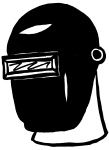
As I said before, the best The Invisible Ray has to offer is in its mad scientist spookiness. Early scenes featuring a Frankenstein-esque castle being repurposed as a planetarium provide some great, oldschool outer space weirdness, which combined with Karloff’s transformation into The Very Visible Man supplies The Invisible Ray with its most memorable elements. Karloff is particularly captivating in the film, whether he’s donning a stunning welding mask & cape combo (complete with rubber gloves), glowing like a nightlight, or dispensing of his enemies with the simple act of a genteel handshake. By comparison, Lugosi’s presence is far more understated, distinguished only by a goatee that makes him look like a mid-90s alt bro. The Invisible Ray was far from the pair’s best collaboration (that would be The Black Cat), but it’s also far from their nadir. In short, it’ll do.

Son of Frankenstein (1939)

EPSON MFP image

twohalfstar

Both the break from Lugosi & Karloff’s famous monsters work & the peculiarity of the duo’s ongoing, onscreen meta-rivalry are unfortunately missing from Son of Frankenstein. The final film in Karloff’s trilogy of Universal Pictures Frankenstein productions, Son of Frankenstein is a dreary, by-the-numbers affair. The first Frankenstein film had a strange, otherworldly magic to it already dubbed on this site The Spirit of The Spirit of the Beehive. Its followup, The Bride of Frankenstein, is remarkable for its prowess as an early example of the horror comedy. The third film has, what, Bela Lugosi’s first performance as Igor? A replacement Dr. Frankenstin Jr. with a John Waters mustache? The first appearance of the Frankenstein monster’s fur vest? These might be interesting images in isolation, but they hardly amount to justification for a 100 minute feature, by far the lengthiest of the Lugosi-Karloff collaborations.

This spirit of creative bankruptcy is apparent in Son of Frankenstein as soon as Franken-junior is introduced with the line, “This one’s probably just as bad as his father!” Franken-junior also laments early on that people often get his father mixed up with his monstrous creation, upset that his family name is synonymous with horror & monsters. That pretty much sums up the entirety of the film’s interesting dialogue. Franken-junior is, of course, met with a cold reception when he moves into his deceased mad scientist father’s spooky castle and, of course, becomes obsessed with recreating Franken-senior’s work. Through a little bit of revisionist cheating, it’s revealed that the Frankenstein monster (played by Karloff, of course) & Igor (played by Bela Lugosi, as mentioned), are still for the most part physically intact, despite certainly being destroyed in the earlier films. Somewhere along the way Franken-junior’s little moppet offspring, Franken-junior Jr., “adorably” gives his dad away to the cops in a high-pitched squeak that pretty much made me want to watch the little bastard drown in a fire. That’s the most I felt of the film’s conflict. The only element of interest, really, is that Karloff’s monster & Lugosi’s Igor are good buddies, forming a sweet sort of symbiotic relationship in a world that wasn’t made for them, to say the least.

Although Karloff’s reign as the top-billed performer continues here & you’d think that Lugosi’s secondary role as Igor would push him to the side,  Son of Frankenstein actually stands as a victory for Lugosi in terms of the actors’ longterm struggle to hog the spotlight. It’s not the best of their joint efforts, but at least Lugosi got more lines? He’s oddly captivating as Igor, especially in his Wolfman-like make-up (why did Lugosi never play the Wolfman?!) complete with a broken neck from a past lynching, while Karloff is remarkably dull as the monster he’s played so well in the past. In a completely non-verbal performance, his sole moment of interest is a scene in which he smashes Franken-junior’s very sciency science lab in a blind rage, an image that’s begging for an “open up this pit” meme. The rest of the film is just Karloff going through the motions while Lugosi tries to make the most of his role as a hairy, deformed Igor.

Son of Frankenstein arrived in the midst of a career slump for both Lugosi & Karloff. The decline of monster films that followed The Raven had limited the amount of roles the spooky duo were offered, but a successful double bill re-release of the original Dracula & Frankenstein films renewed interest in the Universal Pictures “famous monsters” brand, which lead to Son of Frankenstein‘s production. Although the film was a financial success for the studio, it’s a creatively weak endeavor at best, amounting to not much more than a collection of “what if?”s. What if, as originally planned, horror icon Peter Lorre had played the role of Franken-junior? What if Bela Lugosi had played the Wolfman instead of Igor & battled Karloff’s monster in a continuation of their meta rivalry? What if Franken-Junior Jr died a slow, agonizing death in a fire, putting an end to his annoying little squeaks forever? Alas, nothing so satisfying is delivered in Son of Frankenstein. That didn’t stop the studio, however, from returning to the well at least one more time in Ghost of Frankenstein. Karloff smartly declined to reprise his role for that trifle, obviously growing tired of the limitations of his most famous character. Unfortunately, Lugosi’s escape from the franchise was not so easy, as he returned as Igor in the Lon Cheney film. Poor Bela.

Black Friday (1940)

EPSON MFP image

twostar

After the last gasp for air in Universal Pictures’ famous monsters brand in the creatively bankrupt Son of Frankenstein, there wasn’t much work to go around for actors Boris Karloff & Bela Lugosi. The drought that followed for the eternally typecast horror movie heavyweights is perhaps what turned up the heat on their professional rivalry & turned their next collaboration, 1940’s Black Friday, into such a disastrous bore. A bland gangster film with only the slightest hints of horror or sci-fi in its formula, Black Friday is a shameful what-could’ve-been experience, one made dull by Lugosi & Karloff’s refusal to play nice & share the scraps that Hollywood had left for them to fight over.

In Black Friday, Boris Karloff plays a brilliant neurosurgeon who saves his close friend’s life by replacing his brain with that of an infamous mobster. Once a meek college professor, Karloff’s buddy starts to show personality traits of the gangster his surgeon-savior-friend effectively murdered to extend his life. The split-personality professor now has the hots for the deceased gangster’s showgirl girlfriend, drinks & smokes with the same mannerisms, threatens violence in a way far outside his normal character, and (much to Karloff’s surgeon’s piqued interest) talks of a hidden fortune stashed before his death. Rival gangsters & the showgirl dame rush to uncover the fortune before the surgeon can beat them to it, while he’s not fighting off suspicion about what happened to his once genteel friend. It’s even less exciting to watch this all unfold than it sounds, exhausting even for a feature barely more than an hour in length.

If you’re asking where Bela Lugosi fits into all of this, you’re not alone. The original script cast Lugosi as the troubled neurosurgeon & Karloff as the split personality professor-gangster. That formula might’ve actually been interesting. Alas, Karloff insisted on playing the surgeon & instead of taking the role of the professor-gangster Karloff had left vacant, Lugosi was relegated to the much smaller part of a rival gangster. Perhaps the reason they didn’t switch roles outright was that playing the rival gangster allowed Lugosi to avoid ever filming a scene with Karlof? It also allowed him to continue their onscreen meta rivalry that dated all the way back to the actors’ first collaboration, The Black Cat. As a result, although Lugosi is second billed he only has a bit role in the film and does not appear in a single scene with his rival.

There are only a few isolated moments of interest in Black Friday. The film’s opening credits play over a calendar reading Friday the 13th & are followed by an intense death row march that promises a much more horrific vibe than what follows. The film’s sole moments of outright horror are a brutal car crash stunt & an onscreen brain surgery, both motifs echoed from earlier Karloff-Lugosi collabs The Black Cat & The Raven. Watching Lugosi play gangster & Karloff don surgical gear are fantastic images, but aren’t put to much use. The only line of dialogue that really stuck with me was when Karloff’s daughter pesters him about his professor friend’s sudden change in personality & he snaps, “Haven’t you guessed?! The operation I performed was a brain transplantation,” as if that were the most obvious explanation for the change. The rest of Black Friday is a forgettable slog made hopelessly dull by two great actors who were visibly tired of working with each other on occasional projects & fighting over the scraps of the rest.

You’ll Find Out (1940)

EPSON MFP image

three star

I was pretty harsh on the concept of the ensemble cast radio play comedy as it was presented in The Gift of Gab, the single Bela Lugosi/Boris Karloff collaboration that brought me absolutely no joy. Perhaps it was the fact that Lugosi & Karloff were only two of thirty featured Universal Pictures stars fleshing out the vaudevillian vignettes meant to support the Phillip “Gift of Gab” Gabney vehicle. Perhaps I was just too high coming off the glorious heights of the pair’s first & best collaboration, 1934’s The Black Cat, and Gift of Gab was a letdown of a follow-up. Maybe it’s just a terrible movie. Either way, after less awe-inspiring titles like Son of Frankenstein & Black Friday, another Lugosi-Karloff ensemble comedy doesn’t play nearly as disappointingly. You’ll Find Out is far from the most exciting project Karloff & Lugosi worked on together, but since it came from a time after the decline in popularity of Universal’s famous monsters brand that made their careers, it’s about all you can ask for in terms of Karloff-Lugosi content. You’ll Find Out exceeds Gift of Gab both in quality & quantity; what was essentially minuscule cameos in Gab are fleshed out into featured parts as antagonists here. They also threw in a role for Peter Lorre, making this the only instance that he & Lugosi appeared together onscreen despite their shared Hungarian origins & similar career paths. A nice piece of lagniappe, that.

Unfortunately, You’ll Find Out isn’t exactly a Karloff-Lugosi vehicle like The Black Cat or The Raven. Instead, the film was meant to capitalize on the popularity of real-life radio personality Kay Kyser. Kyser was famous for hosting a music quiz called Kay Kyser’s Kollege of Musical Knowledge (oh God, don’t focus on the first three letters of that acronym). On the program, Kyser, often dubbed “The Ol’ Professor” & dressed in a scholar’s cap & gown, asked live audience members for bits of musical trivia and followed up their answers with obnoxious, “humorous” questions like “What’s the difference between a weasel, a measel, and an easel?” (in tandem with a rendition of “Pop Goes the Weasel, of course), much to the delight of an easily-pleased public. Har har. As this was during the height of big band music’s peak popularity, Kyser & his live orchestra rode the success of the craze for all it was worth, including just as many feature films that Lugosi had managed to film together in their unlikely, rivalrous collaboration – eight.

Kyser & his wacky crew are a little shrill & old-fashioned in the outdated comedy shenanigans that threaten to sink You’ll Find Out. If it weren’t for Lorre, Karloff, and Lugosi, the film would be a total wash. In a flimsy plot involving the Kyser clan entertaining an heiress during a part she’s throwing at a spooky castle (“What a beautiful spot for a murder!”) the band ends up saving her life from three oldschool horror creeps (guess who) conspiring to take hold of her inheritance. Karloff plays a seemingly congenial judge & friend of the family who pretends, poorly, that he has the heiress’ best interests in mind, despite being an obvious creep. Lugosi has the much more entertaining role of a turban-wearing mystic named Prince Saliano. Saliano insists that he communicates with the dead & that “The spirits are strongly displeased with the skeptical,” a sentiment that gives him free reign to torture the party guests. Lorre, for his part, plays a supposed “psychic expert”, brought in by Karloff’s corrupt judge to “expose” Saliano as a phoney to the unsuspecting heiress. Lorre is obviously not who he says he is & the three creeps are obviously in creepy cahoots.

The best moments of You’ll Find Out are the mere pleasure of seeing Karloff, Lorre, and Lugosi share a single frame. This happens exactly twice in the film: once when they’re quietly conspiring in a study & again at the climax when they’re holding the entire party hostage at gunpoint. In that second instance, Karloff & Lorre are brandishing pistols while Lugosi, again establishing himself as the ultimate horror movie badass, is sporting a fistful of dynamite. Although Lorre & Karloff are billed before Lugosi, Lugosi delivers what is by far the most interesting performance of the trio. As the same fate also befell him in The Raven, Son of Frankenstein and, arguably, even The Black Cat (although that last one is easily the most well-balanced of his Karloff collaborations in terms of sharing the spotlight), that distinction seemed to be his curse. Not only does Lugosi’s Prince Saliano get his own secret dungeon packed with high-tech gadgetry in You’ll Find Out; he also gets to put all the gadgets to use in the film’s centerpiece – an over-the-top séance in which he plays with Tesla coils, shows the heiress a vision of her dead father, and tries to kill her with a falling chandelier. During this séance, Lugosi delivers the film’s best line: “Presently I shall assume a state of trance in which the outer mind merges with the astral portion of the human ego. The Spirit of Evil is trying to enter this room, but the Fires of Death will guard us.” There’s also a great moment in the climactic scuffle where all of his séance equipment goes off at once, making the mansion look like an automated haunted house on the fritz.

You’d be forgiven for believing that You’ll Find Out is a trfile of an antiquated studio comedy. It most certainly is, especially in early scenes that focus on Kay Kyser’s hokey big band shenanigans. Any oldschool horror fan with a little bit of patience will have plenty of fun with the Lorre-Karloff-Lugosi trio’s dastardly villainy, though. It’s true that Lugosi steals the show in You’ll Find Out (doesn’t he always?), but the image of the three horror greats working together is the rarest of treats, something well worth putting up with a failed vaudeville gag or two depending on how much you love Peter Lorre, Boris Karloff, and -the most loveable of them all- Bela Lugosi.

The Body Snatcher (1945)

EPSON MFP image

fourstar

Thankfully, Lugosi & Karloff’s eighth & final collaboration was somewhat of a return to form after a drought in proper horror films that lead the duo to costarring in less-than-exciting fare like the gangster brain-swap picture Black Friday & the radio play comedy You’ll Find Out. The Body Snatcher was the first of the spooky duo’s films together to aim for a true horror aesthetic since their earliest collaborations The Black Cat & The Raven. Although it would sadly be Lugosi & Karloff’s final joint effort, it would also prove to be one of their best.

In the film, Karloff plays Captain Gray, a boisterous grave robber who sells stolen corpses to a medical facility for a small profit. Decked out in Jack the Ripper garb very similar to his costume in Gift of Gab, Karloff is deliciously cruel in his role as the titular body snatcher. He’s particularly heartless in the way he embarrasses the doctor who serves as his reluctant business partner, throwing his weight around & parading his dealings with the well-respected man of medicine in a way that recalls Michael Gambon’s performance in The Cook, the Thief, His Wife & Her Lover. Gray even blackmails the doctor into performing an experimental spinal surgery on a paralysed little girl simply because he can, creating an immediate need for fresh subjects that drives Gray to cold-blooded murder. All this is told from the perspective of a young medical student eager to learn “the poetry of medicine.” Instead, his mentor teaches him that “a real man & a good doctor” deals in grave robbing & murder in the name of medical research.

Directed by Robert White (who later helmed the classics The Day the Earth Stood Still, West Side Story, Star Trek: The Movie, and Sound of Music, among others), The Body Snatcher has a distinctly well crafted look to it, particularly in the production design of its external settings. Especially spooky is a sort of one-woman Greek chorus, the angelic singing of a street performer who haunts dark alleys in hopes of spare change. When her voice is suddenly silenced the effect is deeply chilling. Gray’s evil lair where he conducts his grave-robbing business & strokes a cat like Dr. Claw in Inspector Gadget (or like Karloff’s former role in The Black Cat, come to think of it) is a beautifully uncomfortable vision of squalor. White brings a quality of production & a cinematic eye to The Body Snatcher that had largely been missing from Karloff & Lugosi’s collaborations since The Black Cat more than a decade before.

As for Lugosi’s contribution to The Body Snatcher, he’s once again relegated to playing Karloff’s second fiddle, but he’s at least afforded a featured part in one of the film’s most memorable scenes. After eavesdropping on the doctor & discovering the exact nature of his partnership with Gray, Lugosi’s lowly assistant foolishly confronts Gray alone & unarmed in the graverobber’s home. He says, “I know you kill people to sell bodies. Give me money or I tell police you murder the subjects,” in a line that has to consist of at least half of Lugosi’s total dialogue in the film. Gray pays the assistant the requested blackmail money, but then gets him drunk & murders him with his bare hands. As far as the ongoing, onscreen meta rivalry between Lugos & Karloff’s characters over the years goes, this display of violence easily ranks among the most brutal & extensive, topped only by Lugosi skinning Karloff alive at the climax of The Black Cat. The Black Cat may surpass the quality & novelty of The Body Snatcher in a few ways, but that’s unfair ideal for a film to have to live up to. The Body Snatcher is surely one of the best of Karloff & Lugosi’s collaborations and a fitting note for the pair to end their work together on. The film’s promotional material promises The Body Snatcher to be, “The screen’s last word in shock sensation!” which might not be true for cinema at large, but is at least literally true in the context of Lugosi & Karloff’s appearances together on film. It was the final word.

-Brandon Ledet