The Open House (2018)

Warning: Spoilers ahead!

A Netflix Original thriller set in a big, spooky house deep in the mountains seemed like the perfect first 2018 film for me to watch. I made a cup of hot chocolate with whole milk just for the occasion. For the majority of The Open House, I was on the edge of my seat. My anxiety levels were at an all-time high as I waited for the killer to be revealed so I could get some closure. Unfortunately, that never happened. Not only was the killer’s face never shown, but the two individuals being hunted by the killer both die in the end. I’ve never been more disappointed in the ending of a film in my entire life. Concluding a film with unanswered questions is quite common and even enjoyable if done properly, but The Open House doesn’t leave many clues for viewers to come up with their own version of who the killer was or why was he/she so set on killing our main characters. It’s a damn shame because everything leading up to the ending was actually entertaining.

The Open House gets its cheesy title from its setting: a mansion in the mountains that is on the market. After the sudden death of her husband, Naomi (Piercey Dalton) and her son Logan (Dylan Minnette) are forced to move into her sister’s mountain mansion until it sells due to financial reasons. From the moment they settle in, strange things start to occur. The pilot light turns off while Naomi takes showers, Logan’s phone goes missing, the basement door randomly opens, etc. Their creepy neighbor, Martha, makes an appearance a handful of times, and each one is more peculiar than the next. There’s even a scene where Dylan is in the pitch black basement and Martha’s face appears behind him. For a good while, it seems as though Martha is responsible for the mysterious happenings, but then Chris (Sharif Atkins), the friendly salesman Naomi meets in town, randomly shows up at the house. He claims that he noticed the open house sign in the front of the road, and he is interested in taking a look inside. Naomi lets him in, and while she isn’t looking, he disappears into the basement with a unsettling look on his face. At this point, he becomes a suspicious character as well.

The film’s pace picks up quickly when Naomi is out on the town and receives a call from her sister informing her that someone broke into the house. Once the police arrive, they aren’t much help and basically blame the break in on local kids pranking around. Chris is then invited to spend the night to provide some comfort to Naomi and Logan since there scared shitless. Because Chris had this artificial kindness to him, I really thought that he was going to reveal himself as the person responsible for all the strange activity, but Logan ends up finding him with a slit throat in their family SUV. Was Chris’s character purposely supposed to seem suspicious or was Sharif Atkins a crappy actor? We may never know.  Logan then gets his head bashed into the window and is doused with water while passed out in freezing temperatures by what appears to be a man. With Chris scratched off my suspect list and the killer not matching Martha’s physique, I assume that this person may be Martha’s son or husband.

The unknown killer then gets into bed with Naomi with his hands in prayer position across his chest. This was probably the most bone chilling part in the film for me. Naomi gets up to use the bathroom and gets back into bed with him! I’m assuming this is a California king size bed for her to not even flinch before getting in. As soon as she realizes the creep in the bed, he captures her, ties her up, and breaks her fingers one by one. Frozen Logan makes it back into the house, and accidentally stabs his mother, which then led me to believe that he was going to get Final Boy status because one of them would need to survive in the end, right? Nope. Just when I thought Logan escaped, he meets his death by the still unknown killer, and the movie comes to an abrupt end.

The ending just felt so lazy. There were so many cool elements in this film that could’ve been used to create a jaw-dropping conclusion, but all the buildup in the film’s last 20 minutes led to nothing but disappointment. I feel like I’ve been ripped off, even though the film is available on Netflix. Watch The Open House only if you enjoy frustration and disappointment.

-Britnee Lombas

Mom and Dad (2018)

Over-the-top Nicolas Cage performances are often conversationally boiled down to a single moment of absurdist novelty. Entire movies are remembered solely as “the one where Nic Cage yells about the bees,” “the one where Nic Cage angrily recites the alphabet,” or “the one where Nic Cage stares at imaginary iguanas.” By that measurement, Mom and Dad will surely be remembered as “the one where Nic Cage destroys a pool table with a sledgehammer while singing ‘The Hokey Pokey.’” It’s that exact kind of delirious lunacy trash-hungry audiences pray for in every Nic Cage cheapie, a novelty he stubbornly withholds in most of his direct-to-VOD dreck. Admittedly, though, the “Hokey Pokey” scene in Mom and Dad is only a brief diversion (in a movie composed almost entirely of brief diversions). He doesn’t even sing the entirety of the novelty dance song before he runs out of energy, just barking out a few lines in a single angry burst. The absurdist novelty of that moment cannot be undervalued, though; it truly is a wonder to behold. It’s also just one minor detail in a much larger, nastier tapestry of unexplainable violent outbursts. Mom and Dad thankfully amounts to much more than merely being “the one where Nic Cage destroys a pool table with a sledgehammer while singing ‘The Hokey Pokey.’” It’s also a wickedly fun satire about modern families’ barely concealed hatred for their own, a chaotic portrait of selfishness & self-loathing in the modern suburban home.

Cage stars opposite Selma Blair as middle-aged parents struggling to find fulfillment within a traditionalist family unit. Light banter barely disguises parents’ & kids’ seething hatred for each other as they lie, cheat, steal, and insult their bonds into tatters. This tension transforms into externalized violence when an unexplained supernatural event compels all parents of children everywhere to murder their own offspring in an epidemic of blind rage. Some of the widespread fallout of this event is captured in flashes of news coverage and in sequences of blood-splattered mayhem as parents swarm like zombie hoards to pick up their kids from schools & hospital nurseries. Mostly, though, the violence is contained to the suburban housing development where Cage & Blair’s rabid parents live. They chase their children around their home with various domestic objects, hellbent on murdering the ungrateful little brats while still doling out weaponized barbs of parental advice & commands. Meanwhile, memories & daydreams yank the audience outside the chaos of the moment to consider how the self-loathing midlife crises that preceded this bloodbath aren’t actually all that different from the violence itself. These relationships were never healthy, even when they were covered up with a smile instead of the buzz of an electric-powered jigsaw. This is an inversion of the dark humor we’re used to seeing in pictures like Cooties & The Children, where the kids are the otherworldly creatures to be feared. Here, parents are made to fear themselves, especially in regard to their unexamined jealousies & resentments toward their own offspring, who still have their glory years ahead of them instead of bitterly fading in the rearview on the road to selfless familial sacrifice.

Judging by the general negative reaction to last year’s similarly cartoonish home invasion horror comedy The Babysitter, I suspect many audiences will be frustrated by the frantic tone & editing rhythms of Mom and Dad. This is, paradoxically, a hyperactive movie with zero narrative momentum. Individual moments may indulge in the sugary energy of a breakfast cereal commercial and the whole thing is scored with a barrage of playful pop music, but its commitment to tangential asides & abrasive flashbacks often keeps its story static. Fully enjoying Mom and Dad, then, requires a forgiving appreciation of its pitch-black comedic nastiness, a wicked sense of humor where every parent is an untrustworthy monster and no child, neither newborn nor middle-aged, is safe from the malicious creatures who spawned them. I do think the movie plays it a little safe when it comes to explicitly depicting that child-endangering violence onscreen, especially in comparison to the recent cheap-o monster movie Clown. What it lacks in shock value brutality, however, it makes up for in a gruesome tone & worldview. The movie hides behind tongue-in-cheek touches like a 70s exploitation-themed credits sequence & stylized dialogue like “My mom is a penis,” but just under its ironic camp surface rots a charred, bitterly angry heart, one with no respect for the almighty Family Values that mainstream America holds so dear. To be honest, it’s a dynamic I find much more honest & relatable than the Family Above Everything messaging offered in feel-good-films like Coco. Even if you’ve never had a family member chase you down the hallway with a meat-tenderizer, Mom and Dad’s violent, deep-seated resentment is sure to resonate with you on some level (especially if you’re a middle-aged parent with ungrateful teens at home).

Show up for Nic Cage destroying a pool table with a sledgehammer while singing “The Hokey Pokey;” stay for the pitch-black humor about “successful” adults who find their manicured, suburban lives with the right career & the right family bitterly unfulfilling. Nic Cage is literally barking mad in this picture and is destined to steal much of its spotlight, but Selma Blair & Crank director Brian Taylor match his energy admirably at every step. This is a deranged collaboration among that unholy trinity and no family bond, no matter how sacred, is safe in its satirical war path. Mom and Dad may occasionally stumble in terms of pacing or tone, but you have to respect this kind of gleefully taboo social anarchy, especially coming from a comedy.

-Brandon Ledet

The Hatred (2017)

Sometimes a movie comes along that’s so awful, you wonder why anyone even tried, or how anyone who watched the final product could have ever signed off on its release. The Hatred is such a film: a bargain basement haunted house flick about four young women and a little girl being terrorized by the apparition of the long-dead daughter of a Nazi war criminal via a mystical object that induces hatred. It’s as nonsensical as it sounds.

The film opens with an overly long sepia-drenched prologue showing the day-to-day rural “1950s” life of Samuel Sears (Andrew Divoff, aka the title character of the Wishmaster series, and definitely someone who deserved better than this), an escaped Nazi higher-up who now lives a life of simplicity on his “farm” alongside his wife Miriam (Nina Siemaszko) and daughter Alice (Darby Walker). Samuel receives an ugly iron cross talisman along with a personal letter of thanks from Hitler himself for his service, both of which he boards up inside his Nazi paraphernalia room. Alice, ignorant of her father’s past, wants to start going in to town and open herself up to being courted by local boys, but Samuel keeps her locked away in their home. One day, however, his anger is so great that he drowns Alice in a water trough and hides her body. The local police are unable to locate her body and assume that she has run away. Miriam eventually kills Samuel and leaves the home herself, never to appear in the film again.

In the present day, Regan (Sarah Davenport) is en route to the home of a family friend/professor, to babysit his daughter Irene (Shae Smolik) for a period of time. My apologies if this is vague, but so is the screenplay. Along for the weekend (?) are her friends (Gabrielle Bourne, Bayley Corman, and Alisha Wainwright). After a couple of run-of-the-mill scares and the occasional bump in the night, the ghost of Ashley enacts revenge and picks the girls off one by one until the film concludes with Generic Horror Ending 3.01A: Final Girl™ and Precocious Innocent Child™ escape from Haunted House™.

This feels like a movie that fell through a portal to a parallel dimension where David Decoteau makes films for a straight male audience. Decoteau, for those not in the know, earned his stripes directing B-horror fare like Creepazoids! and sequels to various Full Moon properties, like Puppet Master and Prehysteria. In the late nineties and continuing into the new millennium, however, he took up directing direct-to-video in-name-only horror flicks starring young actors and underwear models looking to break into the industry. His filmography is largely composed of fare like The Brotherhood and its five (!) sequels, Boy Crazies, Haunted Frat, and other homoerotic “movies” that exist primarily as vehicles for long, static scenes of nubile white twinks with only one film credit showering and running around the woods in their briefs. Also, sometimes Alexandra Paul is there.

With the rise and spread (no pun intended) of the internet, the demand for softcore not-quite-porn subsided, leading Decoteau to new heights of laziness, churning out family fare like A Talking Cat?! and An Easter Bunny Puppy. This isn’t meant to be a dig at Decoteau; the man got his start working for Roger Corman after all, and movies like Beastly Boyz are an important part of DTV film history even if they’re no longer relevant. And the man obviously learned a lot from Corman, seeing as he managed to release seven films in 2011 alone. The problem is that it’s painfully apparent that he’s not even trying anymore. He just shoots all of his movies in and around his house now, with no attempt to hide his apathetic approach to cinema (there’s a couch made out of the back of a VW Beetle that appears in every single film).

The Hatred is in this same vein. The midcentury “farmhouse” that is the setting for the introduction (which takes up over a quarter of the film’s runtime and is, despite its laziness, still the best part of the film) is obviously a modern home, in spite of the half-assed attempts to disguise this with set dressing. It’s not out of the question that the Sears family would have a wicker loveseat or ornamental mirrors, but they probably wouldn’t have been the kind you can see at your nearest Target, or have been awkwardly placed in the background in such a way that it was obviously covering a modern electrical outlet. The sepia is so omnipresent that you get the feeling you’re watching a film set in the 1800s, not the 1950s, and the dissonance of that visual rhetoric makes it impossible to take it seriously, even when Divoff, Siemaszko, and Walker are giving decent performances (regardless of truly atrocious dialogue).

This is a movie that’s coming apart at its (very visible) seams at all times. The location is never established in the dialogue; there’s a shot of the North Carolina flag early in the film, but when Regan’s gaggle of gal pals is giving her a hard time about her decision to move to “the country” from “the city,” we’re never given a clear picture of where either of these places are supposed to be. Is “the city” Raleigh? Is “the country” Louisburg? The lines as written and recited paint a picture of Regan as a NYC gal moving to some distant backwater. There’s an ineffable haziness to the whole film that would be notable if the filmmaker was creating a timeless dreamlike Everywhere, but it’s not–it’s just lazy. As further illustration, in the same scene where this “expository” dialogue is spoken, the girls express appreciation for “hot cowboys.” The audience does not see these cowboys in a reverse shot, nor did the director stick an extra in a flannel shirt and jeans and have him pass between the women and the camera; it’s just the four of them looking off-camera and exaggeratedly waggling their eyebrows. Lazy, lazy, lazy.

What separates this from being a true alternate universe Decoteau film, however, is the overall lack of any impropriety. One of the girls (Stock Character 40A.4™) is killed by the vengeful spirit while talking her boyfriend out of phone sex, which is so scandal-free it’s almost laughable. There are no shower scenes or long tracking shots of Regan and a friend slowly walking down a hallway in their bleach-white undergarments. All of the girls are quite pretty and are perfectly suitable as the gender-bent equivalents of Decoteau’s stable of twunks. In fact, I would dare say that they’re all far more talented than any of the one-and-done “actors” from Decoteau’s films, giving performances that range from passable to decent, although the lead actress feels a little insincere, like an overly-kind waitress that you recognize is being nice to you because she has to (here’s a tip, boys: she’s never flirting with you; she’s working).

Normally, even if a film is objectively bad, we here at Swampflix can still find something nice to say about it, or advise that there could be a specific audience who could glean some nugget of joy from a mess. Not this time, I’m afraid. To call this film “half-assed” is to betray an ignorance of fractions; I’d be surprised if even a quarter of an ass was used in the making of this film. There’re too many great movies, streaming and not, to waste your precious time on this stinker.

-Mark “Boomer” Redmond

Little Evil (2017)

When I was a kid, my mom introduced me to the horror classics of her youth whenever I was fortunate enough to be left behind while my father went deer hunting. We watched Carrie, Halloween (which she and my dad had gone to see in the theaters on their first date, although he left halfway through and waited for her in the lobby), and one of her favorites, The Omen. In case there are any among you who have never seen it (and shame on you), The Omen stars Gregory Peck as an American diplomat whose child dies at birth; he is convinced to adopt a local orphan instead. He and his unwitting wife name the child Damien, and as the child grows he starts to suspect, correctly, that little Damien is the Antichrist. There were a few sequels (including one where the adult Damien, played by Sam Neill, is an American politician) and a remake released on the apropos date of 06/06/06.

Although the remake is one of the better revisitations and reimaginings of the early millennium (perhaps helped by the fact that I find both Julia Stiles and Liev Schreiber to be quite charming), my new favorite follow-up is 2017’s Little Evil. Adam Scott plays Gary Bloom, the new husband of Samantha (Evangeline Lilly) and thus stepfather to Lucas (Owen Atlas), who dresses and acts just like Damien, including using a “goat” sock puppet to talk in a low demonic voice. Samantha is completely blind to (or hilariously complacent about) the blatantly supernatural events happening around her: bloody rain, flickering lights, the backwards speech of the priest at their wedding, even Lucas’s use of a compelling voice to tell his teachers to kill themselves.

Gary gets conflicting and terrible advice from the other stepfathers in his community, including Victor (Kyle Bornheimer), Wayne (Chris D’Elia), and Larry (Donald Faison). The best and worst of these is Al (Lady Dynamite‘s Bridget Everett), his co-worker and a woman so butch she considers herself to be a part of the stepdad community. Everett all but steals the show here; she’s hilarious, and her deadpan delivery of her lines about her own stepson and her relationship with the new wife are perfectly timed and exquisite. Rounding out the case are the always-welcome Sally Field as a social worker and Clancy Brown as Reverend Gospel, an end-times theologian.

After Lucas causes his birthday clown to set himself on fire, Child Protective Services gets involved just as Gary seeks out professional help, including the assistance of a demon hunter, just as in The Omen. But unlike The Omen, Little Evil evolves into a story about something else: fatherhood, and the need for good role models. The film ultimately makes a surprisingly heartwarming statement about the nature of paternity and the importance of love over biology.

The film is not without a few low points, of course. There is a bit of the film that drags in the middle, as it gets wrapped up in some of the typical dudebro lowbrow comedy that we’ve come to expect from directors like Judd Apatow, but director Eli Craig (who gave us the fantastic horror comedy/pastiche Tucker and Dale vs. Evil back in 2010) shifts back into gear pretty quickly after this, and the high points more than make up for the less-than-perfect moments. Lilly is also a high point of recommendation; embodied by another actress, Samantha might have come across as dim-witted or inept, but Lilly finds the perfect balance between defensive (but lovingly) maternal and comically missing the point.

Little Evil is a Netflix original, so it’s presumably not going anywhere soon. If I were you, I’d use the last days of January to watch as much Futurama as you can before it leaves the streaming platform at the end of the month. But when that’s done, go back and check out this easy-going comedy. And also, watch The Omen if you haven’t already, you Philistine!

-Mark “Boomer” Redmond

Ken Russell’s Streamlined Modernization & Perversion of Bram Stoker’s The Lair of the White Worm

Ken Russell’s 1988 film adaptation of the 1911 Bram Stoker novel The Lair of the White Worm is often criticized for being an adaptation in name only. Critical consensus is that Russell’s The Lair of the White Worm maintains only minor details of Stoker’s original premise and the most the two works share is a common title. It’s true that Russell’s adaptation strays much further from its source material than 1922’s Nosferatu does in its faithful, but copyright-infringing bastardization of Stoker’s Dracula novel. The film The Lair of the White Worm is not a blasphemous, in-name-only adulteration of a sacred text, however. Bram Stoker’s White Worm novel is incoherent pulp. It’s a tawdry mess of a work written late in the author’s life, long past when his mental facilities were at their sharpest. Russell modernized and drastically altered basic components of the late author’s work, but he was much more faithful to the source material than what’s typically acknowledged. There’s even a prideful title card that proclaims, “Screenplay by Ken Russell from the Bram Stoker novel” to boastfully acknowledge their posthumous collaboration. Russell did not disrespectfully diminish a well-loved literary work. The filmmaker streamlined and enhanced an imperfect, misshapen novel that had been largely (and perhaps rightfully) forgotten by time by accentuating its most worthwhile aspects. He transformed a painfully slow read into a wildly fun horror film.

Although Stoker’s The Lair of the White Worm is a mid-length novella, it reads like a rambling epic that drones on for thousands of pages. Its story is essentially a simplistic rehashing of Dracula, in which a naïve outsider intrudes on a world of supernatural menace while conducting entirely unrelated, mundane business. Instead of providing legal service for suspiciously inhuman royalty like the solicitor Jonathan Harker in Dracula, The Lair of the White Worm’s naïve outsider, Adam Salton, is thrust into contact with similarly inhuman gentry by neighborly proximity. During a routine getting to know the attractive neighbors visit, Salton finds two wicked figures tormenting the innocent women of the house. One of these figures, Sir Caswall, is a weak carbon copy of Count Dracula. Although his apparent vampirism is never made explicit he physically resembles Bram Stoker’s most infamous creation and shares Dracula’s passion for hypnotizing women, this time under the guise of practicing “mesmerism.” The second tormentor, Lady Arabella, is more of a creation original to this novel. Lady Arabella is gradually revealed to be a shape-shifting “worm” (skewing closer to a giant snake or a dragon than an earthworm) known to feed on locals who dare encroach on its territory. While Dracula touches on the danger of female sexuality, Lair explicitly refers to our villainess, Lady Arabella, as a “cocotte”, French for prostitute. Despite her Anglo-Saxon good looks, a dangerous fiend like Lady Arabella could “infect” respectable English women with her serpentine (and independent) ways and seduce men to their ruin.

Furthering the Dracula parallels, a Van Helsing-type (Sir Nathaniel) helps Adam concoct a plan to destroy the worm’s pit below Diana’s Grove, but instead of confronting the villainous Arabella and Caswall on their adjacent ancestral lands, Adam and his wife Mimi bafflingly run around the countryside in an effort to avoid the villains. Lady Arabella is responsible for her own destruction by running a wire directly from the kite to her own well in hopes of lurig Caswall into her clutches. The villains’ fate is sealed by a random lightning strike that ignites dynamite meant to destroy the pit below Arabella’s property, where the worm is known to feed. It’s as if the lightning were a direct punishment from God or, more likely, Stoker had no idea how to wrap up a mess of a plot he had dug for himself.

Russell’s screenplay adaptation cleans up the mess Stoker made by combining and excising characters to essentialize what makes it distinct from being yet another Dracula. One major change was combining the Dracula and Van Helsing archetypes of Sir Caswall and Sir Nathaniel into a single character. Portrayed by a young Hugh Grant, Lord James D’Ampton is a destined hero ordained by heritage to destroy Lady Sylvia Marsh (Lady Arabella in the Stoker version) once she’s revealed to be a shapeshifting, killer “worm.” D’Ampton remains a “mesmerism” enthusiast, but in the way of a snake-charmer, a skill willed to him through family to aid in his task of hypnotizing and slaying the titular worm beast. Two major villains tormenting Derbyshire, England is one too many for a work this simple; Russell was smart to remove the most Dracula-reminiscent one of the pair. His other character changes are basic modernizations meant to update Stoker’s outdated material to a 1980s setting. For instance, the naïve Adam Salton character (now named Angus Flint and portrayed by Peter Capaldi) is an archeologist, not newly-landed gentry. This style of modernization did require some major changes in terms of character traits, however. Russell removed the bizarre racial fixations Stoker focused on in his novel. In particular, Stoker exhaustingly others an African immigrant servant to Sir Caswall and a biracial female love interest for their cultural and (worse yet) supposed biological differences. Oolanga is framed as an obviously evil character. He writes, “But the face of Oolanga, as his master at once called him, was pure pristine, unreformed, unsoftened savage, with inherent in it all the hideous possibilities of a lost, devil-ridden child of the forest and the swamp—the lowest and most loathsome of all created things which were in some form ostensibly human.”  Meanwhile, Mimi Watford is compared favorably to her white, but passive & tragically doomed cousin as an exotic, fiery beauty: “Strange how different they are! Lilla all fair, like the old Saxon stock she is sprung from; Mimi almost as dark as the darkest of her mother’s race. Lilla is as gentle as a dove, but Mimi’s black eyes can glow whenever she is upset.” Russell excises this aspect of the work entirely by casting white actors in their roles and diminishing the parts they play in the central story. There is both a shrewdness and a cowardice to Russell’s avoidance of the uncomfortable racial issues at the heart of his Bram Stoker source material, but it’s ultimately an improvement that helps declutter the work just as much as removing the redundant, Dracula-reminiscent villain.

Russell had to polish and streamline Stoker’s original vision to craft a fun, watchable horror movie out of the rubble, but the novel plays directly into the auteur’s pet obsessions. At the heart of Stoker’s novella is a deep-seated fear of female sexual autonomy, detectable in the sexual imagery of Lady Arabella’s phallic “worm” form and the vaginal cave where that monster feeds. Russell was well established as a sexual provocateur by the time he adapted Lair of the White Worm in 1988. Transgressive works like Crimes of Passion and The Devils had already allowed the director to indulge in blatant depictions of the perceived horrors of autonomous female sexuality in a way Stoker’s much earlier novel could only subtly imply. Streamlining The Lair of the White Worm’s most exciting components allowed Russell more time to exploit the Cronenbergian sexual menace inherent to the character of Lady Arabella (Lady Sylvia). He wastes no time revealing that she is a shapeshifting, humanoid snake, unlike Stoker who saved her mysterious villainy for much later in his novella. Before actress Amanda Donahue is even depicted spitting venom or baring comically oversized fangs, she is costumed wearing cowls and headscarves that accentuate her reptilian nature, affording her the silhouette of a bipedal cobra. This allows more time for Russell, who was never one for subtlety, to indulge in the character’s over-the-top sexual villainy. Her consumption of young, innocent locals is made explicitly analogous to sexual desire and is even tied to an elaborate sex ritual that involves a giant, sharpened phallus (a favored instrument of death for Russell, as indicated by its inclusion here and in Crimes of Passion). The director’s screenplay may play loose with the details of its source material, but there’s enough of Bram Stoker’s influence detectable to see why he was drawn to it. Russell maintained the mesmerism hypnosis of the novella, but made it a psychedelic side effect of Lady Sylvia’s venom (in imagery directly pulled from his previous works Altered States and The Devils). Russell latched onto Stoker’s subliminal sexual anxiety, but elevated it from subtext to the forefront. He even held onto the Dracula-reverberating aspects of the novel by accentuating the comically oversized, vampire-like marks Lady Sylvia’s snake bites leave on her victim’s necks. Russell made major changes to the novella, but in a way that was more of a personalized distillation than a disrespectful dilution.

Besides cleaning up its loose ends and blatant character-based redundancies, Ken Russell improved The Lair of the White Worm by making it fun, memorable, and genuinely unnerving. Many movie adaptations of literary works are derided as lesser echoes of superior source material. Russell, by contrast, altered a near-forgotten work for the better. As Stoker’s original The Lair of the White Worm was never considered to be an especially well-written or even well-conceived literary work, the decades-late, culturally updated revision had to come from a genuinely enthusiastic place as a reader. Ken Russell was himself no stranger to critical consensus that his work was over the top, messy pulp and saw some of his own perverse passions in Stoker’s little-loved final novel. His adaptation may have been more dedicated to bringing out those auteurist similarities between their two minds than it was to faithfully mimicking Stoker’s work, but given the lowly place where the novel started that’s something of an honor.

-CC Chapman

Freaked (1993)

When I revisited Tod Browning’s 1932 silent horror classic Freaks last October, I was struck by how the majority of the story it tells doesn’t play like a horror film at all. Before the titular circus “freaks” band together to avenge a bungled assassination attempt on one of their own, the movie mostly plays like a kind of hangout comedy, preaching an empathetic “We’re all human” message that’s later completely undone by its freaks-as-monsters horror conclusion. The 1993 horror comedy Freaked isn’t exactly a remake of Browning’s film, but it oddly mirrors that exact mix of tones. Continuing the inherent exploitative nature of sideshow freaks as a form of entertainment, Freaked is a morally grotesque work with a toxically shitty attitude towards physical deformity & abnormality, one very much steeped in Gen-X 90s ideological apathy. It’s also an affably goofy hangout comedy packed with a cast of vibrant, over the top characters. Freaked will leave you feeling just as icky as Freaks, although maybe not as intellectually stimulated, and I’m pretty sure that exact effect was entirely its intent.

Alex Winter (best known as Bill S. Preston, Esq.) directs and stars as an Ace Ventura-style ham and a Hollywood douche. It’s as if the evil versions of Bill & Ted from Bogus Journey were the protagonists of a horror comedy and you were supposed to find their Politically Incorrect hijinks hilarious instead of despicable. Along with a fellow wise-cracking asshole and a bleeding heart political protestor (picked up for her looks), Winter’s fictional movie star cad is lured to a crooked sideshow operated by a visibly drunk Randy Quaid. Quaid transforms these three unsavory souls into freaks for his sideshow against their will, where they join the ranks of fellow imprisoned performers in desperate need of a revolt: Bobcat Goldthwait as an anthropomorphic sock puppet, Mr. T as a bearded lady, John Hawkes as a literal cow-boy, Keanu Reeves as a humanoid dog/political revolutionary, etc. There’s also a side plot about an Evil Corporation dabbling in illegal chemical dumping, but Freaked is mostly a mix of special effects mayhem, Looney Tunes wise-cracking, and poorly aged indulgences in racial stereotypes, transphobia, and sexual assault humor.

Freaked is in a weird position as a cultural object. It’s shot like a breakfast cereal commercial and indulges in so much juvenile humor that its best chance for entirely pleasing a newfound audience would be reaching immature preteens with a taste for the macabre. I would never recommend this movie to an undiscerning youngster, though, since its sense of morality is deeply toxic in a 2010s context. (Big Top Pee-wee is both sweeter and somehow stranger, while essentially accomplishing the same tone.) Much like with Freaks, however, there’s plenty to enjoy here once you wince your way past the horrifically outdated social politics. Special effects & creature designs from frequent Brian Yuzna collaborator Screaming Mad George and a psych rock soundtrack from 90s pranksters The Butthole Surfers afford the film a raucous, punk energy. Meta humor about Hollywood as an cesspool teeming with sell-outs (especially in the jokes involving a fictional film series titled Ghost Dude) lands with full impact and colors the freak show plot in an interesting entertainment industry context. Mostly, though, Freaked is simply just gross, which can be a positive in its merits as a creature-driven horror comedy, but a huge setback in its merits as an expression of Gen-X moral apathy. I’m not sure how it’s possible, but it’s just as much of a marred-by-its-time mixed bag as the much more well-respected Tod Browning original.

-Brandon Ledet

The Lair of the White Worm (1988)

I suscribe to the belief that British director Ken Russell was one of the most underappreciated madmen in all of trash cinema. Titles like The Devils, Crimes of Passion, and Altered States stand as immaculate works of over-the-top shock value provocation. Russell filtered the seedier sex & violence of schlocky genre films through the meticulous aesthetic of art house cinema. He operated as a kind of bad taste prankster who knew deep in his bones how to appeal to a more refined audience, but gleefully indulged in cartoonish violence & sexual humor instead. It’s difficult to say exactly which Ken Russell film would be the perfect introduction to his hyper-violent, oversexed, art house pranksterism (Crimes of Passion is a personal favorite of mine, at least), but his 1988 Bram Stoker adaptation The Lair of the White Worm is as good of a place to start as any. The film operates as a kind of crash course in his pet obsessions as a crude auteur: hallucination, transgressive sex, religious blasphemy, lethal women, etc. It’s by no means his classiest or his most formally precise feature, but it covers a lot of ground on exposing audiences to what makes his work exciting & worthy of reappraisal, while still making no excuses for how cheap & ludicrously ill-considered his personal brand of provocative trash-art cinema could be.

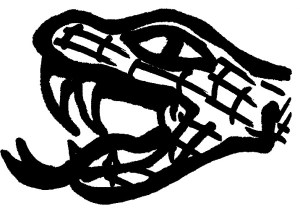
Russell admittedly plays loose with the plot details of Stoker’s original The Lair of the White Worm novel, reducing its atmospheric (and by all accounts incoherent) horrors into an erotic farce about reptilian vampires. He still shows more respect than that pulpy source material likely deserves, however, as it was written late in Stoker’s life when his mental facilities were fading and included many strange bouts of Dracula-rehashing & racial philosophizing Russell smartly excised. One major difference between the book & the movie is the choice of when to reveal the true nature of the villain. Stoker saves the revelation that the conniving female royal of his novel is actually a shapeshifting snake (“worm” is kind of a misnomer) until very late into the proceeding. Russell, however, wastes no time. Actor Amanda Donohoe’s shapeshifting reptile villain is costumed to look like a bipedal cobra in the film; she wears hoods, scarves, and cowls that immediately make her appear snakelike in her cold, ultra-modernist rural England mansion. She makes no real attempt to hide her reptilian nature from potential victims either: she steals a giant dragon-like snake skull discovered in the first scene for an occultist ritual; she invites visitors to her home to play a Snakes & Ladders board game; she boasts of going “snake watching” in the woods. Long before she reveals her comically oversized vampire fangs & spits hallucination-inducing venom, the audience is well aware that she’s some kind of humanoid “worm.” Russell spends no more time covering up that his villain is a monster than Todd Browning did in his Dracula adaptation. As soon as you see her, you know. The mystery, then, is what sexual, sacrilegious terrors she’s planning to exact on her villains.

Hugh Grant appears as a kind of Van Helsing archetype destined to defeat this reptilian sex villain as part of his family heritage. Peter Capaldi, Catherine Oxenberg, and Sammi Davis round out the cast, partly to maintain Stoker’s original story structure and partly to diversify Donohoe’s victims. Donohoe slithers around in high class dominatrix gear, sexually teasing & occasionally draining the blood of the entire crew and any horny teen boys who happen to wander into her lair. She flicks her tongue before lunging in for a kiss, like a snake surveying its prey. She spits a hallucinatory venom that triggers trippy, sacrilegious imagery pulled directly from previous works Altered States & The Devils. She occasionally transforms into a giant, Falkor-like snake puppet that recalls an especially demonic creation from Sid & Marty Croft. All of this torment & mayhem culminates in a demonic sex ritual that involves a deadly strap-on phallus and a bottomless pit where Donohoe feeds her almighty worm beast. The Lair of the White Worm is a hallucinatory free-for-all of sex, violence, and religious blasphemy, the only possible outcome of Ken Russell making what’s, at heart, a simple vampire picture. If you want to get a good idea of the director’s aesthetic as a madman provocateur, all you need to do is compare this reptilian, horndog monster movie to any stately Dracula adaptation out there (of which there are too many, whereas there’s only one Ken Russell).

Loving Ken Russell means disregarding any & all personal desire for subtlety. Very early on in The Lair of the White Worm Donohoe sensually sucks snake venom out of a hobbled cop’s leg while a cheese-coated saxophone wails on the soundtrack, matching the already porn-level acting of the film’s brayed line readings. In that moment, we know the nature & intent of the villain, the film’s disregard for coming across as erotica, and the exact tone of absurdist humor & violence Russell intends to amuse himself with. All three of those elements are only heightened & dragged further away from subtlety from there. The Lair of the White Worm may not be the director’s most carefully constructed or well-considered work, but it’s pure Ken Russell, something to be cherished by trash-gobblers & cinephiles alike.

-Brandon Ledet

Annabelle: Creation (2017)

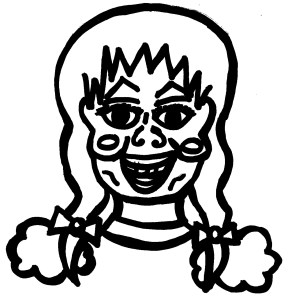
Much like Ouija: Origin of Evil, the latest entry in The Conjuring universe, Annabelle: Creation, has quickly earned the reputation of being a huge improvement on the film that came before it, to the point where its predecessor is entirely skippable so that you can get to the good stuff. 2014’s Annabelle was indeed a huge letdown even for the most dedicated of evil doll horror films, essentially burying what’s an incredibly powerful villain design under a hopelessly generic Rosemary’s Baby riff nobody asked for. That setup made it near effortless for its prequel, Annabelle: Creation, to exceed expectations, something Lights Out director David F. Samberg does with ease. Samberg’s slick production design & impressive control over jump scares & haunted house atmosphere makes for a surprisingly decent Annabelle corrective, delivering an evil doll-themed major studio horror similar to the machine-like precision of last year’s financially beastly adaptation of IT. As someone who’s always a sucker for evil doll horror as a genre, however, I have to admit I still don’t believe the Annabelle franchise is living up to its full potential. Creation is a well-made major studio horror movie, but it’s one that largely ignores the brilliant design of the evil doll at its center; it’s hardly an evil doll movie at all.

A 1940s doll maker & his religiously faithful wife lose their young daughter (named Annabelle, duh) in a freak accident, sending their lives into a depressive tailspin. Over a decade later, they open their home as a makeshift orphanage out of religious duty, bringing a fresh crop of young girls & their corresponding caretaker nun into the now-haunted house. Enter the titular doll Annabelle, whom the dead daughter’s spirit has taken residence in and uses to scare & maim her soul-weary parents’ new boarders. Unfortunately, the doll itself is used more as set dressing and a talisman than a direct threat in the film’s various scares & kills. Samberg has a sharp mind for tapping into the nightmare logic of a scared child: lights go out without explanation, hallways stretch into infinity, traditional sources of terror like a ghost under a sheet or the crack between a bed & wall are reinforced with a genuine sense of dread. This collection of haunted house scares feels entirely separate from Annabelle herself, however. Instead of directly using her in the film’s kills, Creation brings in other threats in the form of creepy nuns & demons made of black smoke, unsure how to deliver on the basic pleasures of a creepy doll horror flick.

As with a lot of films in the post-MCU mode of franchise filmmaking, Annabelle: Creation feels like it’s torn in too many directions trying to satisfy its position in a larger, franchised story. The movie concludes with a lengthy, unnecessary epilogue connecting it to the opening minutes of the first Annabelle feature, establishing above-and-beyond continuity for a film practically no one remembers or values. It’s also tasked with teasing an upcoming horror film about demonic nuns to be set in The Conjureverse, plainlly titled The Nun. What really bothered me, though, is that Creation finds its scares in the dollmaker’s haunted home, not the evil doll he created, which connects the film to the haunted house themes of the original The Conjuring movie at the expense of a super creepy doll that’s used as a prop instead of an active player. I can totally back Annabelle: Creation as a well-made major studio horror film and an improvement on the previous Annabelle entry. Hell, I’d even cite it as an improvement on Samberg’s work in Lights Out, a film I found to be a thematically repugnant carbon copy of The Babadook. It’s still not as great as a proper Annabelle film could be, though, which won’t arrive until this franchise involves its killer-looking doll in its onscreen kills, something that should’ve been a given from the start.

-Brandon Ledet

The Horrors of Adolescent Female Bodies & Bonding in Jennifer’s Body (2009)

At first glance, the 2009 horror film Jennifer’s Body doesn’t fully display the feminist credentials that would be expected from a film of its pedigree.  After the critical and commercial success of Juno, Academy Award Winner for Best Screenplay, it may have been a surprising career move for in-demand screenwriter Diablo Cody to follow up her modest independent debut with a 20th Century Fox-distributed horror film starring famed sex symbol and Michael Bay muse Megan Fox.  Karyn Kusama could also have been accused of slumming it as the film’s director, given the prestige of her own debut film Girlfight, a Sundance Grand Jury Prize winner.  As collaborators on the picture, however, Cody and Kusama were able to covertly deliver a subversive feminist horror film in Jennifer’s Body, despite the oversight of the male-dominated business of major studio filmmaking that backed the project.  Jennifer’s Body has the look and feel of countless other slickly-produced major studio horrors from the mid to late 2000s.  Its mixed reviews and underwhelming box office returns posit it as a misfire for 20th Century Fox, one with no more vital feminist or cultural subtext than any other 2009 horror mediocrities, like Saw VI or the Friday the 13th remake.  Jennifer’s Body’s expensive production values, studio-driven marketing, and employment of Megan Fox in its titular role distract from the feminist subtext of the story it tells, but it’s still a work driven by two behind-the-camera female artists who are directly exploring subjects specific to the modern female experience.  Specifically, Jennifer’s Body utilizes the destructive power of pubescent female bodies and the intensity of adolescent female friendships as direct sources for its horror, something that may not be immediately apparent on the surface.

One of the ways Jennifer’s Body subverts audience expectations of a major studio horror film starring the often-objectified Megan Fox is by incorporating the actor’s objectification into its text.  As suggested in the title, the film is specifically about her body, not her soul or unique personality, which was pointed out by A.O. Scott in his review for the New York Times.  This focus on Megan Fox’s physique was attractive to 20th Century Fox’s marketing machine, who completely misunderstood the intention of Cody and Kusama’s work.  Shockingly, the studio suggested that Fox promote Jennifer’s Body by participating in online chat rooms through popular pornographic websites to appeal directly to the men who might be pruriently compelled to see her onscree.  The idea was shot down before it was ever suggested to Fox in sincerity, but it does exemplify the types of marketing schemes she was asked to participate in after becoming an object of desire in Michael Bay’s Transformers series.  Jennifer’s Body does not ignore the celebrity baggage that comes with casting Fox in its titular role, but rather incorporates it into its basic composition.  In the film, a bumbling nerd played by Amanda Seyfried ogles Jennifer’s body just as much as the heterosexual teen boys in their high school class, even though she is Jennifer’s best friend and not just a casual admirer.  The friendship between the two central characters, Jennifer (Fox) and the playfully-named “Needy” (Seyfried), is depicted to be just as horrifyingly intense as the film’s explicit acts of supernatural violence, but there is also clearly a sexual attraction component built into their dynamic.  Jennifer is universally desired by her peers the way Fox was presented as an object of desire in the real-world media at large (including among this film’s own marketing team) and that intense allure instigates most of the film’s horrific dangers.

Being widely sexually desired is only the start of the terror lurking in Jennifer’s body.  Like with many coming of age horror films set in teenage environments, the film relies heavily on the real-world body horrors associated with puberty and the developing body.  Unlike the film Ginger Snaps, which uses the traditionally masculine metaphor of werewolf transformations to represent its own female puberty body horror crisis, Jennifer’s Body notably adopts the myth of the succubus, which is historically coded as feminine.  Both films apply the tropes of curse and possession not only to the horrors of werewolves and succubi, but to the specifically female condition and the burgeoning sexuality of their protagonists. Ginger’s monstrous form just happens to be a werewolf, which less specifically coded to be female than the succubus.  In most folklore, the succubus is a female demon that drives men insane and into poor health through coerced and repetitive sexual intercourse, essentially functioning as a deadly seductress.  Jennifer’s transformation into a succubus is presented in Jennifer’s Body as involuntary, much like the body horror ritual of puberty. After pursuing a traveling rock band as a hopeful groupie, Jennifer is forced into the role of a live sacrifice for the band’s Satanic ritual, which is botched when they discover she is not a virgin.  A lesser film might have focused more heavily on the grotesqueness of the band’s attitudes towards female sexuality in this moment and spent much more time gleefully depicting their comeuppance, but Jennifer’s Body is mainly concerned with the fallout of Jennifer’s subsequent monster transformation than any kind of traditional revenge narrative.  Becoming a succubus is a side effect of the band’s failed ritual and the symptoms of this transformation show largely in the ways puberty normally manifests in teenage, cisgender female bodies.  The typically ebullient Jennifer is drained of energy, thin-haired, oily-skinned, and just generally not her meticulously perfect Megan Fox self after her transformation into a succubus.  As a metaphor for pubescent transformation, her newfound life as a succubus has robbed her of the power she once enjoyed as the most attractive girl in her high school class.  She does find new, dangerous power in the demonic sexual energy the transformation affords her, however.  Picking on the “nice guy” social outcasts who treat her like an unobtainable sex symbol from afar, Jennifer discovers that she can regain her power and her gorgeous looks by seducing and literally feeding off male victims, which magically restores her vitality and sex appeal. Jennifer may have “preyed” on men prior to her transformation, but her curse creates an extreme situation where her behavior is more horrific and she becomes even more physically attractive (both to the audience and to her subsequent victims).  As with many horror films, Jennifer’s Body leans heavily on the transgression of teenage sexuality as an instigator and justification for its onscreen violence.  The film subverts this trope significantly by having this newfound, dangerous sexuality tragically forced upon its titular killer by the men around her as opposed to something she chose for fun or to satisfy curiosity.  Her newfound sexual potency is no more of a choice or a boon than the horrors of puberty and the male gaze, whether it makes her more powerful or not.

Since pubescent body horror is often explored through monster movie metaphors in high school-set horror films, Jennifer’s Body is much more unique as a feminist horror work in the way it explores the terrifying intensity of adolescent female friendships.  As the protagonist, Needy describes her relationship with Jennifer as long-term “sand box love,” meaning they have been best friends since they were young enough to play in sand boxes together.  The introduction of pubescent hormones and sexual relationships with boys drives the usual wedges between them you’d expect from a coming of age teen girl narrative, but Cody and Kusama focus more on the intensity of Needy and Jennifer’s relationship itself than what would typically be explored in a male artist’s version of the same narrative.  Jennifer and Needy are overly sensitive to each other’s actions and opinions.  Skepticism and disgust over each other’s chosen sexual partners drives most of their verbal conflicts, but mainly because they are unhealthily possessive of each other’s bodies.  They emotionally bully and abuse each other in subtle, long-term ways that feel more appropriate of a decades-old bad marriage than a friendship between teenagers.  This only gets worse once Jennifer’s murderous impulses as a succubus seem to specifically target male partners Needy has expressed romantic interest in, either verbally or through body language.  This tendency is more than just a petty tactic to display the dominance Jennifer’s traditional beauty affords her over Needy; it’s also designed to provoke a detectable reaction out of her, the way an emotional abuser looks for satisfaction in visible proof that they hold power over their victim.  In turn, Needy attempts to claim power over Jennifer’s body by offering to “cure” her of the succubus “curse,” at least in the original screenplay.  In a deleted scene, Needy appeals to Jennifer’s sense of morality by pointing out that her newfound powers come with an unfair cost: a sizable body count.  Jennifer retorts that she’s not killing people, just boys, whom she does not value as anything but playthings and sources of power.  Although casual sex is substituted with murder in this scenario, the exchange is clearly coded as Needy trying to exert control over Jennifer’s choices in how she relates to sexual partners and uses her own body, which is essentially none of Needy’s business. Jennifer and Needy are unhealthily obsessed with one another, which is an aspect of adolescent female friendships that isn’t often explored in any mass media, much less major studio horror films.

The most glaring wrinkle in the subtle, nuanced ways Jennifer’s Body explores the horrific intensity of female adolescent friendships is in how the film depicts queer desire.  Needy’s awe of Jennifer is apparent as soon as the first scene of the film and she often leers at her friend’s physical beauty from the same distant admirer vantage point as the heterosexual boys in their high school class.  It’s only natural, then, that her queer romantic desire of Jennifer would be explicitly addressed onscreen at some point in the film.  It’s not at all an extraneous or tongue-in-cheek intrusion on the story.  Cody and Kusama play much of the central characters’ relationship as sincere melodrama, which Kusama describes on a recent episode of Switchblade Sisters as “the nightmare of obsessive relationships between girls [that] can make or break you,” a genuine conflict that’s meant to be taken even more seriously than the film’s often humorous demonic kills.  That’s why it’s so bizarre that the same-sex kiss shared between Needy and Jennifer feels so passionless and seeped in the male gaze.  Shot with the over-the-top production values of a music video, their single kiss as a pairing is treated as a moment worthy of pornographic leering from the audience instead of a genuine dramatic beat within the context of the story.  It’s as if the salacious businessmen of the film’s marketing team had stepped into the director’s chair for a single shot, drowning out Cody and Kusama’s voices with a heap of studio notes on how best to sell the romantic exchange as a sexual commodity.  What’s even more alarming is the way Needy and Jennifer’s kiss is immediately followed by a moment of what’s often described as “gay panic.”  It’s possible to read Needy’s freaked-out reaction to her out of nowhere sexual encounter with Jennifer as an extension of her general horror with the changes brought on by her best friend’s body (and its corresponding body count), but by recoiling in fear from the brief exchange she pushes the film into participating in a harmful homophobic trope that persists in media at large.  The real shame of that stumbling block is that the queer desire shared between Needy and Jennifer is a legitimate facet of the script that does deserve onscreen exploration.  In the film Heavenly Creatures, the two young female protagonists’ budding sexual obsession with one another, which is notably not played for titillation, is also a means of exploring class issues and socio-economic envy.  By contrast, the homoerotic scene in Jennifer’s Body is played for pure audience arousal, with none of the thematic weight it easily could have carried.  It’s embarrassingly mishandled in a way that exemplifies the studio tinkering that muddled the film’s feminist themes in a myriad of ways, from conception to post-production marketing.

It shouldn’t be a surprise that Jennifer’s Body manages to subvert the expectation of major studio horror filmmaking with meaningful feminist themes.  Not only does a collaboration between Diablo Cody and Karyn Kusama already suggest the likelihood of that accomplishment, but the film also telegraphs its intent by borrowing its name from a Hole song and opening with the line, “Hell is a teenage girl.”  Still, it’s a miracle that a film this heavily subjected to major studio influence could extend its feminist worldview beyond the surface level power of a female monster violently destroying the men who ogle her.  The expected tropes of coming of age body horror, punishment for transgressive sexuality, and revenge for unwanted sexual advances are all incorporated into Cody’s screenplay, but the film still carves out its own thematic space in the horror landscape by focusing on the intense female friendship between its two leads.  As many boys as Jennifer kills in her quest to restore her energy and make her hair shiny again, none are ever as significant to the dramatic plot as her relationship with Needy, a long-term obsession that extends beyond romance into an entirely different, terrifying realm.  The bond between adolescent female friends drives just as much of the tension in Jennifer’s Body as the kills and the horrors of puberty.  That dynamic is not the flashiest or most immediately apparent aspect of Jennifer’s Body; it’s often overwhelmed by the demonic kills and leering at Megan Fox’s physique that would typically be expected of most major studio horrors in the film’s position.  It’s what makes the film unique as a feminist text, however, and its positioning as the heart of the film was entirely intentional on the part of Cody and Kusama. They knew what they were doing, even if the studio behind them did not.

-CC Chapman

Episode #46 of The Swampflix Podcast: Cat Peoples & Sleepwalkers (1992)

Welcome to Episode #46 of The Swampflix Podcast! For our forty-sixth episode, we explore the rich cinematic world of werecats & incest. Brandon and Pete Moran of the We Love to Watch podcast discuss the classic Val Lewton horror production Cat People (1942) and its trashy, New Orleans-set 1980s remake. Also, Pete makes Brandon watch the Steven King-penned werecat camp spectacle Sleepwalkers (1992) for the first time. Enjoy!

-Brandon Ledet & Pete Moran