Death Ship (1980)

trianglethreehalfstar

campstamp

A cruise liner is minding its own business when suddenly an empty, ghostly freighter rams it. The wreck leaves only a handful of survivors, including a hard-ass Captain Ashland played by George Kennedy. The survivors drift on a raft until the freighter appears again. Like every group of protagonists in every haunted location based movie, they willingly enter a situation despite the obvious red flags. They board the Death Ship. We learn that the boat is a “Nazi interrogation vessel,” still on its mission to kill. In fact, it needs blood to keep running. Eventually the Death Ship possesses captain Ashland, and generally terrorizes the lot, killing off a few of them.

It’s hard to pinpoint what exactly it is that makes Death Ship engaging. It’s a disappointment in most regards. The acting is terrible, the characters are under-developed (to the point of wondering if anyone even tried at all), and the premise is never really fully explained. There are some shocks, but they’re too hokey to be convincing or effective. In fact, there’s almost nothing redeemable about this film at all. Yet, I still enjoyed it. Maybe not as a spooky Shining-esque boat horror I assume they intended, but as a campy masterpiece.

One of Death Ship‘s many enjoyable flaws is the unexplained nature of, well, everything. A lot of strange things happen and have strange consequences. For example: a woman writhes around in a blood shower in one sequence and in the next we just get the information that she’s dead. How did she die? Why does a ship that needs blood waste so much blood on a shower? You don’t get answers, but do you really need them after watching someone squirm around under a shower head oozing fake blood? There are so many moments like this.

Death Ship is great, but it is also bad. Unlike cult films like Troll 2 — which is tone-wise the best movie to compare it to, where unknowns deliver the best performances they can muster under bizarre direction and bad writing — Death Ship manages to get a similar style of performance with actual actor, and actual Oscar winner, George Kennedy. The idea of a Nazi Interrogation vessel still sailing back and forth on the atlantic looking for victims isn’t developed much more than this one sentence. I think the strongest thing it’s got genuinely going is the ominous synth-y soundtrack.

-Alli Hobbs

The Cat and the Canary (1927)

three star

One year after the Art Deco silent horror masterwork The Bat made the jump from stage to screen, Universal Studios got their feet wet in the horror game with an adaptation of a very similar play, The Cat and the Canary. Along with the much lesser trifle Midnight Faces, The Bat & The Cat and the Canary combined to establish what would become a very popular subgenre of early horror: the “old dark house.” In the “old dark house” story, guests at an ancient, spooky mansion are terrorized by seemingly supernatural events & a mysterious killer. At the story’s natural end the killer’s identity is revealed and all of the preceding supernatural events are explained to be their doing. This was a very popular murder mystery/horror plot form the 30s throughout the 50s until the murder mystery aspect was dropped & the supernatural elements were played up & developed into the “haunted house” genre. By the 1970s & onward the “old dark house” plot was spoof fodder for properties like Murder by Death, Clue, and Scooby-Doo, but in the 1920s it played remarkably fresh, with The Cat and The Canary standing as a prime example of the horror genre’s merits as an artform. Unfortunately, in retrospect the film feels a lot less special & a little more flawed than it did to the audiences it floored in 1927, especially with the towering presence of The Bat casting its shadow over the ordeal.

A wealthy eccentric on his death bed bemoans the fact that his family hungers after his money like a gang of cats circling a caged canary. In order to fight them off, he sets the reading of his will 20 years into the future, when the family returns to learn that the money has been willed to his most distant relative. There is then a conspiracy to drive this distant relative insane as a means to strip them of their newfound wealth due to incompetence. In the meantime anyone foolish enough to get in the way is mysteriously murdered and, because the mansion setting is so very spooky, their deaths are blamed on “ghosts.” The Cat and the Canary boasts a very straightforward plot structure that calls a lot of attention to its stage play origins, but what the film lacks in a unique narrative, director Paul Leni makes up for in pure atmosphere. The German Expressionist filmmaker brings an incredible eye for visual play to the big screen, a bridge between art house Europe & the more rigid spectacle of Old Hollywood that I believe would guide the heights of Universal horror productions for decades to come. Leni unlocks the silliness of the film’s stage play origins and allows the camera to move in subtly haunting ways, as if exploring a crime scene with a flashlight (quite literally in an early moment). He also relies heavily on German Expressionism’s penchant for drastic lighting & dreamlike imagery. Gigantic cats & medicine bottles tower over a dying man. Overlaid images like a doorknocker, an envelope, and a gloved hand shift large in perspective, foreshadowing the deep focus technique Citizen Kane would pioneer in the early 40s. Just examining gorgeous, isolated frames of the film, it’s no wonder that The Cat and the Canary was known as the definitive  & haunted house movie,  inspiring no less than five other feature film adaptations of the same play & influencing horror giants like Alfred Hitchcock with its visual style.

The problem with The Cat and the Canary is a fairly common one with old school horror productions. It’s actually the sole reason I had to knock a half-star off my rating for the otherwise flawless The Bat. In order to soften the cruel blow of the film’s supernatural (and potentially blasphemous) terrors, old fashioned horror was often mixed with hokey yuck-em-up comedy, particularly in American productions. In The Bat, a dopey, dim-witted maid makes an ass out of herself by continually mis-guessing the true identity of The Bat. In Midnight Faces, the “old dark house” genre’s other founding father, the comedy takes the ugly form of racial caricature in a scaredy cat black sidekick. The Cat and the Canary, unfortunately, stretches the comedy element across as many characters as it can, turning what is otherwise a beautifully-constructed art film into a painfully hokey farce. Now-tired gags like a scared character stuttering, “G-g-g-g-ghosts!” & incomprehensible relics like, “It’s about time you climbed on the milk wagon,” (what?) drag a lot of what makes The Cat and the Canary special down into the depths of eyeroll-worthy comedic tedium and it’s honestly a damn shame.

There’s certain old-world cheese that I can forgive given this film’s ancient release date, such as the way it hammers home the central cat & canary metaphor that gives it a title over, I believe, three separate repetitions. That I can live with. The way the film’s hokey comedy routines drain the blood out of its supernatural horror, however, is a true bummer. The Cat and the Canary is ultimately a film at war with itself. As a cornerstone of what American horror would come to look like in it wake, the film is an indispensable artifact and an occasionally breathtaking one at that. It’s also a failed comedy, though, which is up there with the most difficult kinds of films out there to enjoy. This is a problem made even worse by the fact that it’s bested by The Bat in every single possible regard, especially in the look of its central killer antagonist, which is not at all catlike in his visage in comparison to the other film’s humanoid creature. The result is a flawed work that I admired, but also found a little disappointing. I hope somewhere else in Paul Leni’s career there was a film that made proper use of his stunning cinematic eye without cheapening it with broad humor.

-Brandon Ledet

Scooby-Doo! & WWE: Curse of the Speed Demon (2016)

scooby-doo

three star

campstamp

I’ve gone on record as enjoying the first WWE/Scooby-Doo collaboration WrestleMania Mystery (the Flintstones collaboration Stone Age SmackDown was even better), but was a little skeptical that a sequel could find much more room to play around with the concept of a Scooby-Doo pro wrestling picture than what’s established in the original. The first film brings the gang to WrestleMania where they meet a bunch of famous “WWE Superstars” at the company’s biggest annual event & help solve the mystery of an improbable specter threatening to ruin the spectacle, in this case a bionic ghost bear (seriously). I expected a sequel would simply repeat the same exact scenario with a fresh batch of pro wrestlers & lazily call it a day, but Curse of the Speed Demon accomplished much more than that on the creative end. Recognizing that its larger-than-life cast of musclebound characters don’t necessarily have to live in a wrestling ring in their animated form, Curse of the Speed Demon picks an entirely new context for them to flex muscles & deliver promos in: off-road monster truck racing. The sequel to WWE’s original Scooby-Doo collaboration plays less like an animated pro wrestling picture & much more like a little kid’s imagination as they smash together Hot Wheels toys in a sandbox.

Instead of attending a second WrestleMania, Scooby & the Mystery Gang find themselves at Muscle Moto X, an impossible Vince McMahon startup that combines monster truck mayhem with dirt track speed racing. (Though, I guess if McMahon were to start a dirt track monster truck racing division of his brand, that name might not be far off, considering the long-gone XFL.) The film gets further & further away from realistic versions of what off-road pro wrestling monster truck races might look like (as unrealistically goofy as that starting point is on its own), eventually just says “Fuck it.” and indulges in some Mario Kart-type cartoon race tracks you’d find doodled in an eight year old’s dream journal. Much like the ghost bear of the last Scooby-Doo/WWE picture the proceedings here are mucked up by an otherworldly threat, in this case a literal speed demon known as Inferno, which may or may not be someone involved with the company trying to sabotage the success of Muscle Moto X. Although the wrestlers are not in their usual squared circle habitat, they’re more than willing to bodyslam & tussle with Inferno on the dirt track until the demon’s true identity can be revealed. WWE personas mix with Scooby-Doo’s harmless, trademarked stoner humor and, viola!, you have an enjoyably campy kids’ picture that captures the spirit of pro wrestling without all that pesky pro wrestling getting in the way.

Of course, as a pro wrestling fan, a lot of the fun of indulging in disposable trash like this is in seeing beloved WWE performers doing their thing in animated form. For the most part, the contributions are enjoyable, if not predictable here. Michael Cole & Seamus do their usual thing: inanely providing play-by-play & interspersing action with unprompted shouts of “Fella!” respectively. Paige bounces some of her mall goth sarcasm off the similarly difficult to read Lana & Rusev, which is an interesting dynamic that would likely never occur in a wrestling storyline. In-the-ring high-fliers Kofi Kingston & Los Matadores defy gravity in some really goofy cartoon logic. Vince, HHH, and Stephanie McMahon present a human face for the company & A-Lister The Miz constantly points to the absurdity of the whole ordeal in lines like “Another monster attack? Really?” & “Strangely enough, I’ve been mauled by a monster on a midnight jog before,” referring to events of the first film. It’s the more over the top characters who really steal the show, though. The Undertaker is especially game, gravely reading lines like “Rust in Peace” [to his deeply mourned, irrevocably smashed vehicle] or gleefully driving a souped-up, sandwich-shaped food truck & saving the day with a sausage link lasso. It actually makes sense that Taker would be in the center of this film’s story, given that the auto-performer Grave Digger is pretty much the monster truck version of the wrestler & I suspect that exact dynamic is what the film was initially built around. Taker fills the role well, bouncing off the Mystery Gang’s comedic sensibilities (with the voice of Velma now filled by half of Garfunkel & Oates, Kate Micucci, and Shaggy being the eternally imprisoned in the role Matthew Lilard), but he’s not the most interesting player in the game. That would be the Rhodes family.

I think there’s great camp value potential in WWE’s collaborations with the Hanna-Barbera brand that’s not quite fully realized yet at this third-film-in juncture. Curse of the Speed Demon finds a lot of goofy room to play with its basic “super stars & super cars” concept, like in the Michael Cole-shouted line, “Only The Undertaker could fly a sandwich out of the jaws of oblivion!” However, I think they could push the cartoon absurdity even further, as evidenced by the way the film uses the Rhodes brothers Goldust & Stardust. Because the temporal demands of production necessitate that these collaborations will be behind on current WWE storylines, Curse of the Speed Demon brings Goldust & Stardust back to the delightful heights of their absurd, magical “Cosmic Key” era of promos, which I believe was back in the late summer of 2014. Including other now-outdated storylines like The Authority (or, for that matter, the now departed from the company/galaxy Stardust and, even more sadly, the departed from this mortal coil Dusty Rhodes) is a little awkward, but the magic of The Cosmic Key silliness suggests an even more out-there kind of goofery the company could reach for, with all of the characters’ magic dust &strange hissing. At the end of my review for the first Scooby-Doo/WWE film I suggested that I’d like to see a Stardust Meets the Jetsons picture (something that’s pretty damn unlikely now). I want something like Huckleberry Hound in a New Day unicorn & rainbows cartoon. I want to see the concept pushed to the point where Hanna-Barbera characters meet WWE performers in their own strange worlds nestled in their gimmicks instead of their profession.

Curse of the Speed Demon starts to hint at that go-for-broke cartoon logic potential by giving Goldust & Stardust so much strange screen time (along with their now deceased father, which was about as sincerely touching of an inclusion as you could expect from a Scooby-Doo pro wrestling feature) & by removing the action from the wrestling ring in favor of an outlandish monster truck racing setting. I say push it even further. Much like the works of Mario Bava & Dario Argento (who I’ll admit I’m only referencing for the absurdity of it), the mysteries at the heart of Scooby-Doo are not nearly as important as the style in which they’re told, which is typically a campy take on old-fashioned haunted house horrors. There’s a lot of room for playing within that dynamic while sticking to kayfabe in the in-the-ring gimmicks of folks like Stardust or the Undertaker or The New Day or, hell, even the Wyatt Family (who I loathe to watch due to their monotonous promos, but could totally work in a haunted house cartoon). Curse of the Speed Demon finds the right tone of the cartoon-wrestling hybrid I’m describing in certain moments (The Miz putting the speed demon Inferno in a figure four leg lock or the Undertaker tombstoning him come to mind, as does the film’s basic premise, which feels like something I might’ve come up with while riding my WWF Big Wheels as a kid). It just needs a little more of a push into that detached-from-reality direction for this cartoon WWE Universe to really stand out as a memorable campy delight. As for now, they’re doing some surprisingly amusing work & I’m sure a lot of the wrestling-obsessed kids out there are eating it up, which is good enough to keep my attention for now.

-Brandon Ledet

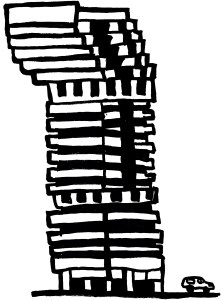
High-Rise (2016)

EPSON MFP image

fourhalfstar

One of my favorite movie genres is something I’ve dubbed the “Party Out of Bounds,” a kind of storytelling structure where guests at an initially civil social event are compelled beyond reason to stay once polite society de-evolves & things get primally nasty. The exit is open, but they decline & instead choose to duke it out with their fellow “party” guests. As much as I enjoy the realistic examples of this (admittedly made-up) genre like Who’s Afraid of Virginia Woolf?, The Boys in the Band, and this year’s A Bigger Splash, I really get excited when the “Party Out of Bounds” story gets supernaturally twisted, like in the genre’s crown jewel The Exterminating Angel or in the recent dystopian period piece High-Rise. High-Rise is a particularly interesting case because its party starts from a seemingly dangerous, chaotic place and gets even more wild & savage from there, expanding the scope of its hedonism & cruelty to a months’ long, seemingly supernatural descent into the darkness of the human soul. It’s a sight to behold, a sinisterly amusing & deeply unsettling sight that stands as one of the best “Party Out of Bounds” stories I can remember ever seeing onscreen (and in subsequent nightmares).

Adapted from a novel by J.G. Ballard, the madman who penned the source material for Crash (1996’s incredible Cronenberg provocation, not 2004’s shameless Oscar bait), High-Rise is a reflection of 1970s anxieties about “luxury lifestyle” commodity & spiritually-erosive consumer culture as funneled through an aggressive, vague menace of existential dread. The film posits the modern consumer as a “bio robot,” a soulless machine who cannot function without their various gadgets & devices of “convenience.” Tom Hiddleston’s relatively well-adjusted protagonist begins his journey into a bleak, 1970s version of the future when he moves into a high-rise condo complex, a towering work of architectural Brutalism. It’s easy to believe you understand where the film is headed in his early interactions with the high-rise & its inhabitants. The building is a self-contained class system that matches the rigid haves-vs-havenots societal structure of works like Snowpiercer; the wealthy live on upper floors while the middle & lower class fight for their crumbs on the bottom. As the Talking Heads would put it, the building “has every convenience,” from a grocery store to a gym to a rooftop terrace complete with gardens & horseback riding (that only the upper floor wealthy can access, of course). The rich divert & hoard the best of the building’s resources, setting up an anti-capitalist uprise that we’ve seen play out in many (if not most) dystopian sci-fi works in the past. High-Rise begins its journey into human depravity from this familiar place, but completely unravels & sets fire to the genre expectations that accompany its starting point. I don’t think I’ve ever seen anything exactly like it before, which is what makes it such an exciting, terrifying work.

In addition to their addiction to modern convenience, the inhabitants of the titular high-rise are also addicted to partying. As a seemingly well-to-do surgeon (whose professions appears curiously specific to peeling faces off cadavers), Hiddleston’s protagonist is just wealthy enough to get a glimpse of the Victorian-style excess of the parties on the upper floors (as orchestrated by the building’s owner/architect, portrayed by Jeremy Irons), to mingle with the swinging 70s drug orgies of the middle floors, and to kindly visit with the little kids’ birthday parties of the lower working class floors (dutifully lorded over by Elizabeth Moss’s eternally pregnant, much put-upon matriarch). Hiddleston’s role as an entry point to each layer of the literally stratified society within the high-rise is a great starting point for establishing the scenario’s social structure, but ultimately becomes meaningless as the walls dividing these groups begins to break down. After the high-rise experiences an unexplained power outage the entire building devolves into total chaos. In a literal sense the structure begins to crumble: the water stops flowing, the gym is dismantled, the food in the grocery rots & molds, etc. There’s something much stranger going on in this shift, however, something that feels akin to a Persona-style psychological break. High-Rise is, at heart, a mass hysteria horror, a surreal exploration of a weird, unexplained menace lurking in our modern political & economic anxieties. Instead of simply leaving the titular building when things go horrifically sour, its inhabitants instead party harder and their drunken revelry devolves into a grotesque, months-long rager of deadly hedonism & de Sade levels of sexual depravity. The people of the high-rise are portrayed as just another amenity, one that can malfunction & fall apart just as easily & thoroughly as a blown circuit or a busted water pipe. It only takes weeks for the societal barriers that keep them in line to fully degenerate so that the entire high-rise society is partying violently in unison in their own filth & subhuman cruelty. If this is a version of America’s future in consumerism & modern convenience, it’s a harshly damning one, a confounding nightmare I won’t soon forget.

As much as the nastier details of High-Rise‘s eventual descent into cannibalism, rape, and animal cruelty (the majority of which, it’s worth noting, thankfully occurs offscreen) is obviously far outside my own experience with what happens when a party goes out of bounds, I do recognize a little truth in the initial power outage as a source for the mayhem. Anyone in New Orleans (or elsewhere in the coastal South) who’s gotten through the weeks-long power outages that follow hurricanes by drinking gallons of liquor in the darkness & heat should be able to recognize some of their own despair & depravity in the scenario, even if just a little. No matter how much you love the people you ride out a hurricane outage with, the confined space, oppressive boredom, and uncomfortable living conditions of the situation can increase tensions exponentially on a daily basis. The alcohol doesn’t help either (except maybe with the boredom). As I multiply that scenario in my head by the hundreds of people occupying this fictional high-rise & the economic tensions already driving them mad before the outage, this movie’s complete descent into subhuman depravity sort of makes perfect sense. Sort of.

There’s plenty of high art craft that goes into High-Rise‘s trashy version of Cronenberg mania, a marriage of aesthetics represented nicely in its off-putting soundtrack of nervous proto-punk jams & various spooky covers of ABBA‘s “S.O.S.” The film puts a lot of care in constructing its traditional sci-fi dystopia beginnings, distinguished only in details like its The Diary of a Teenage Girl/Space Station 76 faithfulness to its grim 70s era origins and its willingness to ogle at a male actor’s naked body for a change (Hiddleston’s, of course). When the setup gives way to the blindingly chaotic & inhumanly cruel punchline, though, the film finds its own distinctive space of cinematic innovation. High-Rise pushes its initially-familiar story into new, surreally wicked territory that makes for a more memorable experience than what the first act would lead you to expect and then lingers there for an uncomfortably long time. I’ve seen plenty movie parties go out of bounds before, but this is the one that most convincingly sets fire to the path back to civilization in the process. Its an entirely unique obliteration of the thin line that separates the modern consumer from the wild, bloodthirsty beast, a nightmare of a good time that will surely become a strong contender for cult classic status once more people have a chance to fall under its terrifying hypnotic spell.

-Brandon Ledet

Lights Out (2016)

EPSON MFP image

onehalfstar

When you were watching The Babadook, our favorite horror film of 2014, did you find yourself wishing that the film was tasteless, lifeless, and dismally formulaic? If yes, then you are going to love Lights Out. (Also, you are ridiculous.) The Babadook was a wonderfully written & performed depiction of severe depression and how it can affect parenting, one filtered through a demonic metaphor that both terrifies & inspires sincere reflection. Its delicate conclusion suggests that there are no simple solutions to clinical depression or whatever other monsters haunt our personal relationships, mental illness or otherwise. Lights Out, by comparison, is a grotesquely Hollywood take on the same metaphor. While The Babadook follows a mother as she struggles with her own mental health, Lights Out instead takes a distant, almost vilifying look at the same struggle. In The Babadook we empathize with a woman who finds herself uncontrollably annoyed by her own child; Lights Out shifts to the child’s POV, making the mother seem like a heartlessly selfish brute. Both movies represent depression as a monster made of pure darkness, but only one is visually interesting or at all unique in its specificity. Both are blatant in their shared metaphor, but only one handles it with any semblance of compassion or nuance. Both cover the same territory, but only one is worth watching. Hint: it’s not Lights Out.

Instead of following the story of the people who suffer the most in this mental health horror (the depressed woman & the young son under her care), Lights Out finds its audience surrogate in the boy’s older goth rock sister who no longer lives at home. This one step removal from the crisis at hand does little but deflate the emotional impact of the mother’s struggle (by making her look abusive & downright feral from an outsider’s perspective) and to clear room for a completely besides the point romance with another goth rock knucklehead it takes a significant amount of effort to merely tolerate. The estranged daughter returns home to find her mother in a manic state, the same as she was when she was a kid. The curtains are drawn; the mother is holed up & babbling to herself; her youngest child is too scared to sleep. The depression demon that haunts the household is given the physical form of Diana, a “childhood friend” (translation: lifelong illness) of the mother’s with severe light sensitivity and a jealous rage that threatens the physical & spiritual safety of anyone who dares to love her best bud. The images of a depressed woman’s home life as well as her distant past in a mental institution feel horrifically outdated & clichéd in an entirely stigmatizing, unrelatable way, especially in light of recent, empathetic works like Gabriel & I Smile Back. It’s the exact clumsy hand you’d expect in a Hollywood horror on such a delicate topic, but without any other discernible entertainment value present to distract you from the problem. What should be an interesting metaphor is boiled down to cheap jump scares, haunted house ambiance, and a violently fucked up climax that’s so unearned in its emotional & shock value provocation that it’s difficult to feel anything but cheated & manipulated in the tawdriest of ways when you (thankfully) reach the end credits.

Funnily enough, I went to the theater thinking I was going to watch the upcoming thriller Don’t Breathe, a horrific-looking film about a blind killer that (based on its trailer) could’ve easily carried the title Lights Out. That’s not the first time this happened to me, either. I’ve also gotten this movie’s title mixed up with the goofy Grand Canyon horror flick The Darkness from earlier this year before, for obvious reasons. (Full disclosure: I planned on watching all three anyway.) This confusion points to one of Lights Out‘s biggest problems: mediocrity, a total lack of distinction. It’s not silly enough to be campy. It’s not brutal enough to be disturbing (except maybe in that unearned finale). It’s not memorable enough to justify its existence in light of the far superior work The Babadook. There’s some interesting visual play with the film’s central gimmick that doesn’t allow its monster to appear in light, especially in the way it incorporates black lights, headlights, flashlights, candles, and gunshot flashes in its tool kit. However, most of the best uses of the gimmick (including its blacklit Blood & Black Lace mannequins) are spoiled by Lights Out‘s better-than-the-film trailer and are backed up by a cast of characters completely devoid of charisma. The one exception on that latter point might be the demon Diana, but she gets very little screen time & is mostly dealt with as a monster in the closet/under the bed threat instead of treated with the respect her mental health metaphor deserves. Lights Out is a bland, hamfisted misstep that bungles its attempts to tackle a serious, worthwhile topic. Worse yet, it feels like a subpar version of a recent, iconic work we’ve already seen & (in my case, at least) would rather watch again instead of seeing it bastardized. If you can manage it, I’d suggest skipping this film entirely & sticking to watching it’s actually well-put-together trailer, which works just fine as a two minute horror short. You’ll be much better off & I’ll envy your resolve.

-Brandon Ledet

Resident Evil (2002)

EPSON MFP image

three star

campstamp

I’m not a video game nerd. The last legitimate gaming system I got excited about was the Nintendo 64. The only one I’ve bought since was a used Wii and that beaten-up relic served exclusively as an emulator for NES games. As such, I’ve never had much interest in the Resident Evil film franchise. My limited knowledge of the series, based entirely on vague hearsay about its video game source material, has been that it’s about a lady who shoots zombies in some kind of underground bunker. While I’m not over the moon about video games as an entertainment medium, I do actively seek out eccentrically inane movies, but there was just never anything about yet another zombie action horror starring a sexy lady with a pile of guns that had much promise for Super Mario Bros. levels of potential silliness in a cinematic video game adaptation. There are now five Resident Evil movies in what has become a decade-long franchise, however, which lead me to suspect that there was more going on here than just a walking dead genre pic with little to no distinguishing features in a crowded field of zombie media. It’s true, too. Resident Evil is more than just a zombie-filled shoot-em-up featuring a beautiful woman with a giant gun. In fact, it actually kinda holds its own as one of the sillier & more entertaining video game adaptations out there, much to my surprise.

While I wasn’t exactly wrong in assuming Resident Evil centered on a widespread epidemic of generic zombie mayhem, I did the movie a huge disservice by reducing its setting to a mere underground bunker. The symbolically named Umbrella Corporation (a detail I assume was carried over from the video game), which periodically deals with very normal corporate modes of money making & privately makes most of its profit off of biochemical weaponry, is the owner of said underground bunker, known as The Hive. The bunker’s underground employees, blissfully unaware of the company’s warmongering, are transformed into the aforementioned zombie horde when one of the more volatile chemicals they work on is released through the bunker’s vents (supposedly) by mistake. As the infected, undead Umbrella Corporation employees transform into monsters, they also become moving targets for a team of leather-clad supersoldiers & a Borne Identity/American Ultra type badass who can’t remember her past but seems to know more about the facility than she should. As her memory slowly returns, our hero must piece together whether or not she’s responsible for the initial outbreak or if there’s some kind of other, larger betrayal unfolding before her. Meanwhile, The Umbrella Corporation’s surveillance cameras seem to be recording these supersoldiers’ every move as they become unwitting participants in a zombie-killing, viral experiment. Also, some strange, not at all human creatures & a childlike AI hologram pop in to push the movie past its zombie-stomping roots into some strange sci-fi horror territory. Its all a lot more fun & complex than I expected, however corny & hamfisted.

Resident Evil comes from a time when video game adaptations were attempting to move on from children’s movie fare like 90s productions Street Fighter & Double Dragon into something more violent & “adult,” like Doom. Director Paul W.S. Anderson splits the difference & lands the film halfway between PG-13 & R (not that the MPAA saw it that way) in terms of sensibility. There’s a violence & grittiness in the film’s nonstop parade of zombies on fire, exposed muscle Rottweiler demons, undefinable The Thing-type mutants, and flashbacks to a blurred sexual encounter the film appears to find very important to the plot, but something about the way they’re handled makes it play like kids’ stuff, just like Anderson’s surprising violent (and even more surprisingly competent) Mortal Kombat adaptation. This is a teenager’s sweet spot in terms of maturity level, a tone easily recognizable in the film’s choice to dress its star, Milla Jovovich, in a post-apocalyptic negligee for most of its runtime & two sheets of paper-thin hospital gauze at its climax. Jovovich’s ass kicking commitment to the role, combined with similar sincerity from Fast & Furious “family member” Michell Rodriguez, cuts down on some of that teenage boy booby-ogling, though, to the point that it mixes with the intense body horror, George Romero brand zombie mayhem, and stray notes of otherworldly sci-fi (an aesthetic Anderson accomplished a lot more with in his film Event Horizon) to make for a fairly decent, amusingly campy action cheapie I would’ve loved had I seen it when it was haunting theaters & I was 15. I appreciate Resident Evil‘s teen nerd immaturity & casual adoption of weird video game ideas in its matter-of-fact silliness. At the very least, its a far better adaptation than the Rock vehicle Doom, which aims for a similar aesthetic, and it got me curious enough about where the series could go from such a ludicrous starting point that I just might check out Anderson’s five gratuitous followups now that I’ve finally been initiated.

-Brandon Ledet

Southbound (2016)

EPSON MFP image

threehalfstar

The horror anthology is a tried & true genre formula that opens up an opportunity for directors (often in collaboration) to experiment with several short-form narratives & modes of cruelty without having to fully commit to a single, dead end morality tale at feature length. Since the genre’s heyday in the 70s & 80s, however, it’s been stuck in a very rigid structural form that’s far more limiting than what its playfully experimental storytelling style calls for. A typical horror anthology presents a wraparound segment, say Debbie Harry preparing to cook & eat a child in Tales from the Darkside, that provides a reason or a context for its several short form stories to be told. It’s an easy, functional structure, but one that feels increasingly stilted in a modern context. The best horror anthologies in recent memory are the ones that attempt to break away from this classic formula by establishing a looser, more freeform mode of connecting their segments. Michael Dougherty’s Halloween-themed anthology feature Trick ‘r Treat was an interesting development in the genre in the way it repurposed the everything-is-connected structure of indie-dramedies from the aughts for something much more eerie & amusingly sinister. The 2016 feature Southbound picks up the torch from Trick ‘r Treat in this way, dropping a lot of that film’s campy humor, but keeping & developing its ideas on how the horror anthology genre can potentially be reshaped & modernized.

Directed by an art collective known as Radio Silence, who had a hand in the recent anthology feature V/H/S, Southbound escapes the anthology genre’s wraparound segment requirement by anchoring its interwoven narratives to a single location: a desert hellscape. Much like the straight-to-VHS minor cult classic Highway to Hell, Southbound finds the desert to be a perfectly appropriate (and attractively affordable) blank slate backdrop for its supernatural, hellbound terrors. This is a Tales from the Crypt-meets-Twilight Zone collection of morality tales in which several travelers on “a road that doesn’t seem to exist” feel remorse for crimes they’ve committed (ranging from abandoning a friend or texting while driving to full-blown homicide) and, thus, end up in a continuous loop that looks, feels, and sounds a lot like purgatory. Each tormented soul, from a business man to a small time crook who recently committed murder to the lead singer of a Coathangers-style punk band, attempts to rationalize their lives’ mistakes & convince themselves they’re not in the wrong, but their guilt continues to torment them all the same along that “long road to redemption.” Also eager to torment them are the much more literal threats of 70s era Satanic cults, vampiric demon alcoholics, cruel EMT phone operators, and floating jellyfish-esque Angels of Death that recall CGI recreations of Harryhausen’s stop motion skeleton army. Southbound is loaded with the same body horror, spooky ghosts, and general devilry that populates just about every modern horror you can name. It even falls into that faux 1970s vibe of recent productions like We are Still Here & The Conjuring that has become such a ubiquitous trend as of late. The film finds its own eerie groove in its supernatural dilemmas, though, where everything just feels off, as if in a nightmare or a stress dream. It also wraps around to complete its own circle in an impressively ambitious way, a closed loop terror I tend to fall for in similar fare like the severely underappreciated Triangle.

It’s easy to fault Southbound for common 2010s horror tropes like cribbing from The Devil’s Rain-era Satanism or borrowing some John Carpenter notes in its score or using an old, innocuous pop song in a spooky context (in this case a girl group singing “Don’t let the party end” in an endless, horrific purgatory), but the film really does push itself in ambition & weird ideas in other ways. The acting & the CGI can be a little weak, but the film more than makes up for it in its supernaturally uneasy mood and in its willingness to linger in a situation once its initial shock has already settled. For instance, many a horror anthology might reveal a Satanic cult as a threat in a stray segment, but Southbound puts care in its revelation of that threat, which slips out during the following summertime prayer: “Oh, Divine One, we offer our gratitude for this beast, for this blood, for these vessels of anew. We bow to you, for you are all-knowing. We offer ourselves to you, for you are the master” and continues to slowly develop from there. Weird stuff. I also feel like I’m burying the lede here by failing to mention until this point that The Jesus Lizard/Scratch Acid front man David Yow stops by as an unhinged feature player, one that humorously demands the desert road’s demonic inhabitants “Quit being so fucking mysterious!” The one stretch of Southbound that kind of lost me was the final segment’s indulgence in one of my least favorite genres, the home invasion thriller, but that’s mostly a matter of taste & eventually it proves itself useful by completing the film’s closed circuit of desert-bound purgatory horror. As a modern horror anthology, the film mostly delivers both on its genre-specific surface pleasures & its interest in boundary-pushing narrative innovation, which is more than you can say for most modern horror films it resembles. Besides, it features David Yow wielding a shotgun like a raving lunatic. Where else are you going to find that? (Please don’t ever tell me there’s an answer to that question.)

-Brandon Ledet

Ghostbusters (2016)

EPSON MFP image

fourstar

Like most people my age (I was born in 1987), my first experience with the Ghostbusters came not in the form of the 1984 comedy classic; instead, my love for all things Ghostbusting was the result of watching the animated The Real Ghostbusters as a kid. In fact, watching the cartoon adventures of Egon, Venkman, Ray, Winston, and Janine on Saturday mornings, alongside Teenage Mutant Ninja Turtles and Garfield and Friends, is one of my earliest memories; unlike TMNT, I can actually remember particular episodes and character types from Ghostbusters (I know that the Turtles theme song delineates each turtle’s individual personality, but that blew right past me as a kid and I couldn’t tell you which one was a “party dude” right now to save my life). I didn’t see the original film until I was a little older, and even then my clearest childhood memories of the movies actually comes from Ghostbusters II, where the pink slime that fills Sigourney Weaver’s bathtub made me terrified of the tub for a few months.

I was pretty excited to hear about the remake/reboot when it was first announced last year, but wasn’t confident that it would ever really been made and even less thrilled about how well it might turn out. I still remember hearing on the radio about a fourth Indiana Jones film as far back as 1997, when Joaquin Phoenix was in talks to play Indie’s younger brother; then, eleven years later, Kingdom of the Crystal Skull plopped into theatres on my birthday like the worst present of all time. I had mixed feelings about Paul Feig; he directed seven episodes of Arrested Development, sure, but one of those was “Ready, Aim, Marry Me,” which is probably the worst single episode of the original three season run. I was also not one of those people who was terribly impressed with Bridesmaids, although it might merely have been that I was in a terrible mood the first time I saw it. Still, Feig was heavily involved with Other Space, Yahoo’s sci-fi comedy that was released last year and which I enjoyed much more than anyone really has a right to (and which featured super cutie Karan Soni, who plays deliveryman Bennie in Ghostbusters, and Neil Casey, who plays villain Rowan North*). Still, when I saw a pic of the all-gal Ghostbusters squad all suited up and ready to bust last year, I was super on board. I retweeted the picture and expressed my excitement, even (and Feig favorited it!).

*According to the credits, fellow Other Space alums Milana Vayntrub and Eugene Cordero were also in the film, as Subway Rat Woman and Bass Guitarist, respectively, but I missed them, unfortunately.

There was (unfortunately, inevitably, and unfortunately inevitably) a backlash, mostly of the misogynistic variety, because of course there was. Of. Course. There. Was. Most of the criticism of the film had little to do with the fact that Ghostbusters is pretty much a perfect movie in a lot of ways (if inarguably a little dated in its kinda creepy sexual politics); after all, this is the primary objection that is usually voiced in response to remakes of any kind. “Why would you remake Total Recall/Robocop/King Kong/True Grit/The Manchurian Candidate/Poltergeist (etc.) when the original still holds up?” But that’s not why (a certain subset of) people were upset about Ghostbusters 2016 at all, even if they tried their best to couch their anti-woman bias in that language. Of course, the blanketing effect across the internet meant that people who were legitimately concerned about the potential artistic or financial failings of the film, especially after the not-very- good first trailer was released, were lumped in together with the rabid woman haters; as a result, those who were anxious that the film would simply fail ended up being on the side of the worst parts of the internet, meaning that there any real criticism was immediately swept away in a wave of meaningless manpain.

So, as someone whose childhood was very GB-influenced, how’s the new movie?

….

I loooooooved it. I loved it so much, y’all. Of course, it pales in comparison to the original, but that’s like saying that Canopus pales in comparison to Sirius: they’re still both pretty bright. It’s not a perfect movie, but it is a lot of fun, and I honestly can’t wait to see it again. There’s a perfect mix between nostalgia and novelty, a slew of cameos from the original cast, and a hell of a lot of laughs throughout.

The film opens with a tour of a supposedly haunted mansion that becomes a little too real for the tour guide (Zach Woods). Meanwhile, Dr. Erin Gilbert (Kristen Wiig) is preparing for her final tenure defense at Columbia when a book about the paranormal she co-wrote many years before threatens to derail her career track. She tracks down the other author, Dr. Abby Yates (Melissa McCarthy) and asks her to stop pushing sales of the book long enough for her tenure to be accepted. Yates and her engineer officemate Dr. Jillian Holtzmann (Kate McKinnon) agree, as long as Gilbert assists them in investigating the mansion. Following a genuine encounter with a ghostly entity, all three women find themselves rejected from academia. Meanwhile, MTA employee and amateur historian Patty Tolan (Leslie Jones) has a strange encounter with commuter Rowan North (Neil Casey), then follows him down to a subway tunnel where he plants a device that summons a ghost from which Patty barely escapes. The three parascientists set up shop above a restaurant in Chinatown and hire hunky dingbat Kevin (Chris Hemsworth) as their receptionist, and Patty invites them to check out the ghost in the tunnels beneath the city. From there, the Ghostbusters become a legitimate team, and the story builds until the four of them face off against an entity that threatens to destroy New York.

First, the negatives: this film lacks a lot of the New York flavor that permeated the first Ghostbusters and its sequel, although I’d argue that this was inevitable given the overall Disneyfication and general enforced conformity that New York has undergone since the Giuliani administration (Sam Delaney’s Times Square Red, Times Square Blue is required reading on this subject, if you can find a copy). Still, it’s impossible to ignore how much that affects the overall tone of this film in comparison to the original. Further, the original Ghostbusters is a film that has a very dry wit, and although that same temperament is here, the comedy is a little more broad (no pun intended) and varied: there’s slapstick, improvisation, and your standard jokes tied in with the more sardonic wit that characterized the eighties flicks. Here, instead, the film runs the gamut from very dry (the mansion tour guide notes that the mansion that opens the film had the best contemporary security measures at the time of construction, including a fence specifically designed to keep out Irish immigrants) to the more over-the- top (Andy Garcia, as the mayor of New York, blows his lid when Dr. Gilbert compares him to the mayor from Jaws, in one of the film’s funniest moments).

There are other negatives. The music choices in the film are terrible, frankly, outside of the revisitations of the original GB theme and its derivations. There’s an extended sequence in which the team captures a ghost at a nü-metal concert, and the music playing throughout is utter garbage, but even that sounds like the music of the angels in comparison to the closing credits theme “Good Girls” by Elle King, which stands out as possibly the shittiest pop song of the new millennium. There’s also a slight editing problem in a few sequences where it is apparent that a scene has been cut. For instance, it seems like the big psychokinetic dance sequence that plays out over the end credits might once have been part of the film proper, but that’s not terribly distracting on the whole. There also may have been a cut subplot in which Gilbert leaves the team after one of their very public outings that ends with a fake arrest, but that’s also not a problem for me (honestly, the sooner someone takes the “team member rejects the group but then comes back in the end” third act subplot out into a field and puts it out of its misery, the better). I also didn’t love the “battle sequence” toward the end of the film, but that’s more a statement about the the state of modern film structure than a complaint that’s specific to this particular movie.

As far as other things that people have had negative criticism for, I don’t really agree. I’ve heard complaints that some of the improv jokes go on a little too long, but I’m not bothered by them. I’ve also seen much hay being made about Patty’s being a blue collar worker and not a scientist like the three other (white) women in the group, but I found her to be a delight and not at all the potentially troublesome stereotype that she was presented as in a few of the trailers. There are some people out there who are intent on finding something to hate in the film, especially anything that seems “man hating,” but there’s so little of it and it’s so toothless in comparison to the generally misogynistic tone of most media that it won’t bother you unless you go looking for it (for instance, the fact that one of the ghosts takes a crotch shot is something I’ve seen a great deal of discussion about, as if hits to the groin aren’t a staple of comedies with brows both high and low).

Overall, however, the film is great. There’s a lot of great parallelism between Gilbert and Rowan, and the way that each fights or assists supernatural evil with science and technology. There’s very overt humor throughout as well as more subtle moments, and there’s a lot to enjoy whether you’re a fan of old school Ghostbusters or not. None of the characters are direct one-to- one parallels with Egon and the gang (although Holtzmann has Egon’s cartoon hair, which I love), and the story feels fresh and new while retaining echoes of the past. One of the best visual gags in the original GB is when Egon activates Ray’s “unlicensed nuclear accelerator” in the hotel elevator, and then he and Venkman subtly move away from the proton pack, as if a few extra inches would really make a difference; there’s a similar scene in this film in which two of the Ghostbusters inch away from an activated device in the alley where they test their equipment. It’s subtle, but there’s a lot of love and respect for Ghostbusters as a franchise in this film, no matter what you’ve heard. Some of the more slapsticky moments went on a little long for me, but there’s too much fun to be had to stick your head in the sand and ignore this movie just because the ‘Busters aren’t the same ones that you grew up with. And, hey, if Dave Coulier replacing Lorenzo Music as the voice of Venkman in The Real Ghostbusters or the creation of the Slimer! shorts to pad out the Slimer and the Real Ghostbusters hour didn’t destroy the Ghostbusters legacy, this certainly won’t either.

-Mark “Boomer” Redmond

Mother, May I Sleep with Danger? (2016)

fourstar

campstamp

James Franco’s 2016 remake of the Tori Spelling Lifetime Original Movie Mother, May I Sleep with Danger? is a biting sociopolitical commentary on pervasive homophobia, sexism, and rape culture issues that plague college campuses in the 2010s. That’s a half-truth. The film is also a shameless, leering camp fest about lesbian vampires that sometimes borders on the less-than-prestigious realm of dime store erotica. Either way you look at it, the film is easily the most outrageously entertaining  work I’ve seen from Lifetime in decades (unless you include those Mommie Dearest marathons they do on Mother’s Day; those are hilarious). It’s funny, it’s trashy, it’s dirt cheap, and it’s more than a little bit sleazy: pretty much the perfect calibration for an instant Lifetime classic. Better yet, its penchant for cheesy sleaze feels 100% earnest, never truly crossing into the winking parody of an Asylum mockbuster or a ZAZ-style spoof, despite what you may assume from its pedigree. If this vampiric “re-imagining” is an indication of where Lifetime programming is currently headed, we’re in for some tawdry good fun in the years to come, a second golden age of made-for-television schlock.

In the mid-90s version of Mother, May I Sleep with Danger?, Tori Spelling plays a perfect teen daughter who falls head over heels for a bad seed her mother suspects to be a thug & a murderer. It was a fairly standard rehashing of the classic “road to ruin” B-pictures of the 1950s, which was essentially Lifetime’s bread & butter in its heyday and the exact kind of crap that made that channel’s original content memorable in the first place. Franco’s remake finds a way to blow all that to hell while still paying respect to its source material’s basic aesthetic appeal. The essential plot overview is still the same here –an overly nosy mother (this time played by Spelling) worries that her teen daughter is falling for someone who could lead to her ruin; and she turns out to be right! — but the major details are replaced to heighten the absurdity of the scenario: the daughter’s dangerous love interest is a lesbian vampire and it’s her sapphic coven of undead “nightwalkers” that pose a threat,not her. What we have here is star-crossed lovers being torn apart because they’re from different worlds: box wine suburbia & bloodsucking lesbian murder covens, respectfully. Its tragic romance is something out of a Shakespearean play, an element Franco’s production plays up by centering the film around a Shakespearean play, specifically Macbeth. Life is but a stage & Franco seems intent on masturbating in every corner of that stage, an impulse that plays beautifully in the made-for-TV schlock landscape.

You’d be forgiven to find some James Franco projects a little insufferable for their artistic pretensions (you’d certainly have a lot of projects to choose from there; the man never sleeps). That pretension totally works in this garbage bin smut context, though. In the film Franco himself plays a college campus theater director staging a girl-on-girl erotica adaptation of Macbeth, with the film’s director, Melanie Aitkenhead, sitting at his right hand, nodding approvingly. The two cohorts gleefully eat up their own slash fiction filth from the comfortable distance of a theater audience. There’s a comment on the artificiality of the whole production built into that device, but it’s mostly a nod to Franco & Aitkenhead knowing & enjoying the exact kind of campy smut they’ve staged here. There’s also a couple college classroom lectures our danger-sleeper-wither protagonist attends titled “Vampires & Sexuality” and “Virginity & Sisterhood” that casually dig up thematic implications like homophobia & teen sexuality in titles like Dracula & Twilight with no intention of actually exploring those topics in any insightful way. Franco, who receives a “story by” credit here on top of being an executive producer, constantly reminds the audience that he knows how to make a smart, poignant vampire picture; he just happens to be more interested in making very softcore sapphic porn.

The one way Mother, May I Sleep with Danger? might be mistaken for something mildly insightful is in its depiction of college campuses as a dangerous hellscape for young women. Although it’s true that a gang of fanged lesbians dressed in Hot Topic lingerie are out to turn our troubled protagonist into a “nightwalker,” they are mostly treated as an afterthought in light of the film’s true villains: men. In order to ethically sustain themselves on human blood, our spooky The Craft knockoff vampire coven feeds on frat house rapists & dude bro Redditor types, of which its college campus setting has plenty. This moral center unravels under even the slightest scrutiny, though. They murder rapists, sure, but they leave their victims’ drained bodies next to the girls they were going to assault, carelessly setting them up to take the blame. That’s hardly model vigilante behavior, but what’s even worse is that when they accidentally turn the film’s most egregious example of toxic rape culture into a nightwalker, they just accept him as one of their own and allow him to go about his usual predatory business. It’s probably not too smart to dissect this film’s thematic trajectory, honestly. It’s much less of a thoughtful, A Girl Walks Home Alone at Night style of vampire flick than it is a trashy Jennifer’s Body-type. Despite what Franco’s play-within-a-play self reflection might invite you to believe, it’s most likely best to enjoy the film for its laughable melodrama and its purty pictures.

Speaking of purty pictures, Mother, May I Sleep with Danger? is damn ugly, just truly hideous stuff. Of course, due to its subject matter, it’s hopelessly buried under what I consider the absolute worst era of pop culture aesthetic: late 90s nu metal/mall goth. The film’s Charmed/Twilight/Disney’s Descendants Spirit Halloween Store cosplay was almost entirely unavoidable, though. What really stands out is its endless establishing shots of bland drone-POV cityscapes, its watery-purple stage blood, and its Dr. Phibes by way of a Halloween-themed T.A.T.U. music video masquerade parties, all just perfectly hideous in a way only television can get away with & not get called out for it. It’s tempting to assume that the film’s visual cheapness was an intentional means to point to its own artificiality, like the college lectures or the Macbethean play-within-a-play machinations. The truth is, though, that the film is naturally hideous because it’s so damn earnest. If it were a more ironic production it likely would’ve tried avoiding its television-ugly genre trappings, but this is one remake that stays true to its dirt cheap Lifetime roots, a shoddy authenticity that helps sell its intrinsic camp pleasures beautifully.

It’s a well-informed balance between heady subject matter & campily melodramatic execution that makes Mother, May I Sleep with Danger? such a riot, a formula that holds true for all of Lifetime’s most memorable features whether they focus on co-ed call-girls, wife-mother-murderers or, in this case, lesbian vampires. This film has the gall to approach topics as powerful as grieving over familial loss, coming out to your parents, and the horrors of date rape, but does so only as a means to a tawdry end, namely inane mother-daughter shouting matches & young, lingerie-clad girls making out in spooky graveyards. It’s wonderfully trashy in that way, the best possible prospect for made-for-TV dreck. If when you were watching Refn’s fashion world horror The Neon Demon you wished it were instead cheap & awful, this film’s fashion photography montages & horrendous pop music are going to blow your trashy mind (also, you are ridiculous). If you think Ren Faire goth never got its fair shake as an aesthetic turn-on, you are about to get all worked up by this TV-14 smut (with little to no payoff, of course). If when you were watching the Paul Rust/Gillian Jacobs romcom Love, you found yourself curious what the fictional show-within-a-show witchcraft drama Witchita might feel like instead, you are in luck, you silly thing.

Mother, May I Sleep with Danger? only appeals to the basest of your television pleasure zones, assuming that if you tuned in for a Lifetime movie, you’re in the mood for some really trashy shit. The one thing it changes up from the normal formula is that it mixes its awful Tori Spelling-brand acting (she really has not improved an inch in the last two decades; she’s impressively stubborn in that way) with some stubby-fanged, throat-tearing gore (it’s not called Mother, May I Sleep with Safety?, after all). Throw in some supernatural baloney about vampires never needing to feed if they find their one true love (no word on if that’s reversed if it winds up being just a college fling), some of the world’s sloppiest blood-eating, and a few stray howler lines like “I’m going to turn you into a nightwalker, bitch!” and you have one strange, campy delight. Again, Franco & company trust that if you show up for this picture in the first place, you’re going to be down for some tawdry smut along the way. They’re not wrong. I had a lot of shameful, lowbrow fun.

-Brandon Ledet

The Shallows (2016)

EPSON MFP image

threehalfstar

campstamp

In the four decades since Jaws first stalked theaters & nightmares, shark movies (along with a sharkless brand of Jaws knockoffs) have become something of a summertime tradition. The 2016 version of the giant shark creature feature is smart to recognize its place within this trashiest of cinematic traditions. The popcorn thriller The Shallows is brilliant in the way it keeps things simple. It’s Blake Lively in a neon bikini fighting off a CGI shark for 90min. What do you need, a road map? The film makes a few moves to update the summer shark flick formula for 2016 tastes, but for the most part keeps it simple as a lean, mean, and above all campy survival horror that plays surprisingly fresh in its earnest adoption of stale tropes & cheap surface pleasures.

In the opening scene a mysterious GoPro washes up on a secluded Mexican beach revealing footage of a vicious shark attack. Anyone conscious of horror trends over the last 15 years would be smart to worry in that moment that The Shallows might devolve into some dreadful found footage territory, but that mistake would make it a hangover from the post-Blair Witch aughts, when this film is very much concerned with being up to date (and instantly dated) with the cultural markers of 2016.The GoPro footage is just one aspect of a modern digital tapestry of Instagram, FaceTime, text message scrolling, and what have you. There’s a small pinch of cellphone addiction shaming mixed in that cocktail as our shark bait protagonist finds herself staring at a rectangular screen instead of the picturesque beach that surrounds her, but given the dangers that are lurking in that jaw-dropping slice of paradise, there isn’t much of a viable alternative to modern living presented. There’s also a vague metaphor about learning to fight against the odds in which battling the film’s gigantic shark antagonist is likened to battling cancer, but even that’s just a weak excuse for a visual feast of CGI shark mayhem, totally rad surfing montages, an sick ass pop music beats.

Watching a bodacious babe rip some waves in a neon bikini on a gorgeous beach setting at first recalls something like a Baywatch horror, but The Shallows has no problem delivering sheer terror when it has to. There’s so much swinging The Shallows in the direction of goofball camp: a couple especially silly encounters with CGI dolphins & jellyfish, a gratuitous explosion, a hideous model of a whale carcass, a caricature of a witless drunk so over the top it could’ve existed in the 1930s, a puke-eating sidekick named Steven Seagull (who’s easily up there with Black Phillip for Animal of the Year), etc. Even the film’s basic 1-shark-vs.-1-woman premise has a campy appeal to it. However, the shark attacks do have a real gravity to them as well. There’s intense gore in the film’s moments of self surgery & genuine heart-racing thriller beats when our hero & her friend the seagull have to stave off real-life dehydration & cabin fever. The Shallows is satisfied relegating itself to a 100% trashy surface pleasure ethos, but it doesn’t let up on the practical results of its central scenario’s violence & confinement and that dual goofy/scary balance is what makes this such effective summertime schlock.

It’s also worth noting that this woman-vs.-shark surf pop horror flick is also elevated by a really sharp, vibrant style of cinematography. The film’s set can look a little artificial in a corny way at night, as does its onscreen smartphone gimmickry, but its daytime photography can be strikingly beautiful, especially underwater. It’s tempting to give some of the credit for that effect to the scenic locale, but cinematographer Flavio Martinez Labiano (who also shot the minor cult classic Timecrimes) certainly deserves credit for affording this film a distinct sense of style. In certain moments of Blake Lively surfing or water turning blood red, Labiano’s lens recalls Spring Breakers hedonism turned into straightforward genre fare and the film looks way better than it has any right to. On top of being a surprisingly efficient little summertime thriller with killer shark mayhem & seagull humor, The Shallows is also purty to look at, however vapid its genre trappings may be. As far as escaping the season’s oppressive heat goes, there’s certainly far less satisfying ways to spend 90min enjoying darkness & the AC and, since this seasonal subgenre will likely never die, you’re sure to see way worse examples of shark horror in the future. You might as well enjoy one of the better examples we have in recent memory.

-Brandon Ledet