Beauty and the Beast (2017)

I think the burning question about this recent string of live action Disney remakes is: why do this at all? Is this really necessary? Why instead of coming up with new stories are they remaking “the classics”? After this rendition of Beauty and the Beast, I have fewer answers than before, and I didn’t have many then.

The main draw to this version is the all-star cast: Emma Watson, Ewan McGregor, Ian McKellen, Emma Thompson. All the performances were fine, some even great; it’s just a shame many of them were hiding behind less than good CGI for what was basically the whole movie. That being said, Emma Watson played the role of Belle with an honest earnestness even when the rest of the cast was computerized. She’s actually made for this role, since the Disney version of Belle is as close to Princess Hermione as you’re ever going to get.

One of the ways this remake tried to freshen things up was by giving more explanation and backstory for the characters. Sadly, most of that felt like a forced afterthought. For instance, we get to hear about the Beast’s mean, old dad, but we never catch the Beast’s (the Prince of the fairy tale’s) name, nor any details of how exactly his dad was bad. Belle’s new, fleshed out history was in a few ways worse, in that it made the whole timeline of things nonsense. She quotes Romeo and Juliet, but has escaped Paris because of the plague. If you know anything about the history of the Black Plague & Shakespeare, or have access to Google, then you probably know that those two things are about 200 years apart. Sure, it’s nice to find out why exactly she’s stuck in this awful town and why she has a dead Disney mom, but I feel like it’s a little bit unnecessary. Which I guess brings us to the other character change-up, the elephant in the room: the gay stuff.

Oh, Le Fou, you poor thing. As the controversy around this movie mounted around the idea of him being gay, I already thought it was too good to be true. In my heart, I knew that there was no way Disney was going to make a fully formed human being of a gay character. At least I had no hopes to crush. He is a lovesick fool who occasionally gives catty advice to equally swooning gals. He’s the same old sniveling sidekick as he is in the original, just this time with more innuendo and a catty attitude. Having it cranked up a couple notches isn’t necessarily a bad thing, but given Disney’s track record on gay characters (Oh hey that one character in Frozen for 5 seconds and Ursula) it’s a bit tasteless. Though Le Fou is coded as a stereotypical sassy gay friend, I’m not going to lie, the dynamic between Gaston and him was what kept me sane throughout. In any other setting, their give and take would have made for a humorous cabaret type act: Gaston the slimy hypermasculine villain, Le Fou his emotional support. The musical duet between the two of them is one of the highlights of the movie.

In fact, Beauty and the Beast shines brightest when it comes to the musical numbers executed by real people. In the opening sequence the choreography is fun and mesmerizing. Belle’s iconic opening number is full of wonderfully synchronized moves. It’s fun, until it gets to the castle. It’s fun until you have to witness a bunch of 3D animated flatware execute a Busby-Berkeley style number in a movie that’s supposed to be a live action remake. It just feels like such great irony.

The real saving factor here, though, is that no matter how bombastic the tunes, over dramatic the themes, or mediocre the animation, this movie has a light hearted laugh at itself every now and then. It’s a pleasant reminder than in the midst of everything else this is still just a family film. Still, it’s hard not to watch it and think of the beloved animated classic longingly, especially as it just keeps dragging on and getting bogged down with new superfluous details, unmemorable added songs, and an aesthetic that could have sorely benefited from practical effects.

-Alli Hobbs

Monster Trucks (2017)

fourstar

campstamp

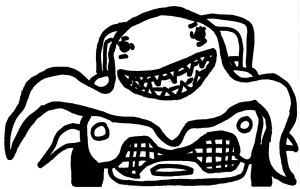
Wanted: Creature Seeking Male Companion – Me: Loves dogs & horses, comforts friends when sad, never says “no” to a spontaneous adventure, always says “yes” to night swimming in moonlight, has tentacles & drinks gasoline. You: A late-20s high school student with a shitty attitude, crippling daddy issues, and a receding hairline. Only selfish, low-energy badboy bores need apply. Serious offers only, please.

God, I love January so much. In what’s often referred to as the cinematic “dumping season,” it’s these first few weeks of the year when studios roll out their wounded animals, a parade of misfit misfires they have no idea how to market. It’s also in these first few weeks when high profile prestige films from the last year’s awards season slowly roll out from their New York & Los Angeles hidey-holes to finally reach The South, which is how I wound up watching both Silence & Monster Trucks at the theater on the same day. It was a glorious day. Not only was I treated to one of the most haunting technical achievements of Marin Scorsese’s career, I also got to see one of Hollywood’s most visually bizarre blunders since the likes of Howard the Duck, Jack Frost, Garbage Pail Kids, and Mac & Me. Monster Trucks is the rare camp cinema gem that’s both fascinating in the deep ugliness of its creature design and genuinely amusing in its whole-hearted dedication to children’s film inanity. It feels like a relic of the 1990s, its existence as an overbudget $125 million production being entirely baffling in a 2017 context (recalling last year’s similarly out of place, but more reasonably priced talking cat comedy Nine Lives). It isn’t often that camp cinema this wonderfully idiotic springs up naturally without winking at the camera; Monster Trucks is a gift to be cherished, a precious early January diamond for those digging for treasure in the trash. There’s no scenario where this film would catch on enough to earn back its ludicrous budget, but we’re not the ones losing money on it, so I say kick back and enjoy the show.

The lore behind Monster Trucks‘s creation & eventual financial blunder is just as fascinating as the movie itself. In 2013, then-president of Paramount Pictures, the since-fired Adam Goodman, conceived the pun-centric elevator pitch for this children’s film (“What if monster trucks were literal monster-operated trucks?”) while watching his toddler play with toy vehicles by smashing them together. The story goes that, after two years of development, a 2015 test screening of the film sent children screaming in fear due to the creature design of its main monster, known simply as Creech. I would kill to see that original “director’s cut” with the initial Creech design. Unfortunately, it’s lost to history, as the studio completely overhauled the monster’s CG-animated form and recut the film to soften the terror of its visage. That’s largely how we arrived at our obnoxious $125 million price tag, but that doesn’t explain exactly why Monster Trucks is such an entertaining mess of a final product. I’m sure somewhere among the film’s legitimately talented actors (Rob Lowe, Thomas Lennon, Danny Glover, Amy Ryan) there’s someone who’s super embarrassed to be involved with this dud of an intended franchise-starter/merchandise-generator. Surely, all of Paramount would love to have the whole fiasco wiped from the record completely. I think the embarrassment is entirely unwarranted, though. Monster Trucks might be an epic financial disaster on the production end, but as an audience member I find its delirious stupidity & grotesque creature design an endless delight. I just can’t honestly say it was worth every penny.

In true 90s relic fashion, Monster Trucks begins with evil oil drilling business men disrupting the order of things with their horrific money-grubbing ways. While fracking for more! more! more! oil in nowhere North Dakota, the Evil Corporation (helmed by a diabolical Rob Lowe) accidentally unearths an ancient population of subterranean, tentacled sea monsters who drink oil for sustenance in their own underground Ferngully utopia. Two of the creatures are detained, but one escapes by hiding in the frame of an out-of-commission truck, eventually winding up in the safe haven of a junkyard, just like in Brad Bird’s The Iron Giant. Without the structural support of a metal truck frame, this poor beast, known simply as Creech, is a useless slob, a pile of soft, melty flesh. Truck frames work as a sort of wheelchair for the unadapted sea creature and it at first operates them like a Flintstones car before getting the hang of properly working the gears. Also like in The Iron Giant, this monster is adopted as a pet by a curious, emotionally stunted little boy struggling with the absence of a father figure. In Monster Trucks, however, the little boy in question is a high school student played by a hilariously miscast Lucas Till, who is well into his 20s and looks it. In an interesting reversal of the lonely outcast trope, everyone who knows our protagonist desperately wants to hang out with him, but he’s too much of a selfish, self-absorbed jerk to give them the time of day. It’s not that he’s too cool for them either, unless you think a near-30 high school student who lives at home, rides the bus, plays racecar when no one’s looking, and whose mom is boinking the sheriff sounds cool. Creech doesn’t teach this bozo a life lesson or improve his shitty attitude in any way. When they have to part ways at the film’s teary-eyed conclusion, all he can muster is, “I’m going to miss you, Creech. You were a good truck.” Selfish prick. He’s almost awful enough to make me root for the oil company’s hired killer goon to succeed in snapping his overgrown-kid neck, but the loss would make Creech too unbearably sad and that’s the last thing I’d want.

Luckily, Monster Trucks isn’t about ugly high school students stuck in an eternal rut learning valuable life lessons or about how greedy oil companies were the true monster (truck) all along. It’s about two much simpler, more universally lovable concepts: monsters & trucks. In the film’s purest, most deliriously idiotic moments Creech drives his truck-shaped mech suit up walls, over lesser vehicles, down mountainsides, and (in my personal favorite bit) through open fields in unison with galloping horses to a country pop soundtrack. This is truck porn about goin’ muddin’ lazily disguised as a kid-friendly creature feature. None of that gear head idiocy would mean a thing without Creech, though, who is paradoxically the cutest & most grotesque CG creation since last year’s realization of Krang in TMNT: Out of the Shadows. Creech is initially played to be scary and is nearly crushed in a hydraulic press before its not made-for-this-world adorability saves its tentacled ass. Your affection for Creech’s design (along with similarly ugly/cute creations in titles like Howard the Duck, Gooby, and Mac & Me) will largely determine how much fun you have with Monster Trucks. It’ll make or break the cuteness of scenes where Creech gargles oil or poses for selfies. It’ll dictate whether you empathize with the Black Fish levels of cruelty in early scenes where its separated from its scrotum-esque parents as well as their inevitable reunion, a endearing Kodak moment that recalls the shunting scene from Society. No matter how much you love trucks on their own (you sick freak), you really have to love Creech’s ugly-cute visage to appreciate Monster Trucks in all of its ill-considered glory.

Unfortunately, I’m not able to capture Creech’s very specific brand of aquatic monstrosity in words. It’s a horror you have to see to believe. Monster Trucks makes several efforts to construct a memorable plot around its visually striking (to put it kindly) truck-creature, but not much sticks. A genuinely creepy villain who legitimately attempts to murder “children”, a few possible goons’ lives lost in the two bigger action set pieces, a Disney Channel love interest (Don’t Breathe‘s Jane Levy, oddly enough) who calls out the selfish prick protagonist for assuming Creech’s gender as male by default, my beloved horse-galloping/truck-muddin’ scene: there are plenty of amusing details that help pad out the film’s unwieldy 105 minute runtime. None of this can surpass the basic joys of gazing at Creech, though. Every minute of Creech content is a blessing, a gift from the trash cinema gods. It may be a good few years before any Hollywood studio goofs up this badly again and lets something as interesting-looking & instantly entertaining as Creech see the light of day, so enjoy this misshapen beast while you can. And I guess the life lesson learned for the next Monster Trucks-type misfire to come down the line would be to try to pull off its low-key chams for $100 million less on the production end. Who knows? They might even accidentally make a profit.

monster-trucks monstertrucks_main screen-shot-2016-06-07-at-4-37-48-pm

-Brandon Ledet

A Monster Calls (2016)

fourstar

It’s difficult to say objectively if A Monster Calls is likely to resonate with most audiences the way it did with me at the exact moment I happened to catch it in theaters. The very same week the fantasy-leaning cancer drama reached New Orleans I had lost my grandmother to an aggressive form of cancer and, at the time I’m writing this review, she still has not yet been memorialized with a funeral. The wounds are still fresh in a lot of ways, so I don’t have enough critical distance to say if this dark children’s fantasy about “a boy too old to be a kid and too young to be a man” struggling with the gradual loss of his young mother to failed chemotherapy treatments is truly the emotionally impactful, thematically complex filmgoing experience I found it to be. I can only say for sure that A Monster Calls is admirable in the brave ways it tackles issues of frustration, resentment, and self-conflict that wreak havoc on families who are hit with this kind of loss through prolonged illness. The film’s multi-faceted, sugarcoat-free discussion of how grief can be destructive long before it’s cathartic is not the thematic territory typically expected of a kids’ movie featuring a talking tree, but A Monster Calls fearlessly dives head first into those troubled waters and emerges as a hauntingly beautiful experience for taking that leap, one that arrived at the exact moment I needed it.

Liam Neeson voices the titular monster in this dark fantasy drama, a talking tree that visits a young boy each time he wakes from the recurring nightmare of physically letting his mother go while holding her hand at the edge of a cliff. The mother (Felicity Jones, who in all honesty gets just as little character development here as she does in Rogue One) is losing her battle with a rapidly progressing cancer; the boy is being physically bullied at school by the one kid who bothers to notice him; and the rest of the family struggles to figure out what to do with him now that his only attentive parent is at the verge of death. The tree monster solves none of these problems. He only awakes to tell the boy three seemingly unrelated stories (illustrated in beautiful watercolor-style animation) about dragons, kings, suicide, magic . . . pretty much nothing to do with his current predicament. Instead of smiting the boy’s enemies and bringing his mother back from the brink of death, the tree monster merely teaches him a few harsh life lessons: that sometimes life is a cheat, that sometimes good people do horrifically bad things, that sometimes “bad” people can do good, that terrible things often happen for no reason at all. The monster coaches the child through a tough moral gray area and, in the process, allows him to admit & accept some less-than-honorable feelings he’d been repressing about his mother’s impending death before it’s too late.

Besides the obvious reasons why I would connect with this kind of a cancer-themed familial drama at this time in my life, A Monster Calls also appeals to me directly by evoking the same brutal honesty & melancholy tone I found solace in with the similar dark children’s fantasies Paperhouse & MirrorMask. In all three films, young British children process real world emotional grief in a harsh dream space of their own artistic design. A Monster Calls joins this tradition, which unfortunately has a bad critical & financial track record, with a morally ambiguous tale of how there are no easy answers to the ways we process loss and how you’re not always going to be proud of the things you do, say, or feel in your worst moments of grief. It’s the exact kind of thoughtful, morally complex narratives I look for in my children’s media combined with a distinct visual palette (complete with a muscular tree butt for some reason) and impeccable timing, arriving just when I needed to wrestle with my own conflicted modes of grief. I may not be able to discuss A Monster Calls objectively due to my own recent familial loss, but I can say that it’s a deeply relevant & revelatory experience when you’re in that very particular, very fragile state of grief & mourning. There’s just some things about life that you need to hear from Liam Neeson dressed up like a talking tree to fully grasp, I suppose. It worked for me, anyway.

-Brandon Ledet

Fantastic Beasts and Where to Find Them (2016)

EPSON MFP image

fivestar

Ever since 2011’s Harry Potter and the Deathly Hallows: Part 2 left theaters and was release on DVD, Potter fans all over the world were overcome with a deep sadness as the film signified the end of one of the most successful movie franchises of all time. Potter mastermind J.K. Rowling created an entire wizarding world through her best selling novels, which would eventually become blockbuster hits, and as each film was released, the universe she created kept growing and growing.  When the news of Fantastic Beasts and Where to Find Them was released, all was good in the world. I wasn’t too surprised to find out that Rowling would choose to gift fans with more of the fantastic world she created by writing the Fantastic Beasts screenplay. I mean, how on earth could she just stop writing about the Potter universe and all of its glory?

Fantastic Beasts and Where to Find Them is one of the better-known books the students of Hogwarts School of Witchcraft and Wizardry use in their studies. The textbook was written by Newt Scamander, a famous Magizoologist (an individual who studies magical creatures). The textbook contains information that Scamander gathered from studying a vast amount of magical creatures from all over the world. The film follows Scamander on his journey to the United States in 1926, as he is performing research for what will soon become an invaluable vault of information for all witches and wizards. Scamander is perhaps the most compassionate individual in the wizarding world, as he has dedicated his life to trying to understand all magical creatures during a time when they were outlawed and unappreciated. Scamander arrives in the United States by way of New York City with a briefcase filled with magical creatures. His goal with visiting the US is to release a Thunderbird name Frank to his home in Arizona. Of course, a briefcase full of magical creatures would become quite difficult to maintain for Scamander and majority of them eventually escape and run the busy streets of NYC.

The first beast to slither its way out of the briefcase is a Niffler, a small platypus-like creature that is drawn to any and all things shiny. As Scamander is attempting to catch the escaped Niffler in a large city bank (full of shiny coins), he meets a “No-Maj” (non-magic folk, aka “Muggle”) named Jacob Kowalkski. Kowalski is at the bank attempting to get a loan to open up his dream bakery. It doesn’t take long for Kowalski to get mixed up in the wizarding world, which is pretty much unknown to all No-Majs. The two become a duo comparable to Batman and Robin, and it’s one of the best bromances in cinema history.

As Scamander attempts to locate all of his escaped beasts, he runs into trouble with The Magical Congress of the United States of America (MCUSA), and everything becomes a total shit show. The film’s female lead, Porpentina “Tina” Goldstein, works for the MCUSA. She comes off as a total pain in the ass at the film’s beginning because she rats out Scamander to the MCUSA, but she quickly becomes an extremely likeable character. Tina has achieved role model status with me. She’s a powerful, intelligent witch who is out to do the right thing. It just takes her a little bit to find out what the right thing really is. Tina’s sister, Queenie Goldstein, is quite the opposite of Tina. Queenie is full of giggles and smiles, has sunny blonde hair, and sports a bright pink coat for most of the movie, while Tina is more on the serious side. I remember cringing a little bit when Queenie first makes her appearance because I assumed she was going to be the ditzy-blonde-girl type of character, but that’s not the case at all. Queenie is simply sweet and optimistic, and she is responsible for saving the day just as much as the rest of the crew. All in all, the leading ladies in Fantastic Beasts are totally impressive, but of course, I would expect nothing less from the mind of Rowling.

There are a lot of things to pay attention to in Fantastic Beasts because everything is a piece of a giant puzzle that will reach completion once the 5th film in the series is released. That’s right, there will be five Fantastic Beast films! And I’m here for that. The cast of Fantastic Beasts reminds me a lot of the cast of the Harry Potter films. Their camaraderie really comes across in their acting, and there’s just good vibes all around. The film’s director, David Yates, also directed the last four Harry Potter films, and he’s known for being a pleasure to work with. This is cinema that’s made with so much passion and love, and I cannot wait to see the next four!

-Britnee Lombas

The Iron Giant (1999)

EPSON MFP image

fourhalfstar

I was a little surprised last year when Brad Bird’s live action Disney sci-fi epic Tomorrowland failed to find an audience, but I probably shouldn’t have been. For some reason, atomic age sci-fi throwbacks have an iffy history among moviegoing audiences, which has played to the detriment of films like Sky Captain and the World of Tomorrow and The Rocketeer, despite (in my mind) the genre’s easy likability. Given this track record, I guess what should more surprising than Tomorrowland’s lackluster response would be Brad Bird’s past success with making an actually popular atomic age throwback in the late 90s. The problem is that success was entirely critical & the movie financially flopped.

Brad Bird’s directorial debut, The Iron Giant, has earned a glowing reputation in the years since its release, but it bombed hard in the theaters, losing more than half of its production budget. I don’t know what it is about atomic age sci-fi that lends itself to slow-building goodwill instead of immediate success. Perhaps the era’s clean-cut suburban earnestness suggests a hokey aesthetic people associate with microwave popcorn on the couch VHS rentals instead of large group family outings to theater. Whatever the cause, Bird’s two stabs at the genre have both proven to be gambled-and-lost endeavors financially for major studios who’ve backed him. The difference between them is that The Iron Giant has had a consistently strong critical reception since its release, one that’s only grown as the children who did happen to catch it in the VHS rental era of their lifespan have grown up remembering it fondly. No word yet on if Tomorrowland will enjoy a similar kind of longevity in the public imagination, but I wouldn’t hold my breath.

The Iron Giant is an animated tearjerker about two out-of-place misfits who form an all-too brief friendship in the face of a world hellbent on tearing them down. One friend is a loner nerd middle school student who fills his days with adopting strange pets & his nights with watching 50s sci-fi schlock on television broadcasts. The other is a seamless combination of those two interests: a physically damaged space alien robot with the mind of a child. The unlikely pair form a sort of dual coming of age story while hanging out in a beatnik’s junkyard & evading persistent inquiries from the NSA. The human boy learns to take on responsibility & to adopt a “Who cares what those creeps think?” attitude towards his bullies. The gigantic robot learns to hate the very thing he’s designed to be (war & weaponry) & to exercise free will in a way that allows him to overcome his nature. Their greatest enemy is a warmongering G-Man just drooling to see the alien “invader” destroyed & their story plays out against a Cold War suburbia backdrop that contrasts the innocence of carefree youth with details like a duck-and-cover nuclear bomb scare film titled ATOMIC HOLOCAUST. Perhaps the film’s greatest accomplishment is how it provides a satisfying arc for both the boy and the robot, as well as an emotionally taxing climax, all while feeling like a relaxed hangout film about two buds being buds.

There’s a lot of interesting technical aspects to The Iron Giant that suggest Brad Bird came out of the gate as a strong directorial talent. First of all, the film knows the source material it’s evoking quite well, cobbling together plots from other sci-fi fare like Superman comics, giant robot stories, and alien invasion features into a single, The Day the Earth Stood Still-style parable that makes great use of its various influences. The film also looks like a feature-length adaptation of a toy raygun, perhaps the most accurate evocation of the era’s style since Joe Dante’s Matinee. I’m not a huge fan of CG animation, but the way The Iron Giant‘s computer graphics mix with its hand drawn style actually serves the mechanical nature of its subject matter quite well. Even the sound design is on point, pulling great period setting authenticity from The Coasters song “Searching” & utilizing a rusted metal vocal performance from a Groot-mode Vin Diesel as the titular robot without overworking the gimmick. Bird’s first feature is an amazingly balanced work that impresses both in its narrative & technical proficiency as well as its ability to inspire a genuine emotional response. It’s downright bizarre that it didn’t immediately strike gold at the box office, but it’s also no wonder that it eventually found an enthusiastic audience once it hit home release.

Having only seen The Iron Giant & Tomorrowland once a piece, I can confirm that the former is the better work & totally deserving of its reputation as such. I’d like to think that there’s enough room in the world’s heart for both atomic age children’s epics to earn long-term success, though, and I hope Tomorrowland eventually joins The Iron Giant’s ranks as an initially-overlooked crowd favorite. If nothing else I’d just like to see its esteem grow so Brad Bird could maybe, just maybe, find funding for a third product within the genre, despite its reputation as box office poison. He’s damn good at making these things & I honestly believe his two entries in the genre are his best, most personally distinct work to date (no offense to the diehard Pixar crowd who’d likely stand up for The Incredibles or Ratatouille in that regard). We don’t have many directors working who still understand the appeal of the genre as Brad Bird & it’d be a shame to let something as pedestrian as money stop him from making more.

-Brandon Ledet

Miss Peregrine’s Home for Peculiar Children (2016)

fourstar

I’ll admit up front that I’m a little more positive on Tim Burton’s post-Sleepy Hollow career than most, finding at least one enjoyable film from the director’s late-career releases (Big Fish, Corpse Bride, Big Eyes, Sweeney Todd, Frankenweenie) for every insufferable, uninspired one (Alice in Wonderland, Charlie and the Chocolate Factory, Dark Shadows, Planet of the Apes). Burton was on an incredible hot streak in his 80s & 90s run, delivering one incredible work after another, so there’s a lot of pressure on his 00s & 2010s output that makes it suffer under scrutiny. However, divorced from the context of his earlier work, this second phase of his career is at least at a 50/50 average for me, which isn’t so bad considering the careers of other big budget Hollywood directors on his name recognition level. Miss Peregrine’s Home for Peculiar Children isn’t likely to win over anyone who’s chosen to write off Burton’s post-90s work completely (his recent, aggressively tone deaf comments on racial representation in Hollywood casting aren’t likely to help either), but it is a damn good spooky children’s movie, joining the likes of Goosebumps & ParaNorman as great starter packs for kids who need an intro to a lifelong horror fandom. It’s a genuinely macabre affair that might be better accomplished in terms of visual craft than it is with emotional deft, but still stands as Burton’s best work since at least Sweeney Todd. Of course, I’m a little more forgiving than some on the current Burton aesthetic, so mileage may vary there, but if any other director’s name were attached to this film I suspect it would’ve been praised with far less scrutiny. The expectations resonating from Burton’s early work simply have way too much impact on the reception of his more current releases.

Miss Peregrine’s Home for Peculiar Children & its YA source material are, essentially, goth X-Men for kids. Instead of mutant abilities, the kids have “peculiarities,” also contained in their genes, which more or less give them . . . mutant abilities. I guess the main difference there is that their peculiarities all have a sort of horrific sideshow quality to them: reanimating corpses, hidden jaws packed with sharp teeth, bodies full of bees, etc. It’s easy to see how Burton could want to merely luxuriate in this mansion full of little weirdos instead of chasing a plot, but Peculiar Children actually has a lot going on in its story structure. Cyclical time travel, intergenerational romance, mental disorder, alternative Holocaust narratives, and secret societies of shapeshifting demons who want to eat peculiar children’s eyeballs all swirl together to create one overwhelming kids-against-the-world conflict that admittedly trades in emotional resonance for large, complex ideas & haunted house imagery. Like with last year’s Crimson Peak, however, I was more than okay with swapping out emotional deft for visual craft here, especially since the visuals were so distinctly . . . peculiar. Samuel L. Jackson’s villain looks like a hybrid version of Don King & Nosferatu. A pair of masked twins recall antique photographs of 1900s Halloween costumes. A Harryhausen skeleton army wreaks havoc on a dayglow carnival funhouse. Stop motion monsters cobbled together out of babydoll parts & preserved animal corpses engage in a tabletop knife fight. A coven of dapper adults & long-limbed reptilian monsters devour piles upon piles of children’s eyeballs. Tim Burton may not be interested in self-reinvention with the imagery he delivers in Peculiar Children; he still delights in clashing a clean cut, sunlit suburbia with haunted house goth monstrosities. However, this film proves he’s still got the goods in terms of the strength & potency of the imagery he can deliver and any other shortcomings there might be in Peculiar Children comfortably rest on those laurels.

The more the scope of Tim Burton’s career becomes clear to me the more apparent it is that he’s almost exclusively a children’s filmmaker. Titles like Ed Wood & Sleepy Hollow are the outliers. Peculiar Children fits right in with Burton’s typical, imaginative creepshow for children aesthetic and I could very easily see a child growing up loving this movie the way I grew up loving Beetlejuice or Pee-Wee’s Big Adventure. Kids have an easy time mentally luxuriating in fantasy spaces in a way adults don’t. Returning to Beetlejuice as an adult, the pace feels a lot more rapid than it did to me in the 90s and the movie flies by in a whir, whereas in my childhood it felt like an eternity. Peculiar Children will likely have the same effect on younger viewers. It delivers enough striking imagery & memorable set design that kids could mentally return to & stretch out its individual scenes in a way its two hour runtime couldn’t afford. A better, more deliberately paced version of this story might have stretched out over a franchise or a television series, but limiting it to a single film was a smart choice, one that will have implications on how children interact with it both onscreen & in their imaginations in the years to come. Even in its limited time span and overstuffed plot, Burton still finds the time to work in the doomed wartime narrative of The Devil’s Backbone and the places-as-ghosts concepts of a Toni Morrison novel, all while somehow maintaining the film’s firm footing as children’s media. If any other director had delivered Miss Peregrine’s Home for Peculiar Children, it’s likely it’d be held in a much higher regard as an ambitious work of high-concept time travel sci-fi horror for children. However, only Burton could balance all of that overreaching narrative with such specific, effective imagery & maintain its for-kids tone. This film stands as yet another reminder that its director may not be delivering at 100% at this point in his career, but he’s still capable of making some truly great films in-between the duds.

-Brandon Ledet

A Town Called Panic: Double Fun (2016)

threehalfstar

Double Fun isn’t exactly a sequel in a traditional sense, although it is the latest theatrical release in its franchise since the 2009 feature A Town Called Panic. Rather than standing as a feature length follow-up to its madcap stop motion comedy predecessor, Double Fun is a “one day only” (it actually screened over two days at Prytania Theatre) theatrical event that cobbled together several short films from the A Town Called Panic catalog to reach a very slight feature length as a loose anthology. As a trip to the cinema Double Fun was an amusing novelty, not quite living up to the manic brilliance of the original A Town Called Panic movie, but still functioning fairly well as a crash course in the Belgian cult television show’s surreal, maddening mode of crude stop motion animation & slapstick comedy. It was great to see something so aggressively trivial play out on the prestige platform of the oldest running cinema in New Orleans, but I wouldn’t necessarily call the experience essential (like I would have with Prytania’s 100 year anniversary screening of Cinema Paradiso last year).

The main bulk of Double Fun were two mid-length shorts, titled “Christmas Panic” & “Back to School Panic.” I usually detest watching Christmas-themed media out of season, especially when it’s sacrilegious to the still-approaching holy day of Halloween, but I’ll make an exception when it means watching the KaBlam!-style antics of Horse, Cowboy, and Indian on the big screen. Of the two 2016 shorts, “Christmas Panic” was noticeably inferior to the high concept insanity of “Back to School Panic,” but it was still amusing to watch the Panic gang rob both the kindly Santa Claus & the abusive jerk neighbor Steven in the name of the true Christmas spirit: greed. “Back to School Panic” was the true attraction of Double Fun, starting with a very simple plot of Cowboy & Indian trying to avoid having to return to the classroom and somehow winding up playing with a Being John Malkovich situation inside a farm pig’s mind. “Christmas Panic” was cute & the mini-shorts that buffered the two featured segments of Double Fun were a great glimpse into the humble beginnings of the franchise, with the de-evolution monsters of “Cow Hulk” especially standing out as a treat. However, if A Town Called Panic fans are to seek out just one segment of this theatrical event, “Back to School Panic” is the one that most stands out as exemplary of what makes this manic stop motion franchise so weirdly endearing.

Double Fun works best as a crash course in Panic if you have already seen the feature film, which is likely a much better starting point. The way the anthology is curated answered a few lingering questions I had after watching the absurdist feature film. My main ambiguity about whether the franchise was intended for children or stoned adults was somewhat resoundingly answered by the rowdy groups of young tyke attendees at the screening who met the series of shorts with transfixed silence & wholesome giggling. In a way it seems like the series is moving in a more kid-friendly direction in general, especially in making Horse more of a father figure to the increasingly childlike Cowboy & Indian and in softening the music cues. There’s still the requisite partying, alcohol, theft, violence, and manic tension that makes A Town Called Panic distinct as dangerous-feeling children’s media, but the shift was noticeable. Watching the 2016 shorts mix in with the shoddier quality of the series’ humble beginnings was also illuminating as a recent convert, as was hearing the English-language voice actors in the dubs, which took some getting used to, but felt like insight into how the show is typically packaged outside of Belgium.

If you’ve never seen A Town Called Panic before, I urge you to start with the 2009 feature, as it’s a great reminder of the wonders of stop motion as a medium, even when crudely executed. Double Fun is great supplementary material for the already converted, especially in the unreal sci-fi absurdity of “Back to School Panic,” but it’s not necessarily something you need to kick yourself for missing in its very brief theatrical run. If either of those storylines had been used as a launching point for a proper feature length sequel, however, I might be singing a different tune.

-Brandon Ledet

Kiki’s Delivery Service (1989), Ponyo (2009), and the Weirdly Relaxed Plotting of Hayao Miyazaki Features

EPSON MFP image

Although the animation medium he works in sometimes pigeonholes his accomplishments, Hayao Miyazaki is truly one of the masters of cinema, right up there with names like Bergman, Hitchcock, Kubrick, and Corman. And just like with a lot of the masters of cinema, I’ve only seen a small fraction of his work and I’m scrambling to catch up. Lately I’ve been making more of an effort to familiarize myself with a wider range  of Miyazaki classics outside re-watching Spirited Away & My Neighbor Totoro multiple times a year, which has lead me to a few less readily recognizable titles like Howl’s Moving Castle & Princess Mononoke over the past year. It’s been difficult for me to distinguish Miyazaki’s work form the rest of the filmmakers at Studio Ghibli in terms of style outside of his fascination with themes like immersion in the natural world & the wonder of flight. While recently watching the features Ponyo & Kiki’s Delivery Service in a single weekend, though, something struck me about the way Miyazaki’s features’ approach plot & pacing I hadn’t yet noticed. Once the director establishes the majesty of his films’ worlds & settings, he’s remarkably comfortable with bringing the story down to a full stop simply to marinate in the immense beauty he’s constructed. I had never noticed before how his films all tend to work this way in their own individual moments of lowkey self-reflection & immersion in setting before watching these two titles in rapid succession. Nor had I noticed how oddly comforting that plot structure can be.

Kiki’s Delivery Service is a simple story about a young witch coming of age as she leaves home to start a new, autonomous life in a foreign city. In an early jaunt of exposition the Miyazaki trademarks of intricate, detailed animation (seen most easily in its shots of wind blowing through tall grass) & wonder with the majesty of flight (she’s a witch after all; she even made her own broom) seem to promise an epic story of witchy misadventures as Kiki tries to find her footing in an overwhelming, sometimes terrifying world. I was more or less expecting The Worst Witch restructured as a big budget adventure epic. The film does feature some dangerous run-ins that fit the mold I’m describing, like an early tussle with some vindictive crows & a climax revolving around a downed zeppelin, but for the most part action & adventure are the furthest thing from the film’s mind. Most people in Kiki’s new city are supportive of the witchy visitor, especially once she becomes familiar & finds a sense of purpose in her broomstick-driven delivery business. For the most part the film’s plot is centered on small scale concerns like “Will she make new friends?” “Will she make her deliveries on time?” and “Will she beat the rain?”  Kiki’s Delivery Service isn’t a tale of a witch venturing out into the world as much as it’s about a witch finding confidence & autonomy within herself, with the film’s most major crisis being whether or not she’ll get her mojo back once her magic begins to fade. The way Miyazaki allows this inner struggle to play out & resonate is to establish a living space (an indoor-kid’s fantasy of an attic loft above a bakery with an ocean view) and allow Kiki to ruminate within it, as if she were morphing inside a cocoon. To pile any more action onto the plot would detract from the impact of Kiki’s inward journey & Miyazaki’s brilliance is in the way he’s comfortable with letting his protagonist’s downtime breathe & slowly mature.

Although its setting trades Kiki’s Delivery Service’s high in the sky adoration with flight for a polar opposite physical realm deep under water, Ponyo follows a similar trajectory in terms of plot & pacing. Miyazaki opens the movie with an immensely intricate galaxy of deep sea wonders, dazzling the audience with a majestic display teeming with underwater lifeforms. This peaceful balance is disrupted when a humanoid fish befriends a small human boy on dry land & shapeshifts to please him, playing out a strange slant on the fairy tale structure of The Little Mermaid. Ignoring the warning that “Fishes with faces who come out of the ocean cause tsunamis,” the two unlikely friends explore a life together at everyone else’s expense, causing a massive flood, as promised, that separates parents – both underwater wizards & overworked nursing home employee mothers alike – from their young children. Again, what’s interesting in the way Miyazaki constructs this fable is that he doesn’t push for big, exciting action sequences at every turn in Ponyo but instead seeks out a languid kind of majesty that’s remarkably confident & emotionally affecting in the way it allows you to sink into the places he’s created. Ponyo’s story works twofold in its development of a heartfelt, but doomed friendship and its sense of loss & confusion in the search of a misplaced loved one. What sticks with you in the film isn’t necessarily specific events or plot points, but rather visual details like a jellyfish galaxy or a candle-powered boat and, yet, an emotional story arc caries through in that setting-specific artistry

I think a large part of the brilliance of Miyazaki’s slow crawl pacing & sparse plotting is the way it allows you to sink into a space. The underwater world of Ponyo & the above-the-bakery apartment of Kiki’s Delivery Service live vividly in my imagination long after the end credits, feeling as real or as tangible as real-life spaces I’ve physically inhabited. As I look back to past films I’ve seen from the director I realize that this aspect has always been a major aspect of his appeal to me. I don’t always remember the finer points of the various adventures & mishaps in his films as much as I remember details like the gloriously crowded bedroom in Howl’s Moving Castle or the inside of the catbus in My Neighbor Totoro or the old woman’s cottage in Spirited Away. I was pondering the other day about what didn’t quite work for me in the recent French animated feature April and the Extraordinary World and I’m starting to think it had something to do with the film’s decision to crowd its runtime with an action chase plot instead of slowing down & luxuriating in the intricately detailed space it had created. The only animated film outside of Studio Ghibli I can think of that similarly pulls this trick off is Little Nemo: Adventures in Slumberland (it even features a Ponyo-like flood), which, no surprise, Miyazaki himself had apparently worked at some point during its long, troubled production. The director’s reverence for defined space over quickly plotted pace has a special touch that allows you to mentally live in his worlds that some less pointed works would allow to fly by in a blur. For some reason it took rapid succession viewings of Ponyo & Kiki’s Delivery Service for me to catch onto that aspect of his work, but looking back I realize it had been there with me all along.

-Brandon Ledet

April and the Extraordinary World (2016)

EPSON MFP image

twohalfstar

Movie magic is complicated alchemy. The hand-drawn French animation feature April and the Extraordinary World seems tailor made to have me on the floor, drooling. It’s a welcome reprieve from the flat, CG animation style that’s dominated nearly everything outside Studio Ghibli productions & stray stop-motion animations for the past couple decades. It stars a cool, fiercely independent female scientist & her sarcastic cat sidekick in its lead roles. It begins with an impressively ambitious alternate history sci-fi premise that sets the table for a grand, one-of-a-kind adventure. By all means I should’ve been over the moon with what the film delivers, but it never quite clicked for me. April and the Extraordinary World has all necessary ingredients to make movie magic, but there’s something noticeably off in the recipe.

Part of the problem might be that the movie throws so much of its narrative weight into its go-for-broke premise that there’s not much room left for genuine wonder after its opening exposition. Before we meet our scientist & feline heroes we’re steamrolled with a history lesson in an alternate timeline where famous scientists are abducted by a totalitarian French Empire of Napoleonic lineage and the resulting world is a steampunk’s wildest dream of coal-powered inventions & antiquated-yet-futuristic doohickies. There’s an awe-inspiring aspect to the film’s Future in the Past fantasy realm that recalls Miyazaki works like Howl’s Moving Castle, but never quite touch that master’s skill for emotional impact or his patience with luxuriating in the worlds he creates. The film somehow boils its vast, exciting plot into a generic chase film in which our two outsider heroes must protect a magical MacGuffin (a fix-all cure to death, aging, seemingly any illness) out of the hands of a malicious government & a mutated pair of failed experiments hellbent to destroying the planet. Once you strip it of a few quirks, the story is more or less interchangeable with that of any bloated superhero summer blockbuster of the past decade, which is a damn shame considering the massive potential of its launching point.

April and the Extraordinary World is a beautifully animated film, but I spent most of its runtime passively enjoying that visual treat without engaging with its emotional or narrative core. There are a couple ideas at play that make great use of its premise – only the older generation remembers a world with trees thanks to pollution & the world’s remaining scientists are forced into either hiding or weapons production – but for the most part it crams its extraordinary sci-fi ambition into an extra ordinary action chase plot. April and the Extraordinary World has all the necessary pieces to construct a gorgeous work of sheer wonder, but I found myself instead often wondering when it would finally be over. I hope its formula is more impactful for other people intrigued by the various charms of its individual building blocks, but I mostly zoned out on its emotionless proceedings & focused on the pretty lights & sounds. The movie is almost passable as pretty good, but it’s made of some fantastic material, an alchemist’s formula that should have produced pure gold.

-Brandon Ledet

Kubo and the Two Strings (2016)

fivestar

It would be dishonest of me to echo the complaints about how lackluster this summer’s movie offerings have been, since I’ve enjoyed so much of what’s been released, from major productions like Paul Feig’s unfairly-reviled Ghosbusters reboot & Shane Black’s neo-noir comedy The Nice Guys to weirdo indie outliers like The Fits & The Neon Demon. Where I sour on 2016’s movie industry output, however, is in those films’ box office numbers, which are dismal at best. Seemingly, the only movies able to make significant money in our current cultural climate are either bloated superhero spectacles or CG-animated films featuring talking animals. What’s frustrating me the most this week is that Kubo and the Two Strings, the latest masterful offering from the stop-motion animation marvels Laika, satisfies both of those requirements in its own way. It features both an in-over-his-head protagonist with superhuman abilities and his talking animal sidekicks and yet, like so many other great films this year, it’s flailing in its opening weekend attempt to recoup a significant fraction of its production costs. Kubo and the Two Strings alone is proof positive of 2016’s major cinematic conundrum: great films are being made; it’s just that no one’s paying to go see them.

Inspired by Japanese folklore & the rich cinematic past of samurai epics, Kubo and the Two Strings is at heart a story about the power of storytelling & the ways memory functions like potent magic. The film’s titular protagonist is a small boy who makes a living for himself & his disabled mother by telling stories for market place shoppers’ spare change in town. Kubo illustrates his own tales by playing his banjo-esque musical instrument, the shamisen, which brings to life colorful sheets of paper that fold into origami shapes & act out his stories as he narrates. What the townspeople don’t know is that the witches, samurais, and magic moon kings of Kubo’s stories are also a real life part of his past . . . which is why his tale doesn’t yet have an ending, a frustrating quality that always leaves his audience hanging. When that past catches up to him Kubo is caught in the middle of two opposing quests: his own mission to reclaim his deceased father’s armor and his witch & moon king enemies’ quest to steal his only remaining eye (finishing a job they started when he was only a newborn) and, thus, destroying his capacity for empathy & his free will. Kubo’s only company on this journey are a goofball beetle in samurai armor (Matthew McConaughey in his best performance since Interstellar) and a no-nonsense monkey (Charlize Theron, who’s just as fierce here as she was in last summer’s Fury Road). Along the way Kubo learns the responsibility & discipline necessary to command his magic abilities, but more importantly he learns that only he can bring a happy ending to his own story, however bittersweet.

A lot of what makes Kubo and the Two Stings such an overwhelming triumph is its attention to detail in its visual & narrative craft. As with their past titles like Coraline & ParaNorman, Laika stands out here in terms of ambition with where the studio can push the limits of stop-motion animation as a medium. The film’s giant underwater eyeballs, Godzilla-sized Harryhausen skeleton, and stone-faced witches are just as terrifying as they are awe-inspiringly beautiful and I felt myself tearing up throughout the film just as often in response to its immense sense of visual craft as its dramatic implications of past trauma & familial loss. The film also allows for a darkness & danger sometimes missing in the modern kids’ picture, but balances out that sadness & terror with genuinely effective humor about memory loss & untapped talent. What’s really impressive here, however, is its efficiency in storytelling. There isn’t a single image or element at play, from a woven bracelet to a paper lantern to an insectoid buffoon, that doesn’t come to full significance if you lend the film enough patience. Kubo and the Two Stings could’ve easily rested on the laurels of its visual spectacle, a result of infinite hours of painstakingly detailed labor in an animation studio, but it instead pours just as much care & specificity into its reverence for traditional storytelling. Nothing presented onscreen is wasted. This is narrative prowess at its most essential & efficient, an attention to craft reflected in the fact that the film’s protagonist himself is a storyteller & an animator in his own right and that his quest mostly centers on a desire to seize & steer his own narrative to a satisfactory ending. This film definitely falls into the category of cinema about cinema, art about art, but it doesn’t call attention to that conceit. It all takes naturally & beautifully as the plot continually folds in on itself like intricate origami.

What films do you consider the height of stop-motion animation as a medium? The Nightmare before Christmas? Fantastic Mr. Fox? Alice? Mary & Max? Kubo and the Two Strings easily belongs in the conversation at even a moment’s glance. The film boasts an impressive depth of visual detail & intricately mapped-out story structure, yet it’s remarkably light on its feet, leaving plenty of room both for moments of levity & for heart wrenching blows of emotional impact. Just watching the endless parade of bland talking CG animal kids’ comedies in the trailers preceding Kubo and the Two Strings, each more annoying & forgettable than the last, is enough of an eye opener as to why this film’s arrival in our current cinematic climate is such a goddamn relief. You owe it to yourself to watch this modern classic on the big screen and, please, bring a friend. The idea that there are no great films being released this year, that Hollywood is simply out of ideas and the world was somehow more creative or inspired in past decades is honestly getting to be more than a little silly. There are plenty of great films in the theater right now. We just need to get smarter about throwing our attention & dollars at them. I suggest starting with Kubo and the Two Strings. You could do far worse with your money than escaping the August heat in the air-conditioning, admiring a projection of a modern animation masterpiece in the comfort of public darkness.

-Brandon Ledet