Play the Devil (2017)

I was perpetually on the verge of allowing myself to enjoy the minor indie feature Play the Devil but I couldn’t shake the feeling that I’d seen the film before, except set in a different locale. Then it struck me: Play the Devil is essentially a queer retelling of the 2015 JLo “thriller” The Boy Next Door, except with most of that film’s campy humor & sex surgically removed. Besides reframing that one night stand-turned-stalker thriller within a same-sex dynamic & moving its location from the United States to Trinidad, the major difference is its central abusive romance is which character is asked to play the villain. In The Boy Next Door, Jennifer Lopez has sex with a teenage neighbor who becomes her tormentor once she calls off the affair. In Play the Devil, it’s the adult participant who’s tasked to play the villain, which changes the dynamic just as much as the added queer context. Unfortunately, I can’t say either change was especially beneficial to the film as an entertainment, as it both ruined the fun of the premise & made the film’s queer identity politics muddled & unintentionally uncomfortable.

A Trinidad high school student is stuck between his ambitions to pursue art in either drama or photography and his grandmother’s desire for him to attend med school. With the economic rut of his home life & his best friend’s burgeoning career in petty crime weighing heavily on his mind, he faces a coming of age identity crisis that gradually becomes intertwined with a struggle to negotiate a balance between his in-the-closet queerness and societal expectations of adult masculinity. All of this sexual & economic anxiety makes our troubled protagonist the perfect prey for a wealthy, married businessman who wishes to take him on a sexual concubine. Scared by the implications of this potential role as a wealthy man’s sugarbaby, he only allows himself one sexual encounter before backing away in fear. The predatory older man won’t take “no” for an answer and pursues the young student anyway, practically twirling his mustache as he stalks the poor kid as an over-the-top, effete personification of queer desire. Their dynamic is effectively uncomfortable, but not self-aware enough to justify its potential homophobia, especially as it barrels towards an inevitably violent climax.

The climactic sequence of Play the Devil is a gorgeous catharsis that’s so stunning it almost forgives the piss-poor acting & boneheaded homophobia of the movie’s villain. During a Carnival ritual known as “The Dance of the Blue Devil,” locals smear their bodies with blue & gold paint and rhythmically scream out the frustrations our protagonist has been bottling inside the entire film. The imagery of this emotional release and the tranquil forest sounds of men later washing off their paint under a waterfall in its denouement is undeniably powerful. I can’t claim that much else besides the brightly painted houses & intense Natural backdrops of the film’s Trinidad setting are as successful as the Carnival sequence. Play the Devil is effective in its evocation of a spiritual & cultural atmosphere, but the story it manages to tell within that frame is a disjointed mess. I assume that the movie was aiming to be a poignant coming of age drama and not the less fun The Boy Next Door remake with #problematic queer subtext in accidentally stumbled into, which is a total shame. The Carnival imagery almost makes up for it, but not quite enough to turn the tide. At least it can boast that it features the absolute worst villainous performance of the year; there’s a kind of honor in that dishonorable distinction.

-Brandon Ledet
Tom of Finland (2017)

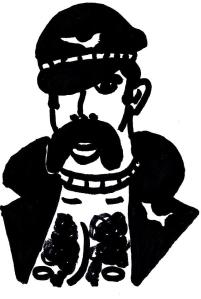
I can probably count on one hand the number of biopics that have struck me as phenomenal, formally impressive cinema. Stray examples like Ed Wood & Kinsey leap to mind as I attempt to recall biopics I’ve instantly fallen in love with, but for the most part the genre feels like an endless line of passable-but-unremarkable exercises in filmmaking tedium. Tom of Finland has joined the ranks of biopics that have transcended that mediocrity for me. Depicting the adult life of the Finnish illustrator/pornographer Touko Valio Laaksonen as he drew his way into queer culture infamy, Tom of Finland excels as a kind of filmmaking alchemy that turns an unlikely tonal mashup of Cruising & Carol into the feel-good queer drama of the year. Its high class sense of style & lyrical looseness in narrative structure feels like the best aspects of Tom Ford’s features, but without his goofy storytelling shortcomings. While its sexuality isn’t quite as transgressive as the leather daddy-inspiring art of its subject, it’s still a passionate, celebratory work that sidesteps the typical pitfalls of queer misery porn dramas, yet still manages to feel truthful, dangerous, and at times genuinely erotic. It’s hard to believe the film is half as wonderful as it is, given the visual trappings of its subject & genre, but its leather & disco lyricism lifts the spirit and defies expectation. The only disappointment I have with Tom of Finland is that most audiences don’t seem to be on its wavelength, dragging my enthusiasm down with bafflingly unenthused reviews.

Part of the reason Tom of Finland is so impressive in its transcendence of biopic tedium is that it entirely forgoes the birth-to-death trajectory of that genre’s traditional narrative structure. Glimpses of the artist as a successful older man, a reluctant young soldier, a closeted adman living with his sister, and a smitten middle age romantic who happens to generate pornography, mix in a cyclical, sublimely lit intersection of vignettes that play like sardonically funny paintings in motion. The domestic softness of Laaksonen’s home life mix with the transgressive, leather-clad brutes of masculine sexuality that define his pornographic artwork and invade his daydreams as horny, in-the-flesh hallucinations. War-related PTSD becomes inextricable from the erotic, as he fetishizes a handsome soldier he killed in battle as a young man. Orchestral sweeps find divine beauty in the danger of cruising men in public & producing illegal, sexually charged art. Tom of Finland jumps time & skims consequences, trusting its audience to follow along without being held by the hand. It’s a delicately sweet portrait of an artist that’s often interrupted by queer disco reveries & seas of hairy men posing in the leather getups that turned Laaksonen on so much that his depictions of them inspired an entire spectrum of sexual fetish. If arranged in a linear order or stripped of its playfully hallucinatory erotic fantasies, Tom of Finland could easily be the middling biopic its critical consensus reports it to be. Instead, it’s a gorgeous, dreamlike drift through the life of an artist with one of the mostly highly dedicated, specialized cult audiences imaginable.

I might understand the complaint that Tom of Finland isn’t brutish or sexy enough to fully convey the transgressive spirit of its subject’s work if it at all seemed like Laaksonen was as wildly over the top as his drawings. The tension between his mild-mannered demeanor and the over-sexed aggression of his art is one of the film’s more rewarding charms. He’s far from a sexless character, shamelessly flirting with men and discussing his work in blatantly honest terms like, “My cock is the boss. If I have a hard-on I know it’s good.” Like most people, though, Laaksonen is portrayed to be not nearly as wild as his sexual fantasies might suggest, which makes it all the more amusing when he’s delighted/dazed to see his work come to life in the “heavy leather” queer kink communities they inspired in New York City & San Francisco. The sudden deluge of this dedicated fandom hits the audience with the same jolt of surprise, its accompanying disco soundtrack feeling just as surreally out of place as the imagined sexual fantasies that intrude on the physical spaces of his daydreams. The contrast between this playfulness and the high art cinematography & production design make for one of the more exquisite biopic experiences I can ever remember having in my lifetime. Normally, I’d worry if the fact that I saw this at a New Orleans Film Fest screening made me more enthusiastic because of the excitement of the environment, but a faulty stop & start projection and a fussy late night audience was actually more of a distraction than an enhancement. Given the less than ideal screening where I watched this beautiful film, it’s a miracle I enjoyed at all, much less instantly fell in love. Now I just need to figure out exactly why so few people seem to be on the same wavelength.

-Brandon Ledet

Beach Rats (2017)

When I was first saw trailers for the Best Picture Winner™ Moonlight last year, I was a little worried that the film was going to be yet another tragically queer coming of age story where a young, closeted protagonist struggles to be their true selves in an unforgiving world determined to propel them to an inevitably violent end. There’s certainly a real world validity to that narrative, but after decades of nearly every major instance of queer representation onscreen following that exact pattern, it’s becoming depressingly limiting to what queer cinema can accomplish as an artform. Thankfully, Moonlight sidestepped most of the Queer Tragedy pitfalls that dull many of its genre peers to deliver something much more transcendently tender & delicately beautiful. The film Beach Rats, which was developed simultaneously at an artist’s retreat with Moonlight by writer-director Eliza Hittman, was much less nimble. Beach Rats is a hyper-specific, wonderfully realized character study about a young queer man navigating the ultra macho beach bro culture that dominates his Brooklyn-based peer group. Its visual language, particularly in its focus on the movement & positioning of bodies, is impressively, subliminally effective. Unfortunately, the film is also stubbornly stuck in an Indie 90s mindset in its estimation of a queer cinema narrative, dimming its idiosyncratic delights in visually detailed culture-gazing to amount to something unnecessarily familiar.

British newcomer Harris Dickinson stars as the confused Brooklynite Frankie (much like how Australian actor Danielle Macdonald recently disappeared into a Jersey Girl persona in Patti Cake$). Pocketing the oxycotin prescribed to his cancer-ridden father, struggling to relate to his grieving mother & sister, and doing his best not to stand out among the Jersey Shore bros that populate his Brooklyn neighborhood, Frankie is unsure how to integrate his sexual interest in the (much) older men he flirts with online into his traditionally macho public persona. He attempts to maintain a romantic relationship with a girl he meets on the boardwalk and claims to the men he begins to hook up with, “I don’t really know what I like,” but his sexual intetests never seem to be in question. It’s clear to the audience (and likely to Frankie) what genuinely turns him on. Excuses why he can’t emotionally or sexually commit to the young woman who’s obviously into him range from having snorted too many pills, lack of condom access, and anxiety over his father’s health, but he seems to have no problem in getting revved up while cruising strange, older men in online chatrooms & on public beaches. As the pressure of maintaining his gym rat beach bro persona while pursuing these anonymous same sex hookups mounts, the movie barrels toward an inevitably dour conclusion that thankfully doesn’t reach for the horrifically violent tragedies typical to its ilk, but still feels overly familiar all the same.

As old hat as Beach Rats feels as a queer cinema narrative, the lived-in imagery of the world it captures feels both believably real & oddly beautiful. The amusement park & nightclub settings these beach bros invade when they’re not shirtlessly staring at the water are near-indistinguishable as neon-lit, electronica-soaked playgrounds, drawing an interesting thread in their continued adolescence even as they search for cheap, drug-fueled highs. The physical rituals of marijuana, handball, and masculine greetings are carefully detailed, especially in the fleeting moments when bodies are socially allowed to touch. While this is far from the explicit territory covered in Stranger by the Lake, Hittman’s eye for this physical communication is carried over to the mostly wordless hookups between queer men, with special attention paid to the strength in the subjects’ muscular hands & buttocks. In an erotic moment, the camera is drawn to the nearest crotch; when the tone turns violent, it lingers on the idle knuckles of potential abusers. This attention to physical detail is never as potent as when Frankie is posing for selfies while working out in his bedroom mirror, baseball cap carefully placed to obscure his face. The way the smartphone flash coldly reflects off greasy thumbprints on the glass is oddly beautiful as Frankie admires & advertises his own body. You can tell Hittman strived to capture a real world setting & culture in this imagery and her attention to its physical detail is what makes Beach Rats feel at all special or worthwhile.

Sometimes, devotion to real world detail is a detriment for the film’s purpose. The dedication to hiring non-professional actors to flesh out its cast feels authentic, but also a little flat. Beach Rats is entirely empathetic to the ultra macho gym bro culture it captures so well onscreen, without a trace of irony in its depiction, but it is a little difficult to suppress laughter while watching Frankie sad-vape or play sad-handball in the rain, as true to life as those images may be. However, that objective approach works well enough while keeping a knowing distance from acknowledging the correlation between Frankie’s thirst for older men & his father’s absence or the vulnerability of identifying as queer in a culture where, “When two girls make out it’s hot; when two guys make out it’s gay.” It’s monstrously unfair to compare Beach Rats & Moonlight solely due to the professional proximity of their creators & their respective depictions of beachside, same sex hookups, but Barry Jenkins’s successes really do exemplify where Hittman missteps. If Beach Rats shared Moonlight‘s narrative instinct in knowing where to pull away from real world tragedy to explore more rarely seen modes of queer representation, it could have been a modern masterwork. As is, it functions just fine as a culturally specific character study with an intense focus on the physicality of its subjects’ social rituals, from the blatantly erotic to the purely fraternal. It’s totally recommendable for those virtues alone, even if it falls short of the transcendent experience it could have been.

-Brandon Ledet

Funeral Parade of Roses (1969)

One of the most frustrating deficiencies in queer cinema, besides there just not being enough of it in general, is that much of it is far too tame. Bomb-throwers like John Waters, Jonathan Cameron-Mitchell, and early-career Todd Haynes are too few & far between (a direct result of a heteronormative industry that’s stingy with its funding, no doubt), so most queer cinema is typified by safe-feeling, Oscar-minded dramas about death & oppression. It’s always refreshing to find a film that breaks tradition in that way, while also breaking the rules of cinema in general. We need to see more queer artists given the funding needed to push the boundaries of the art form, lest the only onscreen representation of queer identity be restricted to sappy, depressing, sexless bores. I can probably count on one hand the films that have satisfied that hunger we’ve covered since starting this site over two years ago. Tangerine, Paris is Burning, and Vegas in Space all come to mind, but feel like rare exceptions to the rule. That’s why it was so refreshing to see a queer film as wild & unconcerned with cinematic convention as Funeral Parade of Roses restored & projected on the big screen. Even half a century after its initial release, it feels daring & transgressive in a way a lot of modern queer cinema unfortunately pales in comparison to.

Part French New Wave, part Benny Hill, and part gore-soaked horror, Funeral Parade of Roses is a rebellious amalgamation of wildly varied styles & tones all synthesized into an aesthetically cohesive, undeniably punk energy. Shot in a stark black & white that simultaneously recalls both Goddard & Multiple Maniacs, the film approximates a portrait of queer youth culture in late-60s Japan. Referred to in the film’s English translation as “gay boys,” its cast is mostly trans women & drag queens who survive as sex workers & drug dealers in Tokyo. Their story is told through techniques as wide ranging as documentary style “interviews” that include meta commentary on the film itself & high fantasy fables that pull influence from Oedipus Rex. Although there is no traditional plot, the character of Eddie (played by Pîtâ) becomes our de facto protagonist as we watch her rise above the ranks of her fellow sex workers to become the Madamme of the Genet (a lovely Our Lady of the Flowers reference, that). Becoming the figurehead of a queer brothel obviously invites its own set of unwanted attentions & potentials for violence, which ultimately does give Funeral Parade of Roses an unfortunately tragic air. So much of the film is a nonstop psychedelic party, however, that this classic “road to ruin” structure never really registers. All shocks of horrific violence & dramatic tension are entirely offset by an irreverently celebratory energy that carries the audience home in a damn good mood, no matter what Oedipal fate Eddie is made to suffer.

Plot is just about the last thing that matters in this kind of deliberately-fractured art film, though. Much like the Czech classic Daisies, Funeral Parade of Roses finds all of its power in the strength of its imagery and the political transgression in its flippant acts of rebellious pranksterism. Eddie & her sex worker crew hand out with pot-smoking beatniks (whom Eddie deals pot to, conveniently), whose soirees often devolve into psychedelic dance parties staged before an almighty Beatles poster. They admire performance art war protests in the streets. Their out-of-character interviews & in-the-moment narratives are often disrupted by dissociative images like a rose squeezed between ass cheeks or cigarette ash emerging from a family portrait photograph. Whether picking girl gang fights with other groups of women at the mall or simply applying false eyelashes & lipstick in mirrors, everything Eddie & the girls get into is treated as an artful, politically subversive act. In a way, their mere existence was politically subversive too, just as the public presence of transgender people is still somehow a hot button political topic today. Funeral Parade of Roses often undercuts its own visual experimentation by laughing at the culture of Art Film pretension trough nonsensical asides or by using the tune of “The More We Stick Together” to score its pranks & transgressions. Its most far out visual flourishes or most horrific moments of gore will often be interrupted by a shrugging “I don’t get it” interjection from a narrator or side character. It’s consistently just as funny as it is erotic, horrific, and visually stunning, never daring to take itself too seriously.

The only real bummer with Funeral Parade of Roses is that the exploitation film morality of its era means that Eddie must suffer some kind of downfall by the film’s final act. The movie undercuts that classic-tragic trajectory by marrying it to Oedipal narratives & interrupting it with tongue-in-cheek tangents of meta commentary, but it still gets increasingly exhausting over the decades that nearly all queer films have to end with that kind of tragic downfall, as if it were punishment for social or moral transgressions. It’s likely an unfair expectation for Eddie to come out on top as the Madame of the Genet in the context of its era. You can feel a progressive rebelliousness in its street interviews where trans women dodge aggressive, eyeroll-worthy questions with lines like, “I was born that way,” or “I’m really enjoying myself right now.” What’s even more forward-thinking are the film’s lengthy, sensuous depictions of queer sex. The film’s sexual content doesn’t do much to push the boundaries of R-rating eroticism, but its quiet passion & sensuality erase ideas of gender or sexual orientation, instead becoming simple depictions of flesh on flesh intimacy. Both this genuinely erotic eye for queer intimacy and topical references to still-relevant issues like street harassment, teenage homelessness, parental abuse, and transgender identity make Funeral Parade of Roses feel excitingly modern & cutting edge, despite its aggressively flippant attitude & last minute tragic downfall.

Funeral Parade of Roses starts with a wigged female figure softly, appreciatively kissing its way up a naked man’s body. Somewhere in its second act it captures a psychedelic dance party initiated by an LSD dropper, seemingly mounted to the camera. It ends in a bloodbath, the chocolate syrup density of black & white stage blood running thick across the screen. Everything in-between is a nonstop flood of 1960s queer cool, from political activism to Free Love sexual liberation to flippant approximation of Art Cinema aesthetic. I wish more movies being made in the 2010s, queer or otherwise, were half as adventurous or as unapologetic as this transgressive masterwork. It’s not only the best possible version of itself, but also a welcome glimpse of a convention -defiant realm most films would benefit by exploring. To say Funeral Parade of Roses was ahead of its time is a given. In fact, I’m not sure its time has even arrived to this date. I hope it will soon, because I could happily watch a thousand more pictures just like it.

-Brandon Ledet

Poison (1991)

It’s a goddamn shame the world has not been treated to more Todd Haynes features. Although the director has a follow-up to his recent critical hit Carol already on its way, the near-ten year gap between Carol & its predecessor, I’m Not There., is alarming, to put it lightly. At the same time, though, it’s actually something of a miracle that Haynes has had a career at all. I’d count works like Velvet Goldmine & Safe among the greatest films I’ve seen in my lifetime (or they at least felt that way when I first saw them in high school), but it’s shocking that the director was even able to get them made, much less turn their minor indie world successes into more mainstream-friendly dramas like Carol or Far from Heaven. How is a director widely known for making an unsanctioned Karen Carpenter biopic with an all-Barbie doll cast or a pansexual glam rock opera that implies a rumored  romantic affair between Bowie & Iggy still around & pulling funding from prestigious, Oscar-worthy dramas? I love the improbability of his career. It’s an absurd unlikelihood that dates at least as far back as his first feature film, a fractured anthology about queer anxiety that somehow pulls influence from both 1950s drive-in creature features & Jean Genet’s Our Lady of the Flowers. Todd Haynes has always been a movie industry anomaly, a fact proven by that debut somehow winning the Grand Jury Prize at Sundance the year of its release.

Poison is an interwoven tryptic of three separate narratives. One story is a documentary shot in lurid Douglas Sirk colors about a young, constantly bullied boy who “murders his father and then flies away.” Another details unspoken homosexual desire between two 1940s prisoners that grows increasingly violent the longer it’s ignored. The third, most oddly lighthearted story, is a parody of 1950s B-pictures where a scientist accidentally consumes his own “sex drive serum” and becomes a monstrous, lethal leper. These stories might feel entirely disharmonious at first glance, even ranging from black & white to dull color to full Douglas Sirk indulgences in visual richness. However, they are each tied together by an expression of queer anxiety. Childhood bullying, living closeted, unexpressed desire, and the menace of HIV/AIDS inform so much of the film’s unspoken conflict that its context as a work of pure queer anxiety cannot be ignored. It’s felt as soon as the opening quote exclaims, “The whole world is dying of panicky fright” and never lets up as its three stories concurrently barrel towards their unavoidably sour ends. What’s most bizarre is the way Haynes can play this anxiety for varied effect. Sometimes hilarious, sometimes shockingly brutal, and often trafficking in the delicate, distilled imagery of a Guy Maddin picture, Poison’s intent & effect is a scattered, but consistently fascinating mess of anxious expressions of queerness.

As with a lot of first time features, this is a film that wears its influences proudly on its sleeve. It’s jarring how widely ranging Haynes allows those influences to be, though, touching on everything from John Waters & Roger Corman to Jean Genet & James Bidgood. I’m not sure you can detect the eventual greatness Haynes would eventually synthesize these influences into in titles like Velvet Goldmine, but it’s so much fun watching him clash them against each other in this fractured anthology piece. Poison is recognizably the work of a young, enthusiastic, queer man aching to unleash his weirdo sensibilities on the movie world at large. I find it both improbable & delightful that he’s been rewarded for it, even if his work has been despairingly infrequent as of late. As a film, it’s difficult to deny that Poison is rough around the edges, perhaps even by design, but as a cultural object it has a kind of punk art world shakeup quality that’s easy to find infectious. At times I wished during its runtime that I could have watched any one of its vignettes play out on its own instead of the three fighting each other for air, but they worked well together as a kind of anxious artist’s statement and initiative war cry for a rewarding career that’s only gotten more delightfully improbable as the decades have rolled on.

-Brandon Ledet

The Gayest Thing About The Babadook is that He Barely Appears Onscreen

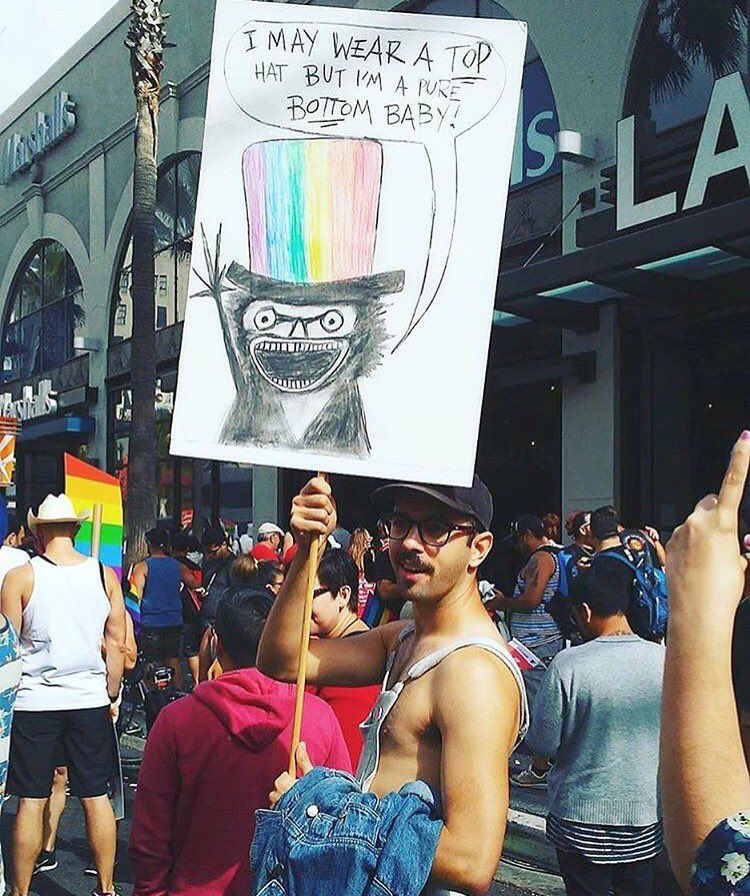
Writing about memes is silly business. By the time I publish this piece, it will have been well over a week since the story of the Babadook’s strange path to becoming an LGBTQ icon peaked, which in internet terms is a relative eternity. It’s still a funny story, though. Reportedly, a Netflix user noticed that the Jennifer Kent-directed instant cult classic horror The Babadook had been mistakenly filed under the LGBTQ Cinema category on the site’s streaming service. Users across social media platforms like Tumblr & Twitter then ran with the mistake, declaring the Babadook to be a gay icon. There has since been an immeasurable flood of memes inserting the Babadook into rainbow flag backdrops, stills from RuPaul’s Drag Race, and any other queer spaces that could easily be ‘Dooked. There have even been in-the-flesh sightings of the Babadook at Pride parades and the filming of the Drag Race finale. It’s been a bizarrely fun way to kick off 2017’s Pride Month​ celebrations and, unlike most memes, I hope this one never dies.

On one of our fist posts as a site, we declared The Babadook to be one of the best films of 2014, a very close second to the South Korean sci-fi epic Snowpiercer. We did not, however, have Netflix’s courage to declare that the film qualifies as LGBTQ content. It’s funny to return to Kent’s film now in search for glimpses of queerness, a context that was presumably far from anyone’s mind, Kent’s or otherwise, when it was first produced. It’s easy to make flippant jokes (and plenty have) about the Babadook’s dramatic presence in the arts (a children’s book about himself), how he’s a fancy dresser (complete with a signature top hat), how he’s kept locked away in a closet (actually, it’s a basement, but whatever), and his tendency to chat at length on the phone (about himself). If you really want to reach for something more substantive, I guess you could find interesting subtext by looking to the scene where the main character is prevented from masturbating with her ancient sex toy as an act of sexual oppression or by considering the fact that the Babadook himself is oppressed but never truly goes away as a kind of metaphorical struggle. The joke, though, is not necessarily that the film The Babadook is gay, but that its titular character is. This is still a film about a parent’s daily struggle with grief, depression, and resentment of their own child. The monstrous manifestation of that struggle, the Babadook, just happens to be a gay character within that story (according to current kayfabe, at least).

Keeping that separation of narrative and character in mind, there is something undeniably gay about the Babadook: he barely appears onscreen. In GLAAD’s recent scathing report on LGBTQ​ representation in major Hollywood productions, the organization took major studios like Disney & Sony to task for the pitifully minuscule amount of screentime they afforded queer characters in 2016. In one of the most absurd (and most damning) factoids from the report, it’s stated that the Lonely Island comedy Popstar: Never Stop Never Stopping accounted for 20% of all LGBTQ representation in major Hollywood productions last year, all because of a single Macklemore-spoofing song that satirizes a “no homo” brand of mainstream queer acceptance. Yet, you’d think that things were getting better than the report suggests, thanks to overblown flashes of queer representation like a suggestive campfire confession in the latest Power Rangers movie or an equally vague hint of LeFou’s homosexuality in the latest Beauty and the Beast. Audiences desperate for queer content will look for same sex romance in slightly suggestive friendships between characters like Poe & Finn in The Force Awakens or Steve & Bucky in the Captain America series, despite there being very little to support it, even in terms of subtext. Fans have to reach for those unspoken romances & declarations of queer identity because there’s nothing explicit to hold onto in most mainstream Hollywood productions. Worse yet, corporations like Disney will encourage this desperation because it sells tickets in certain demographics, yet they will do little to follow through on the promise.

The Babadook knows the struggle between lip service & onscreen representation all too well. His name is often spoken and his 2D image sometimes flashes in the form of his eponymous children’s book, but Babs himself does not appear onscreen until over halfway into the film. He’s relegated to the shadows, mostly locked away from eyesight, and the audience is blocked from getting the ‘Dook they want so badly. If we’re going to establish as a culture that the Babadook is gay, we’re also going to have to accept that the way he’s villainized and minimized in his own damn movie is sadly typical of how queer characters are represented onscreen. As an Australian indie director working on a minor budget, Jennifer Kent is far from a Hollywood big shot (and, breaking kayfabe for a minute, The Babadook is far from an LGBTQ film). It is funny, though, that as her horror genre monster has been gleefully co-opted as a queer icon that his minimized screen presence incidentally mirrors the way LGBTQ characters are typically represented (or not represented) in major Hollywood productions. It’s almost as funny as it is monstrously depressing.

-Brandon Ledet

Kiki (2017)

By billing itself as a “spiritual sequel” to the landmark documentary Paris is Burning, the Swiss-American co-production Kiki smartly brought a lot of attention to itself & its political cause in an overcrowded media market where most low budget documentaries slip by without notice. It also set the expectation of what it can deliver to an impossibly high standard. Kiki is not as significant of a work as Paris is Burning. It’s not even close. Not only has the initial wow factor of what Paris is Burning managed to unearth faded with time, but the switch from celluloid film to digital media has significantly hindered the quality of imagery in this distant echo of an unofficial sequel. Still, as a modern check-in on the state of the NYC ballroom and voguing scene decades after that landmark work and a document of the heights of visual art being achieved within that subculture today, it’s a worthwhile addition to the classic doc’s legacy.

Paris is Burning documented the well-established “houses” & long term history of ballroom culture in NYC, a pocket of queer society fiercely dedicated both to artistic expression (mostly through fashion & dance) and self-preserving loyalty. Kiki focuses on a much more specific subset within that larger scene. Its title not only refers to the communal act of partying or hanging out, but also defines a subset of ball culture participants who are remarkably young and, unlike the older houses profiled in the previous film, unestablished. A large population of the Kiki world are underage PoC, abused or abandoned by their parents for being homosexual or trans. The “house mothers” who take them under their wing and help them prepare for ballroom & voguing competition are barely older than them, mostly in their early 20s, and that age range is largely what separates the “Kiki” scene from traditional ballroom culture.

What’s most exciting about Kiki as a film is in knowing that the ballroom scene does have this young blood flowing through its veins, keeping it alive. In a world where there aren’t many true countercultures left untouched by homogenized pop culture at large, it’s reassuring to know that the NYC ballroom scene is still as vibrantly punk as ever. You can see reflections of what Paris is Burning first documented in mainstream outlets like Ru Paul’s Drag Race today, but for the most part the culture had been left untouched & far from normalized. The aggressively defiant fashion, death drops, and openly expressed sexuality documented in Kiki is still punk as fuck and still a wonder to behold. The best moments of the film are when it merely documents & broadcasts the fine art achievement of the in-their-infancy houses like House P.U.C.C.I., House Juicy Culture, House Unbound Cartier, etc.

Although a respectable ambition, it’s the film’s overt attempts at political statement that drag down its overall value as an art piece. Kiki rightfully has a lot to say about queer and trans identity in modern America. Since it follows a younger set of subjects, it even has terms like “triggered” and “gender fluidity” in its arsenal to discuss these issues effectively. When it dares to flash back to images pulled directly directly from Paris is Burning, however, you get the sense that these politics might have been better served if they were allowed to crop up naturally while focusing on what makes this community’s highly specific POV special in the first place: ballroom culture. The issues discussed in the film are damn important, but by splitting its time between the less visually compelling political maneuvers that take place between the ballroom competitions and actually documenting the competitions​ themselves, the film ultimately feels a little weak and diluted, especially when compared to its spiritual predecessor.

Kiki makes some admirable maneuvers to improve on the Paris is Burning formula. It updates the soundtrack to a modern pop aggression provided by Qween Beat, deliberately puts its LGBTQ politics in the foreground of its subject, and goes as far as to include one of its interviewees in the production of the doc, correcting what many perceive as an exploitative element of Paris is Burning. Even with these positive alterations and additions, however, Kiki can never shake the feeling of being little more than an addendum or an epilogue to that superior work. It shines when it focus on the priceless visual art being produced in the ballroom subculture (sometimes even playing like a voguing-themed version of Girl Walk // All Day), allowing its politics to be passionately expressed in that display. When it strays from that task, however, it starts to feel a lot more like countless works we’ve already seen before. It’s horrifically upsetting that statements like “I am a person” should feel overtly political in a 2010s context, but I can’t shake the feeling that there are more interesting ways to say it than the way it’s handled in Kiki. Take, for instance, the way it’s expressed in the film it openly pays homage to at every turn.

-Brandon Ledet

Check It (2016)

EPSON MFP image

three star

A lot of documentaries can survive on the inherent cool of an interesting subject, but Check It pushes the boundaries of just how much that dynamic can allow. In Check It’s better moments it functions as an oral history of the self-proclaimed Check It crew, reported in the film to be “the first gay gang documented in America.” Formed in the rougher areas of Washington DC, where there’s an absurdly high rate of reported hate crimes against LGBTQ youth, Check It exists as an aggressive resistance in which queer & trans kids stand up for themselves and participate in vicious acts of violence in order to survive daily life. In the documentary’s less interesting impulses it glorifies the gang counselors who intend to “reform” members of Check It and turn them into normalized, “productive” members of society. The counselors & the documentary have their heart in the right place, but often push to strip the kids of the identity & vibrancy that made them so strong & so fascinating the first place. The result is a really interesting story told from self-conflicting perspectives: the kids who live it & the outsider adults who want to change it for the greater good.

I don’t mean to make Check It gang members’ lifestyles sound at all glamorous. Their ranks are populated with underage trans sex workers, the abandoned children of the survivors of the 80s crack epidemic that destroyed DC, the frequent targets of sudden & deadly violence. Kicked out of school, left homeless, and barely surviving, it’s incredible the way these kids found immense strength in solidarity. Their confidence is infectious. That solidarity sometimes becomes too powerful & their violence extends into abuse instead of survival in its ugliest moments, but that’s the improbable way they found respect in a world that obviously wants them dead. Outsider gang counselors attempt to inspire change in Check It’s key members, nobly & nakedly trying to save their lives. Sometimes this reform takes a natural approach, hoping to inspire them to find professional careers in the fashion industry, given their creativity in personal style. Other times it robs them of their identity, like when influencing them to take more traditionally masculine interests in activities like boxing. Either alternative might be a better option than their usual hobies of “fighting, snatching purses, getting locked up,” but it often feels disingenuous & short term in a way that wouldn’t be true if the change were coming from within.

If I were rating this film solely on the young, exciting personalities it manages to document this would be a five star review. The way these kids managed to turn a Paris is Burning lifestyle into a militarized force of resistance is an undeniably incredible feat. There’s a real power in statements like “when we go out places we go out as one,” even if “going out” is detailed here in difficult-to-watch smartphone footage of vicious knife fights & wig-snatching. When outside forces try to influence the kids to move in a safer, more socially acceptable direction, the documentary loses some of that genuine impact. The intent may be to save lives & I hope that’s an approach that works, but the film’s much more interesting angle is in how Check It members were saving their own lives long before the counselors & the cameras arrived. Check It works best when it shows the kids chowing on fast food, discussing their Instagram aesthetics, and listening to artists like Cakes da Killa or Dominique Young Unique. It loses a little credibility in its celebratory air when it asks those kids to change themselves to survive, especially since they had managed to survive on their own despite the overwhelming odds for long enough to make a name for themselves and attract this attention in the first place. If they ever find a way to inspire internal inspiration for change & progress within their own ranks they’ll be unstoppable. It’ll also make for a much less compromised documentary.

-Brandon Ledet


Moonlight (2016)

fourstar

I had a certain amount of anxiety going into Moonlight that the film might slip into a lot of the clichés queer dramas often succumb to. Specifically, I didn’t want to suffer through yet another devastating tragedy where being homosexual meant an automatic death sentence & the audience was made to feel awful about the cruel world we live in that killed the fictional character the film created. A lot of the once-controversial empathy in those narratives has become so stale & so dispiriting at this point, while openly celebratory or even normalized queer narratives remain a rarity in major cinematic releases. As a queer drama set in an impoverished POC community in the South that deals with both drug abuse & childhood bullying, Moonlight had plenty of room to slip into this familiarly dour mediocrity. My anxiety wasn’t entirely off-base, as the film does traffic in a justifiably sad, tragic tone for a large bulk of its runtime, but there’s no honest way to claim that Moonlight is at all a more-of-the-same cliché, queer cinema or otherwise. Director Barry Jenkins delivers something much more wonderfully strange & strangely wonderful than what I could have expected, feared, or hoped for based on the film’s advertising. Moonlight is its own singular experience. It cannot be understood through the trappings of any genre convention.

A large part of what abstracts Moonlight and saves it from dramatic banality is its basic structure as a triptych. Bedsides functioning as a queer narrative about how homosexual desire violently clashes with traditional ideas of black masculinity in the modern world, the film also works as a coming of age & self-acceptance story for a single man who’s forced to navigate & survive that clash. We see Chiron as a child, a teenager, and an adult man. All three stages are portrayed by different actors. All three are devastatingly lonely. All three desperately hang onto the small displays of tenderness & solidarity they can scrape together in a world that considers their very existence an act of violence. Chiron is an amalgamation of varied struggles under social & economic pressures he was born into without asking. As the audience pieces together what these three parts of his life amount to when assembled into an single character, Chiron attempts to make sense of himself in a similar way. A more conventional movie might have been attempted to span his entire life, like in a sap-coated biopic, but instead we get glimpses of thee formative moments, each alternating between tenderness & abuse from minute to minute. Narrowing down Chiron’s life to these temporal snapshots allows us to dive deep into the character instead of casually empathizing from the surface. And the result is not nearly as bleak as I’m making it sound here, I promise.

Jenkins somehow, miraculously finds a way to make this meditation on self-conflict, abuse, loneliness, addiction, and homophobic violence feel like a spiritual revelation, a cathartic release. So much of this hinges on visual abstraction. We sink into Chiron’s dreams. We share in his romantic gaze. Time & sound fall out of sync when life hits him like a ton of bricks, whether positively or negatively. The camera lingers on the beauty of multi-color lights reflected off black skin (perhaps in a nod to the stage play source material In Moonlight Black Boys Look Blue). My eyes welled up with tears at various times during Moonlight, but it wasn’t always in disgust with how cruel the world can be to a black, queer man struggling to emulate traditional modes of masculinity. Sometimes it was the slightest, most microscopic physical or emotional displays of support & solidarity that stirred a reaction in me. Barry Jenkins managed to pilot a potentially middling, by the books queer drama away from woe & despair mediocrity into an ultimately life-affirming adoption of Under the Skin levels of visual & aural abstraction. With Moonlight, he sidestepped an infinite number of filmmaking pitfalls to deliver something truly precious, a fascinating work the world is lucky to have seen materialize out of the mist.

-Brandon Ledet