When Brandon first mentioned that there might be some difficulty finding Girl Walk // All Day in order to watch it as this month’s MotM feature due to its rights issues, the first thing I thought of was On Your Mark. A seven minute experiment that Hayao Miyazaki churned out while dealing with his writer’s block on Princess Mononoke, the short film is an animated music video created for Japanese rock group Chage & Aska. It was originally released in theatres with Studio Ghibli feature Whisper of the Heart (which Miyazaki wrote but did not direct or animate), but has never had a legal release in the U.S., and is often pretty hard to find, even online (I found a version with a quick Google search, but won’t provide the link for fear that it will be immediately discovered and pulled). It was set to be released as part of a stateside Studio Ghibli DVD set, but Aska’s arrest for alleged possession of MDMA and other paraphernalia in 2014 meant that the set was delayed while Disney Japan scrubbed the video. Earlier sets of the DVD released in Japan were even recalled and new discs returned that did not contain the short. A note to international travelers: don’t do drugs in Japan. You’ll see your body of work erased from existence like lost, unnamed pharaohs.
The video itself is utterly beautiful. There’s no dialogue, and I don’t really know if the song itself has anything to do with the images, but the story is relatively straightforward despite being non-linear. There is an outside world that is ostensibly irradiated, and an underground metropolis that is visually evocative of both Blade Runner and Akira. Within this city, a group of policemen crash an airship into a tower filled with armed cultists, and two of them stumble upon a young girl with beautiful angelic wings. The girl is immediately taken by E.T.-esque scientists, and the two policemen who first discovered her break into a laboratory to liberate her. The three fail to escape and plunge to their deaths, but then a Lola rennt style rewind-as- montage leads back to the point where they fell and they instead fly away; the two policemen take the girl out into the sun to release her back into the sky, where she floats away and out of sight.
There are a lot of Miyazaki’s recurring elements in play, most notably his love for the imagery of flight. Whether it’s a flying fortress in Castle in the Sky, Nausicaa zipping around on her flier in Nausicaa of the Valley of the Wind, porcine fighter pilots in Porco Rosso, or pretty much the entirety of The Wind Rises, Miyazaki loves to make the audience feel like they’re soaring. The three characters have little in the way of characterization, but the policemen show a lot of personality in just their faces and their selfless attempts to save the girl from experimentation. We don’t really need to know much about their world at all, but the narrative of the story is clear regardless. Just as Girl Walk tells a story with no words, so to does On Your Mark. And, as both are constantly facing potential deletion, so to should you take any opportunity that presents itself to catch either film.
There has been so much crossover between pop music & film over the decades that it’s almost difficult to distinguish exactly what makes May’s Movie of the Month, the full-length Girl Talk dance video Girl Walk // All Day, such a unique work. From the Beatles movies to MTV to beyond, pop musicians have turned to cinema as an outlet in many varied ways, not least of all including the music video, the concert film, and the tour documentary. Often enough, this visual element can be treated as a mere means of promotion, a backseat accompaniment to the true product being sold: the music itself. There are certainly some major exceptions to that music-video-as-advertisement mentality, however.
The Beatles’ A Hard Day’s Night, Pink Floyd’s The Wall, The Who’s Tommy, and Prince’s Purple Rain are all readily recognizable examples of major musicians trying to put their music to film by constructing a feature-length narrative work with songs from a single album interjected between the plot points as punctuation. The concert film is its own artform, one perfected by more experimental examples like The Talking Heads’ Stop Making Sense & Björk’s Biophilia Live(I’m sure Kanye West’s Jodorowsky-inspired Yeezus film will be right up there if he ever releases the damn thing), but they don’t seem quite as solid of a music-meets-film artform as the narrative versions of the records mentioned above. The problem that even the narrative music movies (something we’ve previously referred to as Pop Music Cinema around here) feel somewhat stilted in their integration of music & cinema, not quite reaching a fully-formed, fully-committed ideal. Concert films are a type of documentary. Narrative pop music films are often a next-stage evolution of the Broadway musical where the songs punctuate the dialogue as a kind of emotional spike or act break. Neither are 100% the music video as feature-length cinema.
Girl Walk // All Day feels different from most of pop music cinema’s past because it is more of pure conversion of the music video into the feature-length film medium. The most apt term I’ve heard to describe what I’m getting at here was recently coined by Beyoncé as “the visual album” (more on that below). I like that term because it distinguishes the artform from the “music video album”, which is quite literally just a collection of music videos, as opposed to a feature-length, singular work that poses the music video as a narrative artform. Think of the difference between The Beatles’ album Please Please Me and their more thematically cohesive later works like Abbey Road and you’ll see the same difference between “the music video album” and “the visual album”. Just because Beach House released a music video for every track on Teen Dream doesn’t mean all the videos from that record function as a singularly-minded, narratively cohesive collection. Girl Walk // All Day is a (fan-made) visual representation of a Girl Talk mixtape in its entirety. It’s much more akin to a music video than a traditional musical, but it still functions as a feature-length, narrative work with a (loose plot) entirely driven by the shifting dynamics of its soundtrack. Nothing exists in a void, however. Just because Girl Walk // All Day is, in my mind at least, the most fully-realized convergence of the music video & the feature film into a singular work doesn’t mean it was the first, last, or most significant example of its kind.
There are many other “visual albums” out there in the world and I’ve collected a solid list of five examples below of some of the highlights of the genre, including, of course, the Beyoncé work I lifted the term from. I don’t think the “visual album” has yet reached hit its peak. There’s plenty of room for the artform to expand into an distinct medium worthy of respect & adoration. I could even argue that the “visual album” is the logical next step for the musical as cinema, a medium that has stagnated in a lot of ways over the past few decades. Here’s five boudnary-pushing examples of the visual album that offer a distinctive look on where the genre could presumably go in the future, each promising just as much innovation as Girl Walk // All Day, if not more.
1. Lemonade (2016)
It’d be a shame to praise the “visual album” as an artform without mentioning the source of where I lifted the term. It also helps that the product itself is an exquisite work of art. Beyoncé has been going through a spiritual growth spurt in the last few years where she’s struggling to break away from her long-established persona of top-of-the-world pop idol to reveal a more creative, vulnerable persona underneath. Her recent “visual album” Lemonade feels like a culmination of this momentum, a grand personal statement that cuts through her usual “flawless” visage to expose a galaxy of emotional conflicts & spiritual second-guessings the world was previously not privy to. It’s at times a deeply uncomfortable experience, as if you’re reading someone’s diary entries or poetry as they stare you down. However, it can also be an empowering & triumphant one, particularly aimed at giving a voice to the underserved POV of being a young black woman in modern America.
Lemonade is significant to the visual album medium not only for giving it a name, but also pushing the boundaries of form & narrative. In some ways it resembles the traditional mode of a “music video album” in that it represents each track from the audio version of Lemonade with a distinctly separate music video. Those rigid divisions serve mostly as chapter breaks, however, as the spoken word pieces that bind them represent an overall, loose narrative tableau about romantic grief, revenge, vulnerability, and empowerment. It’s the same kind of cryptic dialogue vs powerful cinematography formula that’s been driving Terrence Malicks’ work for years. At the risk of incurring the wrath of the Beyhive, Ill confess that I don’t find every risk Lemonade takes pays off (the country song & the poetry can both be a bit much for me at times), but I respect its ambition in a general sense, especially when the more powerful, successful moments hit you like a ton of emotional bricks. Lemonade names, expands, and complicates the concept of the visual album as a medium and demands to be seen if you have an interest in the meeting place where the music video blurs with cinema.
2. The Line, the Cross and the Curve (1993)
I’ve been a huge Kate Bush fan since I first heard The Hounds of Love & The Dreaming in high school, but it took me a good, long while to get into her work from the 90s & beyond.There’s a pop slickness to Kate Bush’s sound, as strange is it is, that can be a little off-putting to me depending on the production .It was the short film The Line, the Cross and the Curve that finally unlocked this world for me and in the years since I first watched it Bush’s 1993 album The Red Shoes has become one of my favorites from the brilliant singer/songwriter. Composed of six music video segments pulled from the twelve tracks on The Red Shoes, The Line, the Cross and the Curve is a short film directed by Bush herself that mimics the 1948 Powell-Pressburger masterpiece The Red Shoes as a basic framework before deviating into something idiosyncratically sensual & surreal. Girl Walk // All Day might be the most successive marriage of the music video & the narrative feature film and Lemonade deserves its own accolades for expanding & labeling the “visual album” as an artform, but The Line, the Cross and the Curve is still a personal pet favorite for me based on pure emotional impact alone.
Bush recorded The Red Shoes in the wake of her emotional devastation of losing two loved ones & suffering a romantic break-up in a single year. The film version & the album both hold a similar cryptic diary/therapy dynamic as Lemonade, but the range & depth of emotions on display in The Line, the Cross and the Curve sometimes reach a sensual, celebratory jubilee not touched by Beyoncé’s distant descendant. I’m thinking particularly of the lush fruitscape of the “Eat the Music” portion of the film, a visual representation of a song so strong that it turned a tune I was too cynical to appreciate into one of my favorite pop music diddies of all time. Bush’s film also can play it tender (“Moments of Pleasure”) or demonically wicked (“The Red Shoes”) depending on its mood and although the singer/songwriter/dancer/director herself has gone on record voicing her frustration with the finished product, I find it to be something of a masterpiece, an early pinnacle of the “visual album” medium. My only complaint is that it could’ve easily included the other six tracks from The Red Shoes & functioned as a feature film.
3. Ultimate Reality (2007)
One of the strangest concert experiences of my life was one of the first (of many wonderful) times I saw Dan Deacon perform live. Instead of having a traditional opening act for this particular tour, Deacon’s set was preceded by a “live performance” of his “visual album” Ultimate Reality. Two drummers took the stage to simultaneously perform on top of Deacon’s trademark synth carnage as a live soundtrack to a film that was projected behind them (provided by visual artist & frequent Deacon collaborator Jimmy Joe Roche). Scrapping together clips from Arnold Schwarzenegger classic from various phases of the action movie god’s career, Ultimate Reality repurposes the Governator’s past work into a single, kaleidoscopic mess of confusingly plotted narrative & eye-burning psychedelia.
Ultimate Reality approaches the music video as cinema concept from the same jubilant, illegal mindframe as Girl Walk // All Day, except it blends all of its “borrowed” material into an endurance contest instead of a crowd-pleasing celebration of the art of dance. There’s a very loose narrative plot at work in the film that tells some kind of time-traveling story Arnold thwarting a doomsday scenario, but it’s an entirely superfluous to the work’s true bread & butter: mind-melting visual & aural assault. Ultimate Reality is simultaneously one of the most beautiful & the most difficult to watch visual albums you’re ever likely to see (it’s pretty much literally a technicolor kaleidoscope of Arnold Schwarzenegger clips & Dan Deacon synths, after all). It’s by far my favorite way way to clear my house at the end of a party. Just pop in the DVD & watch them scatter.
4. Interstella 5555: The 5tory of the 5ecret 5tar 5ystem (2003)
I’m far, far, far from an electronica fan, which makes me a bit of a sourpuss when it comes to enjoying the immensely popular French pop duo Daft Punk. A few singles will catch my attention every now & then, but listening to one of their albums in its entirety is something I’m not likely to ever to do voluntarily. Every rule has its exceptions, however, and I have found myself blaring the band’s soundtrack for the underrated cheap thrill Tron: Legacy. There’s something integrally cinematic about Daft Punk’s music that lends it well to soundtrack work, especially sci-fi movies and I would gladly watch any film the band scores for their contributions alone. It’s a good thing, then, that the Daft Punk visual album Interstella 5555 is a sci-fi film mostly set in outer space.
A French-Japanese co-production constructed by Toei Animation, the production studio behind legendary works like Sailor Moon & Dragon Ball Z, Interstella 5555 illustrates Daft Punk’s hit album Discovery in its entirety. Much like with Girl Walk // All Day, the visual album features no dialogue outside the band’s lyrics (which are at one point sampled in the Girl Walk movie, coincidentally), but its narrative is much more solid & vividly clear. In the movie the space alien band The Crescentdolls is kidnapped by an American record studio/ancient cult and forced to perform a one hit wonder & sign autographs for adoring fans at a punishingly repetitive schedule. Their quest to escape this hopeless imprisonment rests in the hands of a mercenary hero who flies around in a guitar-shaped spaceship & spends a lot of his time rocking out to bonafide jams while floating around in a vacuum. The film is beautiful, funny, terrifying, and easily recognizable as one of the best examples of the visual album to date. I’ll admit that somewhere around the third act the repetition of the dance music started to exhaust me a bit, but if you’re a more committed Daft Punk fan you might not even have that problem. As far as accomplishing the goals it establishes for itself, the film is wholly successful & thoroughly delightful.
5. Trapped in the Closet (2005-2012)
R. Kelly is, in all likelihood, a complete monster (unless you want to consider the shocking pile of evidence against his good name hearsay), but that doesn’t mean he’s not an entertaining monster. There are so many ridiculous phases & highlights to the R&B singer’s career that I’m not even going to attempt to touch on them, here, but I think it’s fairly clear that his de facto magnum opus, Trapped in the Closet, has earned its place among the most noteworthy examples of the visual album medium. Kelly took the idea of a narrative film music video hybrid literally to the point of outright hilarity. Described as a “rap opera”, the seemingly never-ending saga of Trapped in the Closet follows the second-by-second developments of a love triangle that spirals out of control into an absurdly complicated web of deceipt, revenge, murder, and romance.
Trapped in the Closet is a gloriously silly watch (even when it’s offensively close-minded) and at times feels way more akin to a daytime soap opera than music video cinema, but it’s inspired so much pop culture weirdness to follow (including a glorious Weird Al parody & what’s easily one of the best Wikipedia pages I’ve ever read) that it’s near impossible to discuss the visual album as a concept without including its name. Trapped in the Closet may aim for a more straight-forward narrative than Girl Walk, Lemonade, etc. (even hilariously so), but easily matches those projects in ambition & sheer audacity. R. Kelly combined the music video & the narrative feature into a single, punishing, over-the-top work of high camp. Even if you can’t stomach the idea of sitting through all 33 “chapters” of the monotonously bonkers story, you should at least consider getting a taste of the early episodes and skimming through the Wikipedia plot synopsis, including this flow chart of who’s bonked whom in its web of sex & lies.
Every month one of us makes the rest of the crew watch a movie they’ve never seen before & we discuss it afterwards. This month Brandon made Boomer & Britnee watch Girl Walk // All Day (2011).
Brandon: Mashup DJ Gregg Gillis, better known by the stage name Girl Talk, releases all of his sample-based mixtapes for free through an imprint collective named Illegal Art. This isn’t necessarily a choice based in artistic integrity (although Gillis himself does have a lot to say about the legitimacy of copyright laws), but rather a product of the circumstance that Girl Talk tapes would be illegal to sell commercially. In an industry where hip-hop artists & pop music producers are careful not to get sued over borrowed melodies & uncleared samples, Gillis composes his music entirely out of repurposed, previously copyrighted material. His work as Girl Talk is fantastic party music, but it’s also commercial suicide. I assume Gillis makes most of his money mixing songs at live gigs since the art he’s most well known for is decidedly “illegal”.
Having this uncopyrightable material floating around out there has its advantages, though. For instance, a rogue dance crew could, say, make a full-length music video centered around one of your mixtapes without any fear of legal persecution (at least not from the DJ). Girl Walk // All Day is a movie-length dance video constructed around Girl Talk’s 2010 album All Day (which is still his most recent full-length mashup release). The film (and I do think it qualifies as a legitimate film) seems to take Gillis’s “illegal art” imprint as a mission statement. Stealing its soundtrack & candid reactions from outside sources and operating around what presumably had to be permitless film shoots, Girl Walk // All Day has an inherent sense of danger at its center that makes the film feel like it shouldn’t exist. Yet, its star dancer Anne Marsen (billed simply as “The Girl”) brings a childlike exuberance to every scene that makes the movie feel like it does have a right to exist even if it’s on earthquake-scale shaky ground legally, as if good vibes & positive intentions should outweigh any potential scandal. Girl Walk // All Day is frequently removed from YouTube & broken into annoying chapter segments on Vimeo due to its inability to secure an official release, but when you watch the film you’re left wondering exactly why someone (or some corporation) would want to crush or erase a work so joyful & goodhearted in the first place, uncleared music samples or no.
Legality aside, I feel like the first thing we have to address about Girl Walk // All Day is whether or not it has a legitimate claim as a feature film. It screened at film festivals, it made critic David Elrich’s Top Films of 2012 countdown, it has several narrative arcs that run throughout its 74 minute runtime (one about The Girl’s personal growth as an antonymous woman, one about a love triangle where she’s caught between The Creep & The Gentleman, and one about the sprawling structure of NYC), but it’s easy to see how someone could brush the film off as an overlong music video. Britnee, where do you fall on this divide? Is Girl Walk // All Day a modern spin on the dying art of the cinematic musical or does its thin, near dialogue-free narrative exclude it from consideration as a legitimate motion picture?
Britnee: First and foremost, I was unaware of the legality issues with Girl Talk’s music prior to this conversation. I always thought that he had permission to use all the popular music samples in his mashups. I’m far from being a Girl Talk expert, but the thought just never crossed my mind. It’s amazing how his musical career is so huge while he’s surrounded with so many copyright issues. This makes Girl Walk // All Day seem so dirty, and I like that.
As for your question of Girl Walk // All Day being considered an actual film, I would have to say that it’s most definitely a legitimate film. I can also see how some would consider it to be an “overlong music video,” but I consider many music videos to be the equivalent of short films. Take Madonna’s “Like a Prayer” or, more recently, Adele’s “Hello” music videos for example. How could those not be considered cinema? Music videos are directed, contain acting, and tell a story. Is that not what makes a film, well, a film? Girl Walk // All Day does contain quite an interesting plot, and although the film contains no dialogue whatsoever, emotions are portrayed through expressive dance and facial expressions. That doesn’t make it less of a film; it just makes it a little different.
The dancing in Girl Walk // All Day was so contagious. Just watching The Girl dance her heart out all over New York City gave me such a sense of freedom, to the point that I was getting a bit lightheaded (I was only drinking water during the viewing). Boomer, if you were one of the many bystanders during this film’s production, would you join The Girl in quick jig or would you walk on by? Did you find her to be a likable main character or did you find her to be annoying and intrusive? What exactly did you make of The Girl?
Boomer: That’s a good question. At multiple points throughout the film, I found myself identifying with many of the people that The Girl encounters, the willing and unwilling participants alike. Although several of these passersby seemed disinterested in participating, she actively seemed confrontational with many of them (the one which stands out in my mind is the man whose hand she grabs while wearing the “Dance With Me” sandwich board), which didn’t sour me on the character but did leave a bit of a bad aftertaste in my mouth. Having lived in a few different cities, I can certainly say that my experiences with unsolicited engagement with others is not always pleasant. Over the course of the film, I found myself very much wanting to dance with The Girl in theory, but I don’t know if I would have actually had that desire in practice and in the moment. It’s pretty unlikely that the Girl Talk tracks that appear in the film were diegetic, given the movement from place to place and general public reaction, and as such I feel like my first instinct would be to avoid a potentially dangerous person approaching me, dancing to a song that I cannot hear. Other factors, like what kind of mood I might happen to be in when The Girl chanced upon me and whether I was in a hurry to get to work or another engagement would also affect how willing I would be to join in her movements, sublime though they might be. I want to answer your question with a resounding “Yes,” but I just don’t know if I would actually do so should the opportunity arise.
I’m talking, of course, about those scenes in which she is dancing through crowds and on the streets. Some of the Staten Island ferriers are utterly disinterested in her performance, and many of the people who seem taken aback by her look like NYC tourists to me. It makes sense that residents would be nonplussed by The Girl and her apparent mania, in contrast to visitors who are less accustomed to every performer within a 25 mile radius desperately fighting for attention and notice. Still, as fun and flouncy as the narrative is, there was an undercurrent to it that felt off, as none of the people captured on film seemed to have given their prior consent to being filmed, which is troubling despite how much joy I, as a passive observer, got out of the performance. I don’t know that I would find her annoying, and I really wish I could unequivocally say that I would have given in to the movement, but I know that I would have found her intrusive.
That may be why I got more enjoyment out of the less candid scenes. The opening scene in the ballet class and the overpass breakdancing dance off were a lot more fun to me, as was The Girl’s voguing in an alley with no other people around. There’s an exhilaration to the street scenes that I would find anxiety-inducing were I to be involved as a performer, and I like that the more rehearsed sequences felt a little calmer (but no less exciting) in that regard. Still, I didn’t care for The Creeper dancing with flowers in the park, despite the fact that it was one of the sequences that did not feature non-performers. It lacked some of the verisimilitude (insofar as that word has any meaning in a film like this) of the rest of the film, and I found it lacking as a result. What do you think, Brandon? Did you prefer the sequences that featured random people being pulled into the mix, or the more standard, “closed set” sequences?
Brandon: The individual set-ups in Girl Walk // All Day work for me on kind of a case-by-case basis. There’s so much going on in this film (which, although manicured to an extent, must’ve been a chaotic shoot) that each of the moving parts can be hit or miss depending on the execution. I’d agree that the closed set shoots do feel more purposeful in a general sense than the candid shots of The Girl interacting with the public do, but they sort of have to for the film to make sense narratively. Take, for instance, the graveyard flowers scene Boomer just mentioned. It’s a somewhat jarring tangent when the flowers first appear because they exist outside the Girl-Creep-Gentleman dynamic we’re used to until that point. However, the scene does carry a lot of significance to the film in a narrative sense, since it’s in that moment that The Creep literally grows a heart inside that dancing skeleton of his and makes the transition from antagonist to socially inept beau. The only “scripted” scenes I was lukewarm to, honestly, were the ones centered on The Gentleman, since he was the most static, least interesting character of the central trio. I guess it was fun for a moment to watch the random hardcore parkour dude steal his hat, but that’s about all there is worth mentioning.
As for the candid video interactions with the public, I think Anne Marsen’s performance as The Girl has a lot to do with how they go individually. She has an insanely infectious smile that can make you want to join in as well as a cartoonish grimace that can make you want to back way, way off. Marsen has incredible control over her physical language & expression (as I’m sure most talented dancers must) that can make interactions either inviting or confrontational depending on her desired effect. I’m in total agreeance with Boomer that the discomfort of these scenarios isn’t something I’d necessarily want to live through as a passerby, but The Girl’s mock aggression does make for some especially great moments in the film. I’m thinking not only of the aforementioned “Dance With Me” sandwich board sequence where she’s shown mentally unraveling & a scenario where’s she’s booted from a baseball game by the nonplussed security team, but particularly of the glorious moment when The Girl appears loaded with shopping mall ephemera in a high society fashion bitch outfit to taunt Occupy Wall Street protestors. It’s a beautifully over-the-top exchange that not only solidifies Girl Walk // All Day as a work of highly-functional performance art, but also a document of a very specific moment for NYC/America at large.
In most cases it’d be a massive cliché to say that New York City itself is a character in a piece of film criticism, but I feel that faux pas is inescapable here as it’s quite literally true. Not only are citizens (and tourists) of NYC roped into the production as performers, but The Girl’s personal journey (into adulthood? autonomy?) is more or less told through a guided tour of The Five Boroughs. Historical markers like Occupy Wall Street & the pop songs Girl Talk samples on the soundtrack are also very specific to the cultural zeitgeist of a particular time. Britnee, how much different would Girl Walk // All Day be if this physical & temporal setting were shifted? How different would the film be if it were set in, say, 2016 New Orleans? Are the time & place of its setting and the era of its pop music soundtrack entirely essential to its existence the way they’d be in a documentary?
Britnee: I’m quite unfamiliar with NYC as I have never visited the city nor do I personally know any residents, so I probably missed a good bit of symbolism that NYC offered Girl Walk // All Day. However, I am not that out of the loop and thoroughly enjoyed the hilarious yet profound Occupy Wall Street scene. I do think that the film would be very different if set in a different time and place. Music style and social issues change through time and by location, and these are major components of the film. The film’s essential message of self-acceptance and personal freedom might be the only thing that would not be all that different if this film were not set in 2011 NYC. It’s interesting that you brought up the question of the whether or not the film’s setting and music serve the same importance in the film as in a documentary. I definitely think that the importance of time and place in Girl Walk // All Day is very similar to that of a documentary. Her actions and the film’s music would hold a different meaning if she were to dance through Miami in the late 1980s or Atlantic City in the 1930s.
If set in modern day New Orleans, the film would be slightly different as New Orleans seems to be really different from NYC. Current issues New Orleans faces include gentrification, social segregation, and uncontrollable crime. I’m sure that the same issues occur in NYC, but not on the same level as they do in New Orleans. I can imagine The Girl dancing up a storm out in the Bywater to one of those extra-long bounce remixes Q-93 plays on Saturday nights. As she dances her way through the neighborhoods, life-long residents pack moving trucks while white upper middle-class families unpack moving trucks, carrying boxes to their new homes. Oh, and she would need to definitely leave that windbreaker behind since it’s always hot as hell down here.
Boomer, would you like to see more films in the style of Girl Walk // All Day? What particular album (from any artist) would you like to see turned into a film? And where would the setting be?
Boomer: Oh man, what a great question. The first album that springs to mind is The Decemberists’ Picaresque, if only because that album already has a particularly narrative quality. A film version of Picaresque would have to take a different approach, acting as more of a series of vignettes through which a dancer could travel; I would also see this as having more of an exaggerated, fantastic visual leitmotif, perhaps moving through several different areas inside a vast theater with individual plots being acted out in different small set pieces (or perhaps I’m just being too influenced by the album artwork in my imagining, as the characters I’m picturing all have the same ghoulish, caked-on white makeup as the members of the band). I would also love to see a film set entirely to Visions by Grimes; I imagine it as a Miyazaki style animated feature following Grimes herself as she makes her solitary, heroic way through a colorful jungle, a barren desert, a village full of people who refuse to interact with her (maybe they’re ghosts?), and other familiar Hero’s Journey locations, with each new track bringing her to a new locale.
Moving back to something more grounded (again, as much as that word can apply to anything in Girl Walk), I’m having a hard time trying to think of a particular album that’s actually New Orleansy enough to work in this context. Although they’re Brooklyn-based (or were 5 years ago, the last time they updated their Facebook page), I’ve always thought that Snakes Say Hisss! had a dirty South synth aspect to them, and I’ll Be Loving You feels right for something like Girl Walk filtered through a South Louisiana lens. The film could start in the Bywater (I imagining the film opening just like the video for NOLA-based Jean-Eric’s track “Better than Good”) with “Talk,” then move into the Marigny with “We Are Hot” before getting deep into the Quarter with the next few tracks before hitting the CBD with “Take It Slow” and “Right Behind You” (this track in particular makes me think of the rich carpetbaggers in suits hanging around the offices near Ampersand and Jos. a Bank). “I Control the Wind” is totally MidCity, as is “Avalon,” despite its region-specific references. I could go on, but I encourage people to listen to the album and trace their own journey, really. Of course, this runs the risk of locking non-Louisianans out of the loop, but that’s never really been a concern for large scale productions set on the coasts, has it?
Lagniappe
Britnee: I love how this film made me insanely happy the entire time. There wasn’t a moment when I felt even the slightest bit disinterested. Films that contain the amount of good vibes given off in Girl Walk // All Day are a rarity.
Boomer: I agree with Britnee; this movie was a delight and it made me want to dance. In the intervening time since the viewing, I’ve found myself dancing to myself in spite of the general inappropriateness of the given situation. And although this isn’t a complaint (merely a fact of life), I’m with Britnee in her hesitant appreciation for the NYC-specificity of the film overall. I recently had a conversation with a friend (well, a member of a rival trivia team, but whatever) who was shocked that we were familiar with the Queensborough Bridge. He hails from New Jersey and was shocked that Southerners would know about a relatively unremarkable landmark in New York; I had to explain to him that all of America lives under the iron fist of NYC’s cultural stranglehold, for better or worse. Still, given the rate at which gentrification is rotting the soul of that city (as it is in New Orleans, and here in my new home in Austin), it’s entirely possible that Girl Walk may one day be remembered as one of the last pieces of real art to come out of the boroughs before all the artists actually starved to death.
Brandon: Besides whole-heartedly backing Britnee’s concept for a New Orleans version of Girl Walk set to a Q-93 Social Shakedown mix (not a bad idea for a Kickstarter campaign, honestly), I’d also like to conclude my thoughts here by highlighting my favorite section of the film: the shopping mall sequence. Just before The Girl emerges to taunt the Occupy Wall Street crowd, she gets through a butterfly-like metamorphosis at the shopping malls of Times Square. I’m typically a sucker for shopping mall delirium in film, anyway; it’s usually the imagery that sticks out for me when it’s done right, with Clueless, The Night of the Comet, Invasion USA, and the 2007 Dawn of the Dead remake being a few key examples off the top of my head. However, I think part of the reason it sticks out so much here is that it’s one of the better moments where The Girl is allowed to focus on herself instead of her place in the Girl-Creep-Gentleman love triangle. The self-reflective nature of consumerist pleasures like make-overs & fashion upgrades provides The Girl a lot of personal space to emerge as an oversexed butterfly in a moment that oddly glorifies & satirizes femininity as a performance & an identity.
This sequence always makes me so happy & by the time The Girl appears crunking in her Tell Me About It, Stud leather get-up at the end of it, I always get a little overly giddy. If the idea of watching Girl Walk // All Day in its entirety sounds a little too exhausting for some folks, I at least suggest checking out that particular chapter in isolation, especially since the film is often broken down into those rigid divisions anyway (instead of its ideal state as a fluid, continuous work).
Upcoming Movies of the Month: June: Britnee presents Alligator (1980) July: Boomer presents Citizen Ruth (1996)
During our Swampchat discussion of April’s Movie of the Month, the romantic horror comedy My Demon Lover, I proposed than a potentially interesting way to remake the film for a modern audience would be to swap the genders of its protagonists. In the 80s version there’s something really off-putting about the idea of a crass man who turns into a literal, life-threatening demon every time he becomes horny. When the film tries to make you root for this demonic loverboy’s romantic connection with a schleppy, single woman trying to make it on her own in The Big City all you can do as an audience is scream for the love interest to run for her life. There’s a predatory aspect to this gender dynamic that I think could be entertaining in the context of a raunchy modern comedy if the two leads’ genders were swapped. I’m picturing an Aubrey Plaza or an Ellie Kemper transforming into a murderous demon every time they’re turned on and I’m chuckling instead of fighting back the urge to call the police.
The problem is that I have seen a similar concept play out on the screen before in the 2000 Harold Ramis comedy Bedazzled. A remake of a darkly funny Dudley Moore classic, Ramis’s Bedazzled changes up the formula of its predecessor by casting The Devil as (gasp!) a woman, supermodel Elizabeth Hurley to be exact. The plot lines of My Demon Lover & Bedazzled don’t exactly run parallel, but both films do tell the stories of lovelorn losers shaken out of their romantic ruts by the supernatural intervention of eternally-horny demons. Instead of seducing her schleppy victim over the course of several balloon-themed montage dates in Central Park, however, Elizabeth Hurley’s Devil is much more metaphysical in her intervention. She’s not a devil, but The Devil, after all. When recent MOTM vet Brendan Fraser’s geeky office drone wishes of a fellow coworker “Dear God, I would give anything to have that girl in my life,” Hurley’s Princess of Darkness takes him up on the offer. She pressures the foolish wimp into signing a contract that cedes his very soul in exchange for several wishes designed to win his crush’s hearth through magical coercion. Each wish, of course, blows up in the dolt’s face and The Devil takes full advantage of his hubris & naivete.
There’s a little more to the difference between these two films’ central premises than gender-swapped leads & a third party romantic interest. There’s also a major shift here in terms of character likeability. In My Demon Lover the lovelorn schlub Denny is instantly endearing in her down-on-her-luck romantic struggles & the demonic Kaz is revolting in his attempts to woo her. Bedazzled works sort of in the opposite way. Brendan Fraser’s self-absorbed, Nice Guys Finish Last nerd is unlikely to inspire anyone to wish for his happiness and Elizabeth Hurley’s large than life antagonist is, well, devilishly fun to watch. If the two characters had also swapped their allotted screen time, Bedazzled might’ve actually been a campily fun romp with an occasional mean streak. Hurley has a blast here, going through more costume changes than a millionaire drag queen (nurse, meter maid, fashion bitch, etc.) & cheekily intoning lines like, “Most men think they’re a god. This one just happens to be right,” and [in response to the indignation of “You can’t have my soul!”] “What are you, James Brown?” The problem is that nearly every minute without Hurley is an eternity of agony. Only the most devoted of Brendan Fraser fanatics could possibly stomach all seven or so versions of him on display here. As he cycles through personalities like dimwitted basketball player, oversensitive poet, and Colombian drug lord, each more broad than the last, it’s easy to see why in his heyday his comedic stylings were mostly relegated to children’s media where he could find reasons to wind up shirtless.
There’s a lot more going against Bedazzled than just the imbalance of Hurley & Fraser screen time. As soon as several racist, offensively lazy gags play over the opening credits, its easy to tell that this isn’t the young, inspired Ramis of Ghostbusters & Groundhog’s Day yesteryear. The film only gets lazier & more insensitive from there and when Fraser appears in brownface as a Colombian drug lord in the first wish segment, I was in shock that I actually saw this piece of shit movie in the theater with my parents as a kid. I don’t think Bedazzled exactly stands as a warning against my desire for a gender-swapped My Demon Lover, though. If anything, Elizabeth Hurley’s horny demon antagonist was the sole bright spot in a film that could’ve used a whole lot more of her sinful charm. Bedazzled is more of a warning that gender-swapping My Demon Lover‘s central characters isn’t enough of an instant fix to patch all of the film’s moral pitfalls. There’s plenty of room for the premise to stumble without the right creative minds to steer the ship. In other words, be careful what you wish for or the results could be a nightmare. Bedazzled taught me that, but perhaps not in the way it intended to.
There’s something a little off about My Demon Lover director Charlie Loventhal’s filmography as listed on IMDb. Loventhal seems to have a small string of slightly-edgy rom-coms that fit in with half of My Demon Lover‘s basic appeal but what about the magical, demonic half that makes My Demon Lover unique within that genre? There’s no element of fantasy or mysticism immediately detectable in the rest of Loventhal’s work, which makes My Demon Lover feel like something of an outlier in his catalog. I feel like I have encountered a director before who was working well withing My Demon Lover’s wheelhouse, though, and oddly enough it was someone we’ve covered here for a previous Movie of the Month.
Last summer Britnee presented the straight-to-VHS action fantasy Highway to Hell as a Movie of the Month selection. Everything about Highway to Hell, from the creature design to the sex obsession to the cartoon humor to the general sense of where it belongs in the VHS era, fits right in line with My Demon Lover‘s lighthearted approach to demonic black magic. The only thing missing from the film’s formula is Bugs Bunny charm of My Demon Lover‘s titular heartthrob Beelzebub, Kaz (played by Family Ties‘s Scott Valentine). However, the same year he released Highway to Hell, director Ate de Jong also unleashed his most noteworthy contribution to cult cinema: Drop Dead Fred. In Drop Dead Fred deceased funnyman Rik Mayall plays a child’s obnoxious imaginary friend that’s downright demonic in his pure id sense of humor & anarchy, a perfect mirror to My Demon Lover‘s Kaz, right down to the oversized blazer. There’s even a rom-com structure to Drop Dead Fred not too dissimilar to the schleppy lady protagonist Denny’s in My Demon Lover. In Loventhal’s catalog My Demon Lover feels almost entirely out of place. Among Ate de Jong’s releases in just the year of 1991, it fits just like a glove.
I’m not sure exactly how to think about this connection. It’s tempting to assume that because My Demon Lover was released a few years ahead of its Ate de Jong counterparts that the film served as some sort of inspiration for what was to follow. That feels unlikely, though. My Demon Lover, Highway to Hell, and Drop Dead Fred all feel like the kinds of films made purely for their supposed marketability, not necessarily with any specific artistic merit in mind. These are not the works of highfalutin auteurs. What I can say for sure, though, is if you enjoyed My Demon Lover & are searching for similar works centered on the same kind of VHS-specific, goofy demonic aesthetic, looking to director Loventhal’s other titles is a step in the wrong direction. I’d suggest instead that you start with de Jong’s 1991 output in Drop Dead Fred & Highway to Hell. If you had told me de Jong directed My Demon Lover I would’ve shrugged & said “Duh.” based on those two films alone. Together as a trio, they seem to complete a picture crafted by a single artistic mind (in the trashiest sense of that phrase), even though they truthfully have very little to do with one another.
Every month one of us makes the rest of the crew watch a movie they’ve never seen before & we discuss it afterwards. This month Boomer made Erin, Brandon, and Britnee watch My Demon Lover (1987).
Boomer: I think that this was bound to happen sometime, and I’m pretty sorry that it happened with regards to a Movie of the Month that was my suggestion: My Demon Lover is not as much fun as a rewatch as it was in my memory. The male love interest comes across much more low-key predatory than I remembered, and the love story overall suffers as a result. Still, the two lady leads are just as likable as I remembered, which helped make this a more tolerable experience than it otherwise could have been.
My Demon Lover tells the story of Denny (Michele Little), a perpetual loser who falls for crappy guys like her latest man, who leaves her on her birthday for having the audacity to want to throw a party for herself. How dare she?! Her best friend Sonia (Gina Gallego) is a modern woman with lots of lovers and no boyfriends, an occasional psychic who runs a new age store. After an encounter with lovelorn loser Charles (Xena alum Robert Trebor, virtually unrecognizable without his trademark beard), Denny is ready to give up on men, until she has a charisma-free meet cute with horndog Kaz (Scott Valentine), a homeless man that she immediately takes into her home. Although there are a lot of problems with this scenario, the narrative focuses on one in particular: Kaz was cursed by the mother of a girl with whom he was sexually experimenting in middle school. As a result, when he becomes aroused, he turns into a monster called a pazatzki, complete with scaly prosthetics and monstrous claws. As a series of murders of young women rack up and are attributed to a serial killer dubbed “The Mangler,” Kaz starts to wonder if he is the one at fault. Sonia has a vision that implies he is, and everything comes to a head in a random castle that appears to be smack in the middle of Central Park.
Debuting at number ten on the week of its release and then quickly falling off of the box office charts, My Demon Lover netted nearly two million dollars in its first week despite not being a particularly good movie. Part of the reason for this was that Valentine was a bit of a hot item at the time, having garnered attention for his portrayal of Nick Moore, the boyfriend of Justine Bateman’s character on eighties sitcom standard Family Ties, appearing in 44 episodes. The character was so well-received, in fact, that there were three separate attempts to spin him off into his own show, titled The Art of Being Nick. One script idea made it all the way to the pilot stage, where Nick’s new love interest was played by Seinfeld star Julia Louis-Dreyfuss and his sister was played by future Buffy mom Kristine Sutherland. Nick’s grandfather in the pilot was portrayed by Herschel Bernardi; Bernardi’s sudden death, combined with NBC’s hesitation to let Valentine leave Family Ties, led to the series not being picked up.
Despite the fact that his character in the film commits lots of micro-and macro-aggressions (including grabbing women on the street like an eighties YouTube pickup artist), Valentine himself has a lot of charm. Little is also very likable as the put-upon Denny, even if the character reads as a parody of unlucky eighties leading ladies. Gallego’s Sonia stands out in her role as the unapologetically sexually liberated modern woman, bringing warmth and sincerity to a role that one would expect to see treated more critically in a film of this era. These are all characters that would have been more successful in a movie wherein the leading man didn’t start out as such an unrepentant creep, and it’s a testament to Valentine’s likability as an actor that Kaz seems at all redeemable, given the aggressions cited above. It’s too bad that what could have been his breakout performance ended up burying him and relegating him to guest appearances in things like Lois & Clark, JAG, and Walker, Texas Ranger.
What do you think, Brandon? Are the likable characters who populate this film charismatic enough to partially cover the more unlikable elements here, or are the performances just adhesive bandages on a fatal wound?
Brandon: I do think you’re being a little harsh on My Demon Lover as a whole, but I can also see how a rewatch could make you cringe pretty hard. The opening stretch of the film constantly, confrontationally raises the essential question “Aren’t you supposed to like the male lead in a romcom? Or at least be able to tolerate him?” The demon lover hobo at the film’s center is a walking, breathing personification of street harassment, the kind of scummy cretin who must’ve scattered & disappeared when Giuliani cleaned up Times Square in the 1990s. My Demon Lover presents the most salacious version of NYC we’ve covered since former Movie of the Month Crimes of Passion & its male romantic lead thrives in its grimy, sex-soaked environment, often as a deadly threat for women navigating the city alone at night. You’d think that a romcom that begins with a man who turns into literal demon when he gets aroused & puts the women around him at risk would have virtually no chance of bouncing back, but My Demon Lover somehow pulls it off. A lot of this has to do with, as Boomer points out, the lady schlub charms of Denny as the demon lover’s love interest, but I somehow was also won over by the demon lover himself before the end credits rolled, a completely unexpected turnaround.
I think I can pinpoint the exact moment my opinion changed on the demon lover Kaz. There’s a really sweet, impossibly vapid falling-in-love montage where the devilish sex fiend learns the meaning of intimacy over a series of Big City dates with Denny that include props like hotdogs, park benches, and balloons. At this point it becomes kind of tenderly sad that Kaz can never become aroused by a woman without becoming a physical threat. It’s an affliction that keeps him from knowing the simple pleasures of romance and helps to explain how his sexuality remains predatory & juvenile without any chance for positive growth. The movie later does a lot of damage control to further repair the demon lover’s character by making his demonic form sort of cartoonishly pathetic & also making it explicitly clear that (huge spoiler) the serial Mangler murders were not his doing. However, it’s silly moments in his getting-know-Denny stretches that first began to redeem the poor little devil in my eyes. In those moments Kaz’s behavior seemed less monstrously brutal & more in line with obnoxious, emotionally stunted, magical characters like Drop Dead Fred.
Erin, you & Britnee both called the narrative twist of the real Mangler’s identity long before the movie revealed the true killer. Do you think that the murder mystery aspect of this film was a mistake, delaying how long it would take to learn to love the demon beau as a cursed goofball? Or was the act of gradually changing your mind on Kaz’s merits as a love interest more entertaining than the film would’ve been as a straight romcom fantasy? What does the Mangler murder mystery add or take away from My Demon Lover’s campy charms?
Erin: You know, I think that the kitchen sink nature of My Demon Lover is part of its appeal. The movie would function without the mystery of The Mangler, and it would be a perfectly sweet monster-flavored romcom. I do think that including The Mangler allows for an edge – it gives Kaz’s initial characterization a tinge of danger. Though he is completely disgusting in his own right, the implication that he is murdering women in the streets makes his meet-cute (meet-gross?) with Denny so much more troubling. We as an audience already know that she has terrible luck with relationships, and even without being led to believe that he is a blood crazed slasher it seems like a terrible idea for her to keep speaking with him and letting him sleep on her sofa. Adding The Mangler’s subplot gives the redemption story a stronger and sharper flavor, as we end up having to cover so much more ground to see Kaz as a protagonist. Instead of zero to hero, it’s like he’s starting at -50.
On the other hand, starting the movie with the implication that Kaz is The Mangler makes the second act of My Demon Lover really jarring and awkward at times. It’s hard to enjoy sappy love montages and gratuitous makeouts when you have the unsettling feeling that an ingenue is going to be slaughtered in her sleep. The nightly murders and rising hysteria about The Mangler are also at odds with the main plot of two goofy kids falling in love. I’m not sure if the incongruity is intentional, or if watching My Demon Lover in 2016 increases the gap in mood. I think that audiences today might be more sensitive to the portrayal of violence towards women in cinema.
It’s hard to choose the strangest element of My Demon Lover, though. The magical rules seem inconsistent, with Kaz’s pazzazion manifesting in a thousand different ways. Denny’s friend Sonia is inexplicably the best character in the movie, and for some reason sleeping with the DA. The NYPD are following a procedure unknown to any police force in the world. The balloon budget is strangely high.
Britnee, what do you make of My Demon Lover? What aspect of the movie caught your attention, the romcom elements or the monster movie side? Do the production values of the movie detract from its charm or add to it?
Britnee: I honestly didn’t expect My Demon Lover to be much different than the other hundreds of campy 80s comedies out there, but it actually does a great job standing out on its own. At first, the film didn’t seem like it was going to be anything but a cheeseball comedy about a fruit burger-eating airhead that falls for a perverted homeless guy who may or may not be a killer demon. Thankfully, things become much more interesting as the film goes on.
The monster movie and romcom elements of My Demon Lover come together to create a rare combination that makes for one hell of a memorable flick. I think that the romcom features of the film stood out more for me than the monster movie elements. If all of that demon jazz was taken out of the film, I think it would still be just as wacky and entertaining. It seems as though we all agree that Kaz is not your average romcom heartthrob, and I think that’s what made this such an amusing experience. I actually found Kaz and Denny to be very annoying lead characters, but that’s not necessarily a bad thing. Their ridiculously irritating traits make them a hilarious, dynamic duo. Denny’s lack of self-respect and poor life choices mixed with Kaz’s disturbing mannerisms and erratic personality work very well together. I remember thinking, “God, these people suck, but is that why I’m laughing so hard right now?” while watching the film. This is the stuff that romcoms are made of.
As for the film’s production values, I would have to say that the film benefits from its cheap qualities. The poorly made demon costumes, Kaz’s limited wardrobe, and, as Erin previously mentioned, the large amount of balloons adds to the movie’s comical value. My Demon Lover wouldn’t have been half as much fun if it was some fancy schmancy high-quality production.
Boomer, of all the strange happenings that occur in My Demon Lover, the portion of the film that takes place in the Belvedere Castle in Central Park caught me off guard more than anything else. It seemed very displaced. Did you feel as though this part of the film seemed like a completely different movie? Also, if you had to choose a different location for The Mangler’s lair, where would it be?
Boomer: I have to admit that, up to this very moment when I looked up “Belvedere Castle,” I had no idea that there really was a castle in Central Park. I thought that the Central Park castle was a total fabrication! With that knowledge, I’m a little more forgiving of the film’s climax (sorry) for taking place there. It still doesn’t quite work for me, but I can see what the intent was. Just as the vaguely racist “Romanian curse” enacted on a modern man draws a line of connection between the sexpolitik of the Old World and the contemporary one of the film, so too does a climactic castle rooftop showdown with modern weapons (and a little shaggin’ to make the magic happen). Still, you’re absolutely correct, Britnee, in that it doesn’t feel quite right.
I think a more industrial or warehouse location showdown would have been better suited to the film’s aesthetic and its placement in then-modern New York. At the time of the film’s production, it would have been impossible to predict the rise of Giulianni and the Disneyfication of New York that would follow in his wake (Times Square Red, Times Square Blue by Samuel Delany is essential reading to understanding this dichotomy). My Demon Lover is like a time capsule from the real New York, and diverting the narrative to such an Old World location when the story could have had a meatpacking district fight sequence or a battle of wills at a dead subway stop (just think of the passing trains and the potential for interesting lighting schemes!) would have been more in line with the presentation of the city up to that point. There are arguments to be made for shooting in either atmosphere, but I really would have loved to see more of 1980s NYC and its eccentricities (Fruit burgers! Occult shops with weapons that can actually kill a demon!) rather than a locale that seems almost formulaic, even for such an oddball flick.
Brandon, raunchy comedies seem to be popular in brief cycles, with watershed sex flicks like Porky’s, American Pie, and Forty Year Old Virgin inspiring imitators and followers for a few years before the madness dies down and the fields of film are left fallow to allow the next hit to germinate. Do you think that, in the wake of the bro-aggrandizing movies of the past few years (like Neighbors), a modernized remake of My Demon Lover would have the chance to reach a wide audience in the way that the original did not? And, if you were drafting a script for it, would you keep Kaz’s street harassing ways intact (all the better to discuss the issue and create a stronger arc) or forego that character trait altogether (making him a more sympathetic lead from the outset)?
Brandon: It’d be interesting to see a script take a thoughtful, pointed jab at hyper-masculine sexuality through this film’s formula. It could maybe even update Kaz’s toxic sexual persona with recent targets of online feminist social commentary: “manspreading”, “negging”, commands like “You should smile more!”, etc. The truth is, though, that a satirical comedy with ambitions that high would have to toe a thin line to succeed.
A much easier way to update My Demon’s Lover‘s formula would be to swap the genders of its protagonists. My favorite raunchy sex comedies of the past few years have been the ones lead by women. Films like Appropriate Behavior, Wetlands, The Bronze, The To Do List, Bachelorette, and (to a lesser extent) Trainwreckhave breathed fresh air into a stale format by making its overgrown, oversexed adult children women for a change, which has been an exciting development when it’s done right. I know it’s not a sex comedy, but consider, for instance, Paul Feig’s upcoming Ghostbusters reboot. In almost every scenario a new Ghostbusters film sounds entirely unnecessary & gratuitous, but with that cast of talented women on board, it actually sounds like it might be kind of worthwhile?
Erin, picture for a moment My Demon Lover with Denny & Kaz’s roles reversed. Kaz is a bumbling nerd who always seems to attract emotionally abusive women & Denny is an oddball love interest who turns into a literal monster every time she gets horny. Would this gender reversal change the film’s fabric in an essential way or would their dynamic remain just as off-putting?
Erin: Oh man. A gender flipped My Demon Lover might be a lot to process even for modern audiences. I have two thoughts on switching the genders of Kaz and Denny (could we keep the names? probably?). I’m also going to assume that you mean a full gender-flip, and that The Mangler is also going to be a female character.
First, I think that a gender flipped My Demon Lover would be a hard sell for the same reasons that other raunchy, female-led comedies seem to struggle. American audiences are still coming to terms with actresses having full comedy range – comediennes are criticized for being pretty, and therefore unable to be funny, or being funny because they are unattractive and have nothing else going for them, and who wants to watch or listen to an unattractive woman, or trying too hard to be “one of the boys” with gross-out humor, or being unrelatable because their humor is about female experiences, or just being unfunny because women obviously have no sense of humor. As difficult as it is for an audience to get behind Kaz as a protagonist (and he starts pretty freakin’ low), I think that it would even more difficult to make the turn around for a female character who’s meet cute involves digging through trash and spewing half-chewed food at their romantic lead. There’s also a lot more judgment leveled at women who are unabashed horn dogs.
Secondly, I think that it might be more difficult to hold the tension that My Demon Lover has with its Mangler plotline. We still have a hard time convincing the general public that men can be the victims of sexual or violent assault by women. I’m not sure that audiences will see a female Kaz’s butt-grabbing crawl through Manhattan as the same kind of inappropriate as the male Kaz’s. The only edge that My Demon Lover has is with the early implication that Kaz is The Mangler, and it could be very difficult to convince audiences that The Mangler’s brand of slash-and-dash is being performed on male victims by a woman, pazzazed or not.
That being said, I think that if the right director came along with the right vision, a gender flipped My Demon Lover would be interesting. I can’t imagine that it would be worse than the original. I’m actually pretty curious to see the redemption plot line work out with a gross-out, uber-horny lady lead and a thoughtful, cutie pie dude. I think that the only way to fix some of the issues that I list above is to push them in public arenas, to familiarize audiences with new concepts and characterizations. So throw in a few lessons with everything else in My Demon Lover, I’m not sure that you could possibly hurt it any more than it hurts itself.
I think my final assessment of My Demon Lover is that its goofiness makes it fun, but that some of the sexual politics are dated enough to make it uncomfortable to watch. What do you think, Britnee? Am I over analyzing a movie that’s intended to be funny and gross and inappropriate, or is there anything to be gained from talking about the parts that came across strangely when we watched the movie?
Britnee: I don’t think that you’re over analyzing this film at all. Yes, My Demon Lover is a total cheeseball of a movie, but the parts of the film that involve Kaz being a total perv are really obnoxious. Kaz’s inappropriate behavior towards women doesn’t add to the film’s comic value like I’m sure it was intended to, but being that this film was released in 1987, this wasn’t too much out of the norm. It’s interesting to think of what the response to the film would be like if it was a current release. I doubt that many viewers would walk out of theaters or pop the DVD out of their players, but I’m sure it would piss off a hell of a lot more people now that it did in ’87. It’s refreshing to know that we all felt discomfort in Kaz’s behavior in the film’s beginning. It’s a sign that the times are changing (though not quickly enough).
All that aside, My Demon Lover was a blast. Any time a film can make you laugh out loud as much as this flick made me, it must mean that something was done right.
Lagniappe
Britnee: When I first heard the film’s title, I couldn’t help but think of how amazing Judas Priest’s “Turbo Lover” would be if “Turbo” was replaced with “Demon.” It would be a great song for the film’s credits.
Boomer: I’d like to voice my support for a gender flipped MDL, and nominate the following: Grant Gustin as Denny and Kat Dennings as Kaz. I’d like to vary up the whiteness of the original film, but putting a POC in either of these roles seems inappropriate (given the real historical and racist oversexualization of WOC in the West). I’ve voiced my general distaste for Emma Roberts in many of my writing projects, but I feel that she could pull off the role of The Mangler with more subtlety than Robert Trebor does here. I’d cast Michael B. Jordan as Sonia (Sonny?) and replace the irascible police chief with Michelle Rodriguez. Plus, because I seriously wish she was in everything I watched, Angela Bassett as Fixer.
Erin: It must have been a lot of fun to do the monster effects in My Demon Lover. It looks like the effects team had a pretty long leash and enjoyed every gross minute of it.
Brandon: I’m just going to piggyback on what Erin’s saying here. The visual effects in those demonic transformations are of the highest, almost Rick Baker-level quality. I was surprised to see Britnee call the demon designs “poorly made” since that’s just about the only thing on display not shoddily slapped together. I particularly like the detail of Kaz’s ears being sucked inside his skull in that first transformation. I might forget large chunks of My Demon Lover in the coming years, but those ears receding into his head will likely haunt me forever & they were the first thing that stuck out to us as a crew when we watched the film’s trailer (which is a work of art unto itself).
Upcoming Movies of the Month: May: Brandon presents Girl Walk // All Day (2011) June: Britnee presents Alligator (1980) July: Erin presents [TBD]
Ah, the tango scene in Mrs. Winterbourne. In a movie that’s basically comprised of nonsensical moments, the tango scene manages to stand out.
Without the tango scene, I may have never heard of Mrs. Winterbourne. I bonded with one of my good friends from high school over our mutual crush on 90s-era Brendan Fraser. I think we worked our way through his entire 1990-1999 filmography (actually, I just checked IMDb and we made it through a good two thirds). I will admit without shame I started crushing on him with George of the Jungle (1997 – and can you blame me?!) and was more than happy to revisit and explore the movies that came out of Brendan’s hitherto sexiest era. Brendan, if you read this, your abs were George-ous.
I apologize for nothing.
This is your cue as a reader to google “Brendan Fraser George of the Jungle”. Had you forgotten? I haven’t.
Anyway, thanks to the combination of Brendan’s bodacious bod and goofy style of humor, two high school girls got many movies to watch at sleepovers. Years later, the same friend would suggest Mrs. Winterbourne as a movie in which Brendan Fraser is “totally hot”. Any you know, even with my complaints about the lack of chemistry between Ricki Lake and Brendan Fraser, the tango scene holds up in a weird, sexually charged way. The actors are obviously not dancers (which makes sense for Ricki’s Connie), the tango is stilted, and the kissing is weird, but I definitely imagine myself in the arms of Fraser’s Bill every time. Enjoy this Spanish language clip, imagine George of the Jungle’s abs under those pleated pants, and let yourself be swept away!
I was first introduced to the zany Mrs. Winterbourne by a good friend of mine. We giggled over the ridiculous plot, the fun overacting of Ricki Lake, the suaveness of Brendan Fraser – all of the things that make Mrs. Winterbourne its fabulous self. It’s an entertaining, lighthearted, and strange movie. It’s fun to see Ricki Lake and Brendan Fraser in full 90s getup attempting to set up a plot about unwed mothers, literal train wrecks, domestic abuse, and murder into a screwball comedy.
Years later, I would search Netflix for “noir” and scroll through a list of noir films. No Man of Her Own caught my eye, a 1950 film starring the ever-moody and beautifully tense Barbara Stanwyck. It was somewhere around the train accident that I started to experience a strange sense of déjà vu. Sure enough, the desperate pregnant woman wakes up panicked and decidedly un-pregnant at a hospital, only to find herself misidentified as a dead man’s wife.
What, I thought to myself, is going on here? Could Mrs. Winterbourne be a remake?!
No, it turns out, it’s not.
Mrs. Winterbourne and No Man of Her Own are both based on the same book, I Married a Dead Man, written by Cornell Woolrich and published in 1948. This book is firmly described as a drama, appropriate for a story dealing with mistaken identity, blackmail, and murder. No Man of Her Own definitely sticks more closely to the original spirit of Woolrich’s novel. [Full disclosure: I haven’t read the novel]
The broad details of the movie are, of course, the same. An unmarried pregnant woman is rejected by the baby’s father. She takes a one-way train away from a nasty ex-boyfriend and meets a charming, rich couple. The female half of the couple is also pregnant, leading to bonding between our protagonist and the other lady. The charming couple is killed in a terrible train accident, but our protagonist survives and is mis-identified as the other woman . She gives birth in the hospital while in a coma, and wakes to find that it has been arranged for her and the baby to be taken in by the family of the dead couple. She and the baby are welcomed into the family’s home as their daughter-in-law, where she meets the brother of the dead man. As she commits to living a stolen life and she and her “brother-in-law” fall in love, the baby’s real father finds her and starts to blackmail her, leading to a third-act murder mystery.
Despite the broad plot points (and a few smaller similarities, like the maid’s double-bun hairstyle), No Man of Her Own does several important things very differently. First of all, No Man is firmly a drama. The atmosphere is one of tension and anxiety, brought beautifully to screen by Stanwyck. The chemistry between Stanwyck and John Lund is much more natural and less showy than the relationship between Fraser and Lake, which is one of my main complaints about Mrs. Winterbourne. The focus on the film is much less about blooming relationships and personal growth. I’m sorry to report that there is no tango scene. No Man of Her Own is a much darker movie, which is appropriate for the content of the plot. The pacing is tight and fast, and feels shorter than the hour and 38 minute run time. There aren’t any scenes that leave you wondering what the hell the director was thinking (I’m looking at you, “On the Sunny Side of the Street”).
The differences that I found the most interesting are some of the more subtle ones. Helen isn’t happy about the baby, but never has the option to consider keeping the pregnancy or not. It is a given that she will have the baby as an unwed mother. She also makes the conscious decision to masquerade as Mrs. Harkness much earlier on, before she leaves the hospital, instead of being browbeaten into by others. Bill isn’t played as a stiff necked prat, but as a charming sweetheart who calls easily befriends Stanwyck’s Helen. No Man of Her Own focuses less on the blooming relationship between the protagonist and her ersatz brother-in-law, and is much less interested in the personal growth of the characters. There is less interest in the class difference between Helen and her adoptive family as well, and though she is invested in the luxury of her new life, she is portrayed as polished and classy, running up and down the stairs for the baby’s bottle in heels and speaking in the same beautiful Mid-Atlantic accent as everyone else. Helen’s potential giveaways are about her knowledge of Hugh, her dead “husband”, not her inability to eat dinner without blurting out crude words in a Joisey accent.
There are a few things that Mrs. Winterbourne does better. Shirley MacLaine’s portrayal of Grace Winterbourne is really lovely, and shifts the heart of the movie to her character in a way that makes sense in the plot as the protagonists in both movies are motivated to protect Bill’s mother from life-threatening stress. I think that Mrs. Winterbourne does a better job of showing the confusion and heartache of a family that has just lost a loved member. Grace Winterbourne’s reaction of attempting to drown Connie and the baby in gifts and kindness is portrayed much more strongly and Bill Winterbourne’s suspicion and coldness make sense as reactions to a death in the family. Mrs. Winterbourne’s Steve, portrayed by Loren Dean, is so perfectly scummy and dramatically sociopathic that he makes Lyle Bettger’s slick and cold Steve look bland. The charm of Miguel Sandoval as the sassy and wise Paco is missing from No Man of Her Own, and Helen is left to her own devices to figure out a course of action.
No Man of Her Own and Mrs. Winterbourne are on opposite ends of the genre spectrum – noir drama and screwball comedy. Even so, I think that a comparison can be made between the two movies. No Man of Her Own is very watchable, and an interesting entry in the noir genre because of its female protagonist. Stanwyck’s Helen is much more self-determined than Lake’s Connie, taking action for herself and bringing more agency to the screen. No Man comes across as more comprehensible and cohesive, while Mrs. Winterbourne sometimes leaves the audience incredulous. Honestly, it’s a better movie than Mrs. Winterbourne, though I concede that it’s less entertaining. No Man might be a more difficult sell for modern audiences as well, and I have to admit that I’m a noir enthusiast to begin with. Mrs. Winterbourne would probably be my pick for a movie night (and . . . it was, for the Swampflix crew) because of its humor. It’s interesting to see two such completely different takes on the same plot, and I hope that you get the chance to compare the two for yourself sometime.
The I Luv Video outlet near me on Austin’s Guadalupe Street is closing down and consolidating with their other location. There’s been a sign out front for weeks now advertising that a lot of their old fare is for sale. I went hoping to find some Dario Argento DVDs like Phenomenaor Tenebrae, and although the good stuff was all gone (there are two copies of Eldritch abomination Phantom of the Opera and one of Jenifer, for those of you who hate yourselves and have a few dollars rattling around that you would prefer not to have), I did stumble across a small trove of press kits for nineties flicks. And what should I find among them but a folder labeled Mrs. Winterbourne?
What’s a press kit? Well, whippersnappers, back in the day before the internet made the acquisition and dissemination of information easy and manageable, production companies would distribute press kits to media outlets. These packets contained information about the production, statements from cast and crew, and glossy photos from the film itself, all ready for inclusion and quotation in previews and reviews. There’s little information in them that can’t be found online these days, but there were a few things in the press kit for Winterbourne that were interesting and that we didn’t know before watching the movie. Look, this isn’t Buzzfeed, I’m not going to tell you that any of these facts with “change the way you look at [x] forever,” or pretend that any of them are “mind blowing.” But they are neat, so without further ado, here are 9 Mildly Interesting Facts I Learned from the Mrs. Winterbourne Press Kit:
1. Brendan Fraser was the last person to join the cast. Ricki Lake was actually first cast, with Shirley MacLaine cast shortly after. According to page 7, Fraser “came into the cast […] only days before rehearsals were scheduled to begin.”
2. Fraser’s casting was at the behest of Lake. From page 8: “Fraser is a friend of Lake’s and was suggested by her.”
3. Fraser was also making a name for himself on stage in the nineties. Fraser’s bio on page 11 delineates a theatre career that includes a B.F.A. in acting from the Actor’s Conservatory as well as performances at Seattle’s Intiman Theater, The Laughing Horse Summer Theater, and “rave reviews for his work as a tortured writer in John Patrick Shanley’s play Four Dogs and a Bone.”
4. Loren Dean (Steve DeCunzo) also worked with Shanley. In addition to winning a Theatre World Award in 1989 (for something called Amulets Against the Dragon Forces, which isn’t underlined or italicized, so it’s unclear what kind of work that is), he also originated roles in the aforementioned Four Dogs and a Bone and Shanley’s other play Beggars in the House of Plenty.
5. Susan Haskell (the real Patricia Winterbourne) is a scientist. From page 13: “A native of Toronto, Canada, Haskell graduated cum laude from Tufts University with a Bachelor of Science degree in Bio-Psychology.”
6. Director Richard Benjamin won the 1975 Golden Globe Award for Best Supporting Actor for his role in The Sunshine Boys.
7. Producer Dale Pollock began his career as a journalist. This phase of his career lasted 12 years, during which he was a film critic and box office analyst for Daily Variety and a writer for the LA Times. He also wrote George Lucas’s biography, Skywalking, which had the good fortune to be released before the Star Wars prequels.
8. Writer Phoef Sutton won a comedy award. Although his main claim to fame was as a writer/producer for Cheers (which earned him a Golden Globe, a Writer’s Guild Award, and two Emmy Awards), he won the Norman Lear Award for Comedy in 1980, and he received a National Endowment for the Arts Playwright’s Fellowship in 1983.
9. Writer Lisa-Maria Radano worked on The Tracey Ullman Show. Radano also founded a small Manhattan theater company called Shadowfax and received a New York Council for the Arts grant for her play The Secret Sits in the Middle in 1988.
Every month one of us makes the rest of the crew watch a movie they’ve never seen before & we discuss it afterwards. This month Erin made Boomer, Brandon, and Britnee watch Mrs. Winterbourne (1996).
Erin: Picture it: 1996. Clothes are big, scrunchies are bigger, and a Hollywood team looked at the script for Mrs. Winterbourne and decided that this was the perfect vehicle to launch Ricki Lake into Leading Lady-hood.
The same Hollywood team also thought that the best way to adapt a gritty noir novel about a pregnant woman escaping domestic abuse in the midst of a deadly train wreck and a grieving family was as a lighthearted romcom.
That’s right. Mrs. Winterbourne is a romantic comedy about a pregnant teenager (Connie, played by Ricki Lake) escaping her scummy, abusive boyfriend, surviving a train wreck that kills another pregnant woman and her kind husband, and being mistakenly taken in by the in-laws (Shirley MacLaine and Bredan Fraser as mother- and brother-in-law) of the dead woman as they attempt to put their hearts back together. That’s only the first act. In the second act, just as Connie is starting to connect to the Winterbournes and is struggling with the decision of either revealing her true identity or keeping up the charade indefinitely, her slimy ex-boyfriend comes back to blackmail her. There’s singing! Dancing! A makeover montage! Murder!
Although I really enjoy Mrs. Winterbourne, the incongruity between the gritty (and bizarre) premise and the lighthearted style in which it is presented makes for a weird movie-watching experience. There’s a lot of whiplash as the film attempts tell a gritty noir story through the lens of a quirky romcom.
The supporting cast does several things rather well – Shirley MacLaine as the elder Mrs. Winterbourne might be the true heart of the film, and there is real chemistry between her and Lake’s Connie and Fraser’s Bill. Miguel Sandoval, as the Cuban ex-pat chauffeur, is truly charming as he slings knowing glances and come-to-Jesus talks left and right. Loren Dean brings a completely awful character to life in Steve DeCunzo, throwing change at a pregnant Connie through his window as she begs for help in pouring rain and stomping around in the baby’s playpen as he threatens blackmail.
Honestly, the least believable thing for me in this movie is the lack of chemistry between Lake and Fraser. Brendan Fraser had hit his stride in the mid ‘90s, playing hot and goofy leading men after a few years of playing stoner and college roles. He still had George of the Jungle (1997), Gods and Monsters (1998), and The Mummy (1999) to come. Ricki Lake, while she never really hit leading lady status outside of Mrs. Winterbourne, was a ‘90s fixture, and would start her talk show in 1998. Despite being in their respective zones in 1996, they just don’t really connect, which is a shame.
Over all, I think that Mrs. Winterbourne is a fun watch. It’s good natured about its downer plot line, and has a few really funny and touching moments. I like strange movies, and this one is definitely strange enough to keep my attention.
Brandon, Mrs. Winterbourne is pretty wacky. What are your first impressions of it? How does well does the romcom genre flesh out the noir bones? What caught your attention about Mrs. Winterbourne?
Brandon: Yeah it’s difficult to write my first impressions on this film without zeroing in on the fact that it’s a fish-out-of-water romcom with a “hilarious” comedic set-up that’s put into motion by a pregnant woman dying in a train wreck. The film’s moody vibe as a neo-noir is in direct conflict with its more lighthearted comedy stylings: a pregnant & homeless Ricki Lake wandering aimlessly in the rain, a butler who escaped homophobic persecution in Cuba through prostitution, a third act murder mystery, the fact that Brendan Fraser’s cad finds himself falling in love with a woman who might be his dead twin’s widow. So much of Mrs. Winterbourne is so darkly fucked up that it’s jarring to watch the film wrap itself in the soft-edge confines of the romcom genre. My favorite moment where these two tones clash is when Ricki Lake’s pregnant/homeless Jersey Girl shouts to her deadbeat baby daddy “I’m about to have your baby out on the street! Wanna come watch?” Uncaring, he tosses a quarter at her feet & shuts his window. Later the baby daddy’s new baby mama recognizes Lake’s protagonist only as “The Bitch Out in the Rain With the Quarter.” I shouldn’t have gotten such a hearty laugh out of that but I shrieked with delight. What a messed up “gag”.
The weirdest part about the film’s compromised tone is how much weight it puts on Ricki Lake’s shoulders. She’s asked to deliver most of the film’s yuck-it-up comedy, which I’d say she accomplishes with just as much bright eyed enthusiasm she brings to John Waters’ (utterly flawless) Serial Mom. At the same time, I’d say that the sole reason the film’s central romance plays like a joke is the very same Ricki Lake performance. Brendan Fraser is entirely believable as the romcom heartthrob, but Lake is too much of a bumbling fool for me to genuinely commit to her end of the romance angle. Maybe it’s all those years of watching her host a Jerry Springer-style talk show that keep me from forgetting the clownish aspects of her screen presence, but I think her making homelessness amusing was an asset, but her making romance funny might’ve been somewhat of a detriment.
Where do you fall on Lake’s performance, Boomer? Is she a sold lead in this role or did the film ask too much of her in too many directions for the performance to be taken seriously?
Boomer: I have a confession to make; I used to hate Ricki Lake. This was through no fault of her own and was based entirely on Baton Rouge NBC affiliate WVLA’s decision in 1997 to replace their daily 4 PM rerun of Star Trek: The Next Generation with her syndicated talk show. In the many years since this great sin was committed, I’ve actually come to like Lake quite a bit, especially as I came to be aware of her partnerships with John Waters in my teenage years. She’s a perfectly serviceable actress, and she’s genuinely likable in this role, which could so easily have not been the case with a plot like this that revolves around deception (although Connie does admirably make every effort to correct misconceptions up to the point where revealing the truth could potentially literally kill a woman). Her weakest acting moments come in the scenes in which she is called upon to be histrionic and melodramatic that she comes across more like one of the sideshow people who populated her television stage. Lake can act; she just can’t overact, and she works best when she’s playing off of MacLaine, who brings a warmth to her performance that Lake can’t help but reflect back at her.
The weakest acting link, frankly, is Fraser, who comes across as a bit of a hack here. He seems to think that “playing rich” requires foppishness that borders on recreating stereotypical portrayals of gay men, up to and including the fey and effete way that he drops his napkin in his lap in affected shock at Connie’s initial appearance at the dinner table. There are many other ways to play a man of privilege who assumes that the new family member in his midst is an interloper, but Fraser read his part and went straight to “dandiest dandy that ever dandied,” and the later scenes that show him as a man with the potential to be more open doesn’t erase his performance in his introduction. In fact, when he first started falling for Connie, my assumption was that the film was leading into his public confession that he had latched onto her in an attempt to disprove his homosexual leanings. But no, it was just that Fraser made poor character choices when filming the earlier sequences in the film, and, admittedly, I came around on his character by the end, even if he is stiff and wooden when confronting Connie about having (he assumes) killed Steve.
The standout performance was MacLaine’s, and I especially liked how I expected the plot to unfold in the opposite direction that it does (i.e., that the rich patrician mother would be slow to warm to the new bride her son took an instant liking to, rather than the other way around). This twist helps the film feel less stale than it otherwise could. What do you think, Britnee? Did MacLaine help make this movie “work” for you, or no?
Britnee: MacLaine’s performance was nothing short of perfection. Every line she spoke and move she made was so effortless. I just couldn’t take my eyes off her! However, she officially stole my heart when she hid a lit cigarette in her mouth. It’s definitely not the kind of behavior one would expect from an elderly socialite, and that’s the kind of shock value that I live for.
When I think of how the film would be if there was no MacLaine, I have to say that I still would have enjoyed it. Of course, it wouldn’t be as pleasurable without her, but it would still be a great film. As a fan of Ricki Lake, I can’t help but feel as though she was the one who stole the show. She brings this sort of ridiculous yet unique style of humor to every film I’ve ever seen her in, and this is especially true with Mrs. Winterbourne. Lake as Connie Doyle was beyond entertaining. She does a good bit of overacting throughout the film, especially when she bring her Jersey Girl sass to the upper-class society of Boston. While overacting is usually viewed as a acting flaw, it’s a huge part of Lake’s comedic style, and it always brings out tons of laughs from me.
It’s interesting how this film and our previous movie of the month, Big Business, share the “poor girl in a rich world” theme. Erin, what are your thoughts on this similarity? Does this theme work better with Mrs. Winterbourne’s style of comedy as opposed to Big Business?
Erin: You know, Britnee, it didn’t occur to me that Mrs. Winterbourne and Big Business are similar in their fish-out-water, mistaken identity plots. Now that we’re looking at similarities, I think the over all feel of these movies has something else in common – while Big Business feels like an Old Hollywood screwball comedy, Mrs. Winterbourne is based on a 1948 noir novel. I think that the old camp melodrama present in both movies gives them a feeling of a previous era in which audiences might have had more forgiveness for such silly premises.
I’m not sure if either movie works “better” with the “poor girl in a rich world” theme. Big Business is a madcap comedy, and hardly touches the ground at all. It’s a hysterical rush through a farcical plot. Mrs. Winterbourne attempts to have some soul or grounding in drama, but all in all seems to have trouble straddling the line. Both movies take that particular plot point, as well as the mistaken identities and old school feel, to push different stories along.
I think that one of the biggest differences between Mrs. Winterbourne and Big Business is something that I only noticed in this viewing. Big Business holds its main characters as intrinsically subjective within the world of the movies. The movie starts with something beyond their control, the baby swap, but then only advances with actions of the characters. The Sadies and the Roses are shown, despite their immersion in a comically out of hand situation, to make the world of their movie theirs. Connie, despite being the main character of Mrs. Winterbourne, is almost completely an object in her own world. She decides to leave her father’s house in the first minutes of the movie, and then everything else happens to her. Her attempts to take actions are either preempted by other characters or she is talked or coerced out of decisions.
I’m not sure how to understand or interpret this lack of subjectivity in the main character. Brandon, what do you think? Any thoughts on why Connie is so objective in her own story, and what that means for Mrs. Winterbourne?
Brandon: If you’re looking to further solidify Mrs. Winterbourne‘s connection with Big Business, consider that they not only both deal in mistaken identities & fish out of water humor. Their plots also revolve around sets of estranged twins, which is kind of an obscure angle for a comedy. Ricki Lake’s protagonist has no twin in this film, though, which is unfortunate, as it would’ve been fun to see her match the eccentricity of the rest of the cast. She also doesn’t, as Erin points out, ever really enact the changes in her life that transform her from homeless Jersey Girl to wealthy heiress. The film’s events just sort of swirl around her as if her rightful place among the affluent was simply a matter of fate.
I think the passive aspects of Connie’s personality transforms parts of Mrs Winterbourne from a silly romantic comedy to a kind of a fairy tale. And I mean fairy tale in the sense of fantasy wish fulfillment more so than Brothers Grimm. Connie never really learns any lessons or grows as a person throughout the film. She mostly just allows the world to pave the way for her road to happiness in which Brendan Fraser is the closest thing to a prince a modern girl could wish for & a milquetoast life surrounded by immense wealth is the height of happily ever after. Keeping Connie passive & grounded leaves open a hopeful It Could Happen to You interpretation for the audience at home, which is not far from the kind of escapism romcoms aim to sell in general. The details that make this fairy tale angle in Mrs Winterbourne feel tonally bizarre, though, are the film’s darker plot points: a miscarriage, a train wreck, a murder. It seems that, according to the film, happily ever after often comes with a body count on its price tag.
What do you think, Boomer? Is Connnie’s passiveness an intentional choice that allows the viewer to step into her shoes & live out her (somewhat deadly) fairy tale or did the writers merely fail to consider giving their protagonist a sense of agency?
Boomer:I’m glad that Erin brought up the original novel above, because I was shocked to learn when viewing Winterbourne‘s Wikipedia page that it was adapted from a Cornell Woolrich novel. I went through a noir phase in my teens and although I never read the novel from which this film drew inspiration, I did read some of his other works, and this movie is quite dissonant tonally. I recently reviewed the Francois Truffaut film The Bride Wore Black, which was also adapted from a Woolrich novel of the same name, and that film is much more in line with the Woolrich vision. As counterparts to each other, Bride and Winterbourne couldn’t be more dissimilar, because Brandon is right; this flick is essentially a fairy tale of wish fulfillment.
Connie doesn’t exhibit much in the way of agency in any of the directions that her life takes. This makes sense if you think of her as a rags-to-riches fairy tale girl. Cinderella doesn’t do much but have decisions made for her and be lucky enough to have a magical godmother; Rapunzel is stuck away in a tower until the plot finds her; Talia is comatose in a castle until her “hero” comes along. Connie is much the same; she gets conned, kicked out into the street, pushed onto a train that she doesn’t intend to board, and wakes up after it crashes wearing a dead woman’s nightgown and life. The film is smart to counterpose the agency-free Connie with Grace (and even give them both names that are virtues, as we learn “Connie” is short for “Constance” in the final scene). Although Paco and Bill pester her about taking her medication and not drinking or smoking, it’s evident that Grace runs the Winterbourne household. We would normally see a woman like Connie, who is moved about like a chess piece by other people, used to prop up the story of her love interest. Instead, her more static narrative is used to expand Grace’s dynamic story. In a lot of ways, the film ends up being more of a love story between Grace and Connie than Connie and Bill.
The film is also smart to allow Connie time to make multiple attempts to tell others that they have mistaken her for somebody else only to be ignored, and she still considers it up to the point where she realizes that the truth could literally kill the elder Mrs. Winterbourne. It helps keep the audience’s sympathy with Connie instead of against her. I know you said above that you feel Lake’s broader approach to the material helps it play as funnier than it would otherwise. Imagine that Lake was not available; who would you cast in her part, and why? If you could recast one other person, who and why?
Britnee: Ideally, I would love to see a young Barbra Streisand play the role of Connie. Not only is she my favorite “funny lady,” but she knows how to pull off a romcom, which, as much as I adore her, Lake just can’t seem to accomplish. Unfortunately, Streisand would be more suited for the role of Ms. Winterbourne during the time of the film’s release, so this an impractical choice. Being a little more realistic, I would without a doubt cast Natasha Lyonne for the role of Connie. I can’t help but think of how perfect she was as Vivian in Slums of Beverly Hills, and I see a lot of Vivian in Connie. Two sassy, street smart ladies trying to make their way in this big, cruel world.
If I was given the choice to recast another person, it would definitely be Brendan Fraser. He was just so bland and almost robotic. I understand that his character (Bill) is supposed to come off that way for the most part, but when Connie becomes his love interest and he goes through his little personality change, it just doesn’t feel natural. However, I do have to say that he was excellent in George of the Jungle and Airheads, but I’m not sure if that’s necessarily a good thing. When it comes to recasting Bill, I would chose James Spader because he is perfect for that type of role. He’s great at being a total snob (Pretty in Pink), but he’s even better at being a romantic snob (White Castle). Spader and Lyonne would have been such an iconic romcom couple.
Lagniappe
Erin: It’s a shame that Brendan Fraser and Ricki Lake have such little genuine chemistry. The plot is already pretty forced, and some real passion between Fraser’s Bill and Lake’s Connie would have given an ounce or two of believability to a storyline that requires a man to fall in love with his twin brother’s widow.
Britnee: Connie’s little “makeover” was so unnecessary. I could understand the need for a makeover scene if she had ratty hair and holes in her clothes, but her hair was gorgeous and her outfits were so on point. All they did was give her shorter hair and a couple of new tops. Lame!
Brandon: One of the more absurdly funny aspects of Mrs. Winterbourne was how undercooked Connie’s baby looked in the film. I’m not sure if they cast an infant that was too young for that kind of physical labor or what, but the way Connie’s child was always helplessly thrusting its little arms in the air as a wide range of actors jostled & played with it was so dangerous looking in a way that made me laugh fairly consistently (through my heartfelt concern, of course) whenever it was being passed around. I’d like to check back in with the now-20 year old Mrs. Winterbourne Baby in 2016 to see how their neck & limbs are doing, because I could swear the camera caught some permanent damage somewhere in there.
Boomer: I didn’t expect that the truth would be revealed by the appearance of Connie’s ex; I was looking for the late Mrs. Hugh Winterbourne’s family to look up their daughter and discover Connie living her life. Given that this never happens, I can’t help but wonder what will occur when they come to visit their grandchild. Further, considering that all their problems were resolved by a stranger murdering the loose ends, I hope they just send letters. It’s bad luck to interfere with the Winterbourne family destiny, apparently.
Upcoming Movies of the Month
March: Boomer presents My Demon Lover (1987)
April: Brandon presents Girl Walk//All Day (2011)
May: Britnee presents Alligator (1980)










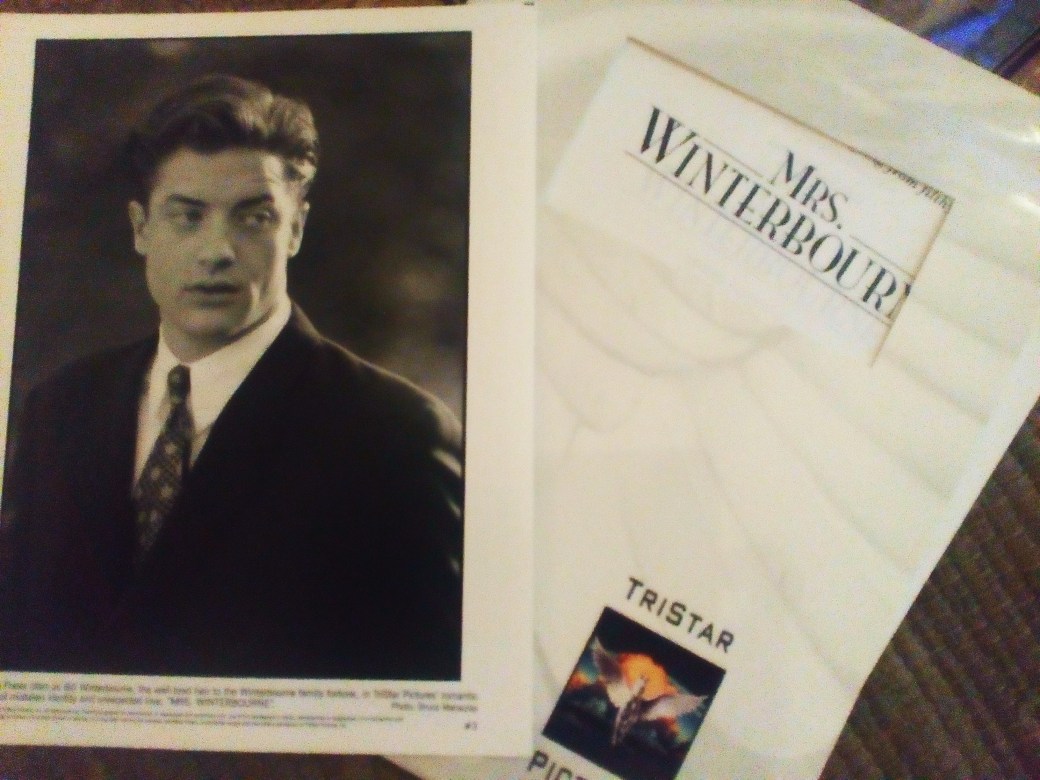

 Swampflix