Beyond the Time Barrier (1960)

threehalfstar

campstamp

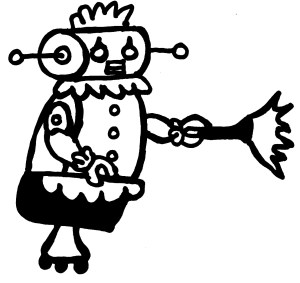
I honestly don’t expect a lot out of my genre films in terms of dialogue or narrative. The most tepid performances & the most dully hamfisted morality play plot structures are totally excusable to me as long as the film can make up for its shortcomings in terms of style. Something that really tickled me about the time travel sci-fi cheapie Beyond the Time Barrier is that it wholly commits its entire style/aesthetic to a single-minded image: the triangle. According to this film everything in the future is made of triangles: doorways, TV screens, desks, windows, goatees. Even the (too frequent) transitional wipes between scenes are triangle shaped, a choice that dives head first into stylistic overkill. Beyond the Time Barrier‘s anti-nuclear war message wasn’t likely to stand out too much amidst much better films with the same technology-has-gone-too-far-too-fast sentiment: Godzilla, Them!, The Fly, etc. The way it wholly commits to an all-triangles future makes for an interesting, memorable look for such a dinky little cheapie, though, and I have great respect for genre films with that kind of stylistic followthrough.

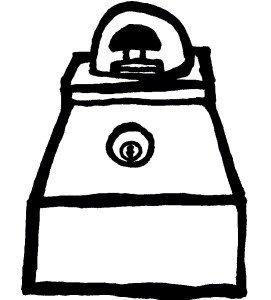
A US Air Force pilot in the dead center of the Cold War space race flies a newly designed aircraft into the upper atmosphere that speeds beyond the sound barrier, breaking “the time barrier” and landing in the year 2024. After a brief 28 Days Later style tour of Earth’s desolated surface (something to look forward to next election cycle, I guess), he becomes a victim of a surveillance state tasing, gets dragged to an Oz-like “citadel,” and is imprisoned in a bell jar. His new temporal home is a sort of space age variation on the HG Wells classic The Time Machine. Radioactive mutants roaming the wasteland outside the citadel are rounded up & imprisoned underground (behind trangle-shaped jail cell bars, of course). Those not fully mutated were left sterile & abandoned by the humans who escaped to the new colonies on Venus & Mars. They plan to breed their latest captor, the American alpha male pilot, with their last hope: a telepathic mute daughter of their new nobility. She is a strange cocktail of the ideal 1950s macho male fantasy (cheerful, quiet, smart, obedient), but our hero longs to return to his own time anyway, escaping a life as a future-gigolo so that he can selflessly warn the people of Earth that their Cold War nuclear proliferation will lead to a global plague. The variation in the plot here is that the planet never had a chance to be destroyed in a nuclear war because merely testing the bombs poisoned the atmosphere enough to cause a global unraveling, but otherwise it’s not so different from any other atomic age paranoia sci-fi you can conjure. It just happens to feature more triangles than you’re used to.

Does our hero make it back to his own time to warn the people of Earth about the consequences of their evil atomic ways? I’ll bet you can answer that question for yourself. Again, there’s nothing especially radical about Beyond the Time Barrier in terms of narrative, but the film does manage to get by on the strength of its detail. Besides the Mid-Century Modern sleekness of its triangular future world, the film also features some nifty moments of plague-zombie chaos and a cool Twilight Zone reveal about how time travel can drastically affect the way your body ages. Of course, with a genre film this evidently cheap there’s going to be details that are only good for a laugh: Ed Woodian reliance on stock footage, oscillating bleep bloop machines, adorably pathetic aircraft miniatures, brushed off explanations of psuedo-science peppered with phrases like “certain mathematical equations . . .”; you get the picture. A little camp value is more than welcome in a small scale genre picture like this, though. Beyond the Time Barrier is efficient in its omni-triangle futurism, and consistently goofy in its heavy-handed sci-fi browbeating. As someone who watches way too many of these things on a regular basis, I can gladly say that was more than enough to make this one worthwhile. I’ve seen plenty of other films with the exact same basic structure play out with much less entertainment value & far less style, even if all of this film’s style was tossed in one trangle-shaped basket.

-Brandon Ledet

An Evening with Richard Kelly: A Southland Tales (2007) Q&A

EPSON MFP image

“No film is every really finished, just abandoned by the filmmaker.”

This is the philosophy, or rather one of the facets of the real-life and filmmaking philosophies, of Richard Kelly. In something of a MotM miracle, I received an email last week advising that Austin’s Alamo Drafthouse would be hosting a screening of Kelly’s 2007 opus Southland Tales, with an introduction by the director and a Q&A following the film. As discussed in our email roundtable, I was a fan of Donnie Darko when it was first brought to my attention in 2003, when a DVD of the film was passed around like wildfire at the Louisiana School for Math, Science, and the Arts. Although time and distance (and a strong wave of hype backlash as the film caught on outside of the cult scene) have dulled my teenage enthusiasm for the film, my interest in Kelly’s work was piqued again by our viewing of The Box, a film I didn’t love but haven’t been able to stop thinking about. I never got the chance to see Southland Tales before this past Sunday, but I’m glad that my first viewing experience was on the big screen and not limited to the comparatively tiny television in my living room.

What’s the film about? I’ll try to be as succinct as I can: Southland Tales takes place in an alternate 2008, where post-9/11 paranoia and the overreach of infringement upon civil liberties that followed that incident has been further exacerbated by a nuclear attack on American soil (Texas, to be precise). The draft has been reinstated, interstate travel is extremely restricted, and citizens are heavily monitored via the use of information network USIdent and the deployment of heavily militarized Urban Pacification Units, which seem to have taken the place of standard police forces. The Republican Party, most notably represented by Texas Senator and potential VP Bobby Frost (Holmes Osborne) and his wife, NSA Deputy Director cum USIdent overlord Nana Mae (Miranda Richardson), is seeking to swing California to the red in order to ensure the continued power of USIdent and the party. Popular action star Boxer Santaros (Dwayne Johnson), the husband of the Frosts’ daughter Madeleine (Mandy Moore), has recently awoken in the desert with amnesia; he makes his way into the arms of Krysta Now (Sarah Michelle Gellar), a psychic porn star seeking to expand her media and merchandise empires through diversification. Krysta has recently completed a screenplay entitled The Power, which foretells the end of the world.

Elsewhere, the underground liberal forces of the Neo-Marxists oppose the Republican Party (this entire group is composed almost entirely of former SNL cast members, including but not limited to Nora Dunn, Amy Poehler, and Cheri Oteri). Their current plan involves staging a racially-motivated police shooting committed by haunted veteran Roland Taverner posing as his twin brother Ronald (Seann William Scott), an UPU officer; the intention is to have this captured on film by Boxer during a ride-along for research purposes, then use the footage to discredit Bush’s apparent successors. Their machinations are held in check by a series of double-crosses that undermine their ability to take any real political action. Elsewhere elsewhere, the wizard Baron von Westphalen (Wallace Shawn) has invented both a device that uses the power of the ocean to generate wireless electricity as well as several injectable liquids of various colors that are used as drugs for both recreational and psychic purposes. He and his band of assorted cronies (Bai Ling, Curtis Armstrong, Zelda Rubinsten, and Beth Grant) move throughout the various factions at play, gaining political power and prestige while well aware that the alternative energy source that they have created could bring about the end of humanity. And all of this is narrated by Pilot Abilene (Justin Timberlake), a former movie star whose face was disfigured by friendly fire in Iraq after he was drafted. And, hey, if you were starting to think any of this was too straightforward, don’t worry; there are also stable time loops, predestination paradoxes, mistaken identities, and all the other Kelly elements you’ve come to know and, perhaps, love. Plus a lip-synch music video.

Part multimedia experiment, part time travel film, part jeremiad prophecy of the dangers of unchecked rightwing expansion into surveillance and homeland policing, part philosophy lecture, but mostly a political satire, Southland Tales has been called many things: unwatchable, convoluted, pretentious, and incomprehensible. For my money, however, the film (and its expanded materials, which I hesitate to call “supplementary” given that they were always intended to be part of the experience) is simply too ambitious to ever have any kind of mainstream penetration, even on the level that Darko did. There’s also been a lot of name-calling and assumptions with regards to Kelly’s ego and affectations of intellectualism, even from those of us here at Swampflix; in person, however, Kelly comes across as approachable, well-spoken, thoughtful, and shy (and he’s a total babe as well– look up a picture or two if you haven’t already done yourself this great service; those triceps are poppin’). Kelly directed this film when he was twenty-nine; that’s my age, and all I have to show for a life is a stack of unopened mail and a heap of student loan debt that I’ll finish paying off seven years after I’m dead– if I’m lucky.

In case you weren’t aware, Southland was originally envisioned as the final three chapters in a six-chapter arc, with the first three components released as graphic novels (Kelly said that when these materials, which were not quite complete at the time of the Cannes premiere, were given to the press, they sneered). There is a certain feeling of incompleteness that can be felt in the film as a result, but this is not the same thing as saying that the film is, as Kelly said in his introduction, “unfinished.” There’s certainly an element of that in play in the theatrical version that was screened, but I didn’t find it as distracting as others have. He discussed the nature of the release of the film, the way that certain visual effects were never quite completed due to the fact that the money for said polishing was to have come from one studio that held the international distribution rights, but there were issues with the domestic distributor. It’s all information that you can find elsewhere, I’m sure, so I won’t get into it here. There were some new tidbits that were shared in the Q&A that I’ll share here, though.

Why is Janeane Garofalo in the final scene? In the earlier, longer version of the film that was screened at Cannes, there is an additional subplot in which Garofalo plays a general who is engaged in a Dungeons & Dragons game with veteran Simon Theory (Kevin Smith) and a couple of other characters, with that game serving as an additional metaphorical layer to the events of the film, just line the screenplay for The Power. (I did see a credit for a D&D consultant in the final credits, which confused me until this was explained.)

Was this movie inspired by Brazil? Yes, Kelly loves Brazil.

Where did the character names come from? Kelly discussed that there’s a music to character names, and described how some come from more obvious sources (like the Robert Frost-quoting Senator Bobby Frost), and some a bit more obscure from sources both historical (like the von Westphalen family, whose true allegiances are obvious from the outset for those who know Jenny von Westphalen was the wife of Karl Marx), and literary (the Taverners share their surname with Jason Taverner, protagonist of Philip K. Dick’s Flow My Tears, the Policeman Said, which shares a rightwing autocratic dictatorship with Southland). So, like many of the references to extratextual real-world works that we mentioned in The Box discussion, they’re present less because Kelly wants to prove how smart he is and more because he thinks we’re all on his level, which is a compliment more than anything else.

Why so many Saturday Night Live actors? Besides the aforementioned Poehler, Oteri, Dunn, and Garofalo, other SNL alums include Jon Lovitz and John Larroquette. I really liked Kelly’s answer to this question; when we talk about political satire, at least in America, SNL is the troupe that is on the cutting edge of that discussion.

Is the recurring theme of free will versus predestination representative of a personal philosophy or just something that Kelly finds intriguing to play with on film? This was my question, and was admittedly a little longer in the actual asking (which involved referencing the Job-like structure of The Box and eschatological nature of Southland, leading Richard Kelly to compliment me personally, so take that, world!), but Kelly stated that this was something that he thinks about a lot, that humans beings are often bandied about by forces outside of their control, and how much agency any of us have at all (one audience member asked about Krysta Now’s agency in regards to the film, but I missed the answer to that one trying to calm myself enough to ask my question). Kelly had previously mentioned that Southland was intended to be a cathartic film experience; given that the themes of the film boil down to the idea that salvation comes from forgiving the self, which is an entirely internal emotional journey, I think that this could be reflective of that idea. Forgiving one’s self, like Taverner does in the film’s final moments, removes the external elements of predestination and is purely an act of personal decision, and through that comes real existential relief.

Whatever happened to the Norma Lewis prosthetic foot prop? This one I had to ask for Britnee, per her final thoughts on The Box. As it turns out, Kelly’s father, who really did work on the Mars Viking Lander project, did something similar for Kelly’s mother, whose own foot was disfigured, not unlike Norma’s. As for the prop, Kelly said he would have to make some calls to be absolutely certain, but he’s pretty sure it’s in a props warehouse in Boston.

For more on September’s Movie of the Month, Richard Kelly’s sci-fi mystery thriller The Box, check out our Swampchat discussion of the film and last week’s look at how the film works as a literary adaptation.

-Mark “Boomer” Redmond

Episode #10 of The Swampflix Podcast: Top Ten Time Travel Movies & Martyrs (2008)

inaworld

Welcome to Episode #10 of The Swampflix Podcast! For our tenth episode, James & Brandon discuss their top ten time travel films of all time with author/blogger/friend Bryan Perkins. Also, James makes Brandon watch the French-Canadian “extremist” horror Martyrs (2008). Enjoy!

Production note: The musical “bumps” between segments were also provided by James.

-James Cohn & Brandon Ledet

Timecrimes (2008)

EPSON MFP image

threehalfstar

The only thing I knew about the Spanish sci-fi thriller Timecrimes going in is that people often accuse the time travel horror Triangle of blatantly ripping it off. It’s easy to see how that accusation gets tossed around. Both films feature a similarly-masked killer and a tortured/confused protagonist stuck in a Groundhog Day-type time loop that becomes increasingly inevitable each time it plays out & progresses. Although Timecrimes beat Triangle to the punch in some ways I found myself less in love with what it delivers than the much more supernaturally bizarre film that followed. It’s probably best for Timecrimes‘s sake to ignore that comparison entirely & enjoy it for its own small scale, economical thriller charms. It works perfectly well outside that context & is a must see time travel thriller for sci-fi junkies on its own terms.

Timecrimes begins with a fairly typical horror film setup: a married, middle-aged man is violently punished (stabbed in the arm) for ogling a young topless woman through binoculars while he is supposedly bird-watching with his wife. Things get much stranger form there once he’s tricked into entering a time machine that brings him back to that exact same time of day. In order to avoid altering the trajectory of time already established he forces the young woman, a kind stranger, to disrobe so his alternate version can ogle her through binoculars. You can already see where this is headed, I’m sure. A lot of the fun in Timecrimes is in watching the ever-complicating plot set up its Rube Goldberg machinations & to scratch your head over its self-creating paradoxes. You know exactly where the plot is headed, but expect many twists & betrayals to be revealed in the process and it’s fascinating to watch a character climb into his own grave and then retroactively dig it. As the time machine operator puts it, “The machine doesn’t solve problems. In fact, it creates them.” As these “problems” stack up to an insurmountable fever pitch Timecrimes finds a nice little groove for itself, like needle slowly spiraling inwards on a record.

Although nicely layered, Timecrimes‘s plot structure is a lot less complicated than similar time loop features like Triangle or Groundhog Day or, the most complex of them all, Primer. What I most appreciated about the film, though, was not its structural complexity, but its interest in constructing a moral dilemma. It’s difficult to tell for sure if the film’s protagonist is an objectively bad person or just a victim of circumstance doing objectively bad things in order to maintain the integrity of his preferred timeline. It’s also interesting how the film turns the passive ogling of a stranger’s body into something much more violent & predatory. By the end of the film when he proclaims, “I had no choice” in regards to his escalating mess of questionable offenses, it’s all too easy to call bullshit. He had plenty of choices. He just chose to be selfish & self-preserving at every turn.

Timecrimes was obviously made on a shoestring budget, which often shows in the acting & script (I’ve never seen anyone so goofily trick a stranger into a time machine outside a UCB sketch before), but it makes the most out of its resources. Time-marking talismans like Blondie’s “Pictures of You” & the masked killer’s Darkman-esque getup are brilliant uses of simple tools at the film’s disposal and it really does get a lot of mileage out of the moral crisis of its plot despite its trashier impulses. If Triangle “borrowed” heavily from Timecrimes, I’d say it improved on its formula significantly, but the film really is an enjoyable, efficient sci-fi thriller in its own right and there’s more than enough room in this world for both works to be their wonderfully strange, independent selves, regardless of when they were released in time.

-Brandon Ledet

Primer (2004)

EPSON MFP image

threehalfstar

In some ways Primer is the film The Martian was only pretending to be. The Matt Damon sci-fi action “comedy” (well, comedy by the Golden Globes’ measurement, anyway) was a hit last year that had people praising its supposedly ultra-scientific nerd-speak for not talking down to its audience & constructing a plot around basic old-fashioned problem-solving. Personally, I had a hard time seeing The Martian as much more than a crowd-pleaser balanced between a rescue mission drama & a big budget disaster pic, maybe with a little found footage thriller tossed in for flavor. Shane Carruth’s dirt cheap time travel paradox Primer, on the other hand, feels like truly authentic problem-solving nerd-speak. I can tell it’s authentic because I have no idea what’s going on and will probably need several more viewings & a notepad to catch up. The Martian may have charmed audiences into thinking they were getting the pure, uncut nerdy goods, but Primer was the real deal primo shit. I don’t think that it’s necessarily a better or more admirable movie for not speaking to a wide audience in a more toned-down, accessible version of nerd-speak, but I do think it was much closer to the intricate, intelligent movie a lot of people seemed to think they watched when they describe the much more audience-friendly The Martian.

Shane Carruth writes, directs, produces, scores, edits, and stars in this cerebral sci-fi cheapie about two tech world bros who accidentally discover a closed circuit version of time travel that allows them to loop into the future & back into their temporal starting point. It’s a little like a microwave that makes an instant, self-contained Groundhog Day experience. Before they realize what they’re even working on (it’s initially referred to as “the thing” & “the device”) the film pokes a little insider fun at the in-the-garage tech startup world of properties like Steve Jobs & Silicon Valley. Ancient analog equipment & other corner-cutting attempts to save money are played for subtle humor. All tech bros wear a Mormon-like uniform of a white dress shirt & striped tie. Corporate lingo is casually tossed around in a condescending tone. Carruth obviously knows this world intimately & it shows on the screen, but Primer doesn’t really come alive until it leaves the tech startup world behind & dives head first into the unknown. It’s about 30min into the film’s very slim runtime when mutliple timeline paradox versions of our unreliable narrator bros start constructing a mind puzzle for the audience to tinker with as they pull rugs, reveal betrayals, and get too comfy with a powerful force of nature they have no business manipulating in the first place: time.

I haven’t seen Carruth’s sophomore film, Upstream Color, since it left the theater in 2012, but I found that work to be an unmitigated masterpiece, one I mentally return to often just to mull over its many cerebral pleasures. In that context Primer feels like a young director with a limited budget just getting his legs. Much like Patrick Brice’s dual 2015 releases Creep & The Overnight, Primer is an exciting example of just how much a filmmaker can accomplish with a great script & a near-nonexistent budget (reportedly $7000 in Primer‘s case). The acting isn’t quite up to snuff with the writing here. The leads have a tendency to read their lines in a mumbled, stabby attack that often makes them difficult to decipher, especially in early scenes when they’re constructing & tweaking “the device.” However, the film has a lot of fun both tangling up a plot that would take hundreds of viewings to fully unravel & in delivering weird time travel one-liners like “Are you hungry? I haven’t eaten since later this afternoon,” and “It’s going to be a long day,” (meant literally). Primer makes a virtue out of telling, not showing and I feel like a lot of true-nerd science geeks probably would get the most out of its paradoxical conundrums & moral dilemmas.

Personally, I enjoyed & appreciated the film’s small-scale, verbal pleasures, but found a whole lot more to unpack in Carruth’s followup that was a hell of a lot more interesting than just mapping out what transpired plot-wise (which apparently is a thing entire fan sites Primer has inspired to do). Folks who enjoyed the nerdy step-by-step problem solving of The Martian would probably get even more out of it than I did. However, be forewarned. This movie is actually the real deal.

-Brandon Ledet

Ivan Vasilievich Changes Profession (1973)

EPSON MFP image

fourstar

Self-described as a “non-science fiction, not quite realistic, and not strictly historical film” and a “comedy of anxieties” Ivan Vasilievich Changes Profession (sometimes distributed under the ridiculous title Ivan Vasilievich: Back to the Future) is both just like & completely unique from every zany comedy title that immediately comes to mind. It’s easy to see echoes of the film’s sense of flippant, whimsical humor in works as varied as Monty Python, Scooby-Doo, and ZAZ comedies, but at the same time I can honestly say I’ve never seen anything exactly like it before. I’m not sure how many Soviet Russian slapstick comedies the average American movie buff watches in their lifetime, but this was a first for me.

Ivan Vasilievich Changes Profession is remarkable for its ability to dabble in the same visual play & artistic pranksterism as titles like the infamous, surreal Czech comedy Daisies while maintaining the accessibility of a sketch comedy show or a weekly sitcom. It’s about as fun as any crossroads between camp & high art as you’re ever likely to see and it’s one that boasts an unlikely specificity & context due to its USSR setting. Rarely is a comedy this artistically rich so recommendable for its entertainment value & basic humorous appeal to audiences who would normally turn up their noses at the idea of watching a hoity-toity foreign film outright. I could easily see it sitting among the works of folks like Michel Gondry & Wes Anderson as the perfectly attractive gateway drug to drag youngsters into a life of art cinema geekery. Basically, I’m saying I greatly enjoyed this film as an adult, but really wish someone had shown it to me in high school. It would’ve saved me a lot of time in helping define & develop my own cinematic tastes.

The film’s plot is an exercise in cartoonish artificiality. A scientist/inventor risks losing the attentions of his beautiful actress wife by constantly hammering away at his latest project: a time machine. On the first, disastrous operation of his “apparatus”, the scientist opens the wall to his apartment to a hundreds-years-old castle setting and, through machinations not worth describing in detail, winds up swapping the places of his landlord, Ivan Vasilievich, with the 16th century dictator Ivan the Terrible. The landlord has a difficult time adjusting to his new digs. He’s initially mistaken for a demon by his newfound contemporaries before he disastrously assumes the throne of Ivan the Terrible in disguise (in addition to sharing a name & similarly predatory occupations, they also share an exact likeness). The “real” Ivan the Terrible, by contrast, does fairly well in the modern world. After briefly struggling with confounding inventions like recorded music, lightbulbs, and racy pin-ups, he somewhat comfortably settles into a world that still finds his demanding, violent attributes disconcertingly appealing. While the befuddled scientist struggles to return both Ivans to their proper places in time, the film bifurcates itself into being both a fish out of water comedy in modern times & a violent comedy of errors in ancient ones. It’s all very silly.

It’s difficult to describe the plot of Ivan Vassiliech without making it sound like a very thin, minimal work. Indeed, even certain gags within the film feel like something out of Benny Hill sketch or a mimicry of silent-era hamming. What’s most incredible about this film to me is in the way it distinguishes itself in the details. Its central time-bending apparatus is bizarre mess of sciency vagueness that makes Rick Moranis‘s goofy shrink ray in Honey I Shrunk the Kinds look downright realistic by comparison. Visual techniques like alternating between color and black & white film and mixing live action photography with animation heightens the film’s consistent playfulness to its own unique artform. The shattered fourth wall & movie-within-a-movie meta structure leads to inspired gags like the “real” Ivan the Terrible auditioning for a leading part in a movie about Ivan the Terrible. Ivan Vasilievich is flexible enough to both impress the idea with its meticulous, color-coded set design & to inspire guttural laughter with lines like “Please don’t put me to death, kind sir!” It’s an old-fashioned song & dance comedy that leaves enough room for genuine awe in its majestic Russian castle settings, which are used almost like a playground. Even the would-be bummer of a cop-out ending is significantly softened by the very polite concluding title card of “Ciao! Thank you for your attention.”

Ivan Vasilievich Changes Profession hits that perfect sweet spot of smart, well-crafted cinema that’s also eager to please & easy to digest. As soon as the first watch I felt like it had already been in my life for decades, like a fuzzy memory triggered by a particular scent. That kind of instant familiarity is difficult to come by, especially with a product this silly & this finely tuned.

-Brandon Ledet

Terminator Genisys (2015)

EPSON MFP image

threehalfstar

campstamp

In the recent flood of reboots, remakes, reimaginings and good, old-fashioned sequels that have effectively taken over Hollywood, there’s been an occasional uproar about what these films are doing to the credibility of the films they’re resurrecting. A few rehashes of long-dead properties have been lauded as critical darlings (such as the fever dream action monster Mad Max: Fury Road), but a lot of them have been met with aploplectic rage, such as Paul Feig’s not-even-released-yet take on Ghostbusters. Part of what Feig is getting flack for is tampering with the original formula, trying his damnedest to give his reboot its own reason to exist, and being met with a resounding opposition that claims he’s “ruining their childhood.” It’s sort of a damned-if-you-do, damned-if-you-don’t endeavor, creatively speaking, since studios are pouring so much money into these retreads instead of fresh material, but it’d also be entirely pointless to just remake the original film faithfully, except with temporal markers like smart phones & drone-operated cameras to provide modern context (like in the utterly useless Poltergeist remake).

Terminator Genisys has a fun time not only acknowledging the fact that reboots & sequels have a tendency to tarnish the memory of the films that came before them (according to a hypersensitive few), but it revels in the idea. Using the time travel paradox theme from the first couple films in the series, Genisys tinkers with & dismantles its predecessors in a dismissive, disrespectful way that feels alarmingly bold for a film that eventually amounts to a long string of chase scenes. The first hour of the film features a jumble of timelines that interact not only with the 1984 & 1991 stories told in The Terminator & T-2: Judgement Day, but also fleshes out some of the 2024 revolution, makes a pitstop in 1972 that changes the whole game of the first film, and sets up an entirely new Skynet timeline that needs to be dismantled in 2017. It’s a doozy of an opening sequence that features cheap, literal imitations of exact scenes from the earlier movies & repurposes them for its own ends, the implications of how it unravels the first two films be damned. I respect its moxy in this respect, even if the execution was far from flawless.

There’s a televised news report in Terminator Genisys that features the hilariously self-aware headline “Has Genisys gone too far?” This plays like a direct nod to how the film is not only disrespectful to its audience as Terminator fans, but also calls them out as a bunch of technology-obsessed dolts who would allow a computer program to end human existence as long as it promised to make their lives easier. The idea of a killer app that links all of the world’s smartphone technology into one conveniently vulnerable control is far from unique. At the very least, I’ve already seen that concept play out twice this year in Furious 7 & Avengers: Age of Ultron. It’s still interesting to see it tie into an action movie’s larger overriding idea that its own audience is worth disdain. There are so many shots of people emptily gazing into their smart phones as a doomsday scenario swirls around them that even Arnold Schwarzenegger’s give-the-people-what-they-want one-liners like “I’ll be back” feel like a dig at the audience’s expectations. It’s so weird to see a film both fulfil movie-goer’s desire to see an old scenario play out yet again & subvert that desire by tearing apart the timelines of the original films by making them irrelevant, or as Schwarzenegger’s cyborg says of himself in this film, obsolete.

Speaking of Arnold, he’s the only enjoyable member of the film’s cast, performing with a weary, but endearing charm that says both “I’m too old for this shit” & “This is all I know how to do”. As a lifelong fan, I’m delighted by the idea of Arnold stretching himself to try new things, but if that means more snoozers like Maggie instead of the one-liner-fueled killing machine performances like in Genisys & the surprisingly enjoyable The Last Stand, I’m also more than happy to just see him filling this role for the rest of his life. No one else in the cast makes much of an impression at all, which (along with a who-cares 2017 climax sequence) tampers my enthusiasm for the film a bit, but that’s okay too.

Look, this is a franchise that’s already been dragged through the mud. Its first two entries are undeniable classics, but Terminator 3 & worse yet, Salvation weren’t exactly memorable cinema. Although I admire Terminator Genisys‘ mission to go back in time & effectively murder its predecessors, it’s an impossible mission. No matter what, those movies still exist & they’re still great. You can revisit your un-ruined childhood anytime you want through Netflix or blu-Rays or murderous smart phone apps or whatever you like, really. They’re still there. We just now also have a serviceable sequel that jumbles the timelines of those films into a barely-coherent mess just to watch its audience squirm under the pressure. I happen to find that tactic pretty hilarious, even if it did have trouble sticking the landing.

-Brandon Ledet

Predestination (2015)

EPSON MFP image

fourstar

There has been a recent push to update the sci-fi genre in varied, interesting ways. While there have certainly been a few throwbacks to the traditional rocket ships & gunfire Flash Gordon adventure epics like Guardians of the Galaxy & Edge of Tomorrow, titles like Upstream Color, Under the Skin, Coherence, The Congress, and Beyond the Black Rainbow are searching for new territory for the genre to mine. They’re all unique works that can hardly be compared to one another individually, but as a group they feel like a refreshing revitalization of a genre that can sometimes get trapped within its own tropes & clichés. No matter how much I love these movies and what they’re attempting to accomplish, however, there’s just no denying the inherent draw of the sci-fi aesthetic of yesteryear. My favorite film from last year was Interstellar, not because it carved out new sci-fi territory, but because it felt authentic to old school sci-fi pulp you could read serialized in special interest quarterlies or hear in long gone radio plays. There’s a draw to this old fashioned sci-fi aesthetic that I’m glad to see hasn’t been left by the wayside in the wake of our recent crop of experimental exercises in the genre.

With its muted noir tone & a setting that spans from the 1950s through the 70s, Predestination firmly plants itself within this brand of sci-fi throwbacks. Based off of a 1959 Robert Heinlein short story titled “All You Zombies” (which was first published in an issue Fantasy and Science Fiction magazine, the exact type of old school serials I’m describing), the film has an authentically old fashioned take on sci-fi as a genre. It is undeniably cheap & trashy in the way its twists & turns are revealed to the audience (some of those reveals are not nearly as surprising as the movie seems to think they are) but that potential flaw is severely undercut by its straightforward style of storytelling. On paper the movie’s plot about time travel, secretive government agencies, and self-fulfilling paradoxes wouldn’t add up to much of value, but the way the story is framed as a drunken, embittered bar patron spinning a yarn for the barkeep is a perfect, no-nonsense approach to material that is nothing but nonsense.

There are some typical sci-fi adventure aspects to Predestination, like virtual reality helmets, “time jumps”, and young girls recruited to be male astronauts’ “companions” (an idea that reminded me of the similarly pulpy Journey to the Seventh Planet), but they’re counteracted with more concrete, noir-influenced images like trench coats, smoke-filled bars, homemade bombs, and a fedora on fire. Just as the always-tricky time travel aspect of the story starts to get overwhelmingly intricate, it also boils down to a typical action movie plot of trying to prevent a bomb from going off and catching the bad guy before he gets away. Even the story’s peculiar play with gender identity, which you would expect to mark it as a modern work, feels old fashioned & outlandish as it’s dealt with here, but straightforward performances from the two leads Ethan Hawke & Sarah Snook anchor that aspect well, just like the barroom storytelling framing device anchors the movie’s outlandish plot.

Predestination is neither a wholly unique work nor an exercise in good taste. It is, however, an example of the virtue of sincere, traditional acting & storytelling and how those elements can elevate ludicrous material into something special. Although its major twists & reveals may occasionally be telegraphed, it’s fascinating to watch the film reach those conclusions in its own time and on its own terms. There’s a sci-fi tradition to its sincere pulp sense of tonal balance, but it’s a vintage tradition that’s unconcerned with the new territory the genre’s been exploring in recent years. I appreciate the movie the way that any audience can appreciate a great storyteller, especially a rapt audience in a late night barroom who has nothing better to do than listen to a good yarn that becomes increasingly more outlandish as it stretches on.

-Brandon Ledet