You Can Now Purchase Swampflix Zines @ Crescent City Comics on Calhoun St. Uptown

EPSON MFP image

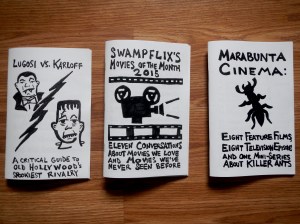
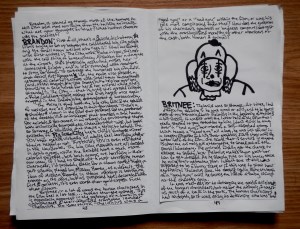
Attention, Swampflix readers in the New Orleans area! We’re now selling the zines we printed for last year’s NOCAZ & N.O. Bookfair exhibitions at the new Crescent City Comics location @3135 Calhoun St. Uptown. This includes print versions of our “Marabunta Cinema“, “Lugosi Vs. Karloff“, and “Wrestling Cinema” pieces, as well as 2015’s Movie of the Month conversations in their entirety. They all feature dozens of new illustrations & hand-transcribed text from the site and the Movies of the Month zine is a ~90 page whopper featuring work from everyone who contributed to the site last year.

DSCN1455 (Modified (2))

DSCN1456 (Modified (2))

dscn1460-modified-2

For more info on Crescent City Comics check out their website and follow them on Facebook. Or, better yet, just drop in on them sometime (Monday-Saturday 11am-7pm, Sunday Noon-6pm @3315 Calhoun St.), because they’re by far the best comic book shop in the city.

1604-3135calhoun-600px

-The Swampflix Crew

A New Leaf (1971)

EPSON MFP image

threehalfstar

Walter Matthau plays Henry, an entitled man-child who squanders his trust fund taking his Ferrari into the shop after every time he drives it, wearing tailored suits, and having his butler take care of his every need. After he loses all his money with no other financial prospects, he does what any self-important ex-rich playboy would do and decides that he will marry a rich woman and murder her. Elaine May (who also directed the film) plays Henrietta, a plain-Jane botanist with an immense fortune and no interest in spending any of it. She is clumsy, uncultured, and infantilely clueless. Henry, seeing Henrietta as the perfect target, woos and marries her. With a synopsis like that A New Leaf seems like your typical straightforward black comedy where you’re lead along the entire film wonder if he will or won’t kill her, and in a way it is. Although much of what would be considered straightforward here seems actually more like subversive satire. Henrietta doesn’t get a makeover that involves removing her glasses. Henry doesn’t gain more affection for her and have a change of heart. They both just end up being frustratingly useless enough to deserve each other.

Henrietta is such an endearing character, before you find out how helpless she is. Her only dream in life is to discover and name a new species of fern.  May shines as a clueless nerd, with the awkward muttering and the soft exclamations of, “Oh, heavens.”  I, being a little bit of a clueless nerd myself, loved every awkward outfit, the bizarrely fitted hats, drab cardigans, and huge framed glasses. She is the perfect incompetent foil to Henry’s scheming, manipulative brooding. But eventually you realize she can’t even button her own shirts right.

A New Leaf is told mostly from Henry’s point of view. There’s a lot of handheld shots, grotesque close-ups from his perspective, and even a dream sequence. Though we’re constantly viewing everything from his side, we’re never expected to sympathize. If anything it only exaggerates his insufferable jackassery. Though, there is an interesting thing this movie brings up from his side: there seems to be some sort of underlying gay subtext. He is horrified at the idea of women. He’s never been married. There’s many jokes about the fact that he would even consider marriage. It’s a shame it’s played as a joke.

Elaine May had her own cut of the film that ran 180 minutes long. It was taken and re-edited to it’s released length of 102. The original cut of the film may not exist any more, so there’s no telling if the extra length added to the kooky absurdity. As it is, A New Leaf is one of the most warm and charming black comedies I’ve seen. It’s an awkward story about how two differently awful people deserve each other.

-Alli Hobbs

Café Society (2016)

twostar

“Life is a comedy written by a sadistic comedy writer.”

Y’all, I think I just watched my last Woody Allen movie. I’m done. In fact, I applaud the two women who walked out of Café Society after seeing Allen’s name appear in the opening credits. At the time I was annoyed that two fellow theater patrons would argue audibly over the first scene of a movie before storming to the exits (presumably over the director’s decades-old rape allegations & sordid familial history), but no less than ten minutes later I totally sympathized, maybe even to the point of envy. I had been over fifteen years since my latest Woody Allen film, Small Time Crooks, just enough time for me to forget that even the writer-director’s most lauded work was never really  my thing. I like my Woody Allen movies like I like my Beatles: young & goofy. The zany comedy of titles like Take the Money & Run and Sleeper were always more interesting to me than Allen’s headier work, so I really had no business watching Café Society in the theater in the first place. If it weren’t for the wealth of Kristen Stewart goodness promised in the trailer I probably never would’ve been there to begin with. I should’ve known better & followed those two miffed strangers to the exits.

By all means, Café Society‘s tour through Old Hollywood romance & glamor should be cinephile catnip. Actually, I’m sure there are plenty of movie nerds out there who’ll love it, not just Woody Allen diehards. The cinematography is breathtaking, stunning, gorgeous. Kristen Stewart is, as always, a rare treasure, this time afforded the proper temporal context for her natural Lauren Bacall smokiness. The costume & production design very nearly touch the heights of the similarly-set nostalgia dream Hail, Caesar! from earlier this year. Yet, the film is a thoroughly grating, slow moving torture and the problem is Woody Allen himself. Although he does not appear onscreen, you cannot escape Woody Allen in a single frame of Café Society, a forgotten recurring intimacy with the director I just remembered is always more than a little suffocating. Not only does the filmmaker narrate the story himself, he also seemingly directs Jessie Eisenberg’s protagonists to act exactly like him, a caricature that’s somehow even less likeable than Eisenberg’s unofficial Max Landis impersonation as Lex Luthor in Dawn of Justice. The major difference, of course, is that Luthor is a villain while this Allen surrogate is likely supposed to play as sympathetic, a gamble that simply doesn’t work. And since the late-period Allen humor of Café Society falls consistently flat, there’s not much else onscreen to distract you from the problem. Cinematographer Vittorio Storaro (Apocalypse Now, Dune, Ladyhawke) & Kristen Stewart simply aren’t enough to save this film on their own, try as they might. It was doomed with or without them.

Eisenberg’s protagonist is a fish-out-of-water Jewish twentysomething who leaves his beloved Manhattan behind in an attempt to make it as an industry type in Hollywood. The film constantly insists that he’s adorably naive or goofily nervous, but all I see is a self-absorbed monster that would make Barton Fink look like a humble mensch. Once he finds his feet at his first job in Hollywood, he immediately falls for Kristen Stewart’s cool kid office girl and constantly hounds her like an workplace creep in a weird MRA-type “friend zone” wooing ritual that sort of works, for a while, despite Stewart’s character’s passionate love for an older, wealthier, married man. Their relationship is doomed to impermanence, but what’s strange about Café Society is the way it asks you to root for their success. I never get the sense that Eisenberg’s protagonist or, hell, even the film itself are deserving of Stewart’s master class in effortless cool, despite the two actors’ dynamic working for me just fine before in the films Adventureland & American Ultra. Instead, I found myself trying to ignore their romance for as long as I could by focusing on the film’s gorgeous visuals until, by the end, I was mostly just desperate for it to be over.

The last time I remember feeling this severe of a disconnect between find a film achingly beautiful & loathing every second of its content was with Terrence Malick’s love-it-or-hate-it Tree of Life. I’m sure Café Society, along with a lot of late-period Allen, will prove to be similarly divisive, with the director’s more dedicated fans finding plenty of nervous humor & old world sensibility to delight in, but this film simply wasn’t for me. Especially missing was the majesty of Old Hollywood brought to vivid life in the far superior Hail, Caesar! & reduced here to endless namedropping at cocktail parties (something the film pretends to despise, but does so unconvincingly). Worse yet is a central romance it’s difficult to root for and a protagonist who’s far less interesting than literally any other character the story could’ve followed: Stewart’s (obviously), his adorable parents, his Boardwalk Empire-era gangster bother, Steve Carell’s Eddie Mannix archetype, Parker Posey’s eternally buzzed socialite, a still-tired-from-fighting-a-shark Blake Lively who’s given frustratingly little to do, a sex worker he meets for all of five minutes, a plate of spaghetti, a spilled martini, wet concrete, again, literally anything.

Woody Allen makes himself (or at least a younger version of himself) the center of the show and the results are consistently obnoxious, much like the film’s never-ending dixieland jazz soundtrack that constantly reminding you to have a cheesy good time until you hit the last minute melancholy. If Café Society isn’t my last Woody Allen picture it’s because he’s going to cast Kristen Stewart in a future project or I’m going to again forget, with time, that his films are not really my thing (or, most likely, I’ll get sucked into it by my ongoing Roger Ebert Film School project). In the mean time I hope I don’t find myself getting as far as walking out of one of his movies when I’m surprised by his name in the opening credits. That seems like an awful waste of time and money (though, maybe not as awful as actually staying).

-Brandon Ledet

Equals (2016)

fourstar

Is it all transgressive or radical anymore to point out that Kristen Stewart is a divinely talented actor? Have her Twilight days been sufficiently been wiped out by the ever-expanding wealth of killer onscreen work she’s put in outside that franchise? I hope so, because it’s becoming tiresome starting reviews like this (my third defensive preamble for her talents after American Ultra & The Clouds of Sils Maria). Kristen Stewart’s main problem, if she has one at all, is that the film industry often seems confused about exactly how to utilize her detached onscreen cool, a visible lack of urgency that lands her presence somewhere between James Dean & Lauren Bacall in its smooth, smoky, effortless charm. Although it nearly approaches the YA romance territory that has threatened to pigeonhole her career, the dystopian sci-fi drama Equals does know what to do with Stewart’s detached cool. Besides indulging in an always-welcome, heartachingly sincere story of sci-fi romance, Equals presents a future where emotion has been outlawed, a perfect platform for Stewart’s own emotive talents, which are typically communicated through subtle body language & small shifts in tone. It’s not my favorite Stewart performance by any stretch, but it might serve as a convincing argument on her behalf for those still on the fence in regards to her immense, underappreciated talent.

As much as I’m rambling on about the many merits of Kristen Stewart here, the true protagonist of Equals is a man named Silas, played by Nicholas Hoult. Silas navigates a cold, clinical world in which war has been eradicated by outlawing human emotion. As a member of the emotionless Collective, Silas lives & works in a society of Spocks. Everything is bland, uniform, and designed for logical, streamlined function, the entire world an Apple Store. Silas’s peaceful life as an illustrator of “speculative non-ficiton” is threatened when an outbreak of the disease S.O.S. (or “switched on syndrome”) starts to trigger “behavioral defects” (emotions) in members of The Collective, including our protagonist. Silas dutifully takes his prescribed pills, but continues to feel anyway (likely a comment on the effectiveness of anti-depressants), and eventually finds himself dangerously infatuated with a coworker, played by Stewart. His love interest is dealing with her own rapidly-progressing S.O.S., however undiagnosed & unmedicated, and initially treats his advances like the unwanted attentions of any other workplace creep. Their attraction is inevitable, though, and sets up an achingly sincere, doomed-to-fail romance full of secretive, tender sexual encounters that put both Hoult’s & Stewart’s characters at risk for correctional “defective emotional therapy” at the hands of The Collective’s governing elite, a “treatment” that often ends in encouraged suicide.

Equals is mostly a slow, sensual drift through a cold, calculated future defined by its clean lines & blue lighting. Its romanceless dystopia most closely resembles the surrealist fantasy of this year’s The Lobster, but it approaches the subject from a more sincere, open-hearted place that recalls the sci-fi romance of titles like Her & Upside Down. There’s a metaphor to be found in the way this future society values “productive” lives over genuine mental health, but its true bread & butter is in the nervous, trembling touches Hoult & Stewart share as two young lovers unaccustomed to intimate human contact. The film finds its own visual language in the way it zooms in on actors’ bodies & faces in search of the tiniest of emotive responses, shrinking even the subtle bodily flirtation of Carol to a more microscopic stature (until, you know, it becomes full-on boning). There’s a little dose of subtle comic relief mixed in with this chest-heaving sensuality in the emotionless delivery of lines like, “You’re going to live, pal,” and [upon witnessing a coworker’s suicide] “That’s unfortunate,” but the film works best for those easily won over by sincere romance juxtaposed with a clinical sci-fi setting, an aesthetic I’ll admit I’m a huge sucker for.

Nicholas Hoult does a great job of selling the heartbreaking sincerity of this futuristic love connection (and, speaking of underappreciated actors, The Diary of a Teenage Girl‘s Bel Powley shows up to support the main cast), but Equals is Stewart’s show, not only because it fits the detached cool of her already established persona so well. As much as I appreciate the cold, clinical future presented here, it mostly makes me wish for a not-too-distant future where Stewart’s recognized for the full scope of her talent, not for being the girl from Twilight. Equals is a welcome step in that direction as well as a great, self-contained love story heightened by an oppressive air of emotional restraint.

-Brandon Ledet

Nerve (2016)

EPSON MFP image

fourhalfstar

If you read this blog regularly you might be surprised that there’s no Camp Stamp perched at the top of this review. Trust me, I’m even more surprised than you are. I went into Nerve expecting a trashy thriller version of Unfriended and, in some ways,  that’s exactly what the film delivered. However, I was shocked to find myself genuinely engaging with its smartphone app paranoia instead of chuckling at that gimmick’s over-the-top absurdity. In fact, I think Nerve is actually kind of brilliant? Like, maybe one of the best movies I’ve seen all year? What am I even saying? There’s something really special about how the film adopts the action thriller genre for teen girl sensibilities that I find really smart & fresh, if not long overdue. Other YA action properties like The Hunger Games & The Divergent Series might have female protagonists, so Nerve isn’t exactly unique there, but they typically appeal to a much wider demographic within a certain age range. Nerve, on the other hand, is the single most aggressively feminine action thriller I can ever remember seeing, an aesthetic that mixes with its killer smart phone app technophobia premise to create something really fun & truly memorable without devolving into so-bad-it’s-good schlock. This film is the biggest surprise of the summer for me & I’m already prepared to watch it again, being “the watcher”that I apparently am.

I guess I should admit up front I was already a little predisposed to root for Nerve‘s success before I even reached the theater, because its trailer promised that it’d indulge in one of my favorite recent movie tropes. Something that really excites me in modern genre pictures is when directors incorporate new, cheap forms of disposable digital imagery in their visual palette. I’ve been delighted by the real time Skype horror of Unfriended, the psychedelic emoji & social media game kaleidoscope of #horror, the pixelated flip phone video footage of Amy, etc. The only time cheap digital imagery has actively bothered me in a film was in David Lynch’s persistently ugly standard-definition work Inland Empire, but I’m willing to chalk that up as a failed early experiment. Nerve joins the fray, picking up with #horror‘s particular adoption of social media game imagery in its story about fame-hungry teens completing an escalating series of dares for large piles of cash. It’s basically Do It for the Vine: The Horror Film, with a steady flow of “like” cartoon hearts & glitchy animated .gif imagery backing up its online visual palette with a kind of creepy, “dark web” terror & grotesque message board sense of humor. The visual choices are not subtle here. When the film wants to conjure Anonymous, it breaks out the Guy Fawkes masks. It is, however, very much of the time and, in my opinion, a fascinating new avenue of visual discovery for cinema to explore while it still feels current to the cultural zeitgeist.

Although the film’s premise of teens competing for social media fame obviously carries a lot of millennial-shaming baggage in its basic DNA, Nerve‘s secret weapon is in how it celebrates teen-specific adventurousness within that digital-age moralizing. High school photography student Vee (Scream Queens‘s eternally hoarse Emma Roberts) finds herself frustrated with her reputation as a boring nerd & decides to shake up her safe, suburban life by adventuring into the big city (think of a less racist Adventures in Babysitting) in a game of Nerve. Hideously self-described as “a game of truth or dare without the truth,” Nerve is a social media game that combines modern surveillance state mining of personal information from various online profiles with a deadly version of reality TV game show gawking not too far off from Roger Corman & Paul Bartel’s creation in Death Race 2000. This teeny bopper millennial version of The Running Man drags a reluctant Vee far outside her comfort zone, Trojan horsing a surprisingly potent coming of age narrative inside a tawdry action thriller shell. Nerve might indulge in some occasional eyeroll-worthy Hollywood touches, mostly in its pairing of Vee with a cute romantic partner (“Lil'” Dave Franco, whose brother James apparently exists in this universe as his famous self) & its depiction of female-jealousies competitiveness between Vee & her best friend, but those relationships are actually determined & manipulated by the game’s “watchers”, so they’re more a part of the film’s audience indictment than a blind misstep. For the most part, this film is about Vee’s journey to find her own strengths & desires in a wild, out-of-character night of teenage rebellion & Bling Ring-esque excess set to aggressively girly pop music beats & the same neon lights nightlife palette of films like Drive. Vee is likeable, but also vaguely undefined in a way that allows her to serve as an audience surrogate for the kids playing along at home (both in the movie & otherwise). I can’t remember the last time a dangerous action thriller was so unashamedly marketed for teen girls. I have to say, it felt refreshing.

Unlike the film’s trailer, I don’t want to give away too much of Nerve‘s plot here, but things do get a little more complicated as the film indulges in some Hackers-style onsceen coding on “the dark web” in the third act. Vee & her mysterious suitor find themselves “prisoners of the game” where “the only way out is to win,” unless they can tear the whole system down against in a life-threatening race against the odds or whatever. In some ways it’s actually a miracle, given how much ground it covers & cinema’s current climate, that Nerve wasn’t adopted from its YA novel source material into a years-long trilogy with a two-part conclusion. Instead, we’re blessed with a fairly concise & effortless action thriller that I expected to find delightfully corny but instead just found delightful. The two leads are cute. The internet-specific imagery gimmick afforded the film some all-important distinctiveness. When two girls have a climactic argument it’s over something much more personally significant than boys (despite that conversation’s catalyst). There’s a moment where Wu-Tang Clan’s “C.R.E.A.M.” is actually put to important, narratively potent use, maybe even standing as my favorite pop music cue of the year so far. There’s a “White People Problems” punchline that’s somehow legitimately funny despite this not being 2009. I’m not sure if this technically counts as a spoiler, but my entire theater gasped with joy when Samira “Poussey” Wiley appeared onscreen halfway into the runtime, which was the best communal at-the-movies moment I’ve had in a long while. For the most part, Nerve just made me feel great, an escapist high that marks the best aspect of the summertime action thriller.

It’d be easy to treat Nerve like a campy farce, thanks to its ludicrous premise or details like its drone-based jump scare or its tense shot of a mouse cursor pensively hovering over the “like” button on a Facebook post. However, I genuinely enjoyed the film far too much to treat it that way and those elements mostly play like self-aware summertime fun once the overall tone finds its appropriate groove. It’d also be easy to fault the film for its millennial shaming in the way it depicts teens as smart-phone addicted fame chasers, but I don’t thank that reading holds water either. If anything, Nerve presents a fantasy world where technology actually makes people more adventurous instead of less insular (the same argument a lot of folks tend to use to defend the popularity of Pokémon Go). Instead, I’d pin the film as the most surprisingly successful popcorn flick of the summer, a thoroughly enjoyable action thriller that shouts its teen girl femininity just as loudly & proudly as its instantly dated, 2016-specific pedigree. I’m honestly still in shock over how much that dynamic worked for me.

-Brandon Ledet

Hunt for the Wilderpeople (2016)

EPSON MFP image

fivestar

Hunt for the Wilderpeople is about a kid who goes into the bush of New Zealand with his Foster Uncle to avoid being taken back into custody by an out-of-touch child services agent. On a larger scale it’s about freedom, true freedom. Freedom that comes with responsibility, danger, darkness, and also joy. That sounds a little over the top, but it’s true. It’s also about the people who fall through the cracks and how they can help each other better than the system in place.

Ricky is a street kid, who according the state has a long list of behavioral problems. He has a taste for hip hop fashion and wears high tops and hoodies that zip all the way up over his face. After all the available foster homes in the city don’t work out, the state decides to relocate him to the country with Bella and Hec, who is a dark, quiet man with a drifter past. An unlikely fit into the middle of nowhere, he manages to make himself a home with the help of the cheerful and caring Bella. Bella dies suddenly, and the state threatens to take Ricky back. Ricky decides, rather than go back and face juvenile detention, to run away to the Bush. He goes out and gets lost. Hec finds him, but by the time that happens it’s already assumed that Hec has kidnapped Ricky and a manhunt begins. Many wrong turns and decisions later they end up on the run for four months.

The thing I really loved about this movie is that it makes you want to cry just as often as it makes you want to laugh and that’s quite often. It’s rare to see a comedy this goofy that’s also this sad and depressing. Within the first 15 minutes there’s a tragedy and it seems to keep being punctuated by moments like that. Despite the deeply genuine sadness, the humor is still able to pick you up, with its cracks at dysfunctional bureaucratic systems and absurdity.

One of my immediate thoughts at the start of Hunt for the Wilderpeople was how it felt a lot like a Wes Anderson film. For instance, the movie is broken into chapters. There’s also a similar awkward, deadpan humor. It’s easy to make an immediate comparison to Moonrise Kingdom, with the idea of escaping into the wilderness from a society that doesn’t understand and doesn’t want to. Unlike in Moonrise Kingdom, where these kids are on their own where it doesn’t seem like their lives are in that much danger, the wilderness here is very dangerous and alive. They’re the subject of an actual manhunt. People are injured. No one in Moonrise Kingdom is seriously threatened with jail time. Wilderpeople finds a way of subverting the twee humor, taking the irony out and adding a bite of reality.

It’s also a very pretty movie. The farm house is comfortably rustic and the greenery of the bush is lush and saturated. There’s so many beautiful, helicopter shots of New Zealand scenery, much like Lord of the Rings-so much so that that there’s a joke worked into the movie about it.

Hunt for the Wilderpeople is touching and funny. It has its absurd moments, but deep down it has a lot of really radical things to say. The humor manages not to cloud them but instead to add a childlike sense of coping and making sense of the world.

-Alli Hobbs

Movie of the Month: Black Moon (1975)

EPSON MFP image

Every month one of us makes the rest of the crew watch a movie they’ve never seen before & we discuss it afterwards. This month Alli made Britnee, Brandon, and Boomer  watch Black Moon (1975).

Alli: It’s hard to describe the plot of Black Moon, but I’ll try my best to sum it up simply. A young girl, Cathryn Harrison, is fleeing certain death in a war. It’s seemingly everywhere as she tries to get away. She eventually winds up at a magically untouched farm house. There she seeks refuge. Life at the farm house is surrealist chaos. Things that exist in this movie: an operatic yet mute man, nude children with farm animals, a unicorn, and a mumbling rat. It’s more an Alice in Wonderland type story than an actual escaping the war movie.

In the credits, I noticed Sven Nykvist listed as cinematographer. He was Bergman’s cinematographer for many, many films, but the two most relevant to this one are Persona and Hour of the Wolf. Those two titles, to me, function in the same sort of dream-like time frame and space. There’s a scene in particular that’s an extremely beautiful shot where the cast is in a living room type space and there’s this family production of an opera. There’s these two children standing and singing and to just freeze that frame I think is a lovely picture.

Something I forgot about was the strange politics of this movie. It’s set against the backdrop of this war, but it’s set up to be a battle of the sexes. By showing this as a brutal and seemingly senseless battle, it seems to be a very clueless attempt to say, “Why can’t we just get along?” By not giving context it kind of trivializes a lot of what was going on in mid-early 1970’s, given that this was during the height of second wave feminism and Roe v. Wade was only two years before. I think the reason I forgot about the politics in this film is that they get brushed aside very early on by its strange tone and pacing.

This movie is extremely surreal. It has the rare quality of having the most dream-like logic of any movie I’ve ever seen. I frequently have sort of stressful dreams where I’m running in and out of buildings and rooms struggling to find something. The something is always vague. Watching this movie kind of put me into a familiar, trance-like state, which I’m not entirely sure if that’s a positive or negative attribute. In a way I think is dreamlike surrealism finds its own kind of horror whether intentionally or not.

I find that surrealism is an either you’re in or out sort of thing, especially in film. What do you think about its dreamlike feel, Brandon? Were you onboard? Why or why not?

Brandon: Black Moon does reach for a languid Spirit of the Beehive style of horror in ambiguity & the unknown that I genuinely appreciated, but will admit that the film’s deliberately alienating mode of obfuscation took me a minute to sink into. Early on in the runtime I found myself searching for direct metaphor in the film’s War vs. Nature imagery & a clear, linear sense of plot in what was happening minute to minute, but I don’t think the move lends itself to that kind of literal examination. That’s not to say that there is no prevailing structure or that the movie is generally meaningless, but I do think trying to “figure it out” is a little besides the point, which is a kind of submission on the audience’s part that can be difficult for a film to earn.

I think Black Moon shows its hand in this way when its initially stoic, Mad Maxian brat protagonist demands “Would you please tell me what’s going on around here?” and her panties immediately hit the floor, signifying nothing but an oddly tawdry, whimsical joke. Then there’s my personal favorite moment when she opens a picture album in search for answers only to find pictures of the same confounding characters & objects that frustrated her in the first place. It’s gags like these that signaled to me that it’s okay to relax and enjoy the film’s odd visual pleasures & loopy dream logic without having to solve some kind of complex metaphorical puzzle. The movie knows exactly how silly & absurd it’s being.

As Alli noted, the best way to wrap your mind around Black Moon‘s structure is to consider it as an Alice down-the-rabbit-hole story (an influence explicitly acknowledged by the director, Louis Malle). Our de facto hero Lily (one of three Lilies, a super popular name apparently) leaves a masculine-governed war-torn world in the midst of a female rebellion to mysteriously find herself transported to a decidedly matriarchal, magical realm of Nature. These two realities, War & Nature, seem to paradoxically occupy the same space, alternating in dominance but rarely interacting as Hero Lily tries to make sense of where exactly she fits in. She begins the film as a defiant non-participant in the War realm and ends the film wholly indoctrinated in the Natural one, with all of its naked children, strange critters, and nonverbal communication. It reminded me of fairy tales where you’re not allowed to leave a magical realm once you’ve tasted the food, except in this case you’re stuck once you breastfeed a mythical beast or a human adult.

It’s in that War vs. Nature dichotomy where I have to slightly disagree with Alli’s suggestion that the film’s central war-of-the-sexes political message is “Why can’t we all just get along?” Although both realms depicted in Black Moon are horrifying in their own bizarre way, there’s a peace & freedom to the feminine, Natural world that simply doesn’t exist in the male-dominated War world. It’s a tranquility you can see in the slow-moving beauty of the film’s odd little bugs or in the wild, screaming abandon of its hoard of naked children. It’s only when Man Lily disrupts this serenity by dismembering an hawk with his giant, phallic sword that the semblance of order & freedom is disrupted and the Nature realm starts to resemble the War one. Like I said, though, the film is so aggressively nonsensical that it’s risky to read anything this concrete in its story or allegory, as tempting as it is.

Britnee, what, if anything, do you think Black Moon has to say about the war of the sexes? Was the film’s social or political metaphor at all strengthened by its deliberately confusing story & imagery or only muddled by them?

Britnee: When initially viewing Black Moon, I felt completely lost. I’m usually slow at catching on to art house films such as this one. As the film came to an abrupt end, I planned on heading home and Googling the hell out of Black Moon because I felt as thought there was some deep movie message that I completed missed. A strange feeling sat with me for a long time after watching the movie. It was a mixture of fear, confusion, familiarity, discomfort, and bliss. What a combination, right? I loved the way that Black Moon made me feel, and I loved how I was given the freedom to figure out the film for myself. So, thankfully, I decided to not do one bit of Googling for Black Moon.

The film begins with a very violent and terrifying war of the sexes. With such an intense opening, I thought the film was going to be a surrealistic war movie, and Lily was going to join the women in their fight. Well, that didn’t happen at all. Once Lily ventured off to the magical farmhouse, the war of the sexes makes very few appearances for the rest of the film. I didn’t think the film had much to say about the war of the sexes except for that it simply existed. I also didn’t recognize any social or political messages within the film, so, in answering Brandon’s question, it’s quite possible that the film’s confusion prevented these messages from coming across (if they exist at all). I viewed Black Moon as a bizarre film about a young girl stepping into womanhood. Lily’s breastfeeding of the old woman, the sexual tension between her and male Lily, and just the way that she goes from having a tantrum about something silly to taking control of the situation led me to believe that this film could be a coming-of-age tale. Oh, I almost forgot about the snakes! I thought it was strange how there were multiple snakes that made appearances in this movie, but the snake represents transformation (shedding its skin) and Lily is transforming from a girl to a woman. The film sort of makes a bit of sense when I view it as story of a young girl transforming into a woman, but maybe I just shouldn’t be making sense of this movie.

Boomer, did you think the film was attempting to make a statement about entering womanhood? What parts of the film were you able to easily clarify and what parts, if any, were you simply not able to make any sense of?

Boomer: Like you, Britnee, the first thing that I did after watching the film was looking for interpretations of it online. I was primed to assume that the movie would be about burgeoning female sexual maturity as soon as I learned it was a film with the word “moon” in the title and was about a young woman. Overall, that reading bears itself out, although it seems like a shallow and decidedly male (maybe even chauvinistic) lens into that world. I’ll admit that point is arguable, but I have to say I would feel less annoyed by a film that has a girl’s underpants falling down when she tries to understand the strange world around her if there had been a woman in the director’s chair.

This is the primary rhetorical methodology used to dissect the film as well. Ginette Vincendeau writes in her essay “Black Moon: Louis in Wonderland” (released with the Criterion DVD of the film) that the “dominant interpretation, unsurprisingly, has been psychoanalytical. [Black Moon] is a tale of a young girl’s sexual awakening, explicitly modeled on Alice in Wonderland…. [Georgiana] Colville offers the best sustained analysis in this vein, pointing out, for example, Lily’s positioning as an onlooker, frequently seen on a threshold or at a window, observing the adults’ and animals’ behavior.” It’s certainly an interesting idea, but I’d go so far as to posit that the pervasive surreality may render any attempts to parse the film a bit of an academic exercise.

Before going in to the film, Brandon told me that he perceived a distinct Suspiria vibe in the proceedings, and I can see the similarities between the two in the dreamlike nature of the narrative (for lack of a better term), although Suspiria benefitted from a structure and a more colorful palette (although the dream elements in Suspiria don’t have the same metaphorical quality that Black Moon‘s losses). Given the parallels and the very brief period of time between each film’s respective premiere, how do you feel these two films compare to each other?

Alli: There’s actually a lot of things in common with Suspiria that I didn’t think about until you guys brought it up. They both employ a sort of Wonderland style story arc. There’s the idea of girlhood and girlhood terror through the lens of a male director. Then, you’ve got the idea of witches as old terrifying hags, sort of Queens of Hearts. You could even make a strong argument for the woman in the bedroom being a similar kind of witch as Mater Suspirium, both bedridden and cared for by their followers. Both Lilia and Suzy navigate their worlds with a similar brazen, Alice-like curiosity. Though Suspiria relies on the terror of being young and small in a world controlled by ageless beings, while Black Moon sticks to the well-trodden fear of growing up.

I think Black Moon presents coming into womanhood and growing as giving up some natural freedom. The only truly free people you see the entire movie are the nude children running around. Sister Lily is stuck disdainfully caring for everyone, even this new arrival. Every other adult woman is stuck fighting the men. Even old age is presented as horrific since the old lady is bedridden and sickly and mean. There’s the unsettling ticking clocks as the passage of time with alarms going off as a prominent thing in this film, as if a reminder that Lily is just getting older and older. Her chasing after a mythical creature, one that only appears to virgins and maidens, is a kind of way of chasing after youth and imagination.

I guess the thing that always stands out to me when I watch this movie is the talking animals. Usually they’re only seen in children’s movies, so it’s kind of refreshing to have a character like Humphrey appear in a wacky, surreal arthouse movie. As apposed to being lighthearted, It sure seems that creatures like Humphrey and the Unicorn have sort of a disdain for humankind. Nature in general seems pretty eager to let people kill themselves off so that it can get along with things. It feels a little bit like it’s all looming, especially at the end with the sheep everywhere. I know you said, Brandon, that there’s sort of a peace and freedom in nature, but to me it seems a little bit like it’s biding its time. What do you think about this idea of ambivalence? Is it menacing or comforting?

Brandon: I meant to use the terms “peace” & “freedom” in more of a political sense than anything. There is plenty of discord & danger to be had in Black Moon‘s take on Nature, but I get the general sense that its societal structure is far more functional than the War realm’s. The children & animals (both mythical & otherwise) run freely in an overwhelming, menacing sort of way in Lily’s new home, but it’s difficult to imagine them existing at all in the War realm. According to the film’s central philosophy, “All is illusion. Set us free of this world,” a sentiment that points to an ambivalence & frivolity on both sides of the coin, the same kind of everything-is-pointless mentality you see in anti-war art movements like surrealism & Dadaism. Even as both worlds pose their own sort of existential threat, though, as any kind of mortal life would, I still found the Natural one more hospitable.This isn’t quite the ultra-feminine Nature utopia of The Duke of Burgundy, especially with the masculine romance novel cover model Lily chopping birds out of the sky, but there’s still food on the stove & (goofily ugly) unicorns milling about, dispensing life advice. It’s, to me, a preferable existence in a world that’s bound to be dangerous & ambivalent either way Lily chooses to go.

Britnee, you said earlier that Black Moon is at heart a bizarre tale of a young girl stepping into womanhood. Besides the girls running amok among the wild children, there seem to be three distinct snapshots of what womanhood looks like presented here: the panty-dropping frivolity of youth in Hero Lily, the confidently self-assured adulthood of Sister Lily, and the bedridden, infantile bitterness of (as the credits bill her) Old Lady. What do these portraits combine to say about the womanhood Lily is presumably stepping into? How does it differ from what little we see of the film’s masculine archetypes?

Britnee: I didn’t initially see the three main female characters as representing stages of womanhood, but I completely agree with your theory, Brandon. My mind is completely blown right now. These “snapshots” combined really make womanhood seem like it’s going to, for lack of a better term, suck. Hero Lily (insert the incredible Trey Songz hit “Panty Dropper”) is so confused about who she is and what she’s doing that I get stressed out just thinking about her. Sister Lily seems to have her shit together and really holds down the fort, but as Alli previously mentioned, she’s stuck in this caretaker role (serving dinner to the naked kids, maintaining the cottage, breastfeeding the Old Lady, etc.). The cruel Old Lady is completely envious of Hero Lily’s youth, and spends most of her time talking to a rat and radio. Nothing about her life is remotely appealing.

Brother Lily serves as one of the only representations of masculinity in the film. He really seemed to be ignorant and immature when compared to Sister Lily, who seems to be the same age. He doesn’t really do much but garden and sing, and the only time he really stands out is when he becomes violent by killing a hawk and having a deadly fight with Sister Lily. When comparing him to the symbolic female characters of the film, he just looks really dumb. I’m starting to feel like Sister Lily is the strongest character in the film. That could say something positive about a woman entering adulthood, but still, she doesn’t seem to have much freedom.

Boomer, were there any parts of the film that made you uncomfortable? The breastfeeding of the old woman, spanking of the young girl, and the nude kids are a few things that made me shudder a bit. Even the parts with the talking animals were a bit unnerving because their voices were so whispery.  Of course, this could be because of my own ignorance.

Boomer: That’s not ignorance at all; I’m fairly certain that the parts which made you uncomfortable did so intentionally. For me, one of the things that stood out the most was the recurring motif of breastfeeding, not because of the feeding itself but because of the way that it subverted the paradigm of top-down caretaking that was referenced above. There’s a definite Maiden/Mother/Crone element at play that runs parallel to and inhabits the stages of womanhood, and the upending and general scattering of what personification/stage performs what actions and when is, I think, deliberately evocative of the general topsy-turviness of this world. That distance from the (presumably natural but really socially inscribed) norm lends even the more quotidian actions a general sense of uneasiness.

The thing that disturbed me most overall was the general destructiveness of our heroine, especially the sequence in which she stomps around the yard and takes delight in snuffing out the screaming cries that emanate from under her feet. There’s such a sociopathic quality to it that I couldn’t stop thinking about it after the movie ended. It’s a pretty mundane sequence (as much as anything in this film could be considered mundane) in comparison to the other surreal oddities on display, but it’s really stuck with me.

EPSON MFP image

Lagniappe

Britnee: I really feel like a terrible person for being so judgmental of the film’s unicorn. When seeing the unicorn for the first time, I was so pissed off that it was a donkey with a horn. Unicorns are supposed to look sort of like Fabio as a horse and have silky hair and shiny horns, but being a short, stubby donkey with an ugly horn shouldn’t make the Black Moon unicorn any less of a unicorn.

Boomer: The death of the hawk made me think of Paget Brewster felling an eagle in the cold open of the “Pageant” episode of Another Period, which made me laugh inappropriately. “Ha! Majestic no more!”

Alli: I’m going to take this as a Humphrey appreciation moment. I love his constant mumbling and that he slams doors every time he leaves the room. Also, I think that he’s extremely relatable. If I were that old woman’s pet rat, I’m pretty sure I’d be perpetually peeved.

Brandon: I think my text message wires got crossed while I was gushing to Boomer about too many movies at once, something I do embarrassingly often. I was actually comparing Suspiria to to Refn’s latest provocation, The Neon Demon, and Black Moon to Ladyhawke, which I assure you are much lesser stylistic leaps. I do think the Suspiria similarities Alli drew on were interesting & valid, though, and funnily enough I had cited another Argento title in my notes for Black Moon: Phenomena, a work that similarly sets a journey into womanhood against a horrific world of supernatural Nature.

My favorite aspect of Black Moon is the way it presents magic & witchcraft as a Natural, feminine realm crawling with plants, bugs, animals, and mythical creatures. There might be a bone-headed, typically masculine lens to that style of storytelling that estranges womanhood to an otherworldly mystique, in essence stripping an entire gender of its humanity, but damn if we haven’t gotten some great movies out of that buffoonery: Phenomena, The Witch, Pan’s Labyrinth, The Juniper Tree, The Spirit of the Beehive, etc., etc., etc. The gimmick may not lead to great gender discussion, but it certainly has lead to some great cinema.

Upcoming Movies of the Month:
September: Brandon presents The Box (2009)
October: Britnee presents Funhouse (1981)
November: Boomer presents  Paperhouse (1988)

-The Swampflix Crew


Adventures in Babysitting (1987)

EPSON MFP image

onehalfstar

campstamp

I know nostalgia is a huge factor among the film’s diehard fans, but I am in total disbelief over how beloved Adventures in Babysitting is in certain circles around my age range. Typically, I hate to be the sourpuss that takes shots at a decades-old cult classic, especially with something this goofy, but I don’t at all mind crashing the party here. This Raeganomics comedy is hot garbage, y’all. It’s offensively awful, painfully misguided & tone deaf in almost every single creative decision. If surrendering two hours of my life to Adventures in Babysitting enriched my soul or worldview in any way, I guess it’d be in how it taught me the poor, disabled, and POC folks who populate (i.e. infest & ransack) major American cities are scary & evil monsters best avoided or derided as punchlines. The’res a value to that life lesson, but it will vary greatly on how much of a colossal piece of shit you are or, more likely, how young & impressionable you were when you first encountered it.

It doesn’t all start off this dire. In its opening sequence Adventures in Babysitting pretends to be the fun, carefree teen comedy its title lead me to expect. Out of the gate, the film treats the audience to the always-enjoyable trope of the dress-up montage, complete with copious amounts of bedroom dancing set to sax-heavy 80s garbage pop. The fashion is on point, quite literally in the case of teenage Elisabeth Shue’s shoulder pads, which jut out at dangerously sharp angles. Shue’s babysitting protagonist Chris finds herself pining over a heartless dude bro with a Camaro, sighing “He’s the best thing that’s ever happened to me.” Her dorky bestie Brenda (Penelope Anne Miller, of all people) delightfully retorts “He’s the only thing that’s ever happened to you.” Instead of going on a hot date with the dude bro, though, Chris finds herself begrudgingly babysitting a pair of fairly affable siblings: a little girl who’s hopelessly obsessed with Thor comics & her older brother who’s hopelessly obsessed with Chris. So far, so good: a serviceable, if formulaic setup for an 80s teen comedy. The film doesn’t derail until its plot kicks into gear and leaves the heavenly safety of lily white suburbia for a head first dive into The Big Bad City, with its never-ending supply of poors, ruffians, ruffian poors, and poor ruffians.

The social structure of Raegan’s America is a strict binary here: suburbia good; city bad. When the adorably incompetent (well, adorably as long as you can ignore the gender politics) Brenda finds herself stranded at an inner city Chicago bus station, Chris rounds up the kids under her care, along with their horndog tagalong buddy Darryl (the most despicable human being ever depicted in film), for a makeshift rescue mission. A blown tire on the interstate & a misplaced wallet drives them out of the suburbia-adjacent safety of their luxury vehicle & they find themselves face to face with an endless sea of impoverished reprobates. The first few real life black people the kids meet along the way are a car thief, a glasses thief, and a low level crime boss (who commands a small army of thieves). Other POC include a scary blues band, their barroom audience, and a gang of subway-hopping street toughs. There are Caucasian urban monsters too, including a physically handicapped & explosively violent truck driver, the oh-so-creepy homeless, and a mentally unstable man who’s all sexual leering & gun-waving danger. The big city of Adventures in Babysitting is a sprawling metropolis of mob meetings, spousal abuse, teenage prostitution, and crusted-over porno mags. The only relative safe haven in all of this is an all-white frat part (because nothing fucked up ever happens at those, right?), which is really just an extension of suburbia if you think of the parents’ money that makes it possible. At said kegger, Chris meets her hunk ex machina, a persistently selfless white knight frat boy who solves all of the kids’ problems in a few swift acts of flirtation-fueled kindness, helping bring Brenda & her concerned rescue party back to their suburban safe zone.

If I squint the right way I can sort of see the goofy slapstick comedy most kids grew up loving lurking somewhere under the gross class & racial politics of Adventures in Babysitting. The despicable cad Darryl (who’s all rape jokes, blacked-out party girl make-outs, and undressing the unconscious) aside, the main cast of characters come out mostly unscathed, however misguided in their abject, classist fear. The pint-sized Thor fan is particularly endearing as she dresses like her idol on rollerskates, gives an enthusiastic thumbs-up to a frat boy sporting Viking horns, and runs into a real-life version of The God of Thunder (a young Vincent D’Onofrio in what looks like a gay porno version of Thor moonlighting as a cash-strapped mechanic). Even Thor Girl gets dragged into the movie’s insufferable bullshit at times, though, like in an early scene where she apes her brother’s homophobia & another where she dangles from a skyscraper in a lifeless eternity of false suspense that drags on longer than the godawful clock tower scene in Back to the Future (another comedy that’s loved far more than it deserves, as long as I’m pissing on childhoods). I also was amused by the surreally ubiquitous nature of an all-important issue of Playboy magazine & the pissed off faces of a black nightclub audience as they await the performance of a monstrosity titled “The Babysitter Blues.”

None of these details amount to much consolation, though, considering the ungodly crass class-scare comedy they ultimately serve. However, I could see how this film could be remembered fondly as a campy adventure once a long enough passage of time erased the details of its beyond-problematic narrative. Adventures in Babysitting is a grotesquely hostile, spiritually rotted kids comedy that earns its 5 star Netflix ratings & warm, fuzzy memories purely off a wave of VHS-aided nostalgia. If you hold any love for this film, I urge you to keep the good vibes in your heart, but leave the endless rewatches in the past. Revisiting the film in a modern context can only serve to spoil the fun.

-Brandon Ledet

Citizen Ruth (1996), Election (1999), and the Erosion of the Female POV in Alexander Payne’s Filmography

EPSON MFP image

July’s Movie of the Month, the 1996 abortion-themed black comedy Citizen Ruth, was the debut feature from blistering satirist Alexander Payne. Since this initial work of relentlessly bleak humor, Payne has consistently delivered soul-crippling dramedies that typically fall somewhere between Todd Solondz & Noah Baumbach in their meticulous indulgence in human despair. What’s been less consistent, however, is the way Payne has dealt with the prominence of his female characters. Citizen Ruth dealt with a homeless addict who unwittingly finds herself the center of a national debate on abortion rights. Although Ruth, played with heartbreaking sincerity & total lack of vanity by a top-of-her-game Laura Dern, navigates a world where her legal & bodily struggles are dominated by a vast network of uncaring men, she is still the center of her own story. Citizen Ruth is the only top-billed Laura Dern performance where her protagonist actually commands the film’s POV. It also happens to be the only film from Alexander Payne that centers entirely on a woman’s POV, a perspective he’s been seemingly drifting further away from ever since.

Alexander Payne’s last three films have all included interesting, complex roles for female characters, but they’re roles that mostly color & complicate the lives of the writer-director’s male protagonists. Sideways, The Descendants, and Nebraska are all about men, usually middle-aged, in a moment of personal crisis. Payne-penned women merely swirl around them. The closest Payne has gotten to repeating the female-centered POV of Citizen Ruth was in his follow-up to that initial work (and his best film to date, in my opinion), Election. The 1999 MTV-produced dark comedy Election doesn’t exactly have a female protagonist, but does its best to split its POV 50/50 along the gender binary among four equally interesting characters. It’s also acidically critical of adult male power dynamics in how they deal with the women under their influence, another aspect of Payne’s early work you aren’t going to see echoed in films like Sideways.

Election derives its title from its fictional high school presidential election in which young, A-type personality Tracy Flick (played as a hilariously uptight go-getter by Reese Witherspoon) is roadblocked by bitter middle-aged teacher Jim McAllister (a full-schlep Matthew Broderick), who is annoyed to the point of cruelty by her youthful promise & his own personal failures. I remembered from watching this film as a teen that  both of these characters were dismally selfish & abusive, but it plays very differently returning to it as an adult. Tracy Flick can be annoying, sure, as many high school goody two-shoes can, but she in no way matches the grown man evil of Jim McAllister. The film begins with McAllister blaming the underage Flick for ruining the life & career of a colleague, an adult man & an unlikely father figure, who she had an affair with. This pattern repeats itself later in the film when McAllister himself has an affair & again blames the woman for the transgression. The worst you could say about Flick is that she’s demanding & self-serving (to the point where she treats Jesus like an employee in her bedtime prayers), but there’s an element of class politics in that demeanor. Flick comes from a poor, single-parent family & works hard, militantly hard, to free herself from that economic restraint, looking down on the kids who have it easier & don’t have to try as hard with as much daily persistence to succeed. McAllister, who has settled for a mediocre life in a loveless marriage, getting small thrills from participating in high school extracurriculars & beating off to high school-themed porn in his basement, hates the promise Flick works so hard to secure for her future & seeks to nip it in the bud when he hits his spiritual low point. It’s a far worse impulse than anything you could say about Flick’s naked, admittedly abrasive ambition.

Payne pits Flick & McAllister against each other in a larger narrative involving a charming idiot jock & his lesbian slacker sister (who share narration duties with the main characters), a structure that recalls the political satire vs. character study narrative arc of Citizen Ruth. This 50/50 gender split is the closest Payne’s ever come to returning to the female POV of his debut, which isn’t exactly a mark against his films’ overall quality, but does point to an interesting shift in the way he’s written stories since his early stirrings in the 90s. The only time I’ve become actively annoyed with the masculine-centered POV in a Payne film is in the middle-aged ennui of Sideways, but that was mostly a matter of personal taste. Still, I’d gladly welcome a Payne project that returned to the feminine POV of his first two films, It looks like his next project, Downsizing, will at least be a return to the 50/50 split of his sophomore work, a film that might divide its attentions between characters portrayed by Sideways‘s Paul Giamatti & Election‘s Reese Witherspoon. It could be a start, but still wouldn’t be a full return to the perspective established in Citizen Ruth. Hell, as long as Payne’s bringing back old collaborators, he might as well write another starring role for Citizen Ruth‘s Laura Dern. The world desperately needs more of her top-bill performances & Payne himself could use an excuse to write another work from a woman’s perspective, a creative starting point he seems to be drifting further away from with each project.

For more on July’s Movie of the Month, Alexander Payne’s abortion-themed black comedy Citizen Ruth, check out our Swampchat discussion of the film, this look at its place along the trajectory of the modern abortion comedy, and last week’s comparison of Laura Dern’s performance with her other top-billed roles.

-Brandon Ledet

High-Rise (2016)

EPSON MFP image

fourhalfstar

One of my favorite movie genres is something I’ve dubbed the “Party Out of Bounds,” a kind of storytelling structure where guests at an initially civil social event are compelled beyond reason to stay once polite society de-evolves & things get primally nasty. The exit is open, but they decline & instead choose to duke it out with their fellow “party” guests. As much as I enjoy the realistic examples of this (admittedly made-up) genre like Who’s Afraid of Virginia Woolf?, The Boys in the Band, and this year’s A Bigger Splash, I really get excited when the “Party Out of Bounds” story gets supernaturally twisted, like in the genre’s crown jewel The Exterminating Angel or in the recent dystopian period piece High-Rise. High-Rise is a particularly interesting case because its party starts from a seemingly dangerous, chaotic place and gets even more wild & savage from there, expanding the scope of its hedonism & cruelty to a months’ long, seemingly supernatural descent into the darkness of the human soul. It’s a sight to behold, a sinisterly amusing & deeply unsettling sight that stands as one of the best “Party Out of Bounds” stories I can remember ever seeing onscreen (and in subsequent nightmares).

Adapted from a novel by J.G. Ballard, the madman who penned the source material for Crash (1996’s incredible Cronenberg provocation, not 2004’s shameless Oscar bait), High-Rise is a reflection of 1970s anxieties about “luxury lifestyle” commodity & spiritually-erosive consumer culture as funneled through an aggressive, vague menace of existential dread. The film posits the modern consumer as a “bio robot,” a soulless machine who cannot function without their various gadgets & devices of “convenience.” Tom Hiddleston’s relatively well-adjusted protagonist begins his journey into a bleak, 1970s version of the future when he moves into a high-rise condo complex, a towering work of architectural Brutalism. It’s easy to believe you understand where the film is headed in his early interactions with the high-rise & its inhabitants. The building is a self-contained class system that matches the rigid haves-vs-havenots societal structure of works like Snowpiercer; the wealthy live on upper floors while the middle & lower class fight for their crumbs on the bottom. As the Talking Heads would put it, the building “has every convenience,” from a grocery store to a gym to a rooftop terrace complete with gardens & horseback riding (that only the upper floor wealthy can access, of course). The rich divert & hoard the best of the building’s resources, setting up an anti-capitalist uprise that we’ve seen play out in many (if not most) dystopian sci-fi works in the past. High-Rise begins its journey into human depravity from this familiar place, but completely unravels & sets fire to the genre expectations that accompany its starting point. I don’t think I’ve ever seen anything exactly like it before, which is what makes it such an exciting, terrifying work.

In addition to their addiction to modern convenience, the inhabitants of the titular high-rise are also addicted to partying. As a seemingly well-to-do surgeon (whose professions appears curiously specific to peeling faces off cadavers), Hiddleston’s protagonist is just wealthy enough to get a glimpse of the Victorian-style excess of the parties on the upper floors (as orchestrated by the building’s owner/architect, portrayed by Jeremy Irons), to mingle with the swinging 70s drug orgies of the middle floors, and to kindly visit with the little kids’ birthday parties of the lower working class floors (dutifully lorded over by Elizabeth Moss’s eternally pregnant, much put-upon matriarch). Hiddleston’s role as an entry point to each layer of the literally stratified society within the high-rise is a great starting point for establishing the scenario’s social structure, but ultimately becomes meaningless as the walls dividing these groups begins to break down. After the high-rise experiences an unexplained power outage the entire building devolves into total chaos. In a literal sense the structure begins to crumble: the water stops flowing, the gym is dismantled, the food in the grocery rots & molds, etc. There’s something much stranger going on in this shift, however, something that feels akin to a Persona-style psychological break. High-Rise is, at heart, a mass hysteria horror, a surreal exploration of a weird, unexplained menace lurking in our modern political & economic anxieties. Instead of simply leaving the titular building when things go horrifically sour, its inhabitants instead party harder and their drunken revelry devolves into a grotesque, months-long rager of deadly hedonism & de Sade levels of sexual depravity. The people of the high-rise are portrayed as just another amenity, one that can malfunction & fall apart just as easily & thoroughly as a blown circuit or a busted water pipe. It only takes weeks for the societal barriers that keep them in line to fully degenerate so that the entire high-rise society is partying violently in unison in their own filth & subhuman cruelty. If this is a version of America’s future in consumerism & modern convenience, it’s a harshly damning one, a confounding nightmare I won’t soon forget.

As much as the nastier details of High-Rise‘s eventual descent into cannibalism, rape, and animal cruelty (the majority of which, it’s worth noting, thankfully occurs offscreen) is obviously far outside my own experience with what happens when a party goes out of bounds, I do recognize a little truth in the initial power outage as a source for the mayhem. Anyone in New Orleans (or elsewhere in the coastal South) who’s gotten through the weeks-long power outages that follow hurricanes by drinking gallons of liquor in the darkness & heat should be able to recognize some of their own despair & depravity in the scenario, even if just a little. No matter how much you love the people you ride out a hurricane outage with, the confined space, oppressive boredom, and uncomfortable living conditions of the situation can increase tensions exponentially on a daily basis. The alcohol doesn’t help either (except maybe with the boredom). As I multiply that scenario in my head by the hundreds of people occupying this fictional high-rise & the economic tensions already driving them mad before the outage, this movie’s complete descent into subhuman depravity sort of makes perfect sense. Sort of.

There’s plenty of high art craft that goes into High-Rise‘s trashy version of Cronenberg mania, a marriage of aesthetics represented nicely in its off-putting soundtrack of nervous proto-punk jams & various spooky covers of ABBA‘s “S.O.S.” The film puts a lot of care in constructing its traditional sci-fi dystopia beginnings, distinguished only in details like its The Diary of a Teenage Girl/Space Station 76 faithfulness to its grim 70s era origins and its willingness to ogle at a male actor’s naked body for a change (Hiddleston’s, of course). When the setup gives way to the blindingly chaotic & inhumanly cruel punchline, though, the film finds its own distinctive space of cinematic innovation. High-Rise pushes its initially-familiar story into new, surreally wicked territory that makes for a more memorable experience than what the first act would lead you to expect and then lingers there for an uncomfortably long time. I’ve seen plenty movie parties go out of bounds before, but this is the one that most convincingly sets fire to the path back to civilization in the process. Its an entirely unique obliteration of the thin line that separates the modern consumer from the wild, bloodthirsty beast, a nightmare of a good time that will surely become a strong contender for cult classic status once more people have a chance to fall under its terrifying hypnotic spell.

-Brandon Ledet