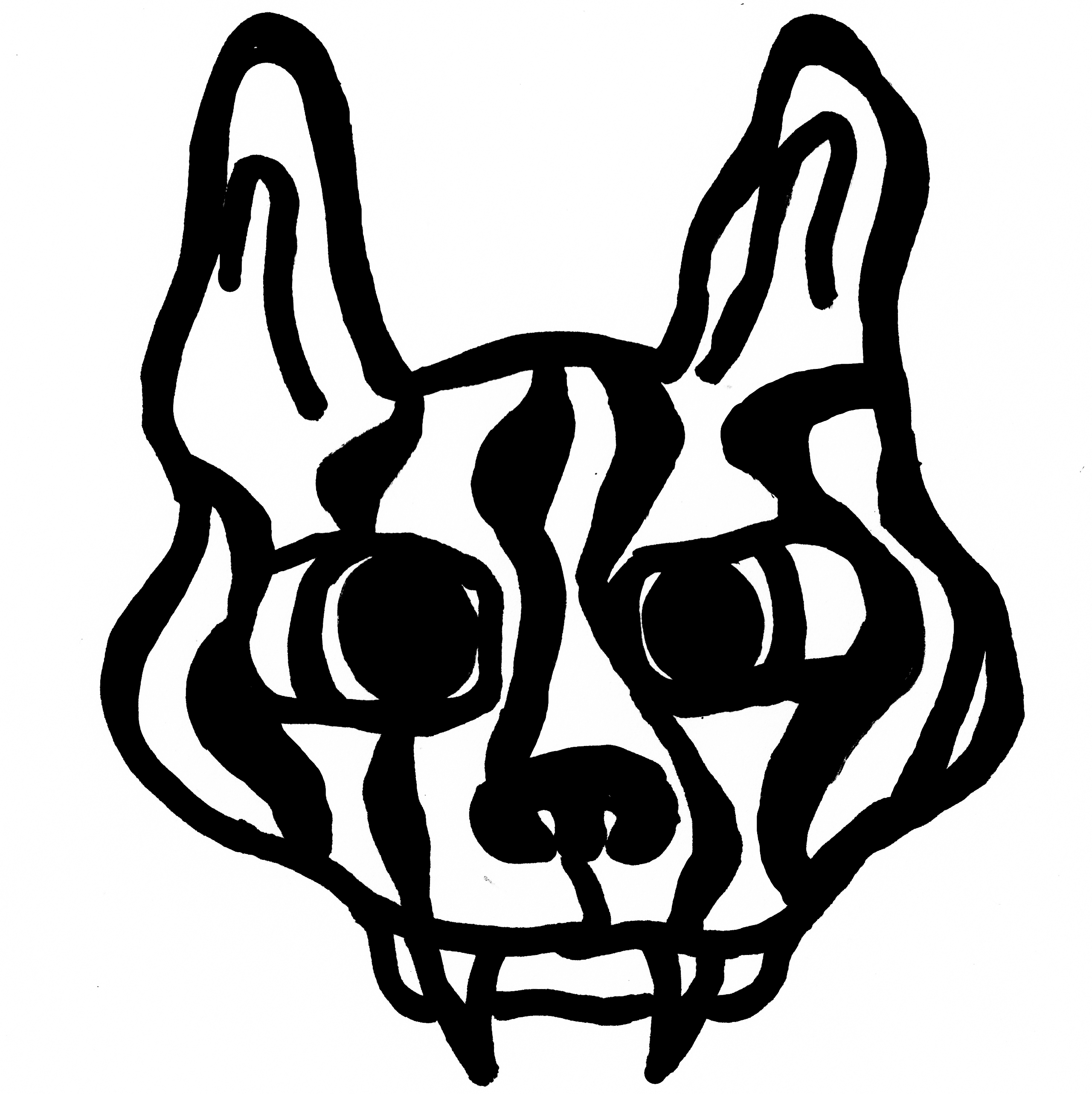

Usually, whenever I’m confronted by an image that could be categorized as “furry art”, I immediately scroll past it and move on with my day, since it’s clearly not for me. Most furry art is seemingly designed to appeal to one of two audiences: adults who find anthropomorphized animals intensely erotic or, counterintuitively, young children — whose cartoon adventure comedies are often animated by adults who find anthropomorphized animals intensely erotic. Furry art is a closed loop. Even when it leaks out into mainstream productions like Zootopia, Bad Guys, and Forgotten Island, its talking anthro-animals always find their way back to horndog internet subdungeons like DeviantArt, returning to their primary audience’s busy hands. The computer-animated memoir Bouchra deviates from that closed-loop system to appeal to anyone who might be interested in broader-appeal artforms like personal essays, queer familial dramas, or independent filmmaking, regardless of whether they’re turned on by fursona character designs. It’s refreshing to finally be confronted with furry art that aims to make its audience feel other emotions besides Horny.
Obviously, Bouchra occasionally aims to make its audience feel Horny too; that’s unavoidable. It’s a low-key indie drama about struggling artists living in New York City, and just like any other movie in that category, those hip, young characters occasionally have sex onscreen. It’s just unusual for the sex to be performed between predator & prey-type fursonas animated through the video game engine Blender. As a personal memoir about a documentarian’s difficulties adjusting to queer city life while maintaining a healthy relationship with her conservative parents back home, there’s nothing especially flashy or novel about Bouchra‘s scene-to-scene drama. However, that lesbian filmmaker being represented onscreen as a CGI jackal who occasionally strips down to lick the scruff & thighs of the cows & other prey in her life does add some specificity to the project that distinguishes it from other confessional debut features of the same ilk. The CG animation itself can be outright beautiful too, with more attention paid to blocking and light sources than most modern animation bothers with while appealing to sugar-addled children. The smoke trailing from a character’s post-coital cigarette in a stream of liquid CG glitter is so beautiful that it’s easy to forget you’re watching a talking animal inhale it. These are real, fully fleshed out characters who love, fight, fret, and fuck just like anyone else . . . give or take some major anatomical details.
The drama is convincingly personal & heartfelt too. Our main jackal, Bouchra, finds herself unexpectedly homesick for Morocco while struggling to root herself in her new life as a up-and-coming NYC filmmaker. Her relationship with her mother remains close and openly communicative despite the geographical distance, with the devastating exception that her mother refuses to acknowledge her lesbian identity. Bouchra is working on an autofictional memoir as a way of dealing with that fractured family dynamic, which she uses as an excuse to interview her mother by phone about her decade-old coming out letter that otherwise remains undiscussed by the two jackal-women. Reality & fiction intertwine as their relationship and the fictional movie about their relationship play out simultaneously, alternating between NYC & Casablanca in a purposefully disorienting continuity. First-time filmmaker Meriem Bennani also deliberately confuses the details of her personal life with this autofictional narrative, voicing Bouchra herself as an invitation to read that character as her very own fursona avatar. In doing so, she’s found a way to express the broad queer-culture theme of frustration with family’s refusal to engage with the details of your romantic life in a way that feels both specific to her own life’s circumstances and convincingly translated into honest artistic expression.
A major reason I’m comfortable classifying Bouchra as furry art (beyond defining it by the “I know it when I see it” pornographic metric) that when we watch the jackal-documentarian storyboard her own life’s story on index cards, they’re sketched out in an unmistakably furry art style — complete with prurient yiffing detail. If we’re meant to see Bouchra as Bennani’s avatar, that inclusion is an essential insight into her creative process (alongside co-director Orian Barki, who voices her talking-lizard bestie). Those storyboard index cards, as highlighted in slideshow montage, contextualize Bouchra as an authentic art piece from a filmmaker who primarily sees the world through predator-prey fursona dynamics, having been raised in an Internet subculture with its own closed-loop logic & visual language. I haven’t personally engaged with enough furry art to claim that it’s the first major artistic work achieved within that closed loop, but it does feel like the first major title to fully escape containment and stand out on its own artistic, dramatic merits beyond its occasional erotic appeal.
-Brandon Ledet

