Burning Sands (2017)

Burning Sands is one of those Netflix-distributed indies that premiered at Sundance in January and then promptly resurfaced on streaming after a brief couple months’ gap. I’m sometimes frustrated with this relatively new distribution path. In the case of I Don’t Feel at Home in This World Anymore in particular, it felt a little defeating to watch one of the best films of the year (so far) never even earn the chance to build up word of mouth momentum in a theatrical run before getting lost in the Netflix deluge. In the case of dirt cheap indies like Dig Two Graves and Burning Sands, however, Netflix distribution can be a kind of saving grace. Without being able to stream these kinds of moderate festival circuit pleasers at home, it’s likely audiences would never have direct access to them and they’d slip away into oblivion. The only problem now that they’re readily accessible, though, is getting them to stand out enough so that they’re not lost in the constant flood of digital content.

Burning Sands distinguishes itself from the overcrowded market of digital era indies in the intensity & specificity of its setting. Following the violent vetting process for fraternity pledges at a Historically Black College at the height of the trials & torments of Hell Week, Burning Sands is both a solemn reflection on the toxicity of traditional masculinity and a loose philosophical exploration of how the horrific vestiges of slavery have carried over into modern black identity in America. Set on a college campus named after Frederick Douglass, the movie frequently looks to his academic writing on the horrors of slavery as a window into black fraternity tradition, often with interesting, but vaguely defined results. It’s not a film that consistently wows or provokes contemplation, but when it does choose to crank its intensity in either its physical violence or philosophical prodding, it leaves a long trail of moments & images that stick around long after the credits roll.

Scenes of romantic, familial, and academic struggle threaten to drag Burning Sands down into forgettable melodrama tedium. The movie authentically captures the feel of a college campus, right down to the red cup parties that break out in the most depressingly bare apartment living rooms (complete with an accurate snapshot of the modern rap radio zeitgeist, Future included). Most of the drama staged in that setting can feel a little flat, though. There is a near unbearable amount of tension built in Burning Sands‘s hazing scenes that feels tonally at odds with its freshman year anxieties over grades & girlfriends, to the point where one half of that divide feels inevitably inferior. Still, each kick to the ribs, drunken experiment with branding, and regimented pressure into sexuality hits with full impact and the power of its strength in imagery & tension ultimately outweighs any of its moments of underwhelming melodrama. Burning Sands feels much more interested in the horrors of hazing than it is in fretting over freshman year anxieties and it’s all too easy to see why.

Burning Sands is far from the Hell Week exploitation of last year’s GOAT, but it’s difficult to pinpoint an overarching theme or message it’s trying to convey in its dramatic narrative. At times, it feels like a love letter to the bonds humans make in crisis. At others, it feels like an alarmist picture exposing the methods that manufacture that crisis on college campuses. Themes of slavery, militarism, police harassment, and even flashes of homoeroticism rattle around in its loosely defined moments of dramatic tension without ever landing with a solid thud. It’s possible that a more solidly defined thesis would have earned the film more attention once it hit streaming on Netflix. Honestly, I’d think that the presence of Trevante Rhodes (who was excellent as adult Chiron in last year’s Oscar-winning Moonlight) as one of the fraternity brothers who torment the pledges to test their loyalty would’ve been its best chance for widespread recognition, but the film has seemingly been allowed to slip into immediate VOD obscurity anyway. The extreme specificity in setting & subject and the brutal moments of violent tension lead me to believe that Burning Sands will eventually find its audience, though, maybe even with people who can better make out the function of its central message & dramatic conflict than I have been able to. Even if it never does, it at least floated enough fascinating images & ideas to remain distinctively memorable, which is a modern indie’s first hurdle to clear.

-Brandon Ledet

Roger Ebert Film School, Lesson 30: The Silence of the Lambs (1991)

Roger Ebert Film School is a recurring feature in which Brandon attempts to watch & review all 200+ movies referenced in the print & film versions of Roger Ebert’s (auto)biography Life Itself.

Where The Silence of the Lambs (1991) is referenced in Life Itself: On page 157 of the first edition hardback, Ebert explains his general taste in cinema. He writes, “What kinds of movies do I like best? If I had to make a generalization, I would say that many of my favorite movies are about Good People. It doesn’t matter if the ending is happy or sad. It doesn’t matter if the characters win or lose. […] The secret of The Silence of the Lambs is buried so deeply that you  might have to give this some thought, but its secret is that Hannibal Lecter is a Good Person. He is the helpless victim of his unspeakable depravities, yes, but to the limited degree that he can act independently of them, he tries to do the right thing.”

What Ebert had to say in his review(s): “If the movie were not so well made, indeed, it would be ludicrous. Material like this invites filmmakers to take chances and punishes them mercilessly when they fail. That’s especially true when the movie is based on best-selling material a lot of people are familiar with. (The Silence of the Lambs was preceded by another Thomas Harris book about Hannibal Lecter, which was made into the film Manhunter.) The director, Jonathan Demme, is no doubt aware of the hazards but does not hesitate to take chances. His first scene with Hopkins could have gone over the top, and in the hands of a lesser actor almost certainly would have.” -from his 1991 review for the Chicago Sun-Times

“One key to the film’s appeal is that audiences like Hannibal Lecter. That’s partly because he likes Starling, and we sense he would not hurt her. It’s also because he is helping her search for Buffalo Bill, and save the imprisoned girl. But it may also be because Hopkins, in a still, sly way, brings such wit and style to the character. He may be a cannibal, but as a dinner party guest he would give value for money (if he didn’t eat you). He does not bore, he likes to amuse, he has his standards, and he is the smartest person in the movie.” -from his 2001 review for his Great Movies series

There’s something about Jonathan Demme’s modern classic The Silence of the Lambs that lends itself well to those unsure about horror as a respectable film genre. I found the film endlessly rewatchable as a child (anytime I could sneak away with the family’s not-so-heavily guarded VHS, at least), despite it scaring me shitless. Academy voters in 1992 saw enough of a dramatic thriller in its bones to award it that year’s Oscar for Best Picture, a distinction that’s become increasingly rare for genre films, especially horror. Folks who like to split hairs over categorization would likely not care to hear it described as a horror at all, despite that genre’s drastic overlap with thrillers and this particular film’s violent, disturbing serial killer plot. When Demme recently passed away, many critics’ obituaries made a point to emphasize how much of a humanist filmmaker he was, how much attention he paid to making every character in his films feel like a real human being worthy of the audience’s empathy. You can feel that empathy in a wide range of characters in The Silence of the Lambs, from the in-over-her-head FBI recruit protagonist to her deranged sophisticate cannibal collaborator to the vicious serial killer they hunt down together to his latest victim, a mostly average American teenager. It’d be tempting to attribute all of the film’s cultural respectability to that characters-first/genre-concerns-second ethos, but I think that’s only half the story. The same way that Demme elevated the concert film as a medium in Stop Making Sense, there are formalist qualities to the picture that somewhat successfully distract audiences from the fact that they’re watching a sleazy horror film in the first place.

Jodie Foster stars as a soon-to-be FBI agent who jumps rank just a tad to single-handedly identify, locate, and take down the most wanted serial killer in America. Her unlikely accomplice in this mission is an imprisoned cannibal ex-psychiatrist played by Anthony Hopkins, who hints that he knows the identity of the killer, an ex-patient, but will only drop clues for Foster’s character to discover him for herself. The clock is ticking to bring the investigation to a close, as the killer has recently kidnapped his latest victim, the daughter of a politician, and she only has a few days to live before he skins her body. This plot is just as well-known by by now as the names of the characters who populate it: Agent Sterling, Buffalo Bill, Hannibal Lecter, etc. What’s lost in the remembrance of the murder mystery machinations, however, is just how much care goes into constructing each character, no matter how dangerous, as a recognizable human being. Hopkins plays Dr. Lecter as an ice cold intellectual creep who intentionally cultivates fear for ways he might act out, but still feels compelled to help Agent Sterling in her investigation out of some long-suppressed goodness in what’s left of his heart. Sterling herself commands much of the audience’s sympathies, of course, as she navigates the sexist skepticism of her colleagues in multiple branches of law enforcement who don’t take her seriously. Even the film’s horrific killer, Buffalo Bill, is explained to be a survivor of childhood abuse who’s confused by, but cannot control his own violent tendencies. Although it does so by including some dated psychobabble about trans women being “passive” by nature, the movie even distinguishes Bill’s obsession with wearing women’s skin and presenting female as something entirely separate from transgenderism, avoiding unnecessary transmisogynistic demonization. He’s a hurt, violent killer who the movie affords more sympathy than he probably deserves, considering the brutality of his crimes. It also affords Bill’s latest victim a moment or two of humanizing characterization on her own before she’s abducted, allowing her to be established as a real person and not just a nameless teen girl horror victim. It’s in Demme’s nature to give her that.

Demme’s avoidance of horror’s typical, inhuman sleaze isn’t entirely restricted to his sense of humanist characterization, though. You can feel it in the cinematography by Tak Fujimoto or the costuming by Colleen Atwood, two industry mainstays who elevate the genre proceedings with a sense of class. What really classes up the joint, however, is the orchestral score by Howard Shore, who’s a lot more at home providing sweeping soundtracks for huge productions like The Lord of the Rings or The Aviator than he is conducting a horror film soundtrack. It shows in his choices here, too. Shore’s The Silence of the Lambs score can be effectively tense in moments when Jodie Foster’s protagonist is in immediate danger, but overall feels way too light & classy in its strings arrangements to match its subject. It’s as if Demme employed Shore specifically to make his film sound like an Oscar-worthy drama instead of a sleazy police procedural about a woman-skinning serial killer. One of the most consistent pleasures of The Silence of the Lambs for me is in watching Jodie Foster & Anthony Hopkins try to out over-act each other. Foster’s thick Southern accent & Hopkins’s *tsk tsk* brand of mannered scenery chewing have always been a neck & neck race for most heightened/ridiculous for me, but this most recent rewatch has presented a third competitor in this struggle: Shore. The composer’s string arrangements actively attempt to match the soaring stage play line deliveries from Foster & Hopkins, who similarly seem to be playing for the back row. The rabid horror fan in me wishes that the score would ease up and leave a more sparse atmosphere for the movie’s genre film sleaze to fully seep into, but the more I think about it, the more Shore’s music feels symbiotic with the lofty Greek tragedy tones of Demme’s performers. I’m still a little conflicted about it even as I write this.

All of the orchestral arrangements & cautiously humanist character work in the world can’t save this film from its horror genre tendencies, though. The morbid true crime fascination with the story of real life woman-skinner Ed Gein automatically drags the film down into a kind of lurid horror film sleaze. Buffalo Bill’s fictional lair where he recreates Grin’s crimes is a feat of of horror genre production design, complete with creepy exotic bugs (Death’s Head moths) & mannequins with blank expressions. In two separate scenes, one on an airplane and one outside Lector’s cell, Demme & Fujimoto (both vets of the Roger Corman film school) utilize a harshly contrasted blue & red lighting dynamic closely associated with the horror genre because of hallmarks like giallo & Creepshow. The film’s climax, in which he Buffalo Bill hunts Agent Sterling in the darkness of his own basement with the help of night vision goggles, is so iconic to the horror genre that it was aped in two releases just last year: Lights Out & Don’t Breathe. Demme even makes room for a cameo from legendary horror film producer Roger Corman (who gave the director his start on the women in prison exploitation pic Caged Heat) as the head of the FBI. Of course, the most obvious horror element of all is Anthony Hopkins’s over-the-top, but chilling performance as man-eater Hannibal Lector, whose visage in a straight jacket & muzzle is just as iconic in the horror villain pantheon as Jason Voorhees’s hockey mask or Freddy Krueger’s fedora & striped sweater. Perhaps The Silence of the Lambs is a little too dramatic & not nearly cruel enough to be strictly considered an exploitative genre film, but I still smell horror’s sleazy stink all over its basic DNA. I also love the genre too much to have its only Best Picture Oscar taken away from it based on Demme’s empathy or Shore’s music alone.

It’s difficult to look back to The Silence of the Lambs for new insights this many years after its release, since it feels like it’s always been a part of my life. Even the film’s insular FBI politics, hyper-nerd experts, and onscreen text feel highly influential in the basic aesthetic of The X-Files, a show that had a huge influence on my pop media tastes as a young’n. I can look back to Demme’s film now for moments of Agent Sterling navigating shady sex politics that wouldn’t have meant much to me as a kid: suffering flirtations from superiors, attempting to remain stoic while prisoners harass her, boarding an elevator full of her towering meatheads of fellow recruits. That’s not really what surprised me on this revisit, though. Mostly, I was taken aback by how well the film masks it sleazy horror genre traits. It used to feel like such an anomaly to me that such a grotesque & terrifying film had won a major award usually reserved for heartfelt dramas about real life historical figures or the tragically disadvantaged. I fully understand how it got past the Oscars’ usual genre bias now. Not only does the film look and sound more like the films the Academy usually falls in love with, but Demme brings the same empathetically tragic, true to life drama to his characters that typifies Oscar winners. Whether they’re too young to be watching the film on a smuggled VHS or too old & stuffy to typically engage with its serial killer subject matter, the film has a way of easing audiences into a kind of horror film sleaze that’s usually reserved for exploitation genre hounds. It’s a horrific and often over-acted picture that shouldn’t feel nearly as prestigious or as classy as it does, but Demme somehow packaged The Silence of the Lambs as something enduringly endearing. More unlikely yet, I find it oddly comforting, like meeting up with an old friend in desperate need of intensive therapy.

Roger’s Rating (4/4, 100%)

Brandon’s Rating (4.5/5, 90%)

Next Lesson: Goodfellas (1990)

-Brandon Ledet

Howard Kremer’s #JawsReelTime Project

Stand-up comedian Howard Kremer has a recurring bit on his weekly pop culture podcast Who Charted? (co-hosted by fellow comedy mainstay and Bajillion Dollar Propertie$ showrunner Kulap Vilaysack) called “Jaws is Better” that’s consistently hilarious, although spontaneously employed. Basically, if a guest on the show happens to mention the title of their favorite movie, Kremer’s “Jaws is Better” theme music plays and the comedian immediately launches into a tirade that “proves” that his own favorite film, the classic Steven Spielberg creature feature Jaws (1975), is objectively “better.” I don’t personally have much of a connection with Jaws. I’ve only seen the movie once, in my 20s, screened at the Prytania as part of a Shark Week-themed midnight movie series. I also fall firmly on the wrong side of Kremer’s Oceans Vs. Space dichotomy, which suggests that movies set in Earth’s waters are automatically better than sci-fi “make-em-ups” set outside Earth’s atmosphere. Still, the consistency & conviction of the bit always tickles me and I’m excited that Kremer lately seems to be determined to take it to another level in a project he’s calling #JawsReelTime.

The events depicted in the film Jaws occur over an eleven day span from June 28 to July 8 on the calendar. Kremer’s proposition is for Jaws fans (or just any dedicated “Chartists”) to watch the movie in sectioned-off parts on the corresponding calendar day those (fictional) events took place, effectively watching it “in real time.” From what I can tell, the rigidity of this eleven day timeline is much clearer in the novel Jaws is based on than it is in the movie version. It’s still an easily achievable goal, though, one that offers a new way to look at a modern classic that’s already been meticulously dissected by those who’ve seen it many more times than I have (i.e. most people). The project starts off easily enough, with landmarks like Fourth of July celebrations to guide the way. Where #JawsReelTime gets very tricky is in the film’s climactic shark hunt, a three day journey without clear makers differentiating between its individual calendar dates. Kremer has suggested “winging it” without timestamps to help determine where to stop & start watching on each day, rightly explaining that it’ll help participants keep a fresh perspective. However, for a Jaws novice such as myself, a guided, timestamped timeline might be necessary to keep the project in order. Otherwise, I’d likely get lost at sea, like so many Richard Dreyfusses past.

I encourage you to join us for the #JawsReelTime project! At the very least, give a listen to Kremer explaining the project in recent episodes of Who Charted? (episodes 340 & 341 have the most detailed discussions of it so far). If you, like me, need a timestamped timeline of the events in Jaws to help guide your way, I did my best to create one below by cross-referencing its plot points as detailed on themovietimeline.com with the clearest corresponding scene breaks I could find in the film. Again, the divisions between these events become a little muddled in the third act, but I did my best to create an accurate game plan here. I’m not sure what, if anything, watching what Kremer would call the perfect “Summah” movie this way will add to its overall experience, but I’m excited to find out and will be discussing the results with Britnee on our own podcast soon after the #JawsReelTime project concludes. If you’re joining us for the journey, be sure to hashtag your progress #JawsReelTime on Twitter so Kremer knows he’s not alone on the waters, hunting down a monstrously huge shark all by his lonesome.

June 28 (0:00-5:05): Chrissie Watkins is killed by a shark while skinny-dipping.

June 29 (5:05-18:39): Alex M. Kintner is killed by a shark.

June 30 (18-39-23:01): A $3000 bounty is placed on the shark.

July 1 (23:01-27:53): Michael Brody’s birthday.

July 2 (27:53-50:09): A caught tiger shark is shown to the public but does not contain human remains.

July 3 (50:09-53:27): Mayor Vaughn refuses to close the beach.

July 4 (53:27-1:07:02): The 50th Annual Regatta is interrupted by a shark.

July 5 (1:07:02-1:20:39): Martin Brody and Matt Hooper sail with Quint in search of the shark.

July 6 (1:20:39-1:36:23): The search for the shark continues.

July 7 (1:36:23-1:50:01): The shark damages the boat’s hull.

July 8 (1:50:51-2:03:55): Quint dies and the shark is blown up.

Have fun! And remember, “Don’t go in the water.”

-Brandon Ledet

The Icy Road from Hip Hop to Nu Metal

After watching Cool as Ice, our Movie of the Month for June, I became more interested in Vanilla Ice than ever before. He’s so much more than a one-hit-wonder with terrible pants. He actually does have talent. There’s something about Vanilla Ice that’s just so mysterious & strange and it’s pulling me in. While on my Vanilla Ice high during our Movie of the Month viewing, Brandon mentioned that Vanilla Ice dabbled in some nu metal during the late 1990s. I absolutely love nu metal, so I was determined to find out more about nu metal Vanilla Ice.

In 1998, Vanilla Ice aka Robert Matthew Van Winkle, released his third studio album, Hard to Swallow.  The edgy album cover features a mirror image of a nude woman with bloody eyes surrounded by roses. How did the creator of “Ice Ice Baby” get to this point? Well, it turns out that a whole lot happened to Vanilla Ice after his one hit wonder faded away. He got heavy into drugs (mainly heroin) and jet skiing, but he was still attempting to stay relevant in the music world. Thus, an unsuccessful nu metal album was created.

I listened to the entirety of Hard to Swallow, and while it isn’t by any means a great album, it does have some redeeming qualities.

Track 1 – “Living” (0:00): The song begins with a Jonathan Davis-like scat before very angry, violent lyrics start spewing out of Vanilla Ice, or as he refers to himself in this song, “Iceman.” It’s pretty awful, but it gets even worse at the chorus where Iceman starts to babble on in a Jamaican accent about not having control of his life; at least that’s what I think he’s trying to say. When looking up the lyrics for the song on multiple websites, majority of the lyrics were transcribed as “incomprehensible,” and that sums up this track perfectly.

Track 2 – “Scars” (3:45): The root of Iceman’s anger definitely comes out in this track, and it’s his abusive & absent father. After he says his father threw him out of a window for watching TV, I can’t help but feel for this guy. He also gives a shout out to Mama Ice for doing her best considering the circumstances, which is really sweet. His “scars” are what motivates him to be a better family man. There are so many uplifting messages hidden behind the mildly terrible guitar riffs.

Track 3 – “Ecstasy”: Nine seconds of instrumental confusion that’s nine seconds too long.

Track 4 – “Fuck Me” (8:51): Featuring vocals from Casey Chaos (co-writer for the System of a Down hit “B.Y.O.B.”), this song is a whole lot of fun and very catchy. “Fuck” is said at least every 5 seconds, so it’s obvious that he’s trying really hard to blend into the nu metal crowd. Ice makes fun of himself throughout this entire song with lyrics like “Ice ice baby, ice ice biatch” and “Fuck Vanilla Ice! He sucks! He eats shit!”

Track 5 – “Valley of Tears”: A guy that sounds a lot like Johnny Cash utters a short yet poignant phrase in this short interlude.

Track 6 – “Zig Zag Stories” (13:36): I was waiting for a song about smoking weed, and it only took me six tracks to get to it. Ice pretty much raps about smoking weed and not abusing it, so it’s almost like a liberal D.A.R.E. course. There’s a part in the song where he sings “You know I like to fly,” and it sounds a lot like when Fred Durst says “If only we could fly” in my favorite Limp Bizkit song, “My Generation.” This song came out two years prior to Limp Bizkit’s “My Generation,” so did Fred Durst rip off Vanilla Ice? Say it isn’t so!

Track 7 – “Too Cold” (19:03): Lucky number seven! “Too Cold” is the only song from this album that made it to radio. It’s a nu metal remake of Vanilla Ice’s one-hit-wonder “Ice Ice Baby,” and it’s a damn good song, at least by nu metal standards. Turning a cheesy 90s hip-hop anthem into an alternative hit really shows off Ice’s musical genius.

Track 8 – “Prozac” (22:27): Honestly, this song is pure garbage. How did he legally get away with writing a song called Prozac? Maybe it was so bad and unknown that the major pharmaceutical company never caught him? Watch out Iceman, they may be coming for you.

Track 9 – “S.N.A.F.U.” (26:55): S.N.A.F.U. stands for “situation normal all fucked up”. What is that even supposed to mean? He sounds like a clown on speed during the chorus, and I can’t even handle it. Jimmy Pop from The Bloodhound Gang lends some of his talent on this track, but it’s not enough to save this song from being a piece of crap.

Track 10 – “A.D.D.” (31:42): This is one of my favorites for sure, and that’s probably because it’s heavily influenced by The Deftones. Ice strays away from his rap rock vocals and reveals his softer, more emotional side. He, of course, has some intense rap rock moments in this song, but it’s tastefully done.

Track 11 – “Stompin’ Through the Bayou” (36:57): The next time I visit my parents down the bayou, I am blaring the hell out of this. I would’ve loved this song so much when I was an angry teen living in Larose, LA. This song was made to be played while throwing back a few beers around a bonfire and smoking a shit ton of menthols.

Track 12 – “The Horny Song” (40:21): This track was really hard to get through because it’s pretty much a douchebag anthem. I didn’t expect much from a song titled “The Horny Song,” but I hate it more than I initially thought I would. There are actually lyrics in the song that state, “All I wanna do is hump with it and make you scream, and eat you up as I floss with your g-string.” It’s just the worst.

Track 13 – “Freestyle” (44:55): C-Note, Cyco, and 2-Hype are rappers that are featured in the last song on the Hard to Swallow album. I’ve never heard of them, and while they’re not the completely terrible, they’re not very memorable. This song isn’t very alternative like the other songs on the album. It’s a trip back to Vanilla Ice’s weird gangster rap stage that occurred after “Ice Ice Baby” and before Hard to Swallow, best captured by the video to “Roll Em Up.”

All in all, Hard to Swallow isn’t really a terrible album. There are some crappy songs, but there are also a couple of gems. I will be adding “Stompin’ In the Bayou,” “Fuck Me,” “Zig Zag Stories,” “A.D.D.,” and “Too Cold” to my music collection very soon.

For more on June’s Movie of the Month, the Vanilla Ice vehicle Cool as Ice, check out our Swampchat discussion of the film, this episode of the We Love to Watch podcast that covers similar themes of artful commercialism, and our look at how it functions as a remake of the Marlon Brando classic The Wild One (1953).

-Britnee Lombas

Dig Two Graves (2017)

It’s both fascinating and depressing how many minor indie films can slip through the cracks of theatrical distribution after first appearing for a festival run. The digitization of the film industry has democratized production to the point where almost anyone can make a movie, but opening the floodgates that way has meant that it’s much more difficult for a feature to stand out & be seen. The Gothic mystery thriller Dig Two Graves, for instance, premiered at the New Orleans Film Fest in 2014, but didn’t earn a “select theaters” release until nearly just three years later. The modestly budgeted film is now lurking, just a few months later, in the massive heap of under-publicized indies that eventually all find their way to Netflix. In some ways it’s easier to watch than ever before, but it’s also a victim of a distribution method that does it no favors in terms of visibility. It’s a shame too, because it’s actually a fairly engaging work that could be commercially viable with the right push.

There are two dueling timelines in Dig Two Graves. The film opens with 1940s cops dumping two bodies off a cliff into a backwoods river. It then jumps to two teen siblings standing at the same cliff in the 1970s. Unable to convince his sister to plunge with him, the older brother leaps to the water below on his own, never to resurface. The sister obsesses over this disappearance and is hurt that her family and community is able to move on. Her story starts to converge with the opening 1940s timeline from there, as she’s offered a proposition from old-timey gypsy vagabonds who promise to bring her brother back to life through black magic in exchange for the life of her schoolyard friend. The division between the 40s and 70s timelines loses its rigidity as she struggles with the implications of the magic that could bring her brother back. It’s a classic Southern Gothic tale of supernatural revenge that just happens to be set in the Midwest.

The pitfalls of revenge and the cycles of history repeating itself aren’t exactly novel territory for a mystery thriller to explore, but Dig Two Graves does a great job of visually distinguishing itself while remaining narratively familiar. Snakes, carnivals, magic tricks, the eeriness of the woods, and the hallmarks of hillbilly occultism all afford the film the feel of a strange bedtime story that resurfaces in your nightmares through half-remembered images. Jars of homemade moonshine and the field dressing of deer ground its supernatural story in a sense of real world brutality, while the lead vagabond’s battered top hat gives him a kind of Babadook quality. This is the exact kind of film I would have loved to have caught at a young enough age so that its specific images haunted me more than the mechanics if its central mystery; I’m thinking specifically of my relationship with The Lady in White. Still, even for an adult audience Dig Two Graves packs plenty of visually-triggered chills and can be technically impressive in its confident drifts between its two disparate temporal settings.

One of the biggest questions Dig Two Graves raises for me is just how many of these well-made indies are slipping through the distribution cracks and not even reaching Netflix. I even attended the 2014 NOFF where this film premiered (it’s where I saw Wetlands) and I’ve never heard of this film. I’ve had movies from subsequent NOFF screenings crack my Top Films of the Year lists, never to be heard of again in wide distribution. This is a strange time we’re living in for pop culture media, but I’m glad films like Dig Two Graves can at least find a way to get made even if they have to later struggle to be seen.

-Brandon Ledet

Jesse James Meets Frankenstein’s Daughter (1966)

It’s always at least a little frustrating when all a movie does is affirm things you already know. For instance, I already knew from the first film in William Beaudine’s career-concluding Weird West double bill, Billy the Kid Versus Dracula, that I wasn’t likely to enjoy its marquee mate Jesse James Meets Frankenstein’s Daughter. Indeed, my second trip to that well was even less rewarding than the first and I had to question exactly why I even do these things to myself, especially since I already knew going in that its title was bound to be its best attribute. That wasn’t my most depressing reaffirmation watching Frankenstein’s Daughter, however. What really got to me was once again facing a truth about myself as an audience that never goes away: I will greedily gobble up any scraps of horror genre schlock put in front of me, but most Westerns put me to sleep, regardless of quality.

Of Billy the Kid Versus Dracula, I wrote that the Western end of the film’s horror-Western divide felt like a Halloween-themed episode of Gunsmoke or Bonanza. Jesse James Meets Frankenstein’s Daughter similarly mirrors the lifeless, going-through-the-motions tedium of televised Western serials whenever its titular horror villain is offscreen. It also makes the problem worse by stretching out these gun-slinging adventures to much longer extremes than Beaudine’s other Weird West picture. At the opening of the film I was foolishly excited that it may be an improvement from Billy the Kid Versus Dracula because it begins in Lady Frankenstein’s lab as she experiments on a dead body using her grandfather’s ancient recipe. That excitement soon faded as I realized this is more so a picture about Jesse James’s travels as a pistol-shootin’ romantic.

Two scientists from Vienna, including the titular Lady Frankenstein, set up shop in a small Mexican village to take advantage of two of their most precious resources: electrical storms & disposable laborers (you know, human children). Lady Frankenstein’s experiments in the old abandoned mission she converts to a lab packed with sciency bleep bloop machines have no concern for conquering death, but rather create a strong, mind-controlled slave out of the local undead. Unfortunately, the cruelty in her preposterous form of sci-fi colonialism is abandoned for most of the film’s (very short) runtime to follow the American man who eventually does her in: Jesse James. James’s story is split between planning a bank robbery and getting stuck between the romantic intentions of a local Mexican woman & Lady Frankenstein herself. Neither end of that divide is half as interesting as Lady Frankenstein’s experiments, cheap thrills that have been better pulled off in countless films that are far more entertaining than this one.

If there’s any delight to be found in Jesse James Meets Frankenstein’s Daughter, it’s in the film’s disinterest in maintaining its own sense of world-building. Just like how the vampire in Billy the Kid Versus Dracula is never once referred to as Dracula, Frankenstein’s “daughter” in the film is actually the mad scientist’s granddaughter. Also, when Lady Frankenstein finally creates a successful undead mind-slave out of Jesse James’s hunky buddy, she names the monster Igor for some unknown reason. I guess the production design or the line delivery or a classic “Why? Why?! WHY?!!!!!” reaction made stray moments of the movie humorous, but it never lived up to the potential of its real life outlaw meets supernatural threat premise. I suppose my familiarity with its sister film should’ve meant I already knew that it wouldn’t. I got tricked, once again, into thinking the delights of its schlocky horror elements or its ridiculous title could outweigh the tedium of watching a tedious mid-60s Western. I sorta already knew better, but I watched it anyway and learned nothing in the process.

-Brandon Ledet

The Night the World Exploded (1957)

There’s been a lot of grumbling this week about the way Trey Edward Shults’s sophomore feature It Comes at Night was marketed as a straightforward horror film, with a lot of people expecting some kind of monster attack based on its title. I want to believe that in two weeks’ time at most, first weekend horror audiences’ expectations will no longer matter and It Comes at Night will still be a fantastic film long after they’re forgotten. Sometimes, the title or the advertising of a film does matter in the long-run, though. Sixty years after its theatrical release, I found myself similarly bummed by the movie promised in the title The Night the World Exploded. I didn’t exactly expect Earth to explode in the picture, but the title does suggest some kind of alien invasion or large scale sci-fi threat, an expectation backed up by its inclusion on a drive-in double bill with The Claw, a creature feature about a giant killer bird. Unfortunately, this world-threatening event is a much more pedestrian kind of sci-fi villainy: earthquakes. It seems that in mocking general audiences for their titular & genre-based expectations, I was setting myself up for a taste of my own medicine. It did not taste sweet; it was, in fact, quite bland.

The Night the World Exploded announces its tedium up front by opening its narration with a weather report. The air was cool, low 50s, in case you’re interested. Three scientists who study the weather are concerned with drastic shifts in air pressure, which is somehow alarming to their unproven invention: a machine that accurately predicts earthquakes before they occur. Government officials don’t believe the validity of this machine’s prediction and refuse to evacuate the area indicated for severe impact. Many die as a result. A machine that can accurately predict earthquakes is still science fiction speculation, but between 70s disaster epics like Earthquake & modern throwbacks like San Andreas it’s an idea that had since become old hat in terms of cinematic depiction. What makes The Night the World Exploded more distinct as a sci-fi film is the source of its disastrous earthquakes. Instead of merely being set off by shifting tectonic plates, the earthquakes in the film are the direct result of a previously undiscovered element found under Earth’s surface that’s harmless when wet, but explodes when dry. Once this source is determined, what follows is an odd version of a 50s sci-fi message movie like Them! or The Space Children where, unlike nuclear war, there’s nothing real life audiences can do to stop its threat, since it’s entirely fictional.

Besides the fear mongering built around a fictional element that could explode the Earth from under us, I admire The Night the World Exploded‘s ambition​ to make its threat a worldwide event despite its budgetary limitations as drive-in schlock. Stock footage of buildings crumbling, newsreels of disaster relief & widespread fires, and even images of war are wrangled by a fast-talking narrator who attempts to tell a worldwide story of scientists & governments in crisis. Its smaller scale story of the three-scientist team that discovers the explosive element in their underground cave explorations is much less interesting. You see, the sole female scientist of the crew is frustrated because she wants to become a wife ASAP, explaining, “I’m a scientist, but I’m a woman too.” She’s frustrated because she’s settling to marry the wrong man, due to her co-worker being too wrapped up in his research to take notice of her romantic desire for him. What a pickle! (Oddly enough, this is more or less the same plot as Doris Wishman’s nudie cutie Nude on the Moon.) I hope it’s not too much of a spoiler say that the world does not explode and the two scientists eventually get their happily-ever-after kiss. What’s questionable is which resolution is more anti-climactic.

It’s likely not fair that I’m judging The Night the World Exploded based on its failings to deliver the sci-fi horror I was expecting based on its title. However, I’d like to think that if the film were an especially well made or deliriously fun version of an earthquake disaster picture I would’ve been able to overcome my expectations. There were moments of stock footage inanity and scientists demonstrating what the explosive element could do to the Earth on a plastic globe that certainly pushed me towards having a good time, only to be routinely deflated by its limp, central romance. Still, the truth is that I was settling in to watch one kind of old fashioned schlock based on the film’s title and was disappointed when I was treated to another. I guess this should teach me some sort of empathy for audiences who settled in for something like Insidious or The Bye Bye Man when they bought a ticket for It Comes at Night and were instead shown a quiet art house reflection on the terrors of familial grief. Those audiences even have the moral upper ground in this situation in that they paid to see their disappointment on the big screen while I, a hypocrite, was just looking for a way to waste a morning on YouTube.

-Brandon Ledet

Rupture (2017)

I had a difficult time fully understanding what more enthusiastic fans saw in the recent horror cheapie The Void (besides its incredible special effects craft), but I think I found my ideal version of that film’s aesthetic in Rupture. Like with The Void, there’s nothing in Rupture that hasn’t technically been pulled off better, both artistically & financially, in higher profile films that arrived before it. Specifically, Rupture film feels like a mashup of Martyrs & A Cure for Wellness, except boiled down to the production values of a late 90s episode of Outer Limits. Despite its inherent cheapness (or maybe because of it, knowing me) and its The Void level of objectively terrible acting & dialogue, I was wholly won over by Rupture as a low-key VOD horror charmer. It’s an efficient little slice of modern schlock that deliberately bites off more than it can chew thematically, but easily gets by on both visual style and the over-the-top absurdity of its basic premise.

Noomi Rapace (of Prometheus and Alien: Covenant, sorta) stars as a tough-skinned, fiercely independent single mom struggling to navigate the frustrated anger of the two men in her life: her teenage son and her ex-husband. After dropping off her son with his dad for the weekend, she is promptly abducted by a mysterious organization that tackles, tases, duct tapes, and handcuffs her into compliance. As she works on escaping and uncovering the identities of her captors, Rupture threatens to devolve into an array of genres that have already been exploited to death: abduction thrillers, Women in Captivity horror, torture porn, etc. Thankfully, it reaches for much more deliriously pulpy territory. Rupture is not traditional torture porn so much as psychological torture porn. As our hero & her fellow abductees are tormented with their greatest fears (heights, snakes, spiders, etc.), the film feels like a dirt cheap mockbuster version of Martyrs, where the next step of human evolution can be unlocked by science & fear. Rupture‘s genre film thrills are fortunately a lot less brutal & less gendered than they are in Martyrs, however, keeping the mood consistently light and enjoyably bizarre.

Director Steven Shainberg, who also helmed the BDSM cult classic Secretary, crafts a slick schlock aesthetic here, framing the film with a ludicrous comic book eye, as if it were a sequel to Sam Raimi’s Darkman. Giant syringes full of florescent liquid & futuristic Science Goggles™ recall 1950s B-pictures and the 1980s horrors that payed homage to them. Not all of Rupture is light, trashy, fun. I cringed through a few of Noomi Rapace’s awkwardly​ delivered interactions with her fellow captives, but the mysterious organization who tortures them for a triggered evolution is bursting with excellent performances from skilled character actors. Michael Chiklis, Peter Stormare, and Lesley Manville (who was a villainous joy on the first season of Harlots) are all effectively creepy as Rapace’s tormentors while still aligning their performances with the film’s overarching cheapness. I got genuine chills and light-hearted giggles when these villains would tenderly stroke Rapace’s cheek and mutter tenderly, “Interesting skin,” between experiments/torture sessions. It took me back to the old tonal victories in horror cheapies like Tobe Hooper’s Invaders from Mars, a deceptively difficult balance to strike between genuine terror & comic book absurdity.

I can’t tell you exactly why I was totally on-board with the horror film nostalgia of Rupture (and, looking further back, Clown) while the similar thrills of The Void left me largely cold. Maybe it’s because the mood was lighter. Maybe I’m that much of a sucker for intense horror movie lighting and was easily won over by Shainberg’s use of colorful reds, blues, and yellows, which gave the film the sheen of a forgotten Creepshow segment. Maybe I’m just a sucker for Shainberg’s eye in general. There’s no accounting for taste, really. The dialogue & acting in Rupture are just as awkwardly weak as they are in The Void, but they did little to sour my enjoyment of the film as a bargain bin mashup of A Cure for Wellness & Martyrs. The film is too much of a trashy delight to be sunk by something as trivial as subpar character work or embarrassing line deliveries. Those faults rarely ruined our appreciation of the 80s & 90s VHS horrors or the 1950s horror comics the film tonally resembles either, so there’s really no reason to let them get in the way now.

-Brandon Ledet

The Gayest Thing About The Babadook is that He Barely Appears Onscreen

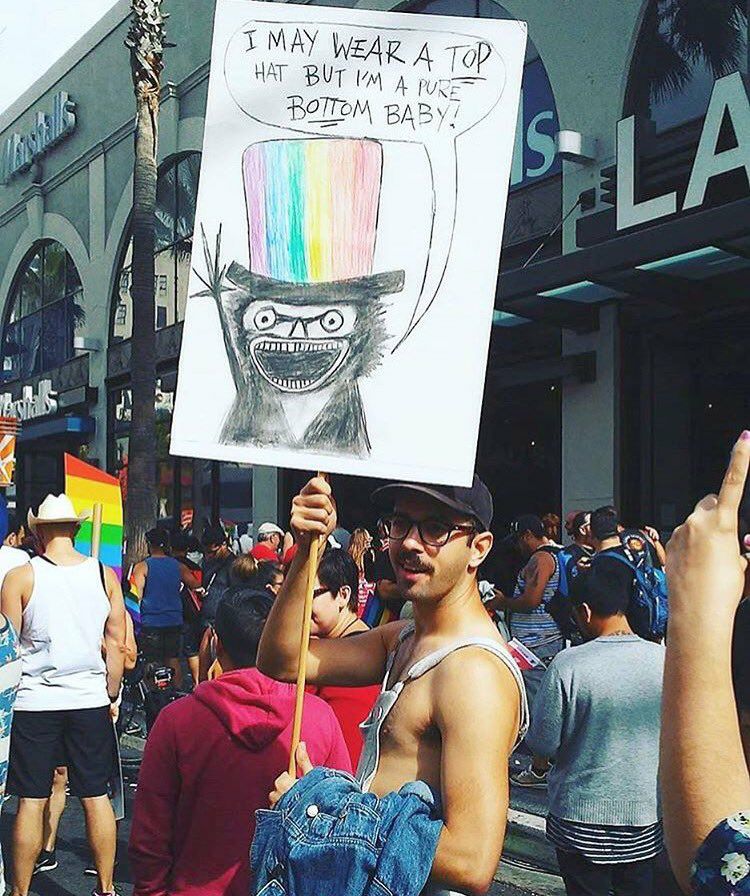
Writing about memes is silly business. By the time I publish this piece, it will have been well over a week since the story of the Babadook’s strange path to becoming an LGBTQ icon peaked, which in internet terms is a relative eternity. It’s still a funny story, though. Reportedly, a Netflix user noticed that the Jennifer Kent-directed instant cult classic horror The Babadook had been mistakenly filed under the LGBTQ Cinema category on the site’s streaming service. Users across social media platforms like Tumblr & Twitter then ran with the mistake, declaring the Babadook to be a gay icon. There has since been an immeasurable flood of memes inserting the Babadook into rainbow flag backdrops, stills from RuPaul’s Drag Race, and any other queer spaces that could easily be ‘Dooked. There have even been in-the-flesh sightings of the Babadook at Pride parades and the filming of the Drag Race finale. It’s been a bizarrely fun way to kick off 2017’s Pride Month​ celebrations and, unlike most memes, I hope this one never dies.

On one of our fist posts as a site, we declared The Babadook to be one of the best films of 2014, a very close second to the South Korean sci-fi epic Snowpiercer. We did not, however, have Netflix’s courage to declare that the film qualifies as LGBTQ content. It’s funny to return to Kent’s film now in search for glimpses of queerness, a context that was presumably far from anyone’s mind, Kent’s or otherwise, when it was first produced. It’s easy to make flippant jokes (and plenty have) about the Babadook’s dramatic presence in the arts (a children’s book about himself), how he’s a fancy dresser (complete with a signature top hat), how he’s kept locked away in a closet (actually, it’s a basement, but whatever), and his tendency to chat at length on the phone (about himself). If you really want to reach for something more substantive, I guess you could find interesting subtext by looking to the scene where the main character is prevented from masturbating with her ancient sex toy as an act of sexual oppression or by considering the fact that the Babadook himself is oppressed but never truly goes away as a kind of metaphorical struggle. The joke, though, is not necessarily that the film The Babadook is gay, but that its titular character is. This is still a film about a parent’s daily struggle with grief, depression, and resentment of their own child. The monstrous manifestation of that struggle, the Babadook, just happens to be a gay character within that story (according to current kayfabe, at least).

Keeping that separation of narrative and character in mind, there is something undeniably gay about the Babadook: he barely appears onscreen. In GLAAD’s recent scathing report on LGBTQ​ representation in major Hollywood productions, the organization took major studios like Disney & Sony to task for the pitifully minuscule amount of screentime they afforded queer characters in 2016. In one of the most absurd (and most damning) factoids from the report, it’s stated that the Lonely Island comedy Popstar: Never Stop Never Stopping accounted for 20% of all LGBTQ representation in major Hollywood productions last year, all because of a single Macklemore-spoofing song that satirizes a “no homo” brand of mainstream queer acceptance. Yet, you’d think that things were getting better than the report suggests, thanks to overblown flashes of queer representation like a suggestive campfire confession in the latest Power Rangers movie or an equally vague hint of LeFou’s homosexuality in the latest Beauty and the Beast. Audiences desperate for queer content will look for same sex romance in slightly suggestive friendships between characters like Poe & Finn in The Force Awakens or Steve & Bucky in the Captain America series, despite there being very little to support it, even in terms of subtext. Fans have to reach for those unspoken romances & declarations of queer identity because there’s nothing explicit to hold onto in most mainstream Hollywood productions. Worse yet, corporations like Disney will encourage this desperation because it sells tickets in certain demographics, yet they will do little to follow through on the promise.

The Babadook knows the struggle between lip service & onscreen representation all too well. His name is often spoken and his 2D image sometimes flashes in the form of his eponymous children’s book, but Babs himself does not appear onscreen until over halfway into the film. He’s relegated to the shadows, mostly locked away from eyesight, and the audience is blocked from getting the ‘Dook they want so badly. If we’re going to establish as a culture that the Babadook is gay, we’re also going to have to accept that the way he’s villainized and minimized in his own damn movie is sadly typical of how queer characters are represented onscreen. As an Australian indie director working on a minor budget, Jennifer Kent is far from a Hollywood big shot (and, breaking kayfabe for a minute, The Babadook is far from an LGBTQ film). It is funny, though, that as her horror genre monster has been gleefully co-opted as a queer icon that his minimized screen presence incidentally mirrors the way LGBTQ characters are typically represented (or not represented) in major Hollywood productions. It’s almost as funny as it is monstrously depressing.

-Brandon Ledet