An Evening with Richard Kelly: A Southland Tales (2007) Q&A

EPSON MFP image

“No film is every really finished, just abandoned by the filmmaker.”

This is the philosophy, or rather one of the facets of the real-life and filmmaking philosophies, of Richard Kelly. In something of a MotM miracle, I received an email last week advising that Austin’s Alamo Drafthouse would be hosting a screening of Kelly’s 2007 opus Southland Tales, with an introduction by the director and a Q&A following the film. As discussed in our email roundtable, I was a fan of Donnie Darko when it was first brought to my attention in 2003, when a DVD of the film was passed around like wildfire at the Louisiana School for Math, Science, and the Arts. Although time and distance (and a strong wave of hype backlash as the film caught on outside of the cult scene) have dulled my teenage enthusiasm for the film, my interest in Kelly’s work was piqued again by our viewing of The Box, a film I didn’t love but haven’t been able to stop thinking about. I never got the chance to see Southland Tales before this past Sunday, but I’m glad that my first viewing experience was on the big screen and not limited to the comparatively tiny television in my living room.

What’s the film about? I’ll try to be as succinct as I can: Southland Tales takes place in an alternate 2008, where post-9/11 paranoia and the overreach of infringement upon civil liberties that followed that incident has been further exacerbated by a nuclear attack on American soil (Texas, to be precise). The draft has been reinstated, interstate travel is extremely restricted, and citizens are heavily monitored via the use of information network USIdent and the deployment of heavily militarized Urban Pacification Units, which seem to have taken the place of standard police forces. The Republican Party, most notably represented by Texas Senator and potential VP Bobby Frost (Holmes Osborne) and his wife, NSA Deputy Director cum USIdent overlord Nana Mae (Miranda Richardson), is seeking to swing California to the red in order to ensure the continued power of USIdent and the party. Popular action star Boxer Santaros (Dwayne Johnson), the husband of the Frosts’ daughter Madeleine (Mandy Moore), has recently awoken in the desert with amnesia; he makes his way into the arms of Krysta Now (Sarah Michelle Gellar), a psychic porn star seeking to expand her media and merchandise empires through diversification. Krysta has recently completed a screenplay entitled The Power, which foretells the end of the world.

Elsewhere, the underground liberal forces of the Neo-Marxists oppose the Republican Party (this entire group is composed almost entirely of former SNL cast members, including but not limited to Nora Dunn, Amy Poehler, and Cheri Oteri). Their current plan involves staging a racially-motivated police shooting committed by haunted veteran Roland Taverner posing as his twin brother Ronald (Seann William Scott), an UPU officer; the intention is to have this captured on film by Boxer during a ride-along for research purposes, then use the footage to discredit Bush’s apparent successors. Their machinations are held in check by a series of double-crosses that undermine their ability to take any real political action. Elsewhere elsewhere, the wizard Baron von Westphalen (Wallace Shawn) has invented both a device that uses the power of the ocean to generate wireless electricity as well as several injectable liquids of various colors that are used as drugs for both recreational and psychic purposes. He and his band of assorted cronies (Bai Ling, Curtis Armstrong, Zelda Rubinsten, and Beth Grant) move throughout the various factions at play, gaining political power and prestige while well aware that the alternative energy source that they have created could bring about the end of humanity. And all of this is narrated by Pilot Abilene (Justin Timberlake), a former movie star whose face was disfigured by friendly fire in Iraq after he was drafted. And, hey, if you were starting to think any of this was too straightforward, don’t worry; there are also stable time loops, predestination paradoxes, mistaken identities, and all the other Kelly elements you’ve come to know and, perhaps, love. Plus a lip-synch music video.

Part multimedia experiment, part time travel film, part jeremiad prophecy of the dangers of unchecked rightwing expansion into surveillance and homeland policing, part philosophy lecture, but mostly a political satire, Southland Tales has been called many things: unwatchable, convoluted, pretentious, and incomprehensible. For my money, however, the film (and its expanded materials, which I hesitate to call “supplementary” given that they were always intended to be part of the experience) is simply too ambitious to ever have any kind of mainstream penetration, even on the level that Darko did. There’s also been a lot of name-calling and assumptions with regards to Kelly’s ego and affectations of intellectualism, even from those of us here at Swampflix; in person, however, Kelly comes across as approachable, well-spoken, thoughtful, and shy (and he’s a total babe as well– look up a picture or two if you haven’t already done yourself this great service; those triceps are poppin’). Kelly directed this film when he was twenty-nine; that’s my age, and all I have to show for a life is a stack of unopened mail and a heap of student loan debt that I’ll finish paying off seven years after I’m dead– if I’m lucky.

In case you weren’t aware, Southland was originally envisioned as the final three chapters in a six-chapter arc, with the first three components released as graphic novels (Kelly said that when these materials, which were not quite complete at the time of the Cannes premiere, were given to the press, they sneered). There is a certain feeling of incompleteness that can be felt in the film as a result, but this is not the same thing as saying that the film is, as Kelly said in his introduction, “unfinished.” There’s certainly an element of that in play in the theatrical version that was screened, but I didn’t find it as distracting as others have. He discussed the nature of the release of the film, the way that certain visual effects were never quite completed due to the fact that the money for said polishing was to have come from one studio that held the international distribution rights, but there were issues with the domestic distributor. It’s all information that you can find elsewhere, I’m sure, so I won’t get into it here. There were some new tidbits that were shared in the Q&A that I’ll share here, though.

Why is Janeane Garofalo in the final scene? In the earlier, longer version of the film that was screened at Cannes, there is an additional subplot in which Garofalo plays a general who is engaged in a Dungeons & Dragons game with veteran Simon Theory (Kevin Smith) and a couple of other characters, with that game serving as an additional metaphorical layer to the events of the film, just line the screenplay for The Power. (I did see a credit for a D&D consultant in the final credits, which confused me until this was explained.)

Was this movie inspired by Brazil? Yes, Kelly loves Brazil.

Where did the character names come from? Kelly discussed that there’s a music to character names, and described how some come from more obvious sources (like the Robert Frost-quoting Senator Bobby Frost), and some a bit more obscure from sources both historical (like the von Westphalen family, whose true allegiances are obvious from the outset for those who know Jenny von Westphalen was the wife of Karl Marx), and literary (the Taverners share their surname with Jason Taverner, protagonist of Philip K. Dick’s Flow My Tears, the Policeman Said, which shares a rightwing autocratic dictatorship with Southland). So, like many of the references to extratextual real-world works that we mentioned in The Box discussion, they’re present less because Kelly wants to prove how smart he is and more because he thinks we’re all on his level, which is a compliment more than anything else.

Why so many Saturday Night Live actors? Besides the aforementioned Poehler, Oteri, Dunn, and Garofalo, other SNL alums include Jon Lovitz and John Larroquette. I really liked Kelly’s answer to this question; when we talk about political satire, at least in America, SNL is the troupe that is on the cutting edge of that discussion.

Is the recurring theme of free will versus predestination representative of a personal philosophy or just something that Kelly finds intriguing to play with on film? This was my question, and was admittedly a little longer in the actual asking (which involved referencing the Job-like structure of The Box and eschatological nature of Southland, leading Richard Kelly to compliment me personally, so take that, world!), but Kelly stated that this was something that he thinks about a lot, that humans beings are often bandied about by forces outside of their control, and how much agency any of us have at all (one audience member asked about Krysta Now’s agency in regards to the film, but I missed the answer to that one trying to calm myself enough to ask my question). Kelly had previously mentioned that Southland was intended to be a cathartic film experience; given that the themes of the film boil down to the idea that salvation comes from forgiving the self, which is an entirely internal emotional journey, I think that this could be reflective of that idea. Forgiving one’s self, like Taverner does in the film’s final moments, removes the external elements of predestination and is purely an act of personal decision, and through that comes real existential relief.

Whatever happened to the Norma Lewis prosthetic foot prop? This one I had to ask for Britnee, per her final thoughts on The Box. As it turns out, Kelly’s father, who really did work on the Mars Viking Lander project, did something similar for Kelly’s mother, whose own foot was disfigured, not unlike Norma’s. As for the prop, Kelly said he would have to make some calls to be absolutely certain, but he’s pretty sure it’s in a props warehouse in Boston.

For more on September’s Movie of the Month, Richard Kelly’s sci-fi mystery thriller The Box, check out our Swampchat discussion of the film and last week’s look at how the film works as a literary adaptation.

-Mark “Boomer” Redmond

Roger Ebert Film School, Lesson 20: Help! (1965)

Roger Ebert Film School is a recurring feature in which Brandon attempts to watch & review all 200+ movies referenced in the print & film versions of Roger Ebert’s (auto)biography Life Itself.

Where Help! (1965) is referenced in Life Itself: On page 152 of the first-edition hardback, Ebert praises a Chicagoan revival house cinema called The Clark Theater. He wrote, “It was there one Sunday, while sitting in the balcony watching Help! with The Beatles, that I saw a fan run down the aisle, cry out ‘I’m coming, John!’ and throw himself over the rail. Strangely, there were no serious injuries.”

What Ebert had to say in his review:  Unfortunately, if he ever officially reviewed the film, it’s not currently available on his website.

Richard Lester’s first collaboration with The Beatles, the classic 1964 boyband comedy pioneer A Hard Day’s Night, has a flippantly absurdist edge to it, but mostly remains grounded in reality as the Fab Four navigate a world where fans & the press are ravenous for more, more, more. Help! trades in that absurdist tinge for all-out surreality & psychedelia, mostly to the film’s detriment. It’s as if A Hard Day’s Night captured their boozy, pill-popping rock band phase & Help! happened to catch them just a year later after they had just smoked pot for the first time. Every half-baked highdea Lester & the boys had made it to the screen without filter and the results can include some great gags & striking imagery in the film’s long string of throwaway moments. However, as a whole Help! is messy in a druggy, pot-addled way that a lot of comedies would come to be in the decade that followed. Still, you could do much worse that watching the greatest band of all time get stoned off their asses & act like goofballs in-between tour dates for two hours & Help! remains consistently entertaining, even in its blasé, ramshackle state of dazed giddiness.

For the entirety of Help!’s opening scene, I thought for sure I had popped in the wrong DVD. A Hindu-adjacent Indian cult (ostensibly modeled after the Thugee) prepare a human sacrifice to their in the flesh god-king only to discover that *gasp* she’s not wearing the sacrificial ring necessary to complete the act. Smash cut to The Beatles performing a proto music video rendition of the song “Help!” where it’s revealed that, duh, Ringo is wearing the ring. Somehow catching that detail on their era’s version of MTV (a reel-to-reel projector), a group of higher-ups in the cult go on a mission to steal the ring back from the goofball drummer. The quest to reclaim Ringo’s ring (which seems to be magically stuck to his finger) beings in London, but follows his band all over Europe (presumably between a hectic schedule of tour dates). Magic, science, and high concept hijinks all fail to remove the ring from Ringo’s finger. The espionage-themed antics that ensue recall James Bond by way of Benny Hill and the movie constantly shifts gears as it sees fit, occasionally dropping the storyline in favor of allowing The Beatles to perform music video renditions of songs like “Lose that Girl” & “Ticket to Ride”, as well as to be cute & cheeky in their downtime. It’s in some ways more of the same after A Hard Day’s Night, except with a bigger budget & a more obvious attempt to shoehorn a plot into its very loose structure.

If I had to liken Help!’s comedy style to anything more specific, I guess I could see how it would’ve had an influence on its ZAZ-style comedies like Airplane! & Naked Gun that would follow over a decade after its premiere. In true ZAZ fashion the film throws so many gags at the wall that it doesn’t at all matter that they don’t all stick. If the film’s flamethrower umbrella doesn’t elicit a chuckle then maybe you’ll laugh at its killer hand drier or its ludicrous undercover espionage costumes (of which Ringo’s gradually would become true to life over time) or whatever else flies at the screen from moment to moment. Also true to ZAZ comedies, Help! has an obvious problem with cultural . . . insensitivity when it comes to othering its neighbors from the East for their kooky religious ways. The Beatles likely included the Indian cult in their film to acknowledge their growing interest in incorporating Eastern sounds into their music, but it’s hard to watch Help! & believe this was the most ethical way of going about that. The problem is especially noticeable in a repeated gag where John Lennon chides an Indian woman for her “filthy Eastern ways,” a running joke that only gets increasingly uncomfortable with each occurrence.

According to Richard Lester, Duck Soup was a huge inspiration for the making of Help!, but I can just barely see the connection myself. I guess The Beatles have always had a Marx Brothers style of rapid-fire banter & the film does devolve into the chaos of warfare in its final act the way Duck Soup does, but Help! is done no favors by being compared to, in my opinion, one of the greatest comedies of all time. Personally, I think the film is much more reminiscent of the down-the-line ZAZ comedy Top Secret!, except that it was pulling form contemporary James Bond titles like From Russia with Love (including that film’s cultural gawking) instead of Bond films of the 80s. There are some inspired moments in the whimsical set designs, especially in The Beatles’s color-coded flat & a scene where Paul McCartney is shrunken down to thumbsize among towering, oversized props. For the most part, though, Help! is a nonstop assault of Looney Tunes goofery run amok, a dedication to irreverence that can vary from moment to moment in terms of entertainment or annoyance.

According to my extensive online research (a quick Google search), The Beatles had indeed been introduced to the dysfunctional joys of marijuana by Bob Dylan in the year prior to writing & performing Help!. If anyone can get away with dicking around while stoned on camera & still make it charming, however, it might as well be The Beatles. Help! probably could’ve used a second draft & a editor, but it’s still a joy to watch due to the inherent charm of its blitzed moptops.

EPSON MFP image

Roger’s Rating: (N/A)

Brandon’s Rating: (3/5, 60%)

three star

Next Lesson: Bonnie & Clyde (1967)

-Brandon Ledet

Kraftwerk 3-D and the Modern Concert as Cinema

At the time I’m writing this it’s been over a week since I’ve seen a proper movie, which is likely the longest stretch I’ve gone without watching one in at least two years. Thanks to the ever-expanding grey area of what does & does not qualify as cinema, however, I feel like that itch is being scratched elsewhere, with a surprising amount of that content relating to pop music. For instance, long form music videos like Beyoncé’s Lemonade or our former Movie of the Month Girl Walk //All Day and prestige television shows like Baz Luhrmann’s recent chaotic mess of a hip-hop disco musical The Get Down all feel cinematic without being what’s traditionally considered cinema. Gallons of ink have already been spilled about how television is becoming more like film & vice versa (in the form of never-ending franchises like the Marvel Cinematic Universe),but what’s been of particular interest to me lately is how music videos & live concerts have been doing the same. This might explain why while attending a 3-D Kraftwerk concert in New Orleans last Friday I found myself (between spaced out, gin & soda fueled dancing) asking “Is this cinema?” I don’t know if it was because I hadn’t watched a film in days & was desperate to tap myself into that headspace, but I wound up deciding that yes, it was. And it was one of the best movies I had seen all year.

If you’re wondering, like I was before I reached the Orpheum that Friday, exactly what a “3-D concert” is (besides watching three-dimensional musicians perform in a three-dimensional space), Kraftwerk basically performed in front of a stage-sized screen that displayed a moving image to correspond with each song, not unlike a live music video. These images were made to look 3-D through cardboard glasses specifically printed for the show & distributed at the entrance. Now, watching a screen at a live event isn’t all that novel for a 2010s concert experience. In fact, it’s almost become standard. Besides attendees watching acts through their view-blocking, media-capturing smartphones, bands often use projections & display screens to enhance the live music experience. From metal bands doing living room sets in front of projections of silent horror relics to gigantic crowd music festivals using jumbotrons to reach the folk miles form the stage, we’ve all witnessed 2-D visual media incorporated as part of the live concert experience. The concept goes back pretty far down the history of rock n’ roll too, touching on the rudimentary light shows of 60s psychedelia & the multimedia assault on the senses of acts like The Butthole Surfers. There’s something different about the way Kraftwerk is crafting their live experience that makes it more of a recognizably cinematic endeavor, however, and that difference has a lot to do with the immersion & the gimmickry of the 3-D experience.

When trying to conjure the ways live music is gradually becoming more cinematic the first thing that might come to mind is the live performance of movie scores for public screenings. Radiohead’s Jonny Greenwood performed live versions of his There Will Be Blood score for recent events. Prog rock legends Goblin embarked on an entire international tour where they performed their killer score for Dario Argento’s Suspiria along with screenings of the movie. Local musician Hellen Gillet recently performed a live score for Fritz Lang’s silent masterpiece Metropolis at an outdoor screening outside the US Mint in the French Quarter. These examples of cinema seeping into the live music experience are exciting, but they’re also more traditional than they might initially appear. Think back to the early days of silent cinema where soundtracks would be performed by a live, in-house pianist. Updating that dynamic for a pop music context is exciting, but it’s not necessarily the innovation of a homogenous live music & cinema blend that acts like Kraftwerk have been bringing to concert venues.

What’s fascinating to me lately is the film-concert hybrid, a cinematic experience specifically designed to be engaged with as a live musical act. The multimedia performances of Björk’s Biophilia & Laurie Anderson’s United States I-IV were brave steps in that direction, but the first live music cinema experience I can remember attending myself was Dan Deacon’s collaboration with visual artist Jimmy Joe Roche. Live performances of their visual album, the blisteringly psychedelic Ultimate Reality, were singularly overwhelming experiences. Two live drummers set up on opposite sides of the stage in front of an oversized projector screen. They played mechanically in sync over a recording of Deacon’s trademark synth assault, accompanied by a mid-length feature film collage of bright, kaleidoscopic imagery lifted from various Arnold Schwarzenegger films. Ultimate Reality pushes its concert-cinema hybrid even a step further by marrying its aural & visual assault with a loose narrative in which all of Arnold’s movies, from Total Recall to Junior, are melted into an incomprehensible mess of a storyline that doesn’t exactly resemble the story structure of even the loosest, most Lynchian of film narratives or the vibe-driven, movement-based structure of a live concert. Ultimate Reality occupies a strange gray area between those two extremes, the same cinematic live music territory I experienced while watching Kraftwerk 3-D.

Kraftwerk is a seminal band, having played the role of innovator for nearly half a century. Listening to them perform live you can detect the early beginnings of pop music genres as varied as hip-hop, techno, industrial, and (duh) new wave lurking in the sparse, cold sounds of their digital meditations. They marry this slow, synth-soaked hypnosis, each song stretching on for dozens of minutes at a time, with a stark, minimalist, stage show. All four members of the band are centered at their own synthesizer podiums, remaining stoically still as they mix their digital soundscapes into a cohesive whole. It took me almost two songs into their set to even realize that the vocals were being provided live by one of the members. Everything felt so fixed & so clinical. Behind those four synth-commanding demigods stands a gigantic projector screen, which of course displays 3-D imagery related to each song performed. The imagery can range from archival footage of supermodels of the 1950s (during my personal favorite Kraftwerk tune “Das Model”) to crude digital renderings of a pixelated car on the highway (during the song “Autobahn”), an intentionally outdated aesthetic that recalls the look of certain Tim & Eric segments or, perhaps more appropriately, the music video project that accompanied the Death Grips album Government Plates. The rudimentary, elemental nature of these images matched the sparse genre seedlings of Kraftwerk’s music and transported their audience into a cinematic headspace that’s foreign to most concert experiences, even ones aided by higher tech on their display screens.

Unlike Ultimate Reality, 3-D Kraftwerk didn’t form its individual vignettes into a larger narrative whole. Instead, each music video experience was allowed to exist as its own separate meditation, functioning almost like a horror anthology, with the concert hall itself standing in as a wraparound segment. One song dove into the ever-present threat of nuclear war. One meditated on the machine-like efficiency of athletes who participate in the Tour de France. One provided a visualization of the digital landscape where the band’s Tron-like costumes might be considered high fashion. A particularly playful rendition of “We are Robots” had the band replaced onstage with mannequins propped up behind their synth podiums & projected in 3-D behind them. That last moment in particular pointed to the absurdity of paying to see a band so rooted in the artistry of music studio production perform “live” in the first place. The very idea of “a 3-D concert” is an exceedingly ridiculous concept on its own and the band never shied away from pointing to that absurdity. Instead of pursuing a more kinetic stage show, they turned their songs into a collection of short films with live music accompaniment, each devolving into long form meditations on concepts like international travel & “computer love”. The result felt a lot like watching a movie. Instead of feeling comradery with the band, like being within arms’ reach at a $5 punk show, you feel as if you’re watching a collection of mannequins stand before a silver screen; it’s distancing, but it’s also dazzling.

3-D technology has always been a William Castle-type gimmick meant to sell extra movie tickets to audiences looking for a novel & immersive cinematic experience. It was a perfect choice for Kraftwerk to draw an audience in with that cinema-specific gimmick because their live show already feels so similar to watching a movie in the first place. As the screen-heavy multimedia approach to the live concert becomes increasingly cinematic it’ll be interesting to see where other bands can take the basic idea explored by 3-D Kraftwerk, Dan Deacon, and others into new, more narrative territories. It’s not a perfect fit for every musical act, but in a struggling industry suffering long-term declines in album sales the idea of live music cinema could be a great potential moneymaker for bands more prone to in-the-studio tinkering than live rock n’ roll antics. More importantly, though, it could lead to innovative modes of great, cinematic art, the next evolution in both the movie going & live music experiences as we know them. It’s only appropriate that Kraftwerk would be one of the acts on the forefront of that innovation, as they have been with so many other musical advancements since the late 1960s.

wp-1474123650255.jpg
-Brandon Ledet

From Playboy Magazine to Cult Classic Contender: The Box (2009) as a Literary Adaptation

EPSON MFP image

Richard Kelly’s sci-fi mystery thriller The Box might not ever earn the legitimate cult classic status it most certainly deserves. Kelly’s other two features, Donnie Darko & Southland Tales, have already found their own dedicated of cult followings out there in the wilderness of cinematic nerdom, but The Box remains largely unchampioned. There are many, varied complaints detailing exactly why The Box “doesn’t work,” but one of the most common is that it expanded upon a basic premise that needed no depth of context or detail. Before The Box was a sprawling, two hour critical & financial misstep it was a nine page story in Playboy Magazine & a 20 minute episode of the Twilight Zone. When it comes to adapting literary text for the big screen, the critical impulse generally tends to favor the source material in terms of legitimacy, especially in the case of something like The Box, which shows very little, if any regard for solely sticking to the script of its short story origins. By exploding the central mystery of its source material into a galaxy of other unanswered questions, however, The Box far exceeds its origins’ ambitions & successes in my mind. Its DNA in Playboy Magazine & The Twilight Zone is interesting for sure, but nowhere near as fascinating as the places Kelly took the story in his go-for-broke adaptation/bastardization.

Consider the shifted stakes & the heavy-handed morality lesson of The Box’s very first incarnation, a very brief short story published by Playboy Magazine in 1970. The Richard Matheson-penned story “Button, Button” is for the most party reminiscent of what Kelly later brought to the screen. Even its central character names remained largely unchanged: Arthur, Norma, Arlington. However, the story’s scope is ludicrously miniscule as a comparison point, with these three characters more or less representing the totality of relevant players. In “Button, Button” the mysterious agent Arlington Steward drops off a box featuring a button under the cover of a glass dome. He informs the married couple of Norma & Arthur Lewis that if they press this button someone they do not know will die & they will receive $50,000 cash. The husband urges the wife not to push the button out of basic human decency, but she does so anyway, as she does in all three versions of the story (it’d be a pretty go-nowhere plot if she didn’t). What differs in the original text is its last minute twist in which Arthur is the one who is killed the promised $50,000 is collected from his life insurance policy. Incensed, Norma calls out Arlington for claiming that the person who would die would be someone she did not know. Steward retorts by questioning if Norma ever truly knew her husband. As far as morality tales go “Button, Button” is a little slight, but very efficient. However, it raises a lot of interesting, open-ended questions about the origins of its mysterious box & the menacing organization who carry out its machinations, an ambiguity its down-the-road adaptations would greedily revel in.

“Button, Button” was published too late in the game to be included in the classic black & white, Roger Sterling era of The Twilight Zone. Instead it appeared in the much cheaper, much less charming 1980s run of the show. Its basic premise remains faithful to its Playboy Magazine roots, but it does make some significant changes to the details. In the Twilight Zone version the prize for pushing the murder button skyrockets to $20,000, along with an escalation in the economic state of the couple in question. The televised Norma & Arthur live unhappily in abject poverty, with Norma playing the thankless role of a nagging shrew wife & Arthur struggling to provide for the household in a less than glamorous economy. Their philosophical conversations around whether or not to push the button are largely the same as they are in the original story, but they’re nastily heated here in a way that low income couples arguing about money often tend to be. Unfortunately, because the production value of the episode is so ungodly cheap, their tension is conveyed mostly through shouty braying, two performances that might even stand out as over-the-top in an early John Waters provocation.

Besides altering the economic tension of the central philosophical crisis, the televised version of “Button, Button” also crucially changes the detail of its gotcha ending. Instead of killing Arthur, the box only instigates Arlington Steward paying the couple their previously discussed amount, then informing them that it will be “reprogrammed” & passed along to a new household, someone they do not know. Just like the original story, it’s a tidily little morality play, although in this case the lesson is shifted from what it means to truly know someone to the value of the Golden Rule, which was the lesson of most Twilight Zone episodes anyway.

Part of the sprawling brilliance of Richard Kelly’s The Box is how it’s a pretty faithful adaptation of both of these works, yet still drowns out their central life lessons with a deafening sea of existential concerns and batshit crazy plot twists. So much of Richard Kelly’s film adaptation is eerily faithful to its source material, from the exactly look & name of “the button unit” (mostly lifted form the Twilight Zone verson of the story) to the intense focus on domesticity & the home (very strongly emphasized in the Playboy version, if you can believe it). It’s all represented in the first 20 minutes or so of The Box before Kelly blows the whole tightly controlled story apart into something infinitely more expansive & strange. You can tell Kelly was a huge, adoring fan of his source material. It’s just that he gets hopelessly lost in his fascination with its minor details. In the Twlight Zone version, Norma asks “What is this, some kind of survey or something to see who will and won’t push it?” Kelly wants to know what that survey would look like, what it would mean, and what other similar surveys it would constitute. In the Playboy version, Steward admits that he “represents and organization of international scope,” but keeps the details vague & menacing. Kelly wants to know exactly how large & powerful such an organization would have to be to function. You can even see Kelly’s admiration for his movie’s “Button, Button” roots in the details he does decide to change. For instance, when he gives Norma & Arthur a child, he can’t figure out exactly what the child is good for in the story, except as a plot device that allows for more button unit-type moral/existential dilemmas once the plot becomes truly unwieldy.

The Box has a tendency to over-explain or provide too much context for what’s basically a very simple story, but Kelly leaves the overall ambiguity of his source material’s scenario exactly how he found it. He pokes & questions initial vague details presented in the early versions of “Button, Button,” but only so that they give way to even more immense & vague details once they’re prodded. The mistake a lot of reboots, prequels, and reimaginings make is in providing too much context & background info so that all mystery is sucked out of the room in favor of mediocrity. No one liked Death Vader better after knowing he was a little blonde boy who built C-3PO & held his beloved at the lakes of Naboo. However, the kind of context Kelly piles on how somehow makes the story feel more contextless. A lesser, more disciplined mind might’ve stuck to the basic outline of “Button, Button”, but stretched it out to a feature length slog of a moral dilemma. Kelly instead gives it the exact length of time it needed to work itself out on an episode of television, then expands his scope from there, chasing his fascination with the story’s vague, menacing details once the business of a faithful adaptation was out of the way. I don’t think I’ve ever seen a literary adaptation quite like it, even from other films that started as Phillip K. Dick short stories or slight Roald Dahl novellas for children.  Kelly’s film is at once a faithful adaptation and a brazen, no-cares bastardization. Its gaze into the infinity can be at once both cripplingly silly & devastatingly impressive, but looking back to its roots as a miniscule 9 pages in Playboy Magazine only makes Kelly’s fascinating sprawl all the more puzzling. The question, then, is whether or not you find that puzzle entertaining.

For more on September’s Movie of the Month, Richard Kelly’s sci-fi mystery thriller The Box, check out our Swampchat discussion of the film.

-Brandon Ledet

Roger Ebert Film School, Lesson 19: Tootsie (1982)

EPSON MFP image

Roger Ebert Film School is a recurring feature in which Brandon attempts to watch & review all 200+ movies referenced in the print & film versions of Roger Ebert’s (auto)biography Life Itself.

Where Tootsie (1982) is referenced in Life Itself: On page 147 of the first edition hardback, Ebert recalls a time when his eccentric newspaperman colleague Paul Galloway hired professionals to dress him up like Tootsie at the height of the film’s popularity. It didn’t quite elicit the desired effect. According to Roger, Galloway wasn’t offended that no one mistook him for a woman. He was upset that no one recognized him as Tootsie.

What Ebert had to say in his review:Tootsie is the kind of Movie with a capital ‘M’ that they used to make in the 1940s, when they weren’t afraid to mix up absurdity with seriousness, social comment with farce, and a little heartfelt tenderness right in there with the laughs. This movie gets you coming and going.” – from his 1982 review for The Chicago Sun-Times

EPSON MFP image

There’s a lot of pressure for Tootsie to perform for a modern audience for two entirely different reasons: 1) it’s often lauded as one of the greatest comedies of all time & 2) gender identity politics have shifted drastically in the three decades since the film’s release. I think it helps both of the film’s expectation problems if you consider it more in the context of over-the-top farces like Some Like It Hot & (maybe to a lesser degree) Mrs. Doubtfire, where deeply flawed men learn a lesson about humility & empathy by surrendering their gender-based privilege instead of a joke-a-minute laugh riot with pointed things to say about gender politics, something the film pretends to be in brief, fleeting moments. Tootsie’s cultural significance can be a little puzzling when you consider that it was nominated for ten Academy Awards & still makes the cut on a lot of Best Films of All Time lists, since to be honest, it’s not all that funny on a minute to minute basis, something that should probably be a requirement for a great comedy. As an intricately woven farce, however, it’s a fun screenplay to watch unravel as the walls separating its protagonist’s Victor Victoria-type double life crumble and his lies amount to a total shit show of bruised egos & hurt feelings. Instead of watching Dustin Hoffman’s total jerk protagonist get his much-deserved comeuppance, we see him realize how much of an asshole he truly is once he trips up on his own tangle of deceits. It’s a surprisingly sweet trajectory for a film that can be nastily bitter in its early goings-on & the farcical fever pitch of its third act is a lot of what makes Tootsie such a pleasant memory overall.

A top-of-his-game Dustin Hoffman stars as an unemployed theater actor who is talented, but notoriously difficult to work with due to an oversized hubris. Unable to land a job due to his tarnished name, the unrepentant asshole channels his frustration into an indignant female character with a ludicrous, high-pitched voice and lands a major role on a televised soap opera as his in-drag persona, unbeknownst to the cast & crew. This dynamic allows both for some delicious mockery of soap opera melodrama (seen also in less respected comedies like Joy & Delirious) and for some occasional pointed criticism about gendered work place politics, something the actor was blind to as a man. As much as he now has a soap box for complaints about how power makes a woman be unfairly perceived as “masculine” or “ugly”, a voice that inspires other women to speak up for themselves in a hostile work environment, donning a dress doesn’t instantly make him a better person. Tootsie is smart to hold onto the idea that its protagonist is a deceitful, selfish ass, allowing very little room for him to be excused for his manipulative transgressions, especially when it comes to his two love interests: a supposedly dear friend & an unsuspecting coworker. Watching this film as a kid I had never picked up on how much of an asshole Dustin Hoffman’s character is in this film; watching it now it’s the only thing I can focus on at all. Luckily, the film feels the same way & deals with his actions accordingly.

There’s not a lot going on in Tootsie formally that would really justify its inclusion on a Best Films of All Time list outside the weird imagery in a montage that includes a surreally out-of-place Andy Warhol cameo and a shot of Tootsie saluting before a Patton-esque American flag backdrop. The film’s performances are mostly serviceable, with very few moments allowed for a standout actor-centric showcase. I was especially bummed over  Bill Murray’s performance as a wisecracking bitter artist roommate, who was even more of an ass as the film’s starring role, as his entire part boils down to vocal discomfort with the idea of crossdressing (in what I’m afraid was supposed to function partly as an audience surrogate). If there’s anything impressive about how this film was made it’s in the efficiency of its screenplay. Not only does the mass confusion & chaos of the climax amount to a complex web of hurt feelings; the lead-up to that moment is also surprisingly effective. I especially liked the way the film bravely jumps into the drag persona conceit without an initial dressup montage and the way line readings from its fictional soap opera mixes with its protagonist’s true sentiments as well as the way the protagonist’s identity becomes confused as he starts making decisions based on the desires of his female avatar. Besides, you have to somewhat respect a film that can effortlessly work in a line as convoluted as, “I was a better man with you as a woman than I ever was with a woman as a man, you know?” and make it count for something. Some of Tootsie’s gender-identity politics are as outdated in a modern context as its total garbage “Go Tootsie go! Roll Tootsie roll!” pop music theme song, but it’s still a well written film with a timeless message: don’t be an asshole.

EPSON MFP image

Roger’s Rating: (4/4, 100%)

fourstar

Brandon’s Rating (3.5/5, 70%)

threehalfstar

Next Lesson: Help! (1965)

-Brandon Ledet

The Five Most Surprising Comedic Actors Lurking in Galaxy Quest (1999)


EPSON MFP image

As a full-length ode to what made the original Star Trek television series such a joy to watch, you can’t do much better than 1999’s sci-fi comedy Galaxy Quest. I guess you could argue that there’s a little influence from the The Next Generation incarnation of Star Trek mixed into the film’s DNA, considering that the spoofy homage was contemporary with titles like Nemesis, particularly noticeable in the design of the space crew’s alien enemies, but for the most part it feels true to the original Star Trek run. I suspect our resident Trekkies Alli & Boomer could do a better job explaining exactly how Galaxy Quest captures & lovingly mocks the post-Lost in Space philosophical ponderings of Gene Roddenberry’s 1960s cultural landmark, but I can say for sure that it’s difficult to think of an example of an homage that does old-line Star Trek better than Galaxy Quest. The depressive black comedy Space Station 76 might come close and JJ Abrams’s reboot of the franchise might nail a few stray details, but Galaxy Quest is more or less the pinnacle of lovingly farcical Star Trek sendups.

Besides the film’s accomplishments in capturing the spirit of its obvious, but unspoken source material, what always strikes me about Galaxy Quest is the strength & likeability of its ridiculously stacked cast. The film follows the actors who played characters on a Star Trek-esque sci-fi show as they’re misunderstood to be a real deal spaceship crew and unwittingly recruited by an alien species they mistake for enthusiastic fans of the show for a real, life-threatening outer space adventure. The casting of the Galaxy Quest crew has always struck me as inspired. The sadly deceased Alan Rickman is perfectly pitched as a Leonard Nimoy surrogate: a self-serious stage actor who’s annoyed by his genre nerd celebrity, yet still wears his prosthetic alien makeup around the house as he glumly performs simple chores. Tony Schalhoub turns “phoning it in” into his own artform as an in-over-his-head engine room technician amidst a constant state of crisis. Sam Rockwell’s role as a bit part actor justifiably paranoid about dying on the mission because he played a one-line, no-name character on the show is great meta humor. Similarly, Sigourney Weaver’s space bimbo with no real purpose on the crew besides displaying her breasts is a great subversion of her resilient, insanely competent role as Ripley in the Alien series. Even Tim Allen is a joy to watch here, bringing his iconic role as Buzz Lightyear to full live action glory as the crew’s self-important ass of a captain. Once Galaxy Quest hits its narrative groove each of these crew members helplessly find themselves slipping into their scripted roles and lift tactics from old episodic plot lines to problem solve their way back to Earth, much to the delight of their extraterrestrial fans/kidnappers.

Those famous actor crew members are largely what makes Galaxy Quest such an iconic work in the first place. It was on my most recent watch, however, where I discovered that they’re far from alone in terms of recognizable faces in the cast. It’s been a good few years since I’ve revisited Galaxy Quest, which always struck me so one of the heights of easy, pleasant viewing, and I was surprised by how well both its humor & its CG special effects have held up in the past couple of decades. What really surprised me, though, was the number of familiar faces lurking behind the film’s main flashy space crew. Here are the five Galaxy Quest supporting players that most caught me off-guard, listed form least to most exciting.

mathesar1

5) Enrico Colantoni

I really shouldn’t be surprised that Colantoni is in this movie because as a kid I probably knew him just as much for his role here as an alien nerd as I knew him as the chauvinist photographer from Just Shoot Me (I watched a lot of trash television as a youngster). In the years since its release, however, memories of Colantoni in the role had faded thoroughly to the point of vague déjà vu and I’ve come to think of the actor solely as Keith Mars, one of the great television dads (from the cult show Veronica Mars, in case you’re unfamiliar). Colantoni is damn funny as the lead alien kidnapper/nerd here, bringing a distinct Coneheads vibe to the performance. However, I’d be a liar if I didn’t admit that I was waiting for him to say “Who’s your daddy?” at some point during the production, a moment that obviously never arrived.

2ta4ecw

4) Missi Pyle

The eternally underutilized character actor Missi Pyle probably shouldn’t surprise me by popping up in a bit role as one of Colantoni’s alien underlings. Pyle’s career has long been relegated to supporting player parts on TV comedies & straight to DVD/VOD farces (she’s actually pretty phenomenal in her role as a drunken loser in the mostly unseen Parker Posey/Amy Poehler comedy Spring Breakdown, a part that seemed tailor made for Jennifer Coolidge). I think I was mostly surprised by Pyle’s inclusion in the Galaxy Quest cast because I had mentally placed Milla Jovovich in the role as I reflected back on the film. Her character’s space goth visage recalled amalgamation of Jovovich’s roles in Zoolander & Resident Evil and her super geeky, posi, genuine vibe in the role recalls Jovovich’s most iconic performance as Leeloo in Luc Beson’s ludicrous space epic The Fifth Element (a film Galaxy Quest resembles in a few production details, especially in the design of its alien weaponry).

34370-24796-0

3) Justin Long

Much like Missi Pyle, Justin Long has been in almost-famous purgatory for decades, never quite breaking out of bit roles in low profile comedies while his friends & collaborators “make it big” without him. Outside a few standout parts in comedies like Idiocracy & *shudder* Tusk, he’s mostly a background player who’s asked to allow other comedians to take the spotlight. That small potatoes status is still true in his diminished role as a geeky, convention-going superfan in Galaxy Quest, but looking back I had no idea he was in this movie at all. It’s no wonder that I didn’t recognize Justin Long in 1999, since Galaxy Quest is listed on IMDb as his first credited roe, but I was still surprised to see him onscreen here, all bright eyed & babyfaced. His few scenes as the Galaxy Quest crew’s #1 (human) superfan, the kind of dweeb who obsesses over decades-old plot holes that don’t quite match the blueprints of a fictional spaceship, is more serviceable than scene-stealing, but he was still a pleasant addition to the cast. It’s a status I’m sure he’s used to filling.

JZIfMH9

2) Rainn Wilson

In case you’re not noticing a pattern here, a lot of the more surprising supporting players in the Galaxy Quest cast are the alien kidnapper/fans that kick the film’s plot into action. Although the presence of Pyle & Colantoni caught me off-guard, what really threw me off was that Rainn Wilson was lurking among them. Much like with Long, Galaxy Quest was a kind of a career-starter for Wilson, who had only appeared in an episode of a soap opera before joining the ranks of this sci-fi comedy’s geeked-out aliens. As an unproven newcomer (this was obviously years before Wilson’s star-making turn as Dwight Schrute on The Office), Wilson mostly lurks in the background as a stealthy member of the extraterrestrial superfans. However, he fits in perfectly with his compatriot dorks & the film stands as an early glimpse at the total-weirdo energy he’d later bring to his iconic television role, as well as the strange diversity in his choice of projects, which include recent strange outliers like Cooties & The Boy.

kevinmcdd

1) Kevin McDonald

Speaking of the ridiculous range of underutilized talents lurking in the film’s geeky alien troupe, I spent a lot of Galaxy Quest asking myself “Is that Kevin McDonald? No, it’s not. But is it, though?” while watching character actor Patrick Breen fill out their ranks as a Spock-like superfan of Rickman’s eternally inconvenienced personification of nonplussed stoicism. Patrick Breen, it turns out, is not Kevin McDonald. They are two separate people. Imagine my surprise, then, when the Kids in the Hall vet did show up in the film’s closing minute in a thankless, jokeless role as a sci-fi convention MC who announces the arrival of each crew member as they make their inevitable return to the Earths’ surface. Just when I thought Galaxy Quest could hold no more room for further casting surprises, Kevin McDonald swooped in at the last second, as if the film were reading my mind.

I guess that’s to be expected in a movie where Sam Rockwell plays a full-length tribute to the very nature of a thankless bit role actor, but how could Galaxy Quest’s casting director Debra Zane have known that all of those supporting players would eventually become such big names in the first place? Her intuition seems to have been just as futuristic as the film’s sci-fi setting and her work of gathering up all of these strong personalities is a large part of what makes the film such an enduring delight.

-Brandon Ledet

Movie of the Month: The Box (2009)

EPSON MFP image

Every month one of us makes the rest of the crew watch a movie they’ve never seen before & we discuss it afterwards. This month Brandon made Britnee, Alli, and Boomer  watch The Box (2009).

Brandon: “Your home is a box. Your car is a box on wheels. You drive to work in it. You sit in your home staring at a box. It erodes your soul while the box that is your body inevitably withers, then dies, whereupon it is placed in the ultimate box to slowly decompose.”

No, that’s not lyrics to a Bright Eyes song or a page ripped from your 15 old self’s poetry-filled diary (or both if you’re Conor Oberst). It’s an explanation from The Box’s mysterious villain Arlington Sterward when he’s asked the simple question, “Why a box?” Steward’s rambly, heavy-handed response (delivered expertly by character actor Frank Langella) is a typifying example of writer-director Richard Kelly’s filmmaking style in that it’s both far outside any semblance of normal human communication and it represents a nonstop torrent of ideas that Kelly can’t help but spill onto the page all at once. His debut film, Donnie Darko, was a weird 80s throwback sci-fi horror that’s just bonkers enough to serve as art film training wheels for disgruntled teens (it worked for me, anyway), but also stylistically restrained in a way Kelly hasn’t been since. His follow-up, the sprawling & delightfully incomprehensible Southland Tales, is a punishing assault of strange ideas that plays like a big budget adaptation of a crackpot conspiracy theorist’s 4,000 page manifesto on the state of the modern & supernatural world. The Box, Kelly’s most recent film to date, splits the difference.

As Kelly put it himself, The Box was an attempt “to make a film that’s incredibly suspenseful and broadly commercial, while still retaining [his] artistic sensibility.” I’d say it’s almost successful in that way, tempering Kelly’s bottomless wealth of bizarre ideas with a familiar realm of cinematic tones that lands somewhere between Hitchcock suspense and the Spielbergian throwback horror of titles like Super 8 & Stranger Things. I honestly believe The Box is his best work to date. However, if Kelly thinks that this overwhelming tale of deadly ultimatums, alien invasions, mind control, interdimensional gateways, and spiritual ascension has “broad commercial appeal” he’s gotta be out of his fucking mind (and I’m sure there’s more than a little truth to that). Audiences hated The Box. It’s one of the few films to ever receive an “F” Cinemascore, which is typically a very forgiving grading system. It flopped financially in 2009 & has since been largely forgotten by time. General audiences have been known to hate a lot of great art, though, and I think that there’s an argument to be made that this film deserves to be recognized as such.

The first half hour or so of The Box might actually be the work of “broad commercial appeal” Kelly believed he was delivering. The film opens as a retelling of the classic Twilight Zone episode “Button Button” in which a young couple receives a mysterious box that prominently displays a giant button and comes with an even more mysterious offer: if the couple pushes the button someone they do not know, somewhere in the world, will die & they will receive $1million cash. Long story short, the couple pushes the button, receives the cash, and are informed that the box will now be passed onto a new couple, someone they do not know. Like the best of The Twilight Zone, “Button Button” is a tight, efficient story of supernatural dread that reinforces the value of The Golden Rule: treat others as you would wish to be treated. Kelly faithfully delivers that tight, controlled life lesson and then, leaving broad commercial appeal behind, explodes it into a galaxy of strange ideas that explore the identity of the man who delivers the box (or “the button unit” as Steward puts it”), the question of whether or not humanity is an enterprise worth preserving, and theories on what could possibly exist beyond our basic understandings of reality & mortality. All of these heady topics are interjected with whatever weird ideas pop into Richard Kelly’s head from moment to moment – say, lightning as a means of alien-to-human communication, motel pools as gateways to other worlds, entire armies of It Follows-style demons (“employees” of Steward), etc. etc. etc. It’s all perfectly overwhelming and I enjoy every frame of it, but I can’t fathom a world where it could’ve been a runaway commercial success.

Richard Kelly seems very much interested in trying to convey the vague menace of the unknown here, an overreaching ambition that leaves a lot of character development by the wayside in favor of otherworldly ideas & never-ending suspense. As a result, a lot of the film’s dialogue & character motivations can fall just on the campy side of eerie. It can also be a little difficult to care about any particular character’s fate, including the film’s central family, since they remain near-strangers for the entire runtime as they try to piece together exactly what’s happening to them. As unnerving as The Box can be, its lack of compassion for its characters & its subversively campy humor can play just as thick as Cameron Diaz’s godawful Virginian accent (she really is laughably bad in her lead role as the matriarch).

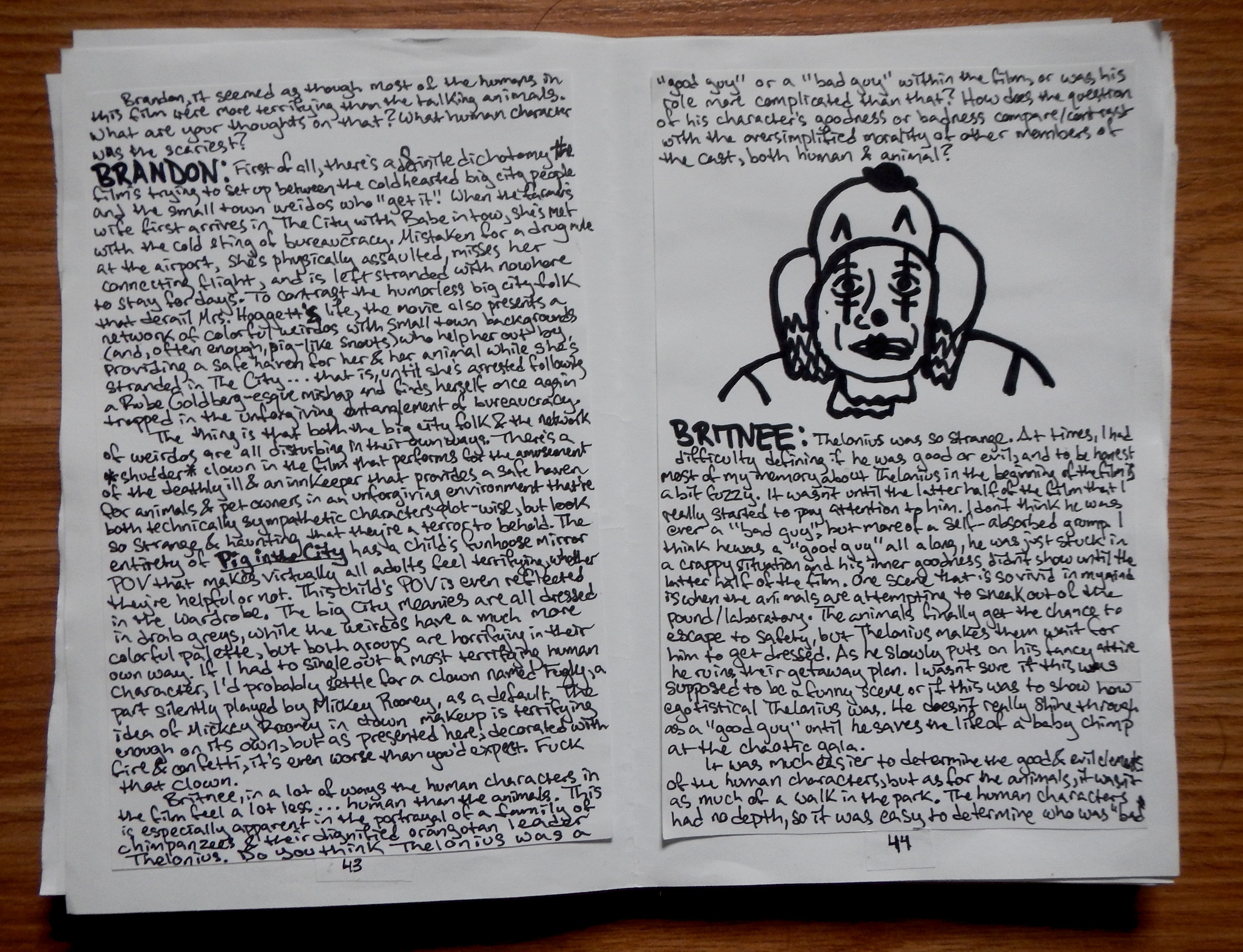
Britnee, how do the corny acting & unclear character motivations play into the film’s nonstop assault of spooky ideas for you? Are they a distraction or do they add to the film’s strange, off-putting appeal?

Britnee: First of all, when I found out that The Box was going to be the September Movie of the Month selection, I got it confused with the 2015 film The Gift. Jason Bateman graced the cover of The Gift, so I kept waiting for him to make an appearance in The Box, which, of course, he never did. It turns out that movies about mysterious boxes are more popular than I thought.

The insanity that is The Box should come with a warning label. Those with severely high blood pressure or epilepsy should never watch this movie because they will end up in the emergency room before the film is over. The constant twists and turns are just too much to handle, but I loved them all. The acting of just about every character, especially Cameron Diaz and James Marsden, really contributes to the movie’s wacky charm. Diaz’s performance as one of the film’s main characters, Norma Lewis, really sticks out for me. It’s really as bad as it gets, but her horrible accent, unconvincing attitude, and missing toes all come together to make The Box a hell of a good time. As Brandon mentioned previously, it’s difficult to give a damn about the fate of any of the film’s characters because viewers aren’t given the opportunity to really connect with them, and that’s not necessarily a bad thing. I enjoyed not worrying about whether or not Norma and Arthur would survive the terrors brought on by the box because I was able to focus my attention on the all the confusing supernatural happenings.

There were many times in the film where I thought the movie was concluding, such as when Arthur goes through his chosen portal in the library and ends up in his bedroom with Norma, but then the film continues and the story develops even more. Alli, did you find the constant twists in the film to be irritating or did you enjoy them? Was there any point in the film where you thought it should’ve ended?

Alli: It’s hard to say when a movie this in-over-its-head in a bizarre concept should have ended. I think maybe somewhere on the writer’s desk someone should have come in and asked about some plot holes and maybe talked Kelly out of some of them. But as you guys are saying, they’re all a part of this movie’s goofy charm. After a certain point of being jerked around I kind of gave up and just let it take me along for this strange little ride and part of me even felt like it could have kept going, honestly. There were so many more questions than answers. Not that I think I could have stood Diaz’s accent for another hour, but I really wanted to know more about these employers of Mr. Steward. I want to know more about this film’s philosophy as well.

A thing this movie brushed over and possibly unintentionally made a argument about was free will. In the end, did the new family being offered the box have a choice at all? He clearly knew that everyone he offered these options to were going to choose the easy way out, if you can call it that, otherwise some sort of transmitter would actually have to be in the box for him to know. I know there’s an argument to be made for supernatural surveillance, but it seems like he and his employers knew all along what human nature would lead these people to do. I was a little disappointed that there wasn’t a heavy-handed monologue about that.

But then again, this is a movie that only left me half satisfied. We’re vaguely introduced to aliens but we don’t learn much more about them other than they want to prove humans are unworthy. We’re given some suspense but nothing too bad, except for like Brandon said the occasional It Follows moment of a stranger being outside the window. We’re given an ideal suburban family in an ideal suburban town that’s slightly claustrophobic but not quite. Everything seems to fall just barely short of hitting whatever target he was aiming for. Boomer, is there anything you really wish had been expanded or clarified that wasn’t?

Boomer: Honestly, I had the opposite feeling. Although I definitely like the spookiness of the Steward hive mind followers and the general impenetrability of concept that is a hallmark of Richard Kelly’s work (like Brandon, Donnie Darko served as a kind of Baby’s First Jacob’s Ladder for me as well), there’s a certain simplicity to the existential dread of the original Richard Matheson short story that is absent here. In the short “Button, Button,” the story ends with the enigmatic Steward retrieving the button in a box from the protagonists, departing as he “reassures” the couple that they should not worry, as the next recipients of the box won’t be anyone that they know, with all the implications thereof. Does that mean that there is a direct link between the immediate recipients of the button and the previous button-pushers, or just a chilling reminder that their karmic comeuppance will come someday, without warning? It’s classic Matheson that way, and I adore the story (it’s adaptation in the eighties Twilight Zone revival has a different, more obvious ending, and I, like Matheson, don’t care for it; he went so far as to have the story idea credited to a pseudonym). There’s a quietness and intrigue to the original story that this film, which uses the original story less as a template and more of a jumping-off point for spiraling but utterly watchable madness, doesn’t possess.

That having been said, there were some things that I would have been interested to see more of. I was particularly intrigued by the use of realistic grounding in the life of the family before the box arrives, like the discussion of Norma’s foot injury and Arthur’s spacey aspirations. While it’s true that much of what makes the film captivating is the unexpected paths that it takes, I would have preferred to see the story retain that level of grounding throughout rather than grow exponentially more wild. It’s as if there are two films here, and I would have liked to see a Kelly flick that had the alien test plot and a second, different film that followed the mundane lives of the Lewises after the button is pushed, as they navigate the quandary of the immoral actions taken as a result of Steward’s visit. As it is within the film, everything that follows Norma’s impulsive push that affects them is an external force, not an exploration of the fallout of committing such an act, which would have been a more interesting film to me.

As far as other elements that I would have liked to see more of, Deborah Rush is criminally underutilized here as she was in her previous MotM appearance in Big Business, and every time I see her in any role I wish she had more to do. I also would have liked to know more about what Steward was like before he became the host for the alien entity that is sitting in judgment of humanity; was he chosen because of a similarity between his pre-possession personality and the ideas of the Hive? Was he the opposite? It could have been interesting to see the dichotomy between his former self and his new one, especially as a mirror of the change in personality between some of the button-pushers we saw pre- and post-button mashing; an objective correlative metaphor is never a bad idea, and could have illustrated the difference in the self that occur as a result of chance (Steward) versus those that follow deliberate action (the Lewises). What do you think, Brandon? You mentioned that the campiness and spectacle of the movie are its big draws for you; would you feel that you would enjoy it more, or at least as much, if it had been more of a character piece than a moderately coherent, not-quite-on-target, effects-heavy scifi fable?

Brandon: I’m a little amused by that question because I assume Kelly believes he was delivering a character piece, or at least his version of it. I don’t think stripping the film of its excess of The Day the Earth Stood Still-modeled sci-fi ideas on testing humanity’s worthiness through complex alien puzzles would necessarily improve its narrative in terms of entertainment value, but I do agree that the film starts weaving some interesting threads about the Lewises that might’ve lead to some truly powerful character-based moments had they been given enough room to breathe & develop. For instance, the family’s early financial troubles, born solely of their apparent disinterest in living within their means, is played merely as motivation for their activation of the button unit, but could’ve instead lead to genuine dramatic tension were Kelly interested in building it. He also suggests an interesting spousal dynamic when the couple negotiates the button unit’s terms & conditions and Marsden’s scientist-dolt husband asks, “What is it to really know someone? Do you know me?” I wouldn’t trade those lines of inquiry for the ludicrous sci-fi spectacle we’re gifted with instead, but I do think they would’ve been better received if they had been more fully developed, ideally without sacrificing the sci-fi backdrop that contrasts them.

The problem with fitting the character study elements and Kelly’s immense idea flood into a single vehicle might be a question of form. In some ways a two hour feature film isn’t nearly expansive enough to encompass everything The Box wants to contain. The film takes the idiom “biting off more than you can chew” as a direct challenge & a mission statement, an approach that doesn’t always sit well with a movie-going audience. I feel like the property’s ideal self would be as a prestige television series on AMC or HBO, a medium that would fix several immediate problems like allowing more room for grounded character study, giving each out-there sci-fi idea time to breathe instead of running through them all at once, forgiving a little bit of the television-grade acting choices made by Diaz & Marsden, etc. I’m imagining it like a Twin Peaks or a Welcome to Nightvale, where monster-of-the-week alien threats (or in this case, alien puzzles) would all inexplicably occur in a single town & follow a small family unit as they struggle to make sense of the phenomenon. The first episode of The Box: The Television Series would be the same “Button, Button” remake the movie uses for a launching point, except that it would end with the couple pushing the button in a cliffhanger, waiting for the story to be picked up at the beginning of episode 2. As I’ve said, though, a large part of the fun of The Box for me is in being overwhelmed by its wealth of ideas in such a short amount of time & I think there’s a value to experiencing all of that otherworldly absurdity in a tightly paced, cinematic punch that is somewhat lost when you’re, to risk referencing something so of-the-moment twice in one conversation, binge-watching all 8 hours of Stranger Things over the course of a week.

Speaking of the sprawl of sci-fi ideas included here, one of my favorite concepts in The Box didn’t come from Richard Kelly himself, but is instead a quote from sci-fi writer Arthur C. Clarke, conveniently read aloud for the viewers following along at home: “Any sufficiently advanced technology is indistinguishable from magic.” Unable to resist piling even more literary quotes onto the film’s DNA, Kelly also makes several allusions to Jean-Paul Satre’s play “No Exit,” both mining its title for easy existential dread & expanding its infamous line, “Hell is other people” to “Hell is other people seeing you for who you truly are,” in an offhand stab at literary analysis. Kelly’s pulled off this trick before in Donnie Darko as well, which includes an extensive classroom analysis of the Graham Greene short story “The Destructors.” Britnee, do you think these two literary references, Clarke & Satre, as cool as they are, provide any legitimate sort of insight into what kind of story Kelly was trying to tell in The Box or were they just easy modes of injecting profundity into what’s at heart a very pulpy sci-fi premise? Was their inclusion earned in the film’s content or did it come across as a little try-hard?

Britnee: Kelly’s use of the Clarke and Satre references you mentioned, Brandon, caused me to give a big eye-roll as I was thinking back to when they occurred in the movie. It’s difficult for me to take anything in this film seriously, so I would definitely have to say that the presence of these literary references is a little ridiculous. Obviously, Kelly didn’t throw them into the film to add to the campiness, but ultimately, that’s exactly what happened. I get what he was attempting to accomplish, but this movie was just too silly for anything profound to exist within it. Then again, my knowledge of anything by Clarke and Satre doesn’t go beyond Brandon’s previous statement, so maybe I’m the crazy one and Kelly’s got the right idea.

I feel like I’m being a little harsh on The Box. There were a few moments where I caught myself thinking about monumental life choices I’ve made and what motivated me in my decisions. The Lewis family painted a picture of how ugly being selfish and greedy really is, which is why I didn’t have much sympathy for them. The fact that they decided to take the life away from another human being so they could keep up with their suburban lifestyle made me sick to my stomach. Alli, do you think the film’s “protagonists” would have been more likeable if they were worse off (e.g. Their kid was dying, and they needed money for a lifesaving transplant)?

Alli: You know, I actually do think they would be more likeable if they were in more dire circumstances, but I think making them shallow suburbanites is either some sort of misguided attempt in a post-2008 financial crisis world to say, “This is you!” to the audience or to do the high and mighty, “Yes, you as the audience gets it. Look at the normies struggling with their mixed up priorities.” And if it was the second I’m not sure if they were ever supposed to be likeable at all and it’s just about the schadenfreude. Given the smug literary references and all of Donnie Darko, pretty much I’m leaning towards that interpretation, but it seems like there’s a lot of ways to read this movie.

Even though I never liked them and never sympathized as the movie progressed, I managed to like them even less as it went on, until finally it reached a point where I actually despised them. That point was at the end when they have to choose between having a deaf and blind son or Arthur shooting Norma. I hope I’m not spoiling too much by saying this, but what the hell? The idea of a disabled son being worse than a dead wife is really upsetting to me, especially when you have a million dollars and can afford to find ways to make your life more accessible. Not only is it a cheapness of life thing but just some casual ableism thrown in. And I just shudder to think that someone watching this somewhere probably thought that that was a reasonable choice to make.

Boomer, was there any point more “upsetting” (I’m not quite sure that’s the word I’m looking for) than others to you or did nothing really stand out to all?

Boomer: The most upsetting thing to me was seeing poor little Britta passing through the long hotel hallway while being met with the stares of various Steward acolytes. I know that a lot of people find hotels to be inherently creepy automatically (I’m not one of them) and so they probably found this even more unsettling than I did, but there was something about her apparent innocence and the way that she was bandied about by forces outside of her control. I don’t recall that we ever really get much of an explanation as to who she is or what she was doing; was she, like the man from the previous box cycle from whom Arthur learns about the nature of Steward, an escapee from the “plan” who was trying to make sense of her upturned world? Was she merely an unwilling accomplice in the larger goals of the mysterious entities? It is perhaps my fondness for Gillian Jacobs alone that led me to be so thrown off by this sequence, but it was generally disturbing.

I disagree with your reading of the final scene, however. Not that there are no ableist connotations in the scene (that interpretation is certainly valid), but I don’t feel that Kelly’s intent was to make it seem that having a blind/deaf child was worse than a dead wife/mother, but was more of a demonstration of Steward’s willingness to give Norma a second chance to prove that she could make the “right” decision, since it was her impulsive pushing of the button (despite Arthur’s hesitation and apparent ultimate refusal) that doomed the family in the first place. In response to your question, what was perhaps most disturbing was the fact that Steward and his overseers were testing “free will” in a way that influenced the participants; in fact, given that none of us can come to an agreement as to whether there is free will in this situation (given the way that deaths of previous users of the box rely upon the next user making the wrong decision), it’s unclear what, if anything, could be gleaned from these experiments.

Although I hesitate to sympathize with the Lewises because of their vapid engagement in consumerism (it’s important to note that the original story did, in fact, feature a family in a much worse economic situation than the Lewises), they were living within their means until Steward manipulated events in their life, like causing Arthur to lose his candidacy for promotion and taking away the tuition reduction plan that the family relied upon in order to send their son to the best possible school In a way, the film could be seen as a modern(ish) retelling of the story of Job, substituting mild setbacks for utter familial destruction and replacing faith in God with the willingness to perform acts which enact the greatest good for the largest number of people. Viewed through this lens, Norma and Arthur have their faith tested and Norma fails, but is given the opportunity to correct this wrong through self-sacrifice. I don’t necessarily think that this is the reasonable choice, but I feel like this was more likely to be Kelly’s intent. Regardless, just as with Job, none of the characters that we see would be in the situations in which they find themselves without divine (or unholy) intervention. Maybe this means that The Box is really an exploration of the philosophical conceit that if (a) the divine is all knowing and pre-ordains all actions and (b) humans are thus unable to exercise free will despite the appearance that they can, then (c) punishing mankind for acting in accordance with preordination is unreasonable and perhaps evil. Probably not, though.

EPSON MFP image

Lagniappe

Britnee: While The Box left me with loads of unanswered questions, what I want to know more than anything else is the current whereabouts of the prosthetic silicon foot that Arthur made for Norma (using materials from his workplace!). Did Diaz take it home as a souvenir from one of her most desperate roles? Does Kelly keep it in a curio cabinet in his family room?

Alli: Coming back to the disabilities/deformities thing. I just really think it’s super messed up that someone like Norma, who lives with a limp has some sort of hierarchy of disabilities. Like, Mr. Sterling’s face makes her feel better about herself instead of her being able to identify with him. I know she’s worried about the teasing and ridicule when it comes to her son, but it’s still terrible.

Brandon: There’s so much to cover in The Box that I feel like I could never touch on all of it even if this conversation went on for two more rounds. There’s the curious case of its Arcade Fire-provided score that never reached physical media release, the weirdly wonderful feeling of seeing a babyfaced Gillian Jacobs in an early dramatic role, the peculiarly detailed prop of that Human Resource Exploitation Manual Arlington Steward supplies to his employees, and a whole lot more I could never get to with all the time in the world. Instead of trying to gather all these details like so many Pokémon, I’d just like to follow up on a couple things Alli & Boomer mentioned that interested me.

I totally agree with their assessment that the film’s musings on free will are muddled at best. This is never more apparent to me than at the film’s climax when two couples are given an ultimatum by Steward and they make their decisions simultaneously, one directly affecting the other. Whose free will is being exercised there? It’s a question (among many) that the movie is far from interested in answering. A heavy handed Steward monologue on the subject would’ve been nice. However, I do want to buck Alli’s assertion that not enough suspense is earned through interactions with the It Follows “employees”. They’re creepy as all hell and, unlike most of the film, tastefully employed in small doses. The three big moments I’m thinking of are the aforementioned zombified man in the kitchen window; the babysitter’s long, troubling walk down a motel hallway; and that incredible sequence in the library where the employees threaten to form into an angry mob. I know I’ve poked fun at how ludicrous The Box can be from minute to minute, but I do believe the suspense it generates is genuine and a lot of it comes from those creepy, dead-eyed employees of Steward’s.

Boomer: When I was working at the Urban Outfitters in the French Quarter in grad school, James Marsden came in to shop (I think he was working on the remake of Straw Dogs at the time). I rang him up and I cannot tell a lie: he really is that pretty in real life. I’m not going to say that I got lost in his eyes or anything, but I’m also not going to pretend that I didn’t. The most beautiful thing I’ve ever seen in my life was the gradation of colors in the rings of Saturn through a refraction telescope at the top of the observatory in college; the viewer was the size of a dinner plate, and from ringtip to ringtip, the rings were six inches across, with nothing between me and this distant planet but glass and space. It was humbling, awe-inspiring, and absolutely stunning. The second most beautiful thing I’ve ever seen was James Marsden buying tank tops. Take from that what you will.

Upcoming Movies of the Month:
October: Britnee presents Funhouse (1981)
November: Boomer presents  The Paperhouse (1988)
December: Alli presents Last Night (1999)
January: The Top Films of 2016

-The Swampflix Crew
Louis Malle’s Unsettling Takes on Pubescent Femininity in Black Moon (1975) & Pretty Baby (1978)

EPSON MFP image

One of the most discomforting aspects of August’s Movie of the Month, Louis Malle’s art house fantasy piece Black Moon, is its depiction of a young woman on the verge of adulthood. The film has a way of patronizing & infantilizing its seemingly teenage protagonist, a dynamic Malle likely picked up from Lewis Carroll’s Alice in Wonderland along with that source material’s down-the-rabbit-hole story structure. It’s not uncommon for Malle to face controversy for the sex politics of his films, something that even cropped up here when Alli questioned the intent behind Black Moon’s literal war of the sexes and Boomer expressed discomfort with the film’s panty-dropping gag in our original Swampchat discussion. Though, if Black Moon‘s depiction of a young girl’s journey into womanhood is uncomfortable, then Malle’s follow-up film Pretty Baby was an unapologetic act of aggression. If the director’s coldly detached, yet oddly lighthearted depiction of a young woman being indoctrinated into fantasy realm domesticity & interspecies breastfeeding is discomforting, then his application of that exact same tone to a preteen girl’s life as a sex worker in a turn of the century New Orleans brothel is an outright horror show. At the very least it was a bold choice for the French filmmaker’s American debut. At its worse it was a deliberate, pedal to the floor provocation.

That’s not to say that Pretty Baby is empty or spiritually corrupt filmmaking. If you remove the underage aspect from its protagonist sex worker’s character traits, what you’d get really wouldn’t be that far off from the film’s cutesy Oscar bait equivalent Rambling Rose. Pretty Baby faced accusations of being child pornography and was banned in a couple regions of North America, mostly for its nude depictions of a far too young Brooke Shields, but it’s a much tamer work than what those accusations suggest. Set during the final days of New Orleans’s storied Storyville district, where prostitution was once legal, Pretty Baby is for the most part a tame costume drama staged at a very specific time in this city’s history. Although its more sensationalist content is what immediately comes to mind when the film is mentioned, it’s for the most part a laidback, melancholy hangout in the heat & humidity of New Orleans courtyards. Just like how Black Moon is more interested in carving out a very particular fantasy realm to dwell in than following the more action-packed aspects of its wartime plot, Pretty Baby is a quiet, languid, depressive work with an oddly detached, carefree worldview despite the stakes of its central conflict. You could argue that it’s that exact judgement-free take on the material that makes the film so uncomfortable in the first place, but it’s still difficult to claim that its main goal was to shock & disgust. It more obviously just wants to hang around in its own earth tone drunkenness & historical accuracy.

Not yet a teenager, Brooke Shields stars as young sex worker in a very busy brothel. Her mother, played by (the always beautiful & forever talented) Susan Sarandon, is a cruelly dismissive employee of the same madame and pushes to have her daughter’s virginity auctioned off as quickly as possible, so that the young girl can become self-sufficient. After a particularly painful experience with a john and her mother taking off with a new husband/former client, the child runs away from “home” and into the arms of a fine art photographer named Bellocq. Apparently modeled after a real-life photographer who documented Storyville sex workers, Bellocq forms a strange domesticity with his new, unexpected ward and marries her, despite her horrifically young age. Although they’re husband & wife, Bellocq & his child bride have a clear father-daughter dynamic that would be oddly sweet if it weren’t for all the icky lovemaking (something that would easily be defined as rape by today’s standards). Malle maintains an emotional distance in the way he covers the material here, the same detached vibe he brought to Black Moon’s fantasy dreamscape. It can be more than a little alarming considering the inflammatory nature of the material he’s working with, (unlike Black Moon, Pretty Baby could in no way be mistaken for a fairy tale), but it also feels true to the long dead era he’s trying to evoke, unlike the softened melodrama of works like Rambling Rose.

Even beyond their judgement-free, yet male gaze tinted takes on pubescent femininity and their shared, dreamlike sense of languid pacing, Black Moon & Pretty Baby occupy a surprising amount of common thematic territory. They’re both stories about young women (one very young) trying to navigate worlds where they don’t belong. They both feature naked children running wild & free (although in a far less sexualized context in one case) and a strange fascination with breastfeeding (sometimes with a human baby, sometimes with a talking unicorn). Pretty Baby’s voodoo priestess recalls Black Moon’s mode of immersion in Natural Magic.  Black Moon’s varying examples of what the womanhood its protagonist is entering looks like are echoed in Pretty Baby’s performances from the always-welcome B-movie goddess Barbara Steele & and an elderly madame with a braying, John Waters cadence to her line delivery. Although the settings of these films are wildly different, it’s easy to see the specific touch Louis Malle brings to both pictures and how they work as a thematic pairing. The question of how that thematic throughline handles the hefty topic of pubescent femininity in either work is up for debate, however. And since Malle stubbornly remains detached in both pictures, that debate largely falls on the shoulders of his audience.

For more on August’s Movie of the Month, Louis Malle’s surrealist fantasy art piece Black Moon, check out our Swampchat discussion of the film, this comparison of its lame duck unicorn with the divine unicorns of Legend (1985), and last week’s look at how its surrealist take on Lewis Carroll’s Alice in Wonderland compares to the 1988 stop-motion animation classic Alice.

-Brandon Ledet

Black Moon (1975) was the Most Honest Surrealist Take on Lewis Carroll’s Alice . . . Until Alice (1988)

EPSON MFP image

We were having a hard time in our initial conversation about August’s Movie of the Month, the fantasy realm art piece Black Moon, in pinpointing an exact interpretation of the film’s basic plot or intent. It’s highly likely, of course, that director Louis Malle didn’t want his exact intent or a definitive plot to be discernible at all in the film. Black Moon feels very much committed to a certain mode of surrealism that points to the coldness & seemingly random cruelty of existence by being, you guessed it, cold & randomly cruel. The interpretation we more or less settled on as a crew was that Black Moon was best understood as a down-the-rabbit-hole story that aped the structure of Lewis Carroll’s Alice in Wonderland series as a means of capturing his young protagonist’s unsettling journey into womanhood. Whatever that journey means or what it even is largely falls under the umbrella of personal interpretation but the Wonderland influence was undeniable as an overarching aesthetic in its basic structure. Black Moon is by no means a strict adaptation of that source material, but it does wear the influence on it sleeve, as openly admitted by Malle himself in interviews. I’d also argue that the film was the best surrealist take on Wonderland’s cold, random cruelty depicted on film for well over a decade, capturing that aspect of Carroll’s work better than any of its many peers that were straightforward adaptations of the novel. That is, until it was upstaged by 1988’s stop-motion animation classic Alice.

Czech director Jan Švankmajer had been producing short films all the way back to the same art scene in his home country that produced 1967’s Daisies before making his feature film debut in Alice. To be honest, Alice’s structure & pacing reflect his short film past in a lot of ways, recalling modern filmmakers like Guy Maddin & Roy Andersson who are remarkably adept at constructing individual images & vignettes, but struggle a little when it comes to piecing those moments together to achieve a digestible feature length work. Alice is a stunning visual achievement, a tactile work of stop-motion animation that values the specificity of curio cabinet oddities, Joseph Cornell shadowboxes, and taxidermy animals over the clay figurines we’re used to seeing in titles like Coraline & Kubo. What makes Alice interesting as an adaptation of Lewis Carroll’s source material, however, is not in the visual achievement, but in a tone that matches the cold surrealism of Louis Malle’s Black Moon. As Švankmajer put it himself, he wanted to reinvent the interpretation of Alice in Wonderland in other adaptations that posed it as a fairy tale with a moral center and instead present it as a cold, amoral dream with no point to be made outside its own absurdism, a reading that captures the essence of Black Moon just as much as it hints at the power & intent of Carroll’s source material. Švankmajer explained, “While a fairy tale has got an educational aspect – it works with the moral of the lifted finger (good overcomes evil), dream, as an expression of our unconscious, uncompromisingly pursues the realization of our most secret wishes without considering rational and moral inhibitions, because it is driven by the principle of pleasure. My Alice is a realized dream.” Considered in that context, Black Moon also functions best as a dream & not as a fairy tale, despite what you’d expect based on its talking unicorn.

The difference between the dream structures of Alice & Black Moon, however, is that the latter often functions as a nightmare. Both films’ plots survive on the surreality of minute to minute obstinate confusion, but there’s a lighter tone to Alice that isn’t quite matched in Black Moon. Black Moon can be funny at times, but it often veers into uncomfortable imagery like hawk murder & interspecies breastfeeding, while Alice finds its individual vignettes in moments like a cute rat cooking a can of beans on its young protagonist’s head. Most of the film’s creepiness lies in its old world imagery, a curio cabinet specificity that recalls a similar immersion in Nature, strange animals, and odd domesticity to what we see in Black Moon’s languid sleepwalk through an earth tone dreamscape, but with noticeably less malice. Black Moon pulled a lot of its surrealist influence from Carroll’s creation in Alice in Wonderland, an uncaring, dreamlike tone that recalls the structure of a fairy tale, but without the lesson to be learned. 1988’s Alice picks up that torch & runs with it, applying that same amoral interpretation of Carroll’s intent to a straightforward adaptation of his novel. Together they have a lot to say about the potency of dream logic, the philosophical implications of surrealism, and the meaninglessness of meaning. I highly recommend them as a double feature next time you’re feeling particularly existential & loopy.

For more on August’s Movie of the Month, Louis Malle’s surrealist fantasy art piece Black Moon, check out our Swampchat discussion of the film & last week’s comparison of its lame duck unicorn with the divine unicorns of Legend (1985).

-Brandon Ledet

Cuddles Kovinsky as the Ultimate Edith Massey Performance

EPSON MFP image

The almighty Divine is John Waters’s most infamous collaborator (even if that means her name is unfortunately synonymous with eating dog shit in a broad cultural context). Mary Vivian Pierce is the only Dreamlander (as Waters’s recurring cast is often known) to appear in every one of the director’s features. Mink Stole is, perhaps, the coolest kid in the room, the one with the most adaptable talent & willingness to commit. There’s an argument to be made, however, that Baltimore personality Edith Massey was Waters’s most readily fascinating featured player, his most consistently striking & bizarre screen presence. There’s no one else in all of cinema quite like Massey. The only actor who even comes close is Waters’s idol Russ Meyer’s frequent collaborator Princess Livingston (not surprisingly, the two women were discovered while working as a bartender & a motel manager, not as actors), but even Livingston’s bizarre charisma couldn’t quite match the weird energy & depth of content Massey brought to the screen in her decade-long stint as a Dreamlander. Massey’s odd, snaggle-toothed visage helped define who John Waters is as a filmmaker with a striking, idiosyncratic specificity that makes him my favorite living artist, if not person.

A lot of the shock value humor of Waters’s early, transgressive films often outshines the more even-tempered work he delivered later on in his “mainstream” titles like Hairspray, Cry-Baby, and (the utterly perfect) Serial Mom. Waters is often misunderstood in the context of shock cinema due to his earliest provocations, most notably Pink Flamingos, and the weirder trash-art surreality of his work is sometimes overlooked because of his youthful pranksterism. Massey was with Waters from day one during these formative provocations, putting in the bulk of her work as an actor in the director’s so-called “Trash Trilogy.” Easily, Massey’s most iconic role is her turn as Divine’s mother, The Egg Lady, in the aforementioned Pink Flamingos. The Egg Lady was an underwear-clad humanoid who demanded a constant supply of eggs at all times of the day: a strange, unsettling image that afforded Massey a lifetime of celebrity & provided the name of her short-lived punk band Edie & the Eggs. Massey’s screentime & command of Waters’s strange brand of humor grew in her two subsequent roles as villains in Desperate Living & Female Trouble (two films that are far more attention-worthy than Pink Flamingos, as much as I adore that scrappy filth fest). Massey devours scenery in these two wicked roles, whether she’s coaching her beloved nephew on the lifestyle benefits of “turning queer” or sentencing an entire village to death before her royal firing squad. Much like Waters’s overall aesthetic, however, I’m not convinced that Massey’s work reached its pinnacle in the wild, punk days of the “Trash Trilogy”. Her work wouldn’t meet its peak absurdity until it was juxtaposed against the much more mundane avenues of suburban America (and because we’re talking Waters here, I guess that specifically means suburban Baltimore).

The film that bridged these two halves of John Waters’s career, the trashy & the suburban-surreal, was his 1981 feature Polyester. Presenting Douglas Sirk by way of Russ Meyer, Polyester is a wonderfully strange slice of American pie, one molded & poisoned by melodramatic fits of adultery, alcoholism, teenage delinquency, and sexual perversion. Both halves of Waters’s career have endless merit in my eternally gushing eyes & it’s wonderful to watch the way Polyester can teeter totter on both sides of that divide without ever losing track of what makes either half special. Additionally, this is where I find Edith Massey’s most outrageous, knee-slappingly funny performance to be. Massey’s performance as Cuddles Kovinsky is her finest work as a Dreamlander, a true tour de force of delightfully terrible acting that somehow steals a film from a top-of-her-game Divine, which is no small feat. Watching Massey do her weird, off-putting thing in films like Pink Flamingos & Desperate Living is one thing, but her transgressive screen presence made total sense in the context of those films’ early punk depravity. In Polyester, she’s presented as a normal human being, an upstanding member of regular society, and it’s an outrageously ill-fitting role for a foul-mouthed, snaggle-toothed bartender with her braying style of line delivery to fill. Waters & Massey both knew exactly what they were doing when they airdropped Cuddles Kovinsky into an unsuspecting suburbia and it ended up being both a pivotal turning point in Waters’s trajectory as a filmmaker as well as the pinnacle of Massey’s work as a Dreamlander. Unfortunately, it would also prove to be their final collaboration due to Massey’s escalating health problems and inevitable death.

Cuddles Kovinsky is a wealthy heiress & former housekeeper of Divine’s much put-upon housewife archetype Francine Fishpaw. As Francine’s life spins out of control due to her teenage children’s hedonism & her husband’s flagrant adultery, Cuddles’s own path hits a rags to riches upswing. Cuddles lives the lavish fantasy of the nouveau riche, traveling around Baltimore in a limousine with a boy toy European driver behind the wheel, shopping for fashion’s high end designer finery (none of which looks at all natural or comfortable on her weird, little egg-shaped body), rubbing elbows with Baltimore’s country club elite, and just straight up murdering the French language with a never-ending recital of high society clichés & platitudes. Cuddles is the ever-optimistic ying to Francine’s depressive, alcoholic yang and Massey plays her with the exact right tone of complete obliviousness. When Francine passes out on the floor blind drunk her best friend Cuddles mews, “You’re so cute when you’re tipsy!” When Francine attempts to hang herself to end the pain, Cuddles exclaims, “We’re going on a picnic!” Polyester is mostly centered on Francine’s struggle to find happiness in a world where its existence seems unlikely at best, but Cuddles is perfectly happy throughout, concerned only with what she’s going to wear to her debutante ball at the country club. Divine & Massey’s performances compliment each other nicely, but it’s near impossible to take your eyes off Cuddles anytime she graces the screen. Even her over-the-top pantomime reactions to every syllable of someone else’s lines are attention-grabbing in a completely absurd, living cartoon kind of way. Of all of Massey’s wonderfully weird onscreen creations, Cuddles stands out as her most arrestingly unique & distinctly out of place.

I don’t mean to downplay the early works of either Waters or Massey here. The “Trash Trilogy” is pure cinematic chaos, a hedonistic whirlwind of freaks & weirdos I don’t know where I’d be without. I love each of those films & Massey’s performances in them dearly. With Polyester, however, the degenerate duo (with the help of Divine & other Dreamlanders, of course) struck upon something much more subversive. Watching Massey don leather dominatrix gear or wax poetic about the virtues of cocksuckers fit in very closely with what you’d expect from her image & her gaudy barroom personality. There’s something much stranger & more unexpected going on with Cuddles Kovinsky, a character that allows Massey to wear French schoolgirl & horse riding outfits and bray lines like, “There must be a God. Everything is so beautiful!” It’s all too easy to picture Massey fronting a punk band or tending bar, but gleefully praising God & enjoying a picnic in the woods? That’s some weirdly subversive shit. Waters capitalized on that taking-the-circus-to-suburbia aesthetic more or less for the remainder of his career, but unfortunately Massey wasn’t able to come along for the ride. Polyester ended up being Waters’s final collaboration with the actor and after a role in the forgotten schlock title Mutants in Paradise, she died. At least we can say her career as a Dreamlander ended on top, though, as Cuddles Kovinsky brought some of her weirdest, most unexpected energy to the silver screen, helping reshape the trajectory The Pope of Trash’s career would take in the decades to follow. At least we’ll always have Cuddles

-Brandon Ledet