Grace Jones: Bloodlight & Bami (2018)

Both the concert movie and the musician’s hagiography are difficult to pull off with any cinematic finesse. With few exceptions like Peter Strickland’s concert footage of Bjork’s Biophilia project and the bizarre tale spun by The Devil & Daniel Johnson, the musician’s documentary is usually flatly crafted, relying on the audience’s interest in the subject to meet the filmmakers halfway. The recent Grace Jones documentary Bloodlight & Bami curiously splits its time between both troubled mediums, the concert movie and the musican’s hagiography, and opens itself up to both’s follies in the process. Its concert footage is no-frills, matter-of-fact documentation of recent Grace Jones performances in Dublin, exerting only a minimal amount of artistic energy into an occasional crane shot in-between its more static edits. Its interview footage, which comprises most of the runtime, is the exact kind of meandering, low-fi/low-effort hangout energy that can sink a musician’s profile in for-fans-only tedium. Somehow, though, the movie transcends these limitations in medium and offers something that feels like a rare, unearned blessing: Grace Jones. Jones saves Bloodlight & Bami from any potential tedium by simply being a living, breathing phenomenon. The movie requires massive patience, but her mere presence makes it frequently fascinating, if not essential viewing. We are extremely lucky to have access to Grace Jones at all, in any form, something Jones herself seems to know more than anyone else in the world.

A Jamaican-born pop singer who made huge waves in the 1970s & 80s through the androgynous sexuality of her high fashion imagery just as much as through the strange tones of her post-reggae music, Jones is a long-established legend. Early in Bloodlight & Bami, Jones is swarmed by intensely dedicated fans after a performance—strangers who greedily drink in her every word & physical motion as if she were a deity. That’s not the Grace Jones this movie is about. You can glimpse her attention-commanding power in the interspersed concert sequences, where she models various exquisite headpieces & black lingerie while singing to an appreciative crowd of hundreds, like a demonic Eartha Kitt. Most of the film, however, is an effort to humanize the pop culture icon, hanging out with her between gigs, often at home with family. The high production value of the concert footage is clashed with the serene calm of Jones’s return trips to Jamaica, framed in a cheap digital haze. The conversations captured in this off-stage downtime range from small talk with strangers & petty disputes with session musicians to deeply painful reminiscing of childhood abuse & long-dead romances. There’s no historical hagiography of Grace Jones’s top-of-the-pop-world heyday, only a document of her current art as a stage performer & her current relationships with an inner circle who knew her as a person, not an avant-garde deity. The movie is in no rush to impress you with the enormity of Jones’s achievements or legacy, relying instead on her natural charisma to hold your attention as the digicam footage gets distracted by images as inconsequential as a car mirror ornament or a flashing streetlight. It’s a gamble that takes for granted that audiences’ minds won’t wander off in its long moments of quiet, one that mostly pays off.

As entertaining as her music can be, Grace Jones is most distinctly impressive as a visual artist & a performer. It seems counterintuitive, then, to strip her of all her visual gloss in a documentary that often looks like it was filmed on a flip-phone. Jones is, to this day, still a phenomenal performer, even shown hula hooping in high heels while singing a vocal-intensive stage number, never missing a beat. Director Sophie Fiennes also has an early credit as an art department contributor for The Cook, The Thief, His Wife, and Her Lover, one of the most exquisitely staged films I can name, so it’s presumable her eye for visual craft is at least somewhat comparable to Jones’s. The aggressively low-fi, meandering aesthetic that guides most of Bloodlight & Bami must be understood as a deliberate artistic choice. Jones is stripped of the gorgeous lighting & costuming she wears like armor onstage (the headpieces are so extravagant that there’s a “hats by” credit included in the opening title cards) to demonstrate how naturally fascinating & culturally essential she remains without them. Even when she’s not making bawdy sex jokes about the mussels she’s eating for dinner or explaining to an ex-lover why all men should be penetrated (at least once), she naturally commands attention. There’s a fierce, no-bullshit way she carries herself that makes her come across like an undeniable force of Nature, even when she’s just waiting around in a recording studio for stubbornly lackadaisical musicians to arrive or lightly bickering with her mother. Even including the more immediately arresting concert footage, the most fascinating sequence of Bloodlight & Bami is a lengthy montage where Grace Jones applies her makeup in the hours leading up to a performance, oblivious to the world outside her mirror. She compels the eye.

Late in the film, Jones boasts that even without costumes or amplification or even lights, she would still be able to entertain her crowds alone, in the dark, with nothing enhancing the spectacle of her being. Bloodlight & Bami is proof of the veracity of that claim. If you want a document of Grace Jones the otherworldly icon, the 1982 concert film Grace Jones: A One Man Show is likely much more useful than the stripped down, low-fi hangout rhythms of Bloodlight & Bami. This movie is more proof that she does not need production spectacle to make her fascinating & idiosyncratic. Those qualities come to Grace Jones naturally and we should be grateful to be blessed with her existence in any form we can get it. Even when presented in the most plain, genre-burdened version of the musician’s documentary imaginable, one where she’s shown in as pedestrian of a light as possible, Grace Jones still feels like a divine gift we do not deserve.

-Brandon Ledet

Werner Herzog, Gates of Heaven (1978), and the Artistic Value of the Side Show Publicity Stunt

Werner Herzog’s entire public persona is a kind of performance art, the documentation of which has become increasingly crucial to his filmmaking projects in recent decades. A Werner Herzog “documentary,” no matter its subject, is just as much about the filmmaker’s own philosophical worldview as it is about the world outside his mind. This suits the audience just fine, since Herzog is what would classically be described as A Character, someone who’s naturally entertaining and whose mere presence is always a kind of performance. A succinct, early taste of this performance art can be found in the Les Blank short-doc Werner Herzog Eats His Shoe, which takes Herzog’s natural presence as a one-person side show as literally as possible. Staged as a promotion for Errol Morris’s debut feature Gates of Heaven (our current Movie of the Month), Blank & Herzog collaborate to document a blatant publicity stunt in which, as the title suggests, Herzog eats his own shoe in front of a live audience to draw attention to his friend’s work. With clips from Gates of Heaven interspersing with Blank’s Always for Pleasure–mode of documenting the labor of food preparation (if you can consider a leather shoe to be food), and Herzog’s signature pontification on the nature of art & humanity, Werner Herzog Eats His Shoe is an essential, one-of-a-kind collaboration between three of the most prestigious voices in documentary filmmaking. That’s an absurd thing to be able to say about what’s essentially a 20min infomercial for another, more substantial work.

Herzog opens this film complaining that television & talk shows are “killing” culture. He ends it confessing that filmmakers are also cheap illusionists & clowns, that his own chosen profession is embarrassing. Werner Herzog Eats His Shoe is self-aware of its participation in the death of culture. Just as its title is a cheap provocation, the event it documents is advertised in circus-style side show posters promising the shoe-eating stunt to a potential live audience. Herzog eating his own shoe is a stupid, pointless act designed to grab public attention for better art he believed deserved it. Supposedly, Herzog first jokingly bet that Errol Morris would never have the courage to complete a feature length documentary on a subject as inconsequential as a pet cemetery business. The story goes that he said if Gates of Heaven were ever completed & screened for an audience, he would eat his own shoe. Morris does not appear onscreen to confirm the terms of the bet in Les Blank’s short, nor is it confirmed whether the shoe Herzog eats is actually the one he was wearing when he made the bet, as he claims. The entire act is performance art born of flippant humor & male bravado, staged without apology as a publicity stunt to draw attention to Gates of Heaven, which had then yet to secure theatrical distribution. Les Blank shows an interest in the preparation of the shoe as it transforms into “food,” carefully documenting the hot sauce, duck fat, garlic, and vegetable stew used to soften & flavor it. Mostly, though, he allows Herzog to ramble on like a carnival barker throughout the stunt, pontificating as much nonsense as you’d likely encounter in a television broadcast or a talk show, yet framing it as art.

The idea that Gates of Heaven’s topic was too inconsequential for a documentary feels so foreign in a 2010s context. Some of my favorite documentaries in recent memory have been on topics as miniscule as erotic tickling, trash harvesting, and a single dead dog (as opposed to cemetery full of them). It’s also arguable that critic Roger Ebert later did much better by promoting Gates of Heaven in his own way, raising its profile by often citing it as one of the greatest films ever made. Herzog’s side show publicity stunt’s own value as a work of art is in making an even smaller film than the one he promoted with it. If Gates of Heaven’s topic was too absurdly thin to justify a documentary (something I doubt Herzog ever said or believed) then Werner Herzog Eats His Shoe is an even more extreme distillation of that same kind of art. This is an advertisement & an awkwardly staged performance art piece that somehow makes for compelling filmmaking thanks to Herzog’s natural charisma & gift for shit-talking. Like Gates of Heaven, it’s proof that you can make a worthy documentary on just about anything, even a frivolous bet that may or may not actually have even been real. In 2018, it likely would only have been presented to the world as a DVD extra. In 1980, it was art.

For more on June’s Movie of the Month, the landmark pet cemetery documentary Gates of Heaven, check out our Swampchat discussion of the film.

-Brandon Ledet

Get Excited! Swampflix is Tabling Zines at the ALA Annual Conference This Year

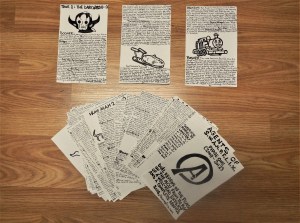
Attention, Swampflix readers in the New Orleans area! We will be exhibiting zines Friday, June 22 through Monday, June 25 at the American Library Association’s Annual Conference’s Zine Pavillion along with a bunch of other super cool comics & zines exhibitors. For this year’s conference we’ve printed a collection of our critical writings on the works of cult filmmaker John Waters.

This slideshow requires JavaScript.

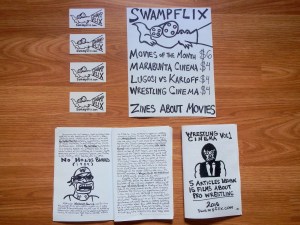
We will be also selling print versions of our “Marabunta Cinema“, “Lugosi Vs. Karloff“, “Agents of S.W.A.M.P.F.L.I.X.” and “Wrestling Cinema” pieces, as well as past years’ Movie of the Month conversations collected in their entirety. All zines feature dozens of new illustrations & hand-transcribed text from the site and the Movies of the Month zines are ~90 page whoppers featuring work from everyone who contributed to the site their respective years.

For more info on the conference, check out the ALA Zine Pavillion’s website at zinepavillion.tumblr.com & refer to the poster below.

-The Swampflix Crew

Star Wars Fans Don’t Love Star Wars, They Love to Complain

Although I’m not quite as enthusiastic of a fan of The Last Jedi at its most fervent defenders, I greatly respected that film’s willingness to burn the Star Wars franchise, one of the most historically lucrative intellectual properties around, to the ground and start anew. Rian Johnson’s entry into the Star Wars canon was a bomb meant to blow up age-old traditions from the inside. It states its intentions in blatant terms by literally burning sacred texts, portraying the franchise’s longest-established hero as a coward who wastes his days drinking grotesque alien goo, and spelling out its mission statement in dialogue like, “Let the past die. Kill it if you have to. It’s the only way to become what you’re meant to be.” I was personally more emotionally invested in the earnest, nostalgic mythmaking of The Force Awakens than anything Johnson’s film accomplished, but I do resect the way his flippant blasphemy attempted to smash the reset button on Star Wars at large, making it more palatable to younger fans without prior attachment to the series. It’s understandable why old school Star Wars fans might feel alienated or even offended by that blasphemy; maybe that reaction was even part of the point. What’s less understandable is why they were also furious with the modern revision JJ Abrams gave A New Hope in The Force Awakens, which was extremely cautious in how it updated series lore (and, in my opinion, was an improvement on the source material). What’s absolutely maddening is their disregard for the latest entry in the canon, Solo: A Star Wars Story, which returns the series back to the sci-fi radio serial swashbuckling of the original trilogy, which should be exactly what old school fans want. Longtime Star Wars devotees have no idea what would actually make them happy, except the mundane activity of complaining on the internet.

I had very little interest in seeing Solo: A Star Wars Story after comedic pranksters Phil Lord & Chris Miller were booted from the project in favor of personality-free workman director Ron Howard. Reports that execs were especially frustrated with Alden Ehrenreich’s talents as an actor were especially alarming, considering that Ehrenreich gave one of the most complexly sweet, funny performances in recent memory in Hail, Caesar! just two years ago. It turned out, of course, that paying attention to this production history in real time, knowing things like the fact that Ehrenreich was given an acting coach and that new ideas from the Lord/Miller crew where being shot down in favor of those from series dinosaur Lawrence Kasdan, was only detrimental to Solo’s entertainment potential. I felt like I had been following complaints about Solo: A Star Wars Story on the internet for a full year before the final product actually hit theaters, to the point that I was too exhausted to really care whether it was a good movie or not. It’s a shame, to, because Solo is a really fun sci-fi adventure movie, even as a compromised finished product. As Boomer points out in his review, the first half-hour or so of the film is a little iffy in its handling of the burdens of telling an origin story for a character we already know. However, once Han Solo meets up with Chewbacca in a prison pit, the movie is all cheesy swashbuckling & space heists and I had way more fun with it than I expected to. The average, longtime Star Wars fan did not have fun, if they saw the film at all. They even relished Solo’s box office underperformance as if it were punishment for Disney’s sins against the brand, despite Solo delivering the exact old school Star Wars tone they supposedly wanted to begin with. The most fun Star Was fans had after Solo’s release was complaining online about how corny the movie was in cataloguing how Han Solo got his name, his ship, his buddies and so on. If you have been complaining about how corny Solo is, let me let you in on an open secret: Star Wars has always been corny. You were once too young to notice it; now you’re too cynical to get over yourself enough to enjoy it.

Of course, it’s worth addressing that at least some aversion to the modern Star Wars canon is born of racist & misogynist politics, not matters of taste. Just this week actor Kelly Marie Tran­­ was chased off her Instagram account by Star Wars “loving” trolls who have been relentlessly bullying her for months because they did not appreciate the perceived progressivism of her character arc as Rose Tico in The Last Jedi. Similar complaints have ben lobbed at Rey, Finn, Vice Admiral Holdo, and pretty much anyone who doesn’t resemble the legion of white men who used to command the spotlight in older entries. It’s grotesque behavior that should be called out for its bigotry, but I really do think that regressive politics is just one motivator for longtime Star Wars Complainers. The more widespread problem among (to use a cursed word) the fandom is that complaint culture is Star Wars culture. The (admittedly, objectively bad) prequels from the early 2000s arrived at a time when complaining on the internet was a fresh, novel activity that kept longtime fans busy whining for over a decade before the Disney era sequels arrived. Its presumable that many Star Wars fans out there were socially raised complaining about The Phantom Menace & its ilk on the internet; it’s part of their DNA. The problem extends even further back than that, however. Young fans who first saw A New Hope in 1977 had enough time to grow cynical in the six years until The Return of the Jedi was released in 1983, which gave them plenty to complain about in the adorable teddy bear space alien Ewoks. That’s not even including the two made-for-TV Ewok movies and the cursed Star Wars Holiday Special that gave “fans“ complaint fodder between proper franchise entries. If, in all these instances, the loudest complainers speak for the hegemony at large, The Old School Star Wars Fandom only enjoys two out of the ten movies in the Star Wars canon: A New Hope & The Empire Strikes Back. Not only is that a dismal percentage for a supposed devotee, but the practice of complaining about everything under the Star Wars umbrella has become such an ingrained routine that when something like Solo actually does recapture the old school sci-fi swashbuckling charm of those two pictures, they’re entirely unsure how to enjoy it without complaining about it.

Usually, intensely dedicated fandoms complain because they have too specific of an idea of what an entry into their pop culture obsession of choice should be, especially in adaptations of pre-existing material, instead of enjoying it for what it is. Star Wars “Fans” certainly suffer that pitfall to an extent, forming concrete *shudder* “headcannons” of what should happen in Star Wars movies based on pre-existing video games, novels, fan theories, and (most disgustingly) regressive race & gender politics. In a roundabout way, though, the recent films are giving them exactly what they want: a reason to complain on the internet. If Solo’s old school swashbuckling cheese isn’t faithful enough to the Star Wars originals’ tone to satisfying these serial complainers, it’s doubtful anything ever will be. I’m only respecting The Last Jedi’s flippant blasphemy more the further I get away from it. Star Wars Complainers deserve to see their sacred texts burn to make room for new, potentially appreciative fans who haven’t spent the last few decades exhaustively complaining about the thing they supposedly love most. New fans at least stand a chance of actually finding joy in what’s projected on the movie screen, instead of finding joy in bitterly abusing its stars & creators on the computer screen.

-Brandon Ledet

Upgrade (2018)

Often, when I prattle on about my deep love of Evil Technology luddite genre films, I tend to cite recent examples like Unfriended, Nerve, and #horror as the defining works of the canon. There are plenty of pre-Internet Era luddite thrillers I love just as deeply, however; they just already have established cults that don’t need the awareness boost. Films like Hardware & Videodrome have, even if only through the passage of time, already earned passionate fanbases that haven’t caught up to more recent, less prestigious works like, say, the Snapchat filter horror film Truth or Dare. The recent Blumhouse sci-fi thriller Upgrade seems to be transcending that limitation, instantly earning a fiercely dedicated fanbase that isn’t typically afforded tech-obsessed genre films. It’s highly doubtful Upgrade will ever be as culturally iconic as a classic example like The Matrix or The Terminator, but it is bypassing the long road to genre fans’ respect suffered by just-as-deserving works like Unfriended. This might be partly due to its avoidance of exploring the evils of the Internet specifically, since that topic is often dismissed as being too frivolous or too silly to justify a feature length movie (as if a movie could ever be too silly). Instead, Upgrade largely exploits & satirizes luddite fears of self-driving, automated technology. It also, smartly, buries that satire under the surface of a comedic, hyperviolent, cheap-thrills action film that plays much dumber at face value that it actual is in its core cultural commentary. What I’m saying is that that Upgrade is the RoboCop of the 2010s (not to be confused with RoboCop [2014]), an instant genre-fan favorite because it channels the thrills & tone of an undeniable classic without directly copying it.

Paul Verhoeven’s sly satire of police privatization, Reagan Era fascism, and governmental control over personal autonomy is what makes RoboCop an enduring classic, not necessarily its over-the-top violence & (admittedly great) character design. Plot-wise, Upgrade only superficially resembles that time-tested work, touching on themes of police surveillance & the melding of the human body with creepy future-tech only in passing. Its own satirical target is the discomfort people feel with the increasing presence of self-automated technology of “smart” domestic appliances, self-driving cars, and predictive A.I. This is a violent action film about a self-driving body, where the only freedom of choice presented is how much permission is allowed a human body’s implanted operating system to act as its own discretion. And, of course, even that freedom is chipped away. It specifically focuses on the challenge automated technology presents to macho men who long for a now-extinct world that values their brute strength & ability to achieve labor-intensive tasks with their own hands. This very real, very macho anxiety of approaching obsoletion at the hands of future-tech is shown in gloriously over-the-top extreme, where a once-mighty macho man now needs a computer’s help to even move a single muscle. Upgrade has an entirely different plot & satirical target than RoboCop, but the way it buries that social commentary under a thick layer of popcorn movie Fun that can be just as easily read at face value is very much classic Verhoeven. It’s a subversive, playing-both-sides tone that’s exceedingly difficult to pull off without tipping your hand, which is what makes the movie so instantly recognizable as a modern genre classic.

In a near-future dystopia, a classic macho man mechanic bristles at his wife’s love of & reliance on self-automated tech, nostalgic for a world where his hands-on skills were more useful. This anxiety is only made more extreme when his motor skills are taken away from him completely in a senseless act of violence that destroys his family & leaves him physically crippled. A fey tech-bro offers him the promise of a better future through an advanced version of the automated technology that made him so uncomfortable to begin with, affording him a new chance at “self” sufficiency by implanting a “new & better brain” (a biotech computer chip) in his body. Mimicking the humorously calm, sinister tones of HAL 9000, this new operating system, STEM, reinvigorates the fallen mechanic to enact revenge on the brutes who ruined his life. The problem is that he’s not particularly skilled at revenge. Even with his motor functions fully restored, he struggles to best the goons he hunts into physical confrontations, as they’re more skilled in brutal violence. He then must overcome his macho pride and allow STEM to take over as the driver of his own body, closing his eyes as the computer inside him enacts horrific atrocities that make him want to puke. From there, Upgrade is a race to see if the revenge mission can be completed before police-drone surveillance blows its cover completely. Honestly, the resolution of that plot is not nearly as compelling as the over-the-top violence & satirical comedy that drives it. As gore-soaked & boneheaded as the film’s action can frequently be, the overall tone is so cartoonish (especially in the internal arguments with STEM) that Upgrade effectively plays like an action comedy. It’s an indulgence in grotesque slapstick that hints that maybe its hero’s macho paranoia shouldn’t be taken as seriously as you might expect in a more standard thriller. It’s easy to imagine a straight-faced Hollywood version of Upgrade that plays this same self-automation anxiety for genuine tension (presumably starring Liam Neeson) but it’s difficult to imagine that version being half as fun or worthwhile.

A longtime collaborator with modern horror mainstay James Wan, Upgrade director Leigh Whannell impressed me once before with his willingness to go over the top in the evil doll horror Dead Silence. Just like how that bonkers horror frivolity transcended its limited means by feeling like two dozen Charles Band scripts crammed into one monstrosity, Upgrade is endearing in the way it overloads itself with ideas. Neon lights, body-mounted cameras, and intense practical gore effects complicate the humor of the film’s action sequences. Throwaway potshots at VR gaming, police drones, and erudite tech bros threaten to distract from the film’s central satirical target: macho men’s fear of approaching obsoletion through automated tech. This is the exact overstuffed, go-for-broke dual indulgence in absurdity & craft that I love to see in my genre films. Its bifurcated nature as both a gory action comedy spectacle and a subversive act of cultural commentary is indicative of the film’s “Have your cake and eat it too” attitude at large, something that was much more common in high profile genre films back when Paul Verhoeven was making mainstream hits that played a lot dumber on the surface than they truly were. Upgrade isn’t one of my precious Evil Internet horror cheapies that needs to be championed for people to see its value (I may need to conserve that energy for the upcoming Unfriended 2: Dark Web anyway). Its approach to luddite genre filmmaking is more instantly recognizable as a crowd-pleaser, with all its cultural satire buried under the surface of a hyperviolent action comedy. It’s the modern RoboCop in that way, as opposed to the more common approach of remaking & reshaping the original film’s exact plot through updated tech. This is more of a spiritual descendant than a carbon copy, something that’s much more difficult to achieve.

-Brandon Ledet

Beast (2018)

It’s increasingly rare to walk into a modern theatrical release without any extratextual info setting expectations for what you’re about to see. Maybe it’s because I spend way too much time engaging with film criticism online (it is), but I’m usually familiar at least with a film’s critical consensus, if not its basic plot & production history, before I get to experience a movie for myself. Especially with bigger, heavily advertised blockbusters under the ever-expanding Disney umbrella, it feels as if I’m so familiar with a film’s history & early critical buzz by the time that I actually see it that there’s no possibility left for surprise or discovery, just an echo of what’s already been observed. Completely blind experiences are the stuff of local film festivals, not national theatrical releases. It was wonderful, then, to walk into the recent, darkly romantic drama Beast at a corporate multiplex with no idea what I was in for. Based on the film’s title, promotional poster, and inclusion in this year’s Overlook horror film fest I halfway expected a werewolf-type creature feature. Based on its promotional push on the MoviePass app and complete lack of critical buzz otherwise, I expected it to be a cheaply-produced frivolity. My vague expectations, based entirely on personal conjecture, were entirely wrong, something I wish could happen at the theater much more often.

Within an isolated community in the British Isles, a young, well-to-do suburban woman with an overprotective family falls in love with a wildling bad-boy who often finds himself on the wrong side of the law. Their shared physical, dangerously intense thirst for each other is apparent as soon as they first lock eyes, making it inevitable that she will have to leave the comfort of her country club lifestyle for a life of off-season rabbit hunting & menial physical labor. Part of this attraction is the pair’s capacity for & history of violence, something they sense in each other before it’s ever spoken aloud. She struggles to live down a childhood incident where she lashed out at a schoolyard bully with disproportionate vengeance. He suffers suspicion of being a serial murderer of young girls on the island, due to a similarly guarded secret from his own past. They’re mutually unsure whether to trust or fear each other after being drawn together though intense desire, as their volatile passions & separate histories with lethal violence can only mean their romance will end in bloodshed. Beast is partly a murder mystery concerning the missing young girls in this isolated community, but mostly a dark romance tale about two dangerous people who can’t help but be pulled into each other’s violent orbits. Issues of class, self-harm, domestic abuse, and never truly knowing who to trust run throughout, but the film mostly mines its intensity from the unavoidable pull of Natural impulses, whether violent, romantic, or otherwise.

What’s most immediately impressive here is the tone director Michael Pearce acheives in this debut feature. There’s a distinctly literary vibe to Beast, nearly bordering on a Gothic horror tradition, that almost makes its modern setting feel anachronistic. The intense, primal attraction at the film’s core (sold wonderfully by actors Jessie Buckley & Johnny Flynn and the seedy murder mystery that challenges that passion’s boundaries make the film feel like Wuthering Heights by way of Top of the Lake. It’s the same dark, traditionally femme side of romantic literary traditions I’ve recently fallen for in both Marrowbone & Never Let Me Go, a cinematic vibe I wish were afforded more respectful attention. Pearce makes this undercelebrated tone his own by clashing the Natural imagery of Beast’s violent instincts with the modernity of neon-lit nightclubs and the ominous soundscapes provided by Jim Williams (who also scored last year’s coming of age horror Raw). The distinct nightmare logic of its protagonist’s stress dreams also justifies the horror genre label implied by the film’s (barely existent) advertising, even if its overall tone is close to a modern take on Beauty & the Beast (except with two beasts). Beast is an overwhelming sensual terror as much as it is a twisty murder mystery with a romantic core, an incredible accomplishment for an unknown’s debut feature.

Of course, by reading this review you’re guaranteeing that you cannot replicate the going-in-blind experience I personally had with Beast. That’s the nature of engaging with this stuff on the internet. All I can do is report is that I was happy to have a relatively context-free experience with the picture, which I believe deserves to be seen as big & loud as possible based on the strength of its imagery & sound design. I want more people to experience that pleasure for themselves before it disappears from theaters entirely. The more I promote its merits the more I’m diminishing its chance for an expectation-free audience, though, which is why this entire mode of communication is so inherently imperfect & self-conflicted.

-Brandon Ledet

Roger Ebert Film School, Lesson 39: Dogfight (1991)

Roger Ebert Film School is a recurring feature in which Brandon attempts to watch & review all 200+ movies referenced in the print & film versions of Roger Ebert’s (auto)biography Life Itself.

Where Dogfight (1991) is referenced in Life Itself: On page 158 of the first edition hardback, Ebert explains his general taste in cinema. He writes, “I don’t care much for movies that get all serious about their love affairs, because I think the actors tend to take it too solemnly and end up silly. I like it better when love simply makes the characters very happy, as when […] Lili Taylor thinks River Phoenix really likes her in Dogfight.”

What Ebert had to say in his review(s): “To fully appreciate Dogfight, it helps to see it as the record of a particular time. In November 1963, John Kennedy was still president, ‘Vietnam’ was not yet a familiar word, hair was short, and the counterculture was still idealistic and tentative – more concerned with realization than revolution. And also, more in 1963 than today, male bonding sometimes consisted of the real or imaginary humiliation of women.” -from his 1991 review for the Chicago Sun-Times

Reductively speaking, it’s always a little counterintuitive to praise a work of art for leaving me heartbroken or otherwise emotionally devastated. Why should I celebrate the accomplishment of a stranger making me feel like shit? There’s always something admirable about witnessing a job done well, though, which is exactly what Lili Taylor’s performance in Dogfight conveys: a wondrous display of craft. As the craft in question is destroying my emotional well-being, you’d think the instinct would be to cower from Taylor’s tragically vulnerable presence in Dogfight, but her work was too magnificent not drink in with every available moment. It helps that Dogfight’s brand of emotional havoc wasn’t akin to the sadism of a provocateur like Lars von Trier. Director Nancy Savoca handles the film with an unmistakable kindness, something that’s apparent as soon as Taylor is introduced sweetly playing folk music on an acoustic guitar in her frumpy diner waitress drag. She isn’t afforded the authorial command of a protagonist’s POV, but rather her kindness & delicate wit is observed from an emotional remove, softening the sadism she encounters in an increasingly hostile, unforgiving world. Sacova & Taylor break hearts in Dogfight, but not with deliberate maliciousness. They do it by contrasting the sadism of modern life with a vulnerable sweetness & optimism for change, a kind of personal resolve that makes you weep for the cruelty of the world surrounding it, threatening to grind it to dust.

The majority of Dogfight is set over the course of a single night in 1963, the day before JFK’s assassination. In their final night of freedom before shipping off to a tour of duty in Vietnam, a rowdy group of boneheaded Marines stage a competition to see who can woo the ugliest date into attending a private party in an underwater-themed tiki bar. The rules of the competition require the men to be polite, never cluing the women in on the fact that they’re being paraded & mocked for their supposed ugliness, but the cruelty of the “dogfight” remains painfully clear throughout. When Lili Taylor’s lonely diner waitress is first charmed by the invitation to party with River Phoenix’s handsome Marine, her pure joy is devastatingly tragic. In an especially telling dress-up montage, her initial bliss devolves into self-deprecating scrutiny as she tries on several unsatisfying outfits to a Woodie Guthrie tune in her bedroom mirror. Her mood drops even lower when she discovers the true, hideous nature of the tiki party, naturally, but she chooses not to recoil from Phoenix’s thoughtless brute entirely. The two embark on an unlikely Before Sunrise-style Linklater romance (years before that much more frequently-praised work), talking through their attractions & differences as they casually roam the late-night streets of 1960s San Francisco. As she pokes at & challenges the baffling displays of toxic, unbridled masculinity barking from her military-man date, her openness to seeing good in the world only becomes more heartbreaking in its optimism & vulnerability. She’s a heartbreaking figure not because anything especially tragic happens to her, but by the way she contrasts with a world that doesn’t deserve her.

There’s a sensual pleasure to Dogfight’s historical tour of San Franciscan nightlife. From the wholesome arcades & second-hand clothing shots to the all-night tattoo parlors & adult theaters running nudie cuties like The Immoral Mr. Teas, the movie covers a wide portion of a city that would later transform dramatically after the Vietnam War inspired the protest culture of the hippies. I even found myself immensely pleased with the tiki bar setting of the titular dogfight; although the circumstances were obviously cruel, it’s easy to mistake that underwater, neon-lit Ugly Women Dance Party for a kind of real world Shangri-La. The meandering, conversational rhythms of the plot allow for small bit players like Elizabeth Daily (“Dottie” from Pee-Wee’s Big Adventure) & Brendan Fraser (in his first big screen role!) to drift through these environments with lasting, even if narratively inconsequential impact. What truly outweighs any of these momentary concerns, however, the philosophical clash between the hopelessly infatuated couple of a brutish, impulsive jarhead with terrifying anger issues & a desperately lonely diner waitress with a delicate passion for political idealism. Because the actor died three years later, still in his early 20s, you’d think that River Phoenix’s performance would the heartbreaker of that pairing, but it’s Lili Taylor’s divinely empathetic presence that overwhelms the film’s pathos. Dogfight is an expertly crafted heartbreaker, but not in any flamboyant or cloying way. Its emotional devastation is as soft & delicate as Lil Taylor quietly playing folk songs on her acoustic guitar, glumly staring out the window. It’s a sadness that corrodes & lingers instead of hammering you with its intent, to the point where you hardly notice how much it hurts.

Roger’s Rating: (3/4, 75%)

Brandon’s Rating (4.5/5, 90%)

Next Lesson: A Night at the Opera (1935)

-Brandon Ledet

Show Dogs (2018)

Show Dogs is the most bizarrely problematic talking animal film I’ve seen in theaters since the Kevin Spacey talking cat pic Nine Lives two summers ago. It’s so problematic, in fact, that its own studio has since censored scenes of the film deemed dangerous for children’s well-being, something I learned was going to happen a mere hour after I left the cinema. Dangerous, censored, transgressive art is far from the first descriptor that leaps to mind when you set expectations for a children’s movie starting Ludacris as a rapping Rottweiler, but the original unedited version of Show Dogs is now effectively a renegade, outlawed production officially deemed morally unfit for public consumption. Its uncensored form, which screened in theaters nationwide only for the span of a week, has been orphaned as a lost art scene moment, a cinematic event. Banishing its real-world evil back into the pits of Hell was a necessary action Global Road Entertainment should be proud of taking, as the message its deleted footage was sending kids was genuinely risking their safety. Its deletion is also beneficial to adults looking to the ill-advised production for a stray whiff of absurdism, raising the film’s value from sub-Air Bud atrocity to a The Day the Clown Cried type Holy Grail. Show Dogs is now one of the premier cinematic events of 2018, if not only for what footage it’s lost.

The rapping Rottweiler voiced by Ludacris is an undercover cop from a confusing universe where animals can talk, but humans don’t understand them. Their flapping CGI mouths form full sentences and they hold real jobs in offices and everything, but humans just hear barks & meows and so on. At one point a dog even complains, “Why can’t people understand what dogs say?” I don’t know; you tell us. It’s your confusing universe. Anyway, the toughest cop on the force is assigned to go undercover as a show dog (Hey, that’s the name of the show) in a heist plot to rescue a stolen, abused baby panda from underground dealers of rare & exotic animals. Keeping with the tropes of every buddy cop movie ever, he’s teamed up with another hard-ass hothead (Will Arnett in full TMNT mode), a human partner who must learn to collaborate with the canine cop & trust his instincts. The reluctant partners build a heist team meant to prepare the undercover pup for passing as a primped & groomed show dog, most notably including Natasha Lyonne as a pet stylist (with an incredible sense of style of her own; she looks fantastic here) & Stanley Tucci as a former Best in Show champion chihuahua with a snotty French sensibility. The team pull through to save the day, never discovered as frauds, and return the stolen baby panda back to its family (in captivity, weirdly). They even learn a few life lessons (and scar a few thousand children who caught the film early enough in its run) along the way.

The thread that has been removed from Show Dogs is one about grooming, but not the kind you might expect given the film’s setting. One of the cop-dog’s biggest hurdles in remaining undercover as a show dog is the Judge’s Inspection segment of the competition, in which dog show panelists must physically handle the dogs’ genitals. A street-tough police dog, Ludacris’s canine lead Max struggles to endure this indignity without instinctively turning around to bite the person invading his privacy. He’s coached out of this instinct by Arnett & Tucci, who train him to “go to his happy place,” mentally dissociating while his “private parts” are being handled without his consent. The climactic triumph of the film is a sequence in which he mentally transports to a psychedelic Eden where Arnett & Lyonne tell him he’s a good boy and reenact the climax of Dirty Dancing with him against a background of kaleidoscopic fireworks . . . all while his genitals are being inspected by a stranger. Can you see why this might be a dangerous life lesson to teach impressionable children? It wasn’t lost on the concerned parents of the mommy blogosphere. One (rightfully) alarmist piece written by Terina Maldonado of East Mesa Macaroni Kid gained enough traction to have Global Road Entertainment pull the footage from the film. The “happy place” tactic is explained in that piece to be a very real method that real-life child molesters use to “groom” their young victims into unquestioning compliance, a factoid I can’t believe I typed without vomiting. Maldonado’s account of Show Dogs is extremely (and understandably) fixated on this aspect of the film’s plot, making me assume it was going to be a consistent throughline throughout the film. Instead, it is (or was) contained to a single training montage & a climactic exchange with the dog show judge. At first, the limited amount of “private parts inspection” footage made me question just how potentially impactful the film’s grooming message really was. When the judge’s inspection is met with a dead-silent horror atmosphere where the soundtrack is overwhelmed by the dog’s pounding heartbeat, however, there’s nothing you can qualify the exchange as but a rape scene. In a kids’ movie. About talking animals. Evil, but also incredible that it ever screened at all.

The dark truth about Show Dogs is that even with the genital molestation/”happy place” narrative thread removed, the film is still deeply flawed on a moral level. At its heart, this is a film about toxic masculinity (You thought it was about adorable talking animals? Fool!), but it’s also a perpetuator of toxic masculinity. Max is “a street dog with a temper” that has to learn life lessons like “Maybe it’s not the worst idea to get some help,” which is a much more adorable sentiment to convey to kids than the one that’s been censored into oblivion. What’s uncomfortable about his gradual change of heart is the way this “alpha” dog (speaking of canine terms that have evil cultural contexts elsewhere) is characterized in opposition to the implied frivolity & vanity of the show dog world, something more femme than his masc sensibilities can handle without embarrassment. It’s weird enough that other dogs allude to the size of Max’s dick, that a lady-pigeon (voiced by Kate Micucci) fawns over his gruff masculinity in lines like “He can flip this bird any day,” and that he’s taught humility in a scene where Arnette & Lyonne wax his anus (again, without consent). What’s really fucked is where he & Arnett finally bond when the owner chooses to not force him to breed against his will with an over-the-top flamboyant pup voiced by RuPaul. Now, in-film, RuPaul’s character is gendered as a female dog, but the gag plays as bizarrely homophobic anyway, as his over-the-top vocal performance (which includes a number of Drag Race catchphrases) disgusts Max in a way that reads distinctly as gay panic humor. Like with all of Show Dog’s sins against good taste & morality, its homophobia & toxic masculinity are bizarrely complex to the point of absurdity.

There are plenty of standard, cheap camp thrills to be found in Show Dogs’s minor joys as a 2010s, theatrically released talking-dog movie, a leftover relic from another time. I could try to sell this movie to you as an absurdist joy for watching Ludacris’s talking cop-dog perform impossible acrobatic maneuvers through cheap CGI or deliver hacky one-liners like “This is ludicrous!” or “I’m about to take a bite out of crime.” The truth is, though, that minor pleasures like Shaq voicing a Zen sheepdog named Doggy Lama or CGI dogs dabbing are just background noise for the film’s main draw: its propensity for real-world evil. Even with its “private parts inspection” narrative rightly removed, Show Dogs still has a genuinely menacing, toxic undertone that’s impressive in both its audacity & its cluelessness. Although its absurdist joys are minor, it’s a movie that must be seen to be believed (especially its original, intact “grooming” cut), as it’s tough to fathom how this many people, from the executives at Global Road down to the on-set catering crew, allowed it to happen. It’s more of a man-made disaster than a feature film in that way and all we can do as audiences is rubberneck at the wreckage. Don’t allow children to gaze at this atrocity, however; what they see could be scarring.

-Brandon Ledet

Movie of the Month: Gates of Heaven (1978)

Every month one of us makes the rest of the crew watch a movie they’ve never seen before & we discuss it afterwards. This month Alli made Brandon , Boomer, and Britnee watch Gates of Heaven (1978).

Alli: Told in a series of interviews, Gates of Heaven is about pet cemeteries. Two feuding parties fight ideologically and legally for control over the final resting place of people’s beloved animals. Originally, Floyd McClure, a bleeding heart dog lover, is dead set on his belief that pets deserve better than to just be taken to a rendering facility after he was traumatized living near one in his childhood. He is not a business man. Out of the goodness of his heart, he buys a plot of land with the help of investors, and begins to assist in comforting people as they shepherd their pets onto the next life. Of course, not being a business man, and being totally dedicated to the idea of helping people in their grief, his cemetery goes out of business. All the animals get exhumed in a dramatic spectacle, and are moved to Bubbling Well Pet Memorial Park, upsetting many of the pet owners. Bubbling Well is run by the Harberts. The Harberts are intolerable rich people solely in the business for the money, with two down-on-their-luck, basically loser sons who flock back to the nest to get jobs at the cemetery.

The contrast between these two groups results in a documentary not just about pet death and grief, but about human nature. There are those who are earnestly out to help people, and those who don’t believe in the cause. There’s the genuine and the facade, and the poor grieving people stuck in between.

Gates of Heaven is the first documentary I truly fell in love with. It was the first time I watched people being interviewed on screen, and thought, “This is it. This is what I want to do.” I went to film school, probably because of it. It taught me that you don’t need a big budget, fancy equipment, or A-list stars to make a movie about anything. All you need is some chairs, a few eccentrics, and the time to let them talk. I obviously haven’t done much filmmaking or interviewing of eccentrics (YET!) but my strong love of the documentary format lives on.

Werner Herzog famously dared Errol Morris that he couldn’t make a whole documentary about this “unlikely” subject matter, and that if he did, Herzog would eat his shoe. He lost that bet, and the shoe eating is documented in a short shot by Les Blank. To me, since truth is very often stranger than fiction, this doesn’t seem like that wild of a subject to make a feature-length documentary about. I may be viewing this through the lens of the present where there’s a very great documentary, Helvetica, about the history of a font, but to me, the topic of death as a commercial industry in general is full of possibilities.  Britnee, were you impressed that there’s a whole documentary about the conflict between two pet cemeteries? Or do you, like me, believe in the power of film to bring out the weird in the mundane?

Britnee: Other than the spooky Stephen King film, there’s not much out there in the film world about pet cemeteries, at least not that I’m aware of. Gates of Heaven provides a unique view into the world of pet cemeteries while stirring up loads of thought-provoking questions (“Do dogs really go to heaven?,” “Why are there so many assholes in this world?”). It reminded me of Grey Gardens a bit. Not only were the two films from the same time period, but they both focus on eccentric folks disguised as white-bread Americans. Between the middle-aged woman showing off her chubby, black chihuahua’s talking skills and the twenty-something year old playing his guitar outside with the pet cemetery as a backdrop, there’s never a dull moment. It’s sort of like a Wes Anderson film except nothing is scripted. These are real people talking about real things. I love it all so much!  Needless to say, I was very impressed with Gates of Heaven, and it is definitely one of the best documentaries I have ever seen.

Gates of Heaven changed my perspective of what the average American pet owner was like in the late 1970s. When my family members and friends that grew up during the 1960s/1970s share those back-in-the-day stories, I never once heard of a pet being like a member of the family. Pets were never allowed inside of the house, much less given kisses and snuggles. They were referred to as “animals,” and they were so far below the level of the superior human being. When they died, they were never given a proper burial. The image of a dog on a chain in the backyard with a little wooden doghouse and a cat sleeping under the carport is how I imagined most pets during that era. It was heartwarming to see that there were people who looked to their pets as equals and loved them unconditionally.

Brandon, this documentary was made almost 40 years ago. What do you think today’s version of Gates of Heaven would be like?

Brandon: Besides the insight into historical attitudes towards pets, the most distinctly 1970s thing about this film is the way it avoids contextual narration or exposition. The story is linear and not exactly in medias res, but the most editorializing Morris imposes on the film is in the meticulous composition of individual shots (Britnee’s Wes Anderson comparison is dead-on) and whatever footage he chose to excise in editing. Otherwise, the story is told entirely by its subjects, who speak plainly in oral history-style interviews. This feels true to the matter-of-fact documentary style of the era, considering contemporary works like (to call back to already-cited documentarians) the Maysles Brothers’ Grey Gardens or Les Blank’s Always for Pleasure. If Gates of Heaven were made decades later by a different director, I believe the impulse would have been for the filmmaker to impose their own personality & worldview on the interviews in the name of being ”honest” about how their perspective shapes what’s supposedly documented reality. Think of the way modern Werner Herzog “documentaries” are essentially essay films about how Herzog himself sees the world, more than they are a presentation of unaltered facts. I think keeping a personal distance from editorializing about its subjects was a smart move in this case, as it allows Morris to profile these strange, real-world characters with a clear fascination for their quirks without ever quite leaning into his (possibly ironic) amusement with them. His style was later borrowed for outright comedy by mockumentary goof-em-ups like Best in Show (and every other Christopher Guest joint, really) & Documentary Now, but the tone is much more delicate & distant here, avoiding pure “Getta load of this freak show” cruelty. I suspect a more modern, Herzogian approach with Morris’s authorial voice framing the interviews might have tipped it in the wrong direction.

The question isn’t what Gates of Heaven would be like if Herzog made it in 2005 as a follow-up to Grizzly Man, though; the question is what it would be like if it were made today. I think modern filmmakers have learned a lot form Herzog’s embrace of documentaries’ inherent subjectivity (as opposed to earlier films’ embarrassed denial of it), but they’ve taken the art form in an entirely new direction from his This Is Really About Me philosophy pieces. The most exciting modern examples of the medium, the ones that avoid Wikipedia-in-motion tedium, are the ones that mix performed fictions, found footage abstractions ,and multimedia collage structures to guide their tone. Weirdo art projects like Heart of a Dog, Rat Film, Flames, The World is Mine, Swagger, The Nightmare, and Faces Places blur the line that divides the documentary and the essay film as separate mediums. They’re as heavy on first-person editorializing as a typical Herzog doc, but also include blatantly artificial performance & other forms of stylized artistic expression with their “real life” documentation to the point where what’s real and what’s fiction would be totally up for debate. Gates of Heaven was radical in its time for affording an oddball subject a dry, matter-of-fact academic treatment. If it were to be equally radical in 2018, it’d probably include sock puppet reenactments of interviewees’ anecdotes or Morris himself purchasing a plot for his own dead pet or a lengthy visual essay about the process of physical decay for a small animal body and how that relates to some economic us-vs.-them political philosophy. There’s no telling if it would be nearly as good of a film if it were made with a 2010s sensibility, but I can guarantee it wouldn’t be as dry or editorially distanced. Even Errol Morris’s own recent work on the experimental, LSD-influenced documentary Wormwood hints at that cultural shift.

Boomer, Morris’s style here obviously depends on his interview subjects to tell a compelling story (or at least tell a mundane story in a compelling way), but I found it curious which subjects he chose to afford the most attention. Most of my favorite interviewees in the film were the pet owners who employed the services of the cemetery, but it seems Morris was more personally invested in the conflict between the people who maintained its daily operation (for love or for profit). Do you think the movie could have used more (dead) pet owner profiles or would that have risked tipping it too far in the direction of Christopher Guest quirk humor?

Boomer: I actually feel like there was just enough balance between the proprietors and the patrons of the two pet cemeteries to prevent the film from becoming either too maudlin or too tongue-in-cheek. In general, there was a distinct tendency toward sentiment among the (for lack of a better word) mourners, which is sensible but not exactly what I expected. To me, the very idea of an organized pet cemetery seems incredibly bourgeois, although it makes sense in the context of a more urbanized area than the one in which I grew up. When our beloved eighteen-year-old cat Tabitha died in 2003, we were able to bury her in the back field between two trees next to the pond, but those living in an apartment building like I do now, or in suburban areas with overzealous and overreaching HOAs, don’t have that luxury. And while I would consider the more sensible thing to do would be having a memorial in the home (with or without your furbaby’s cremains), I understand the desire for something more traditional.

The couples who were interviewed were interesting, but the MVPs of those who were on the mourning end are those who were interviewed alone. First is Florence Rasmussen, with her long-winded, meandering, unbroken speech about her son (really her grandson) and his car, which she bought for him (really gave him $400 for, or the equivalent of $1,597.15 in 2018), and her desire to get out and do more (even though she also says that she “gets around pretty well”). Hers is a ramble that is mired in contradiction and a narrative of self-promotion and self-interest that effectively demonstrates the depth of her neuroses (and probably dementia). I also loved the feud between Zella Graham (she of the howling chihuahua) and Lucille Billingsley (her nemesis). The differences between how the two are framed, with Graham and her living pet in a welcoming-if-kitschy dining area in her home against Billingsley in her baroque wingback chair beneath a framed portrait of her departed darling, says a lot about each woman, which is only reinforced by the issues that each takes with the other: Billingsley speaks about larger concerns and barely thinks of Graham at all, while Graham’s diatribe is all about Billingsley’s apparent pretentiousness and flaunting of her wealth, like showing up at the graveyard in her luxury car and adorned with furs (a telling detail in how Billingsley sees the “hierarchy” of animals) to complain about the disinterment at McClure’s failed cemetery. Their pettiness lends the whole affair a surreality that elevates the documentary from simple investigation into something more. The interviews with couples may add to this feeling, especially with regards to the woman who appears on the poster and gives a speech about her idiosyncratic conception of the cosmos and the place of humans and animals within it; unlike a Guest film, however, where the two people on screen would be characters and not real people and thus would be intentionally written more comedically to play off of each other, these scenes are more about two people in parallel than in counterpoint.

Overall, I found the Harberts clan and Floyd McClure more compelling than their customers. Forgive me for not using names as much as I would like to under normal circumstances; the lack of identifying information about who all of these people were was a source of frustration for me over the course of the documentary (not that I didn’t love it overall). Among McClure’s friends and contemporaries, I was never quite certain who was who, or if the minister with whom McClure had a handshake deal that from what I could discern was the root cause of his cemetery’s demise was one of those interviewed or not. Even though my sympathies lie with McClure, as his devotion to his collie led him to spend his life trying to create a space in which pets could be mourned, my investment in both parties was split pretty evenly, although for different reasons. I felt like we got very little information about McClure in comparison the Harbertses, despite him being more open about his feelings, as we saw more of their candid lives. The dichotomy between rich and . . . well, not poor, but middle class was an element of the feud between Billingsley and Graham, and we see that writ large in the difference between McClure and the Harbertses. McClure is a man whose interview occurs in a small home with little decoration, while the youngest Harberts son tells the camera that when he wasn’t sure where his life was going, he knew he could come home and have his own house, even if it is the one by the chicken coop. The elder son’s discussion of his previous work as a motivational speaker is largely done from behind a desk full of trophies and in front of a wall of awards as he talks about how he used to use those same trophies and awards to create a rhetorical space with potential clients, droning on almost hypnotically while demonstrating why he was such a success in that arena, apparently with no intentionality informing his “performance.” There’s so much that’s being communicated in these frames: the banality of wealth, the sumptuousness and self-aggrandizement of his office in comparison to his father’s (which is less ornate on the whole but has that ridiculous name plate done up in Old London Gothic typeface that almost seems to dominate the frame despite taking up so little of it), the look of quiet resignation and resentment on his face when relating that he understand and accepts that he is the “third” (read: last) person in the chain of command at the cemetery.

That is true filmic storytelling, which is notable given that documentaries generally attempt to tell the truth from an unbiased perspective (give or take your Michael Moores and your Dinesh D’Souzas). I found myself truly fascinated by the surroundings of the interviewees, none more so than when McClure was speaking from what appeared to be his den. He never mentions a wife or child at all when relating the oral history of his failed endeavor, which makes the pair of bronzed baby booties behind him a total curiosity to me. The same can be said of the yellow document hanging from the doorknob in Graham’s kitchen and the bizarre red fake flower(?) that foreground the interviews with Mrs. Harberts. For me, these were just as intriguing as the stories themselves. Given that Morris’s intention was to present an unbiased account (to the extent that such a thing is possible), I’m not sure how much directorial input was given with regards to placement when giving these interviews, but some of the locations seem too perfect to be anything other than staged. For instance, both of the Harberts men we see in their offices speak directly from behind the desk as if we are meeting with them, while our “meeting” with the manager of the tallow rendering plant frames the plant itself behind him through his window, giving those speeches a more casual vibe. Alli, as you’ve seen this film more than the rest of us have, what insights do you have into this particular rhetoric in this film: the composition of the mise en scène as it applies to homes and offices as meant to evoke a particular response? What speaks to you, and what doesn’t?

Alli: As far as filmmaking goes, I always assume that everything in front of the camera is intentional or an intentionally included accident. Even a more matter-of-fact documentary is still a controlled and directed piece of art, and some of those backgrounds were a little too composed to be just there. They’re made to be an extension of the interviewee’s character. The rendering plant manager is shown with his life’s work, grotesque as it is. There’s no way for him to put on self important airs with the plant in the background. He’s a link to the reality of the world as opposed to McClure’s idealism and the Harbert’s affected manner. If I had to guess about the baby boots behind McClure, they were a subtle hint at his innocence and maybe even infantilizing this naive man. The fake flower behind Mrs. Harberts is a bit on the nose in this reading.

Despite the matter of fact feel, the whole composition and placement of shots show some editorial bias. There’s a shot of a man that’s from uncomfortably crotch height that feels like it’s highlighting his man of the 70’s masculinity. There’s the scene with the younger Harberts son where you can see his pot plants in the background where you know exactly what kind of lifestyle he leads. So much of Morris’s views are hidden in what’s with the subject in the frame and how they’re placed. Even if there’s no voice-over or direct explanations, he’s manipulating you into drawing conclusions about these people. He doesn’t blatantly try to villainize or place judgement on his subjects, but there are subtle hints at how he feels about them. As far as what affected me most this particular viewing, I got to re-experience my negative feelings for the older Harberts son, but his backgrounds seem the most incidental to me, as if Morris let him call the shots a little bit, because of course this man wants to be seen with the backdrop of his achievements and his swimming pool. And it makes the irony of his unexplained failure in the motivational speaker arena all the more delicious.

Britnee, did you have a favorite or least favorite interview subject?

Britnee: Of all the fabulous interviewees in Gates of Heaven, I would have to say my favorite interview subject was Floyd McClure. He brought so much heart and innocence to the screen. It was endearing to see that he was in the pet cemetery business for all the right reasons. I became so invested in his cause just within the few minutes of him speaking, so my heart was completely broken when it was revealed that he lost his business. There’s no doubt in my mind that he was put on this earth to help bring comfort for those who lose their beloved pets, but the greedy world we live in prevented him from fulfilling his purpose. I hope that when it’s time for me to bury/cremate my pets that there will be someone like McClure to assist me with such a difficult process.

Even though McClure was my favorite interview subject, I can’t help but feel as though I would have the best time hanging out with the pet owners. I can talk about my cat and dog for hours, and sometimes people will give me the “Please shut up” look. Thankfully, New Orleans is a city filled with dog lovers, so more often than not, the stranger I’m talking with will share my enthusiasm. The singing dog lady reminds me of the eccentric folks that I always run into at the dog park and feed stores. Singing Dog Lady would understand me, and I would totally schedule some puppy play dates with her and her dog.

Brandon, you mentioned earlier that you enjoyed the pet owners in the documentary. As a pet owner yourself, did you recognize an similarities between yourself and the pet owners being interviewed?

Brandon: If there’s one major commonality I see in myself it’s sentimentality. I never had pets outside a fish tank growing up and my first pet as an adult, a large black cat, simply disappeared when he died (presumably hit by a car). As a result, I’ve never had to truly deal with the physical remains of a beloved animal that couldn’t be swept away with the flush of a toilet and I can only presume I won’t handle that grief especially well when my dog (who is getting relatively old . . .) inevitably dies. Interviewees singing to their animals or treating them with the same respect they’d extend to a human member of their family is relatable in a broad sense, but what’s more idiosyncratically captured here is the sentimentality pets inspire in their owners. I don’t think I would ever pay for my dog to be buried in a proper cemetery, but I could easily see keeping her skull or ashes or taxidermy model around the house as a visual reminder of her. The result is essentially the same: sentimental clutter. I empathize deeply with the sentimentality that could lead an animal lover to pay extraordinary amounts of money to have their pets buried properly, as opposed to the posthumous disrespect of having their remains hauled off to the dump with the rest of our pedestrian trash. The truth is, though, that I don’t think that impulse is a necessarily healthy one, which is partly why it’s so grotesque that there are people on hand so willing to exploit it. To me, the capitalist villains of Gates of Heaven are the ones profiting off the sentimentality of their customers while pretending to share their emotional investment in the pet cemetery business as a sign of respect for the dead, when it’s really just like any another racket to them.

As such, I find the racket chosen by the rendering plant operator to be less blatantly evil than the one of the wealthy couple who usurp Mr. McClure’s business. You’d think that as a pet owner I’d be offended by the business model of selling off animal corpses as raw biproduct materials, but that honestly sounds more useful & practical to me than allowing the emotional clutter of animals (that are never coming back, nor care about how well you treat their remains) to fill up otherwise useful land. Since Gates of Heaven consciously avoids editorializing, it’s difficult to tell where the movie’s POV falls on this secondary dead animals racket, which is just as shrewdly capitalistic as the pet cemetery business, just with cruder honesty. Boomer, where do you think the rendering plant business lands on Gates of Heaven’s moral compass? Does the movie express an opinion on it either way or does it leave that philosophical quandary entirely to its audience?

Boomer: The biggest parallel that I see between participants in this film is between the rendering plant manager and the elder Harberts brother. Both are professional men in that late-thirties/early-forties stage of life, both with an air of authority despite the area of their respective expertises being either physically gross (rendering animals into tallow) or emotionally manipulative (as Alli notes, capitalizing on people’s grief). The difference is that Harberts has the decency to be embarrassed about his station in life, even if his hand-wringing is about the fact that he now reports to his stoner younger brother. Mr. Rendering Plant, on the other hand, grins like Patrick Bateman while describing how people react when they find out about his line of work, going so far as to recall, with great mirth, how a woman who, despite being unable to see the actual process of rendering from anywhere in their office building, was so “bothered in her mind” by what they were doing that she could not tolerate working there. Perhaps this is a rhetorical cheat as we see him counterposed against Floyd McClure, whose greatest sin in life was loving animals too much and being too trusting in people’s good nature; however, there is something truly unsettling about how defensive the rendering plant manager is when discussing his business and his complete and utter inability to understand how someone could be shocked or disgusted by the fact that he boils people’s dogs and horses until they can be used for glue or candles. I’m not a big fan of people who laugh while reminiscing about lying to the public about what became of the local elephant. 

Lagniappe

Britnee: I had no idea what a rendering plant was until watching Gates of Heaven, and I cannot believe that pet owners were bringing their dead pets to such a terrible place to have them disposed of like garbage. What part or parts of a household animals is being rendered and what is it used for? It’s just so sad and disturbing. By the way it was talked about in the documentary, it seems like taking dead pets to rendering plants was the norm, and I really hope this isn’t a thing anymore. 

Alli: I’m a big critic of the death industry as a whole and Americans’ lack of acceptance of death as a personal expererience. People in this country pay exorbitant amounts of money for strangers to handle and dress their dead, such an intimate process. This isn’t as common in other parts of the world as it is here. I love my cats like they’re my children, so I would never leave their burying and handling to people who run what basically feels like a satire of an actual cemetery. It just goes to show that the predatory nature of the funeral industry, much like death, knows no bounds. No matter what your species, people will try to take advantage of your family’s desire to distance themselves from the grief. One thing that’s always struck me about this documentary is the subtle way it examines the psychology of all of this. Premium spots are glorified over different, cheaper areas of the cemetery, subconsciously telling people, “If you really loved your pet, you’d pay for us to do this.” Basically, the commodification of grief is an extremely, grossly American phenomenon and it’s interesting to see it laid out so transparently in the form of pet grief.

Boomer: The thing that I found most fascinating about the interviewees is that even the most out-of-it like Florence and a sweet/simple country bumpkin like Floyd had such a delightfully flexible and voluminous vocabulary. When Florence states that her pet corpses were moved to “that place that commences with a ‘B’,” I was surprised. It’s amazing how even people that could be considered simple-minded, senile, or even stupid engaged in a level of discourse that’s so much higher than the one in which we live now.

Brandon: Before viewing this film, the Errol Morris documentary I was most familiar with was Thin Blue Line, which absolutely bowled me over with its intense Philip Glass score. It’s appropriate, then, that one of the most memorable moments of Gates of Heaven for me was a musical one. When the cemetery owners’ loser son plays arena rock guitar at the edge of the cliff on his family’s shitty, animal corpse-laden property, the gap between the image in his head and the one we’re seeing onscreen is remarkably vast. It’s a perfect microcosm of the movie’s delicately comical, oddly tragic tone at large, an image that’s stuck with me for much longer than I expected it to when I first met it with a light chuckle.

Upcoming Movies of the Month
July: Brandon presents Born in Flames (1983)
August: Britnee presents The Honeymoon Killers (1970)
September: Boomer presents Live Freaky! Die Freaky! (2006)

-The Swampflix Crew

Episode #57 of The Swampflix Podcast: 90s Adam Sandler Comedies & Little Nicky (2000)

Welcome to Episode #57 of The Swampflix Podcast! For our fifty-seventh episode, we bring our recent 90s nostalgia streak to a close. Brandon & Britnee discuss Adam Sandler’s early career as a comedic leading man, from Billy Madison (1995) to Little Nicky (2000). Enjoy!

You can stay up to date with our podcast through SoundCloud, iTunes, Stitcher, TuneIn, or by following the links on this page.

– Britnee Lombas & Brandon Ledet