
There are 47 feature films nominated for the 2017 Academy Awards. We here at Swampflix have reviewed little more than half of the films nominated (so far!), but we’re still happy to see so many movies we enjoyed listed among the nominees. The Academy rarely gets these things right when actually choosing the winners, but as a list this isn’t too shabby in terms of representing what 2016 had to offer to cinema. Listed below are the 25 Oscar-Nominated films from 2016 that we covered for the site, ranked from best to . . . least-best based on our star ratings. With each entry we’ve listed a blurb, a link to our corresponding review, and a mention of the awards the films were nominated for.

1. 20th Century Women, nominated for Best Original Screenplay
“Although 20th Century Women is constructed on the foundation of small, intimate performances, it commands an all-encompassing scope that pulls back to cover topics as wide as punk culture solidarity, what it means to be a ‘good’ man in modern times, the shifts in status of the American woman in the decades since the Great Depression, the 1980s as a tipping point for consumer culture, the history of life on the planet Earth, and our insignificance as a species in the face of the immensity of the Universe. For me, this film was the transcendent, transformative cinematic experience people found in titles like Tree of Life & Boyhood that I never ‘got.’ Although it does succeed as an intimate, character-driven drama & an actors’ showcase, it means so much more than that to me on a downright spiritual level.”
2. Kubo and the Two Strings, nominated for Best Animated Feature Film, Best Visual Effects
“A lot of what makes Kubo and the Two Stings such an overwhelming triumph is its attention to detail in its visual & narrative craft. As with their past titles like Coraline & ParaNorman, Laika stands out here in terms of ambition with where the studio can push the limits of stop-motion animation as a medium. The film’s giant underwater eyeballs, Godzilla-sized Harryhausen skeleton, and stone-faced witches are just as terrifying as they are awe-inspiringly beautiful and I felt myself tearing up throughout the film just as often in response to its immense sense of visual craft as its dramatic implications of past trauma & familial loss. The film also allows for a darkness & danger sometimes missing in the modern kids’ picture, but balances out that sadness & terror with genuinely effective humor about memory loss & untapped talent.”
3. Hail, Caesar!, nominated for Best Production Design
“Hail, Caesar! is not performing well financially & the reviews are somewhat mixed so it’s obvious that not everyone’s going to be into it. However, it’s loaded with beautiful tributes to every Old Hollywood genre I can think of and it’s pretty damn hilarious in a subtle, quirky way that I think ranks up there with the very best of the Coens’ work, an accolade I wouldn’t use lightly. If you need a litmus test for whether or not you’ll enjoy the film yourself, Barton Fink might be a good place to start. If you hold Barton Fink in high regard, I encourage you to give Hail, Caesar! a chance. You might even end up falling in love with it just as much as I did & it’ll be well worth the effort to see its beautiful visual work projected on the silver screen either way.”

4. Fantastic Beasts and Where to Find Them, nominated for Best Costume Design, Best Production Design
“The cast of Fantastic Beasts reminds me a lot of the cast of the Harry Potter films. Their camaraderie really comes across in their acting, and there’s just good vibes all around. The film’s director, David Yates, also directed the last four Harry Potter films, and he’s known for being a pleasure to work with. This is cinema that’s made with so much passion and love, and I cannot wait to see the next four!”

5. Silence, nominated for Best Cinematography
“It’s going to take me a few years and more than a few viewings to fully grapple with Silence. My guess is that Scorsese isn’t fully done grappling with it himself. What’s clear to me is the film’s visual majesty and its unease with the virtue of spreading gospel into cultures where it’s violently, persistently rejected. What’s unclear is whether the ultimate destination of that unease is meant to be personal or universal, redemptive or vilifying, a sign of hope or a portrait of madness. Not all audiences are going to respond well to those unanswered questions. Indeed, most audiences won’t even bother taking the journey to get there. Personally, I found Silence to be complexly magnificent, a once-in-a-lifetime achievement of paradoxically loose & masterful filmmaking craft, whether or not I got a response when I prayed to Marty for answers on What It All Means and how that’s reflected in his most sacred text.”

6. Zootopia, nominated for Best Animated Feature
“Zootopia is at its smartest when it vilifies a broken institution that has pitted the animals that populate its concrete jungle against one another instead of blaming the individuals influenced by that system for their problematic behavior. A lesser, more simplistic film would’ve introduced an intolerant, speciesist villain for the narrative to shame & punish. Zootopia instead points to various ways prejudice can take form even at the hands of the well-intentioned. It prompts the audience to examine their own thoughts & actions for ways they can uknowingly hurt the feelings or limit the opportunities of their fellow citizens by losing sight of the ideal that “Anyone can be anything.”

7. Hidden Figures, nominated for Best Picture, Best Adapted Screenplay, Best Supporting Actress (Octavia Spencer)
“As with all historical films, it’s not wholly clear how precise Hidden Figures is in its details (I must admit that I haven’t read the book on which the film is based), but that’s largely irrelevant to the film’s message. Does it matter whether or not the real-life Al Harrison took a crowbar to the ‘Colored Ladies Room’ sign and declared that ‘Here at NASA, we all pee the same color,’ after learning that his best mathematician had to run a mile to the only such lavatory on the program’s campus every time she needed to relieve herself? Not really. What matters is showing young people (especially young girls) of color that although barriers exist, they can be surmounted. It also reminds the white audience that is, unfortunately, less likely to seek this film out that the barriers that lie in place for minorities to succeed do exist despite their perception of a lack of said barriers.”

8. Moonlight, nominated for Best Picture, Best Director (Barry Jenkins), Best Cinematography, Best Editing, Best Adapted Screenplay, Best Original Score, Best Supporting Actor (Mahershala Ali), Best Supporting Actress (Naomi Harris)
“In Moonlight, Jenkins somehow, miraculously finds a way to make a meditation on self-conflict, abuse, loneliness, addiction, and homophobic violence feel like a spiritual revelation, a cathartic release. So much of this hinges on visual abstraction. We sink into Chiron’s dreams. We share in his romantic gaze. Time & sound fall out of sync when life hits him like a ton of bricks, whether positively or negatively.”

9. Arrival, nominated for Best Picture, Best Director (Denis Villeneuve), Best Cinematography, Best Editing, Best Production Design, Best Adapted Screenplay, Best Sound Editing
“Arrival is a film about two species, human and alien, learning to communicate with one another by the gradual process of establishing common ground between their two disparate languages. Similarly, the film has to teach its audience how to understand what they’re watching and exactly what’s being communicated. It’s often said that movies are about the journey, not the destination, a (cliché) sentiment I’d typically tend to agree with, but so much of Arrival‘s value as a work of art hinges on its concluding half hour that its destination matters just as much, if not more than the effort it takes to get there. This is a story told through cyclical, circular, paradoxical logic, a structure that’s announced from scene one, but doesn’t become clear until minutes before the end credits and can’t be fully understood until at least a second viewing. Whether or not you’ll be interested in that proposition depends largely on your patience for that kind of non-traditional, non-linear payoff in your cinematic entertainment.”

10. La La Land, nominated for Best Picture, Best Director (Damien Chazelle), Best Cinematography, Best Original Screenplay, Best Actor (Ryan Gosling), Best Actress (Emma Stone), Best Costume Design, Best Editing, Best Original Score, Best Original Songs (“Audition (The Fools Who Dream)”, “City of Stars”), Best Production Design, Best Sound Editing, Best Sound Mixing
“La La Land manipulates its audience from both ends. It opens with a big This Is For Musical Theater Die-Hards Only spectacle to appease people already on board with its genre and then slowly works in modern modes of the medium’s potential to win over stragglers & push strict traditionalists into new, unfamiliar territory. The ultimate destination is an exciting middle ground between nostalgia & innovation and by the film’s final moments I was eating out of its hand, despite starting the journey as a hostile skeptic.”
11. I Am Not Your Negro, nominated for Best Documentary
“It seems inevitable that I Am Not Your Negro will be employed as a classroom tool to convey the political climate of the radicalized, Civil Rights-minded 1960s, but the form-defiant documentary is something much stranger than that future purpose would imply. Through Baldwin’s intimate, loosely structured essay, the film attempts to pinpoint the exact nature of the US’s inherent racism, particularly its roots in xenophobic Fear of the Other and in the ways it unintentionally expresses itself through pop culture media. These are not easily defined topics with clear, linear narratives and your appreciation of I Am Not Your Negro might largely depend upon how much you enjoy watching the film reach, not upon what it can firmly grasp.”
12. Rogue One: A Star Wars Story, nominated for Best Visual Effects, Best Sound Editing
“Rogue One frames the rest of the series in a much darker light. It brings a revived urgency and anxiety to the franchise, which I hope was probably there when Star Wars was first released in 1977. It manages to make the Death Star not just an impractical super weapon and the Empire a floundering bureaucracy that can’t teach its Stormtroopers how to aim. No, the Empire is a real frightening threat. Despite Disney’s CEO insisting that this is not a political movie, there’s quite a bit of war imagery and themes that are being presented in a time when the threat of fascism seems to loom. I mean, the movie itself is about a rebellion.”
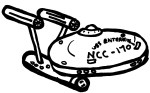
13. Star Trek Beyond, nominated for Best Makeup And Hairstyling
“Although this film is being billed as a return to Star Trek’s roots or a real ‘classic style’ Star Trek story, that’s not entirely true. Of course, given that the same thing was said about Insurrection back in 1998 (and, for better or worse, that’s a more or less true description of the film’s premise if nothing else), that’s not necessarily a bad thing. This is still a film that takes characters from a fifty year old television series where most problems were solved within an hour and attempts to map them onto a contemporary action film structure, which works in some places and not in others. Other reviews of the film have also stated that Beyond is a more affectionate revisitation of the original series than the previous two films, which is also mostly true. The film does suffer from the fact that the opening sequence bears more than a passing resemblance to a scene in Galaxy Quest, which is a stark reminder of the kind of fun movie that can be made when someone loves Star Trek rather than simply sees it as a commercial venture. Overall, though, you’d be hard pressed not to get some enjoyment out of this film, Trekker or no.”

14. The Jungle Book, nominated for Best Visual Effects
“The Jungle Book is a two-fold tale of revenge (one for Mowgli & one for the wicked tiger Shere Khan) as well as a classic coming of age story about a hero finding their place in the world, but those plot machinations are somewhat insignificant in comparison to the emotional core of Baloo’s close friendship with Mowgli (which develops a little quickly here; I’d like to have seen it given a little more room to breathe). So much of that impact rests on the all-too-capable shoulders of one Bill Murray, who delivers his best performance in years here (outside maybe his collaborations with Wes Anderson).”
15. Captain Fantastic, nominated for Best Actor (Viggo Mortensen)
“Six kids wielding knives, late-night gravedigging, and skinning animals all sound like elements to a rather disturbing horror movie, but, surprisingly, all exist in Matt Ross’s latest comedy-drama, Captain Fantastic. Those with a slightly darker sense of humor will get a kick out of this film, but it really has something to offer everyone, such as family values, brief nudity, religious humor, and a heart-wrenching love story. I had no idea who Matt Ross was, and I was surprised to see that he directed less than a handful of movies because he did such a ‘fantastic’ job with this one.”

16. The Lobster, nominated for Best Original Screenplay
“There’s a fierce, biting allegory to this premise that combines the most effective aspects of sci-fi short stories & absurdist stage play black humor to skewer the surreal, predatory nature of the modern romance landscape. It takes a certain sensibility to give into The Lobster‘s many outlandish conceits, but it’s easy to see how the film could top many best of the year lists for those able to lock onto its very peculiar, particular mode of operation, despite the sour word of mouth at the post-screening urinal. It’s basically 2016’s Anomalisa, with all the positives & negatives that comparison implies.”
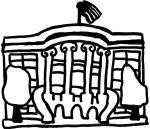
17. Jackie, nominated for Best Actress (Natalie Portman), Best Costume Design, Best Original Score
“As much as I admire Jackie‘s search for small character beats over broad dramatization, I think it could have benefited from the campy touch of a drag queen in the lead role. Jackie is delicately beautiful & caustically funny as is, but I’m convinced that with a drag queen in the lead (I’m thinking specifically of Jinkx Monsoon) it could have been an all-time classic.”
18. Manchester by the Sea, nominated for Best Picture, Best Director (Kenneth Lonergan), Best Original Screenplay, Best Actor (Casey Affleck), Best Supporting Actor (Lucas Hedges), Best Supporting Actress (Michelle Williams)
“What I was most impressed by in Manchester by the Sea wasn’t at all the heartbreaking drama Affleck skillfully conveys under the falsely calm surface of each scene. Rather, I was most struck by the way the film clashes a take-no-shit Boston bro attitude with devastating moments of emotional fragility to pull out something strikingly funny from the wreckage. The film works really well as a dramatic actors’ showcase, but it’s that act of black comedy alchemy that made it feel special to me.”

19. Nocturnal Animals, nominated for Best Supporting Actor (Michael Shannon)
“Nocturnal Animals feels most alive when Ford drops the pretense of trying to make a point and instead lovingly shoots his beautiful sets & impeccable costumes without any semblance of making them narratively significant. His art curator framing device works best as an instruction manual on how best to appreciate what he’s trying to accomplish in the film, rather than a participation in its thematic goals. I have very little interest in the way Ford’s narratives clash fragile artsy types against the unhinged threat of dangerously macho hicks, but any abstracted moment where he carefully posed naked bodies before blinding red fabric voids on top of a classical music score had me drooling in my chair. I’m not convinced Nocturnal Animals has anything useful or novel to say about the frivolity of revenge or the human condition, but it often works marvelously as an art gallery in motion (when it’s not hung up on watching Amy Adams think & read herself through another lonely night).”

20. Loving, nominated for Best Supporting Actress (Ruth Negga)
“Loving finds Nichols returning to the muted, sullen drama of Mud, this time with a historical bent. It isn’t my favorite mode for a director who’s proven that he can deliver much more striking, memorable work when he leaves behind the confines of grounded realism, but something Nichols does exceedingly well with these kinds of stories is provide a perfect stage for well-measured, deeply affecting performances. Actors Joel Edgerton & Ruth Negga are incredibly, heartachingly sincere in their portrayals of real-life trail-blazers Richard & Mildred Loving and Nichols is smart to take a backseat to their work here, a dedication to restraint I respect greatly, even if I prefer when it’s applied to a more ambitious kind of narrative.”
21. Hell or High Water, nominated for Best Original Screenplay, Best Supporting Actor (Jeff Bridges), Best Film Editing
“I totally believe people when they say Hell or High Water is their favorite movie of the year so far, but I suspect these folks are just more finely tuned to the intricacies of its genre & tone than I am. For me, the film is formally a little flat, playing like what I’d imagine a modern Showtime drama version of Walker, Texas Ranger would look like, right down to the wince-worthy music cues. However, even as an outsider I did find myself entertained, especially by the film’s showy dialogue & muted performances.”

22. Fences, nominated for Best Picture, Best Adapted Screenplay, Best Actor (Denzel Washington), Best Support Actress (Viola Davis)
“Pushing aside any concerns with Fences‘s uncinematic tone, strange sense of pacing, and iffy final moments of redemption for a despicably cruel character (that seems to go even further than the source material in their cautious forgiveness), there’s a lot worth praising in what Washington & his small cast of supporting players accomplish here. Besides the obvious merit of bringing a play he greatly respects to a much wider audience who would not have had the opportunity to see he & Davis perform on stage, Washington does the quintessential thing actors-turned-directors are often accused of: crafting a work as an actor’s showcase above all other concerns. I may have some reservations about Fences being suitable for a big screen adaptation on a tonal, almost spiritual level (although I do very much appreciate the play as a text), but there’s no denying the power of the performances Washington brings to the screen with the project. The film is very much worth a look just for that virtue alone.”

23. Suicide Squad, nominated for Best Makeup And Hairstyling
“Instead of portraying one of the few enjoyable characters in its roster suffering repetitive abuse, Suicide Squad instead re-works her love affair with Mr. J as a Bonnie & Clyde/Mickey & Mallory type outlaws-against-the-world dynamic, one with a very strong BDSM undertone. Affording Harley Quinn sexual consent isn’t the only part of the studio-notes genius of the scenario, either. The film also cuts Leto’s competent-but-forgettable meth mouth Joker down to a bit role so that he’s an occasional element of chaos at best, never fully outwearing his welcome. Not only does this editing room decision soften Leto’s potential annoyance & Ayer’s inherent nastiness; it also allows Harley Quinn to be a wisecracking murderer on her own terms, one whose most pronounced relationship in the film (with Deadshot) is friendly instead of romantic. I know you’re supposed to root for an auteur’s vision & not for the big bad studio trying to homogenize their ‘art’, but Suicide Squad was much more enjoyable in its presumably compromised form than it would have been otherwise.”
24. Doctor Strange, nominated for Best Visual Effects
“Dr. Strange is a feast for the eyes, but fails to nourish on any comedic, narrative, spiritual, philosophical, or emotional level. For a work that’s inspired over a year of think piece controversy and a few weeks of hyperbolic Best of the MCU praise, it mostly exists as a flashy, but disappointing hunk of Nothing Special.”

25. Elle, nominated for Best Actress (Isabelle Huppert)
“Elle vaguely echoes ideas about what it’s like to mentally relive a trauma once it’s ‘behind you,’ having to encounter your abuser in public social settings without acknowledging the transgression, the ineffectiveness of reporting sexual assault to police, and the misogynistic & sexually repressed aspects of modern culture that lead to rape in the first place, but all of those concepts exist in the film as indistinct whispers. Mostly, the rape is treated like a cheap murder mystery, with all of the typical red herrings & idiotic jump scares you’d expect in a whodunit. It’s a paralyzing trauma that has little effect on the story outside the scenes where it’s coldly detailed onscreen and the real shame is that it sours what is otherwise an excellently performed black comedy & character study by leaving very little room for laughter, if any.”
-The Swampflix Crew









 Swampflix