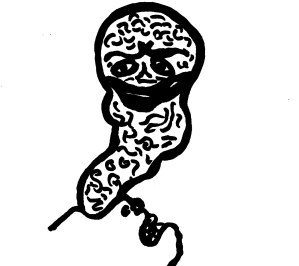
Movie of the Month: Society (1992)

EPSON MFP image

Every month one of us makes the rest of the crew watch a movie they’ve never seen before & we discuss it afterwards. This month Brandon made Alli, Boomer, and Britnee watch Society (1992).

Brandon: In the post-apocalyptic eternity since the presidential election of Donald Trump there’s been bountiful articles explaining why such & such movie, say Bob Roberts or Children of Men or even Rogue One, are now more relevant than ever in our current political climate. The truth is more likely that these films never lost their political relevance in the first place. Although this country has seen a somewhat progressive swing in the last eight years, the same systemic class inequality & civil rights issues that have always plagued it haven’t budged an inch. Most political art made in the last century, particularly art that addresses our deceptively rigid class system & the often brutal ways its boundaries are enforced, is always likely to retain its significance as our presidents change, since the system they helm doesn’t change along with them. That’s why I don’t want to pose the rich-feeding-off-the-poor terrors of Brian Yuzna’s cult classic body horror Society as being more relevant than ever in the face of a Donald Trump regime, as tempting as it may be. More accurately put, Society is very much a product of its Reagan-era times that, when viewed through a modern context, can be a harrowing (and amusingly absurdist) reminder that nothing ever really changes, least of all the status quo.

For all of its continued political relevance in its hamfisted approach to satirizing rigid class structures, Society is admittedly a deeply silly film. High school senior Bill Whitney feels out of step with his Beverly Hills yuppie community, including his own family. Despite his privileged life of manicured mansions, cheerleader girlfriends, and popularity contest high school elections, Bill is intensely uncomfortable in his environment, suffering a growing unease he discusses at length with his therapist. This discomfort amounts to a spiritually crushing paranoia in which Bill hallucinates grotesque body contortions in his Reaganite peers and becomes convinced that his parents & sister are attending incestuous, murder-fueled orgies among a secret sect of Society he simply doesn’t have access to. Of course, Bill’s dead right. He doesn’t fit in with his Beverly Hills social group because he was born an entirely different species, a Poor. The wealthy members of the film’s self-described “Society” are an inhuman race who run the world by literally feeding off the poor. Bill was merely adopted into their ranks as an unworthy outsider & eventual sacrifice. The final half hour of the film is a Cronenbergian mess of melded bodies, unimaginable cruelty, and sexual taboo that exposes the heartless & wealthy ruling class for the monsters they truly are. It’s a bewildering special effects showcase from gore wizard Screaming Mad George that nearly wipes away all memory of the mostly standard horror film that precedes it by putting an outrageously grotesque face on systemic inequality in modern class politics.

What I love most about Society is its complete lack of subtlety & nuance. Once its world’s rules are revealed in its infamous “shunting” sequence in the final act, the film’s themes are spelled out in the plainest of terms. Bill is collared & walked around like a wild dog for public ridicule (before he’s subjected to a more supernatural torment). Wealthy men explain to him that their superiority comes from “good breeding” and that, since he was adopted from a non-wealthy family, “You’re a different race from us, a different species, a different class.” They even explicitly connect their evildoings to a historical tradition of class inequality, bragging that “The rich have always sucked off low class shit like you.” Society was largely panned in its time for this disinterest in thematic subtlety, struggling for three years after its initial release in 1989 to earn a proper US distribution deal. Treating its class politics as a flimsy excuse for the disturbing practical effects orgy in its final act seems like a mistake to me, though, and I’m delighted that the film has been reassessed as a cult classic in the decades since its humble beginnings. The way it explores class divisions in the most literal & grotesque terms possible is highly amusing to me in an almost cathartic way. This is especially true of these earliest days in a Donald Trump presidency, where poking fun at the inhuman cruelty of the wealthy oligarchy feels almost necessary for survival, even if their status as the ruling class hasn’t at all changed since this film’s initial release.

Boomer, do you agree that Society is well-served by its blatant class warfare themes, particularly in the cruelly grotesque way the 1% are characterized in its sledgehammer dialogue & nightmarish gore, or do you think the film would have fared better with an occasional adherence to subtlety & restraint?

Boomer: Honestly, yes and no, as I am of two minds when it comes to film’s mixed relationship with subtlety. Though the plot becomes more traditionally horrific as it plays out, the outpouring of nauseating imagery and sound that constitutes the film’s finale is a huge tonal shift from the relatively grounded story that seems to be playing out in the first act. As much as I love grue, I also love the conceit of the unreliable narrator, especially one who doubts his own mind. Take, for instance, Bill’s first scene with his therapist, in which he takes a bite of an apple only to realize it’s full of worms; he looks away, then back, and the apple is totally normal. This is a fairly obvious metaphor for the way that the presumed normalcy of Bill’s world is merely a thin facade covering inconceivable monsters beneath the surface, but it also implies that Bill’s less-than-objective interpretation of events may be the result of a diseased mind. At least until the shunting begins, anyway.

Of course, that was just my reading of the scene based on viewing the film cold. Many of the early oddities, like the squirming apple, the apparently inhuman body structure of Bill’s sister, and the changes to the audiotape, could easily be interpreted either way: as hallucinations or a They Live-style peek behind the veil of our ordered existence. Instead, of course, we learn that these are just moments in which members of the titular Society are gaslighting (another important term that has seen a resurgence in usage and discussion since the Trump ascendancy) poor Bill. Luckily, for the sake of goreheads and fans of unsubtle social satire everywhere, Society quickly descends into stomach-churning “after dark” madness.

After my viewing, I watched the trailer and looked at posters for the film, and I can only imagine that filmgoers of 1992 would have been highly disappointed if “the minds behind Re-Animator” and the gore wizard “who brought you Nightmare on Elm Street IV (um) and Predator (oh, ok)” had turned out a film about a rich Beverly Hills kid who thought his world was being turned upside-down only to learn that he was merely losing his mind. Still, I think I would like to see a film that plays out more subtly, wherein Bill becomes all-too-aware of how privileged his easy, moneyed life is and begins seeing his 1% peers as the inhuman monsters they are on the inside, without making that metaphor so literal. The film would have been a bit more nuanced if it took that road, but that doesn’t mean Society doesn’t work in the form that it does take.

What the film lacks in subtlety, it makes up for with its overt depiction of the grotesqueries of American pomp and lavishness. When the film shreds the guise of humanity to reveal its, uh, true form, the film doesn’t suffer for its straightforwardness. The rich are fundamentally different from you and me, and it is, from their point of view, a matter of class and breeding. This isn’t even arcane knowedge that I’m talking about, it’s all out there to be seen by anyone who opens their eyes. I never saw a full episode of Rich Kids of Beverly Hills, but I did see plenty of clips on the dearly departed (and sorely missed) The Soup, and have seen enough “Rich Kids of Instagram” compilations scattered around the internet to know that a life of wealth and privilege makes people rotten to their cores. A dear friend used to be a frequent babysitter for the four-year-old daughter of a rich Baton Rouge lawyer; one day, the little girl was so cruel to my friend that she cried, causing the brat to tell her that she didn’t have to be nice because she was pretty. When my friend told the parents about this incident that evening, the father didn’t apologize or even inspect the way that he was raising his child to be a monster; he just looked at my friend and said, “Well, she’s right, you know. She doesn’t have to be nice; she’s pretty.”

Anecdotal though that is, it bespeaks a systemic inhumanity on the part of the American aristocracy, and that inhumanity is on full frontal display in Society, just as it is in society. To hide that behind a veil of subtlety is to do a grave disservice to the truth of our existence. I would even go so far as to argue that the exaggeration of that idea is more important now than it was 30 years ago. After all, our society has degenerated into such frothing madness that satire can hardly find a foothold; so unable are we to discern extreme parodies of absurd political ideation from the actual extremist views held by fringe mentally ill people (whose voices are amplified by the proliferation of the internet) that there’s a plausible argument being made that “fake news” swung the election. If Jonathan Swift were to publish “A Modest Proposal” in the New York Times tomorrow morning, there would be commenters at Breitbart and TeaParty.org putting on their “All Lives Matter” aprons and getting ready to light the grill to barbecue up some Irish babies by mid-afternoon. The finale of Society may be just over-the-top enough to penetrate even the thickest skulls (and Klan hoods).

Let’s back off of that for a second though, before I work myself up too much. For me, the weakest link in the film has nothing to do with the story or the direction but with Billy Warlock’s performance. I’m sure part of my less-than-hospitable attitude towards the actor is the result of Allison Pregler’s delightful abridged series project Baywatching, but I still found Bill to be a thoroughly disinteresting lead, with no power in Warlock’s portrayal to save the character. Hell, if anything, Milo is the hero of this story, not Bill. What do you think, Britnee? Were you distracted by Billy Warlock’s lackluster presence, or was it suitable for the film? What change would you make to strengthen the film: recasting, or rewriting the character?

Britnee: I’m in agreement that Billy Warlock’s performance in Society was pretty terrible. With such an interesting last name, who would’ve guessed he’d be such a letdown? Even though his acting was shit, he didn’t really have that much of a negative impact on the movie, though. Society was absolutely insane from the opening scene to the disturbingly haunting ending, so, if anything, Warlock contributed to the insanity that made this movie such a success in the cult film community. Imagine how off-balanced the movie would be if someone decent played the role of Bill. I couldn’t even imagine such a thing.

If I could change anything about Bill’s character, I would want him to take all the strange occurrences happening around him more seriously. It was irritating to watch him be so willingly blind to what was happening around him, and it was even more annoying to know that he didn’t start questioning his place in his weird family until he was in his late teens. I’m assuming that he was adopted by the Whitney family when he was a baby since he didn’t know he was adopted, so he probably noticed their strange behavior way before he started to question it. Maybe I’m being too harsh because he was raised in that environment his entire life and probably thought it was normal, but it’s still hard to believe.

The biggest question that I have from Society (and I have many) is why did the Whitney’s adopt Bill and raise him for so long with the intention of eventually “shunting” him? They didn’t have to groom him for so long just to shunt him in the end because they shunted Blanchard, who was pretty much just an average guy. They could lure or capture any lower class individual to shunt, but I don’t understand why they put so much effort into shunting Bill.

Alli, what do you think about the Whitney’s adopting of Bill to just shunt him in the end? Would you have liked more of a background story of their motivation to adopt and raise Bill? If you could create the story for Bill’s adoption, would would it be?

Alli: I think their cruelty and extravagance has made them bored, so they need increasingly sick diversions. I’m imagining some sort of extremely twisted My Fair Lady, where they found this poor family with a child they can’t afford and just for kicks decide to groom a lower class “poor” into a false sense of security just to see the terror and confusion. It also kind of brings to mind “The Most Dangerous Game.” My main question is why now? Have any of them thought of keeping “shuntable” pets before? It’s such a hyperbole of the idea of the poor as sheep for the rich to herd and take advantage of. It’s amazing that they’re applauded and congratulated on their great achievement, because in a way this makes the Whitney’s farmers, and I imagine farmers are some sort of unimaginably lower rank.

But something more mysterious to me than any of that is Mrs. Carlyn (Pamela Matheson). I didn’t ever really figure her character out. Her doe-eyed, empty stare and tricophagia aren’t really explained. Very early on the cheerleader types reference her in disgust when talking about Bill’s infatuation with Clarissa Carlyn (Devin DeVasquez), “Have you seen her mom?!” After mentioning Clarissa’s turning tricks, I assumed her mom would be some sort of scandalous gold digger, but she’s the opposite. Instead, she’s a semi-catatonic wanderer with wild hair. She’s harmless enough as a member of Society goes, but I guess I don’t really understand why they keep her around.  The most I can make of it is that this Society even has outcasts and those who don’t fit in. They sweep them under the rug and ignore them, but is Mrs. Carlyn anymore messed up than any of the rest of them?

Brandon, what do you think about Mrs. Carlyn’s place in Society?

Brandon: I’m really glad that came up, because Mrs. Carlyn & her hot to trot daughter were the first thing that came to mind when Boomer & Britnee called out Bill for being a lackluster presence in the film. Mrs. Carlyn in particular is a sore thumb. She plays Society‘s already broad comedy a tad too far into a cartoonish territory that spoils the winking camp a little for me, recalling a Laurie Beth Denberg character from a long-forgotten All That sketch. This is more a fault of the filmmakers’ than the actor’s, though. They don’t give her much to do outside tired fatty-fall-down-make-boom lines of humor and excuses to mug crazy-eyed for the camera when she tries to eat unsuspecting victims’ hair. (In a typifying punchline, she’s confused when she attempts to eat a toupee.) If I had to justify her inclusion in the plot, I could argue, as Alli suggests, that she’s a comedic take on the way wealthy families always seem to have that one black sheep weirdo that doesn’t quite fit in, usually due to mental illness. Mrs. Carlyn & her oversexed daughter are essentially this Society’s version of Grey Gardens, their outcast mutant lives existing as a sort of bane on the more respectable slug-eating mutants of Society proper. That’s giving the film more credit than it probably deserves, though, especially since nothing else in its themes is treated with any semblance of subtlety. For a film willing to beat you over the head with lines like, “There are people who make the rules and people who follow them. You’re born into it,” and the often-repeated “You’re going to make a wonderful contribution to Society,” I think a little acknowledged justification for the Carlyns’ existence as outsiders, even as a source of embarrassment, would’ve improved the script. I also could’ve done without Mrs. Carlyn’s character entirely, to be honest.

Her daughter Clarissa is another strange outlier in the story. Clarissa seems to at first be horny for Bill in a nefarious way, as if she’s playing with her food or further trapping him in his predetermined downfall, but that attraction is later revealed to be genuine. This could possibly be a result of her identifying with his fellow outsider status as a Poor, thanks to her family’s position as the Grey Gardens black sheep. Again, the script doesn’t give us much to work with there. Clarissa’s affection for Bill honestly wouldn’t distract me too much, though, if it weren’t used as a deus ex machina (along with her mother’s trichophagia) to rescue him just before his turn to be shunted. Bill’s escape at the end & ultimate survival makes for an interesting gender-swapped version of the Final Girl trope (something telegraphed in the red herring slasher film opening), but I was honestly rooting for a much more pessimistic conclusion to the story. As far as screenwriting tradition goes, a gore-soaked Canadian horror indie just might be one of the few times when you can get away with a triumphless, dispiriting ending without gripes from producers or test audiences and it just seems weird that Society would allow its protagonist to walk away without more than a few scratches. If all these wealthy families conspired for nearly two decades to shunt Bill, why would they so easily allow their science project to escape once he’s learned all of their horrific secrets? I guess you could argue that they’re in a vulnerable, physically soft state during the shunting that would inhibit his capture, but that seems like a pretty weak excuse. Having Bill suffer the shunting and the wealthy secure an inescapable victory over their born-poor protagonist might’ve better served the film’s central metaphor and it seems as if the only reason he’s allowed to escape is to set up a sequel that never came, a lame cop-out if there ever was one. And since Clarissa’s entire existence in the plot is the machination of that escape I have to question her validity in the script just as much as I do her mother’s.

What do you think, Boomer? Would a pessimistic ending have better driven home Society’s central metaphor? Would it have been a better film if Bill had fallen victim to the shunting he was groomed for all his life?

Boomer: That’s an interesting question. More than the relative positivity/negativity of the ending, I was struck by how abrupt it was, and how odd that conclusion felt in a film that spent much of its runtime letting the story breathe. To use a comparison that is accessible for many, consider the ending of Terminator: imagine that, after Sarah Connor destroys the T-800, the film cut to black and the end credits immediately started rolling, without the follow-up scene in which she drives off into the desert as the distant thunder of a gathering storm rumbles ominously. That’s how you end this kind of movie: the hero vanquishes (or escapes) the clutches of evil, and the audience is treated to an epilogue that allows us to digest the climactic finale and imagine a future for the character or characters in whom, if the film is successful in its presentation, we have become invested. It doesn’t have to be completely optimistic or pessimistic; in fact, Terminator‘s final moments are all the more poignant for their ambiguity. James Cameron’s film is perhaps the best example of how to make this work, given that it could so easily have been yet another generic action film like so many of that era, but rose above the milieu to become iconic through strong performances, impressive VFX work, and attention to detail.

I have a feeling that director Brian Yuzna may have even thought he was endowing the ending of Society with this same feeling of bittersweet uncertainty: Billy escapes, but a member of the Beverly Hills shunt calmly tells a cohort that there is another Society… in Washington (dun dun DUN). But instead of giving the ending room to breathe, the end credits start to roll seemingly out of nowhere, without even a perfunctory denouement in which Billy, Milo, and Clarissa drive into the night as the first fingers of the sun grab at the horizon. On the other hand, I might just be making this connection between the two movies because both Sarah Connor and Bill drive sweet Jeeps; that’s for the reader to decide.

In the end, however, I think that the film’s “happy” ending is difficult to parse as either a function of its time of creation and its creative genesis. Although Yuzna was born in the Philippines, the film can be read as a clear product of anxieties about the rich that are not unique to American wealth distribution but specifically reflect that culture. As such, my initial assumption was that the optimistic ending was a result of the need to represent the hope of escaping the clutches of wealthy evil, metaphorically. As obvious as that may seem, interviews with the director indicate that the film was originally about religious cultists out to sacrifice Billy, but that this plot point was altered following discussions between Yuzna and Screaming Mad George during the pre-production process. The “shunting” was conceived by George and the plot reworked backward from there, meaning that any discussion of the relative “happiness” of the ending presupposes a premise that is supported by the text itself, but appears unintentional.

Roland Barthes would argue that this is irrelevant, however, so in the interest of not limiting the text, I declare the author dead and put forth this explanation: the ending must be optimistic in order to give the audience hope of escaping the wealth-positive cronyism of Ronald Reagan. An ending in which Billy dies at the hands (?) of the Society would be reflective of the way that this generally works in the real world (for instance, with the recent repeal of the ACA damning many Americans to a slow and painful death without affordable medical care in order to support the malevolent and uncharitable greed of a few), but wouldn’t make for very good entertainment, so a happy ending is called for.

To go back to the Terminator reference above, how would you see a potential film franchise for Society playing out, Britnee? Do you think there would be any value in confronting other Societies? Would those be better served by taking on the more pessimistic (perhaps even deterministic) tone that the Terminator franchise did?

Britnee: I would absolutely love a Society franchise! I recently read an interview that Yuzna had with Horror Channel back in 2013, and he mentions that he was actively working on a sequel to Society. I haven’t seen anything else that mentions the status of Society sequel, but I hope that it’s still in the works. Having a sequel come out over 20 years after the original film was released sounds insane, but I think that it would be great to get a modern day dose of Society while we’re living in Trump’s America. There’s actually loads of potential for a Society franchise. Think of all the Societies around the world that the films could focus on: the British royal family, Russian oligarchs, Indian billionaires, etc. Could you imagine how amazing it would be to see Queen Elizabeth II lead a shunting with Prince Charles? There’s just so much to work with, and by exploring “Societies” in other countries, viewers could be more aware of the endless supply of greedy jerks all over the world.

Honestly, it’s been at least 15 years since I’ve seen any of the Terminator films, so I only vaguely remember them. It’s not that I didn’t enjoy them, I just haven’t revisited them in a while. If there was a Society franchise, I think the films should have a more pessimistic tone. I would’ve liked to have seen Bill shunted to death and Milo as the only one who was able to escape. Then Milo would go on to be the protagonist in the sequel, where he gets a little team together to destroy all the Societies in the world. In each subsequent film, part of the team would get shunted while the others barely make it out alive (covered in that nasty shunting lubricant). Having the films take a more pessimistic approach adds so much more to the horror element. When Billy escaped in the end, it made the film so much lighter. But as Boomer mentioned earlier, the ending was so abrupt. If there was just a little two minute scene of Billy being thrown in a mental institution from suffering from some sort of shunting PTSD, the film would’ve been more of a solid horror movie.

One image that I just can’t get out of my head is when Bill’s dad becomes a butt-face and makes fart noises. It’s probably my favorite part in the movie. Alli, what where some of your favorite body morphs in the movie? Is there any body morph that you would’ve liked to have seen?

Alli: Man, all the body morphs were really great, but the ones that really stood out to me were when the story was still ambiguous and we didn’t know whether or not it was still in Bill’s head. One of my favorites is when Clarissa’s body is all twisted around. It just reminded me of some freakish nightmares I’ve had. I don’t think I would have included any more of the subtle ones though, because I think the story benefits from the quick descent into overt madness. I guess what I would have wanted more of is the fact that the Society can body morph being used as an advantage rather than a bizarre sex cult or strange clumsy hindrances. How cool would it have been for just a really long arm to try and snag Bill as he’s getting away? I think that would be a pretty simple way to fix the abrupt ending, anyway.

One thing I’d like to see explain more is Bill’s hallucinations. Is he seeing bugs in his food because the food is made of bugs, or is he seeing bugs in his food because he’s actually losing it? It would be more of an interesting statement if it were the latter. I’d like for a protagonist in a movie to be going a little loony but also be 100% completely right about something else crazy going on. Rather than being an unreliable narrator, he’d become a reliable narrator with some problems, which would be an interesting take on that trope. It’s also believable in a way; anyone would have problems if they were raised by an out-of-touch rich family of grotesque mutants.

EPSON MFP image

Lagniappe

Alli: Britnee mentioned the butt-face morph and I feel like here’s the place to say that I really like the idea of ultra rich people literally talking out of their ass. In a movie totally lacking in subtlety, that might be my favorite in-your-face moment.

Britnee: I don’t really understand why Bill’s mom and dad were checking out slugs with their gardener at the beginning of the movie. Was it supposed the be a hint that they were up to something strange or is that really how rich people prepare to make escargot? I wish there was more explanation for it in the movie because not knowing is really killing me.

Boomer: To go back to the question of Mrs. Carlyn, I think that she represents the way that “good breeding” apparently means some kind of inbreeding here, as was often the case with aristocratic families over the course of history. Since the author is dead, I’ll put in my two cents that I interpreted her place in this group as a kind of blindness to the basics of genetics that must permeate Society, and is indicative of the way that the rich ignore that which doesn’t support their worldview. Mrs. Carlyn can’t be inbred because of how good their breeding is and because they are the elite, even when the counter-evidence is staring them in the face (and trying to eat their hair).

Brandon: I think I’ve come up with a pretty decent Society drinking game: Take a swig every time you see Bill’s Jeep, which Boomer mentioned earlier. The fancy black Jeep Bill drives is featured early on as one of the unsuspecting Final Boy’s hallmarks of privilege. The movie obsessively makes a big deal out of the vehicle long after we get the point, though. If features several scenes of Bill finding vague, prankish threats like lynched Barbies & naked blow-up dolls in the passenger seat and once the plot starts barreling toward a conclusion, the Jeep is repetitively shown as both a literal & a literary vehicle used to get Bill from one horror to the next. It started to remind me of that easy screenwriting device where expository information is dumped over phonecalls instead of cropping up naturally. Anyway, I call the game Jeep Shots. Please play responsibly and avoid operating any Jeeps until long after the credits roll.

Upcoming Movies of the Month
March: Britnee presents What’s Up Doc? (1972)
April: Boomer presents Head Over Heels (2001)
May: Alli presents Europa (1991)

-The Swampflix Crew

Mark of the Witch (1970)

EPSON MFP image

fourhalfstar

campstamp

Many moons ago when I was at boarding school, there was a patio restaurant across the main drag from campus that had a detached building containing the restrooms. In the short hallway between latrines, there was a poster for a horror flick I had never heard of, entitled Screams of a Winter Night. After some research using 2004-era internet access (no small feat, to be honest), I found that the movie had been filmed in and around Natchitoches, Louisiana (where my boarding school was located) by college students in the late seventies. They made three prints of the film and took them to drive-ins in the nearest cities, where Screams was discovered and picked up for nationwide distribution. Although it’s my understanding that the film has since found a home on DVD, it took some time to locate a pirated VHS copy of the movie at that time; although it has a certain nostalgic appeal for me, it’s not a very good movie, being largely amateurish in its narrative cohesion and poorly filmed in general, with lighting that renders much of the film impossible to see at points. Maybe I’ll get around to reviewing it for the site one day, but this is really just a preamble to discuss today’s selection, another cheap regional production, 1970’s Mark of the Witch, which, unlike Screams of a Winter Night, is actually a lot of fun and definitely worth seeking out.

In the late sixties, two Dallas women named Martha Peters and Mary Davis noticed that, although the horror genre was exploding, very few films were being made by or for women. Since both women had an academic interest in the occult, they composed a draft of Mark of the Witch, in which a young co-ed is possessed by the spirit of a centuries-dead witch. The film was shot with a cast and crew comprised mostly of local Texan amateurs: Peters seems to have never written anything else, while Mary Davis’s sole other screenwriting credit was for 1974’s Scum of the Earth. This was the first directing credit for Tom Moore as well, although he would direct Return to Boggy Creek (sequel to The Legend of Boggy Creek) seven years later before going on to have a largely unremarkable career as a TV director for episodes of various programs, including Cheers, Picket Fences, The Wonder Years, Mad About You, and L.A. Law.

The film opens with the hanging of the titular witch (Marie Santell), overseen by the betrayer MacIntyre Stuart (Robert Elston); he and two other members of their coven turned on the other ten members, leading to their execution. With her final words, the witch curses Stuart: he and all of his descendants shall bear her mark, until she returns to exact her vengeance. Some three centuries and change later, Leonard Nimoy lookalike Alan (Darryl Wells) is buying some books on witchcraft at the local university bookstore, where his girlfriend Jill (Anitra Walsh) is assisting with a book drive. They briefly discuss the psychology course that they are taking from Professor “Mac” Stuart (Elston again) and make plans to attend one of his parties/seminars that evening. After Alan leaves, Jill discovers a real spell book, later identified as the Red Book of Appin. That evening, she brings the book to the meeting and encourages her friends and classmates, including horndog Harry (Jack Gardner) and ditzy Sharon (Barbara Brownell), to participate in a ceremony outlined in the book: summon a witch.

When nothing seems to happen, the group disbands for the evening and Alan, unaware that Jill has been possessed by the witch, gives her a ride back to her dorm, shrugging off her strange behavior as a kind of joke. Jill returns to Stuart’s home and tells him the truth. Stuart had donated the Red Book, a family heirloom, to the book drive in the hope that it would be found and a ritual performed as a psychological experiment; after a few demonstrations of her power, Stuart and Alan realize that they have unleashed an old evil in modern times. While the possessed Jill seeks out and kills Harry and Sharon to complete a rite that will make her ruler of the world, Alan and Stuart work together to try to find a way to exorcise her possessor before it’s too late.

This is a fun little movie, and surprisingly impressive for a film made on such a small budget and with only local talent. The fun is mitigated in a few places by special effects failures (the fire that the possessed Jill uses in her rites at the wooded grove is no larger than a dinner plate, for instance) and some repetitiveness (the witch uses the same overlong invocation in a few separate scenes), but it’s obvious that all of the players involved are having fun, and that sense of bonhomie and good humor is infectious enough that it’s no trouble to get swept up in the moment.

I saw the film at the Alamo Drafthouse’s weekly Terror Tuesday event in Austin, and the reels themselves were provided by the American Genre Film Archive, which is committed to preserving little oddities like this. Host Joe Ziemba noted that the film had never been checked out from the archive since its induction, and that only a few dozen people had seen the film in its original release. Although the quality of the 35mm print was imperfect (some parts of the film itself had actually turned to dust, resulting in a few skips in the narrative and a blank screen), it was still a great viewing. The entirety of Mark of the Witch appears to be available on YouTube, so viewing it in your own home is not only easy, but highly recommended.

-Mark “Boomer” Redmond

Resident Evil: Apocalypse (2004)

EPSON MFP image

three star

campstamp

When we binged on a small selection of “iconic” video game adaptations for episode #11 of the podcast, I was surprised to see Paul WS Anderson’s name pop up twice in a row as a director of both Mortal Kombat & Resident Evil (2002). Not only is the video game adaptation not a genre you’d typically associate with an auteur’s go-to passion for repeat offerings (outside maybe a stray Uwe Boll-type), but Anderson’s two contributions to our list were actually two of the better films, bested only by 1994’s Super Mario Bros in terms of pure entertainment value. Of his two entries, Resident Evil was the biggest surprise in terms of competency. Mortal Kombat had the narrative upper hand of a ridiculous interdimensional martial arts tournament to boost its camp value (along with a delightfully obnoxious theme song & a scenery-devouring Christopher Lambert). Resident Evil, on the other hand, was a seemingly straightforward zombie picture, so it was downright bizarre that Anderson managed to make it even moderately memorable in the face of a market that’s been overcrowded with similar works for decades. The Milla Jovovich-helmed action vehicle was actually an interesting trifle, however slight, one made novel by a wealth of weird details like A.I. children, genetically mutated beasts, and menacing corporations with dystopian designs on world domination.

What’s even more surprising than Anderson managing to make a watchable film out of the Resident Evil video game franchise is that he did not stop at just one film. The 6th (and supposedly final) entry in the series has just reached theaters over a decade later and both Anderson & Jovovich have shared some level of involvement in the series throughout its entire run, which is a much higher level of consistency than you’d expect for a zombie video game franchise. The second film in the series, Resident Evil: Apocalypse (which obviously didn’t follow through on the finality of its title) wasn’t half bad either. It expands the bunker-confined action of the lower budget first film by bringing its zombie breakout above ground. Its world-building details like the exact nature & temporal location of its Raccoon City setting, its menacing (and hilariously named) villain the Umbrella Corporation, and the exact skills & origins (and even name) of its Ripley stand-in (Jovovich), all remain fuzzy to me after two full-length features. All you need to know to make it through a Resident Evil movie is that zombies & capitalists are bad, while women & guns are good. The rest is all shoot-em-up nonsense and militaristic zombie movie mayhem, a triumph of action horror cinema only in that it should be impossible for Anderson to make something so generic so delightful to watch and, yet, he’s done it at least twice.

I think Resident Evil‘s key to surviving as a notable action horror franchise is its dedication to excess. The film couldn’t logically bring in Jovovich’s hero immediately to deal with the above-ground breakout so it created a second badass with a gun cliché (a cop named Valentine, hilariously) to shoot some undead baddies in her initial absence. There’s some first person POV shooting in a police station and found footage shenanigans with a rogue news broadcaster that helpfully treads plot water until Jovovich can burst onto the scene by flying a motorcycle through a church’s stained glass windows and then turning said motorcycle into a makeshift bomb. Once our two badass ladies join teams everything else is an action-packed blur of knives, grenades, rocket launchers, and the undead bursting out of graves like a cover version of the “Thriller” video. New locations play like video game levels. The film’s Final Boss characer is a new genetic mutant called Genesis (who vaguely resembles the version of Bane in Joel Schumacher’s Batman & Robin). Everything is all very loud and violent and impossibly dumb, to the point where the monotone excess becomes its own artform and your options are either to play along with the film’s buffoonery or to feel like your better senses are constantly being assaulted.

I don’t care to learn any more about this series’ mythology than the little I can catch between explosions and bullets. Jared Harris (Lane from Mad Men) pops up here as some kind of smart programmer type who’s constantly hacking into the mainframe or some such nonsense and Iian Glen (Jorah from Game of Thrones) swoops in at the last minute for some Wolverine-type experiments & mumblings about clone technology, but outside of those actors’ before they were C-list stars pedigree, their presence signifies nothing. No one really matters here outside Jovovich & Anderson. Even the newly introduced & oddly omnipresent character of Valentine is mostly just a place holder until Jovovich can arrive above-ground, guns & motorcycle blazing (and the less I say about the film’s wisecracking pimp comic relief, the better). I’m sincerely amazed that a single filmmaker & a single performer have stuck with such an explosively inane series for as long as Jovovich & Anderson have. I also wonder if there are wholeheartedly dedicated fans of the series out there who care deeply about its AI, genetic monsters, and walking dead mythology enough to have been counting the days until the series wrapped up in its final installment. I can’t imagine being at all invested in Resident Evil’s narrative throughline & overarching themes, but I will admit that these films are much louder, dumber, and more entertainingly chaotic than I expected them to be and I’m curious about how they can keep up that stamina for four more installments.

-Brandon Ledet

Split (2017)

EPSON MFP image

fourstar

I left M. Night Shyamalan’s last trashy horror experiment, The Visit, with mixed, but cautiously positive feelings on the director’s redemptive comeback potential. That film’s follow-up, Split, laughs in the face of my caution by revealing a filmmaker who excels as a stylist & a tension-builder on a near-masterful level, a newly confident auteur who’s just starting to get a full grasp on what he can accomplish within his own artistic boundaries two decades into his career. He just happens to be a near-masterful stylist that makes undeniably stupid movies. When an M. Night Shyamalan film is great, it’s brilliantly stupid, combining over-thought & over-stylized art film pretension to an empty, trashy property that doesn’t really deserve it (think Richard Kelly’s The Box as a reference point). When a Shyamalan movie is bad, it’s boringly dumb, the worst kind of limp, undercooked cinematic inanity Hollywood dumps into wide distribution without giving enough thoughtful consideration. Split is brilliantly stupid.

James McAvoy stars as a mentally unstable blue collar worker suffering with the scientifically controversial Dissociative Identity Disorder. While his well-meaning therapist quietly studies him from a distance and tries to build a high-profile career around his exceptional example, the troubled man’s more unsavory personalities begin to dominate his daily actions, keeping his less harmful multiples in the dark. This is not the empathetic, humanist portrait of D.I.D. delivered in United States of Tara, but it’s just as silly & wildly inaccurate. Much like with The Visit, there’s an indelicate genre film cheesiness to the way this movie handles mental health issues that doesn’t exactly deflect criticism, but pushes its depiction so far outside the context of reality that you’d have to reach pretty damn far to be personally offended. McAvoy’s unhinged villain is a scary white man with a debilitating mental disorder who sets in motion a confined space/women-in-captivity thriller plot when one of his most violent alters kidnaps three teenage girls and locks them in a basement for a vague, menacing purpose. The film slowly evolves into a very strange beast in that basement, both asking you to sympathize with the troubled man (an abuse survivor) and to fear the impending revelation of his 24th alternate personality, described as an all-powerful, inhuman monster that will test “the limits of what man can become.” He threatens his captives with ominous declarations like “You are sacred food,” and “The time of ordinary humanity is over,” but nothing could possibly prepare them for the brilliantly stupid weirdness that goes down in the film’s third act.

Of course, the most readily recognizable calling card for M. Night Shyamalan as an auteur is the last minute twist and I’ll do my best to avoid Split‘s ultimate destination out of respect for that trashiest of traditions. I will say, though, that Split‘s best quality is that its Big Twist Ending does not at all cheapen or undercut the plot the film lays out before its arrival. In fact, it at first appears there may be no twist at all. Everything Split introduces as a central theme and a narrative thread, from the therapist’s assertion that D.I.D. might be able to unlock “the full potential of the human brain” & “all things supernatural” to the way privilege can soften competence to the life-long effects of childhood familial abuse to one of the imprisoned teens (The Witch‘s Anya Taylor-Joy) utilizing survivalist skills her father taught her while deer hunting in a Final Girl context, is fully explored in a linear A-B story with very few sharp turns or gimmicks to distract from their impact. Then, when each storyline is fully satisfied & neatly concluded, the Twist Ending arrives to recontextualize everything you’ve seen until that point in a way that expands the film’s scope & somewhat explains its oddly goofy tone instead of shifting its reality entirely. It’s still stupid, but it’s brilliantly stupid.

As genuinely creepy as Split can be in any given scene, especially once it finds itself in the threatened sexual assault territory of generic teens-in-their-underwear horror, it’s also a sublimely silly affair. McAvoy at one point has way too much fun making a show out of his solo bedroom dancing after a character desperately pleads, “I want to hear your Kanye West albums.” He also delivers what is sure to be a strong ironic contender for an MTV Movie Award for Best Kiss. Split‘s D.I.D. premise provides a near-borderless playground for him to chew scenery and he does so admirably, fully committing himself to the film’s brilliant stupidity. I think Split works best when it is genuinely creepy, though. Shyamalan is confidently playful with the film’s tone at every turn (even appearing onscreen to practically wink at the camera), but still mines his pulpy premise for plenty sincere tension & dread in a highly stylized, artfully considered way. Split truly does feel like the director’s return to glory. This is the moment when he loudly broadcasts to the whole world that he can still be highly effective within the pulpy genre box he often traps himself in without having to blow the container open with a last minute twist. Here, the twist is allowed to comfortably exist as its own separate, artfully idiotic treat, another sign that the filmmaker has finally become the master of his own brilliantly stupid game. I don’t think I’ve ever left one of his films this deliriously giddy before and it’s an exciting feeling. I now need to see whatever expertly dumb thing he pulls off next.

-Brandon Ledet

Episode #22 of The Swampflix Podcast: 2016’s Honorable Mentions & Videodrome (1983)

inaworld

Welcome to Episode #22 of The Swampflix Podcast! For our twenty-second episode, we’re doing a little tidying up. Brandon, CC, and James continue their discussion of the Top Films of 2016 with some Honorable Mentions. Also, Brandon makes CC watch David Cronenberg’s cult classic Videodrome (1983) for the first time, a viewing experience that’s been in the works for years. Enjoy!

-Brandon Ledet, CC Chapman, and James Cohn

I Am Not a Serial Killer (2016)

EPSON MFP image

three star

I’m having a difficult time understanding exactly why I Am Not a Serial Killer works as well as it does. The movie doesn’t ever fully succeed at any of the various genres it touches: horror comedy, murder mystery, familial drama, creature feature. Its story is frustratingly thin for a plot that shows so much potential in its initial ideas. Big character moments & narrative payoffs feel strangely removed, as if there were entire scenes missing from the film (a possible result of being adapted from a more fleshed out novel). Yet, I left I Am Not a Serial Killer with a fairly positive feeling about it, which means I’m either a sucker for the genre territory it touches in its sprawling horror nerdery or that the movie was doing something charming & worthwhile in such a subtle way that I didn’t at all take notice of the mechanics.

I’m at the very least clear on what the movie’s biggest strength is. The lead performances from old-timer Christopher Lloyd and newcomer Max Records (who is competing fairly strongly with Royalty Hightower for best celebrity name I’ve heard in a while) pull a lot of the weight in terms of the film’s entertainment value. Records stars as a teenage recluse & mortician’s son who’s been diagnosed as having predictors for potential serial killer behavior: pyromania, animal cruelty, stalking. He’s never portrayed to be a bad kid, though, just one who’s oblivious to social cues, unable to see why, in some instances, you can’t just gut someone with food utensils when they’re bullying you at school. As the title indicates, our protagonist never does follow through on his brief flashes of murderous impulses. He instead uses his morbid fascination with the true crime profiles of serial killer “celebrities” like Jeffrey Dahmer & Ted Bundy to track & identify a mysterious killer that’s stalking his small town.

Although it eventually finds some unexpected supernatural territory, the murder mystery at the center of the film is never as interesting as Records’s performance. The way he responds to his sociopathy diagnosis with, “That’s kinda cool,” or confesses to a flirtatious girl at a Halloween party, “I was thinking about dressing up as my mother, but I was worried what my therapist would say,” makes for some great slacker humor in a heightened crisis that calls for a more engaged response. For his part, Christopher Lloyd is as charming as ever as a quietly creepy, but tenderly sweet doddering old fool who knows more than he initially lets on. If there’s anything special about I Am Not a Serial Killer lurking under its Buzzard-esque Gen-X shrug of a coming of age thriller, it’s somewhere in those two actors’ performances and the way they interact.

I can’t help but think that this movie might have worked better as a television show. The non-existent law enforcement, the handsoap-pink embalming fluid & practical effects surgery of its morgue setting, the Toby Froud creature design, and organ music soundtrack all feel like they would be more at home on a serialized horror comedy show like a Buffy or an iZombie. Even the mortician’s name, Mrs. Cleaver, feels written for television. There are enough books in this same series that the material could easily support its second life as a weekly TV series, but I’m not at all negative on the version of I Am Not a Serial Killer that we got here. Even if I’m not sure exactly how or why I was charmed by this low ambition genre jumble, I’m still glad to have seen the performances Lloyd & Records deliver within it. They just might’ve been better served if fleshed out to a season long arc of serialized television.

-Brandon Ledet

Evolution (2016)

threehalfstar

The French sci-fi horror Evolution is too deliberately mysterious & quietly still to appeal to a wide audience. If I had to boil my take on the film down to a single adjective it’d be “stubborn.” Evolution presents a cold, discomforting world in which children are put in danger for a supernatural purpose, a circumstance the film has no interest in explaining, only for the camera to quietly, clinically stare at their unlikely predicament. Anyone who might have complained that the obscured, supernatural terrors of 2016’s flagship horror breakout The Witch were too loosely defined & uneager to entertain would cry themselves to sleep watching what director Lucile Hadžihalilović has carefully constructed here. For anyone with a little patience in the way they approach densely puzzling horror cinema with unconventional payoffs, however, it’s an eerie submersion in a stubbornly confounding nightmare, a rare kind of disorientation that’s entirely unfamiliar to the world we live in.

Evolution is a sort of menacing fairy tale about a small island of adult women caring for & grooming young boys for a mysterious purpose. One of the boys slowly gets wise that this false paradise isn’t what it seems to be on the surface. It’s a conspiracy theory ignited by the discovery of a dead body with a starfish attached to its belly and the growing suspicion that the woman who feeds & houses him isn’t actually his mother. Much like the audience, this young child-in-peril protagonist never gets clear answers on what exactly is happening in this nightmare realm of vague menace. What follows is a dreamlike body horror that touches on pregnancy anxiety, Body Snatchers paranoia, and the psychedelic nature imagery of Phase IV slowed down to a glacial whisper. Evolution‘s poorly lit operation rooms, endless stacks of specimen jars, and religious reverence for starfish imagery amount to a strangely abstracted art piece, one with an unnerving refusal to provide easy answers for the questions its imagery raises.

Outside the weightless underwater voids of the film’s starfish habitats, Evolution is largely an exercise in clinical stillness. The film effortlessly crafts memorably horrifying imagery at every turn, but stubbornly lingers on each visual achievement for an uncomfortably long time. As an art piece it’s begging to be dissected & rearranged for a fan edit music video (a couple on-the-nose suggestions might be a down-tempo cover of Bikini Kill’s “Star Bellied Boy” or a trip hop remix of a song from the animated version of Dr. Suess’s “The Sneetches”). As a film, it’s a strange experience, one that’s consistently fascinating, but also deliberately unsatisfying in a conventional sense. I’m not sure I could heartily recommend Evolution to the world at large, because it requires an open & patient kind of temperament not all audiences can command. If you’re in the right mood for this kind of open-ended obfuscation, though, its low-key pleasures can be downright haunting in a strikingly beautiful way.

-Brandon Ledet

Death Race 2050 (2017)

threehalfstar

campstamp

When people claim that “bad on purpose,” winking-at-the-camera camp films of recent years aren’t ever as exciting as those of distant schlock cinema past, I don’t think they’re necessarily saying that, as a rule, intentional, “low” camp is by nature less engaging than bad-on-accident, “high” camp. I hope not, anyway. I just think there’s typically a laziness to straight-to-VOD/SyFy Channel schlock that stops at a premise or a title, say Shark Exorcist or Cowboys vs. Dinosaurs, without any thorough or passionate pursuit of where its initial ideas can lead. To put it simply, modern CG schlock is rarely as deeply weird as it’s advertised to be in its Ain’t This Weird?! titles. That doesn’t mean all “bad”-on-purpose cinema is worthless, though. Just look to last year’s camp cinema triumphs like The Love Witch, The Greasy Strangler, and Pee-wee’s Big Holiday to prove that’s not true. Modern camp just needs to keep in mind that its most memorable ancestors, from the likes of Roger Corman or John Waters or Ed Wood, were made with great filmmaking passion that covered up whatever shortcomings their microbudgets couldn’t. Even when their tone wasn’t genuine, their inherent weirdness was.

Death Race 2050 is a genuinely weird film. It isn’t much more than a R-rated version of straight-to-SyFy Channel schlock, but it makes its cheap camp aesthetic count when it can and it survives comfortably on its off-putting tone of deeply strange “bad”-on-purpose black comedy. Much more closely in line with the Paul Bartel-directed/Roger Corman-produced original film Death Race 2000 than its gritty, self-serious Paul W.S. Anderson remake, Death Race 2050 is a cheap cash-in on the combined popularity of Hunger Games & Fury Road and makes no apologies for that light-hearted transgression. Corman productions have a long history of cannibalizing the films they’ve influenced, like when Joe Dante’s Piranha film openly riffed on Jaws (which was essentially a Corman film on a Hollywood budget). The original Death Race 2000, along with countless other Corman productions, surely had an influence on both the Mad Max & Hunger Games franchises and it’s hilarious to see the tireless film producer still willing to borrow from his own spiritual descendants for a quick buck all these years later. It’s also funny to hear him describe Death Race 2050 as “a car racing picture with some black humor,” which is about the most mild-mannered way you could possibly put it. The movie is, more honestly put, a live-action cartoon bloodbath featuring broad comedic personalities that would make a pro wrestling promoter blush . . . with a little car racing thrown in for fun. It never tries to survive solely on the strength of its premise, but instead injects each possible moment with weird character details and ludicrous production design. That’s the open secret of its many minor successes.

The plot here is standard Death Race lore. A near-future dystopia known as The United Corporations of America enacts population control through a televised racing competition in which contestants earn points for each pedestrian they run over. Children & the elderly earn them extra. Each contestant has a pro wrestling-sized persona: an obnoxious pop music idol, a genetic freak with inner conflicts regarding his sexuality, a Texas Christian archetype who’s turned her faith into terrorist fanaticism. None are nearly as popular as Frankenstein, however. A cyborg crowd-favorite who has long remained masked, Frankenstein is the paradoxical heartless killer with a heart of gold. Because this film is at least partly a Fury Road knockoff, New Zealander Manu Bennett plays Frankenstein as a cheap Tom Hardy stand-in instead of a reflection of David Carradine’s work in the original film. He drives across the country racking up points, trying not to fall in love with his comely co-pilot/annoying audience surrogate, fighting off a misguided revolution, and ultimately taking aim at his most crucial foil: a CEO-type dictator who falls somewhere between Emperor Snow & Donald Trump (the film’s only casting “get,” Malcolm McDowell). Rapid montages of a pollution-crippled future mix with television gameshow gimmickry, dismembered body parts gore (both traditional & CG), a long list of pointless tangents (including an otherwise-useless scene that deliberarely points to its own minimum-effort satisfaction of The Bechdel Test), and a romance plot no one asked for to make this ultra-violent race across the country a consistently fun, if wholly predictable journey. Death Race 2050 never transcends the bounds of what it is: a straight-to-VOD trifle. It stands as an enthusiastically entertaining example of the format, though, one that pulls some weird punchlines like “When your DNA sleeps it dreams of me,” and “Looks like rain today . . . and enslavement by machines tomorrow” whenever it gets the chance.

The only glaring faults I can cite in Death Race 2050 are a total lack of chemistry between its dull protagonists (Frankenstein & his co-pilot) and a dinky production value that suffers under what must have been a microscopic budget. That’s not so bad for a shameless, winking-at-the-camera remake meant to capitalize on two unrelated franchises that have earned popularity in its original version’s wake. Although Death Race 2050 tries to update some of Death Race 2000‘s minor details for a modern context (VR goggles that look an awful lot like swimming goggles, a Donald Trump-like villain, a self-driving AI vehicle contestant, references to things like St. Dwayne The Rock Johnson & Bieber Elementary), its spirit is very much rooted in the genuine weirdness of the Paul Bartel original. It’s a difficult tone to strike, I presume, given how often these cheap CG camp exercises come off as lifeless, passion-free slogs. Through some simple production details (especially in its dystopian Rainbow Store costuming), a dedication to R-rated sex & gore, and a surprisingly authentic punk soundtrack, Death Race 2050 shines like a rare CG gem in a murky sea of unmemorable schlock. It’s loud, dumb, “bad-on-accident” fun, but in a deliberately strange fashion that never feels lazy or half-cooked the way its peers often do.

-Brandon Ledet

Always Shine (2016)

EPSON MFP image

twohalfstar

I first heard of the psychological horror cheapie Always Shine when its director, Sophia Takal, mentioned in an interview on the Lady Problems podcast that she was annoyed by its constant comparisons with the Alex Ross Perry film Queen of Earth, since the two works were produced simultaneously & independently. She even suggested in the interview that Perry may have read the screenplay for her film before writing his own, lightly suggesting that their coincidental parallels might not be so coincidental after all. As I pointed out when I labeled 2014 as The Year of the Doppelgänger, it’s not at all uncommon for doppelgänger films to find their own unlikely doppelgängers in the world. In fact, it’s an eerily frequent occurrence. If you can recall back a full year, though, Queen of Earth was highly rated around here as one of our Top Films of 2015, so seeing a smaller, less celebrated work that might have influenced its production was an exciting prospect for me. Unfortunately, I can only add to Takal’s frustration by admitting that Always Shine was only interesting to me as a comparison point for Perry’s superiorly executed work, and only barely so.

Always Shine opens with two striking, tightly framed monologues that codify its two main characters, played by recognizable-from-TV-roles actors Mackenzie Davis & Caitlin FitzGerald, as a demurely feminine waif & an “unladylike” take-no-shit brute. Best friends, but professional rivals in their acting careers, the two women often find themselves competing for roles, much to the detriment of their personal relationship. The demurely feminine character is rewarded for her sheepishness by the men who control her life: lovers, casting directors, strangers, etc. The confident one is punished for her perceived unfeminine brashness and is professionally unsuccessful as a result, despite being the more talented actor. This tension comes to a head when the two friends vacation together in a remote locale in Southern California, igniting a bottled up nightmare of competitive jealousies that results in a violent confrontation & a disorienting psychological break. Any tension lurking under the surface of their friendship is made explicitly clear & insurmountably cruel, leading the two women to a breaking point that cannot be mended once it’s reached.

I like the basic structure & themes of this narrative and both Davis & FitzGerald are exceptionally well suited for their respective roles. That’s about where my appreciation for Always Shine stops. The gloriously disorienting opening, where you can’t tell where an actor’s audition ends & the real world begins, is a great window into where the film will eventually go once it gets its plot rolling. However, that style of stilted, unnatural dialogue continues throughout the film’s entire length, never allowing either of its central characters to feel like a real person, since you can feel the screenwriter’s fingerprints on every word they deliver. The characters are way too cleanly categorized, to the point where the more confident one says something to the effect of, “If I weren’t a woman . . .” in at least the first three conversations she participates in. This clean cut stageyness bleeds into the way the film’s pinnacle psychological break is depicted as well. Unlike with Queen of Earth, there’s never any question of what a character is imagining & what is “really” happening. This means that its blend of identities & indulgences in fantasy signify nothing in any given moment, since it’s always evident they’ll have no effect on the “true” plotline. Worst yet, the film is overly impatient with its own sense of mood. As soon as the opening credits it begins an assault of quick, abrasive edits that scream “Don’t worry! This is Art Horror! It’ll get weird!” between calm scenes of dialogue that deserve a less oppressive hand in how they’re delivered. In attempting dread & disorientation, the atmosphere-evoking cuts of Always Shine feel like an obnoxious joke at th the expense of artsy horror films as a genre instead of a genuine participation in that aesthetic.

I really wanted to like Always Shine. It’s got all the necessary resources to put together a memorably eerie psychological horror picture, especially in its performances & its basic themes. It just falls flat so miserably in both its screenplay & editing choices that it’s difficult to get on its side. As frustrating as it must be for Takal to continually hear, the film is too reminiscent of Queen of Earth not to draw the comparison and, in all honesty, it often plays like an awful parody version of that far superior work. That’s not the only point of comparison that makes it look like a weak substitute for the genuine thing, either. Persona, an influence both films obviously owe a lot to, smartly jumbles its psychological break in a way that cannot be easily, neatly understood the same way Always Shine‘s can. The Neon Demon does a far better job filtering feminine jealousy & competition through an unrealistic art horror lens. Felt has a much firmer handle on the way feminist themes can be discussed openly & even viciously in a broken psyche narrative while still feeling like natural, human dialogue. Creep, Joshy, The One I Love, The Invitation, and The Overnight all top this near-miss in turning California wilderness locales into emotional hellscapes of isolation & hurt feelings. None of these movies’ successes dictate that Always Shine has no right to exist in the world as its own separate work of art. They just point to the various ways the film’s promising formula falls flat in an embarrassing way, Queen of Earth especially so.

-Brandon Ledet

The Love Witch (2016)

EPSON MFP image

fourstar

campstamp

I understand why a lot of people are immediately turned off by intentionally “bad” movies. Forced, manufactured camp value can often feel cheap & disingenuous, especially when the filmmaking it supports aims lazily low in its overall sense of ambition. Accusations of taking the low road and making an intentionally “bad” movie are certain to accompany Anna Biller’s erotic horror comedy The Love Witch, but the film is far from lazy in its ambition & attention to craft. The Love Witch carefully recalls the cheap sets, rear projections, absurdly stilted dialogue, and half-hearted attempts at sophisticated smut of many erotic horror B-pictures of the 60s & 70s. Biller doesn’t rely solely on easy humor & cinematic nostalgia to make this schlocky throwback worthwhile, however. Besides writing, directing, and editing The Love Witch, Biller is also credited with the film’s set & costume design. She exhibits a godlike control over her visual palette, crafting an intricately detailed work packed with occult paintings, pentagrams, potions, candles, jars, lingerie, and intensely-colored make-up. She elevates the depths of lazily decorated schlock to a new high standard of meticulous visual artistry, a kind of personalized, auteurist ambition that’s often missing from “bad”-on-purpose cinema. More importantly, though, Biller uses this backwards gaze into the B-picture abyss to reappropriate traditionally misogynist modes of genre filmmaking for a fresh, fiercely feminist purpose. The Love Witch is more than a comedic exercise in camp-minded nostalgia; it’s also a beautiful art piece with an unforgiving political bent.

Samantha Robinson stars as Elaine, the titular witch, who finds herself in constant trouble with the law for her deadly seduction of men. Elaine uses “love potions” & “sex magic” to lure men into her dangerous web of lust & overwhelming devotion. She doesn’t exactly murder her suitors & side flings in cold blood. Rather, the men she seduces just aren’t physically or spiritually capable of handling the immense pressure of true love & genuine emotion that accompanies her supernatural mode of romance. Their bodies crumble while trying to reconcile a basic human experience the women around them handle with grace on a daily basis. The Love Witch airdrops legitimate feminist criticism into its cartoonish narrative in this way. There’s plenty of inane banter played for laughs, like when Elaine babbles about “parapsychology” or explains that she first wanted to become a witch because she “wanted to have magical powers.” What’s striking, though, is the way these camp cinema callbacks are interrupted by lines like, “Men are very fragile. They can get crushed down if you assert yourself in any way,” and “You sound as if you’ve been brainwashed by the patriarchy.” The Love Witch filters modern feminist ideology, particularly in relation to heterosexual power dynamics, through old modes of occultist erotica & vaguely goth burlesque to craft the ultimate post-modern camp cinema experience. Biller establishes herself as not only a stylist & a makeshift schlock historian, but also a sly political thinker and a no-fucks-given badass with a bone to pick, which is more than you’d typically expect with an intentionally “bad” movie about witchcraft & strippers.

The Love Witch plays like a restoration of the best camp film you’ve never heard of, one where time-traveling cellphones & feminist ideology appear as if they’re a natural part of the territory. The film is eerily accurate in its dedication to recreating cheap horror erotica, right down to the awkward dead space that punctuates each line of dialogue & the over-use of goofy lighting tricks to evoke its love potion psychedelia. It plays exceedingly well with a crowd; the raucous audience I saw it with was enthusiastic and treated it like a midnight movie despite it being an early evening screening. Beneath all of the film’s gloriously bad visual art, eye-melting costume design, and absurdly overstated dialogue, however, it’s a surprisingly dark, quietly angry political piece. The men of The Love Witch range from selfish crybabies & power-hungry rapists and the way the film undercuts & subverts their privilege & control is surprisingly pointed for something so deliberately silly & narratively slight. Mixing in a little sugar to sweeten the medicine, the film appears to be an intentional exercise in dimwitted, oversexed schlock, but that “so bad it’s good” facade is only one layer to a work that’s much more visually & politically fascinating than it initially appears to be.

-Brandon Ledet