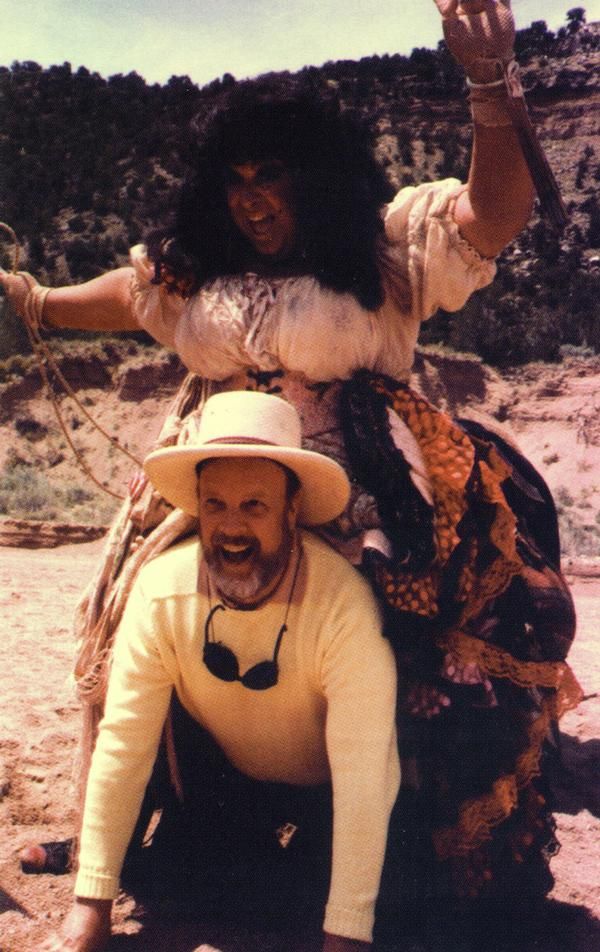
Lust in the Dust (1985)

Now that Criterion has given Multiple Maniacs a restorative spit shine for a recent BluRay release, there aren’t many unsung movies left featuring a performance from Divine, the greatest drag queen who ever lived. Starring roles from Divine are especially scarce, particularly ones outside the John Waters oeuvre. That’s what makes Lust in the Dust so tempting as a potential off-road gem. Divine stars in a comedy directed by the ever-charming Paul Bartel (Eating Raul, Death Race 2000, Scenes from the Class Struggle in Beverly Hills) and no one ever talks about it? How could that be? The answer, obviously, is that the movie is a bit of a stinker and would likely have been forgotten by time completely if it weren’t for Divine’s name on the poster. Worse yet, it feels like a dilution & cheapening of the John Waters brand, which already suffers from being treated like ironic kitsch instead of what it truly is: a collection of the greatest films ever made. Waters was asked to direct Lust in the Dust, but declined because he did not pen the script. Frequent Waters collaborator Edith Massey was cast as a sleazy bartender (not a stretch for her) but died before filming began. Divine stars opposite Tab Hunter, her onscreen rival/lover in Waters’s Polyester. The film also arrived in the seven-year gap between Polyester & Hairspray, which makes me wonder if Divine’s departure from the Dreamlanders crew to pursue projects like Lust in the Dust & her disco career means there were other John Waters projects in the works that were derailed in the meantime. Lust in the Dust isn’t without its occasional charms, but it feels like a huge roadblock that likely prevented better art from seeing the light of day.

Speaking of daylight, Lust in the Dust is a textbook demonstration of the horrors of day drag. Shot in the sun-drenched California desert, the film is a bawdy comedy masquerading as a cheapie Western. Divine is tasked to flop sweat her way through dust-coated comedy routines as stale as the cowboy backdrop that flavors them. A thin story about buried treasure, bandits, and bar fights drags its corpse across the desert sand as playful music continually elbows the audience as a reminder that “This is fun! So funny!” A few of the gags do work, but they’re the rare exception to the rule. I was particularly tickled by Divine’s tendency to crush the head of any man that goes down on her. Her costar Lannie Kazan (of My Big Fat Greek Wedding fame) also gets in a few great one-liners like, “Freeze, hombre, or I’ll be wearing your asshole like a garter,” that remind you that Bartel is usually a super sharp, crass wit. Most of the bits fall dead flat, though. Divine drunkenly falling off a donkey, the small town they raise hell in being called Chile Verde, Divine bashfully pretending she doesn’t want to be gang raped: Lust in the Dust’s major failure is that it isn’t nearly funny enough to justify its own indulgences as an irreverent comedy. Waters was smart to decline the opportunity to direct the picture himself and I’d never want to see my favorite filmmaker tackle something as tired & pedestrian as a Western, but you could bet that if he did the result would be far more energetic & genuinely humorous. Here, the zaniness feels forced and Divine feels weighed down by being tied to an unfunny script instead of being let loose to cause havoc as the no-holds-barred filth monster she truly was.

Lust in the Dust is only a must-see for Divine completists & the morbidly curious. It’s difficult to imagine Western-friendly audiences getting anything more out of it than I did, coming from the perspective of a Waters devotee. Unless you desperately need to see Divine & Tab Hunter share the screen one last time and your copy of Polyester is damaged or missing, I’d advise you to stay as far away as you can manage. It’s best to keep the better memories of Divine alive in our minds than to dilute them with this labored, unfunny dreck. The same goes with the typically wonderful Paul Bartel, really, but it hurts much less to see a dilution of his divinity.

And just so this isn’t a total waste of time, let’s all smile in wonder at the only good thing that came out of this picture: this picture.

-Brandon Ledet

Serial Mom (1994)

Mention Serial Mom to a suitably knowledgeable crowd, and you’ll hear a lot of, “Oh yeah, that was his [Waters’s] last…” and then some trailing off. His last great film? His last successful film? Depending upon whom you ask, both are true, or neither. Whatever your thoughts on it, although it’s part of his post-Hairspray mainstream canon, it’s pure John Waters, even if it does sacrifice a great deal of his notable filth (and maybe picks up some cohesion along the way).

Beverly Sutphin (Kathleen Turner) is the perfect wife and mother in a squeaky-clean Cleaver-esque family, as noted in the text itself. Her dentist husband Eugene (Sam Waterston), son Chip (Matthew Lillard), and daughter Misty (Rikki Lake) all dote on her and are doted upon in turn. Everything is a picture of idealized domesticity, except that Beverly is severely mentally ill and holds intense grudges against those she perceives as having slighted her. She acts out relatively harmlessly at first, making obscene phone calls to her neighbor Dottie Hinkle (Mink Stole, acting against type), but quickly escalating to murder when Chip’s teacher claims at a parent-teacher meeting that he thinks the boy’s interest in horror film is affecting his academic work. Once she crosses that line, she falls down the slippery slope at a rapid pace, snowballing into murdering of Misty’s crush Carl (Lonnie Horsey) for rejecting Misty and bringing another girl (our old friend Traci Lords) to a local swap meet, as well as a various others who are impolite or rude. This leads up to a trial of great spectacle, in which Beverly represents herself and discredits various witnesses and earns the sympathy of the jury, including Patty Hearst (credited as Juror #8), although the films ends on an ambiguous note about the ultimate fate of Beverly (and her family).

As always with Waters, this film is hilarious, with touches of absolute comic genius. Undersung comedian Justin Whalin has a minor role (and a major scene) in the film, and Patricia Dunnock is consistently fantastic as Chip’s (girl?)friend Birdie. There’s a lot to recommend here, but I hesitate to go into more detail for fear of ruining the fun for those who have yet to experience the comic genius. If I had one note to give, it’s that I agree with Roger Ebert’s review of the film; Turner is phenomenal in this film (that “pussywillow” scene alone manages to be both pure art and pure comedy), but she does play Beverly with such an earnest sincerity that, at times, the sympathy for such an obviously unwell woman supersedes humor, but not always.

After all, isn’t Serial Mom the more palatable version of Female Trouble? Or, more accurately, doesn’t (Female Trouble + Polyester) – Desperate Living = Serial Mom? I’m pretty sure my math is right here. Like Dawn Davenport before her, Beverly Sutphin goes on a killing spree and ultimately stands trial for her crimes. But whereas Dawn got the chair, Beverly, lovable insane Beverly, gets away with her crimes (maybe). Dawn gives a pre-execution monologue like she’s getting an Oscar; Beverly’s story is transformed into a TV miniseries and victims of her crimes are willing to sign away their story rights. Both films are chasing a thesis about the celebrity of crime, but Serial Mom does it through the eye of someone who’s seen twenty years of growing media attention and the resultant dilution of public outrage into ironic (and perhaps unironic) antiheroism, not to mention someone who crossed the Rubicon into the mainstream (for better or worse). What I’m saying is this: you can get Kathleen Turner and America’s Darling (D.A.) Sam Waterston into a movie wherein a man gets stabbed in the back with a fire poker and his liver has to be removed from said implement comically, but not a film in which a chicken is crushed to death by fucking. John Waters couldn’t make Female Trouble or Pink Flamingos in 1994, and maybe that’s a good thing; it gave him the opportunity to tackle a similar concept in two different ways, and although the size of an audience isn’t the sole factor in determining success, it can’t be said that Serial Mom didn’t reach a larger audience. What (if anything) it lost along the way is worth the sacrifice to create a John Waters movie you can (almost) watch with your mom.

-Mark “Boomer” Redmond

A Dirty Shame (2004)

As loudly & proudly as I’ll proclaim John Waters the greatest filmmaker/artist/human being of all time now, he was even more important to me when I was an ornery high school student in the early 00s. I owe the entirety of my sense of humor, camp, and love of “bad” movies to teenage introductions to works like Pink Flamingos & Serial Mom, which shook me out of my nü metal shithead phase into something much sillier. That’s why it was a huge deal when Waters released a new film in theaters the summer after I graduated. A Dirty Shame was a return to form for Waters, whose previous two efforts, Pecker & Cecil B. Demented, were a little too mired in arts world self reflection & nü metal era creative doldrums to match the singular eccentricity of his earlier works. With A Dirty Shame, The Pope of Trash figured out how to re-energize his voice in a cinematic climate where once taboo, over-the-top gross-out comedies had become the norm, thanks to success stories like The Farrelly Brothers & the Jackass crew. He did so by returning to the sex-obsessed comedies of his youth and the suburban-invasion narratives of his mid-career mainstream successes like Hairspray & Polyester, crafting a kind of career-retrospective overview of his cinematic aesthetic. A Dirty Shame has only become more valuable over time for that redemptive act of career-spanning review & revitalization, if not only because it might very well be the last film Waters even directs.

Tracey Ullman stars as prudish Baltimore housewife Sylvia Stickles, whose calm suburban neighborhood, her daughter included, is seemingly being taken over by horned-up “sex addicts.” As more & more fetishists appear out of thin air and even the squirrels & shrubbery in her neighborhood begin to titter with teenage-level horniness, taunting her and other “neuters” with lewd acts, this phenomenon appears to be a supernatural event. It turns out to be more than supernatural; it’s divine. Johnny Knoxville soon appears as a Christ-like, miracle-performing figurehead with a devoted, DTF cult of apostles behind him, turning A Dirty Shame into a religious allegory so blatant & over-the-top it would make Aronofsky blush. Sylvia Stickles joins their ranks when she’s struck with a freak accident concussion that leads to a kind of religious epiphany . . . in her clitoris. Along with her fellow concussion-survivors/fetishists, she becomes a devotee to the Second Cumming as a self-identified “cunnilingus bottom,” waging war on the Neuters of her neighborhood & going on a religious pilgrimage to discover “a brand new sex act,” which is feared to be a myth. As the apostles barrel closer to the promised Resurrsexion, their horniness devolves from combative exhibitionism to zombie-level mayhem & sexual terror. Waters builds the cartoonishness of this societal meltdown to a point where it has to accommodate David Hasselhoff’s frozen feces, CGI squirrels headbutting each other in ecstasy, corpses rising from the dead, and a star-filled sky slathered in divine semen in its (literal) climax. It’s even sillier than it sounds.

Of course, like all John Waters films, A Dirty Shame survives more on the outrageous moments of individual flourishes than it does on strength of its plot. Outside a couple shots of flaccid dicks, the film does nothing especially vulgar to earn its NC-17 rating. In fact, it’s arguably a fairly tame entry into the modern sex comedy canon. It is irreverently aggressive in its sex positivity, though, stocking its legion of horned-up side characters with bears, sploshers, rimmers, adult babies, masturbation addicts, and a go-go dancing Selma Blair with Russ Meyer-proportioned CGI tits. Character names like Ursula Udders, Roddy the Rimmer, and Fat Fuck Frank mingle with intentionally shoddy CGI and intensely punny one-liners like “I’m Viagravated and I’m not gonna take it anymore!” to establish joke-a-second ZAZ rhythms that call back to the playful energy of Waters’s early, Dreamlanders era. The only real difference is that the film is more dedicated to silliness than shock value and outside of appearances from longtime collaborators Mink Stole & Patty Hearst, most of the traditional Waters crew has been replaced with the likes of Johnny Knoxville, Chris Isaak, and Tracey Ullman (who’s essentially doing her best Amy Sedaris in the role). Waters even advances his visual aesthetic here, integrating a lyrical use of Ed Wood-esque B-movie ephemera to visualize the film’s horned-up concussion sequences and fully embracing the drive-in horror movie trappings those concussed transformations imply.

Waters has long been teasing the production of a queer-themed Christmas comedy titled Fruitcake. As the years roll on and his struggle to secure the full funding he desires for the project stagnates, it seems increasingly likely that A Dirty Shame will be his final feature as a director. Of course, I’d love to see Fruitcake completed & distributed to as wide of an audience as possible; every Waters film I’ve ever seen in the theater (I’m up to eight now!) always plays better with a crowd. I’ve come to peace with the likelihood that A Dirty Shame will be his final filmmaking triumph, however. It’s a fittingly enthusiastic swan song that encapsulates both the wildly idiosyncratic energy a young & angry Waters gifted the world and the mainstream raunch comedy aesthetic he inadvertently pioneered. At the very least, it saved him from concluding his catalog on the downbeat of his creative lowpoint, the two late 90s arts scene comedies that preceded it. A Dirty Shame brought Waters back to sex cinema as an elder statesman of Filth. We we’re lucky to have seen him shine in all his smutty glory one final time, even if his sense of shock value had become an unlikely kind of cultural norm.

-Brandon Ledet

The Well-Intentioned Letdown of When John Waters Targeted the Art World

Starting with the mid-career course correction of Polyester, cult director John Waters had a kind of creative epiphany. In his earliest works of divine genius (Multiple Maniacs, Pink Flamingos, Female Trouble, etc.), the trash-dwelling provocateur gave life to insular freakshows of over-the-top Baltimore personalities, outsiders who were naturally exuding a punk rock nastiness when hippie feel-goodery still ruled the counterculture. Polyester and its suburban-set follow-ups (Hairspray, Cry-Baby, Serial Mom) found an even more subversive platform for his cinematic freaks, contrasting their outlandish trashiness with the supposedly more well-behaved sect of Proper Society. Hairspray & Cry-Baby were especially adept at exposing suburbia for being a sea of hateful, racist, close-minded assholes in a way that wouldn’t be apparent in more insular settings like Desperate Living‘s Mortville, where the weirdos keep to themselves. After four consecutive films exposed this suburban evil, however, Waters was in need of a new target. Mainstream commercial success had entirely changed his outsider status as a renegade filmmaker & a provocateur by the mid-90s. Waters found himself the toast of both the suburban monsters he’d lampooned for the better part of a decade and the art world snobs who enjoyed his early works for their supposed dedication to irony. With suburbia thoroughly skewered, the director fired off two successive films that targeted the ironic hipsters & mainstream moviegoers who fundamentally misunderstood his passions & his appeal. The intent was admirably calculated, but the results were . . . mixed.

It pains me to write anything even remotely negative about a director I consider to be the greatest artist, if not greatest human being, of all times forever. The nu-metal vibes of the late 90s & early 00s were just poisonous for pop culture in general, though, so it would make sense that Waters would experience the worst creative slump of his career in that era. You can feel him introspectively reaching for something to say in his 1998 comedy Pecker, which continues his childhood period piece navel-gazing in Hairspray & Cry-Baby by centering on a weirdo teen artist who accidentally makes it big just by goofing around with his nobody loved-ones in Baltimore. I think the biggest misconception of Waters’s career, particularly in his early “trash” pictures, is that his portrayals of over-the-top Baltimore caricatures are entirely rooted in a sense of irony. Those pictures are actually coming from a place of feverishly obsessive love. There’s obviously a sense of camp that informs his humor, but Waters also deeply loves & admires early regulars like Divine, Mink Stole, and Edith Massey (as well as his home city of Baltimore) and seemingly only makes his films as a way to document & broadcast their art & their obsessions. Pecker is, above all else, a film about that clash between his intent & public perception of his work. Just as Waters obsessively made movies about his weirdo friends in 1970s Baltimore, he depicts a young photographer (Edward Furlong, the titular Pecker) who obsessively documents his loved ones & their surroundings on the same city streets. That’s why it’s such a betrayal when, in the film and in life, Big City hipsters latch onto those characters only with a sense of irony, laughing at them instead of with them.

Pecker is a film about obsession & authenticity. Even beyond the titular protagonist’s bottomless passion for photography, every character in his social circle has a sitcom-esque dedication to a singular interest: candy, laundromats, shoplifting, clothing the homeless, gay men, pubic hair, ventriloquism, teabagging, etc. These damned souls stay dutifully within their own lanes, only speaking on their one respective topic of interest whenever prompted for dialogue. Pecker finds their passions endearing & documents them within his own sole interest: photography. When his art takes off to an unlikely notoriety in New York City, he assumes everyone championing his photographs is similarly celebrating the beauty of his subjects. Instead, they’re ironically laughing at his “culturally challenged” family & friends for their perceived tackiness. Once this Big City hipster irony is revealed as a real world evil, the film eventually takes the form of a good-natured revenge tale. Pecker invites his new Art World “friends” to Baltimore for his latest show, where they’re given a taste of their own medicine as the derogatory subject of his photographs, a source of mockery. They’re briefly gawked at by Baltimore weirdos as the true freaks for once, until Pecker unites both sides for a climactic party where everyone shares indulgences in each other’s obsessions & collectively cheer, “To the end of irony!” The point being made in that celebration is admirable and I love that Waters took his audience to task for looking down on his weirdo friends as inhuman curiosities instead of genuinely joining in the celebration of their obsessions. The comedy just doesn’t feel as sharp or, frankly, as dirty as it should to match the laugh riot heights of earlier triumphs. Besides a few details involving strip clubs & gay bars (of which The Fudge Palace feels like an obvious ode to New Orleans staple The Corner Pocket), the film didn’t feel very much interested in its own subjects, at least not with the same obsessive intensity they were interested in things like candy & pubic hair. It seems in making a film about art & obsessions, Waters somewhat lost track of funneling his own passionate obsessions into his art.

Cecil B. Demented, the 2000 follow-up to Pecker, feels even more creatively exhausted. Waters shifts his focus slightly from the irony of Art World assholes to the slow death of modern cinema, which he sees as being completely drained of the obsessive artistic passions of his earlier work. Here, the director sides with the artsy types he previously lampooned in order to take aim at the corporate business end of film production. In an opening credits sequence that’s only become more relevant as the years roll on, movie theater marquees are overrun by sequels, franchise titles like Star Trek & Star Wars, comedies starring disposable knuckleheads like Pauly Shore, and art films dubbed from their original languages. As Pecker toasted, “To the end of irony!,” Cecil B. Demented cries, “Death to those who support mainstream cinema!” This is essentially a heist picture where a “teenage” gang (including early appearances from Michael Shannon, Maggie Gyllenhaal, and Adrian Grenier) kidnaps a famed Hollywood starlet (Melanie Griffith, who has no trouble slipping into the role of Terrible Actress) and forces her into a guerilla film production that often borders on outright terrorism. Literally wearing their influences on their sleeves in the forms of tattooed names like William Castle, David Lynch, Herschell Gordon Lewis, and Kenneth Anger, they attempt to disrupt business-as-usual Hollywood filmmaking by bringing artistic obsession back to the forefront of the industry. There’s an unfortunate irony in this intense focus on authenticity, as the movie doesn’t feel nearly as dangerous or as personal as Waters’s own past in guerilla filmmaking. His murderous cinephiles are certainly silly, but you get the sense that he’s on their side, while still failing to live up to their impossible ideals. “Technique is nothing but failed style,” is a great line in isolation, but I’m not sure what it means in a work that’s Waters’s least funny, least stylish, and most obedient adherence to the mainstream technique of its time: the nu-metal Dark Ages.

By the mid-90s, John Waters’s outsider aesthetic had become an essential part of mainstream filmmaking thanks the gross-out comedy boom that followed the success of There’s Something About Mary. There’s an “Okay, what now?” quality to Pecker & Cecil B. Demented that might be a direct result of that assimilation. With a sensibility he was on the ground floor of establishing now the mainstream standard and his own personal obsessions already documented for infamy in previous works, Waters had to find new purpose for his art in a time mired in one of our worst modern pop culture slumps. I admire his ambition in tackling the commercial end of art production in Cecil B. Demented & the earnestness of the art consumer in Pecker, even if I believe those films to represent his worst creative period. Not only is it a half-assed put-down for me to call out a film or two for being the worst releases from my favorite director; this story also has a happy ending in John Waters eventually getting his groove back back in the excellent 2004 sex comedy A Dirty Shame, his most recent (and most underrated) film to date. Having proven himself in so many other titles that transcend these nu-metal era doldrums, Waters’s Art World potshots are worth having around if not only for giving voice to the director’s take on the art & commerce compromises of his industry. Characters describing Pecker’s photography persona as “a humane Diane Arbus” while Cindy Sherman (playing herself) walks around art galleries offering Valium to children or a dangerously horny Michael Shannon shouting “Tell me about Mel Gibson’s dick and balls!” are worthwhile indulgences for their own sake, even if they don’t match the obsessive passion of documenting Divine & Edith Massey’s exploits in the Dreamlanders era. I may wish that the final products were a little funnier & more artistically distinct, but I love that Waters took the time to dismantle art world pretension & empties commercialism once he was done vilifying suburban normies.

-Brandon Ledet

John Waters’s Period Pieces as Punk Culture History Lessons

One of the most fascinating aspects of early John Waters pictures like Multiple Maniacs & Pink Flamingos is how at home they feel with punk culture despite being released well before punk even had a name. Waters’s early 70s freak shows arrived at a time when feel-good Free Love vibes dominated the counterculture, feeling completely out of step in their amoral nastiness & gleeful shock value chaos. The leopard print & leather costuming, bright hair dye, old cars, and return to straightforward rock n’ roll (as opposed to the era’s psychedelic folk & bloated arena rock) of Waters’s early films telegraphed & possibly influenced a lot of what the punk subculture would come to accept as identifiers & badges of dishonor in the years to follow. It’d be easy to think of Multiple Maniacs & Pink Flamingos as being ahead of their time in that way, but a lot of those signifiers of tackiness & bad taste were actually deliberately old-fashioned & out of style holdovers from the 50s & 60s. Waters’s freak show atrocities were poor, degenerate weirdos, conspicuously out of step with the times & repurposing fashion from their parents’ closets and secondhand stores around Baltimore. Waters’s early films suggest that punk culture had existed long before it had a name; watching teen rebels in 1950s garb devour cops alive in Pink Flamingos and defile Catholic churches with blasphemous ass play in Multiple Maniacs bridges the gap between early rock n’ roll rebels & the punk era’s return to that nasty simplicity by skipping over hippie niceness entirely. When the director made his move into mainstream filmmaking with the period pieces Hairspray & Cry-Baby in the 1980s, he made that connection even more explicit, detailing the undercurrent of punk culture rebelliousness that’s always existed among teen outsiders & societal rejects.

Waters often cites Hairspray as the most subversive film of his career. The idea that the unapologetically queer director of some of the greatest shock value films of all time somehow made a massively popular PG-rated comedy about the evils of racism definitely feels like a provocateur getting away with something. Set in early 1960s Baltimore, Hairspray recreates the American Bandstand era pop music mania of Waters’s youth both as a nexus of nostalgia for the time’s tacky fashions & as a platform to discuss the hypocrisy of cultural appropriation. The white teens of the film’s bygone suburbia structure their entire lives around dancing on television to black music, but refuse to integrate socially with actual black people. A baby-faced Ricki Lake stars as Waters’s chief rabble-rouser, who protests Baltimore’s local Bandstand knockoff (The Corny Collins Show) for failing to racially integrate beyond featuring black musicians as performers. This defiance (on top of her default outsider status for being heavier than other teen girls on the show) leads our hero down a back alley world of beatniks, hair hoppers, and black Baltimore teens she didn’t have prior access to at home with her worrisome parents (Divine & Jerry Stiller, history’s greatest power couple). Hairspray somewhat succumbs to the common Hollywood problem of glorifying white people for solving racism, but it also makes it clear that America’s worst monsters are smiling, white, suburban faces. As Edith Massey warns in Female Trouble, “The world of heterosexuals is a sick & boring life.” With the exception of the beatniks, whose portrayal’s even more cartoonish than the Roger Corman take in Bucket of Blood, teen counterculture is presented here as the sane alternative to the hideous norm. Hair hopper fashion is far from the signifiers of punk telegraphed in earlier Waters films, but it is equally garish and designed to outrage parents. The music may also be a much simpler, more soulful version of rock n’ roll, but it’s operating with the same rebellious spirit that punk aspired to echo as a disruption to hippie feel-goodery. Hairspray offers Waters’s tamest (and possibly most subversive) version of protopunk teen rebellion, but its historical sense of outrageous teen fashion & disgust with racial fascism are at least in line with punk ideology.

The punk undercurrent is much more immediately apparent in Hairspray‘s follow-up, Cry-Baby. Flipping the calendar back even further to the teen rebels of the 1950s, Cry-Baby is a movie musical pastiche of teen gang melodramas like The Wild One & Rebel Without a Cause (with a little Jailhouse Rick thrown in for good measure). Johnny Depp stars as the titular Cry-Baby, a teenage delinquent who constantly breaks laws to honor the lives of his dead criminal parents, but then cries for the evil things he has to do in their name. The leather jackets & straightforward rock n’ roll of Cry-Baby‘s world are a clear source of inspiration for punk’s barebones, no frills ethos. Although racism is certainly at play in suburban Baltimore’s hatred of its teen counterculture element, the movie distills its “squares” vs. “drapes” dichotomy by making teenage outsiders’ very existence the scourge that’s being targeted. When a young teenybopper dares to cross the social line dividing squares & drapes (becoming a “scrape” hybrid, according to Ricki Lake’s crony), she completes the transformation with a Bad Girl Beauty Makeover, which is very similar to the way young outsiders are inducted into punk culture with shaved heads, piercings, new names, etc. I’m not a huge fan of the songs performed during Cry-Baby‘s traditional movie musical numbers, but seeing the same mainstream production design from Hairspray being applied to a love letter to teenage delinquency in those moments of Hollywood Tradition feels like yet another subversive act on Waters’s part. Waters looks back to the Elvis musicals of his youth to draw a direct connection from the leather jacket rock n’ roll of that era to the protopunk outsider freaks he previously featured in his early Dreamlanders productions. He may have been ahead of the curve on punk culture, but he’s more than willing to provide historical context on why he wasn’t the first to get there.

Just in case you weren’t already clued in by the teenage delinquency and hair hopping social outrage of his two period pieces as punk culture history lessons, Waters also cast two punk icons in central roles in the films. In Hairspray, Debbie Harry features as the racist, uptight mother of one of the most popular dancers on The Corny Collins Show. Cry-Baby casts Iggy Pop as a wild-eyed societal outcast who never outgrew his rebellious teen spirit (not that he really stood much of a chance in avoiding that). Waters’s early 70s version of protopunk grime feels far less out of nowhere after the historical context laid down in these two period pieces, which is an invaluable history lesson on punk’s eternal spirit in teen awkwardness & angst, political or otherwise. More importantly, though, these two films allow Waters an opportunity to contrast the warmth & righteousness of those outsider communities with the grotesque horrors of straight, square suburbia. Polyester was an epiphanic moment in the filmmaker’s career where the aping of Douglas Sirk melodramas showed him the value of contrasting his societal freakshow outsiders with straight-laced, “normal” settings. Hairspray & Cry-Baby focused more intently on exposing these settings as hateful, destructive forces. By bringing his cavalcade of horrors to suburbia, Waters found a chance to emphasize how mainstream culture was so much worse, from the broken legal system to white women spouting hateful racism in the faces of black youth to the grotesque wet smacks of heterosexual teens making out (which is far more disgusting than watching Divine eat dog shit, to be honest). John Waters’s punk culture history lessons are not only a great reminder of the consistent presence of teenage delinquents & societal outcasts in modern American life, but also a necessary indictment of the hatefully homogenized culture those small scale rebels buck against with their mere existence. The great punchline to that joke, of course, is that the mainstream culture he skewered in those two titles ate up that shit & financially sealed his fate in filmmaking infamy. He not only profiled the evolution of punk spirit through the ages, but also sold that historical glorification to the very people who made punk politically & culturally necessary.

-Brandon Ledet

Episode #38 of The Swampflix Podcast: NOMA’s John Waters Film Fest & Dr. Heckyl and Mr. Hype (1980)

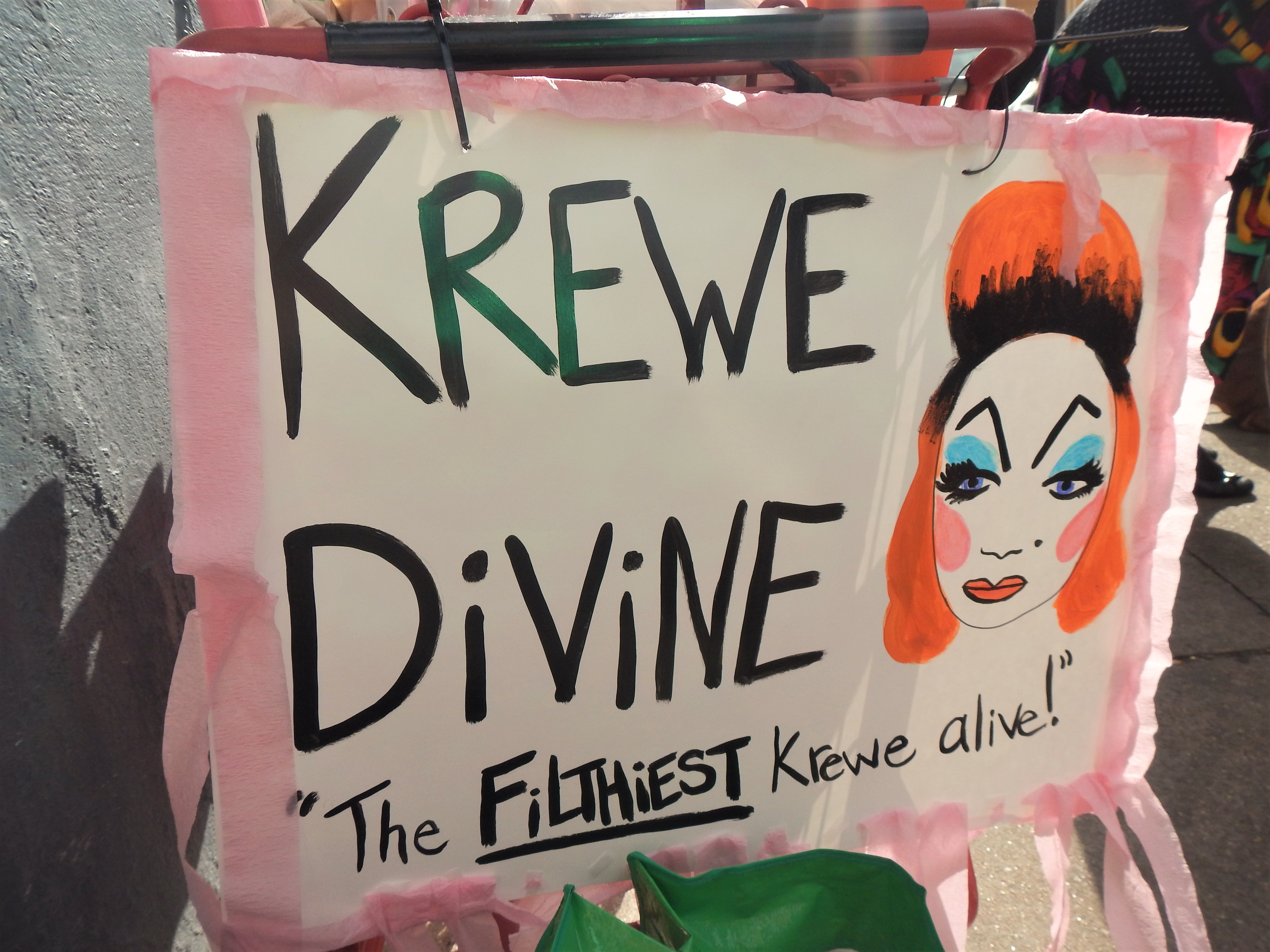
Welcome to Episode #38 of The Swampflix Podcast! For our thirty-eighth episode, we tackle the career of our favorite living artist/human being. Brandon and Britnee recap the New Orleans Museum of Art’s recent summertime John Waters Film Festival with fellow Krewe Divine co-founder Virginia Ruth. Also, Britnee makes Brandon watch the Golan-Globus horror comedy Dr. Heckyl and Mr. Hype (1980) for the first time. Enjoy!

-Britnee Lombas & Brandon Ledet

Pink Flamingos (1972)

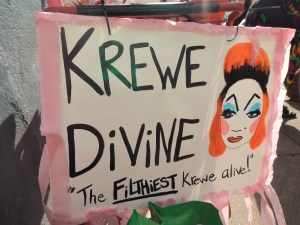
Although it’s the title that’s immediately conjured whenever you mention the name of my favorite filmmaker, I had somehow allowed Pink Flamingos to slip in my estimation over the years. Hairspray may be John Waters’s most popular film (and thus, according to Waters himself, his most subversive), but it’s arguable that Pink Flamingos is his most iconic. If a casual cult movie fan hears John Waters’s name, Pink Flamingos will usually be their go-to reference point, typically followed by an offhand remark about Divine, the greatest drag queen who ever lived, eating dog shit in its infamous epilogue. When I started a Divine-inspired Mardi Gras krewe with fellow Swampflix contributors earlier this year, we relied heavily on the film’s icon status to establish our visual aesthetic; we paraded a flamingo-adorned flag pole and handed out fake piles of shit as our signature throws. Still, my tone when discussing Pink Flamingos has become increasingly dismissive & apologetic in recent years. I love Waters’s films so much (with Desperate Living & Serial Mom being personal favorites) that I feel an ingratiating need to downplay his most monstrously juvenile work’s significance in his ouevre so as not to scare people off from giving his other, less shock value-dependent works a proper chance. After seeing Pink Flamingos‘s trial run predecessor Multiple Maniacs at last year’s New Orleans Film Fest and recently re-watching the trashterpiece on the big screen for the third or fourth time in my life with an appreciatively rowdy crowd at the New Orleans Museum of Modern Art (on my birthday!), I’ve been forced to reassess that apologetic stance. Basically, what I’ve been saying is bullshit. Pink Flamingos is a perfect work of fine art trash cinema, one of the most hilarious comedies ever made.

Much like in Multiple Maniacs, Divine plays herself in a boisterous love letter to her own drag persona. Instead of running an illegal sideshow, however, she’s embroiled in a tabloid-documented war for the title of The Filthiest Person Alive. She has a fairly solid claim to that throne too. Living in a secluded trailer with her two sexual deviant children and her egg-addicted mother (a top-of-her-game Edith Massey), Divine cultivates a kind of Quentin Crisp celebrity; she’s famous for being famous. This infuriates a married couple who are her only true competition for the Filthiest People Alive title, Raymond & Connie Marble (David Lochary & Mink Stole, respectively). The Marbles go out of their way to cultivate a reputation for Filth, forcing hitchhiking teens into slavery & impregnation so they can sell the resulting babies to lesbian couples on the black market. They taunt Divine directly by sending her human shit in the mail & reporting her birthday party celebrations to the police (who the revelers immediately eat & kill, naturally). Eventually, these pretenders to the throne’s “attacks on her divinity” get to be too much for Divine to ignore and the two factions come head to head in a race to see who can execute whom first. Of course, plot is entirely besides the point in this kind of bad taste comedy, which more or less extends the sideshow structure of Multiple Maniacs for a second, more depraved runthrough. Inane conversations about eggs, Divine shoplifting beef under her dress, and even the infamous dogshit conclusion all amount to more than anything that could be considered a plot point. It’s essentially a loosely connected strand of sketch comedy vignettes, a hangout film of the damned.

Waters was still a young, hungry filmmaker where he made Pink Flamingos. You can feel that green, eager-to-shock energy in his need to wear his influences on his sleeve. Movie posters adorn the walls of the Marble home; Russ Meyer’s fetish for classic cars & giant tits are echoed openly at every opportunity; the theme from the Jayne Mansfield film The Girl Can’t Help It soundtracks the shoplifting scene at the deli. Still, Pink Flamingos feels astoundingly ahead of its time considering the hippie-flavored Free Love vibes that dominated most counterculture in the early 70s. Waters’s mean freak proto-punk monstrosities, with their leopard print clothes & brightly dyed hair, are a total anomaly. Sometimes that reverence for exploitation cinema shock value can devolve into an amoral ugliness, such as in a hard-to-watch rape scene that involves the real-life death of a chicken (that the crew reportedly grilled & ate after the shoot) & a cry to free one of the key members of The Manson Family. Mostly, though, the so-called Dreamlander crew’s pre-punk ethos is expressed in transcendently silly, aggressively progressive ways: singing buttholes, go-nowhere diatribes about eggs, trans women flashing the camera, a D.I.Y.-flavored disinterest in formalism or good taste. Every time I see Pink Flamingos projected for an audience there are just as many disgusted walkouts as there are people laughing themselves to tears. As the film will be half a century old in just a few years and Waters’s penchant for Filth has been filtered through the mainstream thanks to decendents like the Jackass crew & the Farrelly Brothers, that’s no small feat. The film is just as funny, filthy, grotesque, and vividly punk now as it’s ever been.

The NOMA screening I recently attended merely just projected the same DVD transfer of Pink Flamingos I own at home (on a significantly smaller screen than where it usually plays at The Prytania). Yet, seeing it with that disgusted/delighted art museum crowd was an essential reminder of exactly how transgressive (and gut-bustingly funny) this nasty slice of trash cinema still feels with a modern audience. I need to stop downplaying its place in the Waters ouevre. Pink Flamingos is damn funny and, if punk still means anything culturally in the 2010s, damn important.

-Brandon Ledet

Searching for Divine Inspiration at Walt Disney World

Mere hours after debuting our Divine-inspired, Swampflix-sponsored Mardi Gras krewe this past Fat Tuesday, CC & I found ourselves riding in the back seat of an SUV, exhausted, and headed toward Disney World. An immersive, three day adventure to the Happiest Place on Earth is always going to be a disorienting vacation no matter what mental state you’re in. Yet, there was something especially absurd about diving head first into such a wholesome fantasy space after running rampant through the French Quarter all morning, dressed as famous drag queen and frequent John Waters collaborator Divine in the alcohol-enhanced sunshine. 

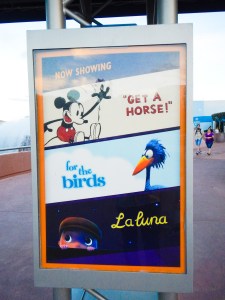
At first, I wasn’t sure exactly what I wanted to accomplish while at Disney World besides checking off a few boxes as a film buff. That part was easy. A visit to a Walt Disney memorabilia museum titled One Man’s Dream, a similar Star Wars exhibit, a charmingly outdated 3-D Muppets screening, and a regularly-running “short film festival” of interactive Disney & Pixar selections all satisfied my apparent addiction to sitting in the dark, watching moving images. What was a much more difficult itch to scratch was maintaining our focus on our previously most recent task of keeping Divine’s legacy alive. You’d think that finding anything related to Divine or John Waters at large would be an impossible feat in such an aggressively clean environment, but Divine’s presence can be found in all things. And in Disney World, it can be found in Ursula.
The sea witch Ursula, of course, is the main villain in Disney’s modern animated classic The Little Mermaid. Although the construction of her persona can be attributed to many different influences, including both Elaine Stritch & Joan Collins, Ursula’s physical form was directly modeled after Divine (the top, non-octopus half was, anyway). The Little Mermaid‘s animators scrapped an initial idea to adorn Ursula with a hairstyle similar to the one Divine rocks in Pink Flamingos for being “too over the top,” but they did notably maintain her signature eye makeup & unmistakable body type for Ursula’s final form. The characters’ resemblance isn’t exactly uncanny, but it is blatant.

Ursula’s gigantic presence in The Little Mermaid, both physical & narrative, is a difficult effect to replicate in a kids’ amusement park, not least of all because the park would likely want to avoid scaring the shit out of children. It makes sense, then, that human actors would only be asked to portray Ariel from the film for the park’s rigidly scheduled photo ops & daily Festival of Fantasy parade. That doesn’t mean Ursula (and, by extension, Divine) has been locked out of the park entirely, though. She’s lurking around with her slithering eel accomplices (mostly in the form of large animatronic puppets) if you know where to look for her. Hopefully our search for Divine inspiration within Disney World parks will help expedite others’ in the future, in case anyone finds themselves visiting Orlando while as thirsty for Divine content as we were.

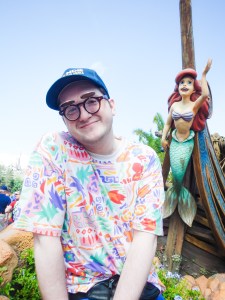
We started with the most obvious place you’d think to find Ursula lurking in the Walt Disney World parks: Magic Kingdom. There is exactly one The Little Mermaid-themed ride in Disney World’s oldest & most iconic park: Under the Sea – Journey of the Little Mermaid. Outside the ride you can wait in line to meet & take pictures with a professional Ariel cosplayer in her “grotto.” In line for the actual ride, Scuttle, the hoarder seagull, tries his best to simplify & recount the film’s plot in a digestible morsel to temper your boredom & distract you from heat exhaustion. Once inside, you’re strapped into a slow-moving clamshell vehicle that glides peacefully by two animatronic Ariels. One sings, “Part of Your World” and the other dances along to the ride’s centerpiece: a colorful, puppet-filled rendition of “Under the Sea” that’s doused with the widest variety of day-glo paint you’re ever likely to see in a single room.

None of that underwater glitz & glamor is our concern here, though. We’re looking for Divine. Ursula arrives in the ride just after the second Ariel in the “Under the Sea” number, isolated all by herself in a dark cove. She is a beautiful, oversized mechanical puppet I can only picture in my memory as cackling maniacally, even though in reality she sings a song. The purple sea witch is a breath of fresh, menacing air in a literal sea of smiling faces. Soak it in, because it will not last for long. After a glorious moment of hearing Ursula belt out the chorus of her show-stopping number “Poor Unfortunate Souls” in front of her giant crystal ball, she fades from the rest of the ride (or at least her inhuman, Divine-inspired form does), never to be heard from again. It was an all-too-brief Ursula encounter, but it fortunately wouldn’t be our last.

The next stop for Ursula content was a little less obvious and just happened to be something we stumbled into. As a park, Disney’s Hollywood Studios (formerly Disney-MGM Studios) is a little less cartoon-heavy than Magic Kingdom. This will be especially true once its current in-progress overhaul bulks up its Star Wars & MCU-themed attractions (for obviou$ rea$on$). The park is intensely focused on live theater, though, with attractions like The Tower of Terror & whatever the monstrously obnoxious Aerosmith rollercoaster is called existing as total outliers in an environment typically dedicated to more traditionally dramatic modes of entertainment. We were already having enough fun in the park being traumatized by the uncanny valley nightmare of the Robert Osbourne-hosted The Great Movie Ride (R.I.P.) and the distinctly Norman Bates theatricality of our server at the 50’s Prime Time Café, but there’s no good time that can’t be improved by a little Divine. Thankfully, the Divine lurking in Hollywood Studios was a large one. Freakishly large, even.

Located in the park’s Animated Courtyard area, the routinely performed indoor show Voyage of the Little Mermaid is very similar in content to the Journey of the Little Mermaid ride at Magic Kingdom (as if you couldn’t tell by their titles). Fish sing “Under the Sea;” Ariel sings “Part of Your World;” Ursula sings “Poor Unfortunate Souls” and then promptly disappears before the happily ever afters. It’s the same tidy retelling of the animated film with one major exception: the puppets. Whereas the Journey of the Little Mermaid ride is all 100% animatronic puppetry, the Voyage of the Little Mermaid is more of a mixed media affair. The fish puppets are all hand-operated by performers working in the stage’s shadows, Ariel & her boy toy Eric are portrayed by live human actors (as is the more degrading role of Eric’s dog), and the whole show is substantially beefed up by projections from the original animated film, laser light displays, and a waterfall curtain that smells authentically like seawater (whether or not the effect is intentional). It’s a totally pleasant, refreshingly cool way to spend 17 minutes of your life in the park, but what’s most impressive is the way the mini-play brings Ursula to life.

While Ariel & her fishy friends are given a new form of representation in Voyage of the Little Mermaid to distinguish them from Journey of the Little Mermaid, Ursula remains animatronic puppet. She’s so much more impressive in the show than she is in the ride, though, as her size is blown up to 12 feet high & 10 feet wide. I already fell in love with the mechanical puppet from the Little Mermaid ride (which is the more strikingly beautiful one in terms of basic visual craft), but it’s just absolutely dwarfed by the intimidatingly gigantic puppet from the show. It’s the kind of scale & magnificence that almost makes you want to fall to your knees in worship. In other words, it’s absolutely Divine.
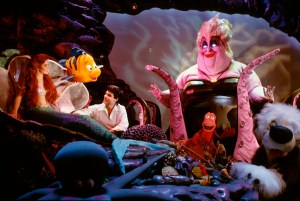
That giant puppet would be the last Divine presence we located at Disney World, but, honestly, her magnificent size would’ve been difficult to top by any other display. Maybe there was an Ursula lurking somewhere in one of the three parks we didn’t have a chance to visit (Animal Kingdom, Typhoon Lagoon, Blizzard Beach), but that seems highly unlikely. The only other places to search for our Divine inspiration, then, would be the park’s other other main attraction besides rides & shows: merchandise.

Disney villains from decades-old cartoons aren’t going to move nearly as much merch as the likes of an Elsa or an Olaf or an, um, Other Thing from Frozen. That doesn’t mean there’s no Ursula merch to be found in the parks, though. You just sometimes have to accept her as a package deal with other characters. For instance, outside the Finding Nemo ride at Epcot (which dumps you into a surprisingly decent aquarium), there’s an underwater-themed gift shop that sells a collection of Little Mermaid “squeeze toy” figurines. Ursula’s included, but you have to buy the whole collection to get her. Similarly, I found (and, of course, purchased) a purple baseball cap that features several of Disney’s more infamous female villains like Maleficent, the Evil Queen from Snow White, and, duh, Ursula. According to a brief search of the term “The Little Mermaid” on Disney World’s creepily helpful Disney Go app, there were some really nice Ursula “couture de force” figurines, art prints, and blouses for sale, but we never laid eyes on them (and they would’ve been far outside our price range anyway).

If you really want to take home Ursula’s visage isolated on some affordable merchandise, your only viable option is to find her on an enamel pin. We happened to purchase some Ursula pins at a kiosk located outside Space Mountain, but Disney has a surprisingly strong, park-wide enamel pin culture. You could probably find the damn things in any shop you poke your head into, as a lot of the stores seem to carry overlapping merch. (The same also goes with the squeeze toy figurines we found outside the Finding Nemo ride.) There’s also a lot of annual turnover on the merch that’s sold within the parks, so not only is it possible that we missed out on some sweet Ursula gear when we happened to be there, but you can also likely find excessed deadstock of old Ursula merch at the various Disney outlet malls sprinkled throughout Orlando.
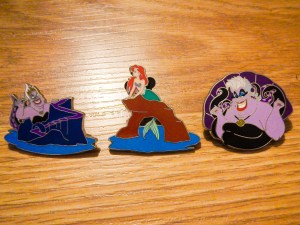
We really have no clue where Krewe Divine’s headed in the future in terms of scale or membership. It’s only a matter of time until one of us dresses as Ursula on Fat Tuesday, though, so it really was a treat to cap off our first year as a microscopic Mardi Gras krewe by treating Walt Disney World like an unofficial Divine scavenger hunt. As the release of The Little Mermaid is already nearly three decades behind us, it’s likely that Ursula’s Divine presence within the amusement park is on borrowed time. As is, she’s seemingly only represented in the form of two (beautiful) animatronic puppets and a few enamel pins already. Even that’s enough representation worth celebrating, though. I was overjoyed to see her there in any form. In a way it’s a kind of a miracle that there was ever any John Waters-adjacent content to be found at Disney World at all. It’s even more of a miracle that it happened to be Divine.
-Brandon Ledet

Krewe Divine’s Maiden Voyage

EPSON MFP image

There comes a time in your adult life when maturity & experience leads you to making tough decisions and strengthened dedication to the things that matter most. That’s why a few of us here at Swampflix have decided that it’s time to get serious about Mardi Gras. Every Carnival season there’s always some kind of personal crisis about what to wear or what themes to play off of while costuming in the Quarter, but that’s something that never seems to be a problem for krewes that stick with a consistent theme in their annual masquerading. Those revelers always seem to have their shit together. Since Swampflix was launched two years ago, we’ve tried our best to find the ways cinema is represented in Mardi Gras festivities, whether by covering the Star Wars celebrations of Chewbacchus or by costuming as the titular plague from the Vincent Price classic The Masque of the Red Death. It never quite feels like enough, though. As it’s time to get serious about how we can contribute to cinema’s presence in Mardi Gras festivities, we’ve decided to find our own sense of dedication & consistency in forming a new costuming krewe that celebrates one of our all-time favorite onscreen performers: Divine.

Arguably the greatest drag queen of all time, Divine was the frequent collaborator & long-time muse if one of our favorite filmmakers, John Waters. Her influence on the pop culture landscape extends far beyond the Pope of Trash’s Dreamlanders era, however, emanating to as far-reaching places as the San Franciscan performers The Cockettes, the punkification of disco, RuPaul’s Drag Race, and Disney’s The Little Mermaid. We hope to honor the Queen of Filth in all her fabulously fucked up glory by forming a new Mardi Gras tradition in Krewe Divine, a costuming krewe meant to meet in the French Quarter on every Fat Tuesday from here to eternity. Our initial krewe is a small group all made of Swampflix contributors: site co-founders Brandon Ledet & Britnee Lombas, podcast co-host CC Chapman, and former podcast guest Virginia Ruth. There’s no telling how Krewe Divine will expand or evolve from here as we do our best to honor the Queen of Filth in the future, but for now, enjoy some pictures from our 2017 maiden voyage as Swampflix’s official Mardi Gras krewe:


-The Swampflix Crew

Multiple Maniacs (1970)

EPSON MFP image

fourhalfstar

campstamp

I’ve seen a few John Waters classics like Desperate Living & Pink Flamingos projected on the big screen before, usually with a midnight crowd, but I’ve only had two experiences watching his work for the very first time in a proper movie theater: 2004’s A Dirty Shame & the 2016 restoration of his 1970 forgotten gem Multiple Maniacs. Surely, there’s a bias factor that should be considered when reviewing a work from your favorite director/artist/human being after experiencing it for the first time large & loud with a receptive film fest crowd. My personal devotion to Waters aside, though, Multiple Maniacs is still an excellent slice of go-for-broke shlock cinema. A smaller, arguably nastier provocation than Pink Flamingos, it answers a question I’m not sure I ever would’ve dreamed to ask: what if John Waters made a horror film? It’s impossible to divorce the context from the content in this case, because Waters is such a highly specific stylist & works so closely with a steady cast of nontraditional “actors,” but even if the director had never made another feature in his life I believe the world would still be talking about Multiple Maniacs all these decades later. Horror films this weird & this grotesquely fun are rarely left behind or forgotten and, given the devotion of Waters’s more dedicated fans, I’m honestly surprised it took this long for this one to get its proper due.

I guess I should clarify up front exactly what I mean when I call Multiple Maniacs a horror film. Unlike the subversive horror comedy leanings of Serial Mom, this is horror in the way titles like Spider Baby & Mudhoney qualify. It’s a grimy uncovering of an outside-of-society crew of murderous weirdos, the kind of picture that eventually lead to more conventional slasher genre space carved out by The Texas Chainsaw Massacre, but didn’t quite have its own established tradition at the time of its release. Waters displays no shame in his getta-load-of-this-freakshow dynamic, opening his film with a literal freakshow: Lady Divine’s Cavalcade of Perversions. A carnival barker advertises “acts against God & Nature” to entice the audience & passersby inside the tent, all while feigning mock disgust. There’s gleeful puke-eaters, bicycle seat humpers, and actual real-life homosexuals (the horror!); but the real star of the show is Divine herself, Waters’s most infamous collaborator and, arguably, the greatest drag queen of all time. Divine’s freakshow act is simply her own fabulous being. She holds her audience at gunpoint, bullies all of her employees, and lounges nude in the mirror to give full reverence to her own beauty & divinity. Her turbulent romance with David Lochary’s carnival barker, with its cop-killing violent streak & dual indulgences in adultery, drives the isolated freakshow into the general public, where Multiple Maniacs turns into a legitimate monster movie. Not only does Divine herself transform into an inhuman monster with a formidable body count, the film also makes room for an appearance from a giant monster movie-style lobster just for the sake of it.

It’s tempting to believe that this early glimpse at John Waters’s regular crew of degenerate collaborators, The Dreamlanders, would mostly benefit the already-converted. Surely it’s exciting to see these weirdos in their artistic infancy. Edith Massey seems particularly fresh & unpolished in her natural habitat as a barkeep. It’s weird to know that David Lochary’s look as Raymond Marble in Pink Flamingos was something he exuded all the time. Mink Stole, Cookie Mueller, and Divine are all playing prototypes of the characters who would later be cartoonishly exaggerated in other Dreamlander collaborations, with Divine’s monstrous transformation in particular being explained in-film with the line “Every minute she’s alive she’s getting worse & worse!” Waters even draws conscious attention to this “cavalcade of perversions” by naming the characters after their real life counterparts: David, Mink, Cookie, Edith, etc. There’s no doubt that longtime fans of the director’s work would get a kick out of this overlooked gem’s babyfaced cast that newcomers might not tend to care about in any particular way. However, the film does have a recognizable appeal as a genre film artifact even outside of that context and it’s a dynamic largely due to its nature as deliberately campy horror.

Seeing Waters’s “cavalcade of perversions” at work so early in his career is valuable both to fans & newcomers alike because it calls attention to the fact that The Dreamlanders were straight up punks in the era of hippies & suburban sprawl. The surf rock soundtrack, beat-up Cadillacs, crossdressing, and leopard print get-ups of Multiple Maniacs construct a rock & roll nightmare incongruous with its then-current counterculture of hippie niceness. This is a playfully mean movie, one crawling with cartoonish rape humor, gleeful violence, and the single most blasphemous use of a prayer rosary imaginable. It’s no wonder that in Divine’s final moments of mania she’s treated like a Godzilla-esque monster complete with fleeing crowds & an armed military response. The world wasn’t quite ready for her particular brand of perversion and her very existence reads on the screen as a criminal act, one amplified by the film’s microfilm-reminiscent opening credits scroll. That shock value even holds power today, somehow, as I’ve never attended a John Waters screening that didn’t inspire at least one walk-out. Even in a film festival environment there were three hurried walk-outs during Multiple Maniacs. I don’t know if that speaks more to Waters’s reputation as The Hairspray Guy, the aggressive specificity of his sense of humor, or his unique ability to push buttons, but it’s honestly kind of incredible that any film from 1970, before the grindhouse heights of drive-in grotesquery, can disgust people into fleeing in horror in 2016, especially one this unabashedly silly.

Waters is obviously an inexperienced filmmaker in Multiple Maniacs. He catches his players wildly out of focus, he wears his influences proudly on his sleeve (including a poster for Russ Meyer’s Vixen!), he relies heavily on details like nudity & (absurdly unrealistic) rape scenarios for easy shock value, etc. However, the film holds up surprisingly well as a proto-punk provocation, maybe even one with wider commercial appeal than the more consistently celebrated Pink Flamingos, due to its genre thrills as an eccentric horror comedy of sorts. I’ll likely have very few more chances to catch one of his films for the very first time in a public audience environment & this one did not disappoint in the slightest. In an ideal world all of Waters’s back catalog would get this careful restoration treatment.

-Brandon Ledet