Silver City (2004)

Writer’s Note: This was originally submitted for publication December 20, 2020, over two weeks prior to the insurrection in the U.S. Capitol Building.  Life comes at you fast, doesn’t it? 

While on my recent writer’s retreat, I spent some time free of wi-fi and, when I had run out of ideas for the day, enjoying the cornucopia of DVD delights that my cabin’s hosts had left behind. There were 21 DVDs, of  which three were things that I had at home (Stranger than Fiction, Cabin in the Woods, and something I’m too embarrassed to admit), four that were exercise/yoga related, and a number of westerns that I obviously ignored. Most of them seem to have come from that 2003-2009 “Blockbuster’s Twilight Years” era, having been purchased from the now-defunct company during its last years, with a decidedly independent bent. And so it came to pass that I have now seen Silver City, the 2004 political satire directed by Passion Fish-helmer John Sayles. 

The plot is relatively labyrinthine and cribs from Chinatown (there’s even discussion of water rights in a potential real estate development) and the then-contemporary election year political discourse du jour, which is depressing both in how unbelievably stupid the whole thing was and how much more dignified it was than 2020. Our lead is Danny O’Brien (Danny Huston), a former reporter turned private investigator after filing an explosive, provocative story whose informants later recanted under pressure from the political establishment, ending that phase of his career and ultimately bankrupting the paper that employed him. Danny is brought in when dim-witted Colorado gubernatorial hopeful and George W. Bush analog Dickie Pilager (Chris Cooper) accidentally hooks a dead body while shooting a bucolic political ad that sees him fishing in a  pristine lake. His cutthroat campaign manager Karl Rove Chuck Raven (Richard Dreyfuss) hires Danny’s agency to help determine where the body, that of a tattooed Latino man, came from while keeping the whole thing under wraps. Danny is aided in his investigation by Mitch Paine (Tim Roth), a former colleague in his past life as a newspaperman who now keeps the public informed in his own jaded way: leaking enough of the incomprehensibly large, true evil done by government that is too tied up in corporate interests, in the hopes of getting legitimate news outlets to pull the thread enough to take down bad political actors. Along the way, he also receives assistance from Tony Guerra (Sal Lopez), who works within the undocumented community to try and identify the dead man. 

There are three major enemies of the Pilager campaign that Danny is sent to investigate/quell: right wing radio pundit and political commentator Cliff Castleton (Miguel Ferrer); former mining safety inspector Casey Lyle (Ralph Waite), who was ousted in disgrace following a falsified scandal involving an accident; and Maddy Pilager (Daryl Hannah), Dickie’s disgraced “nympho” sister, the free-spirited black sheep of the family and once-and-current Olympic archery hopeful. Of them, we spend very little time with Castleton, but Ferrer makes an impression as what a right wing nutjob used to look like: power-hungry, conceited, and exploitative, but educated, tempered, and articulate, back when the people in such positions were merely obstructive backward, not completely insane or opposed to scientific progress, immoral but not amoral (Ben Shapiro clearly thinks he’s the heir apparent to William F. Buckley but he could never, and Buckley himself was a terrible person, but I’d take him over Charlie Kirk or Alex Jones any day of the week and twice on Sunday). It’s a stark reminder of how far we’ve fallen in so short a time—I’m in my mid-thirties, and I wasn’t even old enough to vote in the presidential election that happened the year this movie was released, so chew on that for a second. As a mirror of American politics of the new millennium, it feels like this movie is a reverse portrait of Dorian Gray that, though depressingly hideous, has grown more lovely with time as the body politik visibly betrays every hidden malice, every wicked act of greed, and every failure of decency

The titular “Silver City” is a proposed land development deal to build a planned community in land that is beautiful but unfit for human habitation: mining has made Swiss cheese of the hills and rendered the groundwater contaminated, but Pilager patriarch Senator Judson Pilager (Michael Murphy) made a bad investment in it and was bailed out when family friend and multi-millionaire business mogul Wes Benteen (Kris Kristofferson) purchased the land from him far above its value. In exchange, Benteen wants to skirt the regulations that have prevented the development of Silver City and, one presumes, swim around in his profits like Scrooge McDuck. Kristofferson is fantastic here, appearing in only a few scenes but leaving a lasting impression and an air of malice, casual evil-by-way-of-enterprise. In his major scene, he takes Dickie on a horseback ride through beautiful, uncorrupted nature while decrying the regulations that keep it so; he can barely contain his bile as he curses the name of the Bureau of Land Management and other agencies, and it’s evident that in his dreams he sees the purple mountain majesty in the background as crawling with excavators and bulldozers like ants, but he paints his vision of the future with such a lovely palate that Dickie buys it.

Benteen is aided in this endeavor on multiple fronts. There’s sad Mort Seymour (David Clennon), who’s trying desperately to sell local government authorities on the Silver City idea, and who gains ground when Benteen puppeteers a casual, ostensibly coincidental run-in with Dickie at a local restaurant (Dickie’s election to the office of governor is treated as a foregone conclusion). Also on Benteen’s bench is slick, sleazy lobbyist Chandler Tyson (Billy Zane at his absolute oiliest), who presages the Kirks and Shapiros of the present as someone with utterly no moral compunction about flat-out lying with a straight face. His moral compass points due south, as he demonstrates in one of the film’s best, most nauseating lines: “Every idea, no matter how politically incorrect, deserves an advocate.” What he’s talking about in that moment is his previous testimony to Congress that there is no identifiable link between smoking and lung cancer. The idea was absurd, even for 2004, but it foretells a time when the general public would fall for easily disprovable scientific fact, like that the earth is (generally) round, that climate change is real and affected by human action, and that COVID-19 is real and deadly. 

Narratively, Danny’s investigation is complicated by two issues in his personal life: his employer Grace (Mary Kay Place) is married to Mort, which we learn late in the film, and the impending marriage of Tyson to Nora Allardyce (Maria Bello), a morally just crusading reporter who has a huge blindspot regarding Tyson’s lack of a conscience and also happens to be Danny’s ex. It’s clear to everyone paying attention that Dickie is completely out of his depth when he’s confronted without extensive preparation and coaching, at which point he repeats himself, cites jingoistic jingles, and makes it clear via an inability to express a single intelligent thought extemporaneously that he lacks any real savvy or acumen. (Remember, this was made in a time before The Right realized that they could get people to slurp that up with a spoon as long as it was sufficiently combined with white supremacist rhetoric.) This isn’t really relevant to the mystery of the watery corpse, however, except in the way that evil breeds evil. As it turns out,the deceased Lazaro Huerta (Donevon Martinez) was an undocumented day laborer who died in one of Benteen’s facilities. To prevent the exposure of Benteen as both (a) a hypocrite who exploits immigrants for cheap labor while decrying the practice and (b) a manufacturer who fails, mortally, to meet the OSHA regulatory guidelines that he derides as part of his deregulation agenda, Huerta’s body was hauled into the hills and thrown down an abandoned mineshaft that had previously been used to dispose of Benteen’s toxic waste. Casey Lyle (remember him?) had been trying to blow the whistle on the fact that the mines were now prone to collecting water in times of torrential rains and causing flooding in the future home of Silver City; one such flood had washed Huerta’s body into the lake, as will everything that’s hidden there, eventually.

There’s one man who could help reveal all of this: Vince Esparza (Luis Saguar), a cutthroat who obtains and arranges laborers, including for Benteen on the site where Huerta was killed. He threatens Danny and is shot by an overzealous sheriff’s deputy,  the two men who initially told Danny about the mineshaft are captured by I.N.S. and prevented from corroborating Danny’s information; when he returns later, the entrance to the mine has been sealed. Grace also fires him, and all hope seems lost as Benteen’s organization has bought up the news outlet for which Nora writes, killing any chance of exposing the rotten heart of American politics. Except … Paine and his team have managed to expose the thread, if someone else in the media can only pull it and see where it leads. But, as every fish in the picturesque lake that girds Silver City dies in a mass event that leads us to the credits, the message is clear: even if the truth is learned, it won’t un-destroy the ecosystem.

Silver City received mixed reviews in its time, and that’s well-deserved. The core of the film’s narrative at first presents itself as a murder mystery, and it ultimately is exactly that, metaphorically—who killed Lazaro Huerta? The system. We just get there through a roundabout investigation, and by that time we’ve pulled the thread of something bigger, more insidious, and, worst of all, entrenched. Conceptually, that’s a rich vein to be mined, so to speak, but what we’re left with teeters on the edge of being a little too on-the-nose. We need to care about Danny, at least a little bit, and it’s hard not to—Danny Huston can pull of “charismatic loser journeyman” with charm to spare—but his trail of discovery has in its margins a truly harrowing story about oppression under a capitalism that seeks to consume nature for no other reason than because it’s there, and does it on the back of exploited labor while paying silver-tongued lobbyists to lie, baldly. That something like this is offset by conversations between Danny and Nora about their former relationship, in which she basically tells him that he was just too damn good and married to the job, or a scene in which Nora waxes philosophical about Danny with Tyson while the latter gears up for a bike ride while expounding on the lack of objective morality, feel very Sorkin-y and pedestrian. The comedy is just too broad, perhaps as best epitomized by Hannah’s Maddy character, a manic pixie middle aged woman who smokes pot, has a weird hobby (archery), and delivers huge pieces of exposition while jumping on a trampoline.* There’s a deadly serious thing happening here, but the whole thing feels very flippant, because—did you notice it? “Pilager” sounds like “pillager”! That gets a Perfunctory Liberal Chortle™ and then we’re on to a scene in which a man is crushed under a car while trying to learn Huerta’s identity. It’s a three-flavor swirl of political satire that’s too broad, a background event with implications that encompass broad ecological destruction and consequence-free manslaughter, and also Danny and his ex-girlfriend considering getting back together. The narrative throughline is solid, but everything hanging off of it makes the thing unwieldy. Worst of all, the film has made me wistful for the immediate post-9/11 years. Is this really what it’s come to? 

*Without taking her shoes off first!

-Mark “Boomer Redmond

Lagniappe Podcast: Star Trek VI – The Undiscovered Country (1991)

For this lagniappe episode of the podcast, Boomer and Brandon discuss The Undiscovered Country (1991), the farewell movie sequel for the original Star Trek cast.

You can stay up to date with our podcast through SoundCloudSpotifyiTunesStitcherYouTubeTuneIn, or by following the links below.

– Mark “Boomer” Redmond & Brandon Ledet

Swampflix’s Top 10 Films of 2020

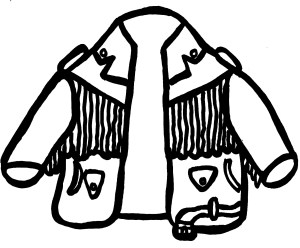
1. Deerskin Quentin Dupieux’s absurdist thriller about a man’s obsession with a fringed deerskin jacket is consistently funny, but also incredibly vicious when it wants to be. Despite indulging in the ridiculous, high-concept genre of Killer Objects horror (think Death Bed, In Fabric, Christine, or the director’s own Rubber), it’s a surprisingly thoughtful film about the inadequacy that mediocre men face at middle age, and their psychotic efforts to overcome that deficiency. Jean Dujardin previously charmed American audiences in Best Picture-winner The Artist, but here he’s a sad, pathetic grifter who has to scam people just to hang out with him. It’s a hilarious joke at the expense of male vanity (including the vanity of making an entire movie about a deerskin jacket in the first place).

2. Color Out of Space Richard Stanley returns to the director’s chair after decades of mysterious exile to adapt an H.P. Lovecraft short story about a meteor crash and a malignant color. Most criticism has fixated on Nic Cage’s over-the-top lead performance, but those antics aside this is a harrowing film about loss & cancer, fearing not just the disease but also its emotional erosion of familial relationships, interpreted through the powerful medium of cosmic horror.

3. The Invisible Man A genuinely scary film that operates in a realm of traditional horror tropes. For a lot of its audience, it’s doubly scary because of its domestic violence aspect, capturing the feeling of the ground being pulled from under you when you realize your abusive relationship is not the loving one you initially pictured it to be. That realization happens before the film even opens, but we’re made to live through its terrifying aftermath.

4. The Twentieth Century This pseudo-biography of a real-life Canadian politician is a gorgeous, absurdist fantasy piece that retells the history of Canadian governance as “one failed orgasm after another.” History says its events are set in Canada, but what’s onscreen is some nowhere nether-reality of dry ice and matte paintings, populated by caricatures rather than characters. It’s like Guy Maddin directing an especially kinky Kids in the Hall sketch, stumbling out into feature length in a dreamlike stupor.

5. The Wolf House A nightmare experiment in stop-motion animation that filters atrocities committed by exiled-Nazi communes in Chile through a loose, haunting fairy tale narrative. It’s got all the trappings of a pre-Brothers Grimm folktale: the sour ending, the moralistic behavioral warnings, the magic that is both beautiful and cruel. It’s a relentlessly grotesque display, one that fully conveys the hideous evils of its allegory’s real-life parallels even if you aren’t familiar with that particular pocket of fascism history.

6. Possessor This techno body horror from Brandon Cronenberg feels like the cursed love child between his father’s eXistenZ and his own Antiviral. It’s a compelling psychological battle between its characters to gain possession of the corporeal vessel they share (a battle powerfully performed by Christopher Abbott & Andrea Riseborough). A truly shocking film, both beautiful and disgusting.

7. Birds of Prey A wonderfully stylized, deliriously hyperactive superhero movie that doesn’t drag or feel laboriously obligated to comic book backstory or pathos. It steps on other superheroes’ capes, soaring in its own unique, chaotic way (a power seemingly fueled by Vodka-Red Bulls).

8. Bacurau A Brazilian film that mutates familiar details inspired by “The Most Dangerous Game” into a surreal sci-fi-horror-western genre meltdown. It uses familiar tropes & techniques to tell a story we’ve all heard before in a new style & context that achieves something freshly exciting with those antique building blocks. In other words, it’s genre filmmaking at its finest.

9. Swallow An eerie, darkly humorous descendent of Todd Haynes’s Safe, in which a newly pregnant woman is compulsively drawn to swallowing inedible objects, much to the frustration of her overly-controlling family & doctors. It’s a subtle but highly stylized psychological horror about bodily autonomy, class warfare, and trauma, illustrating the complete lack of control you have over your own body & destiny if you’re born on the wrong end of class & gender dynamics.

10. His House Reinvigorates haunted house genre tropes with the same tactics that titles like Blood Quantum, Zombi Child, and The Girl With All the Gifts used on the similarly overworked tropes of the zombie genre: by shifting the cultural POV and the purpose of the central metaphor. This bold debut feature from screenwriter and director Remi Weekes tackles topics of grief, disenfranchisement, loss, immigration, and cultural disconnection – all framed within the traditional scares of the haunted house horror film.

Read Boomer’s picks here.
Read Brandon’s picks here.
Read Britnee’s picks here.
Read CC’s picks here.
See Hanna’s picks here.
Hear James’s picks here.

-The Swampflix Crew

Villains (2019)

It can’t have come to this, can it? Kyra Sedgwick isn’t old enough to play a psychobiddy. Right?  Our eternally youthful Madam Sedgwick is a respectable 54 last year.  How old was Bette Davis when Whatever Happened to Baby Jane? was released in 1962? According to Wikipedia she was born in 1908, so … 54.

Well, shit.

Villains is a 2019 comedy thriller about spacy, star-crossed stick-up artists Mickey (Bill Skarsgård) and Jules (Maika Monroe), whose getaway car runs out of gas at the worst possible moment. Happening upon a house, they break in with no real plan before realizing that they can siphon the gas in the car in the house’s garage, get back to their alleged vehicle, and then be on their way to Florida, where Mickey has designs on selling seashells down by the seashore. They stumble across something in the basement (I’ll come back to that in a minute), and before they can get out with their hides intact, homeowners George (Jeffrey Donovan) and Gloria (Sedgwick) come home with their infant, Ethan. Although the younger couple start from a position of power—they have a gun, after all—their elders quickly get the upper hand and before you know it, Mickey and Julia are handcuffed to a pole in the basement while George and Gloria try to decide what to do with them. 

All of the film’s marketing, such as it is, really hypes up the something in the house, and that was what originally drew me to the flick. Here’s Hulu’s synopsis: “A pair of amateur criminals break into a suburban home and stumble upon a dark secret that two sadistic homeowners will do anything to keep from getting out” (emphasis mine). IMDb’s description is virtually identical, but the reveal of what’s in the basement comes very early in the film’s runtime, less than halfway through Act I, and is the reason that the rest of the plot exists. If you want to check this one out with absolutely no spoilers, then turn around now and come back later (or don’t; it’s still a free country*). Here’s what’s in the basement:

A little girl named Sweetiepie (Blake Baumgartner). 

And the “dark secret”? Gloria and George could never have children. Ethan’s just a doll (we learn this later but long after Gloria says, in roundabout religious language, that either she or George is infertile) that Gloria got from her mother before the latter died of cancer in the former’s childhood. George kidnapped Sweetiepie as a replacement for the child that Gloria could never have, but it didn’t work out, and so instead of just killing her they’ve locked her up in the basement. Which is obviously messed up, but I was expecting a twist that was less Room and more in the vein of Fright Night, or at the very least something in the ballpark of Apt Pupil

That having been said, this is a fun little romp. I’m forever saying that there are far too few thrillers set during the daylight hours, and if we’re all being honest here, many of those which do exist look cheap. Not so here, as dual neophyte directors Dan Berk and Robert Olsen, who are also each credited as co-writer, craft a dynamically shot feature with an eye for depth of field and a couple of fascinating framing choices and shots that I’m not entirely sure I’ve ever seen before. Monroe is clearly having a lot of fun here, and it’s nice to see her getting to have a good time and let loose after great-but-understated performances in The Guest and It Follows. I know Donovan only from Book of Shadows: Blair Witch 2 (I have a soft spot) and somewhere in the neighborhood of 786 commercials for Burn Notice during my final semester of grad school while watching Criminal Minds in syndication for six hours a day. While his is the weakest performance of the leading quartet, it’s only because George and Gloria are characters on the more exaggerated end of the scale, having a wholesome folksiness that lacks the edge of malice that the character requires, and Donovan doesn’t get to showcase the range that his screen partner does. There’s a fun bit toward the beginning when he attempts to ingratiate himself with Mickey and Jules, without success, and it’s fun, but each scene thereafter is a variation on delivery. I was surprised by Skarsgård here as well, as I know him almost solely from Hemlock Grove, in which he rose to the level of the material (not very high) and the IT films, in which he was fantastic. He’s magnetic here in a way that I haven’t seen before, as a man who isn’t terribly book smart, or street smart, but is charming and has a certain brightness about him that surfaces when it’s needed most. 

Sedgwick is great here, hamming it up with an erotic dance and over-the-top seduction in one scene, then doing a perversely quick spin to sympathetic as she cuts the skin of her hands to shreds grasping at the porcelain shards of Ethan’s shattered head, then to threatening, then maternal. I saw Singles when I was sixteen and absolutely fell in love with Sedgwick, and even further back than that, for some reason, every time I watched Amazing Stories when I was a kid, it was always the episode where she sends food down that well in the desert. That scene in Singles when she delivers the monologue about garage door openers is peak cinema to me. Unlike other films in the psychobiddy genre, the camp here is undeniably intentional, and although this hurts the film a little on the whole, it also gives Sedgwick the opportunity to play things a little broadly and to the cheap seats in some scenes as she babbles about her past and Ethan, and to bring everything around her into sharp focus when she reminisces about her childhood and George’s courtship of her. 

Standout scenes include a painful tongue stud removal, the repetition of the “carwash,” which is a unique and sweet act of intimacy in which Jules waves her hair back and forth over Mickey’s face like an automated car wash mop, a reverse laundry chute escape, and Gloria pantomiming. Check it out. Or don’t; again, I’m not your boss.  It’s on Hulu.

*Void where prohibited, and your mileage will vary.

-Mark “Boomer” Redmond

Boomer’s Top 15 Films of 2020

Honorable Mentions

15. American Murder: The Family Next Door is a frightening look into the future of the true crime documentary, not because the story that it tells is any different from one that you might have seen on Dateline or Unsolved Mysteries in the nineties or any of the hundreds of true crime TV shows that have sprung up in the wake of the sensationalist reportage of the past, but because of what constitutes its filmic material. Once upon a time, if 20/20 was relating the story of a spousal murder, producers were lucky to have a few minutes of useful, usable home video footage of the victim or perpetrator at a wedding or a child’s birthday party—shot on a fifty-pound, shoulder-mounted, air-cooled VHS camcorder—which could then be shown with melancholy music over it while Diane Sawyer delivered maudlin narration full of words and phrases like “ironically,” “cut short,” and “better days.” The rise of social media and its near universal use, alongside the proliferation of smartphones that allow for the instantaneous ability to effortlessly record oneself or one’s family, has created a strange new world of access to victims. This is especially true of those like Shanann Watts, whose interest in self-documentation bordered on the narcissistic, creating the opportunity for director Jenny Popplewell to use a wealth of Shanann’s own material in a documentary chronicling the dissolution of her marriage and, ultimately, her murder at the hands of her husband, who also killed the couple’s two daughters. It’s a harrowing peek not only into the soul of white male American entitlement but also what this style of reportage will look like as we move further and further into this new era, in which social media creates and reinforces narcissism and is powerful enough to (perhaps) topple nations through the spread of dangerous misinformation.

14. From my review of The Nest: “There’s nothing wrong with The Nest. The performances are great, as [Jude] Law effectively plays a man whose charm is so powerful he’s managed to convince even himself that his delusions are true, and he’s magnetic and contemptible in equal turns. You wouldn’t be able to accept a lesser actor in this role without thoroughly hating him, and that’s a testament. He’s also possibly the only actor who has ever managed to make BVD briefs look sexy, and at nearly 50 to boot. Similarly, Carrie Coon’s Allison is pitch perfect (and she’s proper fit, as one of Sam’s rude teenage friends notes). Each interaction contains the perfect amount of emotional distance and intimacy, and Coon is fantastic. By the time she really starts to fall apart, she’s held it together with such aplomb for so long that the audience feels her every revelation with empathetic exhaustion. I also like that there’s no beating around the bush about what the family’s problems are: there’s no infidelity (if anything, the couple’s sex life is the only thing about which they both remain passionate through the entire runtime), and all of the family’s anxieties stem entirely from Rory’s pathological obsession with money.”

13. W lesie dziś nie zaśnie nikt (Nobody Sleeps in the Woods Tonight): Hailed as Poland’s first slasher film, this sophomore feature from director Bartosz M. Kowalski is a central European Friday the 13th with the serial numbers filed off (and with a few random bits and pieces taken from other American horror flicks and shows to spice it up a little). There’s not much more to it than that, but as a peak into Polish interpretation of the American slasher genre, which was itself born out of American interest in Italian giallo films and Spanish obras de suspense, it offers a look into the weird ways that a genealogy of horror can criss-cross the Atlantic. It has its moments of gore, but they’re not only few and far between but also campy in their sanitization; imagine a scene from Hostel but sweded with fake rubber arms and heads from Party City, and you get the idea. In any other year, this wouldn’t be anything particularly noteworthy here, but with fewer releases due to the plague, it’s worth checking out. What else do you have going on?

12. Class Action Park: A documentary about Action Park, a New Jersey amusement and water park that famously maimed, mutilated, disfigured, and even killed multiple people over the course of its decades-long ownership by disgusting capitalist and deregulation enthusiast Ebenezer Eugene Mulvihill. Through interviews with former attendees and adults who were employed at the park as teens, as well as the family members of victims of Mulvhill’s negligence who never saw him face justice, the film strikes a strange tone. It encourages a feeling of both reminiscence about a lost era in which children seeking agency for themselves could do so by going to a cursed amusement park straight out of your Pinocchio nightmares, while also delineating the criminal laxity of safety regulations and proper testing of facilities (famously, teenaged employees were offered $50 to try out a looping waterslide, in which people frequently got stuck and from which the teens emerged bloody and battered). The film also draws a straight line from the right wing’s raging hard-on for deregulation and Mulvhill’s ability to simply buy his way out of all consequences, even negligent homicide, to the Trump administration, with its seemingly bottomless pockets and lack of accountability. The film occasionally loses its footing when interviewees, including recognizable faces like Chris Gethard and Alison Becker, fondly recall their youthful expeditions to the park, but overall, this is a pretty decent look into what happens when greed is left unchecked.

11. The Invisible Man: I saw that “He is a world leader in the field of optics” meme on Twitter for what felt like months before I got the chance to see The Invisible Man, which made me think the whole movie was going to be more camp than thriller. It’s not, although it has its moments (the scene in the restaurant between Elisabeth Moss and her sister being the most obvious example), and it’s an effective story about both PTSD and dealing with others with NPD. Also, more people need to hire Aldis Hodge to do things; I’m always glad when he pops up in something. Give him a lead in something, already! (You can read Brandon’s review of the film here.)

Top 10

10. Mamoudou Athie delivers a striking performance in Black Box, essentially embodying three different characters over the course of the film’s taut runtime. He spends a lot of the film playing off of nothing, really, as Nolan wanders through his unclear memories, especially as those recollections begin to appear more and more disconnected from reality. Also impressive is skilled child actress Amanda Christine in her portrayal of Nolan’s daughter Ava; it’s rare that a child performer delivers anything other than a toneless recitation of lines that they barely understand, but Christine pulls off the balance between patience with her father’s challenges and her muted frustrations and fears that she’ll be separated from him if he isn’t able to recover his faculties. Although the film feels like a lower budget full-length episode of Black Mirror, it tells its story without the presumptive moralizing of that series (although your mileage will vary on whether that’s a good or bad thing with regards to Charlie Brooker’s program) and instead is a narrative that uses the trappings of a near-future scientific breakthrough to simply tell a story, rather than browbeat the audience.

9. When Brandon and I first discussed Shirley on the podcast, I expressed my discontent with the way that the film fictionalized Jackson’s life, and I stand by my feelings that I would enjoy this film more if it were about a fictional woman instead of ostensibly being about the woman behind We Have Always Lived in the Castle and The Haunting of Hill House. I’m not CinemaSins and I’m not just a nitpicker for the sake of picking nits, and it’s not like I’ve never been annoyed by someone else’s complaints that such-and-such a thing never happened, or wanted someone to just shut up about how the real so-and-so never actually went to wherever a scene is happening. But I am also that person that gets annoyed when something that falls into my very specific wheelhouse or area of interest gets something inconsequential incorrect but gets it wrong to an absurd degree (if you need someone to be the curmudgeon when supposed interstellar distances are measured in hundred of millions of miles). For all of that, and regardless of my general antipathy for using Jackson this way, Shirley is a fascinating narrative about the interplay of reality and imagination, and an insight into the transgression of the act of creation, all wrapped in a tense period package. Just pretend it’s about a fictional author who happens to share some similarities with the real Jackson, then track down a copy of Let Me Tell You to get a more intimate insight into the real deal.

8. The Other Lamb was proposed by Brandon to discuss on one of the Lagniappe episodes of the podcast, both because it was about cults (more on that in a moment) and because it was specifically about a Christianity-adjacent cult of personality (which is kind of my thing, in case you missed it), and he thought it would be up my alley. He was right! This has been a year that has been adversely affected by the elasticity of time, where the endless everpresent “nowness” of staying at home in quarantine sometimes makes it feel like January 2020 was just a few weeks ago, while the prolonging of quarantine because some people keep ruining it for fucking everybody also makes it feel like the same month was 27 years ago. So much of that year feels like it was filled with very frenetic media, with frantic pacing and constant noise to fill the empty and aching void of the months that elapsed entirely without human contact, but The Other Lamb stands apart, with its story that at first appears to be about calmness, tranquility, and serenity. Even as the plot thickens, it never quickens, and is instead as languid in its storytelling at the end of the film as it is in its opening moments, to great effect. Sumptuous and powerful.

7. Speaking of the elasticity of time, The Lodge feels like it came out four years ago, but I guess it really was just at the end of the previous winter. A holdover from the 2019 year-end slate, I saw the film with someone with whom ties have been severed and whom I expect I won’t see again in this life. At the time, I underestimated how much it would stick with me, and felt smugly superior for guessing the twist to come; it’s been long enough now, but objectively and subjectively, to point out that this film fits in nicely with directors Veronika Franz and Severin Fiala’s debut film Goodnight Mommy, as this film could just as easily been titled Gaslight Mommy, since that’s what happens (with special bonus points for the fact that the beginning of the gaslighting features literal gas like its namesake). Still, if there’s anything we’ve seen in the past year, it’s the power of misinformation not just to mess with people’s psyches, but also to rend families apart. Following so closely on the heels of Doctor Sleep, perhaps I simply wasn’t prepared for another film that is so indebted to The Shining for its visual language, but it has a staying power that can’t be denied. (It’s also got a subplot about cults, and I am a man of simple but sincere interests.)

6. In my review of Kajillionaire, I wrote about how, “when I was going through a really bad breakup in 2014, there was a quote that I stumbled across on Tumblr (again, it was 2014) that spoke to me on an intimate, deep level. I thought it was part of a poem, but I could never find it again, and I spent six years occasionally plugging the random bits of it that I could remember into Google to see if it would spit out the name of the poem, or the poet. Finally, in September, the search engine of record returned a result. The author was [Kajillionaire director] Miranda July, and it wasn’t a poem, it was an excerpt from her book It Chooses You: “All I ever really want to know is how other people are making it through life—where do they put their body, hour by hour, and how do they cope inside of it.” There’s something fascinatingly and fantastically alien about Old Dolio (Evan Rachel Wood)’s situation, on top of and adjacent to the world that the rest of us live in. Miranda July seems to have asked herself about how one extremely specific person was making it through life —where she was putting her body, hour by hour, and how she was coping inside of it. It’s a character study of someone raised in a culture that is invisible, tangential, and almost inconceivable.”

5. As I wrote in my review, Spree “demonstrates a profound understanding of the relationship between new and traditional media, the power of and potential for abuse within internet discourse, and the deleterious effect on mental health on a societal level that can result from a pivot towards a social reward system that depends upon toxic narcissism. Kurt (Joe Keery) has no desire to garner fame for money, political power, to increase his sexual desirability, or as a means of class mobility: notability, in and of itself, is the goal. It’s the timeless tale of wanting to be popular, with no other goal. He lives in a completely different economic system where clout is currency, and even disengagement from that alternate reality doesn’t make one safe from its reach. In the film’s closing moments, we are treated to the best demonstration of writer/director Eugene Kotlyarenko’s understanding of the foibles of media in all of its forms.”

4. Horse Girl tells my favorite kind of story: that of a woman struggling with her sanity. I have recently had the opportunity to inspect this fondness for this genre in myself–is it sexist of me? Although I’m not really the best person to answer that objectively, I think my fondness for the subgenre of “women on the verge” is mostly because I prefer women protagonists in all of my fiction, and I always have. I’ve been reading Paperback Crush lately, Gabrielle book about girl-targeted YA fiction that is subtitled “The Totally Radical History of ’80s and ’90s Teen Fiction,” and realized that, although I was largely forbidden from reading “girl books” of the kind that she is writing about, I tried my best to sneak around and read them anyway in my youth. Many of them are about young girls fighting against societal norms that have no bases in logic or reality: girls can’t x, whether x was a sport or a certain familial role or a campus political position. I, too, often felt that various things were forbidden or unreachable for me, either because of my parents’ religion or our rural isolation or The Closet, and the fiction that featured that as a narrative device weren’t about other boys (to say that my endless hunger for girl fiction caused parental, rural, and Closet conflict is an understatement). My love for movies like Puzzle of a Downfall Child, An Unmarried Woman, Queen of Earth, and the most recent addition to this pantheon, Horse Girl, is just an extension of that fondness. Hear me and Brandon talk about Horse Girl here.

3. His House is the story of two people from South Sudan who find themselves in England fleeing violent conflict (presumably the Dinka/Nuer conflict, although it’s never explicitly stated). It’s also much, much more than that. This bold debut feature from screenwriter and director Remi Weekes tackles topics of grief, disenfranchisement, loss, immigration, disconnection, and the things we keep while other things are left behind. There’s so much unspoken but powerfully present in the interactions between Sope Dirisu and Wunmi Mosaku as, respectively, Bol and Rial Majur. There’s something so palpable in Bol’s desire to disappear into this new community, joining in with the old men singing songs to their futbol heroes and blending in by purchasing an exact duplicate of the outfit on in-store advertising. By the time he’s literally trying to burn everything that ties himself and his wife to their past, it’s impossible to predict where the film will go next. Even the most artistic horror film rarely transcends into something truly beautiful, but His House does all of this and more. Brandon’s review can be found here.

2. Portrait of a Lady on Fire left me undone. I was mesmerized by its every moment, captivated by every tableau. There’s nothing really “new” about queer love between two women that is repressed, silenced, and hidden, especially in period pieces with their long, loving glances across infinite spaces trapped in immaculate drawing rooms. I’m not really sure what magic Portrait has captured that is absent in its peers, but there is something truly astonishing about it. The sound design, the set design, the costumes, the cinematography: this is a film that is essentially perfect in every conceivable way. We have seen many films that are similar to it, but in its field, it is peerless. Read my review here.

1. There’s a scene in I’m Thinking of Ending Things in which our seeming protagonist, played by Jessie Buckley, is trying to explain to her boyfriend’s father (played by David Thewlis) how a painting with no people in it can evoke an emotional response. “No,” he responds. “I would have to see myself in it to know how I felt.” Although the rest of the Swampflix staff apparently did not feel the same way, this was, to me, the best movie of the year. My erstwhile roommate and his current housemates and I synced up to watch the film during a period of the year when I was putting down new floors in my home as part of my desperate attempt to make myself feel like I wasn’t trapped in the same place for the foreseeable future and my TV was briefly moved into my bedroom. As I sat, straight up, in bed and watched as Jake (Jesse Plemons) and his girlfriend made their way to his parents’ house through a thickening snowfall, I felt myself taken in and entranced by an incredible intensity of feeling. By the time the couple actually arrive at their initial destination, I already felt like I had gone on a complete journey and that the film must be nearing its completion, only to realize I had felt a film’s worth of emotional movement in a mere 45 minutes, and that there was still nearly an hour and a half left, which I was soon to learn was even more of a journey ahead. During a long, strange, sad, infuriating year, this was a film that reached inside of me and found a deep, sincere, and profound loneliness and externalized it on a screen before me, engaging me with myself in a way that I’ve experienced precious few times in my life. After I’m Thinking of Ending Things, I am genuinely not the same as I was before it. (You can read Brandon’s less positive review here.)

-Mark “Boomer” Redmond

W lesie dziś nie zaśnie nikt (Nobody Sleeps in the Woods Tonight, 2020)

W lesie dziś nie zaśnie nikt (Nobody Sleeps in the Woods Tonight) is a 2020 Polish horror film about a group of camping teens who are stalked, attacked, and murdered by mutants in the woods. It’s 10% Phenomenon by way of the aesthetic of the European forest and the house in which the mutants are sheltered by their mother, a solid 40% Friday the 13th per its teenage-camping-trip narrative, 20% Scream via the discussion of the “rules” of horror films, 15% C.H.U.D., 8% Housebound, 2% Fargo, and 3% X-Files black goo episode for some reason. Like certain things that advertise themselves as being 98% recycled material, it’s rugged, durable, and serviceable, but not that exciting.  

The film follows a standard gang of five teens who, along with their adult chaperone/instructor Iza (Gabriela Muskała), are guided through “Camp Adrenaline,” which not only separates the kids from their electronic devices but also appears to be at least partially punitive. At least that’s the impression that one gets from Julek (Michał Lupa), who I think is supposed to be “the fat one” but who just looks like, you know, a teenager, is explicitly stated to be there instead of at a South Korean eSports summit because of his parents’ concern regarding his hobbies (the kid has 900K YouTube subscribers, though, so that’s like a career, dad). There’s also handsome, athletic, and–based solely on the number of mobile devices he owns–presumably wealthy Daniel (Sebastian Dela), who is immediately attracted to blonde cardboard cutout Aniela (Wiktoria Gąsiewska), who honest-to-goodness curls her hair in preparation for the hike. Rounding out the teenage troupe is soft-spoken closeted kid Bartek (Stanisław Cywka), who seems excited to disconnect from social media and its accompanying jealousies and clout jockeying, and Zosia (Julia Wieniawa), our final girl who is haunted by the death of her family in a fiery car crash. 

No, you’re not having déjà vu. You have seen this before. You may not have seen it better, but you have seen it. 

Each of the deaths is nigh-identical to a kill you’ve seen before in the Friday the 13th movies. The first death, in which one of the kids is trapped in their sleeping bag and then bashed against a tree, is how Judy is killed in The New Blood (Part VII); the second, in which someone is impaled through the neck, has shades of the death of Jane (also from New Blood) and Jack (from the original film). There’s also a decapitation, which is a Friday staple, a head crushing and a person being bisected (both appear for the first time in Part III), and a woodchipper. The last of these accounts for the 2% Fargo mentioned above. I don’t know what it’s doing here, but as for that 10% Phenomenon, it turns out that the killers were the sons of a poor woods woman living in bucolic, pristine Polish woodland in her little adorable house, until one day they were turned into mutant cannibals (or at the very least cannibalistic humanoids) by the black goo inside of a meteorite* and were thereafter locked in their mother’s cellar (where they dwelled underground). We learn this from a man (Mirosław Zbrojewicz) who lives nearby, a postman who escaped from the terror twins some 30 years prior in the film’s opening, in a scene reminiscent of the expository scene in a lot of films but I went with Housebound because I am so very tired. When it’s not aping Friday the 13th, we also get Julek’s recitation of the six “sins” of horror films: curiosity (i.e., “let’s look inside”), disbelief (“it’s just the wind”), overconfidence (“it’s just a haunted house”), splitting up, having sex, and being unattractive, some of which have already been broken and the others follow shortly thereafter. 

Where this film triumphs over the forebears from which it borrows is in the kids themselves, who are all more charming than they have any real right to be, given that these could just as easily have been cardboard cutouts of people. Julek crushes on Zosia almost immediately, and attempts to compliment her in his own awkward way, mostly by comparing her to Sarah Connor, even before she squares off against the unstoppable killing machine(s). Zosia, for her part, finds this endearing, even quoting the T-800 back to him in a sweet moment. Daniel, for all his swaggering and posturing, turns out to be a virgin whose only relationship has been with a woman online, and he’s a secret stoner to boot. There’s also a sweet scene between Bartek and Aniela, in which the two bond over the absurdity of the social expectations placed on them, in which Bartek opens up about how his father is completely blind to his son’s sexual orientation, even when the kid brings home his boyfriends. It’s bittersweet in a way that Friday the 13th knockoffs and imitators rarely get to be; when Jason mows through a group of teenagers, it’s the deaths that are memorable while the characters, other than a few outliers who manage to make an impression, are usually interchangeable. That we the audience know that Aniela and Bartek are doomed lends an air of poignancy to Bartek’s bitterness about the difficulty of being gay in Poland and Aniela’s comiseration. The scene also leads into one of the film’s few genuine shocks, which elevates it by default. 

It’s also worth mentioning that there’s a strange little plot cul-de-sac in which Bartek escapes from the killers and makes his way to a small church, where he asks the priest (Piotr Cyrwus) to call for help. The priest initially claims that the church’s landline is out of service, but when the phone rings, he ditches this pretense and knocks Bartek. When the boy comes to, he’s tied to a chair with a ball gag in his mouth, but when the priest leaves to check and see why the woodchipper turned on by itself, Bartek frees himself and hides in the confessional, his fate left unknown for a pretty long period of time. It’s a scene fraught a truly weird energy where it seems like our buddy is in for some kind of sexual assault, and it feels extremely out of place. Bartek’s treated as kind of an afterthought once the killings begin, and even his fate feels more like a tied-up loose end than a logical plot progression. It also occurs that the situation feels a little bit like the gimp scene in Pulp Fiction, which means that this film really is 100% recycled material. 

It’s also worth noting that the gore here is largely understated. There are some dismemberments and even a decapitation, but on the scale of believability they hover somewhere around “Christian haunted house alternative.” Even in the film’s most cinematic scene, a flashback to Zosia’s father crawling out of the wreckage of his burning car while she watches, not only does the fire look fake, but it doesn’t even look like he’s in that much pain. A few times we see grue drop into frame from offscreen, but the combination of R-rated concept with mostly TV-14 content makes the whole thing feel smaller than the sum of its parts. It’s not bad, but it barely exceeds “fine.” 

*This fact is, and I cannot stress this enough, completely irrelevant. It could have been any MacGuffin, even just like, radiation or something, but for some reason it’s X-Files black oil.

-Mark “Boomer” Redmond

Lagniappe Podcast: Snowpiercer (2013)

For this lagniappe episode of the podcast, Boomer and Brandon discuss Bong Joon-ho’s English-language debut Snowpiercer, which was selected as Swampflix’s Movie of the Year in our very first week as a website.

You can stay up to date with our podcast through SoundCloudSpotifyiTunesStitcherYouTubeTuneIn, or by following the links below.

– Brandon Ledet & Mark “Boomer” Redmond

The Nest (2020)


The Nest avoids beating a dead horse, but it does bury one. But I’m getting ahead of myself.

In this second feature from director Sean Durkin following the 2011 debut showstopper Martha Marcy May Marlene, Rory O’Hara (Jude Law) and his wife Allison (Carrie Coon) move their small family to Rory’s native England from suburban New York, in their fourth move in a decade. Like WW84, this is a mid-eighties period piece, and at first theirs appears to be an ideal Reagan-era nuclear family, with teenage daughter Sam (Oona Roche) and ten-year-old son Ben (Charlie Shotwell) getting along in the way that siblings rarely do. We ultimately learn that the truth is a little messier (Allison was a single mother to Sam when she and Rory met and thus this is a blended family) and that this artifice is purely for the sake of creating a perfect impression to the outside world despite the reality being perfectly normal. The family is fine as it is, but Rory needs it to be more perfect, and like most of the facades that Rory spends so much time building, it’s an unnecessary gilding that endangers the foundation.

When proposing that they return to England so that Rory can go back to work for his old boss Arthur (Michael Culkin), Allison asks him if he’s hiding the truth about the family’s financial situation, with the implication being that it wouldn’t be the first time. Discussing the move with her mother (Wendy Crewson), the older woman tells her to simply trust in her spouse—”It’s not your job to worry, let your husband do that”—and Allison, mirthfully but sincerely, teases her that this is a worrisome ideology. When Allison and the kids arrive at their new home in England, they discover that Rory has rented a positively gigantic mansion, which has grounds on which he promises to build a six-stable barn for Allison’s horse Richmond and promised future stallions and mares, with the implication that Allison can one day resume equestrian instruction, which had been her occupation prior to Rory’s repatriation.

What plays out is, essentially, a dramatic version of the Simpsons episode “You Only Move Twice,” as each member of the family succumbs to negatives in their personal and social lives in their new environment. The long distance that the family must commute into London (it’s a little under an hour’s drive from Surrey to London in 2020 and was likely longer 35 years ago) wreaks havoc on their previous unity, which fell into place with ease in their earlier suburban life. Rory insists his children attend the best private* school, which results in Ben being bullied extensively and Sam spending time with a rougher crowd of local kids, presumably in rebellion against being expected to socialize with her fancypants classmates. Ben and Sam also drift apart, as Ben clings to Sam when their parents are away because the large, empty house frightens him. The house itself also immediately becomes another millstone around the struggling family’s collective neck as it’s too large for them to even furnish, although this doesn’t stop Rory from boasting at parties about their “farm” and the intent to purchase a “pied-à-terre in Mayfair” (a very chintzy part of London’s Hyde Park area) while Allison expresses discomfort with this; whether Rory’s dishonest or delusional, she’s still troubled, as well she should be. Things come to a head when a business deal that Rory is pushing Arthur to sign off on is rejected and Allison’s horse falls ill and collapses while she’s riding him; she has to go to a neighboring farmer for help (i.e., to put Richmond out of his misery) and, because Rory has allowed the phone bill to lapse, he’s unable to let her know that he’s spending the night in London, leaving Allison alone to bear the brunt of it all. The stress drives her to a point of dissociation, in which she declares that everyone in her family has become a stranger to her.

There’s nothing wrong with The Nest. In fact, it falls into my sweet spot of “woman on the verge.” Narratively, the film is solid, as the screenplay deftly weaves in good bits of foreshadowing early on that come into play later. When we first see Rory and Ben interacting, the two are playing soccer with one of Ben’s young friends, and although Rory wins, his son declares that he did so by cheating, demonstrating that Rory doesn’t let anything stand in his way, even when the opponent is his son and the stakes are as low as backyard bragging rights. We also get to see Allison in her element as a horseback riding instructor, where she deftly and calmly handles both the beasts and her clients, collecting their payments without wheedling or the slightest hesitation. She’s better at her job than Rory is at his, and although he’s no Gordon Gecko, he is a member of that deplorable group of eighties businessmen who turn money into more money by moving it around and for whom the impending deregulation (you know, the one that allowed wealth aggregators to plunder the economy of Western society and destroy the middle class) is a cause for celebration.

We are made to sympathize with Rory to an extent, as we’re told about his lousy childhood, including social exclusion and mediocre educational opportunities (which is what prompts him to overcompensate with the enrollments of Ben and Sam), although his mother, while cold, isn’t entirely unreasonable. She accuses Rory of never reaching out to her, and he retorts that she never called him, either, but we in the audience have no reason to disbelieve her complaint that Rory moved so much that she lost track of him. Ben is ten years old at this point and we’re told that this face-to-face reunion between Rory and his mother (orchestrated so that he can ask her for financial assistance) is the first time she’s been made aware that he’s married or that she has a grandson. However, while Rory’s story is tragic, it’s tragic in a classical way, as the ultimate cause of his ruination is not the change in broad social trends, or the dissatisfaction of his family as they overcome their culture shock and become accustomed to this new old world, or even his own poor handling of his emotions in the workplace (he’s allowed to have a lot more outbursts, consequence free, than would be allowed in a contemporary office). It would also be reductive to say that Rory’s life falls apart because of his greed, although that’s certainly part of it. It’s most accurate and honest to say that Rory’s loss comes equally from his unerring adherence to using the successes of others as the yardstick against which he measures himself, even when he could live comfortably within his means, and his devotion to the “fake it until you make it” ideology that has become even more common in the intervening decades. In his attempts to emulate success as part of a campaign to acquire the wealth that he craves and plays at having, he overextends what was likely a perfectly reasonable income, because he thinks that he deserves to have access to the same playground.

As Arthur tells Rory at one point, the latter has mistaken his coincidental success (that is, being in a rising tide that lifted all boats) for genuine intelligence and aptitude, which is simply untrue. He even tells the younger man that striving for a sudden, imminent payday to put paid to all of his current woes is foolish, as he should be striving to build something for himself over time instead of impatiently demanding his success now now now. And this is where the film missteps for me on a conceptual level, as it apparently presents Arthur’s advice about what Rory should do as a kind of blanket truth, when it isn’t. What Rory even does is kept deliberately obscured with industry buzzwords that ultimately mean nothing, and neither he nor Arthur are actually productive; they simply maintain the paradigm of ownership of the means of production and acquire wealth by buying and selling that labor. In case you forgot, labor creates all value, so make sure to write that one down somewhere that you see it every day. Allison’s manual labor that she performs for the neighboring farmer is the only work that we see anyone get any emotional satisfaction from, which isn’t a bad storytelling point, but Arthur’s presentation of the idea that a living wage can be earned simply by living within one’s means, delivered from the last point in Western history when upward social mobility through hard work actually was possible (before it was brought to an end by the very deregulation that Rory worships), misses the mark, although it’s possible that this was intentional and I’m being dense about it.

Like I said, there’s nothing “wrong” with The Nest. The performances are great, as Law effectively plays a man whose charm is so powerful he’s managed to convince even himself that his delusions are true, and he’s magnetic and contemptible in equal turns. You wouldn’t be able to accept a lesser actor in this role without thoroughly hating him, and that’s a testament. He’s also possibly the only actor who has ever managed to make BVD briefs look sexy, and at nearly 50 to boot. Similarly, Carrie Coon’s Allison is pitch perfect (and she’s proper fit, as one of Sam’s rude teenage friends notes). Each interaction contains the perfect amount of emotional distance and intimacy, and Coon is fantastic. By the time she really starts to fall apart, she’s held it together with such aplomb for so long that the audience feels her every revelation with empathetic exhaustion. I also like that there’s no beating around the bush about what the family’s problems are: there’s no infidelity (if anything, the couple’s sex life is the only thing about which they both remain passionate through the entire runtime), and all of the family’s anxieties stem entirely from Rory’s pathological obsession with money.

Outside of the performances, however, the whole thing feels very rote. Allison discovers that Sam has been smoking, but doesn’t confront her about it. Sam throws a rebellious teenage party when she’s supposed to be watching Ben. Ben discovers that his mother’s dead horse is starting to rise from the ground because it was buried improperly and has a little freak out about it (ok, maybe that last one is novel). There’s simply nothing new on the table, and a full throated denunciation of deregulated economics followed by a halfhearted commemoration of a time when a single breadwinner could provide–comfortably if not extravagantly–for a nuclear unit makes for a tonally confused film. Not to bring up Queen of Earth again, but that’s a film in which what’s being attempted here is successfully pulled off: a thriller where all of the violence is emotional and the tension comes from wondering who’s going to break first, and in what way. But where Queen made that work, Nest feels like a pale version that gets by solely on the strength of its performances and its cinematography (which is gorgeous), but which lacks the freakout that would take it to the next level.

*Here using the American definition of “private,” that is, a school which stipulates a hefty tuition and is not available to members of the general public and practices elitism and classism in practice even if it disavows it in theory. In England, the terms are reversed so that “public” schools in the U.K. meet this definition while their use of “private” generally correlates to the American “public,” i.e., state-funded. Yes, it is confusing.

-Mark “Boomer” Redmond

Black Box (2020)

Black Box is the story of Nolan (Mamoudou Athie), a man suffering from amnesia following severe injury in a car crash that also claimed the life of his wife. He struggles with keeping up with the basics, like eating breakfast, making dinner, turning off the coffee pot, and picking up his daughter Ava (Amanda Christine) after school. Although he wants to go back to work as a photojournalist, his editor (Gretchen Koerner) gently rejects his new portfolio, citing both budget cuts and that his work doesn’t have the spark that it used to. After receiving nothing but negative prognoses for the return of his memories from multiple doctors, he’s not very optimistic when his doctor brother Gary (Tosin Morohunfola) recommends he see a noted specialist, Dr. Lillian Brooks (Phylicia Rashad), who works in the same hospital as Gary. Brooks, through a combination of hypnotherapy and virtual reality brainwave augmentation, tells Nolan that there is hope to retrieve his seemingly-lost years with his wife and daughter. As Nolan starts to go deeper into the titular black box, however, what gets pulled out of his subconscious doesn’t seem to match the life he’s living now. Was he someone else once? Was Nolan once the person who could have done the things that he now remembers? 

Charmaine Bingwa and Donald Watkins also star in this sci-fi thriller from first time feature director Emmanuel Osei-Kuffour, who also shares a writing credit with Stephen Herman. Both men have experience with several shorts, and it’s not immediately apparent that this is their first feature. It does feel a little slight in places, and it’s not a surprise when Jason Blum’s Executive Producer credit shows up in the early credits, as this feels very much like a slightly off-brand episode of Black Mirror, which is an appellation that could also be applied to some of the more sci-fi slanted episodes of Into the Dark, like All That We Destroy or Culture Shock, but with a sensibility that’s more in the realm of Bloodride. This works better than any of those, however, as it never feels like a TV show, but it does exist in the realm of the near-future speculative fiction indie realm that features pictures like Marjorie Prime.

Between the time that I first started writing this review and picking it back up to complete it, I reread the Wikipedia page for it, and wouldn’t you know, there’s a reason it feels so much like Into the Dark: it’s an “installment in the anthological Welcome to the Blumhouse film series.” Still, it’s worth noting that Into the Dark has still produced multiple films that are actually quite good, and one of them (New Year, New You) even made it into my best of 2019 list. Like New Year, New You, Black Box uses its “smallness” as an asset instead of fighting the smaller budget and trying to make something outside of its grasp, creating a world in which the stakes are personal and rooted in internal struggles with the worst elements of our nature. The twist that centers the film comes very late in the game, but it’s well-seeded with just the right amount of foreshadowing, and there’s still sufficient screen time in the movie’s relatively lean 100 minutes that follow that reveal to let us explore the implications of what we’ve learned and the ethics of what our lead has to do next. But one of the ways that Black Box spins its humble budget of straw into passable onscreen gold is in its cleverness.

For instance, the representative mind world inside the box features a frightening creature in human form but which moves with distinctly inhuman noises (like the cracking of bones) and motions (crabwalking in the upward bow yoga pose); this is accomplished by the hiring of contortionist Troy James for the role, but instead of attempting to CGI a different face onto him, every face in the dream world is initially blurred Ringu style. This is incorporated into the narrative as part of the process, as the blurry face represents an incomplete memory for Nolan to reconstruct. A lesser movie would try to do something more complex and ultimately overcomplicate things, but by leaning into the limitations, Black Box turns them from flaws into strengths. 

I don’t want to spend too much time talking about the film because writing around the twist is always a little tricky. In films like this one, that’s often the main drawing point, and my lifetime love of Alfred Hitchcock Presents, The Outer Limits, and Twilight Zone proves that I’m always on board for it, as long as the twist is good. This one’s a little more complex than normal, and it requires a bit of suspension of disbelief, but you’d have to be a real taskmaster for realism to be unwilling to go along with this one. It’s not the strongest one I’ve ever seen in this type of film, but as someone who has the unfortunate writer’s tendency to try and guess the next twist instead of letting the work take me on a journey, this was one in which I couldn’t guess the twist, and that’s always a plus. Luckily, Black Box doesn’t depend solely on that twist, as it becomes a different story afterward, about what the reframing of what has happened so far and what could happen next is a pivot that changes the film but doesn’t muddy it at all, which would be a feat for even a more experienced director. Its only real crime is that it lacks a truly cinematic eye, which is clearly a matter of budget in this case and not behind-the-camera crew. It remains to be seen how many pies Jason Blum can stick his thumb into, and Into the Dark has already run thin in a few places, but you wouldn’t know it from Black Box

-Mark “Boomer” Redmond

Kajillionaire (2020)

When I was going through a really bad breakup in 2014, there was a quote that I stumbled across on Tumblr (again, it was 2014) that spoke to me on an intimate, deep level. I thought it was part of a poem, but I could never find it again, and I spent six years occasionally plugging the random bits of it that I could remember into Google to see if it would spit out the name of the poem, or the poet. Finally, in September, the search engine of record returned a result. The author was Miranda July, and it wasn’t a poem, it was an excerpt from her book It Chooses You

“All I ever really want to know is how other people are making it through life—where do they put their body, hour by hour, and how do they cope inside of it.”

It may not seem like much to you (although if you’ve ever struggled with depression, it probably does), but I never felt more seen than I did in the moment that I first read this assortment of words in this particular order. How do other people make it through? Where are they parking their bodies and coping inside of those bodies, hour after endless hour? When you’re in the bottom of your emotional well and every hour feels like days, how are you supposed to live with that? I wanted to know and even knowing that someone else wanted to know it too made me feel less isolated and alone.

The answer to that question is not found in Kajillionaire, Miranda July’s 2020 film (she is credited as both writer and director). The film tells the story of Old Dolio Dyne (Evan Rachel Wood), who was so named by her con artist parents in honor of an unhoused person who won the lottery in the hopes that their daughter would be put in his will (in vain). Her father Robert (Richard Jenkins) prides himself on having no interest in or connection to mainstream consumerism, instead preferring to reject society’s pursuit of wealth and the accompanying desire to become “kajillionaires” to instead live a life in the margins, and her mother Theresa (Debra Winger) is in complete sympatico. They’re rejection of the conventional economy extends to making their home in an inexpensive office next to a soap factory, which also includes a twice-daily scooping of soap bubble overflow that comes out of the walls into a drain in the floor. They’re not just freegans, though: they’re pickpockets, scammers, and con artists, meticulously and obsessively keeping track of surveillance cameras and performing elaborate movements to avoid being seen, largely oblivious to the fact that they stick out like sore thumbs otherwise. Since Old Dolio’s childhood, they have split everything three ways. 

After attending a pregnancy preparation course taught by Dead to Me’s Diana-Maria Riva, Old Dolio starts to recognize how little her parents care for her emotional well being (read: not even a little bit). This is exacerbated when, while doing a quick airline luggage fraud scam, Robert and Theresa meet Melanie (Gina Rodriguez) and adopt her into their schemes while also immediately beginning to treat her with more tenderness and concern than their daughter, which does not escape her notice. Seemingly charmed by the thought of Hollywood-style heists, Melanie puts forth the idea of going to the homes of the lonely, elderly customers at the mall-based ophthalmology office where she works and complimenting their antiques until they offer her something of value, which the quartet could then flip. Ultimately, she finds the desperate, morally questionable actions of the Dyne clan to be seedier and less Ocean’s Eleven than she expected, but not before she develops a crush on the emotionally damaged Old Dolio. When Theresa can’t manage to use a single term of endearment for her daughter, Melanie promises to do all of that and more. 

Wood is giving a solid performance here,

On a recent Lagniappe episode of the podcast in which we discussed The Other Lamb, Brandon noted that he thought that the film would fall within my wheelhouse because of my interest in cults, be it real life cults like NXIVM or fictional cults like those in The Lodge and The Endless. And it’s true, and it’s also true that, as we discussed in that episode (and in other places), although I wasn’t raised in a cult per se, I did grow up in a particular segment of Evangelical Christianity that was very particular in its beliefs, and, like the Dyne parents here, created a mythology that was not only outside of and opposed to the mainstream, but was also strictly about opposition to the mainstream as part of its ideology. What really worked for me about Kajillionaire was Robert and Theresa’s strange little beliefs and how those beliefs so heavily affected their raising of Old Dolio not as a child but as a tool. Their self-centeredness and codependence upon each other, to the point of ostracizing their daughter, is played for laughs, and it’s often funny, but it’s also horribly depressing. When Old Dolio wins a trip to New York, her earnest attempts to take the trip with just her mother is not only rebuffed by Theresa, but Robert later uses it to denigrate his daughter as part of one of his many angry diatribes about how their way of life is the only feasible way. When Old Dolio manages to graft the aforementioned lost-luggage-insurance-fraud scam onto the trip to net just enough for the family to pay their back rent, said con involves flying to NYC together and flying back separately as strangers, but George immediately insists that he and Theresa will be a couple, and Old Dolio will travel alone. Not only is an arrangement of Richard flying alone while Theresa and Old Dolio fly together not even considered, but Richard and his wife are true narcissists who only see their daughter as a prop for their “jobs,” and nothing more. 

The Dynes don’t want to be “fake” people, behaving as society expects a parent to, and they find the idea of treating Old Dolio with tenderness as both artificial and patronizing, as if undignified. And I’ll be honest: that speaks to me, too. It’s probably the a reason that I am not very good with children (and wasn’t even when I was one, although there was also the bullying), as I find it hard to engage with them when the situation (very rarely, thankfully) requires me to do so. But this film carries that idea through to its inevitable dark end when applied to parenting, and although the film’s marketing makes it look like this situation will be at least somewhat charming before conflict arises, it’s clear from the earliest moments that this is completely unhealthy, and that the world within which Old Dolio is trapped is one where even the slightest kindness or touch of comfort or is completely alien to her. 

There’s something fascinatingly and fantastically alien about Old Dolio’s situation, on top of and adjacent to the world that the rest of us live in. Miranda July seems to have asked herself about how one extremely specific person was making it through life —where she was putting her body, hour by hour, and how she was coping inside of it. It’s a character study of someone raised in a culture that is invisible, tangential, and almost inconceivable. In that, it’s worth a watch, although I’d wait until after its hefty rental price comes down a little.

-Mark “Boomer” Redmond