Train to Busan (Busanhaeng, 2016)

It’s an oft-cited criticism among professional reviewers, the laity, and everyone in between (like me and probably you) that there are too few original ideas being produced in film, with various thinkpieces arguing the relative merits of remakes (like the upcoming Beauty and the Beast), reboots (like the upcoming The Mummy), reimaginings (like the upcoming IT), and sequels (of which there will be at least a dozen this year, but let’s just put a pin in Transformers: The Last Knight as the one that’s least likely to have any objective value). In the fight between the pedantic “You know that Wizard of Oz and The Maltese Falcon were remakes, don’t you?” camp versus the equally annoying “Everything’s a remake these days!” camp, there’s not a lot of room for middle ground. Although we’re no longer in the heyday of remakes that we were  ten years ago (for instance, Hollywood’s top performers in 2005 had a high percentage of remakes, 17%, which fell to 5% by 2014), the rise of narratively homogeneous “cinematic universes,” the tendency on the part of studios to fund financially safe sequels, and the widespread proliferation of lay criticism on YouTube and beyond means that you’re no less likely to hear kvetching about unoriginality today than you were in the summer of 2006; in fact, you probably hear it more often.

With regards to horror, the tendency to “follow the leader” whenever the wheel happens to be reinvented, either intentionally or accidentally, is non-negligible. The relative profundity of originality that catapulted The Blair Witch Project to success means that we’re approaching nearly two decades of found-footage horror, with six Paranormal Activity films in eight years and the most recent season of American Horror Story using the format as its central gimmick. The nineties saw a huge uptick in teen-oriented slasher films following the release of Scream, although the extent to which they retained that film’s sly metacommentary varied from project to project. Before that, the international success of George Romero’s Dawn of the Dead spawned a slew of imitators, including an entire separate string of foreign sequels starting with  Lucio Fulci’s Zombi 2.

Of course, Romero’s zombies became the default conception of the reanimated undead from that point forward, with the occasional outlier generating considerable interest in the horror fan community, despite the frequent obstinance of zombie “purists.” Danny Boyle’s astonishing 28 Days Later rocked the boat in 2001 with its so-called rage-zombies (although whether or not the infectees of the film are “true” zombies is still a matter of debate among the persnickety), and Edgar Wright’s delightful 2004 romp Shaun of the Dead adhered to the more traditional Romero zombie apocalypse scenario filtered through a distinctly comedic (and British) lens. It’s noteworthy that both of these zombie films of the aughts were made by Brits, following the distinct and entrenched American orientation of Romero’s satirism. At the same time that Shaun and 28 Days were making zombies interesting again, Americans were putting out regrettable and forgettable nonsense like the made-for- TV Return of the Living Dead sequels, Tobe Hooper’s Mortuary, and Romero’s own Land of the Dead, which is better than its contemporaries but suffers from both a lack of subtlety in its social criticism and its lack of freshness (there’s a reason that it’s not recalled or discussed with the reverence that is reserved for Night of the Living Dead or Dawn of the Dead).

It should come as no surprise, then, that following another decade of retreads of the zombie genre, with adaptations like World War Z (aka the zombie movie that your dad can watch), more Resident Evil movies than you can shake a stick at, and other flash-in- the-pan flicks, the next great thing in zombies also comes from outside America’s borders: Busanhaeng (aka Train to Busan), a South Korean production, is frenetic, gorgeous, and ironically full of life.

Seok-woo (Gong Yoo) is a workaholic fund manager who is inattentive to his young daughter Soo-an (Kim Su-an), to such an extent that his belated birthday gift to her is the same gaming system he bought the year before. Soo-an asks only that she be taken to her mother’s home in Busan as her birthday gift, and her father obliges. Unfortunately, before their train leaves the station, an infected young woman jumps aboard, and soon it’s zombies, zombies, zombies! Also along for the ride are: Sang-hwa (Ma Dong-seok), a working class ruffian with a heart of gold; his pregnant wife Seong-kyeong (Jung Yu-mi); young baseball player Yong-guk (Choi Woo-shik) and his team, including cheerleader Jin-hee (Ahn So-hee); and Yon-suk (Kim Eui-sung), a stereotypical (but no less true-to-life) rich CEO who is concerned with saving his own skin at the expense of all others.

There’s some social commentary in that Yon-suk’s pragmatic and unrelenting self-interest is reflective of Seok-woo’s potential to be just as monstrous in his banal  inhumanity as the older businessman. This is especially evident when Yon-suk is able to make contact with a friend on the outside who tells him to take a different path away from the platform when the train stops briefly at Daejeon and he tells no others, not even Sang-hwa and Seong-kyeong. He becomes a better man throughout, however, and ultimately makes the right choices for both himself and what survivors remain as they begin the final leg of their journey.

Train to Busan doesn’t reinvent the wheel; in fact, there’s an awful lot of 28 Days Later in its DNA, what with the Rage-like zombies, the urban environments, the involvement of military forces (although there’s no unsettling discussion about repopulating the earth by force here as there is in Days), and the ending. Still, placing the action on a train puts a new spin on things, as when one group of survivors is trying to reach another group in a distant compartment, with the horde between them. The interplay of light and darkness, the addition of color, and a child character who’s actually quite likable (serving as her father’s conscience) are all touches that this genre was missing. It’s such an obviously great idea that I’m honestly surprised it was never done before (despite searching my memory and the internet, I can find no evidence of previous zombies-on-a-train films). It’s worth checking out at the earliest opportunity.

-Mark “Boomer” Redmond

Movie of the Month: What’s Up, Doc? (1972)

Every month one of us makes the rest of the crew watch a movie they’ve never seen before & we discuss it afterwards. This month Britnee made Alli, Boomer, and Brandon watch What’s Up, Doc? (1972).

Britnee: As far as screwball, madcap comedies go, Peter Bogdanovich’s 1972 film, What’s Up, Doc? is up there with the greats. It’s also, in my opinion, the greatest Barbra Streisand film of all time. Yes, it’s even better than Yentl. Streisand was quite the “funny lady” from the late 1960’s through the 1970’s, and Judy Maxwell is by far one of her most hilarious roles. The film also stars a young Ryan O’Neal, who is Judy’s depressed and confused love interest, Dr. Howard Bannister. Both leading characters have such conflicting personalities: Judy is a free-spirit who gets off on starting trouble between strangers, and Howard is a walking zombie in an unhealthy relationship. There’s not much romantic chemistry between the two, but they are a great comedy duo.

The main plot of the film revolves around a mix-up between several identical bags that belong to completely different individuals that are staying at the same hotel in San Franscicso (Bristol Hotel). The bag mix-up is so confusing that it’s almost impossible to explain, but in all honesty, the whole film is confusing because there are loads of plot lines occurring at the same time. I’ve seen this movie at least 30 times, and I didn’t really put all the pieces together until about the 5th viewing. Strangely enough, the confusion of the film is one of the things I love most about it. You could watch What’s Up, Doc? over and over again without getting bored. There’s always something different to focus on.

Actually, after watching it for Movie of the Month, I realized how horrible Madeline Kahn’s character, Eunice Burns, was treated. Seriously, this poor woman was put through hell for this entire movie, and she’s made to look like the bad guy. She’s Howard’s fiancé, and while the two aren’t in the best relationship, Judy randomly swoops into their lives and basically steals Eunice’s identity. After Eunice is made a fool of in front of an entire banquet of people, kidnapped and most likely assaulted by a group of mobsters, etc., it’s difficult to see her as the annoying fiancé she’s portrayed to be.

Boomer, what are your thoughts on the real Eunice Burns? Did you feel any sympathy towards her? Did you feel as though she was portrayed to be a villain when she was actually a victim?

Boomer: I didn’t realize that the audience was supposed to see Eunice as unattractive until the end, when the Judge responded to Eunice’s complaints that she had been inappropriately touched by the jewel fences with “That’s . . . unbelievable.” Because, I mean, come on, Khan’s a knock-out. That unusual perception is not unique to her character, however, as Ryan O’Neal is probably the most tan, studly, and barrel-chested hunk of man to ever play a milquetoast Iowan academic.

As to whether she’s made out to be a villain or a victim, I’m less sure. It’s unusual for me to sympathize with a character like Judy, a kind of proto-Manic Pixie Dream Girl who also happens to be a whirlwind of disaster, but Streisand plays her with enough aplomb and likability that Judy comes off as charming. This was a bit of a surprise for me, as someone who only really thinks of Streisand as a face on a CD cover in a stack of albums sitting next to the stereo of a deeply closeted Baton Rouge hair stylist (you know who you are). I also have nothing but love for Khan, and as such I think I might have been more inclined to sympathize with her than the producers intended, given that she was a complete unknown cast as the romantic rival to the more well-known Streisand. Eunice is certainly demanding and a poor match for Howard, but I read her as more of a Shakespearean archetype of a woman who appears to be a shrew only because of the character with whom she is paired but who will fit seamlessly with someone else, which is essentially exactly what happened with her arc.

So, I suppose I didn’t find her to be a villain or even presented as one, nor did I find Judy to be a “bad guy” either, even though her entire story resolves around falling for an engaged man and doing everything in her power to subvert Eunice in her “rightful” place as Howard’s lady love. I can’t even quite put my finger on it, but there’s something about Judy that makes her eminently likable despite her objective villainy. Alli, did you feel the same way, or not? If you agree, perhaps you’re better able to articulate why?

Alli: I also liked Judy against my better judgement. She’s entitled, disrespectful, and dangerous, but somehow still endearing. Probably because she’s free and she’s got a great sense of humor, which is able to shine through because of her stunted, immature nature. I think the thing about Judy isn’t that she’s a villain so much as she’s just chaotic, and there’s something charming about chaos. Reasonable people would never rip around the town impulsively, but we all have flashes of that instinct. Judy is the embodiment of that instinct, free from society’s pretensions and facades.

A major theme here is sort of a clash between absolute chaos and rigid order, the inner child vs “propriety.” Not to get too pretentious here, but this movie almost seems to be about the old debate over “the state of nature” vs society and reason. Eunice is order, “reason,” Judy obviously pandemonium, “savagery,” and Howard is the neutral ground that they’re fighting over. But at its heart What’s Up, Doc? is a wacky, briefcase switching comedy and I doubt that the intent was a debate about the true nature of humanity and society. It’s hard to take away any serious dramatic themes in a movie this cartoonishly bizarre.

The world it’s set in, while relatively realistic, is simultaneously surreal. There’s exaggerated sound effects, slapstick, and just a general bending of rules. One of my favorite examples of this is when they’re at the banquet underneath the table and Eunice gets dragged away, leaving skid marks and squeaking. Brandon, did any moments to you stand out as particularly cartoonish? Do you have a favorite?

Brandon: If nothing else, “cartoonish” is such a perfect word to describe what Barbara Streisand’s doing in this movie as Judy. At this early, most successful stage of Peter Bogdanovich’s career, the director scored a string of hits dripping with nostalgia for the cinema of his youth, with What’s Up, Doc? being sandwiched between fellow classics The Last Picture Show & Paper Moon. The interesting thing to me about What’s Up, Doc? that distinguishes it from those other two films is that it not only calls back to madcap mix-up comedies of the 1930s, which are traditionally staged at these grand hotels, but it also pulls influence from a much more unexpected source: Looney Tunes. Judy’s role as a benign source of comedic chaos is 100% Bugs Bunny tomfoolery and the film winds up feeling just as much equal parts Tex Avery as Bringing Up Baby. It makes this influence as explicit as possible too, with one of Judy’s first comedic moments being staged around her eating a carrot and her final exchange with her hunky Elmer Fudd (Ryan O’Neal) including the titular line, “What’s up, Doc?” The film even closes out with Porky Pig stuttering his way through “That’s all, folks!” on an airplane television. So, yeah, while we might not want Judy mucking up our lives with her literally cartoonish antics, it’s easy to see why we wouldn’t find her any more villainous than Bugs Bunny or his obvious source of inspiration, Groucho Marx.

Bogdanovich’s choice to bring in the surreal slapstick of Looney Tunes to disrupt the relatively realistic world of traditionalist screwball comedy was a brilliant move, mostly because screwball comedies are already pretty damn cartoonish in their own right. Although I found Babs’s Bugs Bunny antics as Judy to be a large part of the movie’s charm, she actually had very little involvement in my favorite gag from the film. There’s a scene about midway through What’s Up, Doc? where Howard is trying to hide Judy’s presence in his hotel room from Eunice by asking her to hang perilously off the balcony. The combination of Eunice’s interrogation, Judy’s demands to re-enter the room, other guests frantically trying to steal their desired variation of the identical luggage, and a waiter calmly preparing a meal Judy ordered as room service reaches a comedic fever pitch where Howard’s hotel room is destroyed in a fire, a moment that had me howling. Now, this visual punchline is much more closely tied to the film’s 1930s screwball roots than anything related to its cartoonish surrealism, but it’s also so absurdly over the top in its gradual escalation that it’s a great insight into why those two aesthetics were so easy to marry into one humorous feature.

Something that felt a little less natural & easy to me were the motivations for the two sides of that coin. Judy’s motivation for pursuing Howard as a romantic partner is a little muddled for most of the picture. Her instant attraction to him is oddly intense, making it unclear whether she’s genuinely into seducing him or if she’s just an opportunist who needs a place to stay and is having fun toying with a milquetoast, but handsome pushover in the meantime. The engine that drives the screwball humor was also a little confusing, as the identical cases of luggage (one containing diamonds, one containing Top Secret government documents, and one containing, I don’t know, more carrots for Judy to chew on like a cigar) were difficult to keep track of. Some of that confusion was obviously deliberate, but it didn’t help at all that the two thieves attempting to steal the luggage were both bald schlubs I couldn’t really tell apart because the film was far more interested in the machinations of the Judy-Howard-Eunice love triangle (and rightly so).

Britnee, considering that you selected the tonally similar, hotel-set 1930s throwback comedy Big Business for a Movie of the Month last year, it seems that you’re somewhat of a fan of this kind of Old Hollywood madcap humor. For you, does the exact, clear status of who’s in possession of which bag at what time and who’s trying to steal what from whom matter at all in these kinds of stories? Without the luggage mix-up and the thieves that follow, there’d be less people involved in this film’s insane, climactic car chase through the streets of San Francisco, which would definitely be a shame. Do the mix-up or the motivations of the romance need to be any more clear or necessary than that for you to find them worthwhile or is it enough that they provide a backdrop for the comedic antics of a Barbara Streisand or a Better Midler or whoever the particular film’s de facto Bugs Bunny/Groucho Marx happens to be?

Britnee: It’s never dawned on me until now that I have a thing for hotel comedies. Just yesterday, I recommended Four Rooms to a friend as a fun weekend movie. There’s just something hilarious about hotel settings, and I really think it has a lot to do with the gaudiness of hotels. All that brass, ridiculous patterned carpet, and over-the-top chandeliers are just oozing with tackiness, making it the perfect background for a comedy. Hotels are also perfect for a trashy murder mystery for the same reason (1972’s Private Parts particularly comes to mind).

As for the mystery of the bag mix-up, finding out if each bag makes it back to their owner doesn’t really matter. It’s strange because I usually find satisfaction watching belongings find their way back to their owner in a film, but I honestly could not have cared less if Judy ended up losing her underwear and became stuck with top secret documents or if Howard lost his rocks and ended up with a buttload of fancy jewels. It doesn’t really matter because the humor would still be there. The same goes with the romance between Judy and Howard. Who cares if they end up getting together in the end? The comedy wouldn’t suffer if they didn’t get together, and that’s really all that matters in films like this one. If the romance and bag mix-up were to be stripped away from What’s Up, Doc? without taking away the funny characters, shenanigans, and of course, the comedy of Streisand, the film wouldn’t suffer one bit.

Although the romance and bag mix-up are not very important to the film’s success, the San Fransisco setting is. The car chase throughout the city’s steep streets (especially Lombard Street), the run-in with the Chinese dragon during the Chinatown parade, and the cars running off the pier are just a few funny moments that wouldn’t be the same if the film wasn’t set in San Fransisco.

Boomer, do you think that the film’s San Fransisco setting was important? Would any other location have made a big difference in the film?

Boomer: I have to admit that I didn’t give much thought to the film’s setting initially. When the climactic show-stopping car chase began, I thought “Oh, it’s in San Francisco because of Bullit.” That film likewise centers around a final car chase through the famously hilly city, and I assumed that Bogdanovich had merely been inspired to make a more comedic version of said vehicular pursuit. Reading a little more about the film, it looks like that was, in fact, the reasoning: this homage is merely one of many that occur in the film, and as it relates to a contemporary piece of pop culture that is less well-known than some of the older (but more culturally revered and thus more “permanent” fixtures in our cultural landscape) references, like to Looney Tunes. For instance, there was an ad that touted the VW Bug’s real ability to float in water, as seen at the end of the film when Howard and Judy launch into the bay; the reference was more pertinent and familiar in its day, but still works as a sight gag even without that knowledge.

Of course, the placement of the film in San Francisco also allowed for some nice touches that would have been lacking had the film been set elsewhere, like New York or Los Angeles (i.e. the two places where probably 85% of American media is set). The scene with the Chinese New Year parade, and the resultant accidental theft of the parade’s crafted dragon, could only take place in SF, for instance. As noted above, the hills of the city make for a particularly interesting place for car chases, here used as they had been in Bullitt, to more comedic–if no less thrilling–effect. Larrabee himself is distinctively West Coast in that his mannerisms are unconventional and excited; he rolls with the punches. One could even argue that, since his personality clashes so strongly with the unlikable (but no less comically delightful) Hugh Simon, and since that character is a parody of New York’s most unpleasable (and most unpleasant) critic John Simon, a criticism of this artistic and individual dissonance between East and West Coast is made implicit in the text.

There’s a scene in one of the early episodes of Scream Queens in which a character is breaking into an office and uses a glass cutter to cut a hole in the in-door window, through which they attempt to reach in and unlock the door; after a protracted time of s-l-o-w-l-y cutting, the character reaches through, and the glass shatters. Every time I see it, I have to rewind because of how hard I’m laughing. It’s a great sight gag, and the build-up is great; it’s just so pure. It’s one of the best jokes in the whole series, and is inarguably the best non-quip laugh the show elicits. The two-men-carrying-a-pane-of-glass gag in What’s Up Doc? is similar but writ large, and is the best such visual joke I’ve ever seen. Alli, can you think of any other contenders for the top version of the TMCAPOG gag? And could you better put into words why this version of the cliché works so well?

Alli: I’m going to have to come clean here and say that while that gag is in everyone’s mind and feels so pervasive in popular culture this might be the only time I’ve actually seen it used in context. (It makes me wonder where it even came from and why we all know it.) Given it’s prevalence and predictability (there’s a sheet of glass therefore it will shatter inevitably), it’s impressive that What’s Up, Doc? manages to still make it so funny. The problem with this movie and its humor is that it’s very difficult to try to explain what is so funny about it. There’s so many old gags and silly one liners, but they just work. I think maybe it has to do with the pacing. It’s just spitfire. There’s just joke after joke, so if one doesn’t land the next one probably will.

Not to use the played out, “They don’t make them like they used to,” but you don’t see a lot of this sense of humor in movies anymore and I miss it. The jokes are so carefree and for the most part inoffensive, minus the jabs at Eunice. Probably why I’ve never actually seen the sheet of glass gag in action is because it’s not used as much anymore. When’s the last time a movie had an earnest pie in the face? A lot of comedy these days seems to rely on crude, gross, or vulgar humor. I don’t really have a problem with tastes changing, but there’s such a timelessness and charm to so many of the gags in this film.

Brandon, you mentioned the nostalgia aspect of What’s Up, Doc? Do you think more movies could benefit from more of the nostalgic impulse? Have you seen any recent comedies that remind you of this one in any way?

Brandon: It’d probably be a little foolish to ask for more nostalgia in our current pop culture climate, but I do believe revision & tradition has been a part of cinema as long as cinema has been around. Current comedies seem to be looking back to the absurdist gross-out humor directors would have enjoyed in their 80s & 90s youth, just as Bogdanovich would have been fondly looking back to Marx Brothers/Bringing Up Baby-type hotel mix-ups when he made What’s Up Doc? in the 1970s. I don’t think the classic screwball tradition is at all dead, though. It’s just moved away from broad, commercial films to what we’d be more likely to consider “smart” comedies. Filmmakers like Wes Anderson, Noah Baumbach, and the Coen Brothers all work in various forms of comedy that draw from the same influences as Bogdanovich (and likely from Bogdanovich himself as well), but dress up their screwball antics in enough meticulous visual craft & tonal melancholy that they’re considered “art house” instead of commercial humor.

For specific examples from the last decade, I suppose Wes Anderson’s Grand Budapest Hotel would be a great reference point, considering its setting & ensemble cast structure. Baumbach collaborator Rebecca Miller’s recent film Maggie’s Plan also has a sort of screwball structure to it, including a mix-up at a hotel conference between emotionally immature academics. I’ve also recently watched the British ensemble comedy Death at a Funeral for the first time, which reminded me if this kind of old-fashioned comedic tradition in that all the attendees at what should be a quiet, civil event are trying to keep their goofball antics under wraps to not draw attention to themselves, only for it all to blow up spectacularly at the climax. The Coens’ recent triumph Hail, Caesar! also makes nods to the genre (along with every other Old Hollywood genre imaginable), right down to the convoluted luggage heist.

What distinguishes these comedies from the kinds of works that would be headlined by a Melissa McCarthy, a Seth Rogen, or a Kevin Hart is that they’re just more openly conscious of their participation in cinematic tradition. What’s Up, Doc?‘s spirit, borrowed wholesale from its own set of traditional works, is still alive in our current comedic landscape. Keeping it alive is in itself a kind of scholarly, traditionalist act, though, so the films where you’d hear its echoes are often considered to be stuffy, highbrow art films, despite being as absurdly goofy in tone as the genre originally was in the 1930s.

Lagniappe

Alli: I just want to say how much I liked this movie. Immediately after watching it, I ended up recommending it to people. I think it’s been a weird, rough month for a lot of us and it was good to unwind with something charming and hilarious. It was my first Barbara Streisand movie, and now I feel like I really need to watch more. 

Brandon: Of the handful of Barbara Streisand films I’ve seen, this is the only one I’d consider to be a strict comedy, so I wasn’t at all prepared for how little singing there’d be. I have a habit of picking up her movie soundtracks long before I actually see their corresponding films (Streisand vinyl is oddly ubiquitous at thrift stores), so now I have to wonder what a What’s Up, Doc? soundtrack would even be. Besides a brief duet with Ryan O’Neal on piano, I don’t remember any other musical numbers. Is this indicative of the way her comedies usually go? I’m curious to look into it.

Britnee:  The outfits in What’s Up, Doc? are absolutely amazing! I know that they blend in well with the fashion of the time, but of all the films I’ve seen that take place in the early 1970s, nothing compares to the costume design of What’s Up, Doc? Basically, I want to own everything in Judy’s closet, no offense to Eunice.

Boomer: I also noticed the similarity between this film and Big Business, with each film having a 20th Century Diva, a hotel setting with a sardonic and world-weary desk clerk, and shenanigans that come from mistaking identical people/bags. I thought Britnee was pulling a long con on us. Further, I also was annoyed by the lack of visual differentiation between Harry and Mr. Jones, as Brandon was, given that the other characters were much more distinct in appearance. Finally, depending upon how much you hate yourself, you can find John Simon’s hold-nothing-back blog here, or just enjoy this fun batch of excerpts.

Upcoming Movies of the Month
April: Boomer presents Head Over Heels (2001)
May: Alli presents Mikey and Nicky (1976)
June: Brandon presents Cool As Ice (1991)

-The Swampflix Crew

The Skin I Live In (La piel que habito, 2011)

EPSON MFP image

fourstar

When I went over to a friend’s house to watch a movie, he presented me with several recent rentals and let me pick one. “What’s this one?” “An early anti-western.” “And this one?” “Oh, that one’s really good, but I need to wait to watch that one with my girlfriend.” “What’s The Skin I Live In?” “It’s a horror film by Pedro Almodóvar.” So in.

Of  course, my only real experiences with Almodóvar came over ten years ago, when I saw Todo sobre mi madre (All About My Mother) and La mala educación (Bad Education) in my freshman year of college, and a few years later when I saw ¡Átame! (Tie Me Up, Tie Me Down) and was displeased with the film’s overall themes. Still, although the former two films have faded in my memory like paper flowers left in the sun, I was excited to see his approach to a straight-up horror flick. That’s not really what The Skin I Live In was, but it was all the better for it.

The film follows Roberto Ledgard (Antonio Banderas), a plastic surgeon who has tragically lost both his wife and daughter to suicide, the former after she catches sight of the reflection of her badly burned face following extensive reconstructive surgery, and the latter after a lifetime of mental illness resulting from witnessing her mother’s fateful leap to her death. As a result, he keeps a mysterious woman named Vera (Elena Anaya) locked away in a (metaphorical) gilded cage in his palatial home and experiments on her to create a skin that is resistant to fire. Vera’s only connection to the outside world besides Roberto and a few television channels is Marilia (Marisa Paredes), a domestic servant of Roberto’s who has been with his family since before his birth. When Roberto is away, Marilia’s son Zeca (Roberto Álamo) reappears during Carnival and discovers the imprisoned Vera and believes that she is actually Roberto’s dead wife, with whom he had an affair.

While Zeca forces himself on the woman he believes to be his lost love, Roberto returns and kills him to protect the fact that he has secreted Vera away. Vera’s offer to stay with Roberto, ostensibly out of love for him, elevates her from captivity to his bed, where dreams relate the tale of the fateful night that drove Roberto’s daughter Norma (Blanca Suárez) to her final throes of madness. Six years prior, Roberto took Norma from the sanitarium that has been her home for many years to attend a wedding, where she meets Vicente (Jan Cornet). Vicente is a sensitive young man who works in his mother’s vintage boutique, but who is nevertheless too fond of recreational drugs– so much so that when he hits it off with Norma at the wedding, he is too pilled-out to recognize that she is mentally unwell. As various young couples in the same garden engage in sexual acts, Norma objects to Vicente’s physical advances; as he disengages, she bites him and he strikes her before fleeing the scene. Roberto comes upon Norma lying near the tree as Vicente speeds away on his motorcycle, leaving the surgeon to assume the worst.

That’s already spoiler-heavy enough that I’m hesitant to say more, as I encourage you to seek the film out and form your own opinion, especially given some of the more controversial elements. As a trigger warning, it is imperative to understand before viewing that there is at least one rape scene in this film. Perhaps there are more, but given the film’s various and occasionally conflicting points of view on agency, consent, deception, gender, mental health, and overall sexual politics, you as a viewer will find yourself questioning the motivations and preconceptions not only of the characters but also yourself. (Also, unlike Tie Me Up, Tie Me Down, the sexual violence is treated respectfully, rather than as erotic or titillating, which it s a valid criticism of Almodóvar’s earlier work.)

At turns provocative and disquieting, The Skin I Live In is relentless in the way that its unfolding narrative forces the viewer to re-evaluate every previous scene with each new revelation. Do our sympathies for Roberto outweigh the fact that the well of his monstrosity is deeper and darker? His ultimate fate is a consequence of his inability to accept the reality of his life (which is related to his being a plastic surgeon, which is conventionally considered a position that exists solely due to society’s vanity) and let go of that which has been lost (which is more reflective of his well-intentioned scientific drive to build a better human skin through unethical experimentation, as well as his activities as a reconstructive, restorative plastic surgeon). It’s a film that rewards close attention and empathy; as each fleshy layer is peeled away, the viewer finds him- or herself challenged, but the experience is ultimately fruitful.

-Mark “Boomer” Redmond

The Swampflix Guide to the Oscars, 2017

EPSON MFP image

There are 47 feature films nominated for the 2017 Academy Awards. We here at Swampflix have reviewed little more than half of the films nominated (so far!), but we’re still happy to see so many movies we enjoyed listed among the nominees. The Academy rarely gets these things right when actually choosing the winners, but as a list this isn’t too shabby in terms of representing what 2016 had to offer to cinema. Listed below are the 25 Oscar-Nominated films from 2016 that we covered for the site, ranked from best to . . . least-best based on our star ratings. With each entry we’ve listed a blurb, a link to our corresponding review, and a mention of the awards the films were nominated for.

EPSON MFP image

1. 20th Century Women, nominated for Best Original Screenplay

“Although 20th Century Women is constructed on the foundation of small, intimate performances, it commands an all-encompassing scope that pulls back to cover topics as wide as punk culture solidarity, what it means to be a ‘good’ man in modern times, the shifts in status of the American woman in the decades since the Great Depression, the 1980s as a tipping point for consumer culture, the history of life on the planet Earth, and our insignificance as a species in the face of the immensity of the Universe. For me, this film was the transcendent, transformative cinematic experience people found in titles like Tree of Life & Boyhood that I never ‘got.’ Although it does succeed as an intimate, character-driven drama & an actors’ showcase, it means so much more than that to me on a downright spiritual level.”

2. Kubo and the Two Strings, nominated for Best Animated Feature Film, Best Visual Effects

“A lot of what makes Kubo and the Two Stings such an overwhelming triumph is its attention to detail in its visual & narrative craft. As with their past titles like Coraline & ParaNorman, Laika stands out here in terms of ambition with where the studio can push the limits of stop-motion animation as a medium. The film’s giant underwater eyeballs, Godzilla-sized Harryhausen skeleton, and stone-faced witches are just as terrifying as they are awe-inspiringly beautiful and I felt myself tearing up throughout the film just as often in response to its immense sense of visual craft as its dramatic implications of past trauma & familial loss. The film also allows for a darkness & danger sometimes missing in the modern kids’ picture, but balances out that sadness & terror with genuinely effective humor about memory loss & untapped talent.”

3. Hail, Caesar!, nominated for Best Production Design

Hail, Caesar! is not performing well financially & the reviews are somewhat mixed so it’s obvious that not everyone’s going to be into it. However, it’s loaded with beautiful tributes to every Old Hollywood genre I can think of and it’s pretty damn hilarious in a subtle, quirky way that I think ranks up there with the very best of the Coens’ work, an accolade I wouldn’t use lightly. If you need a litmus test for whether or not you’ll enjoy the film yourself, Barton Fink might be a good place to start. If you hold Barton Fink in high regard, I encourage you to give Hail, Caesar! a chance. You might even end up falling in love with it just as much as I did & it’ll be well worth the effort to see its beautiful visual work projected on the silver screen either way.”

EPSON MFP image

4. Fantastic Beasts and Where to Find Them, nominated for Best Costume Design, Best Production Design

“The cast of Fantastic Beasts reminds me a lot of the cast of the Harry Potter films. Their camaraderie really comes across in their acting, and there’s just good vibes all around. The film’s director, David Yates, also directed the last four Harry Potter films, and he’s known for being a pleasure to work with. This is cinema that’s made with so much passion and love, and I cannot wait to see the next four!”

EPSON MFP image

5. Silence, nominated for Best Cinematography

“It’s going to take me a few years and more than a few viewings to fully grapple with Silence. My guess is that Scorsese isn’t fully done grappling with it himself. What’s clear to me is the film’s visual majesty and its unease with the virtue of spreading gospel into cultures where it’s violently, persistently rejected. What’s unclear is whether the ultimate destination of that unease is meant to be personal or universal, redemptive or vilifying, a sign of hope or a portrait of madness. Not all audiences are going to respond well to those unanswered questions. Indeed, most audiences won’t even bother taking the journey to get there. Personally, I found Silence to be complexly magnificent, a once-in-a-lifetime achievement of paradoxically loose & masterful filmmaking craft, whether or not I got a response when I prayed to Marty for answers on What It All Means and how that’s reflected in his most sacred text.”

EPSON MFP image

6. Zootopia, nominated for Best Animated Feature

Zootopia is at its smartest when it vilifies a broken institution that has pitted the animals that populate its concrete jungle against one another instead of blaming the individuals influenced by that system for their problematic behavior. A lesser, more simplistic film would’ve introduced an intolerant, speciesist villain for the narrative to shame & punish. Zootopia instead points to various ways prejudice can take form even at the hands of the well-intentioned. It prompts the audience to examine their own thoughts & actions for ways they can uknowingly hurt the feelings or limit the opportunities of their fellow citizens by losing sight of the ideal that “Anyone can be anything.”

7. Hidden Figures, nominated for Best Picture, Best Adapted Screenplay, Best Supporting Actress (Octavia Spencer)

“As with all historical films, it’s not wholly clear how precise Hidden Figures is in its details (I must admit that I haven’t read the book on which the film is based), but that’s largely irrelevant to the film’s message. Does it matter whether or not the real-life Al Harrison took a crowbar to the ‘Colored Ladies Room’ sign and declared that ‘Here at NASA, we all pee the same color,’ after learning that his best mathematician had to run a mile to the only such lavatory on the program’s campus every time she needed to relieve herself? Not really. What matters is showing young people (especially young girls) of color that although barriers exist, they can be surmounted. It also reminds the white audience that is, unfortunately, less likely to seek this film out that the barriers that lie in place for minorities to succeed do exist despite their perception of a lack of said barriers.”

8. Moonlight, nominated for Best Picture, Best Director (Barry Jenkins), Best Cinematography, Best Editing, Best Adapted Screenplay, Best Original Score, Best Supporting Actor (Mahershala Ali), Best Supporting Actress (Naomi Harris)

“In Moonlight, Jenkins somehow, miraculously finds a way to make a meditation on self-conflict, abuse, loneliness, addiction, and homophobic violence feel like a spiritual revelation, a cathartic release. So much of this hinges on visual abstraction. We sink into Chiron’s dreams. We share in his romantic gaze. Time & sound fall out of sync when life hits him like a ton of bricks, whether positively or negatively.”

EPSON MFP image

9. Arrival, nominated for Best Picture, Best Director (Denis Villeneuve), Best Cinematography, Best Editing, Best Production Design, Best Adapted Screenplay, Best Sound Editing

Arrival is a film about two species, human and alien, learning to communicate with one another by the gradual process of establishing common ground between their two disparate languages. Similarly, the film has to teach its audience how to understand what they’re watching and exactly what’s being communicated. It’s often said that movies are about the journey, not the destination, a (cliché) sentiment I’d typically tend to agree with, but so much of Arrival‘s value as a work of art hinges on its concluding half hour that its destination matters just as much, if not more than the effort it takes to get there. This is a story told through cyclical, circular, paradoxical logic, a structure that’s announced from scene one, but doesn’t become clear until minutes before the end credits and can’t be fully understood until at least a second viewing. Whether or not you’ll be interested in that proposition depends largely on your patience for that kind of non-traditional, non-linear payoff in your cinematic entertainment.”

EPSON MFP image

10. La La Land, nominated for Best Picture, Best Director (Damien Chazelle), Best Cinematography, Best Original Screenplay, Best Actor (Ryan Gosling), Best Actress (Emma Stone), Best Costume Design, Best Editing, Best Original Score, Best Original Songs (“Audition (The Fools Who Dream)”, “City of Stars”), Best Production Design, Best Sound Editing, Best Sound Mixing

La La Land manipulates its audience from both ends. It opens with a big This Is For Musical Theater Die-Hards Only spectacle to appease people already on board with its genre and then slowly works in modern modes of the medium’s potential to win over stragglers & push strict traditionalists into new, unfamiliar territory. The ultimate destination is an exciting middle ground between nostalgia & innovation and by the film’s final moments I was eating out of its hand, despite starting the journey as a hostile skeptic.”

EPSON MFP image

11. I Am Not Your Negro, nominated for Best Documentary

“It seems inevitable that I Am Not Your Negro will be employed as a classroom tool to convey the political climate of the radicalized, Civil Rights-minded 1960s, but the form-defiant documentary is something much stranger than that future purpose would imply. Through Baldwin’s intimate, loosely structured essay, the film attempts to pinpoint the exact nature of the US’s inherent racism, particularly its roots in xenophobic Fear of the Other and in the ways it unintentionally expresses itself through pop culture media. These are not easily defined topics with clear, linear narratives and your appreciation of I Am Not Your Negro might largely depend upon how much you enjoy watching the film reach, not upon what it can firmly grasp.”

EPSON MFP image

12. Rogue One: A Star Wars Story, nominated for Best Visual Effects, Best Sound Editing

Rogue One frames the rest of the series in a much darker light. It brings a revived urgency and anxiety to the franchise, which I hope was probably there when Star Wars was first released in 1977. It manages to make the Death Star not just an impractical super weapon and the Empire a floundering bureaucracy that can’t teach its Stormtroopers how to aim. No, the Empire is a real frightening threat. Despite Disney’s CEO insisting that this is not a political movie, there’s quite a bit of war imagery and themes that are being presented in a time when the threat of fascism seems to loom. I mean, the movie itself is about a rebellion.”

EPSON MFP image

13. Star Trek Beyond, nominated for Best Makeup And Hairstyling

“Although this film is being billed as a return to Star Trek’s roots or a real ‘classic style’ Star Trek story, that’s not entirely true. Of course, given that the same thing was said about Insurrection back in 1998 (and, for better or worse, that’s a more or less true description of the film’s premise if nothing else), that’s not necessarily a bad thing. This is still a film that takes characters from a fifty year old television series where most problems were solved within an hour and attempts to map them onto a contemporary action film structure, which works in some places and not in others. Other reviews of the film have also stated that Beyond is a more affectionate revisitation of the original series than the previous two films, which is also mostly true. The film does suffer from the fact that the opening sequence bears more than a passing resemblance to a scene in Galaxy Quest, which is a stark reminder of the kind of fun movie that can be made when someone loves Star Trek rather than simply sees it as a commercial venture. Overall, though, you’d be hard pressed not to get some enjoyment out of this film, Trekker or no.”

bear

14. The Jungle Book, nominated for Best Visual Effects

The Jungle Book is a two-fold tale of revenge (one for Mowgli & one for the wicked tiger Shere Khan) as well as a classic coming of age story about a hero finding their place in the world, but those plot machinations are somewhat insignificant in comparison to the emotional core of Baloo’s close friendship with Mowgli (which develops a little quickly here; I’d like to have seen it given a little more room to breathe). So much of that impact rests on the all-too-capable shoulders of one Bill Murray, who delivers his best performance in years here (outside maybe his collaborations with Wes Anderson).”

EPSON MFP image

15. Captain Fantastic, nominated for Best Actor (Viggo Mortensen)

“Six kids wielding knives, late-night gravedigging, and skinning animals all sound like elements to a rather disturbing horror movie, but, surprisingly, all exist in Matt Ross’s latest comedy-drama, Captain Fantastic. Those with a slightly darker sense of humor will get a kick out of this film, but it really has something to offer everyone, such as family values, brief nudity, religious humor, and a heart-wrenching love story. I had no idea who Matt Ross was, and I was surprised to see that he directed less than a handful of movies because he did such a ‘fantastic’ job with this one.”

EPSON MFP image

16. The Lobster, nominated for Best Original Screenplay

“There’s a fierce, biting allegory to this premise that combines the most effective aspects of sci-fi short stories & absurdist stage play black humor to skewer the surreal, predatory nature of the modern romance landscape. It takes a certain sensibility to give into The Lobster‘s many outlandish conceits, but it’s easy to see how the film could top many best of the year lists for those able to lock onto its very peculiar, particular mode of operation, despite the sour word of mouth at the post-screening urinal. It’s basically 2016’s Anomalisa, with all the positives & negatives that comparison implies.”

EPSON MFP image

17. Jackie, nominated for Best Actress (Natalie Portman), Best Costume Design, Best Original Score

“As much as I admire Jackie‘s search for small character beats over broad dramatization, I think it could have benefited from the campy touch of a drag queen in the lead role. Jackie is delicately beautiful & caustically funny as is, but I’m convinced that with a drag queen in the lead (I’m thinking specifically of Jinkx Monsoon) it could have been an all-time classic.”

EPSON MFP image

18. Manchester by the Sea, nominated for Best Picture, Best Director (Kenneth Lonergan), Best Original Screenplay, Best Actor (Casey Affleck), Best Supporting Actor (Lucas Hedges), Best Supporting Actress (Michelle Williams)

“What I was most impressed by in Manchester by the Sea wasn’t at all the heartbreaking drama Affleck skillfully conveys under the falsely calm surface of each scene. Rather, I was most struck by the way the film clashes a take-no-shit Boston bro attitude with devastating moments of emotional fragility to pull out something strikingly funny from the wreckage. The film works really well as a dramatic actors’ showcase, but it’s that act of black comedy alchemy that made it feel special to me.”

EPSON MFP image

19. Nocturnal Animals, nominated for Best Supporting Actor (Michael Shannon)

Nocturnal Animals feels most alive when Ford drops the pretense of trying to make a point and instead lovingly shoots his beautiful sets & impeccable costumes without any semblance of making them narratively significant. His art curator framing device works best as an instruction manual on how best to appreciate what he’s trying to accomplish in the film, rather than a participation in its thematic goals. I have very little interest in the way Ford’s narratives clash fragile artsy types against the unhinged threat of dangerously macho hicks, but any abstracted moment where he carefully posed naked bodies before blinding red fabric voids on top of a classical music score had me drooling in my chair. I’m not convinced Nocturnal Animals has anything useful or novel to say about the frivolity of revenge or the human condition, but it often works marvelously as an art gallery in motion (when it’s not hung up on watching Amy Adams think & read herself through another lonely night).”

EPSON MFP image

20. Loving, nominated for Best Supporting Actress (Ruth Negga)

Loving finds Nichols returning to the muted, sullen drama of Mud, this time with a historical bent. It isn’t my favorite mode for a director who’s proven that he can deliver much more striking, memorable work when he leaves behind the confines of grounded realism, but something Nichols does exceedingly well with these kinds of stories is provide a perfect stage for well-measured, deeply affecting performances. Actors Joel Edgerton & Ruth Negga are incredibly, heartachingly sincere in their portrayals of real-life trail-blazers Richard & Mildred Loving and Nichols is smart to take a backseat to their work here, a dedication to restraint I respect greatly, even if I prefer when it’s applied to a more ambitious kind of narrative.”

EPSON MFP image

21. Hell or High Water, nominated for Best Original Screenplay, Best Supporting Actor (Jeff Bridges), Best Film Editing

“I totally believe people when they say Hell or High Water is their favorite movie of the year so far, but I suspect these folks are just more finely tuned to the intricacies of its genre & tone than I am. For me, the film is formally a little flat, playing like what I’d imagine a modern Showtime drama version of Walker, Texas Ranger would look like, right down to the wince-worthy music cues. However, even as an outsider I did find myself entertained, especially by the film’s showy dialogue & muted performances.”

EPSON MFP image

22. Fences, nominated for Best Picture, Best Adapted Screenplay, Best Actor (Denzel Washington), Best Support Actress (Viola Davis)

“Pushing aside any concerns with Fences‘s uncinematic tone, strange sense of pacing, and iffy final moments of redemption for a despicably cruel character (that seems to go even further than the source material in their cautious forgiveness), there’s a lot worth praising in what Washington & his small cast of supporting players accomplish here. Besides the obvious merit of bringing a play he greatly respects to a much wider audience who would not have had the opportunity to see he & Davis perform on stage, Washington does the quintessential thing actors-turned-directors are often accused of: crafting a work as an actor’s showcase above all other concerns. I may have some reservations about Fences being suitable for a big screen adaptation on a tonal, almost spiritual level (although I do very much appreciate the play as a text), but there’s no denying the power of the performances Washington brings to the screen with the project. The film is very much worth a look just for that virtue alone.”

EPSON MFP image

23. Suicide Squad, nominated for Best Makeup And Hairstyling

“Instead of portraying one of the few enjoyable characters in its roster suffering repetitive abuse, Suicide Squad instead re-works her love affair with Mr. J as a Bonnie & Clyde/Mickey & Mallory type outlaws-against-the-world dynamic, one with a very strong BDSM undertone. Affording Harley Quinn sexual consent isn’t the only part of the studio-notes genius of the scenario, either. The film also cuts Leto’s competent-but-forgettable meth mouth Joker down to a bit role so that he’s an occasional element of chaos at best, never fully outwearing his welcome. Not only does this editing room decision soften Leto’s potential annoyance & Ayer’s inherent nastiness; it also allows Harley Quinn to be a wisecracking murderer on her own terms, one whose most pronounced relationship in the film (with Deadshot) is friendly instead of romantic. I know you’re supposed to root for an auteur’s vision & not for the big bad studio trying to homogenize their ‘art’, but Suicide Squad was much more enjoyable in its presumably compromised form than it would have been otherwise.”
EPSON MFP image

24. Doctor Strange, nominated for Best Visual Effects

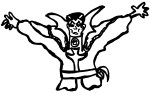
Dr. Strange is a feast for the eyes, but fails to nourish on any comedic, narrative, spiritual, philosophical, or emotional level. For a work that’s inspired over a year of think piece controversy and a few weeks of hyperbolic Best of the MCU praise, it mostly exists as a flashy, but disappointing hunk of Nothing Special.”

EPSON MFP image

25. Elle, nominated for Best Actress (Isabelle Huppert)

Elle vaguely echoes ideas about what it’s like to mentally relive a trauma once it’s ‘behind you,’ having to encounter your abuser in public social settings without acknowledging the transgression, the ineffectiveness of reporting sexual assault to police, and the misogynistic & sexually repressed aspects of modern culture that lead to rape in the first place, but all of those concepts exist in the film as indistinct whispers. Mostly, the rape is treated like a cheap murder mystery, with all of the typical red herrings & idiotic jump scares you’d expect in a whodunit. It’s a paralyzing trauma that has little effect on the story outside the scenes where it’s coldly detailed onscreen and the real shame is that it sours what is otherwise an excellently performed black comedy & character study by leaving very little room for laughter, if any.”

-The Swampflix Crew

Cathy’s Curse (1977)

EPSON MFP image

three star

After a few decades in which the film fell into the public domain as a recobbled, poorly transferred, discolored, nigh-unwatchable piece of garbage, a restoration and Blu-ray release from Severin Films means a whole new generation can see Cathy’s Curse (aka Cauchemars, literally “nightmares,” the film’s original/French title) in all of its… glory?

The 1970s were banner years for the burgeoning Canuxploitation film industry, as our neighbor to the north saw a boom in production due to an increase in the Capital Cost Allowance (CCA) due to new tax shelter laws instituted to encourage Canadian filmmakers. Theretofore, most of these funds had gone toward producing documentaries, an influence which is evident in the observational, cinéma vérité nature of many of the films that followed regardless of genre; beginning in 1971, the Canadian Film Development Corporation pushed filmmakers to focus on those films that were more commercially viable in an attempt to recoup some of this funding. From this push we got the early films of our dearly beloved David Cronenberg, as well as great work from Bob Clark, who was recruited from Florida to lend his experience to the Canadian industry.

Of course, the exploitation of tax shelters is nothing new, and the availability of public funding has doubtlessly led to the implementation of various Producers-style bombs quickly slap-dashed together to take advantage of available funding. Cathy’s Curse is notably a tax shelter baby, although it’s much better than many other films that were created for similarly inartistic reasons.

The film opens on Mr. Gimble in 1947, who returns to his home to learn that his elementary-aged daughter Laura has been left alone by her mother, who absconded with Laura’s younger brother George. Mr. Gimble tells the little girl that her mother is a bitch, and that she will pay for what she did to Laura; I’m noting this here because, even in the remastered director’s cut, we never learn exactly what Mrs. Gimble did or why Mr. Gimble is so bitter about it. The two race away, and when the car swerves to avoid a rabbit in the road, both Mr. Gimble and young Laura are burned alive in the resultant crash.

Some thirty years later, George (Alan Scarfe, who played not one but two Romulans in Star Trek: The Next Generation) returns to the still-pristine house with his wife Vivian (Beverly Murray) and daughter Cathy (Randi Allen). Vivian has recently lost the couple’s second child and suffered a nervous breakdown as a result, lending her character a kind of otherworldly removal from the events at hand and planting the seeds for George to shrug off her concerns as the result of an inscrutable mental illness later in the film. Upon arrival, the family is greeted by housekeeper Mary (Dorothy Davis) and repairman Paul (Roy Witham), and Cathy befriends some neighboring children.

On the day of a pre-arranged play date, Cathy goes upstairs to get some rest beforehand, but is drawn to the home’s spacious attic, where she discovers a portrait of her dead aunt as well as a rag doll with sewn-shut eyes. The portrait’s eyes glow an eerie green, and so begins Cathy’s possession. While playing with the other children, she uses them to re-enact the night of Laura’s death, including urging one of the boys to say “All women are bitches!” The mother of these children, meanwhile, has tea with Vivian and another friend (Mary Morter), who identifies herself as a medium and has a full on psychic freakout after holding a picture of Laura and George’s father, complete with deep-voiced recitations and lots of Garth Marenghi’s Dark Place-style rapid cuts. This is interrupted when one of the children cries out after Cathy cuts her.

The connection between Cathy and the doll deepens, as she sees Laura reflected in her mirror instead of herself, and poor Mary is killed, as is Paul’s dog. Vivian is sent to a sanitarium for a while and Paul is tasked with watching Cathy during the day while George attends to unspecified business at a construction site. Paul himself is subjected to hallucinations and suddenly-manifesting lesions, but Cathy keeps him around (and drunk) apparently for her own amusement and perhaps in recognition that she needs to keep at least one person alive to take care of her while George is away. The medium returns more than once to the house and is continuously rebuffed by Cathy and a drunken Paul when she asks for Vivian, before a nightmare hallucination sends her out of the house and out of the film for good (she’s set up as almost like a Father Merrin type, but her appearances end up contributing nothing to the film).

Vivian returns home, and her protestations that something is deeply wrong with Cathy are dismissed by George with increasing irritation and accusations that her mental illness is tearing the family apart. Not helping is the fact that Cathy is a perfect angel when in her father’s presence, and her truly innocent nature seems to be, at times, attempting to exert itself. After a final confrontation, George ultimately sees the truth and Vivian saves her daughter’s soul by removing the stitches from the doll’s eyes, forcing the evil presence out of the house and their daughter.

For a low-budget attempt to cash in on the success of The Exorcist with some overtones from The Omen (complete with a nanny dying from a fall from an upper floor, although even a woman Mary’s age would probably survive a fall from the second story), Cathy’s Curse is decent, but nothing exciting or terribly special. There are plenty of laughs to be had, but it’s unclear which, if any, are intentional; my favorite is in the scene where the newly-possessed Cathy throws her cereal bowl across the room and Mary, thinking this was an accident, picks up approximately four pieces of broken china from a pile of dozens of shards and cheerfully declares “There, all better!” There’s also some humor gleaned from the possessed Cathy’s dirty mouth, where attempts to mimic the truly revolting and soul-crushing diatribes voiced by Regan in The Exorcist come across as distinctly Canadian in the script’s unwillingness to go too far.

Still, the film isn’t lacking in mid-budget charm. The restoration of the film may not be worth spending time to track down and watch, but if it happens to fall into your lap, there’s a moderately good time to be had.

-Mark “Boomer” Redmond

Double Feature Disaster: Spontaneous Combustion (1990) & Society (1992)

EPSON MFP image

When I first set out to track down a copy of Society, I turned to my old pal, the Vulcan Video catalog search, which showed that there was a copy at the location nearest me. When I went to locate it, however, it was nowhere to be found on the shelf, and the kind woman working the counter that day noted that their copy had actually been sold several years back and that the catalog listing was an oversight (an unusual lapse for the fine folk of Vulcan). We did eventually track down a copy of the film in their stacks, one of those early double-sided DVDs with Society on one side and Spontaneous Combustion on the reverse. I was pretty pleased by this, because a double feature usually means an easy instant follow up article (just add water).

I was wrong. I was so, so wrong. There’s nothing easy about Spontaneous Combustion.

The film stars America’s non-darling Brad Dourif as Sam, the adult son of a husband-and- wife team who were given an experimental anti-radiation injection during a propagandistic Cold War exercise. Following his birth, both parents spontaneously combust after contact with their new infant, leaving him to be raised by the mysterious Lew Orlander (William Prince), a wealthy industrialist who acts as the face of the original experiment when his company takes over from the government.

Some reviews identify Sam as a would-be actor, apparently based on his first scene in the film, in which he recites some lines of Shakespeare on stage with a student, but I think he’s supposed to be a teacher, as is his love interest Lisa (Cynthia Bain). One can hardly blame the audience for being unclear as to who Sam is, what his motivations are, or for failing to follow the so-called plot of the film. From what I can understand, Sam was once married to Rachel (Dey Young), Orlander’s granddaughter, who was always pushing Sam to visit Dr. Marsh (Jon Cypher), who is secretly in Orlander’s employ. Since their divorce, Sam has struck up a relationship with fellow anti-nuclear activist Lisa, but this relationship is also the result of Orlander’s manipulations, and the supposed homeopathic medication she has been sharing with him is actually from Dr. Marsh. These treatments are provided in order to encourage the growth of Sam’s supernatural power to start fires.

All of this seems pretty straightforward, but there’s also the mysterious reappearance of Sam’s childhood toy that sends him off searching for the truth of his origins, Sam’s budding powers and the ensuing accidental deaths thereof (including a couple of police officers and John Landis in a cameo as a radio . . .  technician, maybe?), a radio evangelist/medium who seems to be speaking to Sam directly for reasons that are utterly unclear, the sudden reappearance of a woman (Melinda Dillon) involved in the original experiment and her just-as- sudden murder, the murder of another woman who was investigating the soon-to- be-activated nuclear plant nearby, Lisa’s own pyrogenetic powers, and an inordinate number of conversations held on neon telephones.

combustion-espontanea-spontaneous-combustion-tobe-hooper-eeuu_-1990_avi_002513600

The composition and plotting of this movie are bafflingly inelegant, and even two viewings left me unable to accurately gauge just what in the hell was happening at any given time. This was a frustrating viewing experience, both times, and not in the sense that some deeply philosophical films are hard to parse. Instead, Spontaneous Combustion feels like a unauthorized, non-union sequel to Firestarter that was hastily edited together by someone trying to recreate the experience of watching that film with a 104° fever. It’s a movie that actively tries to discourage you from watching it even as the story (such as it is) unfolds, challenging the viewer to a test of wills.

Despite the incohesiveness of the overall plot, I was able to discern two similarities that would reasonably connect this film to Society and, to the inebriated mind of some marketing exec, warrant putting the two films on a single disc. First, the actor playing Sam’s father, Brian Bremer, also portrayed Petrie, Billy’s rival for student body president, in Society. More thematically, both Billy Whitney and Sam are the children of working class people raised by wealthy elites for their own nefarious purposes. It’s a bit of a stretch, but there it is.

Even if you find yourself with a copy of this double DVD in your pursuit of watching Society, don’t flip that disc. It’s not worth it.

For more on February’s Movie of the Month, the satirical class politics body horror Society, check out our Swampchat discussion of the film.

-Mark “Boomer” Redmond

The Late, Great Planet Mirth VI: A Thief in the Night (1972)

EPSON MFP image

three star

campstamp

Welcome to The Late Great Planet Mirth, an ongoing series in which a reformed survivor of PreMillenialist Dispensationalism explores the often silly, occasionally absurd, and sometimes surprisingly compelling tropes, traits, and treasures of films about the Rapture. Get caught up in it with us!

“A man and wife asleep in bed; she hears a noise and turns her head– he’s gone. I wish we’d all been ready.”

This is basically the plot of A Thief in the Night, but first, a little history.

Christian musician Larry Norman was a pioneer, although not everyone was ready for his unique blend of then-modern folksy rock ‘n’ roll when Upon This Rock came out in 1969. Stodgy preachers like Jerry Falwell and especially Jimmy Swaggart saw the use of contemporary music stylings to evangelize as “a sinful compromise with worldliness* and immoral sensuality.” Modern music is often a point of contention for this particular subculture, as the many hours I endured being reminded that listening to “secular music” was a sin at Bethany Christian School (instead of learning about, you know, science or something) can attest– not that it mattered, given that this is the same lesson I was getting at home. One of my favorite Christian propaganda films, Rock: It’s Your Decision, is about this very topic, and I can remember the shelf of books in my fundamentalist school’s library that featured Swaggart’s Religious Rock n’ Roll – A Wolf in Sheep’s Clothing alongside Phil Phillips delightfully tangled Turmoil in the Toybox, which is basically Helen Lovejoy’s “Won’t someone please think of the children!” mixed with paranoia that Care Bears and Star Wars are pathways to such evils as Communism, witchcraft, and “Eastern mysticism.”

This same shelf also contained the laughably dated The Unhappy Gays: What Everyone Should Know About Homosexuality, written by future Left Behind co-conspirator Tim LaHaye. This is ironic, given that the title of LaHaye and Jerry B. Jenkins’s most famous work is actually taken from “I Wish We’d All Been Ready,” the same Larry Norman song excerpted at the top of this article is taken: “There’s no time to change your mind; The son has come and you’ve been left behind.” Even now, nearly ten years into my apostasy, I really enjoy this track: it’s creepy, contemplative, moody, and doesn’t shy away from some of the darker imagery and ideas that inform PMD eschatology and ideation, like children starving to death and demons dining on some unspecified meal (in one lyric alone it manages to take the fate of children into greater consideration than the LB series does in some 4500 pages). It’s haunting, and thus it’s no surprise that it has helped to popularize a certain vision of the post-Rapture world that has  come to be accepted by the PMDs as sacrosanct without really questioning its origin, much the same way that the Hell envisioned by fundamentalists is more Dante than Daniel.

“I Wish We’d All Been Ready” is also the opening musical number of 1972’s A Thief in the Night, playing out over the opening credits and segueing into what appears to be a youth group meeting attended by our heroine Patty (Patty Dunning), a young woman who is consistently identified in promotional materials as “caught up in living for the present with little concern for the future,” even though that’s not terribly accurate. Sure, she occasionally goes to the lake to have fun with her friends, but while there they often engage in conversation about the future, spirituality, and other heady topics that most teenagers probably spend much less time fretting about.

The lead singer of the band and apparent leader of this youth group is Duane (Duane Coller), who reminds his friends that the Rapture could be coming any minute, and that it’s important to be truly saved in order to ensure that they are not left behind to experience the Tribulation. Patty’s love interest Jim (Mike Niday) is a Certified True Believer™, but Patty and her family attend a church with a looser (read, for the sake of this film’s intended audience: a more liberal and less literal and thus not scriptural and in fact heretical) approach to spirituality; her pastor, Matthew Turner (Russell S. Doughten Jr., also a writer on the film) is less fire-and- brimstone and more peace-and- brotherhood, which the Rapture-ready believers watching the film are supposed to recognize as being sinfully misleading. Patty notes that this PMD eschatology is something she’s never heard before, but agrees to attend a service with Jim, where she hears the “truth” for the first time.

The Rapture (sort of) happens at the forty minute mark of this seventy minute movie, but it feels a lot longer due to a few overlong plot cul-de- sacs. The boys over at Red Letter Media coined the term “shoot the rodeo” in their seventh “Wheel of the Worst” video to describe any time that a film crew decides to shoot a real life event that is happening nearby in order to enhance production value (just like the kids in Super 8). This is why Clint Eastwood’s character in Play Misty for Me goes to a super boring jazz festival for a while, and (presumably) why there’s a dog frisbee competition at the beginning of Flight of the Navigator. It seems like a watersports event must have been happening in or around Des Moines at the time that Thief was being shot, because our gaggle of main characters seem to spend an awful lot of time at the lake. Jim is bitten by a snake at work at one point, requiring a discussion about the fact that there is no antidote, so the hospital is flying in a snake farmer to give a transfusion in the hopes that the antibodies he’s built up will save Jim’s life. It’s not as exciting as it sounds (although it’s not boring per se, just belabored), and several trips to the hospital later, Jim and Patty get married. Things are fairly blissful for the young Iowans; until one day Patty’s asleep in bed, she hears a noise and turns her head, Jim’s gone! I wish we’d all been ready!

The radio tells about the sudden disappearance of millions of people, and Patty knows the truth. Just as Nicolae Carpathia would set up New Babylon and its accompanied One World Government in the Left Behind series, and Franco Macalusso erected the O.N.E. in the sequels to Apocalypse, the presumable Antichrist (whom we don’t meet in this installment) has the United Nations create the Imperium of Total Emergency (U.N.I.T.E.)**, and soon it’s binary triple sixes for everybody! You get a Mark of the Beast! And you get a Mark of the Beast!

Patty’s other friends waste no time falling in line with the new world order, as even her old pastor shows up at the Mark facility and says that he wants to be a good citizen before getting his forehead tattooed. Patty flirts with the idea of getting Marked because without it, she can’t buy food or anything else that she needs (a reference to Revelation 13:17). Patty is relentlessly pursued by the forces of U.N.I.T.E., embodied by a single van full of Antichrist cronies, until she is trapped on a bridge and, in attempting to escape, falls to her apparent death in the waters below.

Psych! Patty wakes up; it was all a dream. Except double psych! It was a dream, but she has awoken moments after the Rapture has taken her husband and the rest of the real Christians. She screams us out into the end card, which states “The End . . . Is Near!”

The most striking thing about A Thief in the Night is how competent it is, especially in comparison to other films in this subgenre. It’s been too long since I watched the Left Behind films starring Kirk Cameron to make definitive statements about their quality, but I don’t recall them with any particular fondness and seem to remember them being more banal than a manila folder, while Apocalypse seemed like it was made by someone who had heard of these “moving pictures” but never seen one before. Although there are some stretches that are pretty dull, Thief was made by someone who knew what they were doing. There’s clever (if very, very dated) editing, decent production value, and even a few really great sight gags (my favorite is the post-Rapture church sign that reads “The end is nea– ,” demonstrating that some  church underling got taken in the twinkling of an eye in the middle of a dull chore).

screenshot-2017-01-27-at-4-54-42-pm

It’s not a great film by a long shot, but it’s definitely a worthwhile endeavor. The film it reminds me of most, actually, is Mark of the Witch. It’s not just the amateurish acting, the surprising competency of a wet-behind- the-ears cast and crew, or the dated visuals and cinematography: the people making this movie had fun, and you can tell. It’s a far cry from more dour (if also more entertaining in its own way) fare like Revelation or Judgment. It’s a film that sets out to scare its audience, but out of love, not scorn or spite. That’s the real miracle.

EPSON MFP image

*When used in this context, “worldliness” means an investment in the material (and thus sinful, carnal) world, rather than the more common, secular definition meaning “sophisticated.”

**This is early evidence of the influence of the far-right John Birch Society on PMD thinking; JBS was claiming that the United Nations was merely the first step toward building a one world government as early as 1959. It comes through even more clearly in the Left Behind books, which is no surprise given that the aforementioned LaHaye was a card-carrying John Bircher. I highly recommend checking out the Wikipedia page on the JBS while you can; if literal Nazi Richard Spencer gets any closer to the White House, it’ll likely be Ministry of Truth’d within 72 hours. For other further reading, my man Fred Clark has a couple of blog posts that serve as good introductions to what PMDs think the UN is and a discussion of the bizarre, self-deceptive cognitive dissonance required to buy that nonsense.

-Mark “Boomer” Redmond

Movie of the Month: Society (1992)

EPSON MFP image

Every month one of us makes the rest of the crew watch a movie they’ve never seen before & we discuss it afterwards. This month Brandon made Alli, Boomer, and Britnee watch Society (1992).

Brandon: In the post-apocalyptic eternity since the presidential election of Donald Trump there’s been bountiful articles explaining why such & such movie, say Bob Roberts or Children of Men or even Rogue One, are now more relevant than ever in our current political climate. The truth is more likely that these films never lost their political relevance in the first place. Although this country has seen a somewhat progressive swing in the last eight years, the same systemic class inequality & civil rights issues that have always plagued it haven’t budged an inch. Most political art made in the last century, particularly art that addresses our deceptively rigid class system & the often brutal ways its boundaries are enforced, is always likely to retain its significance as our presidents change, since the system they helm doesn’t change along with them. That’s why I don’t want to pose the rich-feeding-off-the-poor terrors of Brian Yuzna’s cult classic body horror Society as being more relevant than ever in the face of a Donald Trump regime, as tempting as it may be. More accurately put, Society is very much a product of its Reagan-era times that, when viewed through a modern context, can be a harrowing (and amusingly absurdist) reminder that nothing ever really changes, least of all the status quo.

For all of its continued political relevance in its hamfisted approach to satirizing rigid class structures, Society is admittedly a deeply silly film. High school senior Bill Whitney feels out of step with his Beverly Hills yuppie community, including his own family. Despite his privileged life of manicured mansions, cheerleader girlfriends, and popularity contest high school elections, Bill is intensely uncomfortable in his environment, suffering a growing unease he discusses at length with his therapist. This discomfort amounts to a spiritually crushing paranoia in which Bill hallucinates grotesque body contortions in his Reaganite peers and becomes convinced that his parents & sister are attending incestuous, murder-fueled orgies among a secret sect of Society he simply doesn’t have access to. Of course, Bill’s dead right. He doesn’t fit in with his Beverly Hills social group because he was born an entirely different species, a Poor. The wealthy members of the film’s self-described “Society” are an inhuman race who run the world by literally feeding off the poor. Bill was merely adopted into their ranks as an unworthy outsider & eventual sacrifice. The final half hour of the film is a Cronenbergian mess of melded bodies, unimaginable cruelty, and sexual taboo that exposes the heartless & wealthy ruling class for the monsters they truly are. It’s a bewildering special effects showcase from gore wizard Screaming Mad George that nearly wipes away all memory of the mostly standard horror film that precedes it by putting an outrageously grotesque face on systemic inequality in modern class politics.

What I love most about Society is its complete lack of subtlety & nuance. Once its world’s rules are revealed in its infamous “shunting” sequence in the final act, the film’s themes are spelled out in the plainest of terms. Bill is collared & walked around like a wild dog for public ridicule (before he’s subjected to a more supernatural torment). Wealthy men explain to him that their superiority comes from “good breeding” and that, since he was adopted from a non-wealthy family, “You’re a different race from us, a different species, a different class.” They even explicitly connect their evildoings to a historical tradition of class inequality, bragging that “The rich have always sucked off low class shit like you.” Society was largely panned in its time for this disinterest in thematic subtlety, struggling for three years after its initial release in 1989 to earn a proper US distribution deal. Treating its class politics as a flimsy excuse for the disturbing practical effects orgy in its final act seems like a mistake to me, though, and I’m delighted that the film has been reassessed as a cult classic in the decades since its humble beginnings. The way it explores class divisions in the most literal & grotesque terms possible is highly amusing to me in an almost cathartic way. This is especially true of these earliest days in a Donald Trump presidency, where poking fun at the inhuman cruelty of the wealthy oligarchy feels almost necessary for survival, even if their status as the ruling class hasn’t at all changed since this film’s initial release.

Boomer, do you agree that Society is well-served by its blatant class warfare themes, particularly in the cruelly grotesque way the 1% are characterized in its sledgehammer dialogue & nightmarish gore, or do you think the film would have fared better with an occasional adherence to subtlety & restraint?

Boomer: Honestly, yes and no, as I am of two minds when it comes to film’s mixed relationship with subtlety. Though the plot becomes more traditionally horrific as it plays out, the outpouring of nauseating imagery and sound that constitutes the film’s finale is a huge tonal shift from the relatively grounded story that seems to be playing out in the first act. As much as I love grue, I also love the conceit of the unreliable narrator, especially one who doubts his own mind. Take, for instance, Bill’s first scene with his therapist, in which he takes a bite of an apple only to realize it’s full of worms; he looks away, then back, and the apple is totally normal. This is a fairly obvious metaphor for the way that the presumed normalcy of Bill’s world is merely a thin facade covering inconceivable monsters beneath the surface, but it also implies that Bill’s less-than-objective interpretation of events may be the result of a diseased mind. At least until the shunting begins, anyway.

Of course, that was just my reading of the scene based on viewing the film cold. Many of the early oddities, like the squirming apple, the apparently inhuman body structure of Bill’s sister, and the changes to the audiotape, could easily be interpreted either way: as hallucinations or a They Live-style peek behind the veil of our ordered existence. Instead, of course, we learn that these are just moments in which members of the titular Society are gaslighting (another important term that has seen a resurgence in usage and discussion since the Trump ascendancy) poor Bill. Luckily, for the sake of goreheads and fans of unsubtle social satire everywhere, Society quickly descends into stomach-churning “after dark” madness.

After my viewing, I watched the trailer and looked at posters for the film, and I can only imagine that filmgoers of 1992 would have been highly disappointed if “the minds behind Re-Animator” and the gore wizard “who brought you Nightmare on Elm Street IV (um) and Predator (oh, ok)” had turned out a film about a rich Beverly Hills kid who thought his world was being turned upside-down only to learn that he was merely losing his mind. Still, I think I would like to see a film that plays out more subtly, wherein Bill becomes all-too-aware of how privileged his easy, moneyed life is and begins seeing his 1% peers as the inhuman monsters they are on the inside, without making that metaphor so literal. The film would have been a bit more nuanced if it took that road, but that doesn’t mean Society doesn’t work in the form that it does take.

What the film lacks in subtlety, it makes up for with its overt depiction of the grotesqueries of American pomp and lavishness. When the film shreds the guise of humanity to reveal its, uh, true form, the film doesn’t suffer for its straightforwardness. The rich are fundamentally different from you and me, and it is, from their point of view, a matter of class and breeding. This isn’t even arcane knowedge that I’m talking about, it’s all out there to be seen by anyone who opens their eyes. I never saw a full episode of Rich Kids of Beverly Hills, but I did see plenty of clips on the dearly departed (and sorely missed) The Soup, and have seen enough “Rich Kids of Instagram” compilations scattered around the internet to know that a life of wealth and privilege makes people rotten to their cores. A dear friend used to be a frequent babysitter for the four-year-old daughter of a rich Baton Rouge lawyer; one day, the little girl was so cruel to my friend that she cried, causing the brat to tell her that she didn’t have to be nice because she was pretty. When my friend told the parents about this incident that evening, the father didn’t apologize or even inspect the way that he was raising his child to be a monster; he just looked at my friend and said, “Well, she’s right, you know. She doesn’t have to be nice; she’s pretty.”

Anecdotal though that is, it bespeaks a systemic inhumanity on the part of the American aristocracy, and that inhumanity is on full frontal display in Society, just as it is in society. To hide that behind a veil of subtlety is to do a grave disservice to the truth of our existence. I would even go so far as to argue that the exaggeration of that idea is more important now than it was 30 years ago. After all, our society has degenerated into such frothing madness that satire can hardly find a foothold; so unable are we to discern extreme parodies of absurd political ideation from the actual extremist views held by fringe mentally ill people (whose voices are amplified by the proliferation of the internet) that there’s a plausible argument being made that “fake news” swung the election. If Jonathan Swift were to publish “A Modest Proposal” in the New York Times tomorrow morning, there would be commenters at Breitbart and TeaParty.org putting on their “All Lives Matter” aprons and getting ready to light the grill to barbecue up some Irish babies by mid-afternoon. The finale of Society may be just over-the-top enough to penetrate even the thickest skulls (and Klan hoods).

Let’s back off of that for a second though, before I work myself up too much. For me, the weakest link in the film has nothing to do with the story or the direction but with Billy Warlock’s performance. I’m sure part of my less-than-hospitable attitude towards the actor is the result of Allison Pregler’s delightful abridged series project Baywatching, but I still found Bill to be a thoroughly disinteresting lead, with no power in Warlock’s portrayal to save the character. Hell, if anything, Milo is the hero of this story, not Bill. What do you think, Britnee? Were you distracted by Billy Warlock’s lackluster presence, or was it suitable for the film? What change would you make to strengthen the film: recasting, or rewriting the character?

Britnee: I’m in agreement that Billy Warlock’s performance in Society was pretty terrible. With such an interesting last name, who would’ve guessed he’d be such a letdown? Even though his acting was shit, he didn’t really have that much of a negative impact on the movie, though. Society was absolutely insane from the opening scene to the disturbingly haunting ending, so, if anything, Warlock contributed to the insanity that made this movie such a success in the cult film community. Imagine how off-balanced the movie would be if someone decent played the role of Bill. I couldn’t even imagine such a thing.

If I could change anything about Bill’s character, I would want him to take all the strange occurrences happening around him more seriously. It was irritating to watch him be so willingly blind to what was happening around him, and it was even more annoying to know that he didn’t start questioning his place in his weird family until he was in his late teens. I’m assuming that he was adopted by the Whitney family when he was a baby since he didn’t know he was adopted, so he probably noticed their strange behavior way before he started to question it. Maybe I’m being too harsh because he was raised in that environment his entire life and probably thought it was normal, but it’s still hard to believe.

The biggest question that I have from Society (and I have many) is why did the Whitney’s adopt Bill and raise him for so long with the intention of eventually “shunting” him? They didn’t have to groom him for so long just to shunt him in the end because they shunted Blanchard, who was pretty much just an average guy. They could lure or capture any lower class individual to shunt, but I don’t understand why they put so much effort into shunting Bill.

Alli, what do you think about the Whitney’s adopting of Bill to just shunt him in the end? Would you have liked more of a background story of their motivation to adopt and raise Bill? If you could create the story for Bill’s adoption, would would it be?

Alli: I think their cruelty and extravagance has made them bored, so they need increasingly sick diversions. I’m imagining some sort of extremely twisted My Fair Lady, where they found this poor family with a child they can’t afford and just for kicks decide to groom a lower class “poor” into a false sense of security just to see the terror and confusion. It also kind of brings to mind “The Most Dangerous Game.” My main question is why now? Have any of them thought of keeping “shuntable” pets before? It’s such a hyperbole of the idea of the poor as sheep for the rich to herd and take advantage of. It’s amazing that they’re applauded and congratulated on their great achievement, because in a way this makes the Whitney’s farmers, and I imagine farmers are some sort of unimaginably lower rank.

But something more mysterious to me than any of that is Mrs. Carlyn (Pamela Matheson). I didn’t ever really figure her character out. Her doe-eyed, empty stare and tricophagia aren’t really explained. Very early on the cheerleader types reference her in disgust when talking about Bill’s infatuation with Clarissa Carlyn (Devin DeVasquez), “Have you seen her mom?!” After mentioning Clarissa’s turning tricks, I assumed her mom would be some sort of scandalous gold digger, but she’s the opposite. Instead, she’s a semi-catatonic wanderer with wild hair. She’s harmless enough as a member of Society goes, but I guess I don’t really understand why they keep her around.  The most I can make of it is that this Society even has outcasts and those who don’t fit in. They sweep them under the rug and ignore them, but is Mrs. Carlyn anymore messed up than any of the rest of them?

Brandon, what do you think about Mrs. Carlyn’s place in Society?

Brandon: I’m really glad that came up, because Mrs. Carlyn & her hot to trot daughter were the first thing that came to mind when Boomer & Britnee called out Bill for being a lackluster presence in the film. Mrs. Carlyn in particular is a sore thumb. She plays Society‘s already broad comedy a tad too far into a cartoonish territory that spoils the winking camp a little for me, recalling a Laurie Beth Denberg character from a long-forgotten All That sketch. This is more a fault of the filmmakers’ than the actor’s, though. They don’t give her much to do outside tired fatty-fall-down-make-boom lines of humor and excuses to mug crazy-eyed for the camera when she tries to eat unsuspecting victims’ hair. (In a typifying punchline, she’s confused when she attempts to eat a toupee.) If I had to justify her inclusion in the plot, I could argue, as Alli suggests, that she’s a comedic take on the way wealthy families always seem to have that one black sheep weirdo that doesn’t quite fit in, usually due to mental illness. Mrs. Carlyn & her oversexed daughter are essentially this Society’s version of Grey Gardens, their outcast mutant lives existing as a sort of bane on the more respectable slug-eating mutants of Society proper. That’s giving the film more credit than it probably deserves, though, especially since nothing else in its themes is treated with any semblance of subtlety. For a film willing to beat you over the head with lines like, “There are people who make the rules and people who follow them. You’re born into it,” and the often-repeated “You’re going to make a wonderful contribution to Society,” I think a little acknowledged justification for the Carlyns’ existence as outsiders, even as a source of embarrassment, would’ve improved the script. I also could’ve done without Mrs. Carlyn’s character entirely, to be honest.

Her daughter Clarissa is another strange outlier in the story. Clarissa seems to at first be horny for Bill in a nefarious way, as if she’s playing with her food or further trapping him in his predetermined downfall, but that attraction is later revealed to be genuine. This could possibly be a result of her identifying with his fellow outsider status as a Poor, thanks to her family’s position as the Grey Gardens black sheep. Again, the script doesn’t give us much to work with there. Clarissa’s affection for Bill honestly wouldn’t distract me too much, though, if it weren’t used as a deus ex machina (along with her mother’s trichophagia) to rescue him just before his turn to be shunted. Bill’s escape at the end & ultimate survival makes for an interesting gender-swapped version of the Final Girl trope (something telegraphed in the red herring slasher film opening), but I was honestly rooting for a much more pessimistic conclusion to the story. As far as screenwriting tradition goes, a gore-soaked Canadian horror indie just might be one of the few times when you can get away with a triumphless, dispiriting ending without gripes from producers or test audiences and it just seems weird that Society would allow its protagonist to walk away without more than a few scratches. If all these wealthy families conspired for nearly two decades to shunt Bill, why would they so easily allow their science project to escape once he’s learned all of their horrific secrets? I guess you could argue that they’re in a vulnerable, physically soft state during the shunting that would inhibit his capture, but that seems like a pretty weak excuse. Having Bill suffer the shunting and the wealthy secure an inescapable victory over their born-poor protagonist might’ve better served the film’s central metaphor and it seems as if the only reason he’s allowed to escape is to set up a sequel that never came, a lame cop-out if there ever was one. And since Clarissa’s entire existence in the plot is the machination of that escape I have to question her validity in the script just as much as I do her mother’s.

What do you think, Boomer? Would a pessimistic ending have better driven home Society’s central metaphor? Would it have been a better film if Bill had fallen victim to the shunting he was groomed for all his life?

Boomer: That’s an interesting question. More than the relative positivity/negativity of the ending, I was struck by how abrupt it was, and how odd that conclusion felt in a film that spent much of its runtime letting the story breathe. To use a comparison that is accessible for many, consider the ending of Terminator: imagine that, after Sarah Connor destroys the T-800, the film cut to black and the end credits immediately started rolling, without the follow-up scene in which she drives off into the desert as the distant thunder of a gathering storm rumbles ominously. That’s how you end this kind of movie: the hero vanquishes (or escapes) the clutches of evil, and the audience is treated to an epilogue that allows us to digest the climactic finale and imagine a future for the character or characters in whom, if the film is successful in its presentation, we have become invested. It doesn’t have to be completely optimistic or pessimistic; in fact, Terminator‘s final moments are all the more poignant for their ambiguity. James Cameron’s film is perhaps the best example of how to make this work, given that it could so easily have been yet another generic action film like so many of that era, but rose above the milieu to become iconic through strong performances, impressive VFX work, and attention to detail.

I have a feeling that director Brian Yuzna may have even thought he was endowing the ending of Society with this same feeling of bittersweet uncertainty: Billy escapes, but a member of the Beverly Hills shunt calmly tells a cohort that there is another Society… in Washington (dun dun DUN). But instead of giving the ending room to breathe, the end credits start to roll seemingly out of nowhere, without even a perfunctory denouement in which Billy, Milo, and Clarissa drive into the night as the first fingers of the sun grab at the horizon. On the other hand, I might just be making this connection between the two movies because both Sarah Connor and Bill drive sweet Jeeps; that’s for the reader to decide.

In the end, however, I think that the film’s “happy” ending is difficult to parse as either a function of its time of creation and its creative genesis. Although Yuzna was born in the Philippines, the film can be read as a clear product of anxieties about the rich that are not unique to American wealth distribution but specifically reflect that culture. As such, my initial assumption was that the optimistic ending was a result of the need to represent the hope of escaping the clutches of wealthy evil, metaphorically. As obvious as that may seem, interviews with the director indicate that the film was originally about religious cultists out to sacrifice Billy, but that this plot point was altered following discussions between Yuzna and Screaming Mad George during the pre-production process. The “shunting” was conceived by George and the plot reworked backward from there, meaning that any discussion of the relative “happiness” of the ending presupposes a premise that is supported by the text itself, but appears unintentional.

Roland Barthes would argue that this is irrelevant, however, so in the interest of not limiting the text, I declare the author dead and put forth this explanation: the ending must be optimistic in order to give the audience hope of escaping the wealth-positive cronyism of Ronald Reagan. An ending in which Billy dies at the hands (?) of the Society would be reflective of the way that this generally works in the real world (for instance, with the recent repeal of the ACA damning many Americans to a slow and painful death without affordable medical care in order to support the malevolent and uncharitable greed of a few), but wouldn’t make for very good entertainment, so a happy ending is called for.

To go back to the Terminator reference above, how would you see a potential film franchise for Society playing out, Britnee? Do you think there would be any value in confronting other Societies? Would those be better served by taking on the more pessimistic (perhaps even deterministic) tone that the Terminator franchise did?

Britnee: I would absolutely love a Society franchise! I recently read an interview that Yuzna had with Horror Channel back in 2013, and he mentions that he was actively working on a sequel to Society. I haven’t seen anything else that mentions the status of Society sequel, but I hope that it’s still in the works. Having a sequel come out over 20 years after the original film was released sounds insane, but I think that it would be great to get a modern day dose of Society while we’re living in Trump’s America. There’s actually loads of potential for a Society franchise. Think of all the Societies around the world that the films could focus on: the British royal family, Russian oligarchs, Indian billionaires, etc. Could you imagine how amazing it would be to see Queen Elizabeth II lead a shunting with Prince Charles? There’s just so much to work with, and by exploring “Societies” in other countries, viewers could be more aware of the endless supply of greedy jerks all over the world.

Honestly, it’s been at least 15 years since I’ve seen any of the Terminator films, so I only vaguely remember them. It’s not that I didn’t enjoy them, I just haven’t revisited them in a while. If there was a Society franchise, I think the films should have a more pessimistic tone. I would’ve liked to have seen Bill shunted to death and Milo as the only one who was able to escape. Then Milo would go on to be the protagonist in the sequel, where he gets a little team together to destroy all the Societies in the world. In each subsequent film, part of the team would get shunted while the others barely make it out alive (covered in that nasty shunting lubricant). Having the films take a more pessimistic approach adds so much more to the horror element. When Billy escaped in the end, it made the film so much lighter. But as Boomer mentioned earlier, the ending was so abrupt. If there was just a little two minute scene of Billy being thrown in a mental institution from suffering from some sort of shunting PTSD, the film would’ve been more of a solid horror movie.

One image that I just can’t get out of my head is when Bill’s dad becomes a butt-face and makes fart noises. It’s probably my favorite part in the movie. Alli, what where some of your favorite body morphs in the movie? Is there any body morph that you would’ve liked to have seen?

Alli: Man, all the body morphs were really great, but the ones that really stood out to me were when the story was still ambiguous and we didn’t know whether or not it was still in Bill’s head. One of my favorites is when Clarissa’s body is all twisted around. It just reminded me of some freakish nightmares I’ve had. I don’t think I would have included any more of the subtle ones though, because I think the story benefits from the quick descent into overt madness. I guess what I would have wanted more of is the fact that the Society can body morph being used as an advantage rather than a bizarre sex cult or strange clumsy hindrances. How cool would it have been for just a really long arm to try and snag Bill as he’s getting away? I think that would be a pretty simple way to fix the abrupt ending, anyway.

One thing I’d like to see explain more is Bill’s hallucinations. Is he seeing bugs in his food because the food is made of bugs, or is he seeing bugs in his food because he’s actually losing it? It would be more of an interesting statement if it were the latter. I’d like for a protagonist in a movie to be going a little loony but also be 100% completely right about something else crazy going on. Rather than being an unreliable narrator, he’d become a reliable narrator with some problems, which would be an interesting take on that trope. It’s also believable in a way; anyone would have problems if they were raised by an out-of-touch rich family of grotesque mutants.

EPSON MFP image

Lagniappe

Alli: Britnee mentioned the butt-face morph and I feel like here’s the place to say that I really like the idea of ultra rich people literally talking out of their ass. In a movie totally lacking in subtlety, that might be my favorite in-your-face moment.

Britnee: I don’t really understand why Bill’s mom and dad were checking out slugs with their gardener at the beginning of the movie. Was it supposed the be a hint that they were up to something strange or is that really how rich people prepare to make escargot? I wish there was more explanation for it in the movie because not knowing is really killing me.

Boomer: To go back to the question of Mrs. Carlyn, I think that she represents the way that “good breeding” apparently means some kind of inbreeding here, as was often the case with aristocratic families over the course of history. Since the author is dead, I’ll put in my two cents that I interpreted her place in this group as a kind of blindness to the basics of genetics that must permeate Society, and is indicative of the way that the rich ignore that which doesn’t support their worldview. Mrs. Carlyn can’t be inbred because of how good their breeding is and because they are the elite, even when the counter-evidence is staring them in the face (and trying to eat their hair).

Brandon: I think I’ve come up with a pretty decent Society drinking game: Take a swig every time you see Bill’s Jeep, which Boomer mentioned earlier. The fancy black Jeep Bill drives is featured early on as one of the unsuspecting Final Boy’s hallmarks of privilege. The movie obsessively makes a big deal out of the vehicle long after we get the point, though. If features several scenes of Bill finding vague, prankish threats like lynched Barbies & naked blow-up dolls in the passenger seat and once the plot starts barreling toward a conclusion, the Jeep is repetitively shown as both a literal & a literary vehicle used to get Bill from one horror to the next. It started to remind me of that easy screenwriting device where expository information is dumped over phonecalls instead of cropping up naturally. Anyway, I call the game Jeep Shots. Please play responsibly and avoid operating any Jeeps until long after the credits roll.

Upcoming Movies of the Month
March: Britnee presents What’s Up Doc? (1972)
April: Boomer presents Head Over Heels (2001)
May: Alli presents Europa (1991)

-The Swampflix Crew

Mark of the Witch (1970)

EPSON MFP image

fourhalfstar

campstamp

Many moons ago when I was at boarding school, there was a patio restaurant across the main drag from campus that had a detached building containing the restrooms. In the short hallway between latrines, there was a poster for a horror flick I had never heard of, entitled Screams of a Winter Night. After some research using 2004-era internet access (no small feat, to be honest), I found that the movie had been filmed in and around Natchitoches, Louisiana (where my boarding school was located) by college students in the late seventies. They made three prints of the film and took them to drive-ins in the nearest cities, where Screams was discovered and picked up for nationwide distribution. Although it’s my understanding that the film has since found a home on DVD, it took some time to locate a pirated VHS copy of the movie at that time; although it has a certain nostalgic appeal for me, it’s not a very good movie, being largely amateurish in its narrative cohesion and poorly filmed in general, with lighting that renders much of the film impossible to see at points. Maybe I’ll get around to reviewing it for the site one day, but this is really just a preamble to discuss today’s selection, another cheap regional production, 1970’s Mark of the Witch, which, unlike Screams of a Winter Night, is actually a lot of fun and definitely worth seeking out.

In the late sixties, two Dallas women named Martha Peters and Mary Davis noticed that, although the horror genre was exploding, very few films were being made by or for women. Since both women had an academic interest in the occult, they composed a draft of Mark of the Witch, in which a young co-ed is possessed by the spirit of a centuries-dead witch. The film was shot with a cast and crew comprised mostly of local Texan amateurs: Peters seems to have never written anything else, while Mary Davis’s sole other screenwriting credit was for 1974’s Scum of the Earth. This was the first directing credit for Tom Moore as well, although he would direct Return to Boggy Creek (sequel to The Legend of Boggy Creek) seven years later before going on to have a largely unremarkable career as a TV director for episodes of various programs, including Cheers, Picket Fences, The Wonder Years, Mad About You, and L.A. Law.

The film opens with the hanging of the titular witch (Marie Santell), overseen by the betrayer MacIntyre Stuart (Robert Elston); he and two other members of their coven turned on the other ten members, leading to their execution. With her final words, the witch curses Stuart: he and all of his descendants shall bear her mark, until she returns to exact her vengeance. Some three centuries and change later, Leonard Nimoy lookalike Alan (Darryl Wells) is buying some books on witchcraft at the local university bookstore, where his girlfriend Jill (Anitra Walsh) is assisting with a book drive. They briefly discuss the psychology course that they are taking from Professor “Mac” Stuart (Elston again) and make plans to attend one of his parties/seminars that evening. After Alan leaves, Jill discovers a real spell book, later identified as the Red Book of Appin. That evening, she brings the book to the meeting and encourages her friends and classmates, including horndog Harry (Jack Gardner) and ditzy Sharon (Barbara Brownell), to participate in a ceremony outlined in the book: summon a witch.

When nothing seems to happen, the group disbands for the evening and Alan, unaware that Jill has been possessed by the witch, gives her a ride back to her dorm, shrugging off her strange behavior as a kind of joke. Jill returns to Stuart’s home and tells him the truth. Stuart had donated the Red Book, a family heirloom, to the book drive in the hope that it would be found and a ritual performed as a psychological experiment; after a few demonstrations of her power, Stuart and Alan realize that they have unleashed an old evil in modern times. While the possessed Jill seeks out and kills Harry and Sharon to complete a rite that will make her ruler of the world, Alan and Stuart work together to try to find a way to exorcise her possessor before it’s too late.

This is a fun little movie, and surprisingly impressive for a film made on such a small budget and with only local talent. The fun is mitigated in a few places by special effects failures (the fire that the possessed Jill uses in her rites at the wooded grove is no larger than a dinner plate, for instance) and some repetitiveness (the witch uses the same overlong invocation in a few separate scenes), but it’s obvious that all of the players involved are having fun, and that sense of bonhomie and good humor is infectious enough that it’s no trouble to get swept up in the moment.

I saw the film at the Alamo Drafthouse’s weekly Terror Tuesday event in Austin, and the reels themselves were provided by the American Genre Film Archive, which is committed to preserving little oddities like this. Host Joe Ziemba noted that the film had never been checked out from the archive since its induction, and that only a few dozen people had seen the film in its original release. Although the quality of the 35mm print was imperfect (some parts of the film itself had actually turned to dust, resulting in a few skips in the narrative and a blank screen), it was still a great viewing. The entirety of Mark of the Witch appears to be available on YouTube, so viewing it in your own home is not only easy, but highly recommended.

-Mark “Boomer” Redmond

Hidden Figures (2016)

fourhalfstar

Although it’s a fairly paint-by-numbers historical pic, Hidden Figures stands out as a moving and impressive film, and the Academy has taken notice: Figures has picked up multiple Oscar nods this year in both behind-the-scenes and before-the-camera categories. This is important for a number of reasons, not least of all that it demonstrates that the #OscarsSoWhite backlash has put the old guard on notice. Additionally, it’s worth noting that the current political climate is anti-science, anti-progress, anti-women, and anti-minority, and while this film doesn’t exactly stand in that gap and hold the door, it does serve as a reminder of how far we’ve come and how far we have left to go.

The film follows the story of three real black women who worked for NASA in the 1950s and 1960s as “computers,” numerical analysts who performed and checked the calculations needed to put satellites into orbit, and later to send the first men into the cold vacuum that lies between the stars and bring them down to earth again. Janelle Monáe plays Mary Jackson, a mathematician who becomes an engineer, alongside Octavia Spencer’s Dorothy Vaughn, who leads the “colored women” computing group as a de facto supervisor despite being denied the prestige, title, and remuneration of that position. The cast is largely led by Empire‘s Taraji P. Henson, who plays Katherine Goble (later Johnson), a mathematical and physics genius who is instrumental in the calculations that are used to launch John Glenn (Glen Powell) into orbit and save him from destruction on re-entry. Rounding out the cast are Kirsten Dunst as Dorothy’s foil, an obstructionist gatekeeper, Jim Parsons as Paul Stafford, the head engineer of the Space Task Group, Kevin Costner as Al Harrison, the director to whom both Stafford and Katherine Goble report, Mahershala Ali as Katherine’s love interest Jim Johnson, and Aldis Hodge (so good to see you, Aldis, I’ve missed you so much since Leverage went off the air) as Mary’s husband Levi.

As with all historical films, it’s not wholly clear how precise Hidden Figures is in its details (I must admit that I haven’t read the book on which the film is based), but that’s largely irrelevant to the film’s message. Does it matter whether or not the real-life Al Harrison took a crowbar to the “Colored Ladies Room” sign and declared that “Here at NASA, we all pee the same color,” after learning that his best mathematician had to run a mile to the only such lavatory on the program’s campus every time she needed to relieve herself? Not really. What matters is showing young people (especially young girls) of color that although barriers exist, they can be surmounted. It also reminds the white audience that is, unfortunately, less likely to seek this film out that the barriers that lie in place for minorities to succeed do exist despite their perception of a lack of said barriers. What Harrison initially perceives as a failure in his subordinate’s work ethic is, in reality, a fact of her existence to which he is blind because of his privilege; in fact, his position of power has rendered him so above and outside of this concern that the fact it exists is a shock to him. It’s not exactly subtle, but when the truth has to still be dropped like an anvil from the sky fifty years after the fact, there’s no room for subtlety.

Characters like Stafford and Vivian Mitchell could easily be construed as caricatures, but Hidden Figures reminds us that this same kind of oppression is still ongoing. Post-bathroom-desegregation, Vivian and Dorothy both emerge from bathroom stalls and Vivian (who at this point has blocked Dorothy from a promotion to supervisor and taken no small satisfaction in the way that the goalposts have been moved for Mary’s transition to engineer) tells Dorothy that she has “nothing against [her] kind,” she just does her job. Dorothy gives her the only answer that she can: “I know . . . that you probably believe that.” It’s a stark reminder that “following orders” to maintain an immoral status quo isn’t just used as self-justification for the enablers and perpetrators of genocide in a distant past, it’s something that happens every day, hindering progress at every half-step.

There’s a lot to parse in this film, straightforward though it may seem, certainly far more than can be contained in this review (and, it goes without saying but I’ll say it anyway, this discourse is limited by the horizons of my privilege as a white cisman), but Hidden Figures gets a strong recommendation from me. Catch it in theaters if you can; and, if you can’t, make sure to rent it somehow to show to your ignorant friends and family next holiday. Just be prepared to admit that maybe it is hard to buy Glen “Chad Radwell” Powell as American hero John Glenn.

-Mark “Boomer” Redmond