Both the concert movie and the musician’s hagiography are difficult to pull off with any cinematic finesse. With few exceptions like Peter Strickland’s concert footage of Bjork’s Biophilia project and the bizarre tale spun by The Devil & Daniel Johnson, the musician’s documentary is usually flatly crafted, relying on the audience’s interest in the subject to meet the filmmakers halfway. The recent Grace Jones documentary Bloodlight & Bami curiously splits its time between both troubled mediums, the concert movie and the musican’s hagiography, and opens itself up to both’s follies in the process. Its concert footage is no-frills, matter-of-fact documentation of recent Grace Jones performances in Dublin, exerting only a minimal amount of artistic energy into an occasional crane shot in-between its more static edits. Its interview footage, which comprises most of the runtime, is the exact kind of meandering, low-fi/low-effort hangout energy that can sink a musician’s profile in for-fans-only tedium. Somehow, though, the movie transcends these limitations in medium and offers something that feels like a rare, unearned blessing: Grace Jones. Jones saves Bloodlight & Bami from any potential tedium by simply being a living, breathing phenomenon. The movie requires massive patience, but her mere presence makes it frequently fascinating, if not essential viewing. We are extremely lucky to have access to Grace Jones at all, in any form, something Jones herself seems to know more than anyone else in the world.
A Jamaican-born pop singer who made huge waves in the 1970s & 80s through the androgynous sexuality of her high fashion imagery just as much as through the strange tones of her post-reggae music, Jones is a long-established legend. Early in Bloodlight & Bami, Jones is swarmed by intensely dedicated fans after a performance—strangers who greedily drink in her every word & physical motion as if she were a deity. That’s not the Grace Jones this movie is about. You can glimpse her attention-commanding power in the interspersed concert sequences, where she models various exquisite headpieces & black lingerie while singing to an appreciative crowd of hundreds, like a demonic Eartha Kitt. Most of the film, however, is an effort to humanize the pop culture icon, hanging out with her between gigs, often at home with family. The high production value of the concert footage is clashed with the serene calm of Jones’s return trips to Jamaica, framed in a cheap digital haze. The conversations captured in this off-stage downtime range from small talk with strangers & petty disputes with session musicians to deeply painful reminiscing of childhood abuse & long-dead romances. There’s no historical hagiography of Grace Jones’s top-of-the-pop-world heyday, only a document of her current art as a stage performer & her current relationships with an inner circle who knew her as a person, not an avant-garde deity. The movie is in no rush to impress you with the enormity of Jones’s achievements or legacy, relying instead on her natural charisma to hold your attention as the digicam footage gets distracted by images as inconsequential as a car mirror ornament or a flashing streetlight. It’s a gamble that takes for granted that audiences’ minds won’t wander off in its long moments of quiet, one that mostly pays off.
As entertaining as her music can be, Grace Jones is most distinctly impressive as a visual artist & a performer. It seems counterintuitive, then, to strip her of all her visual gloss in a documentary that often looks like it was filmed on a flip-phone. Jones is, to this day, still a phenomenal performer, even shown hula hooping in high heels while singing a vocal-intensive stage number, never missing a beat. Director Sophie Fiennes also has an early credit as an art department contributor for The Cook, The Thief, His Wife, and Her Lover, one of the most exquisitely staged films I can name, so it’s presumable her eye for visual craft is at least somewhat comparable to Jones’s. The aggressively low-fi, meandering aesthetic that guides most of Bloodlight & Bami must be understood as a deliberate artistic choice. Jones is stripped of the gorgeous lighting & costuming she wears like armor onstage (the headpieces are so extravagant that there’s a “hats by” credit included in the opening title cards) to demonstrate how naturally fascinating & culturally essential she remains without them. Even when she’s not making bawdy sex jokes about the mussels she’s eating for dinner or explaining to an ex-lover why all men should be penetrated (at least once), she naturally commands attention. There’s a fierce, no-bullshit way she carries herself that makes her come across like an undeniable force of Nature, even when she’s just waiting around in a recording studio for stubbornly lackadaisical musicians to arrive or lightly bickering with her mother. Even including the more immediately arresting concert footage, the most fascinating sequence of Bloodlight & Bami is a lengthy montage where Grace Jones applies her makeup in the hours leading up to a performance, oblivious to the world outside her mirror. She compels the eye.
Late in the film, Jones boasts that even without costumes or amplification or even lights, she would still be able to entertain her crowds alone, in the dark, with nothing enhancing the spectacle of her being. Bloodlight & Bami is proof of the veracity of that claim. If you want a document of Grace Jones the otherworldly icon, the 1982 concert film Grace Jones: A One Man Show is likely much more useful than the stripped down, low-fi hangout rhythms of Bloodlight & Bami. This movie is more proof that she does not need production spectacle to make her fascinating & idiosyncratic. Those qualities come to Grace Jones naturally and we should be grateful to be blessed with her existence in any form we can get it. Even when presented in the most plain, genre-burdened version of the musician’s documentary imaginable, one where she’s shown in as pedestrian of a light as possible, Grace Jones still feels like a divine gift we do not deserve.
A lot of the best documentaries we have on difficult subjects “luck” into capturing an important moment by happening to film something seemingly innocuous just when tragedy or an unexpected shift occurs. I’m not sure Serenade for Haiti qualifies as that exact type of happenstance, since the Haitian capital it was documenting, Port-au-Prince, is constantly undergoing some kind of fundamental change, whether political or Natural. The film does find a very specific lens to view the city’s biggest upheaval of the past decade through, however, by watching it unfold through the profile of Saint Trinité Music School, a very insular community in the larger picture of Haitian culture. By following staff & students of the music school in the years preceding & following the city-destroying earthquakes of 2010, the film finds a hyper specific frame for capturing the way Haiti has dealt with the once-in-a-lifetime catastrophe.
Founded in the 1950s, Saint Trinité Music School was founded as a charitable Catholic institution specifically meant to improve the lives of Port-au-Prince children who live below the poverty line. Early conversations with the students before the earthquake reveal lines like, “We want to show that people from our class can achieve wonderful things” and “Music is our refuge,” establishing just how important the school is to the community. Its results are easily detectable too, as Serenade for Haiti contrasts the angelic sounds of its longterm students with the unsure needling of its younger hopefuls. The school takes on an entirely different meaning after the 2010 disaster, with music becoming an act of therapy for students struggling with post-disaster PTSD. Their refusal to directly discuss the horrors of the earthquake that destroyed their school, city, country, and families is very much reminiscent of the way New Orleans (a city with strong Haitian roots) gradually recovered after the devastation of Hurricane Katrina, especially once the healing sounds of music & Carnival culture creep back in through the rubble & the silence. The physical school of Saint Trinité is destroyed halfway into this film, but the school itself somehow continues to thrive.
The visual craft of Serenade for Haiti makes little effort to match the angelic sounds of its music, outside a few glimpses of Carnival celebrations or vibrantly-painted historic murals. The most the film has to offer as cinema is an intimate look at a tragedy most people are used to examining from a much greater remove. There might possibly be a more informative documentary to be made about the grand scale aftermath of the 2010 Haitian earthquake, but by profiling members of a single music school within Port-au-Prince before & after the event, the film offers an intimacy & a specificity a more wide-reaching documentary could not accomplish. The filmmakers behind Serenade for Haiti would have had no way of knowing the significance of what they are documenting when the film first began production, but they stumbled into a personal, up-close look at a historic tragedy in the process. More importantly, though, they also happened to capture the cultural perseverance that emerged in its aftermath, documenting through music a culture that’s unfortunately grown accustomed to massive violent upheavals as a routine of daily life.
Welcome to Episode #32 of The Swampflix Podcast! For our thirty-second episode, Brandon makes Britnee watch the low key, musical sci-fi comedy The History of Future Folk (2013) for the first time. Also, Britnee & Brandon discuss three nostalgic comedies about record stores and their lovelorn loser employees. Enjoy!
Like many kids who grew up without cable, PBS was my major television window into the weirdness abyss a milquetoast suburban life in St. Bernard sheltered me from. A lot of what I learned about the various subcultures of punks, painters, and poets as a kid started with hour-long documentaries on New Orleans’s local PBS affiliate WYES (in between daytime offerings of Old Hollywood standards), initial introductions I would later flesh out by hunting down something people used to call “books.” I have a lot less time for “books” now that I’m watching/reviewing so many goddamn movies every week (Seriously. I’ve been reading the same biography of pro wrestler Gorgeous George & the same Howard the Duckcomics collection since early summer when I usually would have knocked them both out in a week), but I did recently bring home one of WYES’s made-for-TV documentaries about local New Orleans culture from a university library that brought me back to that Chalmette bedroom where I was forever rapt & eager to learn more. Maybe I’ll even pick up a “book” on the subject (though, more likely, I’ll click around on Wikipedia between theater showtimes like the increasingly uncultured heathen I’ve become).
The Nightlife that Was first aired on WYES in 2004, but it might as well have been 1994 given the fashions & sensibilities that drives its awe-struck history of local nightlife. The hour-long documentary is not only a glimpse into the legendary bars & clubs that made New Orleans one of the coolest cities on the planet in the 1950s & 60s; it’s also a glimpse at a much more recent time where pre-Katrina New Orleans was relaxed & content with falling behind on every current trend other major cities were chasing. It’s very difficult to believe this documentary was made as recently as the aughts, not because it’s corny or old fashioned, but because it reflects a very specific kind of untouched-by-time aspect the city’s lost in its modernization over the last decade. The Nightlife that Was is a really fun, informative look back at half a century old pop culture history in my favorite city, but it also made me miss The New Orleans that Was in much more recent memory in its own charming way.
As a history lesson, The Nightlife that Was plays like a slowed-down, actually-informative version of Mondo Toplessset in New Orleans instead of San Francisco. In a wild, hedonistic time, before-they-were-famous musicians like Dr John & Clarence “Frogman” Henry played background tunes for barroom strippers & cops were very relaxed on enforcing age restrictions for patrons; New Orleans was the wildest party on the planet. As one interviewee puts it, “If you couldn’t find something to do, you were a hermit.” Names like Tennessee Williams, Truman Capote, and a babyfaced Bill Clinton traveled to the city in the search of “the naughty & the gawdy,” finding an endless wealth of jazz musicians, killer soul singers, drag queens, comedians, and larger than life personalities for their troubles. Local standards like “Bill Baley” & “Stacker Lee” blare through a barrage of rapidfire anecdotes about the city’s rich history of “colorful squalor”, eventually giving way to hippie dippy bullshit like The Grateful Dead & the more recent Fat City disco scene as the years roll on before your eyes. The film makes a couple larger statements about the importance of nightlife to the city’s culture like its (very much true) assertion that “The gay political scene came out of bars, much like how the black political movement came out of churches,” but mostly The Nightlife that Was plays like a best-of highlight reel of priceless vintage nightlife footage. It’s mostly a reminder that the music may have gotten shittier on Bourbon Street & the people may not dress up to go there like they used to, but the debauchery has remained largely unchanged.
As far as the objective quality & importance of The Nightlife that Was goes, it’s probably much more in line with the post-Katrina check-in of Max Cusimano’s recent New City doc than with the priceless documentation of works like Always for Pleasure or The Sons of Tennessee Williams. That is to say that it’s interesting & worthy of discussion, but maybe not a home run in terms of thoroughly covering every topic it unearths. For instance, I found myself wanting to know more, much more about the history of the infamous black nightlclub The Dew Drop Inn than what the film had time for, to the point where I’d sacrifice the rest of its runtime to just focus on that one club. Nostalgia-wise, though, there was something special about this WYES production that struck a very particular chord in my heart. Everything from host/narrator Peggy Scott Laborde’s shoulder padded blazer to local legend Irma Thomas’s mid-00s visage to the fact that the film’s official for-purchase print appears to be a DVD-R brought me back to a childhood place of warmth & fascinated curiosity. Even the fact that I wanted to learn more than what little the film provided on many of its subjects reminded me of the role WYES has filled for a long time in my life. It made me want to read “books.”
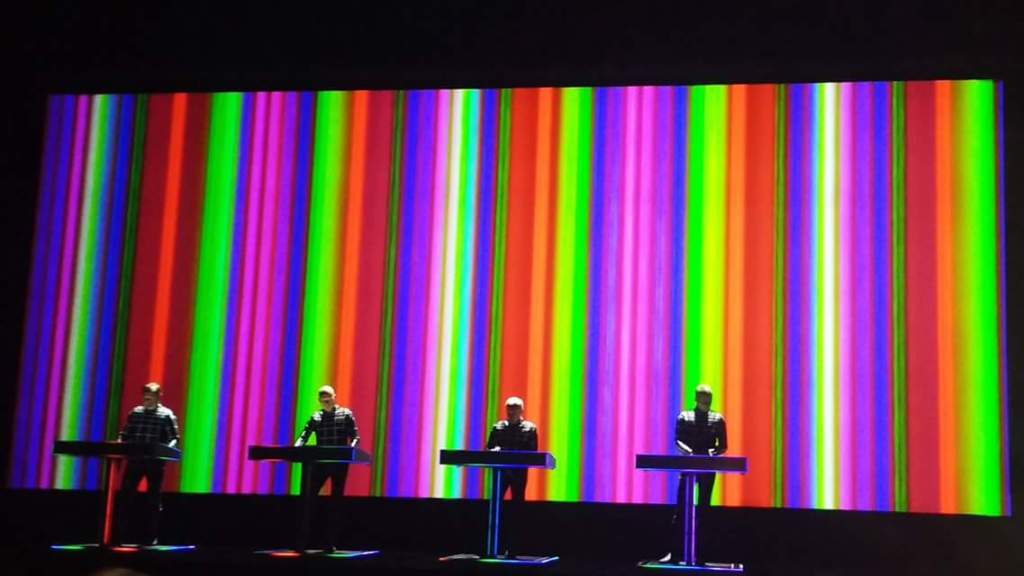
At the time I’m writing this it’s been over a week since I’ve seen a proper movie, which is likely the longest stretch I’ve gone without watching one in at least two years. Thanks to the ever-expanding grey area of what does & does not qualify as cinema, however, I feel like that itch is being scratched elsewhere, with a surprising amount of that content relating to pop music. For instance, long form music videos like Beyoncé’s Lemonadeor our former Movie of the Month Girl Walk //All Dayand prestige television shows like Baz Luhrmann’s recent chaotic mess of a hip-hop disco musical The Get Down all feelcinematic without being what’s traditionally considered cinema. Gallons of ink have already been spilled about how television is becoming more like film & vice versa (in the form of never-ending franchises like the Marvel Cinematic Universe),but what’s been of particular interest to me lately is how music videos & live concerts have been doing the same. This might explain why while attending a 3-D Kraftwerk concert in New Orleans last Friday I found myself (between spaced out, gin & soda fueled dancing) asking “Is this cinema?” I don’t know if it was because I hadn’t watched a film in days & was desperate to tap myself into that headspace, but I wound up deciding that yes, it was. And it was one of the best movies I had seen all year.
If you’re wondering, like I was before I reached the Orpheum that Friday, exactly what a “3-D concert” is (besides watching three-dimensional musicians perform in a three-dimensional space), Kraftwerk basically performed in front of a stage-sized screen that displayed a moving image to correspond with each song, not unlike a live music video. These images were made to look 3-D through cardboard glasses specifically printed for the show & distributed at the entrance. Now, watching a screen at a live event isn’t all that novel for a 2010s concert experience. In fact, it’s almost become standard. Besides attendees watching acts through their view-blocking, media-capturing smartphones, bands often use projections & display screens to enhance the live music experience. From metal bands doing living room sets in front of projections of silent horror relics to gigantic crowd music festivals using jumbotrons to reach the folk miles form the stage, we’ve all witnessed 2-D visual media incorporated as part of the live concert experience. The concept goes back pretty far down the history of rock n’ roll too, touching on the rudimentary light shows of 60s psychedelia & the multimedia assault on the senses of acts like The Butthole Surfers. There’s something different about the way Kraftwerk is crafting their live experience that makes it more of a recognizably cinematic endeavor, however, and that difference has a lot to do with the immersion & the gimmickry of the 3-D experience.
When trying to conjure the ways live music is gradually becoming more cinematic the first thing that might come to mind is the live performance of movie scores for public screenings. Radiohead’s Jonny Greenwood performed live versions of his There Will Be Blood score for recent events. Prog rock legends Goblin embarked on an entire international tour where they performed their killer score for Dario Argento’s Suspiria along with screenings of the movie. Local musician Hellen Gillet recently performed a live score for Fritz Lang’s silent masterpiece Metropolis at an outdoor screening outside the US Mint in the French Quarter. These examples of cinema seeping into the live music experience are exciting, but they’re also more traditional than they might initially appear. Think back to the early days of silent cinema where soundtracks would be performed by a live, in-house pianist. Updating that dynamic for a pop music context is exciting, but it’s not necessarily the innovation of a homogenous live music & cinema blend that acts like Kraftwerk have been bringing to concert venues.
What’s fascinating to me lately is the film-concert hybrid, a cinematic experience specifically designed to be engaged with as a live musical act. The multimedia performances of Björk’s Biophilia& Laurie Anderson’s United States I-IV were brave steps in that direction, but the first live music cinema experience I can remember attending myself was Dan Deacon’s collaboration with visual artist Jimmy Joe Roche. Live performances of their visual album, the blisteringly psychedelic Ultimate Reality, were singularly overwhelming experiences. Two live drummers set up on opposite sides of the stage in front of an oversized projector screen. They played mechanically in sync over a recording of Deacon’s trademark synth assault, accompanied by a mid-length feature film collage of bright, kaleidoscopic imagery lifted from various Arnold Schwarzenegger films. Ultimate Reality pushes its concert-cinema hybrid even a step further by marrying its aural & visual assault with a loose narrative in which all of Arnold’s movies, from Total Recall to Junior, are melted into an incomprehensible mess of a storyline that doesn’t exactly resemble the story structure of even the loosest, most Lynchian of film narratives or the vibe-driven, movement-based structure of a live concert. Ultimate Reality occupies a strange gray area between those two extremes, the same cinematic live music territory I experienced while watching Kraftwerk 3-D.
Kraftwerk is a seminal band, having played the role of innovator for nearly half a century. Listening to them perform live you can detect the early beginnings of pop music genres as varied as hip-hop, techno, industrial, and (duh) new wave lurking in the sparse, cold sounds of their digital meditations. They marry this slow, synth-soaked hypnosis, each song stretching on for dozens of minutes at a time, with a stark, minimalist, stage show. All four members of the band are centered at their own synthesizer podiums, remaining stoically still as they mix their digital soundscapes into a cohesive whole. It took me almost two songs into their set to even realize that the vocals were being provided live by one of the members. Everything felt so fixed & so clinical. Behind those four synth-commanding demigods stands a gigantic projector screen, which of course displays 3-D imagery related to each song performed. The imagery can range from archival footage of supermodels of the 1950s (during my personal favorite Kraftwerk tune “Das Model”) to crude digital renderings of a pixelated car on the highway (during the song “Autobahn”), an intentionally outdated aesthetic that recalls the look of certain Tim & Eric segments or, perhaps more appropriately, the music video project that accompanied the Death Grips album Government Plates. The rudimentary, elemental nature of these images matched the sparse genre seedlings of Kraftwerk’s music and transported their audience into a cinematic headspace that’s foreign to most concert experiences, even ones aided by higher tech on their display screens.
Unlike Ultimate Reality, 3-D Kraftwerk didn’t form its individual vignettes into a larger narrative whole. Instead, each music video experience was allowed to exist as its own separate meditation, functioning almost like a horror anthology, with the concert hall itself standing in as a wraparound segment. One song dove into the ever-present threat of nuclear war. One meditated on the machine-like efficiency of athletes who participate in the Tour de France. One provided a visualization of the digital landscape where the band’s Tron-like costumes might be considered high fashion. A particularly playful rendition of “We are Robots” had the band replaced onstage with mannequins propped up behind their synth podiums & projected in 3-D behind them. That last moment in particular pointed to the absurdity of paying to see a band so rooted in the artistry of music studio production perform “live” in the first place. The very idea of “a 3-D concert” is an exceedingly ridiculous concept on its own and the band never shied away from pointing to that absurdity. Instead of pursuing a more kinetic stage show, they turned their songs into a collection of short films with live music accompaniment, each devolving into long form meditations on concepts like international travel & “computer love”. The result felt a lot like watching a movie. Instead of feeling comradery with the band, like being within arms’ reach at a $5 punk show, you feel as if you’re watching a collection of mannequins stand before a silver screen; it’s distancing, but it’s also dazzling.
3-D technology has always been a William Castle-type gimmick meant to sell extra movie tickets to audiences looking for a novel & immersive cinematic experience. It was a perfect choice for Kraftwerk to draw an audience in with that cinema-specific gimmick because their live show already feels so similar to watching a movie in the first place. As the screen-heavy multimedia approach to the live concert becomes increasingly cinematic it’ll be interesting to see where other bands can take the basic idea explored by 3-D Kraftwerk, Dan Deacon, and others into new, more narrative territories. It’s not a perfect fit for every musical act, but in a struggling industry suffering long-term declines in album sales the idea of live music cinema could be a great potential moneymaker for bands more prone to in-the-studio tinkering than live rock n’ roll antics. More importantly, though, it could lead to innovative modes of great, cinematic art, the next evolution in both the movie going & live music experiences as we know them. It’s only appropriate that Kraftwerk would be one of the acts on the forefront of that innovation, as they have been with so many other musical advancements since the late 1960s.
May’s Movie of the Month selection, Girl Walk // All Day, was such a unique experience. After initially viewing the film, I couldn’t help but think of albums that I would love to see done in the style of Girl Walk // All Day. These, of course, would need to be dance albums because anything else just wouldn’t be as energetic and fun.
Here’s a list of five albums that I would love to see come to life on the big screen:
1. Scissor Sisters – Scissor Sisters
How can you not “feel like dancing” when listening to this incredible debut album by the Scissor Sisters? The music is just as unique as their bizarre music videos, so a visual album would turn the world upside down. I’m picturing a few body painted dancers portraying a coming-of-age tale in a mystical forest.
2. The Chemical Brothers – Push the Button
As the iconic beginning to “Galvanize,” the first track on the duo’s fifth studio album, plays, the audience is introduced to post-apocalyptic New York City. Dancers would be decked out in shredded pants and leather studded jackets, you know, the regular post-apocalyptic couture. Oh, and dirty faces for everyone!
3. Fatboy Slim – You’ve Come A Long Way, Baby
Every song on this album would be perfect for interpretive dance, and I think that a short musical film for You’ve Come A Long Way, Baby would be much like Girl Walk // All Day. Energetic tunes in the background with a leading lady breaking all the rules is the image I get for this one.
4. Beastie Boys – Licensed to Ill
This album is just 100% fun, like just about all of the music from the Beastie Boys. The songs on this album are so humorous, and they definitely make for some great old-school hip-hop dancing.
5. LCD Soundsystem – Sound of Silver
Aliens dancing up a storm in outer space is the first thing that comes to mind when I think of Sound of Silver. This is one of those albums that you just can’t help but smile while listening to. The futuristic beats are perfect for dancing in the goofiest way possible, and I think it would be a lot of fun to see this album as a film.
Every month one of us makes the rest of the crew watch a movie they’ve never seen before & we discuss it afterwards. This month Brandon made Boomer & Britnee watch Girl Walk // All Day (2011).
Brandon: Mashup DJ Gregg Gillis, better known by the stage name Girl Talk, releases all of his sample-based mixtapes for free through an imprint collective named Illegal Art. This isn’t necessarily a choice based in artistic integrity (although Gillis himself does have a lot to say about the legitimacy of copyright laws), but rather a product of the circumstance that Girl Talk tapes would be illegal to sell commercially. In an industry where hip-hop artists & pop music producers are careful not to get sued over borrowed melodies & uncleared samples, Gillis composes his music entirely out of repurposed, previously copyrighted material. His work as Girl Talk is fantastic party music, but it’s also commercial suicide. I assume Gillis makes most of his money mixing songs at live gigs since the art he’s most well known for is decidedly “illegal”.
Having this uncopyrightable material floating around out there has its advantages, though. For instance, a rogue dance crew could, say, make a full-length music video centered around one of your mixtapes without any fear of legal persecution (at least not from the DJ). Girl Walk // All Day is a movie-length dance video constructed around Girl Talk’s 2010 album All Day (which is still his most recent full-length mashup release). The film (and I do think it qualifies as a legitimate film) seems to take Gillis’s “illegal art” imprint as a mission statement. Stealing its soundtrack & candid reactions from outside sources and operating around what presumably had to be permitless film shoots, Girl Walk // All Day has an inherent sense of danger at its center that makes the film feel like it shouldn’t exist. Yet, its star dancer Anne Marsen (billed simply as “The Girl”) brings a childlike exuberance to every scene that makes the movie feel like it does have a right to exist even if it’s on earthquake-scale shaky ground legally, as if good vibes & positive intentions should outweigh any potential scandal. Girl Walk // All Day is frequently removed from YouTube & broken into annoying chapter segments on Vimeo due to its inability to secure an official release, but when you watch the film you’re left wondering exactly why someone (or some corporation) would want to crush or erase a work so joyful & goodhearted in the first place, uncleared music samples or no.
Legality aside, I feel like the first thing we have to address about Girl Walk // All Day is whether or not it has a legitimate claim as a feature film. It screened at film festivals, it made critic David Elrich’s Top Films of 2012 countdown, it has several narrative arcs that run throughout its 74 minute runtime (one about The Girl’s personal growth as an antonymous woman, one about a love triangle where she’s caught between The Creep & The Gentleman, and one about the sprawling structure of NYC), but it’s easy to see how someone could brush the film off as an overlong music video. Britnee, where do you fall on this divide? Is Girl Walk // All Day a modern spin on the dying art of the cinematic musical or does its thin, near dialogue-free narrative exclude it from consideration as a legitimate motion picture?
Britnee: First and foremost, I was unaware of the legality issues with Girl Talk’s music prior to this conversation. I always thought that he had permission to use all the popular music samples in his mashups. I’m far from being a Girl Talk expert, but the thought just never crossed my mind. It’s amazing how his musical career is so huge while he’s surrounded with so many copyright issues. This makes Girl Walk // All Day seem so dirty, and I like that.
As for your question of Girl Walk // All Day being considered an actual film, I would have to say that it’s most definitely a legitimate film. I can also see how some would consider it to be an “overlong music video,” but I consider many music videos to be the equivalent of short films. Take Madonna’s “Like a Prayer” or, more recently, Adele’s “Hello” music videos for example. How could those not be considered cinema? Music videos are directed, contain acting, and tell a story. Is that not what makes a film, well, a film? Girl Walk // All Day does contain quite an interesting plot, and although the film contains no dialogue whatsoever, emotions are portrayed through expressive dance and facial expressions. That doesn’t make it less of a film; it just makes it a little different.
The dancing in Girl Walk // All Day was so contagious. Just watching The Girl dance her heart out all over New York City gave me such a sense of freedom, to the point that I was getting a bit lightheaded (I was only drinking water during the viewing). Boomer, if you were one of the many bystanders during this film’s production, would you join The Girl in quick jig or would you walk on by? Did you find her to be a likable main character or did you find her to be annoying and intrusive? What exactly did you make of The Girl?
Boomer: That’s a good question. At multiple points throughout the film, I found myself identifying with many of the people that The Girl encounters, the willing and unwilling participants alike. Although several of these passersby seemed disinterested in participating, she actively seemed confrontational with many of them (the one which stands out in my mind is the man whose hand she grabs while wearing the “Dance With Me” sandwich board), which didn’t sour me on the character but did leave a bit of a bad aftertaste in my mouth. Having lived in a few different cities, I can certainly say that my experiences with unsolicited engagement with others is not always pleasant. Over the course of the film, I found myself very much wanting to dance with The Girl in theory, but I don’t know if I would have actually had that desire in practice and in the moment. It’s pretty unlikely that the Girl Talk tracks that appear in the film were diegetic, given the movement from place to place and general public reaction, and as such I feel like my first instinct would be to avoid a potentially dangerous person approaching me, dancing to a song that I cannot hear. Other factors, like what kind of mood I might happen to be in when The Girl chanced upon me and whether I was in a hurry to get to work or another engagement would also affect how willing I would be to join in her movements, sublime though they might be. I want to answer your question with a resounding “Yes,” but I just don’t know if I would actually do so should the opportunity arise.
I’m talking, of course, about those scenes in which she is dancing through crowds and on the streets. Some of the Staten Island ferriers are utterly disinterested in her performance, and many of the people who seem taken aback by her look like NYC tourists to me. It makes sense that residents would be nonplussed by The Girl and her apparent mania, in contrast to visitors who are less accustomed to every performer within a 25 mile radius desperately fighting for attention and notice. Still, as fun and flouncy as the narrative is, there was an undercurrent to it that felt off, as none of the people captured on film seemed to have given their prior consent to being filmed, which is troubling despite how much joy I, as a passive observer, got out of the performance. I don’t know that I would find her annoying, and I really wish I could unequivocally say that I would have given in to the movement, but I know that I would have found her intrusive.
That may be why I got more enjoyment out of the less candid scenes. The opening scene in the ballet class and the overpass breakdancing dance off were a lot more fun to me, as was The Girl’s voguing in an alley with no other people around. There’s an exhilaration to the street scenes that I would find anxiety-inducing were I to be involved as a performer, and I like that the more rehearsed sequences felt a little calmer (but no less exciting) in that regard. Still, I didn’t care for The Creeper dancing with flowers in the park, despite the fact that it was one of the sequences that did not feature non-performers. It lacked some of the verisimilitude (insofar as that word has any meaning in a film like this) of the rest of the film, and I found it lacking as a result. What do you think, Brandon? Did you prefer the sequences that featured random people being pulled into the mix, or the more standard, “closed set” sequences?
Brandon: The individual set-ups in Girl Walk // All Day work for me on kind of a case-by-case basis. There’s so much going on in this film (which, although manicured to an extent, must’ve been a chaotic shoot) that each of the moving parts can be hit or miss depending on the execution. I’d agree that the closed set shoots do feel more purposeful in a general sense than the candid shots of The Girl interacting with the public do, but they sort of have to for the film to make sense narratively. Take, for instance, the graveyard flowers scene Boomer just mentioned. It’s a somewhat jarring tangent when the flowers first appear because they exist outside the Girl-Creep-Gentleman dynamic we’re used to until that point. However, the scene does carry a lot of significance to the film in a narrative sense, since it’s in that moment that The Creep literally grows a heart inside that dancing skeleton of his and makes the transition from antagonist to socially inept beau. The only “scripted” scenes I was lukewarm to, honestly, were the ones centered on The Gentleman, since he was the most static, least interesting character of the central trio. I guess it was fun for a moment to watch the random hardcore parkour dude steal his hat, but that’s about all there is worth mentioning.
As for the candid video interactions with the public, I think Anne Marsen’s performance as The Girl has a lot to do with how they go individually. She has an insanely infectious smile that can make you want to join in as well as a cartoonish grimace that can make you want to back way, way off. Marsen has incredible control over her physical language & expression (as I’m sure most talented dancers must) that can make interactions either inviting or confrontational depending on her desired effect. I’m in total agreeance with Boomer that the discomfort of these scenarios isn’t something I’d necessarily want to live through as a passerby, but The Girl’s mock aggression does make for some especially great moments in the film. I’m thinking not only of the aforementioned “Dance With Me” sandwich board sequence where she’s shown mentally unraveling & a scenario where’s she’s booted from a baseball game by the nonplussed security team, but particularly of the glorious moment when The Girl appears loaded with shopping mall ephemera in a high society fashion bitch outfit to taunt Occupy Wall Street protestors. It’s a beautifully over-the-top exchange that not only solidifies Girl Walk // All Day as a work of highly-functional performance art, but also a document of a very specific moment for NYC/America at large.
In most cases it’d be a massive cliché to say that New York City itself is a character in a piece of film criticism, but I feel that faux pas is inescapable here as it’s quite literally true. Not only are citizens (and tourists) of NYC roped into the production as performers, but The Girl’s personal journey (into adulthood? autonomy?) is more or less told through a guided tour of The Five Boroughs. Historical markers like Occupy Wall Street & the pop songs Girl Talk samples on the soundtrack are also very specific to the cultural zeitgeist of a particular time. Britnee, how much different would Girl Walk // All Day be if this physical & temporal setting were shifted? How different would the film be if it were set in, say, 2016 New Orleans? Are the time & place of its setting and the era of its pop music soundtrack entirely essential to its existence the way they’d be in a documentary?
Britnee: I’m quite unfamiliar with NYC as I have never visited the city nor do I personally know any residents, so I probably missed a good bit of symbolism that NYC offered Girl Walk // All Day. However, I am not that out of the loop and thoroughly enjoyed the hilarious yet profound Occupy Wall Street scene. I do think that the film would be very different if set in a different time and place. Music style and social issues change through time and by location, and these are major components of the film. The film’s essential message of self-acceptance and personal freedom might be the only thing that would not be all that different if this film were not set in 2011 NYC. It’s interesting that you brought up the question of the whether or not the film’s setting and music serve the same importance in the film as in a documentary. I definitely think that the importance of time and place in Girl Walk // All Day is very similar to that of a documentary. Her actions and the film’s music would hold a different meaning if she were to dance through Miami in the late 1980s or Atlantic City in the 1930s.
If set in modern day New Orleans, the film would be slightly different as New Orleans seems to be really different from NYC. Current issues New Orleans faces include gentrification, social segregation, and uncontrollable crime. I’m sure that the same issues occur in NYC, but not on the same level as they do in New Orleans. I can imagine The Girl dancing up a storm out in the Bywater to one of those extra-long bounce remixes Q-93 plays on Saturday nights. As she dances her way through the neighborhoods, life-long residents pack moving trucks while white upper middle-class families unpack moving trucks, carrying boxes to their new homes. Oh, and she would need to definitely leave that windbreaker behind since it’s always hot as hell down here.
Boomer, would you like to see more films in the style of Girl Walk // All Day? What particular album (from any artist) would you like to see turned into a film? And where would the setting be?
Boomer: Oh man, what a great question. The first album that springs to mind is The Decemberists’ Picaresque, if only because that album already has a particularly narrative quality. A film version of Picaresque would have to take a different approach, acting as more of a series of vignettes through which a dancer could travel; I would also see this as having more of an exaggerated, fantastic visual leitmotif, perhaps moving through several different areas inside a vast theater with individual plots being acted out in different small set pieces (or perhaps I’m just being too influenced by the album artwork in my imagining, as the characters I’m picturing all have the same ghoulish, caked-on white makeup as the members of the band). I would also love to see a film set entirely to Visions by Grimes; I imagine it as a Miyazaki style animated feature following Grimes herself as she makes her solitary, heroic way through a colorful jungle, a barren desert, a village full of people who refuse to interact with her (maybe they’re ghosts?), and other familiar Hero’s Journey locations, with each new track bringing her to a new locale.
Moving back to something more grounded (again, as much as that word can apply to anything in Girl Walk), I’m having a hard time trying to think of a particular album that’s actually New Orleansy enough to work in this context. Although they’re Brooklyn-based (or were 5 years ago, the last time they updated their Facebook page), I’ve always thought that Snakes Say Hisss! had a dirty South synth aspect to them, and I’ll Be Loving You feels right for something like Girl Walk filtered through a South Louisiana lens. The film could start in the Bywater (I imagining the film opening just like the video for NOLA-based Jean-Eric’s track “Better than Good”) with “Talk,” then move into the Marigny with “We Are Hot” before getting deep into the Quarter with the next few tracks before hitting the CBD with “Take It Slow” and “Right Behind You” (this track in particular makes me think of the rich carpetbaggers in suits hanging around the offices near Ampersand and Jos. a Bank). “I Control the Wind” is totally MidCity, as is “Avalon,” despite its region-specific references. I could go on, but I encourage people to listen to the album and trace their own journey, really. Of course, this runs the risk of locking non-Louisianans out of the loop, but that’s never really been a concern for large scale productions set on the coasts, has it?
Lagniappe
Britnee: I love how this film made me insanely happy the entire time. There wasn’t a moment when I felt even the slightest bit disinterested. Films that contain the amount of good vibes given off in Girl Walk // All Day are a rarity.
Boomer: I agree with Britnee; this movie was a delight and it made me want to dance. In the intervening time since the viewing, I’ve found myself dancing to myself in spite of the general inappropriateness of the given situation. And although this isn’t a complaint (merely a fact of life), I’m with Britnee in her hesitant appreciation for the NYC-specificity of the film overall. I recently had a conversation with a friend (well, a member of a rival trivia team, but whatever) who was shocked that we were familiar with the Queensborough Bridge. He hails from New Jersey and was shocked that Southerners would know about a relatively unremarkable landmark in New York; I had to explain to him that all of America lives under the iron fist of NYC’s cultural stranglehold, for better or worse. Still, given the rate at which gentrification is rotting the soul of that city (as it is in New Orleans, and here in my new home in Austin), it’s entirely possible that Girl Walk may one day be remembered as one of the last pieces of real art to come out of the boroughs before all the artists actually starved to death.
Brandon: Besides whole-heartedly backing Britnee’s concept for a New Orleans version of Girl Walk set to a Q-93 Social Shakedown mix (not a bad idea for a Kickstarter campaign, honestly), I’d also like to conclude my thoughts here by highlighting my favorite section of the film: the shopping mall sequence. Just before The Girl emerges to taunt the Occupy Wall Street crowd, she gets through a butterfly-like metamorphosis at the shopping malls of Times Square. I’m typically a sucker for shopping mall delirium in film, anyway; it’s usually the imagery that sticks out for me when it’s done right, with Clueless, The Night of the Comet, Invasion USA, and the 2007 Dawn of the Dead remake being a few key examples off the top of my head. However, I think part of the reason it sticks out so much here is that it’s one of the better moments where The Girl is allowed to focus on herself instead of her place in the Girl-Creep-Gentleman love triangle. The self-reflective nature of consumerist pleasures like make-overs & fashion upgrades provides The Girl a lot of personal space to emerge as an oversexed butterfly in a moment that oddly glorifies & satirizes femininity as a performance & an identity.
This sequence always makes me so happy & by the time The Girl appears crunking in her Tell Me About It, Stud leather get-up at the end of it, I always get a little overly giddy. If the idea of watching Girl Walk // All Day in its entirety sounds a little too exhausting for some folks, I at least suggest checking out that particular chapter in isolation, especially since the film is often broken down into those rigid divisions anyway (instead of its ideal state as a fluid, continuous work).
Upcoming Movies of the Month: June: Britnee presents Alligator (1980) July: Boomer presents Citizen Ruth (1996)
Once upon a time on a planet named Hondo a well-respected war general was asked to save his home planet from certain destruction via comet by finding a new, inhabitable world & destroying its current resident population with a flesh eating virus to make room for the Hondonian people. The general crash landed on Earth, but decided not to mass-murder the 7 billion people who inhabit it because it’s on this new world that he heard music for the first time. Now desperate to save Earth from the Hondonians, he attempted to alert his home world of the wonders of music via satellite transmissions, all while living a double life as a family man & a dive bar folk musician. The question is would he be able to get his message across before Hondonian assassins ended his traitorous life. This is, more or less, the history of Future Folk.
Future Folk is a duo of novelty musicians from Brooklyn, New York (Nils d’Aulaire & Jay Klaitz) who’ve been writing & performing songs around the above premise for more than a decade. If they hadn’t been toiling away at their shtick since the early 2000s it’d be pretty easy to accuse them of being derivative of similar, but more successful acts like Flight of the Conchords or Tenacious D, but the truth is they’re more contemporaries than copycats. And just like the two acts just mentioned, their transition from concert hall sketch comedy to television/film is an impressively smooth one. Their visual & narrative backstory feels well explored & intricately detailed, but more importantly their screen presence & dedication to the act feels entirely sincere. As a film The History of Future Folk is somewhere between a quirky indie comedy & a low-stakes sci-fi fantasy epic. As a contribution to the comedy landscape at large, the film is a priceless document of a finely-tuned two-person act that doesn’t have any other way to reach an audience outside the Brooklynites who’ve seen them perform it live.
The most amusing aspect of the Future Folk’s Hondonian backstory is the way it’s played with straight-faced deadpan. It’s first introduced as a bedtime story for a little girl who treats it like an awe-inspiring myth of the ages. The same exact story is later treated like comedy gold by the far less sincere hipster bar patrons who accept the threat of intergalactic war & flesh-eating viruses as an ironic joke. In both instances the misplaced Hondonian general speaks in total, unembellished honesty. What people do with the truth is largely dependent on the audience in question. This stripped down earnestness pairs nicely with the film’s complete absence of a budget. Many shots feel candid, as if they were stolen without a permit, but its cheapness never feels like a detriment. It only adds to the Future Folk’s brand of earnest charm.
I guess it takes a certain tolerance of twee preciousness to get on The History of Future Folk‘s wavelength, but like I said, its much more in line with the subdued humor of acts like Flight of the Conchords than it is with heart-on-the-sleeve indies like Me and Earl and the Dying Girl. The History of Future Folk works best as intricate, feature length sketch comedy. Its limited budget & dedicated-to-the-joke leads leave little room for vanity or pretension. There’s an endearing sense of heart & earnestness that adds to the film’s charm, but it’s most mostly remarkable for its ability to earn belly laughs through such unlikely sources as department store Muzak & red plastic buckets. The History of Future Folk is an easily-lovable, genuinely hilarious work of modern sketch comedy. It’s about as much of a crowd-pleaser as a quirky, low-budget indie comedy could possibly be, twee vibes be damned.
I was at first a little overwhelmed by the idea of a N.W.A biopic stretching out for a 147min runtime, but as I was watching Straight Outta Compton in the theater its length gradually began to make total sense. It’s an incredibly thorough biopic, digging not only into the cultural & political climate surrounding the group’s origins, but also the aftermath of their falling out & disbanding. Even at 2.5 hours, not everything was covered & large swaths of historical accuracy were tossed aside in favor of a tight narrative & an indulgence in a killer 90’s aural & temporal vibe. Straight Outta Compton is not a particularly great example of a historical document, but damn if it didn’t achieve an incredible Cinematic Aesthetic in every scene, somehow managing to squeeze out a great biopic with exactly zero deviations from the format (unlike more experimental films like Love & Mercy). The cinematography, provided by longtime Aronofsky collaborator Matthew Libatique, confidently supported the film’s surface pleasures (including an onslaught of still-great songs & pandering nostalgia) to the point where any & all faults were essentially irrelevant. When a sample wraps up the music video portion of the end credits by proclaiming “Damn, that shit was dope!” (the very same sample that concludes the song the film’s named after) it was difficult to disagree.
Because stories ultimately belong to those still around to tell them, the film’s narrative is undoubtedly bent towards the stories of Ice Cube & Dr. Dre, who are both credited as producers here. In a lot of ways they use the film as a sort of redemption piece, reshaping their personal history to include a reconciliation with departed group member Eazy-E, who lost his life to HIV-related health complications at a young age. The real-life tale as long as I’ve known it has been that the group never truly resolved their very public feuds (a deeply ugly mess of shoddy contracts, legal disputes, and diss tracks) while Eazy was still alive. The movie version cleans that mess up in an unbelievably tidy way perhaps more fit for the likes of a made-for-TV TLC biopic, but that tendency towards a clear A-B narrative feels entirely intentional. There’s a scene late in the film where Cube confronts Eazy for calling out his acting debut Boyz n the Hood for being “an afterschool special” & Eazy responds “I like afterschool specials.” The simple, clean redemption story Straight Outta Compton tells doesn’t feel at all far from that sentiment.
So according to this romanticized, cleaned-up folklore, Dre was the group’s seminal producer, Cube was responsible for its best writing, and Eazy held down the majority of the raw talent, street cred, and business acumen. Folks like MC Ren, DJ Yella, and The D.O.C. are not only sidelined, but sometimes they’re even downplayed as lesser talents to make the film’s holy gangsta rap trinity shine all the brighter. Yella, for instance, shoulders most of the blame for Dre’s involvement in the Prince-influenced, sexually ambiguous funk days of the Worldclass Wreckin’ Cru & other club gigs that required him to wear sequins & play mindless party records. Ren gets the real short end of the stick here, though, verbally thrown under the bus as an inferior lyricist that couldn’t hold down the crew after Ice Cube’s departure. As a fan of the group’s entire output (and Ren’s solo records for that matter), these claims sting a little, but just as the fudging of the Eazy redemption story makes for a clearer narrative, dissing Ren in the script does actually make sense story-wise (even if it’s a shame that he only raps a total of three verses in the entire film to make more room for Cube, Dre, and Eazy).
If the film didn’t capture the entirety of the group members individual nuances, it at least got the imagery down. Actors Corey Hawkins & O’Shea Jackson, Jr. look & sound incredibly similar to the roles they’re playing (Dre & Cube, respectively), with Jackson having the distinct advantage (and possible awkwardness) of portraying his own father. New Orleans native Jason Mitchell pulls the hat trick of not only looking & sounding like Eazy-E, but also outshining his fellow cast members as a damn good actor, bringing to life what turns out to be one of the group’s more interesting & complicated characters. R. Marcos Taylor & speaking of Love & Mercy, Paul Giamatti (playing infamous record industry tyrants Suge Knight & Jerry Heller) aren’t nearly as visually accurate in their roles as the film’s villains, but they do provide an all-too-believable menace to their scenes that allow them to get by more as archetypes than carbon copies. The only actor who looks jarringly out of place here is a brief appearance by an absurdly inaccurate Snoop Dogg, but that’s more than made up by the likeness of the rest of the cast, an appearance from a Tupac lookalike so accurate he could’ve been a hologram, and clips of the “Straight Outta Compton” music video shown at the end credits to remind you just how detailed the film’s attention to visual preciseness was.
Visual & historical accuracy aside, director F. Gary Gray should get a lot of credit here for creating a wildly entertaining biopic with exactly zero deviations from the genre’s format. This is a movie that somehow makes room to capture our current cultural 90s fetishization, ludicrously timely reflections on race-based police brutality that are sadly just as potent now as they were in the days of Rodney King, and an extended gag that calls back to the infamous “Bye, Felicia” line in Gray’s debut film (and original collaboration with Ice Cube) Friday. Instead of calling into question N.W.A’s more unsavory attributes, namely their misogyny & homophobia, Gray just lets them play themselves out. Misogyny is on display in hedonistic, music video style pool & hotel parties where women are treated like party favors (sometimes literally tossed around like objects) & homophobic rants are allowed to be voiced in Ice Cube’s infamous diss tracks & Eazy’s reaction to his HIV diagnosis. Straight Outta Compton makes no moral judgements about its subjects, but rather just more or less portrays them as they were.
There’s some glorification inherent to the biopic format here & a lot of ground was breezily glossed over (including contributions from names like Vanilla Ice, Bone Thugs, Above the Law, and J.J. Fad), but it’s unwise to nitpick too many of Gray’s decisions here, since the final product is so enjoyable & packed-to-the-gills as is. It’s not only successful as an aurally & visually beautiful slice of N.W.A fan service, but it’s also a great primer for younger folks who mostly know Ice Cube as an actor & Dre as Eminem’s buddy who peddles expensive headphones. Even as a longtime fan, I learned a thing or two along the way (most excitingly that Eazy-E once dined with President George H. W. Bush). Gray competently captures the social & political climates that gave birth to his infamous subject as well as the context of their dissolution’s aftermath (even if he intentionally fuzzes up the details in-between), but the story he tells in Straight Outta Compton is mostly remarkable in how fun & rewatchable it is without at all straying from its biopic format. He used an already well-established narrative structure as a bottle to capture the lighting that was what the made the group so special & their songs so endlessly listenable to this day. That’s no small feat & the final product ended up being one of my favorite trips to the theater all year.
As I previously mentioned in the Highway to Hell Swampchat, the film’s soundtrack is bananas, and I’ve never heard anything quite like it. The best way to describe the sound is r&b vocals with 80’s pop/rock music, but the vocals are more like soulful grunts instead of actual words. The group responsible for all of this insanity is Hidden Faces, and this group is just as mysterious as their music. Researching Hidden Faces wasn’t so easy because there’s virtually nothing out there about this group, but I was able to find some interesting information.
Frank Fitzpatrick founded Hidden Faces in 1989, and the group strictly did soundtracks and scores for movies. Highway to Hell, Nuns on the Run, Breaking the Rules, Friday, Under the Hula Moon, The Player’s Club, and Soul Man are all films that feature Hidden Faces tunes. Nuns on the Run seems fantastic, so I have Hidden Faces to thank for bringing it to my attention. In the film, Eric Idle is a criminal disguised as a nun, and that’s all it took for it to make it onto my watchlist. Come to think of it, the only film that I’ve seen from this eclectic film collection is Friday, and if I recall correctly, the music was totally different from the music in Highway to Hell. I guess that’s common for artists in the film score/soundtrack business. Unfortunately, Hidden Faces called it quits in the late 90s, so it’s doubtful that they’ll be doing any movie soundtracks again.
It turns out that Hidden Faces has a connection to New Orleans, though. Not only is Fitzpatrick a songwriter, producer, and certified yoga instructor, he is also a major social entrepreneur that raised funds and awareness for Hurricane Katrina victims. In particular, he produced a song called “Be On Our Way” with Van Hunt, Supervision, Buku Wise, and Hidden Faces for the film Hurricane Season, a film that follows the story of John Ehret High School’s basketball championship journey post-Katrina. All of the proceeds made by the song were donated to the Make It Right Foundation.
I’m actually pretty surprised to find that Hidden Faces is more than just a growling man and a drum machine. They actually have a very interesting history that’s much lengthier than I expected. This is all the more reason to pay close attention to film credits, even the ones in horrible movies.











 Swampflix