As Boomer mentioned in our Swampchat discussion of April’s Movie of the Month, the romantic horror comedy My Demon Lover, the film’s star Scott Valentine had struck it somewhat big as a bad boy heartthrob on the televised sitcom Family Ties, but mostly failed to convert that success into a long term film career. It wasn’t for lack of trying, though. Valentine had a long string of starring roles in minor titles throughout the 80s & 90s, but his turn as the titular monster in My Demon Lover would mark the high point of a career that never truly took off. Topping out with My Demon Lover might help explain why the actor later returned to the antiheroic position of romantic love interest/supernatural threat in the straight-to-VHS oddity To Sleep with a Vampire six (six six) years later. To Sleep with a Vampire & My Demon Lover are two vastly different films working in two entirely separate genres (the erotic thriller & the romantic comedy, respectively), but Scott Valentine’s starring roles as the dangerous, titular love interest in both works serve as a clear connecting piece between them.
Some of the genre markers of To Sleep with a Vampire are seemingly at war with themselves. The film opens with Scott Valentine stalking back alley as if he were the brooding antihero in a self-serious neo-noir, immediately announcing himself as a vampiric threat. Once the film shifts gears, Valentine does his brooding in a cheap strip club, revealing the film’s true nature as a sleazy erotic thriller. To Sleep with a Vampire commits a little too earnestly when it reaches the strip club, indulging in so many passionless strip teases that it started to feel like a strange, vampiric modernization of the Ed Wood-penned “classic” Orgy of the Dead. Thankfully,the film eventually moves on and blossoms as being . . . actually pretty great? Valentine’s vampiric sex demon materializes at a sleazy strip club not only to oggle, but to search for a potential victim, one he finds in a down-on-her-luck stripper who is hopelessly suicidal due to an estranged relationship with her young son. The stripper, who’s essentially hit rock bottom on this particular night (and, thus, more attractive to her vampire predator, since killing someone suicidal is justifiably more ethical), is convinced to follow the bloodthirsty beau back to his bachelor pad (lair?) to discuss the delicacies of mortality until he plans to feast on her blood just before sunrise. Eventually, they bone.
A straight-to-VHS triviality produced by Roger “The Best There Ever Was” Corman, To Sleep with a Vampire is far more entertaining than it has any right to be. At times threatening to devolve into a deeply misogynistic masturbation fantasy for immature man-children, the film gradually reveals itself to be something much more poignant. Its all-in-one-night plot structure eventually morphs the film into something of a glorified stage play (from way, way, way, way off Broadway) akin to Steve Guttenberg’s passion project PS Your Cat is Dead. It’s far from the vampiric romance of titles like The Hunger, Near Dark, Only Lovers Left Alive, Innocent Blood, or A Girl Walks Home Alone at Night in terms of quality, but there’s still an interesting back & forth in the film’s understanding of gender politics through a vampiric lens & Scott Valentine’s monstrous heartthrob really does have great chemistry with his sex worker victim (Charlie Spalding) despite the predatory aspect that relationship dynamic implies. This is an atmospheric work where the gloomy, horny atmosphere is often undercut by an overbearing sense of camp, but it’s a compromised formula that works surprisingly well. In particular, the objectively bad acting of the two leads makes their overwrought characters seem all the more “human”. In a more tongue-in-cheek work, the exchange “Tell me about the daylight. How does the sun feel on your skin?” “How the hell should I know? I work nights,” might’ve been worthy a hearty eye roll, but the deadpan performances sell it wholeheartedly here.
That’s not to say that To Sleep with a Vampire is anything more than a campy trifle. There’s plenty to scoff at here: the black & white vampire cam, the titular antihero’s oversensitive concern with vampire stereotypes, weird exchanges where the mismatched protagonists become physically a combatitve & then immediately make out, an inevitable love-making scene that nearly outdoes The Room in sheer audacious cheese, etc. However, the movie still has a surprising emotional weight to it, especially in its exploration of the vulnerability in following a complete stranger home for casual sex. Scott Valentine also shows a surprising amount of range here. His two portrayals of sex-obsessed demons could not be more different. In My Demon Lover he’s pure cartoonish id, not unlike a murderous version of Rik Mayall’s performance in Drop Dead Fred. In To Sleep with a Vampire he goes full Batman in his performance (this was the Tim Burton era of the character’s popularity spike, mind you): gruff, brooding, misunderstood, conflicted. Again, it’s difficult to discern which is the better film out of To Sleep with a Vampire & My Demon Lover because they are so artistically disparate (and so politically regressive in their own unique ways), but both are transgressively entertaining in an odd way & both do their best to showcase Scott Valentine’s talents as a dangerous bad boy sex symbol. My Demon Lover is more readily recommendable to potential Scott Valentine fetishists in its (minor) cultural significance & its commitment to let the actor run wild, but To Sleep with a Vampire features the 80s semi-icon wearing only a pair of leopard print bikini briefs on a moonlit beach, so who’s to say which is more essential in that regard? Either way they compliment each other nicely & they’re both worth a watch for the shlock-inclined.
During our Swampchat discussion of April’s Movie of the Month, the romantic horror comedy My Demon Lover, I proposed than a potentially interesting way to remake the film for a modern audience would be to swap the genders of its protagonists. In the 80s version there’s something really off-putting about the idea of a crass man who turns into a literal, life-threatening demon every time he becomes horny. When the film tries to make you root for this demonic loverboy’s romantic connection with a schleppy, single woman trying to make it on her own in The Big City all you can do as an audience is scream for the love interest to run for her life. There’s a predatory aspect to this gender dynamic that I think could be entertaining in the context of a raunchy modern comedy if the two leads’ genders were swapped. I’m picturing an Aubrey Plaza or an Ellie Kemper transforming into a murderous demon every time they’re turned on and I’m chuckling instead of fighting back the urge to call the police.
The problem is that I have seen a similar concept play out on the screen before in the 2000 Harold Ramis comedy Bedazzled. A remake of a darkly funny Dudley Moore classic, Ramis’s Bedazzled changes up the formula of its predecessor by casting The Devil as (gasp!) a woman, supermodel Elizabeth Hurley to be exact. The plot lines of My Demon Lover & Bedazzled don’t exactly run parallel, but both films do tell the stories of lovelorn losers shaken out of their romantic ruts by the supernatural intervention of eternally-horny demons. Instead of seducing her schleppy victim over the course of several balloon-themed montage dates in Central Park, however, Elizabeth Hurley’s Devil is much more metaphysical in her intervention. She’s not a devil, but The Devil, after all. When recent MOTM vet Brendan Fraser’s geeky office drone wishes of a fellow coworker “Dear God, I would give anything to have that girl in my life,” Hurley’s Princess of Darkness takes him up on the offer. She pressures the foolish wimp into signing a contract that cedes his very soul in exchange for several wishes designed to win his crush’s hearth through magical coercion. Each wish, of course, blows up in the dolt’s face and The Devil takes full advantage of his hubris & naivete.
There’s a little more to the difference between these two films’ central premises than gender-swapped leads & a third party romantic interest. There’s also a major shift here in terms of character likeability. In My Demon Lover the lovelorn schlub Denny is instantly endearing in her down-on-her-luck romantic struggles & the demonic Kaz is revolting in his attempts to woo her. Bedazzled works sort of in the opposite way. Brendan Fraser’s self-absorbed, Nice Guys Finish Last nerd is unlikely to inspire anyone to wish for his happiness and Elizabeth Hurley’s large than life antagonist is, well, devilishly fun to watch. If the two characters had also swapped their allotted screen time, Bedazzled might’ve actually been a campily fun romp with an occasional mean streak. Hurley has a blast here, going through more costume changes than a millionaire drag queen (nurse, meter maid, fashion bitch, etc.) & cheekily intoning lines like, “Most men think they’re a god. This one just happens to be right,” and [in response to the indignation of “You can’t have my soul!”] “What are you, James Brown?” The problem is that nearly every minute without Hurley is an eternity of agony. Only the most devoted of Brendan Fraser fanatics could possibly stomach all seven or so versions of him on display here. As he cycles through personalities like dimwitted basketball player, oversensitive poet, and Colombian drug lord, each more broad than the last, it’s easy to see why in his heyday his comedic stylings were mostly relegated to children’s media where he could find reasons to wind up shirtless.
There’s a lot more going against Bedazzled than just the imbalance of Hurley & Fraser screen time. As soon as several racist, offensively lazy gags play over the opening credits, its easy to tell that this isn’t the young, inspired Ramis of Ghostbusters & Groundhog’s Day yesteryear. The film only gets lazier & more insensitive from there and when Fraser appears in brownface as a Colombian drug lord in the first wish segment, I was in shock that I actually saw this piece of shit movie in the theater with my parents as a kid. I don’t think Bedazzled exactly stands as a warning against my desire for a gender-swapped My Demon Lover, though. If anything, Elizabeth Hurley’s horny demon antagonist was the sole bright spot in a film that could’ve used a whole lot more of her sinful charm. Bedazzled is more of a warning that gender-swapping My Demon Lover‘s central characters isn’t enough of an instant fix to patch all of the film’s moral pitfalls. There’s plenty of room for the premise to stumble without the right creative minds to steer the ship. In other words, be careful what you wish for or the results could be a nightmare. Bedazzled taught me that, but perhaps not in the way it intended to.
Every month one of us makes the rest of the crew watch a movie they’ve never seen before & we discuss it afterwards. This month Boomer made Erin, Brandon, and Britnee watch My Demon Lover (1987).
Boomer: I think that this was bound to happen sometime, and I’m pretty sorry that it happened with regards to a Movie of the Month that was my suggestion: My Demon Lover is not as much fun as a rewatch as it was in my memory. The male love interest comes across much more low-key predatory than I remembered, and the love story overall suffers as a result. Still, the two lady leads are just as likable as I remembered, which helped make this a more tolerable experience than it otherwise could have been.
My Demon Lover tells the story of Denny (Michele Little), a perpetual loser who falls for crappy guys like her latest man, who leaves her on her birthday for having the audacity to want to throw a party for herself. How dare she?! Her best friend Sonia (Gina Gallego) is a modern woman with lots of lovers and no boyfriends, an occasional psychic who runs a new age store. After an encounter with lovelorn loser Charles (Xena alum Robert Trebor, virtually unrecognizable without his trademark beard), Denny is ready to give up on men, until she has a charisma-free meet cute with horndog Kaz (Scott Valentine), a homeless man that she immediately takes into her home. Although there are a lot of problems with this scenario, the narrative focuses on one in particular: Kaz was cursed by the mother of a girl with whom he was sexually experimenting in middle school. As a result, when he becomes aroused, he turns into a monster called a pazatzki, complete with scaly prosthetics and monstrous claws. As a series of murders of young women rack up and are attributed to a serial killer dubbed “The Mangler,” Kaz starts to wonder if he is the one at fault. Sonia has a vision that implies he is, and everything comes to a head in a random castle that appears to be smack in the middle of Central Park.
Debuting at number ten on the week of its release and then quickly falling off of the box office charts, My Demon Lover netted nearly two million dollars in its first week despite not being a particularly good movie. Part of the reason for this was that Valentine was a bit of a hot item at the time, having garnered attention for his portrayal of Nick Moore, the boyfriend of Justine Bateman’s character on eighties sitcom standard Family Ties, appearing in 44 episodes. The character was so well-received, in fact, that there were three separate attempts to spin him off into his own show, titled The Art of Being Nick. One script idea made it all the way to the pilot stage, where Nick’s new love interest was played by Seinfeld star Julia Louis-Dreyfuss and his sister was played by future Buffy mom Kristine Sutherland. Nick’s grandfather in the pilot was portrayed by Herschel Bernardi; Bernardi’s sudden death, combined with NBC’s hesitation to let Valentine leave Family Ties, led to the series not being picked up.
Despite the fact that his character in the film commits lots of micro-and macro-aggressions (including grabbing women on the street like an eighties YouTube pickup artist), Valentine himself has a lot of charm. Little is also very likable as the put-upon Denny, even if the character reads as a parody of unlucky eighties leading ladies. Gallego’s Sonia stands out in her role as the unapologetically sexually liberated modern woman, bringing warmth and sincerity to a role that one would expect to see treated more critically in a film of this era. These are all characters that would have been more successful in a movie wherein the leading man didn’t start out as such an unrepentant creep, and it’s a testament to Valentine’s likability as an actor that Kaz seems at all redeemable, given the aggressions cited above. It’s too bad that what could have been his breakout performance ended up burying him and relegating him to guest appearances in things like Lois & Clark, JAG, and Walker, Texas Ranger.
What do you think, Brandon? Are the likable characters who populate this film charismatic enough to partially cover the more unlikable elements here, or are the performances just adhesive bandages on a fatal wound?
Brandon: I do think you’re being a little harsh on My Demon Lover as a whole, but I can also see how a rewatch could make you cringe pretty hard. The opening stretch of the film constantly, confrontationally raises the essential question “Aren’t you supposed to like the male lead in a romcom? Or at least be able to tolerate him?” The demon lover hobo at the film’s center is a walking, breathing personification of street harassment, the kind of scummy cretin who must’ve scattered & disappeared when Giuliani cleaned up Times Square in the 1990s. My Demon Lover presents the most salacious version of NYC we’ve covered since former Movie of the Month Crimes of Passion & its male romantic lead thrives in its grimy, sex-soaked environment, often as a deadly threat for women navigating the city alone at night. You’d think that a romcom that begins with a man who turns into literal demon when he gets aroused & puts the women around him at risk would have virtually no chance of bouncing back, but My Demon Lover somehow pulls it off. A lot of this has to do with, as Boomer points out, the lady schlub charms of Denny as the demon lover’s love interest, but I somehow was also won over by the demon lover himself before the end credits rolled, a completely unexpected turnaround.
I think I can pinpoint the exact moment my opinion changed on the demon lover Kaz. There’s a really sweet, impossibly vapid falling-in-love montage where the devilish sex fiend learns the meaning of intimacy over a series of Big City dates with Denny that include props like hotdogs, park benches, and balloons. At this point it becomes kind of tenderly sad that Kaz can never become aroused by a woman without becoming a physical threat. It’s an affliction that keeps him from knowing the simple pleasures of romance and helps to explain how his sexuality remains predatory & juvenile without any chance for positive growth. The movie later does a lot of damage control to further repair the demon lover’s character by making his demonic form sort of cartoonishly pathetic & also making it explicitly clear that (huge spoiler) the serial Mangler murders were not his doing. However, it’s silly moments in his getting-know-Denny stretches that first began to redeem the poor little devil in my eyes. In those moments Kaz’s behavior seemed less monstrously brutal & more in line with obnoxious, emotionally stunted, magical characters like Drop Dead Fred.
Erin, you & Britnee both called the narrative twist of the real Mangler’s identity long before the movie revealed the true killer. Do you think that the murder mystery aspect of this film was a mistake, delaying how long it would take to learn to love the demon beau as a cursed goofball? Or was the act of gradually changing your mind on Kaz’s merits as a love interest more entertaining than the film would’ve been as a straight romcom fantasy? What does the Mangler murder mystery add or take away from My Demon Lover’s campy charms?
Erin: You know, I think that the kitchen sink nature of My Demon Lover is part of its appeal. The movie would function without the mystery of The Mangler, and it would be a perfectly sweet monster-flavored romcom. I do think that including The Mangler allows for an edge – it gives Kaz’s initial characterization a tinge of danger. Though he is completely disgusting in his own right, the implication that he is murdering women in the streets makes his meet-cute (meet-gross?) with Denny so much more troubling. We as an audience already know that she has terrible luck with relationships, and even without being led to believe that he is a blood crazed slasher it seems like a terrible idea for her to keep speaking with him and letting him sleep on her sofa. Adding The Mangler’s subplot gives the redemption story a stronger and sharper flavor, as we end up having to cover so much more ground to see Kaz as a protagonist. Instead of zero to hero, it’s like he’s starting at -50.
On the other hand, starting the movie with the implication that Kaz is The Mangler makes the second act of My Demon Lover really jarring and awkward at times. It’s hard to enjoy sappy love montages and gratuitous makeouts when you have the unsettling feeling that an ingenue is going to be slaughtered in her sleep. The nightly murders and rising hysteria about The Mangler are also at odds with the main plot of two goofy kids falling in love. I’m not sure if the incongruity is intentional, or if watching My Demon Lover in 2016 increases the gap in mood. I think that audiences today might be more sensitive to the portrayal of violence towards women in cinema.
It’s hard to choose the strangest element of My Demon Lover, though. The magical rules seem inconsistent, with Kaz’s pazzazion manifesting in a thousand different ways. Denny’s friend Sonia is inexplicably the best character in the movie, and for some reason sleeping with the DA. The NYPD are following a procedure unknown to any police force in the world. The balloon budget is strangely high.
Britnee, what do you make of My Demon Lover? What aspect of the movie caught your attention, the romcom elements or the monster movie side? Do the production values of the movie detract from its charm or add to it?
Britnee: I honestly didn’t expect My Demon Lover to be much different than the other hundreds of campy 80s comedies out there, but it actually does a great job standing out on its own. At first, the film didn’t seem like it was going to be anything but a cheeseball comedy about a fruit burger-eating airhead that falls for a perverted homeless guy who may or may not be a killer demon. Thankfully, things become much more interesting as the film goes on.
The monster movie and romcom elements of My Demon Lover come together to create a rare combination that makes for one hell of a memorable flick. I think that the romcom features of the film stood out more for me than the monster movie elements. If all of that demon jazz was taken out of the film, I think it would still be just as wacky and entertaining. It seems as though we all agree that Kaz is not your average romcom heartthrob, and I think that’s what made this such an amusing experience. I actually found Kaz and Denny to be very annoying lead characters, but that’s not necessarily a bad thing. Their ridiculously irritating traits make them a hilarious, dynamic duo. Denny’s lack of self-respect and poor life choices mixed with Kaz’s disturbing mannerisms and erratic personality work very well together. I remember thinking, “God, these people suck, but is that why I’m laughing so hard right now?” while watching the film. This is the stuff that romcoms are made of.
As for the film’s production values, I would have to say that the film benefits from its cheap qualities. The poorly made demon costumes, Kaz’s limited wardrobe, and, as Erin previously mentioned, the large amount of balloons adds to the movie’s comical value. My Demon Lover wouldn’t have been half as much fun if it was some fancy schmancy high-quality production.
Boomer, of all the strange happenings that occur in My Demon Lover, the portion of the film that takes place in the Belvedere Castle in Central Park caught me off guard more than anything else. It seemed very displaced. Did you feel as though this part of the film seemed like a completely different movie? Also, if you had to choose a different location for The Mangler’s lair, where would it be?
Boomer: I have to admit that, up to this very moment when I looked up “Belvedere Castle,” I had no idea that there really was a castle in Central Park. I thought that the Central Park castle was a total fabrication! With that knowledge, I’m a little more forgiving of the film’s climax (sorry) for taking place there. It still doesn’t quite work for me, but I can see what the intent was. Just as the vaguely racist “Romanian curse” enacted on a modern man draws a line of connection between the sexpolitik of the Old World and the contemporary one of the film, so too does a climactic castle rooftop showdown with modern weapons (and a little shaggin’ to make the magic happen). Still, you’re absolutely correct, Britnee, in that it doesn’t feel quite right.
I think a more industrial or warehouse location showdown would have been better suited to the film’s aesthetic and its placement in then-modern New York. At the time of the film’s production, it would have been impossible to predict the rise of Giulianni and the Disneyfication of New York that would follow in his wake (Times Square Red, Times Square Blue by Samuel Delany is essential reading to understanding this dichotomy). My Demon Lover is like a time capsule from the real New York, and diverting the narrative to such an Old World location when the story could have had a meatpacking district fight sequence or a battle of wills at a dead subway stop (just think of the passing trains and the potential for interesting lighting schemes!) would have been more in line with the presentation of the city up to that point. There are arguments to be made for shooting in either atmosphere, but I really would have loved to see more of 1980s NYC and its eccentricities (Fruit burgers! Occult shops with weapons that can actually kill a demon!) rather than a locale that seems almost formulaic, even for such an oddball flick.
Brandon, raunchy comedies seem to be popular in brief cycles, with watershed sex flicks like Porky’s, American Pie, and Forty Year Old Virgin inspiring imitators and followers for a few years before the madness dies down and the fields of film are left fallow to allow the next hit to germinate. Do you think that, in the wake of the bro-aggrandizing movies of the past few years (like Neighbors), a modernized remake of My Demon Lover would have the chance to reach a wide audience in the way that the original did not? And, if you were drafting a script for it, would you keep Kaz’s street harassing ways intact (all the better to discuss the issue and create a stronger arc) or forego that character trait altogether (making him a more sympathetic lead from the outset)?
Brandon: It’d be interesting to see a script take a thoughtful, pointed jab at hyper-masculine sexuality through this film’s formula. It could maybe even update Kaz’s toxic sexual persona with recent targets of online feminist social commentary: “manspreading”, “negging”, commands like “You should smile more!”, etc. The truth is, though, that a satirical comedy with ambitions that high would have to toe a thin line to succeed.
A much easier way to update My Demon’s Lover‘s formula would be to swap the genders of its protagonists. My favorite raunchy sex comedies of the past few years have been the ones lead by women. Films like Appropriate Behavior, Wetlands, The Bronze, The To Do List, Bachelorette, and (to a lesser extent) Trainwreckhave breathed fresh air into a stale format by making its overgrown, oversexed adult children women for a change, which has been an exciting development when it’s done right. I know it’s not a sex comedy, but consider, for instance, Paul Feig’s upcoming Ghostbusters reboot. In almost every scenario a new Ghostbusters film sounds entirely unnecessary & gratuitous, but with that cast of talented women on board, it actually sounds like it might be kind of worthwhile?
Erin, picture for a moment My Demon Lover with Denny & Kaz’s roles reversed. Kaz is a bumbling nerd who always seems to attract emotionally abusive women & Denny is an oddball love interest who turns into a literal monster every time she gets horny. Would this gender reversal change the film’s fabric in an essential way or would their dynamic remain just as off-putting?
Erin: Oh man. A gender flipped My Demon Lover might be a lot to process even for modern audiences. I have two thoughts on switching the genders of Kaz and Denny (could we keep the names? probably?). I’m also going to assume that you mean a full gender-flip, and that The Mangler is also going to be a female character.
First, I think that a gender flipped My Demon Lover would be a hard sell for the same reasons that other raunchy, female-led comedies seem to struggle. American audiences are still coming to terms with actresses having full comedy range – comediennes are criticized for being pretty, and therefore unable to be funny, or being funny because they are unattractive and have nothing else going for them, and who wants to watch or listen to an unattractive woman, or trying too hard to be “one of the boys” with gross-out humor, or being unrelatable because their humor is about female experiences, or just being unfunny because women obviously have no sense of humor. As difficult as it is for an audience to get behind Kaz as a protagonist (and he starts pretty freakin’ low), I think that it would even more difficult to make the turn around for a female character who’s meet cute involves digging through trash and spewing half-chewed food at their romantic lead. There’s also a lot more judgment leveled at women who are unabashed horn dogs.
Secondly, I think that it might be more difficult to hold the tension that My Demon Lover has with its Mangler plotline. We still have a hard time convincing the general public that men can be the victims of sexual or violent assault by women. I’m not sure that audiences will see a female Kaz’s butt-grabbing crawl through Manhattan as the same kind of inappropriate as the male Kaz’s. The only edge that My Demon Lover has is with the early implication that Kaz is The Mangler, and it could be very difficult to convince audiences that The Mangler’s brand of slash-and-dash is being performed on male victims by a woman, pazzazed or not.
That being said, I think that if the right director came along with the right vision, a gender flipped My Demon Lover would be interesting. I can’t imagine that it would be worse than the original. I’m actually pretty curious to see the redemption plot line work out with a gross-out, uber-horny lady lead and a thoughtful, cutie pie dude. I think that the only way to fix some of the issues that I list above is to push them in public arenas, to familiarize audiences with new concepts and characterizations. So throw in a few lessons with everything else in My Demon Lover, I’m not sure that you could possibly hurt it any more than it hurts itself.
I think my final assessment of My Demon Lover is that its goofiness makes it fun, but that some of the sexual politics are dated enough to make it uncomfortable to watch. What do you think, Britnee? Am I over analyzing a movie that’s intended to be funny and gross and inappropriate, or is there anything to be gained from talking about the parts that came across strangely when we watched the movie?
Britnee: I don’t think that you’re over analyzing this film at all. Yes, My Demon Lover is a total cheeseball of a movie, but the parts of the film that involve Kaz being a total perv are really obnoxious. Kaz’s inappropriate behavior towards women doesn’t add to the film’s comic value like I’m sure it was intended to, but being that this film was released in 1987, this wasn’t too much out of the norm. It’s interesting to think of what the response to the film would be like if it was a current release. I doubt that many viewers would walk out of theaters or pop the DVD out of their players, but I’m sure it would piss off a hell of a lot more people now that it did in ’87. It’s refreshing to know that we all felt discomfort in Kaz’s behavior in the film’s beginning. It’s a sign that the times are changing (though not quickly enough).
All that aside, My Demon Lover was a blast. Any time a film can make you laugh out loud as much as this flick made me, it must mean that something was done right.
Lagniappe
Britnee: When I first heard the film’s title, I couldn’t help but think of how amazing Judas Priest’s “Turbo Lover” would be if “Turbo” was replaced with “Demon.” It would be a great song for the film’s credits.
Boomer: I’d like to voice my support for a gender flipped MDL, and nominate the following: Grant Gustin as Denny and Kat Dennings as Kaz. I’d like to vary up the whiteness of the original film, but putting a POC in either of these roles seems inappropriate (given the real historical and racist oversexualization of WOC in the West). I’ve voiced my general distaste for Emma Roberts in many of my writing projects, but I feel that she could pull off the role of The Mangler with more subtlety than Robert Trebor does here. I’d cast Michael B. Jordan as Sonia (Sonny?) and replace the irascible police chief with Michelle Rodriguez. Plus, because I seriously wish she was in everything I watched, Angela Bassett as Fixer.
Erin: It must have been a lot of fun to do the monster effects in My Demon Lover. It looks like the effects team had a pretty long leash and enjoyed every gross minute of it.
Brandon: I’m just going to piggyback on what Erin’s saying here. The visual effects in those demonic transformations are of the highest, almost Rick Baker-level quality. I was surprised to see Britnee call the demon designs “poorly made” since that’s just about the only thing on display not shoddily slapped together. I particularly like the detail of Kaz’s ears being sucked inside his skull in that first transformation. I might forget large chunks of My Demon Lover in the coming years, but those ears receding into his head will likely haunt me forever & they were the first thing that stuck out to us as a crew when we watched the film’s trailer (which is a work of art unto itself).
Upcoming Movies of the Month: May: Brandon presents Girl Walk // All Day (2011) June: Britnee presents Alligator (1980) July: Erin presents [TBD]
I was first introduced to the zany Mrs. Winterbourne by a good friend of mine. We giggled over the ridiculous plot, the fun overacting of Ricki Lake, the suaveness of Brendan Fraser – all of the things that make Mrs. Winterbourne its fabulous self. It’s an entertaining, lighthearted, and strange movie. It’s fun to see Ricki Lake and Brendan Fraser in full 90s getup attempting to set up a plot about unwed mothers, literal train wrecks, domestic abuse, and murder into a screwball comedy.
Years later, I would search Netflix for “noir” and scroll through a list of noir films. No Man of Her Own caught my eye, a 1950 film starring the ever-moody and beautifully tense Barbara Stanwyck. It was somewhere around the train accident that I started to experience a strange sense of déjà vu. Sure enough, the desperate pregnant woman wakes up panicked and decidedly un-pregnant at a hospital, only to find herself misidentified as a dead man’s wife.
What, I thought to myself, is going on here? Could Mrs. Winterbourne be a remake?!
No, it turns out, it’s not.
Mrs. Winterbourne and No Man of Her Own are both based on the same book, I Married a Dead Man, written by Cornell Woolrich and published in 1948. This book is firmly described as a drama, appropriate for a story dealing with mistaken identity, blackmail, and murder. No Man of Her Own definitely sticks more closely to the original spirit of Woolrich’s novel. [Full disclosure: I haven’t read the novel]
The broad details of the movie are, of course, the same. An unmarried pregnant woman is rejected by the baby’s father. She takes a one-way train away from a nasty ex-boyfriend and meets a charming, rich couple. The female half of the couple is also pregnant, leading to bonding between our protagonist and the other lady. The charming couple is killed in a terrible train accident, but our protagonist survives and is mis-identified as the other woman . She gives birth in the hospital while in a coma, and wakes to find that it has been arranged for her and the baby to be taken in by the family of the dead couple. She and the baby are welcomed into the family’s home as their daughter-in-law, where she meets the brother of the dead man. As she commits to living a stolen life and she and her “brother-in-law” fall in love, the baby’s real father finds her and starts to blackmail her, leading to a third-act murder mystery.
Despite the broad plot points (and a few smaller similarities, like the maid’s double-bun hairstyle), No Man of Her Own does several important things very differently. First of all, No Man is firmly a drama. The atmosphere is one of tension and anxiety, brought beautifully to screen by Stanwyck. The chemistry between Stanwyck and John Lund is much more natural and less showy than the relationship between Fraser and Lake, which is one of my main complaints about Mrs. Winterbourne. The focus on the film is much less about blooming relationships and personal growth. I’m sorry to report that there is no tango scene. No Man of Her Own is a much darker movie, which is appropriate for the content of the plot. The pacing is tight and fast, and feels shorter than the hour and 38 minute run time. There aren’t any scenes that leave you wondering what the hell the director was thinking (I’m looking at you, “On the Sunny Side of the Street”).
The differences that I found the most interesting are some of the more subtle ones. Helen isn’t happy about the baby, but never has the option to consider keeping the pregnancy or not. It is a given that she will have the baby as an unwed mother. She also makes the conscious decision to masquerade as Mrs. Harkness much earlier on, before she leaves the hospital, instead of being browbeaten into by others. Bill isn’t played as a stiff necked prat, but as a charming sweetheart who calls easily befriends Stanwyck’s Helen. No Man of Her Own focuses less on the blooming relationship between the protagonist and her ersatz brother-in-law, and is much less interested in the personal growth of the characters. There is less interest in the class difference between Helen and her adoptive family as well, and though she is invested in the luxury of her new life, she is portrayed as polished and classy, running up and down the stairs for the baby’s bottle in heels and speaking in the same beautiful Mid-Atlantic accent as everyone else. Helen’s potential giveaways are about her knowledge of Hugh, her dead “husband”, not her inability to eat dinner without blurting out crude words in a Joisey accent.
There are a few things that Mrs. Winterbourne does better. Shirley MacLaine’s portrayal of Grace Winterbourne is really lovely, and shifts the heart of the movie to her character in a way that makes sense in the plot as the protagonists in both movies are motivated to protect Bill’s mother from life-threatening stress. I think that Mrs. Winterbourne does a better job of showing the confusion and heartache of a family that has just lost a loved member. Grace Winterbourne’s reaction of attempting to drown Connie and the baby in gifts and kindness is portrayed much more strongly and Bill Winterbourne’s suspicion and coldness make sense as reactions to a death in the family. Mrs. Winterbourne’s Steve, portrayed by Loren Dean, is so perfectly scummy and dramatically sociopathic that he makes Lyle Bettger’s slick and cold Steve look bland. The charm of Miguel Sandoval as the sassy and wise Paco is missing from No Man of Her Own, and Helen is left to her own devices to figure out a course of action.
No Man of Her Own and Mrs. Winterbourne are on opposite ends of the genre spectrum – noir drama and screwball comedy. Even so, I think that a comparison can be made between the two movies. No Man of Her Own is very watchable, and an interesting entry in the noir genre because of its female protagonist. Stanwyck’s Helen is much more self-determined than Lake’s Connie, taking action for herself and bringing more agency to the screen. No Man comes across as more comprehensible and cohesive, while Mrs. Winterbourne sometimes leaves the audience incredulous. Honestly, it’s a better movie than Mrs. Winterbourne, though I concede that it’s less entertaining. No Man might be a more difficult sell for modern audiences as well, and I have to admit that I’m a noir enthusiast to begin with. Mrs. Winterbourne would probably be my pick for a movie night (and . . . it was, for the Swampflix crew) because of its humor. It’s interesting to see two such completely different takes on the same plot, and I hope that you get the chance to compare the two for yourself sometime.
The I Luv Video outlet near me on Austin’s Guadalupe Street is closing down and consolidating with their other location. There’s been a sign out front for weeks now advertising that a lot of their old fare is for sale. I went hoping to find some Dario Argento DVDs like Phenomenaor Tenebrae, and although the good stuff was all gone (there are two copies of Eldritch abomination Phantom of the Opera and one of Jenifer, for those of you who hate yourselves and have a few dollars rattling around that you would prefer not to have), I did stumble across a small trove of press kits for nineties flicks. And what should I find among them but a folder labeled Mrs. Winterbourne?
What’s a press kit? Well, whippersnappers, back in the day before the internet made the acquisition and dissemination of information easy and manageable, production companies would distribute press kits to media outlets. These packets contained information about the production, statements from cast and crew, and glossy photos from the film itself, all ready for inclusion and quotation in previews and reviews. There’s little information in them that can’t be found online these days, but there were a few things in the press kit for Winterbourne that were interesting and that we didn’t know before watching the movie. Look, this isn’t Buzzfeed, I’m not going to tell you that any of these facts with “change the way you look at [x] forever,” or pretend that any of them are “mind blowing.” But they are neat, so without further ado, here are 9 Mildly Interesting Facts I Learned from the Mrs. Winterbourne Press Kit:
1. Brendan Fraser was the last person to join the cast. Ricki Lake was actually first cast, with Shirley MacLaine cast shortly after. According to page 7, Fraser “came into the cast […] only days before rehearsals were scheduled to begin.”
2. Fraser’s casting was at the behest of Lake. From page 8: “Fraser is a friend of Lake’s and was suggested by her.”
3. Fraser was also making a name for himself on stage in the nineties. Fraser’s bio on page 11 delineates a theatre career that includes a B.F.A. in acting from the Actor’s Conservatory as well as performances at Seattle’s Intiman Theater, The Laughing Horse Summer Theater, and “rave reviews for his work as a tortured writer in John Patrick Shanley’s play Four Dogs and a Bone.”
4. Loren Dean (Steve DeCunzo) also worked with Shanley. In addition to winning a Theatre World Award in 1989 (for something called Amulets Against the Dragon Forces, which isn’t underlined or italicized, so it’s unclear what kind of work that is), he also originated roles in the aforementioned Four Dogs and a Bone and Shanley’s other play Beggars in the House of Plenty.
5. Susan Haskell (the real Patricia Winterbourne) is a scientist. From page 13: “A native of Toronto, Canada, Haskell graduated cum laude from Tufts University with a Bachelor of Science degree in Bio-Psychology.”
6. Director Richard Benjamin won the 1975 Golden Globe Award for Best Supporting Actor for his role in The Sunshine Boys.
7. Producer Dale Pollock began his career as a journalist. This phase of his career lasted 12 years, during which he was a film critic and box office analyst for Daily Variety and a writer for the LA Times. He also wrote George Lucas’s biography, Skywalking, which had the good fortune to be released before the Star Wars prequels.
8. Writer Phoef Sutton won a comedy award. Although his main claim to fame was as a writer/producer for Cheers (which earned him a Golden Globe, a Writer’s Guild Award, and two Emmy Awards), he won the Norman Lear Award for Comedy in 1980, and he received a National Endowment for the Arts Playwright’s Fellowship in 1983.
9. Writer Lisa-Maria Radano worked on The Tracey Ullman Show. Radano also founded a small Manhattan theater company called Shadowfax and received a New York Council for the Arts grant for her play The Secret Sits in the Middle in 1988.
Every month one of us makes the rest of the crew watch a movie they’ve never seen before & we discuss it afterwards. This month Erin made Boomer, Brandon, and Britnee watch Mrs. Winterbourne (1996).
Erin: Picture it: 1996. Clothes are big, scrunchies are bigger, and a Hollywood team looked at the script for Mrs. Winterbourne and decided that this was the perfect vehicle to launch Ricki Lake into Leading Lady-hood.
The same Hollywood team also thought that the best way to adapt a gritty noir novel about a pregnant woman escaping domestic abuse in the midst of a deadly train wreck and a grieving family was as a lighthearted romcom.
That’s right. Mrs. Winterbourne is a romantic comedy about a pregnant teenager (Connie, played by Ricki Lake) escaping her scummy, abusive boyfriend, surviving a train wreck that kills another pregnant woman and her kind husband, and being mistakenly taken in by the in-laws (Shirley MacLaine and Bredan Fraser as mother- and brother-in-law) of the dead woman as they attempt to put their hearts back together. That’s only the first act. In the second act, just as Connie is starting to connect to the Winterbournes and is struggling with the decision of either revealing her true identity or keeping up the charade indefinitely, her slimy ex-boyfriend comes back to blackmail her. There’s singing! Dancing! A makeover montage! Murder!
Although I really enjoy Mrs. Winterbourne, the incongruity between the gritty (and bizarre) premise and the lighthearted style in which it is presented makes for a weird movie-watching experience. There’s a lot of whiplash as the film attempts tell a gritty noir story through the lens of a quirky romcom.
The supporting cast does several things rather well – Shirley MacLaine as the elder Mrs. Winterbourne might be the true heart of the film, and there is real chemistry between her and Lake’s Connie and Fraser’s Bill. Miguel Sandoval, as the Cuban ex-pat chauffeur, is truly charming as he slings knowing glances and come-to-Jesus talks left and right. Loren Dean brings a completely awful character to life in Steve DeCunzo, throwing change at a pregnant Connie through his window as she begs for help in pouring rain and stomping around in the baby’s playpen as he threatens blackmail.
Honestly, the least believable thing for me in this movie is the lack of chemistry between Lake and Fraser. Brendan Fraser had hit his stride in the mid ‘90s, playing hot and goofy leading men after a few years of playing stoner and college roles. He still had George of the Jungle (1997), Gods and Monsters (1998), and The Mummy (1999) to come. Ricki Lake, while she never really hit leading lady status outside of Mrs. Winterbourne, was a ‘90s fixture, and would start her talk show in 1998. Despite being in their respective zones in 1996, they just don’t really connect, which is a shame.
Over all, I think that Mrs. Winterbourne is a fun watch. It’s good natured about its downer plot line, and has a few really funny and touching moments. I like strange movies, and this one is definitely strange enough to keep my attention.
Brandon, Mrs. Winterbourne is pretty wacky. What are your first impressions of it? How does well does the romcom genre flesh out the noir bones? What caught your attention about Mrs. Winterbourne?
Brandon: Yeah it’s difficult to write my first impressions on this film without zeroing in on the fact that it’s a fish-out-of-water romcom with a “hilarious” comedic set-up that’s put into motion by a pregnant woman dying in a train wreck. The film’s moody vibe as a neo-noir is in direct conflict with its more lighthearted comedy stylings: a pregnant & homeless Ricki Lake wandering aimlessly in the rain, a butler who escaped homophobic persecution in Cuba through prostitution, a third act murder mystery, the fact that Brendan Fraser’s cad finds himself falling in love with a woman who might be his dead twin’s widow. So much of Mrs. Winterbourne is so darkly fucked up that it’s jarring to watch the film wrap itself in the soft-edge confines of the romcom genre. My favorite moment where these two tones clash is when Ricki Lake’s pregnant/homeless Jersey Girl shouts to her deadbeat baby daddy “I’m about to have your baby out on the street! Wanna come watch?” Uncaring, he tosses a quarter at her feet & shuts his window. Later the baby daddy’s new baby mama recognizes Lake’s protagonist only as “The Bitch Out in the Rain With the Quarter.” I shouldn’t have gotten such a hearty laugh out of that but I shrieked with delight. What a messed up “gag”.
The weirdest part about the film’s compromised tone is how much weight it puts on Ricki Lake’s shoulders. She’s asked to deliver most of the film’s yuck-it-up comedy, which I’d say she accomplishes with just as much bright eyed enthusiasm she brings to John Waters’ (utterly flawless) Serial Mom. At the same time, I’d say that the sole reason the film’s central romance plays like a joke is the very same Ricki Lake performance. Brendan Fraser is entirely believable as the romcom heartthrob, but Lake is too much of a bumbling fool for me to genuinely commit to her end of the romance angle. Maybe it’s all those years of watching her host a Jerry Springer-style talk show that keep me from forgetting the clownish aspects of her screen presence, but I think her making homelessness amusing was an asset, but her making romance funny might’ve been somewhat of a detriment.
Where do you fall on Lake’s performance, Boomer? Is she a sold lead in this role or did the film ask too much of her in too many directions for the performance to be taken seriously?
Boomer: I have a confession to make; I used to hate Ricki Lake. This was through no fault of her own and was based entirely on Baton Rouge NBC affiliate WVLA’s decision in 1997 to replace their daily 4 PM rerun of Star Trek: The Next Generation with her syndicated talk show. In the many years since this great sin was committed, I’ve actually come to like Lake quite a bit, especially as I came to be aware of her partnerships with John Waters in my teenage years. She’s a perfectly serviceable actress, and she’s genuinely likable in this role, which could so easily have not been the case with a plot like this that revolves around deception (although Connie does admirably make every effort to correct misconceptions up to the point where revealing the truth could potentially literally kill a woman). Her weakest acting moments come in the scenes in which she is called upon to be histrionic and melodramatic that she comes across more like one of the sideshow people who populated her television stage. Lake can act; she just can’t overact, and she works best when she’s playing off of MacLaine, who brings a warmth to her performance that Lake can’t help but reflect back at her.
The weakest acting link, frankly, is Fraser, who comes across as a bit of a hack here. He seems to think that “playing rich” requires foppishness that borders on recreating stereotypical portrayals of gay men, up to and including the fey and effete way that he drops his napkin in his lap in affected shock at Connie’s initial appearance at the dinner table. There are many other ways to play a man of privilege who assumes that the new family member in his midst is an interloper, but Fraser read his part and went straight to “dandiest dandy that ever dandied,” and the later scenes that show him as a man with the potential to be more open doesn’t erase his performance in his introduction. In fact, when he first started falling for Connie, my assumption was that the film was leading into his public confession that he had latched onto her in an attempt to disprove his homosexual leanings. But no, it was just that Fraser made poor character choices when filming the earlier sequences in the film, and, admittedly, I came around on his character by the end, even if he is stiff and wooden when confronting Connie about having (he assumes) killed Steve.
The standout performance was MacLaine’s, and I especially liked how I expected the plot to unfold in the opposite direction that it does (i.e., that the rich patrician mother would be slow to warm to the new bride her son took an instant liking to, rather than the other way around). This twist helps the film feel less stale than it otherwise could. What do you think, Britnee? Did MacLaine help make this movie “work” for you, or no?
Britnee: MacLaine’s performance was nothing short of perfection. Every line she spoke and move she made was so effortless. I just couldn’t take my eyes off her! However, she officially stole my heart when she hid a lit cigarette in her mouth. It’s definitely not the kind of behavior one would expect from an elderly socialite, and that’s the kind of shock value that I live for.
When I think of how the film would be if there was no MacLaine, I have to say that I still would have enjoyed it. Of course, it wouldn’t be as pleasurable without her, but it would still be a great film. As a fan of Ricki Lake, I can’t help but feel as though she was the one who stole the show. She brings this sort of ridiculous yet unique style of humor to every film I’ve ever seen her in, and this is especially true with Mrs. Winterbourne. Lake as Connie Doyle was beyond entertaining. She does a good bit of overacting throughout the film, especially when she bring her Jersey Girl sass to the upper-class society of Boston. While overacting is usually viewed as a acting flaw, it’s a huge part of Lake’s comedic style, and it always brings out tons of laughs from me.
It’s interesting how this film and our previous movie of the month, Big Business, share the “poor girl in a rich world” theme. Erin, what are your thoughts on this similarity? Does this theme work better with Mrs. Winterbourne’s style of comedy as opposed to Big Business?
Erin: You know, Britnee, it didn’t occur to me that Mrs. Winterbourne and Big Business are similar in their fish-out-water, mistaken identity plots. Now that we’re looking at similarities, I think the over all feel of these movies has something else in common – while Big Business feels like an Old Hollywood screwball comedy, Mrs. Winterbourne is based on a 1948 noir novel. I think that the old camp melodrama present in both movies gives them a feeling of a previous era in which audiences might have had more forgiveness for such silly premises.
I’m not sure if either movie works “better” with the “poor girl in a rich world” theme. Big Business is a madcap comedy, and hardly touches the ground at all. It’s a hysterical rush through a farcical plot. Mrs. Winterbourne attempts to have some soul or grounding in drama, but all in all seems to have trouble straddling the line. Both movies take that particular plot point, as well as the mistaken identities and old school feel, to push different stories along.
I think that one of the biggest differences between Mrs. Winterbourne and Big Business is something that I only noticed in this viewing. Big Business holds its main characters as intrinsically subjective within the world of the movies. The movie starts with something beyond their control, the baby swap, but then only advances with actions of the characters. The Sadies and the Roses are shown, despite their immersion in a comically out of hand situation, to make the world of their movie theirs. Connie, despite being the main character of Mrs. Winterbourne, is almost completely an object in her own world. She decides to leave her father’s house in the first minutes of the movie, and then everything else happens to her. Her attempts to take actions are either preempted by other characters or she is talked or coerced out of decisions.
I’m not sure how to understand or interpret this lack of subjectivity in the main character. Brandon, what do you think? Any thoughts on why Connie is so objective in her own story, and what that means for Mrs. Winterbourne?
Brandon: If you’re looking to further solidify Mrs. Winterbourne‘s connection with Big Business, consider that they not only both deal in mistaken identities & fish out of water humor. Their plots also revolve around sets of estranged twins, which is kind of an obscure angle for a comedy. Ricki Lake’s protagonist has no twin in this film, though, which is unfortunate, as it would’ve been fun to see her match the eccentricity of the rest of the cast. She also doesn’t, as Erin points out, ever really enact the changes in her life that transform her from homeless Jersey Girl to wealthy heiress. The film’s events just sort of swirl around her as if her rightful place among the affluent was simply a matter of fate.
I think the passive aspects of Connie’s personality transforms parts of Mrs Winterbourne from a silly romantic comedy to a kind of a fairy tale. And I mean fairy tale in the sense of fantasy wish fulfillment more so than Brothers Grimm. Connie never really learns any lessons or grows as a person throughout the film. She mostly just allows the world to pave the way for her road to happiness in which Brendan Fraser is the closest thing to a prince a modern girl could wish for & a milquetoast life surrounded by immense wealth is the height of happily ever after. Keeping Connie passive & grounded leaves open a hopeful It Could Happen to You interpretation for the audience at home, which is not far from the kind of escapism romcoms aim to sell in general. The details that make this fairy tale angle in Mrs Winterbourne feel tonally bizarre, though, are the film’s darker plot points: a miscarriage, a train wreck, a murder. It seems that, according to the film, happily ever after often comes with a body count on its price tag.
What do you think, Boomer? Is Connnie’s passiveness an intentional choice that allows the viewer to step into her shoes & live out her (somewhat deadly) fairy tale or did the writers merely fail to consider giving their protagonist a sense of agency?
Boomer:I’m glad that Erin brought up the original novel above, because I was shocked to learn when viewing Winterbourne‘s Wikipedia page that it was adapted from a Cornell Woolrich novel. I went through a noir phase in my teens and although I never read the novel from which this film drew inspiration, I did read some of his other works, and this movie is quite dissonant tonally. I recently reviewed the Francois Truffaut film The Bride Wore Black, which was also adapted from a Woolrich novel of the same name, and that film is much more in line with the Woolrich vision. As counterparts to each other, Bride and Winterbourne couldn’t be more dissimilar, because Brandon is right; this flick is essentially a fairy tale of wish fulfillment.
Connie doesn’t exhibit much in the way of agency in any of the directions that her life takes. This makes sense if you think of her as a rags-to-riches fairy tale girl. Cinderella doesn’t do much but have decisions made for her and be lucky enough to have a magical godmother; Rapunzel is stuck away in a tower until the plot finds her; Talia is comatose in a castle until her “hero” comes along. Connie is much the same; she gets conned, kicked out into the street, pushed onto a train that she doesn’t intend to board, and wakes up after it crashes wearing a dead woman’s nightgown and life. The film is smart to counterpose the agency-free Connie with Grace (and even give them both names that are virtues, as we learn “Connie” is short for “Constance” in the final scene). Although Paco and Bill pester her about taking her medication and not drinking or smoking, it’s evident that Grace runs the Winterbourne household. We would normally see a woman like Connie, who is moved about like a chess piece by other people, used to prop up the story of her love interest. Instead, her more static narrative is used to expand Grace’s dynamic story. In a lot of ways, the film ends up being more of a love story between Grace and Connie than Connie and Bill.
The film is also smart to allow Connie time to make multiple attempts to tell others that they have mistaken her for somebody else only to be ignored, and she still considers it up to the point where she realizes that the truth could literally kill the elder Mrs. Winterbourne. It helps keep the audience’s sympathy with Connie instead of against her. I know you said above that you feel Lake’s broader approach to the material helps it play as funnier than it would otherwise. Imagine that Lake was not available; who would you cast in her part, and why? If you could recast one other person, who and why?
Britnee: Ideally, I would love to see a young Barbra Streisand play the role of Connie. Not only is she my favorite “funny lady,” but she knows how to pull off a romcom, which, as much as I adore her, Lake just can’t seem to accomplish. Unfortunately, Streisand would be more suited for the role of Ms. Winterbourne during the time of the film’s release, so this an impractical choice. Being a little more realistic, I would without a doubt cast Natasha Lyonne for the role of Connie. I can’t help but think of how perfect she was as Vivian in Slums of Beverly Hills, and I see a lot of Vivian in Connie. Two sassy, street smart ladies trying to make their way in this big, cruel world.
If I was given the choice to recast another person, it would definitely be Brendan Fraser. He was just so bland and almost robotic. I understand that his character (Bill) is supposed to come off that way for the most part, but when Connie becomes his love interest and he goes through his little personality change, it just doesn’t feel natural. However, I do have to say that he was excellent in George of the Jungle and Airheads, but I’m not sure if that’s necessarily a good thing. When it comes to recasting Bill, I would chose James Spader because he is perfect for that type of role. He’s great at being a total snob (Pretty in Pink), but he’s even better at being a romantic snob (White Castle). Spader and Lyonne would have been such an iconic romcom couple.
Lagniappe
Erin: It’s a shame that Brendan Fraser and Ricki Lake have such little genuine chemistry. The plot is already pretty forced, and some real passion between Fraser’s Bill and Lake’s Connie would have given an ounce or two of believability to a storyline that requires a man to fall in love with his twin brother’s widow.
Britnee: Connie’s little “makeover” was so unnecessary. I could understand the need for a makeover scene if she had ratty hair and holes in her clothes, but her hair was gorgeous and her outfits were so on point. All they did was give her shorter hair and a couple of new tops. Lame!
Brandon: One of the more absurdly funny aspects of Mrs. Winterbourne was how undercooked Connie’s baby looked in the film. I’m not sure if they cast an infant that was too young for that kind of physical labor or what, but the way Connie’s child was always helplessly thrusting its little arms in the air as a wide range of actors jostled & played with it was so dangerous looking in a way that made me laugh fairly consistently (through my heartfelt concern, of course) whenever it was being passed around. I’d like to check back in with the now-20 year old Mrs. Winterbourne Baby in 2016 to see how their neck & limbs are doing, because I could swear the camera caught some permanent damage somewhere in there.
Boomer: I didn’t expect that the truth would be revealed by the appearance of Connie’s ex; I was looking for the late Mrs. Hugh Winterbourne’s family to look up their daughter and discover Connie living her life. Given that this never happens, I can’t help but wonder what will occur when they come to visit their grandchild. Further, considering that all their problems were resolved by a stranger murdering the loose ends, I hope they just send letters. It’s bad luck to interfere with the Winterbourne family destiny, apparently.
Upcoming Movies of the Month
March: Boomer presents My Demon Lover (1987)
April: Brandon presents Girl Walk//All Day (2011)
May: Britnee presents Alligator (1980)
It’s downright shocking how little of an impact The Mermaid is making in American theaters. Disregarding the fact that director Stephen Chow has two legitimate cult classics under his belt, Kung Fu Hustle & Shaolin Soccer, the film is also, no big deal, the single highest grossing film Chinese theaters of all time. It also doesn’t hurt that the film is a bizarre, hilarious, wonderfully idiosyncratic live action cartoon that might stand as the director’s most satisfying work to date (though I’ve heard great things about Journey to the West & haven’t seen it yet). In a better world The Mermaid would be making waves in American theaters at the very least out of cultural curiosity. In the world we live in it’s a difficult film to track down (opening to a beyond-depressing number of 35 theaters across the country), suffering a dismally small distribution for a remarkably silly film that truly deserves much, much better.
I’ll admit that for the first ten minutes or so of The Mermaid I had a somewhat awkward time adjusting to its comedic vibes. A trip through a tourist trap “museum” of “exotic animals” (think of Uncle Stan’s bullshit gift shop on Gravity Falls), a post-auction business meeting involving a malfunctioning jetpack, and a billionaire playboy’s rap video-opulence pool party all are enjoyably silly in a minor way, but also a little awkward from the outside looking in. It isn’t until the titular mermaid hijacks the film’s narrative that the weirdness opens up in a beautifully satisfying way. The mermaid of The Mermaid‘s moniker not only steals the show with her effortlessly charming, singing, dancing, flying, skateboarding ways, she also brings out the best (and worst) in all the characters that surround her. What at first promises to be a dull male lead in a billionaire playboy pollution junkie ends up being a gutbusting buffoon & a worthy player in the mermaid’s literal fish out of water romance once she brings him to life. The film might need to get kickstarted before it wins you over, but once it gets rolling there’s a relentlessly bizarre, cartoonish sense of humor to it that’s genuinely eager to please in an endearing way.
In The Mermaid‘s mythology, humans & merpeople are both evolutionary descendants of apes. Merpeople just happen to descend from apes who lived in water, having no use for their legs & forming fish tails in their stead. Merpeople traditionally choose to avoid humans due to their historical tendency to hunt & maim their seafaring counterparts, but their populations are disrupted & effectively destroyed by a grand “reclamation” project that makes it no longer possible for the merpeople to live in reclusive peace. Because the heartless business man responsible for the destructive reclamation project is known in the tabloids to be a notorious “pervert”, the merpeople decide to send one of their own to seduce & assassinate him in cold blood. Things inevitably go awry when the mermaid falls in love with the business monster who has ruthlessly maimed her people for profits & brings out a better person from within his damaged soul. The question is whether she’s willing to betray her people in the name of true love or whether the business prick will change his heart in time to reverse the damage he’s done to the mermaid’s natural environment.
At heart, The Mermaid is a very basic tale of “evil” humans learning that making money isn’t necessarily more worthwhile than simple universal needs like clean, unpolluted water & air. What’s fascinating is the way that director Steven Chow tells this story through a kaleidoscope of different cinematic genres. Parts of the film feel like an over-earnest romcom. Parts could pass as a heartbreaking drama about environmental destruction, complete with real life images of very real big business pollution atrocities. Parts are a straight-up spoof of the 60s super-spy genre. The whole thing is bizarrely subverted & repurposed through Chow’s hyper-specific & increasingly focused comedic lens that feels like a melting pot of aesthetics that range from Tim & Eric to Looney Tunes to ZAZ-style genre parody. Chow is becoming a master of his own aesthetic, a sort of goofball auteur. At different times throughout The Mermaid, I felt sincere romance, I laughed until I was physically sore, and I sat in abject terror as the movie took a nastily violent turn in his portrayal of just how “evil” humanity can be. Like most parody artists (or at least most of the ones who are good at what they do) Chow has an innate sense of how genre tropes work & how they can be repurposed for varying effects.
It’s not at all surprising that The Mermaid is performing so well in foreign markets. The film requires a leap of faith in its opening minutes, but once you get into its cartoonish, almost psychedelic groove it’s greatly rewarding. What is surprising is that its commercial success isn’t translating well to American theaters (not that Sony’s distribution gave it much of a chance). This isn’t a bleak foreign film about the ravages of war & the emotional turmoil of the economically downtrodden (at least not the whole film works that way). It’s a sublimely silly, largely physical, slapstick comedic fantasy with a charming romance & a unique visual palette (one that puts its cheap CGI to profoundly effective & deeply silly use) at its core. It should be a commercial hit. If you have the chance to catch it in its limited domestic run, it might be worth a gamble of a ticket price. You’re likely to find something about it that’s worthwhile, since Chow covers so much ground here & the film is, at heart, a shameless crowdpleaser.
Side note: Part of the reason it might’ve been difficult to get on The Mermaid‘s wavelength in its opening minutes is that the version I saw was dubbed into Cantonese & then subtitled in English. The dissonance of this out of sync presentation was at first a little disorienting, but that awkwardness did fade a great deal in time. I do believe the opening minutes are the film’s weakest stretch, but the awkward effect of that double translation should probably still be noted & further points to just how mishandle this film’s distribution truly was.
When Bridesmaids was released to enthusiastic commercial success in 2011 there was an exciting feeling in the air that maybe, just maybe, there was going to be a significant, feminine answer to the decades-long boys’ club of raunchy sex comedies. Now that the honeymoon’s over, so to speak, Bridesmaids & its ilk doesn’t quite feel as revolutionary as they first seemed. For instance, there’s a sequence in Bridesmaids where the titular gaggle of women are on their way to Hangover-style sexual misbehavior in Las Vegas only to have their flight cancelled at the last possible second, effectively nipping their mischief in the bud. Half a decade later, female raunch comedies are still acting a lot more tame & subdued than their masculine peers. Take, for instance, last year’s Trainwreck. The Amy Schumer vehicle pretended to be a raunchy, no-holds-barred sex farce about a total mess of an overgrown child who can out-drink, out-fuck, and out-drug any of her juvenile man-boy counterparts without missing a beat. That setup somehow ended up being a Trojan Horse for some unfortunate moralizing about how she should probably stop smoking weed & get married ASAP to redeem herself as a worthwhile character. Joke-wise the film was satisfying, but its narrative arc was kind of a disappointment.
How to Be Single doesn’t even pretend to Trojan Horse its lame-ass, monogamy-promoting moralizing the way Trainwreck does. In fact, it does the total opposite. The film presents itself as a celebration of life outside of monogamous relationships, but spends its entire runtime focusing on women seeking & finding fulfillment through marriage & childbearing only to double back in its concluding few minutes to declare that, you know what, being alone is actually pretty okay . . . for a while. How to Be Single‘s title is a total misnomer. A more truthful moniker could’ve been How to Yearn for a Man Without Appearing Too Desperate or How to Cope with a Shameful, Childless Life Through Socially Acceptable Alcoholism. At nearly every turn where the film could subvert societal pressure to “grow up” & settle down, it instead reinforces the idea that life outside of romantic bonds is narcissistic & self-destructive. It even repurposes the Amy Schumer brand of a party animal “trainwreck” by reducing her to a sidekick role (portrayed by Rebel Wilson, in case you couldn’t tell from the ads) & an eternal punchline meant to warn you about the exact wrong way to live your life alone in The Big City. At the film’s conclusion one main character is engaged, one is new to motherhood & in a serious relationship, one is a lovelorn clown, and one is happily enjoying a life without a romantic partner . . . as a refreshing break between her long line of longterm, life-defining relationships.
Besides being on shaky, stuck-in-the-past moral ground, How to Be Single also suffers from some glaring technical problems as well. The whole film has the look of a television ad for cheap vodka, giving off the distinct over-sleek vibe that if Zima were still a thing people could buy, these are the people who would be drinking Zima. The film is at first posed as a survival guide on how to enjoy casual sex in (a suspiciously whitewashed) NYC, but much like Scouts Guide to the Zombie Apocalypse, that structure is a flimsy launching pad at best & the film mostly operates within a typical romcom plot structure. As soon as the protagonist (played by Dakota Johnson) experiments with casual sex for the first time, she immediately regrets her decision & doubles back to land herself in the most easily accessible relationship available. The movie makes an interesting structural choice once she gets what she wants & lands herself in said relationship, skipping its three month duration until he’s she’s single again & declaring “This story isn’t about relationships. It’s about all of those times in-between.” The truth is, though, that the movie is about relationships. It’s just about pining for them from the outside looking in. Throw in a meandering, unfocused runtime that’s at least 20min overlong & you have self-conflicted, too-well-behaved mess of a bland comedy that feels like a television ad for a product its endorsers can’t even pretend to believe in.
The biggest tragedy about How to Be Single falling short is the staggering amount of talent it wastes along the way. Comedic actors Leslie Mann, Alison Brie, Jason Mantzoukas, Anders Holm, Rebel Wilson, Colin Jost, and Obvious Child/Carol‘s Jake Lacy all belong in a much better-realized comedy. I’ll even stand up for Dakota Johnson, who gets a lot of flak for the total shitshow 50 Shades of Grey, as being perfectly lovely in a role that asks her to be pathetic & vulnerable to the point that it’s a major turn-off. Her petty jealousies & lack of basic life skills (like, no exaggeration, dressing herself) are not as charming as the film believes them to be, but that’s more of a problem on the writing end than it is of Johnson’s at-the-very-least serviceable performance. She may occupy a kind of strained Zooey Deschanel quirkiness that isn’t usually my thing, but she pulls it off reasonably well. Rebel Wilson, by comparison, gets most of the better one-liners in, like when she encourages her regretting-the-single-life friend to “Go past ‘Go’, collect 200 dicks” before she seeks another relationship, but, again, she’s mostly played as a joke & any of her subversive potential is severely undercut. In a perfect world a cast this stacked would’ve been put to better, less-regressive use, but How to Be Single has no interest in pushing any boundaries & its marketing unfortunately spoiled most of its better gags in its omni-present, repetitious ad campaign.
The truth is that I’m far outside How to Be Single‘s target audience. It certainly doesn’t help that I saw the film in a laughless, mid-afternoon crowd of three stone-silent men (myself included). Still, the film felt like a long line of missed opportunities & a half-cooked screenplay that never fully commits to its basic premise that being single & childless is a perfectly okay way to live (until it’s way too late in the runtime to believably change its mind). This isn’t necessarily the film’s fault, but it’s also a little dispiriting that How to Be Single feels like yet another example of female-led sex comedies that deliver a much tamer, better-behaved product than promised. If this is supposed to be feminine counter-programming for bro-minded, male-driven raunch its idea of genre subversion is milquetoast at best. There have been a few comedies along this line that actually misbehave in a satisfying way: Broad City, Appropriate Behavior, Bachelorette, and The To Do List all immediately come to mind. However, many recent, high-profile, female-lead sex comedies are a lot more sexually & politically regressive than they’d need to be to actually make waves. How to Be Single declares that it supports single women who are “living longer, marrying later, and not leaving the party until [they’re] really, truly done.” What’s disappointing is the way the movie suggests that the party does have to end, that living single is a temporary respite, that marriage & motherhood are an inevitability, that there is a “later”. I’m not single & I’m not a woman, but I still found that idea regressive & patronizing, not to mention a total cop-out to what could’ve been a refreshing premise in a couple sharper, more-pointed drafts.
One great thing about films that strictly adhere to their genre is that they can afford to be hopelessly dumb & generic while still leaving an audience satisfied. It’s true of dumb action flicks. Its certainly true of cheap horror. And it’s largely true of silly comedies. Formulas exist for a reason. A genre-faithful film doesn’t need to be particularly inventive to deliver the goods. Past Amy Poehler/Tina Fey collaboration Baby Mama failed to deliver anything particularly memorable (except maybe the gag where Poehler’s feral mother-to-be refused to drink water because it’s gross), but Sisters is arguably just as dumb & just as generic, yet it works like gangbusters. The difference? Sisters is actually pretty damn funny.
I guess the trick for making a generic comedy vehicle work is mostly in the casting. Sisters casts Poehler & Fey somewhat against type (or at least switched from their roles in Baby Mama), with Poehler filling the role an A-type do-gooder who organizes charity initiatives for the homeless & owns a dog named Polenta. Fey is basically an echo of Jennifer Aniston’s whirlwind of an overgrown brat on 30 Rock, right down to the kooky hats. This bleeding heart vs hot mess Odd Couple dichotomy is brought to a boiling point when the women discover that their parents have sold their childhood home (or, as Fey puts it, “They fucking sold our fucking childhood fucking home”). After sorting through humongous piles of 80s memorabilia in their shared teen-years bedroom the pair decide to throw one last rager in order to recapture their youth (or in Fey-speak: to once again find themselves “balls deep in joy”) while they still have the opportunity. The party quickly gets out of control (duh) and brings to a head years of unresolved personal & familial issues (double duh).
Backing up Fey & Poehler’s effectiveness in their reversed-role casting is an untold wealth of comedic talent among the party-goers. The film is more or less a roll call of SNL performers & 30 Rock vets: Maya Rudolph, Bobby Moynihan, Rachel Dratch, Kate McKinnon, Chris Parnell, John Lutz, and so on. And then there’s Leguizamo’s Michael Peña-esque sleazeball streak he began in American Ultra & of course, pro wrestler John Cena doing the same for the off-brand ribald comedy streak he began in Trainwreck. With so much talent in the room, it’s difficult to pinpoint a clear MVP for guest performer (Fey & Poehler are obviously the best overall), but let’s go ahead & call it a two-way tie between Cena & Moynihan. Cena’s tatted-up drug dealer, Pazuzu, is a hilarious detour from his typical persona, but the best part is that he’s even funnier than what’s promised in the film’s trailer. Pazuzu’s monologue about what drugs he has for sale ranks up there with Jason Statham’s self-aggrandizing rant in Spyas one of the funniest scenes of 2015. Seriously. Moynihan, on the other hand, is excellent in his ability to be the least funny guy in the room, especially once high-grade psychedelics enter the picture, convincing him that he is “Pablo Dickaso”.
Part of what allows this cast of comedic greats to shine is Fey & Poehler’s titular sisters egging their guests on to make sure that they’re having a teen party, not an adult one. Everyone makes a spectacular ass of themselves & everyone works through some deep-seated emotional issues in the process. Sisters is strong enough in its casting & in its emotional core to work without being flash in any particular way. When the film hits overly familiar story beats or employs absurdly generic comedy music cues, it’s all too easy to shrug its problems off as being a part of a well-established formula. What a matters is that Sisters uses its formula to deliver a solid line of maniacal humor. Hell, I’ll even admit that the film’s tidy rom-com ending choked me up a bit, despite doing nothing particularly worthy of a single-tear reaction. Genre formals are that powerful. They work.
Every now and then, The Dollar Tree will have a handful of DVDs for, you guessed it, only a buck! Recently, I was going through the infamous dollar DVD pile, and among 10 copies of Madonna’s flop Swept Away, there was a copy of My Father the Hero. After noticing that the film’s cast contained a couple of decent actors (Gérard Depardieu, Katherine Heigl, and Lauren Hutton), I decided to buy it. How bad could it be?
I could sense that the film was going to be pure garbage within the first five minutes, and because I absolutely love garbage movies, I was getting a little excited. The film starts off with Andre (Depardieu), a neglectful father, arriving to New York City to pick up his 14 year-old brat of a daughter, Nicole (Heigl), for a father-daughter trip to the Bahamas. At this point, the acting was horrific and Depardieu looked like Uncle Fester with his bowl cut wig from Addams Family Values. I was loving it!
Unfortunately, everything took a turn for the worse once Andre and Nicole arrive in the Bahamas. Nicole develops a crush on an island boy, and she tells him that she’s on a trip with her lover, Andre. Yes, she pretends that her father is her older lover. And it gets even worse! She then tells her crush that she has to pretend that Andre is her father so that they won’t get into any legal trouble. Why would anyone think that this would be a cute idea for a family comedy? I’m sure the writers thought that this “cute” lie would cause the duo to get into all sorts of funny, wacky situations, but instead, it made this film an excruciatingly painful experience.
There are too many awkward moments in this film for me to discuss in this article (it would literally be the entire film script), but here’s my top 3:
14-year-old Nicole wears a white thong bathing suit while lying out by the pool, and all of these creepy old guys are checking her out. Oh yeah, and her dad is at the pool as well.
After Nicole makes it well known that Andre is her lover, she attempts to make her crush jealous by having a semi-sensual slow dance with her father. At this point in the film, I recall screaming “Please! Just make it stop!” really loudly.
Nicole eventually comes clean and tells her father about her little white lie, but instead of putting an end to all of this nonsense, he agrees to pretend to be her lover for the rest of their vacation. I’m not one to preach about parenting skills, but I’m pretty sure you shouldn’t condone your child’s lies or pretend to be their lover.
I have one wish for this holiday season, and it’s to have all copies of My Father the Hero destroyed. Please, if you are able to spare a buck, look for a copy of this film at your local Dollar Tree and burn it.



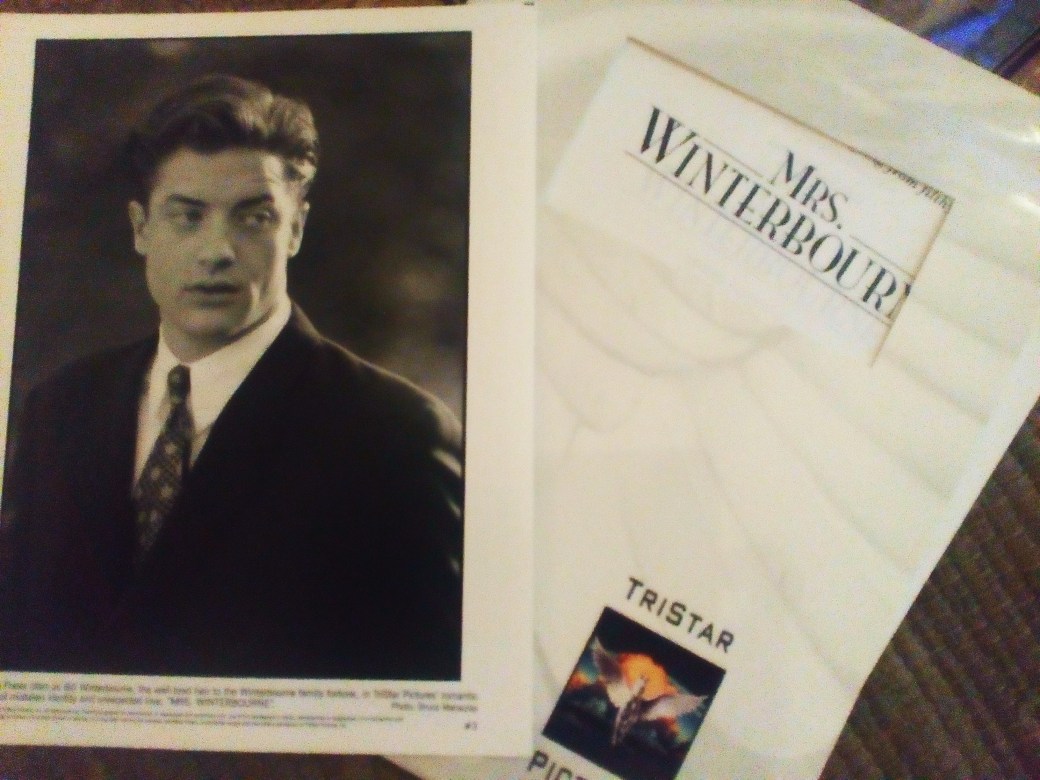





 Swampflix