Matt Farley’s Druid Trilogy

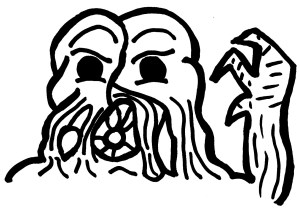
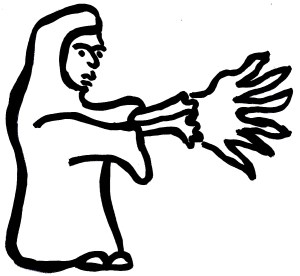
One of the great mysteries of Matt Farley’s backyard-movie catalog for Motern Media is how many films, exactly, fit under that umbrella. Farley has been making microbudget narrative features with friends & local weirdos for decades, but any “official” list of Motern titles, even when cross-referenced between his IMDb page & Motern’s website, is deliberately incomplete & unclear. Although the full list of titles is seemingly unavailable (outside of asking Matt directly by Twitter or by phone, as he is very available), it is clear that the “official” Motern Media movie catalog is marked as starting with an interconnected series of films Matt & friends produced in the early 2000s about ancient druid cults disrupting modern New England. Like Matt’s frequent impulses to craft triple albums, six-hour marathon concerts, and 20,000 song catalogs, this early Druid Trilogy is a stupefying work of outsized ambition. The plan, as Matt explains it, was to make a 7-part film series on this single druid theme. Only four films were completed before the project was (presumably wisely) abandoned, three of which were released, leaving behind a charmingly imperfect, oddly open-ended trilogy with an absurdly complex mythology. If anyone would have had the prolific energy & single-minded stubbornness to see a 7-part series of supernatural comedies about modern-world druid cults through to completion, it would have been Matt Farley, so I have to trust that jumping ship after the initial trio was the right thing to do. As it stands, though, Matt Farley’s Druid Trilogy is exactly the glimpse of Motern Media’s early stirrings you might want to explore after falling in love with more fully-realized works like Don’t Let the Riverbeast Get You! & Monsters, Marriage, and Murder in Manchvegas.

The first entry in the Druid Trilogy and, thus, the first “official” Matt Farley movie is the 2002 comedy Adventures in Cruben Country. What is sure to play as a fairly standard backyard movie project to the uninitiated will feel like a shocking revelation to already converted Motern devotees. All the way back in the early 00s, when I was but wee high school dweeb, Matt Farley’s pet subjects of walking instead of driving, the novelty songwriting process, the joys of one-on-one basketball, and Halloween costume monsters stalking the woods just outside of town were already fully-formed, lived-in obsessions. In an early, fictional version of what would eventually become The Motern Media Infomercial Podcast, Matt rants at length on a radio broadcast soapbox about how much better the world would be if everyone walked everywhere instead of driving cars, an argument you can still hear him make verbatim in the 2010s. In the film, he’s playing the fictional character of Matt Farley, the Musical Mayor of Thomasville. The film is a kind of fantasy where he can exercise the same auterist control he uses to run Motern in real life while governing an entire city of loyal citizens who have to listen to his official dispatches & novelty songs with rapt attention. True to form, Matt is far more interested in indulging himself with this Musical Mayor fantasy than he is with staging a conflict with the cult of “druids” (black-magic creeps with bedsheets for “cloaks”) who stalk the woods in nearby Cruben Country. When the mayor’s plan oversteps its bounds by proposing that Cruben Country be converted into a massive playground packed with basketball courts, however, the druids encroach to discredit him, threaten his journalist girlfriend, and essentially exile him from Thomasville. The highs of Adventures in Cruben Country never quite match the best of Farley’s work, but it’s still a successfully funny, adorable hangout comedy with strong Adventures of Pete & Pete vibes that telegraph what he’d later accomplish in Manchvegas. The movie is most astonishing in its early glimpses of novelty song-scored basketball games, extensive rants about walking, and Kevin McGee villainy – all of which would be better deployed later in his catalog, but are amazing in the earliness of their arrival here.

Sammy: The Tale of a Teddy and a Terrible Tunnel doesn’t exactly pick up where Cruben Country leaves off. Or does it? There are enough stray elements in common between the two films to suggest that Sammy is a direct sequel: Kevin McGee’s casting as the main evil druid; Matt’s ex-journalist love interest; a series of underground tunnels ostensibly intended to encourage walking; props like frying pans, frozen pizzas, and mystical jars of dirt worshiped by the druids, etc. However, there is no mention of Matt ever having been mayor of his small New England town. Also, I’m 90% sure the film is intended to be a direct parody of the early 80s cult horror The Pit (which I’m reluctant to confirm, since we’ll be discussing it as a Movie of the Month this October and I don’t want to prematurely read too much about it). The complex mythology of dirt-worshipping, government-infiltrating druids is maintained as background detail in this film, which mostly concerns an adult, brain-damaged Matt Farley, who has renamed himself Jamie and spends his days talking to an oversized teddy bear. The bear, named Sammy, issues commands to the infantilized Matt, eventually leading him to feeding human sacrifices to a tunnel-dwelling monster in the woods. If Cruben Country recalls Manchvegas, Sammy is much more prescient of the nastier tones of Freaky Farley, with the teddy bear encouraging some real disturbing Norman Bates/Peeping Tom behavior between non-sequitur gags about misshelved library books & frozen-pizza binges. The narrative of Sammy is just as incongruous with Cruben Country as the tone, as we never see the accident that transforms Matt into Jamie, nor are given direct indication if Matt used to be mayor. Is Sammy even set in Thomasville or are these films only of a series in the sense that they rearrange talisman props & characters into Madlib style configurations? They each feel self-contained enough for the latter to be true. I could easily ask Matt directly for the answer to these questions and for insight into what the unreleased Druids Druids Everywhere & the three unproduced films in the druid series might have been, but I’m honestly having more fun truing to parse out the mess on my own than I would with a clear, direct answer.

The third (and most artistically satisfying) release in Matt Farley’s Druid Trilogy is Druid Gladiator Clone, a film I’ve already reviewed at length & one I quite enjoy for its aesthetic resemblance to early 00s pranksters like Tom Green & the Jackass crew. If you haven’t fully caught the Motern bug, but are still curious about these early druid-mythology comedies, it’s the one to see, as it delves furthest into the unnecessarily complex (even in Motern terms) lore; it’s also, on a basic level, the funniest of the trio. As a trilogy (and abandoned heptalogy), however, this collection of work is remarkable in its microbudget ambition & its deadpan commitment to the silliest of premises. In other words, it’s pure Motern. Matt Farley already had his humor & his pet obsessions fully developed and ready to broadcast to the work in the early aughts. What the Druid Trilogy afforded him & director/co-conspirator Charles Roxburgh was a D.I.Y. film school environment where they could learn the details of comic timing & maxed-out absurdity that would later lead to more substantial (even if just as low-budget) work. This crop of films is the exact Early Motern insight I was looking for. It’s probably for the best that Farley’s earlier attempts at backyard filmmaking (as well as mysteriously unavailable titles from later in the catalog like Obtuse Todd) are still just outside my reach. Much like the disjointed, irreconcilable plots of these three loosely connected films, the Motern movie catalog is all the more fascinating for maintaining a slight air of mystery.

-Brandon Ledet
The Absurdist Joys of the Villainous Pun Name

I have a running list of absurdly idiotic movie gimmicks that delight me to no end: horror films about internet-dwelling computer ghosts; plot-summarizing rap songs that play over end credits; music video dream sequences, etc. This week I may have discovered a new one: the not-so-secret villain who gives themselves away with an obviously evil pun name. Naming fictional characters is difficult business. It takes incredible skill & patience to find the right name that both says something about the character without being too blatant and feels natural on the tongue. This week I’ve been watching movies that don’t at all burden themselves with either concern, instead using their villains’ names as plain, upfront statements about where they stand in the world and how you should feel about them. It’s a tactic that’s far more often employed in the heightened realities of pro wrestling, drag, and comic books – one that sticks out like a sore thumb when it’s deployed in cinema, hilariously so.

The first of these villainous pun names to jump out at me was from the 1987 supernatural noir Angel Heart. The film joins the ranks of New Orleans-set erotic thrillers like The Big Easy, Zandalee, and Cat People ’82 in depicting our fine city as a sweaty pile of saxophones, street steam, horniness, gumbo, and Voodoo. The plot is, on the surface, a fairly standard noir riff where a young, strapping Micky Rourke ventures to investigate a missing person’s case while getting tangled up with various dangerous dames. Everything changes when a corny sex scene between Rourke & Lisa Bonet (a beautiful combination, considering the times) turns into a nightmare vision of Hell and the movie takes a supernatural turn. Anyone paying attention to the character names should see that directional shift coming from a mile away, however. Not only is Rourke’s professional sleuth named Harold Angel, but the man who hires him to investigate the crime (in “a special appearance” from Robert De Niro) is named Louis Cyphre. Turns out that long-nailed, slick haired trickster Louis Cyphre has a pure-Evil, supernatural role to play in Angel’s downfall. Who would have guessed?

The second villainous pun name I stumbled across was a much more recent, less nostalgically minded-title: Wes Craven’s 2005 airplane thriller Red Eye. A tight, gimmick-heavy thriller from the War on Terror era of Bush’s presidency, the film features Rachel McAdams being held hostage by Cillian Murphy on a late-night flight and subsequently being pressured into participating in a terrorist attack. Red Eye has a Final Destination feel to it, except with Terrorism feeling like the inescapable inevitability instead of Death. That set-up allows for over-the-top skirmishes with flight attendants, missile launches, and assassination attempts to feel at home with the overall tone, but the movie also has a stray concern with gender politics that lands far outside that thematic orbit. Murphy’s abduction & coercion of McAdams begins as extremely gendered flirtation, then erupts into domestic violence exchanges where he explains he has the upper hand because his “male-driven logic” trumps her “female-driven emotion.” That turn in the story is much more jarring than Murphy’s reveal as the villain, but the gendered violence of the film is less surprising when you consider his character name for a half-second: Jack Rippner.

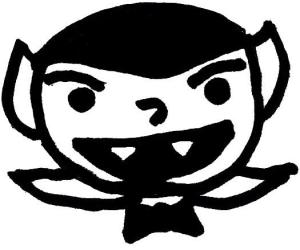
After meeting Louis Cyphre & Jack Rippner by chance, I decided to revisit the most shameless villainous pun name I could recall. It’s an honor held by none other than schlock king Ed Wood Jr., who had the vision & the fortitude to name a character Dr. Acula in 1958’s Night of the Ghouls. Officially unreleased until the 1980s, cobbled together from footage pilfered form Orgy of the Dead & The Sinister Urge, and somewhat posed as a direct sequel to Bride of the Monster (at least in Tor Johnson’s resurrection of the character Lobo), Night of the Ghouls is a total mess even by Wood’s “standards”. It’s a charming mess, though, especially in sequences where Dr. Acula fleeces marks by staging fake seances in his spooky mansion for easy cash. Everything about Acula is a mystery. Actor Kenne Duncan is not at all vampiric in the role, not even vaguely. The character was obviously written for Bela Lugosi before his death, but why wasn’t it given to Criswell instead, who introduces the film while rising of a casket, then continues to operate outside the narrative? If Acula is a total fraud whose seances are staged for grifting, why would have burdened himself with such an obviously suspicious, villainous stage name? Was the character intended as an homage to Lugosi’s very similar conman in the 1940 horror comedy You’ll Find Out? I’m not sure Wood would have answers to these questions even if he were still alive, which I suppose is part of the fun.

Jack Rippner, Dr. Acula, and Louis Cyphre have better company in more well-respected films – characters like Hannibal Lecter, Cruella de Ville, and any number of James Bond or Harry Potter villains you can name. Honestly, though, I find them even more delightful as sore-thumb intruders outside of contexts like comic books or children’s literature that would excuse their over-the-top nomenclatures. Now that my eyes are open to the trope, I fully expect to notice more villainous pun names at the movies. At the very least, I hope to run across a Justin Sane or a B. Zilbub before my time on Earth is through and I fully expect to fall in love with the films that dare to exploit that gimmick. It’s consistently delightful & comfortably at home with this genre film territory.

-Brandon Ledet

I Married a Monster from Outer Space (1958)

It’s difficult to know what you’re walking into with most 1950s sci-fi & horror titles. Parodic, post-modern appreciation of the era has trained us to expect that every 50s genre cheapie with an explicitly paranormal title will be a so-bad-it’s-good laugh riot, but that’s often not the case. I expected I Married a Monster from Outer Space to be a campy indulgence, one of the rubber suit Roger Corman monster movies that are typically afforded the MST3k treatment instead of full, rapt attention. The signs are all there. The sensationalist title is absurdly verbose. The titular monster is one of the rubber Roger Corman mold, wandering around cheap wooded & suburban sound stage sets to the victims’ shrieking terror. The effect is far creepier than it is campy, however, and the film even manages to make a substantial point through its paranormal metaphor. There were certainly implications that this would be the case. Not only was I Married a Monster from Outer Space packaged on a double bill with the cult classic The Blob, but it was also produced by Gene Fowler Jr., who similarly struck better-than-expected genre gold in I Was a Teenage Werewolf, which practically invented the coming-of-age teen body horror. Still, I’ve been culturally conditioned to not take these things seriously, so it’s always a surprise when one knocks me on my ass.

If you’ve seen any movie with an Invasion of the Body Snatchers-type plot where spouses have been mysteriously replaced with space alien doppelgangers, you can likely predict this film’s plot beat for beat. Our protagonist is a terrified, eager-to-please house wife who cannot figure out why her newlywed husband is acting so cold & distant to her in what should be the couple’s honeymoon period. She soon finds herself to be the lone conspiracy theorist in town who’s convinced that he – along with the other husbands, cops, and male authority figures – have been replaced with a space aliens who plan to breed with human women. A They Live! style device emerges where lighting flashes reveal the true, hideous faces of the creatures pretending to be suburban husbands, but the monsters mostly go by undetected until it’s almost too late. The story is familiar, but flows incredibly naturally from scene to scene with an editing room finesse atypical of this genre territory. The special effects also feel above par for the material, from the head-to-toe detail of the rubber monster suits to the distorted faces of the lightning strikes to the weaponized fog the creatures deploy when abducting their victims. All the surface level narrative details of I Married a Monster from Outer Space are exactly what you’d expect from its title; the attention to detail in its craft just happens to be a cut above.

What makes this film an underappreciated gem is not its story or craft, however, but its deployment of the suburban invasion metaphor. While many 1950s horror films reflect political or xenophobic angst about foreign menace hiding in plain sight among us, I Married a Monster from Outer Space instead condemns the power dynamics of marriage in its era. Before the aliens ever arrive, men are shown to be drunken brutes who feel burdened by their wives, who in turn don’t know their husbands form Adam (or atom). There’s a distinct kind of terror in marrying a total stranger, especially one who will have legal & physical power over you, something that happened often in the time when you were socially pressured to marry the first person you wanted to fuck. The alien husband replacement is terrible at small talk, cruel to animals, and threatened by suggestions that he should be checked out by a fertility doctor to assess why the couple can’t bear children. When his wife dares to leave the home to ask for help, other men are just as threatening. At best, they assume she’s drunk, hysterical, or looking to cheat on her husband. At worst, they’re also aliens in disguise, deferring to her husband’s authority and returning her to his arms. As presented here, 1950s marriages were a nonstop nightmare, whether or not you were married to a space alien in disguise. I was never a housewife in the 1950s, personally, but I totally believe it.

It would likely be best for me to fight the instinct of not taking these 1950s monster movies seriously at face value. Growing up in the hangover haze of Gen-X’s weaponized sarcasm & apathy has shaped my viewing habits in ways I should learn to challenge & counteract. If I’m being honest, though, my underestimation of certain pictures also plays to their advantage when they’re able to prove my skepticism false. I went into I Married a Monster from Outer Space expecting campy schlock. Instead, I found an eerie special effects creep-out & a damning exploration of the power dynamics of marriage in the 1950s. Having your expectations challenged in that way is a best-case scenario for any movie, no matter the genre or era.

-Brandon Ledet

Lonely Hearts Killers vs. Blasphemous Hollywood Phonies

When opera-composer-turned-one-time-filmmaker Leonard Kastle dramatized the serial murder crime spree of Raymond Fernandez & Martha Beck, he deliberately avoided Hollywood glitz & glamor. The Honeymoon Killers was Kastle’s anti-Bonnie & Clyde project, a low-fi genre picture meant to capture the full grime & absurdity of his subjects’ tabloid-ready crimes without glorification. He explained “I didn’t want to show beautiful shots of beautiful people.” Before Kastle’s movie and since, there have been roughly a dozen crime thrillers about so-called “Lonely Hearts Killers,” murderers & thieves who lured their victims through romantic personal ads in the newspapers. Fernandez & Beck in particular have only received the movie treatment in two subsequent productions, however: a 90s Mexican crime drama titled Deep Crimson and 2006’s Hollywood-produced Lonely Hearts. It’s in that latter title that we got a glimpse of exactly the kind of movie Kastle didn’t want to make, a phony game of 1940s dress-up packed with “beautiful shots of beautiful people.” The Honeymoon Killers deliberately set out to be the anti-Bonnie & Clyde; Lonely Heats carelessly stumbled into being the anti-Honeymoon Killers, bringing the whole phony Hollywood enterprise full circle.

The first glaring Hollywoodization of true-life grime in Lonely Heats is the casting of Raymond Fernandez & Martha Beck. A large part of public fascination over the killers’ tabloid-documented trial was how much objectively better-looking Fernandez was than his lover/partner in crime. Martha Beck was a plain, ordinary woman who had intensely latched onto a very handsome (and eventually violent) man. Her caked-on makeup, over-plucked eyebrows, and low-fashion attire afford her the appearance of a John Waters character as she’s played by Shirley Stoler in The Honeymoon Killers. In Lonely Hearts, she’s played by Salma Hayek, one of the most exquisitely beautiful movie stars around. Jared Leto co-stars as Fernandez, equally miscast in the way his forever-young baby face struggles to convey the rugged, old-fashioned masculinity the role requires. When they attempt to age up Leto with a bald cap (in scenes where Raymond isn’t wearing his signature toupee) it plays as an unintentional joke. Leto looks as if he’s guest-hosting SNL, which I doubt was the intended effect in this drama about women & children-murdering grifters. In the casting alone, Lonely Heats undoes everything Kastle envisioned for The Honeymoon Killers, but it does so by having no particular vision at all. It’s likely no one had Kastle’s film in mind during the making of Lonely Heats; they were just naturally blasphemous to his ideals by deferring to Hollywood’s default mode of filming beautiful people playing dress-up.

After the casting of its leads, the second most baffling (and unintentionally blasphemous) decision Lonely Heats makes is in its choice of POV. Whereas Kastle’s film morally challenges the audience by making Fernandez & Beck the protagonists, Lonely Heats frames the story around the (presumably fictional) cops who are tracking them down. James Gandolfini provides convenient exposition for the film as a police force old-timer who burdens the proceedings with verbose noir narration so overly-familiar it borders on parody. John Travolta contrasts him as a loose-cannon partner with a troubled past & an apparent death wish, distracting from Fernandez & Beck’s exploits by wasting screentime on his own past romantic tragedy & his current troubled relationship (with a too-good-for-this-shit Laura Dern). Through this police procedural device, the movie allows itself to play very fast & very loose with the truth of the case that inspired its narrative, but then drop in flatly-stated facts about Martha Beck’s childhood sexual assault that Kastle didn’t dare touch in his own version of the story. The details of the individual crimes are familiarly paralleled in each film: bodies stuffed in clothing trunks, women struck in the skull with hammers, Fernandez & Beck posing as brother & sister to lessen suspicion in their grifts. Lonely Heats just distorts those details through a phony Hollywood POV and often tempers their impact by depicting cops uncovering victims after-the-fact. Where The Honeymoon Killers will show a victim atonally singing “America the Beautiful” at top volume in a bathtub for a campy comedic effect, Lonely Hearts will counter that deliberately un-sexy image with a perfectly posed naked female body found in a bathtub filled with her own blood, looking more like a fashion shoot than a suicide. Where Honeymoon Killers will show Fernandez & Beck teaming up to drown a child in a basement sink, Lonely Heats will only show cops discovering evidence of that crime in horror, long after the event. The details are largely the same (they both depict the same true-life crime spree after all), but the methodologies are philosophically opposed – if not only because Lonely Hearts seems to have no specific philosophy at all.

Of course, there’s an entertainment value built into phony Hollywood glamor. For all of Lonely Heart’s efforts to beautiful Fernandez & Beck’s crimes and shift the moral ambiguity of audience empathy by framing their story through the cops hunting them down, the film still does not skimp on sex or bloodshed, something it treats with the same casual decorative ease as its 1940s big band music & dress-up costuming. Lonely Hearts even occasionally achieves some of The Honeymoon Killers’s off-putting absurdist camp in its more lurid details, such as in a scene where a blood-spattered, bald cap wearing Leto masturbates for Hayek’s amusement. As always, Hayek herself is a joy to watch and is clearly having fun with the material. The “beautiful shots of beautiful people” ethos Kastle detested is difficult to despise too vehemently when it involves Hayek chewing scenery in 1940s femme fatale couture. The pleasures of Lonely Hearts are mild & unexceptional, though, requiring a willingness on the audience’s behalf to settle for an outrageous tabloid saga being reduced to a generic crime picture & an old-fashioned game of Hollywood dress-up. If you want the full scope of Fernandez & Beck’s violence & absurdity, watch The Honeymoon Killers. If you want beautiful shots of beautiful people playing cops & robbers in a low-rent version of old-fashioned Hollywood glamor, Lonely Hearts is your destined-for-cable-broadcasts alternative.

For more on August’s Movie of the Month, the romantic crime thriller The Honeymoon Killers, check out our Swampchat discussion of the film and last week’s examination of Martin Scorsese’s involvement with the film.

-Brandon Ledet

Movies to See in New Orleans This Week 8/24/18

Here’s a quick rundown of the movies we’re most excited about that are screening in New Orleans this week, including two new re-issues of vintage classics.

New Releases We Haven’t Seen (Yet)

1. The Last Movie (1971) – A 4k restoration of the notorious flop that tanked Dennis Hopper’s career. Hopper cashed in his Easy Rider success to direct this psychedelic meta-narrative about the production of a Western film and was essentially exiled from Hollywood for the drugged-out mess he ultimately delivered (partially due to the encouragement & guidance of Alejandro Jodorowsky). The film was barely distributed in its early run, but has since earned a notable cult following and is finally back on the big screen to test if it was secretly a misunderstood, ahead-of-its-time masterpiece. That’s not likely, but it looks fascinating anyway.

2. BlacKkKlansman – Spike Lee hasn’t exactly disappeared, but it feels like he’s been hiding in plain sight for the last decade or so by dedicating his efforts to small-scale, limited appeal experiments (like, for instance, a Kickstarter-funded remake of the esoteric cult classic Ganja & Hess). BlacKkKlansman appears to be a much better-funded, commercially minded picture than we’ve seen from the infamous indie auteur in a long while, one that filters satirical jabs at Trumpian racial politics through a classic buddy cop genre structure & a historical look back at the not-so-distant past of the Ku Klux Klan. It’s incredibly exciting.

3. Crazy Rich Asians – Part wish-fulfillment rom-com & part extravagant wealth porn, this comedic romance fantasy looks like a crucial slice of escapist fun. It also promises to incite a much-needed corrective for Hollywood’s dismally deficient Asian American representation on the big screen, so it’s a worthy film to support while it’s playing in theaters.

4. McQueen – I’m not very familiar with deceased fashion designer Alexander McQueen outside hearing his name dropped in rap songs and seeing a few of his pieces at NOMA’s A Queen Within exhibition earlier this year. I’m eager to correct that, though, and this documentary seems to be a great place to start. Only playing at Canal Place.

5. The Happytime Murders – Melissa McCarthy stars in a crime thriller parody alongside dozens of foul-mouthed puppets, directed by Brian Henson (son of Jim). Look, I know the reviews are horrendous and this Puppets Gone Wild comedy gimmick has been done plenty times before (Let My Puppets Come, Meet The Feebles, Greg the Bunny, Wonder Showzen, Crank Yankers, Avenue Q, to name a few), but the joke is still funny to me, because I’m an immature dweeb.

Movies We Already Enjoyed

1. 2001: A Space Odyssey (1968) – AMC is staging a single-week run of “unrestored” 70mm prints of the sprawling, psychedelic Kubrick classic. The print was created from the original film negative, no digital touch-ups distorting its historical integrity, with Christopher Nolan being credited as part of the mastering process. It’s a rare opportunity to see one of the most highly regarded films in existence in its full, original glory. Check out AMC’s write-up & screening schedule for more information.

2. Hausu (1977) – A campy, psychedelic, hyperkinetic Japanese horror about witchcraft, ghosts, cats, and friendship. This all-time classic is Prytania’s midnight movie for the week and I can’t imagine a more perfect programming choice for that slot. Only screening Friday, August 24, Saturday, August 25.

3. Sorry to Bother You –I’ve now said this four weeks in a row, but this is very likely the last week to see one of the summer’s wildest surprise gems on the big screen (it’s now only playing at The Broad Theater). From Boomer’s review: “These continue to be dark days, and though we may not know how to fix them, we must not get used to them. And if you like your social commentary candy-colored but lacking in neat, pat answers, go see Sorry to Bother You. Hell, go see it even if that’s not your bag; your comfort zone could become your noose if you don’t push your boundaries.”

4. Eighth Grade – Bo Burnham’s directorial debut doubles as a teen girl coming-of-age drama and an Anxiety Litmus Test. Either you find the awkwardness of its protagonist’s last week of junior high amusingly adorable or it hits you like a relentless, anxiety-driven nightmare where each minor social interaction plays out with the creeping dread of a horror film. It’s an impressively intense tonal experience either way. Now only playing at The Broad Theater.

5. Mamma Mia!: Here We Go Again – This decade-late sequel to the ABBA jukebox musical is notably better-made on a technical level than its predecessor (it shares a cinematographer with most Wes Anderson productions?), but it’s also a hell of a lot less horny & bizarre. For the most part, though, Here We Go Again delivers more of the same Mamma Mia! goodness, except this time with a little Cher for flavor. Britnee’s an especially big fan of this franchise and you can hear our dual review of both Mammas Mia! on a recent episode of the podcast.

-Brandon Ledet

Episode #63 of The Swampflix Podcast: ABBA Does Australia & The Dressmaker (2016)

Welcome to Episode #63 of The Swampflix Podcast! For our sixty-third episode, Brandon & Britnee investigate Australia’s unrivaled, unexplainable love for the Swedish pop group ABBA, discussing three films that reflect that national obsession. Brandon also makes Britnee watch the Australian revenge tale The Dressmaker (2016) for the first time. Enjoy!

You can stay up to date with our podcast through SoundCloud, iTunes, Stitcher, TuneIn, or by following the links on this page.

– Brandon Ledet & Britnee Lombas

Skate Kitchen (2018)

Most filmmakers’ impulse when setting narrative films in a skateboarding community is to treat skateboarding itself as the subject of the story. Whether it’s as a historically-minded hagiography (Lords of Dogtown) or a quick cash-in on the sub-culture’s marketability (Thrashin’) skateboarding cinema often treats its setting as a narrow-minded novelty, a highly specific range of imagery that’s interesting enough on its own to require no substance under its surface pleasures. Skate Kitchen grinds a thin rail between indulging in that for-its-own-sake novelty imagery and telling an emotionally resonant coming of age story that uses skateboarding as a placeholder for any kind of youthful awakening in confidence, independence, and self-identity. The movie’s most transcendent, memorable sequences are fully submerged in the simple pleasure of skateboard performers filmed with professional skill, but it could have been just as powerful if it were set in the world of tennis, fencing, or competitive foosball. It’s a great movie first and a great skateboarding movie second, a rarity.

Suburban doldrums & parental overbearance weigh on a young teen protagonist who cares far more intensely about watching clips of an all-femme skating crew on Instagram then she does about the immediate world around her. Against her mother’s orders, she sneaks away with her board to NYC by train, meeting up with the Skate Kitchen crew she idolizes, quickly being assimilated into their ranks. There isn’t much plot beyond this initial set-up; the film instead carefully contrasts the intense emotional bonding & betrayals of teenage life with the serene beauty of young women skateboarding around NYC. Although the technology & terminology may be different, Skate Kitchen feels at home with similar Big City coming of age stories like Girlhood & KIDS, except with a much more mannered, less volatile emotional palette. The transition from suburban boredom to boarding around NYC is like Dorothy stepping into the Technicolor landscape of Oz, which is more than drastic enough for the film to get by without resorting to the more sensationalist dramatic details of either Girlhood or KIDS, even if it’s trafficking in similar terrain.

Director Crystal Moselle is entering the world of narrative filmmaking with Skate Kitchen, her second feature after the cinephiliac documentary The Wolfpack. Her debut was often criticized for presenting a fuzzy version of the truth (I even personally called it “just beyond the reach of believability”). It’s wonderful to see her lean into that documentation grey area in its follow-up, which features and is named after a real-life skateboarding crew. The Skate Kitchen have been individually assigned fictional character names in the film, but as a collective they’re essentially playing themselves: an all-femme crew of skateboarders pallin’ around NYC in pursuit of video clips worthy of broadcasting their talents to the world through social media. Rachel Vinberg (as the protagonist Camille) and Nina Moran (as comic relief/consummate shit-stirrer Kurt) are particular standouts, outshining even professional actors Elizabeth Rodriguez & Jaden Smith. That’s partly a result of their natural charisma & exhibitionism, but also due to Moselle’s talent for crafting emotionally resonant, authentic-feeling stories out of real-life Characters. In both The Wolfpack & Skate Kitchen, Moselle has found highly specific, naturally fascinating collaborators and turned their lives into emotionally engaging art just askew from the center of true-life. At this pace, she’s shaping up to have an incredible body of work in just a handful of pictures.

A lot has changed in skateboarding culture since the 80s cash-in of Thrashin’. The fashion, the gender divides, and the terminology of skateboarding are almost unrecognizable between that film & this more artful update (which would have been titled Valid if it were made with that 80s mindset). Both films, matter how authentic, serve as a snapshot of their times, saying just as much about the 1980s & the 2010s as they do about skateboarding. Skate Kitchen doesn’t offer much that you wouldn’t expect from a small budget coming of age drama packed with “non-professional” actors, but the specificities of those personalities & the 2010s NYC skateboarding culture they traffic in allows for frequent moments of beauty & emotional resonance. Old-line skateboarding movies treat the culture as a marketable novelty, whereas Skate Kitchen treats it as a community worth documenting & making familiar though emotional storytelling. Honestly, both tactics are worthwhile in their own way because, on a basic level, skateboarding just looks incredibly cool on camera. Still, it’s a pleasure to see the skateboarding movie emotionally mature at least a little, while still holding onto its prankish spirit of teenage rebellion.

-Brandon Ledet

Eighth Grade (2018)

One of my pet favorite subjects in modern cinema is The Evils of the Internet, especially as represented in gimmicky cyber-horrors like Unfriended, Truth or Dare, #horror, and Nerve. For years, I’ve been praising these shameless, gimmick-dependent genre films for documenting the mundane details of what modern life looks like online in a way that more prestigious, artsy-fartsy productions wouldn’t dare. That’s started to change with more recent releases like last year’s Ingrid Goes West & the upcoming film Searching, which sober up the Evil Internet Thriller a little with more grounded, adult tones. Even the recent sequel to Unfriended, Dark Web, lessened the absurdity of its predecessor’s premise by literally exorcising its ghosts and abandoning its supernatural bells & whistles for a much less ludicrous (and, in my opinion, less interesting) plot. And so, the coming-of-age teen drama Eighth Grade completes this transition of the Evil Internet Horror formula from high-concept gimmickry to awards-worthy art house fare. With a piercingly astute eye for the way social media has reshaped & mutated adolescent anxiety into an entirely new beast, Eighth Grade excels both as a snapshot of what life online looks like in the 2010s and as a distinct, character-driven drama even when removed from its of-the-moment focus on social media. Movie-wise, the Internet Age as finally arrived.

Eighth Grade is, reductively speaking, an anxiety Litmus test. As the circumstances of its plot are a relatively low-stakes depiction of a teen girl’s final week of middle school, it might be tempting to group the picture in with other modern revisions of the classic coming of age formula – Lady Bird, The Edge of Seventeen, Princess Cyd, etc. For a constantly anxious person who feels immense internal anguish even in the most “low stakes” social interactions imaginable, the film is a non-stop horror show. As Elsie Fisher’s young teen protagonist attempts to assert herself in crowds, approach the early stirrings of sexuality, establish meaningful bonds with anyone who’s not her father, and develop Confidence as her personal brand, the overwhelming weight of the world around her (especially in moments when all eyes are on her) chokes the air with a non-stop panic attack. Even in my 30s I still approach every minor social interaction in public with an unhealthy overdose of dread; I remember that anxiety only being magnified a thousand-fold in the eighth grade, possibly the most awkward, unsure time in my life I can recall. As Fisher puzzles her way through a world that no longer seems conquerable & a changing self-identity she has little control over, you’ll either find her awkwardness adorable or horrifyingly relatable. I was personally watching it through my fingers like a jump scare-heavy slasher.

The unconventional tension of Eighth Grade feels similar to the tactics of anxiety-inducing dramas like Krisha & The Fits, but the movie manages to carve out its own distinct tonal space in its explorations of The Internet as a visual & emotional landscape. This can be oddly beautiful & seductive, as with a sequence where the protagonist is put into a daze by overlaid social media posts set to Enya’s “Orinoco Flow.” It can be numbing & cruel in scenes where other kids use the distraction of their smart phones as a means to avoiding direct interaction with someone they deem unworthy of attention. Most significantly, it can be heartbreaking, as with the protagonist’s YouTube tutorials on how to be a confident, well-rounded person – two things she’s anything but. As someone who broadcasts unearned, inauthentic confidence to a near-nonexistent audience on a podcasting & blogging platform on a subject I have no authority to speak on whatsoever (why are you even reading this?), I recognized so much of my own mechanized compulsion to participate in social media content production in those tutorials. She makes them with no prompt nor reward, then broadcasts them to no one in an online void, like atheistic prayers to Nothing. Her social isolation is only compounded by the one tool that’s supposed to relieve it, which is a horror shared across all age groups & anxiety levels in modern culture.

Being alive and in public is a never-ending embarrassment. With the internet, the public sphere has been extended even further into our private spaces so that there is nowhere left to hide. In Eighth Grade, first-time writer director Bo Burnham (who got his own start growing up in the public sphere on YouTube) captures a heartachingly authentic character learning to navigate & push through that embarrassment at the exact moment when anxiety is at its most potent. If that’s a struggle you’ve never fully moved past and you frequently feel the need to punctuate each social interaction with self-humbling repetitions of “Sorry, sorry, sorry” as if you’re apologizing for the audacity of your own existence, this film will likely weigh on you as an incredibly tense experience. Anyone who isn’t burdened by anxiety or the eeriness of the internet is likely to find something much more easily manageable here, maybe even something “cute.” Even the film’s warped electronic soundtrack, provided by Anna Meredith, can either be heard as a playful adoption of modern pop beat production or a horrifying perversion of those sounds into something nightmarishly sinister. Either way, the film is worth seeing as an empathetic character study & a thoughtful modernization of the coming-of-age formula, but it’s difficult to imagine someone who sees the film as a light, low-stakes drama getting as much of a rich, rewarding reaction out of it as I viewed the film: an intensely relatable Evil Internet horror about anxiety in the social media age.

-Brandon Ledet

Generation Wealth (2018)

It’s impossible to fully capture the spirit of contemporary life while we’re living it; that’s something that requires temporal & academic distance to convincingly achieve. Photographer/documentarian Lauren Greenfield is aware of this limitation, finding more academic value in her early work the further she gets away from it, but she’s also unsatisfied with setting that ambition aside. In Generation Wealth, Greenfield attempts to recontextualize nearly three decades of her photography & anthropological study of modern Western culture into a concise diagnosis on the ills of the Hellish world we currently occupy. She seeks to damn the greed & absurdity of excessive wealth, to examine her dual responsibilities as an artist & a mother, to establish a new field of study in pop culture anthropology, and to offer a moralistic solution to all of modern society’s ills – all in 106 minutes of D.I.Y. documentary filmmaking. Naturally, some of these ambitions are more successfully satisfied than others. Generation Wealth is always more enjoyable when it’s exposing the absurdities of immense wealth with anthropological distancing than it is when it indulges in moralistic finger-wagging about family values & the commodification of sex. Even when it’s stumbling through the details, however, the movie as a whole is immensely impressive for daring to examine contemporary culture in its entirety while it’s still happening. It makes a compelling case for why it’s important to do this work now instead of waiting until these times are in the rearview; it feels as if the world is ending around us and hindsight might not be something we will be afforded once it’s over.

Greenfield got her start as a big-name artist documenting youth culture in early 90s Los Angeles. Because of the tech & entertainment industry circles that comprise most of L.A., the kids who run those stomping grounds are obsessed with status symbols that portray immense wealth to their peers; they’re essentially playing rich. As her professional photo-journalist assignments have since dragged her all over the world in the last two decades, she’s noticed this behavior spreading to other cultures, even in the face of global economic collapse. As the gap between classes widens to extremes, modern culture has become obsessed with appearing wealthy as a kind of social performance, with no substantive foundation to make that illusion credible. Doom & gloom economists are called on to compare the most lavish expressions of false-wealth – child beauty pageants, rap video excess, reality TV celebrity, plastic surgery for dogs – to the early signifiers of the fall of Rome. The audience is warned, “Societies accrue their greatest wealth at the instance the face death” while surreal images of the world’s nouveau elite clash with factoids about modern culture’s financial unsustainability. It’s in this diagnosis of a society that’s sick with wealth-obsession that Greenfield is most convincing, especially since she has been gathering concrete, photographic evidence of those ills her entire professional career. Where Generation Wealth becomes less credible (and occasionally even infuriating) is when Greenfield prescribes back-to-basics, old-fashioned (and often sex-negative) “simple living” as the antidote without also acknowledging the way that façade of down-to-Earth “authenticity” is also something purchased & sold by the financially “comfortable.”

Much like with the act of studying a cultural moment in motion without the benefit of temporal distance, Greenfield is too close to the subject to see how back-to-basics, rustic authenticity is just another Late-Stage Capitalism product, another empty absurdity among many. Generation Wealth would likely be a stronger project overall if it skipped offering a solution to the false-wealth problem entirely, only sticking to the initial doom & gloom diagnosis. That’s because, by design, this is an incomplete project, as this modern cultural moment has not yet reached its natural conclusion. Greenfield’s work as a photographer & a documentarian is still in progress. Generation Wealth is ultimately a mid-career artist’s statement, offering an art gallery slide show of Greenfield’s surrealist images of a culture in crisis (which alone makes the film worth seeing on the big screen). Attempting to tidily wrap up that narrative before it’s seen itself through in the real world is admirably ambitious, but a flawed effort from the outset. We won’t understand the full scope of Greenfield’s documentation of a culture in decline until the whole thing collapses, meaning this film’s inevitable sequel or revision is likely to surpass it in artistic merits. That is, presuming filmmaking is still even a viable practice when that time comes. As Generation Wealth indicates, the future is terrifyingly uncertain.

-Brandon Ledet

Blank Generation (1980)

Sometimes you discover a movie you need in your life through the happenstance of a recommendation, a TV broadcast, or a convenient showtime. Other times, you discover an inessential but moderately entertaining picture just because you confused its title with something more substantial. While digging into background context for the Lizzie Borden bomb-thrower Born in Flames, I watched a documentary on the “No Wave” cinema scene that birthed it. Blank City was an excellent crash course in late-70s/early-80s no budget NYC filmmaking, one that credited the film The Blank Generation for inciting the movement. A short documentary compiling footage of who’s-who CBGB regulars like Blondie, The Patti Smith Group, and Television, the film seemed like an essential snapshot of the scene’s early stirrings, something I was delighted to find hosted on the library streaming service Kanopy. Unfortunately, I had gotten a film titled Blank Generation confused with the aforementioned The Blank Generation, an embarrassing mistake for which there is no excuse. Instead of profiling a wide sampling of CBGB heavy hitters, Blank Generation serves as a document of exactly one group from that scene: Richard Hell & The Voidoids. The film is also missing the D.I.Y. crudeness of earlier No Wave productions, instead adopting the European art house genre patina of director Ulli Lommel, a frequent collaborator of Rainer Werner Fassbinder. Still, even without the expected no wave grime and with the documentary value of the picture muddled by its fictional plot, Blank Generation largely delivered the exact historical texture I was looking for in The Blank Generation, a film that’s not as readily accessible at this time. Even with mistaking its title with an entirely different film, I still found a fairly substantial document of NYC’s punk rock hangover.

Blank Generation is for Richard Hell what Crossroads was for Britney Spears, what Burlesque was for Christina Aguilera, what Cool as Ice was for Vanilla Ice. There’s a kind of absurdity in finding an early punk scene version of this kind of pop star vanity project, one the movie barely attempts to conceal with the flimsiest of dramatic plots. Playing the Richard Hell-like rock star “Billy,” Hell has to navigate the crises that trouble any successful rock musician on an ego trip: too much attention from beautiful women, too much pressure from record execs, too much scrutiny from the press, too many adoring fans. Poor baby. A minor romantic plot involving A Beautiful French Journalist on assignment to profile “Billy” emerges, but nothing much comes of it beside a few kinky powerplay exchanges in the bedroom and the value of promoting Hell & his band, The Voidoids. A side plot involving a monumental cameo from Andy Warhol (another collaborator of Lommel’s) functions much the same way, strengthening Hell’s brand by association. As is the case with most of these pop star promo dramas, the only reason the film works at all, then, is that Richard Hell & The Voidoids are genuinely charismatic & worthy of fascination. After being introduced to Hell’s work in The Voidoids through the CD anthology Time in high school, I‘ve always struggled with hearing cleaner, more professionally produced recordings of those same tracks on the band’s proper LPs; so it’s wonderful to hear the band in their live, rambunctious form here while also seeing them in action for the first time. Songs like “Blank Generation,” “New Pleasure”, and “Love Comes in Spurts” frequently repeat throughout the film, with Hell even selecting them on the jukebox of his neighborhood bar in the few scenes when he’s not in the recording booth or preforming onstage at CBGB. He also holds his own as a style icon, sporting his spiked hair & safety pins version of punk fashion that was coopted by Malcom McLaren and then mall punks everywhere. Yes, it’s absurd that there was ever a Richard Hell & The Voidoids promo movie in the first place, especially one this artistically pretentious, but the band is so mesmerizing in look & sound that the indulgence is justified.

Because Blank Generation adopts such a minor, surface-level plot, its staying power rests entirely in its details. The credits’ display on Times Square billboard ads, Andy Warhol’s cameo’s framing as a kind of performance art piece, and the way the journalist’s camera functions as a tables-turning phallic tool are all more interesting in isolation that anything that actually happens in the story. The movie also plays with the cognitive remove of filming videotape displays, something that would later become a huge deal in 80s indie cinema, most evident in titles like Videodrome & Sex, Lies, and Videotape. Above all, Blank Generation is valuable for the details it captures of a pre-Giuliani NYC, something that’s an integral part of Richard Hell’s DNA. It’s not quite the purposeful, all-encompassing documentation I expected from The Blank Generation, but it still navigates the city’s early punk hangover with a useful eye for cataloging the objects & people that populate it. Like in the glam rock hagiography Velvet Goldmine, Blank Generation uses the lens of music journalism as a device for capturing the moods, sounds, and fashions of a very particular arts scene for future posterity. This film’s imagination is far less poetic & lyrical than that Todd Haynes classic, relying heavily on familiar tropes of rock star excess to construct its deliberately minor drama. Still, it’s an essential document of a great, young band in their prime, including the physical & cultural context of their surroundings. Anyone looking for a European art house drama about troubled artists in love negotiating their sexual power dynamics could likely find hundreds of better films to suit their needs. Anyone who’d be interested in seeing Richard Hell & The Voidoids immortalized in cinematic posterity have few (if any) other titles to turn to, however, and that rarity is this film’s greatest asset.

-Brandon Ledet