You Can’t Wake Up if You Don’t Fall Asleep

I am no longer a true believer in the oft-repeated Ebert quote, “The movies are like a machine that generates empathy.” Or, I at least no longer believe that empathy is the most interesting or noble thing the movies machine can generate.  The more I’ve succumbed to incurable cinephilia in recent years the less interested I’ve become in the movies’ ability to document or reflect objective reality back at the audience, as if we don’t get more than enough real-life tedium outside the theater walls.  Even if there’s value to learning and vicariously experiencing the intimate details of each other’s lives through cinema, reducing the artform to its ability to generate empathy feels small & unimaginative, especially if that’s the only thing on a movie’s mind.  Subtlety, restraint, and adherence to real-world logic are boring, self-imposed restrictions for a medium that’s so apt for dreams & poetry.  It’s just as much of a well-worn cliché, but I’ve come to the point where cinema’s function as a machine that generates shared, communal dreams is its primary cultural value to me.  Empathy is a useful byproduct of the movie dream machine, but it’s at best secondary to the way cinema can deeply submerge us in the subconscious id of the artists behind it.  If a filmmaker is using the art of the moving image to achieve anything other than full sensory intoxication or communal mesmerism, they might as well write prose or record a podcast instead.  There’s so much more to the medium than farming empathy in the documentation or dramatic retelling of each other’s daily drudgery.

At least, that’s what I was thinking about while watching a double feature of this summer’s most critically lauded works: Wes Anderson’s ensemble cast sci-fi comedy Asteroid City and Celine Song’s long-distance relationship breakdown Past Lives.  I likely shouldn’t have bothered seeing Past Lives at all, since subtle, tastefully underplayed dramas aren’t really my thing.  I do allow myself to get talked into seeing a few gloomy exercises in real-world restraint every year, though, if not just to see what everyone else is gushing about while I’m seeking out high-style histrionics & novelty.  I had about the same experience with Past Lives as I had with last year’s similarly lauded & restrained Aftersun: respect for its craft but bafflement over its ecstatic praise, since practically every film festival is overflowing with similarly subtle, underplayed titles just like it (most of which never land proper distribution).  In contrast, I watched Asteroid City for the second time in 24 hours on that double bill and found its dreamlike artifice much more emotionally rewarding than Past Lives‘s real-world resignation.  In The French Dispatch, Wes Anderson self-assessed how his fussy live-action New Yorker cartoons function as populist entertainment; in Asteroid City, the self-assessment peers inward, shifting to their function as emotional Trojan horses. I found the former funnier but the latter more affecting, sinking several layers of framing-devices deeper into his subconscious to pick at the same somber tones of yearning & heartbreak as Past Lives with less of a literal, straight-forward approach.  It likely says less about the merits of the movies than it says about my facilities as an audience that I needed to puzzle at the complex narrative structure & fussy visual craft of Asteroid City (a movie within a stage play within a television special) to enjoy its small, intimate character moments for their own pleasure, while Past Lives was willing to serve those pleasures to me directly. Apparently, to fully appreciate the small things I need them buried under a crushing excess of style & artifice; I need to feel like they came to me in a dream.

The pattern repeated with my library DVD haul that same week, which happened to include two coming-of-age stories about young women: the 70s-set Judy Blume adaptation Are You There God? It’s Me, Margaret and the French dirt-bike crime thriller Rodeo.  One was a critically-lauded empathy machine that documents and validates the awkwardness & inner turmoil of puberty in all young American girls who are impatient to become young American women.  The other alternates between the quiet restraint of a crime world docudrama and the sensory free-for-all of a legitimate art piece, submerging the audience in the dreams & volatile emotions of one particular teenage reprobate with an ecstatic passion for racing stolen dirt bikes.  You can likely guess which one I preferred.  Are You There God? It’s Me, Margaret is less extraordinary than it is warmly familiar.  It reminded me of a lot of classic comfort watches that I grew up with in the 1990s: Mermaids, My Girl, Now & Then, etc.  It’s a pleasant movie about pleasant people, one that directly asks you to empathize with common, everyday rites of passage.  Rodeo is a much thornier picture.  It documents the experiences of real-world dirt bike stunt racers by casting them as their own fictional avatars and—in the case of its disgruntled antiheroine—inviting you into their prophetic nightmares of self-destruction & immolation.  There’s no reason to contrast & compare the two movies other than that my public library requests for them happened to be fulfilled on the same day; they’re as structurally & aesthetically distinct from each other as the vintage postcard artifice of Asteroid City and the real-world melancholy of Past Lives.  The same questions of which film was making better, more purposeful use of their shared medium were rattling around in my empty skull, though, and I again came down in favor of the dream machine over the empathy machine.

I’ve been writing reviews for this humble movie blog for eight years now, which is a long enough duration that I can’t help but reflect on what I value in this artform I’ve spent so much time admiring & picking apart.  Wes Anderson’s spent at least three decades admiring & picking apart the artform himself, and Asteroid City appears to find him arriving at similar conclusions.  Throughout the film, performers within his multi-layered narrative break character to question the meaning behind their dialogue & actions as written, as well as their place within specific framing devices at specific times.  The Anderson avatar who wrote the piece they’re performing has no clear answers for the reasoning behind his words, only that they work to express subconscious emotion.  In a climactic scene that lovingly parodies The Twilight Zone, the performers stare at the camera directly and chant “You can’t wake up if you don’t fall asleep” in a rhythmic, zombified monotone, reinforcing that to experience & share in that subconscious emotion the audience must give into the artifice of the work and forget the reasoning behind it.  We have to dream.  As thoughtful & empathetic as they are, neither Past Lives nor Are You There God? ever fully fall asleep; they are awake to the logical restrictions of the real world.  Rodeo drifts along in that in-between state you feel just before you fall asleep, purposefully confusing a documentation of reality with the shared-dream intoxication of cinema, only fully letting go of the handlebars in its emotional climax.  Of this group, only Asteroid City fully falls asleep, and I found its emotional provocations the most effective among them because they were allowed to be as indirect and inexplicable as our own internal responses to the world outside our heads.  It would be foolish to expect every movie to interact with (or entirely ignore) reality in that way, but the ones that do so are the ones that are most fully engaging with the tools, methods, and uses of the artform.

-Brandon Ledet

Ranking the Mystery Men

As ubiquitous as superhero cinema has felt in the past couple decades, it’s worth remembering that we’ve been here before, even within my lifetime.  Tim Burton’s Batman series was a cultural behemoth when I was a kid and inspired a robust generation of comic book adaptations in the 1990s the same way the 2010s was overflowing with various studios’ desperate attempts to echo the box office success of the MCU.  In 1997 alone, there were over three dozen announcements of major-studio comic book movies in development, a few of which actually arrived on screens: X-Men, Blade, The Fantastic Four, Daredevil, etc.  One of those many rushed-to-market cash-ins on the Burton & Schumacher Batman series was a spinoff of the satirical Flaming Carrots comics, titled Mystery Men.  It’s a sarcastic Gen-X riff on that era’s superhero boom, stuck somewhere between the smarty-pants irony of the recent Deadpool comedies and the kid-friendly goofballery of the original Teenage Mutant Ninja Turtles movies, which were also adapted from superhero spoofs.  Even twenty years ago there was enough superhero media on the market that there was room for a movie making fun of the common tropes & trappings of superhero media; the only difference, really, is that studios used to produce other kinds of movies for adults at the same time.

There was something a little redundant about Mystery Men parodying the Batman series so soon after Schumacher already went full goofball cartoon in Batman & Robin a couple years earlier, the same way Scary Movie is redundant for parodying Scream.  Kinka Usher’s background directing the “Got Milk?” & Taco Bell Chihuahua ads made him a great fit for the material, though, balancing out the slacker irony of the comedians in the cast with sincere commercial-filmmaking aesthetics — complete with a tie-in Smash Mouth single.  I knew that Mystery Men was a comedy as a kid, but it didn’t feel out of step with Jim Carrey’s manic antics as the Riddler in Batman Forever or Arnold Schwarzenegger’s non-stop onslaught of cold weather puns in Batman & Robin.  I was tickled by Mystery Men‘s fart jokes & superloser anti-heroics in the theater, not quite old enough to see how it was spoofing the genre instead of genuinely participating in it.  As an adult who’s now lived through so many superhero action epics and their own subsequent waves of warped parodies (most recently in The Boys, Extra Ordinary, and Freaks vs The Reich), its jokes at comic book movies’ expense have somewhat dulled with time in a way Schumacher & Usher’s earnest breakfast cereal commercial energy haven’t, but there’s at least an interesting tension between those two sentiments in the production.

One thing that has unquestionably improved about Mystery Men in the two decades since I first saw it in the theater is my general fondness for the cast.  The screen was already overflowing with familiar faces in the 1990s, but twenty-plus years of pop media obsession has only made the crew assembled here even more incredible.  It’s the most shocked I’ve been by the talent assembled for a studio comedy since I revisited Galaxy Quest a few years ago; I’d even say it’s got Galaxy Quest beat, at least in terms of recognizable, always welcome faces.  And so, I feel the impulse to list the full cast of low-effort superheroes assembled on the titular Mystery Men team (not including other key contributors like Geoffrey Rush as the villainous Casanova Frankenstein, if not only to avoid copying & pasting the full IMDb cast list).  Here are the members of the Mystery Men, ranked by how important they are to the success of the film as a Gen-X comic book spoof, not how powerful they are as superpowered crimefighters — a nine-way tie for last.

1. Wes Studi as The Sphinx

Superpower: Cryptic doublespeak

Contribution: Wes Studi may be the least famous underpowered hero in the cast, but he’s a solid “That guy!” character actor who rarely gets to fire off as many punchlines as he’s armed with here.  The Sphinx arrives halfway into the film after the Mystery Men team is fully formed, stepping in as a Mister Miyagi-style philosophical trainer.  His pretzel-twisted wisdoms like “He who questions training only trains himself at asking questions” and “When you care what its outside, what is inside cares for you” are absurdly inane and consistently land the film’s biggest laughs.  His official superpower is the ability to cut firearms in half with his mind, but his real skill is in cutting apart the English language until it means nothing at all.

2. Greg Kinnear as Captain Amazing

Superpower: Inherited wealth

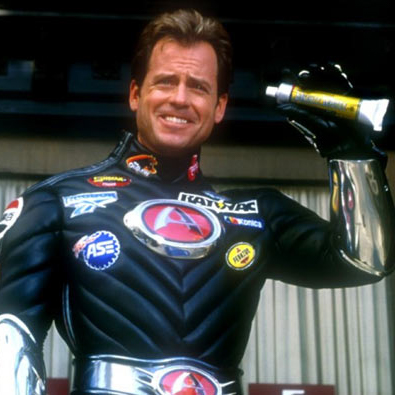
Contribution: Captain Amazing is even less of an official Mystery Men team member than group mentor The Sphinx, but he completes their missions and ungratefully takes advantage of their assistance often enough that I’m lumping him in with the crew.  A vague amalgamation of Batman & Superman (complete with Clark Kent’s magical glasses & Batman’s infinite funding), Captain Amazing is the perfect Handsome Chad counterbalance to official team’s bitterly inert slackerdom.  Greg Kinnear is perfectly cast for the role, weaponizing his generic good looks to play Amazing as a shameless fame chaser who’s more spon-con celebrity than genuine hero.  The visual gag of his superhero uniform being checkered with NASCAR-style sponsor patches feels ahead of its time, fully satirizing the property-protecting fascist leanings of all superheroism years before The Boys would make the same joke.

3. Janeane Garofalo as The Bowler

Superpower: Daddy issues

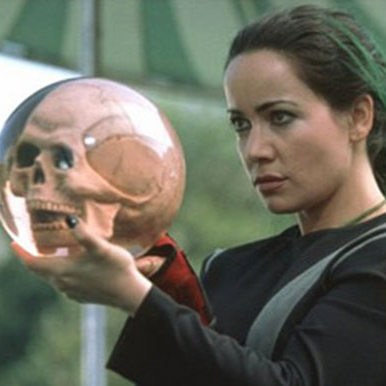
Contribution: The official spokesperson for detached Gen-X cool, Garofalo was the most aspirational character to me as a kid.  She carries around the film’s coolest prop—a sentient bowling ball that suspends her father’s telepathic, browbeating skull in clear resin—while glowering at the world through her trademark black eyeshadow.  She also carries the rest of the cast, establishing chemistry and cohesion among each of her fellow Mystery Men that would be totally absent without her.  Garofalo was reportedly an early believer in the project and put her legitimizing comedy-scene credibility behind Usher’s crassly commercial vision to bring the full production together.  Mystery Men wouldn’t be much of anything without Garofalo, which you could just as credibly say about 90s Gen-X comedy at large.

4. William H Macy as The Shoveler

Superpower: A strong work ethic

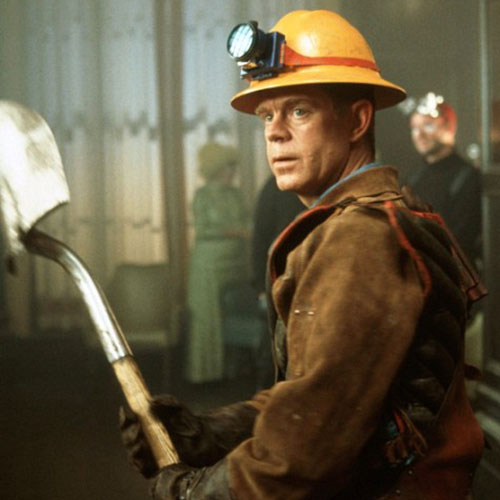
Contribution: In a film starring at least a dozen big-name comedians with selfish ambitions to steal the show, William H. Macy’s straight-man role is an essential tonal anchor, one that becomes its own metatextual punchline the more the film relies on him.  The Shoveler is a no-nonsense hard worker with a loving nuclear family waiting at home.  His supershovel is an off-the-rack “weapon” purchased from a hardware store, which he carries to work with quiet dignity as if her were punching the clock at a construction site.  An accomplished dramatic actor, Macy is overqualified for the role, which is partly why it’s so funny to watch him work alongside so many Looney Tunes lunatics.

5. Kel Mitchell as Invisible Boy

Superpower: Invisible invisibility

Contribution: Invisible Boy’s unconfirmable power to turn invisible only when no one is looking is a genius encapsulation of the Mystery Men’s team-wide ineffectiveness.  The plot’s machinations to engineer a situation where that power could be at all useful, even if only for a second, is also one of the film’s most inspired moments of comic book spoofery.  Most importantly, Kel Mitchell’s casting in the role was a smart marketing move in appealing to 90s kids, to whom All That & Good Burger were the absolute pinnacle of comedy as an artform.  At least that’s how I remember it.

6. Paul Ruebens as Spleen

Superpower: Hideous farts

Contribution: Likewise to Kel’s casting, you could not appeal to children’s comedic sensibilities in the 90s any more effectively than by casting Pee-wee Herman as a revolting superhero with rancid, long-range farts.  The only reason Spleen doesn’t rank higher here is that adults’ patience for his wet lisp & flatulence is stretched much thinner than their kids’, no matter how much of a cultural event it is to catch a glimpse of Ruebens outside his iconic grey suit.

7. Ben Stiller as Mister Furious

Superpower: Impotent white-boy rage

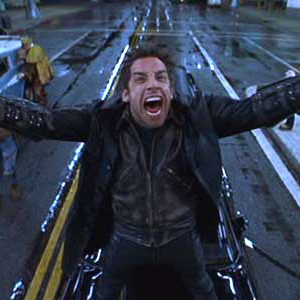
Contribution: Ben Stiller is ostensibly the star of the show, and his career-long rapport with fellow Ben Stiller Show alum Jeneane Garofalo affords Mystery Men a lot of its comedy-nerd street cred.  His heart just clearly isn’t in the project as much as Garofalo’s, and a lot of his stilted improv as an all-rage-and-no-skills Batman knockoff fails to land on any solid laughs.  The joke in the movie is that Mister Furious’s directionless, un-super anger isn’t especially useful to the team, and unfortunately the same is mostly true of Stiller’s chime-ins as the self-elected team leader.

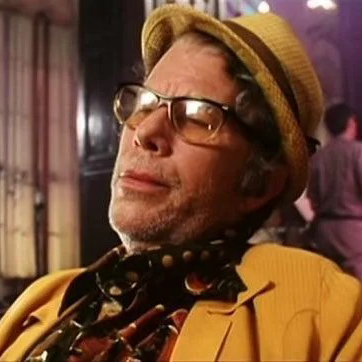
8. Tom Waits as Doc Heller

Superpower: Tech savvy

Contribution: Doc Heller is another unofficial member of the Mystery Men team, but since he supplies the super-underachievers with high-tech weaponry his contributions to their vigilante crimefighting are invaluable.  In entertainment terms, his non-lethal superweapons encourage Usher to indulge in as much 90s-era CGI spectacle as the budget allowed, which helps date the film in an increasingly charming way.  It also means that one of the most notable members of the cast—barstool crooner Tom Waits—is sidelined for most of the action, which is unfortunate, since any amount of his presence contributes to the film’s general Gen-X cool.

9. Hank Azaria as The Blue Raja

Superpower: Fork-throwing

Contribution: Unfortunately, Hank Azaria’s cultural-appropriating silverware tosser is a one-man catchall for all of Mystery Men‘s worst qualities: Stiller’s go-nowhere improv, Ruebens’s grating vocal choices, and the vague threat that the next incoming punchline is going to be an actual hate crime.  Azaria’s onscreen way too much for a performer bringing so little to the table, but thankfully he’s got a full team of much funnier contributors backing him up with much funnier bits.

-Brandon Ledet

Quick Takes: Summer Flings

It’s summertime, which means every movie marquee in America is clogged with corporate slop, and even the more artistic counterprogramming offered at your local multiplex is going to be a frantic superhero IP refresher like Shin Kamen Rider or Across the Spider-Verse.  There’s no refuge for weirdo cineastes in these conditions, which means that I won’t be leaving my couch much until Halloween & Oscars schlock reclaim their rightful screen space in October.  Naturally, I’m still watching movies, but I’m trying to keep everything light & low-key instead of getting my brain hammered smooth by the fast & furious transformer machinery of the summer’s new release schedule. 

As a result, I’ve been watching a lot of quiet indie films about love & romance in recent weeks, none of which will be lighting up my personal Best of the Year list at the end of 2023 but all of which have been a pleasant distraction while soaking up AC at my home box office.  So, here are a few short-form reviews of the smaller-scale, smaller-budget romances I’ve been watching this summer.

Rye Lane

When I try to name the most romantic movies of all time, the walk-and-talk European meet cute Before Sunrise is high on the hypothetical list.  Its 2023 equivalent, Rye Lane, continues the Before brand tradition of casual first-date swooning but shakes up the usual Beformula by transporting the action to the mostly Black neighborhoods of South London.  Meeting by chance at a mutual friend’s hilariously hacky art show, two South Londoners endlessly chat on what spirals into an accidental all-day first date, despite their recent, respective heartbreaks over failed relationships.  Their getting-to-know-you banter is decidedly low-key, but their walking tour of hip city neighborhoods provides a vibrant, near-psychedelic backdrop of food, art, fashion, sex, and music.  One sequence involving a petty heist temporarily raises the stakes (as our giddy couple breaks into an ex’s flat to liberate a vinyl copy of The Low End Theory), but for the most part the will-they-won’t-they tension of their tryst has an obvious, inevitable and, most importantly, adorable conclusion.

Rye Lane offers all of the usual chaotic, inexplicable behavior of a bubbly romcom, except now matched with chaotic, inexplicable camera work.  The whole thing is shot with a Soderberghian fisheye lens, bending a familiar modern comedy template around the constantly surprising visual flourishes of music videos & vintage animation.  Its central hook-up story of a meek man shaken out of his comfort zone by a manic pixie dream hedonist isn’t ever mind-blowing, but its warped visual presentation often can be.  In short, it’s a feel-good Before Sunrise for the Instagram era, and it’s a shame that its direct-to-Hulu distro means it has a much smaller chance of making a splash as that 90s indie-scene charmer.

Emily

Wuthering Heights may be the greatest romance ever written, but its story of life-long ferocious obsession & betrayal isn’t likely to be described as “small” or “low-key” by anyone who’s actually read it.  However, this factually loose biopic of its author imagines a brief, intimate affair that might have inspired its tale of feral, soul-destroying love, dragging it down to the level of a more recognizable, real-world romance.  Emma “Maeve from Sex Education” Mackey stars as a teenage Emily Brontë doing field research (i.e., getting her heart broken) before writing the novel that made her infamous.  According to the movie’s made-up version of events, her source inspiration behind Cathy’s wild, untamed desire for Heathcliff is split between the only two young men in her life: her libertine brother and their isolated village’s local curate. Thankfully, the story never tips into full-on incest (although that wouldn’t be too out of place in a Wuthering Heights context).  Instead, the young Brontë shares a fiery, oft-consummated passion with the clergyman – which is just sinful & blasphemous enough to justify its supposed connection to the novel, especially once the curate breaks her spirit by abruptly breaking things off.

Emily may not be useful as a historical text, but its deviations from the facts of Brontë’s sheltered bookworm life help make it an entertaining tribute to the greatest romance ever penned.  There’s something especially endearing about the way her handwritten prose & poetry are too powerful for the small-minded prudes around her to gaze at directly (including her sister & fellow author Charlotte, whom the film slanders as a proto-Karen scold).  Once a grief-stricken Emily sits down to scribble the entirety of Wuthering Heights in a single, furious tantrum, the fictionalized power of her writing can come across a little goofy, but it helps that the novel in question has stood the test of time as an incendiary work that either enraptures or enrages its readers to this day.  More importantly, the film itself is a gloomy love letter to all angsty goth girls everywhere, often making Brontë’s imagined loves & literary triumphs secondary to her iconoclastic status as a teenage “free thinker” who dabbles in opium, dirty poems, and the occult.  It’s romantic in its portrayal of a doomed fling that can only last a single season, but it’s also romantic in its aspirational posturing as a ghost story about the original shy-girl goth kid who became infamous for her dark-sided art and her intense brooding on the moors.

Sanctuary

It’s not exactly true that there’s no artsy counterprogramming in theaters right now.  In some ways, I’ve just been trained over the pandemic to treat this kind of low-budget, low-stakes movie as a small-screen experience that I’ll eventually catch whenever it hits streaming.  So, I have admittedly shot myself in the foot several times over the past month, skipping out on local showings of Past Lives, Monica, You Hurt My Feelings, and Are You There God? It’s Me, Margaret.  I guess I’ll be cramming in those titles in the mad scramble to bulk up my Best of the Year list in December.  In the meantime, though, I did recently venture out of the house to see the single-room two hander Sanctuary, despite it being no bigger nor flashier than those competitors.  I suppose after already being suckered into watching Piercing, any movie where Christopher Abbott is tortured by a high-class dominatrix is something of an Event Film for me, although I can’t say either example so far has been especially exceptional.  In Sanctuary, Abbott’s pro-domme tormentor is played by Margaret Qualley, who refuses to take “No” for an answer when her millionaire hotel-heir client (Abbott) decides to break off their professional relationship just as he takes over his dad’s business and the real money starts flowing in.  Feeling like he owes his success to her sexual “training” and like their sessions have transcended a purely transactional nature to something more sweetly romantic, she holds him hostage in his luxury hotel suite until he caves and gives her everything her volatile whims demand.

I’m not entirely sure what to make of Sanctuary.  It’s either a disappointingly flat erotic thriller or a charmingly daffy romcom.  Maybe it’s both.  It needed to feel like a finely constructed stage play to fully work, but its ditzy internal logic is written more in the spirit of online erotica.  The result is something like an off-Broadway adaptation of Succession fan fiction (a Roman Roy fantasy, specifically), which can be adorably goofy in the moment but quickly falls apart under any prolonged scrutiny.  I did laugh at the camera movements that simulated the power dynamic flipping between characters by literally flipping the frame upside down (a move that’s coincidentally mirrored in Emily, which enters the twisted mind of Emily Brontë by literally twisting the camera’s zoom-in on her dark goth-girl eyes).  I also chuckled at the baffling, seemingly arbitrary decisions those characters make every few minutes, either to convey the frustration & desperation of someone who’s wildly horny or to convey the frustration & desperation of a screenwriter who doesn’t know how to keep the story going.  I appreciated that Qualley kept the mood light by playing her domme persona bratty instead of severe, but I can’t say that her performance wouldn’t have been better suited for, say, a Rachel Sennott or a Mia Goth or a Mia Wasikowska – one of whom has already proven her worth in this exact Abbott-teasing scenario.  I don’t know.  I’m the exact target audience for this kind of perversely playful filth, and yet I walked away from the theater only mildly satisfied, so I can’t imagine most people will work up much enthusiasm for it.  At least there are no green screen backdrops, and Christopher Abbott isn’t playing a superhero?  Arthouse victories can feel so minor this time of year, but I’m still thankful that they’re out there.

-Brandon Ledet

Where Has All the Millennial Pop Art Gone?

The great, wide world of popular media has done its damnedest to make sure I am nostalgic for the Power Rangers this year.  Between seeing the original mighty morphin’ Rangers resurrected for cheap nostalgia pops in Netflix’s Power Rangers: Once and Always, seeing them spoofed for laughs in Quentin Dupieux’s absurdist horror anthology Smoking Causes Coughing, and seeing the vintage television aesthetics of their Japanese source material echoed in Hideaki Anno’s recent Ultraman reboot, the Power Rangers have been on my mind all year.  Of those relentless nostalgia stokers, Once & Always felt the most accurate to the schlock TV I loved as a kid, in that it’s mostly just subprofessional actors bullshitting around in open fields until actual martial artists who know what they’re doing jump into the frame to save the day.  It rides an uneasy imbalance between rushing out more anonymous background television for children under the Power Rangers brand and comforting those children’s parents with background garbage familiar to their own Millennial youth.  If the one-off reunion special were only 20 minutes long and broken up by toy & cereal commercials it would have been perfectly in step with the way I remember the Power Rangers as my 1990s mechadino babysitters, as if the original show were never cancelled and its teen stars slowly succumbed to death & wrinkles on air week to week for decades on end.  In some ways, I suppose the special itself is the commercial, in that its entire purpose is to re-spark interest in the Power Rangers brand, which has effectively been dormant since its excellent-but-failed franchise starter in 2017.  I’m sure it’s no coincidence that Netflix currently holds the streaming rights for the original Mighty Morphin’ Power Rangers TV series, which officially makes Once & Always, as cheap & underdeveloped as it is, the most effort they’ve ever put into advertising one of their shows to date.  And since most exhausted, world-weary Millennial parents aren’t going to have the time, patience, or awareness to seek out niche, higher quality Power Rangers-adjacent media like Smoking Causes Coughing, they’re going to scratch that nostalgic itch in the quickest, most convenient way possible – never venturing outside what’s available on Netflix.  Not me, though.  I’m different.

Because I’m first & foremost a movie nerd, I had to scratch my mighty morphin’ nostalgia itch by returning to 1995’s Mighty Morphin’ Power Rangers: The Movie.  To my shock, it was not available to stream through subscription, rental, nor library loan despite the opportunity for profit raised by Once & Always, and I had to blow the dust off my early 2000s DVD copy to watch it again.  In a way, I get why the Power Rangers movie would be allowed to slip out of general public access, since it’s getting just as old & dated as it is goofy & vapid.  I was eight years old when I first begged my parents to see Mighty Morphin’ Power Rangers: The Movie in the theater, and so it has always felt like a prestigious cultural event to me when compared to the more casual, tossed-off nature of the television show it was cashing in on.  Everything I loved about the show as a kid was given a high-end upgrade for the big screen, from the teenage superheroes’ regular-size power suits to their kaiju-size mechabeasts.  As a result, it remains an excellent time capsule of the niche bullshit only a 90s Kid™ could possibly care about, starting with a preposterous Star Wars scroll that quickly explains the Power Rangers’ lore as intergalactic teen crimefighters recruited by a noble space alien named Zordon.  Watching it as an adult, I was amused imagining my parents suffering through its endlessly inane babble about morphing, morphological beings, zords, megazords, ninja zords, ectomorians, and electromagnetic deadlock as if any of that means anything to anyone.  Its convoluted lore is all in service of incomprehensibly edited fight choreography, surreally dated CGI, eXtreme sports posturing, and rushed one-liner insults labeling the bad guys “Mr. Raisin Head” (because, as you will surely remember, Ivan Ooze is purple) and “dingledorks” (that one explains itself).  Power Rangers: The Movie is idiotic pop art at its finest, all sloppy live-action cartoon nonsense from top to bottom.  It’s a crowd-pleaser for a crowd of 8-year-olds and, presumably, an extreme bore for their baffled parents, a tension that only gets funnier as the decades pile on and no one age-appropriate is left around to care.  So few people care, in fact, that it’s been allowed to slip into distribution limbo so the only audience who can legally access it are the dingledorks who happened to fish it out of Wal-Mart’s $5 DVD bins two decades ago.

Because I am weak in will & intellect, my 90s nostalgia trip did not end there.  One of the major 90s-specific pleasures of the Power Rangers movie is its tie-in CD soundtrack, which includes contributions form artists as disparate as Van Halen, Devo, The Red Hot Chili Peppers, and Snap!.  As formidable as some of those names are in the music business, though, the soundtrack’s biggest get was “Trouble,” the international breakout hit of British pop duo Shampoo.  I vividly remember the song dominating kids’ media in the 90s, to the point where I still sing its delightfully obnoxious “Uh oh, we’re in trouble, something’s come along and it’s burst our bubble, yeah yeah” chorus to myself every time something minorly inconvenient happens in my daily life.  What I did not remember is that its initial promotion in America was tied so closely to the theatrical release of Mighty Morphin’ Power Rangers: The Movie.  Not only does it underscore a children-only block party at the film’s emotional climax, but it was also domestically marketed through the lost artform of the tie-in music video, featuring the Shampoo singers dancing in Deee-Liteful psychedelic voids alongside the Power Rangers and their neurotic robo-sidekick Alpha5.  A proper DVD release of Mighty Morphin’ Power Rangers: The Movie would have included that music video as a Bonus Feature, but my Wal-Mart discount bin copy instead includes a useless “Behind the Scenes” advertisement for the film where Amy Jo “Pink Ranger” Johnson bravely compares her big screen debut to the special effects spectacles of Star Wars & The Wizard of Oz.  Thankfully, the Power Rangers version of the “Trouble” music video was at least uploaded to YouTube where, as of this posting, it can be enjoyed in glorious, grainy 480p.  This indulgence, of course, led me down an entirely new 90s-tastic pop culture rabbit hole as I allowed Shampoo music videos to autoplay after the sassy Brits were done dancing alongside their new intergalactic crimefighter friends.  What I discovered was that Shampoo has a deep, rewarding catalog of post-riot grrrrl, pre-Girl Power classics that never reached the US with the same ferocity that “Trouble” managed to, partially because they could not call on the power of the mega ninja zords to boost their signal every single.

The commonly accepted narrative is that Shampoo never made it as big as they could have because they were immediately eclipsed by an intense international obsession with the Spice Girls, who smoothed out the smaller group’s rougher, punker edges into pure bubblegum pop.  The real heartbreaker there is that Shampoo even had a single called “Girl Power” that debuted only one week before the Spice Girls broke out with “Wannabe”, which is a shame since “Girl Power” opens with the lyrics “I don’t wanna be a boy, I wanna be a girl. I wanna do things that will make your hair curl.  I wanna play with knives. I wanna play with guns.  I wanna smash up a place just for fun.”  It’s wonderful.  I don’t mean to mourn Shampoo’s premature downfall at the expense of shading the Spice Girls, though, who were just as substantial superheroes in my childhood mind as the Power Rangers, thanks specifically to the strength of “Wannabe” and to the group’s own cash-in pop art movie Spice World.  Tragically, Spice World is also currently unavailable to rent or stream through legal means in the US, so I again had to blow the dust off an ancient DVD copy from my modest collection – this time presented in a luxurious Full Screen frame.  Although my DVD copy is “guaranteed” to be “packed with girl power” in a way no streaming service would dare to ensure, I still find the state of the film’s availability to the general, streaming-service-reliant public shameful.  Way more shameful than the lost-to-time Power Rangers movie, even, since Spice World is a much more competently made, purposefully goofy artifact of 90s kitsch.  It plugs the Spice Girls into a high-femme variation on A Hard Day’s Night, sending the 90s pop group on episodic, for-their-own-sake adventures where they get to be immensely charming on camera while interacting with Elton John, James Bond, Bob Hoskins, Riff Raff, and other various space aliens.  Its most pivotal scene is a montage where the girls cosplay in different cute outfits that don’t quite fit their individual vibes and then switch around personas by cosplaying as each other in a playful pop art photo shoot.  Spice World is cute, it’s joyful, and the only reason it isn’t more beloved as an MTV era pop art classic, really, is that the MTV-produced Josie and the Pussycats movie bested at its own game just a few years later.  Well, that and it’s got a shamefully shitty post-DVD distribution history in the US.

My rapid spiral into full 90s nostalgia was finally sated by the time I revisited Spice World (and then—full disclosure—rewatched all available Shampoo videos a second time through).  Although it’s heavily indebted to the pop art past of Swingin’ 60s London, it’s an aesthetic object that could have only existed in the period when I was most media obsessed as a child, which is where we all tend to retreat when we’re looking for comfort in cinematic junk food.  In the process of pulling out both my Spice Girls & Power Rangers DVDs, though, I did a quick inventory of what other childhood junk media I own that’s not currently streaming.  One title that jumped out at me was the movie version of The Worst Witch, which stars a young Fairuza Balk and features the heavily memed “Anything Can Happen on Halloween” musical number performed by Tim Curry against surreally cheap green screen effects.  You’ll likely always be able to watch that music video tangent out of context in low-res YouTube clips alongside your favorite Shampoo jams, but if you want the entire Worst Witch movie available to you at all times for a full warm bath of 90s Kid™ Nostalgia, you have to resort to illegal torrents or purchases of used physical media.  I was also reminded in this process that I ran into friends at French Quarter Fest a few weeks ago who said they had recently watched the animated Super Mario Bros movie that’s currently dominating the box office and were dismayed afterwards that they could not access the live-action adaptation of the video game that alienated the world when we were children (despite being a Power Rangers-level camp classic in my mind & household).  I, of course, offered to lend them my DVD copy, which was a service they could not even access through the public library.  Plenty of the other pop art novelties fron my youth I’m holding onto are currently streaming in higher quality than you’ll find on my used Blockbuster & thrift store DVDs: Howard the Duck & Teen Witch (Tubi), Big Time Pee-wee (Showtime), Barb Wire & Teenage Mutant Ninja Turtles II: Secret of the Ooze (VOD), etc.  Any of those statuses might change as soon as next week, though. The illusion that everything we could possibly want or need to watch will always be available to stream at home is being constantly undermined, but it’s especially absurd when titles promoted & regurgitated by contemporary nostalgia stokers like the new Power Rangers & Super Mario Bros movies aren’t conveniently offered to the consumers being targeted.

-Brandon Ledet

Giving Aster Enough Rope

I’ve been getting lazy about how & why I group films together in these self-published reviews.  My methodology boils down to comparing movies I happened to see around the same time regardless of their genuine connections, which is why I’m about to unfairly compare A24’s poster Enfant Terrible against The Master of Suspense.  I happened to watch Ari Aster’s latest crowd-troller Beau is Afraid on the same day (and the same bus line) as Hitchcock’s dinner party thriller Rope, which recently screened in The Prytania’s Classic Movies series.  Watching such a messy, sprawling odyssey so soon after seeing Hitchcock at his tightest & most controlled didn’t do Beau is Afraid many favors, but the comparison was more damning to the way the movie industry has changed in recent decades than it was to the young filmmaker working in that hellscape.  This blog post isn’t an argument in favor of returning to the clockwork Studio System that propped Hitchcock up for cinematic worship & infamy, or at least that’s not how I intend it.  What I’m more interested in is the pressure imposed on these two filmmakers by their public to deliver historic greatness with every single picture, a cultural impulse that’s become exponentially hyperbolic with the modern invention of online movie fandom – something Hitchcock was lucky to die before witnessing.  When Ari Aster makes a movie that alienates his audience, fanboy freaks vocally rage against the screen, demanding that the studio executives at A24 be “held accountable” and that no fellow patrons in the theater “better fucking clap” in appreciation.  By contrast, Hitchcock didn’t make much of a name for himself until his third feature film, the silent Jack the Ripper thriller The Lodger, which did already have some hyperbolic critics declaring it “the finest British production ever made” but didn’t inspire widespread audience obsession with the boardroom politics of the studio that greenlit it, Gainsborough Pictures. Once Hitchcock really was directing the finest thrillers ever made, he had dozens more titles behind him.  Rope was his 37th feature film; Vertigo was his 47th; my personal favorite, Psycho, was his 49th.  Ari Aster will never reach those numbers with this kind of A24 fanboy scrutiny pressuring him to outdo himself with every project, a problem I’m only compounding by comparing him to a master of the artform.  If anything, it feels as if Aster’s artistry has already imploded under the pressure just three features into his career.

I enjoyed Beau is Afraid.  Lately, I’ve been struggling to get onboard with Charlie Kaufmann-style journeys into the artist’s mind, having been disappointed by big-swing solipsism epics like I’m Thinking of Ending Things, The House That Jack Built, White Noise, and Under the Silver LakeBeau is just as guilty of tedious self-obsession as those overlong annoyances, especially as Aster uses Joaquin Phoenix’s put-opon avatar as an excuse to voice his own struggles with Anxiety, Guilt, and Mommy Issues.  The visualization of those struggles is often darkly hilarious, though, literalizing an anxious introvert’s fears so that the world looks as hellish as it feels to navigate.  I appreciated Beau is Afraid most for its big-picture statements on modern life, not its insular ruminations on life inside Ari Aster’s head.  In its most powerful form, it’s a grotesque caricature of modern American paranoia, taking a misanthropic view on everyone from violent urban maniacs to suburban security freaks to self-absorbed artists & off-the-gridders to the outlandishly cruel ultra-rich.  We’re all monstrous & unworthy of love in our own way, at least as portrayed in this elaborate Aristocrats joke at our expense.  At the same time, I’m not convinced that Aster was fully ready to make a statement that grand & all-encompassing.  He’s still finding his voice as an artist, and yet he’s already blurting out everything he has to say just in case he’s never handed a microphone this loud again.  Beau is Afraid drips with the desperation of a filmmaker who doubts he’ll ever get the opportunity to make another picture on its scale, so he better exorcise all thoughts about life inside & outside of his skull lest they be trapped forever.  And if the studio-obsessed C.H.U.D.s in the audience who are throwing literal rotten tomatoes in his direction had their way, he’d be proven right.  Aster belongs to a small class of young, instantly famous filmmakers who are carrying immense anticipation to deliver an era-defining classic with each subsequent project, joined only by the likes of Robert Eggers & Jordan Peele.  It even feels perverse to say that I enjoyed Beau is Afraid just fine; it was neither the greatest nor the worst movie I saw this past week, much less the greatest or worst movie of all time.  That kind of mixed-but-leaning-positive reaction can’t take up much real estate in modern movie discourse, though, not while violent nerds are calling for Aster’s head on a pike, acting exactly like the crazed ghouls they just watched onscreen.

In a way, Rope is just as showy & virtuosic as Aster’s latest; it’s just much less desperate.  The thing most audiences remember about Hitchcock’s real-time howcatchem is its early prototype of the single-shot stunt film, which would not be practically possible until movies went digital.  Restrained by the length of his film reels, Hitchcock cleverly “hides” his cuts to simulate the experience of one, unbroken 80-minute take.  Only, he doesn’t really.  Most of the “hidden” cuts are shamelessly blatant zoom-ins on the back of the same character’s dinner jacket, as if Hitchcock were so confident that his audience would follow along for the ride that he felt no need to impress us with variations on the gimmick.  He finds other ways to show off without ever leaving the loft, gliding the camera to expertly timed character observations and shoehorning in his trademark onscreen cameo as a neon silhouette in the apartment window.  What most impressed me watching it with an audience on the same day I watched Beau is Afraid is that it managed to provoke the exact reactions Aster was looking for without ever making a big show of it.  Hitchcock had the audience laughing at cruelty & violence against our better judgement.  Speaking personally, he also took me on a journey of immense interiority, clashing both sides of my personality against each other onscreen: the flamboyantly wicked artist Brandon & the timid, guilt-ridden Cancer who ruins all his plans.  Those two unlikely murderers strangle an acquaintance they consider intellectually beneath them in the very first screen, purely for the perverse pleasure of the act.  Then they throw a dinner party on top of his corpse, earning big laughs out of the morbid tension of their misdeeds with every bitchy academic ice-queen bon mot at his expense.  Even knowing the story could only end one glaringly obvious way, I had the time of my life riding the tension to that predetermined destination, and I’d much sooner return to the theater to rewatch that glorified stage play than I would Aster’s Herculean attempt to capture everything everywhere all at once in a single, unwieldy container.  Rope somehow really was one of the greatest films I’ve seen in my life. It was also a routine matter of course for its director, who was just trying to deliver his 3-dozenth entertaining genre picture, not a flailing attempt by an upstart youngster trying to deliver one of the all-time-greats right out the gate.

As I already acknowledged, I’m contributing to the exact problem I’m citing here by comparing Aster to such a Film Studies syllabus titan, but I can’t help that the comparison is what happened to be on my mind that sunny Sunday afternoon.  I’m an indoor kid, and I chose to hide from the beautiful weather in two different movie theaters on different sides of town, despite the hellish experience of interacting with strangers along the way.  I at least hope that this aimless, self-defeating rant is somewhat in the spirit of Beau is Afraid, a film I can’t seem to write about any more clearly or directly.  I also hope, against all logic, that Aster gets to make dozens more aimless, self-defeating rants just like it so that he fully develops his craft and—sometime in the 2040s—gets to make his batshit epic equivalent of Rope when he’s at his most confident & efficient.  It’s a lot more likely that audience pressure & hyperbole will make that ideal outcome impossible, though, so I suppose it’s for the best that he settled for making a pretty good version of that movie now while he has the chance.

-Brandon Ledet

Bonus Features: Will Success Spoil Rock Hunter?

Our current Movie of the Month, 1957’s Will Success Spoil Rock Hunter?, finds Jayne Mansfield at the height of her manic bimbo superpowers.  Mansfield already strutted her outrageous proportions & bubbly-ditz persona to great comedic effect in her first collaboration with Looney Tunes legend Frank Tashlin, 1956’s The Girl Can’t Help It, but she wasn’t allowed to step outside her usual cultural designation as the Great Value™ Marilyn Monroe in that picture.  In Rock Hunter, Mansfield finally strayed far enough outside Marilyn’s looming shadow to pioneer her own territory in high-femme comedic vamping. Mansfield is pure bimbo mayhem in Rock Hunter, turning every inhale of breath into an orgasmic squeal and every costume change into a mind-blowing reveal.  Instead of playing an exaggeration of Monroe, she’s playing an exaggeration of herself – complete with verbal, metatextual references to her Girl Can’t Help It stardom.  It’s like watching a pro wrestler get assigned a go-nowhere, bad-vibes gimmick and then somehow win over the crowd by playing it as a ludicrous self-caricature.  It’s the film where she out-Marilyned Marilyn to such an absurd extreme that the comparison is obliterated entirely. 

No viewing of Will Success Spoil Rock Hunter? is complete without also having seen its rock ‘n roll sister film The Girl Can’t Help It, but if you’ve already graduated from The Frank Tashlin School of Jayne Mansfield Studies, there’s still plenty more of Mansfield’s career left to explore.  Mansfield has a few dozen credits to her name on IMDb, ranging from dead-serious noirs to ribald slapstick comedies.  None that I have seen can compete with the sublime silliness of her collaborations with Tashlin, but there’s still more to Mansfield’s screen persona than those two consecutive roles.  So, here are a few recommended titles if you enjoyed our Movie of the Month and want to bask in more of her weaponized bimbo glamour.

The Wayward Bus (1957)

In 1957’s The Wayward Bus, Mansfield plays a famous stripper on the run, dodging unwanted nudie magazine notoriety on a bumpy bus trip down to a Mexican hideout.  That makes the film sound a lot lighter & sillier than it is in practice, which is evident as soon as the title card announces its literary prestige as “John Steinbeck’s The Wayward Bus,” a serious drama for serious adults.  Mansfield stars opposite several character actors running away from their problems on the titular Sweetheart bus (including a young Joan Collins as the bus driver’s violently alcoholic wife), but much of the drama revolves around how difficult it is for her fellow passengers to avert their eyes from her striking figure.  It’s both the only movie I’ve seen where Jayne Mansfield was actually asked to Act, and the only one where her outrageous silhouette was treated as a liability instead of a superpower.  A sordid little stage drama set in motion by the magic of rear protection in the bus’s windows, The Wayward Bus suffered a long line of production delays that eventually made room for Mansfield in the cast after cycling through bigger-name actors like Marlon Brando, Gene Tierney, Joanne Woodward, Robert Mitchum, and Shelley Winters, despite being a relatively standard-issue studio picture.  That delay was a blessing in giving Mansfield some space to test out her dramatic chops, but also a curse in that it pushed its release to one year after Monroe’s similar roadside noir Bus Stop – to which it was inevitably, unfavorably compared in the press.

Too Hot to Handle (1960)

Mansfield also plays a jaded, troubled stripper in 1960’s Too Hot to Handle (alternately titled Playgirl After Dark), but she’s not asked to be as dramatically vulnerable here.  Her character has graduated from stripper to stripper-manager at the seedy nightclub The Pink Flamingo, run by her doomed gangster boyfriend (and Christopher Lee as the gangster’s disturbingly young, handsome, mustachioed right-hand man).  In genre terms, this film finds Mansfield working in the sex comedy realm that made her famous, but its British sensibilities afford it more of a dry martini-soaked sarcasm than what you’ll find in Tashlin’s sugar-addled farces.  With underplayed zingers like “That’s a very nice dress you’ve nearly got on,” it’s not a knee-slapper so much as it’s a muted chuckler, and so Mansfield gets a chance to tone down her absurd femme-caricature persona to a smokier, more detached register.  Even if not consistently hilarious, it’s shocking that this day-drunk British noir bothers to be as wryly funny as it is, since its main attraction is obviously the opportunity to watch Jayne Mansfield model outrageously tight, see-through outfits while puffing on the world’s longest cigarette holder.  Self-billed as an “expose of sexy, sordid Soho, England’s greatest shame,” the film relies heavily on her physical presence to attract an audience, going as far as to rile up censors with completely transparent gowns that got it harshly edited in America.  The fact that it manages to land a few one-liners on top of that drunken burlesque act is just lagniappe.

Promises! Promises! (1963)

It turns out see-through gowns are not enough to keep your horndog audience coming back forever.  Eventually, you’ve got to take off the gowns entirely.  While Mansfield reached her highest artistic peaks in her Frank Tashlin collaborations, she might be better known for her starring role in the mainstream nudie cutie Promises! Promises!, which delivered on its Playboy-publicized promise to become the first sound-era Hollywood film to feature a nude female star.  In the very first scene of Promises! Promises!, Mansfield is introduced taking a bubble bath, making sure to rise above the suds just enough to give the audience a full look at her outrageous, unclothed figure.  In the next, she disrobes of that pretense, going shamelessly topless as if Russ Meyer were leering behind the camera.  Unfortunately, the rest of the picture does not have the magic Russ Meyer touch.  You might wonder what this cornball sex comedy is going to do with its remaining 70 minutes after it gets Mansfield’s publicity-stunt nude scenes out of the way in the first 4.  The answer, apparently, is shamelessly repeat those same images in clunky dream sequences to milk them for all their worth.  The schticky German psychologists, sissy hairdressers, and stock footage of cruise ship shuffleboard players that pad out the rest of this farce are desperate & dire, and the only genuine fun to be found in the entire picture is in Mansfield’s two brief, breathy musical numbers.  Still, being the first actress to go nude in a mainstream, post-Hays Code Hollywood is a major distinction Mansfield could claim that her professional superior Marilyn Monroe could not (if not only because Monroe’s own attempt at that ground-breaking achievement, Something’s Got to Give, was derailed by the star’s tragic death). Unfortunately, that only helps relieve some of the sting of Marilyn’s own boat-ride farce Gentlemen Prefer Blondes being one of the most beloved comedies of all time while Promises! Promises! is mostly just a giant pile of ship.

-Brandon Ledet

Movie of the Month: Will Success Spoil Rock Hunter? (1957)

Every month one of us makes the rest of the crew watch a movie they’ve never seen before, and we discuss it afterwards. This month Brandon made Boomer, Britnee, and Alli watch Will Success Spoil Rock Hunter? (1957).

Brandon: Maybe it’s time to let Marilyn Monroe rest for a bit.  After decades of simmering her legacy on the backburners of dorm room posters & TCM reruns of Gentlemen Prefer Blondes, we’ve been wringing Monroe’s memory pretty hard for its few remaining drips of glamor & despair.  Andrew Dominik’s torture-porn biopic Blonde recently gave Monroe the full Passion of the Christ treatment; Ana de Armas has claimed that Monroe’s ghost has been haunting her since taking on that role; and Kim Kardashian has been raiding & altering Monroe’s actual, real-life wardrobe for an especially morbid version of red-carpet cosplay.  It’s too much.  Monroe does not need her legacy to be refreshed, revamped, or reexamined on a regular basis; her eternal icon status has been secure since as far back as Andy Warhol screen-printing endless matrices of her face to commemorate her death over a half-century ago.  Unless we’re going to bring Monroe up to praise her acting talents—which are still too often outshined by praise for her beauty—there’s really no reason to bring her up at all.  Let her rest.

Someone who could use a modern reassessment is the far less respected but equally tragic Jayne Mansfield, who has mostly been remembered as a cheap imitation of Monroe, when remembered at all.  Mansfield was often cast and marketed as the Great Value™ Marilyn Monroe alternative even in her time, but she did manage to push her screen persona beyond that rigid typecasting to become her own distinct, wonderful thing.  I always thought of Jayne Mansfield as someone who starred in a couple minor roles before her life & career were abruptly cut short in a horrific car accident, but she’s got a few dozen credits to her name on IMDb—ranging from dead-serious noirs to ribald slapstick comedies—most of which have nothing to do with her designated place in Marilyn’s shadow.  Obviously, few people are as eager to devour Mansfield’s dozens of acting credits as they are to devour Monroe’s, but at the very least I think more attention should be paid to her two most iconic performances: her collaborations with Looney Tunes legend Frank Tashlin. 

Mansfield & Tashlin’s first film together, the 1956 rock-and-roll comedy The Girl Can’t Help It, is the ultimate example of a movie studio pigeonholing Mansfield as a Monroe stand-in instead of allowing her to be her own thing.  Monroe made her secretly-smart-ditz schtick look so easy that you can only tell how tricky it is when someone else bungles it.  Mansfield is adorable as the drag club caricature of that archetype in The Girl Can’t Help It, though, and it’s amusing that her … questionable talents are essential to the plot of that starring-role debut.  She plays the reluctant girlfriend of a gangster who’s forcing her into a nightclub-singer career she does not want (or even have the talent) to pursue, which mostly just allows Tashlin to interject the story with standalone concert performances from Little Richard, Fats Domino, The Platters, and the like.  Mansfield looks fantastic in her snatched-waist wardrobe—an effect wonderfully compounded by the endless supply of horndog men who make cartoon wolf-eyes at her, milk boiling out of their bottles & popcorn popping out their bags like premature ejaculate—and her breathy obliviousness is a delightfully absurd exaggeration of retro femininity.  It just sucks that the comparisons to Monroe’s similar not-so-ditzy ditzes are so unavoidable, since Mansfield’s character & performance are not allowed to have the same depth & nuance as Monroe’s most iconic roles.

It wasn’t until her next Tashlin collab, the 1957 ad industry satire Will Success Spoil Rock Hunter?, that Mansfield really came into her own as a screen persona.  Her drag-club Marilyn caricature is adorable enough in The Girl Can’t Help It, but she pushes the act to such a transcendent extreme in the next film that the comparison is obliterated entirely.  Mansfield is pure bimbo mayhem in Rock Hunter, turning every inhale of breath into an orgasmic squeal and every costume change into a mind-blowing reveal.  Instead of playing an exaggeration of Monroe, she’s playing an exaggeration of herself – complete with verbal, metatextual references to her Girl Can’t Help It stardom.  It’s like watching a pro wrestler get assigned a go-nowhere, mood-killing gimmick and then somehow win over the crowd by playing it as a cartoonish extreme.  Even the teen girls of Rock Hunter have a crush on Mansfield, not just the men passing by, and you feel that lasting Ultimate Bimbo legacy influence future women who’ve played that same archetype (notably including Elvira, whose pet poodle in Mistress of the Dark was likely an homage to Mansfield’s here).  Tashlin matches Mansfield’s nuclear zaniness in his direction of Rock Hunter too, firing off rapid-fire sex jokes and TV commercial parodies as if he were consciously bridging the temporal gap between The Marx Brothers and ZAZ.  In retrospect, The Girl Can’t Help It feels like a trial run for the film where they really set out to cut loose, which tracks with the knowledge that Rock Hunter started as a Broadway stage play (also starring Mansfield) before The Girl Can’t Help It was developed.  I could recount the details of its barebones sitcom plot here, in which a movie star babe (Mansfield) fakes a tabloid-friendly romance with a schlubby ad executive (Tony Randall) in order to make her beefcake boyfriend Bobo jealous, but plot is far beside the point.  The entire film only exists in service of celebrating Mansfield as a unique screen persona and allowing Tashlin to stage chaotic, live-action Looney Tunes gags.

I understand, logically, why The Girl Can’t Help It was the Tashlin-Mansfield collaboration that landed a spiffy new Criterion restoration.  There’s a distinct pop-art iconography to it that is undeniably potent, as indicated by the homage of its titular, eye-popping strut in Pink Flamingos (which also got a Criterion polish last year).  It’s very proud of its technical beauty, bragging about its indulgences in “the grandeur of Cinemascope” and “the gorgeous, lifelike color of DeLuxe” in its William Castle-style intro.  It’s clear to me, though, that Tashlin & Mansfield were at their absolute best in their latter collaboration, which exaggerates everything that’s great about The Girl Can’t Help It to a beautifully ludicrous extreme.  Will Success Spoil Rock Hunter? taught me how to appreciate Jayne Mansfield as her own distinct persona, breaking her out of the Marilyn Monroe impersonator box I used to store her in (despite her Rock Hunter character being written as a spoof of Monroe’s performance in The Seven Year Itch).  Did y’all have a similar experience?  Did y’all also walk away from Will Success Spoil Rock Hunter? ready to worship at the altar of Jayne Mansfield, giving Monroe’s much-visited gravestone a much-needed break?

Boomer: You’re probably not going to like this answer very much. I thoroughly enjoyed Will Success Spoil Rock Hunter?, but for me, Mansfield’s performance was the thing that I liked least about it. Every time she did a new outfit reveal or va-va-voomed into the scene with her poor dyed dog in tow, I got very excited about the scene to come, but as soon as she let out one of her distinctive nail-on-chalkboard squeals the effect was ruined for me, as every goose pimple on my body swelled and my teeth ground together of their own will. For my money, the worst scene in the entire movie is when Rock’s girlfriend Jenny (Betsy Drake) does her own impression of that dolphin-in-mortal-pain screech, since it’s clear that it’s just a recording of Mansfield played out of sync with Drake’s mouth movements, making it doubly painful. 

Don’t let my description of that hellish, blood-curdling, hellish, glass-shattering, hellish noise in the above paragraph fool you, though; I really enjoyed this one. For some reason I’ve always thought that Will Success Spoil Rock Hunter? was queer somehow, and not just because it seemed to name the main character for the two great closet cases of Hollywood’s golden era, Rock Hudson and Tab Hunter. When I was old enough to spend the day at home alone as a kid but was still too young to get into any real trouble, I spent my unmonitored days completely engrossed with television: wake up and watch Lost in Space on Sci-Fi, then The Carol Burnett Show on The Family Channel, then the USA morning block of syndicated sitcoms that started with Wings and included various short-livers like Something So RightThe Naked TruthWorkingJesse, etc., then over to Law and Order on A&E, followed by an hour-long block of The Odd Couple before One Day at a Time came on E! (explains a lot, doesn’t it?). I really enjoyed The Odd Couple, because I saw something of myself in Tony Randall’s iconic performance as the obsessively clean Felix Unger, who was counterposed with the filthy laziness of Jack Klugman’s Oscar Madison. Even though the show’s concept was that both men were living as roommates after their mid-life divorces and many plots revolved around one or the other going on dates with girlfriends both short and long term, Randall portrayed Felix in a playfully effete way that always made me feel like the show was dancing around its subtext for reasons of censorship. This did make it a little difficult for me to buy Rock Hunter as a hetero leading man in this, which is doubly surprising given that I looked him up and discovered that he was straight in real life (so straight, in fact, that he had a son in the late nineties at the age of 78, the old dog). 

I don’t have any hard and fast rules about whether or not I read the prompts for these MotM roundtables before I watch the movie we’re going to discuss; there’s often value in seeing what one of the other critics thought about the film (especially if it’s their submission) so I have that framework going into the screening, but I also (in general) like to go into most movie viewings with as little knowledge as possible, since I think it’s more fun that way. Discovering that Brian Jordan Alvarez was in M3GAN by seeing the movie (my friend: “Caleb Gallo is in this?!”) was a lot more fun than going in with the expectation that he’d show up. For this one, I’m glad I watched the movie first, since I’m not sure I would have enjoyed it as much or had the same experience if I had gone into it with Mansfield so firmly lodged in the forefront of my mind. To be honest, if this hadn’t been the prompt, I might not have mentioned her at all (already, my mind is suppressing the memory of her scenes so try and get that nightmare audio down into the dark recesses of my mind alongside my various other traumas). Other than her appearance in the opening credits, it takes ten minutes for her to reappear on the television that Rock’s niece April (Lili Gentle) is watching. This scene is also her best, as she engages in effortless, oblivious wordplay via misunderstanding the meaning of the words that her attendant Violet (Joan Blondell) exchanges with local media. Rita is actually very funny and Mansfield does a great job with the material (her non-advertising advertisement for Stay-Put at the end is a perfect capstone), but she wasn’t what drew me into the picture most. As funny as she was, I much preferred the sight gags that lend this movie its cartoonish feeling – not just exploding bags of popcorn and smoking pipes, but bizarrely-bent arms as the result of too many push-ups and a water cooler that gurgles along with a song in a psychedelic office sequence. I am curious enough about The Girl Can’t Help It to check it out, though, although I might have to turn it off if there’s more of that trilling hell sound. 

Britnee: I’ve known about Jayne Mansfield for a long time. Not because of her acting career, but because of her iconic photos where she’s either holding her precious chihuahua or letting her areolas slip out of her low-cut silk dress while catching side-eye from Sophia Loren. She is an obvious major influence on the modern day bimbo aesthetic (which I am fascinated by), and I’m so glad to get to know her more by dipping into her short-lived acting career. I absolutely loved Will Success Spoil Rock Hunter? I had a lot of laughs and gasped for breath every time Jayne appeared in a scene. Her presence is so bold, and her wardrobe is absolutely stunning. I’ve been re-watching earlier seasons of Ru Paul’s Drag Race, and there’s such an obvious connection between Jayne’s form-fitting gowns in the film and what Ru wears on the runway. Not even just the gowns, but Ru’s hair, silhouette, and catwalks are spot-on to Jayne’s Rita Marlowe character.

I could gush on and on about Mansfield’s look and stage presence, but she’s so much more. She’s a comedy queen! I love that she elevated the character of Rita into an over the top cartoonish bimbo. She leaned into the campiness of Rock Hunter and stole the show. I can’t help but think of the scene where she’s on the phone while getting a massage as a perfect example of how she is really smart at being ridiculous. Rock Hunter is desperately trying to get her to endorse a lipstick brand, while she’s trying to make her boyfriend jealous by over exaggerating his success. She doesn’t skip a beat, and each word flows so naturally. It’s such a shame that we lost her so early. Can you imagine what sorts of films she would’ve made in her 70s? Another Mae West for sure!

Also, I love that she was reading Peyton Place in her iconic bubble bath scene, which is the novel our previous Movie of the Month was based on. Everything in the Swampflix world is so connected!

Alli: I agree that we should give poor Marilyn a break. I love her as an actress and as a bi-con (an iconic bisexual), but society has been fairly ghoulish about her lately. I have to admit that while I’ve been familiar with her name and style I haven’t had as much experience with Jayne Mansfield as an actress, but I very much enjoyed this. I love her exaggerated bimbo act. It was just bubbly enough while also not being overly polished, so it just seemed like she was having a good time. It’s very infectious and cute as heck. Her performance perfectly fit in with the self-aware tone of the movie.

I like that nothing about this movie takes itself seriously. From the beginning we’ve got an outrageous opening with Tony Randall introducing the film as himself and then switching over to in-character narration. Then there’s the string of parody commercials overloaded with wonderful visual gags. Not to mention Jayne Mansfield’s performance, a break in the middle so that TV-watchers don’t feel left out, suggestive popcorn popping and, as Boomer mentioned, the surreal celebration Hunter has in the middle of the night in his office at the movie’s climax. Just an amazing spoof throughout. Yes, Jayne’s comic performance takes the cake here, but no one else is a slouch, especially not Tashlin’s writing. 

Piggybacking off of Boomer again, I was also surprised that this movie is mostly straight. I was expecting some queer coding given the title, and that might have been my only disappointment. I started out with some hope given the niece’s absolute obsession with this total babe of a movie star, complete with the wall above her bed being covered in photos of Mansfield. Nothing about that bedroom decor screamed straight to me at all, but alas, it only amounted to a jab at teenage obsession with celebrity. 

Lagniappe

Alli: I really loved the dance scene in the club. It was so great. Oftentimes in club scenes, everyone is a graceful and wonderful dancer, but not here. Here they are a bunch of realistic white people who have no clue what they’re doing. They’re giving it their all, though, so B for effort and enthusiasm.

Brandon: To preserve our friendship, I’ll be brief in rebutting the despicable things Boomer said about Mansfield’s vocal performance above. I’ll concede that it’s absurdly shrill, but I believe that was very much the intent, and it was used to brilliant comedic and, in a roundabout way, feminist effect. I wouldn’t change an impossibly high note of it.

Britnee: Apparently, there’s a made-for-TV movie called The Jayne Mansfield Story starring the one and only Loni Anderson as Jayne and Arnold Schwarzenegger as Mickey Hargitay. I haven’t seen it, but it sounds like my kind of train wreck. It’s only a matter of time before it lands on Tubi.

Boomer: I would be remiss if I didn’t point out that the Tres Chic shampoo girl seen in the film’s opening is played by none other than Majel Barrett, aka Mrs. Gene Roddenberry, aka Nurse Chapel, the voice of the Enterprise computer, and Lwaxana Troi. This was apparently her first role and she went uncredited. I’ve never actually seen (or heard) her in anything that wasn’t Star Trek related, so this was a very pleasant surprise and immediately endeared me to the film. I also have a fondness for John Williams, who plays the would-be-horticulturist for whom Rock works; he appeared in ten episodes of Alfred Hitchcock Presents, including some undeniable classics like “The Rose Garden,” “The Long Shot,” and “Banquo’s Chair.” 

Next: Boomer presents A Night in Heaven (1983)

-The Swampflix Crew
Identity & Artifice @ Overlook Film Fest 2023

After I happened to spend an entire day watching horror movies about motherhood at this year’s Overlook Film Fest, I found myself searching for patterns in the festival’s programming wherein the movies were communicating with each other just as much as they were provoking the audience.  I didn’t have to squint too hard at my next double-feature to see their thematic connections, since the word “artifice” was already staring back at me in the first film’s title.  My third & final day at this year’s Overlook was all about the tension between identity & artifice, and how the latter obscures the former.  In the philosophical sci-fi horror at the top of that self-programmed double bill, the opaque surface of artifice is stripped away to reveal a complex, futuristic sense of identity underneath.  In the true crime documentary that followed, the surface of artifice is removed to uncover no discernible human identity at all, which makes for a much bleaker, scarier reveal.  Please forgive me for the inanity of reporting that this is an instance where the truth is stranger than fiction; I watched these particular movies hungover in a chilly downtown shopping mall, and I’m not sure my brain has fully recovered from watching two twisty thrillers about the complexities of human identity in that hazy state.

That morning’s theme-unlocking opener, The Artifice Girl, is a well-timed A.I. chatbot technothriller, turning just a few actors running lines in drab office spaces into a complex study of the fuzzy borders between human & artificial identity.  Approached with the same unrushed, underplayed drama as the similarly structured Marjorie Prime, The Artifice Girl jumps time frames between acts as the titular A.I. chatbot is introduced in her infancy, gains sentience, and eventually earns her autonomy.  She is initially created with queasy but altruistic intentions: designed to bait and indict online child molesters with the visage of a little girl who does not actually, physically exist.  As the technology behind her “brain” patterns exponentially evolves, the ethics of giving something with even a simulation of intelligence & emotion that horrifically shitty of a job becomes a lot murkier.  By the time she’s creating art and expressing genuine feelings, her entire purpose becomes explicitly immoral, since there’s no foolproof way to determine what counts as her identity or free will vs. what counts as her user-determined programming.  The Artifice Girl does a lot with a little, asking big questions with limited resources.  The closest it gets to feeling like a professional production is in the climactic intrusion of genre legend Lance Henriksen in the cast, whose journey as Bishop in the Alien series has already traveled these same A.I. autonomy roads on a much larger scale in the past.  It’s got enough surprisingly complex stage play dialogue to stand on its own without Henriksen’s support, but his weighty late-career presence is the exact kind of hook it needs to draw an audience’s attention.

By contrast, David Farrier’s new documentary Mister Organ desperately searches for an attention-grabbing hook but never finds one.  The New Zealand journalist drives himself mad attempting to recapture the lighting-in-a-bottle exposé he engineered in Tickled, investigating another unbelievable shit-heel subject who “earns” his living in nefarious, exploitative ways.  At first, it seems like Farrier is really onto something.  The titular Mr. Organ is an obvious conman, introduced to Farrier as a parking lot bully who “clamps” locals’ tires for daring to park in the wrong lot, then shakes them down for exorbitant piles of cash to remove the boots – making the high-end antique store he patrols a front for a much more lucrative, predatory side hustle.  With only a little digging, that parking lot thug turns out to be a much bigger news story, one with fascinating anecdotes about stolen yachts, abandoned asylums, micro cults, and forged royal bloodlines.  Or so Farrier thinks.  The more he digs into his latest subject’s past to uncover his cleverly obscured identity, the more Farrier comes away empty-handed & bewildered.  Mr. Organ is more an obnoxious Ricky Gervais caricature of a human being than he is a genuine one.  He babbles for hours on end about nothing, holding Farrier hostage on speakerphone with the promise of a gotcha breakthrough moment that will never come.  Organ is a literal ghoul, a real-life energy vampire, an artificial surface with no identity underneath.  As a result, the documentary is a creepy but frustrating journey to nowhere, one where by the end the artist behind it is just as unsure what the point of the entire exercise was as the audience. It is a document of a failure.

Normally, when I contrast & compare two similarly themed features I walk away with a clearer understanding of both.  In this case, my opinion of this unlikely pair only becomes more conflicted as I weigh them against each other.  In the controlled, clinical, fictional environment of The Artifice Girl, an identity-obscuring layer of artifice is methodically, scientifically removed to reveal a complex post-human persona underneath.  In the messy, real-world manipulations of Mister Organ, the surface-level artifice is all there is, and stripping it away reveals nothing that can be cleanly interpreted nor understood.  Of course, the fictional stage play version of that exercise is more narratively satisfying than the reality-bound mechanics of true crime storytelling, which often leads to unsolved cases & loose, frayed ends.  The Artifice Girl tells you exactly how to feel at the end of its artificially engineered drama, which is effective in the moment but leaves little room for its story to linger after the credits.  The open-ended frustration of Mister Organ is maybe worthier to dwell in as you leave the theater, then, even if its own conclusion amounts to Farrier throwing up his hands in forfeit, walking away from an opaque nothing of a subject – the abstract personification of Bad Vibes.  As a result, neither film was wholly satisfying either in comparison or in isolation, and I don’t know that I’ll ever fully make sense of my dehydrated, dispirited afternoon spent pondering them.

-Brandon Ledet

Mommy Issues @ Overlook Film Fest 2023

Film festival programming is a real-world Choose Your Own Adventure game where individual moviegoers can have wildly varied, simultaneous experiences at the exact same venue.  Overall, I had a great time at this year’s Overlook (an annual horror festival that’s quickly become the most rewarding cinematic Cultural Event on the New Orleans social calendar), but I weirdly frontloaded my personal programming choices so that the films I was most excited to see—Late Night with the Devil, The Five Devils, and Smoking Causes Coughing—were all knocked out as a rapid-fire triple feature on the very first day.  For the rest of the weekend, I wandered around Overlook in a self-induced daze, wowed by my Opening Night selections and hoping something smaller & more anonymous would match those early highs as I bounced between screening rooms at the downtown Prytania.  I can’t say I ever got there (at least not in the way other festivalgoers gushed about big-name titles like Renfield, Talk to Me, and Evil Dead Rise throughout the weekend), but I did find some clear thematic patterns in my personal program as the fest stretched on.  For instance, my entire second day at this year’s Overlook focused on the horrors of motherhood, a self-engineered happenstance I can’t imagine was the intent of the festival’s programmers, since they could not have known which exact Choose Your Own Adventure path their audience would lock ourselves into.  While nothing on Day 2 floored me the way buzzier titles had on Day 1, they collectively gave me a lot of squicky Mommy Issues to dwell on in the festival’s downtown shopping mall locale – a theme that, come to think of it, was also echoed elsewhere on the docket in Clock, The Five Devils, Give Me an A, and Evil Dead Rise.

The best of the motherhood horrors I caught that day was the prickly pregnancy story Birth/Rebirth, which will premiere on Shudder later this year.  In its simplest terms, Birth/Rebirth is a morbid little Found Family story where the family glue is composed of reanimated corpses & unethically harvested fetal tissue.  Let’s call it Women in FrankenSTEM.  It details the unlikely team-up of a brash, uncaring pathologist who experiments on reanimating dead bodies in her inner-city apartment and a warm, compassionate nurse from the same hospital who loses her young daughter to an aggressive bacterial infection.  The two women form a makeshift family when they inevitably bring the daughter back to “life” via a serum derived from prenatal tissue, harvested through a chemical process that eventually leads to desperate acts of violence to keep the experiment going.  There’s plenty of morbid humor in the film’s “Honey, I’m home,” “How was work?” domestic banter as this new family routine becomes more comfortable, but its tone & central themes are relatively heavy.  For all of its upsetting surgical imagery involving needles, spines, and wombs (sometimes made even grimier through found-footage camcorder grain), the film often just engages in a very thoughtful contrast/compare debate about the differences between science & medicine.  That debate gets especially heated when hospital staff maintain a cold, scientific distancing from their pregnant patients instead of treating them like human beings in need of compassionate care, a threshold that even the more humane nurse crosses in pursuit of keeping her daughter “alive.”  Birth/Rebirth is refreshingly honest & matter-of-fact about pregnant women’s bodily functions and the medical industry’s indifference to their wellbeing.  It’s not a great film (often lacking a pronounced sense of style or narrative momentum), but it is a satisfying, provocative one.

The worst of the motherhood horrors on my docket was the Mongolian axe-murder thriller AberranceAberrance may even be the worst feature I can remember seeing at any film festival, a self-programming mistake that became apparent as soon as its opening frames foreshadow its pregnant damsel in distress running from its axe-wielding killer under a veil of cheaply rendered digital snowfall.  Whereas Birth/Rebirth had smart, straightforward observations to make about how misogynist the medical industry can be, Aberrance instead follows a series of for-their-own sake plot twists that muddle any possible good-faith readings of its social messaging.  At the start, this vapid, cheap-o thriller pretends to be a domestic violence story about a heroic neighbor bravely standing up to the abuser next door, who keeps his pregnant wife locked away from the world in order to “protect” her from her own mental illness.  Several generic plot twists & mainstream horror tropes later, the movie appears to be asserting an extensive list of incendiary falsehoods that get more infuriating as they thoughtlessly pile up: Don’t be nosy about apparent domestic abuse conflicts in other people’s homes; don’t trust the medication prescribed to treat your mental illness; and, most importantly, if a woman is mentally ill, the best fix is for her to just have a baby.  While Birth/Rebirth has incisive things to say about women’s minds, bodies, and care, Aberrance doesn’t care at all about the pregnant victim at the center of its story.  She’s a mostly wordless vehicle for thematically inane, irresponsible plot twists and flashy, for-its-own sake camerawork that initially appears playful & inventive but quickly becomes dull & repetitive.  The only halfway interesting thing about the movie is the cultural specificity of its Mongolian setting, but that’s not nearly enough to compensate for its boneheaded qualities as a mother-in-peril story.

Lurking somewhere between the disparate quality of those two polar-opposite motherhood thrillers is the couture-culture body horror Appendage, which will premiere on Hulu sometime later this year (likely as part of their annual “Huluween” package).  Appendage‘s connections to the day’s unintentional motherhood theme are initially less apparent than the first two films’, unless you consider a woman growing a sentient, talking tumor on her hip to represent an abstract form of giving birth.  The story follows a young fashion designer whose professional stress over a highly competitive, demanding job manifests in a hateful, id-indulging tumor that grows on her body and gradually develops a life of its own.  It’s a fairly common creature feature set-up, especially in a horror comedy context.  Think Basket Case but make it fashion (or Hatching but make it fashion, or Bad Milo but make it fashion, or How to Get Ahead in Advertising but make it fashion, etc.).  The scenes featuring the rubber-puppet monster make for an adorable addition to that subgenre, but they also highlight how bland Appendage can feel when the absorbed-twin tumor is nowhere to be seen.  Except, I did find its connective-tissue drama interesting within the larger theme of the day, if only through happenstance.  By the end of the film, it’s clear that our troubled fashionista’s self-negging workplace woes are less about job stress than they are an echo of her uptight WASP mother’s overly harsh criticisms of her every decision.  As it chugs along, Appendage proves to have way more on its mind about its underlying Mommy Issues than it does about the fashion industry, which is mostly used as an arbitrary broad-comedy backdrop akin to the killer-blue-jeans novelty horror Slaxx.  The promise of the premise is that we’ll watch a young woman spar against the monstrously abnormal growth on her body, but instead we often watch her do petty, verbal battle with the abnormal monster who birthed her.

Birth/Rebirth was my favorite selection from the second day of Overlook by any metric, and it only grew in my estimation as the day’s incidental horrors-of-motherhood patterns revealed themselves.  Even so, there are brief moments of Appendage that make it recommendable as potential Halloween Season viewing, especially for anyone who’s delighted by throwback practical-effects monsters.  The same cannot be said about Aberrance, an entirely useless work as both a pregnancy narrative and as an axe-wielding slasher cheapie.  It’s admirable that Overlook programmed a low-budget no-namer from an underserved market like Mongolia but, much like me, they took a chance on a dud.  It still helped guide & flesh out my Choose Your Own Adventure programming choices for the day, though, even if only to make the other motherhood horror titles that bookended it appear even greater by comparison.

-Brandon Ledet

Quick Takes: New Orleans Rep Scene Report

I’ve hit a dry spell with new releases lately.  Now that last year’s Awards Season holdovers and January’s Dumping Season genre trash have fallen off local marquees, there just isn’t that much out there for me.  I’d be in much better shape if I kept up with the annual sequels to ongoing franchises like Shazam, Creed, and John Wick, but I resent the idea that I need to do prerequisite homework before going to the movies, so I’m okay just letting them pass me by.  During this ritualistic dry spell that crops up before “Summer Blockbuster” season gets rolling mid-Spring, I find myself thinking a lot about cities like Los Angeles, New York, Austin, Chicago, and Toronto that aren’t nearly as reliant on the new release calendar for their moviegoing options.  These are cities with robust, flourishing repertory scenes where audiences seemingly get to see an older “new-to-you” title projected on the big screen every day of the week.  The New Orleans rep scene is much smaller & more scattered, to the point where it isn’t actually an organized scene at all.  You have to scrounge local listings on a weekly basis to find a couple disparate repertory titles worth getting excited about, something I become sharply aware of every time the new release calendar gets this consistently dull.  New Orleans rep screenings are out there, though, and they are easily accessible if you know where to look.

So, here are a few quick short-form reviews of the repertory screenings I happened to catch around the city over the past month, along with notes on where I found them.

Cléo from 5 to 7 (1962)

You can find the usual suspects of broad-appeal crowdpleaser rep screenings on a near-monthly basis—namely, Rocky Horror & The Room—but for the really good stuff you have to wait for annual festivals.  For instance, the upcoming Overlook Film Festival is about to bring legacy screenings of titles like Joe Dante’s Matinee, William Castle’s The Tingler, and David Cronenberg’s Dead Zone to both locations of The Prytania for one killer rep-friendly weekend we won’t see again until next Overlook.  This is happening less than a month after the most recent New Orleans French Film Festival (also staged at The Prytania) included Agnès Varda’s French New Wave classic Cléo from 5 to 7 in collaboration with the host venue’s weekly Classic Movie series.  That was also no fluke.  In the past, I’ve gotten to see French classics like Breathless, Children of the Paradise, Beauty and the Beast, Umbrellas of Cherbourg, Mr. Klein, and The Nun for the first time on the big screen thanks to French Film Fest, when I’d usually have to seek that kind of artsy-fartsy fare on the Criterion Channel at home.  I’ve particularly become spoiled when it comes to Varda’s work, of which I’ve seen most of her titles that I’m familiar with (including personal favorites The Gleaners & I and Le Bonheur) for the first time at that exact venue.  In all honesty, I should have sought out Cléo from 5 to 7 a lot sooner, as it’s arguably her most iconic work, but I was convinced it would eventually play at the festival if I was patient enough . . . and the gamble paid off.

The titular Cleopatra is a young chanteuse enjoying mild notoriety for her yé-yé pop tunes in early-60s Paris.  She’s also a superstitious, narcissistic hypochondriac who’s awaiting potentially devastating news from a doctor who recently screened her for cancer.  The movie follows Cléo’s attempts to distract herself for the final two hours before those test results arrive, explaining through an observational character study how, in her mind, the anticipation is far worse than any news her doctor could deliver.  Incidentally, the film also doubles as a real-time tour of 1960s Paris, as Varda’s handheld, ground-level camera commits brazen acts of people-watching while Cléo cabs & busses from cafe to art studio to couturier.  As Cléo muses about how modeling new clothes is intoxicating and her free-spirit bestie muses the same about nude modeling for art students, that cinematic voyeurism becomes the main thematic thrust of the picture.  The camera casually observes the people of Paris.  The people of Paris intensely observe the fashionable Cléo, who in turn even more intensely observes her own reflection.  Even though not much actually happens in the film, I was thrilled by how much of its screen space was overwhelmed by reflections in mirrors & windowpanes.  Not only did those reflections underline its themes of self-obsession & strange gazes, but it also just looked cool, affording Varda even more room to chop up & alter her images from infinite angles. And just as I was putting that thought together, the movie “overhears” a café discussion of Cubism as an artform.  As always with these Varda screenings at French Film Fest, Cléo was an immensely rewarding trip to the theater, one that made me fondly remember its newfound superiority over Breathless in the most recent Sight & Sound rankings.

Assault on Precinct 13 (1976)

Besides sporadic festival offerings, the most obvious, consistent venues for rep screenings are the only venues where you can watch any movies in New Orleans proper: The Broad and The Prytania, which among them account for the only three full-time cinemas within city limits.  Luckily, they’re both well balanced & adventurous in their programming, squeezing in as a many freak-show arthouse screenings as they can between the Top Gun & Avatar behemoths that pay the bills.  Since they recently acquired the Canal Place venue, The Prytania has had more screens to play with than The Broad, so they have more room for regular repertory programming like their aforementioned Classic Movie series and their weirder, wilder Wildwood series on Thursday nights.  I check both theatres’ listings every Tuesday afternoon to survey the next week of showtimes, though, and they’ve both come through with plenty of great repertory screenings in recent months – from new-to-me genre relics like Ghost in the Shell & Calvaire to very strange, one-of-a-kind presentations of The Mothman Prophecies and Antonioni’s Blow-Up.  Even though their rep offerings are less frequent, The Broad accounts for about half of the screenings I actually make it to (not least of all because they’re a much shorter bus ride away from my house), and I very much appreciate that they make room for older titles on the few screens they have to play with.  In particular, they’ve been on a John Carpenter kick lately, screening 4K restorations of his genre-defining classics that happened to get past me in my video store youth, which is how I recently got to see both The Fog and Assault on Precinct 13 for the first time on the big screen.

I would never place a Western-inspired prison siege movie above Carpenter’s supernatural horror classics as the director’s absolute best, but Assault on Precinct 13 does have a strong case as Carpenter’s absolute coolest.  Set in the vaguely defined war zone of “a Los Angeles ghetto”, this punk-era cops vs. gangsters shootout recalls much later, grimier genre pictures like Tenement, The Warriors, and Streets of Fire than it does the gruff, traditionalist John Wayne heroics that inspired it.  That said, Darwin Joston is doing a straight-up John Wayne impersonation as the laidback Death Row inmate Napoleon Wilson, who’s temporarily set free by his jailers to fire back at the ghoulish gangsters who relentlessly invade the titular police station where he is held captive.  His uneasy, sardonic friendship & romance with the officers he fights beside make Precinct a kind of unlikely hangout film in the tradition of the similarly violent-but-laidback Rio Bravo.  It’s Carpenter’s overbearing directorial style that makes it a classic in its own right, though, especially in the way he portrays the invading gangsters as no less mysterious & otherworldly than the ghosts that emerge from The Fog.  His halfway-closed police station setting is an eerie liminal space, and the morality of who’s in “the right” in the plot’s pigs vs. civilians warfare is just as unsettled.  I’ve gotten to see a lot of John Carpenter classics for the first time theatrically (including his actual career-best, The Thing, at The Prytania), and two things are always consistent among those screenings: his signature synth scores are electrifying in that full surround-sound environment, and no matter how great the movies are I always struggle to stay awake for their entirety.  In a perfect world, I’d love for the city’s somewhat regular John Carpenter rep screenings to play as matinees instead of cult-classic Midnighters, but as is I’ve gotten used to seeing them in my own liminal halfway dream state, re-running key scenes on Tubi as soon as I get home to make sure I didn’t actually sleep through something vital.  Given its real-world setting & premise, I didn’t expect Assault on Precinct 13 to fit so well into that eerie supernatural mold, but that’s apparently the John Carpenter touch.

Crouching Tiger, Hidden Dragon (2000)

When things get really desperate, you can always leave the city for the suburbs, where there are multiple AMC Theaters waiting to dazzle you with “$5 Fan Favorite” rep screenings of crowd-pleasers like E.T., Jurassic Park, The Goonies and, presumably, even a few movies not produced by Steven Spielberg.  I happened to catch AMC at an opportune moment in recent weeks, when the Awards Season afterglow of the Oscars allowed for more variety on their schedule than usual.  In particular, AMC Elmwood included Ang Lee’s international wuxia hit Crouching Tiger, Hidden Dragon on its recent Fan Favorites schedule, presumably inspired by Michele Yeoh’s Oscars Moment as the lead of the Daniels’ Everything Everywhere All at Once.  Movies like Crouching Tiger returning to the big screen for their victory laps (or, often enough, getting funded in the first place) are the major reason I consider the exhausting Oscars ritual an overall net good. They’re more of a useful marketing tool than they are a signifier of artistic quality, but they are useful.  Until now, I’ve only ever experienced Crouching Tiger, Hidden Dragon as an on-the-couch Blockbuster VHS rental, and it was wonderful to see its fantastic fight choreography play out on a larger canvas for the first time.

To my taste, the classy, buttoned-up version of martial arts cinema in Crouching Tiger is not nearly as exciting as the more playful, over-the-top actioners Michele Yeoh was making in her Hong Kong heyday.  Since The Heroic Trio is unlikely to ever make its way back to the suburban multiplex, however (despite a recent co-sign from The Criterion Collection, an actual signifier of good taste), I was ecstatic to watch Yeoh clang swords & hop rooftops in this Oscars-certified historical drama.  I can’t say that the will-they-won’t-they love story Yeoh shares with Chow Yun-Fat ever landed much emotional impact with me in the few times I’ve seen this film, nor do I pay much attention to the quiet nobility of their mission to find a rightful home for a 400-year-old sword.  I’m the kind of dipshit who prefers Pearl Chang’s low-rent, goofball version of wuxia acrobatics to the headier, classier oeuvre of King Hu, though, so it’s probably best that my personal taste is not dictating what gets screened around the city.  At its best, Crouching Tiger, Hidden Dragon is a visual spectacle about the beauty of tactile fight choreography and wire work, and no matter how restrained the drama is between those fights (nor how mundane a theatrical venue the AMC can be), it’s impossible to deny the power of seeing those images big & loud for the first time.

-Brandon Ledet