Movie of the Month: Salome’s Last Dance (1988)

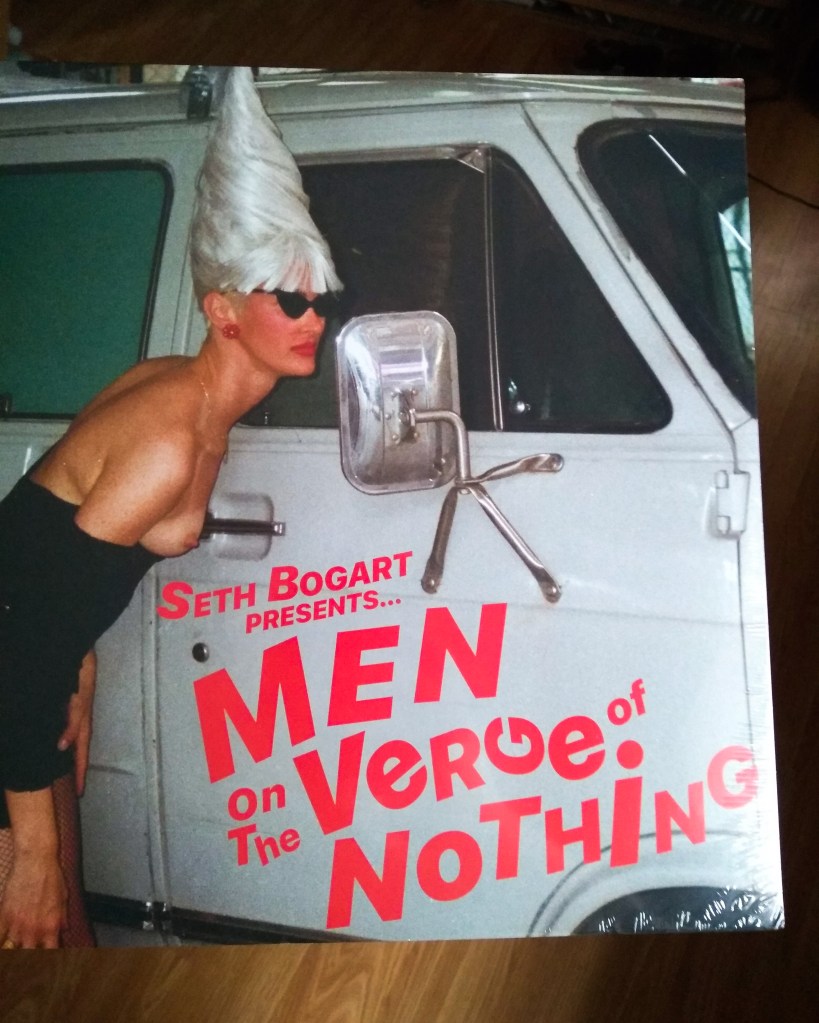
Every month one of us makes the rest of the crew watch a movie they’ve never seen before and we discuss it afterwards. This month Britnee made Brandon, Boomer, and Hanna watch Salome’s Last Dance (1988).

Britnee: Last year, while I was on a month-long Ken Russell binge, I watched Salome’s Last Dance for the very first time. I had avoided it for a while because I assumed it was going to be a run-of-the-mill period piece. I do enjoy period films, but I have to be in a particular mood to watch them. It turns out Salome is more than just a period film. It’s a trashy masterpiece! How could I expect anything less from Ken Russell?

Salome starts with a framing narrative where the staff at a London brothel put on a performance of Oscar Wilde’s banned play, Salome, for none other than Oscar Wilde himself. The play is so magnificent that it’s easy to forget that you’re watching a play within a movie. The vibrant set and gaudy costumes are visually pleasing components to this very sexy Salome production, and I just loved all of it. Ken Russell even plays the part of the play’s photographer! There all sorts of delicious little treats strewn throughout the show, such as topless dominatrix guards with silver nipples and a zombified John the Baptist.

The actress who plays Salome in the play, Imogene Millais-Scott, is phenomenal. She has a very cat-like presence that really makes for an interesting take on the character, and her passionate and intense line deliveries outshine everyone else in the film. Millais-Scott was almost blind from an illness before she started filming, so the fact that she showed up and showed out in Salome regardless is insane.

What I enjoyed the most about Salome is that we never really leave the theatre. There aren’t many moments where we go into different areas of the brothel to follow up on what Wilde and everyone else is doing while the play is going on. The play is just so damn good that I never wanted to leave, so that layout worked out for me. Brandon, was that something you enjoyed as well? Would you have preferred more scenes that were not part of the actual Salome play?

Brandon: While I appreciated Russell’s playfulness in burying the play under several layers of metatextual remove, I don’t know that diving any deeper into the off-stage narrative would’ve added anything to this film’s entertainment value. It makes sense for Russell to include Wilde’s off-stage antics in the brothel for a couple reasons: to help highlight their shared qualities as button-pushing provocateurs and to give shape to the brothel’s otherwise slight production of Salome. The onstage performance is presented almost as a series of living tableaus, where the actors’ costuming & positioning against the hand-painted backdrops is far more outrageous & attention-grabbing than any of the spoken dialogue. There’s almost a John Waters Community Theatre quality to the play, wherein total freaks endlessly rhapsodize about how gorgeous they are – only interrupting those breathlessly horny rants for an occasional fart joke or dance break. As fun and as wonderfully artificial as that production can be, it’s also a huge relief to occasionally drift away from it to check in on Wilde’s escapades as a half-attentive audience. He gropes the staff, ruthlessly critiques their acting skills, and fires off a few of his infamously dry witticisms as a form of self-amusement (including a particularly great one about how brothels “combine business with pleasure”), seemingly bored by the onstage tableaus. I was not bored by this stage production of Salome, but it was still funny hearing that potential complaint in real time from the author of its source material. He doesn’t need to do anything more than that to justify being there.

Overall, I found this movie to be a wonderful clash of high art pretension and broadly comedic, hyper-horny trash: Ken Russell’s specialty. It often feels more like Russell doing Derek Jarman or a Cockettes stage show than Russell doing Oscar Wilde, so it was smart for the director to include an in-the-flesh avatar for Wilde onscreen, injecting the writer’s more idiosyncratic quirks into an adaptation of his play that doesn’t especially highlight them (the way a straightforward adaptation of The Importance of Being Earnest might have). I totally get Russell’s decision to stage Salome with that metatextual remove, as it allows for an overlap between Wilde’s rapdifire dry humor and the director’s sopping wet everything else. What I’m much less clear on is whether there’s any significance to the movie being set on Guy Fawkes Night in particular. Boomer, is there any textual or historical significance you can glean from this private, brothel-set staging of Salome occurring on that uniquely British holiday? Or did that register as just as significant of a detail as the fart jokes and the hand-painted moon?

Boomer: Is there any figure in English history more widely misunderstood in the pop cultural consciousness than Guy Fawkes? His exaggerated likeness went from centuries-old scapegoat mask to symbol of anti-tyranny in Alan Moore’s V for Vendetta, then to wider infamy with that graphic novel’s 2005 film adaptation, and then as the mask of online hacktivism group Anonymous. In all of his popular culture incarnations, Fawkes is a man of progress fighting for liberty against an oppressive state, but in reality Fawkes himself wasn’t … that.

Most of our readers probably already know this but just to be safe (and as Cliffs Notes as I can make it): infamously, Henry VIII blamed his wife/wives for giving him nothing but daughters (and thus no mail heir to the throne, as the law sort of dictated and tradition clearly required) and, since the Catholic Church wouldn’t let him divorce any of them, he created his own, new church (The Church of England, aka the Anglican faith) with blackjack and hookers with the option to let him trade in his wife for a new model without having to do all that beheading (which he still did sometimes anyway). He was immediately succeeded by his (Anglican) nine year old son Edward VI, and upon Eddie 6’s death at 16, the crown passed to Edward’s (Catholic) sister Mary. Better known as Bloody Mary, she attempted to return property that had been acquired by the state back to Catholic control but was largely prevented from doing so by Parliament, but that didn’t stop her from burning 280 (Protestant) people at the stake for religious dissent. When she died, there was yet another hullabaloo that eventually led to her (Protestant but, like, mostly pragmatic about it) sister, Elizabeth becoming the Queen of England. Elizabeth never had any children of her own and went to her deathbed saying “nah” to requests that she name an heir, there was another succession debate that resulted in her nephew James (also a Protestant but hyperfixated on the heresy of witchcraft rather than the heresy of Catholicism), Mary’s son, being coronated as the new king.

The Gunpowder Plot was an attempt by Catholics to assassinate James I solely because he was a Protestant (and a fairly tolerant one at that, having seen how the people turned on his mother for her religious persecution). Guy Fawkes was just a guy from York who had been fighting in Spain during a time when Spain and England were allied (mostly because they were both Catholic states) and was so unhappy that everything was so Protestant now that he went so far as to petition the Spanish throne to turn their attention toward retaking England, for Catholicism. His job in the plot was to guard the gunpowder, but he was caught, and the whole thing fell apart; this lead to the declaration of November 5 as Guy Fawkes Night, which became the primary commemoration of England as a nation-state (a corollary would be the U.S.’s Independence Day) as well as a focus for anti-Catholic sentiments. Eventually, things got so heated that Guy Fawkes Night may as well have been The Purge for Catholics, but reform eventually nerfed that element of the proceedings until GFN was essentially little more than a name for a celebration that was mostly divorced from its roots (a corollary would be the U.S.’s Labor Day, which was originally created as a celebration of the Labor movement and is now mostly a holiday for the enemies of Labor to get 50% off jeans while Laborers … labor), becoming just a holiday.

Historically, Wilde’s actual arrest occurred in late May 1895, at nearly the opposite side of the calendar cycle as early-November’s Guy Fawkes Night; Russell, as a Briton himself, would know this and wouldn’t have made such a significant change without reason. Or would he? Robert Catesby, the mastermind behind the Gunpowder Plot, was beheaded like John the Baptist, but his decapitation was postmortem (in order for his head to be exhibited outside of Parliament as a warning, as you do). He did die (of being shot) clutching a portrait of the Virgin Mary, who was John the Baptist’s aunt. But really, that’s grasping at very tenuous threads. There’s little that correlates Fawkes or the Gunpowder Plot to Wilde or Salome. Salome as a figure of myth/history is technically royal and the Gunpowder Plot revolves around an attempt at a religious coup via regicide, but the two events are fairly different otherwise. One could sift to find some relationship between Salome’s existence as Herod’s stepdaughter from a previous marriage and the succession crisis (that at least partially revolved around kingship transferring from Edward VI to Mary, his stepsister from his father’s previous marriage) that eventually led to James I’s reign, but that’s really pushing it. Biblically, Salome isn’t even given a name and is mentioned only as Herodias’s daughter, and we only have a name for her because of Titus Flavius Josephus’s Antiquities of the Jews (completed ca. 93 or 93 C.E.). There are some who argue that Salome the Disciple (one of the tenders of Jesus at the crucifixion and witness to his empty tomb, depending upon the gospel in question) and Salome the daughter of Herodias could be the same person, and that admittedly makes for a fun redemption arc Bible headcanon if that’s your bag, but most scholars hold that the latter Salome was the sister of Mary.

Beyond that, one is hard pressed to find a connection between GFN/The Gunpowder Plot and Salome/Wilde other than this: despite how they have been interpreted by right wing regressives in the present, the teachings of Jesus were iconoclastic and progressive, and the decapitation John the Baptist as both his harbinger and hype man could be interpreted as the state’s execution of a rabble-rousing progressive dissident; if one sees Fawkes as an analog of Herod II, pushing for a return to a more regressive, conservative form of governance, it almost works. But not quite. Maybe all he wanted was for future viewers to watch the film annually on GFN? Move over, “Is Die Hard a Christmas movie?”, it’s time for the real debate: “Is The Last Dance of Salome a Guy Fawkes Night movie?”

One of the things that I found puzzling while watching the film was the presence of ciswomen actors as women in the play and its framing device. Every plot summary of Last Dance online notes that the film takes place in “an all-male brothel,” but that doesn’t seem to be the case for many of the ostensibly cisgender topless women serving in the ensemble or Imogen Millais-Scott as Salome/Rose. It’s possible that I’m very wrong about this (the copy of this film that I saw was the one that’s grainy, free on YouTube, and subtitled in Spanish), but I’m guessing that there was a body double used in the final, full monty frame of Salome’s dance itself, which makes me curious about the casting, given that I can find no evidence that Millais-Scott is trans. Does this casting of a ciswoman as a man-portraying-a-woman read strangely to you, Hanna? Given that Millais-Scott’s powerhouse performance is the biggest draw in the film (at least for me), I’m not sure I would have preferred this be done a different way, but I’m of two minds. After all, men portrayed all roles, including women, for a huge chunk of British theatrical history. What do you think?

Hanna: In general, I was a little torn by this too. Why not feature an all-male performance for Oscar Wilde, especially given the history of British theatre? I would have loved a glitzy, dragged-up rendition of Salome. On the other hand, since the premise of the film is that Salome is so publicly subversive that Oscar Wilde can only view its performance behind the walls of a brothel and women were banned from performing onstage in England until the 1660s, the use of female actresses would technically be the more subversive choice for that time (although that point was probably moot by the late 1800s).

Regarding Millais-Scott’s casting specifically, I actually didn’t think that she was cast as a man portraying a woman; I thought that Rose was a cisgender female chambermaid for the brothel playing Salome, not a male worker, and that the appearance of the body double – dubbed “Phoney Salome” in the credits –was meant to be a prank on Herod within the play (i.e., Herod got horny for an anonymous male slave and Salome never really danced for him) and a scintillating little show for Wilde. I would guess that the bare-breasted guards were also workers in the brothel. That being said, I truly have no idea what actually happened – that’s just my best guess.

If I’m wrong about the casting and Rose/Salome is meant to be a male actor playing a woman in the film, it might have bothered me if the role had been taken by any other cis-woman. As it is, I wouldn’t trade Millais-Scott’s mesmerizing performance for anything, and if it were up to me, I would probably shirk gendered roles and British theatre history to feature her. Her Keatsian monologue with John the Baptist was equal parts hypnotic and bratty, and has significantly contributed to my arsenal of obsessive, lusty similes. That scene alone was worth the $3.99 rental.

Lagniappe

Britnee: I love the costume design in this movie, especially the costumes for Herodias and Salome. It’s all a mix of BDSM, pageant drag, and Victorian fashion. The costume designer, Micheal Arrals, is only credited for this one film, and I can’t find much about him online. I want to know more about this mysterious genius!

Hanna: My first exposure to the story of Salome was stumbling upon the grotesque and gorgeous illustrations that Aubrey Beardsley produced for Wilde’s original run of his play (especially “The Dancer’s Reward”). Those illustrations and Salome’s Last Dance compel me for the same reasons: they are intricately and ornately detailed, a little bloody, and horny as all get-out. Those illustrations were highly regarded by Wilde, and in my opinion, Russell did a fantastic job of bringing that mood to his adaptation.

Boomer: Thank you for indulging me in my recapitulation of various English succession crises. For a film that features an entirely male cast performing a play in which they inhabit men and women’s roles, I recommend Lilies. If you’re interested, the single-Salome interpretation noted above (that she was both Herodias’s daughter and later a disciple), was an idea probably influenced the narrative of the 1953 film Salome with Rita Hayworth in the title role.

Brandon: This conversation concludes five full years of Movie of the Month discussions, a tradition we’ve continued since our very first month blogging as a crew. Somehow, this is the first time we’ve ever doubled up on any one particular director over all those years, having previously covered Ken Russell’s Crimes of Passion (still one of my all-time favorite films) back in May of 2015. I’m proud of the wide breadth of movies we’ve discussed so far with this project. I’m also proud that when we inevitably cycled back it was for Ken Russell in particular. It couldn’t have happened to a bigger pervert.

Next month: The Top Films of 2020

-The Swampflix Crew

Bonus Features: Passion Fish (1992)

Our current Movie of the Month, John Sayles’s 1992 comfort-watch Passion Fish, is a Southern-fried melodrama about a Rude soap opera star whose career comes to a halt after a paralyzing car accident. It looks & acts like a Normie heartwarmer about a proud woman overcoming sudden adversity, but pulls it off with an unusually direct, vulgar bitterness that cuts through the bullshit. In particular, the way the film depicts its lead’s discomfort, rage, and gradual acceptance of her newfound disability & reliance on a wheelchair feels refreshingly honest & relatably human for a 90s-era VHS rental. As a result, most recommendations of further viewing for anyone who enjoyed Passion Fish probably should touch on its unusually frank depiction of newfound physical disability, which really does set it apart from other, more maudlin works in its genre.

Here are a few recommended titles if you loved our Movie of the Month and want to experience similar depictions of recognizably Real people venting relatable frustrations over their own physical disabilities.

Never Fear (1949)

You might be tempted to ask for a better directorial debut from actor-turned-auteur Ida Lupino than the 1949 sudden-illness weepie Never Fear, but it would be tough to ask for a more personal one. Lupino’s first credit as a director is a well-behaved but harrowing melodrama about polio, a disease that Lupino herself suffered early in her career as a young actor. In fact, it was being bedridden with polio (and losing some mobility in her leg and hand) that inspired Lupino to develop skills as a writer & a filmmaker in the first place, as it was a harsh realization that her career as an onscreen beauty was limited & impermanent. She explained in an interview, “I realized that my life and my courage and my hopes did not lie in my body. If that body was paralyzed, my brain could still work industriously . . . If I weren’t able to act, I would be able to write. Even if I weren’t able to use a pencil or typewriter, I could dictate.” Polio was too sensitive of a subject at the time of Never Fear‘s release and, thus, failed to make a splash at the box office, but Lupino fearlessly tackled it head on from a place of personal frustration & anguish that affords it cultural significance anyway.

A young dancer (Lupino regular Sally Forrest) has her career cut short by a rapidly onset case of polio that leaves her paralyzed. She gradually earns her mobility back through painful months of physical & emotional therapy, but in the meantime struggles to maintain the romance, career, and independence she knew before the disease left her unable to dance. There are about twenty minutes of puppy-love bliss shared between the dancer and her partner/choreographer before polio cuts their ambitions short. The remaining hour is a pitch-black tearjerker that threatens to break that blissful romance apart, both through the introduction of potential love interests inside & outside the hospital and through the protagonist’s self-pity that makes her believe she’s no longer worthy of her former beau’s love & devotion. The resulting film illustrates a complex, nuanced psychological portrait of someone bedridden with polio, one that arrived in theaters while the country was still suffering the darkest days of the epidemic.

Never Fear is a romantic melodrama in which Ida Lupino pulls from her personal experience with polio to illustrate just how isolating & embittering the disease could be. It’s more or less a standard sudden-illness weepie, but it’s emotionally fearless in directly tackling its subject in a way that can be impressively horrific in flashes. It isn’t Lupino’s best work in the director’s chair, but it is a film with surprising emotional depth in her expressions of personal, professional anguish, which makes it a worthy watch for anyone interested in her one-of-a-kind career as one of the most substantial female directors in the Old Hollywood system. It’s also one of the few melodramas of its kind that matches Passion Fish‘s bullshit-free depictions of personal, internal conflicts over sudden physical disability.

Misery (1990)

If the bitter disability journeys of Passion Fish & Never Fear are too subtle or gentle for your liking, there’s always the Kathy Bates psychobiddy classic Misery. According to Steven King, Misery was written as a metaphor for his debilitating addiction to cocaine, which figuratively held him captive and forced him to write pulpy dreck far beneath his dignity as a Serious Artist. There’s likely some truth to that, but I do suspect King brandishes that anecdote at least somewhat to cover up the novel’s more obvious expressions of his open, seething contempt for his most enthusiastic fans. In the 1990 adaptation, Kathy Bates stars as a disgraced nurse who kidnaps her favorite pulp author after a blizzard-incited car crash and forces him to write novels that fit her headcanon instead of his own imagination. It’s a wonderfully blatant, literal depiction of the increasingly hostile relationships between artists & their audiences in recent years, where fans’ demands are too often allowed to dictate the work. It’s also, on the surface, a torturous body horror about a man held captive by a deranged medical professional who violently hobbles him to delay his recovery instead of working in his own interest.

In the opening sequence of Passion Fish, May-Alice is a big-city Soap Opera Star who’s frustrated that she relies on the whims & the capabilities of the small-town nurses hired to help her navigate her Louisiana bayou home. Things calm down once she finds an unlikely friendship with a nurse on her own wavelength, but that frustration over her reliance on another human being to accomplish mundane, daily tasks never really goes away. In Misery, a big-city Celebrity Author finds himself at the mercy of a small-town nurse who cares more about the fictional characters he creates than she does about his physical health (to put it mildly). Both films traffic in a warmly familiar 1990s mainstream filmmaking sensibility that sets expectations for a wholesome, safe viewing experience. Passion Fish cuts through that expectation with an unexpected vulgarity & bitterness as May-Alice becomes increasingly frustrated with her newly disabled body. James Caan goes through the same struggle as the Celebrity Author in Misery, except with a pronounced layer of traumatizingly gruesome body horror that even more drastically contradicts director Rob Reiner’s wholesome, mainstream sensibilities.

Weirdly, Misery also happens to employ an overqualified cinematographer in Barry Sonnenfeld, which mirrors Passion Fish‘s employment of industry legend Roger Deakins as its own DP.

The Intouchables (2011)

Maybe Misery‘s gory hyperviolence & Never Fear‘s Old Hollywood prestige are too fringe for a proper Passion Fish pairing. Maybe you just want to watch another by-the-books tearjerker that only strays from melodrama conventions by indulging in some occasional vulgarity. 2011’s The Intouchables isn’t exactly a great film the way Passion Fish is, but it does share some of its recognizable humanity that’s often missing from similar sudden-disability melodramas.

Based on a true story, The Intouchables chronicles an unlikely friendship between a paraplegic French aristocrat (who recently suffered a paragliding accident as part of his adrenaline seeking interest in X-Treme Sports) and the underqualified Senegalese ex-con he hires as his live-in caretaker (who only applied for the job as a ploy to remain on welfare). Although it arrived in theaters two decades after Passion Fish, it stumbles a lot more frequently in its own depiction of a budding friendship across race & class barriers (the Senegalese man is a pothead horndog criminal with no sense of public decorum, an often embarrassing line of humor). Still, there is a core sense of mutual respect & playfulness in their relationship that’s surprisingly endearing, especially in contrast to the long line of unsuitable, uptight, white caretakers who also interview for the job. The live-in caretaker is hired because he doesn’t look at his employer’s disability with any sense of pity or patronizing caution. His vulgar, casual demeanor cuts through the bullshit to allow them to meet on equal terms as human beings, even though one needs the other to accomplish most mundane tasks. The central friendship in Passion Fish is a lot more nuanced (and a lot less problematic in its race & class politics), but both movies share that vulgar, humanistic core.

I feel a little conflicted recommending a film I don’t wholly appreciate myself. The Intouchables alternates between charm & cringe so erratically that it’s difficult to be too enthusiastic about the positives when the whole ordeal is through. For perspective, then, it’s a good idea to follow up the film by watching the trailer for its recent American remake, starring Kevin Hart. It’s a quick way to appreciate how much worse the material could have been (and apparently was!) in even cruder hands.

-Brandon Ledet

Flamingos Forever: John Waters’s Unmade Superhero Epic

It’s been nearly two decades since John Waters’s last feature film, and it’s looking increasingly unlikely that there will ever be another. And that’s okay. The Pope of Filth appears to be totally content in semi-retirement, where he continues to entertain as an author and a travelling orator without having to beg movie studios for budgetary pittances. If Waters never makes another film again, at least he went out a return to form in A Dirty Shame, an underrated career retrospective that bridges the gap between his early-career gross-outs and his late-career “mainstream” comedies. Still, as he is the single greatest filmmaker of all time, it’s fun to daydream about all ~the John Waters projects that could have been~ had his Hollywood Studio cashflow not dried up so suddenly. A Christmas-themed comedy called Fruitcake (potentially starring Johnny Knoxville & Parker Posey) was the most recent unmade John Waters project drifting around the ether, but here are several others besides: a Wizard of Oz spoof called Dorothy the Kansas City Pothead, an ill-advised adaptation of Confederacy of Dunces, some unholy mutant titled Glamorpuss, etc. It’s difficult to speculate on any of these unmade projects with any clear detail beyond a basic elevator pitch, though, because they mostly pop up in media coverage as fun anecdotes in Waters’s bottomless repertoire of fun anecdotes. That is, with one major exception.

The closest one of John Waters’s unmade films ever came to production was in the mid-1980s, when the director was staging his unlikely transformation from arthouse reprobate to a household name. The 1988 paperback Trash Trio features collects three screenplays from John Waters’s “trash period”: Pink Flamingos, Desperate Living, and the unrealized sequel Flamingos Forever. In the intro to the book, Waters refers to Flamingos Forever as his “first abortion,” a “stillborn” project that failed to secure the proposed $600,000 budget it would’ve needed to reach the screen uncompromised. There were many roadblocks to Flamingos Forever‘s journey through the Hollywood System birth canal: clueless producers insisting on rewrites that included more Hot Babes, Divine’s dwindling enthusiasm for its various gross-out stunts, and, ultimately, the death of the irreplaceable Edith Massey. There was a brief window where Waters could have got the film off the ground under the infamously sleazy Troma Entertainment brand, but he held out for a better opportunity that never came. It’s probably for the best. I’m personally appreciative that Waters pressed on to new, subversive textures in works like Serial Mom and Cry-Baby rather than revisiting Pink Flamingos for a victory lap sequel. Still, reading the screenplay for Flamingos Forever in Trash Trio all these years later is a total treat, as his authorial voice (as well as the mind-searing vocal performances of actors like Massey & Divine) is idiosyncratic enough that you can mentally picture the movie more or less exactly as it would have been had it not been quietly aborted decades ago.

Fifteen years after the events of Pink Flamingos, Divine and her cavalcade of perversions return to Baltimore to reclaim their title as the Filthiest Family Alive. In a beat-for-beat rehash of the previous film, Divine brags to the press about her wicked deeds, drawing unwanted attention from jealous members of the Marble clan, now led by the deceased Connie’s equally vile, child-snatching sister. Gross-out pranks and violent crimes ensue as the two families once again clash over Filth supremacy, with Divine ultimately (obviously) coming out on top. Of course, narrative doesn’t matter nearly as much in a John Waters film as the gross-out stunts & character quirks. While Flamingos Forever retreads a lot of familiar ground, it’s packs plenty of gags that would’ve been a scream if they were realized: the Filth family moving on up to an absurdly artificial Pee-wee’s Playhouse type compound, Divine carrying around Edie in a baby holster, a deranged performance of “The Hokey Pokey” (one of several gags that found its way into the A Dirty Shame), etc. It’s also a wildly offensive vision in the way that you’d expect from a Pink Flamingos sequel, including jokes involving blackface, necrophilia, children in drag and on heroin, and male rape. Even with the slightly-ballooned budget, it’s a trash-era John Waters screenplay through & through. No wonder producers were squeamish to back it.

To Flamingos Forever‘s credit, it does its best to escalate the filthy antics of its central cast to match the escalation of the proposed budget, especially when it comes to Divine. Amusingly, the screenplay recontextualizes Divine as a kind of filth superhero, an avenger of Bad Taste. As her war with the Marble clan heats up, Divine reveals previously unexplored superpowers that confirm her divinity: levitation, X-ray eyes, the production of flying turds (many, many flying turds). She also contrasts the heroic quality of her own filthy antics vs. the child-snatching stunts of the Marble clan, explaining in detail the difference between Good Filth & Bad Filth (the way Waters will walk you through the difference between High Camp & Low Camp in his essay work). Divine’s saga as a notorious murderess who kills because she loves attention from the press is already sketched out in a crude precursor to MCU-style sequential filmmaking across multiple loosely connected films: Mondo Trasho, Multiple Maniacs, and Pink Flamingos. In Flamingos Forever, she would have solidified her stature as a filth superhero in that lineage, even providing a flashback superhero origin story for how she became so filthy (in stubborn opposition to her cleanliness-obsessed parents). Flamingos Forever would not have broken new narrative ground for Waters’s early Family of Weirdos character comedies, but it is amusing to consider how far it would have unintentionally pushed that familiar story into the modern territory of sequential superhero storytelling.

I’ve gradually come to peace with the realization that I’ll likely never see a new John Waters film again, a blow that’s been softened by several recent developments in his cinematic legacy: Waters’s newfound joy as an on-stage storyteller, The Criterion Collection’s wonderful restorations of his trash-era classics, the occasional opportunity to experience repertory screenings of his work with new audiences (which somehow always still inspires mid-film walk-outs all these decades later despite their notorious reputations). I’d also chalk up reading the unmade screenplay for Flamingos Forever in Trash Trio as a similar comfort. It was a delightful to watch an unmade John Waters film projected only in the run-down drive-in theater of my mind (an experience I wisely saved for a hurricane-related power outage), even if his work is always better with an audience – as all comedies are. The unlikely Superhero Sequel qualities of the screenplay only added to that novelty, as movies this unabashedly filthy rarely secure Superhero Movie budgets.

-Brandon Ledet

Movie of the Month: Passion Fish (1992)

Every month one of us makes the rest of the crew watch a movie they’ve never seen before and we discuss it afterwards. This month Boomer made BrandonBritnee, and Hanna watch Passion Fish (1992).

Boomer: I was born in Louisiana and didn’t reside elsewhere for longer than a month or two for the first 28 years of my life.  It’s been over a year since I was last home. With the pandemic continuing to rage because some people are just too selfish and obsessed with the abstract concept of personal liberty to just stay home, what could have been a few fortnights of quarantine, isolation, social distancing, and loneliness have stretched into over half a year with no real end in sight, so it’s not clear when it will be safe to travel again.  Where I am now is a place of natural beauty, varied cultural interest, and urban elegance, but I’d be lying if I said it didn’t lack a certain verdancy that I sometimes feel a longing for.  Few things of late have made me more homesick than the movie Passion Fish.

NYC-based soap opera actress May-Alice Culhane (Mary McDonnell) is left paraplegic following a mundane but nonetheless tragic vehicle collision, and returns to her long-abandoned parents’ lakefront home on Lake Arthur.  Unable to fully care for herself in a home that wasn’t built with the wheelchair-bound in mind, May-Alice’s resentment of her newfound immobility, loss of employment, and isolation lead her to lash out angrily at a series of home nurses who range from grossly incapable to overly familiar to simply not being a good fit.  The last of these is Chantelle (Alfre Woodard), who has her own problems.  Although the two women are initially mistrustful and intermittently antagonistic, Chantelle’s unwillingness to coddle May-Alice or to allow herself to become another in a long line of nurses driven off by her employer’s hostility forges a bond between the two women that eventually exceeds what either of them could have expected.

I was given this movie a few years ago as a birthday gift by a couple who were my first friends here in Austin, and with whom I played weekly trivia—religiously—for a few years. As we have similar interests, one of the games that we used to play (poolside, in the car, wherever) was the one where you connect two actors using a series of “acted alongside” connections.  For example, if one person suggests Pam Grier and the other suggests Audrey Hepburn, one might connect Hepburn to Veronica Cartwright through The Children’s Hour, then Cartwright to Yaphet Kotto through Alien, then Kotto to Pam Grier through Friday Foster.  I have a profound love for both McDonnell and Woodard, and bring them up frequently as a connector when playing this game, which led to the recommendation (and ultimate gift) of Passion Fish.  It has been one of the best recommendations ever, as it transported me fully not only back home to Louisiana but also to my childhood in the nineties.

Passion Fish also falls under one of my favorite genres/topics: the story of women on the verge.  May-Alice’s frustration, feelings of impotence, and what she perceives as the loss of her identity as a woman of moderate celebrity, are clear and powerful without falling into the trap of ableism, which it easily could have.  Her career is over, her place in society is gone, and she finds herself back in a home she never wanted to revisit and has spent her entire adult life running from.  As we learn in one of a series of vignettes in which she reunites with various people from her past, May-Alice was always an outsider in her community, the “weird girl” who stood out and was socially punished for it; it’s no wonder that she sees the loss of the lifeline that she used to flee this place as the end of her journey, while also dealing with the associated traumas of losing the functionality of the lower half of her body.  It’s not an abstract issue: she falls off of the toilet and is alone in her house for hours without assistance, and the lack of accessibility features (like ramps) in her home minimizes her world.

May-Alice isn’t alone on this precipice either, as it turns out that Chantelle has lied her way into her current position, having lost her nursing credentials (and custody of her daughter) after falling in with a man who gave her access to crack cocaine.  It would be easy to dismiss this as another lightweight “inspirational” movie (complete with a problematic trope or two) were it merely about May-Alice overcoming obstacles through the help of a sassy stereotype, and to some I’m sure it comes across as one, but Chantelle is no mere prop for May-Alice’s recovery.  She has her own problems, issues, fears, and even romance — all of which are separate from her relationship with May-Alice as both caregiver and friend, even if those disparate threads sometimes intertwine.  Powerhouse performances from both lead actresses are what push this beyond being some lighthearted pablum for the masses into something truly beautiful, while weaving in various coastal/bayou cultural touchstones like ghost mythology, local folks who are recognizable as people instead of archetypes, and lots (and lots) of zydeco music.

One of the other ways that Passion Fish rises above the rest of the crop is through its narrative throughline.  We start in a New York hospital in which May-Alice awakens to learn that her life has changed from a faceless, impersonal member of the medical staff.  From there, as she falters at adapting to her new circumstances and decides to go home to Louisiana—even as she encounters fans of her work—all of them remain faceless and unseen to us, like specters. Only once she’s back home do those around her begin to exist again, and so does she.  In one of our long-ago MotM reviews of Big Business, I was openly opposed to the trope of “Rural living is simply better to urban life,” and while there’s some of that at play here, I also think that it exposes the facile nature of that assumption as we meet people both shallow and deep from each of May-Alice’s worlds.

I really enjoyed this vignette-style set-up of characters, although I was a little disappointed that some of them never reappeared.  First we meet May-Alice’s closeted(ish) Uncle Max, who at first reads as a parody of a Tennessee Williams character before revealing a depth of character beneath his genteel Southern nature.  From there we are introduced to two of May-Alice’s childhood tormentors who recall their “friendship” with their now-famous(ish) victim very differently, going so far as to attempt to bond with her over the girl they used to bully, not realizing that they are one and the same.  We also meet a trio of women from May-Alice’s soap opera world, including the actress who now plays her role on The Young and the Stupid and her closest friend (Angela Bassett!).  Each of these encounters seems to set up a future interaction or confrontation, but reveal that both worlds have people who have a depth of personality (Uncle Max), those who have a lack of it (her childhood bullies), and those who portray vapidity but actually have a rich internal life (the actresses).

Of these and the other vignettes, there are some that feel like a potential that is unfulfilled, and some that feel perfect in their concision.  Brandon, which was your favorite interaction? Is there a character you wish we saw more of?  Are there any characters who reappear that you feel were too large a part of the narrative?

Brandon:  I can’t say that I was especially invested in the either of the male love interests that drift in & out of these women’s lives, and by the end I don’t think the movie was either.  The story doesn’t conclude with the two leads settling down for a humble Southern-fried life on the bayou with new respective husbands in tow, so the men’s presence mostly felt like a means to draw the women out of their shells.  I wouldn’t have minded if the men’s screentime had been cut a little short to reflect that eventual unromantic conclusion, either to allow more breathing room for the more engaging relationship dynamics or just to shave the runtime down to under two hours (this is one of those languorous Entire Afternoon movies that’s in no rush to get anywhere in particular).  Whereas the potential bayou beaus mostly feel disconnected from the women’s lives outside this brief retreat from “the real world”, the other side characters that pop in for a single visit do a lot to illustrate what their lives were like before their recent traumas transformed them.  You just have to consider them in contrast with each other rather than in isolation.

I most appreciated the contrast between the visits from the two groups of women from May-Alice’s past.  While her stay at her family’s Lake Arthur home has been restorative (largely due to Chantelle), the film is not at all shy about interrogating why it would be worthwhile to leave that “simple” life behind.  Her smiling, suburban childhood bullies that drop in to snoop & gossip are torturous demons in Good Christians’ clothing.  Consider that unannounced lunch-date in contrast with her chosen family of Big City artists who visit between filming episodes of The Young and the Stupid.  They might be just as flawed as human beings, but they’re genuine & kind in a way that transcends the small-minded, small-town misery the snooping locals represent.  If the two love interest characters add anything to this story, it’s in softening that Small Town vs. Big City divide by demonstrating that there can be genuine, kind-hearted people in even the most toxic of closed-off communities.  Still, the two visits from those distinctly opposed groups of women still say a lot about the urban-rural divide when considered on their own.  It’s a very real, very distinct contrast  that I’ve felt even just moving the short distance from “down-the-road” in St. Bernard Parish to New Orleans proper, a trajectory I never intend to reverse.

On a shallower note, I also most enjoyed the visit from the Big City women because it featured the film’s true centerpiece: the “anal probe” monologue.  It’s an excellent actor’s showcase for one of the visiting soap stars, who explains the never-ending embarrassments of trying to make it in a viciously sexist entertainment industry that would rather her appear nude or ruminate on extraterrestrial anal probes in trashy sci-fi dreck than genuinely pursue her craft.  That monologue is a showstopper on its own, but it also points to what I found to be one of the film’s more rewarding choices: its R-rating.  Passion Fish looks & acts like a Normie heartwarmer about proud women overcoming sudden adversity, but it pulls that off with an impressively direct, vulgar bitterness that cuts through the usual bullshit — the same way that the cannibalism & lesbian romance cut through the bullshit in Fried Green Tomatoes.  You can especially feel the effect of that vulgarity in the early scenes where May-Alice is still in her full Rude Soap Star mode, cursing her nurses & her own failing body in a long string of f-bombs — making her simultaneously more Difficult and more Relatable.

Britnee, how different do you think this movie would be if it had toned down that vulgarity for an easy PG-13 rating?  Do you think you would have appreciated Passion Fish any more or less if you caught an edited-for-TV version where they replaced the word “fuck” with “frak” in those early scenes (Battlestar Galactica style, in honor of Mary MacDonnell)?

Britnee: How did I go all this time without knowing about Passion Fish?  Late 80s and early 90s dramas revolving around Southern women are always a treat, and Passion Fish did not disappoint.  And to top it off, Alfre Woodard is one of my favorite actresses.  She was, of course, amazing as Chantelle.  I’d say this was one of her top performances, putting it up there even with her role as Betty Applewhite in Desperate Housewives.  Passion Fish is a film about one of the most important things that a woman can have: female friendships.  The connection built between Chantelle and May-Alice came off so strong without feeling over-acted, making me shed a tear or two at the end of the film.

May-Alice’s potty mouth made me connect with her character right off the bat.  Her frustration with her being a paraplegic and having her world upended would not have come across the same way if her language was toned down.  I think the film would still be enjoyable without all the more R-rated parts, but it just wouldn’t be the same.  And I also shared the same enthusiasm for the “anal probe” monologue, which television (at least at the time the film was released) would have most definitely cut out.  Passion Fish without the anal probe bit would be like Christmas without a Christmas tree.  It’s just plain wrong.

What Passion Fish did so well was balance the two stories of Chantelle and May-Alice without allowing one to overpower the other.  There was something so heartwarming watching both women who’ve hit rock bottom find their way back up while stuck with each other on Lake Arthur.  Hanna, did you also think that Chantelle and May-Alice’s stories were balanced?  Or was focus placed more on one character than the other?

Hanna: I thought that May-Alice and Chantelle’s stories were pretty well balanced, especially for a plot that could have veered into Driving Miss Daisy territory.  Movies about Black people rehabilitating white people can come off a little gross, especially when their identity is defined by their role as a caretaker for the white character in need of some personal growth.  I do think there was a touch of that in Passion Fish.  I learned a lot about May-Alice throughout the film; she was an outspoken Joan Baez fan in rural Louisiana, she’s a gifted photographer, and she’s an excellent cook.  Other than Chantelle’s history with drug addiction and estrangement from her father and daughter, I only know that she can’t cook and she doesn’t like the swamp, which are both negations of May-Alice’s characteristics.  I enjoyed the interruptions May-Alice’s visitors (her gay uncle, southern Louisiana frenemies, and New York art friends), who all help to paint a richer picture of her character and life up until this moment.  Meanwhile, Chantelle’s visitors are strict reinforcements of her history with drugs: the boyfriend who got her addicted, and the father and daughter she lost in the process.  Both May-Alice and Chantelle were given equal weight and both are portrayed as strong women with complex inner lives, but May-Alices’s story felt a little more expansive than Chantelle’s.

I think the difference can be mostly explained by the nature of the two women’s recoveries rather than a narrative disinterest in Chantelle’s story.  May-Alice learns that she can create a rich and valuable world for herself being paraplegic in southeastern Louisiana.  Meanwhile Chantelle is rediscovering her personhood in the wake of an addiction that stole her life, and has just reached the point where she can trust herself enough to nurture her life and relationships in the last stages of recovery.  We get to see Chantelle relax into herself a little with her love interest, but I wish we had the chance to see that happen more fully, and I wish her world could have expanded in a direction that didn’t involve May-Alice or another man.  In the end, I think Alfre Woodard’s performance was a godsend for this role; she brought incredible depth to a Chantelle’s character, which could have easily tipped into flat stereotype in an otherwise powerhouse drama driven by two utterly compelling women.

Lagniappe

Brandon: I’m tickled by how this film’s behind-the-scenes pedigree contrasts its seemingly ordinary surface details.  This not only includes an early cinematography credit for industry legend Roger Deakins, but also the fact that it was written, directed, and edited by John Sayles – a respected novelist & returning Movie of the Month champ who also penned our beloved urban creature feature Alligator (1980).

Boomer: I love Brandon’s identification of this as an “Entire Afternoon” movie (trademark that).  That’s precisely what it is, although I would also say it falls into that genre of “Your Mom Rented This in the Nineties.”  For your enjoyment, here’s some local coverage of the 20th anniversary of the film in Jennings, where it was largely filmed.

Britnee: I normally get annoyed when actors have horrible Cajun accents in movies, which Passion Fish did have in abundance, but the plot was so wonderful that the slow Southern drawl that Cajuns do not have didn’t bother me one bit.  I actually found it to be super funny when Rennie would slip in and out of his accent and would sometimes sound like a suburban dad from Connecticut.

Hanna: The Anal Probe scene was also a favorite of mine; it was desperately professional, heartbreaking, and funny.  It reminded me of “The Actress”, an SNL skit where Emma Stone plumbs the dramatic depths of “mom that finds her husband cheating on her with her godson” in a gay porno.  I’ve filed both of these bits under my file of female actors authentically dedicating themselves to the tiny scrap of material they’ve been afforded.

Upcoming Movies of the Month
December: Britnee presents Salome’s Last Dance (1988)
January: The Top Films of 2020

-The Swampflix Crew

Bonus Features: Monster Brawl (2011)

Our current Movie of the Month, the low-budget horror comedy Monster Brawl, might be the absolute worst movie that I wholeheartedly love. That’s partly because it mimics the structure & rhythms of a pro wrestling Pay-Per-View instead of a traditional Movie, which requires the audience to adjust expectations to the payoffs of that format. A one-time-only deathmatch tournament between famous monster archetypes in a haunted graveyard to determine “The Most Powerful Ghoul of All Time”, it’s staged as if it were a real-time Pay-Per-View broadcast of an actual pro wrestling event. Monster Brawl‘s feature-length commitment to that structure can be alienating if you’re not immediately tickled by its absurdity, which proved true for most of The Swampflix Crew. This turned out to be an extremely self-indulgent Movie of the Month selection on my part, as no one else in this polluted swamp seemed to have a good time with it. Whoops.

As a result, recommending further viewing to anyone who enjoyed Monster Brawl and wants to see more movies on its shamelessly trashy wavelength is somewhat of an empty exercise. It appears that no one enjoys Monster Brawl, outside maybe appreciating the creature design for the bayou-dwelling eco terrorist wrestler Swamp Gut. Regardless, here are a few recommended titles if you—improbably—loved our Movie of the Month and want to experience similar goofball horror comedies that traffic in the same grey area between creature feature & pro wrestling PPV.

Santo vs. The Vampire Women (1962)

No discussion of the intersection between pro wrestling & cheap-o horror would be complete without the masked luchador Santo. A wrestler so beloved in Mexico that he was practically a folk hero, Santo’s in-ring celebrity was exported to the big screen in over 50 feature films, many of them within the horror genre. I can’t speak to the quality of the majority of Santo’s cinematic output (much of which was never translated to English), but I can heartily recommend his most financially & culturally successful picture: Santo vs. The Vampire Women. It’s a film that’s most well recognized in the US for being featured on an episode of Mystery Science Theater 3000, but it’s a fun pro wrestling-themed Halloween Season watch even without that ironic mockery (especially without, honestly).

Amusingly, Santo vs. The Vampire Women mostly keeps its horror & its wrestling separated in the plot. Santo is hired by a worried father as a kind of bodyguard to protect his vulnerable daughter who is being actively recruited by a vampire coven, as the luchador comes from a long line of ancestors who are sworn “to eliminate evil of all kinds.” Unfortunately, the professional demands of being a popular sports entertainer means that Santo is often too “busy” to help keep the daughter-stealing vampire women at bay, as he’s often tied up with a wrestling match he can’t get out of. The novelty of the film’s wrestling angle exists almost entirely independently from the main action, which means that the story has to stop dead still to make room for the on-screen luchador matches the same way a porno’s story stalls for lengthy depictions of sex.

Even so, the Satanic ritual imagery & buxom vampire coven are so Cool on their own that this would be a solid horror cheapie even without the novelty of the wrestling angle. Anyone with an appreciation for pro wrestling pageantry and Poverty Row knockoffs of Universal Horror classics should have blast with the spooky-campy atmosphere established here. And maybe it’s for the best that it kept its wrestling & its plot separate, since Monster Brawl synthesized those two elements into a single structure-defining gimmick and practically no one enjoys it.

Mortal Kombat (1995)

Monster Brawl is not the only gimmicky fight tournament movie that I love more than I likely should. I also have a huge (likely nostalgic) soft spot for Paul WS Anderson’s big-screen adaptation of the gory button-masher Mortal Kombat. Much like how Monster Brawl structures its story around a Pro Wrestling Pay-Per-View, the Mortal Kombat movie goes out of its way to maintain the tiered tournament structure of its video game source material. It’s a little better funded than Monster Brawl and a little less committed to their shared gimmick (the official fights don’t start until 40min into the film in this case), so in comparison it stands out as a slicker, more accessible variation on the same deathmatch tournament theme.

Instead of fighting to determine “The Most Powerful Ghoul of All Time”, the combatants of Mortal Kombat compete “to defend the realm of Earth” from an “emperor sorcerer demon” who seeks to subjugate & steal the souls of every living being. The humans who enter this interdimensional deathmatch tournament (Mortal Kombat all-stars Sonya Blade, Johnny Cage, and Liu Kang) face off against evil creatures much less culturally overfamiliar than the Universal Monster knockoffs featured in Monster Brawl — mostly demonic ninjas with black magic control over elements like fire, ice, and … shapeshifting reptiles? Much like how Monster Brawl has its clear stand-out monster with Swamp Gut, however, the real star of Mortal Kombat is the four-armed mutant freakshow Goro — a beautiful blend of clunky animatronics and shitty mid-90s CGI.

The best argument for Mortal Kombat being a superior precursor to Monster Brawl is the way it keeps the audience’s energy up throughout, mostly by periodically re-playing its insanely high-BPM techno theme song as a constant pep-up. A hissing Christopher Lambert also hams it up for the camera as the wise “lightning god” Raiden in a way that stands out more than any single performance in Monster Brawl, which is more about playing on familiar archetypes than establishing anything novel or nuanced. If you found yourself amused by the premise of Monster Brawl but frustrated by the execution, Mortal Kombat might be the slicked-up, smoothed-out version of the film you were looking for.

Septic Man (2013)

Monster Brawl is not the first time director Jesse T. Cook has let down a member of The Swampflix Crew. In the earliest months of the blog, James published a two-star review of Cook’s feces-themed creature feature Septic Man, in which a sewer worker is trapped in a contaminated septic tank and subsequently transforms into a hideous turd monster. James wrote, “Watching a filth-covered man roll around in a septic tank for an hour and a half didn’t turn out to be as fun as I expected. […] Septic Man had the potential to be like a darker Toxic Avenger but instead has none of Troma’s charms and ends up being every bit as bad as its premise would imply.” He goes on to call the film “drab”, “ugly”, “depressing”, “boring” and, most bluntly, “crap.” Naturally, after subjecting everyone to what turned out to be a miserable experience watching Cook’s previous film, I felt that it was my turn to suffer Septic Man myself as penance.

James was right and wrong. Septic Man is only 80 minutes long; it’s also crap. It’s like a dispatch from an alternate universe where Troma got into the gritty Eli Roth-era torture porn game. I dare say I was charmed by it, though. The way the grunt sewer worker is financially pressured to keep working during a water contamination pandemic only to be transformed into a hideous Poo Beast just happened to hit me at the right time, considering the parallel labor exploitations of the COVID age. The gradual Turd Monster transformation was also surprisingly solid as a practical effects throwback (although he’s obviously nowhere near as loveable as our beloved Swamp Gut; no one is).

If I’ve learned anything from this exercise it’s that I have terrible taste and cannot be trusted, especially when it comes to the oeuvre of Jesse T. Cook. This blog is a septic tank of bad takes, and I am but the filth-mutated man trapped inside it.

-Brandon Ledet

Movie of the Month: Monster Brawl (2011)

Every month one of us makes the rest of the crew watch a movie they’ve never seen before and we discuss it afterwards. This month Brandon made Boomer, Britnee, and Hanna watch Monster Brawl (2011).

Brandon: This summer, every major American sports conglomerate—the NFL, the NBA, MLB, etc.—publicly debated whether it was safe to restart operations as the COVID pandemic stretched on months beyond what was initially projected. This debate was unnecessary in the world of “sports entertainment“, however, as pro wrestling companies like WWE, AEW, and Impact! never shut down operations in the first place. Continuing a notoriously shitty history of exploiting their roster for maximum profit (see: lack of employee benefits for wrestlers because of their dubious status as “contract workers”), WWE has maintained consistent weekly broadcasts and monthly Pay-Per-View specials while COVID halted the rest of the entertainment industry. Unsurprisingly, the company had a breakout of coronavirus cases among its staff in late June and still continued weekly broadcasts without interruption. While it would have been impossible to maintain operations without any risk of COVID outbreak (imagine opponents wrestling while somehow also maintaining a six-foot distance), there have been some performative measures to make WWE’s broadcasts appear “safe”. The eeriness of watching wrestlers perform in empty arenas, in front of LED screens of webcam-wielding fans at home, or for their enemies on the other side of a plexiglass barrier has been a fascinating symptom of our dystopian times. The real gem of COVID-era pro wrestling, however, has been WWE’s increased reliance on pre-taped, off-site matches.

While the COVID pandemic has made pro wrestling even more immorally dangerous for its workers, it’s also made pro wrestling more cinematic. The over-the-top, deliriously silly pageantry of wrestling that attracts me to the “sport” in the first place has been especially heightened this year. We’ve seen #SwampFight matches set in haunted wetland shacks straight out of True Detective, Season 1. This year’s Money in the Bank Pay-Per-View featured a #CorporateLadderMatch: a vertical fight from the lobby to the rooftop of WWE’s corporate headquarters. My personal favorite was the #FireflyFunhouse match: a darkly surreal, Lynchian descent into the troubled psyche of John Cena, possibly the single greatest wrestling segment of all time. The rules of reality have been entirely broken & disregarded in favor of delivering the most memorably entertaining matches possible, which is something I wish this proudly unreal “sport” pursued more often. While these pre-taped, off-site pandemic matches have been a freshly exciting development for modern pro wrestling, they don’t feel like a total anomaly. I’ve not only seen similar matches within pro wrestling broadcasts before (mostly in Attitude Era segments set at funerals & boiler rooms and in the Hardy Boyz’ recent “Broken” series for Impact!), but they also distinctly recalled a little-loved B-movie from 2011 that I hold near & dear to my stupid little heart: Monster Brawl.

Monster Brawl is a one-time-only pro wrestling tournament between famous monster archetypes, held in a haunted graveyard to determine “The Most Powerful Ghoul of All Time”. It’s staged as if it were a real-time Pay-Per-View broadcast of an actual pro wrestling event, with comedian Dave Foley & genre film veteran Art Hindle providing live action commentary as traditional ringside announcers. Competitors with generic famous-monster gimmicks like Werewolf, Zombie Man, Lady Vampire, Mummy, and Frankenstein (“Technically, it’s Frankenstein’s Monster, if you want to be a dick about it,”) fight to the death in a standard-issue wrestling ring in the middle of a spooky graveyard straight out of a 1950s B-movie. Scratch that; it’s a set straight out of the #BoneyardMatch at this year’s pandemic-altered WrestleMania, wherein real-life famous monster The Undertaker buried opponent AJ Styles alive in a pre-marked grave. I don’t know how to convey how awesomely stupid it is to watch classic monster archetypes murder each other in a wrestling ring if that premise doesn’t automatically speak to your sensibilities the way it does to mine. When I see a Louisiana-themed Creature from the Black Lagoon knockoff named Swamp Gut who’s mostly made of trash and is pissed off about wetlands erosion, my heart just sings. I do hope that audiences outside this exact B-movie/pro wrestling fandom Venn Diagram could at least appreciate the film’s commitment to the bit, however. It establishes a very simple famous-monster-deathmatch-tournament premise upfront and never steps outside of those parameters to win over any potential detractors.

This might be the absolute worst movie that I wholeheartedly love. That’s because it mimics the structure & rhythms of a wrestling Pay-Per-View instead of a traditional Movie, which requires the audience to adjust their expectations to the payoffs of that format. Everything I love & loathe about pro wrestling is present here: the over-the-top characters, the exaggerated cartoon violence, the infuriating marginalization of women outside the ring to Bikini Babe status, all of it. It’s a pure joy to see (generic versions of) the famous monsters that I also love plugged into that template, especially when the announcers underline the absurdity of the scenario with inane statements like “For the first time in professional sports, folks, we’re witnessing the dead rising from their graves to attack Frankenstein.” That combination delivers all the deliriously absurd action I’ve been enjoying from COVID-era WWE programming without any of the behind-the-scenes worker exploitation spoiling the mood. In fact, it looks like it was genuinely fun to conceive & film, judging by the loving care that went into the detailed character designs of the monsters and the unembarrassed commitment to the Pay-Per-View broadcast gimmick.

Hanna, while we’ve all been known to enjoy a cheap-o horror movie or two, you’re the only other member of the crew who watches pro wrestling with any regularity, so it’s probably safest to start with you. Was there anything particular about the spirit of “sports entertainment” that you saw accurately represented in Monster Brawl? How well do you think the film mimics the feel of either current or classic wrestling broadcasts – then, now, or forever?

Hanna: I should preface this by saying that I am the kind of wrestling fan who likes the idea of the Repo Man, so I realize that my opinions about what makes wrestling appealing may not be shared by the majority of the Sports Entertainment community. Apart from the athleticism and the glorious spots, wrestling makes me happiest in its highest moments of theatricality and absurdity. I also love horror movies, and I’m especially interested in global horror mythologies. In theory, this movie should have been a dream come true for me; I was so ready to love it, but ultimately it fell flat (in part due my extremely high expectations).

Unfortunately, I think that Monster Brawl’s fatal flaw is its monsters; for a movie focused on wrestling and goofy monster tropes, I didn’t find the characters that compelling. For the most part, the monsters didn’t fulfill any of the three criteria that generally attract me to wrestlers: they weren’t dramatically engaging, they weren’t scary, and they weren’t funny. You could argue that it’s hard to establish the kind of character investment that WWE has years to build in an hour and 29 minutes, but the pure glee that Swamp Gut instilled in me kills that argument (the Swamp-speak diatribe against pollution is one of my favorite movie-watching moments from this year). He’s the only character with a unique or memorable identity, the only one that I found myself rooting for – and he gets squashed by a werewolf! Despicable booking. How did they get the other monsters so wrong? How did a slimy pile of green swamp trash have more charisma than a vampire?

It’s absolutely possible that I’m being too hard on this movie; I don’t think it intended to be a masterpiece. Still, I was so disappointed at the untapped potential in the premise. I at least would have enjoyed it more if the camp had been turned up a few notches. What did you think, Britnee? Did the Monster Brawl monsters resonate with you? I know that you’re a sucker for theatricality, so did this film pique your interest in wrestling?

Britnee: Monster Brawl is unlike anything I’ve ever seen before. I really do enjoy watching wrestling because I’m a sucker for all things tacky and trashy, but I honestly don’t watch it all that much. I’ll watch clips online or watch a match or two when I’m indulging in someone else’s cable, but that’s pretty much it. Monster Brawl really felt more like a wrestling match than a movie, but could it be that wrestling matches are actually more like movies than I thought?

The part of the film that I kept going back and forth on were the monsters. It was like a Spirit Halloween store threw up on the screen. I actually enjoyed the cheap looking costumes and makeup effects because it really went with the B-movie vibe, but the biggest disappointment was the lack of creativity with their characters (except for Swamp Gut, of course). Like Hanna, I really wanted the monsters to go all out and have fun with their characters. Most of them just made gross scary noises and boring comments to one another. I was laughing immediately at the Witch Bitch character when she was introduced in the film’s beginning, but as time passed, she just became so boring. I wanted her to do insane witchy stuff during her battle with Cyclops, like brand a pentagram on his head or shove a broomstick up his ass.

The lack of creativity with the monsters was the only negative thing about this movie for me. Otherwise, it really was an all around good time. The tiny details in some of the stories were super funny, like the Mummy character being called a MILF (Mummy I’d Like to Find). Those little cheeseball moments reminded me why wrestling is great.

I know that the format of Monster Brawl is that of a wrestling tournament, but I wonder if the film would have been a little better if there was some sort of focused plot. For instance, what if there was more of a focus on just one of the monsters and their journey within the tournament? Boomer, did you enjoy the film adapting to the mold of a wrestling match? Or would you have preferred something different?

Boomer: It would appear that I am the only MotM-participating Swampflixer who has no interest in wrestling whatsoever. It’s not that wrestling didn’t try to grab hold of me with all of its might: my fifth grade class went completely apeshit for WWE while the rest of the world was getting into Pokémon and Animorphs (both of which were forbidden at our evangelical school), and there was even a tie-in promotional episode of Star Trek: Voyager in which the not-yet-famous-as-an-actor Dwayne “The Rock” Johnson appeared as … an alien cage fighter (it’s bad, although Jeffrey Combs is a delight as always). But despite all the pageantry, the sweaty homoeroticism, and the constant barrage of subliminal (Voyager), liminal (constant advertising and even airing on Sci-Fi/Syfy; a half decade period of Austin 3:16 shirts for sale in every store in America), and superliminal (being forced to watch wrestling events at elementary and middle school sleepovers) advertising, I was never all that interested. I can tell you that I know the names Chyna, Sting, and of course mainstream/mainstream-adjacent figures like Hulk Hogan, John Cena, and Dwayne Johnson, but until this moment I was unaware that there are two famous “The Undertaker(s),” and, don’t judge me, but I’m more interested in the monster truck. I knew of Jimmy Hart, but only as the former trope namer for “Suspiciously Similar Song” on TVTropes. So the fact that this follows the format of a big Pay-Per-View match is news to me, but isn’t surprising, because the cultural touchstone that I couldn’t stop thinking about was Celebrity Deathmatch, which I would often see portions of while waiting out the clock for Daria to start. It followed a pretty similar trajectory; I didn’t really care for Celebrity Deathmatch either.

Of the things that others have mentioned liking about the film, I also enjoyed the overall cheapness of the costumes, which did in fact feel like they were kitbashed together from a Spirit Halloween or the seasonal section of a Savers or Big Lots; the unblinking eye on the Cyclops was particularly endearing in its “Let’s make a movie, gang!” aesthetic. It was a wise idea to intersperse these throughout the film before each match instead of frontloading the movie with all of the narrative elements and then devolving into the wrestling scenes. It took me over two hours to watch this 90 minute feature because every time a fight started, my eyes glazed over and I completely dissociated from the experience, my mind alternating between flashbacks to those sleepovers and my desire to be doing anything else while Jesse Simpson and Matt McCulloch re-enacted the moves that they saw on screen. I had to deliberately remind myself to pay attention, rewinding to make sure I hadn’t missed some element that would give me something else to write about in this segment other than Voyager, reciting segments of Roger Ebert’s review of North, and my boredom. As a longtime fan of Swamp Thing (both the character and the terrible eighties TV show), I did get a kick out of Swamp Gut, and I liked how his introductory segment was framed like a TV documentary show from a formerly-respectable-but-not-so-much-anymore station. I also really liked the potential of Witch Bitch, who could have been a lot of fun. The idea of a time-displaced Colonial Era witch finding meaning in the ring could have made for an interesting story, like a Million Dollar Baby-Eater, but her introductory segment took a turn for the very mean spirited almost immediately, and her early defeat made it clear that she was more of a placeholder than someone worthy of investing time in the characterization of.

I did like the aforementioned “Frankenstien’s monster if you’re a dick” joke, though. I’m glad that, even nearly ten years ago, everyone was already tired of that pedantry. It reminds me of this, one of the best Onion articles from the time when they were making satire and not just predicting the next horrible thing this administration was going to do.

Lagniappe

Britnee: I would love to see more of Swamp Gut. He needs his own movie where he wrestles swamp-polluting douche bags. This is what will save the planet.

Hanna: Like Brandon mentioned, this wouldn’t have been a wrestling movie without some Bikini Babes. One is completely dedicated to the part of cheering on the monsters (or at least marginally enthusiastic), and the other looks like she’s mourning her career in the cemetery.

Boomer: In the recent podcast where Brandon and I talked about A Tale of Two Sisters, I admitted that I know I tend to be the most negative Swampflixian, although I still adhere to the maxim that enjoying something is more interesting than hating it. But now, at long last, with everyone else finding something to enjoy here and me being completely miserable, I am glad to have finally paid my debt for forcing everyone to watch Live Freaky, Die Freaky, which was universally reviled. I can rest easy now.

Brandon: I knew recommending this movie would be risky, but I’m glad we can all at least share in our love for Swam Gut. It also seems like the movie is somewhat successful in “working” the audience the way a real-life wrestling promotion would. Getting us heated over Swam Gut’s loss immediately after falling in love with his eco-terrorist politics is classic pro wrestling booking. It’s even something that’s been recently echoed by Daniel Bryan’s “Eco-Friendly Heavyweight Champion” angle on WWE — playing heel by plainly voicing his heartfelt climate change concerns.

Another great example of this is the way the two women wrestlers are booked in the intergender matches; it’s frustrating to watch Witch Bitch lose so viciously to Cyclops in the first match, but that tension makes Lady Vampire’s victory over Mummy in the very next round all the sweeter. I find that keeping the monsters simple & generic allows the audience to quickly get invested in those broad archetypes’ failures & successes. They’re instantly familiar to us and, thus, easy tools for emotional manipulation during the matches. That’s A+ in-ring storytelling in my book.

Upcoming Movies of the Month
November: Boomer presents Passion Fish (1992)
December: Britnee presents Salome’s Last Dance (1988)
January: The Top Films of 2020

-The Swampflix Crew

Halloween Report 2020: Best of the Swampflix Horror Tag

Halloween is rapidly approaching, which means many cinephiles & genre nerds out there are currently planning to cram in as many scary movies as they can over the next month. In that spirit, here’s a horror movie recommendation for every day in October from the Swampflix crew. Each title was positively reviewed on the blog or podcast in the past year and is currently available on a substantial streaming service. Hopefully this helps anyone looking to add some titles to their annual horror binge. Happy hauntings!

Oct 1: The X from Outer Space (1967)

“Between its adorable miniature space rockets, its goofball bird monster, and its willingness to pause any conflict for a jazzy soiree, this one’s overall tone is decidedly Cute. It only makes vague gestures towards the Horrors of the Atomic Age that usually concern the kaiju genre, while it mostly busies itself by having a swinging good time.” Currently streaming on HBO Max and The Criterion Channel.

Oct 2: Lily C.A.T. (1987)

“Weirdly, I’m not sure if Alien superfans would be the first audience I would recommend this to, unless their favorite detail from the original film happens to be Ripley’s relationship with her cat. This cheap DTV animation never had a chance to stack up to the original in a direct comparison, nor does it really attempt to. This film’s built-in audience is more likely nerds who salivate at the idea of any horror-themed anime or, more to my own alignment, weirdo genre enthusiasts who salivate over ludicrous killer-cat creature features like Cat People ’82, Sleepwalkers, and Night of a Thousand Cats. Surely, there’s some significant overlap between those two camps who will find its shapeshifting-feline-tentacle-monster genre thrills exactly to their tastes. If nothing else, it’s a very specific niche that strikes a tone no other Alien knockoff ever could—animated or no.” Currently streaming on Amazon Prime and for free (with ads) on TubiTV.

Oct 3: The Platform (2020)

“This is an incredibly nasty slice of schlock with a deviously wicked sense of humor; it’s also a politically engaged provocation that’s obsessed with understanding & undermining the systemic power imbalances that keep us all stuck in place and at each other’s throats. It’s a perfect film to watch in these increasingly bizarre, dysfunctional helltimes where it seems like those very systems are crumbling before our eyes. It feels like there might be a chance that we’ll all soon break out of our own arbitrarily cruel rut and tear this prison down any day now – as long as we don’t eat each other alive before we achieve that solidarity.” Currently streaming on Netflix.

Oct 4: Vivarium (2020)

“A cartoon exaggeration of the long-simmering frustrations & resentments that accompany even the most successful of romantic partnerships. Gawks at the traditional, decades-long monogamous marriage as if it were a sideshow attraction at the county fair, amused but disgusted by the freakish unnatural behavior we’re all supposed to aspire to.” Currently streaming on Amazon Prime.

Oct 5: Viy (1967)

“The five-minute stretch that makes good on its long-teased witchcraft & devilry—boosted by an importation of Silent Era special effects into a 1960s filmmaking aesthetics—should leave an intense impression on your psyche that overpowers any minor qualms with its build-up. This is a quick, oddly lighthearted folk-horror curio with a fascinating historical context and an eagerness to wow the audience in its tension-relieving climax. That’s more than enough to melt my own horror-hungry heart, but your own mileage may vary.” Currently streaming on Shudder and for free (with ads) on TubiTV.

Oct 6: The Head Hunter (2019)

“Of course, audiences would generally prefer to see the offscreen battles than the daily preparatory chores & bloody cleanup aftermath we get instead, and the monster slayings themselves do essentially amount to an [IMAGINE A BIGGER BUDGET HERE] insert. Personally, I found this setup to be an impressive device in low-budget filmmaking shrewdness. It knows it can’t convincingly stage battle scenes on its limited production scale, so it makes up for it by leaning into what it can do well: grotesque creature designs & a nihilistic mood.” Currently streaming on Shudder and for free (with a library membership) on Hoopla.

Oct 7: Blood Quantum (2020)

“The real selling point is the way it finds yet another new application for the zombie apocalypse as a literary metaphor, which is quite a feat considering how many times that well has been returned to over the decades. Whether or not a new metaphor alone is enough to draw you back into the genre is up to you, as the film entirely plays it straight as a genre entry elsewhere. You have to be onboard for some of the same-old same-old to appreciate those new textures.” Currently streaming on Shudder.

Oct 8: Sea Fever (2020)

“I was genuinely chilled, especially once it hit a heated debate about the personal sacrifice of quarantining yourself for the greater, communal good. It was nice to see a scientist positioned as the hero in that debate for once, something I took time to note even while squirming in discomforting resonance at the thought of the film’s invisible, lethal enemy within.” Currently streaming on Hulu and for free (with a library membership on Hoopla.

Oct 9: Extra Ordinary (2020)

“Traffics in grotesque, horrific scenarios involving demonic possessions, domestic abuse, and paranormal sex fluids, but the characters who navigate them are so quietly sweet that you hardly notice how harsh or over-the-top the whole thing feels from afar.” Currently streaming for free (with a library membership) on Kanopy & Hoopla.

Oct 10: The Housemaid (1960)

“I absolutely loved this movie. It kept me on the edge of my seat for its entirety, and I was surprised to see how far it pushed the envelope. I was in complete shock by how dark certain parts of the film were, and that’s a film quality that I will always have mad respect for.” Currently streaming on The Criterion Channel

Oct 11: Zombi Child (2020)

“A from-the-ground-up renovation of the zombie film. Directly reckons with the racist, colonialist history of onscreen zombie lore, and pushes through that decades-old barrier to draw from the untapped potential of its roots in legitimate Vodou religious practices.” Currently streaming on The Criterion Channel.

Oct 12: The Lodge (2020)

“It’s unfortunately predictable, but it wears its horror influence on its sleeve, and there are no bad performances, with McHugh and Keough providing a strong backbone when the strength of the narrative atrophies a little.” Currently streaming on Hulu.

Oct 13: The Invisible Man (2020)

“It’s like a reinterpretation of Batman where billionaire playboy Bruce Wayne using his extraordinarily expensive gadgetry to beat up jobless street criminals is framed as a horrifying act – which is to say it’s a realistic, politically engaged interpretation.” Currently streaming on HBO Max.

Oct 14: Housebound (2015)

“Funny how this film’s humor now feels so familiar to a Taika Waititi brand of low-key absurdism but felt like a total anomaly five years ago.” Currently streaming for free (with a library membership) on Hoopla (or with ads on TubiTV).

Oct 15: I Was a Teenage Serial Killer (1993)

“As the title suggests by calling back to 1950s B-pictures like I Was a Teenage Werewolf and I Was a Teenage Frankenstein, there’s a playful sense of humor to this misandrist bloodbath. For instance, there’s a sickly-sweet dating montage our protagonist shares with a fellow serial killer while they cutely bond over cannibalism & genital mutilation. There’s also a seething, long-simmering sense of anger behind that playful façade, however, which mostly spills out in a final monologue where the teenage serial killer explains her motives to her last would-be victim. It’s the same anger that fueled most of the zines & records of the riot grrrl movement, a communal feminist frustration that rarely made it to the screen in any genuine form.” Currently streaming (with ads) on TubiTV.

Oct 16: Prom Night (1980)

“Between the gruesome kills and the dance floor glam of the disco prom, this eventually emerges from its formulaic slasher chrysalis to become its own beautiful specimen of cheap-o grime. Its earliest stretch is guaranteed to test the patience of audiences generally bored with by-the-numbers slasher ritual, but I find that sturdy plot template can be exceptionally useful in providing structure for over-the-top aesthetic & tonal choices like, say, a Disco Madness theme.” Currently streaming on Shudder or for free (with a library membership) on Hoopla & Kanopy.

Oct 17: Bloody Birthday (1981)

“If you cut the killer children angle out of the film entirely, this picture would be unmistakable as a cheap-o Halloween knockoff. Swapping out the looming presence of Michael Myers with a small cult of toe-headed rascals is a pretty substantial deviation from the Halloween slasher template, however, offering the Village of the Damned formula an interesting new subgenre avenue to explore. It’s an unholy marriage of two horror sensibilities that likely shouldn’t mix, and that explosive combination makes for a wickedly fun time.” Currently streaming on Shudder or free (with ads) on TubiTV.

Oct 18: The Pool (2020)

“Fun, upsetting trash that’s eager to push its limited scenario to its furthest extremes, alternating between slapstick gags & vicious cruelty without much notice. Weirdly, there’s also a thematic undertone that suggests it might be Pro-Life propaganda.” Currently streaming on Shudder.

Oct 19: The Tingler (1959)

“William Castle’s playfulness extends beyond his imagination for attention-grabbing gimmickry to push schlocky premises into the realm of vividly graphic, surreal art. I have not been giving him the respect he’s owed for that willingness to experiment with the boundaries of cinema myself, and The Tingler’s a perfect example of these experiments’ dual extremes as silly novelty & high art.” Currently streaming for free (with a library membership) on Hoopla (or free with ads on TubiTV).

Oct 20: Host (2020)

“It’s unlikely that we’ll see another feature film this year that so directly, accurately captures what life is like right now, and I’m honestly not shocked that my beloved Online Horror subgenre was the engine that got us there. It’s perfectly suited for that kind of of-the-moment documentation, with plenty of other entertaining payoffs besides.” Currently streaming on Shudder.

Oct 21: Wounds (2019)

“An unpredictable creep-out overflowing with genuinely disturbing nightmare imagery and a lived-experience familiarity with what it means to be a charming drunk who works the graveyard shift at the neighborhood bar. Its tale of emotional & spiritual rot for a hunky, barely-functioning alcoholic on the New Orleans bar scene is so true to life that I have an exact bartender in mind who the story could be based on (although he’s a dead ringer for Lee Pace, not Armie Hammer). ” Currently streaming on Hulu.

Oct 22: Angst (1983)

“An impressively upsetting mood, offering no reprieve from the suffocating psyche of its narrator – a nastily hollow man who kills because he wants to kill. There’s something about that total lack of motivation that efficiently chills my blood, maybe because it’s more reflective of real-life cruelty & violence than the class war callousness that usually commands the home invasion genre (usually with a much duller aesthetic palate as well).” Currently streaming on Shudder, Amazon Prime, and free (with a library membership) on Kanopy.

Oct 23: Luz (2019)

“As the story’s various competing fractions combine into one sharp-edged mosaic, the film achieves a deranged, sweaty, deliriously horny nightmare that all demonic possession media strives for, but few titles ever achieve.” Currently streaming on Shudder and free (with ads) on Crackle.

Oct 24: Color Out of Space (2020)

“The prologue before the meteor crash is a little creaky & awkward, recalling the tone of a VHS-era fantasy movie that never quite earned the forgiving lens of cult classic status. Once the horror of the Evil Color fully heats up, however, this movie is genuinely just as disturbing as anything Stanley accomplished in Hardware – if not more so.” Currently streaming on Shudder and free (with a library membership) on Hoopla.

Oct 25: Violence Voyager (2019)

“Feels as if it were made entirely by one loner-creep in some far-off basement, as if he were racing to publish his work before being raided by the authorities for crimes against society & good taste. It’s the rare work of modern outsider filmmaking that feels genuinely dangerous, with all the excitement & unease that descriptor implies.” Currently streaming on Amazon Prime.

Oct 26: The Faculty (1998)

“Like Terry Quinn’s iconic performance as the archetypal Stepfather or Corbin Bersen’s skin-crawling performance as the archetypal Dentist, Robert Patrick transforms the broad concept of the high school sports Coach into a classic movie monster abomination on the level of Dracula, Frankenstein’s monster, or The Wolfman. It would have robbed the film of some of its other post-Scream late-90s charms and transformed the endeavor into something much more thoroughly horrifying, but I think they could have easily reworked the entire premise to be about that one monstrous villain alone – under the title The Coach. His performance is that scary, and the real-life terror of sports coaches runs psychologically deep for many horror nerds.” Currently streaming free (with ads) on Vudu.

Oct 27: Wrinkles the Clown (2019)

“If you don’t mind being openly lied to/manipulated by a ‘documentary’ (think Exit Through the Gift Shop), it’s really fun. Lots of eerie commentary about what urban legends look & feel like among modern children online (and incidentally about psychological child abuse). It’s everything I wanted out of that so-so Slenderman doc on HBO a few years back.” Currently streaming on Hulu.

Oct 28: Doctor Sleep (2019)

“This film never feels its length, and the muted public reaction and mediocre box office returns are a personal disappointment; this film was never going to surpass The Shining, but it’s not far behind, and Flanagan was right to mix the original film’s solemn meditative qualities with occasional frenetic setpieces. In a lifetime of watching movies, I’ve never been so invested or felt so much tension in my spine when watching a scene of a man eight years sober struggle to not take a drink, even in Kubrick’s opus; it’s powerful movie-making at its best, and I can’t recommend it more highly.” Currently streaming on HBO Max

Oct 29: Queen of the Damned (2002)

“Still not convinced that the world ‘needed’ a nu-metal sequel to Interview with the Vampire, nor am I convinced that this is in any way a Good movie. By the time Aaliyah massacres an entire goth bar of vamp baddies with surreally cheap CGI hellfire I kinda warmed up to it as a novelty, though. Nothing wrong with enjoying a korny movie from time to time, and this might be the korniest.” Currently streaming free (with a library membership) on Hoopla.

Oct 30: Messiah of Evil (1973)

“You can approximate a nearly exact equation of what genre pieces were assembled to create its effect; it plays like a post-Romero attempt at adapting ‘Shadows over Innsmouth’ as an American giallo. However, you can’t quite put your finger on how these familiar pieces add up to such an eerie, disorienting experience. T hat’s just pure black movie magic, the goal all formulaic horrors should strive for but few ever achieve.” Currently streaming on Amazon Prime.

Oct 31: Phantasm (1979)

“This ‘Let’s put on a show!’ communal enthusiasm & D.I.Y. approximation of nightmare-logic surrealism is the exact kind of thing I’m always looking for in low-budget genre films. Its trajectory of starting with familiar regional slather locations like suburban cul-de-sacs, dive bars, and graveyards before launching into a fully immersive nightmare realm of its own design is a perfect encapsulation of how it somehow turned low-budget scraps into cult classic gold in the real world as well.” Currently streaming on Amazon Prime.

-The Swampflix Crew

Bogart on the Verge

I pre-ordered the new Seth Bogart album from the Wacky Wacko store several months ago and had completely forgot about it by the time it arrived on my doorstep this week. I was surprised, then, to (re)disover that the album’s title overlapped thematically with our current Movie of the Month selection, Women on the Verge of a Nervous Breakdown. It was also officially released on director Pedro Almodóvar’s birthday, something neither Bogart nor the Swampflix crew consciously intended to celebrate. That’s some beautiful happenstance.

Men on the Verge of Nothing is Bogart’s second album as a solo artist, following his self-titled debut in 2016. Ironically, his debut was much more closely aligned with the candy-coated pop art aesthetics of Almodóvar’s classic screwball comedy. This new record is more downbeat & despondent, practically reaching for the sleeping pills-laced gazpacho just to put an end to it all. It turns out the existential turn of phrase in the title is totally appropriate to how his music’s mood has soured (an understandable reaction to the ways the world has degenerated in the four years since the previous record). Still, you can feel a continued kinship with Almodóvar’s love for women, queerness, and artifice in all of Bogart’s work, whether or not it’s specific to the tone of Women on the Verge in particular.

Check out the video for the album’s single “Boys Who Don’t Wanna Be Boys” below (featuring appearances from other loveable L.A. weirdos like Tammie Brown, Peggy Noland, and Kate Berlant). If nothing else, it shares a strong cut-and-paste magazine collage aesthetic that appears throughout Almodóvar’s work, Women on the Verge included.

For more on September’s Movie of the Month, check out our Swampchat discussion of the film and our podcast discussion of Pedro Almodóvar’s greatest hits.

-Brandon Ledet

Robin Williams’s Undervalued Restraint in The Birdcage (1996)

Usually, when we praise comedians for their acting, it’s when they Get Serious in a dramatic role. When Melissa McCarthy goes dark for a Can You Ever Forgive Me? or Bill Murray dulls down his irreverence for a Lost in Translation, it almost feels like a cynical Oscars play – because those are the roles that get prestige-circle accolades. Robin Williams’s career is an excellent sample of this pattern, since the hyperactive goofballery of his comedy and the reserved vulnerability of his dramatic performances are at such drastically opposed extremes. Williams’s dramatic turns in grounded, sober films like Dead Poets Society & Good Will Hunting are paradoxically showy in their restraint, considering how starkly different they are from the frantic, coke-rattled mania of his comedic sidekick roles and his on-stage stand-up routines. His awards attention for those more somber, restrained performances practically register as a child getting a lollipop for good behavior.

If we’re going out of our way to highlight Williams’s finest roles as the ones where he’s most restrained, there is at least one frantic screwball comedy that belongs in the conversation: 1996’s The Birdcage. A collaboration between comedy legends Nichols & May (as director & screenwriter, respectively), an early credit for overachieving cinematographer Emmanuel Lubezki, and a remake of a popular French farce, The Birdcage has enough built-in prestige to appear Respectable in a way that other Robin Williams comedies like Mrs. Doubtfire & Death to Smoochy do not. More to the point, it’s a performance that explicitly asks Williams to tone it down and keep his flamboyance under wraps for the sake of the plot – a self-inflicted restraint that you can practically see is eating him alive as the rest of the world around him gets exponentially zanier. The Birdcage might just be the one movie where Robin Williams is the best-behaved adult in the room, and much of its humor derives from the fact that he so badly wants not to be.

The Birdcage is a traditional screwball comedy about a tense, disastrous dinner party in which a gay couple (Robin Williams & Nathan Lane) hide their true personalities from the straight Conservative parents (Gene Hackman & Dianne Wiest) of their child’s fiancée (Calista Flockhart). Ironically, Williams is cast as The Straight Man in this comedic set-up, a proud but accommodating nightclub owner who’s willing to tone down his eccentricities to appease his monstrous asshole of a son. His main job is to sweat & fret as the deception unravels from every direction. Meanwhile, other comedic performers are set loose to go as over-the-top as they please: Lane as a drag queen doing Barbara Bush schtick; Hackman as a cartoon exaggeration of Republican Party cruelty (one that’s only become closer to the truth in the past couple decades); Hank Azaria as a hot-to-trot houseboy; etc. It’s a rare instance where Williams sets aside his usual “Look at me! Look at me!” manic comedy to merely react to the buffoonery that surrounds him, and that silent frustration elevates every other performance handily.

There is one isolated moment in The Birdcage where Robin Williams is set loose to do his usual hyperactive child routine. In a scene where he’s choreographing a stage number for his drag club, he excitedly shouts the directions “You do Fosse, Fosse, Fosse! You do Martha Graham, Martha Graham, Martha Graham! […] Madonna, Madonna, Madonna!” while acting out each impersonation in pantomime. It’s a brief moment where his manic stand-up persona (later repurposed for the eccentric sidekicks he voiced in kids’ movies like Aladdin & Happy Feet) is allowed to invade the screen. For the rest of the runtime, he’s asked to keep that flamboyance in check, and the act of bottling it up is visibly crushing him in a consistently hilarious way. If Robin Williams’s acting chops are mostly going to be remembered & lauded in roles where he exercises a toned-down restraint that contrasts his over-the-top comedies, I think it’s worth singling out The Birdcage as a performance where we can see that self-discipline being practiced in real time. If nothing else, it’s a lot more fun to watch than snoozers like Good Will Hunting or What Dreams May Come.

-Brandon Ledet