Movie of the Month: Suicide Club (2002)

Every month one of us makes the rest of the crew watch a movie they’ve never seen before & we discuss it afterwards. This month Brandon made Britnee, Alli, and Boomer watch Suicide Club (2002).

Brandon: One of the most promising trends in modern cinephile culture is the gradual return of the video rental store. We don’t yet have an equivalent here in New Orleans (outside maybe our surprisingly well-stocked library system), but where Alli & Boomer currently reside in Portland & Austin, it’s still possible to pop into a locally-owned video store and browse physical media copies of obscure & eccentric films. This was an essential part of my genre film self-education in high school & college, when film discourse online was a lot sparser & more isolated. There are plenty life-changing titles I could cite that we plucked from the Cult Movies section at Major Video or from Blockbuster’s 4 for $20 liquidation sales, but none have stuck with me quite like Sion Sono’s 2002 technophobic nightmare Suicide Club. We rented a bootleg, “unrated” copy of the film from the local Black Lodge Video store in Memphis in the early 2000s, when it was supposedly commercially unavailable in the US. There was something dangerous-feeling about renting a mysterious Japanese horror film that had been censored for extreme violence in its R-rated American cut, a kind of transgression that’s invaluable to high schoolers looking for a safe, affordable thrill that could be had through a VCR. Well over a decade later, the “unrated” cut of Suicide Club is cheaply, widely available for rent on Amazon’s streaming service. Its grimy SD quality on that platform (and on the DVD transfer available at our local library) feels much more like a disservice now than it did on a bootleg VHS, when it was appropriate to the film’s nature as mysterious contraband. That shift in context has somewhat softened some of the film’s allure as a dangerous, transgressive viewing experience, but not by much. Even without the magic of being a blind video store discovery, Suicide Club still feels like a haunting transmission from an alternate reality.

I wish I had the voracity necessary to keep up with Sion Sono’s output as a filmmaker. As formative as Suicide Club was for me as a blossoming genre film fan in the early 2000s, his 50+ credits as a filmmaker are almost too intimidating to tackle. I mostly just catch a stray movie like Tokyo Tribe or Why Don’t You Play in Hell? whenever they become conveniently available. In some ways, though, Suicide Club feels like the only film I’ll ever need from anyone. Packed with the creepy atmosphere of haunted hospital ghost stories, the glam rock excess of Velvet Goldmine, the menacing undercurrent of J-Pop & kawaii culture, multiple cults, a river of gore, and my pet favorite subject of the evils of the internet, Suicide Club feels like three or four imaginative horror scripts synthesized into one delightfully terrifying vision of modern Hell. Its story opens with 54 high school girls committing mass suicide on the tracks of a speeding commuter train, as chipper as can be. As police investigate this phenomenon, more suicides seemingly connected to the event spread, suggesting that the epidemic is the doing of a cult or a fad or a form of mass hysteria. Older, male detectives are in over their heads as they attempt to detangle this largely feminine, youthful mystery and how it relates to factors as disparate as flash art tattoos, Bowie-obsessed copycats, menacing websites of blinking dots, spirals of stitched-together strips of human skin, and the omnipresent J-Pop group Dessart. The ultimate “answer” to this mystery is that the perpetrators of the suicide mania are not a group of people at all, but rather a series of questions: “Are you connected to yourself? If you die, will you lose your connection to yourself? What’s your connection to you?” As Dessart puts in in their concluding concert, Suicide Club is “scary, it’s true, but loads of fun too,” and I’m not sure either one of those descriptors ever outweighs the other. This movie’s a little thematically messy, but it both terrifies & delights me every viewing.

Britnee, it didn’t occur to me until we were watching the film together that it shares a certain technophobic sensibility with my last Movie of the Month selection, Unfriended. While Unfriended presents the found footage nightmare of a haunted Skype & Facebook session in the 2010s, Suicide Club loosely captures the digital zeitgeist of the early 2000s: ringtones, emails, message boards, music videos, fax machines, amateur “hackers” with ridiculous usernames like The Bat, etc. It’s a much more abstract, atmospheric exploitation of the terrors of technology than Unfriended’s, which attempts to simulate exactly what it feels like to communicate online (with a vengeful ghost) in real time. I’m obviously a huge sucker for technophobic horror as a medium in general, so both approaches had their benefits to me, but I’m curious: Which version of online, digital age horror did you find scarier? Did the distance in time from the technology of the early 2000s affect that at all, as opposed to the more current depiction of online communication in Unfriended?

Britnee: The digital horror in Suicide Club was, hands-down, 100% scarier than anything in Unfriended. All the spooky digital stuff in Unfriended was mostly contained on one device (a laptop) while Suicide Club involved fax machines, cell phones, emails, DOS computer programs, etc. Since multiple devices were taken over by a mysterious evil force, I felt overwhelmed with fear because the terror was truly inescapable. Since I’ve become less familiar with the technology in Suicide Club over time, my lack of understanding only fueled the mystery of the devices. The possessed fax machine is the device that stands out the most in my mind. I can’t remember the last time I faxed anything, so my lack of understanding somehow blends with my lack of knowing what’s controlling the ultra-bulky machine, ultimately creating a major case of the willies. The one film that actually came to my mind while watching Suicide Club was actually my favorite Stephen King film, Maximum Overdrive. The devices definitely weren’t as aggressive as the ones in Maximum Overdrive (no killer soda machines), but they similarly seemed to be controlled by an inhuman force. While I’m still a little on the fence about who was in charge of the Suicide Club and making all of these phones and machines go off, I don’t think it was a human being. I’m leaning more to the culprit being a demonic ancient spirit, and that scares the pants off me.

The strangest thing about this film isn’t the roll of human flesh, mass suicides, or blood-soaked train tracks; it’s Genesis and his squad of cartoonish delinquents. The crew just didn’t seem to fit in with the rest of the film. Don’t get me wrong, I enjoyed the terror that they brought onto the screen (minus the rape scene and brutal dog killing), but the scenes set in their demented bowling alley seem like they’re from a different film altogether.

Boomer, did you feel the same way about Genesis? Was his appearance and musical number fitting for one of the bloodiest films in cinematic history?

Boomer: It’s difficult for me to say whether or not anything “fits” in this movie. Oddly enough, this movie was recommended to my roommate nearly two years ago by a friend with whom he and I have many similar interests; in fact, she thrust the DVD onto Nicky, who stuck it in the drawer under the TV, where it remained unwatched until this viewing. When it was suggested, I thought, “Oh, hey, this is like one of those nice little coincidences, like when we watched The Box the same month that Richard Kelly was hosting a viewing of Southland Tales.” I’m not sure that, if I had been watching this of my own volition, I would have been able to force myself to finish it. Not because the movie is particularly gruesome (I found the violence comedically over-the-top, with only a few moments that were truly disturbing), but because it’s tonally inconsistent in a manner for which I was unprepared. I’m no stranger to this kind of largely non-narrative storytelling that has huge shifts in concept and tone, but the thing that most took me by surprise was the fact that the film, to my sensibilities at least, plays out as a comedy for the first ten minutes or so before becoming something different. The scene at the train station is hilarious, as the overly perky music plays and 54 students step across that yellow line into danger, then leap in front of the train and everyone explodes comically. Everyone in this movie bursts like a balloon filled with blood, or like a True Blood vampire, when they die; it’s impossible to take seriously.

I have to admit that this one didn’t appeal to me personally. It had a lot of elements of other things that I like: there’s a “joyfulness of the macabre” to it that, when combined with the fact that the majority of the plot revolves around teen female students, has elements of Hausu (English title House). A growing cultural madness and the Japanese national police’s inability to predict or prevent psychotic outbursts seems to be lifted almost directly from Kiyoshi Kurosawa’s Cure while the narrative of a police officer being the only tentative connection between different viewpoints on a philosophical subject is reminiscent of the same director’s Karisuma (English title Charisma). There are also elements taken from films from the West as well: Josie and the Pussycats came out the same year this movie premiered in Japan and, although very different tonally, tackles a similar theme about susceptibility and subliminal advertising through manufactured pop music acts; further, there are several sections of the film that are scored with a strange, synth-y leitmotif that sounds almost identical to the first 5-10 seconds of the “Strip Croquet” section of the Heathers soundtrack. Even the aforementioned rape and murder in Genesis’s hideout blatantly steals one of the most iconic images from Tenebrae. It’s a mishmash of other ideas, which isn’t a bad thing in and of itself, but simply doesn’t work for me. Which isn’t to say that there are no scenes herein that are truly inventive and haunting: the image of the students lining up on the rooftop is iconic and unsettling, and I’ve seen scenes that must have been inspired by it in both Fringe and Doctor Who. It’s particularly unnerving given the quick transition from standard teen banter to something much darker. Likewise, the hospital scene also has a lot of atmosphere. Those two scenes are almost enough to win me over, but not quite.

To circle back to your original question, the appearance of Genesis and his droogs neither fits nor doesn’t fit into this movie for me. I really like the idea of a movement that doesn’t actually exist in any kind of organized form making the general public and the police believe in a fake figurehead, then letting that figurehead be killed to create a false impression of safety. That’s one of those things that I really appreciate: a circuitous and complex plan that’s actually elegant in its simplicity once the dominoes start to fall. But here, we as members of the audience are never given enough information for that to feel right. It makes me think about the phrase “in concert”: the idea that disparate sounds, noises, ideas, and even compositions and tempos come together to create one great symphony that’s acting to achieve a single effect. This movie isn’t a symphony; it’s a box of odds and ends—a gold krugerrand, a bolo tie, a belt buckle, a preserved starfish, a guitar pick, a frayed phone charger, and a signed photo of Marina Sirtis. Does a singing birthday card fit into this eclectic collection? Yes. And no. I go back and forth on this myself a lot: how much do you really need to tell your audience for something to be narratively satisfying? For me, the only answer I can give is “more than this.” In the allegory above, if it were made clear that these were all small gifts that someone received for their birthday, then we could say, “Yes, of course a birthday card fits into this assortment.” But without that knowledge, it’s just a bunch of trinkets with no unifying rhyme or reason. That’s how this movie feels to me: there are movies that run on dream logic, and movies that run on nightmare logic, and then movies that have virtually no logic at all. That’s something that I actually really enjoy when you know from the first moment that you’re about to make a nonsensical film (the aforementioned Hausu does this, for instance), but I found myself frustrated by this movie at almost every turn.

Alli, did you find this movie scary, or funny? Was it comical or horrifying to you? Or both?

Alli: I know I’m just preaching to the choir by saying this, but horror is an interesting and complex genre with a wildly diverse variety of themes and subgenres. There’s things like Evil Dead, but there’s also Halloween. There’s slowburners like It Comes at Night or The Witch and creature flicks like The Thing. I’m saying this as someone who realized only two years ago that I even enjoy the genre and have all along, because I used to have a narrow view of what it is. I know the question wasn’t whether or not Suicide Club belongs in the horror genre category, but I want to affirm that, given how broad and varied the genre is, that this very much is a horror movie. It didn’t frighten me, but it was very unnerving. There was the gore and the body horror, and the creeping dread of all the scenes at the “hospital.” (I never quite figured out what the deal was with that building. Where were the doctors? The patients?) There was also a sense of the ridiculous that I definitely appreciated and found really funny.

I was equal parts disturbed and amused, which is what I’ve come to expect from Japanese horror after watching things like Happiness of the Katakuris and Hausu (one of my favorite movies of all time, by the way). Japanese horror just seems to be that way. The closest work I can think of to compare this to is the horror manga Uzumaki by Junji Ito. It’s all about a town plagued by spiral shapes, which, yes, sounds (and is) totally ridiculous, but it’s also so discomforting. Tonally, it blends dark, grotesque body horror with surrealist humor. I know that they’re totally different mediums, but as soon as the disgusting skin spiral is taken out of the gym bag, it immediately popped into my head. It is also told in little one-off segments that build up and up until the ending coalesces into this nihilist freak-fest. Basically, if you enjoyed Suicide Club, please go check it out and read it. It’s a masterpiece and, since Uzumaki arrived before Suicide Club, Sono’s film is a great homage.

Brandon, what did you think of the nihilist philosophy the movie ultimately ends on? I know Suicide Club tries to tie all the segments together with it, while criticizing a lot of Japanese societal values. Did you think it added a sense of unity to the picture?

Brandon: I’m not convinced Japanese societal values are what’s being questioned here. I believe the film’s ultimate target is more the disconnect of living in the modern, digital world. As Boomer describes, individual elements of the movie seem to function independently from each other without ever working “in concert” (though, I do contend that the climactic backstage pass to the Dessart concert ultimately does a satisfying job of tying everything together), which I believe was intentional, even if not wholly successful. Suicide Club has a dissociative effect for me. Even questions of what’s supposed to be funny & what’s supposed to be terrifying are disorienting in a way that catches me off-guard more than traditional horror films tend to, a sensation that turns my stomach. This feeling of disconnect is directly dealt with in the text with the suicide-inspiring line of questioning about how we are “connected” to our “selves,” which is a much stranger philosophical exploration than typical horror genre nihilism. Suicide Club isn’t necessarily positing that life is meaningless, but more that modern culture has severed all our substantial connections with life’s meaning through various artificial removes: online communication, false pop star idols, social fads, cults, etc. The unifying theory that commands the movie is that we’ve all become disconnected & disunified by the digitized modern world, which is an ambitious thought to attempt to communicate in a cheaply-produced horror film.

As deeply unpleasant as the (thankfully brief, obscured) depictions of animal & sexual abuse in the glam rock bowling alley sequence are, I do have to admit I appreciate Genesis’s jarring intrusion on the film. Genesis offers a quick glimpse at a more traditional horror film version of Suicide Club where there’s a central villain that can be blamed for the suicide epidemic, instead of the more ethereal threat of the question “Are you connected to yourself?” Like the intangible technological threat of Videodrome being described as “dangerous” precisely because “it has a philosophy,” the threat of modern digital life dissociating us from a meaningful existence is a seemingly unstoppable terror because it’s a philosophy that cannot be embodied by a physical, conquerable killer—not even Dessart. As despicable as he is as a fame-seeking media whore, I always get a big laugh out of Genesis when he declares, “I’m Charles Manson of the Information Age!” during his arrest. It’s such an empty, meaningless statement when stacked next to the existential self-connection philosophy that drives the film’s terror that it makes him look so puny & harmless, even though we’ve just witnessed him commit horrific atrocities. Genesis & his cronies can only cause so much damage; a killer philosophy has much more widespread implications.

While there’s no one physical manifestation of the killer philosophy that drives Suicide Club, the movie does often deliver that philosophy through a familiar horror movie vessel: creepy children. Spooky kids have been an easy horror movie tool dating back to classics like The Bad Seed, The Shining, The Omen, The Exorcist, Village of the Damned and the list goes on. In the 2010s they’ve even come to be something of a cliché, with most major studio horrors at the very least featuring a creepy child singing a spooky cover of a pop song in their advertising. Excepting the throat-clearing child who taunts police detectives by telephone, though, the creepy children of Suicide Club seem to break from tradition in that they’re sugary & chipper, even cute. From the adorable members of Dessart to the toddlers who hang around backstage to the infected suicide jumpers cheerfully declaring, “Hey, let’s all kill ourselves!” in their prim school uniforms, the children of Suicide Club seem distinctly different in demeanor from the creepy-children trope that’s been woven into the horror cinema fabric for decades. Britnee, do you think that youthful cheerfulness distinguishes the kids in Suicide Club enough from horror’s creepy-children cliché or do they feel unexceptional within larger tradition? What was more effective to you within the film: the traditionally creepy, throat-clearing kid who makes menacing phone calls or the smiling toddlers backstage at the Dessart concert?

Britnee: The spooky children of Suicide Club are unlike anything I’ve witnessed in horror films that involve evil kids. Their gleeful attitude towards suicide is much creepier than if they had demonic voices and evil eyes. The toddler audience at the Dessart show is the one scene of the film that continues to haunt me. Those little babies are scarier than Dessart, an all-girl pop group in charge of a suicide cult. I’m so glad that the throat-clearing phone call kid was brought up, because I just couldn’t figure out what the deal was with them. Why were they clearing their throat? Were they dying from some sort of disease or was it a demonic possession? I hate not knowing what their deal was, but that mix of innocence and evil just makes my skin crawl.  The reasoning behind the coughing could be some sort of representation of the lack of understanding between adults and children, but I’m sure it’s not that deep. Coughing kids just sound spookier than non-coughing kids. The kawaii style of horror that Suicide Club brings to the table is definitely different from what you’ll find in most horror films, and I’m hoping to discover more films that follow in its footsteps.

There are many unanswered questions that I have from Suicide Club, and I know that was what the creators of the film purposefully intended. Mostly, I would love to understand what the purpose of Dessart’s “suicide club” was. Boomer, do you have any ideas as to why Dessart brainwashed kids to kill themselves? Do you think the film should have provided more background for Dessart’s role in the suicides?

Boomer: I think that the intended effect of having their role be unclear is at play. If anything, whether or not they are even aware of their role in the rash of suicides is part of the film’s mystique. Maybe I’m just (again) projecting elements of Josie and the Pussycats onto this movie, as the title characters of that film were unaware that their music was being used to subliminally affect the audience. To be honest, I think the scene in which our detective pores over their promotional shot and determines that their raised fingers are meant to spell out “suicide” using T9 text codes may be intended as yet one more piece of the farce. He’s not the brave protagonist of a conspiracy thriller tying together various ephemeral pieces of evidence into a larger whole; he’s a desperate man looking for meaning where there is none, linking unrelated events and images into an absurd (and absurdist) interpretation. This isn’t Ethan Hunt flashing back over a series of clues and realizing that he was being played all along; this is Charlie standing in front of a Wall of Crazy shouting “Carol! Carol!” I read the fact that the throat-clearing kid (who was my favorite part of the movie, by the way—the constancy of this interrupting noise gives his speech an unusual, discomfiting cadence, bringing to mind the unsettling nature of the Frank Booth scene in Blue Velvet) was backstage at the Dessart concert as merely one more contrived coincidence on top of all the others in the film. He’s there because he’s there, not because he’s actually connected, or because he’s pulling the strings. He’s no more the leader or instigator of the events than Genesis was; he’s just caught in the wake of the great unknowable, and perhaps nonexistent, catalyst. To me, the girls of Dessart are connected only in the sense that someone looking for meaning in randomness will find it despite the lack of any actual connections between events, the way that the human mind finds people’s faces in the knots and whorls of a piece of wood, or the way you have that one friend that believes in conspiracies even though it requires leaps in logic that are completely absurd (why would the planners of 9/11 even hide clues in old episodes of The Simpsons in the first place?).

As the earliest scenes—particularly at the hospital and the high school—were my favorites, perhaps the thing that most annoyed me were the feints toward tying things in a bow at the end. There’s no connection between the girls at the train station, the nurses at the hospital, the jumpers at the high school, or the boyfriend who leaps from a rooftop only to land directly in front of his girlfriend. Even the justification that the latter three parties heard about the first incident doesn’t hold water, as the first nurse leaps from the window before the security guard can tell her about the news report he’s just heard. With the introduction of the investigative element, the film flirts with the idea of tying all the loose ends together before we see that they are completely ineffective in their attempts to get to the heart of the matter, and the other shoe drops and we learn that it was all meaningless anyway. That’s what frustrates me: the pretense of connectivity emerging from chaos and then disappearing into nonsensical madness. Alli, do you think the film could have been improved if it had continued to shift between different scenes of seemingly-unconnected suicides without trying to have a narrative through line?

Alli: I do tend to like movies that are just short, vaguely connected vignettes like the Jarmusch works Coffee and Cigarettes and Mystery Train, so I could see Suicide Club being connected only through the suicides and Dessart. Up until the creepy child calls, I pictured it being just that. Then, with the mysterious gym bag being slid into rooms, I thought it was going to be more about a tormenting or possessing spirit. Then, it wasn’t either of those things but an ideology, which at first I thought was a weak tie-in. And I still feel like the killer line of questioning isn’t enough to make one want to die. The bizarre ending, though, really got me. There’s just something about an audience full of small children interrogating a grown woman onstage that I don’t think individual vignettes could ever do for me.

That’s not to say that it doesn’t have a weird forced connection thing going on, but it feels very self-aware at the end. It tries to put the audience on trial as the children break the fourth wall with their pressing questions being delivered straight at the camera. No one in the movie knows why these people killed themselves, so the movie prompts us to fill in the blanks a little with some prompts.  Are we connected to ourselves in the information age? If you die, will you lose your connection to yourself? Or can you merely say to someone “Mail Me?” What’s your connection to you in a world of television, cell phones, and the internet? Like I said before, it’s a line of questioning that’s not particularly chilling to me, but I could see a late night audience being a little shaken as they’re being spoken to.
Lagniappe

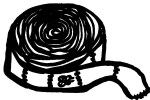
Boomer: This one was a hard one for me to get through. Not that it exceeded my threshold for gore or viscera (I have yet to find a film that shows me I have an upper limit on that), but I found it very hard to stay awake as it hit my ceiling of tedium. As always, your mileage may vary, but I had very little to take away from this one, other than the fact that the coil of skin means the next time I eat a cinnamon roll is going to be an interesting experience.

Alli: I feel weird putting this thought out there, but that first suicide scene is now one of my favorite cinematic moments. It’s just so gross and over the top. I enjoyed every second of it.

Britnee: “Mail me. Hurry and hit the send key. Can’t you see? I’ve waited patiently.” The Dessart hit “Mail Me” has easily become one of my all-time favorite movie songs. I need to find that amazing 8-bit ringtone of “Mail Me” that went off on Mitsuko’s phone. It may have actually been her dead boyfriend’s phone (I can’t remember), but regardless of who’s phone it was, it probably made me laugh more than any other detail in this movie.

Brandon: Britnee, you mentioned that the menacing technology that haunted you most in the movie was the hospital’s fax machine, so I’d like to draw your attention to the film’s trailer. Suicide Club arrived in a very specific time for Japanese horror where the wild success of Ringu inspired a whole wave of technology-obsessed supernatural thrillers (obviously including its American remake, The Ring). As a result, the advertising for Suicide Club leans heavily into the film’s vague thematic similarities with Ringu by recreating its infamous scene of a wet-haired, ghoulish girl emerging from a VHS recording on a television through the hospital’s now-bloodied, hair-growing fax machine. If it’s a visual that was originally intended to be included in the film, I’m glad it was cut, since its similarity to the more popular (and, in my opinion, less imaginative) Ringu would’ve raised unnecessary scrutiny. As a standalone advertisement and, effectively, a short film, though, I think it’s well worth a watch.

Upcoming Movies of the Month
April: Britnee presents Magic in the Mirror (1996)
May: Boomer presents Batman: Under the Red Hood (2010)
June: Alli presents Gates of Heaven (1978)

-The Swampflix Crew

Three Billboards outside Ebbing, Missouri (2017)

My relationship with Three Billboards outside Ebbing, Missouri is very similar to an ill-considered, last-call hookup at a dimly lit dive bar. I’ve always caught a grotesquely macho vibe from the advertising for Marin McDonagh pictures that has made me avoid each one no matter how lauded, as I was immediately turned off at first sight. The barrage of negative think pieces picking at McDonagh’s latest film’s mishandling of American race relations made it even more of an unappetizing prospect, something that somewhat validated my initial instinct to avoid it. There’s a kind of desperate, ticking clock effect to Oscar Season, though, an arbitrary deadline that often pressures me into taking chances on movies I’d typically avoid. With the last couple Best Picture nominees I hadn’t yet seen looking like they’d immediately put me to sleep (apologies to diehard fans of Darkest Hour & The Post), the incendiary divisiveness of Three Billboards stated to look a lot more attractive as an Oscars catch-up prospect. Of course, as most desperate last-call hookups go, the experience was exactly the total disaster I expected & should have known better to avoid.

Frances McDormand stars as a grieving mother who lashes out at her local Missouri police force for not thoroughly investigating the rape & murder of her teenage daughter. Much to the frustration of her son (Lucas Hedges), her not-so-secret admirer (Peter Dinklage), the local sheriff (Woody Harrelson), and everyone else in their small, everybody-knows-everybody community, her vengeful rage is largely misplaced & unproductive. The most dangerous sparring partner she finds in her crusade to shame the local police into action (through inflammatory messages advertised on the titular billboards) is a racist, idiot cop with a reputation for “torturing black folks.” Most of Three Billboards’s cultural backlash has focused on this dangerous small-town cop archetype (performed competently enough by so-much-better-than-this Sam Rockwell), whom many critics believe to have been afforded more empathy than deserved, given his violently racist past. Much like with Andrea Arnold’s awkward portrait of American poverty in American Honey, this redemptive arc for an undeserving racist cop is just one symptom of a larger problem the movie suffers: a British outsider estimating an ill-informed view of American race relations. A long-respected playwright, McDonagh attacks this narrative with a tunnel-vision approach that values dialogue & character work over cultural context. To an American audience, it’s absolutely baffling to set a 2010s narrative about a violent, dysfunctional police force near Ferguson, Missouri without directly dealing with lethal, systemic racism in modern American law enforcement. “Black folks” are mentioned by name periodically throughout, but are largely nowhere to be seen, only checking in occasionally to encourage McDormand’s grieving mother with lines like “You go, girl. You go fuck those cops up.” McDonagh gets so caught up in telling a neo-Western revenge story about the meaningless, self-perpetuating nature of violence (a lesson we’ve had explained to us onscreen countless times before) that he doesn’t notice how many thematic cans of worms he’s opening & leaving unattended in the process. The empathetic portrait of the film’s most flagrantly racist cop is just one small part of that cultural-outsider obliviousness.

To be honest, I had soured on Three Billboards’s tone long before its American race politics naivete could fully sink in. Being willfully unfamiliar with McDonagh’s past works, I can’t claim to know if this film is indicative of his usual style, but I found it to be overwritten & under-directed in a consistently frustrating way. It felt like watching libertarian blowhard Bill Maher attempt to bring his Politically Incorrect brand of social commentary to the world of live theatre. When I say I’ve always caught a whiff of grotesque machismo from the look of McDonagh’s works, I should probably specify that it’s a pseudo-intellectual machismo – the kind of darkly comedic, overwritten tone that would appeal to Philosophy-major college freshmen who waste countless hours on Reddit & worship at the altar of The Boondock Saints. Indeed, even while featuring a “strong female” lead, Three Billboards feels like a grotesquely macho echo of the worst aspects of the highly-stylized, post-Tarantino dialogue that poisoned indie cinema for much of the 90s. I’m not fully convinced by the argument that Tarantino writes grimy genre throwbacks specifically to create an excuse to use racial epithets, but that exact criticism nagged me throughout Three Billboards. The performative, in-your-face way the film discusses fat people, “retards,” “midgets,” “wife-beaters,” a few more hateful terms I’d rather not repeat, pedophilic priests, rape, cancer, and suicide in a “transgressively” “humorous” tone was, to put it kindly, exhausting & juvenile. Women are lovingly addressed as “bitch” & “cunt” as pet names in a way that feels initially phony, then gratuitous in repetition. It got to the point where even the inciting incident of a teenage girl being “raped while dying” numbed me into not caring about the objectively horrific act’s revenge, since it was written in such a crassly flashy tone. Given Three Billboards’s Oscar nominations for Best Picture & Best Original Screenplay (among others), I suspect many audiences read this “non-PC” demeanor to be bravely truthful about “how things really are” in the American South. I personally found it to be empty, pseudo-intellectual macho posturing, like watching an #edgy stand-up comedian get off on “triggering snowflakes” in a two hour-long routine that supposedly has something revolutionary to say about life & humanity, but is covertly just a reinforcement of the status quo.

The worst movie experiences are always the comedies that fail to make you laugh. I haven’t felt as isolated in a laughing audience watching Three Billboards since I allowed myself to be culturally pressured into watching the similarly #edgy Deadpool. The only comedic bit that got a chuckle out of me was a brief scene where Frances McDormand talks to her house slippers, which feels like a nice glimpse into a much better screenplay. The discomfort of the film’s failed dark humor is only intensified by its demand to be taken (very) seriously. The suddenness of the brutality and the omnipresent somber country music feel like hallmarks of a dead serious drama, but there’s an awkward stage play sheen to the dialogue that doesn’t allow that tonal sobriety to sit right. References to Oscar Wilde and unprompted questions like “Do birds get cancer?” feel entirely foreign to a film that’s supposed to capture the Ugly Truth of the American South. McDormand gets by relatively unscathed in her central role, but the stage play quality of the dialogue forces most actors in the film into awful, flat performances we already know for a fact they’re better than (talented youngsters Lucas Hedges, Caleb Landry Jones, and Samara Weaving are especially embarrassing here). Sam Rockwell’s teetering between comedic buffoon & explosive threat is a microcosm of the film’s problems balancing #edgy dark humor with overwritten stage play drama, so it makes sense that his character would draw most of the film’s backlash. He’s just one detail indicative of larger, deep-seated issues, though, a mascot for the film’s many ills.

I’m going to tell you an open secret: we’re unpaid, non-professionals here at Swampflix, so we don’t often see moves we have zero interest in. There’s no one to assign them to us with a monetary reward attached, so there’s really no reason for us to seek out movies we know we aren’t going to like (which helps explain why the vast majority of our reviews are rated three stars or higher). Awards season attention & high critical praise (or at least extensive critical conversation) are among the few factors that can lead us outside our comfort zone, which often means our lowest-rated movies are among the most critically lauded titles of any given year. I’m admitting all this to reiterate that I had no business watching Three Billboards outside Ebbing, Missouri. The early advertising convinced me I would dislike it, the second-wave critical backlash confirmed that suspicion, and then I allowed its high profile within the Oscars Conversation to convince me to give it a shot anyway. I can’t honestly say it’s one of the worst films of 2017, because I had the non-professional’s freedom to avoid moves I likely would have found to be worse. I can only report that it was one of my least favorite screenings of a high-profile movie from last year and I owe that experience to last minute desperation, FOMO, and The Academy.

-Brandon Ledet

The Big Deal About Call Me by Your Name (2017) is That It Isn’t a Big Deal at All

While I wasn’t quite as knocked on my ass by the Academy Award-nominee Call Me by Your Name as Britnee seemed to be in her review, I do share in her appreciation of its merits as an intoxicating sensory experience. She writes, “I could taste the fresh apricot juice as it was flowing down Oliver’s throat. I could feel the warmth of the sun as it was beaming down on Elio’s face. Even the use of the music in the film was phenomenal.” Like with Luca Guadagnino’s previous directorial effort A Bigger Splash, this is a film that often compensates for its most glaring narrative shortcomings by simply shining as a gorgeous object, a portrait of life “somewhere in Northern Italy” that appeals to all five of the senses. I can’t recall a work of art that’s served as a better advertisement for an Italian life of leisure since the wonderfully-penned Gabrielle Hamilton memoir Blood, Bones, and Butter. I wasn’t 100% convinced by the passion shared between Elio (Timothée Chalamet) & Oliver (Armie Hammer) in this gorgeous backdrop the way Britnee was, but in a way, the soft, casual edge to their summertime romance is a huge part of the film’s appeal. Much like the ease of drinking fresh-squeezed juice, going for a swim on a whim, or plucking a book to read from the endless towers of them stacked about the open-windowed house, the same-sex romantic tryst at the center of Call Me by Your Name is a casual indulgence in an ancient pleasure. The only air of tragedy to their extended hook-up in this sun-drenched Eden is that it’s doomed to be temporary. That casual approach to same-sex romance & sensuality is extremely rare in cinema’s coming of age narratives about queer self-discovery, especially the ones set in the AIDS-paranoid, legally malevolent days of the early 1980s. It’s wonderful to see that the Big Deal about Call Me by Your Name isn’t made to be a big deal at all.

Something that caught my eye in Britnee’s review was that she made a point to note that Elio confesses his desire to (the older, more confident) Oliver “without stating that he is homosexual or bisexual.” This may be a result of the film’s less identity politics-obsessed 1983 setting, but it’s very much important to its overall appeal. I’ve been taken aback by a few critical takes on the film that posit Elio & Oliver as closeted homosexual men, when my experience with their shared arc was explicitly framed as a bisexual awakening. In a typical cinematic version of this story, these two young men would only be flirting & sleeping with women as a cover for their true passion, a dangerous romance that would inevitably end in tragedy (think of titles like Brokeback Mountain or Boys Don’t Cry for context). Here I never question that the leads enjoy sleeping with women any more than I question them enjoying fresh fruit or afternoon swims. Their own connection may be more passionately intense & more of a social taboo (due to their significant age gap just as much as their shared gender), but that feels like it has more to do with their mutual compatibility than any external factors. A more convincing case could be made that Elio’s academic father (the consistently magnificent Michel Stuhlbarg) is a closeted homosexual man, but his hints about his own sexual orientation are left ambiguous at best. The most you can surmise from the fatherly advice carefully doled out throughout the film is that he believes what Elio & Oliver have is a rare, beautiful thing. Again, I don’t buy that the summertime fling the two leads share is as rare or as special as it’s ultimately framed to be, but I do find a lot to admire in this mode of subtle parental encouragement. In a more typical work, Elio’s parents would have found out about their tryst and made a huge dramatic gesture out of shutting it down. Instead, they quietly allow it to blossom & wither in its own time, as if it were the most natural thing in the world (which it kind of is).

The exchange that best solidifies the connection between the ease of Oliver & Elio’s romance and the general idyllic ease of a life on a Northern Italian villa is the one involving The Peach. Between his bored, restless indulgences in reading, drinking, swimming, sleeping, playing music, and having sex (what a life!), Elio often finds himself alone & sexually frustrated in the few private spaces he can find in his parents’ expansive summer home. In the most pivotal of these moments, he finds himself masturbating into a fresh peach, only to awake embarrassed when Oliver discovers him sleeping next to the evidence. To Elio’s horror, Oliver licks & threatens to eat the defiled, oozing peach. It’s a jarring exchange, but one that’s played as casually as the glazed petit four scene in Toni Erdmann, rather than for the shock value humor of similar scenes in Wetlands, Pink Flamingos, or American Pie. Elio is too embarrassed & ashamed to see it, but Oliver’s instinct to Eat The Peach in that scene is a natural extension of the indulgent, leisurely life they’ve been living all summer. Oliver is an overconfident, lumbering bro with a voracious appetite for Experience. The way he downs whole glasses of juice, dances with wild abandon, and smashes into even the daintiest of breakfasts is almost beastly, but it’s an appetite for life that makes the most out of the many sensory pleasures that enrich the Northern Italy countryside. Elio could use some of that unearned confidence himself, which is why it’s wonderful to see him indulge in more pleasures outside the shade of his bedroom as the film progresses. Eating The Peach is such a great summation of the careful, delicate hedonism of the summer the two young men share together over the course of the film. It’s kind of a shame the movie ultimately chickens out on fully depicting it (which I understand was not the case in the André Aciman source material).

Not everything in Call Me by Your Name worked for me. The Oscar-nominated Sufjan Stevens songs were more of a distraction than an enhancement. For all the film’s confident comfort in bisexuality, I found it a little odd that its onscreen nudity was all boobs and no peen. Less superficially, I never fully bought into the once-in-a-lifetime significance of the central romance, nor into Oliver’s transformation from “impolite, arrogant” bro to sensitive soul. Again, though, Guadagnino’s eye for gorgeous, natural imagery and all-encompassing sensory pleasures more than compensate for any narrative missteps (the intensely-lit Psychedelic Furs dance sequence was the most I’ve been excited for his upcoming Suspiria remake to date). Overall, this is a tenderly beautiful & surprisingly humorous delight. Speaking more culturally than personally, I believe the film’s greatest achievement is in not pushing to be more than that. It’s so encouraging to see between films like Call Me by Your Name & Princess Cyd that there are bisexual coming of age stories finally being told onscreen where the awakening & the romance are The Big Deal instead of the sexuality itself. There’s too many kinds of queer stories yet to be told onscreen for every major non-hetero release to be a coming-out misery narrative, as feels like has been the case for decades. Elio & Oliver believe their summertime romance to be a bombshell secret, a fear contextually informed by the film’s early 80s temporal setting, but nearly everyone around them perceives what they’re up to and does nothing to obstruct it with disapproval. The movie is ultimately casual & delicate in its depiction of an extended same sex hook-up, leaving only a young man’s broken heart behind in its inevitable conclusion (a wound that always heals with time, no matter how traumatic it feels in the moment). Elio & Oliver’s brief, passionate fling is presented as just one Northern Italy delight among many, no different than a good book, an afternoon swim, or a freshly squeezed glass of juice. The only way for that messaging to be clearer would be for Oliver to Eat The Peach and shrug at the camera, but I suppose that would have been making a Big Deal out of nothing at all.

-Brandon Ledet

The Emergence of John Woo’s Muse in A Better Tomorrow (1986)

When you try to conjure a single image of what visually distinguishes John Woo as a director, there are plenty of choices in iconography: doves, slow-motion, speedboats, operatic gun violence, explosions, etc. There’s only one actor who can claim to serve as a visual calling card for Woo’s decades-long career, however: Chow Yun-Fat. To date, the actor and the director have collaborated on five feature films (and one video game), far more than any other repeating player in Woo’s career. The most iconic of these collaborations, of course, is our current Movie of the Month, Hard Boiled, wherein Chow Yun-Fat portrays a tough-as-nails cop who plays jazz clarinet & raps to babies (between hyperviolent gunfights). Their first collaboration together, however, was just as significant to their respective careers, as it was both the director’s and the actor’s first exposure to wide, international attention. Produced by Hong Kong action legend Tsui Hark, John Woo’s 1986 feature A Better Tomorrow was his first film to earn a significant critical & commercial breakthrough. With a miniscule budget and almost no advertising, the film broke Hong Kong box office records and went on to even greater international success, planting the seeds of the “heroic bloodshed”/“gun fu” genre Woo inspired. Even though he was cast as second-bill in the film, Chow Yun-Fat’s charisma was a major factor in that success. By the time A Better Tomorrow reached international distribution, it was his face that dominated the advertising, not the film’s lead. John Woo and Chow Yun-Fat arrived on the international stage as a unit, which helps explain why they remained frequent collaborators in the years leading up to their shared creative pinnacle in Hard Boiled.

A Better Tomorrow is the Mean Streets to Hard Boiled’s GoodFellas. It’s a cheaper, rougher-around-the-edges dry run for an aesthetic Woo would later polish & perfect, but there’s a distinct D.I.Y. punk energy to that cheapness that makes it an exciting watch. All the speed boats, slow-motion takes, explosions, and operatic gun violence that would come to define Woo’s career are present here (minus maybe the obsession with birds) but the “How did he do that?” factor of his appeal as an action spectacule craftsman is wholly supplanted by a handmade, indie quality (by necessity of budgetary restraints). Woo’s tendency to alternate between sweeping, operatic action and slapstick absurdity remains, however, even if his over-the-top vision is staged on a relatively smaller scale. The story also shifts slightly from Hard Boiled’s immersion in illegal arms trading culture to the not-too-dissimilar world of counterfeit money production (just one year after Friedkin’s stylistic action landmark To Live and Die in L.A. tackled the same topic), but the thematic concerns of obligation, betrayal, and honor remain the same in this test run. Two brothers, one a cop and one a gangster, are divided by their relationship with the law, but tragically reunited in their dual pursuits of avenging their father’s murder. Clichés of the counterfeiter brother struggling to find his way out of the inevitable cycle of crime are abound, but like all John Woo films, A Better Tomorrow is much more distinguished in its stylistic flourishes than it is in its narrative innovation. Even though the film’s story feels very common to 1980s action cinema, its peculiar tone and aesthetic carved out an entirely new style of filmmaking with influence that would reach far beyond Woo’s future projects like Hard Boiled. Chow Yun-Fat’s screen presence was very much at the center of that burgeoning aesthetic, something audiences immediately latched onto and Woo was smart to repeat.

Chow Yun-Fat portrays neither of the cop & gangster brothers at the center of A Better Tomorrow’s conflict, but rather a second, more jovial counterfeiter who serves as the doomed brother’s partner in crime. The two gangsters grin & rough-house like school boys, making a life of thievery & gun violence seem like it’d be a blast (until you get blasted dead). It should come as no surprise that the most sketched-out Bad Boy would come across as the coolest character in a highly stylized action film. When we first discussed Hard Boiled, we singled out Philip Kwok’s side character Mad Dog for similar reasons; Woo lovingly shoots both characters taking out entire rooms of fellow criminals in cool, confident, slow-motion shootouts that make them look like villainous gods. Chow Yun-Fat somehow looks even cooler than the eye patch-wearing, motorcycle-riding Mad Dog, however. You can practically hear Quentin Tarantino furiously taking notes for what would become Reservoir Dogs as Chow Yun-Fat strikes a pose in a handsome suit & sunglasses combo between his various shootouts. At the very least, Tarantino cites the extended shootout in A Better Tomorrow 2 as being a direct influence on his aesthetic. By the time Chow Yun-Fat was lighting his cigar with flaming dollar bills on the international posters for A Better Tomorrow, Woo knew exactly what kind of hot ticket stylistic commodity he had on his hands. In later collaborations like The Killer & Hard Boiled, Chow Yun-Fat was smartly put front & center as Woo’s preferred lead. He even managed to maintain his bad boy appeal in those pictures by continuing to play nuanced anti-heroes the audience could find both enviably cool and dangerous as a violent threat. Before slow-motion pigeons came to define the John Woo brand, Chow Yun-Fat was already an established, essential component of that aesthetic.

A Better Tomorrow’s status as a less-polished Hard Boiled has seemed to persist over the last few decades. Whereas the Dragon Dynasty DVD copy of Hard Boiled I was able to borrow form the library was slickly packaged with a entire disc of extras, that same library’s copy of A Better Tomorrow was a cheap SD transfer with a British vocal dub. That cheapness is admittedly charming in contrast to Hard Boiled’s high production values, though, a feeling backed up by the score’s nonstop onslaught of corny synths & electric drums. In 1986, films like A Better Tomorrow & To Live and Die in L.A. (with its own deliciously corny Wang Chung soundtrack) were not cheesy at all; they were the cutting edge in action cinema. A Better Tomorrow’s violence isn’t as immediate or as frequent as Hard Boiled’s, but it is a brutal, bloody contrast to that cheap synthpop cheese in an admirably mean, fully-committed way that makes the film feel well worth a look no matter how shoddy its home video format can be. The entertainment value of that contrast was obviously not lost on 1980s audiences either, as A Better Tomorrow earned two franchise follow-ups (one directed by Woo and one directed by Tsui Hark himself) and inspired an entire generation of action cinema devotees, from “heroic bloodshed”/”gun fu” imitators to Tarantino & his own generation of imitators to beyond. It’s only right that Chow Yun-Fat was along for the ride as John Woo himself repeated, revised, and refined the aesthetic established in A Better Tomorrow until he perfected it in Hard Boiled. This is the leaner, meaner test run for that more formally accomplished gun violence opera, but its value as a stylistic innovator & industry influencer is pronounced, not least of all because of the way Chow Yun-Fat embodies its distinct sense of action cinema cool onscreen.

For more on February’s Movie of the Month, the John Woo action cinema classic Hard Boiled, check out our Swampchat discussion of the film, this look at its American follow-up, Hard Target, and last week’s examination of the action genre spoof it inspired, Shoot ‘Em Up.

-Brandon Ledet

Shoot ‘Em Up (2007) and the Value of John Woo’s Sincerity

When John Woo jumped down from the heights of his Hong Kong action heyday in Hard Boiled to the more pedestrian American mold of action cinema in its follow-up, Hard Target, you could immediately feel a tampering of his penchant for excess. It takes Hard Target nearly an hour of contextual narrative buildup before the over-the-top excess of Jean-Claude Van Damme punching rattle snakes, gangsters shooting up Mardi Gras parade floats, and Wilford Brimely going full Crazy Cajun in the film’s third act. Hard Boiled, by contrast, starts with one of its most chaotically violent set pieces (the showdown staged at the bird-watching tea house) and mostly maintains that same intensity throughout. Hard Target plays a little like a compromise, with American studio execs only allowing Woo’s sensibilities to show at the seams instead of flying at the screen full-force at every possible opportunity, as they had in his past Hong Kong efforts. As much as the 90s action thrillers that followed in the footsteps of Hard Boiled and its Hong Kong contemporaries were highly entertaining, they were often self-aware about not coming across as silly in a way the films that inspired them weren’t. Hard Boiled is entirely unembarrassed by its indulgences in excess and cheese. Tequila (Chow Yun-Fat) doesn’t play jazz clarinet or drive around to cheesy synth-pop in a convertible as a sly wink to the audience; he does it because it supposedly looks cool. Mad Dog (Philip Kwok) doesn’t wear an eye patch or ride his motorcycle through a wall of flames to distract the audience from his pro wrestling-simple villainous persona; he does it because it obviously looks cool. Oddly, one of the few American films directly influenced by Hard Boiled that nails its unembarrassed indulgence in excess & cheese is the 2007 action genre spoof Shoot ‘Em Up. Even as a loving parody, Shoot ‘Em Up feels more like a faithful carbon copy of Hong Kong excess than even Hard Target, which John Woo himself directed. Unfortunately, though, it fatally lacks Woo’s sincerity.

Shoot ‘Em Up telegraphs its nature as an ironic comedy by making the genre it’s spoofing clear in its title. It’s as if a slasher send-up were titled Horror Film or, you know, Scary Movie. Director Michael Davis was inspired to write the film after seeing Hard Boiled and being delighted/baffled by the sequence during the climactic shoot-out when Tequila teams up with a newborn baby to defeat the film’s legion of faceless baddies. Like Hard Boiled, Shoot ‘Em Up drops you into its violent, chaotic narrative with very little introductory context. Clive Owen stars as a drifter who gets caught in the crossfire of an opening gunfight, where his instinct to protect a pregnant woman in labor results in delivering the baby himself, mid-shootout. He separates the umbilical cord with a bullet from his pistol. The mother dies in the fray. The drifter finds himself carrying & the protecting the newly orphaned baby through many more over-the-top gunfights, but never any that reach the entertainment value of the film’s opening minutes. Shoot ‘Em Up’s rapid-fire, ZAZ-style spoof humor means that the jokes are abundant and any one bit doesn’t last for long. They’re also just rarely funny (which might be why the Scary Movie franchise came to mind). A rare gag like the baby being swapped out with a robo-decoy or the drifter leaving them on a filthy public bathroom floor to clean his gun on a changing table can be inspired. Mostly, though, the film is painfully unfunny & grotesquely macho, especially in its treatment of sex workers (practically the only women in sight) and in every single thing that Paul Giamatti says & does as the villain. By the time the film reaches for a second joke about how shooting a gun is like “blowing your load,” its difficult to care that one of its best gags was later blatantly ripped off in the deranged Nic Cage vehicle Drive Angry. Shoot ‘Em Up was built around a borrowed concept anyway and Drive Angry at least recognizes the value in playing the material straight/committing to the bit.

I don’t mean to suggest that Hard Boiled is unintentional in its humor. In the baby-themed shootout sequence that inspired Shoot ‘Em Up, Chow Yun-Fat delivers a great physical comedy performance, protecting the infant’s ears between gunshots & even singing it a hip-hop lullaby. The intentional humor of the sequence’s over-the-top excess is not in question. Where Hard Boiled is more successful is in its in-the-moment sincerity. Chow Yun-Fat is straight-faced & fully committed, playing the baby scene & the jazz clarinet as if they were totally typical to the action genre. Clive Owen’s drifter in Shoot ‘Em Up, by contrast, is a literal stand-in for Bugs Bunny, the king of winking at the audience. Before he even fires a gun, Owen is shown loudly gnawing on a carrot on a public bench, a habit he continues throughout the film to clue the audience in that it’s all a big joke. Unfortunately, the joke isn’t all that funny and only gets less impressive as it’s driven home with repetition. The entire film plays like the dick-shooting gag in Our RoboCop Remake, except that it runs for 90 minutes instead of 90 seconds. Its wacky! insincerity & ultimate lack of imagination (not to mention its boys-will-be-boys misogyny) are exhausting at that length. I admire Shoot ‘Em Up for capturing the spirit of the nonstop, over-the-top excess of 80s Hong Kong action cinema that most other American films failed to imitate in that movement’s wake. I just wish it had learned a lesson about the value of sincerity & playing it straight while admiring the humorous excess of films like Hard Boiled. John Woo’s comedic touches are twice as funny without trying half as hard to earn a laugh. Their unembarrassed embrace of cheese allows them to mix in with the over-the-top action seamlessly, creating a much more genuinely enjoyable product as a result.

For more on February’s Movie of the Month, the John Woo action cinema classic Hard Boiled, check out our Swampchat discussion of the film and last week’s look at its American follow-up, Hard Target.

-Brandon Ledet

Krewe Divine 2018

Last year, a few members of the Swampflix crew decided to finally grow up and get serious about Mardi Gras. We collectively shed our annual personal crises about what themes to include in our Fat Tuesday costuming by pooling our resources to pray at the altar of a single cinematic deity: Divine. Arguably the greatest drag queen of all time, Divine was the frequent collaborator & long-time muse of one of our favorite filmmakers, John Waters. Her influence on the pop culture landscape extends far beyond the Pope of Trash’s Dreamlanders era, however, emanating to as far-reaching places as the San Franciscan performers The Cockettes, the punkification of disco, RuPaul’s Drag Race, and Disney’s The Little Mermaid. Our intent was to honor the Queen of Filth in all her fabulously fucked-up glory by maintaining a new Mardi Gras tradition in Krewe Divine, a costuming krewe meant to masquerade in the French Quarter on every Fat Tuesday into perpetuity.

Our initial krewe was a small group of Swampflix contributors: site co-founders Brandon Ledet & Britnee Lombas, podcast co-host CC Chapman, and repeat podcast guest Virginia Ruth. This year we were joined by local drag performer Ce Ce V DeMenthe, who frequently pays tribute to Divine in her performances. There’s no telling how Krewe Divine will expand or evolve from here as we do our best to honor the Queen of Filth in the future, but for now, enjoy some pictures from our 2018 excursion, our second year in operation as Swampflix’s official Mardi Gras krewe:

Eat shit!
❤ Krewe Divine ❤

John Woo Goes Hard, Goes American

There seem to be two distinct markers for the creative decline of the Hong Kong action cinema glory days that started in the mid-1980s: the handing over of Hong Kong to mainland China in 1997 & the movement’s biggest directors transitioning into helming Hollywood blockbusters, also in the mid-1990s. Up until Alli presented Hard Boiled as a Movie of the Month selection I was only familiar with John Woo’s work after these two declines in quality. Titles like Face/Off & Mission: Impossible 2 have a kind of slickly-produced charm to them, but are nowhere near the quality of action spectacle offered in Woo’s Hong Kong heyday. The interesting thing about Hard Boiled, though, is that it finds John Woo on the cusp of both transitions. Hard Boiled may be the director’s most often-cited work from his Hong Kong glory years, but it arrived just before his transition into a Hollywood big shot, which would steer his career for the remainder of the 90s. This means it’s also his final contribution to Hong Kong cinema before the handover to mainland China after 50 years of British colonial rule, a transition many mark as a downfall for the region’s action cinema boom. His first foray into American action cinema kept the spirit of his Hong Kong years alive, though, so much so that I often get its title mixed up with Hard Boiled’s. Like so many Hong Kong directors gone mainstream, John Woo began his Hollywood career helming a Jean-Claude Van Damme action vehicle, this one titled Hard Target. Watching the film in retrospect, it’s initially difficult to see what Woo brings to the picture that you wouldn’t find with any nobody American director, but then the intense kineticism & absurdist tone of his Hong Kong work take over as it barrels towards a blissfully chaotic climax. This cusp before Woo’s creative decline, where he effectively goes hard, is possibly his greatest sweet spot.

Hard Target has more than an American sensibility & a recognizable action star going for it in the way of making Woo’s style palatable to me specifically; it’s also set in my home city. In the opening sequence a homeless man is being hunted with a crossbow in The French Quarter, eventually succumbing to the steel-tipped arrow on the banks of the Mississippi River. Some details in this sordid take on New Orleans are a little iffy, like everyone’s weirdly thick Southern accent (whereas local Y’at accents have a cadence all to their own) or that a man being hunted on Bourbon Street would ever be turned away for refuge, as those bars never really close in real life. By the time Wilford Brimley’s cartoon Cajun invades the screen, though, the discrepancies become highly entertaining instead of eyerollingly awkward. I also have to admit that the film’s overall estimation of New Orleans as a heartlessly hedonistic city that world allow rich white men to openly hunt the homeless in the streets for sport (in a modern retelling of “The Most Dangerous Game”) is harsh, but fair. The scenario that allows this absurd evil where it’s “the pleasure of the few to hunt the many” is a little oddly structured, as it’s a police strike that leaves the city temporarily lawless. You’d think corruption and collusion among the police force & the wealthy hegemony would drive the plot instead of this weird anti-union political bent, but there’s still some interesting class politics at work in the film all the same. In its most poignant moment, a hunted homeless man desperately pleads for help from Bourbon Street tourists, who coldly turn their backs on him as if he were begging for pocket change. Most of the film’s local flavor is used as a conveniently novel backdrop (majestically so in the case of a climactic shootout in a Mardi Gras parade float warehouse), one I’m always tickled to see onscreen. However, that tourist-begging sequence actually has a sting of truth to it as a jab to New Orleans’s uglier side as a hedonistic playground for tourists that doesn’t give a shit about its own ailing population.

Of course, for most American audiences (since, mathematically speaking, most Americans have never lived in New Orleans), the main window into Woo’s appeal offered in Hard Target was his handle on the action. Jean-Claude Van Damme is meant to hold our hand through this cultural exchange as our action hero, although Woo makes him just as (charmingly) goofy as Chow Yun-Fat’s jazz clarinet enthusiast appears to be in Hard Boiled. Contextualizing his Belgian accent as a result of being a Cajun drifter, JCVD stars as the hilariously named Chance Boudreaux. A former medaled Marine who’s now desperately strapped for cash, Chance is introduced as a bizarre set of images: a single earring, a pronounced mullet, a slurped-up bowl of gumbo, etc. Just as cheesy jazz bar noodling follows around Tequila in Hard Boiled, Chance is scored with consistently cheesy blues guitar-riffing at every appearance. Early in the film, you get the sense that Woo’s directorial style has been significantly damaged in its exportation to America. It seems as if only his corniest stylistic impulses had made the jump, with none of the over-the-top action spectacle that contrasted them. Once the film leaves the city limits to meet Wilford Brimley’s Cajun caricature in the swamp, Woo’s personal touch becomes much clearer. Stunts, explosions, gunfire, motorcycles, and hard asses biting heads off snakes fill the screen in a nonstop, absurd cacophony strung together from a mind-bogglingly long parade of individual camera setups. What easily could have been a forgettable JCVD cheapie with a vague point to make about class politics and our casual disregard for the homeless transforms into a beautiful, explosive indulgence in over-the-top hyperviolence. The difference between John Woo and his American counterparts was that he went all in on action spectacle, where others would pull back & leave room for the audience to breathe. The problem is that American movie studios were much less accommodating to that violent fervor than the financiers that he was used to working with in Hong Kong.

As you might suspect, the reason Woo’s touch for over-the-top spectacle doesn’t initially come through in Hard Target is that American movie studio tinkering was holding him back. Universal Pictures executives had zero confidence in Woo (an unease they pinned entirely on a language barrier) despite his reputation for delivering all-time classic action vehicles like Hard Boiled. It took recognizable, bankable names like Jean-Claude Van Damme and Sam Raimi (who was hired to hang around on set “on standby” to take over direction in case Woo “couldn’t handle” the production) to vouch for his genius for the studio to give him any creative control. Beyond that, 1990s MPAA censorship was much stricter on violence than its Hong Kong equivalent, so Woo had to make extensive cuts to Hard Target’s onscreen bloodshed to secure even an R rating. He smartly got around this hurdle by saving most of the absurd ultraviolence for the film’s Mardi Gras warehouse climax, making it count where he could. Still, you can feel early in the film how the softer edges on the violence (along with the shortened 90 min runtime, which leaves little room for elaborate action set pieces) stifled what made a John Woo film special in the first place. Hard Target is a deliciously silly action vehicle for JCVD’s brand of macho violence, maybe even one of his best, but it isn’t nearly as overwhelming in its creative heights as Hard Boiled, the Woo film that directly preceded it. As a pair, the two Hard films demonstrate exactly how Woo’s sensibilities were dulled & distorted in his transition to the American studio system, leaving the glory days of Hong Kong’s action cinema heights firmly in his rearview. The comparison is perhaps unfair to Hard Target, which eventually excels in an American action cinema context once it warms up, but it does help illustrate what was so spectacular about Hong Kong action’s heyday and what was lost in its slow 1990s fadeout, thanks both to American influence and to the culture of Hong Kong itself fading away.

For more on February’s Movie of the Month, the John Woo action cinema classic Hard Boiled, check out our Swampchat discussion of the film.

-Brandon Ledet

Movie of the Month: Hard Boiled (1992)

Every month one of us makes the rest of the crew watch a movie they’ve never seen before & we discuss it afterwards. This month Alli made Britnee, Brandon, and Boomer watch Hard Boiled (1992).

Alli: Modern action cinema is full of shaky-cam, grit, chaotic set pieces, and giant robots (nothing against giant robots, they’re just the sparkling vampires of the contemporary action film). Sometimes a single film features all four of these and it’s a mess. Every summertime action movie season, 90% of the films are trash (in the bad way). I know we can’t expect a Fury Road every year, but there’s a certain daring artfulness and style missing from the movies that Hollywood churns out year after year.

To be fair, action films are difficult to calibrate. With too many explosions & gun shot scenes and not enough character development, they’re just silly. Too few kapow!s and they’re boring. No tension and they’re a flop. They need the perfect balance of fun and danger to excel as cinematic junk food.

John Woo, while he has made his share of flops, is one of action cinema’s greats, and Hard Boiled is his masterpiece. It’s a perfect blend of style and tension. He manages to keep the stakes just as high as the amount of fun. The sequences of explosions and stunts are beautifully choreographed, displaying the influence of kung fu movies that Honk Kong is historically known for. The characters, while classic tropes, are compelling, with even small side characters being afforded a life of their own. It manages to follow the blueprints laid down by the movies before it, while also exploring new territories.

A hard-boiled cop,”Tequila” (Chow Yun-Fat), and his partner go on a stake-out in a tea house to take down gun-smuggling gangsters. The tea house is full of pet birds (a tradition called bird-walking) and shady underworld types. When the stake-out descends into a extraordinarily violent shootout in a flurry of feathers and bullets, Tequila’s partner is killed. He swears revenge. Against his boss’s orders, he tracks down those responsible and with the help of a deep undercover cop, Alan (Tony Leung). Together, they take the entire enterprise down in one final battle. That violent climax happens to be staged inside a hospital, where there’s an underground gun cache. Patients are killed, babies are saved, and of course the whole thing is blown up spectacularly.

I only briefly mentioned the side characters, but my favorite is “Mad Dog,” played by Phillip Kwok. He’s a motorcycle-riding, badass henchman. At some point he loses an eye and the eye patch only makes him look cooler. Brandon, what did you think of Mad Dog? Do you have any other favorite characters?

Brandon: “Mad Dog” is definitely a clear stand-out among the film’s legion of baddies. Compared to his heartless crime boss, who is coded to be Pure Evil merely for being the only player around with Caucasian features (a common theme in eternally typecast Johnny Wong’s career), Kwok’s eye patch-wearing motorcyclist is a relatively complex character who evolves as the film progresses. When his diabolical De Facto White Guy boss demands that he put innocent hospital patients, including babies, in harm’s way during the climactic gunfight, he refuses to oblige out of a sense of human decency. That means a lot in the greater story about an illegal arms business gone mad, where money means more than lives and no human obstacle is sacred. Hard Boiled is very economical with its characterizations, presumably out of necessity. Tequila’s self-contradiction as a tough guy cop who plays jazz clarinet, Alan’s in-too-deep psychological breakdown expressing itself through his origami hobby, and even Mad Dog’s eye patch-wearing leather demonry all have a pro wrestling quality as personality traits; you have to instantly know via visual language who is Good and who is Bad to leave room for the much more complex & fully-developed action set pieces to flourish. Mad Dog & Alan are allowed (to borrow a wrestling parlance) face-turns in their respective roles, which makes them more interesting than other, more static villains & side characters, but they’re still (as Alli points out) classical archetypes. Even with far less screen time, Mad Dog makes more of an impression than Alan does, though, mostly because he just looks cool

My favorite side character in the film gets even less screen time than Mad Dog, but to even greater effect. It’s the chubby little baby Tequila partners with in the climactic gunfight. In an action sequence so iconically bonkers it features heavily on the film’s poster despite having fuck all to do with arms dealing, Tequila & his fellow cops have to save a nursery full of newborn babies by smuggling them out of the hospital window in the middle of a chaotic gunfight. I rolled my eyes a tad at the way the perpetually sidelined Lady Cop is finally given something to do (besides receiving flowers) in this scene, only for it to be the domestic work of caring for children. That unease is more than compensated for, however, when Tequila pairs up with one baby in particular who was left behind in the flaming hospital. Chow Yun-Fat’s comedic rapport with this fat-cheeked baby is adorable, especially in contrast to the bursts of gunfire he has to interrupt to soothe the baby with coos & a novelty rap song (!!!). The baby isn’t just an adorable mascot in this scene, either. He gets actively involved in the violent mayhem by putting out Tequila’s clothes fire with his piss, effectively saving the day. Even without this absurdist touch, Hard Boiled would’ve been instantly recognizable as an over-the-top action classic, but that exchange really helped seal it for me, which makes the chubby piss-baby an easy pick for MVP.

Britnee, since character development is somewhat secondary to Hard Boiled‘s complex set pieces & stylized violence, I’d like to know which action sequences stood out to you as favorites. Besides the bird cafe & hospital shootouts Alli & I already mentioned, there’s a nonstop flood of mayhem that spreads throughout all corners of Hong Kong: public libraries, warehouses, shipping docks, etc. Was there any one set piece that stood out to you as a particular highlight?

Britnee: I have never seen an action film with this much . . . well, action. The shootout scenes seemed to last forever and the effects were top-of-the-line. Needless to say, there’s too many action sequences to choose from. The almighty hospital shootout scene is probably the most memorable in the film for me, mainly because I can’t think of any other action film that has such a violent scene set in a hospital. Staging so much violence in such an innocent background seems almost taboo, and I think that Woo did his best to make sure that viewers were on the edge of their seat for that sequence. I mean, newborn babies were dangling from a cloth outside a hospital window while the hospital itself was blowing up.

The hospital sequence may have been awarded Most Memorable, but I have to say that my favorite action set piece is the one in which dear Uncle Hoi is killed in the warehouse. I still can’t figure out how all those explosions and gunshots could occur in such a small space with so many survivors. It’s almost as though the characters in this scene were immortal; they were able to withstand untold amounts of gunfire and explosions. Not only was the action mind-boggling, but my favorite moment in the entire film occurs in this sequence. Amidst all the chaos, a motorcycle that is engulfed in flames plows through the crowd. I remember this moment being in slow motion, but it’s possible that the slow motion occurred only in my mind. My jaw dropped and a long “whoaaaa” fell out. It was so beautiful and terrifying at the same time, much like this movie as a whole.

There is a scene in Hard Boiled that I haven’t been able to shake since watching it a few weeks ago. It’s the final scene in which Alan is throwing his origami cranes into the ocean from his sailboat. Prior to this scene, Alan shoots himself in the stomach to give Tequila a chance to shoot Wong. Part of me feels like he really didn’t die because he would be smart enough to wear a bulletproof vest, considering the situation. Alan jokes with Tequila about leaving everything behind and starting anew in Hawaii a couple of times throughout the movie, so I wasn’t sure if that’s what was actually happening in the final scene or if this was Alan’s ghost fulfilling his dream.

Boomer, what is your take on the film’s ending? Did Alan really die? Or did he survive the gunshot?

Boomer: I like that this is left intentionally vague but tempered by heavy allegorical imagery that permeates the film’s final scenes. We see Da Chief setting Alan’s file aflame in his office, just as we saw the docket for the previous killed-in-action undercover officer burned, a kind of memorial for a fallen friend. I don’t think that Alan was wearing a vest, though. We did see what contemporary Kevlar vests looked like in the final battle when the more heavily-armed police forces arrive at the hospital; they turn these armaments into makeshift baskets for some of the last few infants left behind in the maternity ward, and we see these same officers get eaten up by bullets shortly thereafter. As much as I want the ending to mean that our handsome hero Alan is alive, I get the sense that the interpretive element of the presentation is not as ambiguous as it was in, for instance, The Psychic. Per his conversation with Tequila, each of Alan’s origami cranes represents a man that he had to kill, both in the line of duty and to maintain his cover. While these deaths were all of evil men engaged in the gun trade, they weigh heavily on his conscience. Alan also mentions that Hawaii is a place he has never seen, a kind of paradise to which he’s hoping to achieve entry by passing through the crucible of his assignment. As he drops each paper bird into the ocean at the end, it is as if Alan is letting the sins he committed fall away from him into the ether as he sails toward whatever lies next for him.

We can assume that the film has a Taoist perspective, given that Tequila makes his entreaty for reconciliation with Teresa and a new apartment to a shrine of Guan Yu. Even with that in mind, the various different sects of Taoism are notoriously disunified in their different perspectives on death and the afterlife, so even thoroughly researching the topic doesn’t yield particularly useful information. Although Alan would be traveling eastward to reach Hawaii from China (in fact, he’d be going almost due east, given that there’s barely one degree of latitude difference between Hong Kong and Honolulu), a cursory internet search hasn’t helped me locate a specific correlation between eastward travel and enlightenment or the afterlife in Taoism. Religions informed by Christianity do hold the east—the cardinal direction, not the region—to have religious significance, however. Most cathedrals are cruciform in construction (see the Pisa Cathedral for a good example), with the “upper” part of the cross lying on the eastern end so that the congregation faces eastward, in the presumed direction of Christ (“For as the lightning cometh out of the east, and shineth even unto the west; so shall also the coming of the Son of man be.” -Matthew 24:27, KJV). It may just be my Western biases slipping through, but it feels like there’s a significance to Alan traveling east in (presumed) death, but I could be reading too much into it.

On the other hand, there is ample evidence that Alan could have survived. He’s definitely made of sterner stuff than other men, given that he takes a glancing shotgun blast to the back earlier in the film and survives. He also already survived a gunshot wound to the abdomen, as we see him tending the wound in his undershirt aboard the houseboat. We also know that he has implausibly good aim, as shown when he was able to slip a lighter into Fox’s pocket and then shoot him in such a way that the bullet was deflected from killing him by that same tiny piece of metal. Like I said: it’s up to one’s personal dissection, and my personal affection for Alan (and Tony Leung) means that I want the final shot of him embracing a new day to be a real event and not metaphorical, but the interpretation that he is dead is a much more rich vein, at least in my opinion.

Alli, you mentioned that you were a fan of Mad Dog, and I too liked that his character was multidimensional, especially in comparison to some of our “good” characters. Which characters, if any, do you feel simply don’t work (or pale in comparison to Mad Dog), and why? What would you improve about them to make them more lifelike or believable?

Alli: I am not a big fan of the character John Woo wrote for himself here. Supposedly this character was a late addition intended to help develop Tequila more, since many of his scenes playing jazz and pursuing his romance with Teresa were cut. The idea was that if John Woo was in a scene, why would he cut it? Though, I do get a director wanting to appear in a ridiculous movie that even from plot alone is a magnum opus. We didn’t need to watch Tequila seek advice from his bartender at the jazz club. The advice wasn’t even all that useful. It just felt like an unnecessary detail that added to the clutter. It’s understandable why in a movie with a cool badass like Mad Dog and the dreamy Alan going through moral dilemmas and tough choices, Chow Yun-Fat would want a character who doesn’t just ignore his boss’s orders and his girlfriend’s wishes, but I feel like there were better ways to handle that. The Mr. Woo scenes are a little too on the nose.

It’s hard for me to talk about this movie without comparing it to Die Hard. Both deal with rogue cops single-handedly taking down massive conspiracies and criminal organizations. Both are packed with iconic action sequences. Also, when it comes down to it, I think their main characters are extremely similar. John McClane isn’t really developed any more than Tequila until the action gets started, when we get a sense of his smug sense of humor and hear the “yippee ki yay.” In the same way, I think we see more of who Tequila is when he’s being a cop: smashing gangsters’ car windows, independently dropping into a warehouse full of baddies to shoot up the place, and, once again, the rap lullaby.

I’m sure there’s a ton of other Die Hard comparisons one could make, since they’re two of the finest action movies ever made, but I’m going to stop there for now. Brandon, are there any other movies you’d compare Hard Boiled to? Are the any movies heavily influenced by it that you’ve seen? What do you think of Hard Boiled‘s place in the action genre as a whole?

Brandon: The question of influence is a difficult one to detangle (except in blatant cases like the action spoof Shoot Em Up borrowing its baby-themed shoot-out concept wholesale), since Hong Kong action cinema drew heavy influence from its American counterparts before leaving its own mark on that industry in a kind of creative ouroboros. Since John Woo himself has since become an American cinema icon, the easiest points of comparison might be to look at his own work. Hard Boiled is weirdly positioned as the final film in Woo’s catalog before the two distinct markers critics usually cite as the downfall of Hong Kong’s action cinema heyday: the exodus of the movement’s most prominent directors to Hollywood and the handover of Hong Kong itself from British rule to mainland China in 1997 . With his following film, the JCVD vehicle Hard Target, you can already see the way American sensibilities (particularly the MPAA’s attitude towards violence) diluted Woo’s creative voice. By the time he directed pictures like Face/Off and the rap-rock opera Mission: Impossible 2, almost all of Hard Boiled‘s mesmerizing hyperviolence had completely evaporated, leaving only the over-the-top cheese behind. As a result, I’ve always shrugged off the suggestion that John Woo is an easy pick for the all-time greatest craftsman in action cinema. His American pictures maintain his playful absurdism, his obsession with white doves, and his excess of individual camera setups within a single action sequence (complete with slow-motion pauses for detail); they’re even (for the most part) really fun to watch. They don’t ever approach the intricate genius in craft or the blunt force brutality of Hard Boiled, though, and I feel like an idiot for avoiding seeing Woo’s work from his Hong Kong glory days for so long because of that slow American decline.

Britnee, what was your first experience with John Woo as a director? I’m assuming it was a 90s American picture as well. How did it compare to your experience with Hard Boiled?

Britnee: Hard Boiled is actually the first John Woo film that I’ve fully seen. I swear, I’m always late to the party for everything. When I was a kid, I saw parts of Face/Off and Hard Target thanks to the TNT and USA channels, but I don’t really remember much about either movie. Not knowing John Woo’s work is actually exciting to me, though. This is an entirely new world of action films that I can throw myself into. After looking at the decent-sized list of films Woo has directed, I noticed a good number of Hong Kong works. I’m curious to see if any of them are on the level of Hard Boiled, which would be freaking amazing.

I was a little nervous about being able to keep up with Hard Boiled when I realized it was an action film entirely in Cantonese. Having to pay attention to subtitles in an action-packed movie makes the film seem more like a chore than an enjoyment. Ultimately, I was somehow able to understand what was going on without really paying attention to the subtitles. It’s not that there was a lack of verbal interaction between the characters, either. I think credit goes to a blend of excellent acting and directing.

Boomer, did you have a similar experience with the subtitles?

Boomer: About two months ago, some friends and I were binging on all the Pop-Up Videos we could find on YouTube. One of these was the video for “Everybody Hurts” by R.E.M. There’s a point in that one where the song is playing, the subtitles say something different from the lyrics, and there’s a simultaneous “informational” pop-up; while watching it, it was like my brain blew a fuse for a second because it was impossible to keep up with every piece of information being presented. I think there’s definitely a danger in this kind of sensory overload in any action film, let alone one that is not in a language the viewer speaks. On the other hand, editing and tone are actually more important to an overall understanding of a film than even the dialogue is, and a good director, like Woo, knows how to use the languages of dialogue and the rhetorical space of visuals & editing to convey ideas. Film theorist Lindsay Ellis actually discusses this in the first entry of her fantastic series of video essays in which she uses the Transformers series as an easy textual representation of certain filmic ideas like affinity/contrast of continuum of movement.

Ellis asks: why is it so hard to remember what happens in those terrible movies? One answer is that there is a constant disruption of the continuum of movement between shots. When the eye has to move from one part of the screen to another when the shot changes, that is contrast of continuum of movement; a good director uses this intentionally in order to disorient the viewer after a period of relative visual stability. When it’s used constantly, however, it only serves to induce anxiety and confusion and prevents the film from coming together in a logical, sensible way. It effectively offsets what we call “persistence of vision” and baffles the mind, just like the aforementioned Pop-Up version of “Everybody Hurts.” I had this experience myself when I was 20 years old and went to see Transformers in theaters; I had gotten an eye infection the week beforehand, and was wearing an eyepatch at the screening. I still clearly remember parts of the film where the action was so intense and nonsensical that, through a single eye, the screen essentially went blank. The fact that this happens in a film in my (and our) native tongue is telling; there was no language barrier, but the film was still incomprehensible.

In general, though, competent directors know better than to try and hit more than one center of the brain at once, even if they only learn this skill through osmosis. In any given action scene, the protagonist will generally throw out a one liner either immediately before (“You’ve got to ask yourself one question: Do I feel lucky? Well, do ya, punk?”) or after (“Welcome to Earth!”) taking action. Only a very poor director would attempt to have their lead recite a lengthy screed at the same time that dozens of weapons dealers storm a factory. Even in something like Wrath of Khan, in which Khan gives a recitation of the “From hell’s heart, I stab at thee” speech from Moby Dick, that dialogue doesn’t play out over footage of two starships shooting at each other; the invective is delivered in close-up. Not every director is competent, of course, and I’ve definitely seen a film or two that was confusing because of an editorial failure and not as an intentional device (Tribulation comes to mind), but Hard Boiled doesn’t fall into this category. And, hey, if you could follow the movie without dialogue, more power you.

Lagniappe

Britnee: I love how there wasn’t a lot of unnecessary lovey-dovey stuff in Hard Boiled. I hate when action films bring in a ridiculous love story because it always takes away from the adrenaline high that I get after a good combat scene or two. There’s a light touch of romance between Tequila and Teresa, but it’s not enough to be a major plot point. Alli mentioned that a couple of romantic scenes between them were cut, and I’m so glad that they were.

Alli: I have watched this movie so many times and I still for the life of me have no idea why the lead’s nickname is Tequila, especially since throughout the film he’s only shown drinking gin & tonic. I don’t know if I like it better that it’s not explained or if I really wish we had the answer to that.

Boomer: Alli, look away in case you want to preserve the mystery of Tequila’s nickname, but . . . he’s not drinking a G&T. That’s a tequila slammer, which is notable for the way that it’s mixed (slamming it).

For interested parties who want to know more about how the brain accepts and interprets information, both musically and not, I can’t recommend the video essay “The Mozart Effect” by Sideways enough. In it, he talks about the areas of the brain that are affected by speech-as-sound, subvocalization, and why certain sounds/music are more conducive to certain activities.

Brandon: My apologies for bringing up pro wrestling a second time in this conversation (my WrestleMania tickets must be eating a hole in my brain), but something else about films from Hong Kong legends like John Woo & Tsui Hark remind me of another wrestling term: the sell.

The stunts pulled off in Hard Boiled and its ilk are so convincingly dangerous that I often have a difficult time watching the screen out of fear for the actors’ safety. The fact that Hong Kong action stars were often pressured to do their own stunts instead of leaving the work to professional doubles makes the experience even more nerve-racking. It’s entirely possible that these were super safe sets and the danger onscreen was just “sold” especially well by the performers, but it’s still difficult to watch at times. Even professional wrestlers, who are often accused of being in a “fake” business, frequently get injured . . . or sometimes worse. I won’t deny that this sense of real-life danger is uniquely thrilling, though. It’s one of the many things that distinguish Hard Boiled & its Hong Kong contemporaries from their American counterparts.

Upcoming Movies of the Month
March: Brandon presents Suicide Club (2001)
April: Britnee presents Magic in the Mirror (1996)
May: Boomer presents Batman: Under the Red Hood (2010)

-The Swampflix Crew

Swampflix’s Top Films of 2017

1. Get Out – Jordan Peele’s debut feature displays an encyclopedic knowledge of horror as an art form as it pushes past discussion of explicit racism to explore the awkwardness of microaggressions, the creepiness of suburban culture, and the fetishization and exotification of people of color. It’s a staggeringly well-written work that has convincingly captured the current cultural zeitgeist, becoming instantly familiar & iconic in a way few movies have in our lifetime. It’s a horror film that families should watch together, especially if you have some of those white “I’m not racist, but” family members. Let it flow through you and inform you about the daily experiences of people of color in our country. Let it teach you a lesson about the power of cell phone video as a liberator, and about the frequent hypocrisy of white liberalism. Let it be the light for you in dark (and sunken) places. Let its truth live in you and affect your daily life, teaching you to recognize the toxicity within yourself. Live it.

2. mother! – A sumptuous movie with haunting imagery, strong performances, an excellent cinematic eye, and an amazing cast. A movie about which it’s impossible to be apathetic but completely acceptable to feel ambivalence. A beautiful, messed up, literally goddamned movie that might just be the most important major studio release of 2017.  mother! demands discussion & analysis in a way most major studio releases typically don’t. The important part of that discussion is not whether you are personally positive on the film’s absurdist handling of its Biblical & environmentalist allegories or the way it makes deliberately unpleasant choices in its sound design & cinematography to get them across in a never-ending house party from Hell. The important thing is recognizing the significance of its bottomless ambition in the 2010s Hollywood filmmaking landscape.

3. Raw – The debut feature from director Julia Ducournau is one of the more wonderfully gruesome horror films of 2017, but it’s also much more tonally & thematically delicate than what its marketing would lead you to believe.  A coming-of-age cannibal film about a young woman discovering previously undetected . . . appetites in herself as she enters autonomous adulthood, Raw is actually pretty delicate & subtle, especially for a remnant of the New French Extremity horror movement. Although there are plenty horror elements at play, the movie also works as a dark (dark, dark) comedy. It’s gross, but it’s also hilarious, and surprisingly endearing.


4. I Don’t Feel at Home in This World Anymore – A movie about getting justice for yourself and fighting the assholes of the world, this is the sweetest tale of revenge that ever was. Part Coen Brothers, part Tarantino, but uniquely its own thing, I Don’t Feel at Home in This World Anymore deftly balances itself between romcom and gritty revenge flick. Melanie Lynskey’s mission of principle— not in search of compensation, but for the simple demand that “people not be assholes”— boasts an absurd, intangible goal and the movie itself never shies away from matching that absurdity in its overall tone, but impressively still keeps its brutality believably authentic. It vacillates between grave-dark humor and truly grotesque outbursts of violence, but it also demonstrates a wealth of heart and subversiveness.

5. The Shape of Water – A vision of hope & empowerment. Revisionist justice for the monster in Creature from the Black Lagoon. Guillermo del Toro’s latest is emotional comfort food for the outcasts, downtrodden, and misfits of the world. A brutal, lushly shot fairy tale, The Shape of Water is a beautiful love story between a disabled woman and an aquatic humanoid. It’s also a powerful punch in the face of the fascist ideologies that are infiltrating our daily lives bit by bit, especially in seeing the world’s true, institutional monsters overcome by an alliance comprised of the “other”: a “commie,” a woman of color, a woman with a physical disability, an older queer man, and their sexy fishman accomplice.

6. Split – A near-borderless playground for James McAvoy to villainously chew scenery. He does so admirably, fully committing to the film’s morally dodgy, but wickedly fun D.I.D. premise. Split is a thriller that makes you feel the fear and anxiety of the protagonist (The Witch‘s Anya Taylor Joy), whom McAvoy holds hostage. That horrible trapped & confused feeling overwhelms even as the film descends into gleefully trashy genre tropes that don’t at all deserve the attention to craft M. Night Shyamalan affords them.

7. IT – Steven King’s novel IT is a lengthy screed about friendship and the loss of innocence upon the road to maturity, a book that holds the record for “Product Most Obviously Created by a Coked-Up Lunatic.” It’s not King’s best work, but last year’s film adaptation finds the kernel of perfection in it and brings it to life. Many were quick to compare it to the terribly boring TV miniseries adaptation from 1990, but the film is a major improvement on that attempt. Loaded with jump-scares and legitimately terrifying sewer clown action, IT was the best true-horror film of the year, an excellent wake-up call to the value of mainstream horror filmmaking done right. While indie filmmakers search for metaphorical & atmospheric modes of “elevated” horror, IT is a declarative, back to the basics return to Event Film horror past, a utilitarian approach with payoffs that somehow far outweigh its muted artistic ambitions, which tend to lurk at the edges of the frame.

8. Logan – A somber meditation on age, obsolescence, loss, and death, this R-rated X-Men film’s throat-ripping hyperviolence offers a legitimate glimpse into the grim future of Trump’s America. It also breaks new ground as a superhero narrative that finally tries its hand in genre contexts outside the action blockbuster. This is a neo-western set in a dystopian, dusty, economically depressed future in which life is cheap, crossing the border into Mexico is an ordeal, and Canada provides asylum to those on the run from an authoritarian government that hates them because they are different, all while said government not only condones but supports the imprisonment of and experimentation on children of color and treats Mexico like its dumping ground. It’s perhaps the starkest look into our likeliest future that came out all year.

9. The Lure – Gore has never been so glamorous! The Lure beautifully mixes fairy tale lore with glitterful violence and a fantastic synth-heavy soundtrack to deliver a mermaid-themed horror musical that’s equal parts MTV & Hans Christian Andersen. Far from the Disnified retelling of The Little Mermaid that arrived in the late 1980s, this blood-soaked disco fantasy is much more convincing in its attempts to draw a dividing line between mermaid animality & the (mostly) more civilized nature of humanity while still recounting an abstract version of the same story. The film somehow tackles themes as varied as love, greed, feminism, addiction, body dysmorphia, betrayal, revenge, camaraderie, and fluid sexuality while still maintaining the vibe of a nonstop party or an especially lively nightmare.

10. Marjorie Prime – The best hard sci-fi film of the year is a deeply introspective and meditative piece on the nature of grief, memory, loss, and family. Love and grief have a profound effect on the way that our memories evolve and devolve and undergo a metamorphosis as we age. The ravages of time on the human body and mind also contribute to our imperfect personal narratives. This serene, philosophical stage play adaptation about artificial intelligence dwells on these themes at length, mostly to the sounds of distant waves crashing and softly spoken dialogue. Marjorie Prime is the most quietly elegant film listed here, but it’s also the most philosophically rewarding in its reflections on memory, truth, and the erosive nature of time.

Read Alli’s picks here.
Read Boomer’s picks here.
Read Brandon’s picks here & here.
Read Britnee’s picks here.
Hear James’s picks here.

-The Swampflix Crew

Ken Russell’s Streamlined Modernization & Perversion of Bram Stoker’s The Lair of the White Worm

Ken Russell’s 1988 film adaptation of the 1911 Bram Stoker novel The Lair of the White Worm is often criticized for being an adaptation in name only. Critical consensus is that Russell’s The Lair of the White Worm maintains only minor details of Stoker’s original premise and the most the two works share is a common title. It’s true that Russell’s adaptation strays much further from its source material than 1922’s Nosferatu does in its faithful, but copyright-infringing bastardization of Stoker’s Dracula novel. The film The Lair of the White Worm is not a blasphemous, in-name-only adulteration of a sacred text, however. Bram Stoker’s White Worm novel is incoherent pulp. It’s a tawdry mess of a work written late in the author’s life, long past when his mental facilities were at their sharpest. Russell modernized and drastically altered basic components of the late author’s work, but he was much more faithful to the source material than what’s typically acknowledged. There’s even a prideful title card that proclaims, “Screenplay by Ken Russell from the Bram Stoker novel” to boastfully acknowledge their posthumous collaboration. Russell did not disrespectfully diminish a well-loved literary work. The filmmaker streamlined and enhanced an imperfect, misshapen novel that had been largely (and perhaps rightfully) forgotten by time by accentuating its most worthwhile aspects. He transformed a painfully slow read into a wildly fun horror film.

Although Stoker’s The Lair of the White Worm is a mid-length novella, it reads like a rambling epic that drones on for thousands of pages. Its story is essentially a simplistic rehashing of Dracula, in which a naïve outsider intrudes on a world of supernatural menace while conducting entirely unrelated, mundane business. Instead of providing legal service for suspiciously inhuman royalty like the solicitor Jonathan Harker in Dracula, The Lair of the White Worm’s naïve outsider, Adam Salton, is thrust into contact with similarly inhuman gentry by neighborly proximity. During a routine getting to know the attractive neighbors visit, Salton finds two wicked figures tormenting the innocent women of the house. One of these figures, Sir Caswall, is a weak carbon copy of Count Dracula. Although his apparent vampirism is never made explicit he physically resembles Bram Stoker’s most infamous creation and shares Dracula’s passion for hypnotizing women, this time under the guise of practicing “mesmerism.” The second tormentor, Lady Arabella, is more of a creation original to this novel. Lady Arabella is gradually revealed to be a shape-shifting “worm” (skewing closer to a giant snake or a dragon than an earthworm) known to feed on locals who dare encroach on its territory. While Dracula touches on the danger of female sexuality, Lair explicitly refers to our villainess, Lady Arabella, as a “cocotte”, French for prostitute. Despite her Anglo-Saxon good looks, a dangerous fiend like Lady Arabella could “infect” respectable English women with her serpentine (and independent) ways and seduce men to their ruin.

Furthering the Dracula parallels, a Van Helsing-type (Sir Nathaniel) helps Adam concoct a plan to destroy the worm’s pit below Diana’s Grove, but instead of confronting the villainous Arabella and Caswall on their adjacent ancestral lands, Adam and his wife Mimi bafflingly run around the countryside in an effort to avoid the villains. Lady Arabella is responsible for her own destruction by running a wire directly from the kite to her own well in hopes of lurig Caswall into her clutches. The villains’ fate is sealed by a random lightning strike that ignites dynamite meant to destroy the pit below Arabella’s property, where the worm is known to feed. It’s as if the lightning were a direct punishment from God or, more likely, Stoker had no idea how to wrap up a mess of a plot he had dug for himself.

Russell’s screenplay adaptation cleans up the mess Stoker made by combining and excising characters to essentialize what makes it distinct from being yet another Dracula. One major change was combining the Dracula and Van Helsing archetypes of Sir Caswall and Sir Nathaniel into a single character. Portrayed by a young Hugh Grant, Lord James D’Ampton is a destined hero ordained by heritage to destroy Lady Sylvia Marsh (Lady Arabella in the Stoker version) once she’s revealed to be a shapeshifting, killer “worm.” D’Ampton remains a “mesmerism” enthusiast, but in the way of a snake-charmer, a skill willed to him through family to aid in his task of hypnotizing and slaying the titular worm beast. Two major villains tormenting Derbyshire, England is one too many for a work this simple; Russell was smart to remove the most Dracula-reminiscent one of the pair. His other character changes are basic modernizations meant to update Stoker’s outdated material to a 1980s setting. For instance, the naïve Adam Salton character (now named Angus Flint and portrayed by Peter Capaldi) is an archeologist, not newly-landed gentry. This style of modernization did require some major changes in terms of character traits, however. Russell removed the bizarre racial fixations Stoker focused on in his novel. In particular, Stoker exhaustingly others an African immigrant servant to Sir Caswall and a biracial female love interest for their cultural and (worse yet) supposed biological differences. Oolanga is framed as an obviously evil character. He writes, “But the face of Oolanga, as his master at once called him, was pure pristine, unreformed, unsoftened savage, with inherent in it all the hideous possibilities of a lost, devil-ridden child of the forest and the swamp—the lowest and most loathsome of all created things which were in some form ostensibly human.”  Meanwhile, Mimi Watford is compared favorably to her white, but passive & tragically doomed cousin as an exotic, fiery beauty: “Strange how different they are! Lilla all fair, like the old Saxon stock she is sprung from; Mimi almost as dark as the darkest of her mother’s race. Lilla is as gentle as a dove, but Mimi’s black eyes can glow whenever she is upset.” Russell excises this aspect of the work entirely by casting white actors in their roles and diminishing the parts they play in the central story. There is both a shrewdness and a cowardice to Russell’s avoidance of the uncomfortable racial issues at the heart of his Bram Stoker source material, but it’s ultimately an improvement that helps declutter the work just as much as removing the redundant, Dracula-reminiscent villain.

Russell had to polish and streamline Stoker’s original vision to craft a fun, watchable horror movie out of the rubble, but the novel plays directly into the auteur’s pet obsessions. At the heart of Stoker’s novella is a deep-seated fear of female sexual autonomy, detectable in the sexual imagery of Lady Arabella’s phallic “worm” form and the vaginal cave where that monster feeds. Russell was well established as a sexual provocateur by the time he adapted Lair of the White Worm in 1988. Transgressive works like Crimes of Passion and The Devils had already allowed the director to indulge in blatant depictions of the perceived horrors of autonomous female sexuality in a way Stoker’s much earlier novel could only subtly imply. Streamlining The Lair of the White Worm’s most exciting components allowed Russell more time to exploit the Cronenbergian sexual menace inherent to the character of Lady Arabella (Lady Sylvia). He wastes no time revealing that she is a shapeshifting, humanoid snake, unlike Stoker who saved her mysterious villainy for much later in his novella. Before actress Amanda Donahue is even depicted spitting venom or baring comically oversized fangs, she is costumed wearing cowls and headscarves that accentuate her reptilian nature, affording her the silhouette of a bipedal cobra. This allows more time for Russell, who was never one for subtlety, to indulge in the character’s over-the-top sexual villainy. Her consumption of young, innocent locals is made explicitly analogous to sexual desire and is even tied to an elaborate sex ritual that involves a giant, sharpened phallus (a favored instrument of death for Russell, as indicated by its inclusion here and in Crimes of Passion). The director’s screenplay may play loose with the details of its source material, but there’s enough of Bram Stoker’s influence detectable to see why he was drawn to it. Russell maintained the mesmerism hypnosis of the novella, but made it a psychedelic side effect of Lady Sylvia’s venom (in imagery directly pulled from his previous works Altered States and The Devils). Russell latched onto Stoker’s subliminal sexual anxiety, but elevated it from subtext to the forefront. He even held onto the Dracula-reverberating aspects of the novel by accentuating the comically oversized, vampire-like marks Lady Sylvia’s snake bites leave on her victim’s necks. Russell made major changes to the novella, but in a way that was more of a personalized distillation than a disrespectful dilution.

Besides cleaning up its loose ends and blatant character-based redundancies, Ken Russell improved The Lair of the White Worm by making it fun, memorable, and genuinely unnerving. Many movie adaptations of literary works are derided as lesser echoes of superior source material. Russell, by contrast, altered a near-forgotten work for the better. As Stoker’s original The Lair of the White Worm was never considered to be an especially well-written or even well-conceived literary work, the decades-late, culturally updated revision had to come from a genuinely enthusiastic place as a reader. Ken Russell was himself no stranger to critical consensus that his work was over the top, messy pulp and saw some of his own perverse passions in Stoker’s little-loved final novel. His adaptation may have been more dedicated to bringing out those auteurist similarities between their two minds than it was to faithfully mimicking Stoker’s work, but given the lowly place where the novel started that’s something of an honor.

-CC Chapman