Citizen Ruth (1996), Election (1999), and the Erosion of the Female POV in Alexander Payne’s Filmography

EPSON MFP image

July’s Movie of the Month, the 1996 abortion-themed black comedy Citizen Ruth, was the debut feature from blistering satirist Alexander Payne. Since this initial work of relentlessly bleak humor, Payne has consistently delivered soul-crippling dramedies that typically fall somewhere between Todd Solondz & Noah Baumbach in their meticulous indulgence in human despair. What’s been less consistent, however, is the way Payne has dealt with the prominence of his female characters. Citizen Ruth dealt with a homeless addict who unwittingly finds herself the center of a national debate on abortion rights. Although Ruth, played with heartbreaking sincerity & total lack of vanity by a top-of-her-game Laura Dern, navigates a world where her legal & bodily struggles are dominated by a vast network of uncaring men, she is still the center of her own story. Citizen Ruth is the only top-billed Laura Dern performance where her protagonist actually commands the film’s POV. It also happens to be the only film from Alexander Payne that centers entirely on a woman’s POV, a perspective he’s been seemingly drifting further away from ever since.

Alexander Payne’s last three films have all included interesting, complex roles for female characters, but they’re roles that mostly color & complicate the lives of the writer-director’s male protagonists. Sideways, The Descendants, and Nebraska are all about men, usually middle-aged, in a moment of personal crisis. Payne-penned women merely swirl around them. The closest Payne has gotten to repeating the female-centered POV of Citizen Ruth was in his follow-up to that initial work (and his best film to date, in my opinion), Election. The 1999 MTV-produced dark comedy Election doesn’t exactly have a female protagonist, but does its best to split its POV 50/50 along the gender binary among four equally interesting characters. It’s also acidically critical of adult male power dynamics in how they deal with the women under their influence, another aspect of Payne’s early work you aren’t going to see echoed in films like Sideways.

Election derives its title from its fictional high school presidential election in which young, A-type personality Tracy Flick (played as a hilariously uptight go-getter by Reese Witherspoon) is roadblocked by bitter middle-aged teacher Jim McAllister (a full-schlep Matthew Broderick), who is annoyed to the point of cruelty by her youthful promise & his own personal failures. I remembered from watching this film as a teen that  both of these characters were dismally selfish & abusive, but it plays very differently returning to it as an adult. Tracy Flick can be annoying, sure, as many high school goody two-shoes can, but she in no way matches the grown man evil of Jim McAllister. The film begins with McAllister blaming the underage Flick for ruining the life & career of a colleague, an adult man & an unlikely father figure, who she had an affair with. This pattern repeats itself later in the film when McAllister himself has an affair & again blames the woman for the transgression. The worst you could say about Flick is that she’s demanding & self-serving (to the point where she treats Jesus like an employee in her bedtime prayers), but there’s an element of class politics in that demeanor. Flick comes from a poor, single-parent family & works hard, militantly hard, to free herself from that economic restraint, looking down on the kids who have it easier & don’t have to try as hard with as much daily persistence to succeed. McAllister, who has settled for a mediocre life in a loveless marriage, getting small thrills from participating in high school extracurriculars & beating off to high school-themed porn in his basement, hates the promise Flick works so hard to secure for her future & seeks to nip it in the bud when he hits his spiritual low point. It’s a far worse impulse than anything you could say about Flick’s naked, admittedly abrasive ambition.

Payne pits Flick & McAllister against each other in a larger narrative involving a charming idiot jock & his lesbian slacker sister (who share narration duties with the main characters), a structure that recalls the political satire vs. character study narrative arc of Citizen Ruth. This 50/50 gender split is the closest Payne’s ever come to returning to the female POV of his debut, which isn’t exactly a mark against his films’ overall quality, but does point to an interesting shift in the way he’s written stories since his early stirrings in the 90s. The only time I’ve become actively annoyed with the masculine-centered POV in a Payne film is in the middle-aged ennui of Sideways, but that was mostly a matter of personal taste. Still, I’d gladly welcome a Payne project that returned to the feminine POV of his first two films, It looks like his next project, Downsizing, will at least be a return to the 50/50 split of his sophomore work, a film that might divide its attentions between characters portrayed by Sideways‘s Paul Giamatti & Election‘s Reese Witherspoon. It could be a start, but still wouldn’t be a full return to the perspective established in Citizen Ruth. Hell, as long as Payne’s bringing back old collaborators, he might as well write another starring role for Citizen Ruth‘s Laura Dern. The world desperately needs more of her top-bill performances & Payne himself could use an excuse to write another work from a woman’s perspective, a creative starting point he seems to be drifting further away from with each project.

For more on July’s Movie of the Month, Alexander Payne’s abortion-themed black comedy Citizen Ruth, check out our Swampchat discussion of the film, this look at its place along the trajectory of the modern abortion comedy, and last week’s comparison of Laura Dern’s performance with her other top-billed roles.

-Brandon Ledet
High-Rise (2016)

EPSON MFP image

fourhalfstar

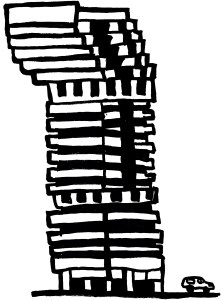
One of my favorite movie genres is something I’ve dubbed the “Party Out of Bounds,” a kind of storytelling structure where guests at an initially civil social event are compelled beyond reason to stay once polite society de-evolves & things get primally nasty. The exit is open, but they decline & instead choose to duke it out with their fellow “party” guests. As much as I enjoy the realistic examples of this (admittedly made-up) genre like Who’s Afraid of Virginia Woolf?, The Boys in the Band, and this year’s A Bigger Splash, I really get excited when the “Party Out of Bounds” story gets supernaturally twisted, like in the genre’s crown jewel The Exterminating Angel or in the recent dystopian period piece High-Rise. High-Rise is a particularly interesting case because its party starts from a seemingly dangerous, chaotic place and gets even more wild & savage from there, expanding the scope of its hedonism & cruelty to a months’ long, seemingly supernatural descent into the darkness of the human soul. It’s a sight to behold, a sinisterly amusing & deeply unsettling sight that stands as one of the best “Party Out of Bounds” stories I can remember ever seeing onscreen (and in subsequent nightmares).

Adapted from a novel by J.G. Ballard, the madman who penned the source material for Crash (1996’s incredible Cronenberg provocation, not 2004’s shameless Oscar bait), High-Rise is a reflection of 1970s anxieties about “luxury lifestyle” commodity & spiritually-erosive consumer culture as funneled through an aggressive, vague menace of existential dread. The film posits the modern consumer as a “bio robot,” a soulless machine who cannot function without their various gadgets & devices of “convenience.” Tom Hiddleston’s relatively well-adjusted protagonist begins his journey into a bleak, 1970s version of the future when he moves into a high-rise condo complex, a towering work of architectural Brutalism. It’s easy to believe you understand where the film is headed in his early interactions with the high-rise & its inhabitants. The building is a self-contained class system that matches the rigid haves-vs-havenots societal structure of works like Snowpiercer; the wealthy live on upper floors while the middle & lower class fight for their crumbs on the bottom. As the Talking Heads would put it, the building “has every convenience,” from a grocery store to a gym to a rooftop terrace complete with gardens & horseback riding (that only the upper floor wealthy can access, of course). The rich divert & hoard the best of the building’s resources, setting up an anti-capitalist uprise that we’ve seen play out in many (if not most) dystopian sci-fi works in the past. High-Rise begins its journey into human depravity from this familiar place, but completely unravels & sets fire to the genre expectations that accompany its starting point. I don’t think I’ve ever seen anything exactly like it before, which is what makes it such an exciting, terrifying work.

In addition to their addiction to modern convenience, the inhabitants of the titular high-rise are also addicted to partying. As a seemingly well-to-do surgeon (whose professions appears curiously specific to peeling faces off cadavers), Hiddleston’s protagonist is just wealthy enough to get a glimpse of the Victorian-style excess of the parties on the upper floors (as orchestrated by the building’s owner/architect, portrayed by Jeremy Irons), to mingle with the swinging 70s drug orgies of the middle floors, and to kindly visit with the little kids’ birthday parties of the lower working class floors (dutifully lorded over by Elizabeth Moss’s eternally pregnant, much put-upon matriarch). Hiddleston’s role as an entry point to each layer of the literally stratified society within the high-rise is a great starting point for establishing the scenario’s social structure, but ultimately becomes meaningless as the walls dividing these groups begins to break down. After the high-rise experiences an unexplained power outage the entire building devolves into total chaos. In a literal sense the structure begins to crumble: the water stops flowing, the gym is dismantled, the food in the grocery rots & molds, etc. There’s something much stranger going on in this shift, however, something that feels akin to a Persona-style psychological break. High-Rise is, at heart, a mass hysteria horror, a surreal exploration of a weird, unexplained menace lurking in our modern political & economic anxieties. Instead of simply leaving the titular building when things go horrifically sour, its inhabitants instead party harder and their drunken revelry devolves into a grotesque, months-long rager of deadly hedonism & de Sade levels of sexual depravity. The people of the high-rise are portrayed as just another amenity, one that can malfunction & fall apart just as easily & thoroughly as a blown circuit or a busted water pipe. It only takes weeks for the societal barriers that keep them in line to fully degenerate so that the entire high-rise society is partying violently in unison in their own filth & subhuman cruelty. If this is a version of America’s future in consumerism & modern convenience, it’s a harshly damning one, a confounding nightmare I won’t soon forget.

As much as the nastier details of High-Rise‘s eventual descent into cannibalism, rape, and animal cruelty (the majority of which, it’s worth noting, thankfully occurs offscreen) is obviously far outside my own experience with what happens when a party goes out of bounds, I do recognize a little truth in the initial power outage as a source for the mayhem. Anyone in New Orleans (or elsewhere in the coastal South) who’s gotten through the weeks-long power outages that follow hurricanes by drinking gallons of liquor in the darkness & heat should be able to recognize some of their own despair & depravity in the scenario, even if just a little. No matter how much you love the people you ride out a hurricane outage with, the confined space, oppressive boredom, and uncomfortable living conditions of the situation can increase tensions exponentially on a daily basis. The alcohol doesn’t help either (except maybe with the boredom). As I multiply that scenario in my head by the hundreds of people occupying this fictional high-rise & the economic tensions already driving them mad before the outage, this movie’s complete descent into subhuman depravity sort of makes perfect sense. Sort of.

There’s plenty of high art craft that goes into High-Rise‘s trashy version of Cronenberg mania, a marriage of aesthetics represented nicely in its off-putting soundtrack of nervous proto-punk jams & various spooky covers of ABBA‘s “S.O.S.” The film puts a lot of care in constructing its traditional sci-fi dystopia beginnings, distinguished only in details like its The Diary of a Teenage Girl/Space Station 76 faithfulness to its grim 70s era origins and its willingness to ogle at a male actor’s naked body for a change (Hiddleston’s, of course). When the setup gives way to the blindingly chaotic & inhumanly cruel punchline, though, the film finds its own distinctive space of cinematic innovation. High-Rise pushes its initially-familiar story into new, surreally wicked territory that makes for a more memorable experience than what the first act would lead you to expect and then lingers there for an uncomfortably long time. I’ve seen plenty movie parties go out of bounds before, but this is the one that most convincingly sets fire to the path back to civilization in the process. Its an entirely unique obliteration of the thin line that separates the modern consumer from the wild, bloodthirsty beast, a nightmare of a good time that will surely become a strong contender for cult classic status once more people have a chance to fall under its terrifying hypnotic spell.

-Brandon Ledet

Tickled (2016)

EPSON MFP image

fourstar

Foolishly, I expected that a documentary on “competitive endurance tickling” wouldn’t be much more than an amusing fluff piece, a sort of thin story about a string of online outlets that sell tickling-themed softcore porn under the flimsy guise of “athletic” competition. The Kiwi documentarian David Farrier seemed to have similar expectations when he initially prodded at the subject himself. Farrier’s career as a journalist is mostly relegated to “human interest” stories, something he calls “pop culture reporting.” He’s the guy you’d see on local news broadcasts interviewing personalities like “The Donkey Lady” or a toad farmer or maybe the subjects of the similarly-minded doc Finders Keepers. The narrative Farrier presents is that he initially didn’t know much about the world of modern tickling erotica and genuinely treated the topic as he would any of his other human interest stories until he discovered the abusive bullies behind the bulk of the websites’ production & decided to dig deeper. The facts of when, exactly, Farrier (along with his co-director Dylan Reeve) knew what he was getting into & the bizarre, terrifying world that his inquiry would uncover are questionable, especially considering the early dramatic re-enactments necessary to make the story feel linear. However, the investigation does prove to be a fascinating, worthwhile portrait of human cruelty in an increasingly bizarre modern age and the resulting documentary, Tickled, develops into a much darker & more unsettling experience than what you’d likely expect from the story of “competitive endurance tickling.”

Tickled splits its time between the pop culture reporting of competitive tickling as an erotic entertainment David Farrier initially pitches & an investigative look at the bullies who produce the overwhelming majority of it. Tickling porn, as the movie presents it, is a light form of homosexual BDSM play where young “athletes” (mostly white male beefcake) restrain each other with leather cuffs and, you know, get to tickling. This lighthearted snapshot of a seemingly innocuous fetish plays mostly like an episode of HBO Real Sex, except narrated with a New Zealander accent. Farrier & Reeve make a point to not only follow the history of tickle porn’s online presence (a journey that brings up some man-I-feel-old flashbacks like AIM & RealPlayer), but also to profile a couple tickle porn producers who aren’t total creeps. In the film’s most euphoric moment a tickle-happy pornographer straps a hairy young lad to a workout bench & goes to town with various tickle tools (feathers, feather dusters, electric tooth brushes, etc.) and the film decelerates to a slow motion crawl to amplify the scene’s complete, otherworldly ecstasy. These indulgences help Tickled distinguish itself from prudish kink shaming & also contrast what healthy, honest BDSM looks like vs. the evils Farrier eventually uncovers. When the “pop culture reporter” attempts to interview the largest tickle porn conglomerate about their unusual business in the film’s investigative half, he’s met with an incongruously aggressive response peppered heavily with homophobic slurs & threats of costly lawsuits. The abrasive nature of these attacks only deepens Farrier’s interest and a lot of the movie’s inquiry is wrapped up in trying to discover & expose exactly who’s behind them.

One of the only problems I have with Tickled is the sleazy journalism tactics Farrier uses to uncover his target/subject’s evil deeds. A paparazzi-style assault on the world of tickle porn isn’t exactly what I’d ideally want out of a film like this, but by the time the depths of cruelty perpetrated by the shadowy figures behind “competitive endurance tickling” are exposed, I found myself rooting for Farrier succeed, despite his questionable tactics. Athletic tickling pornographers (or at least their head honcho) use a lot of the same financially & emotionally abusive tactics laid out in the Scientology documentary Going Clear and by the end Tickled plays like a convincing indictment calling for them to be shut down & jailed for their crimes. Young men (typically MMA guys, body builders, actors, amateur athletes), sometimes underage, agree to appear in supposedly private tickle videos for much-needed cash. If they complain when this erotica is made public, they’re exposed to their families, employers, and the internet at large for being “homosexual pornographers” in an aggressive, public attack on their reputations. As Farrier puts it, “This tickling empire is way bigger than we imagined,” and the vast amount of heartless, predatory money that ropes these young men into a fetish porn ring they never agreed to be a part of is fascinatingly bottomless & terrifyingly abusive. Tickled can, of course, be amusing at times due to the bizarre nature of its subject, but it’s mostly a conspiracy theorist dive into a cruel empire that gets off on its own lies & bullying, executed through rapacious wealth & internet-age catfishing. As much as I initially bristled at Farrier’s journalism style, I do think he found a story worth telling & a modern monster worth exposing. Tickled is an infectious call to arms that by the end will have you screaming for the entire tickle porn empire to be torn down & set on fire.

-Brandon Ledet

Lights Out (2016)

EPSON MFP image

onehalfstar

When you were watching The Babadook, our favorite horror film of 2014, did you find yourself wishing that the film was tasteless, lifeless, and dismally formulaic? If yes, then you are going to love Lights Out. (Also, you are ridiculous.) The Babadook was a wonderfully written & performed depiction of severe depression and how it can affect parenting, one filtered through a demonic metaphor that both terrifies & inspires sincere reflection. Its delicate conclusion suggests that there are no simple solutions to clinical depression or whatever other monsters haunt our personal relationships, mental illness or otherwise. Lights Out, by comparison, is a grotesquely Hollywood take on the same metaphor. While The Babadook follows a mother as she struggles with her own mental health, Lights Out instead takes a distant, almost vilifying look at the same struggle. In The Babadook we empathize with a woman who finds herself uncontrollably annoyed by her own child; Lights Out shifts to the child’s POV, making the mother seem like a heartlessly selfish brute. Both movies represent depression as a monster made of pure darkness, but only one is visually interesting or at all unique in its specificity. Both are blatant in their shared metaphor, but only one handles it with any semblance of compassion or nuance. Both cover the same territory, but only one is worth watching. Hint: it’s not Lights Out.

Instead of following the story of the people who suffer the most in this mental health horror (the depressed woman & the young son under her care), Lights Out finds its audience surrogate in the boy’s older goth rock sister who no longer lives at home. This one step removal from the crisis at hand does little but deflate the emotional impact of the mother’s struggle (by making her look abusive & downright feral from an outsider’s perspective) and to clear room for a completely besides the point romance with another goth rock knucklehead it takes a significant amount of effort to merely tolerate. The estranged daughter returns home to find her mother in a manic state, the same as she was when she was a kid. The curtains are drawn; the mother is holed up & babbling to herself; her youngest child is too scared to sleep. The depression demon that haunts the household is given the physical form of Diana, a “childhood friend” (translation: lifelong illness) of the mother’s with severe light sensitivity and a jealous rage that threatens the physical & spiritual safety of anyone who dares to love her best bud. The images of a depressed woman’s home life as well as her distant past in a mental institution feel horrifically outdated & clichéd in an entirely stigmatizing, unrelatable way, especially in light of recent, empathetic works like Gabriel & I Smile Back. It’s the exact clumsy hand you’d expect in a Hollywood horror on such a delicate topic, but without any other discernible entertainment value present to distract you from the problem. What should be an interesting metaphor is boiled down to cheap jump scares, haunted house ambiance, and a violently fucked up climax that’s so unearned in its emotional & shock value provocation that it’s difficult to feel anything but cheated & manipulated in the tawdriest of ways when you (thankfully) reach the end credits.

Funnily enough, I went to the theater thinking I was going to watch the upcoming thriller Don’t Breathe, a horrific-looking film about a blind killer that (based on its trailer) could’ve easily carried the title Lights Out. That’s not the first time this happened to me, either. I’ve also gotten this movie’s title mixed up with the goofy Grand Canyon horror flick The Darkness from earlier this year before, for obvious reasons. (Full disclosure: I planned on watching all three anyway.) This confusion points to one of Lights Out‘s biggest problems: mediocrity, a total lack of distinction. It’s not silly enough to be campy. It’s not brutal enough to be disturbing (except maybe in that unearned finale). It’s not memorable enough to justify its existence in light of the far superior work The Babadook. There’s some interesting visual play with the film’s central gimmick that doesn’t allow its monster to appear in light, especially in the way it incorporates black lights, headlights, flashlights, candles, and gunshot flashes in its tool kit. However, most of the best uses of the gimmick (including its blacklit Blood & Black Lace mannequins) are spoiled by Lights Out‘s better-than-the-film trailer and are backed up by a cast of characters completely devoid of charisma. The one exception on that latter point might be the demon Diana, but she gets very little screen time & is mostly dealt with as a monster in the closet/under the bed threat instead of treated with the respect her mental health metaphor deserves. Lights Out is a bland, hamfisted misstep that bungles its attempts to tackle a serious, worthwhile topic. Worse yet, it feels like a subpar version of a recent, iconic work we’ve already seen & (in my case, at least) would rather watch again instead of seeing it bastardized. If you can manage it, I’d suggest skipping this film entirely & sticking to watching it’s actually well-put-together trailer, which works just fine as a two minute horror short. You’ll be much better off & I’ll envy your resolve.

-Brandon Ledet

Episode #11 of The Swampflix Podcast: Iconic Video Game Adaptations & Heart of a Dog (2016)

inaworld

Welcome to Episode #11 of The Swampflix Podcast! For our eleventh episode, James & Brandon discuss five iconic video game adaptations from the 90s & 00s. Also, Brandon makes James watch Laurie Anderson’s experimental documentary/meditation piece Heart of a Dog (2015) for the first time. Enjoy!

Production note: The musical “bumps” between segments were also provided by James.

-Brandon Ledet & James Cohn

Star Trek Beyond (2016)

EPSON MFP image

fourstar

A few months back, I wrote about the then-upcoming release of Star Trek Beyond and discussed my hopes for the film and the franchise in general. I wasn’t particularly excited after the first trailer, but the second trailer seemed a bit better, and the fact that Simon Pegg was one of the credited writers was certainly a point in the film’s favor, given his actual fondness for the franchise (in comparison to Roberto Orci, which I’ll get to in a minute). A generally favorable early critical response was also heartening, despite the general dearth of any significant marketing push for the film. I did see the same TV spots play before almost every YouTube video I watched in the past three weeks, but I can never tell if that’s marketed to me specifically as a Star Trek nerd scholar or indicative of a larger initiative. And, as a scholar, was I satisfied?

Yes? Mostly? This is definitely a fun movie, and a major improvement over the tone deaf Into Darkness, which was bad on a such a high number of levels that it’s difficult to nail down which one was most absurd. Was it the nonsensical nature of the motivation of the film’s antagonists? Was it the fact that their motivation might actually make sense when viewed through the lens of the particular madness of screenwriter and notable 9/11 truther Roberto Orci (there’s a decent article about this on BirthMoviesDeath, which is pretty great even though I have mixed feelings about Devin Faraci)? Was it the recasting of a character whose name is Indian and was previously portrayed by a person of color with Benedict Cumberbatch? It was probably that.

I went into greater detail about my feelings about both of the previous films in this reboot timeline in the previous article, so I won’t get into it here, but I will say that, although this film is being billed as a return to Star Trek’s roots or a real “classic style” Star Trek story, that’s not entirely true. Of course, given that the same thing was said about Insurrection back in 1998 (and, for better or worse, that’s a more or less true description of the film’s premise if nothing else), that’s not necessarily a bad thing. This is still a film that takes characters from a fifty year old television series where most problems were solved within an hour and attempts to map them onto a contemporary action film structure, which works in some places and not in others. Other reviews of the film have also stated that Beyond is a more affectionate revisitation of the original series than the previous two films, which is also mostly true. The film does suffer from the fact that the opening sequence bears more than a passing resemblance to a scene in Galaxy Quest, which is a stark reminder of the kind of fun movie that can be made when someone loves Star Trek rather than simply sees it as a commercial venture. Overall, though, you’d be hard pressed not to get some enjoyment out of this film, Trekker or no.

The film opens 966 days into the Enterprise’s five year deep space exploration mission, and Kirk (Chris Pine) is beginning to feel the weight of both the mission and the impossibility of living up to his father’s legacy. When the ship docks at Starfleet’s newest starbase, Yorktown, a ship appears from a nearby nebula containing one alien astronaut, who says that her ship crashed on a mysterious planet within said nebula and asking for assistance. In true Federation fashion, Kirk and Krew jump at the chance to help out, but are immediately attacked as soon as they penetrate the nebula; the crew is forced to abandon ship, ending up scattered and/or captured by the villainous Krall (Idris Elba), who seeks a doomsday MacGuffin in order to exact violence against the concept of peaceful unity in general and the Federation in particular because of its idealization of these virtues. Along the way, Scotty (Pegg) meets a woman named Jaylah (Kingsman’s Sofia Boutella), who helps him reunite the crew and to plan a rescue and escape.

There’s a lot to love here. There are references peppered throughout to other parts of the franchise, and instead of feeling hamfisted or forced as in previous installments of the reboot series, they feel natural here. There are more overt connections, with the basic plot about a dangerous planet that acts as a graveyard for various interstellar travelers and their ships being somewhat reminiscent of the animated Star Trek series episode “The Time Trap,” as well as one of the proposed fates of a starship lost a century previous being that it was snatched by a giant green space hand, which happened to the original Enterprise in “Who Mourns for Adonis?” Kirk’s opening log even references the fact that there’s a lot of shacking up going on aboard the ship during its mission, which is undoubtedly a reference to the fact that NBC balked at Gene Roddenberry’s proposal that the coed Enterprise crew be composed of roughly half men and half women; the story goes that one exec stated that this would make it seem like there was an awful lot of “funny business” going on. Likewise, Roddenberry’s original script treatment was about a starship that bore the name Yorktown, not Enterprise, leading to the starbase in this film being named for the former. Those are pretty obscure references to pull out and use for the plot of this movie, and that’s pretty indicative of how much this film cares about the fandom. More obscure references, like discussion of the dissolution of the MACOs and the Xindi and Romulan Wars (all of which are references to Star Trek: Enterprise), the possibility of accidentally splicing two people together with transporters (transporter accidents are fairly common in the franchise, but this is probably a shout out to the Voyager episode “Tuvix” in particular), Kirk’s birthday melancholy and even some of the lines he uses in his toast (from Wrath of Khan), and the appearance of a Commodore Paris (the Parises being a family with a long history of Starfleet ervice, most notably Tom Paris of Voyager) are scattered throughout and are, frankly, quite welcome.

Of course, references do not a great Star Trek film make. There are some things that don’t quite work, and given that the film runs just shy of 2 hours and that there has been some discussion of what was cut (mostly backstory for Krall and Jaylah, but smaller moments like Sulu kissing his husband as well), there are some things that don’t quite read as well on screen as they likely did on the page and/or before the film was edited down. I’m also never going to be completely on board with the use of high speed land-based chases in Star Trek; I know that Justin Lin comes from the Fast/Furious franchise so that’s really his wheelhouse, and as a result these sequences at least work better than previous attempts (I’m looking at you, Nemesis). And I know that it’s nitpicky to point this out, but there’s a lot of Hollywood science going on in this movie. First of all, nebulae are not composed of giant rocks; they’re made up of mostly dust and ionized gases. The film presents the nebula surrounding the mystery planet as being more like the Hollywood imagining of what an asteroid belt looks like, with city-sized rocks knocking into each other; real asteroid belts are mostly empty space with some rock throughout (in space, such a small area with such large pieces of debris would mean that the rocks the Enterprise works so carefully to navigate would pulverize each other into dust within a very short time, relatively speaking).

But, this is still a good movie. There is a classic Star Trek idea here, in that Krall hates the idea that the galaxy is uniting under a banner of peace instead of strength/valor and will do terrible things to demonstrate his devotion to his anti-Federation ideals, as well as the fact that he is opposed and ultimately defeated by the strong bonds that the crew of the Enterprise have and their devotion to the ideals of unity and exploration. It’s not a terribly deep humanistic ideal, and is so faintly traced that the film could be accused of paying lip service to that idea more than actually exploring it, but the fact that this film actually bothers to have this idea means that this movie is actually Star Trek, and not just JJ Abrams’s Star Wars demo reel wrapped in Star Trek’s clothes. The new additions to the cast are very engaging as are the old standards, and there’s a lot of story here that makes it well worth investing in a visit to the theatre. The end of the film legitimately left me with damp cheeks (for those of you who have already seen it, I’m talking about the photo that nuSpock finds in Spock Prime’s possessions), and I can’t wait to see it again. It’s not a five-star movie, but it has my seal of approval.

Final thought, though: The Franklin is said to be the first ship capable of achieving Warp Four; on Star Trek: Enterprise, the NX-01 Enterprise is said to be the first ship capable of achieving Warp Five, even though the Franklin seems to have come later in the timeline given that her captain’s service record includes participating in the Xindi conflict, which followed shortly after Enterprise’s first few years of service. I’m not saying that this can’t work (the Franklin could actually be older than the Enterprise but Captain Edison took command of her later, like how OG Kirk took over command of the Enterprise from Christopher Pike, took command when Robert April was promoted to Commodore). I’m honestly just pointing this out because if I don’t mention it, someone will call me out on it.

-Mark “Boomer” Redmond

Roger Ebert Film School, Lesson 17: Lady Jane (1986)

EPSON MFP image

Roger Ebert Film School is a recurring feature in which Brandon attempts to watch & review all 200+ movies referenced in the print & film versions of Roger Ebert’s (auto)biography Life Itself.

Where Lady Jane (1986) is referenced in Life Itself: On page 137 of the first edition hardback, Ebert recalls interviewing Helena Bonham Carter when she was 19 & promoting the film. He also recounts drinking at a particular English pub for such a long period of time that he remembers both the day she moved into an apartment upstairs as well as the day she moved out.

What Ebert had to say in his review: Roger never officially reviewed the film, but he does mention it as evidence in his declaration that Helena Bonham Carter is the “Queen of the Period Picture”.

EPSON MFP image

Lady Jane is a mid-80s British costume drama featuring members of the Royal Shakespeare Company and a babyfaced Helena Bonham Carter. In that simple one line description I believe I’ve told you everything you need to know about its value as an evening’s entertainment & an artistic endeavor. Lady Jane is near-indistinguishable from a lot of its costume drama genre peers, save for a few before-they-were-stars casting choices, but that doesn’t mean it isn’t pleasant to look at. At 2.5 hours, its lack of stylistic or narrative ambition can wear your patience a little thin, but if you’re a fan of the familiar cinematic territory it inhabits there’s no shame in zoning out & enjoying the film for its beautiful costumes, historically inaccurate romance, horseback riding, and beheadings. Honestly, it’s perfect background filler for Sunday afternoon housecleaning, especially for fans of Helena Bonham Carter’s costume drama work who’d like to get a glimpse of her early stirrings.

Carter stars as Lady Jane Gray, known to history as “The Nine Days Queen” due to her very short reign as an English Monarch at the bequest of her dying boy-king cousin Edward VI. At the height of the Catholic-Protestant tensions in Great Britain, Lady Jane Grey was something of an instigator, pushing for Protestant values in order to “free the people from bigotry & superstition,” namely Catholicism. She was publicly executed for treason as a reward for her efforts, a shameful end as a political martyr for one of the most highly educated women of her time. Somewhere in that short time frame she was married off against her will to an English lord, a man she never loved & barely knew.

Lady Jane Grey’s story had been adapted for the silver screen twice before this Royal Shakespeare Company version, which might help explain how the details of that arranged marriage get a little fuzzy in this take. Carter’s Lady Jane is physically forced, whipped by her mother even, into marrying the rakish lord who offends her bookish sensibilities, but she does end up falling in love with him thanks to his good looks & dry wit of a young Carey Elwes (brought to the screen by a young Carey Elwes). I guess this doomed lovers element of the plot was meant as a sort of movie magic tactic that could up the emotional stakes of its narrative (which, again, ends in a public execution of a teenager), but it also plays as if The Royal Shakespeare Company spaced out & mixed in a little Romeo & Juliet with its historical narrative. I’m not complaining. Who doesn’t little teenage romance mixed in with their spiritually bleak, true life tragedy?

Ebert once called Helena Bonham Carter “The Queen of the Period Picture,” a career-long trend that’s continued all the way to projects as recent as 2013’s Great Expectations, Kenneth Braunaugh’s Cinderella, and last year’s Suffragette. Lady Jane was Carter’s very first top-billed role and she’s a literal baby in this film (a baby with amazing eyebrows), but she’s already a high-functioning actor here, holding her own among some of Britain’s finest stage actors of the time. She’s not the only interesting pre-fame performance either. A pre-Princess Bride Carey Elwes is perfectly charming as her non-historically accurate lover & a pre-Star Trek Patrick Stewart nearly steals the show as her boisterous, warmongering father, a character that feels as if he were lifted directly from an episode of Wishbone. I don’t think this film is especially memorable or worth seeking out unless one of those roles jumps out at you as something you’ve got to see before you die (are they’re a lot of diehard Helena Bonham Carter completists out there?), but like a lot of costume dramas it’s thoroughly pleasant & easy to consume. If it pops up on television I’d suggest you linger a while instead of immediately skipping over it. Otherwise it might not exactly be worth the effort of tracking it down.

EPSON MFP image

Roger’s Rating: N/A

Brandon’s Rating: (3/5, 60%)

three star

Next Lesson: Call Northside 777 (1948)

-Brandon Ledet

Resident Evil (2002)

EPSON MFP image

three star

campstamp

I’m not a video game nerd. The last legitimate gaming system I got excited about was the Nintendo 64. The only one I’ve bought since was a used Wii and that beaten-up relic served exclusively as an emulator for NES games. As such, I’ve never had much interest in the Resident Evil film franchise. My limited knowledge of the series, based entirely on vague hearsay about its video game source material, has been that it’s about a lady who shoots zombies in some kind of underground bunker. While I’m not over the moon about video games as an entertainment medium, I do actively seek out eccentrically inane movies, but there was just never anything about yet another zombie action horror starring a sexy lady with a pile of guns that had much promise for Super Mario Bros. levels of potential silliness in a cinematic video game adaptation. There are now five Resident Evil movies in what has become a decade-long franchise, however, which lead me to suspect that there was more going on here than just a walking dead genre pic with little to no distinguishing features in a crowded field of zombie media. It’s true, too. Resident Evil is more than just a zombie-filled shoot-em-up featuring a beautiful woman with a giant gun. In fact, it actually kinda holds its own as one of the sillier & more entertaining video game adaptations out there, much to my surprise.

While I wasn’t exactly wrong in assuming Resident Evil centered on a widespread epidemic of generic zombie mayhem, I did the movie a huge disservice by reducing its setting to a mere underground bunker. The symbolically named Umbrella Corporation (a detail I assume was carried over from the video game), which periodically deals with very normal corporate modes of money making & privately makes most of its profit off of biochemical weaponry, is the owner of said underground bunker, known as The Hive. The bunker’s underground employees, blissfully unaware of the company’s warmongering, are transformed into the aforementioned zombie horde when one of the more volatile chemicals they work on is released through the bunker’s vents (supposedly) by mistake. As the infected, undead Umbrella Corporation employees transform into monsters, they also become moving targets for a team of leather-clad supersoldiers & a Borne Identity/American Ultra type badass who can’t remember her past but seems to know more about the facility than she should. As her memory slowly returns, our hero must piece together whether or not she’s responsible for the initial outbreak or if there’s some kind of other, larger betrayal unfolding before her. Meanwhile, The Umbrella Corporation’s surveillance cameras seem to be recording these supersoldiers’ every move as they become unwitting participants in a zombie-killing, viral experiment. Also, some strange, not at all human creatures & a childlike AI hologram pop in to push the movie past its zombie-stomping roots into some strange sci-fi horror territory. Its all a lot more fun & complex than I expected, however corny & hamfisted.

Resident Evil comes from a time when video game adaptations were attempting to move on from children’s movie fare like 90s productions Street Fighter & Double Dragon into something more violent & “adult,” like Doom. Director Paul W.S. Anderson splits the difference & lands the film halfway between PG-13 & R (not that the MPAA saw it that way) in terms of sensibility. There’s a violence & grittiness in the film’s nonstop parade of zombies on fire, exposed muscle Rottweiler demons, undefinable The Thing-type mutants, and flashbacks to a blurred sexual encounter the film appears to find very important to the plot, but something about the way they’re handled makes it play like kids’ stuff, just like Anderson’s surprising violent (and even more surprisingly competent) Mortal Kombat adaptation. This is a teenager’s sweet spot in terms of maturity level, a tone easily recognizable in the film’s choice to dress its star, Milla Jovovich, in a post-apocalyptic negligee for most of its runtime & two sheets of paper-thin hospital gauze at its climax. Jovovich’s ass kicking commitment to the role, combined with similar sincerity from Fast & Furious “family member” Michell Rodriguez, cuts down on some of that teenage boy booby-ogling, though, to the point that it mixes with the intense body horror, George Romero brand zombie mayhem, and stray notes of otherworldly sci-fi (an aesthetic Anderson accomplished a lot more with in his film Event Horizon) to make for a fairly decent, amusingly campy action cheapie I would’ve loved had I seen it when it was haunting theaters & I was 15. I appreciate Resident Evil‘s teen nerd immaturity & casual adoption of weird video game ideas in its matter-of-fact silliness. At the very least, its a far better adaptation than the Rock vehicle Doom, which aims for a similar aesthetic, and it got me curious enough about where the series could go from such a ludicrous starting point that I just might check out Anderson’s five gratuitous followups now that I’ve finally been initiated.

-Brandon Ledet

Super Mario Bros. (1993)

EPSON MFP image

fourstar

campstamp

There are few films, campy or otherwise, that better exemplify the fine wine rule than Super Mario Bros. The first & only live action Nintendo adaptation continuously gets better with age & I fall further under its intoxicating spell every time I watch it. This is a box office bomb critics have long slammed as definitive proof that video game adaptations are an inherently bad idea, but those marks against its character matter less with every passing year. Super Mario Bros. is a cartoonish fantasy comedy that somehow, unfathomably marries elements of Blade Runner, Jurassic Park, and Who Framed Roger Rabbit? into one unholy cacophony of cinematic cheese & bloat. I marvel at this film’s sheer audacity every time I watch it, just as I find myself continually reeling from its grocery store joke book humor in the exact same breath. Without the pressure for Super Mario Bros. to prove or disprove that a video game adaptation could possibly be worthwhile (there’s now a crowded field of examples to swing that conversation either way you want it to go), the film has found a nice, comfortable space of its own as a cult-worthy camp fest. It’s thoroughly ridiculous, but it’s ridiculous in a fun & above all memorable way that dares you to sour on its 90s relic antics, but never gives you a solid reason to. Super Mario Bros. is a great film. It’s a little sad that three decades later it still feels a little transgressive to say so.

The only video game imagery that graces the screen in Super Mario Bros. is an opening prologue featuring pixelated dinosaurs in a fictional version of reality where the force of the meteor that extinguished the dinos & started the Ice Age created an alternate dimension in which humans evolved from reptiles instead of apes. If that doesn’t sound like a video game to you, much less the plumber-and-princess adventure game that iconically defines the medium, that’s because this movie is floating in its own bizarre orbit lightyears outside the property it’s supposedly adapting. There are video game-type dinos in that opening prologue, though, which proves that the husband-wife directorial team that helmed this major studio disaster are aware that Super Mario Bros. previously existed as a game with its own characters, motivations, and basic aesthetic. They just chose to ignore all that in favor of their own bonkers sense of whimsy, a fantasy realm that calls into question whether or not they’re also aware that there’s no possible way that the dino-killing meteor crash site could’ve been in Brooklyn or that a reptilian-evolved humanity would be so different from our primate selves that they’d be almost entirely unrecognizable as humans at all. No matter. This is a big budget kids’ fantasy adventure at heart, so its faithfulness to video game lore or basic science is almost entirely beside the point in the question of its entertainment value.

There are, admittedly, a few details of the Super Mario Bros. film that vaguely resemble their video game source material. They at least included some of the same characters: Mario & Luigi are Italian plumbers from Brooklyn, NY, which feels about as faithful to their video game visages as you can get. Princess Peach is now Princess Daisy for some unexplained reason, but it’s a mild change at best and the boys still have to venture out to rescue her from the reptilian clutches of an evil monarch named Koopa, which is more or less where the video game’s narrative begins & ends. Other details begin to get a lot fuzzier, though. Instead of being a giant, scary turtle-dragon motherfucker that lives in a castle full of lava, Koopa looks an awful lot like Dennis Hopper doing a dead on impersonation of Donald Trump (complete with the gaudy tower & political grandstanding). Toad is the furthest from his original form, ditching his miniature guru looks from the game in favor of a delightfully out-of-place, full-sized Mojo Nixon singing dumb protest songs about King Koopa on street corners. Staying faithful to the video game can be a double edged sword, though, as is exemplified by the baby dino Yoshi, who is cute as a button in this film, but also much more along the lines of Jurassic Park-type dinosaur puppets than what his video game creators likely intended. One of the reasons Super Mario Bros. stands out as such enjoyable schlock is that it embraces this damned if you do, damned if you don’t mentality whole-heartedly and just runs wild with the freedom adapting a video game with a very thin backstory affords it. It includes just enough characters & visual cues to resemble the Super Mario Bros. game at a glance, but does anything but keep it safe in the way it fleshes out their universe.

The most common argument against cinematic video game adaptations is that they necessitate a backstory where none is truly needed. No one playing the Super Mario Bros. game is likely to care exactly how or why the princess they’re rescuing was captured by an evil dino turtle dragon; they just hop in the green pipes & smash the mushroom-shaped baddies that get in the way of saving her. A movie requires a little more narrative coddling & a lot of the fun of Super Mario Bros. is in tracking how it either stays faithful to the game’s basic layout or disregards it completely on a minute to minute basis. The film is confident enough in its own right to exist as a standalone property that it ditches the fantasy genre brick & mortar castles of the video game for a distinct Blade Runner-style of urban dystopia. However, it also bends over backwards to include a way for Koopa’s guards to shoot the video game’s fireballs or make sense out of the role mushrooms & fungus have to play in all this (in the shape of a hideous fungal life form that would give Cronenberg nightmares). In some ways the film completely runs wild, like in its creation of an alternate dimension where the entire globe is one vast desert outside a single metropolis or in its de-evolution weapons that can turn people “back” into lizards. There’s also a few areas of compromise between the two extremes, like an inclusion of goombas that makes them out to be de-evolved lizard people instead of tiny mushroom monsters so that both properties can get equal representation. Super Mario Bros. plays along just enough to pass as a video game adaptation, but takes tremendous glee in constructing its own over-the-top fantasy realm where lizard people fight over a dino dictator’s crumbs & dance “Thriller” video-knockoff routines to bullshit like “Everybody Do the Dinosaur.” It’s an insane spectacle from front to end and because it feels little need to stay close to its source material’s limited backstory beyond its basic sketch and it’s a pleasantly unique spectacle at that.

Divorced from its source material, Super Mario Bros. is barrels of vapid fun. I honestly believe there are few children’s films from its era that match it in terms of ambitious set design, campy humor, and pure, directionless inanity. A lot of the film’s charms are a credit to the performances of Bob Hoskins & John Leguizamo as Mario Mario & Luigi Mario (speaking of video game background info that didn’t need to be developed), as well as Hopper’s Koopa-Trump & Harry Potter’s wicked aunt, Fiona Shaw, as his soul-sucking sidekick. Hoskins in particular is pretty great as the titular plumber & I honestly believe this film is his best work outside his iconic turn in Who Framed Roger Rabbit?. It’s way too easy to buy Hoskins as a spaghetti-slurping Brooklynite, to the point where I’m never truly convinced that the now-deceased actor actually hailed from Britain. Besides the cartoonish performances from the cast, I also appreciate how intricately detailed its production design can be. There’s a consistency in the leather spikes fashion wear that seem so popular in Koopa’s alternate dimension Brooklyn & I’m always picking up on new, small details hiding elsewhere in the fake city’s dingy nooks & crannies: Mario’s NYC apartment features a plunger rack instead of a gun rack; there are tiny lizard rodents fighting over the city’s plentiful trash; the de-evolution chamber is operated by a Duck Hunt controller; Mario & his girlfriend have plans to attend WrestleMania; a run-down cinema is screening I Was a Teenage Mammal, etc. Then there’s the now-disturbing shot of the Twin Towers partly dissolving thanks to Koopa’s evil deeds, an image that looks strikingly similar to a real life tragedy from a decade after this film’s release. As much fun as these grimy details can be, however, this is still just a silly children’s media fantasy, a fact that becomes apparent when everything magically, inexplicably reverts back to normal once Koopa is defeated (in a moment punctuated by Mario delivering the glorious one-liner “Later, alligator” to the evil, reptilian brute).

It’s a shame that Super Mario Bros. was scorned for its absurd deviations from its paper thin source material in its time. In the decades since it’s become increasingly apparent that devotion to its video game roots would have left the film far more mild & forgettable that it ended up being by learning to cut the kite strings & float on its own over-the-top, over-budget inanity. This is one remarkably silly movie and it’s amazing that it ever managed to reach theaters in the first place. My only complaint at this point is that it teased a sequel that never arrived because audiences were more than eager to let it die on arrival. Continuing down this absurd path could’ve lead to something even more amusing & special had audiences given it the chance.

-Brandon Ledet

Ghostbusters (2016), Popstar (2016) and the Outsourcing of the Modern SNL Movie

EPSON MFP image

People tend to get overly nostalgic about Saturday Night Live, typically looking back to the supposed “golden years” of the show (an era that can shift around by decades depending on who you’re asking) in order to knock its most current, supposedly subpar season, whichever year they’re complaining. The truth is that the show might struggle a little here or there, but has overall been consistent in its quality in a way the rose-tinted glasses of nostalgia can significantly alter. SNL generally produces a few great sketches on a weekly basis in one of comedy’s most demanding writing rooms (James Franco’s Saturday Night documentary is a good glimpse of that punishing rhythm if you’re interested). These sketches often define their current era’s height of comedic performance & off-the-cuff writing, but just as often appear among enough failure & filler to greatly soften their in-the-moment impact. Looking back at past seasons of the show allow you to remember the great work & forget the filler, constructing a false reality where the show was ever perfect or firing on all cylinders (and I’m saying this about a series I love dearly & never miss). One of the things that helps foster this skewed perception is many of the performers’ post-show fame. It’s easy to look back & think SNL was so much better when Will Ferrell or Bill Murray were on instead of these no-name nobodies they’re currently working with, but the show is where those comedians cut their teeth & made a name for themselves in the first place. The truth is that they suffered just as much public scrutiny & just as many comedic missteps in their own day, but came out the other end of the show’s star-making machine all the better for it.

One of the ways the SNL star-maker machine used to work was in movie production. The franchise’s first film, The Blues Brothers, was an outrageous hit that helped make its stars Dan Aykroyd & John Belushi insanely popular in the early 1980s. The brand’s follow-up, Wayne’s World, had the same effect on the careers of Dan Carvey & Mike Myers and has gradually become a near-universally well-regarded comedy despite its inherent stoner-minded silliness. Things got much stranger in the mid to late 90s. When SNL movies like Coneheads & It’s Pat critically & financially sank the franchise’s box office reputation, the SNL movie seemed to shift focus from defining pop culture to developing the strengths of its performers. The late 90s run of A Night at the Roxbury, Superstar, and The Ladies Man in particular play like movie star training wheels for the show’s performers (not unlike WWE productions like 12 Rounds & See No Evil). They’re low-stakes pictures aimed to help a future generation of comedic giants define their on-screen presence in a halfway point between a comedy sketch & a feature length character study. It’s easy to see, for instance, the beginnings of Will Ferrell’s future schtick, later defined in films like Step Brothers & Talladega Nights, beginning to form in his early roles as a club-hopping airhead in Roxbury or Jesus Christ himself in Superstar. The latest movie in SNL’s official sketch-to-silver-screen catalog (and my personal favorite to date), 2010’s MacGruber, seemed to be a similar incubator for comedic madman Will Forte, whose onscreen work gets weirder & more prominent every passing year.

It’s been six years since MacGruber and it’s unlikely that there are many sketch-to-film characters currently in development (not that I would necessarily be opposed to a Stefon or Olya Povlatsky movie), but that doesn’t mean the SNL movie is currently dead as a format. This hasn’t been the longest gap between SNL pictures by any stretch; there was a full decade separating both The Blues Brothers & Wayne’s World and The Ladies Man & MacGruber. It has been interesting, though, that in this most recent time span there’s been plenty of comedies I’d readily classify as “unofficial” SNL movies. Official SNL productions are traditionally helmed by the showrunner Lorne Michaels & have some sort of character connection to a recurring sketch from the show. Unofficial SNL movies, to me, exist solely in the casting. As a life-long fan of the show, I get incongruously excited when a comedy features a long list of SNL players, especially when I wasn’t expecting their participation. It happened, for example, in recent works like Inside Out, Skeleton Twins, and Zoolander 2 (which was a great showcase for Kyle Mooney in particular). Adam Sandler, for instance, has built a career around including as many of his SNL collaborators as possible in his own productions, which admittedly often disappoint in quality & basic human decency. Sometimes even his unofficial SNL movies can win me over, though. I doubt I’d have enjoyed an Adam Sandler children’s cartoon, horror comedy or otherwise, without a long list of SNL collaborators tagging along, but I gotta admit this long list of Not Ready for Prime Time Players brought too much joy to my heart for me to sour on Sandler’s Hotel Transylvania 2: Sandler, Andy Samberg, Molly Shannon, David Spade, Dana Carvey, Chris Kattan, Jon Lovitz, Robert Smigel, Chris Parnell, and oft-recurring host Steve Buscemi as a CGI werewolf. Similarly, the Tina Fey/Amy Poehler comedy Sisters got me stoked last Christmas with this delicious SNL lineup: Fey, Poehler, Maya Rudolph, Bobby Moynihan, Rachel Dratch, Kate McKinnon, and Chris Parnell. Moynihan in particular was allowed to steal the show in his role as the world’s worst amateur comedian and it got me excited about where his big screen career will eventually go, which is exactly what an SNL movie should be doing, undercover or not. That brings me to this summer’s undercover SNL movies: Popstar & Ghostbusters.

On its own, Popstar: Never Stop Never Stopping is enough to make me feel as if the modern SNL movie is being officially outsourced to powers outside Lorne Michaels’s reach. Andy Samberg’s comedy troupe The Lonely Island are lifelong friends with roots much deeper than Samberg’s 2000s stint on the sketch comedy show. However, their “Digital Shorts” music parody bits are what made the troupe famous and now they have an entire This is Spinal Tap-style comedy built around the gimmick in Popstar. The Lonely Island’s first feature film, Hot Rod, included enough SNL collaborators to qualify as an undercover SNL movie, but that movie’s followup, Popstar, is even more ambitious in its inclusion of past personalities form the series: Samberg, Bill Hader, Maya Rudolph, Jimmy Fallon, Steve Higgins, Will Forte, Sarah Silverman, and a fully-utilized Tim Meadows, which is particularly a rare treat. Not only has the Saturday Night Live roll call gotten even longer, but the film itself is an extension of a gimmick that was developed on the television series into a feature length narrative. The world was introduced to these pop star clowns on Saturday Night Live in songs like “I’m on a Boat” & “Jack Sparrow” and now their parody of pop music hedonism is on display in movie theaters without the SNL or Lorne Michaels brands stamped on it in any official way.

The modern, undercover SNL movie formula isn’t merely content with hjacking past sketches from the show, either. It’s now also infiltrating past works with only a small connection to the series. Early SNL staples Dan Aykroyd & Bill Murray received top billing in the 1984 horror comedy Ghostbusters, but they were the only two cast members involved with the movie, which had about as much to do with SNL as the Chris Farley, David Spade buddy comedies of the mid-90s, maybe even less. Compare that to the undercover SNL movie ensemble Paul Feig & casting director Allison Jones have delivered in the recent Ghostbusters remake. When they just comprised half of the main cast in the original property, all four of the Ghostbusters are SNL players in the 2016 version: Kristen Wiig, Leslie Jones, Kate McKinnon, and honorary cast member (through regular, fully-committed hosting gigs) Melissa McCarthy. They’re also backed up by the bit role roster of Bill Murray, Dan Aykroyd, Steve Higgins, and Cecily Strong. More convincing yet, the movie is proving to be something of a star-maker for the consistently funny McKinnon, who’s been up there with Strong, Bryant, Moynihan, and Taran Killiam as one of the most essential backbone pieces of the show’s current cast. If Ghostbusters did nothing more than promote & develop Kate McKinnon’s screen presence, it would already have done its job, as that’s the best post-Coneheads titles like Superstar & Roxbury ever hoped for.

Ghostbusters does accomplish more than that, though. It’s an all-around hilarious, well-made popcorn flick that’s actually visually striking in its play with aspect ratios in its large format release (ghosts, lasers, lighting, and such spill over the letterbox border to enhance the film’s 3D effects), a kind of ambition I don’t normally anticipate from a summertime comedy, much less a reboot. Popstar is equally successful in its humor & ambition, bringing the Walk Hard brand of pop music cinema parody into the 2010s by tackling the Justin Bieber & One Direction style of “concert documentaries” that have been released since that modern John C. Reilly classic (which featured a few SNL contributors of its own). Two of the best summertime comedies of 2016 boast strong SNL roots, but don’t openly display the series’s brand. Meanwhile, Lorne Michaels supports smaller projects from his sketch comedy children, like the Hader-Armisen series Documentary Now or Maya Rudolph’s various attempts to launch a successful variety show of her own. In the six years since MacGruber left the theaters Michaels has shown little interest in pushing for a project like Riblet: The Movie or One-Dimensional Female Character from a Male-Driven Comedy: The Male-Driven Comedy. I would totally be down for either of those features, being a huge sucker for the brand (a Tonkerbell movie could work too while we’re at it), but I’m proud to see undercover SNL movies like Popstar & Ghostbusters fill that void in the long-running sketch series’s current theatrical absence. I doubt we’ve seen the end of the official SNL sketch-to-big-screen movie, but it’s been great to see the younger cast find their own collaborative space at the movies in the meantime. Especially Kate McKinnon. Everyone throw all of your money directly at Kate McKinnon. Now.

-Brandon Ledet
