The Fowl Stench of Magic in the Mirror: Fowl Play (1996)

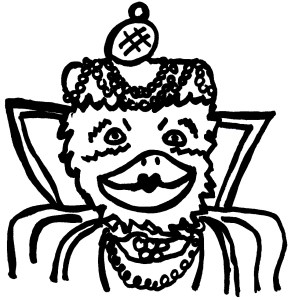
The most immediate, visceral reaction I had to our current Movie of the Month, the 1996 children’s fantasy nightmare Magic in the Mirror, is that it’s an absurd abomination that should not exist. While the movie makes some strides to justify its hideous existence though a half-hearted allegory about how imaginative kids are overlooked & undervalued, that well-intentioned narrative is just a thin sheen on the unintended horror of the film’s villains: “The Drakes.” For a kids’ movie about humanoid ducks who boil people alive to make tea because they enjoy the way it tastes, Magic in the Mirror can be surprisingly sinister. There have been plenty low-budget rehashings of Alice’s Adventures in Wonderland over the decades, so the film doesn’t particularly stand out in its fairy tale premise of a young girl learning the ways of the adult world by traveling into an alternate magic realm through an antique mirror. The bargain basement, Howard the Duck-looking freaks that await her there do tend to linger with you in their own nightmarish way, however, and are the only pressing reason for thrill-seekers to dig the film back up from its VHS-era gravesite. If the largely forgotten, viscerally upsetting Magic in the Mirror shouldn’t exist, the existence of it dirt cheap, Drake-focused sequel is even more of an affront to humanity and all that is good in the world.

Like all schlock peddlers, producer Charles Band has hinged his entire career on aggressive frugality. Years after the abandoned production of a fantasy film titled Mirrorworld shut down, Band’s children-friendly Full Moon Entertainment sublabel Moonbeam Entertainment recycled materials from the unfinished work to create the horror that is Magic in the Mirror. Band’s frugality knows no bounds, though, and he managed to squeeze two productions out of Mirrorworlds’ discarded scraps. There isn’t much extratextual info available about Magic in the Mirror (this may be our first Movie of the Month selection without a standalone Wikipedia page), but it appears the film earned minor theatrical distribution through Paramount Pictures. A straight-to-VHS sequel to the film was produced simultaneously with the original, though, and both releases reached US audiences in 1996. It should be a smooth transition between the two pictures then, as if they were one 3-hour movie with a credits sequence intermission. Many of the potential pitfalls of cheap kids’ movie sequels should be avoided in a back-to-back production like this: the main kid shouldn’t have time to age out of their role and the shared cast & crew should ensure some level of consistence in overall quality. Somehow, the quality drop between Magic in the Mirror & Fowl Play was still notably drastic. Even as ill-conceived & glaringly cheap as the original Magic in the Mirror feels, it’s apparently the Citizen Kane of tea-drinking duck people fantasy cinema.

Magic in the Mirror: Fowl Play is at least promising in its basic premise. After a quick (and necessary) recap montage detailing the events of the first film, Fowl Play reverses the original dynamic by having the terrifying duck people invade our world through the magic mirror for a change. I’m always down for a fun suburban invasion premise (which is why The Lost World is my favorite Jurassic Park movie, don’t @ me), but this dirt cheap, sub-Full Moon Production doesn’t follow through on the premise in any significant way. Instead of filming the humanoid duck tea-enthusiasts as they terrorize & boil alive the people of a small American city, the film frugally confines most of its runtime to a single living room. The evil mirror realm duck people merely mix in with guests at a lame, daytime costume party in a cheap living room setting, threatening menace in plain sight, but never delivering. What initially seems like a great premise for a Magic in the Mirror sequel eventually reveals itself to be another shrewd financial choice among many. The Drakes don’t invade our world through the mirror to open up the possibilities of the plot; they do it because the sets were even cheaper to maintain than the leftover scraps of Mirrorworld. It’d be impressive how this movie was pulled out of thin air if it weren’t so frustrating to watch as an audience.

From the cheap sets to the comic misunderstanding plot, Fowl Play feels like the pilot for a syndicated Magic in the Mirror TV show more than a proper sequel (I’m specifically thinking of the deservedly forgotten Honey I Shrunk the Kids TV series). The movie even ends with the protagonist from the first film making her first human friend, as if their weekly adventures were going to continue into perpetuity. Alarming details, like lipstick on a duck bill or carefully-prepared murder tea, carry over form the first film, but in smaller, cheaper doses. While Magic in the Mirror makes motions to justify its mallardian horrors with an overarching theme of childhood isolation, Fowl Play doesn’t bother. Its only narrative conflict is whether or not an already awkward costume party might become more of a disaster as it goes along, which I’m pretty sure has been the plot of many sitcom episodes. Magic in the Mirror was cheap, but at least it was somewhat ambitious. Fowl Play looks like it was scraped together in a panic as production on its predecessor was being shut down (which might actually be the case). The only scenario I could imagine where someone is really into it would be if they saw it before the first film and were caught off-guard by the ghastly visage of the Drakes. Even then, they’re given less screentime & less to do here, even though they’re referenced in the awfowl pun title.

For more on April’s Movie of the Month, the Full Moon Entertainment fantasy piece Magic in the Mirror, check out our Swampchat discussion of the film.

-Brandon Ledet

Movie of the Month: Magic in the Mirror (1996)

Every month one of us makes the rest of the crew watch a movie they’ve never seen before & we discuss it afterwards. This month Britnee made Brandon , Alli, and Boomer watch Magic in the Mirror (1996).

Britnee: Moonbeam Entertainment, the sub-brand of Charles Band’s Full Moon Features, produced some of my favorite children’s fantasy and sci-fi films during the early 1990s. VHS copies of Prehysteria!, Dragonworld, and Pet Shop always lingered around my family’s television, but the one Moonbeam film that I just couldn’t get enough of was Magic in the Mirror. There’s just something about the film’s wackadoodle story and low-budget quality that is both memorable and charming. Magic in the Mirror may very well be the root cause of my garbage taste in movies because, until recently reading through the overwhelming amount of negative reviews, I had no idea that anyone could dislike it.

Magic in the Mirror is a modern-day fairy tale. Mary Margaret Dennis is a young girl with an active imagination, but her botanist father and physicist mother fail to give her the attention and encouragement that she desperately needs. She spends most of her time with her imaginary friends, Bella and Donna, and doesn’t have much human interaction. After discovering a bag of magical golden berries and inheriting an antique mirror from her late great-grandmother, she crosses to the other side of the mirror. What awaits her there is a surreal world ruled by human-like mallards that have a passion for tea made of people, which is steeped for a mere 60 seconds (I usually let my Earl Grey steep for 3 minutes).

Brandon, there’s an interesting mix of science and fantasy in Magic in the Mirror. Most of the scenes with Mary Margaret’s mother involve her working on an invention (a laser beam that defies space and time) while Mary Margaret is trekking through a mallard-filled fantasyland. Is there a message being made about science versus fantasy in Magic in the Mirror? Or is it just two cool concepts combined to make one hell of a movie?

Brandon: If we’re going to single out Magic in the Mirror as “one hell of a movie,” I think we have to place the emphasis on the word “Hell.” Most of my appreciation of the film stems from the way it plays like a child’s half-remembered nightmare, so it’s funny to see it described here as “memorable and charming.” Before reading that introduction, I presumed it would be film’s nightmare quality that buried its imagery in the subconscious of 90s Kids™ who saw it young enough for it to torment them permanently, preventing it from being forgotten the way most Moonbeam Entertainment pictures have. Productions from Charles Band’s prime distribution label Full Moon (typified by franchises like Dollman, Ghoulies, Puppet Master, Evil Bong, and Demonic Toys) have always felt a little like kids’ movies that happened to feature R-rated monsters & gore. It’s only natural, then, that its (supposedly) child-friendly sub-brand would come across as an unintentional horror show. Magic in the Mirror was a production recycled from unused material for a canceled Full Moon fantasy film titled Mirrorworld (militant frugality is another one of Charles Band’s calling cards), so for all we know its magical kingdom of malicious mallards was originally designed to terrify adults, like the off-putting humanoid amphibians of Hell Comes to Frogtown. As an exercise in filmmaking craft, Magic in the Mirror possesses all of the cinematic artistry of a Wishbone episode. However, its villainous threat of humanoid ducks who boil children alive to make tea because they enjoy the way it tastes has a potency that far outweighs the limited means of its production values. In fact, the film’s aggressive cheapness somehow makes it feel even more sinister, as if we were an audience of children invited over to a D.I.Y. production of the Howard the Duck movie as a stage play in an adult stranger’s basement. By shifting the focus away from intentional monster-based scares to a children’s fantasy context, Full Moon had somehow delivered one of the most genuinely creepy films in its catalog. Until I can forget the sounds of these cursed duck beings greedily slurping their murder-tea, I’m going to be losing a lot of much-needed sleep. I can only imagine that effect would be even worse if I had caught this movie in its early VHS days (although, like Britnee, I had a strong childhood fondness for Prehysteria!, so who knows).

While I’ll concur that the film’s mixture of science fiction & fantasy as if they were two sides of the same coin was interesting, I’m not convinced the movie thought through the significance of their convergence to any great extent (unlike the recent animated gem Mary and the Witch’s Flower). The mother’s invention of an antimatter raygun almost doesn’t qualify as sci-fi at all, since its childlike logic is so far outside the bounds of reality. The divisions between those two genres seem to be present only to mirror the divisions between Mary Margaret and her mother. Mary Margaret is a fantasy-minded child with an overactive imagination. The too-serious adults in her life (especially her mother) refuse to pay her any attention because they only care about boring, rigid adult stuff like science, careers, and facts. In a way, it’s totally appropriate that the sci-fi aspect of the mother’s antimatter raygun (along with the botanist father’s cataloging of magic berries) only make sense in a fantasy context, since the film is told from Mary Margaret’s detached-from-reality perspective. Magic in the Mirror is by no means singular in its premise of a young girl learning the ways of the adult world through a nightmarish adventure in a fantasy land; a short list of similar (but more substantial) works might include MirrorMask, Alice Through the Looking Glass, Labyrinth, The Lion the Witch and the Wardrobe, His Dark Materials, and former Movie of the Month Paperhouse. The way it captures a young child’s isolation among adults who don’t have the time of day for their imaginative whimsy has its own merits, though, especially as Mary Margaret & her mother attempt to breach the invisible barrier of the mirror to reconnect with each other, each with their own tools (the magic berries & the raygun, respectively). This belittling feeling of being ignored by the too-serious, fact-minded adults around you is very relatable for kids and it’s one I can only remember being addressed this extensively in the much classier Val Lewton picture Curse of the Cat People.

Boomer, we seem to be painting two portraits of Magic in the Mirror here. One is a thoughtful expression of childhood frustration with being ignored by the adults who lord over you. The other is a subliminal nightmare that lingers only as a fear of cheaply costumed duck-people who boil children alive for the pleasure of the taste. Did either of these qualities overpower the other in your viewing of the film or did they work perfectly in tandem, like two realms on opposite sides of the same magic mirror?

Boomer: Unlike you, Brandon, I didn’t find the ducks–excuse me, Drakes–all that scary. Maybe if I were a child the first time I saw it, I would have had a different experience, but as it is, the flappy mouths and glug-glug-glug drinking sounds were too similar to the intentionally comical appearance of the eagle-headed colonel from Danger 5 to elicit anything other than laughter from me (which it did, every time). If anything, their sped-up waddling and the terrible flying effects render them adorably pathetic in spite of their menacing tea habits. Had I been a child during my first viewing, I would have found the Mirror Minders the far creepier creatures, as the thought of an oversized manchild in drab motley watching me from the other side of my mirror is a much more disturbing thought in its abstract than being boiled alive for a mere sixty seconds. I know that they’re supposed to be charming in a Mr. Tumnus way, but their high pitched voices and the “I used to be a birthday clown but now I live in the woods” color palette aren’t exactly virtues to me. I, too, am a longtime fan of Full Moon Entertainment, and frequently find myself extolling its virtues, like the fact that it was one of the first studios to have an interconnected film universe, with the eponymous main characters from their respective films coming to blows in the crossover Dollman vs. The Demonic Toys (which also featured a shrunken nurse from one of my personal favorites, Bad Channels, as Dollman’s love interest). That doesn’t mean I’m going to give a pass to just anything that Band put his hands on (I submit my review of Dungeonmaster as evidence), but I found this film more charming than alarming, despite the Mirror Minders. There is a bit of a creep factor, but it does, as you say, work in tandem with its more traditional fantasy fare.

The way that the film steals (or “pays homage to,” if you’re feeling generous) images from other dark children’s films of the 80s and early 90s really contributes to its overall charm. The influences of Lewis Carroll’s Alice duology are obvious (and explicitly pointed out in the film’s trailer), but Magic in the Mirror carves out a place in that same rhetorical space as 80s kid flicks with a dark undertones and anchors itself there. The visual of Mary Margaret approaching her great-grandmother’s herbiary could be from any number of films, but there’s a definite NeverEnding Story vibe as the framing calls to mind the moment that Bastian finds the book with the Auryn on the cover in Mr. Coriander’s book shop. Further, although Return to Oz hews closer L. Frank Baum’s Oz novels than the 1932 musical to which it is supposedly a sequel, it carries over the same “Oz is a hallucination/dream” conceit as the Judy Garland film. Once our heroine crosses back over into Oz, she meets the witch Mombi, who is played by the same actress as the cruel woman who runs the sanitarium in Kansas; her imagined mechanical man Tik-tok is influenced by the “face” in the machine that the woman intends to use to electrocute poor little Dorothy’s brain. This wasn’t a new idea even at the time (for instance, Captain Hook is traditionally played on stage by the same actor who portrays Mr. Darling, dating back to the earliest theatrical presentations of Peter Pan), but the similar dark tone to Return works to give Magic in the Mirror perhaps more gravitas than it rightly deserves. Dragora is played by the same actress as Mary Margaret’s principal, her vizier is the same actor as her mother’s douchey assistant, and all of the characters on the other side of the mirror have names that are similar to the scientific nomenclature in the herbiary. There’s no implication that the mirror world is a fantasy in the psychological sense (especially once Dr. Dennis crosses over and meets her royal doppelganger), but if the director were to claim he’d never seen Return to Oz, his pants would likely burst into flame.

Perhaps the most important commonalities in all of these works are the dual themes of grappling with and overcoming parental alienation coupled with a desire for the retention of the comforts of childhood, which bears some inspection. Dorothy Gale is an orphan being raised by her elderly aunt and uncle, who don’t understand her worldview or imagination. Bastian Balthazar Bux is the son of a widower father who keeps his child at arm’s length due to his grief over the loss of his wife. Jennifer Connelly’s character in Labyrinth feels overlooked by her family in lieu of the attention lavished upon new baby Tobey, and isn’t ready to forsake her LARPing to fall into the role of caregiver for her little brother. Alice’s parents are never mentioned, but readers can infer her relationship with her sister to be one of guardianship, and much academic ink has been spilled over this interpretation. In every instance the fantasy otherworld seems to be an escape but ultimately proves to be a crucible that causes each character to grow and have a better understanding of both themselves and their parents, and return home to find that, in their absence, the parental figures have learned to be more accepting of the child character as well. Dorothy realizes that there’s no place like home, and is moved by Uncle Henry and Aunt Em’s concern for her. Bastian learns that he can’t live entirely in his fantasies, and Mr. Bux sweeps his son into a long overdue hug after realizing that his blind grief over his wife nearly cost him his son as well. Sarah returns home with a newfound love for her brother and realizes that her fantasy world will always be there if she needs it, but shouldn’t consume her entirely; she has a pleasant interaction with her step-mother and realizes that being a big sister is an adventure all its own. The narrative of Mary Margaret and her parents follow this model so slavishly it’s almost paint-by-numbers, but that’s not necessarily a bad thing. The fact that these stories continue to be created and continue to be popular speaks to a near-universality of this metaphorical journey, and likely will as long as there are children whose budding maturity arouses confusing feelings of the dual but opposed desires for independence and attention, for individuality and community (so . . . forever).

My roommate has, of late, developed a fascination with soap operas. One of the reasons for this is that he loves anything that he feels like he, an amateur, could make himself. The Bold and the Beautiful so cheaply and poorly made that it captivates him, and I understand that, because that’s often how I feel about Full Moon (and Moonbeam) flicks. Other than the generally well-made puppets, there’s a pall of cheapness permeated with earnestness that lends these endeavors a charm that isn’t fully earned. As an example, I’d like to point to the scene where Mary Margaret finally meets the queen after escaping from the Drakes; you as the viewer should feel an air of majesty and magic around her, but that intended effect is completely undercut by the drabness of the dead grass all around her throne. Like, you couldn’t have sent someone out there the day before to spray paint the grass to make it uniformly, magically green? But no: this scene plays out in a field that is perfectly manicured but very, very brown. Alli, were there other parts of the film where it was obvious to you that the filmmaker’s reach exceeded their grasp? Did you find that endearing like I do, or no? What worked and what didn’t for you?

Alli: I’m going to be sadly honest here and say that this one just didn’t click for me as far as being amateurishly charming. I just thought it was bad. That being said, this discussion has given me a new angle to explore this.

Initially my reaction was that it felt like the children’s film version of Troll 2, but less fun because things that are obviously meant to appeal to children often just come across as obnoxious to me. The Mirror Minders, for instance, got on my nerves in a way that very few things can. (To get personal for a second, I think it’s something to do with the fact that Tansy reminded me of my ex.) I thought that the fact that the duck suits, while aesthetically great, were made in such a way that the actors literally couldn’t walk in them was so haphazard and ill-conceived. The whole plot felt taped together from bits and pieces that the writers found from previously scrapped ideas, resulting in an overall incoherence.

However, now I want to view it as if the purpose was to convey the feeling of a child’s point of view and how a child would approach filmmaking. I have a nephew who comes up with bizarre, horrifying ideas and plot lines that zig and zag in wild directions. If he were to write a movie, it would feel a little like this. Of course it’s a cheap aesthetic. Kids have a way of taking a book of unprotected pressed leaves and making it into a grimoire. In that way, I feel like the filmmakers here really hit the mark. It felt like they put a lot of time and energy into the ideas that really caught them and let everything else slide. For instance, the Mirror Minding chamber is a well-designed set that perfectly contrasts between the two worlds. The costumes for the queen and the Drakes are quite nice for a shoestring budget, even if waddling and running in those duck costumes seems like it was a dangerous endeavor. I feel like all of this put together would really appeal to children who hyperfocus on the ideas that they’re really in love with. And in that way, the movie works. Just not for me.

One of the things that seemed extremely undeveloped for me was Mary Margaret’s parents’ marital problems, which result in both of them trying to control their daughter’s interests and behavior whenever they happen to be paying attention to her. We see that her dad is a little bit of a depressed layabout and that her mom is a career focused scientist with her eyes on the prize, but everything else is given to us in hints. For instance, Lazlo seems to be constantly flirting with her, and the dinner scene seemed like a wildly inappropriate staging for a swinger’s party that a child was just dragged into.

Britnee, what do you think of that dinner party scene? Am I reading too deeply into this?

Britnee: The dinner party scene always seemed a little odd to me. And for a weird ass movie like Magic in the Mirror, that’s saying a lot. Mary Margaret is so out of place at that dinner. I know that’s what was intended, as parts of the film that take place in the “real world” spend a lot of time showing us how Mary Margaret doesn’t belong, but that scene just doesn’t feel right. No one recognizes that she’s a child, and she’s treated as a fellow grown up during the dinner. The dinner guests (Lazlo and his wife) do not like Mary Margaret one bit, and it’s more of a dislike of her being at the dinner rather than a dislike of her personally. The possibility of the two wanting to get it on after dinner with Mary Margaret’s parents would be a fantastic reasoning behind their strange behavior.

I wouldn’t put it past a Moonbeam feature to have some sexual innuendo sprinkled throughout the film, even though this is 100% for children. Moonbeam movies are pretty trashy for being family features, which is probably why I’m drawn to them so much. I have this image of the film crew throwing back a few beers while saying something along the lines of, “Dude, wouldn’t it be funny if, like, Mary Margret’s parents wanted to get it on with Lazlo and his wife? That would be totally sick! Let’s make it happen!” So Alli, I definitely do not think that you’re reading too deeply into the weird dinner party scene and the marital problems of the parents. If anything, you’ve pointed out the obvious.

While on the topic of the parents, I found their characters to have some gender-swapped traits, as far as most parents in 90s movies go. The dad is a very soft-spoken, artsy fellow that is a little more understanding of Mary Margaret’s creativity, but the mother is a career-minded scientist that doesn’t seem to understand her daughter at all. Most children’s films of this era have a mother who is supportive of their child’s wild imagination, while the father has a very no-nonsense type of personality. I’m not sure if a statement was trying to be made here, but if there was, it’s not a very positive one. The myth of career women not being able to be maternal seems to be purposefully implied with the mother’s character.

Brandon, what are your thoughts of gender roles of Mary Margaret’s mother and father? Do you think that Mary Margaret’s mother is villainized for being a career-minded mother?

Brandon: It’s certainly valid to read that icy mother-daughter dynamic as an indictment of women who chase career opportunities at the supposed expense of their domestic responsibilities. There’s plenty of other examples of that shrewish, disciplinarian mother trope in 80s & 90s family-friendly cinema that makes Magic in the Mirror appear to be a thoughtless participation in a sexist cultural ideology (Sally Fields in Mrs. Doubtfire immediately comes to mind, if nothing else). I’m just not convinced that the mother is villainized, exactly. She’s more in desperate need of being reminded of the value of childhood play & open-ended imagination. As potentially (and wrongfully) critical it may be of the way the mother balances home life with professional ambitions, the dynamic she has with her less . . . intense husband does recall a common, unfair expectation of women to be the daily disciplinarians of children while fathers get to enjoy the benefits of filling a kind of goofball best friend role. It’s a dynamic that’s been more purposefully explored elsewhere (Lady Bird being an excellent recent example), but I do think it has a real life significance.

What I’m struggling to interpret in retrospect, though, is how the mother’s real life relationship with Mary Margaret correlates with her mirrorworld avatar. In more classic films like The Wizard of Oz & MirrorMask, real life characters’ fantasy realm counterparts are typically amplifications of whatever anxieties they inspire in the young protagonist. In Magic in the Mirror, actor Saxon Trainor is the most significant player to pull double duty as a character in both realms: she plays the uptight scientist mother in the “real” world and the floral, despotic queen of the mirrorworld whose rule of the land is being challenged by the Drakes. Boomer, can you help me make sense of what these two characters have to say about each other in tandem? The usurping drake queen is portrayed by the same actor (Eileen T’Kaye) who appears as Mary Margaret’s schoolteacher, Mrs. Mallard, so the avatars might be saying something about the role of authority figures in Mary Margaret’s life, but it’s difficult to pinpoint exactly what. The easy answer is that the dual casting was solely a Charles Band-brand, money-saving manuever, but I don’t fully buy that.

Boomer: I’ll try! In the classic ’32 Oz, Margaret Hamilton is both the horrible Elmira Gulch, a shitty neighbor who taunts Toto into attacking her in order to have an excuse to have the dog put down, and then in the fantasy world (again, I feel the need to stress the idea that Oz is a child’s fantasy as being a film-only conceit) she is the Wicked Witch of the West who is Gulch’s reflection as a figure of evil and terror, right down to threatening Dorothy’s dog. In Return, the asylum attendants who move patient beds from place to place on squeaky wheels are reimagined in Oz as the creepy Wheelers, again played by the same actors. It’s a recurring trope of fantasy, as the majority of these films present the idea that a child’s fantasy world is a rhetorical space for that child to inspect, explore, and perhaps expunge their conflicting emotions about the world as seen through their eyes. As a society, we’ve progressed far beyond the relatively shallow understanding of human psychology that characterizes the work of Sigmund Freud, but there are still elements of his theories that hold true; he was of the opinion that, until they reach a certain level of maturity, children have a very black and white view of morality, and they cannot rationalize “good” and “evil” as being constituted within the same person. This was further explored by Bruno Bettelheim (admittedly also a problematic source) in his book The Uses of Enchantment: “all young children sometimes need to split the image of their parent into its benevolent and threatening aspects.” Essentially, most of these films are modern interpretations, adaptations, or reinventions of the fairy tale, and as such they textually examine the dichotomy of the “true” parent and the “pretender” parent. We see this most often in the way that fairy tales often feature an evil stepmother, which is a sanitization of older stories in which the biological mother was the cruel one. The switch to the use of the stepmother was an invention on the part of the Grimm Brothers (check out the chapter on the absent mother in Marina Warner’s From the Beast to the Blonde for more info about this phenomena). To further quote Bettelheim: “the typical splitting of the mother into a good (usually dead) mother and evil stepmother […] is not only a means of preserving an internal all-good mother when the real mother is not all-good, but it also permits the anger at this bad ‘stepmother’ without endangering the goodwill of the true mother” and it also preventing the associated guilt “about one’s angry thoughts and wishes about her.”

Mary Margaret’s relationship with her mother is a textbook example of this dichotomy: her real mother, though loving, seems to have no idea how to interact with a child or even how children conceptualize the world; she even admits as much in her laboratory. As a result, Mary Margaret has a mother who cannot connect with her in the way that her father does, who has no room for flights of fancy or imagination. As Britnee noted above, Mary Margaret is essentially treated as a small adult and not a child. In contrast to her relationship with her father, who seems to work from home, have a job that even a child could understand, and have endless free time, her mother has a lab, has a job that is incomprehensible to a child (and me, really, because this anti-matter laser is fucking nonsense), has rules and boundaries that are enforced but neither explained nor understood, and is distant emotionally and often absent. With this as a source of unidentifiable (to a child) anxiety, it makes complete sense that Mary Margaret casts Sylvia as Queen Hysop in her fantasy world; the queen is an absolute authority who is likewise cold and distant, rules her kingdom with a set of seemingly arbitrary rules that are not explained, and exacts punishment without explanation. As a method of discipline, being “planted” is simply a fantasy version of being told to stand in a corner; as a worldview, a queen’s “I don’t have to listen to anything; I’m the queen” is not dissimilar from a mother’s “Because I said so.” It makes perfect sense that Mary Margaret would cast her mother in this role in her fantasy world.

Except! This isn’t Mary Margaret’s fantasy. The world on the other side of the mirror is completely real, and although Sylvia/Hysop are not the only doppelgangers/analogues on both sides, most of the characters aren’t. There’s no equivalent to Mr. Dennis on the other side, nor do Tansy or Bloom have mirror images on “our” side. Magic in the Mirror is trying to have it both ways, treating the fantasy world as a real place (like in the Oz books) while incorporating the conceits and rhetorical strategies of those works which treat fantasy worlds as literally fantasy and entirely in the mind of the protagonist (like in the Oz films). As a result, there’s a separation in the metaphorical batter that I think is causing your confusion. Alli, you mentioned that this film doesn’t work for you; I doubt that its internal inconsistency as to whether this is a fantasy film or a fantasy film is likely not the reason, but would you have preferred one or the other? Do you feel like you could have gotten more out of it if the filmmakers had chosen one tack and stuck with it?

Alli: The lack of internal consistency is definitely not what didn’t work here. I guess I just don’t have the same enthusiasm for cheaply made kids’ movies that I have for ones geared towards adults. I don’t think I can handle the unironic, saccharine acting or the film school aesthetic. There was a time and place for that in my life, and it’s sadly over.

However, if I have to choose, I think I would have preferred this movie to stick to the fantasy. I have a big soft spot for everything fantasy, and there’s really not enough fantasy films out there, which is probably why I’m such a big Del Toro fan. It’s a shame the vast majority of fantasy film is low budget and aimed at children, but I think children need fantasy and escape in their lives, however low budget it is. The idea of getting away to a mysterious land and being a hero is empowering, even in something as ridiculous as this. Whereas, a fantasy film would still be empowering, but those always have a bigger dose of the horror of self exploration. Alice learns that a dream world with a lack of focus isn’t all fun and games. Coraline learns to forgive her parents for being busy after finding out that an overbearing mom, albeit exaggerated, is terrifying. Mary Margaret never learns anything about her own behavior. She just escapes. And I like her all the better for not having changed and being the same creative, stubborn child at the end. That’s the beauty of true fantasy for children; kids find out that they were and are strong.

It would have been neat for the movie to retain both the internal fantasy elements and the fantasy/scifi elements like A Wrinkle in Time does. I know that’s a bit more elegant for fare of this kind, but I think it could have been done with a little less focus on the lives of the parents. The whole parental plot in general just felt like a placeholder for something else. Probably, more adventures and obstacles in this mirrorworld that they didn’t have the budget for or the inclination to write.

Lagniappe

Alli: I like that there’s no clear-cut good side in this story. Obviously, massive ducks bent on making tea out of other life forms is definitely bad, but who are the good people here? The queen literally plants her subjects after no trial or due process. I don’t see how that’s preferable to Queen Dragora. I guess the good side is the Mirror Minders? I don’t know, but I appreciate the subtlety.

Boomer: The fact that the main character’s name was Mary Margaret is terribly distracting. It took me a minute to realize why it was so familiar, until I remembered that this was the name of Ginnifer Goodwin’s character in the “real world” on Once Upon a Time, another piece of contemporary enjoyable-in-an-unintended-way-but-also-terrible fairy tale media that I happened to stick with for longer than I should have for reasons of my own (#swanqueen). Also, as far as a final question, what was up with the use of that county courthouse as the “castle” of Dragora and her comically sped-up waddling henchmen?

Brandon: While I might be the only member of the crew to be genuinely terrified by the look of them, I do believe the Drakes are the main reason to seek out Magic in the Mirror. Not only do they offer bizarre insights like an answer to the eternal question “What would Howard the Duck look like in lipstick?,” they they also include the laziest, most nonsensical “wordplay” you’re ever likely to hear in a finished screenplay. It’s unclear what failed puns were intended when Drakes refer to their mallardian queen as “your Quackiness” or “your Quacktitude,” but they’re laughably half-assed in the attempt. I should warn you, though: do not be fooled into watching the sequel Magic in the Mirror: Fowl Play. Despite what may be promised in its title & cover art, there isn’t necessarily any more Drakes content in that picture than there was in the first one. Also, the whole thing appears to have been filmed in a crewmember’s living room while the sets of the first film were being hurriedly broken down, which might as well be the case since both films managed to secure a 1996 release. Full Moon truly is a wonder. If, as Boomer suggests, the charm of Magic in the Mirror is partly that you, an amateur, could have made it yourself, the charm of Fowl Play is that it looks like it could’ve been made by your kids. And not even the more talented ones.

Britnee: When the mallards make their infamous people tea, the people are steeped for 60 seconds. I don’t think that a human would necessarily die from being boiled alive for a mere minute (I refuse to Google this in fear of the results), but they would be severely injured once they are pulled out of the giant duck teapot. It would be interesting to know what happens to the people after the steeping. Are they given medical attention and returned to the other side of the mirror? Are they thrown in some sort of mass grave where they will eventually succumb to their injuries? I haven’t watched Fowl Play, but I’m almost positive this isn’t explored in the film. It would just be nice to know the full story, but maybe some things are better left unanswered.

Upcoming Movies of the Month
May: Boomer presents Batman: Under the Red Hood (2010)
June: Alli presents Gates of Heaven (1978)
July: Brandon presents Born in Flames (1983)

-The Swampflix Crew

Roger Ebert Film School, Lesson 34: The Wizard of Oz (1939)

Roger Ebert Film School is a recurring feature in which Brandon attempts to watch & review all 200+ movies referenced in the print & film versions of Roger Ebert’s (auto)biography Life Itself.

Where The Wizard of Oz (1939) is referenced in Life Itself: On page 158 of the first edition hardback, Ebert explains his general taste in cinema. He writes, “Of the other movies I love, some are simply about the joy of physical movement.”  One of his examples includes “when Judy Garland follows the yellow brick road.”

What Ebert had to say in his review(s): “The elements in The Wizard of Oz powerfully fill a void that exists inside many children. For kids of a certain age, home is everything, the center of the world. But over the rainbow, dimly guessed at, is the wide earth, fascinating and terrifying. There is a deep fundamental fear that events might conspire to transport the child from the safety of home and strand him far away in a strange land. And what would he hope to find there? Why, new friends, to advise and protect him. And Toto, of course, because children have such a strong symbiotic relationship with their pets that they assume they would get lost together.” – from his 1996 review for his Great Movies series

As I spent my high school and college years mostly tracking down transgressive films from the 70s, 80s, and beyond that broke away from the Old Hollywood studio system tradition, I lost touch with the merits of what that mammoth system could produce. My entry back into the strange (and often problematic) majesty of Old Hollywood triumphs has been the miracle of Technicolor, a discontinued color film treatment that produced the most intense, intoxicating hues to ever touch celluloid. My interest in Technicolor was initially piqued by giallo pictures like Suspiria and Blood & Black Lace, but as I’ve gotten further down the rabbit hole more mainstream titles like The Red Shoes & To Catch a Thief have been even more rewarding in their use of the medium. It was wonderful, then, to return to the Technicolor mecca of The Wizard of Oz by watching it on the big screen at the storied Prytania Theatre at this point in my life. Narratively, I know every beat in the Hollywood Classic by heart thanks to its omnipresence on television in my youth, but returning to its Technicolor delights after this decades-long break was a downright magical experience for me, one of my all-time most affecting trips to the cinema.

Although there are plenty of behind the scenes stories about the technical feats & real world evils that had to be pulled off to make The Wizard of Oz possible, the film still feels like a magical object that was conjured into the world instead of being made by human hands. 80s years have passed since its initial release, but the film’s bizarre energy & Technicolor beauty feel just as potent as ever, as if they were broadcast directly from a teen girl’s dream instead of being staged by a crew of hundreds on a movie studio sound stage. A production design triumph & featuring lavish costumes by Adrian (who also designed the fashion for fellow 1939 Technicolor wonder The Women), The Wizard of Oz is blatant in its artificiality at every turn, yet through some kind of dark movie magic fools you into seeing beyond its closed sets into an endless, beautifully hellish realm. I’m sure there were plenty musicals released in 1939 that have been forgotten by time, but it’s no mystery why this is the one that has endured as an esteemed classic. Even when staring directly at the seams where the 3D set design meets the painted backdrop of an endless landscape, I see another world, not a mural on the wall. It’s the closest thing I can recall to lucid dreaming, an experience that can be accessed by the push of the play button.

When recalling the visual delights of its Technicolor fantasy, it’s easy to forget that the reverie depicted in The Wizard of Oz is a stress dream, essentially a nightmare. Young Kansan teen Dorothy Gale has an especially awful day on the hell hole farm where she lives with her aunt & uncle, thanks to an evil neighbor who vows to have her dog Toto “destroyed,” as well as a tornado that threatens her home & knocks her unconscious. This early sequence is shot in the grim sepiatone of a German Expressionist film, which harshly contrasts with the intense Technicolor submersion of the dreamworld the tornado transports her to, Oz. Dorothy’s subconscious processes the terror of her day through a dream quest that reinterprets the  people in her life, good & bad, as fantasy characters: talking lions, animated scarecrows, wizards, witches, etc. Along with her newfound fantasy friends, Dorothy journeys to find qualities within herself she didn’t know she was missing: wisdom, compassion, bravery. As with other films I watched on loop as a child (especially Burton titles like Beetlejuice & Pee-wee’s Big Adventure), her journey feels much longer & more enduring in memory. Returning to it as an adult, the whole ordeal flies by and Dorothy is clicking her ruby slippers home in no time. There’s an intense energy to The Wizard of Oz that adapts the L. Frank Baum books of its 1900s source material into a kind of narrative whirlwind that tears across the screen like Kansas flatland.

The Wizard of Oz is just as terrifying as it is gorgeous. The special effects of its opening, reality-distorting twister still feels like a technical marvel, much more tactile in its impact than any modern CG disaster film. The indoor, hand-constructed sets of Oz feel like a kind of amusement park (and Oz was, indeed, made into a North Carolina amusement park that has since mostly been abandoned), but the sweeping camera movements & impossibly rich color suggest a majesty far beyond any knowable reality. The army of flying monkeys & bright red hellfire commanded by the main villain, the Wicked Witch of the West, are appropriately nightmarish, but also impressive in their construction. The massive cast of little people who populate the film’s Munchkinland sequence bear a real world horror in the actors’ mistreatment & exploitation, but the visual effect they amount to as they swarm across the screen is undeniably impressive. Even the film’s songs, which could afford to be shoddy given the visual majesty that surrounds them, are beautiful in their emotional tragedy. It’s difficult to imagine a world without Judy Garland singing “Somewhere Over the Rainbow” as Dorothy, but the ubiquitousness of that performance’s cultural footprint has done little to undercut its emotional gutpunch or its gorgeous tones. There’s an amoral evil lurking behind The Wizard of Oz‘s ancient production history that makes both the terror & the majesty of its Technicolor allure feel eternally relevant & almost crippling.

I’d have to write an entire book (and I doubt I’d be the first) to cover the entirety of The Wizard of Oz’s merits & impact, from cultural echoes like Wicked to queer adoption of Dorothy’s travel companions to the sordid backstage rumors that taint its onscreen magic with an undercurrent of real world terror. As many people already see the film annually thanks to television broadcast cycles, I can’t even do much in the way of recommending the world give it another look. It’s always getting another look. All I can really report for now is that in terms of constructing a Technicolor dreamscape, there’s still nothing quite like it. It was one of the first and it’s still one of the best, a legacy I understand even more clearly now that I better grasp the merits of Hollywood’s studio system past and have had the chance to see it projected it big & loud with an appreciative crowd.

Roger’s Rating (4/4, 100%)

Brandon’s Rating (5/5, 100%)

Next Lesson: Royal Wedding (1951)

-Brandon Ledet

Pokémon: The First Movie – Mewtwo Strikes Back (1999)

I’ve always interacted with the Pokémon brand from the fringes, a casual fan at best. When Pokémon reached its fever pitch popularity as a cultural presence in the United States, I happened to be making my awkward transition into a mood teen, wary of being associated with Kids’ Stuff, and embarrassingly dedicated to making nu metal the cornerstone of my Personal Brand. Still, the appeal of the “pocket monsters” that populate the Pokébrand’s various trading card collectibles, Nintendo games, and television series was always apparent to me, even if I didn’t know the intricate minutia of its Pokélore. It’s incredible that a Japanese pop culture brand has been able to get American kids hooked on collecting & trading what’s essentially a stylized version of yokai, despite having no real connection to its cultural significance. What’s even more amazing still is the longevity of that obsession. Not only has the smart phone game Pokémon Go recently reinvigorated a lot of what BuzzFeed would call 90s Kids’ interest in the brand, but in the couple decades of its international cultural presence, its output has not really subsided for those who never left. I may not personally be able to rattle off more than a handful of pokémon types off the top of my head, but after following family & friends around to the city to “catch” the little digital bastards on their phones and seeing the hordes of like-minded players doing the same in massive clusters of dork, it’s become apparent that they do have a kind of cultural longevity that can’t be ignored. This fact is convincingly backed up by the evidence that there are twenty feature length Pokémon films to date, including five that earned theatrical distribution in the United States. That’s a whole lotta catching/battling of miniature monsters.

As immediately apparent as the appeal of hoarding & imagining the staged battles of various pokémon types (that resemble creatures as varied as space aliens, dragons, ducks, and kittens) is to kids who encounter it at an early enough age, it can be exasperating to an outsider. In his 1999 review of the first Pokémon movie, Roger Ebert is stunned in his befuddlement. He spends most of the review attempting to define what pokémon even are and struggling to find reference points to entertainment media he does understand, which is how he ends up comparing the film (unfavorably) to My Neighbor Totoro. His confusion is entirely justified, to be honest. Even the film’s title, Pokémon: The First Movie – Mewtwo Strikes Back, is an intimidating warning that it is not a self-contained story that can be easily grasped by the uninitiated. Mewtwo Strikes Back wastes no time explaining the gyms, stadiums, “catching,” pokéballs, teams, trainers, or even the little monsters of its world (although it does waste time elsewhere). Instead of starting with a clean slate, it functions as a 90 minute episode of the original television show. Our human heroes (Ash, Brock, and Misty) are introduced in a brief narrative paragraph about their penchant for getting into all kinds of pokémon-related adventures, but much more attention is paid to staging a pokémon match in the middle of the opening credits (complete with a dance remix of the television series’ theme music) to set the mood. If you’re new to the Pokémon universe, I’d recommend at least watching the pilot episode for the series to get a hold of the basic narrative. Otherwise, the best you’ll be able to grasp is that The Good Guys and The Bad Guys are competing To Be The Very Best in a world of tiny monsters where the main objective is to Catch Them All and train them for battle (where victory means both establishing supremacy & collecting more pokémon).

This particular episode in the Pokésaga concerns the creation and the radicalization of the titular Mewtwo, The World’s Strongest Pokémon. Much like how the rarity of certain specimen in all trading card circles (Pokémon, Magic, baseball, or otherwise) increases their value, there are rare pokémon that tower over more common types in their strength & narrative significance. According to this film, the rarest of them all is a psychic pokémon named Mew, so much so that it’s considered by most trainers to be extinct. An Evil Corporation (the standard go-to villain for kids’ media) that seems tied to the series’ Team Rocket baddies employs scientists to clone this long lost creature, which resembles a hybrid between a kitten & a space alien, into a more powerful form, known as Mewtwo. Bigger, stronger, and more leopard-like than Mew, Mewtwo is essentially the nuclear bomb of pokémon, even leaving behind a mushroom cloud in his wake as he destroys the scientists who created him. He’s so psychically powerful that he can control the weather with the wave of a finger, but he struggles with questions like “But why am I here?” is his RoboCop-inspired rise to sentience. Mewtwo does eventually find meaning in his own existence: righting what he perceives to be a power imbalance between pokémon and their human trainers based in his interactions with his evil Team Rocket creators. Believing that “Humans and pokémon can never be friends” and that pokémon have disgraced themselves by serving humans as slaves, Mewtwo crafts an army of pokémon “superclones” to attack the world’s greatest trainers, hoping to level society so that it can be properly rebuilt. Ash & his travel companions, of course, became central figures in this massive battle and just barely hold their own against Mewtwo thanks to the help of other trainers and (*gasp*) the original Mew. In the heat of the battle, Ash sacrifices himself to save his closest pokémon companion, fan favorite Pikachu, and is turned to stone. The pokémon in the battle bring him back to life with their magical monster tears and, realizing he was wrong about the human exploitation of pokémon, Mewtwo calls off his revolution and flies his superclones off to Pokéheaven or somewhere pokéadjacent.

You can tell as soon as the title that Pokémon: The First Movie – Mewtwo Strikes Back will have no real finality as a self-contained story and will ultimately function as Just Another Episode within the larger Pokémon brand. Given that same ongoing narrative structure’s popularity in popular media like pro wrestling, soap operas, and The MCU, that’s not necessarily a problem. The film does little to wow anyone who’s not already devoted to the Pokémon brand, but it’s entertaining enough as a kids’ fantasy animation to feel worthwhile. Its various monster battles are old-fashioned kaiju fun, Picachu & Mew are absurdly cute character designs, and the hand-drawn animation is much more complex, & visually interesting than what modern CG kids’ media has devolved into (especially considering the recent release of The Emoji Movie). I can only point to a few details where Mewtwo Strikes Back‘s novelty amounted to much more than that. Besides the absurdity of the title and climactic choices to treat both Ash and Pikachu as christ-like figures (complete with a hilariously tragic Turn the Other Cheek sequence), I can really only single out the final battle as a must-see highlight. Clones of various pokémon fight their originating doubles to the point of fatal exhaustion while a heartfelt acoustic ballad titled “Brother My Brother” overpowers the soundtrack with bleeding heart cheese. Lyrics demand “Tell me, what are we fighting for?” and the movie takes a strong, tear-filled “Fighting is meaningless & horrible” stance of pacifism, despite being a part of a universe where battling for supremacy over other trainers is everything. The narration’s ponderings about “the great mystery and the great miracle” of Life sometimes approach the over-the-top absurdity of that “Brother My Brother” scene, but the movie generally lacks that kind of energy throughout. At the very least, there are some glaring missed opportunities in Mewtwo’s abuse of pokémon cloning technology, which could have easily led to to some Cronenbergian pokémonstrosities radically different than the ones that regularly appear on the television show. Instead, we’re treated to exactly the kinds of entertainment offered by the show, just for a longer stretch of time.

I sympathize with Ebert’s desperate in-over-his-head feeling in being assigned to professionally review this movie, which he had no real business watching. Even having a longterm semi-familiarity with pokélore, I found myself frequently confused with rules of the universe established in Mewtwo Strikes Back, especially in regards to the volume & variety of particular pokémon types and the scope of the evil Team Rocket. As there are nineteen more feature films in this series (the most recent of which was released just this year), that sense of knowing the rules of the Pokéverse is either more easily grasped by those who regularly play the brand’s various video & card games or doesn’t matter at all, even to devotees. Maybe watching more of these features will better acclimate me to the rules of its lore, but I’m going to need a lot more of that “Brother My Brother” absurdity to carry me across the finish line if that’s the kind of dedication it requires. Pikachu is pretty damn cute, but not cute enough to pull all that weight on their little electric rat back alone.

-Brandon Ledet

Dig Two Graves (2017)

It’s both fascinating and depressing how many minor indie films can slip through the cracks of theatrical distribution after first appearing for a festival run. The digitization of the film industry has democratized production to the point where almost anyone can make a movie, but opening the floodgates that way has meant that it’s much more difficult for a feature to stand out & be seen. The Gothic mystery thriller Dig Two Graves, for instance, premiered at the New Orleans Film Fest in 2014, but didn’t earn a “select theaters” release until nearly just three years later. The modestly budgeted film is now lurking, just a few months later, in the massive heap of under-publicized indies that eventually all find their way to Netflix. In some ways it’s easier to watch than ever before, but it’s also a victim of a distribution method that does it no favors in terms of visibility. It’s a shame too, because it’s actually a fairly engaging work that could be commercially viable with the right push.

There are two dueling timelines in Dig Two Graves. The film opens with 1940s cops dumping two bodies off a cliff into a backwoods river. It then jumps to two teen siblings standing at the same cliff in the 1970s. Unable to convince his sister to plunge with him, the older brother leaps to the water below on his own, never to resurface. The sister obsesses over this disappearance and is hurt that her family and community is able to move on. Her story starts to converge with the opening 1940s timeline from there, as she’s offered a proposition from old-timey gypsy vagabonds who promise to bring her brother back to life through black magic in exchange for the life of her schoolyard friend. The division between the 40s and 70s timelines loses its rigidity as she struggles with the implications of the magic that could bring her brother back. It’s a classic Southern Gothic tale of supernatural revenge that just happens to be set in the Midwest.

The pitfalls of revenge and the cycles of history repeating itself aren’t exactly novel territory for a mystery thriller to explore, but Dig Two Graves does a great job of visually distinguishing itself while remaining narratively familiar. Snakes, carnivals, magic tricks, the eeriness of the woods, and the hallmarks of hillbilly occultism all afford the film the feel of a strange bedtime story that resurfaces in your nightmares through half-remembered images. Jars of homemade moonshine and the field dressing of deer ground its supernatural story in a sense of real world brutality, while the lead vagabond’s battered top hat gives him a kind of Babadook quality. This is the exact kind of film I would have loved to have caught at a young enough age so that its specific images haunted me more than the mechanics if its central mystery; I’m thinking specifically of my relationship with The Lady in White. Still, even for an adult audience Dig Two Graves packs plenty of visually-triggered chills and can be technically impressive in its confident drifts between its two disparate temporal settings.

One of the biggest questions Dig Two Graves raises for me is just how many of these well-made indies are slipping through the distribution cracks and not even reaching Netflix. I even attended the 2014 NOFF where this film premiered (it’s where I saw Wetlands) and I’ve never heard of this film. I’ve had movies from subsequent NOFF screenings crack my Top Films of the Year lists, never to be heard of again in wide distribution. This is a strange time we’re living in for pop culture media, but I’m glad films like Dig Two Graves can at least find a way to get made even if they have to later struggle to be seen.

-Brandon Ledet

Gandahar (1988)

French animator René Laloux is well known & respected for his debut feature, Fantastic Planet, a gorgeous work of political sci-fi psychedelia, but people unfairly treat his career as if he only ever directed that one film. Laloux actually directed three feature films (along with several shorts) in the Fantastic Planet style, each tied to similar themes of anti-fascism political empathy and each visually striking in their traditionalist, but psychedelic hand drawn animation. The last of these films, Gandahar, even came close to breaking through to mainstream success in America. Dubbed by American voice actors like Glenn Close, Bridgette Fonda, and Penn Jillette & slightly edited for sexual content, Gandahar was distributed in North America under the title Light Years by the Weinstein Company. Arriving during the 80s fantasy boom of titles like Legend, Labyrinth, and Ladyhawke & guided in translation by sci-fi heavyweight Isaac Asimov, Gandahar was in the exact right position to make a lasting mark on the public consciousness. Instead, it’s faded into relative obscurity, not having nearly as much of a cultural footprint as Fantastic Planet. It’s a shame too, because the film feels just as worthwhile as that bonafide classic, even in its compromised American form.

The title Gandahar refers to a sort of space alien Eden, a matriarchal hippie paradise in the stars ruled by Nature & peace. The Counsel of Women who govern Gandahar follow a strict boobs-out-for-empowerment philosophy that affords the film a wealth of National Geographic-style desexualized nudity. Their way of life is dedicated to a preference for organic Nature over manmade technology, an ethos that is challenged when their reverie is disrupted by war-hungry robots. Black, personality-free machines invade Gandahar and zap citizens into stone, like God punishing Sodom. This threat is clearly coded as a robotic stand-in for Nazi invaders a hateful force hellbent on destroying the diversifying concept of the individual self. They rebuke a life lived for freedom & pleasure, exemplified by Gandahar, and their mindless loyalty to a single Master gives them great strength in that conviction. To save their people, The Counsel of Women deploys a single male savior, Sylvain, on a journey to find salvation outside his home world Paradise. In his adventures to save Gandahar, Sylvain discovers love, time travel, the true evils of The Master, and a community of mutants who call into question whether Gandahar was ever the utopia it was reported to be before the robots even invaded.

All in all, Gandahar plays like a mashup between an extended He-Man and the Masters of the Universe episode and animated cover art from the prog band Yes. Its central metaphor about robo-Nazi invaders and the value of the individual self never extends too far beyond the robots shooting lasers out of their Hitler salutes and talking up threatening masterplans like “The Final Annihilation.” It’s possible that some of that subtext was stronger in the unadulterated French cut of the film, but it’s not what makes Gandahar special anyway. Laloux’s visual Dungeons & Dragons-flavored fantasy, overrun with odd details like alien bugs suckling off humanoid breasts, flying manta ray dragon beasts, and Godzilla-like kaiju is the main treat in Gandahar, as it was in Laloux’s biggest hit, Fantastic Planet. Clashing the organic, Cronenbergian terrors of his alien landscapes with a then-modern 80s synth score is more than enough to justify giving Gandahar a second look. Laloux’s political metaphors may feel like an outdated hippie fantasy, but his visual style is far too fascinating on its own accord to suffer under that shortcoming. Gandahar may not offer anything terribly new that wasn’t seen before in Fantastic Planet besides a distinctly 80s soundtrack, but a more of the same proposition shouldn’t be a problem for anyone captivated by Laloux’s eternally striking visual art.

-Brandon Ledet

Orlando (1992)

The phrase has recently devolved into something of a critical cliché, but I find myself becoming increasingly possessed by the idea of “pure cinema.” In the modern pop culture push to blur the lines between what is cinema and what is a video game, television series, or “virtual reality experience,” I find myself receding into the comforts of art that can only be expressed through the medium of film. “Pure cinema” titles like The Neon Demon, The Duke of Burgundy, and Beyond the Black Rainbow, with their hypnotic tones & basic indulgences in the pleasures of sound synced to moving lights, have been the movies that captured my imagination most in recent years and I often find myself chasing their aesthetic in other works. Sally Potter’s 1992 fantasy piece Orlando delivered my much-needed pure cinema fix with such efficiency and such a delicate hand that I didn’t even fully know what I was getting into until it was maybe a third of the way through. Initially masquerading as a costume drama with a prankish dry wit, Orlando gradually develops into the transcendent pure cinema hypnosis I’m always searching for in my movie choices. It pulls this off in such a casual, unintimidating way that it’s not until the final scene that the full impact of its joys as a playful masterpiece becomes apparent. This is the exact kind of visual and tonal achievement that could only ever be captured in the form of a feature film, a cinematic reverie that’s nothing short of real world magic.

I’m not sure why Tilda Swinton kept making films after she already found her perfect role in 1992. Orlando is essentially a one-woman show that finds Swinton navigating the only place where her unearthly presence makes any sense: the distant past. Playing the titular role of Orlando, a fictional (male) royalty from a Virginia Woolf novel of the same name, Swinton looks all too at home in her costume drama garb, as if the actor were plucked from a 17th Century painting. Orlando is a nervous little fella, often breaking the fourth wall with Ferris Bueller-type asides to the camera to alleviate his anxious tension. Early on, he finds himself squirming under the seductive scrutiny of Queen Elizabeth (played by an ancient Quentin Crisp, another genius choice of gender-defiant casting). The Queen promises that Orlando may retain possession of and lordship over his family’s land as long as he obeys a simple command, “Do not fade. Do not wither. Do not grow old.” He keeps this promise through an unexplained triumph of the will & fairy tale logic, living on for centuries in his youthful, androgynous state. The only change in Orlando’s physicality is that after a brief experience with the masculine horrors of war, he transforms into a woman. She explains to the camera, “Same person, no difference at all. Just a different sex.” This shift is treated less like a huge rug pull and more like an internal, gender specific version if the identity shift in Persona. It’s a casual, fluid transition that leads to interesting changes in how Orlando experiences love, power, and property ownership, but had little effect on her overall character. Time continues to move on from there, decades at once, and the movie shrugs it off, concerned with much more important issues of identity & sense of self.

Besides the refreshing way it casually disrupts the rigidity of its protagonist’s gender, Orlando is impressive in the way it’s narrative structure more like a poem than a traditional A-B feature. Segmented into sequences titled (and dated) “1600: DEATH,” “1650: POETRY,” “1750: SOCIETY,” etc., Orlando reads more like a collection of stanzas than a period piece or even a fairy tale typically would. Its isolated meditations on topics like “LOVE,” “SEX,” and “POLITICS” shake it free from any concerns of having to fulfill a three act structure, allowing characters like Queen Elizabeth or a sexed-up Billy Zane drift through Orlando’s life without any expectation of achieving their own arc. Each piece is a contribution to the larger puzzle of Orlando’s curiously long & gender-defiant life. When seen from a distance, the big picture of this puzzle is pure visual poetry. Scenes are short, amounting to a hypnotic rhythm that allows only for a visual indulgence in a series of strikingly beautiful images: Swinton’s impossibly dark eyes, Sandy Powell’s world class costume design, love, sex, war, heartbreak. If you had to distill Orlando down to an image or two, there’s a scene where a living tableau is staged on ice as dinner entertainment and a soon-to-follow dramatic performance featuring traditional Shakespearean crossdressing that’s disrupted by loud, but oddly beautiful fireworks. They’re entertainments created solely for the sake of their own visual beauty, a spirit the movie captures in its sweeping fairy tale of a life that never ends.

Sally Potter makes this pure cinema aesthetic feel not only casual & effortless, but also frequently humorous. Orlando’s knowing glances to the audience are a prototype version of a mockumentary style later popularized by shows like The Office and the magical realism of their gender fluidity is often treated like a kind of joke, especially when they declare things like, “The treachery of men!” or “The treachery of women!” The final scene of the film perfectly nails home this half fantastic/half humorous tone as well, playing something like a divine prank. I feel like I can count on one hand the movies I’ve seen that achieve this balance of dry wit and visual opulence: The Fall, Ravenous, The Cook The Thief His Wife And Her Lover, Marie Antoinette, and maybe Tale of Tales. I’d consider each of those works among the greatest films I’ve seen in my lifetime and after a single  viewing I’m more than willing to list Orlando among them. My only disappointment in watching Sally Potter’s masterful achievement is that I’m not likely to ever see it projected big & loud in a proper movie theater setting. Watching it at home on the same television where I’d steam a Netflix series or a pro wrestling PPV felt like an insult to a movie that deserves a much more grandiose environment. It is, after all, pure cinema.

-Brandon Ledet

Your Name. (2017)

The highest grossing anime film of all time is slowly trickling through American theaters in what’s been a fairly quiet release so far. Subtitled foreign films & traditional hand-drawn animation aren’t the usual hallmarks of a domestic box office smash hit in the 2010s, so it mostly makes sense that Your Name. isn’t lighting up megaplex cash registers here the way it did in Japan last year. What’s a little more difficult to speculate is why, exactly, Your Name. did run away with all of Japan’s box office dollars in 2016 (becoming the country’s highest-grossing film of all-time, animated or otherwise), outpacing even the Studio Ghibli films that obviously inspired it. My best guess is that Your Name. resonated with Japanese teenagers in particular. I can say with confidence that the most I ever indulged in repeat viewings of films in the theater was when I was a teen with summer job money to burn and nothing constructive to do with myself besides watching the latest Wes Anderson release three times in a week to escape the New Orleans heat. Your Name. seems perfectly calibrated for this kind of obsessive teen repeat-viewing. From its tale of star-crossed, long distance romantics to its mildly crude sexual humor, bottom of the heart earnestness, supernatural mindfuckery, and pop punk/post-rock soundtrack (provided by the appropriately named Radwimps), Your Name. is the distilled ideal of a teen fantasy film in the 2010s. It’s also the most beautifully animated and strikingly empathetic picture I can remember seeing on the big screen in a long while.

The first thing that struck me about Your Name. was the immensity of its scope. Cities and mountains are framed from above the cloudline as a passing comet is meticulously tracked through the star-filled sky from the upward gaze of teens on the ground. Those teens’ lives take on a similar kind of intricate majesty as the comet in the sky triggers a cosmic event that intimately & inextricably links two total strangers, a boy who enjoys a very modern existence in Tokyo and a girl who practices old world religion with her sister & grandmother in a rural mountainside village. Oddly enough, Your Name. begins its strange, unwieldy journey as a body swap comedy. The Tokyo boy and mountain village girl swap places at erratic intervals, initially mistaking their day-long vacations in each others’ skin as hyper-realistic dreams. As the body swap picture is traditionally a fixture of crude 80s comedies and these are horny teens, those alternating positions do involve a lot of “self”-exploration of each others’ bodies and same-sex attraction/flirtation, but never with a tinge of gay panic humor disrupting its intergender empathy. Gender and identity became decisively fluid the more this pair continue to swap places, as does the nature of time, tradition, and reality itself. Small town angst & romantic desperation, cornerstones of teenage inner life, dominate the early proceedings of Your Name., but several monumental narrative shifts completely disrupt those concerns as the co-protagonists’ stories strive to intertwine in a shared, physical space. Leaving notes on each other’s smart phones & foreheads is one thing, but as our distant teen “radwimps” attempt to share a single space in a more significant way, their story explodes in a much wider array of supernatural phenomena than a mere 80s body swap comedy ever could contain. The film’s scope is near-boundless in its thematic & visual explorations of an intangible cosmic event I’ve never seen depicted onscreen before.

Your Name. more than justifies its choice of medium, accomplishing large, supernatural feats that could only be pulled off in animated cinema. The film almost operates like Persona in reverse, where two jumbled identities slowly detangle and then have to desperately search for common ground. This philosophical crisis of identity, punctuated onscreen with blatant questions like “Who are you?,” are matched by an ambition in animation that reaches far beyond the linear & the literal. One sequence in particular makes use of color pencil sketches in a way that wholly distorts the border between reality & fantasy, surpassing even the heights of The Tale of Princess Kaguya in its adeptly loose grip on the certainty of basic human existence. The film’s visual palette obviously pulls heavily from the work of all-time-great Hayao Miyazaki, an influence that becomes very much apparent in its opening frames of gorgeous mountainside landscapes seen from a birds’ eye view. As much as it focuses on Nature, however, Miyazaki’s work isn’t typically as obsessed with the immensity of the cosmos as Your Name., so the film immediately has an in on finding new perspectives to apply that animation style to. It also seems intent on updating Miyazaki’s obsession with natural landscapes to accommodate a newfound wonder in modernity. Tokyo skyscrapers are flanked by birds & sunshine, reflecting the same simple majesty a Miyazaki picture would typically reserve for a forrest or the miracle of flight. This visual clash of tradition & modern innovation perfectly echoes the sentiment of Your Name.‘s narrative as well, where boomboxes & smartphones are incorporated into ancient religious ritual and time is just as fluid as identity & the state of the human body.

I don’t mean to be at all dismissive or reductive when I refer to Your Name. as a teen picture. The supernatural narrative & delicate thematic nuance of the film are handled in a much more richly complex, rewarding way than they’d be in most modern R-rated, live-action “adult” dramas. Still, I got a sense watching the film that it was specifically, expertly designed to resonate with the earnestness of teenage sentiment. The immensity of the story’s ambition and the intricacy of its visual craft leave me with no doubt, even as a thirty year old dinosaur, that the film will remain one of the best domestic releases we see all of 2017. I just also have to admit that I’m admiring it from the outside looking in. Your Name. wasn’t made for me; it was made for teens. And if I were still that age, running around with my heart on my sleeve & my identity still wildly fluctuating on an almost day to day basis, I’d certainly be one of those kids out there who have paid to see it repeatedly play out on the big screen while it’s still an option. It’s more than just a teen movie; it’s the perfect teen movie for this exact moment in time.

-Brandon Ledet

A Monster Calls (2016)

fourstar

It’s difficult to say objectively if A Monster Calls is likely to resonate with most audiences the way it did with me at the exact moment I happened to catch it in theaters. The very same week the fantasy-leaning cancer drama reached New Orleans I had lost my grandmother to an aggressive form of cancer and, at the time I’m writing this review, she still has not yet been memorialized with a funeral. The wounds are still fresh in a lot of ways, so I don’t have enough critical distance to say if this dark children’s fantasy about “a boy too old to be a kid and too young to be a man” struggling with the gradual loss of his young mother to failed chemotherapy treatments is truly the emotionally impactful, thematically complex filmgoing experience I found it to be. I can only say for sure that A Monster Calls is admirable in the brave ways it tackles issues of frustration, resentment, and self-conflict that wreak havoc on families who are hit with this kind of loss through prolonged illness. The film’s multi-faceted, sugarcoat-free discussion of how grief can be destructive long before it’s cathartic is not the thematic territory typically expected of a kids’ movie featuring a talking tree, but A Monster Calls fearlessly dives head first into those troubled waters and emerges as a hauntingly beautiful experience for taking that leap, one that arrived at the exact moment I needed it.

Liam Neeson voices the titular monster in this dark fantasy drama, a talking tree that visits a young boy each time he wakes from the recurring nightmare of physically letting his mother go while holding her hand at the edge of a cliff. The mother (Felicity Jones, who in all honesty gets just as little character development here as she does in Rogue One) is losing her battle with a rapidly progressing cancer; the boy is being physically bullied at school by the one kid who bothers to notice him; and the rest of the family struggles to figure out what to do with him now that his only attentive parent is at the verge of death. The tree monster solves none of these problems. He only awakes to tell the boy three seemingly unrelated stories (illustrated in beautiful watercolor-style animation) about dragons, kings, suicide, magic . . . pretty much nothing to do with his current predicament. Instead of smiting the boy’s enemies and bringing his mother back from the brink of death, the tree monster merely teaches him a few harsh life lessons: that sometimes life is a cheat, that sometimes good people do horrifically bad things, that sometimes “bad” people can do good, that terrible things often happen for no reason at all. The monster coaches the child through a tough moral gray area and, in the process, allows him to admit & accept some less-than-honorable feelings he’d been repressing about his mother’s impending death before it’s too late.

Besides the obvious reasons why I would connect with this kind of a cancer-themed familial drama at this time in my life, A Monster Calls also appeals to me directly by evoking the same brutal honesty & melancholy tone I found solace in with the similar dark children’s fantasies Paperhouse & MirrorMask. In all three films, young British children process real world emotional grief in a harsh dream space of their own artistic design. A Monster Calls joins this tradition, which unfortunately has a bad critical & financial track record, with a morally ambiguous tale of how there are no easy answers to the ways we process loss and how you’re not always going to be proud of the things you do, say, or feel in your worst moments of grief. It’s the exact kind of thoughtful, morally complex narratives I look for in my children’s media combined with a distinct visual palette (complete with a muscular tree butt for some reason) and impeccable timing, arriving just when I needed to wrestle with my own conflicted modes of grief. I may not be able to discuss A Monster Calls objectively due to my own recent familial loss, but I can say that it’s a deeply relevant & revelatory experience when you’re in that very particular, very fragile state of grief & mourning. There’s just some things about life that you need to hear from Liam Neeson dressed up like a talking tree to fully grasp, I suppose. It worked for me, anyway.

-Brandon Ledet

Paperhouse (1988)’s Thunderous Echo in MirrorMask (2005) and the Assorted Works of Neil Gaiman

One of the most easily accessible ways to explore the themes, nuances, and techniques of a work of art is finding a contrast & compare reference point in another work to bounce ideas off of. November’s Movie of the Month, the lucid dreaming fantasy drama Paperhouse, is an interesting case in this regard, as it hovers between so many different genres (horror, fairy tale, melodrama, children’s adventure), without ever firmly landing under any of those categories. After looking to director Bernard Rose’s subsequent horror masterpiece Candyman and the genre-defiant melodrama that spooked me most as a child, Lady in White, I still can’t shake the idea that Paperhouse only has one true 1:1 companion film. A 2005 feature film collaboration between visual artist Dave McKean & his frequent writing partner Neil Gaiman, MirrorMask is a clear contrast & compare reference point for Paperhouse in many surprising, improbable ways. If Rose’s film wasn’t a direct influence on its 2005 counterpart, it’s at least somewhat safe to assume that it had a subconscious, maybe even cultural influence. You can clearly hear Paperhouse‘s echo in MirrorMask‘s story & tone, as well as in the basic fabric of the fiction-writing career of its much beloved author, Gaiman.

In Paperhouse, a young girl who is frustrated with her mother’s parenting & her father’s chronic absence falls ill with an intense fever and enters her own crayon drawings of a sparsely decorated house every time she falls asleep. In MirrorMask, a girl has an argument with her mother the day the parent falls into a coma. Tormented with guilt for treating her mother cruelly the last time they spoke, she cries herself to sleep and awakes inside the expansive drawing she has posted on her bedroom wall. Both films follow their young protagonists as they work through their complicated feelings for their parents in a fantasy space of their own artistic design. In Paperhouse it means living through the fear of an absent father who has become abstracted & monstrous in his child’s mind (so much so that much of our conversation on the film was an attempt to rationalize whether or not he was a physically abusive drunk). In both works changes in the art-bound fantasy world & the lonely, declining health “real” world affect each other in massive, often catastrophic ways. This comes to a head in both instances when the world-containing artworks in question are partially destroyed, leaving vast rubble in their wake. I’m not sure how many children’s art therapy-themed lucid dreaming fantasy dramas about familial strife & crises of poor health are out there in the world, but these are two British productions that echo each other in undeniably significant ways.

When I mentioned these MirrorMask comparisons in our original conversation on Paperhouse, Alli seconded the connection, but added “I also thought of MirrorMask and its terrifying dreamworld, but another Neil Gaiman creation came to mind as well, Coraline, which is another story about a girl upset at her parents entering a dreamworld with duplicate parents.” She also wrote, “The terrifying Other Mother [of Coraline] is reminiscent of the faceless dad [of Paperhouse],” which is certainly true. Here’s where I make a full confession: I was never especially interested in reading Neil Gaiman’s fiction until after I fell in love with MirrorMask in the mid 00s, at which point I read several of his novels in a row. They were all well-written and interesting (and he seemed like an exceedingly charming guy when I briefly met him at a signing in 2006), but I couldn’t shake a certain sameness in the types of stories he tended to tell. Neverwhere, Coraline, MirrorMask, and so on all play like a “down the rabbit hole” story  where a character in the “real” world slips into a fantasy space to work out personal & emotional issues they struggled dealing with otherwise. Alli was right to point out the similarities in Coraline, which was written long before MirrorMask, despite its film adaptation arriving at theaters years after that forgotten Dave McKean gem. As Paperhouse was released just a couple years before Neil Gaiman transitioned into his since-steady career as a prolific (if slightly repetitive) novelist, I have to wonder if that film had any direct influence on the kinds of stories he likes to tell.

Are the thematic similarities in Coraline & MirrorMask in particular an echo of what Gaiman found fascinating in Paperhouse or is that connection entirely incidental, a result of two independent minds coming to a similar conclusion on their own? Gaiman once compared MirrorMask to “such films as Labyrinth, Spirited Away, and Paperhouse” in an interview promoting the film, describing them as “films of a certain kind of genre in which a girl gets to go somewhere and search something out.” I guess I should take that admission as a vindicating acknowledgement of the film’s influence on the writer’s work, but I’m not satisfied to leave it there. If I ever find myself in another Q&A-type scenario with Gaiman, I’d have to ask him about his relationship with Paperhouse & how it may have influenced not only MirrorMask, but the types of stories he likes to tell in general. Until that ever comes up in an interview, though, the best I can say is that Gaiman devotees & MirrorMask‘s small cult of lonely fans owe it to themselves to give Paperhouse a look. Its far-reaching influence might surprise them, as it did with me, considering how little recognition it gets as a significant work in its own right.

For more on November’s Movie of the Month, the lucid dreaming fantasy drama Paperhouse, check out our Swampchat discussion of the film, this look at director Bernard Rose’s best known work, Candyman, and last week’s comparison with its 1988 childhood horror contemporary Lady in White.

-Brandon Ledet