Halloween Report 2015: Best of the Swampflix Horror Tag

EPSON MFP image
Halloween is next week (!!!), which means a lot of cinephiles & horror nerds out there are currently trying to cram in as many scary movies as they can before the best day of the year (except for Mardi Gras, of course) passes us by. We here at Swampflix watch a lot of horror films year round, so instead of overloading you with the full list of all the spooky movies we’ve covered since we launched the site, here’s a selection of the best of the best. I’ve tried to break it down into a few separate categories to help you find what you’re looking for. Hope this helps anyone looking to add some titles to their annual horror binge! Happy hauntings!

Dario Argento

EPSON MFP image

Dario Argento is one of the all-time horror movie greats, right up there with Mario Bava as one of the masters of the highly-influential gaillo genre. His work is a perfect blend of art house cinema & trashy genre fare, the exact formula the Swampflix treasures most. Mark has been tirelessly covering Argento’s films over the past couple months & here’s the best of what he’s reviewed so far.

Suspiria (1977) : “Color and immersion are much more important here than they are in a lot of other films from the same period (or today). Contemporary critics took issue with the film’s plot structure, apparently failing to realize that Suspiria is intentionally dreamlike, influenced by fairy tales and nightmares more than monomyth. Even the opening narration, which others consider to be out of place and somewhat silly, contributes to the film by acting as a kind of horror-tinged “once upon a time.””

Phenomena (1985): “Phenomena is not a giallo picture in the way that many of Argento’s works definitively are or even Suspiria arguably is; although there is a mystery at its core, the crimes cannot be solved by the audience, making this much more of a slasher movie than other entries in the director’s canon, which may have contained elements of the slasher genre but were narratively focused on investigation. Running throughout the film is an undercurrent of terror, which is paired with distinctly beautiful imagery to create a film experience that is more haunting than inquisitive.”

Deep Red (1975): “Deep Red is the apotheosis of many of Argento’s tropes, but it also reflects his growth as a director and the instigation of newer concepts that would become part of his repertoire in the films that followed. His new focus on developing women characters is cited above, but this was also Argento’s first of many collaborations with prog-rock legends Goblin, who composed most of the score for the film after Argento was dissatisfied with Giorgio Gaslini’s initial composition (although some of Gaslini’s tracks are still present in the final score).”

Tenebrae (1982): “Tenebrae (aka Tenebre, although this is less of a translation of the title as it is a miscommunication about promotional material from day one), released in 1982, is Argento’s first picture to be filmed in the eighties and is the definitive giallo of that decade, despite being less well known than his preceding films in that genre. Most importantly, however, this is the first time I’ve really felt that Argento had a thesis with his movie. His previous gialli ranged from good to bad, but one thing they all had in common was that they were first concerned with cinematography and mystery, with meaning and metaphor playing inconsequential roles in the overall structure. […] Here, however, Argento addresses criticism of his work and its themes as well as what he perceived to be a rise in random acts of violence in his contemporary world.”

The Bird with the Crystal Plumage (1970): “The Bird with the Crystal Plumage was the first film directed by Argento, who was already relatively well known as a screenwriter, and the reference to the Master of Suspense in the film’s advertising is well placed, as the traces of Hitchcock’s influence are all over this film like fingerprints at a murder scene; this is not a criticism, per se, but it is nonetheless true.”

Opera (1987): “Widely considered to be the last great Dario Argento film, Opera (promoted in the US under the unwieldy Agatha Christie-esque title Terror at the Opera) is a sharp movie with a fast pace and some great new ideas from the aging director. Argento was invited to La Scala after Phenomena and asked to produce and mount a stage opera; he was happy to do so, but the project never went anywhere due to artistic differences. Instead, he channeled that idea into his 1987 film, which concerns a production of Verdi’s Macbeth staged by a transparent avatar of himself, with heavy influences from the plot structure and recurring images of The Phantom of the Opera.”

Mother of Tears (2007): “Mother of Tears is effectively creepy, pairing the psychological horror of a destabilizing and self-destructive society with the unhinged and violent imagery of a slasher, with some occult horror thrown in for good measure. Asia Argento turns in an absolutely dynamite performance, and looks gorgeous doing it, and her scenes with her mother are quietly beautiful despite the uncannily awful CGI–not the only bad CGI in the movie, but, to the movie’s credit, the effects are largely practical. The lighting and score are perfection, and the overall ambiance was reminiscent of Wes Craven’s work in the nineties like Scream and New Nightmare, with sumptuous visuals that play up earthtones in place of the vivid colors of Argento’s earlier work. Although the film seems to be rather widely reviled, it’s actually great–even perfect–in some places, and its weaker elements aren’t awful enough to weigh down the film as much as I expected.”

Art House Horror
EPSON MFP image

If you’re looking for an escape from the endless parade of trashy slasher movies & want a more formally refined style of horror film, this list might be a good place to start.

Peeping Tom (1960): “It’s near impossible to gauge just how shocking or morally incongruous Peeping Tom must’ve been in 1960, especially in the opening scenes where old men are shown purchasing ponography in the same corner stores where young girls buy themselves candy for comedic effect & the protagonist/killer is introduced secretly filming a sex worker under his trench coat before moving in for his first kill. Premiering the same year as Hitchcock’s Psycho and predating the birth of giallo & the slasher in 1962’s Blood & Black Lace, Peeping Tom was undeniably ahead of its time. A prescient ancestor to the countless slashers to follow, Powell’s classic is a sleek, beautifully crafted work that should’ve been met with accolades & rapturous applause instead of the prudish dismissal it sadly received.”

Possession (1981): “Let’s just get this out of the way: Possession is a masterpiece. It’s a cold, incomprehensible film that confidently unleashes cinematic techniques like deadly weapons. Filmed in Berlin in 1980, Possession occupies harsh, uncaring architectural spaces, but populates them with passionate characters that remain in constant, violently fluid motion. The camera moves with them, rarely allowing the audience to settle as it chases its tormented subjects down sparse rooms and hallways like a slasher movie serial killer. In one shot the central couple undulates back & forth in front of a blank white wall, constantly swirling around each other during a bitter argument, but seemingly going nowhere as if trapped in a void.”

Beyond the Black Rainbow (2012): “Beyond the Black Rainbow is not a straightforward cinematic experience, but instead works more like ambient music or a poem. In an age where the lines dividing cinema & television are becoming increasingly blurred, there’s an exponential value in movies that work this way. Recent mind-benders like Beyond the Black Rainbow, It Follows, Upstream Color, Under the Skin, and The Strange Color of Your Body’s Tears are much-needed reminders that there are still things cinema can do that television can’t, no matter how much HBO wants you to believe otherwise.”

Blood & Black Lace (1964): “Mario Bava’s celebrated Italian thriller, Blood and Black Lace, is a landmark in horror cinema and one of the earliest giallo films in existence. It’s also considered to be the first “body count” horror film, so we can thank Bava for all of those campy, raunchy 80s slasher flicks. Watching this film is like taking a walk through an art gallery. It’s chock-full of rich colors, eerie scenery, deep shadows, and impressive camera angles. The outstanding cinematography alone is a good reason to watch the film.”

The Masque of the Red Death (1964): “The Masque of The Red Death is one of eight films in the Corman-Poe cycle: a series of Edgar Allan Poe adaptations directed by B-movie legend Roger Corman for American International Pictures. The Masque is widely considered the best of the Poe cycle as well as one of Corman’s best films overall, a sentiment I wholeheartedly agree with. There’s so much about The Masque that’s firmly in my wheelhouse: over-the-top set design, an early glimpse of 60’s era Satanic psychedelia, Vincent Price taking effete delight in his own cruelty, a fatalistic ending that doesn’t stray from the pessimism of Poe’s story, Corman pushing the limits of what he can get away with visually on a shoestring budget.”

The Black Cat (1934): “1934’s Unversial Pictures production of The Black Cat is fascinating not because it’s a loose, full-length adaptation of a Poe short story, but because it features the first of many onscreen collaborations between horror movie legends & professional rivals Bela Lugosi & Boris Karloff. Lugosi & Karloff are a match made in horror nerd heaven, especially in this gorgeous, alarmingly violent film that allows them to stray from their usual typecast roles as Count Dracula & the Frankenstein monster. Although there are eight Lugosi/Karloff collaborations in total, it’s difficult to imagine that any of them could possibly match the delicious old school horror aesthetic achieved in The Black Cat. It’s an incredible work.”

The Raven (1935): “Although Karloff receives top billing for The Raven, something he was also awarded in The Black Cat, this is unmistakably Bela Lugosi’s show. Watching the horror legend recite Poe’s “The Raven” in front of an exaggerated raven’s shadow, don surgical gear to apply a knockout gas to the camera lens, gleefully give tours of his torture chamber, and recite lines like “Death is my talisman, Mr Chapman. The one indestructible force, the one certain thing in an uncertain universe. Death!” are all priceless moments for oldschool horror fans.”

Häxan: Witchcraft through the Ages (1922): “Even nearly a hundred years since Häxan’s release, the message is still potent. There are still huge flaws in our treatment of mental health & we still need flashy, sinful entertainment to draw our attention to them. Along with its hellish practical effects & creature design, the film’s central message has a surprisingly long shelf life.”

 The Spirit of the Beehive (1973): “Both Under the Skin & The Spirit of the Beehive reach beyond the typical ways a movie can terrify, beyond the methods pioneered by classic monster movies like Frankenstein. They achieve a transcendental beauty in images like Beehive’s honeycomb lighting & endless doorways and Under The Skin’s liquid void & free-floating flesh. It’s a terrifying beauty, though, as it is a beauty of the unknown. Both films are transfixing, yet horrifying, because they cannot be truly, completely understood, like the graveyard landscape at the beginning of Frankenstein. For the more than 80 years since mysterious men were curiously robbing graves on that foggy, otherworldly set, ambiguity and obscuration have been used to terrify audiences in countless films. The three mentioned here are mere steppingstones in the evolution of cryptic, atmospheric horror, perhaps only loosely connected to one another in terms of genre, but connected all the same in a hauntingly vague, undead spirit.”

Weirdo Outliers
 

Halfway between high art & the depths of trash, these titles occupy a strange middle ground that defies expectations. They also are some of the scariest movies on the list in completely unexpected ways.

Wes Craven’s New Nightmare (1994): “My personal favorite Wes Craven film is 1994’s New Nightmare. It’s not his scariest, nor his most tightly-controlled work, but it is an incredibly smart picture that manages to bridge the gap between the dream-logic horror of A Nightmare on Elm Street with the meta genre reflection of the soon-to-come Scream franchise. Wes Craven’s New Nightmare is a perfect way to remember the filmmaker for all he accomplished, not only because it marries those two defining moments of his career in a single picture, but also because he plays a role in the film as a fictionalized version of himself.”

Phase IV (1974): “It’s easy to see why Phase IV was given the Mystery Science Theater 3000 treatment, but I feel like that brand of mockery is selling its other merits a bit short. Visually bizarre, technically impressive, tonally unnerving, and backed by a wickedly cool soundtrack of droning synths (recently made available 40 years late by Waxwork Records), Phase IV is a thoroughly strange film.”

Crimson Peak (2015): “Crimson Peak is a classic Gothic Horror, with the storyline sticking closely to the standard tropes of the genre – isolation, bloody histories, unnatural relationships, menacing architecture, Victorians, obvious symbolism, endangered virgins, things that gibber and chitter in the night, etc.  Del Toro makes references to the Hammer Horror aesthetic, appropriate for a movie with such an overstated sense of dramatic Victorian style (although, to be fair, the Victorians were really dramatic to begin with).”

Triangle (2009): “Part of Triangle’s fun is figuring out just where the plot is going. Your initial viewing will most likely be filled with nagging questions of just “What. Is. Happening. Here?” Familiar explanations of time-travel, ghosts, and the whole ordeal merely being a nightmare will all creep up. They will also prove false as the movie escalates from a slasher flick to a psychological horror to, most terrifying of all, a philosophical one.”

Spring (2015): “Revealing too much about Spring’s story would be a disservice to you so I’m just going to have to stop there and ask you to take my word for it: it’s a great movie.To illustrate how difficult the tone & intent are to pinpoint here, check out the genre listed on the film’s Wikipedia page: ‘supernatural romantic science fiction horror’- expialidocious. You can go ahead and add the word ‘comedy’ to that list as well, as the film is frequently hilarious in a satisfyingly adult way.”

It Follows (2015): “It Follows doesn’t get everything right. It loses momentum at several points and builds toward a somewhat tepid climax, but these are small grievances. Overall it is an exceptional horror film that plays around with horror genre tropes, but feels modern instead of regressive. There is also potent subtext about the nature of our sexual attachments and intimacy anxieties.”

Near Dark (1987): “Near Dark is not a perfect film. It frankly gets by more on style & mood than it does on content, but it’s so stylistically strong that it can pull off a lack of depth with ease. Just the basic concept of a Kathryn Bigelow vampire-Western with a Tangerine Dream soundtrack is enough to inspire enthusiasm on its own.”

Burnt Offerings (1976): “The way that the house in Burnt Offerings uses its occupants to act out violence against each other is also quite scary. The tension builds slowly in this film, starting first with images of life and renewal (a dead potted plant suddenly has a green leaf, a burned-out light bulb begins to work) before more outrageous elements occur (gas leaks in locked rooms, dilapidated siding and roof tiles flying off of the house and being replaced by fresh fixtures). If the film had spent less time establishing the Rolfs as a happy family before tearing them apart, the escalation of terror wouldn’t work half as well as it does, and I can’t believe such a great film has faded into relative obscurity.”

Creature Features

EPSON MFP image

Do you want to see some weird/gross/creepy/goofy monsters? Check out these bad boys.

The Thing (1982): “If I only catch one film during this mini-Carpenter Fest, I’m glad I at least got to experience The Thing for the first time on the big screen. The movie’s visuals are on par with the best the director has ever crafted. The strange, rose-colored lighting of emergency flares & the sparse, snow-covered Antarctica hellscape give the film an otherworldly look backed up, of course, by the foreign monstrosity of its titular alien beast. The film’s creature design  is over-the-top in its complexity and I sincerely hope every single model made for the film is preserved in a museum somewhere & not broken into parts or discarded. Also up there with Carpenter’s best work is the film’s dark humor, not only in Kurt Russell’s drunkenly cavalier performance, but also in the absurdity of the film’s violence & grotesqueries. It played very well with a midnight, BYOB audience.”

Nightbreed (1990): “Honestly, the critics were kind of right about the film’s underdeveloped characters and confusing plot, but can’t a movie just be tons of ridiculous fun? I think so, and that’s really what Nightbreed is all about. With loads of gore, terrible acting, rad monsters, and an incredible score by Danny Elfman, what’s not to love?”

Marabunta Cinema“There are definite patterns & tropes common to the way killer ants, often called “marabunta,” are portrayed in cinema, but the quality of the tactics & results vary greatly from film to film. Them! & Phase IV certainly represent the apex of the killer ants genre, but they don’t capture the full extent of its capabilities.”

Night of the Lepus (1972): “Night of the Lepus is a lot of things all at the same time: both generic & bizarre, both adorable & nightmarish, both super cool & super lame. These inner conflicts are partly what makes it such a fascinatingly re-watchable cult classic. Well, that and the gigantic, murderous rabbits.”

Razorback (1984): Just as a dehydrated traveler would hallucinate in the Australian wild, Razorback‘s visual eye is a horrifically detached-from-reality trip through a dangerous landscape ruled by dangerous reprobates & and ripped apart by a supernaturally dangerous boar that ties the whole thing together in a neat little creature feature package.”

Horror Comedy
EPSON MFP image

Here’s some recommendations in case you’re looking to have some yucks along with your scares.

What We Do in the Shadows (2015): “What We Do in the Shadows is as great as a vampire mockumentary could possibly be. An exceptionally funny comedy overstuffed with loveable, but deeply flawed characters (they are bloodthirsty murderers after all) and endlessly quotable zingers, it’s hard to imagine a more perfect, more rewatchable execution of its basic concept. In other words, it’s an instant classic.”

John Dies at the End (2012): “The trick to appreciating John Dies at the End is allowing yourself to get on its wavelength & roll with the out of nowhere punches. The film does adopt a helpful interview & flashback story structure to vaguely rein itself in, but it’s mostly a loose collection of horror movie tangents that take on subjects as wide & as varied as zombies, alien invasions, exorcisms, demons, the Apocalypse, abandoned malls, heroic dogs, white rappers and alternate universes.”

Housebound (2014): “There’s also the obligatory gross-out moments, including a head-exploding bloody finale but Housebound also has an emotional core that addresses the rebellious nature of youth and learning to accept one’s parents that still resonates despite the craziness that surrounds it.“

Innocent Blood (1992): “A decade after An American Werewolf in London, John Landis brought the public Innocent Blood, a movie about a French vampire in … Pittsburgh.  Marie, the fey French vampire, decides to help herself to Pittsburgh’s criminal element.  Mistakes are made, spinal cords are left intact, and before too long Marie and ousted undercover cop Joe are duking it out with a proliferating vampire Mob. There’s something for everybody!  Stunts!  Grotesque special effects!  Gallons of blood!   Strippers!  Don Rickles! Innocent Blood is entertaining, weird, and a little self-conscious.”

Highway to Hell (1991): “I forgot to mention that AC/DC’s ‘Highway to Hell’ does not play at any point in the movie. I think this is super funny because when I tell people about this flick, the first they usually say is ‘Did someone seriously make a movie based on that song?’ Sadly, Highway to Hell wasn’t cool enough for the song to be in the movie, but there’s some of the strangest songs I’ve ever heard on the soundtrack. Some unknown band called Hidden Faces did the music for the film, and the singer sounds like he’s singing through his butt. Just one of the many fun things that can be found in Highway to Hell. God I love this movie.“


Campy Spectacles
thebraniac

If you’re looking for a little irony in your horror comedy yucks, these films tend more towards the so-bad-it’s-funny side of humor, sometimes intentionally and sometimes far from it. They’re the best we have to offer in terms of bad taste.

Monster Brawl (2011): “Monster Brawl gets so much right about both its pro-wrestling-meets-classic-horror premise, that it’s impossible not to love it (given that wrestling or gore-soaked horror are your thing). Scripted & shot like a broadcast of a wrestling promotion every disturbed ten year old wishes existed, Monster Brawl is camp cinema at its finest.”

Pieces (1982): “Pieces is a solidly hilarious and gratuitously gory flick about a campus killer who murders women with a chainsaw, full of ridiculous and unrealistic dialogue that would give a more modern postmodern horror spoof a run for its money. Shot largely in Spain and set in Boston, Pieces will leave you breathless, but from laughter, not fear. This movie is a camp masterpiece, and has set the bar high as my new standard for horror comedy.”

Frankenstein Meets the Space Monster (1965): “Frankenstein Meets the Space Monster, (which is also known by the titles Frankenstein Meets the Space Men, Mars Attacks Puerto Rico, Mars Invades Puerto Rico, and Operation San Juan) is firing on all its batshit crazy cylinders, squeezing a surprising amount of camp value out of its limited premise & budget.”

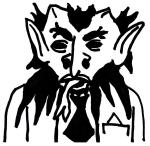
The Brainiac (1962): “I loved The Braniac (or, as it was known in its native Mexico, The Baron of Terror). It’s such a bizarre little horror cheapie that didn’t need to try nearly as hard as it did. Check out this plot: It opens with hooded executioners of the Spanish Inquisition expressing their frustration that a specific victim, a philandering Mexican baron, was surviving all of their torture methods by bending the laws of physics like an omnipotent god. When they sentence the baron to a death-by-burning execution, he escapes by hitching a ride on a passing comet and promises to return in 300 years to murder the descendants of the Inquisitors. He delivers on this promise in the form of a forked-tongued space alien beast. All of this transpires in the opening 20 minutes.”

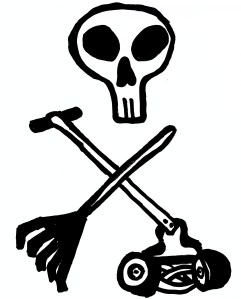
The Love Butcher (1975): “This is a fun, and funny, movie. In much the same way that Tristram Shandy satirized the novel as a form despite being one of the first ten or so novels in the Western world, The Love Butcher mocks, subverts, and emulates the slasher despite having been conceived when that concept was only beginning to solidify. It’s an exploitation film that will use a cartoon sound effect when an older man shows off his bicep in one scene and then have a woman beaten to death with a sharp rake in the next.”

Midnight Offerings (1981): “Melissa Sue Anderson (Mary Ingalls from Little House on the Prairie) and Mary Beth McDonough (Erin Walton from The Waltons) step away from their well-known country girl roles to become dueling teen witches in this made-for-TV horror flick. When I first realized that Midnight Offerings was a made-for-tv movie from the early 80s, I expected it to be a joke of a horror film, oozing with campiness, but to my surprise, it was actually a little more on the serious side.”
 Spooky Drinking Games

EPSON MFP image

If for some ungodly reason the campier titles listed above still aren’t trashy enough for you, we also have drinking games for the following two slices of schlock: the found footage sasquatch flick Exists (2014 & pro-wrestler Kane’s grotesque slasher vehicle See No Evil (2006). If you dare participate in such cinematic horrors, beware & take care. You’re going to need the alcohol.

Happy Halloween!

-The Swampflix Crew
The Love Butcher (1975)

EPSON MFP image

fourhalfstar

campstamp

I first became aware of the ridiculously titled The Love Butcher when the crew over at RedLetterMedia planned to watch it for one of their Best of the Worsts specials, only to discover that the tape in their possession was damaged and unwatchable. A week later, the Alamo announced its Weird Wednesday line-up for the month of October, and Butcher was the revealed as the month’s first screening. A forgotten oddity, the 1975 proto-slasher focuses on the the split personality of physically handicapped Caleb and his suave, handsome, murderous alter ego Lester.

Caleb (Erik Stern) is a gardener referred to by many of his beautiful but insensitive clients as “a cripple,” due to his malformed left hand, clubfoot, and coke bottle glasses. Bald and with perpetually gross bits of black gunk on his teeth, Caleb shares a shack with his brother, Lester. Caleb failed to protect Lester from some terrible event when they were children, leading Caleb to be haunted by his own psyche; Lester is in reality only a figment of Caleb’s warped mind, one who sometimes takes over Caleb’s body (and dons a wig) to murder the “sluts” who populate their town. Meanwhile, journalist Russell Wilson (Jeremiah Beecher, in his only film role) first antagonizes the police and then works with them to track down the murderer, much to the chagrin of both the perpetually annoyed Captain Stark (Richard Kennedy) and Wilson’s long-suffering girlfriend, Florence (Kay Neer, also in her only film role), who has grown increasingly weary of his unpredictable newspaperman hours.

Of all Caleb’s clients, Florence is the one who treats him best. The first victim that we see is a woman who gives him a hard time for asking for water then suddenly turning into a sly seductress when asking if Caleb can recommend an AC repairman; he “sends” Lester, who murders her. Lester also seduces and then murders a Texan expat (Eve Mac, also in her only film role; sensing a pattern here?) whose irritation at Caleb for placing a lawn sprinkler right outside of her window and spilling manure everywhere is actually fairly reasonable, up until the point that she starts berating him for being a freak. All throughout, Lester goes into hysterical diatribes that feature some of the most outlandishly misogynistic dialogue ever uttered on screen, so blatantly and outrageously sexist that it cannot possibly have been meant to be taken seriously. Lester blames the women of the world—all of them, including the boys’ own dead mother—for literally draining the life force out of men through sex. Not all of his victims are so cruel, however; the woman with whom he shares the screen for the longest time, Sheila (Robin Sherwood, who also appeared in Blow Out and Death Wish 2, so, hey, good for her) is the sweet young wife of a dickish older husband who withholds sex from her and berates her musical choices while also demanding his Ovaltine. Sheila asks Caleb to take some time off because she’s not comfortable being alone with a man while her husband is out of town on business, and when Lester approaches her as a record salesman, she spurns his sexual advances. Her only real crime is being too naive; she recognizes Lester in his second disguise when he comes to repair her plumbing but still lets him into the house. What?

The police can’t figure out who the killer is, despite the fact that virtually all of the murders are committed with gardening tools and in a single neighborhood, against a group of women who all have the same gardener (whoever could the killer be?!). Florence is so kind as to invite Caleb into her home for lunch, a gesture that it seems no one has ever shown him before. Lester is infuriated by this person who doesn’t jibe with his conception of women, so he sets out to seduce Flo, only to be spurned by her on the evening that Russell has finally proposed. This somehow allows Caleb to finally overcome Lester and realize that it was Caleb, not Lester, who died when they were children, and that Lester took on the affectations of being Caleb because Caleb was their mother’s favorite. On screen, it’s much less confusing than it sounds.

The film’s first cut was directed by Mikel Angel, who also co-wrote the script. Initially more of a straightforward exploitation movie, Don Jones (whose directing career began with the luridly titled Schoolgirls in Chains and ended with Molly and the Ghost, which doesn’t sound so bad until you see the cover) was tasked with recutting the film into something more comedic. Instead of the hodgepodge film you would expect from such a cobbled together affair, Butcher is fairly straightforward in its brief 82 minute run time, although I suspect that earlier versions of the film featured more of Captain Stark and the reporter investigating, as their combined screen time in the finished product in comparison to Stern’s elegantly delivered monologues is so minimal as to seem almost superfluous. These monologues have to be seen to be believed; imagine Dandy from American Horror Story: Freak Show, but as played by someone with a real hunger for scenery that manages to deftly tread the line between camp and menace rather than just crossing back and forth over it. Some great lines include “I’m the great male Adonis of the universe!” (which, frankly, he isn’t too far off the mark, because damn) and “You’re going to make love to me; satiate me, fill me with nymphoid satisfaction. Drain me, and then you’ll lie at the foot of my altar and adore my godly beauty.”

Lester’s overly verbose and surprisingly sophisticated rants manage to be at once menacing and hilarious, and it’s a testament to the late Erik Stern’s acting that they work at all. For a performance in a movie with no pretensions about being anything other than schlockbait, Stern really commits to his dual role, and to the various other roles and disguises Lester dons in his murdercapades; “Buck” is a treasure, as is the British plumber, although his brown-faced Puerto Rican record salesman disguise is a little uncomfortable (not to mention, what was he going to do if he successfully seduced Sheila on this first attempt and his body had a completely different fleshtone from his face?). Stern brings a pronounced, theatrical-but-understated physicality to the role, crafting very different screen presences for Caleb and Lester, to the extent that you may actually find yourself forgetting that it’s a dual role. There was real potential and talent there; perusing the list of one-shot TV guest appearances that make up the bulk of his career saddened me because he actually could have gone pretty far as an actor but he never caught the break he needed.

This is a fun, and funny, movie. In much the same way that Tristram Shandy satirized the novel as a form despite being one of the first ten or so novels in the Western world, The Love Butcher mocks, subverts, and emulates the slasher despite having been conceived when that concept was only beginning to solidify. It’s an exploitation film that will use a cartoon sound effect when an older man shows off his bicep in one scene and then have a woman beaten to death with a sharp rake in the next. One scene may show Stern as Caleb having a discussion with “Lester,” personified as Lester’s wig on a styrofoam head—with a lit cigar in its “mouth”; in the next, Stern may be wringing a surprising amount of pathos out of being apprehended just after Caleb finally wrests control from Lester permanently, mewlingly pleading with the police to understand that Lester had done all those horrible things. It’s a movie that demands to be seen.

-Mark “Boomer” Redmond

A Snapshot of the Vampire-Crowded Box Office that Buried Innocent Blood (1992)

It’s difficult to say for sure exactly why our current Movie of the Month, John Landis’ vampire mafia horror comedy Innocent Blood, flopped on its initial release in 1992. Critics were lukewarm at best to the film, but similar opinions from folks like Roger Ebert about Landis’ An American Werewolf in London did little to stop that film from gaining a cult audience just a decade prior. Personally, and I know this isn’t a very popular take, I feel that Innocent Blood is pretty much on par in quality with An American Werewolf, especially in its horrific special effects & dark sense of humor. So, it puzzles me exactly why An American Werewolf hextupled its budget at the box office while Innocent Blood failed to gain traction.

Whatever the exact reason for the disparity in Landis’ only two horror comedy features’ financial successes, it could not have helped Innocent Blood‘s chances that the film arrived during a particularly active year for vampire cinema.  While An American Werewolf in London had only to compete with The Howling & Wolfen in 1981 (not that three werewolf movies in one year isn’t impressive), Innocent Blood shared a calendar year with no less than at least seven other vampire features. There were certainly vampire films that made a great deal of money in 1992, but among the dozens of similar works released in the late 80s & early 90s it’s still conceivable that a couple of good ones could’ve gotten buried by the crowded market, Innocent Blood being chief among them.

I’m not going to bore you with reviews of each of 1992’s vampire movies. I will, however, link you to the trailers for every one that I could find, just to give you an idea of how overwhelming the year’s onslaught of vampire media might’ve been. Innocent Blood was very much of its time & couldn’t possibly have been made in another era, and it’s that exact quality I believed contributed to its financial & critical downfall. 1992’s selection of vampire films are chronologically listed below along with their IMDb-provided plot synopses & dates of release to provide context of the crowded vampire market Innocent Blood was facing.

Sleepwalkers, released April 10, 1992

“A mother-and-son team of strange supernatural creatures move to a small town to seek out a young virgin to feed on.” [written for the screen by Stephen King]

Bloodlust, released April 23, 1992

“Three vampires wander the streets of Melbourne killing, screwing and taking drugs. They decide to carry out a heist, stealing three million and attracting the attention of various psychotics, who chase them through a blood spattered odyssey into the Melbourne underground.”

My Grandpa is a Vampire (aka Grampire), released June 8, 1992

“Sent on a trip from California to New Zealand to visit with his eccentric grandfather, Lonny discovers that his grandpa is a vampire. Unnerved at first, he soon discovers that his grandpa is a good vampire.”

Buffy the Vampire Slayer, released July 31, 1992

“A flighty teenage girl learns that she is her generation’s destined battler of vampires.” [written, of course, by Joss Whedon]

Innocent Blood, released September 25, 1992

“Marie is a vampire with a thirst for bad guys. When she fails to properly dispose of one of her victims, a violent mob boss, she bites off more than she can chew and faces a new, immortal danger.” [directed, of course, by John Landis]

Bram Stoker’s Dracula, released November 13, 1992

“The vampire comes to England to seduce a visitor’s fiancée and inflict havoc in the foreign land.” [directed by Francis Ford Coppola, the most successful vampire picture of 1992]

Tale of a Vampire, released November 20, 1992

“Condemned to life without end, and to an undying passion for a lost love he can never find, a vampire stalks a beautiful young woman.”

Samurai Vampire Bikers from Hell, released December 7, 1992

“Alexander Hell, SCOTT SHAW, is a cross-dimensional mercenary. He rides his Harley out of the dark abyss to send ancient vampires back to Hell.”

For more on October’s Movie of the Month, 1992’s Innocent Blood, check out our Swampchat discussion of the film.

-Brandon Ledet

Movie of the Month: Innocent Blood (1992)

EPSON MFP image

Every month one of us makes the rest of the crew watch a movie they’ve never seen before & we discuss it afterwards. This month Erin made Britnee , Brandon , and Boomer watch Innocent Blood (1992).

Erin: A decade after An American Werewolf in London, John Landis brought the public Innocent Blood, a movie about a French vampire in . . . Pittsburgh.  Marie, the fey French vampire, decides to help herself to Pittsburgh’s criminal element.  Mistakes are made, spinal cords are left intact, and before too long Marie and ousted undercover cop Joe are duking it out with a proliferating vampire Mob.

There’s something for everybody!  Stunts!  Grotesque special effects!  Gallons of blood!  Strippers!  Don Rickles!

Innocent Blood is entertaining, weird, and a little self-conscious.

I really like this movie.  I’ve seen dozens of vampire films and most of them are lacking things like . . . plots.  Direction.  Cinematography.  Scripts.  Innocent Blood was clearly made with a sufficient budget and by a team who knew what they were doing.  It isn’t scary enough to really be a horror movie, although it pays homage to the genre.  There are schlock elements, but all in all it feels too mainstream for me to consider it a camp film.

Vampire films often sit in a strange place between monster movies and mainstream dramas.  John Landis seems to have envisioned a film respectful to the grand history of monster movies, but essentially a gritty, sexy, 90s dramedy.  I’d say that he gets about 95% of the way there.  There’s the preposterous sex scene that feels overlong, some pacing issues around the end of the second act that slow down the movie, and a soundtrack that is all. about. that. jazz.  That said, I would recommend it to anyone looking for a vampire movie while avoiding camp or outright bad movies.

What do you think, Brandon?  Is Innocent Blood a pretty good monster movie that’s appropriate for a filmography that includes An American Werewolf in London, Blues Brothers, and Animal House?  Am I blinded by my exposure to truly, truly terrible movies? Does this movie stand out to you as a vampire film?

Brandon: It’s funny, because the near-campless first half of the film really wasn’t doing it for me. It felt like Landis was splitting his time between making both a mediocre vampire movie & a mediocre mob film. There was a little fun to be had in the way Marie talked about her “food” (read: victims) in lines like “How about Italian?” & “Never play with the food” and the dissonance between her glowing-eyes blood feasts & the Sinatra-scored, bargain bin Scorsese mob aesthetics, but it didn’t feel all that special as an example of either genre. Innocent Blood didn’t truly win me over until it devolved into utter chaos, a change that gets kicked off sometime around when mob boss Sallie “The Shark” Macelli is turned & starts assembling cinema’s (as far as I know) very first vampire mafia. There’s some respectable noir influence in the dark alleys & detective work of the back half, but it’s the black comedy & campy vampire mob shenanigans that make the movie shine. It’s hard for me to read scenes like Don Rickles’ vampire transformation or that never-ending, super-kinky, thrust-heavy sex scene as anything but exercises in camp.

And I don’t think there’s anything wrong with that. There’s so much implication that Landis knows exactly what he’s doing here. Like Erin said, it’s not an entirely campy affair through & through. The competent production & surprising jaunts of violent cruelty (including some truly grotesque body horror in Don Rickles’ Big Scene) see to that. It’s just that when Marcelli is running around converting his dopey goons, hissing at lightbulbs, and curling up for a cat nap in a meat freezer, the movie’s darkly humorous (and entirely intentional) campy tendencies thankfully start overtaking what was promising to be a too-serious & not-too-special film in the first act. Robert Loggia (whose version of apoplectic rage I’m most familiar with in Tim & Eric’s Billion Dollar Movie) is brilliantly funny in his role as Marcelli, thoroughly unraveling in his newfound, undead state, to the point where he’s playing more of a vampiric humanoid raccoon than a vampiric mob boss.

Landis backs up this silliness with copious televisions playing ancient B-movies featuring familiar monsters like stop-motion dinosaurs, escaped gorillas, Bela Lugosi, and Christopher Lee. At the same time, on-screen televisions also take time to play more respectable fare, like the Hitchcock film Strangers on a Train. I think these movie selections are a great representation of what Landis was intending to do here: marrying a schlock aesthetic with the higher production value of a “real” film. It’s that exact push & pull that made me fall in love with Innocent Blood as a dark comedy, when I initially wasn’t expecting to get much out of it.

Britnee, how much of that camp/serious divide was segregated between the vampire mafia cast and the scenes featuring the demure vampire Marie & her undercover cop love interest Joe (Anthony LaPaglia, who also played a “Joe” in Empire Records, oddly enough)? Did Joe’s & Marie’s scenes ever approach the fever pitch absurdity of Mercelli’s vampiric mob-building or was their share of the plot more dedicated to the film’s more serious, straight-forward impulses?

Britnee: The relationship between Marie and Joe was interesting, to say the least, but I never found it to be this serious, genuine romance that it tries to be. From the time the two had the cliché meet-cute in the middle of a snowy Pittsburgh street, I sensed that there was a campy romance brewing. And in all honesty, campy romances make for the best cinematic experiences. When comparing Joe and Marie’s scenes to the explosive vampire mafia scenes, I find myself going back and forth deciding whether or not the couple could be taken more seriously than the vampire mobsters. Part of me feels that they do fall a little more on the serious side, but then my head is filled with images of Marie’s fiber optic eyeballs during her memorable lovemaking scene. When reading the film credits, I noticed that a licensed optometrist was credited, so if eyes could magically change color, I guess that’s exactly what it would look like. Anyway, I guess the two contribute to the film’s small amount of seriousness because their romantic element isn’t as outlandish as a bunch of bloodthirsty mobsters covered in meat juice.

During our viewing of the film, there were a couple of times when I almost forgot about Marie and Joe because the insanity that was the budding vampire mafia completely overshadowed their characters.  There were times where I felt as though half an hour went by and the two lovebirds where nowhere to be seen. Of course, I was too enthralled by the vampiric mob madness to care. Landis is an obvious special effects junkie, and the majority of this film focuses on the stunning effects of the monster mobsters. He may have unintentionally drawn attention away from Marie and Joe’s characters, but I can’t blame him for getting carried away because for such an unknown movie, the effects were far from shoddy. They were brilliant! The scene where Manny (Rickles) gets his first dose of sunlight after making the “turn” is pure art. His skin tears open as he’s burning up and turning into pure ash, and it’s one of the greatest examples of exceptional special effects work that I’ve ever seen.

Boomer, do feel as though Marie’s character was not very prominent in the film? Did she make any contribution other than a couple of funny quotes and some sexy moments?

Boomer: It’s funny you should ask, since I was thinking throughout the film how tangential Marie’s role is to the more intriguing and interesting elements of the plot. She acts as a catalyst, as her actions against the first wiseguy she devours onscreen serves to lead LaPaglia’s Joe to out himself as an undercover cop, and her second meal leads to Loggia’s Sallie turning undead and dreaming of an enthralled vampire Pittsburg underground. For a character whose actions set the plot in motion, we know almost nothing about her.

Who is Marie? Is that her real name? When was she turned? Why? Who turned her? How does she feel about her parasitic nature? Nearly all contemporary vampire narratives in which the vampire is not explicitly villainous (and even some where they are) at least pay lip service to the idea that being an undead monster is a bit of an ongoing existential crisis. It’s ironic that the first shot of the film reveals (and revels in) Marie’s entire nude body, as her literal nakedness lies in direct contradiction to the way that she is metaphorically covered and hidden throughout the film. Other than her animal instinct to feed (and breed) and the actions she takes in an attempt to rectify her accidental release of a monster mobster, we have no idea what Marie does with her literally endless spare time. She feels guilt enough over her actions to consider ending her existence by meeting the sun, but her ultimate decision to continue (un)living is less a heartfelt triumph of the spirit than an “Eh, I guess I’ll stick around.” It’s less an issue of Marie not being prominent and more an issue of her being two-dimensional, standing out as a flat character even against shallowly characterized (but endearingly entertaining) scenery-chewers like Rickles and Loggia.

Now that I consider it, none of the main characters are fully fleshed out. Joe is determined to take down the Italian mafia, but any other motivations he may have in his personal or private life are unspoken, if they exist at all. The same can be said of his fellow cops (and a criminally underutilized Angela Bassett as the Pittsburg DA) or of the mobsters from Loggia down. For a prolonged section of the film, the protagonists and antagonists exist in completely different plotlines that only tangentially intersect, and I think that the crime the film is most guilty of is devoting too much focus to Marie and Joe, especially if none of that attention yields any character insight or development; there’s both too much and too little of Marie to be satisfying. A film that focused instead on Luis Guzman, for instance, ineptly bumbling his way through an investigation would have more potential entertainment value, all things considered. LaPaglia’s not a bad actor, he just seems to be under the impression that the ratio of crime thriller to comedy of the film he’s in skews in the opposite direction it actually does.

Perhaps it’s my postmodern eye, but throughout the film I kept attempting to apply some metaphor to the representation of vampirism. In the past thirty years we’ve seen vampirism stand in for disease, sexuality, and corruption, and even vampires themselves as metaphorical minorities and outsiders. From the way that Marie’s particular vampirism operates, at first I was expecting that we would eventually get some correlative relationship with AIDS, but no clear metaphor eventually coalesced, at least not one that I could see.

What do you think, Erin? Is there a metaphor that I’m missing, or one we as an audience could infer regardless of authorial intent?

Erin:  That’s a great question, Boomer.  Innocent Blood has a lot of action, but not a lot of character development, even as characters are doing such intense things as literally transforming into undead monsters.

I’m not sure how to parse the metaphor of Marie’s vampirism in this movie.  I find that usually vampirism is linked to themes of excess, hedonism, and greed.  Marie certainly has some of these elements – her two main interests in life are sex and food.  On the other hand, as you pointed out, we never really learn anything about her past, her other motivations, or how this episode of her life changes her.

The mobsters might be the place to look for metaphor in Innocent Blood.  Sal’s greed for power and his megalomaniacal feelings of invincibility are the things that cause his downfall.  Maybe the metaphor of vampirism here is for both greed and trying to use powers that are not fully understood or appreciated.  Sal tries to convert his whole mob into vampires, but doesn’t seem to make any considerations for the fact that they will no longer be able to work during daylight or that their favorite Italian foods will now cause great distress.

All in all, I’m leaning towards saying that John Landis wasn’t trying to explore the metaphors of vampirism so much as he was trying to produce a mainstream monster movie to appeal to the mass market.

What do you think, Brandon?  Is Marie a cipher here, an empty Manic Pixie Dream Girl only in the movie as a plot device?  Is vampirism presented in the same way?  Is that problematic?

Brandon: There’s a near endless list of metaphors that have been attached to vampirism in the past, ranging from as disparate of meanings as the unchecked thirst for power Erin mentioned to the powerlessness of cyclical depression & drug addiction. I’m just not seeing anything explicit in Innocent Blood that suggests a clear metaphor. The mobsters’ thirst for power angle Erin suggests is something I’d buy, with plenty of evidence backing it up in the film, but where exactly does that leave Marie as a character? The more I reflect on the emptiness of Marie’s general presence, I’m left thinking that the movie could’ve been so much better without her. It’s as if she were a starting point that eventually lead Landis & writer Michael Wolk to the much more fleshed out undead mobster concept. If Marie had been left on the editing room floor or at the very least taken a backseat after she got the mobster plot rolling, we might have a much tighter plotted movie. The befuddled law enforcement POV Boomer suggested above in particular could’ve been worth a try. Then again, we wouldn’t have that insanely sleazy sex scene in that scenario, so maybe they made the right choice afterall.

In addition to the absence of a clear vampirism metaphor, Landis’ film also goes light on its dedication to the generally accepted rules of cinematic vampirism. Marie may be averse to garlic & sunlight, but her reflection appears in mirrors & she kills her fellow vampires with shots to the head (much more akin to zombie rules) rather than stakes to the heart. Somehow, though, I’m not at all bothered by all of this. As much as I might’ve appreciated a clearer set of rules or a more well-defined metaphor, I believe that the film is perfectly entertaining as is. It’s curious to me that Innocent Blood is the sole screenplay credit for writer Michael Wolk, as I believe he did a fantastic job of establishing a distinct kind of mob-themed horror comedy that I’ve never seen on film before. When his screenplay works it really works, flaws & false starts be damned.

Britnee, do you think that Innocent Blood could’ve been more successful if it were more dedicated to the vampire movie as a genre or do its deviations from the format make it all the more memorable/entertaining?

Britnee: This may sound a bit crazy, but I don’t really think of Innocent Blood as being a vampire movie. I know that there are indeed many vampires in the film, but they aren’t the sexy, mysterious vampires that dominate the vamp movie world. They’re a group of grotesque undead dudes that look more like zombies than actual vampires, and as Brandon previously stated, they are killed off like zombies as well. Of course, Marie does fall into the sexy vampire category, but she wasn’t really a big part of the film. Even when she did have her vampire moments, she reminded me more of a werecat from the 80s film Cat People than an actual vampire. Landis was attempting to almost reinvent the vampire, but in 1992, the world just wasn’t ready for something so huge. The general public would have probably better received the film if Landis stuck to more traditional vampire guidelines, but I am ever so grateful that he didn’t. The film’s many deviances make it a cult masterpiece, which is 100 times more valuable than a box office hit.

The idea of a monster mob film is brilliant, but other than Innocent Blood, I don’t recall ever coming across any other films that incorporate the mob with the supernatural. The two elements surprisingly work together in harmony.

Boomer, did you feel as though the monster mob is what mainly contributed to the film’s success? Why didn’t this idea take off and influence other horror films?

Boomer: I can honestly say, with no mental evasion or dishonesty, that the parts of this film which work best are those which relate to and revolve around vampire mafia plot. Loggia’s screen presence, hammy though it may be, is definitely the energetic core of what would otherwise be little more than a late-night Cinemax softcore skin flick that happened to star half the future cast of The Sopranos. I feel like I’ve seen the Underworld (Len Wiseman) meets underworld (mafia) schtick before, but after racking my brain and consulting TV Tropes, I’ve come to the conclusion that it must be one of those ideas that is so ingenious you only think it must have been done dozens of times. Maybe on Angel? Or Forever Knight? Kindred: The Embraced? But definitely not in a feature, or in any work in which the vampire mob was so central to the story.

As to why this didn’t usher in a new era of similar or copycat bloodsucking mafia flicks, I don’t really think there was room in the world for that genre to flourish. The popularity of film mafiosos waxes and wanes; after scores of films about gangsters in the early days of cinema, features about organized crime largely receded until the 70s and 80s, when pictures like Scarface and the Godfather series created a resurgent interest in “fuggedaboutit” movies that didn’t really survive into the 90s. The last great genre piece from that era was Goodfellas, which came out two years before Innocent Blood, and as far as prestige cinema goes, there’s really no comparison between the two. Landis’ American Werewolf endures because its story blended horror and comedy more successfully than Innocent Blood does, and its striking effects work made it stand out despite being released the same year as both The Howling and Wolfen. Aside from Rickles’ character’s (admittedly well done) death sequence, Innocent Blood doesn’t have American Werewolf‘s tangible viscerality; overall, Innocent Blood is a much cheaper-looking movie. If I didn’t know better, I would assume that it was a Cinemax made-for-TV film, and would never have guessed that Landis was involved.

Innocent Blood also fails to stand out among its vampiric brethren as well, as it lacks the sweeping epicness of, say, Interview With a Vampire, which came out just two years later, or Bram Stoker’s Dracula, which was released the same year (Innocent Blood also doesn’t have the built-in audience that comes from being an adaptation, either). As a result, it failed to gain the prominence or immortality that other movies in the same vein and of the same era did. It just wasn’t gruesome enough, or memorable enough, or gangstery enough. In shooting for a middle ground, it ended up having too many ideas; consequently, it failed to stick in the public consciousness in a meaningful way.

Lagniappe

Boomer: Innocent Blood is an ultimately inconsequential film, the kind of movie that seems destined to be included in one of those ubiquitous Cracked.com lists, like “Six Movies with a More Interesting B-Plot than Premise.” I didn’t care for it as much as some of my fellow reviewers, but I didn’t dislike it either. I guess, on the whole, I’d say that on the range of John Landis’ contributions to the world, where American Werewolf is the limit of the best end and spawning whiny privileged misogynist Max is the limit of the lower end (and no, I didn’t forget the death of two children during the production of the Twilight Zone feature; Max is arguably worse), Innocent Blood falls somewhere in the vicinity of Beverly Hills Cop III.

Britnee: Innocent Blood is an excellent horror-comedy as well as a truly entertaining film with an unforgettable plot and cast (well, except for Marie). The true gem of this film isn’t the vampiric mafia or the vampire/human romance; it’s Lenny (David Proval), Sal’s dopey-eyed assistant.  The only other film that I’ve seen him in is The Brady Bunch Movie, in which he makes a 10 second appearance as an electrician with a bad lisp, and I had no idea that he embodied so much talent and pizazz until I saw him in this film. He only had a handful of lines, but each one was pure gold. I still crack up when I remember his worried face by the bathroom window, screaming “Sal!” while Sal is in a tub of his own blood after Marie’s failed attack.

Brandon: Although we’ve already ragged on Marie & actress Anne Parillaud a good bit here, I will at least admit that she has one interesting quirk to her outside of the glowing eyes & knack for BDSM: lighting. As we’re first introduced to Marie, buck naked in her apartment, she’s revealed to be a bit of a candle hoarder. Because much of what she was doing & saying was less than captivating, our minds were left to wonder about Marie’s endless sea of lit candles in several early scenes. Does she prefer candles to electric light because they remind her of simpler times? Where do they come from? Does she buy them wholesale? Do her vampire powers allow her to light them all at once or does she have to go around the room igniting each one with a match like a chump? Marie talks a lot about her “food” (victims), but I feel she has an equal passion for candles that goes conspicuously uncommented on.

Erin: I think that one of my favorite things about this movie are the more mature actors.  Don Rickles, Robert Loggia, and Elaine Kagan working together in Sal’s transformation at the Bergmans’ house has to be one of the best scenes I’ve had the pleasure of watching.  I really wish that John Landis had focused more on the “monster mobster” side of the plot, especially with the amount of talent he had on tap.

Upcoming Movies of the Month
November: Boomer presents The Class of 1999 (1989)
December: Brandon presents The Independent (2000)

-The Swampflix Crew

Burying the Ex (2015)

EPSON MFP image

onehalfstar

Joe Dante is, without question, one of my favorite directors. Just a genuinely fun filmmaker. Where would my childhood have been without the subversively satirical live-action cartoons of Small Soldiers & Gremlins II: The New Batch? I shudder to think. As I got older, self-aware genre titles like Piranha & The Howling revealed themselves to be well within my wheelhouse and the genre-defiant fare of Explorers, The Hole, and Matinee have won my heart even as recently as last year. That’s why it hurts me so much to admit that Dante’s latest work, Burying the Ex, is such a crushing disappointment. At a mercifully short 90min, the film is a grueling test of patience, never even coming close to satisfying either the horror or the comedy side of its horror comedy genre. Worse yet, it dabbles in some light, MRA-type misogyny that suggests that Dante has transitioned from the youthful prankster role he’s filled for decades into some unbecoming grumpy curmudgeon territory. It’s truly sad to witness.

As suggested by the “burying the axe” pun from the title, Burying the Ex centers around a troubled romantic relationship that just will not end until the protagonist schlub puts his love & their differences to rest (literally). Max, played by a hoarsely bland Anton Yelchin, finds it difficult to end a longterm relationship with the beautiful Evelyn (Ashley Greene), despite their glaring, irreconcilable differences. This dilemma is complicated even more by Evelyn’s sudden death by speeding bus, which preempts Max’s final attempt to break it off. Somewhere in there is the cool nerd Olivia (Alexandra Daddario) who offers Max a glimpse into what a relationship with someone who shares his geeky interest in oldschool horror films could possibly be like. In comparison, Olivia makes Evelyn look like a megabitch. Evelyn’s violent mood swings, rampaging jealousy, disregard for Max’s monster movie memorabilia, and self-satisfied conviction that she’s saving the world through “green” blogging all make her out to be some kind of a monster, a position that’s only slightly amplified when she rises from the grave to reveal herself as Max’s crazy, undead zombie (ex)girlfriend. Olivia, on the other hand, is more or less just one of the guys.

Zombies as a metaphor for romantic relationships that just won’t die is not only a somewhat unoriginal idea, it was one that one done much better as recently as last year’s Life After Beth. However, the lack of an original concept could’ve been easily overcome if Dante’s typical zaniness had run the show instead of the faintly sexist “Aren’t women just crazy?” vibes that spoil the fun. That’s not even taking into account the nerd fantasy fulfillment that two beautiful women (undead or not) would be fighting over the protagonist Max, who is hopelessly mediocre in both looks & personality (I’ve enjoyed Yelchin elsewhere, just not here). The only part of Burying the Ex that does work is its loving references to older, better monster movies, including shout-outs to The Brain that Wouldn’t Die, Plan 9 from Outer Space, I Walked With a Zombie, Cat People, and the list goes on. When Max explains that horror films are important because they “challenge us to stop accepting the world & face our inner monster & find strength to conquer it,” you really want to find common ground with the film if not only to fulfill that admirable sentiment. However, Burying the Ex never faces its inner misogyny monster, thoroughly misidentifying the enemy as Crazy Women & Their Crazy Ways. All that’s left, then, is cheap, unfunny gags & some last second gore. Whoopee. It’s a highly undignified position for Dante to be in & I hope that this isn’t the part of a larger downward trend in quality for the director, who really should’ve known better than to make this film in the first place.

-Brandon Ledet

Shock ‘Em Dead (1991)

EPSON MFP image

threehalfstar

campstamp

Traci Lords has had one of the strangest careers in Hollywood. How often do you hear about a person transitioning from porn to an actual acting career? Sure, Ron Jeremy may be a household name (in certain households, anyway), but he never became a legitimate actor, and his appearances in films and on television are usually in cameos or roles that reference his fame as one of the most prodigious and well-endowed performers in the realm of “blue” movies. Recently, porn actor James Deen attempted to make the transition to mainstream(ish) cinema in director Paul Schrader’s The Canyons, a terrible erotic thriller penned by shoulda-known-better novelist Bret Easton Ellis, a movie that is only differentiated from poorly plotted direct-to-video softcore erotic thrillers of yesteryear by the presence of a nude Lindsay Lohan (and whose sole redeeming feature was three minutes of Nolan Gerard Funk in a glistening Speedo). But Traci Lords is something altogether different; after being one of the most sought-after porn actresses of the eighties, it was discovered that a great deal of her work had been made while she was underage, resulting in an infamous scandal that saw the adult film industry spending millions of dollars on recalls and withdrawals. Lords then enrolled to study legitimate method acting at the Lee Strasberg Theater Institute, before establishing herself as a legitimate actress by appearing in John Waters’ Cry-Baby in 1990, although I will always remember her as a late addition to millennial sci-fi series First Wave, having been born in 1987 and having no real frame of reference for her career before that.

That’s a bit of a long-winded introduction, but it does help explain how Traci Lords came to be in the schlocky 1991 love(?) letter to metal that is Shock ‘Em Dead (aka Rock ‘Em Dead), a horror comedy featuring some of the best examples of the worst sartorial mistakes in music history. I’m not here to pass judgement on Metal as a genre—after all, as far as devotees to a particular musical style are concerned, metalheads are some of the most aggressive, fanatical, defensive, and insular, and I’m not looking to get my head bashed in by a guy (and let’s be clear, it would be a guy) who has willingly and purposefully refused to listen to anything that came out after the demise of Vinnie Vincent Invasion. Metal fandom is a mostly misogynistic miasma of guttural throats, thrashing, and toxic masculinity, devoted to a musical subculture that was most successful during a decade where everyone was coked out of their fucking minds, but it’s also the genre that features some of the most amazing and mindboggling musical feats ever performed on guitar, and that fact is not lost on me. Still, even the most devoted headbanger has to admit that the metal of the 1980s was performed by talented dudes who all dressed like they had wandered away from the saddest gay pride parade in the history of Marion, Iowa—all jeweltone lycra and neon jungle prints. It was a time of great musicianship, but at what cost?

Shock comes to us from 1991 as the directorial effort of Mark Freed, cofounder of StarLicks, a video production company that released instructional musical videos in which notable musicians detailed their personal stylings, which amateurs and interested parties could learn to imitate or build upon. According to the cover of the VHS tape (and the cast list on Wikipedia), the film stars Traci Lords and only Traci Lords, but this is not the case; the main character is villain protagonist “Angel” Martin, a “hideous,” mouth-breathing “young” nerd turned guitar god played by handsome, almost-40 Stephen Quadros, and the protagonist of the movie is actually uberbabe Greg Austin (Tim Moffett), boyfriends of Lords’s Lindsay. Aldo Ray and Troy Donahue, both in the twilight of their careers, make appearances as well, unfortunately, and Michael Angelo Batio makes a brief appearance as the Lord of Darkness playing a double-headed guitar as well as acting as hand double whenever the script calls for Angel to do something stunning.

Marty (Quadros) is a nobody, a terrible person going nowhere in life. He lives in a trailer park, where his shitty and never-improving guitar practicing is the bane of his landlord (Yankee Sulivan)’s life. His boss at a nondescript pizza eatery, Tony (Ray), is a verbally abusive micromanager, but Marty is also lousy at his job, licking his fingers before spreading cheese and spying on his nude female co-worker through a locker room peephole. Across town, metal band Spastique Kolon, fronted by Johnny (Markus Grupa), is having trouble finding a decent guitar player at an audition. Johnny’s getting impatient, because there’s a “big showcase” in just two days, and they have to have a guitar player by then! And, as we all know, most bands form and sign up for showcases before they have a guitar player. The band’s manager is Lindsay Roberts (Lords), girlfriend of Greg Austin (Moffett); she thinks it might be time for him to hang up his bass and take a job working construction for her dad in some backwater. Greg’s understandably not thrilled about that potential future, but he goes on a douchey ramble about how he knows he’s going to be somebody and he has the talent and “believe in me, baby,” etc. Johnny asks some random guy who happens to be there (I can’t figure out the character or actor, as less than a third of the people in this movie have photos on their sparse IMDb pages) if he knows any guitarists, and he mentions that his dad is always complaining about a guy living in the trailer park that he manages.

After getting the phone call from Random Guy, Marty ditches work and is fired by Tony. He auditions, performs terribly, and is laughed out of the studio. When Tony refuses to take Marty back and the trailer park manager evicts him from the property, effective at sundown, Marty is approached by the neighborhood “Voodoo Woman” (Tyger Sodipe), who offers him his heart’s desire in exchange for his soul. He agrees, and wishes to be the most technically proficient and famous guitar player in the world. She does some magic with an athame and potion and stabs him in the chest, leading to a dream sequence featuring zombies and the King of Hell himself, and when he wakes up, he’s got an over-sprayed mane of jet black hair, cowhide bedding, a boringly suburban McMansion, and a closet full of black leather vests, pants, and strategically ripped cotton shirts. He’s also got a “family” of hot ladies to tend to his every whim, and they are by far the best thing about this movie. Every single one of them has more character and understandable motivation than Marty, and they also have some of the best lines.

All three also sold their souls for something, with a price (other than being Marty’s reward, that is). Michelle (Karen Russell) was born disfigured and Marilyn (Gina Parks) was scarred in a horrible fire; they see their mangled visages in every mirror, and others can see them when reflected in silver. Monique (Laurel Wiley) had cancer, and she went to the Voodoo Woman for a cure, but the Voodoo Woman took her life immediately and turned her into a ghoul (as she has done to Marty), forcing her to kill and feed upon the green life forces of victims to stay alive, as normal food is toxic. Marty auditions for the band again and, naturally, gets a spot, ultimately pushing Johnny out of the band and getting Spastique Kolon a record deal, all while murdering his former tormentors and innocent groupies alike to feast on their souls. He becomes obsessed with the idea of possessing Lindsay and making her a part of his harem, which involves a Voodoo baptism ritual, but her love for Greg and Greg’s possessiveness of love for her ultimately saves the day. So, yeah, metal music + misremembered elements of Dracula + wish fulfillment for proto-MRA dorks = Shock ‘Em Dead.

This is a fun little movie, although it could have been much funnier if there had been more focus on some of the likable (if evil) supporting characters and less on the rechristened Angel Martin, guitar superstar. Lords’s character, who exists almost entirely for no other reason than to be a living McGuffin for Martin and Greg to fight over, would seem like more of an afterthought than a character in a better movie, but she and the demon girlfriends are the most interesting characters here, with backstories and desires that make sense, especially when compared to Marty’s motivations. I can’t tell if that’s part of the joke or not, but I tend to lean towards “not,” if only because Marty is too much like a real metalhead, with delusions of sex and guitar godhood in spite of reality, and this seems to be more of a spoof than a satire of that mindset. The two major songs performed by Spastique Kolon in this movie are “I’m a Virgin Girl” and “I’m in Love with a Slut,” which is pretty much a textbook case of the Madonna/Whore Complex, and I just can’t force myself to conceptualize the creators of this movie as deserving credit for that level of self-awareness. At the end of the day, that subculture and that era were dominated by socially irresponsible sexism and misogyny, and that comes across more clearly and overtly in this movie than anything else, if for no other mitigating factor than the number of undulating breasts displayed throughout. Still, it got a decent number of laughs from me, and it’s definitely worth watching on a rainy afternoon.

-Mark “Boomer” Redmond

Pieces (1982)

EPSON MFP image

fivestar

campstamp

“You don’t have to go to Texas for a chainsaw massacre” declares one of the taglines for 1982’s exploitation horror film Pieces, although you would have had to be in Austin this week to see the screening of the 35mm master print, cobbled together by Grindhouse Releasing from the extant copies of the film (and from which their remastered 2008 DVD was produced). The film’s other tagline, “It’s exactly what you think it is,” is also accurate–Pieces is a solidly hilarious and gratuitously gory flick about a campus killer who murders women with a chainsaw, full of ridiculous and unrealistic dialogue that would give a more modern postmodern horror spoof a run for its money. Shot largely in Spain and set in Boston, Pieces will leave you breathless, but from laughter, not fear. This movie is a camp masterpiece, and has set the bar high as my new standard for horror comedy.

In 1942, a ten year old boy is caught red-handed putting together a jigsaw puzzle featuring a nude pin-up. Furiously, the boy’s mother tells him that she is going to burn this filth, but he returns to the room with an ax and a hacksaw and chops her into, well, pieces. Forty years later, a rash of murders-by-chainsaw are perpetrated against a number of co-eds at an unnamed Boston university, and Detectives Bracken (Christopher George) and Holden (Frank Bana) are sent to investigate. The suspects include surly groundskeeper Willard (Paul L. Smith, best known for playing Bluto opposite Robin Williams’s Popeye a few years earlier), reserved closeted anatomy professor Arthur Brown (Jack Taylor), and the helpful but absent minded Dean (Edmund Purdom). Kendall James (Ian Sera), the boyfriend of one of the victims, is also treated as a suspect initially, but is ultimately enlisted by Bracken as his on-campus liaison, leading to the younger man acting as the primary investigator of the murders despite the fact that he is even less suited to this role than he is to being the campus stud. I mean, Sera’s not an ugly guy, and his awful hair is one thing, but there are no attempts to hide the fact that he’s wearing lifts throughout the movie, and still stands a head shorter than almost everyone on screen. Rounding out the cast is Lynda Day as Mary Riggs, a former tennis player turned undercover policewoman, although she ends up having to be saved by Kendall far more often than she should.

There appears to be some contention among the fanbase as to whether or not the film was intended to be a comic film or a more straightforward example of schlock cinema; it surely features the titillating nudity and gory gross-outs of other films from the latter genre (and equal opportunity nudity at that!), but I can’t imagine anyone involved in the making of the movie could have been under the impression they were making anything other than a humorous exercise in bad taste. Some of the scenes feel like the crew was in such a rush that they couldn’t afford the time to do more than one take. The dialogue syncing is awful, the lines themselves swing wildly from tonally dissonant purple prose to over-the-top shrieks and alien approximations of police procedural patter, and one of the murder victims pisses herself. That’s not even getting into the killer reconstructing his pornographic jigsaw puzzle in the film’s present while also assembling a jigsaw woman from his victims, the running gag of Bracken and his eternally unlit cigar, an extended aerobics class sequence, and even a woman skateboarding into a sheet of glass being carried across the street by two men. This film is comedy gold, and I loved every minute of it. Just try to watch this scene and tell me that Pieces is meant to be taken seriously.

As for the plot, it’s a fairly standard campus murder spree grindhouse-era flick, and there’s gruesomeness to spare here in addition to the comedy. The mystery, such as it is, isn’t resolved until the finale, although a set/location detail we see in the killer’s house is also present in another locale that is frequently seen, meaning that sharp-eyed viewers will figure out who the killer is before the halfway mark, but that makes the film no less fun. Special mention here should go to Day, who was well known at the time of release for her role on TV’s Mission: Impossible; at no point does she break character or the fourth wall, but she’s also obviously delighted to be participating in this production. She’s a very magnetic screen presence, and I was glad to see that she is still alive, even though I wish she hadn’t retired from the screen so long ago.

My viewing experience of the film was somewhat unique, so I can’t say for certain that the 2008 DVD will recapture the same magic; I can say, however, that I intend to find it and purchase it for my personal collection ASAP. I recommend you watch this movie at the earliest opportunity. You won’t regret it.

-Mark “Boomer” Redmond

Dead Snow 2: Red vs. Dead (2014)

EPSON MFP image

threehalfstar

campstamp

In my initial review I faulted the Norwegian horror comedy Dead Snow for keeping its Nazi zombie antics under wraps until far too late in its runtime. There was plenty of over the top cartoonish gore to be had in the film’s third act, but for some reason the it pretended that the audience didn’t know exactly what was coming (despite the prominence of Nazi zombies all over its advertising) & kept its monsters concealed in the dark for as long as possible. Dead Snow 2: Red vs Dead ditches the first films’ reluctance to immediately devolve into blood-soaked chaos & instead opts for a constant barrage of Army of Darkness-type gore gags from front to end. Even the opening sequence’s recap of the first film’s plot is little more than a flimsy excuse to rehash all of the gore that’s already come as a primer for the entrails, severed limbs, and copious gallons of blood soon to follow.

Despite its eagerness to please on the gore front, Dead Snow 2 surely has its own problems. In addition to occasionally uncomfortable caricatures of hot nerd girls & sexually ambiguous Eurotrash, the film also has a tendency to self-referentially pat itself on the back. Martin Starr’s turn as a self-proclaimed zombie hunter (read: nerd fantasy fulfilment in the flesh) is often a mere conduit for the movie to proclaim its own uniqueness, going so far as to explicitly say in the dialogue that they’re inventing a new zombie genre. This may be awkward, but in a lot of ways it’s difficult to disagree. Red vs. Dead is far from the by-the-numbers retread of films like Wyrmwood. I can at least personally attest to having never seen Nazi zombie surgeons, Nazi zombie priests, magical Nazi zombie arms grafted onto still-human hosts, or gasoline syphoned through a corpses’ intestinal track in a movie before, much less all in the same picture.

As awkward as Dead Snow 2 may be at times, it’s difficult to deny that it’s thoroughly more entertaining than its predecessor. Even the bro-culture politics & self-referential zombie genre discussions have their roots in the first entry, so it’s difficult to get too down on its crudeness on that front. A non-stop gore fest about Nazi zombies attempting to reclaim their stolen gold & completing long-forgotten marching orders from Hitler himself is not the place I would typically look for a moral beacon  or an absence of hubris anyway. This is a live-action cartoon in which undead Nazis mercilessly disembowel the living from the opening minutes until they’re finally stopped in their tracks just before the end credits. Even when they dismember children or the handicapped (very rare targets for horror films, for obvious reasons) it’s easy to dismiss the cruelty of that behavior in the context of the film. I mean, they are undead Nazis after all. If you can stomach (or even frequently seek out) this kind of blindly brutal, played-for-laughs mayhem in your genre films, there’s no doubt that you’ll have fun with the buckets of blood Dead Snow 2 sloshes at the screen. In my case, I enjoyed it even more than the first one, which pretended a little too hard to be more tastefully restrained that it truly was at heart. With the second entry, taste has thankfully gone out the window entirely.

-Brandon Ledet

John Dies at the End (2012)

EPSON MFP image

fourstar

campstamp

I wrote a couple months back that the recent coming of age comedy Dope was a sort of Scott Pilgrim vs. the World for 90s hip hop geeks & bucket hat enthusiasts. A snarkily overwritten, but genuinely sincere & visually expressive comedy for video game & manga-addled teens, Scott Pilgrim has become an unofficial benchmark for young adult media with highly specific target audiences. Viewed from that perspective, John Dies at the End can be understood as a Scott Pilgrim descendant for teen schlock junkies, a comedy specifically aimed at young B-movie nerds. That is, if John Dies can be understood at all.

The trick to appreciating John Dies at the End is allowing yourself to get on its wavelength & roll with the out of nowhere punches. The film does adopt a helpful interview & flashback story structure to vaguely rein itself in, but it’s mostly a loose collection of horror movie tangents that take on subjects as wide & as varied as zombies, alien invasions, exorcisms, demons, the Apocalypse, abandoned malls, heroic dogs, white rappers and alternate universes. The doorway to these swirls of madness is a mysterious needle drug known as “soy sauce”, the only real connective tissue to the film’s off-the-wall proceedings.

The episodic structure of John Dies would lend itself quite nicely to a Joss Whedon-esque television series, but in its cinematic form it feels much like a long string of practical jokes, cheekily playing with audience expectations at nearly every turn. Whether it’s a mustache suddenly taking winged flight or household objects transforming into floppy cocks, much of John Dies‘ humor is derived from the mischievous element of surprise. There are a few genuinely funny (and surprisingly vulgar) turns of phrase in the dialogue, like in the line “A toast to all the kisses I’ve snatched . . . and vice versa”, but it’s generally the film’s “Everything you know is wrong” edict that drives most of its amusement.

Just like how Scott Pilgrim felt authentic to its video game & manga roots, John Dies at the End is smart to stick to what makes B-movies great. Besides its genuinely eccentric weirdness, the film also boasts a tendency towards practical effects & grotesque creatures befitting even films like Possession or the best works of Cronenberg. John Dies even backs up its Scott Pilgrim connection by depicting the titular character playing guitar in a rock band, a trope also cringingly echoed in Dope. If any of the three films I’ve cited in this (admittedly loosely connected) genre appeal to me directly based on my personal tastes, John Dies at the End is an easy favorite. It’s overenthusiastic chase for a B-movie aesthetic is firmly in my wheelhouse & I ended up enjoying the film quite a bit once I gave into its purposefully messy charms.

-Brandon Ledet

Patch Town (2015)

EPSON MFP image

threehalfstar

campstamp

There’s been a lot of grumbling lately about the inherent lameness of intentionally campy B-pictures aiming for a cult audience in an overtly phony way. Movies like Sharknado & Zombeavers have been derided by many schlock junkies for recreating a calculated sense of what was once felt like genuine cinematic weirdness in order to gain an instant, unearned cult status. It wouldn’t be too hard to see that same allegation being lashed at the horror comedy Patch Town, but (besides being generally more lenient on the calculated cult movie as a genre than some) I believe there’s something a little more special about the film than titles like Wolf Cop & Piranhaconda. Patch Town‘s high-concept, low budget weirdness is calculated, sure, but it’s also surprisingly thorough in pushing that concept as far as it could possibly go & even better, it’s surprisingly funny.

A horror comedy about an evil Cabbage Patch dolls factory, Patch Town sounds like the kind of Sci-Fi Channel dreck that would settle for a couple odd moments & a celebrity cameo, then call it a day. Instead, it milks its concept for all it’s worth, telling the story of a magically talented toy inventor who discovers a cabbage patch in the woods that gives birth to real-life babies. Unable to provide for every single babe he finds, he uses his advanced toy-making technology to preserve them in plastic doll bodies & sells them in stores so that little girls can mother them (real-life Cabbage Patch dolls used to come with adoption papers). Once the girls became women & left their adopted baby dolls by the wayside the (since-deceased) inventor’s evil son would snatch them up, free them from their plastic doll prisons, and force them to work in his evil doll factory where they perform grotesque cesarean section operations on the magical forest cabbages. That’s not even to mention a subplot in which one of the workers breaks free to track down the mother who abandoned him. Or the fact that it’s a Christmas movie. And a musical.

If Patch Town were made in the 1980s there’s no doubt in my mind that it would have a strong cult following. It may even just be strange enough to pull one off in the 2010s. There certainly aren’t that many horror comedy Christmas musicals about evil doll factories around these days to compete for its potential audience. I don’t think it’s an entirely successful endeavour from front to end, but it does have a whole lot going for it in terms of go-for-broke narrative absurdity & genuinely hilarious moments that feel like bizarre sketch comedy tangents (complete with a Scott Thompson cameo). I’d understand if some folks dismiss it outright based on its calculated cult following ambitions alone (especially considering how flooded that particular market is at the moment) but I believe it’s genuinely strange enough to deserve a fairer shake than that.

-Brandon Ledet