Halloween Report 2015: Best of the Swampflix Horror Tag

EPSON MFP image
Halloween is next week (!!!), which means a lot of cinephiles & horror nerds out there are currently trying to cram in as many scary movies as they can before the best day of the year (except for Mardi Gras, of course) passes us by. We here at Swampflix watch a lot of horror films year round, so instead of overloading you with the full list of all the spooky movies we’ve covered since we launched the site, here’s a selection of the best of the best. I’ve tried to break it down into a few separate categories to help you find what you’re looking for. Hope this helps anyone looking to add some titles to their annual horror binge! Happy hauntings!

Dario Argento

EPSON MFP image

Dario Argento is one of the all-time horror movie greats, right up there with Mario Bava as one of the masters of the highly-influential gaillo genre. His work is a perfect blend of art house cinema & trashy genre fare, the exact formula the Swampflix treasures most. Mark has been tirelessly covering Argento’s films over the past couple months & here’s the best of what he’s reviewed so far.

Suspiria (1977) : “Color and immersion are much more important here than they are in a lot of other films from the same period (or today). Contemporary critics took issue with the film’s plot structure, apparently failing to realize that Suspiria is intentionally dreamlike, influenced by fairy tales and nightmares more than monomyth. Even the opening narration, which others consider to be out of place and somewhat silly, contributes to the film by acting as a kind of horror-tinged “once upon a time.””

Phenomena (1985): “Phenomena is not a giallo picture in the way that many of Argento’s works definitively are or even Suspiria arguably is; although there is a mystery at its core, the crimes cannot be solved by the audience, making this much more of a slasher movie than other entries in the director’s canon, which may have contained elements of the slasher genre but were narratively focused on investigation. Running throughout the film is an undercurrent of terror, which is paired with distinctly beautiful imagery to create a film experience that is more haunting than inquisitive.”

Deep Red (1975): “Deep Red is the apotheosis of many of Argento’s tropes, but it also reflects his growth as a director and the instigation of newer concepts that would become part of his repertoire in the films that followed. His new focus on developing women characters is cited above, but this was also Argento’s first of many collaborations with prog-rock legends Goblin, who composed most of the score for the film after Argento was dissatisfied with Giorgio Gaslini’s initial composition (although some of Gaslini’s tracks are still present in the final score).”

Tenebrae (1982): “Tenebrae (aka Tenebre, although this is less of a translation of the title as it is a miscommunication about promotional material from day one), released in 1982, is Argento’s first picture to be filmed in the eighties and is the definitive giallo of that decade, despite being less well known than his preceding films in that genre. Most importantly, however, this is the first time I’ve really felt that Argento had a thesis with his movie. His previous gialli ranged from good to bad, but one thing they all had in common was that they were first concerned with cinematography and mystery, with meaning and metaphor playing inconsequential roles in the overall structure. […] Here, however, Argento addresses criticism of his work and its themes as well as what he perceived to be a rise in random acts of violence in his contemporary world.”

The Bird with the Crystal Plumage (1970): “The Bird with the Crystal Plumage was the first film directed by Argento, who was already relatively well known as a screenwriter, and the reference to the Master of Suspense in the film’s advertising is well placed, as the traces of Hitchcock’s influence are all over this film like fingerprints at a murder scene; this is not a criticism, per se, but it is nonetheless true.”

Opera (1987): “Widely considered to be the last great Dario Argento film, Opera (promoted in the US under the unwieldy Agatha Christie-esque title Terror at the Opera) is a sharp movie with a fast pace and some great new ideas from the aging director. Argento was invited to La Scala after Phenomena and asked to produce and mount a stage opera; he was happy to do so, but the project never went anywhere due to artistic differences. Instead, he channeled that idea into his 1987 film, which concerns a production of Verdi’s Macbeth staged by a transparent avatar of himself, with heavy influences from the plot structure and recurring images of The Phantom of the Opera.”

Mother of Tears (2007): “Mother of Tears is effectively creepy, pairing the psychological horror of a destabilizing and self-destructive society with the unhinged and violent imagery of a slasher, with some occult horror thrown in for good measure. Asia Argento turns in an absolutely dynamite performance, and looks gorgeous doing it, and her scenes with her mother are quietly beautiful despite the uncannily awful CGI–not the only bad CGI in the movie, but, to the movie’s credit, the effects are largely practical. The lighting and score are perfection, and the overall ambiance was reminiscent of Wes Craven’s work in the nineties like Scream and New Nightmare, with sumptuous visuals that play up earthtones in place of the vivid colors of Argento’s earlier work. Although the film seems to be rather widely reviled, it’s actually great–even perfect–in some places, and its weaker elements aren’t awful enough to weigh down the film as much as I expected.”

Art House Horror

EPSON MFP image

If you’re looking for an escape from the endless parade of trashy slasher movies & want a more formally refined style of horror film, this list might be a good place to start.

Peeping Tom (1960): “It’s near impossible to gauge just how shocking or morally incongruous Peeping Tom must’ve been in 1960, especially in the opening scenes where old men are shown purchasing ponography in the same corner stores where young girls buy themselves candy for comedic effect & the protagonist/killer is introduced secretly filming a sex worker under his trench coat before moving in for his first kill. Premiering the same year as Hitchcock’s Psycho and predating the birth of giallo & the slasher in 1962’s Blood & Black Lace, Peeping Tom was undeniably ahead of its time. A prescient ancestor to the countless slashers to follow, Powell’s classic is a sleek, beautifully crafted work that should’ve been met with accolades & rapturous applause instead of the prudish dismissal it sadly received.”

Possession (1981): “Let’s just get this out of the way: Possession is a masterpiece. It’s a cold, incomprehensible film that confidently unleashes cinematic techniques like deadly weapons. Filmed in Berlin in 1980, Possession occupies harsh, uncaring architectural spaces, but populates them with passionate characters that remain in constant, violently fluid motion. The camera moves with them, rarely allowing the audience to settle as it chases its tormented subjects down sparse rooms and hallways like a slasher movie serial killer. In one shot the central couple undulates back & forth in front of a blank white wall, constantly swirling around each other during a bitter argument, but seemingly going nowhere as if trapped in a void.”

Beyond the Black Rainbow (2012): “Beyond the Black Rainbow is not a straightforward cinematic experience, but instead works more like ambient music or a poem. In an age where the lines dividing cinema & television are becoming increasingly blurred, there’s an exponential value in movies that work this way. Recent mind-benders like Beyond the Black Rainbow, It Follows, Upstream Color, Under the Skin, and The Strange Color of Your Body’s Tears are much-needed reminders that there are still things cinema can do that television can’t, no matter how much HBO wants you to believe otherwise.”

Blood & Black Lace (1964): “Mario Bava’s celebrated Italian thriller, Blood and Black Lace, is a landmark in horror cinema and one of the earliest giallo films in existence. It’s also considered to be the first “body count” horror film, so we can thank Bava for all of those campy, raunchy 80s slasher flicks. Watching this film is like taking a walk through an art gallery. It’s chock-full of rich colors, eerie scenery, deep shadows, and impressive camera angles. The outstanding cinematography alone is a good reason to watch the film.”

The Masque of the Red Death (1964): “The Masque of The Red Death is one of eight films in the Corman-Poe cycle: a series of Edgar Allan Poe adaptations directed by B-movie legend Roger Corman for American International Pictures. The Masque is widely considered the best of the Poe cycle as well as one of Corman’s best films overall, a sentiment I wholeheartedly agree with. There’s so much about The Masque that’s firmly in my wheelhouse: over-the-top set design, an early glimpse of 60’s era Satanic psychedelia, Vincent Price taking effete delight in his own cruelty, a fatalistic ending that doesn’t stray from the pessimism of Poe’s story, Corman pushing the limits of what he can get away with visually on a shoestring budget.”

The Black Cat (1934): “1934’s Unversial Pictures production of The Black Cat is fascinating not because it’s a loose, full-length adaptation of a Poe short story, but because it features the first of many onscreen collaborations between horror movie legends & professional rivals Bela Lugosi & Boris Karloff. Lugosi & Karloff are a match made in horror nerd heaven, especially in this gorgeous, alarmingly violent film that allows them to stray from their usual typecast roles as Count Dracula & the Frankenstein monster. Although there are eight Lugosi/Karloff collaborations in total, it’s difficult to imagine that any of them could possibly match the delicious old school horror aesthetic achieved in The Black Cat. It’s an incredible work.”

The Raven (1935): “Although Karloff receives top billing for The Raven, something he was also awarded in The Black Cat, this is unmistakably Bela Lugosi’s show. Watching the horror legend recite Poe’s “The Raven” in front of an exaggerated raven’s shadow, don surgical gear to apply a knockout gas to the camera lens, gleefully give tours of his torture chamber, and recite lines like “Death is my talisman, Mr Chapman. The one indestructible force, the one certain thing in an uncertain universe. Death!” are all priceless moments for oldschool horror fans.”

Häxan: Witchcraft through the Ages (1922): “Even nearly a hundred years since Häxan’s release, the message is still potent. There are still huge flaws in our treatment of mental health & we still need flashy, sinful entertainment to draw our attention to them. Along with its hellish practical effects & creature design, the film’s central message has a surprisingly long shelf life.”

 The Spirit of the Beehive (1973): “Both Under the Skin & The Spirit of the Beehive reach beyond the typical ways a movie can terrify, beyond the methods pioneered by classic monster movies like Frankenstein. They achieve a transcendental beauty in images like Beehive’s honeycomb lighting & endless doorways and Under The Skin’s liquid void & free-floating flesh. It’s a terrifying beauty, though, as it is a beauty of the unknown. Both films are transfixing, yet horrifying, because they cannot be truly, completely understood, like the graveyard landscape at the beginning of Frankenstein. For the more than 80 years since mysterious men were curiously robbing graves on that foggy, otherworldly set, ambiguity and obscuration have been used to terrify audiences in countless films. The three mentioned here are mere steppingstones in the evolution of cryptic, atmospheric horror, perhaps only loosely connected to one another in terms of genre, but connected all the same in a hauntingly vague, undead spirit.”

Weirdo Outliers
 

Halfway between high art & the depths of trash, these titles occupy a strange middle ground that defies expectations. They also are some of the scariest movies on the list in completely unexpected ways.

Wes Craven’s New Nightmare (1994): “My personal favorite Wes Craven film is 1994’s New Nightmare. It’s not his scariest, nor his most tightly-controlled work, but it is an incredibly smart picture that manages to bridge the gap between the dream-logic horror of A Nightmare on Elm Street with the meta genre reflection of the soon-to-come Scream franchise. Wes Craven’s New Nightmare is a perfect way to remember the filmmaker for all he accomplished, not only because it marries those two defining moments of his career in a single picture, but also because he plays a role in the film as a fictionalized version of himself.”

Phase IV (1974): “It’s easy to see why Phase IV was given the Mystery Science Theater 3000 treatment, but I feel like that brand of mockery is selling its other merits a bit short. Visually bizarre, technically impressive, tonally unnerving, and backed by a wickedly cool soundtrack of droning synths (recently made available 40 years late by Waxwork Records), Phase IV is a thoroughly strange film.”

Crimson Peak (2015): “Crimson Peak is a classic Gothic Horror, with the storyline sticking closely to the standard tropes of the genre – isolation, bloody histories, unnatural relationships, menacing architecture, Victorians, obvious symbolism, endangered virgins, things that gibber and chitter in the night, etc.  Del Toro makes references to the Hammer Horror aesthetic, appropriate for a movie with such an overstated sense of dramatic Victorian style (although, to be fair, the Victorians were really dramatic to begin with).”

Triangle (2009): “Part of Triangle’s fun is figuring out just where the plot is going. Your initial viewing will most likely be filled with nagging questions of just “What. Is. Happening. Here?” Familiar explanations of time-travel, ghosts, and the whole ordeal merely being a nightmare will all creep up. They will also prove false as the movie escalates from a slasher flick to a psychological horror to, most terrifying of all, a philosophical one.”

Spring (2015): “Revealing too much about Spring’s story would be a disservice to you so I’m just going to have to stop there and ask you to take my word for it: it’s a great movie.To illustrate how difficult the tone & intent are to pinpoint here, check out the genre listed on the film’s Wikipedia page: ‘supernatural romantic science fiction horror’- expialidocious. You can go ahead and add the word ‘comedy’ to that list as well, as the film is frequently hilarious in a satisfyingly adult way.”

It Follows (2015): “It Follows doesn’t get everything right. It loses momentum at several points and builds toward a somewhat tepid climax, but these are small grievances. Overall it is an exceptional horror film that plays around with horror genre tropes, but feels modern instead of regressive. There is also potent subtext about the nature of our sexual attachments and intimacy anxieties.”

Near Dark (1987): “Near Dark is not a perfect film. It frankly gets by more on style & mood than it does on content, but it’s so stylistically strong that it can pull off a lack of depth with ease. Just the basic concept of a Kathryn Bigelow vampire-Western with a Tangerine Dream soundtrack is enough to inspire enthusiasm on its own.”

Burnt Offerings (1976): “The way that the house in Burnt Offerings uses its occupants to act out violence against each other is also quite scary. The tension builds slowly in this film, starting first with images of life and renewal (a dead potted plant suddenly has a green leaf, a burned-out light bulb begins to work) before more outrageous elements occur (gas leaks in locked rooms, dilapidated siding and roof tiles flying off of the house and being replaced by fresh fixtures). If the film had spent less time establishing the Rolfs as a happy family before tearing them apart, the escalation of terror wouldn’t work half as well as it does, and I can’t believe such a great film has faded into relative obscurity.”

Creature Features

EPSON MFP image

Do you want to see some weird/gross/creepy/goofy monsters? Check out these bad boys.

The Thing (1982): “If I only catch one film during this mini-Carpenter Fest, I’m glad I at least got to experience The Thing for the first time on the big screen. The movie’s visuals are on par with the best the director has ever crafted. The strange, rose-colored lighting of emergency flares & the sparse, snow-covered Antarctica hellscape give the film an otherworldly look backed up, of course, by the foreign monstrosity of its titular alien beast. The film’s creature design  is over-the-top in its complexity and I sincerely hope every single model made for the film is preserved in a museum somewhere & not broken into parts or discarded. Also up there with Carpenter’s best work is the film’s dark humor, not only in Kurt Russell’s drunkenly cavalier performance, but also in the absurdity of the film’s violence & grotesqueries. It played very well with a midnight, BYOB audience.”

Nightbreed (1990): “Honestly, the critics were kind of right about the film’s underdeveloped characters and confusing plot, but can’t a movie just be tons of ridiculous fun? I think so, and that’s really what Nightbreed is all about. With loads of gore, terrible acting, rad monsters, and an incredible score by Danny Elfman, what’s not to love?”

Marabunta Cinema“There are definite patterns & tropes common to the way killer ants, often called “marabunta,” are portrayed in cinema, but the quality of the tactics & results vary greatly from film to film. Them! & Phase IV certainly represent the apex of the killer ants genre, but they don’t capture the full extent of its capabilities.”

Night of the Lepus (1972): “Night of the Lepus is a lot of things all at the same time: both generic & bizarre, both adorable & nightmarish, both super cool & super lame. These inner conflicts are partly what makes it such a fascinatingly re-watchable cult classic. Well, that and the gigantic, murderous rabbits.”

Razorback (1984): Just as a dehydrated traveler would hallucinate in the Australian wild, Razorback‘s visual eye is a horrifically detached-from-reality trip through a dangerous landscape ruled by dangerous reprobates & and ripped apart by a supernaturally dangerous boar that ties the whole thing together in a neat little creature feature package.”

Horror Comedy
EPSON MFP image

Here’s some recommendations in case you’re looking to have some yucks along with your scares.

What We Do in the Shadows (2015): “What We Do in the Shadows is as great as a vampire mockumentary could possibly be. An exceptionally funny comedy overstuffed with loveable, but deeply flawed characters (they are bloodthirsty murderers after all) and endlessly quotable zingers, it’s hard to imagine a more perfect, more rewatchable execution of its basic concept. In other words, it’s an instant classic.”

John Dies at the End (2012): “The trick to appreciating John Dies at the End is allowing yourself to get on its wavelength & roll with the out of nowhere punches. The film does adopt a helpful interview & flashback story structure to vaguely rein itself in, but it’s mostly a loose collection of horror movie tangents that take on subjects as wide & as varied as zombies, alien invasions, exorcisms, demons, the Apocalypse, abandoned malls, heroic dogs, white rappers and alternate universes.”

Housebound (2014): “There’s also the obligatory gross-out moments, including a head-exploding bloody finale but Housebound also has an emotional core that addresses the rebellious nature of youth and learning to accept one’s parents that still resonates despite the craziness that surrounds it.“

Innocent Blood (1992): “A decade after An American Werewolf in London, John Landis brought the public Innocent Blood, a movie about a French vampire in … Pittsburgh.  Marie, the fey French vampire, decides to help herself to Pittsburgh’s criminal element.  Mistakes are made, spinal cords are left intact, and before too long Marie and ousted undercover cop Joe are duking it out with a proliferating vampire Mob. There’s something for everybody!  Stunts!  Grotesque special effects!  Gallons of blood!   Strippers!  Don Rickles! Innocent Blood is entertaining, weird, and a little self-conscious.”

Highway to Hell (1991): “I forgot to mention that AC/DC’s ‘Highway to Hell’ does not play at any point in the movie. I think this is super funny because when I tell people about this flick, the first they usually say is ‘Did someone seriously make a movie based on that song?’ Sadly, Highway to Hell wasn’t cool enough for the song to be in the movie, but there’s some of the strangest songs I’ve ever heard on the soundtrack. Some unknown band called Hidden Faces did the music for the film, and the singer sounds like he’s singing through his butt. Just one of the many fun things that can be found in Highway to Hell. God I love this movie.“


Campy Spectacles
thebraniac

If you’re looking for a little irony in your horror comedy yucks, these films tend more towards the so-bad-it’s-funny side of humor, sometimes intentionally and sometimes far from it. They’re the best we have to offer in terms of bad taste.

Monster Brawl (2011): “Monster Brawl gets so much right about both its pro-wrestling-meets-classic-horror premise, that it’s impossible not to love it (given that wrestling or gore-soaked horror are your thing). Scripted & shot like a broadcast of a wrestling promotion every disturbed ten year old wishes existed, Monster Brawl is camp cinema at its finest.”

Pieces (1982): “Pieces is a solidly hilarious and gratuitously gory flick about a campus killer who murders women with a chainsaw, full of ridiculous and unrealistic dialogue that would give a more modern postmodern horror spoof a run for its money. Shot largely in Spain and set in Boston, Pieces will leave you breathless, but from laughter, not fear. This movie is a camp masterpiece, and has set the bar high as my new standard for horror comedy.”

Frankenstein Meets the Space Monster (1965): “Frankenstein Meets the Space Monster, (which is also known by the titles Frankenstein Meets the Space Men, Mars Attacks Puerto Rico, Mars Invades Puerto Rico, and Operation San Juan) is firing on all its batshit crazy cylinders, squeezing a surprising amount of camp value out of its limited premise & budget.”

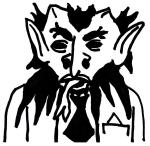
The Brainiac (1962): “I loved The Braniac (or, as it was known in its native Mexico, The Baron of Terror). It’s such a bizarre little horror cheapie that didn’t need to try nearly as hard as it did. Check out this plot: It opens with hooded executioners of the Spanish Inquisition expressing their frustration that a specific victim, a philandering Mexican baron, was surviving all of their torture methods by bending the laws of physics like an omnipotent god. When they sentence the baron to a death-by-burning execution, he escapes by hitching a ride on a passing comet and promises to return in 300 years to murder the descendants of the Inquisitors. He delivers on this promise in the form of a forked-tongued space alien beast. All of this transpires in the opening 20 minutes.”

The Love Butcher (1975): “This is a fun, and funny, movie. In much the same way that Tristram Shandy satirized the novel as a form despite being one of the first ten or so novels in the Western world, The Love Butcher mocks, subverts, and emulates the slasher despite having been conceived when that concept was only beginning to solidify. It’s an exploitation film that will use a cartoon sound effect when an older man shows off his bicep in one scene and then have a woman beaten to death with a sharp rake in the next.”

Midnight Offerings (1981): “Melissa Sue Anderson (Mary Ingalls from Little House on the Prairie) and Mary Beth McDonough (Erin Walton from The Waltons) step away from their well-known country girl roles to become dueling teen witches in this made-for-TV horror flick. When I first realized that Midnight Offerings was a made-for-tv movie from the early 80s, I expected it to be a joke of a horror film, oozing with campiness, but to my surprise, it was actually a little more on the serious side.”

 Spooky Drinking Games

EPSON MFP image

If for some ungodly reason the campier titles listed above still aren’t trashy enough for you, we also have drinking games for the following two slices of schlock: the found footage sasquatch flick Exists (2014 & pro-wrestler Kane’s grotesque slasher vehicle See No Evil (2006). If you dare participate in such cinematic horrors, beware & take care. You’re going to need the alcohol.

Happy Halloween!

-The Swampflix Crew

Movie of the Month: Blow Out (1981)

EPSON MFP image

Every month one of us makes the other two watch a movie they’ve never seen before & we discuss it afterwards. This month James made Britnee & Brandon watch Blow Out (1981).

James: Brian De Palma’s political thriller Blow Out is our May Movie of the Month and I’m pretty stoked to revisit this hidden gem from one of my all-time favorite directors. Based on the 1966 film Blow Up about a fashion photographer who accidentally films a murder, Blow Out tweaks that premise, focusing on Jack Terry, a sound engineer for B horror movies, who gets entangled in a conspiracy after capturing the audio of a fatal car crash that kills a presidential candidate.

Putting his stylistic chops on full display, De Palma doesn’t pull any punches. Split screens, long tracking shots, dizzying angles; Hitchcock would be proud. It’s mind boggling that even with a star studded cast (including John Travolta, Nancy Allen, John Lithgow, and Dennis Franz) and gushing reviews from critics, Blow Out was a box office flop when it premiered in 1981. That’s a shame because everyone gives great performances, especially Lithgow as a cold blooded psychopath (what else) and Travolta as the sound engineer always looking for “the perfect scream”. Thankfully, Blow Out has gained popularity through the years and earned a reputation as a quintessential De Palma. I think it’s his best film.

What really blew me away re-watching Blow Out was how strongly the film holds up as a homage to the medium of film itself. It is a movie about making movies. As Jack puts together the audio and video of the fatal wreck, we are viewing the process of film making itself, the melding of sight and sound.

Brandon, do you feel like I do about Blow Out being a “movie about making movies”? Do you think this is why De Palma chose to focus on a movie sound engineer instead of a fashion photographer?

Brandon: I did find that approach interesting here, because normally films will interact with their own medium by showing members of a theater audience. This is even true in horror films, such as the monsters-break-the-fourth-wall classics Demons & The Ring or the throwaway gag in Gremlins where an entire theatrical audience is made of unruly, cackling monsters. There’s a little bit of audience-acknowledgement in the opening minutes of Blow Out, which features a few men in a screening room enjoying a hilariously tawdry, violent slasher movie. It adds whole other layer of specificity that the men are actually working on the film they’re watching, specifically on its sound effects. As James just noted, it’s not interacting with film as a medium from a consumer’s point of view, but rather from an active participant’s. Of course, the movie maker’s perspective isn’t entirely unique either, but the sound engineer angle has a very precise specificity to it, since most films about filmmakers would approach the story from the perspective of a writer or a director. It gets even more specific from there, given that these are men that only make cheap slasher flicks. At one point a character asks Jack if he works on “big” movies and he responds, “No. Just bad ones.”

That specificity turns out to be a very important distinction, especially the sound engineer detail. As James points out, Travolta’s protagonist, Jack, spends most of Blow Out’s run time attempting to construct a film version of a car crash he witnessed. Although film is a mostly visual medium, it’s Jack’s work with sound that dominates this process. He obsesses over the audio recording of the crash that he captured, using it as a cornerstone in his reconstruction of the crime scene. Yes, Blow Out is in some ways a movie about making movies, but more specifically it’s a movie about how essential sound is to film. It boils the medium down to one of its more intangible elements. In that way it’s much more unique than a lot of other movies about movies, arriving more than three decades before the film it most closely resembles in this approach (that I can recall, anyway), Peter Strickland’s Berberian Sound Studio.

Britnee, how do you think De Palma’s focus on sound in Blow Out shaped the film as a final product? Did its sound obsession have a big effect on you as a viewer, as opposed to how you normally watch movies?

Britnee: De Palma’s focus on sound really makes Blow Out a standout film and turns what could’ve been a run-of-the-mill thriller into a milestone in cinema. Of course, there are many other elements that make this film unique, but I think its obsession with sound is really what differentiated it from others. I have watched quite a few movies in my lifetime, but I’ve never come across or heard of a film that offers a behind-the-scenes look at the importance of sound in movies. Prior to viewing Blow Out, I never gave much thought to any of the sounds that occur during a movie, and now that I’ve seen the film, it’s all that I think about. In the final scene of Blow Out, Jack uses the screams from Sally’s murder for the bad movie he’s working on (his “perfect scream”), and I found this to be very unsettling. When I now hear a scream in a movie, I can’t help but think of the possibility of it being from an actual murder. What if there are psychotic sound technicians that go around killing people for authentic screams? It’s just something to think about.

The film’s camerawork is definitely something that stood out to me as well. Many of the angles were creative and voyeuristic with similarities to those in Blood and Black Lace, but there were a few that were way over the top, almost to the point of being ridiculous. The one that stands out the most to me is the merry-go-round shot that occurs in the scene where Jack is searching through his studio like a mad man looking for the missing tape. The camera must have spun around 100 times without stopping. It was like being on a Tilt-A-Whirl but not in a good way. Other than his theme park inspired camerashots, there were many others that were very innovative and enjoyable.

James, what are your feelings about De Palma’s imaginative cinematography? Were some of the shots a little absurd? Were they necessary for the film’s success?

James: A self-professed De Palma devotee, I love his unique approach to cinematography but I can understand how some viewers might scratch their heads at his more show-offy, “I went to film school” shots in Blow Out. Like the long tracking shot at the beginning of his1998 film Snake Eyes, many of these grandiose shots aren’t necessary, definitely a little absurd, but totally awesome. In fact, I probably wouldn’t have ejoyed Blow Out nearly as much if it didn’t included close up of owls and dizzying trips around Jack’s office. It reminds me of previous Movie of the Month directors like Mario Bava and Ken Russell who seem to take a similar delight in playing with their audience’s perspective

On a different note, I have to bring up the ending to Blow Out. As I addressed in my first question, Blow Out did not perform well in the bow office, and I wonder if the film’s bleak ending was the reason. With Jon Lithgow in full on psychopath mode and the Fourth of July festivities in full swing, we assume that that Jack will reach the girl in time but De Palma pulls the rug out from under us and the backrop of patriotism and freedom takes on a more ominous tone. Is this punishment for Jack’s participation in exploitation films? Is it a statement on American politics?

Brandon, what are your thoughts on Blow Out‘s ending? Why do you think De Palma chose to end the film in such an unconventional, bleak manner?

Brandon: I think the movie’s pessimistic conclusion is best understood in the context of De Palma’s status as one of the voices of New Hollywood. New Hollywood was already at least a decade old by Blow Out’s release, often cited as beginning with the release of Arthur Penn’s Bonnie & Clyde in 1967, but De Palma’s aesthetic & tone was very much rooted in the movement. In addition to other genre-defining traits, notable New Hollywood films like Easy Rider, Chinatown, The French Connection, and Harold & Maude had a tendency to subvert audience’s expectations by concluding on bleak & unresolved notes. I suppose the idea was that this approach was more realistic & honest because conflicts in “real” life don’t always end on the definitive & upbeat terms that often accompanied more escapist Old Hollywood fare.

I think De Palma goes even a step further than some of his peers in this case by falsely promising a grandiose, happy conclusion. When Travolta’s protagonist Jack first rushes to save the day, he disruptively drives directly into a Liberty Day parade in a grand gesture that normally would end with him victorious & Lithgow’s antagonist in jail. Instead, he crashes & burns. Literally. The “happy ending” subversion in Blow Out is so deliberate & well-teased that it plays like a hilarious prank before it takes an even darker turn. Despite the violence & grim political intrigue of the film’s story, De Palma still found a way to let his darkly playful sense of humor shine through.

Britnee, were there any other ways you found Blow Out oddly humorous outside the slasher-movie & hero-saves-the-day fake-outs that began & closed the film? What made you laugh in-between those moments?

Britnee: There was a whole lot to laugh at between the opening and closing of the film. While Blow Out was a serious thriller, there were a good bit of ridiculous moments and scenes that got a few chuckles out of me. Particularly, the scene when Jack first meets Sally in the hospital. Sally basically has a concussion after being in a fatal car crash, but Jack is so set on dragging her out of her hospital bed and getting her to a bar. He does succeed with getting her out of the hospital while she’s still in need of medical attention, but ends up having a hard time getting her to the bar for a couple of drinks (go figure). As Brandon mentioned previously, De Palma does have a dark sense of humor, and this is a pretty good example of it. Also, I’m just now realizing that the lovers in Blow Out, Jack and Sally, just so happen to share the same name as the famous couple from Tim Burton’s The Nightmare Before Christmas. Interesting.

Most of the other comical occurrences in the film were minor, but still pretty damn hilarious. Jack’s over-the-top dramatic facial expressions, Sally’s quirky dialogue, and Manny Karp’s dirty wife-beater really stick out in my mind as little things that were humorous in the film.

Lagniappe

Brandon: One thing I think that has gotten somewhat lost in the mix here is the performance by Nancy Allen as Sally. Known to most as “That Lady from Robocop” and known to Blow Out director Brian De Palma at the time of filming Blow Out as “My Wife” (feel free to read that in the Borat vernacular if you need to), is an actress who doesn’t necessarily get a chance to shine often. She’s extremely charming here as the love-interest-who-isn’t-quite-what-she-seems noir archetype, recalling performances like Dotty in Pee Wee’s Big Adventure & the secretary from Twin Peaks. It’s not entirely surprising that Allen’s performance is overwhelmed by the likes of John Travolta, John Lithgow, and the impressively sleazy Dennis Franz, but I do feel like deserves more recognition for bringing a certain heart, authenticity, and (as Britnee mentioned) humor to a film that may have felt like a (exceedingly technically proficient) cold cinematic exercise without her.

Britnee: Blow Out is such an unrecognized treasure. What I liked the most about this movie were the many twists and turns that occurred from beginning to end. After the first half-hour or so, I thought that I had the film figured out; an average Joe solves a murder and gets the girl in the end. It turns out that I’m a terrible guesser.

James: Blow Out is essential De Palma and arguably his masterwork. With its mix of intrigue, nail biting suspense, and dark humor, the film transcends genres and feels as fresh as it must have in 1981. Showcasing De Palma’s formidable skill behind the camera, Blow Out is also a great homage to the process of film making from a modern master.

Upcoming Movie of the Months:
July: Britnee presents Highway to Hell (1991)
August: Brandon presents Babe: Pig in the City (1998)

-The Swampflix Crew

Movie of the Month: Crimes of Passion (1984)

EPSON MFP image
Every month
one of us makes the other two watch a movie they’ve never seen before & we discuss it afterwards. This month Brandon made James, Britnee, and (our newest contributor) Kenny watch Crimes of Passion (1984).

Brandon: Director Ken Russell was a madman. Whether exploring the farthest reaches of his twisted psyche in projects like Altered States & Lair of the White Worm or making more commercial projects like the musical film Tommy, Russell had a knack for finding the surreal in the mundane. His films would reach for cinematic mindfuckery that audiences would expect in dignified art films, but his particular brand of on-screen madness was typically grounded in a mundane, often tawdry context. For instance, both Tommy & Altered States are overflowing with bizarre, dreamlike imagery but one is essentially a glorified The Who music video and the other is (reductively speaking) about a dude on drugs in a bathtub. Russell’s films are simultaneously both artful & cheap, an unholy marriage of high & lowbrow art and that’s partly why I love his work so much

In some ways Crimes of Passion, a 1984 sex thriller starring Kathleen “Serial Mom” Turner as a fashion designer by day & prostitute by night, is the prime example of Russell’s self-conflicting nature. It’s a visually stunning work that uses a Bava-esque attention to lighting to create an otherworldly playground of sexual fantasy & escapism, but it’s also just pure smut. It occasionally attempts to laud the virtues of sex work, but also uses the profession as a means to leer at naked bodies. It reads like an intentionally cruel vilification of marriage & monogamy that also has a lot to say about the hypocrisy of self-righteous religious piety, but it’s also just a long string of dirty one-liners like “Don’t think you’re getting back in these panties; there’s already one asshole in there.” Crimes of Passion is thoroughly bewildering in its refusal to be engaged with as either high art or low trash, but instead insists that audiences simultaneously appreciate it as both. In other words, it’s pure Ken Russell.

Kenny, what did you make of the film’s tonal mix of art house solemnity and tawdry sex jokes? How did its leering salaciousness interact with its more sincere views on monogamy & religious faith for you?

Kenny: “A Priest, a hooker and a husband walk into a motel…” This sounds like all the makings of a bad joke, but instead these are the ingredients to a perfectly balanced portion of 80’s cinema. The film walks a very tight line, carefully trying to not be cast as weighty or absurd. Without question, the director maintains a perfect tonal balance with the film’s mix of the “sacred against the profane.” However, the thing to marvel in is how Russell frames the context. What is sacred is absurd (ex. “holy sex toy”). What would be filth, the viewer comes to recognize as sacramental. I love the way it flips the norms on the viewer.

Speaking of flipping societal norms, how cool is Russel’s vision of China Blue? She has all of the makings of a kick-ass comic book anti-heroine. A successful woman in fashion, who finds herself trapped by the dated expectations of how “normal” people should behave, escapes to her seedy lair in the underbelly of the city to find a safe haven among the deviant. I love how she is placed in a position of power throughout the film, and how her independence as a woman is never compromised.

Did anyone else care for Ken Russell’s reversal of traditional gender roles? What are your thoughts on the dynamic of the strong female and the meek male character in need of saving?

Britnee: China Blue (aka Joanna) is the definition of an independent woman. Kathleen Turner is a total goddess that is known for portraying strong women in film, so she was perfect for this role. Russell really did an excellent job switching up traditional gender roles in Crimes of Passion by giving China Blue the power to create and control her own world while both major male characters, Reverend Peter Shayne and Bobby Grady, are both pretty weak and cannot function without their China Blue fix. The Reverend is the scariest, most unstable individual that one could ever imagine, and I was really shocked at how she wasn’t intimidated by him whatsoever. She didn’t run and hide from him, but instead fought him at his own game. Also, I think it’s important to mention that Russell didn’t end the film in a traditional way by giving China and Bobby an over-the-top wedding that leads to a happily-ever-after marriage. China didn’t need to marry Bobby in order to make a better life for herself; she already had her shit on lock.

One thing that really stuck out to me when we watched Crimes of Passion was how it seemed like two different movies mixed into one. The beginning was like an insane fever dream, but the second half of the film had a much more mild tone and was more on the serious side. It’s known as an erotic thriller, but it didn’t really feel like a thriller in the beginning. If there were any elements of a thriller in the beginning, they were definitely overshadowed by the all the peculiar incidents.

James, do you think that there was a significant change in the style of the film towards the latter half? If so, what are some of your thoughts/opinions of why Russell would do this?

James: Besides the completely bonkers ending, I agree that Crimes of Passion shifts to a subtler, more character driven direction in its second half, but tonal shifts are kind of a Russel trademark. As Brandon addressed in his opening remarks, Russell loves to have trash coexist with highbrow art and all of his films have done this with varying degrees of success. (Crimes of Passion is definitely up there). For me, the real heart of Crimes of Passion lies in its subdued second half, as these deeply damaged characters come more into focus.

The scenes of Bobby and Amy’s crumbling marriage and China Blue meeting with a dying man, in particular, are outstanding and it’s refreshing to see Russell, whose stylistic tendencies can sometimes overpower his actors, give them center stage and let their performances drive the movie. Turner, Laughlin, and especially Perkins pull out all the stops (he apparently huffed real nitrous between takes), putting in more effort than maybe the film deserves. I say this because, in the end, I am skeptical that Russell had a clear message he was trying to convey with Crimes of Passion. Much of the film feels like Russell being a prankster provocateur, which is not to diminish the visceral, surreal experience of watching it.

Brandon, what do you think Ken Russell set out to do with Crimes of Passion? Was he trying to make a genuine statement about relationships and sex or is he merely being a “prankster provocateur”?

Brandon: My short answer would be that he’s doing a little bit of both. There is an undeniable central message to Crimes of Passion, it’s just not a particularly deep one. The film essentially boils down to the thesis that monogamy = bad. There’s a vivid contrast between the miserably drab home life of the central married couple and the wild escapist fantasies of China Blue’s sex work that intentionally makes seedy, New York City prostitution feel divine in comparison to the straight life’s cruel bickering. China Blue has fun with her stable of johns’ perversions, never arguing with them until the minute she has a truthfully passionate impulse and falls in love. That moment is what tips the film to the slower, more grounded second half, so in a way monogamous love even has the gall to spoil the fun of the film itself.

And then there’s Russell’s prankster sensibilities running rampant in details like Anthony Perkins’ deadly “superman” vibrator and a nameless john’s terrifying bait & switch rape fantasy mined for dark humor. Russell was nothing if not a series of absurd contradictions and the contrasting anti-monogamy message & sex-obsessed pranks of Crimes of Passion can best be observed in harmony in the film’s soundtrack. I wasn’t keeping a tally, but I want to say that the not-so-subtly sarcastic, anti-monogamy ditty “It’s a Lovely Life” plays more often in this film than “That Thing You Do!” plays in That Thing You Do! Every time I thought they were finally playing a new tune, a stray bar from the chorus of “It’s a Lovely Life” would interrupt and remind me that there really is only one song on the soundtrack, like the movie was one overlong, salacious music video for a parody of a rock song. I’m definitely willing to chalk up that effect to Russell being a “prankster provocateur” (nice descriptor for him, by the way).

Kenny, considering that Crimes of Passion was released just a few years after the launch of MTV, can you see ways in which it was influenced by the music video as a media format?

Kenny: This movie couldn’t be more MTV if it had a Billy Idol music set in the middle. The cinematographer’s love of neon had to be the envy of any 80’s music video director. Sharing what I like to call an “80’s noir” look with other films such as Nightmare on Elm Street, Weird Science and Bill and Ted’s Excellent Adventure, I can certainly see how the director would use the look of the film to amplify the fever dream feeling Britnee spoke of. However, nothing in the movie seemed more 80s than the performance from Tony Perkins.

Britnee, did you find Russell’s decision to cast Perkins to be a bit of type casting at play?

Britnee: Absolutely! Type casting is definitely something that I get annoyed with from time to time, but I’ll let it slide for this one because Perkins was disturbingly perfect as The Reverend; he was a complete psycho, so who would be better for this role than the original “Psycho“? As crazy as this may sound, I find Perkins much more terrifying in Crimes of Passion than he is in Psycho. He’s just as demented as Norman Bates, except he’s got a sick religious obsession with a hooker and a bag of dangerous sex toys.

Crimes of Passion is not a very popular film. Even just in the group of Ken Russell films, it’s still more unknown than others. I don’t understand why it’s so underrated because it’s actually an amazing film with a star studded cast. It doesn’t even have that much of a cult following, which absolutely blows my mind. This movie is perfect for elaborate midnight showings. Picture it, a crowd full of fans dressed as China Blue singing along to “It’s a Lovely Life”; it’s just meant to be.

James, why do you think Crimes of Passion wasn’t a a bigger hit? Why doesn’t it have a large cult following?

James: I totally agree that Crimes of Passion should have a much bigger cult following but I think the film’s bizarre mixture of sex, violence, and humor was probably a turn off to mainstream audiences in 1984 who were expecting a more straight forward erotic thriller. This is also the exact reason that I enjoyed the film so much and why I think the film would play better for audiences today who have a more ironic, postmodern sensibility.

Lagniappe

Brandon: In some ways “should’ve been more popular” feels like the story of not only Crimes of Passion, but of Ken Russell’s entire career. Sure, he had a huge hit on his hands with his The Who musical Tommy and I know he has his die-hard fans, but his name is not one you typically hear when weirdo auteur names like Cronenberg & Lynch get tossed around. His films The Devils, Lair of the White Worm, and Altered States are just as arresting & cerebral as anything in those directors’ repertoires. Crimes of Passion has a little bit of a lighter hand than these titles, but its affinity for cheap sex jokes makes it even more of an anomaly than some of his other works. Sex sells, after all. Russell should’ve been more of a household name and the playful sex-obsession of Crimes of Passion should’ve been his foot in the door.

Kenny: Crimes of Passion is a must see for any 80s film buff. The lighting, the set pieces and art design, along with the acting, will give any film fan the nostalgic feeling of watching the dream sequences of A Nightmare on Elm Street combined with the eroticism of The Red Shoe Diaries.

Britnee: Crimes of Passion was a hoot! It’s been well over a month since we all sat down to watch it, and I still catch myself singing “It’s a Lovely Life” while reminiscing about all the insanity that occurred in the film. Also, I’m just realizing how China Blue kind of looks like a sassier version of Disney’s Cinderella. I’m not sure if Russell did this for any reason whatsoever, but it’s just something to think about.

James: Overall, the film is nuts, features memorable performances, and deserves a rightful place among Ken Russell’s best work.

Upcoming Movie of the Months:
June: James presents Blow Out (1981)
July: Britnee presents Highway to Hell (1991)

God’s Not Dead (2014)

EPSON MFP image

twostar

campstamp

“You prayed and believed your whole life. Never done anything wrong. And here you are. You’re the nicest person I know. I am the meanest. You have dementia. My life is perfect. Explain that to me!”
– Mark

Friedrich Nietzsche first proclaimed “God is dead” in his seminal 1882 work The Gay Science. Finally, 133 years later, a counter-argument has emerged: a cinematic, philosophical treatise to reawaken our godless secular culture, the 2014 Christian drama featuring Kevin “Hercules” Sorbo and Duck Dynasty, the bluntly titled, God’s Not Dead.

Josh is an evangelical college student that makes the mistake of enrolling in a philosophy course taught by vocally atheist Professor Jeffrey Radisson. On the first day of class, the professor propositions his students that if they write “God is dead” on a sheet of paper and turn it in, they will pass for the semester. Seems easy, but Josh, the fearless God warrior, declines and stands up to the tyrannical, liberal heathen. This clash of faith and reason leads to a repetitive series of classroom debates and subplots that drive home the film’s central point (Atheists bad, Christians good) ad nauseam.

The way God’s Not Dead unabashedly stacks the deck against the nonbelievers is one of the only truly entertaining things about it. Throughout the film, Christians are portrayed as caring and virtuous while every single atheist is mean-spirited and morally bankrupt. Radisson belittles his religious girlfriend Mina in front of his colleagues. Josh’s wholly unsupportive girlfriend Kara breaks up with him because he will not renounce his faith. Mina’s atheist brother Mark is a sleazy businessman who won’t visit their mother suffering from dementia and dumps his girlfriend when she gets cancer. Without God, how can we make moral decisions? God’s Not Dead‘s answer is we can’t.

In their final debate, Josh crushes Radisson’s soul with the question “Why do you hate God?” The broken professor admits that he began to hate God after his mother died and storms out of the classroom amidst triumphant chants of “God’s not dead”. All this culminates in a particularly nasty ending that leaves Radisson fatally injured after a car accident. Luckily, there is a priest nearby who absolves him of his sins and converts him to Christianity moments before he painfully dies on the rain-soaked pavement. Does it matter if someone converts under duress? God’s Not Dead says no.

Evangelical Christianity celebrates its self-righteous victory as the film concludes with a performance by Christian rock band The Newsboys and an appearance by Duck Dynasty‘s Willie Robertson, who speaking on behalf of the always “tolerant” Robertson family, states that “reports of God’s death were greatly exaggerated.” The concert attendees are then asked to text the phrase “God’s Not Dead” to every contact in their phone. It’s an amazing evangelical strategy, but I suspect few people received these messages, as most viewers weren’t able to make it through the film’s almost two hour minute run time.

To be fair, the actual classroom debates in God’s Not Dead are pretty informative and do offer some balance and insight, but the film is still blatantly manipulative and the ridiculous ending negates much of the film’s redeeming qualities. Compared to other recent Christian exercises like Left Behind, God’s Not Dead has a decent script, is well acted, and shot competently but its sermon-heavy tone and overbearing, melodramatic moralizing will turn off viewers who don’t already agree with its message, even if they only tuned in looking for a laugh.

-James Cohn

It Follows (2015)

EPSON MFP image

threehalfstar

Horror movie villains are often our sadistic, cinematic moral police, sent to punish the corrupt masses (especially attractive, fornicating teenagers) for their sinful behavior. The curse haunting the sex-obsessed teenagers in It Follows, however, is slower, more cerebral than Michael Myers or Jason Voorhees. It values psychological over physical torture. Its horror is omnipotent, never ceasing. It’s the kind of moral police that watches you from behind a camera, following your every move.

At the center of the demon’s wrath is Jay, a 19 year old college student who enjoys her idyllic suburban neighborhood with her sister Kelly and friends Paul & Yara. They spend their fall days drinking on porches, watching 50s horror movies, taking collective naps. Innocent, naive, happy.

Their feeling of security is soon shattered following an initially innocent sexual encounter that ends with Jay being drugged with a heavy dose of chloroform. She wakes up half-naked, strapped to a chair, and told by her brief fling Hugh that she has been infected with a sexually transmitted curse. The curse can take any human form and stalks the stricken in calm walking tempo. Its touch means death. The only way to rid yourself of the curse is to pass it along to someone else. Have sex or be killed.

The ingenious premise of It Follows and strong stylistic vision of director David Robert Mitchell turn Jay’s mundane suburban surroundings into a playground for dark forces. The curse takes shape in variety of ways; an abnormally tall man with his eyes gouged, the methodical walk of a naked demon woman. As these terrifying images invade her picturesque world, the juxtaposition makes them even more disturbing. The way the story unfolds in It Follows keeps you intrigued but doesn’t go into too much detail about the true nature of the curse. This keeps the curse vague, menacing. A sense of permanent dread and anxiety hangs over the movie. Rich Vreeland, stage name Disasterpiece, also kills it with his strange, ominous soundtrack that is reminiscent of not only John Carpenter, but video game music as well.

It Follows doesn’t get everything right. It loses momentum at several points and builds toward a somewhat tepid climax, but these are small grievances. Overall it is an exceptional horror film that plays around with horror genre tropes, but feels modern instead of regressive. There is also potent subtext about the nature of our sexual attachments and intimacy anxieties. The film can also be interpreted as a metaphor for AIDS and other STDs. Other movies like the body horror flick Contracted (about a zombie STD) have also played around with these themes, but none feel as refreshingly original as It Follows. If nothing else, it’s a convincing argument for abstinence if I’ve ever seen one.

-James Cohn

Movie of the Month: Blood and Black Lace (1964)

EPSON MFP image
Every month one of us makes the other two watch a movie they’ve never seen before & we discuss it afterwards. This month Britnee made James & Brandon watch Blood and Black Lace (1964).

Britnee:
Mario Bava’s celebrated Italian thriller, Blood and Black Lace, is a landmark in horror cinema and one of the earliest giallo films in existence. It’s also considered to be the first “body count” horror film, so we can thank Bava for all of those campy, raunchy 80s slasher flicks. Watching this film is like taking a walk through an art gallery. It’s chock-full of rich colors, eerie scenery, deep shadows, and impressive camera angles. The outstanding cinematography alone is a good reason to watch the film. I have a special place in my heart for this Bava masterpiece and I’m so thrilled to present it as April’s Movie of the Month.

Blood and Black Lace is set at a fashion salon in Rome that is full of beautiful, young models, but there are quite a few secrets hiding beneath all of their glamour and charm. The models begin to be brutally murdered by a faceless killer (once a very important diary goes missing) and when I say brutal, I mean brutal. These gruesome murder scenes are very bold and in-your-face, which was not very common for films in 1964, but the murder scene shots are executed in such a way that they are breathtakingly gorgeous. After re-watching the film with the Swampflix crew, I realized how the models in the film were more like movie props than actual characters, much like the multicolored mannequins they were surrounded by in the salon. They lacked personality and character development, but I think that’s something that Bava did intentionally.

Brandon, do you agree that the ill-fated models were merely props? If so, what do you think Bava was attempting to convey by doing this?

Brandon:
What are models if not moving, breathing mannequins? I think you’re absolutely right to believe Bava was drawing that connection. Aside from their individual reactions to the discovery of the first victim’s diary, there isn’t much to distinguish one model from another outside their looks. The fact that he chose fashion modeling as the movie’s backdrop in the first place is not only calling attention to the fact that most of the movie’s charms are in its stylistic flairs, but also that the characters are mere mannequins in motion, personality-free objects meant to put Bava’s visual fashion on display. Even the film’s killer, whose face is entirely flat & featureless, is used as a prop here. The killer’s look is about as close to a mannequin as one could get. Bava makes no bones about the fact that his characters are there as both plot devices & living, breathing decoration.

As much as I would like to argue that he made the female characters especially featureless as a comment on sex politics (this is a world where it’s totally cool to call your lover a “little idiot” after all), I believe there’s a much simpler explanation for the women’s lack of character development: misdirection. The 50 years of murder mysteries that followed Blood and Black Lace may have somewhat prepared us as a modern audience for the final couple of twists at the end of the film, but Bava does pull off a clever bit of misdirection with his characters. By leaving the women somewhat blank (although they are awfully interested in that diary) he allows them to fade into the background a bit, never to be considered as suspects in the murders. Later, when the murders continue despite the male characters all being jailed at once it feels like a shock that a woman might be involved. And then it gets even more confusing when the most likely female suspects begin to drop off like flies. Blood and Black Lace may be rightfully remembered most for its intense visual style, which heavily influenced many giallo films to come, but its central mystery cannot be completely discounted as a major draw to the film.

James, do you think that Bava finds a good balance between paying attention to the film’s whodunit murder mystery & its visual eccentricities, or does one overpower the other?

James:
I definitely think that Bava’s visual style overshadows the movie’s central murder mystery but agree with Britnee that this was mostly intentional. The long tracking shots, oblique camera angles, and lurid lighting choices were, for me, far and away the most noteworthy aspects of the film, with the police procedural and central mystery seeming secondary. Although, it must be noted that the effective twist ending does make up for some of that. As I dug around for information on the influential director, I came across this quote that confirms that Bava felt the same way. In regards to Blood and Black Lace, Bava was “bored by the mechanical nature of the whodunit and decided to deemphasize the more accepted cliches of the genre”.

Instead of developing complex characters or an intricate plot that was central to these kind of films in the past, Bava focused on pushing the genre to its limits by stepping outside the accepted boundaries of sex and violence. This seems to further the case that Bava not only invented giallo films, but also slasher flicks, which are basically whodunnits with lots of murder and sex. Blood and Black Lace has plenty of both and what I really appreciated about the film was how it mixed these lowbrow, sensationalist tendencies with high art, something Dario Argento was a master at as well.

Britnee, what do you think of the way Bava mixes lowbrow with highbrow?

Britnee:
Personally, I think Bava did an exceptional job making the film’s uncultured components ultra chic and sophisticated. Blood and Black Lace is a refined slasher flick that pairs well with fine wine and fancy cheeses. When I first viewed the film, I couldn’t figure out why the production was so classy and not the sloppy, morbid mess that I expected it to be. Now, I have a much better idea of the reason why this film is so tasteful. The choices that Bava made for the visual aspects of the film transforms what could’ve been a just another crude horror movie into a literal piece of art.

Speaking of visuals, color plays such an important role in Blood and Black Lace. I noticed that there is a particular color that is prominent with some of the victims, and the color is present in the lighting, props, costumes, etc. For example, Tao-Li wears a lot of white clothing and is killed wearing white lingerie in an all-white bathroom. We didn’t really intend to have our Movie of the Month choices connect with one another, but there is a definite connection between The Masque of the Red Death and Blood and Black Lace when it comes to the color-coding that takes prominence in each film. I don’t believe that The Masque of the Red Death film had any impact on Blood and Black Lace because both films were released in 1964, but there’s no doubt in my mind that the colored rooms in Poe’s famous tale influenced Bava’s masterpiece.

Brandon, since you are the expert on The Masque of the Red Death, I was wondering what you thought of this connection? Is there even a connection between the two films at all?

Brandon: Like you said, the two works were released more or less as contemporaries so it’s less likely that one influenced the other and more just a coincidence that both Corman & Bava had an intense interest in rich, saturated color schemes. It’s obviously possible that Bava could have been influenced by Poe’s classic tale (I know that one was a stand-out favorite for me as a teen, even when it was assigned reading in countless English classes), but the connection might be more simple than that. By the mid-60s Technicolor film prints had more or less fallen out of fashion with major studios (because of the time & money involved, if nothing else) but both Masque & Black Lace are holding on to the saturated color associated with the Technicolor technique. Once a practical process used to bring vibrant color to early films, Technicolor was later used by Bava & Corman, among others, as more of an artistic aesthetic.

Bava’s exploitation of the rich color of Technicolor prints was put to great artistic effect in horror classics like Blood and Black Lace, The Whip and The Body, and Planet of the Vampires. It’s a stylistic choice that not only visually connects it to The Masque of the Red Death, but also establishes it as an early touchstone of the giallo genre. It’s not at all surprising that one of the final Technicolor transfers was used by Bava-descendent/giallo legend Dario Argento to produce his best known film, Suspiria. Bava’s attention to color in Blood and Black Lace is echoed through almost every giallo film that followed it, especially in Argento’s work.

James, besides the rich, saturated colors in Blood and Black Lace, what other elements of the film do you see passed down to the giallo movies that followed it?

James: The technical aspects of Blood and Black Lace are the easiest to spot in the gaillo films that followed. Dizzying cinematography, off kilter camera angles, bizarre framing, and violent close ups are used almost universally by other gaillo filmmakers, though few apply the surreal art house flair so effectively as Bava and Argento. I suspect Bava’s art house tendencies are also the reason for the film’s disorienting, somewhat disjointed murder mystery, another element I’ve seen in a genre that focuses more on style than plot and character development. Blood and Black Lace‘s lurid mix of eroticism and horror has also influenced countless films in and outside of the gaillo genre, the paranoia surrounding a masked killer preying on beautiful women being a recurring theme in gaillo and slasher/splatter movies of the 70s and 80s.

Lagniappe

Brandon: The one thing I’m surprised we didn’t touch on yet was the music in the film. Although the stylistic violence, the mentions of cocaine abuse, and the intrigue of the murder investigations suggest a morbid affair, the score relies on a very swanky brand of lounge music that makes the movie feel a lot goofier than it would look on paper. The disparity between the swanky score & the severity of the plot is apparent from the get-go, with the actors/characters being introduced in the opening credits as if they’re starring in a particularly violent 60s TV show about police investigations instead of a proto-slasher art film. It eventually fades into some more mood-appropriate chamber music late in the film, but the generally lighthearted nature of the Blood and Black Lace‘s soundtrack is just as strange of a detail as its brutal-for-its-era violence or Bava’s penchant for saturated colors in his lighting.

Britnee: Blood and Black Lace is really all about the visuals. Ingenious camera work and the innovative use of vivid colors steal the show and outshine all other aspects of the film. The plot isn’t horrible by any means, but it’s definitely not the backbone of this movie. Actually, I enjoyed the weak plot because it draws more attention to the film’s groundbreaking visual elements, and this serves as a reminder that there’s more to a film than just its storyline. Kudos to Bava for being brave and thinking outside of the box.

James: Considering that Blood and Black Lace was released in 1964, I don’t think it’s an overstatement to call the movie groundbreaking. The way the film focuses more on the gruesome killings than the characters and its unsettling erotic violence must have shocked audiences in the 60s, but it set the precedent for the next 20 years of horror films (at least). I was really drawn to Bava’s mixture of art house theatrics and lowbrow subject matter and admire his technical chops and over the top stylistic tendencies. Blood and Black Lace was a great introduction to an influential director, and I can’t wait to delve deeper into Bava’s filmography.

Upcoming Movie of the Months
May: Brandon presents Crimes of Passion (1984)
June: James presents Blow Out (1981)

Housebound (2014)

EPSON MFP image

fourstar

Horror comedies are always a high wire act. Some titles like Dead Alive and Tucker & Dale vs. Evil find the right balance between laughs and chills, transcending their genre limitations, while others, (Kevin Smith’s latest, Tusk, for example), aim to be both scary and funny, but end up being neither. The 2014 New Zealand horror comedy Housebound, falls firmly in the former category. It’s a mishmash of genres that gracefully moves between horror, comedy, ghost story, and murder mystery.

The setup is perfect in its simplicity. Kylie, a troubled hooligan, is sentenced to eight months of house arrest following an attempt to break into an ATM. Forced to move back into her well-meaning, but clueless parent’s home, she lounges around, drinks during the day, and is a general pain in the ass. Things almost immediately start to go bump in the night. While she is initially skeptical of her mother’s ghost stories, an encounter with a maniacal, talking teddy bear convinces Kylie that the house is indeed haunted. She partners with Amos, the security guard in charge of monitoring her ankle bracelet, to investigate and discovers that there are plenty of other, more horrifying secrets waiting behind the walls of her family home.

Housebound is the writing-directing feature debut of Gerard Johnstone. His pitch-perfect script is wickedly funny without trying too hard and he shoots the film with a confident, playful style reminiscent of Sam Raimi. The film is also elevated by its strong performances. Morgana O’Reilly brings toughness, smarts, and loads of sarcasm to her portrayal of Kylie, making her female protagonist stronger than most found in the genre. Her partner Amos (Glen-Paul Waru) is a great comic foil and her gossiping, chatty mother (Rima Te Wiata) delivers plenty of laughs.

Of course it wouldn’t be a horror movie without scares and Housebound keeps the tension heightened throughout with a mix of false and very real terrors. Through his expert use of shadows and camera angles, cinematographer Simon Riera makes seemingly harmless objects like teddy bears and Jesus statues menacing. There’s also the obligatory gross-out moments, including a head-exploding bloody finale but Housebound also has an emotional core that addresses the rebellious nature of youth and learning to accept one’s parents that still resonates despite the craziness that surrounds it. It does go on for a little too long but that is only a minor fault; the film is so much fun you’ll barely notice. Offering an inventive mix of screwball comedy and white knuckle terror, Housebound is a perfectly calibrated horror comedy and one of the best horror movies of 2014.

Housebound is currently streaming on Netflix.

-James Cohn

Honeymoon (2014)

EPSON MFP image

twostar

Watching the low budget horror flick Honeymoon is how I would imagine an arranged marriage going: forced into it, you look for the positives and hold out hope that it might end up working out, only to end up completely disappointed.

Brits Harry Treadaway & Rose Leslie (of Game of Thrones fame) play American newlyweds Paul & Bea, an ultra-happy, obnoxiously affectionate couple who decide to honeymoon in the most romantic destination imaginable: a remote cabin in the woods. Secluded, they fill their time with passionate sex, boat trips around the lake, and Yahtzee (“You’re my chance”). The first third of Honeymoon is almost entirely the two fawning, staring longingly into each other’s eyes, and discussing their future. It is as tedious as it sounds.

Thankfully, the feel-goods turn to feel-bads when, following a heated argument, Bea is found sleepwalking naked in the woods and begins behaving strangely. Paul, terrified, starts to believe Bea is no longer the person he married. Mysterious “mosquito bites” appear on her legs, he finds her coaching herself in the mirror on how to turn him down for sex, and, gasp, she forgets to batter the French toast.

Honeymoon‘s second act ratchets up the intensity and has a lot of interesting ideas, but you’ll still see the answers to the questions it raises coming from a mile away. The movie’s nightmarish final act ends features a flurry of gore that had the other people I was watching with cover their eyes, but still doesn’t fulfill the promise of the rest of the film. First time director Leigh Janiak does a great job of establishing a general uneasiness on a limited budget and Leslie & Treadaway give dedicated performances, but Honeymoon ends up falling under the weight of a underwhelming, predictable ending.

-James Cohn

The Adventures of Hercules (1985)

EPSON MFP image

fourstar

campstamp

Following a day of Mardi Gras festivities and sustained alcohol consumption, I found myself mindlessly channel surfing through the wasteland of basic cable when an image of a neon green dinosaur battling a blue gorilla in outer space exploded on to the screen, convincing me that someone had spiked my PBR with a large dose of acid. I sat mesmerized but perplexed as the seizure-inducing images of The Adventure of Hercules continued to wash over me. In a flash it was over, like a fever dream implanted by some extraterrestrial life force, but the after effects were strong.

Combining science fiction with a very loose interpretation of Greek Mythology, the sequel to 1983’s Hercules stars the original Incredible Hulk Lou Ferrigno as the titular god who must rescue seven thunder bolts from a group of renegade gods in a plot so preposterous that it takes 26 lines of text to summarize it on Wikipedia. The Adventures of Hercules begins with a ridiculous, almost 8 minute long prelude that consists of flashbacks to the original film, including fights with various robot animals and a magical chariot ride through space. It also features a concise retelling of the formation of the universe and still somehow manages to sustain that insane tone throughout the rest of the film. The movies’s strange, hyper-kinetic images and bombastic trippiness will make many viewers reach for the nearest bong.

We are also treated to cheap CGI that must have looked dated even in 1985, an extreme overuse of neon, unnecessary screen swipes (I counted three in 30 seconds during one scene), and the kind of bad dialogue you would expect from a movie whose lead actor can barely speak English. But that only scratches the surface of the insanity found in The Adventures of Hercules. There’s also fire monsters, slime creatures, ice swords, a Medusa cameo, and nonsensically psychedelic journeys through space and time. A hidden gem for camp lovers, The Adventures of Hercules is the cinematic equivalent of a bong rip. Woah, dude!

-James Cohn

Movie of the Month: The Seventh Seal (1957)

EPSON MFP image
Every month one of us makes the other two watch a movie they’ve never seen before & we discuss it afterwards. This month James made Britnee & Brandon watch The Seventh Seal (1957).

James:
Ingmar Bergman’s classic The Seventh Seal was the Swedish auteur’s first major film and helped establish art-house cinema when it won the Special Jury Prize at the 1957 Cannes Film Festival. Set in Europe during the Black Death, the film follows Antonius Block, played by the great Max Von Sydow, as he tries to outwit the personification of Death in a game of chess. The film is now remembered mostly for its historical significance and that iconic image of Death, parodied in movies like Bill & Ted’s Bogus Journey and Last Action Hero, rather than its substance. That’s a shame because The Seventh Seal is thematically rich and a masterpiece of cinematography. A jester’s performance interrupted by a procession of the plague stricken. An innocent woman burned at the stake. The Dance of Death. The stark black & white images Bergman presents are haunting, evocative, and foreboding, staying with you long after the final credits.

But watching the film again, I can see why The Seventh Seal isn’t as highly regarded as some of Bergman’s later films. As an art-house film, it is an intellectual, philosophical movie that modern audience might find too heavy and bleak. It also tackles one of the deepest and most disturbing questions of existence: Why, in the face of so much evil, does God remain silent? The Silence of God is a theme Bergman would explore in later films like Through a Glass Darkly and Cries & Whispers but in those films he found more nuanced ways to get his message across. In The Seventh Seal, by contrast, Bergman strips away everything in the story that doesn’t embellish the allegory, making it feel almost like a sermon. And as with most sermons, the effect the film has on you depends greatly on if you are on board with its message. The film’s rejection of religious dogmatism in favor of humanism was something that was very powerful for me when I watched it as a teenager. The scene where Antonius confesses his doubts about God and lines like “In our fear we make an idol and call it God” fed the existential angst of my teenage years but now the film seems somewhat heavy-handed.

Brandon, do you feel the film’s lack of subtlety helps or hurts its overall message?

Brandon:
This may be a result of watching the film with fresh eyes, but the heavy-handed nature of the sermonizing worked for me, if not only because it was backed up by the strength of the film’s images. Death appears very early in the film & his iconic chess match with Max von Sydow’s Antonius is initiated almost right away. Also, the way the film is so conspicuously staged (it was mostly filmed on a studio lot) is mirrored in the traveling theatre troop’s performances, which feels like Bergman intentionally pointing out the artificiality of the world he’s created here. The movie’s honest & explicit about the fact that it’s sermonizing about the fruitlessness of life & The Silence of God and the atmosphere of a stage play is well suited for the task. The brutal imagery of the plague that haunts the proceedings also supports the weight of the lofty subjects discussed throughout. The only element that didn’t land for me was Bergman’s added gallows humor. The line of jokes surrounding the blacksmith’s wife’s affair was particularly flat for me, but ultimately it was so inconsequential in comparison to the towering presence of the film’s ideology & imagery that it didn’t affect my viewing too much.

Speaking of artificiality & stark imagery, it makes total sense that Death’s visage from this film has had such a long life in pop culture. Somewhere between a mime & a wizard, it’s a simple look, but an unnerving one all the same. Just like with last month’s The Masque of the Red Death, Death is portrayed in The Seventh Seal as an indifferent inevitability. The difference between the two portrayals is in Death’s sense of humor & amusement here. He allows himself to be tricked into the iconic chess match with Antonius because it amuses him and later poses as a priest to take the knight’s confession in a church for much of the same reason. The Red Death would never have participated in such tomfoolery. Bergman’s intense focus on portrayals of Death in art are prevalent throughout the film: an artist paints The Dance of Death in a church; the traveling actors wear a Death mask in their play; characters frequently sing about Death, God, and Satan in their leisure time. Even the image of Death playing chess that Bergman chose to portray early in The Seventh Seal is lifted from a real-life Medieval painting by Albertus Pictor, which is acknowledged by the knight in the film. When another knight asks the church painter why he paints images of Death, he responds: “To remind people that they’re going to die,” and reasons that people like to be scared & a skull can be more interesting than a naked woman. The church painter seems to be Bergman’s direct mouthpiece in this scene, an artist standing in for the artist at work.

Britnee, how did you react to the portrayal of Death in this film? Does his playfulness & humor detract from his scariness or only add to it?

Britnee:
I’ve avoided watching The Seventh Seal for years because artsy films about death just aren’t my thing, but I’m glad that Movie of the Month exists because I would’ve never given this remarkable film a chance. The film’s statements about the silence of God were so blunt and direct, which really took me by surprise and left me with some haunting thoughts. The scene with Antonius confessing to the priest, who was actually Death in disguise, was probably my favorite scene because he’s just so honest and genuine throughout his entire rant. My appreciation for his authenticity was at an all-time high at that point. Now, as for Death, I really believe that his humor and silliness most definitely contribute to his scariness. The fact that he’s having a good old time messing with Antonius is definitely creepy because it makes him seem almost human. I think the concept of the uncanny can explain how Death’s humor is terrifying. Humor, silliness, and playfulness are very human-like traits, but while these traits are familiar to us, the forces of Death are quite unfamiliar.

I really enjoyed the connection Antonius had with Jof & Mia. When he watches their family come together, there seems to be a change in his character. Jof, Mia, and their son, Mikael, are a sweet little family with nothing but love for each other, and they are so different from all the other characters Antonius encounters in the film. He is intrigued by their simplicity, morality, and the way they represent a sign of light in a world of darkness. He is waiting and searching for an opportunity to do something that would really give his life meaning, and at the end of the film, he is able to distract Death from taking the lives of Jof & Mia. After reading a couple of articles about the film, I noticed that many compare Jof, Mia, and Mikael to Joseph, Mary, and Jesus. Honestly, I don’t believe that they are direct representations of the Holy Family, but I do think they represent how being simple and virtuous can give meaning to life and make it worth living.

James, what do you think Bergman was trying to portray with the Jof and Mia? What do they symbolize?

James:
You hit the nail on the head when you describe Jof, Mia, and Mikael as a sign of light in a world of darkness and I think, through them, Bergman is trying to articulate his vision for the only real way to “cheat” death. For me, each major character (Antonius, the squire, and Jof and Mia) reacts differently to the “Silence of God” to represent a broader way that human beings deal with Death. There is Antonius, who reacts with anger, disillusionment, and hopelessness; the squire, who seems more cynical but at peace with the absurd nature of being alive; and Jof and Mia who, while maybe naive, fully embrace life, family, and art despite the dread and despair that surrounds them. As Jof, Mia, and Mikael are the only characters to survive the film, I think Bergman is trying to say that the only way to conquer the fear of death is to truly embrace life, which makes the film, in my eyes, an ultimately uplifting one.

Brandon, do you agree with this interpretation? What do the different ways that the characters react to death symbolize to you?

Brandon:
I agree that there is an undeniable dichotomy set up between the way Jof & Mia gaily approach mortality as opposed to Antonius’ unhealthy obsession with it. If no characters were to survive the film, the couple’s final days would have been much more pleasant than Antonius’ fretting over how to cheat his inevitable demise. Even their occupations reflect their relationship with mortality. As a knight, Antonius is duty-bound to interacting with death on a regular, militaristic basis. As traveling performers, Jof & Mia entertain the living, bringing amusement into people’s lives instead of protecting their demise or threatening to end them.

Jof & Mia’s playful, jocular approach to living is contrasted not only by Antonius’ morbid navel-gazing, but also in the interruption of their theatrical performance by a procession of doomsaying monks. If Bergman wasn’t trying to praise the couple’s zest for life through their survival of Death, he at least drew a distinction between their public performance and that of the self-flagellating monks, who basically spoil a pleasant afternoon. As a provider of joy & entertainment, Jof is portrayed as a holy character in the film, one that receives divine visions from beyond the mortal realm. The religious folks & Antonius are more or less party poopers that don’t know how to enjoy a good thing before it’s gone.

Britnee, where do you think Bergman’s film falls on that divide? Does it strive more to provide life-affirming entertainment & encourage joy or does it obsess over the more morbid aspects of the inevitability of our mortality?

Britnee:
I think the film successfully provides a positive view about the rather depressing fact that we are all going die. We all seem to be on the same page when it comes to the Carpe Diem attitude of Jof & Mia, and the couple’s influence on Antonius is what, in my opinion, makes this film fall more into the positive side of the divide. Antonius makes himself sick by obsessing over death and trying to give his life meaning before he cashes in his chips. After witnessing years of brutality as a Crusader and returning home only to find a town filled with Negative Nancys, it’s no wonder why he has no gusto or passion for living. He only seems to be truly happy once he meets Jof & Mia and spends time with them. Bergman makes the couple the standout characters in the film in order to create an optimistic view on life.

Lagniappe

Britnee:
We are all going to die at some point, so living in the moment and not worrying about our inevitable demise is the key to a happy, meaningful life. That’s the main message that I got from The Seventh Seal, and I really didn’t expect to have any positive lingering thoughts from a film best known for its personification of Death. There’s not much action or drama in the film, but the rich symbolism, thought provoking scenes, and intricate themes make up for anything the film may lack. I finally understand why The Seventh Seal is so legendary.

Brandon:
I’d just like to point out that our first few choices for Movie of the Month (The Seventh Seal, The Masque of the Red Death, Blood & Black Lace, and Crimes of Passion) are a pretty morbid group. I wonder if the cold weather’s getting to us. Maybe by the summer it’ll be all Gidget movies and stoner comedies. That being said, The Seventh Seal & The Masque of the Red Death were a pretty great one-two punch in the way they fed off of each other thematically. According to Wikipedia, Roger Corman himself was aware of the thematic similarities, admitting that he delayed the production of Masque because of them. He said, “I kept moving The Masque of the Red Death back, because of the similarities, but it was really an artificial reason in my mind.” Even if it is an artificial connection, they’ll be forever linked in my mind as well, because our back to back conversations about them here covered a lot of the same territory (mostly in our contemplation of an uncaring, inevitable Death).

James:
I thought it was interesting how The Masque of the Red Death and The Seventh Seal share similar themes, but the directors handle them in strikingly different ways. Bergman uses stark black and white images while Corman uses bright colors. Bergman’s dialogue is melodramatic while Corman’s is campy. The contrast really shows the tremendous influence a director’s style has on how we perceive a film. The art-house style of The Seventh Seal makes it feel more important and “deeper”, but, in my opinion, The Masque of the Red Death is the more enjoyable film. Regardless, The Seventh Seal is a bona fide classic and a great introduction to the world of Ingmar Bergman. Can’t wait until next month.

Upcoming Movie of the Months
April: Britnee presents Blood & Black Lace (1964)
May: Brandon presents Crimes of Passion (1984)

-The Swampflix Crew