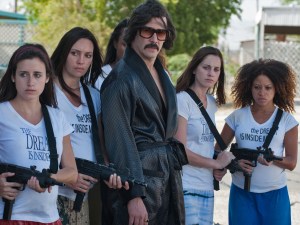
Keanu Reeves is a Most Excellent Asshole

Keanu Reeves is having a most excellent summer. Shortly after the pulpy sci-fi dud Replicas drifted through American theaters barely noticed, like a silent fart, Reeves has bounced back into audiences’ good graces with a triple onslaught of well-loved features. Between his starring roles in the increasingly popular action series John Wick 3 and his bit-part stunt-casting in Toy Story 4 & the straight-to-Netflix romcom Always Be My Maybe, it’s been a veritable Summer of Keanu. An actor that was one widely derided as being a one-note, rangeless goofball (especially in his earliest castings in period dramas) is finally getting his due as a loveable, enigmatic screen presence that’s been putting in great work in risky projects for three decades now – an action star of the people.

All of this Keanu love has spilled over from adoration of his work into a rhapsodic appreciation of his real-life persona. This is the year Keanu was officially declared to be The Internet’s Boyfriend, with unusually positive online warmth expressed for how often he works with female directors, how respectful he is of women’s personal space during photo ops, and his loyalty to his martial arts collaborators from his earliest days as an action star. Whatever affection we felt for the endlessly watchable goofball in the relatively ancient days of the Sad Keanu meme has now built to a raging forest fire of online lust & obsession, to the point where we’re even intently listening to his personal philosophy on Death & The Afterlife. You can feel it here locally too, where set photos of a (newly beardless) Keanu during local shoots for Bill & Ted Face the Music has people vibrating with pure love for him (when not concerned about his safety running around in the New Orleans summer heat).

The only downside to all this pure, gushing Keanu love is that it emphasizes how valuable he is as an aloof West Coast heartthrob with an adorable stoner demeanor. Part of the reason we think of Keanu Reeves as a one-note actor is because his early success as Ted Theodore Logan forever typecast him as an adorable bimbo. He’s gradually been able to divert that loveably aloof screen presence into an unlikely career as an action star, but it’s not the only mode Keanu Reeves can play. In fact, some of his most effective, memorable turns onscreen have been against type as monstrous, unrepentant assholes. By all accounts, Keanu Reeves is a wonderful, kind, thoughtful person in real life. He can be a world-class villain when we set him loose onscreen, though, and it’s a shame he doesn’t have the opportunity more often.

Listed below are five stand-out roles where Keanu Reeves excelled at playing a garbage human being, despite his loveable real-life persona. There weren’t many options to choose from (especially if you don’t include grey area selections like his unscrupulous lawyer in The Devil’s Advocate or his adulterous DJ dad in Knock Knock). I’m also ashamed to admit that I didn’t seek out personal blindspots like Much Ado About Nothing (in which he plays a dastardly rogue) and The Watcher (in which he plays a serial killer) before writing this. Still, I believe this quick list of villains Keanu Reeves characters can alone serve as proof that The Internet’s Boyfriend can be an effective, chilling creep when given the chance. He’s more than just a pretty face and a kind stoner-philosopher soul. The man has range. He can be a total asshole.

1. The Neon Demon (2016) – Keanu’s vilest scumbag might be his bit role and Nicolas Winding Refn’s fashion-world art-horror satire. In the film he plays an unforgivable sleazy motel manager in the dingiest corner of LA, preying on the underage runaways who hide away from their parents & obligations while chasing dreams of being a star. There aren’t many things in this world that can make Keanu Reeves grotesque in our adoring eyes, but hearing him advertise access to a young girl’s body as “Real Lolita Shit” will just about do it.

2. The Gift (2000) – The only title I can conjure where Keanu’s anywhere near as despicable as he is in The Neon Demon is his turn as an abusive husband in Sam Raimi’s psychic-visions murder mystery The Gift. He’s powerfully despicable as an alcoholic wife-beater in this sweaty, supernatural thriller. Plus, you get the added bonus of seeing him play a caricature of poor Southerners so broad it would feel at home in an (uncharacteristically dark) SNL sketch.

3. Bill & Ted’s Bogus Journey (1991) – One of the most conveniently concise visualizations you’re likely to see of Keanu acting against type in these villain roles is the one where he gets to villainize himself. In the unhinged, absurdist sequel to the popular 80s time-travel comedy, Keanu plays both Ted Logan and his evil robot doppelganger, who kills the “real” Ted early in the first act. It’s remarkable to watch how easily Keanu curdles Ted’s mannerisms into something so, so very punchable in the dual role (but not too remarkable if you keep in mind the real Bill & Ted’s alarming comfort with homophobic slurs).

4. The Bad Batch (2016) – I wasn’t especially in love with Anna Lili Amapour’s daylight cannibal horror when I reviewed it, but Keanu’s role as the film’s big-bad does stand out as one of its highlights. In the film, he plays a Jim Jones-style cult leader who exploits the devotion of his followers for sexual satisfaction & greedy financial gain. It’s terrifying to think about, since the real-life Keanu could easily rope us all into a desert-dwelling drug cult if he really wanted to. Easy.

5. Always Be My Maybe (2019) – Like with The Bad Batch, I had major problems with the tone & structure of this straight-to-Netflix romcom – which was shot & edited with all the auteurist passion of an overlit Burger King commercial. Still, it’s worth watching for Keanu Reeves’s stuntcasting as “Keanu Reeves,” an extensive cameo where he mercilessly makes fun of his own public persona by making himself out to be an out-of-touch, ultra-wealthy douchebag. Yes, Keanu is The Internet’s Boyfriend, but like most boyfriends he has the capacity to be a total tool.

-Brandon Ledet

Tourism & Cinema on the Island of Ios

The Grecian island Ios is such a tourist-dependent community that it has its own commercial website advertising its wares as a party destination, as if it were a hotel resort instead of a genuine lived-in society with its own populace & culture. The ad copy for the site boasts, “Ios Greece is the number-one party island in the Mediterranean Sea,” which is something you can clearly see reflected in our current Movie of the Month – the horned-up Italian romcom Ginger & Cinnamon. In that film, an aunt & niece duo seek love & sex on Ios at the height of the island’s tourism season, which is overrun with college-age bimbos of all genders in a Spring Break-style bacchanal. One of the more interesting formal experiments in the film is the way it frequently interrupts its fictional story of lost love & lost virginity with real-life interviews with Ios island tourists, who’re blissfully drunk on the non-stop party atmosphere (not to mention all the booze). It makes sense, then, that on the website’s Movies from Ios page, Ginger & Cinnamon is listed as the most prominent cinematic representation of the island. It’s the one that shows the island for the gorgeous, boozy tourist trap that it truly is. What’s puzzling is how that depiction fits in with the other two examples the site lists as representations of Ios cinema, which complicate the Party Island escapist fantasy Ios relies on to survive financially.

The inclusion of Luc Besson’s three-hour free-diving drama Le Grand Bleu on the Movies from Ios page really only emphasizes how few films are produced there, making out Ginger & Cinnamon to be something of a local anomaly. According to the copy, “Only some of the underwater scenes were filmed on Ios. Magnari Beach to be precise,” indicating that there isn’t much of a substantial local connection to Besson’s Cinema du Look epic. The third film listed, however, has just as much connection to Ios as Ginger & Cinnamon, particularly in how it engages with the local tourism industry. The 1963 Greek romcom Aliki My Love was meant to be an international breakout vehicle for its titular star, Aliki Vougiouklaki – then known as the National Star of Greece. The film ultimately didn’t make much of an impression on the international market, to the point where it’s currently only accessible in the US via fuzzed-out bootlegs of VHS recordings from Greek television, hosted on sites like YouTube (I suspect with its more scandalous scenes of a scantily-clad Vougiouklaki removed). However, the Movies from Ios page explains, “This is a magnificent movie for anyone interested in seeing what Ios looked like 50 years ago. It is filled with beautiful footage of this wonderful island in the Aegean Sea that we all love so much. Especially the scene that takes place outside the future location of Disco 69 is interesting to see for anyone spending their nights at that location these days. It has not changed much, only the tree by the wall has grown a lot, otherwise the spot is just as it is today.” The funny thing about this description is that the Ios of Aliki My Love is not at all the Ios of Ginger & Cinnamon; a lot has changed, and the plot of Aliki is explicitly about the urgency of preventing that transformation from happening.

Aliki My Love is a fairly harmless, minor comedy that straddles the border between a Grecian remake of Gidget and a European nudie cutie. The soundtrack is more internationally popular than the film itself, presumably because it features a mostly nude Vougiouklak barely covering her breasts in a classic pinup pose on the cover. She operates as a Nudie Pixie Dream Girl in this way through the film, chipperly pestering & seducing an American everyman who has recently inherited ownership of her island (Ios, fictionalized here as the femme Greek name Eftychia, meaning “Happiness”). Plenty culture-clash humor ensues, with jokes about how the island’s taxi cabs are a fleet of donkeys and their showers are buckets of water poured from rooftops. That humor works best when it’s weaponized against the visiting Americans (such as when Ios villagers laugh at an American lawyer’s shyness over bathing nude in public) or when it’s accompanied by an island-wide song & dance number, Mamma Mia!–style. What makes the film interesting the context of its Movies from Ios listing is the way Aliki & her newfound American beau eventually join together to prevent the island from being bought & taken over by real estate developers. The villains of the film want to exploit Ios by transforming the island into the exact tourist trap it had become by the time Ginger & Cinnamon was filmed there, and the triumph of the film is in preventing that tragedy just as much as it’s in the unlikely central romance. It’s also worth noting that this success is accomplished via the discovery of a secret “hamburger sauce” recipe (not unlike the titular cake recipe in Ginger & Cinnamon). It’s all very silly.

The Movies from Ios page notes that during the filming of Ginger & Cinnamon, “The film crew tried to close off parts of the village during some nights as they made the movie. This was quite annoying to the tourists on the island as they were trying to have a good time in the bars and nightclubs.“ The bittersweet joy of Aliki My Love is that it concludes as a fantasy where neither the tourists nor that film crew would have descended upon the island at all, leaving it as an untouched Eden instead of a Party Island nightclubbing destination. Ios is still beautiful, but there’s major cultural difference between its two cinematic representations in Aliki My Love and Ginger & Cinnamon, neither of which put much of a positive spin on Ios’s tourism-dependent modernity. One shows the island at a tipping point where it might have been saved from descending into the boozy tourist trap it would eventually become; the other updates the picture to show that it’s now too late for the island to ever turn back. It’s bizarre to see either featured on a website devoted to attracting more customers into that very industry.

For more on July’s Movie of the Month, the horned up Italian romcom Ginger & Cinnamon (2003), check out our Swampchat discussion, our look at its musicarello inspirations, and last week’s investigation of how a theme song to a Japanese anime television show found its way on the soundtrack.

-Brandon Ledet

Movies to See in New Orleans This Week 7/25/19 – 7/31/19

Here are the few movies we’re most excited about that are playing in New Orleans this week, including some high-brow art cinema and some summertime silliness.

Movies We Haven’t Seen (Yet)

Once Upon a Time . . . In Hollywood – Billed as the ninth feature film from genre sommelier (and obnoxious blowhard) Quentin Tarantino, this appears to be an irreverently obscured retelling of Sharon Tate’s murder by the Manson Family cult. Expect something just as immorally entertaining as that descriptor implies.

Suspicion (1941) – A lesser-seen Alfred Hitchcock thriller starring Cary Grant opposite Joan Fontaine, whose performance is the only Hitch role to ever land an Academy Award for best acting. Screening Sunday 7/28 and Wednesday 7/31 as part of The Prytania’s Classic Movies series.

Movies We’ve Already Enjoyed

Girls Trip (2017) – A New Orleans-set friendship comedy that somehow finds common ground between maudlin Hallmark Channel sentimentality and over-the-top John Waters gross-out humor, set against the backdrop of Essence Fest. Screening free to the public (with stand-up comedians opening to warm up the crowd) Thursday 7/25 at The Orpheum.

The Last Black Man in San Francisco – One of the best movies of the summer is a bizarre Sundance drama about gentrification & friendship. A wildly inventive directorial debut that filters anxiety & anger over housing inequality through classic stage play Existentialism & Surrealism touchstones like Waiting for Godot and Rosencrantz & Guildenstern are Dead. Playing only at The Broad Theater.

-Brandon Ledet

Movies to See in New Orleans This Week 7/18/19 – 7/24/19

Here are the few movies we’re most excited about that are playing in New Orleans this week and are presumably much, much worthier of your time & money than the goddamn Lion King remake.

Movies We Haven’t Seen (Yet)

The Art of Self Defense – Jesse Eisenberg stars in a Foot Fist Way-reminiscent dark comedy set in a martial arts studio, satirizing Men’s Rights Activists and the general milieu of toxic masculinity. Playing only at AMC Elmwood.

Crawl – The killer shark genre has already been revived in recent summertime trash titles like The Shallows & 47 Meters Down, so we’re far past due to bring back an even cooler killer creature from schlocky cinema past: the alligator. There’s no telling whether Crawl will stack up to killer-gator classics like Alligator & Alligator People, but our trashy, swamp-dwelling asses are excited no matter what.

Wild Rose – Irish pop singer Jessie Buckley follows up her excellent performance in last year’s criminally underseen thriller Beast with a critically lauded film about an aspiring country musician from Scotland. Features songwriting contributions from Mary Steenburgen of all people, who claims to have woken up from an arm surgery with the uncanny ability to write country hits. Playing only at AMC Elmwood.

Movies We’ve Already Enjoyed

The Last Black Man in San Francisco – One of the best movies of the summer is a bizarro Sundance drama about gentrification & friendship. A wildly inventive directorial debut that filters anxiety & anger over housing inequality through classic stage play Existentialism & Surrealism touchstones like Waiting for Godot and Rosencrantz & Guildenstern are Dead. Playing only at The Broad Theater.

Midsommar – Ari Aster’s follow-up to Hereditary is yet another lengthy, morbidly funny meditation on grief, but this time wrapped around the folk horror template established by The Wicker Man. It’s a divinely fucked up melodrama about empathy, gaslighting, breakups, and finding your flock – whether they be academia bros or bloodthirsty cultists.

But I’m a Cheerleader (1999) – A brilliant coming-of-age queer teen comedy that filters the abusive horrors of gay conversion “therapy” through a 90s John Waters aesthetic while somehow maintaining a sweetness & empathy that combination should not allow. Easily one of the greatest films of all time, fresh off its 20th  anniversary. Screening free to the public (with donations encouraged) Wednesday 7/24 at the LGBT Community Center of New Orleans.

-Brandon Ledet

Mamma Mina!: A Crash Course in Musicarelli

One of the most purely joyous moments in our current Movie of the Month, the horned-up Italian romcom Ginger & Cinnamon, is the climactic musical number on the bus where the main couple lip-sync to the Italian pop song “Ta Ra Ta Ta” by 1960s icon Mina. It’s the moment when the film fully blossoms into the proto-Mamma Mia! jukebox musical it’s been teasing for its entire runtime and, thus, plays like more of a major emotional payoff than an out-of-nowhere indulgence. However, it’s a moment that I completely misinterpreted when we first discussed the film. At the time, I believed the big “Ta Ra Ta Ta” dance number to be an homage to the similar romantic conclusions of a typical Bollywood production. That made enough sense to me at the time, given the wistful sitars that pepper the soundtrack and the film’s general scatterbrained approach to eclectic musical tastes: Boy George, Wire, The Village People, Saturday morning cartoon theme songs, etc. I was wrong, though. That climactic dance number was meant as an homage to an entirely different film genre: the musicarello.

Instigated by the 1958 musical comedy Regazzi del Juke-Box (directed by Lucio Fulci, who would later become infamous in the sleazy world of gialli), the musicarello was an Italian genre of rock n’ roll pictures meant to exploit teenage culture & promote rising pop acts. Combining the rebellious teenage energy of Roger Corman’s drive-in era with the variety show rock performances of television programs like Ed Sullivan & American Bandstand, musicarelli were mostly irreverent slapstick comedies that enabled youngsters to see their favorite pop groups on the big screen in proto-MTV music videos. It was a shamelessly commercial version of teenage rebellion, one that’s lightly anti-conformist & anti-bourgeois messaging did not survive the more radicalized politics of the late 1960s. Ginger & Cinnamon’s climactic homage to miscarello tradition would have been a distinctly nostalgic indulgence, then, which lines up perfectly with its main character’s nostalgia for Saturday morning cartoons & club music from the 1980s. It’s the exact kind of outdated fluff entertainment that would have been in heavy rotation on Italian television when she was a kid.

If I had been more familiar with Italian pop culture of yesteryear, I would have known instantly that the “Ta Ra Ta Ta” sequence was a nod to musicarelli, not Bollywood. That’s because the song choice of a Mina tune in particular has strong ties to musicarelli of the 1960s, so that any Italian Woman Of A Certain Age would have recognized the reference. Mina was famous in Italy (and internationally) for many reasons. Her three-octave vocal range as a soprano made her a standout in her field. Her public image as “an emancipated woman” and the mistress to a married man made her a popular topic for tabloid coverage. Her rambunctious stage presence and predilection for song topics like sex, religion, and (in “Ta Ra Ta Ta”) smoking cigarettes earned her the nickname The Queen of Screams. However, one of the biggest boosters for Mina’s career were her starring roles in musicarelli. Mina performed her 60s pop tunes in over a dozen musicarello titles, making her one of the most popular figures in one of Italy’s most popular film genres. Unfortunately, I can’t find any musicarelli featuring Mina available with an English translation in the US, but thankfully there’s plenty performances from them hosted on sites like YouTube.

Below are a few of my favorite Mina musicarello performances that are available on YouTube, a 60s rock ‘n roll primer I wish I had discovered before we discussed our Movie of the Month.

1. “Ta Ra Ta Ta” from Totò Ye Ye (1967)

2. “Mandalo giu” from Pere amore per magia (1967)

3. “Nessuno” from Howlers of the Dock (1960)

4. “Tintarella di Luna” from Juke box – Urli d’amore (1959)

5. “Io bacio… tu baci” from Io bacio… tu baci (1961)

For more on July’s Movie of the Month, the horned up Italian romcom Ginger & Cinnamon (2003), check out our Swampchat discussion of the film.

-Brandon Ledet

The Overlook Film Festival 2019, Ranked & Reviewed

Last year’s sudden appearance of the Overlook Film Festival on the local calendar was an unholy, unexpected blessing. There are only a few substantial film fests that are staged in New Orleans every year, so for an international horror film festival with world premieres of Big Deal genre movies to land in our city was a major boon, almost too good to be true. I attended the festival as a volunteer, catching three artsy-fartsy creature features (all directed by women) and a couple live podcast recordings over the course of a few days, hungry (bloodthirsty?) for more. This year, Swampflix attended Overlook with legitimate press credentials, meaning we were able to cover even more films playing at the fest, which was majorly exciting.

There were 23 features and 18 shorts from 11 different countries screening at the festival over the course of a single weekend in early June. It was overwhelming. Self-described as “a summer camp for genre fans,” The Overlook was centrally located, corralling all of its movie screenings to just a few venues: Le Petit Theatre for its more prestigious premieres, the UNO Performing Arts Center for a repertory screening of The Faculty (with Robert Rodriguez in attendance), and what is now the ghost of the old Canal Place theater for the bulk of its heavy-lifting. It was wonderful to be able to take fuller advantage of this super cool genre film extravaganza, especially considering that Canal Place’s closure might persuade them to leave us for another city, which would be a total shame.

Listed below are all eleven features we were able to catch at The Overlook Film Festival that weekend ranked in the order that we most appreciated them, each with a blurb and a link to a corresponding review. For a more detailed recap of our festival experience beyond these reviews, check out our podcast discussion of the fest.

1. In Fabric – “Wholly committed to over-the-top excess in every frame & decision, whether it’s indulging in an artsy collage of vintage fashion catalog advertisements or deploying a killer dress to dispose of a goofball victim entirely unaware of the occultist backstory of their sartorial selections. It’s both funny and chilling, beautiful and ludicrous. It’s perfect, as long as you can tune into its left-of-the-dial demonic frequency.”

2. One Cut of the Dead – “So much of One Cut of the Dead is on shaky logical ground because of the limitation of its filmmaking resources, but horror fans who are inclined to watch low-budget, high-concept zombie movies in the first place should be used to making those allowances. What’s brilliant about the film is how it transforms those awkward low-budget details into something brilliantly executed & purposeful. Revealing how it performs that miracle in a review would be a crime that I’m not willing to commit. You just have to afford it your attention & trust long enough to see it for yourself.”

3. Ma – “It’s at first baffling to learn that Tate Taylor, the doofus responsible for The Help, also directed this deliciously over the-top schlock, but it gradually becomes obvious that the goon simply loves to watch Octavia Spencer devour the scenery and it just took him a while to find the proper context for that indulgence – the psychobiddy.”

4. Paradise Hills – “This is far from the first fairy tale to allure characters in with a bounty of sensual pleasures only for the fruits therein to be revealed as rotten, cursed, or poisonous. In that tradition, Paradise Hills presents a fairytale Eden that’s deadly dangerous precisely because the pleasures it offers on the surface are so tempting. It would be far too easy to lose yourself in this pleasure palace – both literally and figuratively.”

5. Come to Daddy – “As Elijah Wood’s cowardly protagonist sinks further in over his head in sinewy ultraviolence, the picture begins to play like a farcical mutation of a Jeremy Saulnier picture – not unlike Wood’s recent turn in I Don’t Feel at Home in this World Anymore, just creepier.”

6. Greener Grass – “Whether it’s grossing you out with the moist, passionless sex of its suburbanite goons or it’s breaking every known rule of logical storytelling to drive you into total delirium at a golf cart’s pace, the film is uniquely horrific & punishing – and hilarious. You should know approximately thirty seconds into its runtime whether or not its peculiarly antagonistic humor is something you’ll vibe with; there’s just very little that can prepare you for what it’s like to experience that aggressive irreverence for 100 consecutive minutes.”

7. Knives & Skin – “Filters the Lynch Lite teen melodrama of Riverdale through a hallucinatory overdose of cough medicine, so that it sticks with you only as a half-remembered dream. You can recall laughing, but you’re not entirely sure why, or whether that was even its desired effect.”

8. The Vast of Night – “The film chooses a very difficult path in distinguishing itself, relying more on the strength of its performances & written dialogue than its sci-fi chills & scares. It’s more akin to intimate walk & talk dramas like Dogfight, Before Sunrise, or My Dinner with Andre than the sci-fi horror tones you’d usually expect from an alien invasion story template.”

9. Gwen – “Gwen looks, sounds, and feels like Elevated Horror™. Its monochrome portrait of a family in crisis is illustrated mostly by the grey hues of soot & snow. There’s very little dialogue & no musical score to speak of, somewhat mistaking total quiet for atmospheric dread. Those drab, miserable textures lull the audience into a foggy calm, only to be shocked out of our seats by loud, violet stabs of lightning, medical fits, and nightmares of self-mutilation. This movie has genuine jump scares! But it’s not horror.”

10. Satanic Panic – “It may not be the pinnacle of joke writing or emotional drama, but it at least knows how to deliver the goods when it comes to over-the-top ultraviolence & softcore sexual mania.”

11. Porno – “When most comedies fail to make you laugh, they leave you very few opportunities to be entertained otherwise. To its credit, Porno entertains throughout by relying on the most tried & true attractions in the entertainment business: sex & violence. Even if you’re impervious to its proper Jokes, there’s still plenty of blood-soaked juvenilia to keep you occupied.”

-Brandon Ledet

Episode #86 of The Swampflix Podcast: Border (2018) & A Mid-Year Return to the Best of 2018

Welcome to Episode #86 of The Swampflix Podcast. For our eighty-sixth episode, Britnee, Brandon, and James discuss the most noteworthy movies from last year they‘ve seen in the six months since they made their respective Top Films of 2018 lists, with a particular focus on Border, Burning, and The Road Movie. Enjoy!

You can stay up to date with our podcast through SoundCloud, Spotify, iTunes, Stitcher, TuneIn, or by following the links on this page.

– Britnee Lombas, James Cohn, and Brandon Ledet

Roger Ebert Film School, Lesson 44: Beyond the Valley of the Dolls (1970)

Roger Ebert Film School is a recurring feature in which Brandon attempts to watch & review all 200+ movies referenced in the print & film versions of Roger Ebert’s (auto)biography Life Itself.

Where Beyond the Valley of the Dolls (1970) is referenced in Life Itself: Because Ebert wrote the screenplay for the film himself in collaboration with sexploitation director Russ Meyer, the title is referenced several times throughout the book. On page 212 of the first edition hardback, Ebert recalls that “Although Meyer had been signed to a three-picture deal by Fox, I wonder whether he didn’t suspect that Beyond the Valley of the Dolls might be his only shot at employing the resources of a studio at the service of his pop universe of libinous, simplistic creatures. Meyer wanted everything in the screenplay except the kitchen sink. The movie, he explained, should be simultaneously a satire, a serious melodrama, a rock musical a comedy, a violent exploitation picture, a skin flick, and a moralistic expose of what the opening crawl called ‘the oft-times nightmarish world of Show Business.'”

What Ebert had to say in his review(s): Ebert never officially “reviewed” the film, since he wrote it himself, but he did make the following observation in a piece written for Film Comment to commemorate its tenth anniversary in 1980 – “Remembered after 10 years, Beyond the Valley of the Dolls seems more and more like a movie that got made by accident when the lunatics took over the asylum. At the time Russ Meyer and I were working on BVD I didn’t really understand how unusual the project was. But in hindsight I can recognize that the conditions of its making were almost miraculous. An independent X-rated filmmaker and an inexperienced screenwriter were brought into a major studio and given carte blanche to turn out a satire of one of the studio’s own hits. And BVD was made at a time when the studio’s own fortunes were so low that the movie was seen almost fatalistically, as a gamble that none of the studio executives really wanted to think about, so that there was a minimum of supervision (or even cognizance) from the Front Office.”

I’ve already written extensive praise for the Roger Ebert-penned Beyond the Valley of the Dolls, way back in our first year of blogging for this site. I even singled it out as my favorite film from legendary schlockteur Russ Meyer, a dirty old man whose bonkers version of smut is admittedly something I admire more than I should. Not much has changed in my opinion of the film in the four years since I first reviewed it; it’s still the exact type of go-for-broke, sex-crazed nonsense I crave when I’m searching for gems in the trash. Something has changed about the film itself, though: Beyond the Valley of the Dolls is now a Disney-owned property, thanks to the company’s recent terrifying acquisition of 20th Century Fox. This is now Walt’s happening and it freaks me out. In an age where gigantic companies like Disney, Amazon, and Apple are gobbling up the entire market of film distribution, I can’t help but worry about the future of weirdo smut like Beyond the Valley of the Dolls. Along with fellow X-rated disasterpiece Myra Breckenridge, this is a film that only exists because of a fluke fad when 20th Century Fox attempted to crash in on the loose moral boundaries of The Sex Revolution, back when porn was threatening to go mainstream. A half-century later, we’ve somehow backslid into more protective, Puritanical attitudes toward sexual content, all in the name of being Family Friendly. Major blockbusters are being scrubbed of all overt sexuality so they can be broadly exported to all foreign markets; Apple has been hands-on in censoring sex & violence during production of televised content for its upcoming streaming platform Apple+; human trafficking laws like SESTRA have been used as a flimsy excuse to boot porn from social media sites like Tumblr (and sex workers from the internet entirely); and now the squeakiest of squeaky clean corporate conglomerates own the rights to Beyond the Valley of the Dolls.

Of course, there’s a deliciously transgressive quality to Russ Meyer’s tongue-in-cheek exposé on “the oft-times nightmare world of Show Business” now being in the same canon as Family Friendly #content like Frozen & Moana. By Ebert’s description, Beyond the Valley of the Dolls is “a camp exploitation action horror musical that ends in a quadruple murder & a triple wedding,” which might instantly qualify it as the most fascinating specimen in Disney’s collection. Written in a sweaty six-week rush, Ebert & Meyer’s vision of the Hollywood party scene is a nonstop hedonist orgy where “everybody’s a freak.” They pack the screen with every boundary-testing transgression they can muster: open homosexuality, rampant drug abuse, suicide, abortion, public sex, mocking spoofs of the still-recent Manson Family murder of Sharon Tate; etc. Its enigmatic antagonist is an intersex maniac who collects a coterie of horned-up acid freaks and announces things like, “You will drink the back sperm of my vengeance!” Unapologetically horny women recruit potential sex partners with come-ons like “You’re a groovy boy. I’d love to strap you on sometime.” Meyer described his approach in this full-on, shameless commitment to hedonistic excess as “a punishing rhythm, pummeling the audience,” but even in all of that sensory overload you can clearly make out Ebert & Meyer’s personal, shared fetishistic fixations: mainly gigantic breasts (like, comically large) & classic car grills. This film is everything Disney’s boardroom-directed Cinematic Properties aim to avoid: shameless, alienating smut with deeply problematic moral implications & intimate insights into the personal ids of its creators. That’s why it’s both fascinating and terrifying that it’s now under their control – a conundrum that I’m sure will only become more frequent as they gobble up more of the market.

Ebert gradually distanced himself from the delirious smut of Beyond the Valley of the Dolls as he grew older & more tempered (and, not to mention, sober), but I doubt he or Meyer would have been happy with this film landing in Disney’s greedy, culture-crushing hands. One of the wildest indulgences of the film involves 20th Century’s Fox’s theme music scoring a violent beheading during the climactic pansexual orgy, and Ebert’s “Screenplay By” title card accompanies one of the sleaziest images in the film to follow: a sleeping woman forcibly fellating a gun. No matter how much he gradually cleaned up his act, I don’t believe that anti-corporate, pro-provocation rebelliousness ever left him, certainly not enough to support Disney’s flagrant disregard for anti-Trust laws. As thing are, Disney owns adult-oriented platforms like Hulu in addition to its planned “family friendly” Disney+ platform arriving later this year, so I don’t’ think they’ll be locking Beyond the Valley of the Dolls away in the dreaded Disney Vault anytime soon. It’s scary how much transgressive art they could lock away if they chose to do so, though, especially considering how far outside their usual parameters over-the-top smut like Beyond the Valley of the Dolls gleefully treads. At the very least, I doubt they’ll be greenlighting many feverishly over-sexed, direct-from-the-id visions like this in the foreseeable future, and the more screenspace they eat up around the globe the duller the world will be for trash-gobblers like us.

Roger’s Rating: N/A

Brandon’s Rating: (5/5, 100%)

Next Lesson: Ryan’s Daughter (1970)

-Brandon Ledet

Movies to See in New Orleans this Week 7/4/19 – 7/10/19

Here are the few movies we’re most excited about that are playing in New Orleans this week, including some high-brow art cinema and some dumb-as-rocks summertime trash.

Movies We Haven’t Seen (Yet)

Midsommar – Ari Aster follows up last year’s excellent occultist drama Hereditary with a three-hour descent into daylit horror madness. It appears to be a darkly funny, playfully cruel update to The Wicker Man, which makes it the perfect folk-horror counterprogramming to combat more traditional summertime entertainment.

Fast Color – A critically-beloved festival darling superhero drama starring GuGu Mbatha-Raw that might have been a big commercial hit but was instead quietly shoveled off to VOD. This is likely your only chance to see it on the big screen. Playing for one week only at Chalmette Movies.

The Bayou Maharaja (2013) – A warts-and-all documentary about local-legend pianist James Booker, whom Dr. John once described as “the best black, gay, one-eyed junkie piano genius New Orleans has ever produced.” Directed by Lily Keber, whose more recent doc Buckjumping is a gem. Screening free to the public Wednesday 7/10 at The Orpheum.

Movies We’ve Already Enjoyed

E.T.: The Extraterrestrial (1982) – Steven Spielberg’s alien invasion classic that everyone remembers as an adorable buddy comedy between a kid & his extraterrestrial pal but is actually a heart-wrenching traumatic drama about loneliness, grief, codependency, and isolation. Playing Friday 7/5 and Saturday 7/6 as part of The Prytania’s Summer Kids’ Movie Series.

Avengers: Endgame – Thanks to the emergence of yet another Spider-Man film on this week’s docket and Disney’s bizarre desperation to beat out Avatar’s box-office records, this year’s biggest superhero behemoth is back in AMC theaters with new promotional materials included after its end credits. Boomer was a big fan and, although less enthusiastic about it overall, I personally found it fascinating as a tipping point for our New Nerd America, so maybe there are worse ways to escape the summer heat.

Godzilla: King of the Monsters – Cool monsters, boring humans; achieves the bare minimum required for a decent Godzilla flick. These things are never going to be as charming as they were when they were stitched together with rubber costumes & hand-built miniatures, but this movie’s Pokémon-style approach of collecting all your favorite kaiju creatures for spectacular battles is still entertaining enough on its own terms.

-Brandon Ledet

Movie of the Month: Ginger & Cinnamon (2003)

Every month one of us makes the rest of the crew watch a movie they’ve never seen before and we discuss it afterwards. This month CC made Britnee & Brandon watch Ginger and Cinnamon (2003).

CC: Ginger and Cinnamon is an early-aughts Italian romcom that centers on a thirty-year-old woman, who is reeling from a recent break-up with her long-term boyfriend, and her fourteen-year-old niece, who is unabashedly horny and determined to lose her virginity ASAP. The film combines traditional elements of a romcom and an odd-couple comedy. The aunt, Stefy, is neurotic and repressed. She constantly struggles with the extremely unhealthy body issues our toxic culture promotes to women her age; this mostly manifests in an obsession with losing weight and a delusional belief that eating chocolate will help her achieve that goal. Her niece, Megghy, is her exact opposite. She is entirely confident in her own skin, unconcerned with her own baby fat and convinced that she is an irresistible sex goddess that every man desires. When the two polar-opposite women escape their messy lives in Italy to vacation on a Grecian island, the niece unknowingly attempts to seduce the aunt’s adult, uninterested ex, Andrea. Meanwhile, the aunt is also pursued by a virginal boy half her age who is just as hormonally charged as her niece. A farcical comedy of errors ensues, complete with mistaken identities and near-connections, until all appropriate couples are re-scrambled correctly in a classic manner.

When I first saw this film in the early 2000s, I was the same age as the niece. While I didn’t fully identify with her maniacal level of horniness, I do remember being impressed by her pragmatic ideas about sex. While her delusion that she was going to orgasm three times during her very first sexual encounter was impractical (and points to toxic societal ideas about sexual performance in its own way), I did like the way she reasoned that she shouldn’t lose her virginity to someone she loved because she was likely not going to be very good at it and needed to practice while the stakes were lower. Returning to the film now, I’m much closer to the aunt’s age. Again, I don’t identify with the aunt’s particular hang-ups, but I do feel for her in how she’s so damaged by toxic societal ideals, especially in her neurotic fears of gaining weight. Both then and now, I appreciate the two women’s dynamic. The aunt never passes her own harmful ideas about bodies or sex down to her niece. She keeps an eye on her niece’s disastrous attempts to have sex, but she mostly thinks it’s a bad idea on a practical level, not a moral one. Usually in a romcom where one character is too horny and the other is too frigid, the pair must learn a lesson and meet in the middle, but there’s no real moralizing about sexuality in that way here. Instead, the film mostly plays as dumb, fun summer fluff – as long as you can get past the self-inflicted fat-shaming.

Between its fantastical musical interludes and its island full of maniacally horny young adults, this almost has the same bizarre energy as the first Mamma Mia! film, released just a few years later. At the same time, it often interrupts its Grecian romcom fantasy with realistic documentary touches, like ethnographic interviews with real life people on vacation on the island where it was filmed. Brandon, do you think these cinema verité breaks from the fantasy served any thematic purpose? How did it feel to have the romantic fantasy elements of the film interrupted with reminders that its island setting is a real place that real people visit? By contrast, you never get that with Mamma Mia!, which does not feel like it’s set in a real-world place you can actually visit.

Brandon: The island of Ios, where Ginger and Cinnamon is set, self-brands as “the Island of Love,” so even in real life its reputation as a tourist attraction is built on romantic fantasy escapism. This film’s earliest scenes establish a classic romcom dynamic where the audience is primed to expect that fantasy to be fully indulged, Mamma Mia! style. Our adult protagonist’s profession as a bookstore owner is one of the romcommiest jobs imaginable; her differences with her ex are traditionally gendered to an absurd degree (when they go to the video store to pick out date night rentals, she likes romcoms but he likes gialli); the ex is a bit of a callous brute, but he makes absolutely divine chocolate cakes that melt her heart. We’d fully expect a film with that first-act foundation to dive into the deep end of wish-fulfillment romcom fantasy once it reaches Ios, but Ginger and Cinnamon is stubborn in its decision to show the island as it truly is. Instead of “The Island of Love,” Ios is portrayed here as “Crazy Teenager Island,” a hedonistic hell-pit swarmed by horned-up youths from around the globe. All the background extras look like they’re tertiary members of dirtbag 90s bands like Sublime & Sugar Ray; they’re all delirious from day-drinking in a punishing overdose of sunshine then partying late into the night, fueled only by a dangerous cocktail of hormones & sugary liquor. Even the long-distance ferry ride to the island is about as unromantic as it gets, with dumbass kids sporting hideous aughts fashions hooking up in an endless sea of sleeping bags – like a hostel on the water. As jarring & obtrusive as the interviews with real-life vacationers in Ios sometimes felt, they helped reinforce a greater contrast between romantic expectation vs grotesque reality that runs throughout the rest of the film. Our two lovelorn (and/or sex-starved) leads struggle to reconcile the fantasy of what’s in their heads with the disappointing reality of the men they have to work with, and the romantic fantasy of the island clashes with its slimy reality in a similar way.

That’s not to say that Ginger and Cinnamon doesn’t find traditional romcom escapism elsewhere. If nothing else, the movie concludes on two different romantic fantasy topes: the last-minute sprint to the airport (or, in this case, the ferry dock) to stop the love of your life from leaving without hearing your true feelings and the break-with-reality Bollywood dance number. While I did eventually come to understand how that romcom conclusion fit in with the film’s general contrasting of expectation vs. reality, the Bollywood fantasy that followed was much more of a surprise. That might just be because the music choices throughout the film were so scatterbrained & erratic that I had no idea what to expect from minute to minute, much less where it would conclude. Whereas Mamma Mia!’s own romantic escape to Horny Teenager Island is tonally anchored to its function as an ABBA jukebox musical, the needle drops in Ginger and Cinnamon are all over the place. Italian opera, romantic sitars, Boy George, The Village People, Wire, and theme songs to Saturday morning cartoons of the 1980s all clash in a spectacular tonal gumbo that’s just as jarring as the film’s mix of fantasy & reality. Concluding on a Bollywood-style dance number set to an Italian pop song about smoking cigarettes displays just about as much tonal consistency as it would to conclude with black metal, polka, or Miami bass; it’s all chaos anyway, so practically anything could fit. Britnee, were you more delighted or distracted by Ginger and Cinnamon’s erratic soundtrack choices? Did any one musical moment stand out to you as a particular favorite?

Britnee: The soundtrack for Ginger and Cinnamon was like setting your music library on shuffle, which is how I already listen to music for the most part anyway. I’m typically never in the mood to listen to the same genre of music for longer than an hour or so, and shuffling songs keeps the music fresh and exciting. In Ginger and Cinnamon, the mystery of what song could be lingering around the corner and whether or not it would include a dance and lip sync performance was very enjoyable. Although the songs didn’t have much in common as a collection, they were all very fitting for each individual scene. For instance, the Ios bar crowd drunkenly singing along to Culture Club’s “Do You Really Want to Hurt Me?” in the wee hours of the morning was so spot-on with reality. As for my favorite musical moment, the kooky “Ta Ra Ta Ta” musical number at the end of the film between Stefy and Andrea was my absolute favorite. It was so much fun in that Mamma Mia! sort of way (it seems like we are all on the same page with the Mama Mia! similarities). Their performance had me bopping my head and smiling to a song that I never heard before and couldn’t understand whatsoever. I’ve actually been listening to “Ta Ra Ta Ta” by Italian pop singer Mina Mazzini on repeat every day since, and I’ve fallen in love with Mina’s music and scandalous presence in the Italian pop music scene in the 1960s. Ginger and Cinnamon is the gift that keeps on giving.

I really enjoyed the fabulously random music’s contrast to the tranquil Grecian background. At first, I was a little confused as to where Stefy and Megghy were vacationing. I assumed that because this was an Italian film that the two were heading to the Amalfi Coast or some other Italian beach destination. I was surprised to find out that they were going to the Greek island of Ios, which is quite a ways away from Italy. No wonder that ferry ride looked so miserable! I know that Mamma Mia! has been brought up a few times in our conversation, but it’s so bizarre how the two films share so many similarities – mainly horniness and musical numbers on a Greek island. CC, is there just something about the white sands and white buildings of Greece that serves as a great blank canvas for quirky romcoms? Would you have felt differently about Ginger and Cinnamon if the setting were different?

CC: I think the only absolutes required for this setting was that it was a beach and that it was far enough away from Italy that they couldn’t just go home when they stopped enjoying themselves. I think any “Horny Teen Island” would have done. I’m not familiar with European beach-party culture, but surely Ios isn’t the only beach where people sunbathe all day & club all night. (Isn’t Ibiza a thing?)

Nevertheless, we’ve now got at least two quirky romcoms set on Greek islands, Ginger and Cinnamon & Mamma Mia!, so what about that setting is a siren song for the genre? Perhaps it’s a little bit of snobbishness from Mainland Europe? A major aspect of the plot in both romcoms involves our protagonists traveling to a remote locale where communication with the “real world” is limited and life is lived at a slower pace. And, as Greece didn’t really have a strong economy even before the recession, perhaps the stereotype of being backwater had some truth to it? I couldn’t see any romcom, unless it was about the 1%, being set on the French Rivera; romcoms usually feel the need to appear at least semi-attainable as wish-fulfillment. The affordability and the supposed Old World authenticity of the locale make it a perfect place for a dream vacation where European women can imagine themselves being swept up in a grand, passionate romance, so of course it’s enticing to set romcoms there.

Brandon, we’ve talked a lot about the music and the ambiance of the movie so far, but we haven’t really gotten into the interpersonal drama. There are two types of relationships depicted in Ginger and Cinnamon: the romantic bonds between men & women and a familial bond between aunt & niece. Did you find either category more satisfying or compelling than the other?

Brandon: I found them almost equally compelling, but in entirely different ways. The romantic tension of Ginger and Cinnamon is compelling the way that a horrific car accident can be, as we cringe through the colossal mistake of a teenage girl believing her only path to happiness would be to seduce an adult man. To make matters worse, we know something she doesn’t: the specific man she’s after is the same scoundrel who broke her aunt’s heart, the same one who she’s been hearing complaints about the entire vacation. That’s what makes the near-connections of the two ex-lovers almost running into each other in Ios such an effective throwback to the type of Old Hollywood farces that were usually set in fancy hotels. We know that as soon as everyone realizes that the aunt & niece are pining for the same man there’s going to be an awful mess of hurt feelings & mangled relationships to clean up, but the film obviously prolongs that release of tension for as long as it can.

In the meantime, while we’re holding back the urge to scream, the familial dynamic between aunt & niece is much more compelling & satisfying in an emotional sense. As toxic as the aunt can be when tearing herself down with body shaming & sexual repression, she doesn’t weaponize that cruelty towards the teen in her care at all. If anything, the horned-up niece is allowed almost too much bodily confidence & sexual freedom in a potentially dangerous environment where they can get her in trouble. At least, that’s what the aunt allows her niece to believe as she keeps a close, protective eye on her. The men that could potentially stand between them are useful for generating comedic & dramatic tension, but the curious relationship between repressed aunt & carefree niece (and how they gradually become more like each other in positive ways) is the true heart of the film.

For all of this film’s wild sexual energy and over-the-top farcical mishaps, a lot of what stands out to me are its small grace moments of pure, wholesome sweetness. Besides the “Ta Ra Ta Ta” & “Do You Really Want to Hurt Me?” dance numbers previously mentioned, I also thought it was sweet when the aunt buys a slice of chocolate cake (made with ginger & cinnamon, of course) that was, unbeknownst to her, made by her ex. She enjoys the familiar taste of the recipe, but remarks that her ex made it better. Since we know that he made the exact same cake she’s eating in both instances, using the exact same recipe, she’s effectively just saying that food tasted better when he was around to enjoy it with her. I found that disarmingly sweet, especially considering how callous & raunchy the film can be elsewhere. Britnee, were there any other moments of Ginger and Cinnamon you could single out as being especially sweet or endearing, despite the film’s hedonistic surroundings?

Britnee: I found just about all of the heart-to-heart talks between aunt and niece to be especially sweet. The one that stuck out the most in my mind was when Stefy and Megghy were lying in the bed with their legs resting up on the wall, talking about all the issues weighing on their hearts. It’s the sort of thing that young girls do at a sleepover when talking about their school crushes. In that moment, there was no age difference between the two. They were just two girls sharing their thoughts with each other, and it was incredibly heartwarming.

I also found the moments when Megghy was desperately trying to get Andrea’s attention surprisingly charming. The obnoxious teenage qualities of Megghy reminded me so much of myself when I was her age, and I cringe to even think about it. Andrea’s reaction to her chatter is something I found to be both funny and sweet. He knows that she has a crush on him, but he doesn’t make her feel stupid or embarrassed. He responds to her without feeding into her advances, which I was so thankful for. I really didn’t want this movie to be about a 14 year old girl having a summer fling with a grown-ass man.

Lagniappe

CC: So many embarrassing final thoughts! Okay, so my chocolate cake recipe—for years—was the hot-water Hershey’s cocoa powder recipe with added powdered cinnamon & ginger (and I never let on that I got the idea from a romcom). And my other confession (oh god, why am I admitting this on the internet?) is that in high school I would walk up and down the halls singing “Ta Ra Ta Ta” even though I do not have any vocal talent. At all. I should apologize to those who had to endure me in that period of my life, but I don’t want to remind them.

Britnee: I always thought that the terrible Smash Mouth look that so many teenage guys sported in the early 2000s was strictly something that existed in the USA. According to crowd on Ios (aka Horny Teen Island), it was a tragedy that spread across the globe. I am forever thankful that it’s over.

Brandon: My favorite throwaway detail of the film is that even the pet animals of Ios are overcome with maniacal horniness. In a café scene, the film foregrounds a hamster cage where two animatronic puppet hamsters continually hump throughout the aunt & niece’s conversation, as if we could pay attention to anything anyone’s saying while the little rodents are going at it right in front of us. It’s such a delightfully bizarre detail for the film to distract itself with, especially once you pause to consider how much effort must’ve gone into creating those literal fuck-puppets.

Upcoming Movies of the Month
August: Brandon presents Smithereens (1982)
September: Britnee presents Blood & Donuts (1995)
October: Boomer presents Who Can Kill a Child? (1976)

-The Swampflix Crew