Azrael (2024)

Do you think becoming known as a scream queen is a blessing or a curse?  Both?  Australian actress Samara Weaving is only a household name among horror nerds, but she’s been a must-see performer for that tattoos-and-black-t-shirts contingent since she starred in Ready or Not & The Babysitter a half-decade ago.  Watching her latest star vehicle Azrael at Overlook Film Festival this weekend, I wondered whether her career was stalling there rather than starting.  Watching Weaving go on another one-woman revenge mission that soaks her gorgeous face & blonde hair in buckets of her enemies’ blood & viscera made me question how satisfying it is for her as an actor to return to the exact same beats that have already made her horror-convention-famous.  It’s likely comforting to know she can always fall back on consistent paychecks by starring gimmicky, gory horror flicks, but she shows just enough talent in them that you have to wonder why no one is sending her scripts for anything else (give or take a metatextual gag in Babylon that jokes about her striking resemblance to Margot Robbie).

At least Azrael offers Weaving an acting challenge to maintain her scream queen status in a role where she’s technically not allowed to scream at all.  Set in an apocalyptic future where Rapture cults have renounced the sin of Speech (whatever that means), Weaving’s mute protagonist attempts to live a quiet, domestic life in the woods outside society with her doting romantic partner.  The nearby cult has other ideas, kidnapping those lovers with plans to feed them to the charred-flesh Rapture zombies who hunt left-behind humans whenever the wind blows the wrong way.  There are vague gestures towards explaining the mythology behind this convoluted set up, mostly spelled out in the cult’s crude finger paintings and in the rhythmic breathing rituals that summon the woodland demons.  However, writer Simon Barrett (You’re Next, The Guest, Blair Witch) has said in interviews that the idea for the film came to him in a recurring dream, so let’s just assume you’re supposed to feel it more than understand it.  It’s all just background dressing for an adorable Samara Weaving to descend into hideous, cathartic violence, something she’s now proven she can do credibly while not uttering a sound. Next time, she’ll do it with her eyes closed, and then backwards in heels.

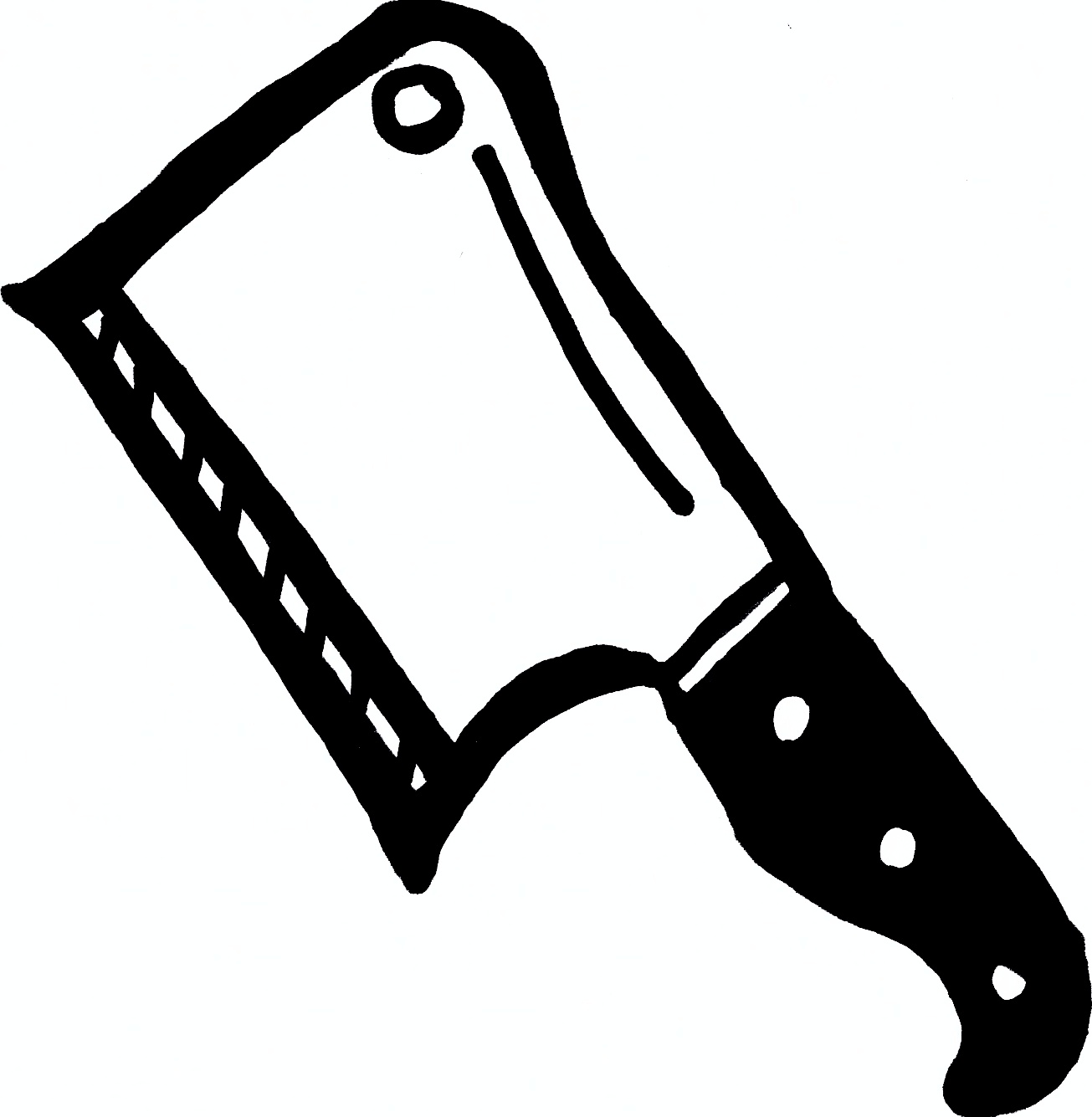
Between this film, last year’s No One Will Save You, and the ongoing Quiet Place series, it appears horror filmmakers are now actively combating the second-screen viewing habits of the streaming era, stubbornly making sure the audience watching along at home has to put down their phones to fully follow the plot.  Azrael director E.L. Katz doesn’t bring much new to the table within that burgeoning Hey Pay Attention horror subgenre, except maybe in the extremity of the scene-to-scene violence (something he already proved cruel enough to deliver in the pitch-black comedy Cheap Thrills).  Elderly and pregnant women are vulnerable targets; Weaving’s final showdown with the evil cult leader is a machete vs. meat cleaver fight; and the camera is always willing to linger on the painful aftermath of a fresh wound.  Still, there’s nothing especially novel about the doomsday-survival cult setting or the burn-victim zombies who lurk at its edges.  The movie’s main hook is for horror nerds who want to watch Weaving go through it one more time in their own perverse cult ritual.  Admittedly, I am one of those nerds, but I’m still hopeful that she’ll soon break free from our captivity.

-Brandon Ledet

Arcadian (2024)

Like most hopeless, depraved movie nerds, I’ll watch pretty much anything with Nicolas Cage in it, since he’s a reliably entertaining performer no mattery the quality of the project signing that week’s paycheck.  That means I’ve seen a lot of mediocre DTV action movies over the years, often ones where Cage’s prominence on the poster is outright dishonest about his prominence in the picture advertised.  I had somehow deluded myself into believing this slumming-it phase of Cage’s career was coming to a close, though, since recent projects like Mandy, Pig, and Dream Scenario were starting to reveal a light at the end of that particular sewer tunnel.  Cage’s latest made-for-streaming action horror Arcadian—which locally premiered at Overlook Film Festival last weekend—was a reality check on that delusion.  Between its post-apocalyptic setting, its grim-grey lighting, and Nicolas Cage dutifully showing up just along enough to earn a sizeable payment to the IRS, Arcadian feels as if it’s about five to ten years behind the times, even when it’s trying its hardest to show you something new.

Cage stars as a single, grieving father who moves his surviving family to remote farmland at the start of The Apocalypse.  His twin boys get increasingly difficult to manage when they age into teenage grumps, which makes it even more difficult to survive the nightly attacks of the mutant creatures who ended modern civilization in the first place.  Since there is no shortage of reference points for this kind of doomsday prepper action-horror, Arcadian doesn’t put much effort into explaining the details of the world Cage & his boys are fighting to survive.  Whether it’s the artsy abstraction of It Comes at Night or the weekly soap opera of The Walking Dead, you’ve seen this exact setup before.  What you haven’t seen is the peculiar biological details of these exact monsters: hairy ostrich-wolves who clap their jaws like chattering-teeth novelty toys and travel as a pack in a rolling Ferris wheel formation.  There’s plenty of intrigue there for anyone drawn in by Cage’s name & face on the poster, which does a lot to make up for him spending half of the runtime offscreen, comatose.  When he suddenly perks up for the climactic fight against the impossible wolf-beasts, you can practically see him flipping on his It Factor movie star presence like a light switch.  It’s only a few seconds of screentime, but it’s exactly what you paid to see.

Arcadian is decently entertaining for a Shudder-brand creature feature, by which I mean its monsters’ design is inventive & upsetting enough to hold your attention despite the banality of their surroundings.  Director Benjamin Brewer’s most prominent IMDb credit to date is as the lead visual effects artist for Everything Everywhere All at Once, which shows here in the ambition & absurdity of the wolf-beasts’ hideous biology.  The dark, muddled color palette and handheld cinematography style are more befitting of a war drama than a creature feature, but again it’s worth pushing through that tedium to get a better look at the monsters.  And hey, there’s still making popular, big-budget Quiet Place sequels long after that series has maintained any purpose or novelty, so I can’t say this film is entirely out of date.  Brewer leveraged Cage’s image on a poster and piggybacked off a familiar mainstream horror template to show off his prowess for inventive, impressive visual effects.  I can’t be mad at that kind of Roger Corman marketing hustle, especially since Cage has lent this likeness to far, far worse.

-Brandon Ledet

Cuckoo (2024)

Tilman Singer has quickly become the most exciting new voice in cosmic horror.  His debut feature Luz started as a film school thesis project but was so strangely, psychically powerful that it broke out into wide release as one of the very best films of 2019 (according to me, anyway).  I watched Luz as a quietly buzzy horror curio that reached my living room via VOD rental, and I was blown away by the volatile imbalance between its cosmic-scale ambitions and its dirt-cheap budget.  His follow-up sophomore feature Cuckoo arrived in New Orleans with much louder fanfare.  Backed by Neon’s hip-cred marketing machine and starring one of the few non-influencer celebrities that teens care about (Hunter Schafer, of Euphoria fame), Cuckoo is a much hotter ticket than Luz was just a few years ago.  Its recent local premiere at Overlook Film Fest was packed to the walls with horror-hungry eyeballs, and although the enthusiasm in the room sounded mixed, anyone familiar with Luz knew exactly what kind of a surreal mindfuck we were in for.  Cuckoo escalates the verbal psychedelia of Luz to something more traditionally thrilling, hopping genres from demonic possession to creepy asylum horror but maintaining the same screenwriting ambitions of pulling brain-melting ideas out of simple, stripped-down tools.

Hunter Schafer stars as a grieving teen who joins her estranged, emotionally distant, German father’s new family after her mother’s death.  That new, uneasy family unit moves into a seasonally unoccupied resort in the Alps so the father & stepmother can work for the site’s enigmatic owner, played by a cartoonishly evil Dan Stevens.  Of course, the resort doubles as a mad scientist laboratory for Stevens’s Dr. Caligari-style medical experiments, which somehow involve strange shrieking sounds in the woods outside the cabins and the strange woman who makes them.  The movie explains exactly what’s going on in due time, but it’s the kind of explanation that only further twists your brain in knots with every new detail.  What’s important is that Singer effectively squeezes unnerving scares out of simple, straightforward methods, somehow crafting one of modern cinema’s creepiest cryptids by dressing one of his actresses in a trench coat, wig, and sunglasses.  I suppose it’s also important that Schafer’s teen brattiness is what ultimately saves the day, since her resolve to drown out the world with comically large, loud headphones until she’s old enough to move out on her own is exactly what protects her from the wigged cryptid’s aural violence.  She also eventually learns how to love at least one member of her new family, but it’s a perilous road getting there, one with many pitstops on hospital beds.

Cuckoo slowly builds its own unique mythology instead of leaning on traditional creature-feature or mad scientist payoffs.  It’s an impressive mix of sly humor & unnerving psychedelia, one that gets genuinely nightmarish in its forced pregnancy threats but also allows Dan Stevens to goof off with an exaggerated German accent & a magical flute, as if he were a recurring SNL character instead of a villainous fascist.  It’s a great theatrical experience, less so for its visual eccentricities (which mostly amount to time-loop editing & a vibrating frame) than for its aural ones (constant shrieks & gunshots that are best heard loud). I get the sense that all the central collaborators are getting away with something here.  Schafer recently said in a GQ interview that she’s no longer interested in playing roles that center her transgender identity, and this movie doesn’t care about that at all; it just cares how cool she looks wielding a butterfly knife: very.  Stevens also gets plenty of room to go big as an absolute maniac, something it feels like he hasn’t gotten to do on this scale since The Guest a full decade ago.  Then there’s Singer, who’s now found a much bigger canvas and a much bigger audience for his cosmic horror oddities.  I hope his work continues to escalate this way, since he has a lot of potential to become one of the all-time greats in the genre, if not only in his power to bewilder.

-Brandon Ledet

Lagniappe Podcast: We Kill for Love & Overlook Film Fest 2023

For this lagniappe episode of the podcast, Brandon, James, Hanna, and guest Bill Arceneaux discuss a selection of genre films that screened at this year’s Overlook Film Fest, including the exhaustive direct-to-video erotic thriller documentary We Kill for Love (2023).

00:00 Welcome

03:32 Aberrance (2023)
09:04 Appendage (2023)
15:18 The Five Devils (2023)
21:31 Smoking Causes Coughing (2023)

27:03 We Kill for Love (2023)

1:01:31 Moviegoing with Bill
1:05:15 A Street Cat Named Desire (2023)
1:08:04 FROM.BEYOND (2023)
1:11:45 Give Me an A (2023)
1:19:35 Birth/Rebirth (2023)
1:24:15 Mister Organ (2023)
1:27:05 Late Night with the Devil (2023)

Overlook Film Fest 2023 Selections Ranked & Reviewed

1. Smoking Causes Coughing
2. The Five Devils
3. We Kill for Love
4. Late Night with the Devil
5. Birth/Rebirth
6. Appendage
7. Mister Organ
8. The Artifice Girl
9. Aberrance

You can stay up to date with our podcast through SoundCloudSpotifyiTunesStitcherTuneIn, or by following the links on this page.

-The Podcast Crew

Identity & Artifice @ Overlook Film Fest 2023

After I happened to spend an entire day watching horror movies about motherhood at this year’s Overlook Film Fest, I found myself searching for patterns in the festival’s programming wherein the movies were communicating with each other just as much as they were provoking the audience.  I didn’t have to squint too hard at my next double-feature to see their thematic connections, since the word “artifice” was already staring back at me in the first film’s title.  My third & final day at this year’s Overlook was all about the tension between identity & artifice, and how the latter obscures the former.  In the philosophical sci-fi horror at the top of that self-programmed double bill, the opaque surface of artifice is stripped away to reveal a complex, futuristic sense of identity underneath.  In the true crime documentary that followed, the surface of artifice is removed to uncover no discernible human identity at all, which makes for a much bleaker, scarier reveal.  Please forgive me for the inanity of reporting that this is an instance where the truth is stranger than fiction; I watched these particular movies hungover in a chilly downtown shopping mall, and I’m not sure my brain has fully recovered from watching two twisty thrillers about the complexities of human identity in that hazy state.

That morning’s theme-unlocking opener, The Artifice Girl, is a well-timed A.I. chatbot technothriller, turning just a few actors running lines in drab office spaces into a complex study of the fuzzy borders between human & artificial identity.  Approached with the same unrushed, underplayed drama as the similarly structured Marjorie Prime, The Artifice Girl jumps time frames between acts as the titular A.I. chatbot is introduced in her infancy, gains sentience, and eventually earns her autonomy.  She is initially created with queasy but altruistic intentions: designed to bait and indict online child molesters with the visage of a little girl who does not actually, physically exist.  As the technology behind her “brain” patterns exponentially evolves, the ethics of giving something with even a simulation of intelligence & emotion that horrifically shitty of a job becomes a lot murkier.  By the time she’s creating art and expressing genuine feelings, her entire purpose becomes explicitly immoral, since there’s no foolproof way to determine what counts as her identity or free will vs. what counts as her user-determined programming.  The Artifice Girl does a lot with a little, asking big questions with limited resources.  The closest it gets to feeling like a professional production is in the climactic intrusion of genre legend Lance Henriksen in the cast, whose journey as Bishop in the Alien series has already traveled these same A.I. autonomy roads on a much larger scale in the past.  It’s got enough surprisingly complex stage play dialogue to stand on its own without Henriksen’s support, but his weighty late-career presence is the exact kind of hook it needs to draw an audience’s attention.

By contrast, David Farrier’s new documentary Mister Organ desperately searches for an attention-grabbing hook but never finds one.  The New Zealand journalist drives himself mad attempting to recapture the lighting-in-a-bottle exposé he engineered in Tickled, investigating another unbelievable shit-heel subject who “earns” his living in nefarious, exploitative ways.  At first, it seems like Farrier is really onto something.  The titular Mr. Organ is an obvious conman, introduced to Farrier as a parking lot bully who “clamps” locals’ tires for daring to park in the wrong lot, then shakes them down for exorbitant piles of cash to remove the boots – making the high-end antique store he patrols a front for a much more lucrative, predatory side hustle.  With only a little digging, that parking lot thug turns out to be a much bigger news story, one with fascinating anecdotes about stolen yachts, abandoned asylums, micro cults, and forged royal bloodlines.  Or so Farrier thinks.  The more he digs into his latest subject’s past to uncover his cleverly obscured identity, the more Farrier comes away empty-handed & bewildered.  Mr. Organ is more an obnoxious Ricky Gervais caricature of a human being than he is a genuine one.  He babbles for hours on end about nothing, holding Farrier hostage on speakerphone with the promise of a gotcha breakthrough moment that will never come.  Organ is a literal ghoul, a real-life energy vampire, an artificial surface with no identity underneath.  As a result, the documentary is a creepy but frustrating journey to nowhere, one where by the end the artist behind it is just as unsure what the point of the entire exercise was as the audience. It is a document of a failure.

Normally, when I contrast & compare two similarly themed features I walk away with a clearer understanding of both.  In this case, my opinion of this unlikely pair only becomes more conflicted as I weigh them against each other.  In the controlled, clinical, fictional environment of The Artifice Girl, an identity-obscuring layer of artifice is methodically, scientifically removed to reveal a complex post-human persona underneath.  In the messy, real-world manipulations of Mister Organ, the surface-level artifice is all there is, and stripping it away reveals nothing that can be cleanly interpreted nor understood.  Of course, the fictional stage play version of that exercise is more narratively satisfying than the reality-bound mechanics of true crime storytelling, which often leads to unsolved cases & loose, frayed ends.  The Artifice Girl tells you exactly how to feel at the end of its artificially engineered drama, which is effective in the moment but leaves little room for its story to linger after the credits.  The open-ended frustration of Mister Organ is maybe worthier to dwell in as you leave the theater, then, even if its own conclusion amounts to Farrier throwing up his hands in forfeit, walking away from an opaque nothing of a subject – the abstract personification of Bad Vibes.  As a result, neither film was wholly satisfying either in comparison or in isolation, and I don’t know that I’ll ever fully make sense of my dehydrated, dispirited afternoon spent pondering them.

-Brandon Ledet

Mommy Issues @ Overlook Film Fest 2023

Film festival programming is a real-world Choose Your Own Adventure game where individual moviegoers can have wildly varied, simultaneous experiences at the exact same venue.  Overall, I had a great time at this year’s Overlook (an annual horror festival that’s quickly become the most rewarding cinematic Cultural Event on the New Orleans social calendar), but I weirdly frontloaded my personal programming choices so that the films I was most excited to see—Late Night with the Devil, The Five Devils, and Smoking Causes Coughing—were all knocked out as a rapid-fire triple feature on the very first day.  For the rest of the weekend, I wandered around Overlook in a self-induced daze, wowed by my Opening Night selections and hoping something smaller & more anonymous would match those early highs as I bounced between screening rooms at the downtown Prytania.  I can’t say I ever got there (at least not in the way other festivalgoers gushed about big-name titles like Renfield, Talk to Me, and Evil Dead Rise throughout the weekend), but I did find some clear thematic patterns in my personal program as the fest stretched on.  For instance, my entire second day at this year’s Overlook focused on the horrors of motherhood, a self-engineered happenstance I can’t imagine was the intent of the festival’s programmers, since they could not have known which exact Choose Your Own Adventure path their audience would lock ourselves into.  While nothing on Day 2 floored me the way buzzier titles had on Day 1, they collectively gave me a lot of squicky Mommy Issues to dwell on in the festival’s downtown shopping mall locale – a theme that, come to think of it, was also echoed elsewhere on the docket in Clock, The Five Devils, Give Me an A, and Evil Dead Rise.

The best of the motherhood horrors I caught that day was the prickly pregnancy story Birth/Rebirth, which will premiere on Shudder later this year.  In its simplest terms, Birth/Rebirth is a morbid little Found Family story where the family glue is composed of reanimated corpses & unethically harvested fetal tissue.  Let’s call it Women in FrankenSTEM.  It details the unlikely team-up of a brash, uncaring pathologist who experiments on reanimating dead bodies in her inner-city apartment and a warm, compassionate nurse from the same hospital who loses her young daughter to an aggressive bacterial infection.  The two women form a makeshift family when they inevitably bring the daughter back to “life” via a serum derived from prenatal tissue, harvested through a chemical process that eventually leads to desperate acts of violence to keep the experiment going.  There’s plenty of morbid humor in the film’s “Honey, I’m home,” “How was work?” domestic banter as this new family routine becomes more comfortable, but its tone & central themes are relatively heavy.  For all of its upsetting surgical imagery involving needles, spines, and wombs (sometimes made even grimier through found-footage camcorder grain), the film often just engages in a very thoughtful contrast/compare debate about the differences between science & medicine.  That debate gets especially heated when hospital staff maintain a cold, scientific distancing from their pregnant patients instead of treating them like human beings in need of compassionate care, a threshold that even the more humane nurse crosses in pursuit of keeping her daughter “alive.”  Birth/Rebirth is refreshingly honest & matter-of-fact about pregnant women’s bodily functions and the medical industry’s indifference to their wellbeing.  It’s not a great film (often lacking a pronounced sense of style or narrative momentum), but it is a satisfying, provocative one.

The worst of the motherhood horrors on my docket was the Mongolian axe-murder thriller AberranceAberrance may even be the worst feature I can remember seeing at any film festival, a self-programming mistake that became apparent as soon as its opening frames foreshadow its pregnant damsel in distress running from its axe-wielding killer under a veil of cheaply rendered digital snowfall.  Whereas Birth/Rebirth had smart, straightforward observations to make about how misogynist the medical industry can be, Aberrance instead follows a series of for-their-own sake plot twists that muddle any possible good-faith readings of its social messaging.  At the start, this vapid, cheap-o thriller pretends to be a domestic violence story about a heroic neighbor bravely standing up to the abuser next door, who keeps his pregnant wife locked away from the world in order to “protect” her from her own mental illness.  Several generic plot twists & mainstream horror tropes later, the movie appears to be asserting an extensive list of incendiary falsehoods that get more infuriating as they thoughtlessly pile up: Don’t be nosy about apparent domestic abuse conflicts in other people’s homes; don’t trust the medication prescribed to treat your mental illness; and, most importantly, if a woman is mentally ill, the best fix is for her to just have a baby.  While Birth/Rebirth has incisive things to say about women’s minds, bodies, and care, Aberrance doesn’t care at all about the pregnant victim at the center of its story.  She’s a mostly wordless vehicle for thematically inane, irresponsible plot twists and flashy, for-its-own sake camerawork that initially appears playful & inventive but quickly becomes dull & repetitive.  The only halfway interesting thing about the movie is the cultural specificity of its Mongolian setting, but that’s not nearly enough to compensate for its boneheaded qualities as a mother-in-peril story.

Lurking somewhere between the disparate quality of those two polar-opposite motherhood thrillers is the couture-culture body horror Appendage, which will premiere on Hulu sometime later this year (likely as part of their annual “Huluween” package).  Appendage‘s connections to the day’s unintentional motherhood theme are initially less apparent than the first two films’, unless you consider a woman growing a sentient, talking tumor on her hip to represent an abstract form of giving birth.  The story follows a young fashion designer whose professional stress over a highly competitive, demanding job manifests in a hateful, id-indulging tumor that grows on her body and gradually develops a life of its own.  It’s a fairly common creature feature set-up, especially in a horror comedy context.  Think Basket Case but make it fashion (or Hatching but make it fashion, or Bad Milo but make it fashion, or How to Get Ahead in Advertising but make it fashion, etc.).  The scenes featuring the rubber-puppet monster make for an adorable addition to that subgenre, but they also highlight how bland Appendage can feel when the absorbed-twin tumor is nowhere to be seen.  Except, I did find its connective-tissue drama interesting within the larger theme of the day, if only through happenstance.  By the end of the film, it’s clear that our troubled fashionista’s self-negging workplace woes are less about job stress than they are an echo of her uptight WASP mother’s overly harsh criticisms of her every decision.  As it chugs along, Appendage proves to have way more on its mind about its underlying Mommy Issues than it does about the fashion industry, which is mostly used as an arbitrary broad-comedy backdrop akin to the killer-blue-jeans novelty horror Slaxx.  The promise of the premise is that we’ll watch a young woman spar against the monstrously abnormal growth on her body, but instead we often watch her do petty, verbal battle with the abnormal monster who birthed her.

Birth/Rebirth was my favorite selection from the second day of Overlook by any metric, and it only grew in my estimation as the day’s incidental horrors-of-motherhood patterns revealed themselves.  Even so, there are brief moments of Appendage that make it recommendable as potential Halloween Season viewing, especially for anyone who’s delighted by throwback practical-effects monsters.  The same cannot be said about Aberrance, an entirely useless work as both a pregnancy narrative and as an axe-wielding slasher cheapie.  It’s admirable that Overlook programmed a low-budget no-namer from an underserved market like Mongolia but, much like me, they took a chance on a dud.  It still helped guide & flesh out my Choose Your Own Adventure programming choices for the day, though, even if only to make the other motherhood horror titles that bookended it appear even greater by comparison.

-Brandon Ledet

Sissy (2022)

I saw a good number of my favorite movies of the year (so far) at Overlook Film Fest in June, which is usually the case.  The programming at that annual horror festival is unmatched by any other local fest I can name, as long as you’re a fully committed genre nerd who doesn’t pay much attention to the Awards Prestige dramas of the fall.  It’s also condensed to a single weekend in early summer, which means it’s impossible for me to catch every movie I want to see in the program. So, I often spend the half-year after Overlook catching up with titles I missed during the festival (which almost invariably pop up on the streaming platform Shudder at one time or another).  Often, I feel validated in which movies I opted to skip at the fest (i.e., She Will), but every now and then there’s a fun little novelty like Sissy that I wish I had seen with a crowd.  It’s always hard to tell how much of an enthusiasm boost I’m giving to movies based on the horror-nerd fervor of the festival, but I do suspect that Sissy killed in the room at Overlook, and I would have loved to share in that joy.

In micro-subgenre terms, Sissy offers an Australian splatstick comedy version of the modern social media thriller. Let’s call it Heavenly Tweetures, Ingrid Goes Down Under, Aussies Aussies Aussies, whatever you like.  It references cult sitcom Kath & Kim in its opening minutes, so you immediately know that it’s filling an Australia-specific niche.  At the same time, its story of a “mental health” social media influencer who becomes a homicidal maniac when she reunites with her childhood bully is a fairly standard-issue template for its genre.  Sissy only Aussifies that template in its irreverent tone & practical-effects gore.  There’s a Dead Alive tinge to its head-crunching kills that makes for a good, goofy time even when the movie is at its most brutal.  That buoyancy seeps through its ironic Disney princess musical score, its Blood Brilliant Tampons™ visual jokes, and its adoring Love Island reality TV parodies; but it’s the gore gags I most would’ve wanted to experience with a crowd.  They’re delighfully vicious, and they’re ultimately what makes the movie special.

There really isn’t much to Sissy‘s social media satire that you can’t find elsewhere.  The titular killer’s addiction to the endorphin rush of notification chimes and her sociopathic ability to alternate between self-care rhetoric & spon-con abuse of her self-appointed position as a mental health authority are familiar to anyone who’s drawn to this kind of material.  I’d even argue that the other notable social media satire at this year’s Overlook, Deadstream, did a much better job of squeezing laughs out of that exact Youtuber brain-rot persona.  There’s a sincerity to Sissy‘s central drama that you won’t find in Deadstream, though, from its nostalgia for childhood BFF kinship to the anxiety-inducing horrors of joining an established adult friend group midstream.  If there’s any incisive social commentary to be found here, it might be in the #terminallyonline understanding of morality where everyone falls into one of two categories: “A Good Person” or “Cancelled.”  It’s when Sissy desperately, violently strikes out to avoid becoming “Cancelled” that the movie evolves into its ideal form: a flippantly funny slasher, not a thoughtful social treatise.

If watching a mental wellness YouTuber become Jokerfied at the first threat of getting cancelled appeals to you, Sissy is a hoot.  That premise is very appealing to me, so I’m not sure why I didn’t prioritize it at Overlook the way I did with Deadstream.  Frankly, I should be cancelled for the offense.

-Brandon Ledet

The Overlook Film Festival 2022, Ranked & Reviewed

The sudden appearance of The Overlook Film Festival on the local scene in 2018 & 2019 was an unholy, unexpected blessing. There are only a few substantial film fests staged in New Orleans every year, so for an international festival with world premieres of Big Deal horror movies to land in our city was a major boon. It was almost too good to be true, so after a couple off years of COVID-related delays, I was worried The Overlook might not make it back to the city. But here we are again, praise the Dark Lord.

Two dozen features and just as many shorts screened at the festival over the course of a single weekend in early June. It was overwhelming. Self-described as “a summer camp for genre fans,” The Overlook was centrally located, corralling almost all of its screenings to the new Prytania Theatres location at Canal Place. It was wonderful to attend this unbelievably cool genre extravaganza again, especially after two years of seeing their incredibly sharp programming talents get absorbed by the online-only Nighstream festival.

Listed below are all nine features I caught at The Overlook Film Festival that weekend, ranked in the order that I most appreciated them, each with a blurb and a link to a corresponding review. For a more detailed recap of our festival experience beyond these reviews, check out the next Lagniappe episode of The Swampflix Podcast, where I will be discussing the fest in full with local critic Bill Arceneaux.

Mad God

Phil Tippett’s stop-motion passion project is both a for-its-own-sake immersion in scatological mayhem & an oddly touching reflection on the creative process, the indifference of time, and the cruelty of everything.  It’s meticulously designed to either delight or irritate, so count me among the awed freaks who never wanted the nightmare to end.

Flux Gourmet

David Cronenberg isn’t the only auteur fetishist who’s returned to his early works to construct a new fantasy world overrun by grotesque performance art.  This feels like Peter Strickland revising Berberian Sound Studio to bring it up to speed with the more free-flowing absurdism he’s achieved since.  The result is not quite as silly as In Fabric nor as sensual as The Duke of Burgundy, but it hits a nice sweet spot in-between.

Deadstream

A found footage horror comedy about an obnoxious social media influencer getting his cosmic comeuppance while livestreaming his overnight tour of a haunted house.  This was a constantly surprising delight, getting huge laughs out of supernaturally torturing a YouTuber smartass with a sub-Ryan Reynolds sense of humor.  It effectively does for Blair Witch what Host did for Unfriended, borrowing its basic outline to stage a chaotic assemblage of over-the-top, technically impressive horror gags.

Good Madam

I will be interested to compare this with Nanny once that makes its way to the general public, since both films revisit Ousmane Sembene’s Black Girl through a supernatural horror lens.  Considered on its own, this is perfectly chilling & sharply political, pushing past an easy metaphor about a house being haunted by apartheid to dig into some surprisingly complicated, heartbreaking familial drama.

Piggy

Not enough people have seen The Reflecting Skin for the comparison to mean anything, so let’s call this Welcome to the Dollhouse for the Instagram era.  A bullied outsider’s coming-of-age horror story accelerated by a cathartic, torturous team-up with the neighborhood serial killer.  It’s made entirely of pre-existing genre building blocks, but it still feels freshly upsetting & perversely fun in the moment.

Swallowed

Low-budget queer body horror about a drug deal gone horrifically wrong, featuring sharp supporting performances from Jena Malone & Mark Patton.  Has some great squirmy little practical gore gags that keep the tension high throughout, but I was most thrilled just to see a harrowing queer story that wasn’t about coming out or gaybashing.  Even more thrilled to see a movie where fisting (almost) saves the day.

Hypochondriac

Queer psych-horror about a potter who’s being hunted down by his childhood trauma, represented by a Halloween costume wolf (halfway between the Donnie Darko bunny & The Babadook, except the monster wolfs ass).  More charming than scary, but judging by the “Based on a real breakdown” title card it’s coming from such a personal place that it’s easy to root for.

Mona Lisa and the Blood Moon

What if Harmony Korine had to be less choosy with his projects and settled for making a straight-to-Shudder Gen-Z update of Carrie?  It’s certainly a step up from The Bad Batch, but I’m not convinced Ana Lily Amirpour has lived up to the potential of her debut yet.  Smart programming for the opening night of Overlook Film Fest either way, since it’s steeped in plenty of Nawlins Y’all flavor to acclimate the tourists.

Watcher

A little too lacking in scene-to-scene tension & overall novelty for the fourth Rear Window riff of the past year (bested by Kimi & The Voyeurs in those rankings, surpassing only The Woman in the Window).  Still, I appreciate the icy mood it echoes from post-Hitchcock Euro horrors of the 1970s, and the ending is almost enough of a shock to make up for the dead air. 

-Brandon Ledet

Mona Lisa and the Blood Moon (2022)

It’s usually a meaningless cliché when people say they were born in the wrong era, but I would make an exception if I heard it from Ana Lily Amirpour.  Since her 2014 debut A Girl Walks Home Alone at Night, Amirpour has been making the exact kind of high-style, low-effort hangout indies that earned easy festival buzz in the slacker culture days of the 1990s.  Two films later, it’s getting frustrating to see her drag that proud burnout energy into the 2020s.  It makes sense that her debut was a small-scale genre picture that coasted on laidback cool, but her resources have expanded greatly since then and she’s still making low-effort slacker films with attention-grabbing premises and a snotty “Fuck you” attitude.  The only difference is she’s now armed with celebrity stunt-casting & more extravagant locales.  Her post-apocalyptic cannibal whatsit The Bad Batch remains the most frustrating waste of her Flashy Debut clout to date, but its follow-up telekinetic fairy tale Mona Lisa and the Blood Moon is only a half-step up from that disappointment.  Like her previous two films, Mona Lisa leans back & hangs out in a way that makes you wonder why Amirpour is making high-concept genre films when she’d clearly have more fun making no-concept, character-driven comedies.  The marquee promises a bubblegum pop version of Scanners or The Fury, but Amirpour is more interested in making a neon-lit Clerks.

Mona Lisa and the Blood Moon isn’t bad; it’s just a little underwhelming.  Imagine if Harmony Korine couldn’t afford to be choosy with his projects and settled for making a straight-to-Shudder Gen-Z update of Carrie for an easy paycheck.  The titular Mona Lisa is an escaped mental patient with violent impulses & telekinetic powers.  She’s effectively a blank slate, having grown up in a padded cell with nothing but a straitjacket & a prison cot to keep her occupied.  Like the DaVinci muse, that internal void invites strangers to project meaning & intent onto her, which says more about their worldview than it does about her own personality (especially the freaked-out cops who want to lock her back up and the scheming hustlers who exploit her powers for cash).  This is Horror of the Hassled, as all Mona Lisa really wants is to hang out, eat junk food, and watch trash TV.  Her potential for violent mayhem is only unleashed when people get in the way of those totally reasonable goals.  Instead of seeking revenge in a cathartic Carrie-on-prom-night showdown with all the jerks who hassle her, she seeks moments of calm at corner stores, laundromats, and TV-lit living room couches.  She’s an out-of-time 90s slacker hanging out in a city of desperate, scheming dirtbags who’d all be better off if they just keep their distance and let her vibe.

Although not a great film, Mona Lisa and the Blood Moon was a great programming choice for opening this year’s Overlook Film Festival.  It’s steeped in plenty N’awlins Y’all flavor to acclimate tourists who traveled here for the fest – starting in the swamps outside the city during Mona Lisa’s initial escape before trudging its way down to Bourbon Street strip clubs, frog ribbits bleeding into grimy DJ beats.  It’s also commendable for offering substantial character-actor roles to Kate Hudson (as a Quarter-smart stripper) and Craig Robinson (as the only kind NOPD officer in the history of the department).  Surely there’s an audience out there hungering for Amirpour’s high-concept slacker thrillers, real freaks who’d love to see Joel Potrykus’s own no-effort comedies dressed up in dingy pop soundtracks & Rainbow Store fast fashions.  I most appreciated Mona Lisa and the Blood Moon as a collection of oddball characters in no rush to do anything in particular.  I, too, would love to live a junk-food life unhassled, downing cases of cheap bear in parking lots with metalhead burnouts and chomping my way through well-done hamburgers at the Claiborne Frostop.  I just wish Amirpour would move away from the vampires, cannibals, and telekinetic witches of her film’s flashy premises, since she doesn’t seem motivated to do anything exciting with those conceits.

-Brandon Ledet

The Overlook Film Festival 2019, Ranked & Reviewed

Last year’s sudden appearance of the Overlook Film Festival on the local calendar was an unholy, unexpected blessing. There are only a few substantial film fests that are staged in New Orleans every year, so for an international horror film festival with world premieres of Big Deal genre movies to land in our city was a major boon, almost too good to be true. I attended the festival as a volunteer, catching three artsy-fartsy creature features (all directed by women) and a couple live podcast recordings over the course of a few days, hungry (bloodthirsty?) for more. This year, Swampflix attended Overlook with legitimate press credentials, meaning we were able to cover even more films playing at the fest, which was majorly exciting.

There were 23 features and 18 shorts from 11 different countries screening at the festival over the course of a single weekend in early June. It was overwhelming. Self-described as “a summer camp for genre fans,” The Overlook was centrally located, corralling all of its movie screenings to just a few venues: Le Petit Theatre for its more prestigious premieres, the UNO Performing Arts Center for a repertory screening of The Faculty (with Robert Rodriguez in attendance), and what is now the ghost of the old Canal Place theater for the bulk of its heavy-lifting. It was wonderful to be able to take fuller advantage of this super cool genre film extravaganza, especially considering that Canal Place’s closure might persuade them to leave us for another city, which would be a total shame.

Listed below are all eleven features we were able to catch at The Overlook Film Festival that weekend ranked in the order that we most appreciated them, each with a blurb and a link to a corresponding review. For a more detailed recap of our festival experience beyond these reviews, check out our podcast discussion of the fest.

1. In Fabric “Wholly committed to over-the-top excess in every frame & decision, whether it’s indulging in an artsy collage of vintage fashion catalog advertisements or deploying a killer dress to dispose of a goofball victim entirely unaware of the occultist backstory of their sartorial selections. It’s both funny and chilling, beautiful and ludicrous. It’s perfect, as long as you can tune into its left-of-the-dial demonic frequency.”

2. One Cut of the Dead “So much of One Cut of the Dead is on shaky logical ground because of the limitation of its filmmaking resources, but horror fans who are inclined to watch low-budget, high-concept zombie movies in the first place should be used to making those allowances. What’s brilliant about the film is how it transforms those awkward low-budget details into something brilliantly executed & purposeful. Revealing how it performs that miracle in a review would be a crime that I’m not willing to commit. You just have to afford it your attention & trust long enough to see it for yourself.”

3. Ma “It’s at first baffling to learn that Tate Taylor, the doofus responsible for The Help, also directed this deliciously over the-top schlock, but it gradually becomes obvious that the goon simply loves to watch Octavia Spencer devour the scenery and it just took him a while to find the proper context for that indulgence – the psychobiddy.”

4. Paradise Hills “This is far from the first fairy tale to allure characters in with a bounty of sensual pleasures only for the fruits therein to be revealed as rotten, cursed, or poisonous. In that tradition, Paradise Hills presents a fairytale Eden that’s deadly dangerous precisely because the pleasures it offers on the surface are so tempting. It would be far too easy to lose yourself in this pleasure palace – both literally and figuratively.”

5. Come to Daddy “As Elijah Wood’s cowardly protagonist sinks further in over his head in sinewy ultraviolence, the picture begins to play like a farcical mutation of a Jeremy Saulnier picture – not unlike Wood’s recent turn in I Don’t Feel at Home in this World Anymore, just creepier.”

6. Greener Grass “Whether it’s grossing you out with the moist, passionless sex of its suburbanite goons or it’s breaking every known rule of logical storytelling to drive you into total delirium at a golf cart’s pace, the film is uniquely horrific & punishing – and hilarious. You should know approximately thirty seconds into its runtime whether or not its peculiarly antagonistic humor is something you’ll vibe with; there’s just very little that can prepare you for what it’s like to experience that aggressive irreverence for 100 consecutive minutes.”

7. Knives & Skin “Filters the Lynch Lite teen melodrama of Riverdale through a hallucinatory overdose of cough medicine, so that it sticks with you only as a half-remembered dream. You can recall laughing, but you’re not entirely sure why, or whether that was even its desired effect.”

8. The Vast of Night “The film chooses a very difficult path in distinguishing itself, relying more on the strength of its performances & written dialogue than its sci-fi chills & scares. It’s more akin to intimate walk & talk dramas like Dogfight, Before Sunrise, or My Dinner with Andre than the sci-fi horror tones you’d usually expect from an alien invasion story template.”

9. Gwen Gwen looks, sounds, and feels like Elevated Horror™. Its monochrome portrait of a family in crisis is illustrated mostly by the grey hues of soot & snow. There’s very little dialogue & no musical score to speak of, somewhat mistaking total quiet for atmospheric dread. Those drab, miserable textures lull the audience into a foggy calm, only to be shocked out of our seats by loud, violet stabs of lightning, medical fits, and nightmares of self-mutilation. This movie has genuine jump scares! But it’s not horror.”

10. Satanic Panic “It may not be the pinnacle of joke writing or emotional drama, but it at least knows how to deliver the goods when it comes to over-the-top ultraviolence & softcore sexual mania.”

11. Porno “When most comedies fail to make you laugh, they leave you very few opportunities to be entertained otherwise. To its credit, Porno entertains throughout by relying on the most tried & true attractions in the entertainment business: sex & violence. Even if you’re impervious to its proper Jokes, there’s still plenty of blood-soaked juvenilia to keep you occupied.”

-Brandon Ledet