Creed (2015)

EPSON MFP image

fourstar

Creed is more of a sequel than a proper reboot, but writer-director Ryan Coogler is more than forgiven for not wanting to title his film Rocky VII: Creed. Following the lead of 2006’s succinctly titled Balboa, Creed keeps it simple in more than ways than just its name. It’s very much a by-the-numbers boxing movie, hitting every familiar beat you’d expect from the genre. After Southpaw‘s helpful example earlier this year of just how poorly that formula can be put to use, though, it’s downright miraculous just how effective Creed manages to be while never coloring outside the lines. As far as Stallone franchises go, I’m typically a much bigger Rambo fan (can’t help myself), but who doesn’t love a good underdog story? The pugilist protagonist (played by an all-grown-up The Wire vet Michael B. Jordan) of Creed‘s narrative may go through the motions of successes & failures the audience sees coming from miles away, but the movie is visceral enough in its brutal in-the-ring action & tender enough in its out-the-ring romance & familial strife that only the most jaded of audiences are likely to get through its runtime without once pumping a fist or shedding a tear before the end credits.

The illegitimate son of Apollo Creed, a father he never met & a boxing legend within the Rocky universe, Adonis Creed is more a child of the foster & juvenile correctional system than he is of the former Carl Weathers character. With that chip weighing heavily on his shoulder, Adonis attempts to walk the tightrope of earning a name for himself as a self-taught boxer while avoiding living his life in Apollo’s massive shadow. It’s hard to tell exactly how serious he is about ducking association with his father, though, since he adopts an elderly Rocky Balboa as his reluctant trainer & makeshift family. Balboa & Creed’s shared history is assimilated into the story expertly, made to feel real by adopting the format of high-end ESPN & HBO sports documentaries & talking heads forums. While Adonis is trying to balance his own career with his father’s legacy, he also struggles to stay connected with a mother figure who doesn’t want him to fight & falls hopelessly in love with a downstairs neighbor (played by an all-grown-up Veronica Mars vet Tessa Thompson) who records a less avant garde FKA twigs style of pop music in her bedroom in hopes of making a name for herself on her own terms.

There are Inspirational Training Montages galore in Creed, but only two proper bouts, a smart choice that not only allows the film’s familial & romantic bonds room to build, but also helps to establish Adonis as an in-over-his-head underdog. There are some fun, updating-the-franchise touches to the movie, such as a scene where a grandmotherly Sylvester Stallone perplexedly contemplates smart phones & “the cloud”, but the best thing Creed accomplishes is acknowledging the past while living firmly in the present. The two main bouts of the film are feats of pure cinematography & choreography, a brutally physical style of storytelling. There’s impressive imagery to be found elsewhere in the film’s smaller moments as well, such as a shot of Balboa & Adonis boxing duel punching bags in unison & a chilling scene where Adonis fights a projection of his dead father’s image. The sexual tension between Tessa Thompson & Michael B Jordon is also remarkably well played, both in the written dialogue & in the body language of the performances. The worst crime the film commits is occasionally functioning as a video form of Philadelphia tourism, an offense that’s more than excusable given that Balboa is now as much a part of the city’s DNA as cheesesteak & the Liberty Bell.

When Creed‘s production was first announced I’ll admit my initial reaction was a yawn & an eyeroll. Coogler’s film somehow completely turned me around on the idea of a non-Stallone-penned Rocky franchise living on in perpetuity, despite never truly deviating from the format. It’s a great example of how a strict genre film feel new & exciting when played with fully-committed earnestness. If Creed II ever makes it to a theater, I’m pretty much guaranteed to be there, which is  a sentiment I didn’t expect to leave the film with before the opening credits.

-Brandon Ledet

The Peanuts Movie (2015)

EPSON MFP image

three star

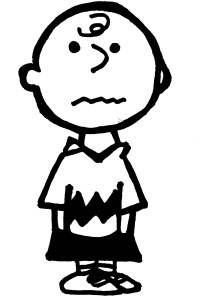
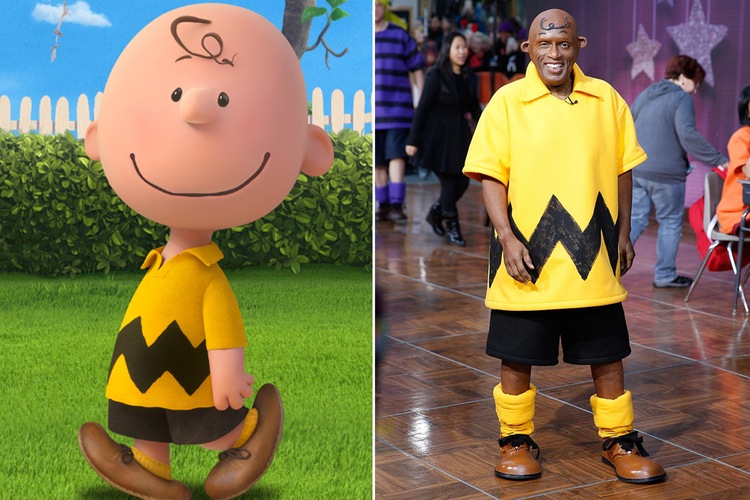
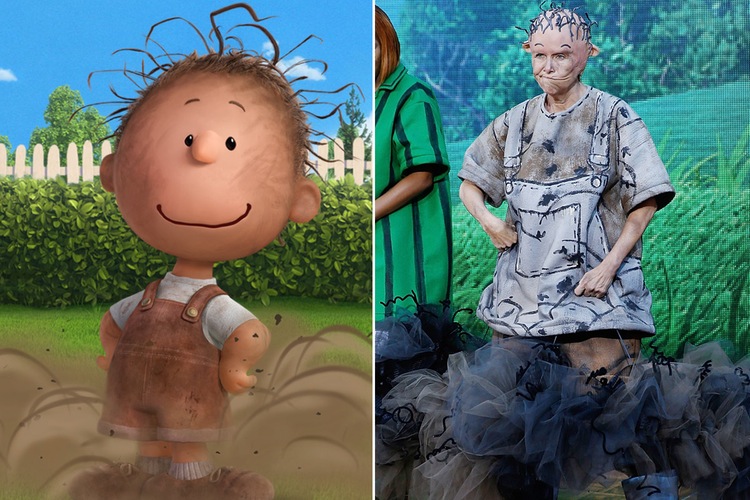
The ad campaign for The Peanuts Movie has been kind of a nightmare for me. I have a long history of being turned off by modern CG animation (yes, that includes most Pixar features; no, I’m not proud of that), so seeing a beloved property like Charles Shulz’s classic comic strip adapted to the format in the early teasers was jarring to say the least. The worst part of the conversion was that they interpreted the curl of hair on Charlie Brown’s forehead (which I’ve always seen as representative of at least a tuft) as a single, distinct pube. An endless barrage of awful-looking CG animated features like Angry Birds, Alvin & The Chipmunks IV: Road Chip, and the dismal-looking Rob Schneider Is A Polar Bear picture Norm of the North playing before the movie in the theater did little to ease my concerns. To get an idea of how horrified I was by this incarnation of The Peanuts, check out these nightmare images of Today Show anchors dressed up as characters from the the film. They’re barely made me more queasy than the film’s trailers did.

al-roker-charlie-brown-today-halloween-peanuts

carson-daly-today-show-halloween-peanuts-linus

meredith-viera-today-halloween-peanuts-pig-pen

It turns out, thankfully, that The Peanuts Movie isn’t quite as bad as the horrific shitshow I initially imagined. At best, the film feels like a decent compromise between the cynical corporate cash grab it could‘ve been & the loving tribute to an artistic institution it should‘ve been. The CG animation that initially bothered me so much was fairly easy to get used to, especially since it was accented by hand-drawn hearts, squiggles, and re-creations of the original black & white comic strip source material. For every cringe-inducing turn-off (horribly out-of-place pop music, new characters who don’t add much to the formula, over-long Snoopy-vs-the-Red-Baron asides, etc.) there’s a greatest-hits style throwback waiting to appease. Lucy’s 5¢ psychiatric help stand, Marcie’s eternal suffering at Peppermint Patty’s indifference, off-screen adults’ trumpet voices, Charlie’s kite-flying mishaps, plentiful utterances of “Good grief!” & “blockhead”, the gang’s iconic dance moves: it’s all here. And while the parents in the audience are chewing on the nostalgia, their kids are treated to a collection of timeless sight gags. Everyone wins . . . sort of.

The reason I came around to the idea of watching The Peanuts Movie in the first place was an interview in which producer Paul Feig (who I greatly respect) said he signed onto the project just to keep an eye on it, to make sure it wasn’t the cynical mess I expected. And that’s exactly how The Peanuts Movie came out as a finished product. It feels like a project that could’ve gone south at any minute, but was kept in check by a few voices of reason. There was certainly plenty of aspects of the film that I enjoyed. I was particularly relieved that the gang was allowed to remain true to themselves, just as gross & melancholy as ever. The voice acting work from the non-actor children cast was surprisingly true to past animated adaptations (Linus’ voice is eerily accurate, even) & it’s just as satisfying as ever to hear children fret over emotional crises like “coming down with a serious case of inadequacy” or having “the face of a failure, a classic failure face.” Even though “the little red haired girl” the film introduces is a largely wasted effort, I did appreciate that The Peanuts Movie stuck to a comic-strip-simple conflict in its Charlie-has-a-crush plot, detailing the embarrassment of falling in love instead of mucking up the formula with an origin story about how the gang all met or an out-of-place grand adventure. Still, I get the feeling that there will be very few people entirely won-over & in-love with what The Peanuts Movie delivers. At best, it feels like a disaster narrowly avoided, an acceptable compromise of the best & worst possible outcomes, which is something I’m actually grateful for, given my most fearful expectations.

-Brandon Ledet

Giallo (2009)

EPSON MFP image

three star

I don’t know if it’s fair to detract from this movie’s score based on what I learned about it after viewing it. I’m not talking about Adrien Brody’s high-profile lawsuit against the production company to block distribution of Giallo in the U.S. until he received the remainder of his paycheck; that sort of thing shouldn’t (and doesn’t) really affect an interpretation of the film’s quality. What I am talking about is the fact that I honestly thought Dario Argento had gone out and hired someone with an unusual, potentially deformed facial structure to portray the killer, much like he had hired an elderly prostitute to portray the briefly corporeal Helena Markos in the final moments of Suspiria, and it turns out I was very, very wrong. The prosthetics applied to the killer are hideous if you accept that this is the face of a real person, but, once their falsity is pointed out, they are embarrassingly obvious—in the sense that I’m embarrassed by the fact that I made it through the whole film without realizing that it was actually Brody under all that bulbous latex. So, completely outside the world of the film itself, I have to admit that this has the overall effect of making the film goofier in retrospect.

Following the kidnapping of a beautiful tourist, Linda (Emmanuelle Seigner) arrives in Turin to visit her sister, fashion model Celine (Elsa Pataky). When Celine doesn’t come home when expected, Linda goes to the police, who direct her to Inspector Enzo Avolfi (Adrien Brody), an antisocial detective who is on the trail of a serial kidnapper and murderer (also Brody) who uses his unlicensed taxi as a cover in his abductions. Linda forces her way into his investigation, and they learn from a not-quite-dead victim that her assailant is literally yellow, a fact which they use to determine that the killer, now nicknamed “Giallo,” has jaundice as a result of kidney problems and track him to a clinic. Meanwhile, Enzo reveals that his dedication to the job arose from the fact that he saw his mother murdered by a serial killer when he was a child, a butcher whom he later encountered and killed in revenge as a teenager. Giallo realizes that Linda and Enzo are closing in and takes Linda hostage, promising to tell her where Celine is hidden once he gets away.

When I hit the midpoint of this Dario Argento project, I decided to start keeping track of which of his recurring motifs were used most often and then, when we got to the end, I planned to use this info to determine which Argento was the most Argento of all the Argentos. Strangely, within the first few minutes of this film, it seemed like Giallo was aiming to be the most motif-heavy, as there was a brief scene where a character attended an opera, then a scene of running in the rain, the killer’s eyes being reflected in a mirror, and other elements that had already appeared in four or more films. And then it occurred to me: if The Black Cat was Argento doing Poe and Do You Like Hitchcock? was Argento doing Hitchcock, then Giallo is Argento doing Argento, and it works in some ways but fails in too many others.

The all-too-brief sequences of Enzo’s youth, which are shot to be stylistically similar to Argento’s movies of the late seventies and early eighties, are the most interesting part of the film. These shots are beautiful, and they really make me want to see the aging director craft a giallo period piece set during the era of his greatest successes, perhaps as the last project of his career before retirement. There’s also a return to form with regards to his cinematic eye here; the use of color throughout is particularly well done, especially as this element has been absent from his work for over a decade at this point (a chase sequence that makes its way down a giant yellow spiral staircase is notably both fun and visually appealing). I also appreciated that Enzo and Linda learned the name of the killer fairly early in the film’s run time and tracked down his location, prompting Giallo to be more proactive in a way that none of Argento’s previous antagonists had been. There’s even a fake-out downer ending with an ambiguous epilogue, which is another departure from some of Argento’s more tired ending tropes. Brody seems to be phoning in his performance as Enzo, perhaps to counterbalance his performance as the more striking Giallo, but Seigner is likable and sympathetic as a woman who refuses to give up on her sister, and she makes the character’s decision to acquiesce to the killer’s hostage taking believable.

On the other hand, the original ideas here serve to highlight just how much of this movie isn’t fresh or clever. While Seigner plays her role with understated franticness, Brody poorly acts each of his roles in a different way. The inspector is an interpretation of a hard-boiled NYC cop (it is explained that Enzo spent some time in the states growing up after the death of his mother) with a chip on his shoulder that prevents him from forming emotional relationships; Giallo is a grotesque Quasimodo who shrieks back at his victims and gets off on stealing women’s beauty by mutilating them. Both characters are too broad to leave much of an impression, and the revelation of Enzo’s backstory is more interesting in its execution than in the material revealed. Alternatively, the backstory of Giallo–that his junkie mother abandoned her jaundiced, hepatitis-infected baby to be raised by the church, where he was isolated by his yellow skin–is too maudlin to be taken completely seriously. That the film takes an unusual turn in its final third is interesting, but not interesting enough to save it.

-Mark “Boomer” Redmond

Movie of the Month: The Independent (2000)

EPSON MFP image

Every month one of us makes the rest of the crew watch a movie they’ve never seen before & we discuss it afterwards. This month Brandon made Boomer, Britnee, and Erin watch The Independent (2000).

Brandon: I first was alerted to the low-stakes indie comedy The Independent this past summer when Britnee posted an article about how our former Movie of the Month Highway to Hell happened to feature every member of the Stiller family: Jerry, Ben, Anne (Mearea), and Amy. An observant Swampflix reader, Tom Morton, was kind enough to point us in the direction of yet another film that featured every member of the Stiller clan, The Independent. I fell in love. I gushed heavily in my review of the film & added it to the growing list of our so-called Swampflix Cannon after just one viewing, despite it being a fairly simple, straightforward comedy. Something about the subject matter just clicked perfectly with my own pet cinema obsessions, especially in the B-movie spectrum. In the film Jerry Stiller plays Morty Fineman, a Roger Corman archetype who’s made a career out of schilling an infinite stream of schlock for decades on end. Unlike Corman, who is generally calm on the surface but expressive in his filmmaking, Fineman is on the same violently explosive vibe Stiller brought to his role as Frank Constanza on Seinfeld. He also (for the most part) lacks Corman’s thirst for making art films, like The Masque of the Red Death, and sticks mostly to genre fare that’s main selling point is “tits, ass, and bombs”.

The great thing about this set-up is that Morty is not only a stand-in for Corman (who appears as himself within the film), but also fills the role of countless other legendary B-movie directors & producers: Ed Wood, Russ Meyer, David Friedman, etc. In other words, he is schlock personified. Morty Fineman is the entire B-movie industry wrapped up into one convenient, hilarious package. A lot of the soul of The Independent is in the brief clips & promotional material for Morty’s work. There’s a Meyer-esque sexploitation pic about an eco-friendly biker girl gang, a wonderful mushroom cloud pun mockup for a film called LSD-Day, a Fred Williamson-falls-in-love-with-a-sexy-robot blaxploitation called Foxy Chocolate Robot, and so on. These schlock spoofs are consistently funny & evenly spaced from beginning to end, supported only by the flimsiest of narrative glue about Fineman’s struggle in his old age to climb out of financial ruin either by filming a morally-reprehensible musical about a real-life serial killer or accepting a film festival gig in a shithole town he dubs “Blowjob, Nevada.”

At the time of its release, reviews of The Independent were mixed at best, but I honestly believe it was ahead of its time. If pitched in the current cultural climate, it would make for a knock-out HBO comedy series. Its mockumentary format, improv-based looseness, tendency towards one-off gags & celebrity cameos, and loveable reprobate of a protagonist would all play perfectly into the modern HBO comedy. It’s a wonderful little love-letter to the schlock movie industry that recognizes its faults (like the literally fatal risks of some of the less-than-safe sets) as much as its glorious heights. I’m not going to pretend to know the entirety of Jerry Stiller’s career, but I will say this is the best feature-length vehicle I’ve ever seen for his brand of comedy.

Boomer, do you think part of the reason audiences did not connect with The Independent when it was released 15 years ago was that there was too much focus on the one-off B-movie spoofs & not enough of a fully-fleshed narrative to support a full-length feature? Do you think that breaking up the spoofs into a weekly sketch comedy format would’ve benefited the story it was trying to tell or was the film satisfying enough as a self-contained, low-stakes tale of a struggling, past-his-prime director trying to keep his family & his business intact?

Boomer: When watching this movie, the thing that struck me most about it was, as you noted above, how ahead of its time it felt. Debuting a year before the original UK version of The Office, it was not the first mockumentary, but it was made during a time when the tropes and rhetorical shorthand methodologies of the genre were largely unknown by the general population. I’d wager that if The Independent were to have been made after the airings of Arrested Development and, to a much greater degree, the US version of The Office, then the film would have seen wider appeal. We live in a world full of sitcoms that use talking head confessionals as a quick and dirty way of telling jokes in a more succinct way, for better or worse, even when the show itself doesn’t lend itself to that (for instance, it works for The Office, and that show eventually incorporated the film crew as part of the action in its final season, but why exactly do the Dunphys and Pritchetts of Modern Family mug for–and talk directly to–the camera?). I think it’s safe to say that, should there be an interested producer looking for a project, a series adaptation of The Independent would not be out of place in today’s television landscape.

I’m hesitant to commit to watching this hypothetical series, however. So much of what makes The Independent work is that the film’s tone never becomes too sentimental or unfocused on Stiller’s objectively reprehensible but subjectively human protagonist, and I feel like a series, even a serialized, single season adaptation, would find itself going to the well of emotional pathos much more than the source material did. The quick shots we see of his films contribute to the sense of his character, and his films convey a great deal in their (relative) understatement, regardless of how outlandish the films themselves may be. I get the feeling that an adaptation would rapidly experience diminished returns as we saw more and more of his body of work, pushing beyond their initial humor into exponentially more outlandish film outings that would undermine the film’s taut use of this device. Der Ubergoober, Truckstop Nurses, and The Despot Removers are all film titles that are pure perfection in the abstract but wouldn’t work, or would disappoint, if we were presented with them on film (although I have to admit that I would love to see Hot Justice in Thirty Minutes or Less, and Rock ‘n’ Roll Golem sounds like a blast).

That the film is simply that, a film, works best for me personally. That we see Janeane Garofalo’s Paloma exact revenge on facsimiles of the cheerleaders who spurned her in less than thirty seconds of Cheerleader Camp Massacre, for instance, shows that the strength of The Independent lies in knowing what to expand and what to explore only briefly. Given contemporary television’s tendency to decompress storylines at the expense of consistency and viewer patience, as well as the general saturation of the mockumentary-as-comedy style, I feel like a series adaptation would be a letdown. As a concept, it was ahead of its time, and now that its time has come, it has no real place among its contemporary peers.

That having been said, there are quite a few of these films that I would love to see in full, especially with a little MST3k-esque riffing. What about you, Britnee? Are there any of Fineman’s movies that you would desperately like to see as real films? Any that you think are best left imagined rather than realized? And why?

Blombas: Without a doubt, I would love to see Whale of a Cop (1981) as a full-length film. From what the trailer implied, a cop, played by Ben Stiller, is the human form of a whale, and he has a close friendship with a 8-10 year old kid. Stiller makes all sorts of whale noises, and he even spits out water! In the trailer, the kid is having one of those shoo-the-dog goodbye moments. Stiller looks all dopey-eyed and confused while this kid is crying up a storm and yelling something along the lines of “go be with your own kind!” I was crying from laughing so hard during this scene. How did the spirit of a whale end up in the body of a cop? Why is this super young kid with a bowl cut his best friend? These are all questions that I am dying to have answered. Hopefully, they were both once whales, but the boy fully turned into a human while Stiller is only half human. The police department recruited him because his special whale senses were helpful with their criminal investigations.

Another film that sounds like a blast would be A Very Malcolm Xmas. It’s never discussed during the actual film, but the title is shown during the credits (along with the rest of Fineman’s filmography). As an admirer of Malcolm X, I would love to know how Fineman would blend his legacy with Christmas traditions. As a lover of bad films and just being a curious person in general, I can’t really think of any fake Fineman movies that I would not want to see as actual films.

Other than the many “fake” film trailers featured in the movie, something in the film that really stood out to me was the duo that is Jerry Stiller and Janeane Garofalo. The chemistry between the two was so unexpected but, by God, it was extraordinary. They both have such different styles of comedy, and I think that’s why they got so many laughs out of me.

Erin, did you feel the same about Garofalo and Stiller? Would you like to see the two act in similar roles again? Or was this more of a one time thing?

Erin: I have to say, seeing Janeane Garofalo as a fake-tanned daddy’s girl was a lot of fun, since I’m most familiar with her acidic side, a la Heather of Romy and Michelle’s High School Reunion.  And Jerry Stiller is perfect as Morty Fineman.  After watching The Independent, it’s hard to imagine him as any other role (although, I suspect that Stiller’s acting talents often lie in adding quite a bit of himself to his roles).  I liked seeing Garofalo and Stiller playing off each other, and the were really, truly believable as adults navigating a parent-child relationship.  Oddly enough, though, I would have to say that while I would like to see more of Jerry Stiller in similar roles, I’m not sure that I’m sold on Garofalo in similar roles.  I think that it might be because Garofalo was acting against type that her performance in this movie comes off so well, and I think that this kind of magic might lose its luster if repeated too often.

To change the subject a bit, I think that one of the things that made this movie so watchable was the pacing, the way that little glimpses of the Fineman world were revealed in a way that eased us into the madness of it all.  I wouldn’t have accepted the immediate introduction of Fineman’s car-dwelling ex wife, even after the strangeness of the opening scene.  However, by the time we meet her, we’re fully prepared for the next wacky turn of events. The Independent takes us by the hand and leads us happily down the lane, and by the time we think to ask where we’re going we’ve left the real world behind.  It’s the skillful story telling that makes me think of The Independent as a filmmaker’s film, something made not necessarily to entertain the masses but turn the lens of film back on itself.

The Independent is like watching a home movie.  I think, perhaps, that this home movie is meant for filmmakers, to see themselves and their passions through the fiction of a movie.  It’s interesting to see how the filmmakers portray themselves here – confident, persistent, optimistic, and terrible to live with.

What do you think, Brandon?  Is The Independent a self portrait, meant for filmmakers?  Is is self-indulgent, or a surreal confessional asking for atonement?

Brandon: So far I’ve honestly only thought of this movie as a film for schlock junkies. Fans of the trash auteurs of yesteryear will find plenty to chew on in The Independent, especially in those short-form spoofs & Roger Corman interviews. I don’t think that descriptions excludes filmmakers from the intended audience, though. A lot of filmmakers, even the ones who make endless piles of garbage, are really at heart just big movie fans who can’t help but make the the things they love. For example, Morty Fineman didn’t make hundreds of movies on accident. He made it because them because he doesn’t know what else to do with himself. It’s in his blood. Also, because he liked “the tits, bombs, and ass,” as he confessed in the fabulous scene in his ex-wife’s house/car Erin just mentioned.

Something I always wonder about directors like Roger Corman & Morty Fineman is whether or not they ever have time to actually watch movies for fun. In the documentary Corman’s World (which is required viewing, by the way) Corman recalls an anecdote where he was running almost a dozen simultaneous film production. When his wife asked him if he could actually name them all from memory, he could only recite the titles of all but two & then said something to the effect of, “Well, whatever the rest are, I’m going to cancel them in the morning.” Folks like Fineman & Corman are constantly swamped with shooting schedules & issues of financial backing, but their work is obviously influenced by the cinematic world surrounding them, so they somehow have to be watching movies in their leisure time. For instance, Fineman’s lost herpes PSA film The Simplex Complex was a spoof of Bergman’s The Seventh Seal. Corman’s production of Joe Dante’s Pihranna was a thinly veiled response to Spiendberg’s Jaws (which, in turn, was heavily influenced by Corman’s own creature feature work). I have no idea how an over-productive schlock director could find the time to keep up with their contemporaries that way, given the near impossible weight of their workloads.

To bring it home to Erin’s question, if this film were made with any particular filmmaker in mind it’d be Roger Corman, but would he even have had time to watch it? Even his contributions as an extended cameo seemed to be brief & succinct, probably shot on a break between a dozen other projects. It’s interesting to think of a what a Fineman-esque schlockmeister would get out of The Independent, considering the film’s admiration of their work & acknowledgement of their sleaziness, but I’m not sure they’d ever have the time to engage with it in that way. Did Corman ever sit down to watch this movie even though he appears in it? I’m curious, but doubtful.

It seems that The Independent‘s best chance for a cult audience is in comedy nerds who enjoy a Christopher Guest-style mockumentaries & weirdo sketch comedy and in schlock junkies who genuinely love bad movies as an art form, even beyond the MST3k brand of sarcastic derision. My question is whether or not you’d have to exist in the overlap of that Venn diagram to enjoy the film for all it’s worth. It’s obviously difficult for me to discuss The Independent without droning on about folks like Roger Corman & Russ Meyer, so I’m wondering if someone without that sense of B-movie context would get the same kind of appreciation of the movie’s insular little world of shoddy filmmaking.

What do you think, Mark? Is familiarity with the world of folks like Roger Corman necessary for loving this film beyond a tossed off “That was pretty funny, I guess.”? Is being a fan of irreverent comedy enough to fully appreciate The Independent or do you also have to be a little bit of a B-movie nerd to get on its wavelength?

Boomer: It’s interesting to me that you mention Christopher Guest, especially since his movies were the first point of contact I thought of when viewing The Independent, not Roger Corman, despite Corman’s cameo in the film’s opening moments. There’s a fine line tread here between the kind of zealous schlock that characterizes Corman’s work and the nuanced character work that typifies Guest’s. To be honest, I think that an appreciation for the kind of work that Guest does may be more integral to the overall enjoyment of The Independent as a movie than an appreciation for Corman and his ilk. Guest’s films generally feature a mixture of understatedly human emotions acted out by larger-than-life characters in situations that are incredibly idiosyncratic, be it a high-stakes dog show or a folk music reunion concert. The characters that populate the faux-documentary, especially but not limited to Morty, his assistant, and Paloma, are very much Guest-type people.

Of course, the prevalence of Corman-esque style in Morty’s works themselves can’t be ignored, either. Morty is Corman as a Guest character, and it works very, very well. It’s not hard to imagine Corman creating a film like Bald Justice, and a line like “You’re gonna like Leavenworth; they’ve got a great barber,” could have flowed from his pen just as easily as it did from Stephen Kessler and Mike Wilkins’s. Overall, though, I think it would be easier to enjoy the movie if you knew Guest but not Corman, rather than Corman but not Guest, simply given the fact that the homages to Corman, while pitch perfect and hilarious, don’t carry the weight of the narrative in and of themselves.

I would love to see more films of this type. Maybe a satirical slasher film that centered around a Hitchcock type, or a desert island survival story wherein all the characters are the stars of a seventies sci-fi show reunited for a convention cruise that goes awry. Or, of course, more mockumentaries about eccentric artists who are secretly self-deluded hacks. What about you, Britnee? How would you adapt this format into a personal instant classic?

Britnee: I’ve always wished and hoped for someone to make a John Waters biopic that would depict his work with the Dreamlanders crew. Could you imagine such a treat? So when thinking about what sort of film I would like to see in the style of The Independent, I would love to see a film that follows the journey of a Waters-like director and his band of misfits. The crew would travel the country creating snuff films in small, all-American towns. They would have a cult following of all ages willing to “die for art.” If anyone with the connections and resources ever reads this, please, oh please, make this happen.

Come to think of it, there really aren’t enough films that focus on the careers of movie directors, and they have one of the most interesting jobs on the planet! When director roles are featured in films, they are usually portrayed in a negative way. Most of the time, they’re sleazy douchebags that promise cast members leading roles in exchange for sex. It was nice to see a director portrayed in a positive light in The Independent. Morty has so much passion for filmmaking, and he truly loved all 400+ of his terrible b-movies. What an inspiration!

Going back to the discussing the film’s unique style, I don’t think it would be as enjoyable if it were anything other than a mockumentary. Erin, if The Independent was not filmed as a mocumentary, but was still a comedy, do you think it would still be as likeable? Why or why not?

Erin: Interesting question, Britnee!  I agree with you.  The mocumentary style of The Independent is an important part of its charm.  It allows for Morty’s character to be portrayed as humanly as possible.

That’s where I connected most with The Independent, with its portrayal of humanity.  The hyperbole used in the storytelling lets the actors tell a deeply human story about the the struggle to balance the compulsion to create and live according to one’s own heart against the very real impact that every human has on those around him or her.
As fluffy and ridiculous as The Independent is, there are moments of genuine pathos and discomfort.  Those moments, in a way, make the movie. They use of comic relief and exaggeration to tell real truths about the human condition is one of our best introspective tools as a species.

Lagniappe

Erin:I really, really want to see Whale of Cop brought to fruition.  There’s no shame in that game.

Britnee: I’m so glad to know that there’s another film other than Highway to Hell that involves all members of the Stiller clan. I have to say, I really wish there was more Rita (Anne Meara)!  Rita (Morty’s ex-wife that lives in a luxury car) was probably my favorite character in the film, but she was definitely not given enough screen time.

Boomer: Rita was definitely a character that I would have loved to see more of, especially with regards to her relationship with her eternally devoted doorman/chauffeur/lover. I also really loved the moment of footage we saw of Rat Fuck; it was such a great, minimal joke. In my notes from watching the film, I noted that Christ for the Defense reminded me, at least visually, of Jesus Christ Vampire Hunter, which never came up organically in this discussion but which I think bears mentioning, if anyone feels like watching a movie that Morty may as well have directed.

Brandon: When started doing Movie of the Month Swampchats this past February I joked that the cold weather was making us a depressed bunch. The first few movies we discussed (The Masque of the Red Death, The Seventh Seal, Blood & Black Lace, etc) were a morbid procession of death & pestilence. I’m glad to say we pulled out of the funk in the past few months & started having some fun with a few comedies & even a kids’ movie, but it’s also remarkable how the year came full circle, beginning & ending with Roger Corman, who directed Masque & had a large influence on The Independent. There are few filmmakers out there who I love more or who could better represent this site’s love of where trash meets art. Let’s hope next year’s just as tidy & well-rounded. It’s been fun.

-The Swampflix Crew

Victor Frankenstein (2015)

EPSON MFP image

fourstar

“You know their story . . .”

In the press/apology tour for Victor Frankenstein (critics have not been kind), director Paul McGuigan has been quoted as saying that Mary Shelly’s 1818 novel Frankenstein; or, The Modern Prometheus is “dull as dishwater“, not a surprising sentiment in light of how his film approaches its source material. Victor Frankenstein has the same reverence for Mary Shelly’s Frankenstein that Hansel & Gretel: Witch Hunters has for its Brothers Grimm origins. It’s so distanced from the novel, in fact, that I didn’t spot a single mention given to Mary Shelly in the final credits. Not even a “characters by” shout-out. Oddly enough, I think it’s that exact flippant approach to the now classic horror tale that makes the film an enjoyable (and mostly intentional) camp fest. Well, that & over-the-top performances from James McAvoy as the mad scientist Frankenstein, Daniel Radcliffe as the groveling Igor, and Andrew Scott as a soft spoken police inspector on a mission from God.

At first, it seems as though Victor Frankenstein doesn’t bring any new ideas to the table for a property that’s been already adapted for the screen roughly 50,000 times (including last year’s dismal I, Frankenstein). McAvoy’s feverish, spit-flinging performance is inspired in terms of camp value, but the movie’s early declarations like, “Life is temporary, so why should death be any different?” and “The world remembers the monster, but not the man . . , But sometimes the monster is the man,” aren’t particularly fresh, but rather a stitched-together homunculus made of old leftover movie parts. Eventually, however, a clear narrative appears. As the God-fearing police investigator starts butting heads with Frankenstein, it becomes clear that the film is a campy battle between Atheism vs. Christianity, Science vs. Faith. The policeman is incensed that the mad scientist is on a mission “to create life in direct, violent action against God,” claiming that he’s “in allegiance with Satan.” Frankenstein snaps back, “There is no Satan, no God, no me.” This aspect of the film is obsessively explored to the point that is plays as 100% sincere, but ultimately feels just as ridiculous as any of its outright horror comedy gags.

Half-cooked philosophy aside, there’s plenty of goofy charms that make the film surprisingly enjoyable as a camp fest. An early origin story for Igor that features Harry Potter crouched over in heavy clown make-up works as literal bread & circuses. Moving the narrative from a remote castle to the inner city gives it a distinct Tim Burton tone, particularly the movie Sweeney Todd. The film’s costume design is gorgeous (especially in the love interest & Downton Abbey vet Jessica Brown Findlay’s dresses & McAvoy’s vests), but the rest of the imagery is absurdly nasty. Grotesque practical effects surrounding bodily horror like eyes & other organs suspended in jars, steam punk medical tools, abscess fluid, and an early Frankenstein monster prototype (a chimp-esque “meat sculpture” homunculus made of dead animal parts) are all pitch perfect in their absurdity. The actual Frankenstein monster almost feels like a last-minute afterthought, but is ultimately satisfying in its design, looking like a mutant pro wrestler or Goro, the big boss character from Mortal Kombat, except with extra internal organs instead of extra limbs. Ultimately, though, it’s the over-the-top acting of its three heads that sell the movie as an absurdist slice of mindless entertainment.

It’s difficult to say if this was an intentional element to the movie’s  Max Landis screenplay, but the film also has an interesting level of homosexual subtext in the relationship between Igor & his master, which manifests both in subtle moments of body language & romantic jealousy as well as more obvious moments like when Frankenstein shouts about sperm in the only scene where he’s shown conversing with women. Again, it’s difficult to tell if this was Landis’ screenplay or McAvoy & Radcliffe’s performances in action, but it’s just another element in play to a surprisingly enjoyable film with an already-negative reputation due to its indifference for its source material & flights of ugly frivolity. Victor Frankenstein‘s latent homosexuality (which really does stretch just beyond the bounds of bromance), laughable atheism, and grotesque body humor all play like they were written in a late-night, whiskey-fuelled stupor, the same way the film’s monster was constructed by the titular mad scientist drunk & his perpetually terrified consort.  I know I’m alone here, but my only complaint about this film is that it could’ve pushed its more  ridiculous territory even further from Mary Shelly’s original vision, with Victor planting wet kisses on Igor’s cheeks & Rocky Horror‘s “In just seven days, I can make you a man . . .” blaring on the soundtrack.

-Brandon Ledet

Before Mark Lester Gazed Into the Dismal Near-Future of Class of 1989 (1989), He Warned of the Much More Imminent Class of 1984 (1982)

EPSON MFP image

“Teachers sucks!”

If there were any doubt about our November Movie of the Month Swampchat’s assertion that the bizarre technofuture of Class of 1999 was born out of fear of escalating violence among Regan-era youths, you’d have to look no further than the original entry in Mark Lester’s Class of 19__” series. 1982’s Class of 1984 opens with the following warning: “Last year there were 280,000 incidents of violence by students against their teachers & classmates in our high schools. Unfortunately, this film is partially based on true events. Fortunately, very few schools are like Lincoln High . . . yet.” While Class of 1999 pushes the paranoid fear of bloodthirsty, sex-crazed youths to an absurd extreme crawling with cyborg teaching units & mind-melting future-drugs, Class of 1984 gives off a much more distinct feeling of believing its own bullshit. There’s an air of satire in the way Class of 1999 warns of future school systems having to function like high tech prisons in order to survive, while Class of 1984 plays much more like a grim warning of the moral cesspool our country is supposedly becoming as if it were originally conceived during an old curmudgeon’s drunken rant. In their depictions of a crime-ridden future gone to shit, Class of 1999 is the satirical Robocop to Class of 1984‘s heartfelt Death Wish.

Class of 1984 starts by depicting basic teen activities that already horrify parents: graffiti, marijuana use, the donning of leather jackets & *gasp* mini-skirts, etc. The transgressions obviously escalate from there, as the movie goes on to depict an absurdly organized network of gang violence & drug trade, one that eventually includes casual instances of rape & murder. I’m not sure that there’s a single trace of irony or satire in Class of 1984. Its depiction of school systems as surveillance-state prisons & the edict that “Teaching is something you do in spite of everything else” plays as entirely justified, serving as a wake up call in case parents (rightfully) believe that the state of things actually isn’t all that bad. In Class of 1999, teachers are ultra-violent & ultimately in the wrong. In Class of 1984, they’re victims to the rapid teen menace supposedly ruining this country.

Even though Class of 1999 is more of an exaggerated cartoon than its 1982 predecessor, I find that it reads as a much more level-headed & nuanced exploration of the ridiculousness of paranoid fears about out-of-control teens, whether its satirical camp was entirely intentional or not. Class of 1984, on the other hand, is too straight-forward to be read as anything but a conservative nightmare brought to life. It’s essentially the epitome of 80s & 90s inner-city-teachers-in-crisis movies like Dangerous Minds & Lean on Me brought to their most ridiculous extreme. The two films do share a lot of similarities in their details, including unanswered questions about why the teens choose to go to school in the first place, the use of “suburbanite” as an insult, depictions of beyond-rowdy punk concerts, and a climactic, after-hours gauntlet in a high school’s hallways that results in a body count. They even share a performance by Roddy McDowell, but it’s difficult to say if the continuity of his character makes total sense between them. Class of 1984 stands as the more grotesque of the pair, though, extensively fulfilling the rape only threatened in Class of 1999 & depicting the kids as bored, rich teen sadists instead of criminals born of an economic system that left them behind.

With contributions from Big Names like Alison Cooper & a baby-faced Michael J. Fox, Class of 1984 isn’t exactly a dismissible trifle, but it is significantly less . . . classy in its politics than its absurd sci-fi sequel. Thanks to the thoroughly pointless Class of 1999 II: The Substitute it can’t be said that Class of 1984 is the worst of the Mark Lester trilogy, but it was surely outdone by its 1989 sequel. It’s an interesting film, a grotesque insight into conservative paranoia in the Reagan era, but that distinction is not nearly as exciting or unique as the campy Terminator-knockoff shenanigans of the film that followed.

For more on November’s Movie of the Month, 1989’s Class of 1999, check out our Swampchat discussion of the film, our look at the diminished returns depths of its shoddy sequel, and this glimpse of its unlikely Australian counterpart, Future Schlock.

-Brandon Ledet

Beyond the Valley of the Dolls (1970)

EPSON MFP image

fivestar

campstamp

“The ultimate Russ Meyer film has already been made: Beyond the Valley of the Dolls. Something special happened with that film . . . I’d never be able to approach it again.” – Russ Meyer

A lot of people would argue that the ultimate Russ Meyer film was made years earlier in Faster, Pussycat! Kill! Kill!, but I tend to side with Meyer himself on this issue. Beyond the Valley of the Dolls was his masterpiece, a grand manifesto of of the sex-crazed vitriol the director had been cultivating for more than a decade, a vicious satire attacking the “oft times nightmare world of show business”, a relentless display of the maniacal violence Meyer had used as highlights in his past work drawn out to a full length feature. Critics hated the film. A lot of Russ’ longtime fans hated it even more, citing screenwriter Roger Ebert (yes, that Roger Ebert) as a deathblow to the high camp value of Meyer’s oblivious earnestness the same way Tommy Wiseau’s self-awareness has ruined everything he’s touched since The Room. I disagree with that sentiment, though. Ebert did not ruin the Meyer aesthetic. He just complicated it with an over-the-top sense of ironic humor that added an extra layer of absurdity to what was already pretty knowingly ridiculous to begin with.

It’s difficult to put into words exactly what Beyond the Valley of the Dolls is or what it’s about, so I’ll just tell you how Ebert described the film’s genre: “It’s a camp sexploitation action horror musical that ends in a quadruple murder & a triple wedding.” Does that about clear it up? At times it feels like the only thing Beyond the Valley of the Dolls isn’t is a sequel to Valley of the Dolls, which is what Meyer was initially hired to direct. At least the film warns you of that outright in a prologue that distances itself from the melodrama original. What quickly follows is one of Meyer’s trademark industrial/sex montages, this time combatively pointed at Los Angeles & set to an inane slam-poetry style monologue about hippie culture. The difference is that the montage never ends this time, adopting Mondo Topless‘ frantic energy for a full-length narrative feature. As Meyer put it, he wanted the film to establish “a punishing rhythm, pummeling the audience.” Boy, did he succeed.

Buried somewhere under Meyer’s trademark mania is a story about an all-female rock band called The Carrie Nations getting corrupted by wicked Hollywood types as they try to Make It Big. The small town girls are destroyed by Los Angeles’ unwholesome cocktail of sex, drugs, murder, suicide, abortion, and pansexuality. What’s far more interesting than the band member’s individual downfalls, however, are two absurd party sequences that bookend the film. Hosted by Z-Man, king of the Hollywood weirdos, these ragers are sickeningly phony & psychedelic, a hateful portrait of Los Angeles’ excess at its most damnable. Even Z-man himself can’t seem to handle these soirées. In the opening party, where a cast of hundreds dance to The Carrie Nations and The Strawberry Alarm Clock, Z-Man exclaims, “This is my happening & it freaks me out!” At the film’s concluding party, a much more intimate affair where two same-sex couples pair off for psychedelic drug-fueled lovemaking, Z-Man reveals himself to be an androgynous, sex-crazed supervillain named Superwoman and attempts to murder everyone within reach while proclaiming things like “You will drink the black sperm of my vengeance.” I feel deranged just describing that unraveling, let alone watching it. This film is admittedly incomprehensible, but damn, what a ride.

With a $1 million budget & an inflated runtime that dwarfed any of the films the director had made prior to its release, Beyond the Valley of the Dolls was Meyer going for broke, rightfully fearful that he may never have the opportunity again. The film was produced by Fox studios, but with a hands-off approach that left Meyer free reign to make what pretty much amounted to a big budget indie film under a major studio banner. Much like Myra Breckinridge, Fox’s other X-rated sex comedy, Beyond the Valley of the Dolls was panned by critics. The difference is that it made money, tons of money. Ten times its original budget, in fact. Meyer somehow made a crowd favorite while sticking to his authorial vision, something he had mostly ditched for modest success in his then-recent, high-profile indie Vixen!. He even populated the film with past players from his oeuvre, including Vixen!‘s Erica Gavin, Fanny Hill‘s Veronica Erickson, and the wonderfully strange Princess Livingston, who brought  lot of proto-John Waters cool to early Meyer productions like Mudhoney & Wild Gals of the Naked West.

Despite rampant nudity & occasional sultry lines like “You’re a groovy boy. I’d like to strap you on sometime,” Meyer had found success while striving for a nasty, hateful vision instead of outright sexiness, something that had made his past work so interesting. Ebert pounded out the entire script for Beyond the Valley of the Dolls in just six weeks, but by doing so he had managed to tap into something truly special in its loopiness & in its hateful take on Los Angeles as a scene, even poking fun at then-recent tragedies like the Sharon Tate/Charles Manson murders. And because Meyer made sure none of the actors knew that the film was intended to be a comedy, a lot of the campy charm from his past work rolled over to this change in direction in a humorously sinister way.

After revisiting Beyond the Valley of the Dolls for the dozenth time or so, it’s hard to imagine what the rest of the director’s catalog has to offer me, as I’ve never ventured further into the back end of his career before. As Meyer put it, the ultimate Russ Meyer film had already been made. Where was there left for the director to go but down, down, down? I guess I’ll find out soon in future titles like Up! & Beneath the Valley of the Ultra Vixens, with peak Meyer perfection now surely in the rearview.

-Brandon Ledet

The Wolfpack (2015)

EPSON MFP image

three star

I’ve watched a lot of recent media about false imprisonment, from Unbreakable to Kimmy Schmidt to Everly to Room, but The Wolfpack may have a thematic upper hand on the rest, given that it’s presented as a documentary. The low budget doc tells the story of six young, long-haired brothers explore external spaces by watching movies & re-creating their favorites in home-made cover versions similar to what you’ find in Be Kind Rewind or (*shudder*) Me and Earl and the Dying Girl. Except that these are real recreations with a real life purpose . . . supposedly. Part of what makes The Wolfpack an interesting, but frustrating experience is that the story is just beyond the reach of believability, but it’s difficult to tell what, if anything, has been embellished for dramatic effect.

What is undeniable is that the story is fascinating. The six Angulo brothers & their shielded-from-the-camera sister are said to have been raised in insular, tribe-like environment by their parents, with their father serving as a tyrannical cult-leader type that keeps them under lock & key. Homeschooled & taught to avoid contact with strangers, they report that they’d sometimes go outside their apartment “nine times a year, sometimes once . . .” It’s no wonder, then, that they found cinema to be such a welcome escape. As the eldest, most defiant Angulo brother puts it, “If I didn’t have movies,life would be pretty boring and there would be no point to go on.” It’s slightly less clear why their father would pressure them to pursue creative expression through film & music, although vague answers are directly provided. I get a general sense from the film that even he isn’t quite sure of why he oppresses his family, outside of an oversized sense of hubris that borders on mental illness.

The vagueness & just-short-of-authenticity narrative of The Wolfpack rests more on the shoulders of first-time documentarian Crystal Moselle than it does on her subjects.  For starters, Moselle doesn’t provide nearly enough insight into the mechanics of the brothers’ creative process. There’s a couple details provided, like the way they use closed captions to transcribe their scripts or how they use cereal boxes & yoga mats to create homemade Batman costumes. The film does not provide, however, a sense of scope. For instance, are the Reservoir Dogs, Pulp Fiction, The Dark Knight, and The Nightmare Before Christmas remakes shown in the film a majority of their catalog or are their other home movies not shown to the audience? I felt that a lot of the circumstances of their confinement were also a little thin as presented, with a lot of the tone established through home movies paired with dramatic music.

I’m not exactly saying that The Wolfpack is poorly made, just that it doesn’t feel fully fleshed out considering the very distinct nature of its subject. It almost would’ve been more worthwhile to have the boys tell their own story through a dramatic reenactment, à la The Act of Killing, as that would’ve incorporated the film’s more striking imagery for the full length of the feature without wearing the limited details of its story thin. Either way, the story is oddly fascinating as presented & it’ll be interesting to see how the brother’s lives will develop now that they’ve been exposed to the world outside their father’s apartment. They certainly have a a well-developed cinematic eye, something that’s put to extraordinary use in the film’s final minutes when they’re working on a wholly original project. I’m not sure that they need the limelight quite as much as they need therapy, but I’m excited to see what art they bring the world now that they’re free from whatever exact trauma they no doubt suffered.

-Brandon Ledet

Room (2015)

EPSON MFP image

threehalfstar

There’s been a lot of recent buzz about the Incredible, Show-stealing, Oscar-worthy performance Brie Larson provides in the indie drama Room that is feel does the movie (and the actor) a disservice. I went into Room with sky-high expectations from early word of its soaring virtues, so I was a little let down when I discovered it’s actually a somewhat muted small cast drama, grim in nature, but rarely brutal or affecting enough to leave a significant, lingering impression. Room is a pretty great film, for sure, but its early reputation bills it as so Big & Important that it was more or less doomed to fall short of the mark no matter what. I enjoyed Brie Larson’s wounded-animal performance in the film a great deal, but I find myself a little dubious about the idea that she stole the show. In my mind Room‘s most valuable player is not Larson at all, but instead a young boy named Jacob Tremblay.

In the film, Larson plays a young mother who’s been held captive as a sex slave in a ten-by-ten foot garden shed in a suburban backyard for seven years & counting. Her five year old son, Jack, has never known life outside their single-room home. The movie commands a very direct mode of storytelling that avoids flashbacks or easy answers, gradually filling in the audience on the circumstances of the pair’s captivity without providing much release from the understandably oppressive tone. As you can guess based on the premise, the mother & son protagonists experience levels of boredom & frustration that lead to destructive tantrums far beyond what would typically be described as cabin fever. I will say, though, that although it isn’t quite as light-hearted as narratively similar recent examples of false imprisonment media like Everly or Unbreakable Kimmy Schmidt, Room is not all broken spirits & grim yearnings. The film can at times be quite imaginative & uplifting, thanks to young Jack’s warped sense of reality & Jacob Tremblay’s wonderful performance.

Room‘s strongest asset is how it adopts a child POV the way films like The Adventures of Baron Mucnchausen, The Fall, and Beasts of the Southern Wild have in the past. Because Jack has only known life inside Room (which he refers to as a proper noun, like a god or a planet), he has a fascinatingly unique/warped perception of how life works & how the universe is structured. For him, Room is all there is, excepting “outer space” (the outdoors), “the TV planets” (which he believes aren’t real), and Heaven. Jack’s mother is often frustrated with his delusions, like when he asks, “Do we go into TV for dreaming?” but she also uses them to protect her son from the harshness of their severely limited reality. There’s a monumental dramatic shift halfway into Room that undercuts what makes the film special (something I suggest you avoid spoiling for yourself by watching the trailer), but much of the film can be downright uplifting whenever the story is told through Jack’s eyes. Of course, his perspective can also be a downer at times, like the pathetic way he addresses inanimate objects as if they were people (“Good morning, lamp.” “Good morning, TV.” “Good morning, sink.”), but because he’s a five year old boy he also brings levity to the situation with self-satisfying humor about things like poo & farts.

As I said earlier, Room is a pretty great movie. It occasionally reaches some impressive cinematic heights in moments of heart-pounding suspense or in the odd way it makes you appreciate abstract concepts like freedom & external spaces. However, I do feel that a lot of what makes the film special burns out a bit too early in its runtime, especially when it shifts perspectives from Jack’s to his mother’s. Brie Larson was undoubtedly understated & nuanced in her role as a captive mother here, which is admirable, but her character’s emotional crisis often felt like a distraction from what really makes the movie a distinct work in the first place: Jack. Try to temper your own trumped up anticipation for the film & you might find yourself bowled over in a way that I ruined for myself, especially if you can manage to shift your attention from Brie Larson’s lauded performance to that of Jacob Tremblay. That’s where the real magic resides.

-Brandon Ledet

Australia Had Its Own Class of 1999 (1989) in Future Schlock (1984)

EPSON MFP image

Five years before our November Movie of the Month, Class of 1999, was released in America, Future Schlock, a similarly-minded low-budget dystopian fantasy film, was released in Australia. Class of 1999 is far superior to Future Schlock in terms of quality & cultural shelf-life, but its all too easy to see echoes of the near-future class politics of 1999 in its Australian new wave punk predecessor. Both films only managed to recoup half of their respective budgets in their lackluster theater runs, but there’s no denying that Class of 1999‘s $5 million price tag afforded it a generous head start that Future Schlock‘s comparatively minuscule $½ million couldn’t compete with. That may account for a lot of Class of 1999‘s staying power in terms of cult classic potential, but there’s plenty of fascinating, shabby ideas at play in Future Schlock that make for an interesting watch, however flawed, especially when you’re coming fresh from Class of 1999‘s similarly-oriented dystopian charms.

Class of 1999 predicts a ten-years-down-the-line cyberfuture in which unruly Reagan-era youth have become such a menace that entire sectors of Seattle have been ceded to them in order to protect the law-abiding adults that live in surrounding suburban areas. Future Schlock looks slightly further into the future, say 15 years, warning of The Middle Class Revolt of 1990 that leaves Melbourne legally segregated by oppressively rigid class lines. Similarly inspired by the fallout of Reaganomics, Future Schlock forecasts a period of class stasis after the revolt in which upward mobility has been eliminated & suburban mediocrity is mandatory by law. Much like the walled-in, teen-run free fire zones of Class of 1999, Melbourne’s working class community is imprisoned in an inner-city ghetto where police beatings are not only routine, but officially encouraged and the ruling middle class suburbanites visit to gawk, as if entertained by animals in a zoo. As bleak as all that sounds, there’s actually a great deal of irreverent comedy that overpowers any of the film’s doomsaying politics, the same as it does in the much superior Class of 1999.

Part of what feels so off about Future Schlock‘s quality as a finished product is that its central narrative is decidedly loose. Class of 1999 tells a clear story about rival teen gangs, The Razorheads & The Blackhearts, banding together to destroy their murderous teacherbots (or “tactical education units”) in order to prevent their impending mutual demise. Future Schlock is more of a chaotic collection of comedic sketches meant to flesh out the film’s central, high-concept premise, held together as a single story only by a documentary-style narration track. In the worst of the film’s segments a pair of violent police officers track down infamous, ghetto-imprisoned bandits with the aliases Cisco Kid & Sancho Panza. The cops are belittled for being fruitcakes & pansies in an unwelcome reminder of just how ultra-macho & backwards the 1980s could be, apparently even in the era’s punk rock cinema. Slightly better are segments that follow Cisco Kid & Sancho Panza’s true selves, Sarah & Bear, a pair of new wave punk performance artists who perform songs with lyrics like “Everybody, fuck ’em. Fuck ’em, everyone,” nightly in a ghetto cabaret. As their bandit alter-egos, Sarah & Bear go undercover to freak out the milquetoast suburban normals, but they’re honestly much more interesting when they’re performing synth pop songs of protest to drunken, ghetto revelers as the crowd cheers loudly, performs public cunnilingus, and just generally establishes that their sloppy punk ways are more far more enticing than the dull tidiness of middle class suburbia.

The problem is that we don’t see nearly enough of that middle class mediocrity to draw a proper distinction between that world & the punk ghetto alternative. Much like with Class of 1999, a lot of Future Schlock‘s best moments happen in the classroom, where the film establishes how its laws of mandatory conformity, detailed in “The Standard Set of Middle Class Guidelines” are passed down to the brainwashed youth. Of course, the youth in Future Schlock are much more docile & subdued than the machine gun-wielding teens in Class of 1999, but the way their education system is set up to break their spirits & dull their personalities is very similar in tactic. Honestly, I just wish there was more of that perspective of what a mandatory milquetoast society would be like. There wasn’t much insight into how the suburban areas outside of Class of 1999‘s teen-run free fire zones would operate on a daily basis, but I assumed they hadn’t changed too much since the youngster takeover, so that wasn’t too big of a deal. In Future Schlock, on the other hand, a lot of time wasted on the peculiarities of Sarah & Bear’s sexual habits & homophobic humor aimed at the ghetto’s abusive cops could’ve been pointed at exploring what suburban Melbourne would look like in this particular, dystopian future after The Middle Class Revolt of 1990.

Ultimately, it doesn’t make too much sense at this point to complain about how much better Future Schlock could’ve been with a bigger budget & some thematic tweaking. The film is more or less inconsequential in its current, forgotten state, of interest only for fleeting moments of absurd brilliance & for its context in terms of how it relates to Class of 1999, which I will vehemently contend deserves more traction as a cult classic than it gets. In the spirit of celebrating Future Schlock‘s highlights instead of mulling over its obvious flaws, I’m going to conclude this piece with a transcription one of the film’s best moments: a revised Australian national anthem, updated for the nightmarish suburban middle class state detailed in the film’s opening classroom scene. Along with Sarah & Bear’s aforementioned “Fuck ’em” anthem, it’s a moment that shines as a standalone piece of high art, one that almost justifies the rest of the film’s wasted potential:

“Australia’s sons, let us rejoice, for we are middle class. We’ve golden soil and sun tan oil. Our home is girt by grass. Our land is drowned in swimming pools. The barbie’s over there. The Carlton Light and cask of white are in the frigidaire. A pie and sauce, a winning horse. T.V. and easy chair. Australia’s homes are brick veneer. We own a Betamax. We’ve Commodores and sliding doors. We cheat a bit on tax. A microwave and Magimix. A dishwasher as well. We’re good at golf. Three cheers for Rolf! We’re in the R.S.L. At Christmas time we choose our gifts from Myers and K-Tel. Of course, we all like Chinese food and own a caravan. Electrolux and flying ducks. A non-stick frying pan. K-Mart’s our fashion saving place. The shopping mall’s our shrine. Our homes are clean. We drink Ben Ean while watching channel 9. I’m sure the neighbours would approve. Their taste’s the same as mine.”

Beautiful stuff. Brings a tear to my suburban eye.

For more on November’s Movie of the Month, 1989’s Class of 1999, check out our Swampchat discussion of the film & our look at the diminished returns depths of its shoddy sequel.

-Brandon Ledet