Episode #56 of The Swampflix Podcast: New Orleans French & Overlook Film Fests 2018

Welcome to Episode #56 of The Swampflix Podcast. For our fifty-sixth episode, James & Brandon take care of some film festival-related Spring cleaning before the city hits its summer slump. They discuss the horror-themed Overlook Film Fest, which came through New Orleans for the first time this year, and then are joined by CC to discuss this year’s New Orleans French Film Fest (including in-depth discussions of the Agnès Varda oeuvre & last year’s arthouse thriller Nocturama). Enjoy!

You can stay up to date with our podcast through SoundCloud, iTunes, Stitcher, TuneIn, or by following the links on this page.

-James Cohn & Brandon Ledet

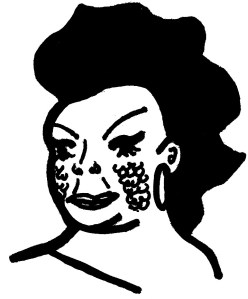
Dawn Davenport as the Ultimate Divine Showcase

It’s almost inarguable that the most iconic performance from Divine, the greatest drag queen of all time, was her role as Babs Johnson in Pink Flamingos. John Waters may have later scored a wider cultural impact with Hairspray (his last collaboration with Divine before her death), but if you ask anyone to describe Divine as a persona, it’s the yellow hair, red flamenco dress, and curbside dog shit of Pink Flamingos that most readily defines her in the public conscience. As gloriously filthy as Pink Flamingos is within the John Waters pantheon, though, it’s not the most fully illustrative showcase for Divine’s talents as an onscreen presence. Babs is a kind of static constant throughout Pink Flamingos—hilarious, but unchanging in her filthy, filthy ways. It’s that film’s follow-up, Female Trouble, that really allows the full spectrum of Divine’s version of defiant American femininity to shine. In Female Trouble, Divine charts the moral corrosion of a high school teen turned mass murderer over a decade’s worth of increasingly despicable criminal acts. Pink Flamingos might be Divine’s most recognizable achievement in establishing a tone & defining her look, but Dawn Davenport is her greatest creation as a cinematic performer.

After signing the film’s theme song herself (a preview of her disco career to come), Divine begins Female Trouble as one of the 1960s hair-hoppers Waters lovingly profiled in Hairspray. Dawn Davenport is a bratty teenage delinquent. She smokes in school bathrooms, sneaks eating meatball sandwiches during class lectures, and responds to concerns about schoolwork with sentiments like, “Fuck homework. Who cares if we fail?” This attitude sets her up for failure at a traditional American lifestyle, something that becomes no longer sustainable after her parents refuse to buy the one Christmas present she demands because, “Nice girls don’t wear cha-cha heels.” After destroying the Norman Rockwell Christmas tableau of her parents’ home like Godzilla tearing through Tokyo, Dawn Davenport hits the open road as a teenage runaway. She attempts a mundane life that does not suit her: raising children, waiting tables, gossiping at the beauty salon. The most alive Dawn appears as a young adult woman is when she’s sweatily stripping as a go-go dancer and abusing her hyperactive daughter, both verbally and physically. The first half of Female Trouble is a grimy portrait of American femininity, one frustrated with the prison of boredom & tedium that plagues well-behaved women, especially single mothers. The increasingly violent crimes she commits throughout the film are selfish, hateful, and morally grotesque, but they’re also a political rejection of traditionalist gender roles she’s expected to conform to at all ages in her perversely American life.

The poster for Female Trouble “warns” of (read: promises) “scenes of extraordinary perversity,” the kinds of onscreen stunts both Divine & Waters were largely known for, if not only because of the shit-eating stunt that concludes Pink Flamingos. When Dawn Davenport introduces herself to strangers in the film, she explains “I’m a thief & a shitkicker and I’d like to be famous.” She achieves this fame the way only a thief & a shitkicker would: by impressing the public with the daringness of her crimes. As an adult criminal, Dawn finds wealthy, erudite patrons (David Lochary & Mary Vivian Pearce) who fund her criminal activities for the artistry that they truly are, fanatically believing that “crime enhances one’s beauty.” It’s an ingenious setup that provides Divine a stage to perform various criminal stunts, including smashing her overgrown child (a deranged Mink Stole) with a dining room chair, warring with her leather fetishist neighbor (Edith Massey) to the point of imprisoning her in a birdcage & axing off her hand, and breaking prison rules by entering a long-term lesbian relationship while locked up. In-story, this absurdist crime spree climaxes when a scarred-up Dawn with a protopunk haircut locks a literally captive audience into a crowded nightclub for her Cavalcade of Filth routine and fires a gun directly at them, indiscriminately. If crime enhances beauty, this is Dawn Davenport at her most gorgeous, something she announces upfront in the line “I’m so fucking beautiful I can’t even stand it myself.” The bizarre truth is that the biggest stunt in the film occurs long before the Cavalcade of Filth, though, when Dawn Davenport is still a teenage delinquent. Hitchhiking away from her destroyed parents’ home on Christmas morning, Dawn is picked up by a monstrous drunk played by Glenn Milstead (out of his Divine drag). Upstaging the earlier stunt where Divine is raped by a giant lobster in Multiple Maniacs, Divine effectively rapes herself in this scene. The details are horrendous: a roadside mattress, shit-stained tighty whities, felching. It’s a truly hideous display, a stunt that could only be topped by watching Divine perform mundane domestic work in later titles like Polyester & Hairspray. It’s this hitchhiking sequence where Divine truly outdoes herself (by literally doing herself, appropriately).

Desperate Living is my personal favorite John Waters film, but it’s one that Divine backed out of before production. I’m sure she could have only improved the film with her immaculately trashy presence, but I doubt even that performance would have bested the all-encompassing showcase Dawn Davenport afforded her. Divine’s performances as Babs Johnson, Edna Turblad, and Francine Fishpaw are all flawless, iconic filth, but they only afford her one comedic angle per picture. Dawn Davenport, on the other hand, allows Divine to transform from teenage reprobate/petty criminal to full-blown Charles Manson maniac in 90 wild minutes, taunting her audience from the perch of an electric chair with the speech, “I’d like to thank all those wonderful people who were kind enough to read about me in the newspaper and watch me on the television news shows. Without all of you, my career would have never gotten this far. It is you that I murdered for and it is you that I die for.” Female Trouble affords Divine a stage to perform her most gloriously fucked up stunts on celluloid, then directly comments on our fascination with those wicked deeds and with crime as entertainment in general. More importantly, though, it allows her to perform the full spectrum of American femininity as, to borrow the title of a Lifetime movie, Wife-Mother-Murderer in the post-hippie grime of the mid-1970s. Dawn Davenport is multiple generations & evolutions of the misbehaving woman, a perfect template for Divine to perform a full floor show of varying proto-punk looks & sneering femme attitudes. She may have starred in a few better movies, but few performances ever served her better as a top bill entertainer & the center of attention. Besides, where else are you going to watch Divine fuck herself? It’s impossible to overvalue the novelty of that experience.

-Brandon Ledet

Fans of the Raunchy, Sex-Positive Teen Comedy Blockers (2018) Should Double Back to Watch The To Do List (2013)

Listening to an interview with Kay Cannon promoting her film Blockers on Ira Madison III’s Keep It podcast, it was exciting to hear her acknowledge the film’s intended purpose as a major studio femme subversion of the losing-your-virginity teen sex comedy. The teen sex comedy is just dripping with machismo as a medium, as it’s most clearly defined by the bro-friendly boundaries of titles like Superbad, American Pie, and Porky’s. As many of my recent favorite comedies have been femme subversions of traditionally macho subjects (The Bronze & Wetlands being particular standouts), I 100% welcome Blockers as a continued corrective to the exhausting omnipresence of bro sex humor. However, I do wish Blockers wasn’t being critically framed as an innovator within that corrective, since that claim ignores 2013’s already criminally overlooked The To Do List. Another sex-positive, femme subversion of the raunchy, losing-our-virginity sex comedy, The To Do List was critically buried upon its initial release for its perceived overreliance on 90s nostalgia to sell its humor. Every passing year it becomes increasingly difficult to fathom caring about such a triviality, especially when you consider the film’s other virtues. If we can forgive the cult classic Romy & Michele’s High School Reunion for featuring adult comedians reliving their 1980s heyday in extended flashbacks, I‘d like to think we can accept The To Do List expanding that bit into the next decade, especially considering the level of talent on-hand: Bill Hader, Andy Samberg, Donald Glover, Lauren Lapkus, D’Arcy Carden, Alia Shawkat, and (in the starring role) Aubrey Plaza. The To Do List is overdue for critical reappraisal as a modern comedy sleeper, both on its own terms and as an active subversion of the same teen sex comedy tropes challenged by Blockers.

Aubrey Plaza stars in The To Do List as a high school valedictorian who fears her dedication to book-smarts has left her unprepared for practical social interactions. Most significantly, she expects college to be a nonstop orgiastic bacchanal that she will be out of the loop for as a nerdy virgin who hasn’t even shared a kiss. As an overachiever, she attempts to correct this problem by dedicating the entire summer before college to methodical, scientific sexual experimentation. It’s a plan that extends beyond shedding her virginity to include activities most high school students wouldn’t dream of attempting: rimming, motorboating, pearl necklaces, etc. This pursuit of sexual experience leads to inevitable John Hughesian tropes of Plaza’s in-over-her-head protagonist being confronted with the choice between two suitors: the “bad boy” she lusts for and the “good guy” who longs after her. In that moment of crisis, she smartly chooses neither, pointing out the impermanence & ultimate insignificance of most high school flings. Sex is paradoxically explained to not be a big deal, but also requiring careful consideration for your partners’ feelings. It’s a complex, but necessary lesson for high school kids to learn, one coupled with matter-of-fact statements of sexual intent & partners’ enthusiastic consent. A large portion of the plot is also dedicated to three teen girls’ lifelong friendship and their frequently thwarted plans to watch a rented VHS copy of Beaches together at some point during their last summer before college. Blockers explores a very similar friendship dynamic, although it admittedly better spreads the narrative focus around to each member of the group (and the overprotective anxieties of their respective parents). Both films are thoughtful explorations of femme teen sexuality & friendships without feeling at all leering or exploitative, likely in part because they were both helmed by women (The To Do List was written & directed by Maggie Carey).

The charm of both Blockers & The To Do List is that their sex-positive politics & wholesome emotional indulgences are allowed to co-exist with the typical gross-out gags that accompany the raunchy teen sex comedy. Although it tends to cater to straight male sensibilities, this is a genre that owes its space under the mainstream comedy umbrella to the raucous envelope-pushers of John Waters’s early career, particularly Pink Flamingos (even if by way of its influence on the Farrelly Brothers). Blockers goes for broke in its own gross-out moments of teen puke & butt-chugged beers, but The To Do List hits even closer to home in echoing its Pink Flamingos roots by depicting Aubrey Plaza defiantly chomping on a turd. Cinema is beautiful, y’all. Both films also mine a lot of awkward humor from parents being trapped in the same space as their children in the middle of sexual congress, going as far into The To Do List as having them lock eyes with their kids mid-orgasm or shaking the hand of the person currently fucking them. Dismissing The To Do List outright for blatantly adult comedians playing young or for 90s-nostalgic references to things like Hillary Clinton & jean skorts is an oddly reductive way of looking at a comedy that actively challenges the same gendered, double standard sex comedy tropes later subverted in Blockers. It’s even arguable that The To Do List is the more aggressive of the pair in that subversion, as its dedication to gross-out raunch is much more prolonged & pronounced. If nothing else, The To Do List was also prescient of the losing-your-virginity-on-top gag later repeated in the critical darling Lady Bird. That’s gotta be worth something, right?

Blockers is a great film that deserves to be celebrated for its femme subversions of a long-established comedic boys’ club that only gets sourer every passing decade. I don’t at all mean to detract from what Cannon accomplished there. I would just want to stress to anyone desperate to see more of that subversion out in the pop media landscape that The To Do List is well worth a critical reevaluation in the same context (along with the equally underrated The Bronze). If we could be gifted with one heartfelt, femme gross-out sex comedy a year like Blockers or The To Do List, the world would be a better, filthier place. We deserve more movies like them, but in the mean time we should give proper due to the ones we already have.

-Brandon Ledet

John Cena is Corrupting Your Children

I attended many strange pro wrestling rituals when WrestleMania 34 descended upon New Orleans like a body odor blanket last month. I watched a cheeseburger/bear hybrid wrestle other kaiju-costumed nerds at a midnight show adorned with cardboard cities. I stood in the world’s longest bathroom line at a Ring of Honor event because the bro-to-lady ratio at indie wrestling shows is way out of hand. I may have even joined in with the “This is awful!” chants that concluded Mania proper, despite the previous seven hours of sports entertainment making me look like an ungrateful turd for doing so (I honestly can’t remember if I participated in that complaint or not, but the show was exhausting). However, no Mania Moment was as strange as watching the raunchy teen sex comedy Blockers with John Cena in a theater packed with his biggest fans, an experience that only feels more bizarre the further I get away from it. This year’s WrestleMania happened to coincide with Blockers’s opening weekend, so a John Cena promotional appearance at a screening of the film makes logical sense from a marketing standpoint, but the event clearly didn’t factor in the nature of Cena’s usual pro wrestling fanbase. Thanks to AMC, John Cena, and the Universal Pictures marketing machine, I watched an R-rated teen sex comedy with a crowd of very young, very impressionable children who only wanted to meet their pro wrestling superhero. It was hilarious.

John Cena’s transformation into R-rated comedy wildcard has been a gradual one. Three whole years ago, I wrote a piece in the wake of Trainwreck anticipating his transition “From the PG Era to a Solid R,” noting how drastically different his comedic presence in films like that Amy Schumer breakout and the then-upcoming Tina Fey project Sisters was from his usual “Never give up”/”Eat your vitamins” superhero character in-ring. Cena was the face of WWE as it shifted away from the gruesome violence & in-your-face sexuality of the company’s storied Attitude Era to a dedication to producing more child-friendly content. Recently, the attention paid to performers on the roster has spread more evenly, leaving Cena free to develop his comedic persona outside of the ring. Unlike The Rock, however, Cena has never fully detached from the WWE and still regularly appears in-ring as a competitor between film productions (including a squash match with the now-unretired Undertaker at this year’s Mania). This division of his time has lead to some truly bizarre self-contradictions in his public persona, like, say, the superhero to children everywhere butt-chugging a beer and handling Gary Cole’s testicles in an R-rated, femme sex comedy. Nothing has illustrated how absurd that dual career overlap can be to me than AMC’s Q&A screening of Blockers in New Orleans, though, which lured young children into a room to meet their wholesome hero, only to be faced with the raunchiest details of his onscreen career to date (including his naked ass in a final humorous coda).

One of the most charming things about John Cena is his self-aware wit, something he’s likely learned from working crowds of thousands simultaneously chanting & booing his name (older, smarkier fans have long soured on his wholesome superhero routine). His first remark during the Q&A portion of the Blockers screening was that “So many kids have grown up so fast” as his eyes nervously scanned the room. His improvisational crowd-work was continually impressive as he fielded questions about what he likes about New Orleans (drive-through daiquiris), his current opinion of The Rock (left WWE too early), and his decision to appear naked onscreen (“I didn’t think anyone could see me”). It’s honestly less surprising that that he has fit in so well with the post-Apatow style of improv-heavy comedic filmmaking than it is that more pro wrestlers haven’t been tapped for the opportunity, given how life on the road immediately responding to vocal crowds train you for the skill. For my own part, I got to directly ask Cena a question that’s interested me since that eye-opening performance in Trainwreck: why has he been so clearly drawn to R-rated, adult comedies in recent years? The answer, unsurprisingly, was a well thought-out and entirely self-aware history of his career onscreen as a film actor, only confirming that the motivation I inferred was a deliberate, personal choice.

Cena answered the question by dialing the clock back to the early years of WWE Studios in the nu-metal 2000s, when he starred in more straight-forward, The Rock-ish action pictures like The Marine and 12 Rounds (the latter of which was set in New Orleans, appropriately enough). He explained that he participated in those productions to satisfy a desire from his “boss” (presumably WWE owner Vince McMahon) to expand the pro wrestling behemoth’s media brand. According to Cena, those were “bad” movies he filmed as a kind of contractual obligation (I personal enjoy both titles he referenced a lot more than he seems to), while newer projects like Blockers & Trainwreck have been much more personally fulfilling. He’s grateful to have “a second chance”s on the big screen and is finally doing what he wants to do . . . by appearing in R-rated sex comedies? John Cena is a 41-year-old man and, thus, not the clean-cut supehero character he’s developed in the ring. In an effort “to grow up” and “expand” his “depth of character” in his public persona, he’s deliberately choosing projects to challenge the wholesome image he’s developed within WWE in a shrewdly practical (and seemingly fun) way. What he didn’t admit, if you’ll allow me some room for editorializing, is that he’s also damn good at it. His roles in Trainwreck & Blockers especially got a lot of comedic mileage out of contrasting his straight-laced muscle man image with comedically incongruous raunch. It only makes the juxtaposition funnier to know that he’s incredibly aware of that image & how to actively subvert it.

To be honest, having children in the room for a raunchy sex comedy wasn’t even the most absurd touch to the Blockers Q&A. What was really bizarre was the image of a theater full of wrestling fans pawing at Cena for handshakes & autographs once they realized security was not going to impede their approach. It felt like watching the third act of mother!, except most of the admirers were children and a pro wrestler was attempting to maintain control at the godlike center. Children love John Cena and it’s not too difficult to see why. Hell, I think I love John Cena, even though I would have had a much more muted, complicated reaction to his persona just three or four years ago. My own turnaround on his presence is partly a response to WWE’s recent allowance for his spotlight to drift to other worthy performers on their roster, but it’s likely just as much due to his deliberate expansion of “depth of character” by participating in R-rated, horned-up comedies like Blockers. However, unlike The Rock, Cena still wrestles on TV fairly regularly, which means he’s maintaining his younger, more wholesome fanbase at the exact same time. For one wonderfully bizarre afternoon at the start of WrestleMania weekend I got to see both halves of that bifurcated fanbase converge for a screening of a very good, very much adult sex comedy. Only one end of the John Cena fanbase divide could have been corrupted or traumatized by that experience, though: the children. Oh, won’t somebody please think of the children?!

-Brandon Ledet

Bruce Greenwood is (One of Many) Batman(s)

There has only been a handful of actors who’ve played Batman on the big screen over the decades (unless you want to be a stickler and include the 1940s serials), a role that seems like it’s been passed around more from actor to actor than it has. Within that elite club of cinematic Caped Crusaders, there’s a lot of wiggle room in how to interpret the character. Ben Affleck & Christian Bale play him as a gloomy Gus; Adam West & George Clooney lean into his Saturday morning cartoon camp potential; Michael Keaton turned the Bat into a Horned-up weirdo; Val Kilmer played him comatose. It’s a range of variation that’s befitting of Batman’s journey in the comic books, which has taken many different tonal directions over a near-century of different writers & illustrators tasked to continue his legacy as The World’s Greatest Detective. Oddly, that freedom of interpretation is largely missing from the animated versions of Batman, despite their proximity in medium to his comic book form. Kevin Conroy, who voiced the titular vigilante through 85 episodes of Batman: The Animated Series, has become the defining standard of what Batman sounds like as an animated cartoon character. He’s a universally beloved fan-favorite, a status any one of the more divisive live-action performers have yet to achieve. As a result, almost all subsequent interpretations of animated Batmen, no matter who’s writing the text, have felt like faithful imitations of Conroy’s voice work for the character, leaving little room for creative variation. Bruce Greenwood, who voiced Batman in our current Movie of the Month, is just one of these many dutiful imitators, even if a competent one.

Less than halfway into 2018, there have already been three entirely new animated Batman films released, each with a wildly different tone and a different actor voicing the Caped Crusader. As there are now dozens of animated DC movies exploring the usual dynamics of the comic book brand’s more well-known characters, this year’s offerings each rely heavily on a high-concept gimmick to keep their interpretations of Batman relatively fresh. One film explores the possibilities of Batman’s ninja training by translating the character through the anime medium. Another teams up the fearless goth detective with Scooby-Doo in the classic Hanna-Berbera crossover tradition. The gimmick in Bruce Greenwood’s latest Batman project isn’t nearly as interesting as either of those movies sound; it sticks much closer to the Kevin Conroy template than the deviations in either premise. Greenwood reprises his role as Batman for the first time since he played the character in 2010’s Under the Red Hood, our current Movie of the Month, in an animated feature titled Batman: Gotham by Gaslight. Like Batman Ninja and Scooby-Doo! & Batman: The Brave and the Bold, Gotham by Gaslight attempts to keep Batman fresh by viewing him though a gimmicky contextual lens, this time a Gothic murder mystery. The problem is that the gimmick isn’t exactly a deviation at all, but rather a reinforcement of what was already in the forefront in the Kevin Conroy era. Much of the appeal of Batman: The Animated Series was its Gothic literature overtones, which created nice tension with the show’s modern urban crime thriller narratives (borrowing a page from Tim Burton’s book). DC’s animated movies have been chasing that creative high ever since, but Gotham by Gaslight takes the faithful diligence even further than most projects by transporting its narrative to an actual Gothic literature setting, robbing it of all its aesthetic tension.

19th Century Batman is the same philanthropist sleuth as he is in any other timeline, this time dedicated to solving the case of Jack the Ripper. Familiar faces like Harvey Dent, “Constable” Gordon, Selina Kyle, and Poison Ivy (an erotic dancer stage name in this context) populate a From Hell -style story about a mysterious serial killer who targets female sex workers in dank London alleyways. In a way, Batman’s crimefighting presence makes more sense in this world than it does in a modern one. It’s almost expected that a local wealthy eccentric would have the bizarre nighttime hobby of dressing up like a humanoid bat to beat up the local peasants for petty crimes. Many people even suspect him of being Jack the Ripper, recalling the same parallels between masked criminal & masked vigilante that drove Under the Red Hood. Even Batman’s cape & utility belt make more sense in this context, though he is outfitted with a more traditional trench coat collar for flair. The problem is that Batman makes too much sense in this context, especially after the Gothic literature foundation laid about by The Animated Series. Outside a few strong details like a zeppelin-set knife fight and a steampunk motorcycle, Gotham by Gaslight does little to exploit the possibilities of its gimmick and instead plays its material straight. The film occasionally pretends it has larger gender equality issues on its mind (mostly through the crossdressing, sex work-championing exploits of Selina Kyle), but it’s mostly a straightforward murder mystery styled after the literary trappings that define its setting. Batman: The Animated Series made that aesthetic interesting by clashing it against a modern(ish) urban setting. Gotham by Gaslight isn’t sure what to do without their central juxtaposition. Once the enticing gimmick of its Batman vs Jack the Ripper premise settles into a comfortable narrative groove, the film leaves very little room for novelty or surprise.

Batman: Gotham by Gaslight is billed as the 30th film of the DC Universe Animated Original Movies brand, which I don’t think even covers films like the recent animated Adam West campy reboots. That’s a whole lotta Batman content, with only two titles under Bruce Greenwood’s belt as the vigilante weirdo. Much like how Gotham by Gaslight does not do much to separate itself from the previous achievements of The Animated Series, Greenwood mostly serves as an echo of the excellent work Kevin Conroy has achieved in the vocal booth. Being that kind of placeholder in the brand can fulfill a lofty purpose, though, particularly when it anchors a well-written story. The dozens of animated DC movies have filtered through writing teams as frequently as any comic book writing stable would, so a consistency in different actors’ vocal performances as the same character is beneficial to maintaining a calm surface that covers up the movement underneath. Bruce Greenwood has voiced Batman in two animated movies, one great (Under the Red Hood) and one dull (Gotham by Gaslight). The quality disparity between these two pictures is entirely on the writers’ shoulders, as Greenwood’s performance changed very little, if at all, between them. Under the Red Hood is a self-contained narrative that brings a comic book storyline to the screen that Batman fans rarely to get to see in motion. Gotham by Gaslight, by contrast, turned the subtext of an animated show with nearly a hundred episodes into up-front text, making its aesthetic less interesting in the process. Bruce Greenwood was present for both, but had very little effect on their outcomes even as the voice of their shared central character. Live-action Batmen have found plenty of room to leave their marks on their respective franchises over the years, but the animated ones mostly come across as a copy of a copy of a copy of a . . . Bruce Greenwood is just one of many.

For more on May’s Movie of the Month, the animated superhero thriller Batman: Under the Red Hood, check out our Swampchat discussion of the film.

-Brandon Ledet

Overlook Film Fest’s New Orleans Debut

It’s an exciting time to be a film nerd in New Orleans. It feels like our art cinema scene is finally bouncing back from when the AMC Palace megaplexes wiped out smaller independent venues in the 90s & 00s. The Broad Theater, The Prytania, and Chalmette Movies are keeping adventurous arts programming alive on local big screens on a weekly basis. Both New Orleans Film Fest and New Orleans French Film Fest are gaining steam in screening the most exciting films of any given year in a city that would have to wait to catch them on VOD otherwise. Joining this embarrassment of riches is the Overlook Film Festival, a nomadic horror film fest that originated in Oregon and has yet to find a permanent home. Over four beautiful late-April days in the French Quarter, the Overlook festival made its welcome New Orleans debut, making me question what we did to deserve such a magical, unprompted blessing from the indie cinema gods. Like WrestleMania’s recent return, the festival felt like a birthday present to the city on its 300th anniversary, one I very much appreciated even if we ultimately don’t get to keep it.

The tricky thing about holding onto Overlook Film Fest is that it’s young and looking to expand. A four-day festival that originated at Oregon’s Timberline Lodge (which was used for exterior shots in Kubrick’s The Shining, where the festival borrowed its name), Overlook quickly outgrew its original locale in both size & tone. Festival organizers noted in an interview with Indiewire that the theater space was too small to accommodate their planned expansion, but it also seems like their mission statement as “a summer camp for genre fans” was at odds with the hotel’s Shining-rejecting nature as “a family-oriented establishment.” This branding conflict forced the festival to shift its focus away from association with Kubrick’s shooting location to a wider range of “iconic locations that evoke the spirit of the Overlook hotel, horror’s most infamous haunted fictional location.” For its New Orleans debut, the fest landed itself in the Bourbon Orleans, which unlike the Timberline, leans into its spooky reputation by billing itself as “one of New Orleans’s top haunted hotels.” The brilliance of the move is that the Bourbon Orleans’s French Quarter locale opens the festival to several screening venues instead of one self-contained building. It transforms the French Quarter, an area crawling with “ghost tour” tourist traps, into a horror nerd’s playground the fest’s site describes as being “home to countless apparition sightings voodoo legends, and vampire curses.” They also propose that a ghost child spotted at the hotel was likely on influence on the creepy twins in The Shining, which sure, why not? Of course, the French Quarter is a limited space with its own set-in-stone boundaries and the Overlook’s arrival during peak festival season means it might have to fight for screening venues as it outgrows the mere two it reserved this year, but for now the events weren’t at all overcrowded and the city seemed to have the exact vibe they’re looking for. Let’s hope that lasts.

Speaking of gradual expansion, Swampflix was too small to secure a press pass for this year’s festival. I wanted to support Overlook as best as I could to welcome its return, though, so I bought tickets to a few individual screenings and signed up to volunteer for a shift helping organize the fest. By happenstance, my volunteer shift turned out to be a total joy, as I worked the door for live recordings of two podcasts I regularly listen to anyway: Shock Waves and The Canon. Outside taking tickets & headcounts and occasionally providing information to attendees, I mostly just listened in as guests Thomas Lennon gushed about The Exorcist III (and for a brief, glorious moment, my beloved Monster Trucks) and Barbara Crampton discussed the highs & lows of horror as a medium from the POV of a woman who’s lived them at both extremes. I got to have some brief exchanges with guests, like telling Blumhouse producer Ryan Turek how much I appreciate his podcast & wishing a panel-crashing Udo Kier a good morning (he, Lennon, and Crampton were all promoting the festival’s premiere of Puppet Master: The Littlest Reich). The whole event was staged inside the Bourbon’s Orleans’s “haunted ballroom,” the site of frequently reported ghost sightings and, thus, a wonderful podcasting venue. Basically, I’m sure the festival (or, more specifically, the New Orleans Film Society folks who organized the volunteers) appreciated the extra hands, but the whole event felt like something I would have attended for fun anyway.

Since I couldn’t afford an All Access Pass for the festival and couldn’t negotiate my way in as press, I had to be choosy in selecting movies to cover for the site. Major event screenings at the Le Petit Theatre of films I’ve been dying to see like Hereditary, Upgrade, and the Unfriended sequel were calling out to me like genre film Sirens, but I decided to seek out smaller films instead. I knew I’d be able to see Hereditary on the big screen if I could be patient for a couple more months, but the joy of film festivals is often seeing proper screenings of smaller films that you’ll otherwise only see distributed on VOD (if at all). As such, I watched three foreign language horror films directed by women that I’ve heard heavy buzz behind (on podcasts like Shock Waves) for months, but I suspect might not even make it to venues like The Broad: Blue My Mind, Tigers are Not Afraid, (and my personal favorite) Good Manners. All three films (all screened at Canal Place) were excellent, adventurous participations in & subversion of familiar genre tropes – the exact kind of programming you dream of for a horror-themed festival. The programming of Good Manners & Tigers Are Not Afraid as an effective double bill was especially harmonious, as both films operate on a similar post-del Toro dark fairy tale vibe while still varying wildly in visual & thematic material. The body horror transformations of Good Manners & Blue My Mind were also interesting reflections of each other, as discussing the very nature of their exact creature feature premises could constitute spoilers given their patient reveals (even though seasoned audiences know what monsters to expect long before they arrive). It was an incredibly small sampling of the two dozen features that screened at the festival, but I could not be happier with the titles I saw. At the very least, I expect to be evangelizing for Good Manners as one of the Top Films of 2018 for the remainder of the year.

It’s impossible to tell what the future holds for the Overlook Film Festival as it expands in size & ambition. I doubt even the festival organizers themselves have a clear idea of where they’re going. I can report, though, that the first year in New Orleans was an ooky-spooky delight, an experience I’ll gladly repeat for as many years as they’re willing & able to return. The crowds were simultaneously more laidback and more enthusiastic than what I’m used to seeing at our local film fests, which made for a wonderfully nerdy genre film environment. I hope everyone who traveled here had as rewarding of an experience as I did. I also hope they saw some ghosts.

-Brandon Ledet

Episode #54 of The Swampflix Podcast: Hulkamaniacal Schlock & Nobody Speak (2017)

Welcome to Episode #54 of The Swampflix Podcast. For our fifty-fourth episode, James & Brandon wrap up an exhausting pro wrestling marathon week in New Orleans by looking back to the cinematic career of Hulk Hogan, the most notorious pro wrestler of all time. They discuss the films of Hogan’s career-high Hulkamania period and his career-low legal troubles as detailed in the Netflix documentary Nobody Speak: Trials of the Free Press (2017). Enjoy!

You can stay up to date with our podcast through SoundCloud, iTunes, Stitcher, TuneIn, or by following the links on this page.

-James Cohn & Brandon Ledet

The Fowl Stench of Magic in the Mirror: Fowl Play (1996)

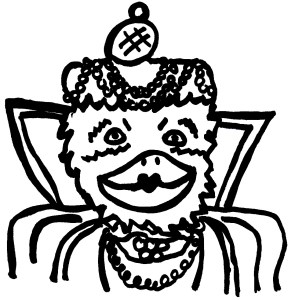
The most immediate, visceral reaction I had to our current Movie of the Month, the 1996 children’s fantasy nightmare Magic in the Mirror, is that it’s an absurd abomination that should not exist. While the movie makes some strides to justify its hideous existence though a half-hearted allegory about how imaginative kids are overlooked & undervalued, that well-intentioned narrative is just a thin sheen on the unintended horror of the film’s villains: “The Drakes.” For a kids’ movie about humanoid ducks who boil people alive to make tea because they enjoy the way it tastes, Magic in the Mirror can be surprisingly sinister. There have been plenty low-budget rehashings of Alice’s Adventures in Wonderland over the decades, so the film doesn’t particularly stand out in its fairy tale premise of a young girl learning the ways of the adult world by traveling into an alternate magic realm through an antique mirror. The bargain basement, Howard the Duck-looking freaks that await her there do tend to linger with you in their own nightmarish way, however, and are the only pressing reason for thrill-seekers to dig the film back up from its VHS-era gravesite. If the largely forgotten, viscerally upsetting Magic in the Mirror shouldn’t exist, the existence of it dirt cheap, Drake-focused sequel is even more of an affront to humanity and all that is good in the world.

Like all schlock peddlers, producer Charles Band has hinged his entire career on aggressive frugality. Years after the abandoned production of a fantasy film titled Mirrorworld shut down, Band’s children-friendly Full Moon Entertainment sublabel Moonbeam Entertainment recycled materials from the unfinished work to create the horror that is Magic in the Mirror. Band’s frugality knows no bounds, though, and he managed to squeeze two productions out of Mirrorworlds’ discarded scraps. There isn’t much extratextual info available about Magic in the Mirror (this may be our first Movie of the Month selection without a standalone Wikipedia page), but it appears the film earned minor theatrical distribution through Paramount Pictures. A straight-to-VHS sequel to the film was produced simultaneously with the original, though, and both releases reached US audiences in 1996. It should be a smooth transition between the two pictures then, as if they were one 3-hour movie with a credits sequence intermission. Many of the potential pitfalls of cheap kids’ movie sequels should be avoided in a back-to-back production like this: the main kid shouldn’t have time to age out of their role and the shared cast & crew should ensure some level of consistence in overall quality. Somehow, the quality drop between Magic in the Mirror & Fowl Play was still notably drastic. Even as ill-conceived & glaringly cheap as the original Magic in the Mirror feels, it’s apparently the Citizen Kane of tea-drinking duck people fantasy cinema.

Magic in the Mirror: Fowl Play is at least promising in its basic premise. After a quick (and necessary) recap montage detailing the events of the first film, Fowl Play reverses the original dynamic by having the terrifying duck people invade our world through the magic mirror for a change. I’m always down for a fun suburban invasion premise (which is why The Lost World is my favorite Jurassic Park movie, don’t @ me), but this dirt cheap, sub-Full Moon Production doesn’t follow through on the premise in any significant way. Instead of filming the humanoid duck tea-enthusiasts as they terrorize & boil alive the people of a small American city, the film frugally confines most of its runtime to a single living room. The evil mirror realm duck people merely mix in with guests at a lame, daytime costume party in a cheap living room setting, threatening menace in plain sight, but never delivering. What initially seems like a great premise for a Magic in the Mirror sequel eventually reveals itself to be another shrewd financial choice among many. The Drakes don’t invade our world through the mirror to open up the possibilities of the plot; they do it because the sets were even cheaper to maintain than the leftover scraps of Mirrorworld. It’d be impressive how this movie was pulled out of thin air if it weren’t so frustrating to watch as an audience.

From the cheap sets to the comic misunderstanding plot, Fowl Play feels like the pilot for a syndicated Magic in the Mirror TV show more than a proper sequel (I’m specifically thinking of the deservedly forgotten Honey I Shrunk the Kids TV series). The movie even ends with the protagonist from the first film making her first human friend, as if their weekly adventures were going to continue into perpetuity. Alarming details, like lipstick on a duck bill or carefully-prepared murder tea, carry over form the first film, but in smaller, cheaper doses. While Magic in the Mirror makes motions to justify its mallardian horrors with an overarching theme of childhood isolation, Fowl Play doesn’t bother. Its only narrative conflict is whether or not an already awkward costume party might become more of a disaster as it goes along, which I’m pretty sure has been the plot of many sitcom episodes. Magic in the Mirror was cheap, but at least it was somewhat ambitious. Fowl Play looks like it was scraped together in a panic as production on its predecessor was being shut down (which might actually be the case). The only scenario I could imagine where someone is really into it would be if they saw it before the first film and were caught off-guard by the ghastly visage of the Drakes. Even then, they’re given less screentime & less to do here, even though they’re referenced in the awfowl pun title.

For more on April’s Movie of the Month, the Full Moon Entertainment fantasy piece Magic in the Mirror, check out our Swampchat discussion of the film.

-Brandon Ledet

Roger Ebert Film School, Lesson 36: True Grit (1969)

Roger Ebert Film School is a recurring feature in which Brandon attempts to watch & review all 200+ movies referenced in the print & film versions of Roger Ebert’s (auto)biography Life Itself.

Where True Grit (1969) is referenced in Life Itself: On page 158 of the first edition hardback, Ebert explains his general taste in cinema. He writes, “Of the other movies I love, some are simply about the joy of physical movement.” One of his examples includes “when John Wayne puts the reins in his teeth and gallops across the mountain meadow.” On page 226 he mentions having spotted John Wayne in costume for the film’s production during a studio lot interview with Lee Marvin. On page 250 he details a separate interview with Wayne himself, who shows off his prop rifle from the film.

What Ebert had to say in his review(s): “One of the glories of True Grit is that it recognizes Wayne’s special presence. It was not directed by Ford (who in any event probably couldn’t have been objective enough about Wayne), but it was directed by another old Western hand, Hathaway, who has made the movie of his lifetime and given us a masterpiece. This is the sort of film you call a movie, instead of the kind of movie you call a film. It is one of the most delightful, joyous scary movies of all time […] It is not a work of art, but it wouldn’t be nearly as good if it were. Instead, it is the Western you should see if you only see one Western every three years (an act of denial I cannot quite comprehend in any case).” -from his 1969 review for the Chicago Sun-Times
In his original, gleefully enthusiastic review for the 1969 John Wayne Western True Grit, Ebert explains that the film “is not a work of art, but wouldn’t be nearly as good if it were.” This is just a few sentences after he dares to call it “a masterpiece.” I totally relate to the sentiment of those seemingly self-contradictory ideas, as it very much is at peace with how I watch & review movies myself. Ebert’s legacy as a film critic has always been one of subjectivity & populism, so it makes perfect sense to hear him declare a film to be genre-minded fluff in one breath and a stone-cold masterpiece in the next. Where I diverge with him on the topic at hand is in the specific genre he’s praising: Westerns. I’ve given many trashy horror & sci-fi pictures five-star raves over the three years we’ve been blogging here, but Westerns just really aren’t my genre. In fact, part of the reason the Roger Ebert Film School project has been on hold for the past six months (!!!!) is that I was dreading watching True Grit, which has a reputation for being on the best Westerns ever made. Adapted from a popular novel, inspiring a remake & a sequel, and earning John Wayne his sole Academy Award, it’s the kind of genre exercise that should appeal to even heretics like me, who’d rather watch the worst monster movie over the best cowboy thriller any day. Admittedly, True Grit did win me over despite my personal genre boundaries, but not necessarily by being a great movie first and a great Western second. It did so by side-stepping the roadblock I usually have with these Old West narratives: their traditionally macho POV.

If pressured to declare my favorite Western of all time, my answer would like likely be the recent Australian genre-bender The Dressmaker. Essentially reimagining the Western genre as a tonal mashup of Muriel’s Wedding and a 90s John Waters comedy, The Dressmaker is a classic guns-blazing revenge tale in which Kate Winslet takes out an entire town by sewing pretty dresses instead of firing a six-shooter. The Dressmaker is a genre standout to me because it’s an intoxicatingly feminine take on a traditionally masculine genre. To my surprise, despite ostensibly being a John Wayne picture, True Grit works in a similar way. Written for the screen by (McCarthy witch hunt victim) Marguerite Roberts, the film is largely about a bubbly teenage girl defiantly making her way through an intimidatingly macho world. Our plucky protagonist, Mattie (Kim Darby), has a Book of Henry-type preciousness in her willingness to steamroll adults’ wills and run the show. Her mission in the picture in an act of cold-blooded revenge, hiring two macho hard-asses (the drunkest & meanest of the pair being played by John Wayne, naturally) to kill the man who murdered her own father in an act of petty theft. She insists on accompanying the mission into Native territory herself, of course, and the movie builds a lot of tension out the danger she puts herself in by dangerously navigating “a man’s world.” Her presence isn’t nearly as aggressively femme as the energy of The Dressmaker (I likely would have been much more enthusiastic about the film at large if it were, to be honest), but it did help me adjust to the macho power fantasy of gruff Western lore instead of just mentally checking out completely, which is my usual experience with the genre.

I haven’t had many reasons or opportunities in my life to study the John Wayne Western as an artform, so it’s difficult for me to compare his Oscar-winning performance here with his more typical work. The couple times I’ve dealt with Wayne with any critical intent was in the cop thriller Brannigan (which was great) and the fire-fighting epic Hellfighters (which was terrible). But since Ebert is obviously a giddy fan of The Duke, I suspect that will drastically change soon. True Grit is likely as good of a crash course in John Wayne’s Western work as any I could have hoped for, if not only because the movie doesn’t take his heroics too seriously. A mean old US Marshall roped into a revenge mission while in a drunken stupor, you’d think Wayne’s antihero sidekick character would be all macho posturing & no levity. He’s wonderfully contrasted by Kim Darby’s authentic teenage femininity, though. The two butt heads immediately, him warning “I ought to paddle your rump!” and her spitting back that he’s “a sorry piece of trash.” The heart of True Grit is largely in watching the two partners soften to each other even more so than it is their shared revenge mission. The closing line of the film is Wayne shouting, “Come see a fat old man sometime!” jovially to Mattie, who has come to accept him as the drunk uncle she never had (when you might expect him to be closer to a replacement father figure). The drunk bastard even has a tender friendship onscreen with a house cat named General Sterling Pride, whom he snuggles with when he’s too tipsy to get out of bed. Wayne certainly plays the hardened gunfighter archetype he was famous for embodying in the film, one that’s even dangerously macho, but it somehow comes across as adorable instead of grotesque.

There’s plenty to True Grit I couldn’t identify with because of my arm’s distance relationship with the Western genre. The macho posturing, G-rated gun violence, and racist caricatures of any & all PoC that usually kill the mood for me (and, to be frank, bore me) in Westerns are all present & accounted for here. Although I could be tickled by the antiquated phrasing of “Hurry! I’m in a bad way!” when Mattie falls in a rattlesnake pit, the tension of that moment & other various gunfights never truly hit me, to the point where it’s utterly baffling that Ebert describes the film as “scary” in his review. Here’s what I’ll concede, though: if Westerns were my genre of choice, True Grit would likely be one of my favorites. It has a spark of the feminine subversion I loved so much in The Dressmaker, a glimpse into a less macho parallel universe where I wouldn’t generally find these pictures to be insufferably boring.  I suspect my experience with John Wayne Westerns can only go down from there, as Ebert’s love of the genre will probably lead me to far less hospitable territory for outsiders, but I can admit this one got past my typical defenses.

Roger’s Rating (4/4, 100%)

Brandon’s Rating (3.5/5, 70%)

Next Lesson: Equinox Flower (1958)

-Brandon Ledet

Episode #53 of The Swampflix Podcast: Live-Action Looney Tunes & Spaced Invaders (1990)

Welcome to Episode #53 of The Swampflix Podcast! For our fifty-third episode, we examine what happens when vintage cartoon nostalgia invades the modern world. Brandon and Britnee discuss three feature films where live-action players interact with animated characters from the Looney Tunes franchise. Also, Britnee makes Brandon watch the kids’ space alien comedy Spaced Invaders (1990) for the first time. Enjoy!

You can stay up to date with our podcast through SoundCloud, iTunes, Stitcher, TuneIn, or by following the links on this page.

-Britnee Lombas & Brandon Ledet